
WBBSE Chapter 4 Waste Management Concept Of Waste Management
Concept Waste With Reference To Locality :
Wastes are those materials that are thrown away or discarded as no longer useful or required.
Actually, wastes are substances or objects that are not the primary products for which the user has no further use in terms of production, and consumption but the user wants to dispose of them.
Wastes may be generated during the extraction of raw materials, processing of raw materials into intermediate and final products, consumption of final products, and other human activities.
WBBSE Notes For Class 10 Geography And Environment
So wastes are unwanted or unusable solid, liquid, and gaseous materials. These are substances that are discarded after primary use or they are, either worthless, defective, and of no use.
At home, you may find household wastes that are thrown into the waste bin every day. In the locality, you may also find commercial wastes thrown away by factories, offices, institutions, hospitals, etc. Wastes are also seen in slum and squatter areas.
Class 10 Geography And Environment Chapter 4 Solutions
Wastes like flowers, fruits, and vegetables are also found near the marketplaces as well as found as debris near the places of demolition as well as construction like wood, concrete, bricks, and electrical wiring.
All these websites locally pollute our environment.
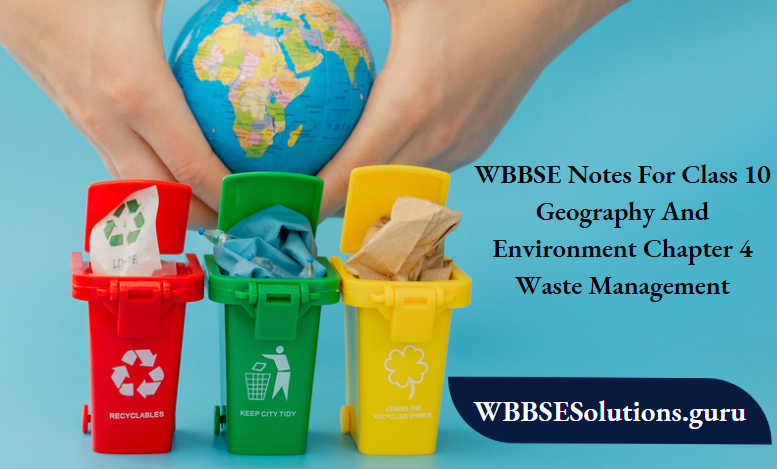
WBBSE Chapter 4 Waste Management Classification Of Wastes
Wastes are of three types
- Solid,
- Liquid and
- Gaseous.
Solid Wastes:
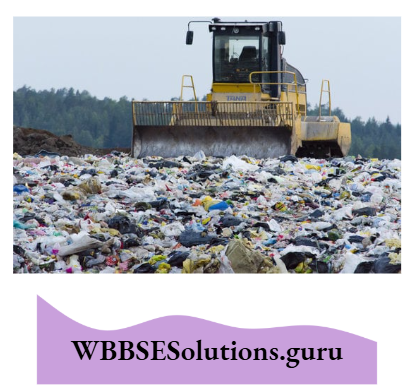
Solid waste means garbage, old tires, scrap metal, broken furniture and toys, construction and demolition debris, asbestos, plastic, broken glass, paper, tube, ash, plastic bottles, cans, etc.
Liquid Wastes:
These are fluids, such as wastewater, fats, oils, or grease (FOG), manure, and household liquids such as urine water, detergent water, and sewage.

Gaseous Wastes:
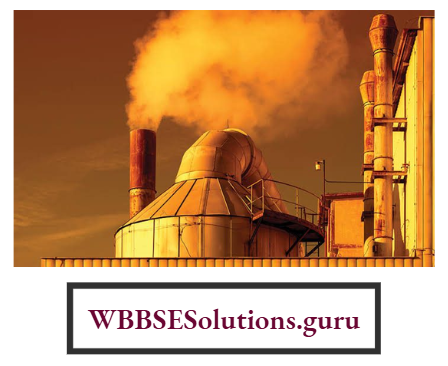
It is a waste product obtained from the manufacture, processing, material consumption, or biological processes in gaseous form. It includes gases emitted from factories and vehicles such as sulfur dioxide, nitrogen dioxide, etc.
Depending on toxicity wastes are of two types
- Toxic waste and
- Non-toxic waste.
Toxic Waste:
It may be solid, liquid radioactive, or gaseous. Toxic wastes can harm humans, animals, and plants, such as mercury, cadmium, chromium, battery, nitric oxide, chemicals, paint, syringes, needles, pesticides, broken computer parts, etc.
Class 10 Geography And Environment Chapter 4 Solutions
Non-Toxic Wastes:
Wastes that do not cause any harm to live creatures and the environment are known as Non-toxic wastes. These are glass, dust, concrete, food leftover, fruit and vegetable peelings, paper bits, etc.
WBBSE Chapter 4 Waste Management Sources Of Waste And Its Effects
Source Of Waste :
Wastes are generated from seven sources:
Domestic Wastes:
Leftovers of vegetables, fruits, a leftover of fish and meat, etc.
Industrial Wastes:
Chromium compound of the leather factory, different types of metals from one extraction process, different chemicals, etc.

Agricultural Wastes:
Pesticides, insecticides, manures in the form of agricultural runoff, straw, husks, animal excretory, etc.
Municipal Wastes:
Leftover of vegetables, paper bits, cloth, plastic, and metallic parts are found near houses, offices, marketplaces, hotels, institutions, etc.
Organic Wastes:
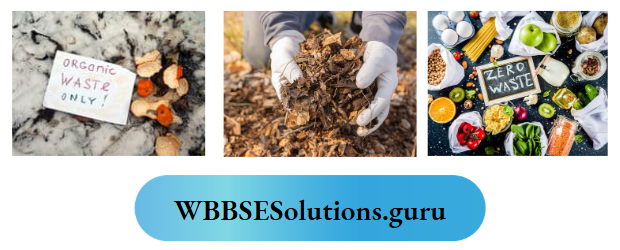
Wastes produced from plant and animal bodies are organic wastes, such as leftovers from meat processing centers, leftovers of fish, and peelings of fruits and vegetables.
Biomedical Wastes:
These are of medical and laboratory origins such as unused bandages, infusion kits, blood, human or animal tissues, syringe, and needles, which are generated from hospitals, health clinics, nursing homes, medical research laboratories, etc.
Radioactive Waste:
Ashes, heavy water discarded radioactive elements are radioactive waste that is generated as a by-product of nuclear power generation and other applications of nuclear fission or nuclear research and medicine.
WBBSE Chapter 4 Waste Management Effects Of Waste On The Environment
Disposing of waste has a huge environmental impact and can cause serious problems. Actually, the wastes lie littered on the streets and improperly disposed of in vacant land.
These may cause serious health hazards apart from being eyesores. Air, soil, and water pollution are increasing day by day.
Water Contamination:
Wastes that are thrown into the water body may negatively change the chemical composition of water and ultimately affect the ecosystems existing in the water.
Soil Contamination:
Similarly, if we sent rubbish to the landfill hazardous chemicals may contaminate the soil and can harm plants which can be a negative impact on the health of humans and animals if they eat.
Air Pollution:
When pollution occurs in the air, it can easily spread because we breathe in the air and cannot avoid it. This happens because the air becomes dirty or contaminated by poisonous gas, smoke, or odor emitted from the factories.
Class 10 Geography And Environment Chapter 4 Solutions
Impact On Health:
If the wastes are improperly disposed of, they may cause serious impacts on health and problems to the surrounding environment.
Excreta and other liquid and solid wastes from households and the community, are serious health hazards that may lead to the spread of infectious diseases by flies, rats, etc.
Diseases like Titenus, hepatitis, dysentery, allergy, and typhoid map spread quickly.
WBBSE Chapter 4 Waste Management Methods And Importance Of Waste Management
Concept Of Waste Management-Reduction, Reuse, And Recycling:
Waste management relates all those activities which are required to manage waste from its inception to its find disposal.
Apart from the collection, transport, and disposal of waste, it may also encompass reduction.
Reuse And Recycling:
the 3R which are the principles of waste hierarchy that classifies waste management strategies according to their desirability in terms of waste minimization.
In the hierarchy, the first action is to prevent the generation of waste followed by the reduction reuse, and recycling of waste.
Reduction Of Waste:
This is a process of elimination that involves reducing the amount of waste produced in society.
Activities may involve redesigning products, changing societal life patterns, and monitoring consumption and production to prevent the generation of waste.
Reuse Of Waste:
Waste management, actually, focuses on the processing of waste after it is created.
Class 10 Geography And Environment Notes WBBSE
Recycling Of Waste:
Recycling is a key component of modern waste reduction. It is a process to convert waste materials into reusable new materials.
Recyclable materials include many kinds of glass, paper, metal, plastic, textile, and electronics. Recycling of material produces a fresh supply of the same material Example. used office paper would be converted into new office paper.
Recycling waste is the process to prevent the waste of potentially useful materials, reducing the consumption of fresh raw materials, and reducing energy usage, and air water, and land pollution.
In this process, materials to be recycled are either brought to a collection center, then sorted, cleaned, and processed into new material.
Processes Of Solid Liquid And Gaseous Waste Disposal And Management
Disposal Of Solid Waste
Common methods of solid waste disposal and management are:
- Segregation,
- Landfill and
- Composting.
Segregation
Solid wastes are of two types on the basis of natural decomposition
- Bio-degradable, such as human waste, food and kitchen waste, manure, sewage sludge, and slaughterhouse waste which can be broken, in a few weeks or months, into its base compound by microorganisms
- Non-biodegradable wastes, such as rubber tires, plastic, fiberglass, and metals are of environmental concern as it creates, a disposal problem.
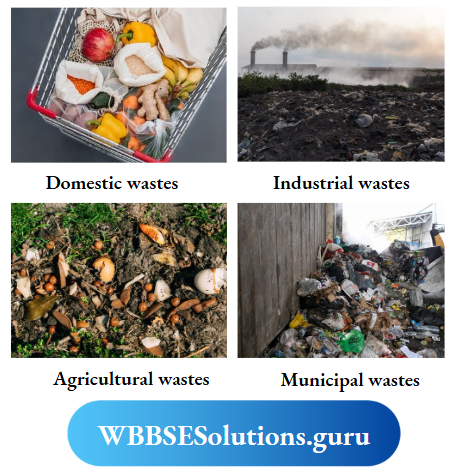
Landfill
Disposal of bio-degradable waste in a landfill involves burying the waste. It contains leachate such as clay or plastic lining material. Wastes are compacted to increase density and stability.
The layer is covered with a thick soil layer to prevent attracting rats and rabbits. Thus, bio-degradable wastes, naturally, decomposes physically, chemically, and organically.
During this process, landfill gases, namely methane, and ammonia are produced. Finally, the rest is used to fill up the lowlands. At Dhapa in East Kolkata, fertile farmlands have developed in this way.
Class 10 Geography And Environment Notes WBBSE
It is advantageous as the wastes are covered and do not cause any harm to human health. But the problem is that the polluted water may contaminate groundwater.
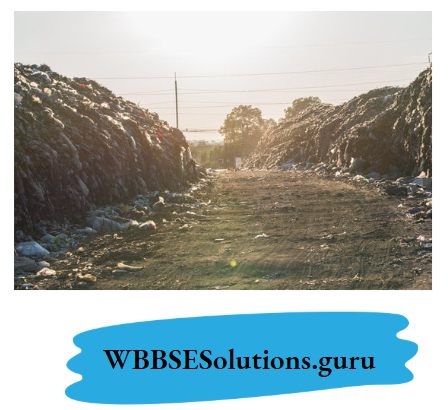
Composting
The process of composting requires making a heap of wetted organic matter known as green waste (leaves, food waste) and waiting for the materials to break down into humus or soil rich in nutrients such as nitrogen, and phosphate.
There are two ways of composting.
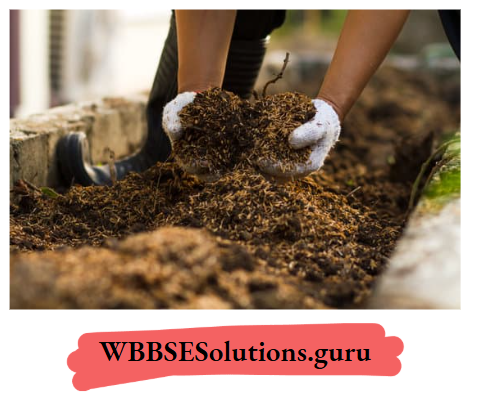
Bangalore Method:
A trench is made on the ground in which bio-degradable wastes are dumped which is overlain by a layer of human and animal excreta.
Mechanical Process:
In this process, bio-degradable wastes are disintegrated by machines. Then it is mixed with bacteria for decomposition. Finally, nitrogen-rich compost fertilizer is produced.
Class 10 Geography And Environment Chapter 4 Solutions
WBBSE Chapter 4 Waste Management Disposal Of Liquid Waste
Drainage:
This is the process of sewage disposal in which sewage is transported through cities and inhabited areas to sewage treatment plants where it is treated to remove contaminants to produce environmentally safe waste.
In the treatment plant, there are blue-green algae that grow profoundly and release a huge amount of oxygen by photosynthesis.
As a result, water is filtered while solid wastes which settle down at the bottom are used as organic manure.

Disposal Of Gas Waste
Scrubber:
There are several methods to remove unwanted pollutants from the exhaust gas and neutralize it. Scrubber is a device that controls air pollution and is used to remove toxic gases from industrial exhaust streams.
WBBSE Chapter 4 Waste Management Need Of Waste Management
Improperly stored wastes can cause health, safety, and economic problems. It has been estimated that only 10% of hospital waste can contaminate the environment.
But if it mixes up with municipal waste a huge amount of waste may contaminate health and the environment. Wastes that pollute air, water, and soil may cause disaster.
To prevent damaging the earth’s ecosystem and maintain a high quality of life for the planet and its inhabitants we must manage and store the waste efficiently and safely.
Class 10 Geography And Environment Notes WBBSE
Role Of Students In Waste Management
Knowledge of waste management can practically be implemented by a student by taking part in school as well as in house
- They should throw paper bits and leftover food in the waste bin,
- They should not split everywhere,
- They should not use ‘use and throw’ pens,
- They can prepare placards mentioning the need for waste management,
- They must take part in awareness programs in school as well as in their locality.
Effects Of Waste Disposal On Bhagirathi-Hugli River-A Case Study
Bhagirathi:
Hugli is the distributary of the river Ganga which is the principal river of India. Presently, the river is very much polluted.
Urbanization and industrialization along both sides of the river are responsible for the disposal of huge amounts of municipal and industrial wastes into this river.
Actually, the river is polluted by
- Disposal of industrial and municipal wastes,
- Discharge of urine water,
- Animal bath,
- Discharge of soap and detergent water and
- Dispose of dead bodies of man and animals,
- Immersion of idols in Durga puja and Kali puja are also responsible for mixing up chemicals with the river water.
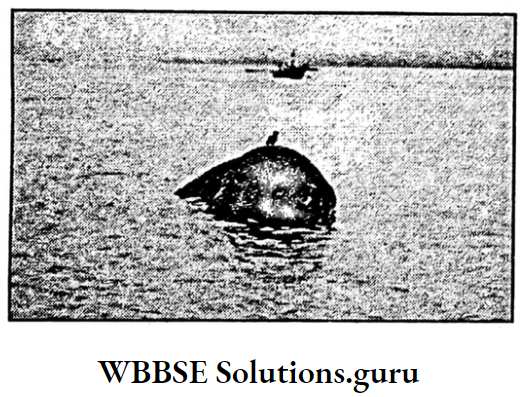
To arrest such pollution ‘Ganga Action Plan’, and ‘Namami Ganga’, etc. plans and programs have been taken up by government. But it is more important to the awareness among the people living along the riverside who can efficiently reduce waste.