Model Question Paper Life Science Set 2 Group A
Answer to all questions is compulsory
Write the answer in a complete sentence by choosing the correct answer for each question with the respective serial number.
Question 1. Select the correct pair-
- Sclera—Absorbs excess light within the eyeball
- Choroid—Provides definite shape of the eyeball
- Lens-Causes refraction of light and accomplishes accommodation
- Retina-Holds the lens with the help of the suspensory ligaments
Answer: 3. Lens-Causes refraction of light and accomplishes accommodation
Question 2. Identify which of the following statements is not true regarding Adrenaline-
- Increases the rate of heartbeat
- Helps in the production of spermatozoa during adolescence
- Increases cardiac output
- Increases systolic blood pressure
Answer: 2. Helps in the production of spermatozoa during adolescence
Question 3. Select which of the following is the feature of tropic movement-
- Induced movement of curvature of particular parts of the plant controlled by the direction of the stimulus
- It is one type of turgor movement
- Induced movement of curvature of particular parts of plant controlled by the intensity of the stimulus
- Does not occur under the influence of Auxin
Answer: 1. Induced movement of curvature of particular parts of the plant controlled by the direction of the stimulus
Question 4. Match the words of Column-A with that of Column-B and select which of the following options is correct—
Answer: table-
- A-2,B-3,C-1
- A-3,B-1,C-2
- A-1,B-2,C-3
- A-1,B-3,C-2
Answer: 2. A-1,B-3,C-2
WBBSE Class 10 Life Science Model Question Paper 2023
Question 5. Decide which of the following sequence is correct-
- Receptor→Effector→Sensory Nerve→Motor Nerve→Nerve Centre
- Receptor→Nerve Centre→Motor Nerve→Sensory Nerve→Effector
- Receptor→Sensory Nerve→Nerve Centre→Motor Nerve→Effector
- Receptor→Motor Nerve→Effector→Sensory Nerve→Nerve Centre
Answer: 3. Receptor→Sensory Nerve→Nerve Centre→Motor Nerve→Effector
Question 6. Select the correct pair-
- Telophase- Movement of daughter chromosomes towards poles
- Telophase- Disappearance of Nuclear Membrane and Nucleolus
- Telophase- Formation of spindle fibre
- Telophase- Reappearance of Nuclear Membrane and Nucleolus
Answer: 4. Telophase- Reappearance of Nuclear Membrane and Nucleolus
Question 7. The name of the terminal parts of the Chromosome is—
- Centromere
- Telomere
- Nucleolar Organizer
- Satellite
Answer: Telomere
Question 8. Identify which of the following statements is not true regarding cross-pollination-
- Requires agent
- Origin of new hereditary features
- Maintains the purity of species
- The rate of germination of seeds is higher
Answer: 3. Maintains the purity of species
Question 9. Consider the differences between asexual and sexual reproduction and select which of the options is/are correct-
Answer:

- 1,4
- 2,3
- 3,4
- 1,2
Answer: Correct option is not provided
Question 10. Select the correct pair in the case of humans:
- The normal pattern of the chromosome of ovum — 22A + XX
- The normal pattern of the chromosome of the ovum — 22A + Y
- The normal pattern of the chromosome of ovum — 22A + X
- The normal pattern of the chromosome of ovum — 22A + XY
Answer: 3. Normal pattern of the chromosome of ovum — 22A + X
WBBSE Class 10 Life Science Model Question Paper 2023
Question 11. 1.11Determine which of the following genotypes is homozygous for both the loci
- BbRr
- BBRr
- BbRR
- bbrr
Answer: 4. bbrr
Question 12. Identify the genotype of guineapig having white coat colour and rough hair-
- bbRR,brr
- BBRR,brr
- bb,bb
- BbRr, BbRR
Answer: 3. bbRR, bbRr
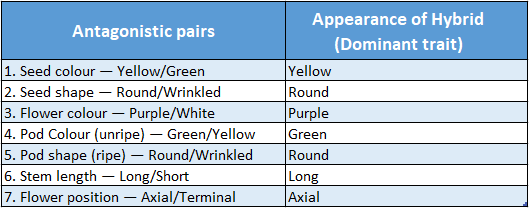
Question 13. Decide which of the following two were selected by Mendel as dominant traits—
- Length of stem — Long, Shape of seed — Round
- Position of flower — Terminal, the colour of flower — White
- Colour of the cotyledon — Green, and Shape of the seed – Wrinkled
- Length of stem — Dwarf, Shape of seed – Wrinkled
Answer: 1. Length of stem — Long, Shape of seed — Round
Question 14. Determine the nature of the pea plant germinated from the seed produced as a result of pollination between a hybrid tall (Tt) and a pure dwarf (tt) pea plant—
- 100% Tall
- 50% Tall, 50% Dwarf
- 100% Dwarf
- 75% Tall, 25% Dwarf
Answer: 2. 50% Tall, 50% Dwarf
Question 15. Decide which of the following diseases can be prevented by taking suggestions from pre-marital genetic counselling-
- Goitre
- Malaria
- Thalassaemia
- Tuberculosis
Answer: 3. Thalassaemia
Model Question Paper Life Science Set 2 Group B
2. Answer 21 questions out of 26 questions given below as instructed. Fill in the blanks with proper words in the following sentences (any five):
Question 1. The hormone is found in very high amounts in the ripe seeds of plants.
Answer: Gibberellin
Question 2. Reflex action is fast, spontaneous and
Answer: Involuntary
Question 3. In cell division spindle fibres are not formed.
Answer: amitosis
Question 4. is an entomophilous flower.
Answer: Sunflower
WBBSE Class 10 Life Science Model Question Paper 2023
Question 5. The gene having the power of the rolling tongue is.
Answer: dominant
Question 6. As the gene responsible for hemophilia is recessive, the symptoms of this disease are only manifested in
condition.
Answer: X-linked inheritance
Decide whether the following statements are true or false (any five):
Question 7. The focal length of the lens increases in case of seeing distant objects.
Answer: True
Question 8. Each nucleoside contains a nitrogenous base and phosphoric acid.
Answer: False
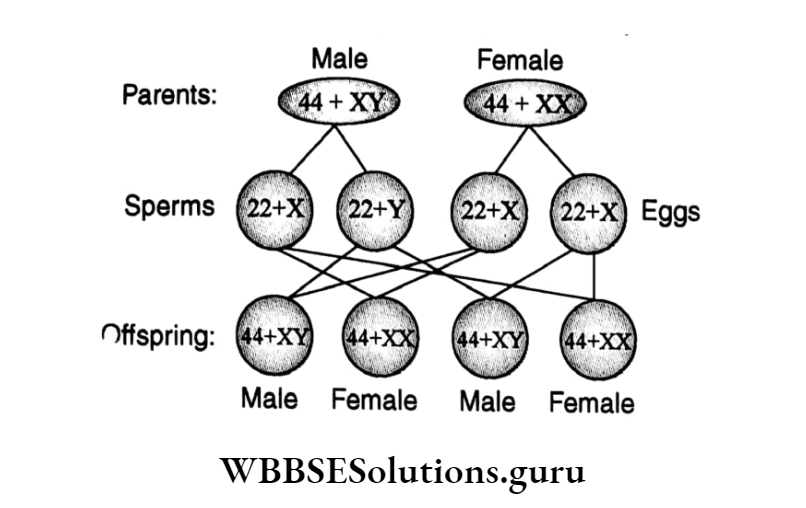
Question 9. There is no role of females in determining the sex of humans.
Answer: True
Question 10. If any pea plant contains either TT or tt trait, then the pea plant becomes heterozygous with respect to such alleles.
Answer: False
Question 11. As the flowers of the pea plant are unisexual, so self-pollination and if needed, cross-pollination can be performed.
Answer: True
Question 12. The daughter cells are changed and modified in different ways during cell differentiation phase to form tissue, organ and system.
Answer: True
WBBSE Class 10 Life Science Model Question Paper 2023
Match the words in Column-A with those which are most appropriate in Column-8 and re-write the correct pair mentioning the serial no. of both columns (any five) :

Answer: 2.13 – (2), 2.14- (3) 2.15- (4), 2.16- (5), 2.17- (6), 2.18- (1)
Answer in a single word or in a single sentence (any six):
Question 19. Choose the odd one and write it: Olfactory nerve, Vagus nerve, Optic nerve, Auditory nerve
Answer: Vagus nerve
Question 20. What is the fate of hormones in the animal body after its function is over ?
Answer: Hormones are destroyed and excreted immediately after their functions are over.
Question 21. A pair of related terms is given below. On the basis of the relationship in the first pair write the suitable word in the I gap of the second pair. Purine : Adenine :: Pyrimidine :
Answer: Cytosine
Question 22. What happens if the functions of checkpoints in the cell cycle get hampered?
Answer: Genomic instability and/or tumorigenesis
Question 23. What is hybridization?
Answer: Process of interbreeding individuals from genetically distinct populations to produce hybrids.
Question 24. What is a dominant trait?
Answer: A trait produced by a dominant allele in individuals who have one copy of the allele which can come from just one parent.
Class 10 Life Science Model Question Paper With Answers
Question 25. Among the following four terms, one includes the other three. Find it out and write it :
Increase in Basal Metabolic Rate, Thyroxine, Gradual maturation of Red Blood Corpuscle, Exophthalmic Goitre.
Answer: Exophthalmic Goitre
Question 26. In which phase of Interphase are the proteins essential for the formation of spindle fibres in synthesized?
Answer: G2 – phase.
Extensor muscle:
to increase the angle between two body parts.
Abductor’s muscle:
to move limbs away from the midline.
Rotator muscle:
To move limbs around their long axis.
Question 27. Prepare a list of functions controlled by Auxin related to the growth of plants.
Answer:
Major Plant Hormones Auxin
Auxins are a class of nitrogenous phytohormones & the most important growth regulators produced from the growing regions of plant tissue including roots, shoots, and leaves.
These promote cell division, stem and root growth. These can also drastically affect plant orientation by promoting cell division on one side of the plant in response to sunlight & gravity.
The term auxin was first used by Frits Went.
Chemical composition:
Auxins generally occur as complexes, usually found with an amino acid or sugar. These are composed of carbon, hydrogen, oxygen, and nitrogen.
The amino acid Tryptophan and many other Indole compounds serve as precursors of auxins.
Class 10 Life Science Model Question Paper With Answers
Chemical composition:
Auxins generally occur as complexes, usually found with an amino acid or sugar. These are composed of carbon, hydrogen, oxygen, and nitrogen.
The amino acid Tryptophan and many other Indole compounds serve as precursors of auxins.
Types: They are classified into two types as detailed below:
Natural Auxin:
They are Indole compounds like Indole 3-Acetic Acid (IAA) and Non-Indole compounds like Naphthalene Acetic Acid. Indole 3-Acetic Acid was the first plant hormone identified.
It is manufactured primarily in the shoot tips (in leaf primordia and young leaves), in embryos, and in parts of developing flowers and seeds.
Synthetic Auxin:
These are synthetic compounds similar to natural auxin and they include 2,4-D (2,4-Dichlorophenoxy Acetic Acid) or 2, 4, 5-T (2,4,5- Trichlorophenoxy Acetic Acid).
Translocation:
The transport of IAA from cell to cell through the parenchyma surrounding the vascular tissues requires the expenditure of ATP energy.
IAA moves in one direction only i.e., the movement is polar and in this case, downward.
Such downward movement in shoots is said to be basipetal (apex to base) and in roots it is acropetal (outwards towards the root apices from the base).
Synthetic auxins move in all directions inside plants.
Function:
Apical Growth:
Auxins bring about apical dominance and thereby induce apical growth of the shoot.
Tropic movements:
These are deposited unequally on the shoot or root surface and thus cause phototropic curvature and geotropism

Cell enlargement:
Auxin helps to increase the size and volume of the cells.
Cell enlargement is caused by the solubilization of carbohydrates, loosening of wall microfibrils, synthesis of more wall materials, increased membrane permeability, and respiration.
Metabolism:
Auxin stimulates respiration by increasing the availability of respiratory substrate. Thus it enhances metabolism by mobilizing plant resources.
Cambial activity:
The degree of cambial activity is directly proportional to auxin concentration. Auxin also controls xylem differentiation.
Cell division:
It initiates the cell division of the parenchymatous cells at the site of wounded tissue causing healing of wounds after mechanical injury in plants.
Class 10 Life Science Model Paper WBBSE 2023 Set 2
Root formation:
Auxin promotes root initiation at a concentration that is inhibitory for the growth of intact roots.
Parthenocarpic fruit Development:
Pollen contains a lot of auxin, it acts as a signal indicating the completion of pollination and transformation of the ovary to fruit.
Thus the application of synthetic auxin induces the development of fruit without the act of fertilization i.e. parthenocarpic fruit development.
Synthetic auxin (2,4-D) initiates rootings in stem cuttings.
(x)Synthetic auxin can act as a weedicide by killing dicotyledonous weeds preventing the division of cambial tissue.
As monocotyledonous plants are devoid of cambium, they are not destroyed by auxin compounds.
Anti-auxin:
Auxins have an inhibitory effect on the abscission of leaves and fruits, i.e., shedding of mature leaves and ripe fruits from the plant.
It has been found that the abscission zone does not form when the concentration of auxins is high in the leaves or fruits.
On the contrary, Abscisic acid (ABA) is a major hormone in plants that induces the formation of an abscission zone in the leaf stalk or petiole and brings about the shedding of leaves.
It acts as an antiauxin because it counteracts the auxin activity by initiating abscission.
In Plants Hormones Gibberellin
Gibberellins are one of the longest-known classes of non-nitrogenous phytohormones that regulate various developmental processes including stem elongation, germination, dormancy, flowering, and leaf and fruit senescence.
Gibberellic acid or gas can be of more than 100 types and the most common being 3- Gibberellic Acid (GA3).
Gibberellin was discovered by Kurosawa (1926) from rice plants suffering from Bakanae (foolish seedling) disease caused by Gibberella.
Gibberellins are naturally synthesized in maturing seeds, germinating seedlings, growing tissues of expanding cotyledons, growing leaves, apical buds, root tips, etc.
Class 10 Life Science Model Paper WBBSE 2023 Set 2
Chemical composition:
Gibberellins are tetracyclic diterpene acids. These consist of carbon, hydrogen, and oxygen.
Acetate is the precursor for the synthesis of all kinds of gibberellins.
The gibberellins are named GAj through GAn in the order of discovery.
Translocation:
All known gibberellins are synthesized in plastids and then modified in endoplasmic reticulum and cytosol until they reach their biologically active form.
The transport of gibberellin is not polar. These are transported in all directions from the site of formation through the xylem, phloem, or by cell tq cell.
Functions:
Elongation of internode:
It brings about the growth of the internode and thereby brings about apical growth along with auxin.
Flowering:
It modifies the apical bud to the floral bud, by bringing about the development of floral tissue through modification of the apical meristem.
Breaks seed dormancy:
It breaks seed dormancy and induces germination of seed through denovo synthesis of a-amylase.
Leaf growth:
It helps in the development of young leaves through stimulation of the leaf meristem
It promotes fruit growth and development. It also influences parthenocarpy.
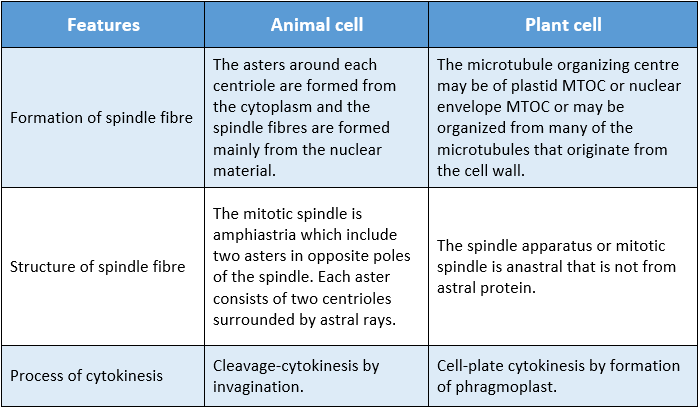
Question 28. Distinguish between the mitosis of plant cells with the mitosis of animal cells on the basis of the following features—
- Formation of spindle fibers
- Process of cytokinesis
Answer:
Basic Differences Between Mitosis Of Animal Cell And Plant Cell

Model Question Paper Life Science Set 2 Group C
3. Answer any 12 questions in 2-3 sentences out of 17 questions given below:
Question 1. Prepare a list of hormones that control the following functions—
Causes an increase in the length of bones through mineralization of the matrix of cartilage located at the terminal parts of long bones.
Answer: GH or STH
Transforms ruptured follicle into a temporary endocrine gland namely Corpus Luteum and provides necessary stimulation for the secretion of Progesterone hormone from that gland.
Answer: LH
Inhibits the production of glucose in the liver from protein and lipids.
Answer: Insulin
Causes contraction of uterine muscles during parturition
Answer: Relaxin
Class 10 Life Science Model Paper WBBSE 2023 Set 2
Question 2. Explain the causes of Myopia and Hyperopia
Answer:
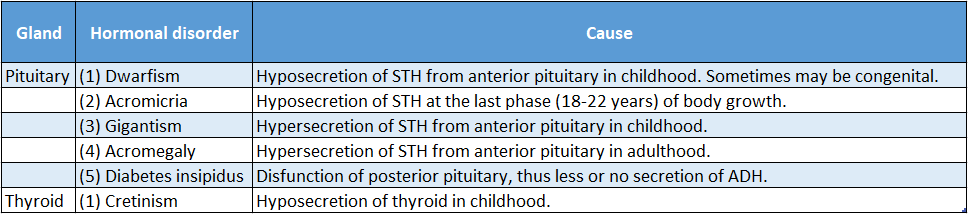
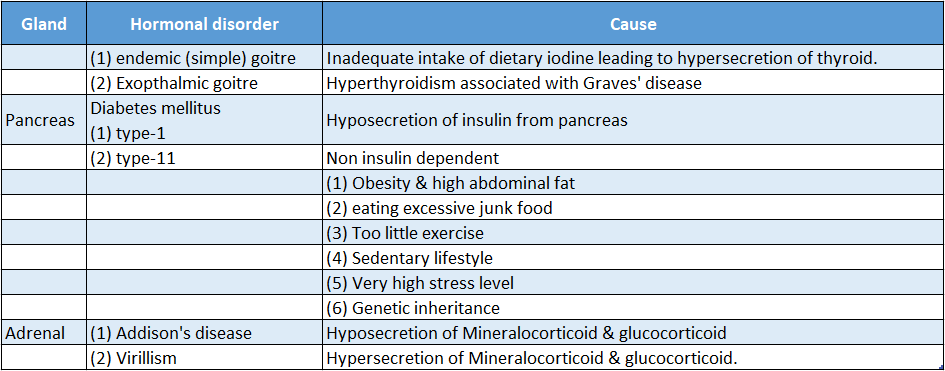
Endocrine disorders or hormonal disorders are typically an endocrine disease that results when a gland produces too much (hyper-secretion) or too little (hypo-secretion) of an endocrine hormone, called a hormone imbalance.
Some important hormonal disorders of humans are—
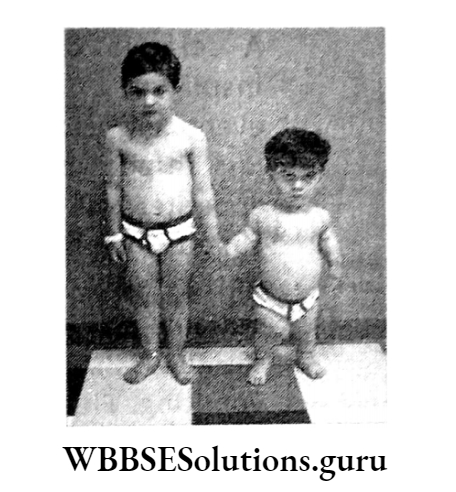
Dwarfism:
Pituitary dwarfism is decreased bodily growth due to hormonal problems (hyposecretion of STH) in childhood.
Causes:
Pituitary dwarfism, or growth hormone deficiency, is a condition in which the pituitary gland does not make enough growth hormone (hypo-function of STH).
Pituitary gland dysfunction can be congenital, which means that the child is born with the abnormality, or can be acquired during or after birth. It tends to run in families.
Symptoms:
The main symptom of pituitary dwarfism is below-average growth, although body proportions will be normal. Other characteristics might include an immature appearance, a chubby body build, a prominent forehead, and an underdeveloped bridge of the nose.
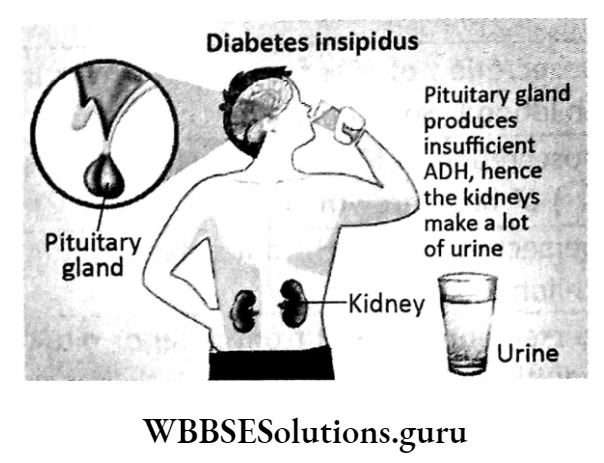
Diabetes insipidus (Dl) is a condition in which the kidneys are unable to prevent the excretion of water due to the hyposecretion of ADH leading to the excretion of an abnormally large amount of urine from the body.
Causes:
During the day, our kidneys filter the blood many times. Normally, most of them are reabsorbed and only a small amount of concentrated urine is excreted.
Dl occurs when the kidneys cannot concentrate the urine normally due to a decrease in the reabsorption of water in the renal tubules and a large amount of dilute urine is excreted.
The amount of water excreted in the urine is controlled by antidiuretic hormone (ADH). Dl caused by a lack of ADH is called central diabetes insipidus.
Excessive thirst that may be intense or uncontrollable, usually with the need to drink large amounts of water.
Excessive urine volume,
Excessive urination, often needing to urinate every hour throughout the day and night.
Goitre:
Goitre is a swelling (hypertrophy) of the thyroid gland in the neck due to hypothyroidism.
Causes:
Iodine deficiency, leading to hypothyroidism, is the major cause of endemic goiter. The thyroid gland needs iodine in order to manufacture thyroid hormones, which regulate the body’s rate of metabolism.
Hypothyroidism is the result of an underactive thyroid gland, and this causes goiter. Because the gland produces too little thyroid hormone, it is stimulated to produce more, leading to swelling.

Symptoms:
The main symptom of goiter is swelling of the thyroid gland, which causes a lump to develop in the front of the neck.
The following are the main symptoms that can result from neck swelling- symptoms of tightness, cough, and hoarseness; Trouble swallowing (dysphagia), dry & rough skin, hair loss, excessive fatigue, etc.
Class 10 Life Science Model Paper WBBSE 2023 Set 2
Diabetes mellitus:
Diabetes mellitus is a chronic, lifelong condition that affects the body’s ability to use the energy found in food.
There are two major types of diabetes:
- Type-1 diabetes and
- Type-2 diabetes.
Type-1 diabetes is also called insulin-dependent diabetes. It used to be called juvenile-onset diabetes because it often begins in childhood.
Type-2 diabetes used to be called adult-onset diabetes, but with the epidemic of obese and overweight kids, more teenagers are now developing type-2 diabetes.
Type-2 diabetes is also called non-insulin-dependent diabetes.
Causes:
All types of diabetes mellitus have something in common. Normally, our body breaks down the sugars and carbohydrates we eat into glucose.
Glucose fuels the cells in our body. But the cells need insulin, a hormone, in the bloodstream in order to take the glucose and use it for energy.
With diabetes mellitus, either the body doesn’t make enough insulin or it can’t use the insulin it produces or a combination of both.
In Type-2 diabetes, the pancreas usually produces some insulin. But either the amount produced is not enough for the body’s needs, or the body’s cells are resistant to it.
Symptoms:
Since the cells cannot take in the glucose, it builds up in the blood. High levels of FuncIaivientaIs of UFe Sconce
blood glucose can damage the tiny blood vessels in the kidneys, heart, eyes, or nervous system.
That is why diabetes – especially if left untreated – can eventually cause heart disease, stroke, kidney disease, blindness, and damage to nerves in the feet.
The early symptoms of untreated diabetes are related to elevated blood sugar levels and loss of glucose in the urine. The high amount of glucose in the urine can cause increased urine output and leads to dehydration.
This condition is called Polyuria. Dehydration causes increased thirst and water consumption. This condition is known as polydipsia.
The inability of insulin to perform normally has effects on protein, fat, and carbohydrate metabolism. A relative or absolute insulin deficiency eventually leads to weight loss despite an increase in appetite.
This condition is called polyphagia. Some untreated diabetes patients also complain of fatigue, nausea, and vomiting. Fluctuations in blood glucose levels can lead to blurred vision.
Extremely elevated glucose levels can lead to lethargy and coma.

The Common Hormonal Disorders Are Summarised In The Following Table:
Question 3. Explain what phenomena happen when the following muscles contract :
- Flexor muscle :
- Extensor muscle :
- Abductor’s muscle :
- Rotator muscle :
Answer:
Flexor muscle :
To decrease the angle between two body parts.
Extensor muscle :
To increase the angle between two body parts.
Abductor’s muscle :
To move limbs away from the midline.
Rotator muscle :
To move limbs around their long axis.
WBBSE Life Science Class 10 Question Paper Set 2
Question 4. Prepare a list of functions controlled by Auxin related to the growth of plants.
Answer:
Major Plant Hormones Auxin
Auxins are a class of nitrogenous phytohormones & the most important growth regulators produced from the growing regions of plant tissue including roots, shoots, and leaves.
These promote cell division, stem and root growth. These can also drastically affect plant orientation by promoting cell division on one side of the plant in response to sunlight & gravity.
The term auxin was first used by Frits Went.
Chemical composition:
Auxins generally occur as complexes, usually found with an amino acid or sugar. These are composed of carbon, hydrogen, oxygen, and nitrogen.
The amino acid Tryptophan and many other Indole compounds serve as precursors of auxins.
Chemical composition:
Auxins generally occur as complexes, usually found with an amino acid or sugar. These are composed of carbon, hydrogen, oxygen, and nitrogen.
The amino acid Tryptophan and many other Indole compounds serve as precursors of auxins.
Types: They are classified into two types as detailed below:
Natural Auxin:
They are Indole compounds like Indole 3-Acetic Acid (IAA) and Non-Indole compounds like Naphthalene Acetic Acid. Indole 3-Acetic Acid was the first plant hormone identified.
It is manufactured primarily in the shoot tips (in leaf primordia and young leaves), in embryos, and in parts of developing flowers and seeds.
Synthetic Auxin:
These are synthetic compounds similar to natural auxin and they include 2,4-D (2,4-Dichlorophenoxy Acetic Acid) or 2, 4, 5-T (2,4,5- Trichlorophenoxy Acetic Acid).
Translocation:
The transport of IAA from cell to cell through the parenchyma surrounding the vascular tissues requires the expenditure of ATP energy.
IAA moves in one direction only i.e., the movement is polar and in this case, downward.
Such downward movement in shoots is said to be basipetal (apex to base) and in roots it is acropetal (outwards towards the root apices from the base).
Synthetic auxins move in all directions inside plants.
Function:
Apical Growth:
Auxins bring about apical dominance and thereby induce apical growth of the shoot.
Tropic movements:
These are deposited unequally on the shoot or root surface and thus cause phototropic curvature and geotropism
Cell enlargement:
Auxin helps to increase the size and volume of the cells.
Cell enlargement is caused by the solubilization of carbohydrates, loosening of wall microfibrils, synthesis of more wall materials, increased membrane permeability, and respiration.
Metabolism:
Auxin stimulates respiration by increasing the availability of respiratory substrate. Thus it enhances metabolism by mobilizing plant resources.
Cambial activity:
The degree of cambial activity is directly proportional to auxin concentration. Auxin also controls xylem differentiation.
Cell division:
It initiates the cell division of the parenchymatous cells at the site of wounded tissue causing healing of wounds after mechanical injury in plants.
Root formation:
Auxin promotes root initiation at a concentration that is inhibitory for the growth of intact roots.
Parthenocarpic fruit Development:
Pollen contains a lot of auxin, it acts as a signal indicating the completion of pollination and transformation of the ovary to fruit.
Thus the application of synthetic auxin induces the development of fruit without the act of fertilization i.e. parthenocarpic fruit development.
Synthetic auxin (2,4-D) initiates rootings in stem cuttings.
(x)Synthetic auxin can act as a weedicide by killing dicotyledonous weeds preventing the division of cambial tissue.
As monocotyledonous plants are devoid of cambium, they are not destroyed by auxin compounds.
Anti-auxin:
Auxins have an inhibitory effect on the abscission of leaves and fruits, i.e., shedding of mature leaves and ripe fruits from the plant.
It has been found that the abscission zone does not form when the concentration of auxins is high in the leaves or fruits.
On the contrary, Abscisic acid (ABA) is a major hormone in plants that induces the formation of an abscission zone in the leaf stalk or petiole and brings about the shedding of leaves.
It acts as an antiauxin because it counteracts the auxin activity by initiating abscission.
WBBSE Life Science Class 10 Question Paper Set 2
Question 5. Distinguish between the mitosis of plant cells with the mitosis of the animal cell on the basis of the following features—
- Formation of spindle fibers
- Process of cytokinesis
Answer:
Basic Differences Between Mitosis Of Animal Cell And Plant Cell
Question 6. Explain how Bryophyllum undergoes vegetative propagation with the help of an adventitious bud.
Answer:
Vegetative Reproduction
Vegetative reproduction is basically a special type of asexual reproduction where a vegetative part of the plant body, separated from the original plant body, develops and grows into a new plant by simple cell division.
The Vegetative Reproduction Is Of Two Kinds:
- Methods of natural vegetative reproduction and
- Methods of artificial vegetative reproduction.
It occurs naturally through budding, fission, fragmentation, etc. Artificially this reproduction can be carried out by cutting, grafting, etc.
Parthenogenesis or parthenocarpy
Parthenogenesis is a form of asexual reproduction in which the growth and development of the embryo occur without fertilization.
In animals, parthenogenesis means the development of an embryo from an unfertilized egg cell. It is common in rotifers, aphids, bees, and crustaceans.
Some vertebrates like lizards also reproduce by parthenogenesis. Parthenogenesis may be natural or artificial.
Natural parthenogenesis occurs regularly in the life cycle of some animals. It is of two types:
Complete and incomplete parthenogenesis.
Complete parthenogenesis:
It is also called obligatory partheno-genesis.
In this case, the males are completely absent and the females develop from the unfertilized eggs as is found in aphids, phyllopods, and rotifers.
It is also found in some vertebrates.
A lizard Lacerta Mexico Americana reproduces exclusively by parthenogenesis with no males, in the population.
Incomplete parthenogenesis:
In this case sexual generation alternates with parthenogenesis generation.
For example, in bees and wasps, some eggs develop without fertilization and produce males, while those eggs that are fertilized develop into females.
In Gall fly, the larvae may lay eggs which develop parthenogenetically into a new generation of larvae. This is called paedogenetic parthenogenesis or paedogenesis.
In many sexually reproducing animals, the egg can be activated by artificial methods to start the development without fertilization.
This is called artificial parthenogenesis. Eggs of Sea urchins can be made to develop successfully if treated with weak salt solutions, weak organic acids, electric shock or shaking in seawater, or by pricking the egg with a glass needle.
In higher plants, the process of formation of fruits without pollination and fertilization is called parthenocarpy. Parthenocarpy is a form of asexual reproduction seen in flowering plants.
The fruits are generally seedless. During cultivation, parthenocarpy is introduced along with other plant hormones including gibberellin and it results in maturing of the ovaries without the process of fertilization and produces bigger and pulpy fruits.
Pineapples, bananas, cucumber, grapes, watermelon, oranges, pears,s, etc are some examples of parthenocarpy. In some plants, pollination or another stimulation is required for parthenocarpy. This is termed stimulative parthenocarpy.
Plants that do not require pollination or other stimulation to produce parthenocarpic fruits have vegetative parthenocarpy.
Seedless cucumbers are an example of vegetative parthenocarpy and seedful watermelon is an example of stimulative parthenocarpy.
WBBSE Life Science Class 10 Question Paper Set 2
Question 7. Tabulate which changes occur in a chromosome during the Anaphase of Karyokinesis.
Answer:
Changes occur in a chromosome during the Anaphase of Karyokinesis
1. Splitting into daughter chromosomes.
2. Poleward anaphase movement of daughter chromosomes.
3. V, L, or I shaped the appearance of daughter chromosomes.
Question 8. Describe how Yeast completes the process of budding.
Answer:
Yeast completes the process of budding
The asexual reproduction of yeast occurs by budding.
The parent nucleus divides into two daughter nuclei by mitosis.
During budding, the daughter cell first appears as an outgrowth since one daughter nucleus migrates to a corner of the parent cell. Both haploid and diploid cells can undergo budding. The outgrowth enlarges, matures, and detaches from the parent cell.
Question 9. Prepare a list of changes that occur during the adolescence phase of human development
Answer:
Changes that occur during the adolescence phase of human development
- The rate of growth becomes rapid.
- Secondary sexual characters develop.
- Significant growth of sexual organs takes place.
- The thought process becomes logical and complex.
Question 10. Explain the following two significances of meiotic cell division—
Maintains the constant number of chromosomes in a species Origin of variation in an organism
Answer:
Significance Of Meiosis
1. Gametogenesis:
It is a necessary part of the life cycle of sexually reproducing animals since it leads to the formation of gametes (sex cells) through meiosis.
2. Maintenance Of Constant Chromosome Number Of A Species:
The gametes produced as a result of meiosis are haploid (n) and the zygote formed by their fusion is diploid (2n).
Thus, it is the only means for restoring the constancy in chromosome number, which is a characteristic of the species from generation to generation.
3. Production Of Variation In Organisms:
Meiosis results in new combinations of genetic material. During crossing over, the hereditary factors from male and female parents get mixed due to the breakage and exchange of chromatids.
This brings in genetic variation within the species. The variations are important raw materials for evolution and also help in the improvement of races.
4. Alternation of generation:
Meiosis causes conversion from sporophytic generation to gametophytic generation in plants, i.e. causes the alternation of generation through prezygotic, post-zygotic, or sporadic meiosis.
Meiosis occurs in sporogenous cells (micro and megaspore mother cells) of the sporophyte-producing haploid spores. The spores on germination form gametophytes (male and female).
Cells of the gametophyte form gametes. Fusion of these gametes again leads to diploid or sporophytic generation and in this way, the alternation of generation between gametophytic and sporophytic generations keeps on going.
Question 11. State Mendel’s second law of heredity.
Answer:
Mendel’s Fourth Postulate
The above analysis became the basis of Mendel’s second general principle or the fourth postulate, the law of independent assortment.
Independent Assortment:
During gamete formation, segregating pairs of unit factors assort independently of each other and undergo random recombination in all possible combinations governed by chance alone.
This postulate stipulates that any pair of unit factors segregate independently of all other unit factors. Thus, according to the postulate of independent assortment, all possible combinations of gametes will be formed in equal frequency.
Question 12. Prove the authenticity of the statement- “The phenotypic and genotypic ratio remain identical in case of Incomplete Dominance”.
Answer:
Incomplete Dominance
A common example of deviation from Mendelism is the phenomenon called incomplete dominance.
A cross between parents with contrasting traits may sometimes generate offspring with an intermediate phenotype.
In a heterozygote organism carrying both a dominant and a recessive allele of the same gene, when the dominant gene cannot express its dominant phenotype completely, a mixed or intermediate, or blended phenotype between the dominant and the recessive is expressed.
Such a situation is known as incomplete dominance. In many plant species, flower color serves as a striking example of incomplete dominance.
With the flowers of Four O’Clocks or floret clusters of Snapdragons Mirabilis jalapeno, a cross between pure breeding red flowered parents and pure breeding white yields hybrids with pink blossoms.
During gametogenesis, the pure red flowered parent plant (AA) produces (A) gametes and the pure white flowered parent plant (aa) produces (a) gametes.

After cross-pollination of parental plants, (A) and (a) unite together to form (Aa) zygote that develops into plants with pink flowers.
Here both the allelomorphic genes have a partial or incomplete dominant relationship and hence, F1 hybrids show a mixture of characters of both parents. This is a case of incomplete dominance.
If allowed to self-pollinate, the F1 pink blooming plants produce F2 progeny bearing red, pink, and white flowers in a ratio of 1: 2 :1. This is the familiar genotypic ratio of an ordinary single gene F1 self-cross.
What is new is that because the heterozygotes look unlike either homozygote, the phenotypic ratios are an exact reflection of the genotypic ratios.
F2 Phenotypic ratio = 1 (Red): 2 (Pink): 1 (White) F2 Genotypic ratio = 1 (AA): 2 (Aa): 1 (aa) In this example of Mirabilis jalapa, the red gene is incompletely dominant over the white gene and so both of them give rise to an intermediate pink colored flower in heterozygous or hybrid condition.
WBBSE Life Science Class 10 Question Paper Set 2
Explanation:
The biochemical explanation for this type of incomplete dominance is that each allele of the gene under analysis specifies an alternative form of a protein molecule with an enzymatic role in pigment production.
If the ‘white’ allele does not give rise to the functional enzyme, no pigment appears.
Thus, in Snapdragons and four o’clock, two ‘red’ alleles per cell produce a double dose of a red-producing enzyme, which generates enough pigment to make the flowers look fully red.
In the heterozygote, one copy of the ‘red’ allele per cell results in only enough pigment to make the flowers look pink. In the homozygote for the ‘white’ allele, where there is no functional enzyme and thus no red pigment, the flowers appear white.
Question 13. Write two causes behind Mendel’s success in conducting experiments on heredity.
Answer:
Reasons for Mendel’s Success
Mendel’s success was dependent upon the following factors:
First, he chose the garden pea (Pisum sativum) as his experimental organism.
These plants can easily be cultivated, crossed, and for each successive generation, Mendel could thus obtain large members of individuals within a relatively short growing season.
By comparison, if he had worked with sheep, each mating would have generated only a few offspring and the time between generations would have been several years.
Second, Mendel examined the inheritance of clearcut contrasting forms of particular traits — round versus wrinkled seed, yellow versus green pod color, etc.
Using such ‘either-or’ traits, he could distinguish and trace unambiguously the transmission of one or the other observed characteristics, because there were neither any intermediate forms nor any of these characters located on separate chromosomes.
Third, Mendel isolated and perpetuated lines of peas that breed true. Mating with such pure breeding lines produce offsprings carrying specific parental traits that remain constant from generation to generation.
Fourth, Mendel carefully controlled his matings, going to great lengths to ensure that the progeny he observed really resulted from the specific fertilization he intended.
Thus he painstakingly prevented the intrusion of any foreign pollen and assured self or cross-pollination as the experiment demanded.
He also performed reciprocal crosses, in which by reversing the traits of male and female parents, he efficiently controlled the path of transmission of a particular trait either via the egg cell within the ovule or via the pollen as per experimental demand.
Fifthly, Mendel worked with a large number of plants, counted and subjected his findings to statistical analysis, and then compared his results with predictions based on mathematical models.
Finally, Mendel was a brilliant practical experimentalist. He could call and observe an optimum number of individuals from the limited space of the monastery garden.
In short, Mendel purposely set up a simplified ‘black and white’ experimental system and then successfully out how it worked.
Genetic Crosses With Guineapig
Mendel worked on pea plants but the application of his laws on animals was carried out by his successors.
Question 14. “Dispersal of animals is one of the driving forces of locomotion”— Judge the statement with the help of proper examples.
Answer:
Reasons And Motivations Behind Locomotion
Animals move for a variety of reasons, such as to find food, a mate, a suitable microhabitat, or to escape from predators.
Hunt For Food & Water:
Since animals can not prepare food, they are to perform locomotion to find out suitable area with plenty of food & water.
To seek shelter & escape from predators:
Locomotion increases the chances of survival of an organism by allowing the organism to seek shelter in favorable habitat, and to escape dangerous situations by avoiding predators.
Dispersal for mating or breeding:
Locomotion enables members of the species to disperse to find suitable mates to coordinate breeding activity and the survival of the young.
Search for a new & favorable environment:
Animals, especially birds, migrate from areas of low or decreasing resources to areas of high or increasing resources. The two primary resources being sought are food and nesting locations. Escaping from cold is also a factor.
Basic differences between movement and locomotion:
Though, in the case of animals, we often use the terms movement and locomotion, interchangeably, there are definite differences between the two.
Locomotion takes place at the organism level while movement can take place at any biological level from cellular to organisms.
In simple words, locomotion is movement from one place to another and involves shifting of the entire body parts (e.g. a person moving or running) and movement involves a change in shape, size, or direction of various body parts (e.g. shaking of your hands).
All kinds of locomotion are movements but all kinds of movements are not locomotion.
Movement is the motion that occurs in an organism or a body with or without the involvement of any change in the position or location of the organism or the body,
while locomotion is defined as the voluntary movement of an organism from one place to another either in search of food or shelter or mate or to escape from the predators.
Therefore, the differences between movement and locomotion may be summarized in a tabular form as below:

Question 15. Show the chemical constituents of chromosomes with the help of a table.
Answer:

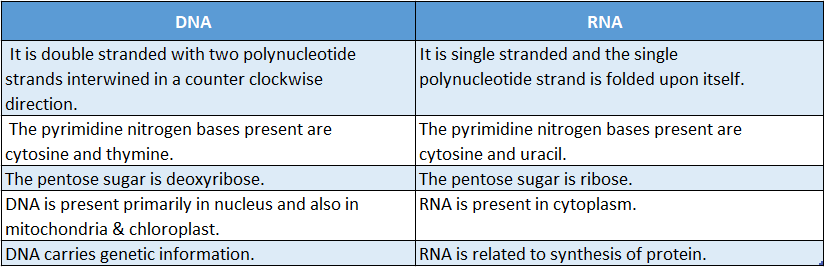
Question 16. Compare DNA and RNA on the basis of the following features
- Nature of carbohydrates
- Nature of pyrimidine base
Answer:
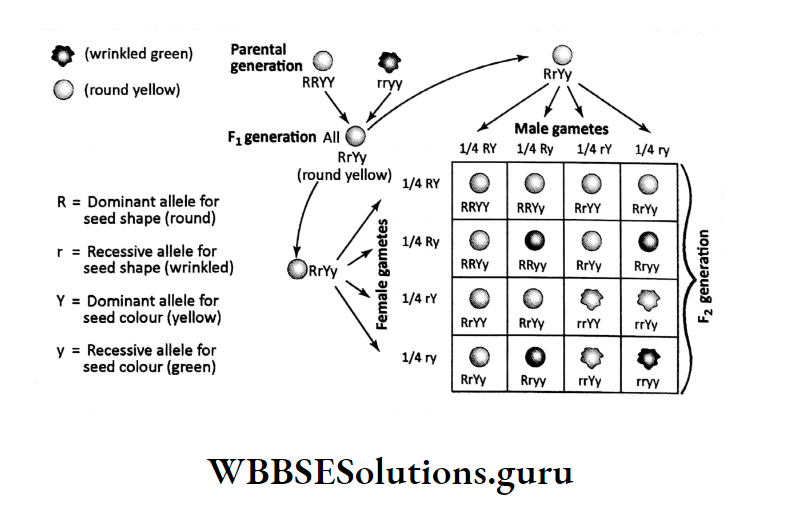
Question 17. “Some phenotypes may have multiple genotypes and some other phenotypes may have a single genotype” justify the statement from the results derived from the dihybrid experiment in the case of the pea plant.
Answer:
Mendel’s Experiment And Laws For Dihybrid Cross
As a natural extension of the monohybrid cross, Mendel also designed experiments in which he examined two characters simultaneously. Such a cross, involving two pairs of contrasting traits, is called a dihybrid cross.
Experiment and Observation
Mendel-crossed pea plants that are heterozygous for two genes at the same time.
To construct such a dihybrid, he mated true-breeding plants grown from yellow round peas (YYRR) with true-breeding plants grown from green wrinkled peas (year).
From this cross, he obtained a dihybrid F1 generation (YyRr) showing only the two dominant phenotypes, yellow and round. He then allowed these F1 dihybrids to self-fertilize to produce the F2 generation.
When Mendel counted the F2 generation of one experiment, he found 315 yellow round, 101 yellow wrinkled, 108 round green, and 32 wrinkled green peas. There were, in fact, yellow wrinkled and green round recombinant phenotypes, providing evidence that some shuffling of alleles had taken place.
WBBSE Class 10 Life Science Previous Year Papers
Explanation
From the observed ratios, Mendel inferred the biological mechanism of shuffling the independent assortment of gene pairs during gamete formation.
Because the genes for peas’ color and for shape assort independently, Y can be with R or r in any gamete with equal probability.
Thus, the presence of a particular allele of one gene, say, the dominant Y for pea color, provides no information whatsoever about the alleles of the second gene.
That is, the allele for pea shape in Y carrying game could with equal likelihood be either R or r.
Each dihybrid of the F1 generation can, therefore, make four kinds of gametes:
YR, Yr, yR, and yr. In a large number of gametes, the four kinds will appear in an almost perfect ratio of 1:1:1:1.
At fertilization then, in a mating of dihybrids, 4 different kinds of eggs can combine with any one of 4 different kinds of pollen, producing a total of 16 possible zygotes in the F2 generation.
Once again, a Punnett square is a convenient way to visualize the process.
In fact, there are only nine different F2 genotypes — YYRR, YYRr, YyRr, YyRR, yyRR, yyRr, YYrr, Yyrr, and yyrr — because the source of the alleles (egg or pollen) does not make any difference.
If we look at the combination of the traits determined by nine genotypes, we will see only four phenotypes— yellow round, yellow wrinkled, green round, and green wrinkled — observed in a ratio of 9 : 3 : 3: 1.
If, however, we look at just pea color or just pea shape, we can see that each trait is inherited in the 3: 1 ratio as predicted by Mendel’s law of segregation.
Punnet Square or Checker Board of Dihybrid cross

Model Question Paper Life Science Set 2 Group D Long Answer Type Questions
4. Write the 6 questions or their alternatives given below. Sightless candidates have to answer a question no. 4.1 A instead of question no 4.1. The marks allotted for each question is 5 (the division of marks is either 3+2, 2+3, or 5) :
Question 1. Draw a scientific diagram of a neuron and label the following parts :
- Axon
- Node of Ranvier
- Dendron
- Schwann Cell
Answer:

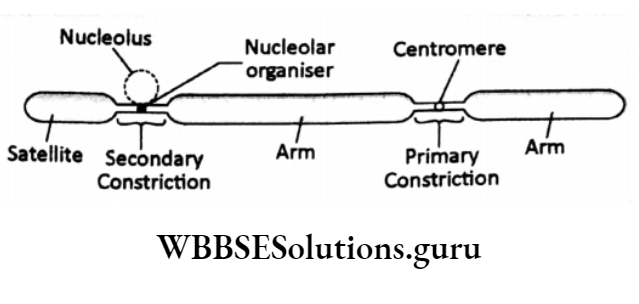
Draw a scientific diagram of the morphological structure of a eukaryotic chromosome and label the following parts—
- Chromatid
- Telomere
- Centromere
- Nucleolar Organizer
Answer:
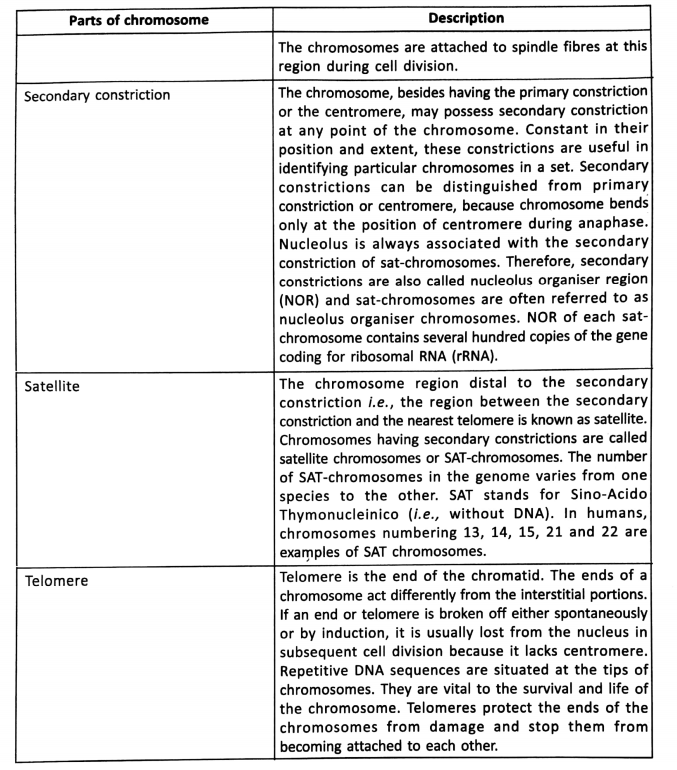
Write the Functions of the following structural parts of a eukaryotic chromosome :
- Centromere
- Nucleolar Organizer
- Chromatid
- Telomere
- Kinetochore
Answer:

Question 2. Compare the antagonistic functions of the following three pairs of hormones in the human body:
- Insulin and Glucagon
- Estrogen and Progesterone
- FSH and LH
Explain the relationship between the hindbrain and the function of control of the breathing mechanism.
Antagonistic functions of insulin and glucagon :
1. Insulin increases cellular oxidation of glucose, stimulates the formation and storage of glycogen in the liver & muscles and inhibits the formation of glucose from non-carbohydrates. All these activities result in the maintenance of optimum levels of blood sugar.
Glucagon stimulates liver glycogen to undergo breakdown to be converted to glucose which increases blood sugar levels.
2. Insulin increases protein synthesis in the body. Glucagon hydrolyzes protein into amino acids.
3. Insulin decreases lipid & cholesterol levels in the blood. Glucagon stimulates the increase of fat & cholesterol level in the blood. Antagonistic functions of estrogen and progesterone :
1. Estrogen is secreted by ovaries prior to ovulation. Progesterone is secreted by ovaries after ovulation.
2. During pregnancy, estrogen induces enlargement of breasts and uterus. During pregnancy, progesterone reduces the contractility of the uterus and stimulates the growth of mammary glands.
Antagonistic features of FSH and LH :
1. FSH helps in the maturation of immature follicles into mature Graafian follicles. In the presence of FSH, LH ruptures Graafian follicles causing ovulation.
2. FSH stimulates the secretion of estrogen from Graafian follicles. LH stimulates the secretion of progesterone from the corpus luteum.
3. In males, FSH induces the development of seminiferous tubules and spermatogenesis. In males, LH stimulates the secretion of testosterone in the testis.
The breathing movements (ie., taking in oxygen and taking out carbon dioxide) are initiated in response to the ratio of carbon dioxide and oxygen within the body. High levels of C02 and low levels of 02 collectively influence the body to exhale C02 and take in 02.
This is regulated by the medulla oblongata of the hindbrain. In response to C02 and 02 ratios, medulla oblongata signals the heart and diaphragm accordingly to facilitate respiration.
The respiratory center of the medulla oblongata is concerned with controlling the depth and rate of respiration.
OR
The following physiological functions of a person wounded in an accident are found hampered. Write the name of the parts of the brain attached to those functions :
- Speech
- Hunger, thirst, and sleep
- Posture and the equilibrium of the body
- Movement of tongue and swallowing of food
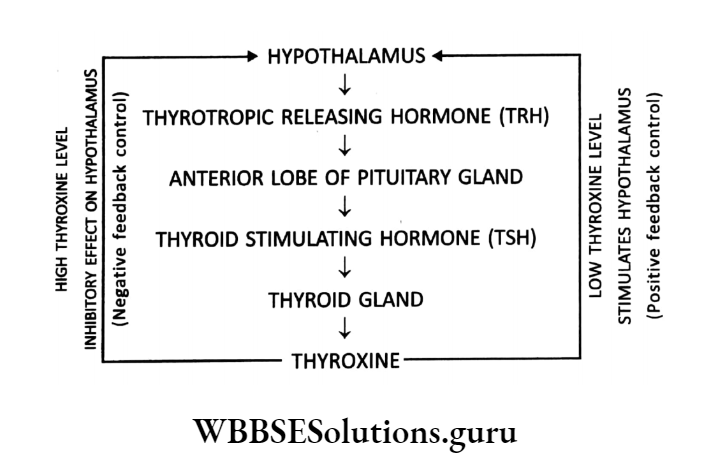
Explain the mechanism of feedback control of the function of hormones with the help of a suitable example.
- Speech — Cerebellum
- Hunger, thirst, and sleep — Hypotha. lamus
- Posture and the equilibrium of the body – Cerebellum
Movement of tongue and swallowing of food – Medulla oblongata
Answer:
Feedback control:
The secretion of most, if not all, hormones is regulated by some type of closed-loop control system known as a feedback mechanism
(because the amount released or secreted is sensed and that information is relayed back to the secretory cell by a variety of ways). Feedback control is mostly negative, rarely positive.
In a negative feedback control, the synthesis of a hormone slows down or halts when its level in the blood rises above the normal or threshold limit.
In the less common positive feedback mechanism, one hormone further stimulates the production of another hormone instead of diminishing it. Some examples of feedback control are given below.
Hypothalamus, in response to some external stimulus, produces a thyrotropin-releasing hormone for the secretion of thyrotropic hormone.
The thyrotropin-releasing hormone (TRH) stimulates the anterior pituitary lobe to secrete thyrotropic hormone. The latter in turn stimulates the thyroid gland to produce thyroxine.
If thyroxine is in excess, it exerts an influence on the hypothalamus and anterior pituitary lobe, which then secrete a lesser amount of releasing hormone and thyroid-stimulating hormone (TSH) respectively.
A rise in the TSH level in the blood may also exert a negative feedback effect on the hypothalamus and retard the secretion of TRH. This restores the normal blood-thyroxine level.

Sometimes, the accumulation of a biochemical increases its own production. For example, uterine contraction at the onset of labor stimulates the release of the hormone oxytocin, which intensifies uterine contractions.
The contractions further stimulate the production of oxytocin. This is a positive feedback control.
WBBSE Class 10 Life Science Previous Year Papers
Mode Of Transport Of Animal Hormones:
Most hormones are secreted into the general circulation to exert their effects on appropriate distant target tissues. Water-soluble hormone molecules circulate in watery blood plasma in a free state, (i.e. not attached to other molecules).
Steroid and thyroid hormones are less soluble in aqueous solution and over 90% circulate in blood as complexes bound to specific transport proteins like plasma globulins or albumin.
The transport proteins make the lipid-soluble hormones temporarily water-soluble and act as a ready reserve of hormones.
Functioning And Fate Of Hormones:
The chemical structure of a hormone enables it to combine with a receptor in the cells of its target. The receptor may be present on the plasma membrane of the cell or inside the cytoplasm or nucleus.
Only a hormone’s “target” cells, which have receptors for that hormone, will respond to its signal. When the hormone binds to its receptor, it forms a receptor-hormone complex.
This complex undergoes changes and enters into the nucleus of the target cell. Within the nucleus, it increases the synthesis of cell protein and takes part in the metabolic process of the cell.
All hormones diminish within the body at differing rates based on their chemical half-life. Once hormones have served their function on their target organs/tissues, these are destroyed.
These are either destroyed by the liver or the tissues of the target organs and excreted out of the body.
Role Of Hormones As Biochemical Messenger And Regulators:
Hormones are informational molecules that carry the message of metabolic change from the endocrine glands to the target cells or organizer
These are released into the extracellular fluid, where they are diffused into the bloodstream. The latter carries them from the site of production to the site of action.
Hormones stimulate or inhibit one or more Physiological processes for the welfare of the body.
Maintenance of the internal chemical environment of the body to a constant is called homeostasis. Hormones play a major role in maintaining homeostasis through their integrated action.
These also play a leading role in the chemical coordination of the living body. Thus hormones are known as chemical messengers.
Question 3. Prepare a list of the role of artificial plant hormones in agriculture and horticulture. What are the influences of Insulin hormone on the absorption and metabolism of glucose in the human body?
Answer:
Pancreas:
The pancreas is a large elongated gland located in the abdominal cavity just inferior and posterior to the stomach.
Hormonal Secretions:
The pancreas is considered to be a heterocrine or mixed gland as it contains both endocrine and exocrine tissue. The endocrine function consists primarily of the secretion of the two major hormones, insulin, and glucagon.
The endocrine cells of the pancreas are found in small groups throughout the pancreas called islets of Langer Within these islets are two major types of cells alpha and beta cells.
The alpha cells produce the hormone glucagon and the beta cells produce the hormone insulin.
Insulin:
It is an antidiabetogenic protein hormone that lowers blood sugar levels.
Functions:
Effect on carbohydrate metabolism:
Insulin increases the oxidation of glucose in the cells, stimulates the formation & storage of glycogen in the liver & muscle, inhibits the formation of glucose from non-carbohydrates in the liver, and increases the permeability of glucose through the cell membrane from blood to the cells.
All these activities result in the maintenance of optimum levels of blood sugar.
Effect on protein metabolism:
It increases protein synthesis in the body.
Effect on fat metabolism:
It also decreases lipid & cholesterol levels in the blood & prevents the formation of harmful ketone bodies in the liver.
Glucagon:
It is anti-insulin in nature. Together with insulin, it maintains a steady level of blood sugar in the body.
Functions:
Effect on carbohydrate metabolism: It stimulates liver glycogen to undergo breakdown to be converted into glucose which increases blood sugar levels.
WBBSE Class 10 Life Science Previous Year Papers
Effect on protein metabolism:
Glucagon hydrolyses protein into amino acids and increases nitrogen excretion through urine.
Effect on fat metabolism:
It stimulates the increase of fat & cholesterol level in the blood.
Gonads:
The gonads and ovaries in females and testes in males are responsible for producing the sex hormones of the body.
Testes:
The testes are a pair of ellipsoid Fun(Iami iniaIs of Lifi Sell no organs found in the scrotum of males that produce the androgen testosterone in males after the start of puberty.
Testosterone:
It has effects on many parts of the body, including the muscles, bones, sex organs (both primary & secondary), and hair follicles,
During puberty, testosterone controls the growth and development of the sex organs and secondary sex characteristics like muscular growth, breaking of voice, growth of hair on the face, chest, etc.
Ovaries:
The ovaries are a pair of almond-shaped glands located in the pelvic body cavity lateral and superior to the uterus in females. The ovaries produce the female sex hormones progesterone and estrogens. It also secretes another hormone called relaxin.
Estrogen:
Oestrogen stimulates the growth, development, and functional activities of primary and secondary sex organs in females during puberty.
It regulates the menstrual cycle and stimulates breast development.
It enhances the deposition of fat in the female body.
Progesterone:
In the presence of estrogen, progesterone stimulates the complete development of the primary & secondary female sex organizer
It is most active during ovulation & pregnancy. It helps the embedding of embryos in the uterus and stimulates the development & maintenance of pregnancy.
It also regulates the menstrual cycle & breast development at puberty.
Relaxin:
It is secreted from the uterus at the terminal stage of pregnancy. It facilitates the expulsion of the fetus from the uterus by causing relaxation of the pelvic ligaments.
OR
Write three differences between binocular vision with that of monocular vision on the following three aspects :
- Formation of image
- Field of vision
- Depth
Write differences between inborn and acquired reflex actions on any two of the following aspects-
- Nature
- Condition
- Prior experience
- Neural pathway
Answer:

- Applying the brake of a car at a red signal.
- Sweating
- opening the door on hearing the doorbell
- looking left or right before crossing the road
- knee jerk.
Mention the differences between conditioned and unconditioned reflex actions.
- Conditioned reflex action
- Unconditioned reflex action

Question 4. Show the alternation of generation in fern with the help of a word diagram.
Answer:


OR
Show the process of sexual reproduction in flowering plants with the help of a word diagram :
Answer:
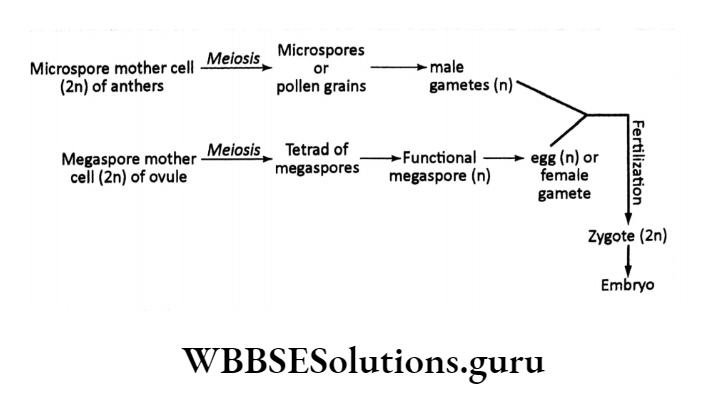
Question 5. Distinguish between Mitosis and Meiosis on the basis of the following three aspects-
- Site of occurrence
- Nature of division of chromosome
- Number of cells produced
Explain the following phenomena related to meiotic cell division—
- Separation of chromosome and chromatid
- Crossing over
Answer:
Important features of meiosis
WBBSE Class 10 Life Science Previous Year Papers
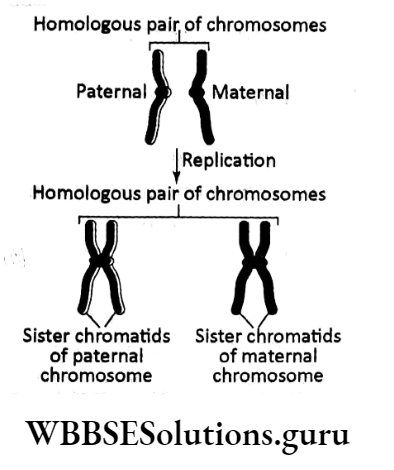
1. Homologous Chromosomes:
These are chromosome pairs of approximately the same length and centromere position. Note that diploid cells have two sets or one pair of homologous chromosomes.
Out of the pair, one is inherited from the mother (maternal) and one from the father (paternal).
2. DNA replication:
Replication of DNA takes place during the interphase preceding meiosis. DNA replication generates sister chromatids from each chromosome. Sister chromatids are two identical copies of a chromatid that remain closely aligned.
Although DNA replication occurs in interphase, no longitudinal doubleness of chromosomes is visibly evident in Leptotene of Prophase I owing to contraction.
3. Synopsis:
The movement of chromosomes initiates in the zygotene stage and this movement results from an attracting force that brings the homologous pair of chromosomes together.
The chromosomes become shorter and thicker due to compaction.
When they come closer, homologous chromosomes pair and align at the equatorial plate of the cell for equal qualitative and quantitative distribution. The pairing takes place throughout the length.
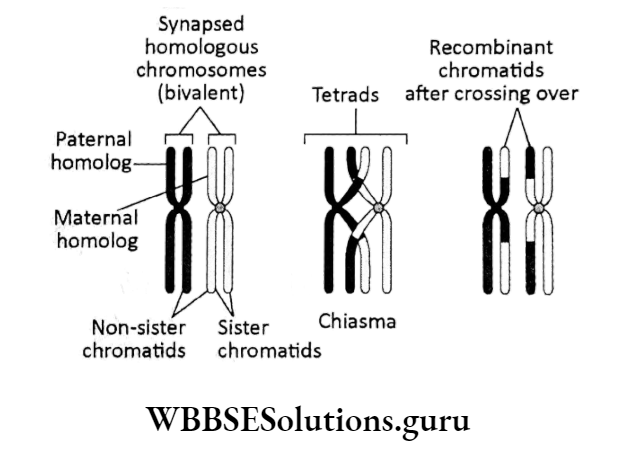
This process of pairing is known as synapsis Pairing takes place not only between the homologous chromosomes but also between homologous regions of the chromosomes. Chromosome pairs undergoing synapsis have approximately the same length and centromere position.
Out of the pair, one is inherited from the mother (maternal) and one from the father (paternal). Non-sister chromatids belong to homologs.
WBBSE Class 10 Life Science Model Question Paper 2023
These are chromosome pairs having the same length, staining pattern, centromere position as well as the same characteristics of genes at particular loci.
A homologous pair of chromosomes consists of one chromosome from each parent and they are known as bivalents. Each chromosome of a bivalent is found to have two chromatids. Thus the four chromatids of a bivalent are together known as a tetrad.
4. Crossing Over:
The pachytene subphase of Prophase I is marked by a process called Crossing over that happens after both the homologous chromosomes in a pair join up to form a structure called a tetrad through synapsis.
Once a tetrad is formed, a portion of each homologous chromosome breaks off transversely and is re-attached to the same part of its homolog. Crossing over occurs between non-sister chromatids of homologous Sister Chiasma chromatids chromosomes.
This mixes up the traits that are found in each of the chromosomes, thus resulting in genetic recombination due to the exchange of segments between two non-sister chromatids belonging to a bivalent tetrad.
As a result of crossing over, X like structure is formed between the non-sister chromatids. The point of attachment at the crossing-over is called chiasma. It occurs during Diplotene.
The number of chiasmas may be one, two, or more depending on the length of the chromosomes.
5. Terminalization Of Chiasmata:
Chiasmata are generally pushed to the terminal ends of the chromosomes and this process is known as the terminalization of chiasmata (singular: chiasma).
The pair of homologous chromosomes begin to separate in the diplotene subphase of prophase I and chiasmata are fully terminalized in the diakinesis subphase of prophase.
Reduction in chromosome number:
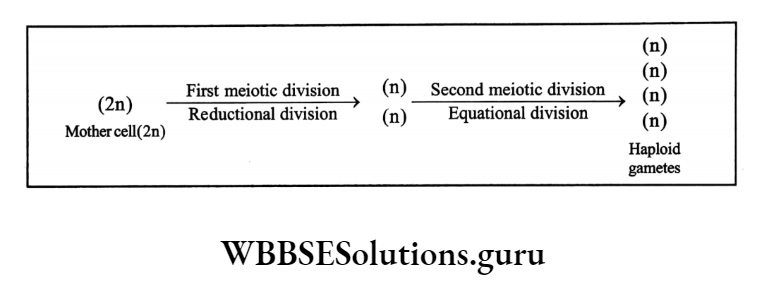
During metaphase I, the tetrads line up on the plate. During anaphase I, the homologous chromosomes separate from one another i.e. one homologous chromosome with its two sister chromatids move to opposite poles.
Thus each pole has a haploid (n) number of chromosomes i.e. a reduction in chromosome number is achieved at this stage.
Telophase results in the formation of two haploid (n) daughter nuclei with each chromosome having two chromatids. For this reason, the first meiotic division is known as the reductional or heterotypic cell division.
7. Equational division:
Meiosis II or the second meiotic division has four phases similar to mitosis and is the second round of cell divisions during meiosis whereby the cells formed during Meiosis I divide again to form four haploid (n) gametes.
Between these two stages, the interkinesis or interphase is either quite short or skipped, unlike normal mitosis. Because of this, the S phase does not occur and so the DNA in these cells is not copied, making the resulting cells from this phase haploid.
OR
Distinguish between the cytokinesis of plant cells with the cytokinesis of animal cells on the basis of the following aspects :
- Process
- Time of initiation
- Role of Golgi bodies
Answer:
The longest phase of mitosis:
Prophase
The shortest phase of mitosis:
Anaphase
WBBSE Class 10 Life Science Model Question Paper 2023

Establish the interrelationships among genes, DNA, and chromosome.
Answer:
Inter-Relationship Among Chromosome, DNA, And Gene
The eukaryotic cells contain a membrane-bound nucleus which is designated as the ‘Director of the cell’.
The nucleus contains many thread-like, coiled, and elongated structures called chromatin fibers or chromatin reticulum, or nuclear reticulum.
The fibers of chromatin are uniformly distributed in the nucleoplasm. Chromatin fibers are observed only during the interphase or the preparatory phase of the cell cycle.
Just prior to cell division, chromatin fibers condense, become thick, and wrap up very tightly to form ribbon-like structures called chromosomes.
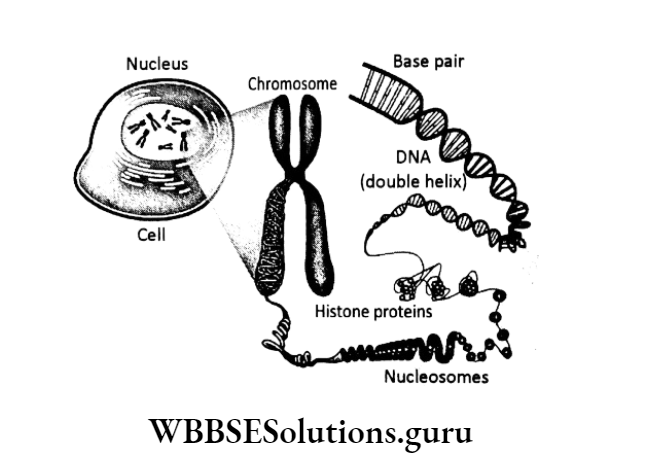
The number of particular species. They are usually found in pairs. Human beings have 23 pairs of chromosomes in each body cell.
The chromosome consists of a proteinaceous matrix and two spirally coiled chromonemata, each one of which contains a single DNA molecule.
The nucleus of an average human cell is only 6m in diameter, yet it contains 1.8 m of DNA which is distributed amongst the 23 pairs or 46 chromosomes each consisting of a single DNA molecule of about 40 mm.
Thus, Chromatin represents long-thin strands of the DNA-protein complex. It is unfolded and uncondensed form of DNA, while chromosomes are condensed DNA and protein.
The function of chromatin is to store DNA in the nucleus. Chromosomes are the bearers of hereditary instructions and regulate cellular processes.
DNA (or deoxyribonucleic acid) is the molecule that carries the genetic information in all cellular forms of life and some viruses.
It belongs to a class of molecules called nucleic acids, which are polynucleotides that is, long chains of nucleotides. Nucleotides are made up of a base, a sugar, and a phosphate. The four bases
chromosomes are constant in the nucleus for adenine (A), guanine (G), cytosine (C), and thymine (T) pair with each other (A with T and G with C).
WBBSE Class 10 Life Science Model Question Paper 2023
It is the order or sequence of these base pairs that provides the information needed for the growth and development of our bodies.
Specific parts of DNA carry the code for producing specific proteins which ultimately lead to the expression of different characters in an organism.
Each of these parts of DNA is termed a gene. Thus gene is the fundamental physical and functional unit of heredity that carries information from one generation to the next.
It is a segment of DNA, composed of a transcribed region and a regulatory sequence, that makes possible transcription. A series of genes are present in each DNA.
The coordinated interaction of two or more genes produces a given phenotypic trait. A complete set of chromosomal genes is inherited by the offspring as a unit from the parent.
Question 6. Predict what would be the hereditary results in the following cases :
- One of the parents is thalassaemic and the other is a carrier of the thalassaemic gene.
- Both of the parents are carriers of the thalassaemic gene.
What are the symptoms of Thalassaemia?
Answer:

OR
Tabulate three pairs of opposite traits regarding the seed of the pea plant as selected by Mendel. Show the process of sex determination in men with the help of a checkerboard.
Answer: