
Alternative Ideas And Initiative Characteristics And Discussions Introduction
- The pre-modern era can be said to have started from the middle of the 19th century which on advent of the 20th century had attained a lot of diversity and can be said to have reached its logical conclusion.
- The contemporary thoughts and initiatives had started evolving into more drastic thoughts and actions resulting in the culmination of the pre-modern era. Alternatives were thought over and practiced.
- The main traits of this period were thoughts that led to alternatives that were more logical, analytical, and rational. The Bengali printing era started in 1767 and was quite diverse and extensive at the start of a pre-modern era in 1834.
Read and Learn More WBBSE Notes For Class 10 History And Environment
Alternative Ideas And Initiative Characteristics And Discussions The Progress of Printing Press In Bengal
The Progress of Printing Press In Bengal Introduction:
- In 1557 Portuguese Jesuits founded the first printing press in Goa. The printing press in Calcutta was set up after 1778. Within 1800 there were 17 printing presses in Calcutta of which only one was under government.
- The Christian Missionaries were the real founder. of Bengali printing press. Printing press in Bombay was founded in 1764 and the Printing press in Madras was founded in 1772.
- James Augustus Hicky established the first printing press in Calcutta spending Rs. 2000 in 1778. The first English weekly newspaper ‘Bengal Gazette’ of Hicky was published by this press in 1780. Nine months after.
- Hickey’s gazetted ‘India Gazettee’ was published in November 1780 by Bernard Mesenic Charles Wilkins (Caston of Bengal) was founder of moveable bengali type or letters, who came to India in 1770 and as per instruction of Warren Hastings he prepared to publish the book ‘A Grammar of the Bengali Language’ of Nathaniel Brussi Halhead in 1778. At that time Wilkins took the help of Panchanan Karmakar of Hooghly to make Bengali blocks.
- From 1780 to 1800 three english newspapers were published like ‘Bengal Gazettee (1780) ‘The Calcutta Gazettee’ (1784) and ‘The Calcutta Chronicle’ (1786).
- In 1800 Serampore Mission Press was established by William Carey with the help of J. C. Marshman and William Ward. For the progress of press in Serampore Carey, Ward, and Marshman are still remembered with honour and also known as “Seramporetrio”.
- From ‘Serampore Press’ first monthly Bengali periodical ‘Digdarshan’ and the weekly Bengali paper ‘Samachar Darpan’ by Marshman were published in 1818. Ganga Kishore Bhattacharya was a compositor of the Serampore Press who resigned from his service and founded the ‘Bengal Gazette Press’ in 1818. From this press, he edited and published the “Bangala Gazettee” (1818).
WBBSE Class 10 History Chapter 5 Solutions
After 1820 bengali printing press rapidly spread and popularised: The first bengali daily newspaper ‘Sambad Prabhakar edited by Iswar Chandra Gupta was published in 1831.
- If we analyze the history of Bengali Press then we will be able to see how it had evolved over a period of time from its establishment in the eighteenth century to the pre-modern period starting in the middle of the nineteenth century.
- Most of the changes visible in the Bengali Press in the pre-modern age were due to the changes in printing technology. This also led to changes in the inscriptions of Bengali script resulting in more beautiful alphabets. Because of increasing demand, a new market for Bengali script blocks started spawning in the province.
- The writers became more independent and they were choosing their own publishers and printers according to their requirements. The progress in printing technology led to the reduction in time and costs of printing.
- Amateurism gave way to professionalism in the printing industry. Writers were also becoming more professional and commercially viable projects were being undertaken. The revolution. in the printing industry led to a proliferation of free thinkers who used this medium extensively to propound their thoughts.
- With the advent of modern printing technology, periodicals and newspapers were published regularly. Because of this the common man started getting associated with the new printing industry. The main reason for the pre-modern period of press being heralded in 1835 was because Charles Metcalfe had declared the Freedom of the press in that year.
- Some events of importance happened during the pre-modern period of 1835 to 1934, for instance Freedom of Press act of 1823 gave way to the Press Law of 1835 which removed the curbs on the private press.
- This led to tremendous development of the press in India, both in terms of the quality of writings and also the advancement of technology in the country. In 1831, the first Bengali Newspaper Sambad Prabhakar was started by Iswar Chandra Gupta. This was first a weekly but from 1839 onwards was converted to a daily newspaper.
- Establishment of printing press in India and Bengal. The printing press was introduced in India by the Portuguese. In Bengal also printing press was introduced by foreigners. John Andrews was the owner of the first printing press in Bengal. He was assisted in making letter blocks by Charles Wilkins and the only Bengali in his team was Panchanan Karmakar.
- In modern Bengal, printing and publishing started getting modernized from 1935. Instead of wooden blocks, metal blocks were introduced, printing of colored photographs was made possible through the introduction of the linotype and monotype printing processes. In 1935, linotype was first used in Ananda Bazar Patrika where 122 words were printed in linotype.
1. The relation of the development of printing to the growth of education or dissemination of knowledge Introduction:
- With the modernizing of the printing press, there was massive growth. in the spread of education since cheap books of education were easily available. After the start of the monthly Bangadarshan in 1872, the era of social newspapers started in Bengal.
- From the very first edition of Bangadarshan being published by Bankim Chandra, his novel Bishbriksha was introduced serially through this monthly. This was followed by his other works Indira, Chandrasekhar, Rajani, and Krishnakanter Will being published serially in the monthly magazine. Bangadarshan is acknowledged às, the first social newsletter.
- The famous Barnaparichay (Introduction to Alphabets) by Iswarchandra Vidyasagar was published in two volumes in the year 1855. From this work, it is clear that he wanted to introduce the system of 12 vowels and 40 consonants = 52 letters instead of the existing 16 vowels and 34 consonants 50 letters. A special Vidyasagar shart was formed to cater to the new alphabet system of Vidyasagar.
- Even before Vidyasagar, from 1840 to 1870 a new Bengali publication trend by the name of Battala was already existing. This was known as the ‘Battala Literature’.
- The most prominent publishers of this trend were Bisweshar Deb and Bhabanicharan Bandyopadhyay. Their publications were able to quench the thirst of new English-educated youth for more knowledge and literary works.
- The most prominent examples of Battala Literature were Nabobabubilash, Kolkatar Rangalaya, and Karunnidhan Bilash. Kabikankan Mukundaram’s Chandimangal, Bharatchandra’s Annadamangal (1847), Bidyasundar etc.
A lot of information about the kind of society existing those days can be found from plays written in those days like Kaliprasanna Singha’s Babu (1853), Ramnarayan Tarkaratna’s Kulinkula Sarbashya (1854) and Benisanghar (1856), Dinabandhu Mitra’s Nil Darpan (1816), Girish Chandra Ghose’s Prafulla (1889), Jana (1893), Billamangal (1888) and Pandava Gaurav (1900), Dwijendralal Roy’s Mewer Patan (1908), Shah Jahan (1909), Chandra Gupta (1911), etc. Contemporary readers were highly inspired by the literature that had the country’s ancient and historical content.
WBBSE Class 10 History Chapter 5 Solutions
- In 1876, a housewife of East Bengal Rashsundari Debi had clandestinely educated herself in her kitchen and went on to write her autobiography. This is supposed to be Bengal’s first complete autobiography.
- The readers were having an easy access to knowledge because of the printed books. There was a sea change in the thought process of the Bengali readers due to this. Examples of the most thought-provoking works however were ‘Fulmoni O Karunar Bibaran’ by Mrs. Molence (1852) and Aalaler Gharer Dulal by Pyarichand Mitra (1858). About Calcutta it is was mentioned it was a city of mosquitoes in the night and flies in the morning.
- For 22 years Bankim Chandra wrote nearly 14 novels, some of which were Kapalkundala (1866), Bishbriksha (1873), Anandamath (1882), and Debi Choudhurani (1884).
- The other great author of the times was Rabindranath Tagore whose works included Bowthakuranir Haat (1883), Rajarshi (1887), Chokher Bali (1903), Nowkadubi (1906), Gora (1910), and Ghare Baire (1916). Apart from being interested in these novels people were also getting inspired to revolt against the oppressive British rule existing those days.
- The relation of the development of printing to the growth of education or dissemination of knowledge Evaluation: Some other works in the same class were Taraknath Bandyopadhyay’s Swarnalata (1874) and Madhusudan Dutta’s Meghnadbadh (1861).
- Shibnath Shastri’s Ramtanu Lahiri O Tatkalin Bangosamaj (1903) was a work from which we can get a clear picture of the existing Bengali society. Similarly, wordsmith Sarat Chandra Chattopadhyay’s Birajbow (1914) and Grihadaha (1926) are works that throw light on the society of the times.
2. Commercial Initiative Of The Press:
- From 1780 to 1790 total 19 weekly and 6 monthly magazines were published from various printing presses of Calcutta. Gangakishore Bhattacharya was the first Bengali publisher and bookseller in Calcutta who published the book ‘Annadamangal of Bharatchandra.
In 1800, total number of printed books on Calcutta were 650:
Gradually various types of books were printed and sold. Barnaparichaya of Vidyasagar (1855) was published in 1869 to 1880-a total number of 50,000. In 1885-1886 there were 1094 printing presses in India of which 229 were in Bengal.
- The commercial initiative of the Bengali Press in the latter half of 19th century was spearheaded by Iswar Chandra Vidyasagar. He had tried to bring about the commercial advantages of the Press in Bengal.
- It must be said that he had a great influence on the Bengali publication. industry of those days. He along with his friend Madanmohan had established the Sanskrit Press in 1847 at Patoldanga 62, Amherst Street. He became the absolute owner of the press in 1856. From here many copies of his and others works were printed regularly.
- For instance nearly 50,000 copies of his work Barnaparichay was sold in the year 1856. He also opened the Sanskrit Press Depository the first book shop in College Street. Those days he used to earn a princely sum of three to four thousand rupees every month by just selling his educational books. For this reason, he is considered the first commercial book vendor of modern Bengal.
- However in transferred the exclusive rights of his bookstore to Brajanath Mukherjee in 1864. In 1885 in the autumn of his life, he opened another book store Kalikata Pustakalay on 24, Sukia Street.
- His own and other copywriting books were published and sold from this place. For these reasons Vidyasagar is also called Vidyabanik or the commercial educationist.
- In the second half of the 19th century Serampore Press was printing. books in 34 languages. Here the first Bengali book was printed by William Carey. He was assisted in this work by William Ward and J. C. Marshman. These persons were called “Serampore Trio”.
- Besides this many low-priced books and photographs for the common man were published by the Battala Publishers (1840-70). The printers were mostly located in Chitpur, Shobha Bazaar, Kumartoli, Jorashankho, Mirzapur, Simla, and Sealdah.
- Later on in 1912, the ‘Association of Bengali Book Publishers and Book Sellers’ was formed whose General Secretary was Sharat Kumar Lahiri and Chairman was Gurudas. Chattopadhyay. Following the footsteps of Vidyasagar, in the eighties of the 19th century, S. K. Lahiri (1883), Gurudas Chattopadhyay (1885), B. Dasgupta, S. K. Moinuddin (1886), etc. were the new age publishers who took the business initiative to develop the printing industry.
- S. K. Lahiri & Co., Jogesh Chandra Bannerji’s Canning Library, Gurudas Library, Bengal Medical Library, Dasgupta And Co. (1886), Indian Publishing House (1908), M. C. Sarkar & Sons (1910) etc. were the major printing houses. At the beginning of the 20th century, Allahabad resident Chintamani Ghosh established the Indian Publishing House in Kailash Bose Street.
- This House was mainly publishing books covering children’s literature, scientific dictionaries, children’s dictionary, etc. The joint efforts by the book publishers and booksellers helped to stabilize the book industry in the pre-modern period and took the industry into the modern period.
WBBSE Class 10 History Notes
3. Upendra Kishore Roy Choudhury And U Roy And Sons Introduction:
- Upendra Kishore Roy Choudhury (12th March 1863-20th December 1915) was better known as Upendra Kishore Roy. He was a prominent Bengali writer, artist, violin player, and composer and was also an entrepreneur.
- Though he was born in the Kishorganj district of Bangladesh, his professional life was spent in Calcutta. He was the son-in-law of the author of the book ‘Slave Trade in Assam’, Dwarkanath Ganguly, father of famous writer Sukumar Roy and the grandfather of the eminent Oscar-winning film director Satyajit Roy. He was one of the active members of the Brahmo Samaj. He had very close relations with the. Jorashanko Tagore family.
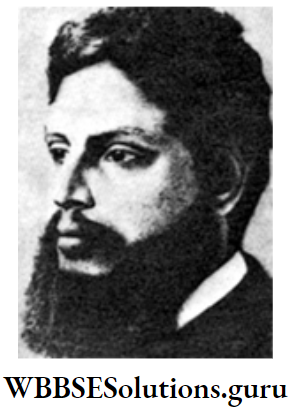
Upendra Kishore Roy Choudhury And U Roy And Sons Incredible Achievements:
The low-quality pointing and printing technology were highly developed under the initiative of Upendra Kishore Roy Choudhuri
- He introduced the “halftone block” which was a suitable block-making technique for using photographs in the book. Though he used wooden blocks at the evil of time, they gradually modified into metal blocks.
- He purchased modern equipment colour and chemicals.” from England in 1885, which brought a revolutionary change in the printing press.
Upendra Kishore Roy.” - He was the first person to introduce color printing in Bengal after it was started in Western countries. He was the first to introduce the modern half-tone blocks in South Asia.
- He had realized that the use of wooden blocks for printing his book Chotoder Ramayan was very outdated. So he went to England and learnt the craft of printing with modern blocks and in came to India and started a successful business of making modern printing blocks.
- He had written about his knowledge and experience in making modern printing blocks and this was also published in England in “Penrose Annual and was awarded and admired.
- Upendra Kishore with the help of photography printed pictures, inside the book and cover page, which was called “Process Work”.
- To develop the printed picture quality in the composed matter, he used the art of process namely the ‘Sixty-degree screen’, ‘diagram method’, ‘screen adjuster machine’, ‘idiotype’, ‘reprint method’, and ‘tint process’ to print properly the color pictures. He was the first and last Indian for these incredible achievements.
- He founded a studio for drawing pictures parallel with the growth of printing. He founded his own publication house at Sibnarayan Das Lane Kolkata in 1895 namely ‘U. Roy & Sons’ and the advertisement of this company was published first in 1896. He surprised the Western World by reforming ‘The European Engraving Printing Method’. It is very interesting to note that Upendra Kishore’s invention of the Screen Adjester Machine was commercially made in England with the new brand name ‘Roy Screen Adjester Machine’.
- In 1913 he was the first Bengali in Asia to start coloured printing press named U: Roy and Sons, located in 100, Garpar Road near Maniktala North Calcutta, from where the first children’s magazine ‘Sandesh’ published in 1913 AD. He was also an expert in drawing building plans.
- His son Sukumar Roy was sent to England in 1911 with the “Guruprasanna Scholarship” from Calcutta University for higher education on printing and as a result, he got his engineering degree in printing technology from the University of Manchester (UK). In 1904-05 he has been mentioned in the Penrose Annual Volume 10, a handbook of British Printing and Technology as ‘Mr. Roy is a successful person in the world of printing.
WBBSE Class 10 History Notes
Upendra Kishore Roy Choudhury And U Roy And Sons Evaluation:
- Upendra Kishore made a stellar contribution to children’s literature. He published books like ‘Goopi Gayen Bagha Bayen’ which was made into a movie by his grandson. Satyajit Roy. Besides this, his other works included ‘Tuntunir Boi’ and ‘Chheleder Ramayan’, ‘Sekaler Katha’ etc. He started the first colored children’s magazine ‘Sandesh’ (1913).
- Though the publishing house U. Roy & Sons was a business house, many of the creations of Upendra Kishore and his son Sukumar Roy were published from this place.
Alternative Ideas And Initiative Characteristics And Discussions The Progress Of Bengals Science And Technology
- The progress of science and technology in Bengal started in the latter half of the 19th century. The first college of technology, Bengal College of Civil Engineering was established in 1856. Initially, it started its operations from the Writers Building. Later on in 1857 it was re-christened as Bengal College of Engineering. This was accredited to the Calcutta University.
- In 1865 this was attached to the Presidency College. In 1880 this was delinked from the Presidency College and shifted to the Bishop College premises in Shibpur. Some other elements which contributed to Bengal’s development in science were Acharya Prafulla Chandra Roy’s ‘Bengal Chemicals’ and Dr. Nil Ratan Sarkar’s ‘National Soap and Medicine’s Factory’.
- Besides this Sir Roland Ross’s works on the Blood Circulatory System and the discovery of the Kalajar medicine by Upendranath Brahmachari are notable developments in the progress of Bengal’s science. Besides this Sir Jagadish Chandra Bose’s contribution in the development of the radio is noteworthy.
1. Indian Association For Cultivation Of Science Introduction:
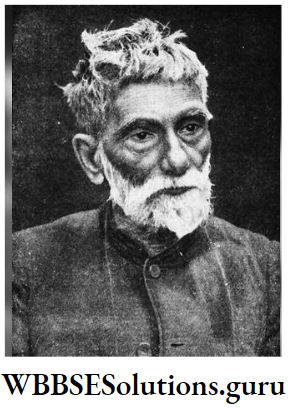
On 29th July 1876. Mahendra Lal Sarkar established the Indian Association for Cultivation of Science (IACS). This was India’s first and oldest center for study in the areas of basic science.
This is why Dr. Mahendralal Sarkar is called “The Father of the Study of Modern Science: Professor C. V. Raman was attached to this institute from 1907 to 1933. He received his ‘Nobel Prize’ in 1930 because of his research in light waves called the “Raman Effect’ (1928) from this institute.
Class 10 History And Environment Chapter 5 Notes
Indian Association For Cultivation Of Science Objectives:
This institution was run by contributions from the citizens and was located at 210, Bowbazar Street but now it is situated at Jadavpur.
- In the 19th century Bengal, this institution contributed immensely to the development of Bengal’s intellectual and cultural faculties. This institution was proud of its solely native and purely national character. The objectives of IACS were
- To spread the scientific knowledge without government aid,
- To spread and popularise the scientific movement,
- To encourage young students the study and research the basic sciences,
- To make the progress of country science education is needed,
- Cultivation of science for the welfare of the country in the future. The main goal is research in basic sciences. Even today the IACS is continuing to work with this goal in mind and the object is to make the lives of mankind more comfortable.
- In the first phase the lecturers at this institution were highly qualified people. They included the likes of Father Eugene Lafont, Jagadish Chandra Basu, Chunilal Bose, Premnath Bose, and Ashutosh Mukherjee.
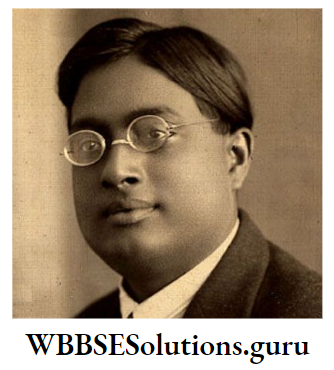
- Then in the IACS trusty board luminaries like Vidyasagar and Keshab Chandra Sen were present. In 1912 the first Indian President of IACS was Raja Pyarimohan Mukherjee. His successors included here Dr. Nil Ratan Sarkar, Gyan Chandra Ghosh, and Satyendranath Bose (an eminent physicist).
- In 1907 with the leadership of Sir C. V. Raman, IACS started developing into a new trajectory. At that time Dr. Mahendralal Sarkar’s son Amritlal Sarkar was the institute’s secretary.
- He provided leadership to all the research work. Dr. Raman published his papers on physics called the “Raman Effect” in 1928. He was awarded the Nobel Prize for this research. Following Raman’s footsteps many new areas of science were developed from the IACS. Prominent amongst them was K. S. Krishnan who worked on Modern Magnetism and Structural Physics. Similarly prominent scientist K. Banerjee worked on Crystallography.
Indian Association For Cultivation Of Science Evaluation:
Later on, the IACS became India’s premier center for research in material sciences. Today also many students come from various places of India to study and continue. research in the IACS. Some of the eminent scientists who carried out research in the latter years were D. S. Bhagwantam, L. Srinivastav, N. K. Seti, C. Prasad, and Meghnad Saha.
2. Calcutta Science College Introduction:
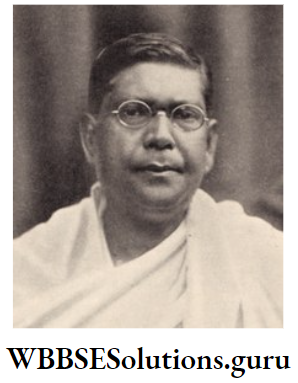
Sir Ashutosh Mukhopadhyay founded the “Calcutta Science College” or “University College of Science and Technology” on 27th March 1914. He also founded the ‘Calcutta Mathematical Society’.
- Lawyer and educationist Sir Tarak Nath Palit and Sir Rashbehari Ghosh helped him to establish Calcutta Science College for the purpose of the study of Swadeshi science.
Calcutta Science College Objectives:
They contributed Rs. 37-5 lakhs and land for Calcutta Science College. For these reasons the two main campuses are “Rajabazar Science College” is now known as “Rashbehari Shiksha Prangan” and “Ballygunj Science College” is known as “Taraknath Shiksha Prangan”.
- Those who came to teach the students of Calcutta Science College were Sir C. V. Raman (Physics), Dr. Sishir Kumar Mitra (Physics), Acharya Prafulla Chandra Roy (Chemistry), etc. Many students of the college (1915) who became scientists in their later life were Satyendra Nath Bose and Meghnad Saha (Physics), Gaganendra Nath Mukherjee, Gyan Chandra Ghosh and’ Priyada Ranjan Roy (Chemistry), Ganesh Prasad and Nikhil Ranjan Sen (Maths).
- Calcutta was soon made a centre for research in Radio Physics by Shishir Kumar Mitra (28 August 1890-13 August 1963). In spite of the tremendous research being done in the West in the field of Radio Physics, Shishir Kumar Mitra along with his colleagues made a great invention in this area in 1930. Dr. Mitra and his fellow researcher. Dr. P. Shyam took the research of Radio Physics to new height.
- Dr. Mitra started a separate course in Radio Physics at Calcutta University. This was the first established course in the study of Radio Physics in India. Dr. Mitra followed this up with the opening of the new Department of Radio Physics and Technology at Calcutta University.
Calcutta Science College Evaluation:
‘A lot of research was done about the various layers of the lone sphere. He established the Lonespheric Field Station in Haringhata about 45 kilometers from Calcutta in 1950. He was also India’s first pathfinder for Radio Broadcasting.
- He was the founding member of the National Institute of Sciences in Calcutta. He was also the President of the Asiatic Society from 1951 to 1952. Because of his achievements, he was awarded the ‘George V Silver Jubilee Medal’ in 1935.
- He was also the recipient of other awards like the ‘Joy Kishen Mukherjee Gold Medal’ in 1943 from the Indian Association for the Cultivation of Science and again in 1956 received the ‘Calcutta Science Congress Medal’ from the Asiatic Society.
- In 1958 he was declared a fellow of the Royal Society in London’. In 1962 he was awarded the ‘Padma Bhushan’.
Class 10 History And Environment Chapter 5 Notes
Meghnad Saha (6.10.1893-16.2.1956):
Meghnad Saha was a space scientist and in 1916 he joined the Applied Mathematics department of the University College of Sciences.
- After getting many accolades both nationally and in the international arena, he established the Institute of Nuclear Physics in Calcutta, which later on was renamed Saha Institute of Nuclear Physics.
- After establishing the National Institute of Sciences advised the then Prime Minister Jawaharlal Nehru on the development of industry and national planning. Because of his efforts the Indian Institute for the Cultivation of Science and Glass and Ceramic Research Institute were established.
- Meghnad Saha was born into a very poor family but rose to great heights because of his efforts and brilliance. He died in a road accident while on his way to attend the Planning Commission meeting at the Rashtrapati Bhawan in New Delhi.
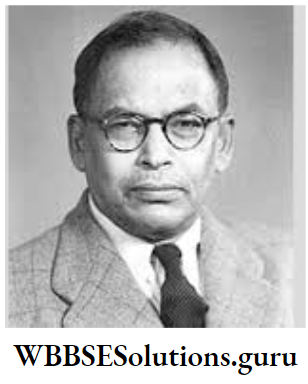
Prasanta Chandra Mahalanabis (21.6.1893-28.6.1972):
Prasanta Chandra Mahalanabis was the nephew of Dr. Nil Ratan Sarkar and after finishing his studies in Mathematics and Statistics from Cambridge had joined the Indian Education Service.
- He established the Indian Institute of Statistical Sciences at Baranagar in 1931. Acharya Prafulla Chandra Ray (1861-1944) established the ‘Bengal Chemical and Pharmaceutical Works Limited. He was the first to initiate a discussion on science and technology in Bengali.
- The ISI was earlier known as the Statistical Laboratory. This was started as a department in the Presidency College of Calcutta. Mahalanabis had modeled the institute along the lines of the Institute of Statistics in the US. In 1951 the institute was renamed as the Institute of Statistical Sciences by the Indian Parliament.
3. Bose Institute of Sciences 1917 Foundation:
On 30th November 1917, Acharya Jagadish Chandra Bose established the ‘Bose Institute of Sciences’. He resigned from the physics department of the Presidency College on 30th November 1915.
Bose Institute of Sciences 1917 Objectives: The objectives of the foundation of this institute were
- To study both life and non-life sciences. From his early life, he was associated with many weird researchers.
- He was fascinated by electromagnetism and did a lot of research and experiments on the subject.
- According to physicist J. J. Thomson, Basu had heralded the scientific culture in India. Influenced by his research Dr. D. M. Bose and Dr. Bibha Choudhury did research on sound motion tracks.
- Bose also contributed to the research on paramagnetic compounds.
- The Bose Institute of Sciences focused on six areas of research-Material Sciences, Chemistry, Botany, Micro-Biology, Bio-Chemistry, and Bio-Physics. Apart from these Physics, Physiology, Environment Science, etc. are also studied and researched.
- A very important contribution by the Bose institute of Sciences was the invention of the vaccination for cholera. Prof S. N. Dey was the main architect of this project. The study of modern biology was started at the Bose Institute.
- Prof B. B. Biswas and his team of scientists were able to invent the Phosphate Cycle in plants.
- About 600 staff and students continue to study and research in three of the campuses of the Bose Institute of Sciences. The main campus of this interdisciplinary research institute is situated at the former residence of Jagadish Chandra Bose nearby Raja Bazar. Science College, Kolkata. Prof S. N. Dey invented vaccination of cholera from Bose Institute of Science. Jagadish Ch. Bose invented the ‘Crescograph machine’ to prove the life of tree.
- In 1920 he was elected as a member of ‘The Royal Society of London’ and his research was recognized. Located on the main campus is the J. C. Bose Museum. Many of his handwritten documents, his instruments and machines that he designed, and also many of his personal items have been preserved here.
- The ‘National Information System for Science & Technology’ (NISSAT) has mentioned about the unparalleled contribution and influence the Bose institute of Sciences has made on the research in the field of biology and microbiology in India.
Bose Institute of Sciences 1917 Evaluation:
This multifaceted institution is one of the fountain heads of research in India. In the 9th Planning Commission, the institute was granted funds to the tune of thirty crore rupees to ensure continuation of research in key areas.
- Here national and international researchers of all areas of science are recognized and awarded prizes for excellent work in their respective fields. Many of the accomplished scientists from this institution have received awards like the “S. S. Bhatnagar “and the “Homi Jehangir Bhava Fellowships”. The young scientists receive the young scientists DST, DBT, and INSA awards.
4. National Council of Education 1906 Background:
By passing the ‘Indian University Act. of 1904’ Lord Curzon encroached upon the autonomy of Calcutta University. It dissatisfied the educated people of Bengal.
- The Land Holders Society of Calcutta had a meeting on 16th November 1905 in Park Street. Some of the noteworthy personalities among the 1500 people present were Brajendranath Ray Choudhury, Aurobindo Ghosh, Raja Subodh Chandra Mullick, and Rajendra Kishore Roy Choudhuri.
- Then at the behest of the Chairman of the Meeting Barrister Satyendra Nath Thakur, it was decided to form the National Council of Education. The NCE was established on 15th August 1906.
Class 10 History And Environment Chapter 5 Notes
National Council of Education 1906 Purposes:
The contemporary nationalists of Bengal thought about establishing the National Council of Education (NCE) for some purposes like
- To set up an education system controlled by Indians in place of British dominance,
- To create national consciousness;
- To challenge British control over the country’s education system,
- To keep peoples’ education in the hands of concerned people,
- To offer education to the masses of Bengal on “National line and national control” under NCE,
- To draw up a curriculum for three-year primary, seven-year secondary, and four-year collegiate courses,
- To arrange for literary, scientific, and technical education under the control of NCE. The role of the National Council of Education (NCE) in development of the technical education in Bengal is noteworthy. Following this S. C. Mullick agreed to donate one lakh rupees for the creation of the National University.
- The creation of this University was a challenge to the education system of the British government. Rashbehari Ghosh was appointed the first President of the NCE. The NCE was set up in defiance of the existing University Law instituted by Curzon (1904).
National Council of Education 1906 Evaluation:
- The Bengal National College and The Bengal Technical Institute was set up during this period. The National School was also set up during this time.
- This constituted of 25 high schools and 300 primary schools. But the National Council of Education’s activities were limited to Calcutta. The districts and villages were not covered by the NCE. From the records of 1908 it is quite evident that out of a total budget of 1,25,000 rupees only 12,000 rupees was allocated for the development of schools in the districts.
5. Bengal Technical Institute:
- The Bengal Technical Institute (BTI) was set up by a Bengali engineer Taraknath Palit on 25th July 1906. The main objective was to provide technical manpower to the Swadeshi (native) engineering projects. This institute was set up almost at the same time as the NCE. Today this institute is known as the Jadavpur Engineering College.
- During the foundation of BTI Dr. Palit also founded SPTE. In 1910 the Society for the Promotion of Technical Education (SPTE) was entrusted with the work of controlling the Bengal Technical Institute. Bengal National College was merged with the Bengal Technical Institute in the year 1910. The first Principal of the Bengal National College was Arabindo Ghosh.
- In 1924 Bengal Technical Institute was shifted to Jadavpur. The study of ‘Chemical Engineering’ started first in 1921 in the Bengal Technical Institute (BTI). Later on this institute was re-christened 1928 as the “College of Engineering and Technology”. The institute was deeply connected to the National Council of Education. The students of this institute published a paper named ‘Tech”.
- The NCE from 1940 got the status of a University. On 24th December 1955 the Government of India through an act of the Parliament converted this council to the Jadavpur University. But it is to be noted that the first Mayor of Calcutta Deshbandhu Chittaranjan Das had provided leased land to the engineering college.
Alternative Ideas And Initiative Characteristics And Discussions Criticism of the Colonial System Of Education
The existing or established education system during British rule in India was colonial. In this system,
- Strict discipline was enforced by the teacher,
- There was always a fear of failing the exams and
- The students were usually confined to their classes. Therefore, Rabindranath was not at all in favor of this system of education. He was a rabid opponent of the existing system of education in the country, though he was influenced by Western education and studied at London University.
Class 10 History And Environment Study Material
As a critique, Rabindranath criticized the colonial ideas of education for many reasons
- He was not ready to accept the methods adopted by his teachers during his school days. He had himself admitted that he was more of a school dropout.
- The fact was the children never enjoyed the strict discipline employed by their teachers. For Rabindranath, a school was necessarily a tool or a factory for providing education to children. The teacher was just a part of this factory.
- The factory was necessarily opened by ringing the bell at 10:30 in the morning and again closed by ringing the bell again at 4 in the evening.
- Opposing this colonial mode of education, according to Rabindranath, education should be such that it enables and promotes the students to think and evaluate. Only then education will lead to the all-round development of the thought process of the mind and a child will not simply grow but evolve into a complete man with an ideal character.
- This type of education has to be imparted to students from their childhood. The European kind of education was not able to provide this freedom for the development of the mind.
- In his work Rabindra Rachanabali 14th volume he has dwelt on the problem of education existing in the country. He had commented, “We have studied in English schools, where only the English ideals are visible.
- This education ignores our country’s history and culture. Commenting on the colonial system of education he has stated that this was more like a chain that was forcibly ensuring that we remain in bondage. There is no development of the mind in this system of education.
- He thought that the Gurukul system of education existing in ancient India was far more effective for the development of the Indian mind. According to him contrary to the colonial education system the Gurukul system allowed the mind to evolve and develop on its own.
According to him the joy of education and going to school was missing in the colonial form of education. First, the child should learn through traditional methods in his mother tongue and after his mental faculties are developed he should enter into the world of education.
- Colonial education was imparted through the medium of English language which was alien to the Primary and Secondary level of Indian children.
- Moreover, the course and the thoughts were also foreign. This was more like that education had to be swallowed by the child. The alien language was creating a deep chasm between education and the real life.
- To maintain a balance between education and life the mother language had to be an integral part of the education system.
- In colonial education, there is no glory of Indian cultural legacy of past or feeling national heritage of the country. Besides English medium and english words are very obscure and lifeless to the learners.
- So they lose their link with the core of life and their living world and therefore quality of life and teaching is impossible through colonial ideas of education. According to Rabindranath, the fundamental purpose of education is not “to enrich ourselves through the fullness of knowledge”, the bond of love is equally important. He also thought that humanist creative education within natural environment must promote inner harmony between nature, man, and god.
- Rabindranath felt that in the name of education, there was oppression on the students. He advocated that the students should themselves be able to evolve on their own, decide and analyze their own performance and in case of failures should be able to stand up to the punishments on their own.
- From these thoughts, Rabindranath was able to create his education system in form of the creation of the institute of Shantiniketan.
1. Rabindranath And The Ideals Of Shantiniketan:
- The ideals of Rabindranath’s education system had two sides-theory and practical. The. theoretical side of his views on education has been described by him in numerous writings, speeches, and discussions. These views he had put into practice by the creation of Shantiniketan, Sriniketan, and Visvabharati. And this he did in the harsh lands (khowai) of Shantiniketan.
- For this, he had not asked for any moral or economic support from his countrymen. Maharshi Debendranath Tagore had set up a small ashram named Shantiniketan on nearly twenty bighas of land in Bolepur.
- The Maharshi had been able to rest his tired’ body, replenish his soul from the natural surroundings, and had a very mind-fulfilling stay at the ashram. That’s why he had named it Shantiniketan. His son Rabindranath had first visited this place at the age of twelve.
- Later on this became the place where Rabindranath was able to set up the educational institute of his dreams and gave birth to today’s Visvaniketan.
The first school of Shantiniketan was set up in 22nd December 1901. This school was known as Path Bhavan. Brahmabandhav Upadhyay one Christian gentleman had helped Rabindranath greatly in this project. - The country had awarded him the title Raj Chakraborty for his efforts. However, it must be said that the original idea for setting up school here was that of Bolendranath Thakur, the elder brother of the poet. However, on his sudden demise, Rabindranath took it upon himself to fructify the dreams of his brother.
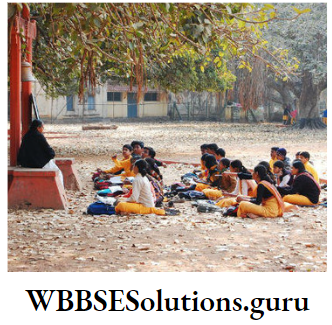
- Rabindranath started the school with just five students. He had laid down strict rules of conduct for them. The morning was to start with prayers after the ablutions. Then this was to.. be followed by recitation of the Vedic mantras and paying respects to the teachers. They were then made to go barefoot in saffron attires without any umbrella and sit for lessons under a tree. The food served to them was purely vegetarian. Other than cooking, almost all the work including drawing water from the well was to be done by them.
- The last forty years of Rabindranath Tagore were centered in Shantiniketan. The great poet had shifted permanently to Shantiniketan in September 1901. At that time he was the editor of Bangadarshan. The very next year on 23 November 1902 his wife Mrinalini Debi died in the ashram. However, all obstacles and tragedies could not keep the bard from realizing his dreams.
Class 10 History And Environment Study Material
2. Initiative For the Creation Of Visvabharati:
- Gurudev Rabindranath at the age of 57 took the initiative for the creation of Visvabharati. He shared his ideas first to some Gujrati businessmen. Then he used the word Visvabharati for the first time in magazine Shantiniketan.
- Finally in 1918, on 23rd December he established Visvabharati. The actual work for the institution started in 18th July 1919. He was helped in his efforts by Charles Frear Andrews. Also, he was influenced by Madras based National University which was set up by Annie Besant.
- After touring Europe and America in 1921, Rabindranath Tagore formed the Visvabharati Council and the Association for Creation of Visvabharati. Then in December of the same year with Pandit Brajendranath Sil as the Chancellor and 10 students the Visvabharati University was formed.
- The first Principal of the college was Bidhusekhar Bhattacharya, Without him the idea of Visvabharati would not have fructified. He took Rabindranath’s idea of the Visvabharati’ forward by resorting to the following ideals.
- The entire world’s combined knowledge to be studied here.
- Visvabharati will be the home for the students from all over the world.
- It will be a residence for the entire world’s knowledgeable personalities who will congregate here to discuss and evaluate their knowledge.
- The ideals of Rabindranath and the entire world will merge at Visvabharati.
- With the encouragement of Rabindranath Tagore many foreign teachers had gained admittance in the university. Some of them were Marc Clarke from Germany, M. Bonoya and Silvat Levi from France, Others were Lesin from Prague, Winternitz and Tucci Fermici from Italy, Casanova from Russia, the Bakes couple from England, Casahara and Tan Yun Sun from Japan, and Dr. Harry Timber and Mrs. Timber from the USA.
- The idea of Shantiniketan was to merge the thoughts and philosophies of all countries of the world with that of India’s. The University came up in the Bolepur district of Bengal and it was established a month after the end of the First World War. The war had a great influence on the poet and he wanted to create an institution that valued world peace.
- Brajendranath Sil tried to describe the endeavour of creating the University, in his words as ‘the whole world. should come to India (Shantiniketan), the people who come here will be educated in Indian ethos and culture, will adopt Indian thoughts and ways of life, and this will inspire the locals (Indians) to understand their own values and culture.
- Simply searching an identity for oneself in the world is not enough, the objectives of Visvabharati are far wider. It is essential to not only realize oneself, but it is also to feel oneself. through others also.
- Man will achieve salvation here through interaction with other men. These ideals were the basis of the formation of Visvabharati. Born out of Colonialism, Shantiniketan is a historic name in the annals of history.
- Ten years after Rabindranath’s death, Visvabharati was given the status of a Central University and its first Chancellor was Jawaharlal Nehru and the first Vice-Chancellor was Rathindranath Tagore, the poet’s son.
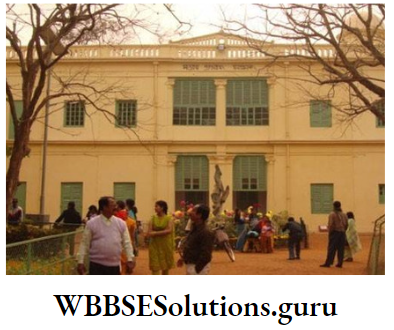
Srinikatan:
- The poet has said that the education in every country gives way to the ways of life in.that country. In India he said that the current education ensures that a person will become a clerk or a daroga (head constable). Modern education is very difficult to introduce in a country full of tillers and potters.
- In no other educated country this is possible. From this concept of vocational education Rabindranath Tagore founded the second campus of Shantiniketan in Surul village of Birbhum named Sriniketan in 1922-23 AD. Its first director was Sir Leonard Elmheirst. Its main objectives and activities are
- Agriculture training,
- Training in the dairy firm,
- Poultry firm,
- Pisciculture,
- Set up of charitable dispensary-“Palli Mangal”,
- Weaving textile,
- Rural reconstruction,
- Training in art and craft, etc.
- An ideal school according to Rabindranath should be a place where economics, agricultural science, and health. sciences and all other practical sciences should be taught which will help in making the lives of his countrymen more easy.
- This school should be a place that studies subjects that the average Indian usually deals in like-cow rearing, cloth weaving, existing economic systems, and even the lives of the Adivasis in the country.
3. The Fusion Of Man Nature And Education:
- Rabindranath was not only a poet, novelist, dramatist, artist or a literary figure, he was also an educationist. He believed that a child not only grows in the arms of nature.
- According to him for the child, nature is the ideal teacher. This is possible only in a Gurukul-like atmosphere. Only then man, nature, and education can be fused together. Rabindranath was aware of the difficulties that such an education system will face in future.
- He said, ‘Even the most ignorant person cannot deny the necessity of open air, skies, and green vegetation for the proper development of a child. When the child’s heart is new and untouched when his mind is full of curiosity, all his senses are sharp, then one should allow him to play under the sun and the clouds, we should not lock them up in the classrooms.
- Simple way of life and love for nature had influenced Rabindranath to a great extent which he put into practice in envisaging Shantiniketan’s environment.
- In his childhood days while studying in ‘Norman School’ he had missed the open skies and fresh air, as the marble floors, and brick walls of the school had stared down at him. He realized that a child’s mind always longed for outdoor activities and that nature have an important role in developing the mind and the body of a child.
- The poet’s mind resided in the open environment of Shantiniketan. The greens of nature were the best teacher for the children. Probably the poet himself took the first class of the children under a blueberry tree.
- The education philosophy of Rabindranath Tagore was related to his philosophy of life. It is difficult to make understand his education philosophy through a definition. As an idealist he realized that education is needed only for the man of soil of this earth; not for any spiritual world.
- The thought of education philosophy of Rabindranath had been explained in his 23 essays on education written during 44 years. Some of these articles are very important and relevant in this connection.
- Theoritical and practical aspects of education in reference of Brahma Charia Ashram Vidyalaya, Visvabharati, and Sriniketan of Santiniketan have been discussed in the articles named ‘Siksher Herpher’ (1893) and ‘Chatra Sambhasan’ (1937) without experiment and practical proper education is not possible.
- Rabindranath wanted the ‘gurukul system’ of Vedic Ashramik education in modern life. It help to grow up the cognitive development of the children. Vernacular language rather than English language is the best way of teaching. In the colonial education system medium of English for primary and secondary level students in very difficult than Bengali.
WBBSE History And Environment Notes Chapter 5
Rabindranath thought that it will never promote national sentiment amongst learners. So English may be a language of working it could hardly evoke any joy of impression in the heart of Bengali knowing learner.”
- In the education philosophy of Tagore, he planned for an education system to be a perfect and complete man. The fundamental purpose of education is not to enrich ourselves through the fulfillment of knowledge, but to establish bond of love, humanity, and hearty relationship with others.
- His idea of education was related to the growth of knowledge as well as physical, mental, and spiritual growth and development. For an inner harmony between man, nature, and god these are necessary.
- A village welfare program was included to his education philosophy. He founded the “Welfare fund” for village welfare, village reconstruction, and the foundation of a school- Madrassa-Mosjid-Temple, etc. In Shilaidaha he founded ‘Maharshi charitable Hospital’ and sent his son Rathindranath and his son-in-law Nagendranath Ganguly to America for higher study in agriculture.
- He preferred creative learning for learners in the lap of nature. He believed that by staying in harmony with nature, learners must be able to create their natural creativity. Nature and lonely place is the best ideal education.
- It encouraged him to establish ‘Panchabati’ in 1925. In the article ‘Aranyadevata’ he advocated aforestation and heated the policy of deforestation. In his another article ‘Siksha Samasya’ he suggested a peaceful, lonely, and greeny place for the foundation of school with natural and beautiful scenery.
- Rabindranath was in favor full freedom for child education. Teachers must be “friend, philosophers, and guides” to the students. The must understand the child and help to improve curiosity in the mind of the learners. The aims of his philosophy of education were
- To leave laxyry and gain brahmacharya,
- To learn Indian culture to students,
- To develop universal mental outlook,
- To arrange for all round development of the learners.
- To him the aim of education is “Sunthesize knowledge and feeling”. The article ‘Sikshar Milan’ (1921) he wrote that Indians must obtained the western knowledge and Western philosophy to synthesize east and west. In the essay ‘Siksha’ he wrote “Our true education is possible only in the forest, through intimate contace with nature and purifying austere pursuits.”
WBBSE History And Environment Chapter 5 Alternative Ideas And Initiative Characteristics And Discussions Very Short Answers
Question 1. What was the first Bengali newspaper?
Answer: Sambad Prabhakar.
Question 2. When was linotype used for the first time?
Answer: Linotype was first used in Ananda Bazar Patrika in 1935.
Question 3. Who was the author of ‘Alaler Ghorer Dulal’?
Answer: Pyarichand Mitra.
Question 4. Which press was set up by Vidyasagar and his friend Madanmohan?
Answer: Vidyasagar along, with his friend Madanmohan set up the Sanskrit Press in 1847 at Patoldanga, 62 Amherst Street.
Question 5. Who was the pioneer of coloured printing press in Asia?
Answer: Upendra Kishore Roy Choudhury.
Question 6. What was the first college of technology in Bengal?
Answer: Bengal College of Civil Engineering established in 1856.
Question 7. Which institution was established by Mahendralal Sarkar in 1876?
Answer: Indian Association for the Cultivation of Science.
Question 8. Who were the founders of Rajabazar Science College?
Answer: Taraknath Palit and Sir Rashbehari Ghosh.
Question 9. What was the objective of the Bengal Technical Institute?
Answer: The main objective of Bengal Technical Institute was to provide technical manpower to the Swadeshi engineering projects.
WBBSE History And Environment Notes Chapter 5
WBBSE History And Environment Chapter 5 Alternative Ideas And Initiative Characteristics And Discussions True Or False
Question 1. ‘Bengal Chemical’ was set up by Jagadish Chandra Bose.
Answer: False
Question 2. Prof. C. V. Raman was associated with Calcutta Science College.
Answer: False
Question 3. Rabindranath Tagore was apposed to the colonial system of education.
Answer: True
WBBSE History And Environment Chapter 5 Alternative Ideas And Initiative Characteristics And Discussions Fill In The Blanks
Question 1. _______ declared freedom of press in the year 1835.
Answer: Charles Metcalfe
Question 2. ________ was the first English newspaper in Bengal.
Answer: Bengal Gazette
Question 3. The readers could have easy access to knowledge because of ______
Answer: Printing press
Question 4. The university set up by Rabindranath Tagore was called _______
Answer: Visvabharati
Question 5. ________ established the Indian Institute of Statistical Sciences at Baranagar.
Answer: Prasanta Kumar Mahalanabis
WBBSE History And Environment Chapter 5 Alternative Ideas And Initiative Characteristics And Discussions Short And And Answers
Question 1. What was the contribution of Upendra Kishore Roy Chowdhury in the field of printing press?
Answer:
The contribution of Upendra Kishore Roy Chowdhury in the field of printing press
He was the first person to introduce modern halftone blocks in South Asia, which he learned from England. He was also the first person to start a colored printing press located at Garpar Road and named it U. Roy and Sons.
Question 2. What was the contribution of Meghnad Saha in the field of science?
Answer:
The contribution of Meghnad Saha in the field of science
Dr. Meghnad Saha was a space scientist and joined the Applied Mathematics Department of the University College of Science. He established the Institute of Nuclear Physics in Calcutta, which, later came to be known as the Saha Institute of Nuclear Physics.
Question 3. What were the ideals on which Visvabharati was established?
Answer:
The ideals of Visvabharati were:
The entire world’s combined knowledge to be studied there; it would be the home for students all over the world; it would be a congregation of academics from all over the world and the entire world would merge at Visvabharati.