WBBSE Solutions For Class 8 English Third Summative Evaluation Test

Third Summative Evaluation Test Set 1

Reading Comprehension (Seen)

Read the text and answer the questions that follow:

In 1920, when I was still only three, my mother’s eldest child, my own sister Astri, died from appendicitis. She was seven years old when she died. Astri was far and away my father’s favorite. He adored her beyond measure and her sudden death left him literally speechless for days afterwards. He was so overwhelmed with grief that when he himself went down with pneumonia a month or so afterward, he did not much care whether he lived or died.

Read And Learn Also WBBSE Solutions For Class 8 English

If they had penicillin in those days, neither appendicitis nor pneumonia would have been so much of a threat, but with no penicillin or any other magical antibiotic cures, pneumonia, in particular, was a very dangerous disease indeed. The patient had to fight to survive. My father refused to fight. He was thinking. I am quite sure, of his beloved daughter, and he was wanting to join her in heaven. So he died. He was fifty-seven years old.

My mother had now lost a daughter and a husband all in the space of a few weeks. Here she was, suddenly having to face all alone the very gravest problems and responsibilities. She had five children to look after. She sold the big house and moved to a smaller one a few miles away in Llandaff. It was called Cumberland Lodge and was nothing more than a pleasant medium-sized suburban villa. So it was in Llandaff two years later, when I was six years old, that I went to my first school.

WBBSE Class 8 English Functional GrammarWBBSE Class 8 English Reading Skills
WBBSE Solutions For Class 8 EnglishWBBSE Solutions For Class 8 Maths


1. Answer the following questions:

Question 1. What did Astri die of? How old was she then?
Answer: Astri died of appendicitis.- She was only seven years old then

Question 2. Why did the narrator’s father refuse to fight the dangerous disease?
Answer: Astri’s father loved her very dearly. So when Astri died, he was so grief-stricken that he lost his will to live. He wanted to join his daughter in heaven. So he gave up the fight against the deadly disease.

Question 3. What could save both the father and the daughter in those days?
Answer: Penicillin could have saved both the father and the daughter in those days.

2. Write True or False. Give a Supporting Sentence to your answer:

Question 1. The narrator’s father became overwhelmed with grief after the death of the eldest child.
Answer: True

SS: He was so overwhelmed with grief that when he himself went down with pneumonia a month or so afterward, he did not care whether he lived or died.

WBBSE Solutions For Class 8 English Third Summative Evaluation Test

Question 2. The narrator’s family moved to a new house as big as the previous one.
Answer: False

SS: She sold the big house and moved to a smaller one a few miles away in Llandaff.

Question 3. The narrator’s mother had now lost a daughter and a husband within a year.
Answer: False

SS: My mother had now lost a daughter and a husband, all in the space of a few weeks.

3. Complete the following sentences with information from the text:

Question 1. Without penicillin the patient _____________
Answer: Without penicillin, the patient had to fight to survive.

Question 2. The narrator’s father was ________ years old when he died.
Answer: The narrator’s father was fifty-seven years old when he died.

Question 3. The narrator was __________ old when he went to his first school.
Answer: The narrator was six years old when he went to his first school.

Read the poem and do as directed:

The Swallow is a summer bird;
He in our chimneys, when the weather
Is fine and warm, may then be heard
Chirping his notes for weeks together.
Come there but one cold wintry day,
Away will fly our guest the Swallow:
And much like him we find the way
Which many a gay young friend will follow.

In dreary days of snow and frost
Closer to Man will cling the Sparrow
Old friends, although in life we’re crost,
Their hearts to us will never narrow.
Give me the bird-give me the friend-
Will sing in frost-will love in sorrow-
Whate’er mischance to day may send,
Will greet me with his sight tomorrow.

1. Choose the correct alternative:

Question 1. The swallow comes to the poet in ________

  1. Spring
  2. Summer
  3. Winter

Answer: 2. Summer

Question 2. The behavior of many young friends is like

  1. Swallow
  2. Sparrow
  3. Crow

Answer: 2. Sparrow

Question 3. The swallow lives in the _____ of the house.

  1. Roof
  2. Chimney
  3. Room

Answer: 2. Chimney

2. Name the poet and the poem.
Answer: The name of the poem is “Summer Friends” by Mary Lamb.

Reading Comprehension (Unseen)

Read the following passage and answer the questions given below:

The next day was Sunday. The school was closed. All the boys in the village were free. It was a beautiful day. The sun was shining and the birds were singing. The trees and the flowers looked so fresh and lovely. Tom, of course, wanted to go swimming. All the other boys were going.

Tom came sadly out of the house. In one hand, he held a long brush. In the other, he carried a bucket full of whitewash. His aunt was making him whitewash the fence. Tom looked sadly at the fence. “How high it is! How long it is!’ he thought. Indeed, the height of the fence was nine feet and its length was thirty yards. Life to him seemed hollow, and existence but a burden. Sighing, he put his brush into the whitewash. He drew it slowly across the fence. It made a very small white mark. Tom tried again. Another very small white mark. Tom sat down feeling discouraged.

1. Fill in the following chart with information from the passage:
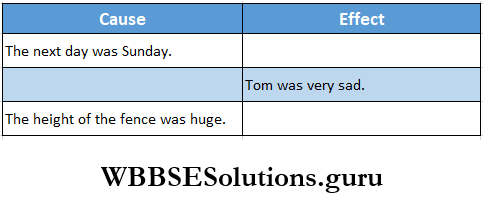
WBBSE Solutions For Class 8 English Third Summative Evaluation Test Cause And Effect

Answer:

WBBSE Solutions For Class 8 English Third Summative Evaluation Test Cause And Effect Answer

2. Rearrange the following sentences in the correct order:

  1. Tom could make very small white marks.
  2. Tom had to whitewash the fence.
  3. Tom sat down feeling discouraged.
  4. Tom looked sadly at the large fence.

Answer:

2. Tom had to whitewash the fence.

4. Tom looked sadly at the large fence.

1. Tom could make very small white marks.

3. Tom looked sadly at the large fence.

3. Fill in the blanks with information from the text:

Question 1. It was Sunday. All the boys, in the village were ________
Answer: Free

Question 2. Like all the boys Tom wanted to go for ________
Answer: Swimming

Question 3. Tom’s aunt was making Tom ________
Answer: Whitewash the fense

Question 4. Sighing, __________
Answer: He put his brush into the whitewash

Question 5. Tom sat down feeling _________
Answer: Discouraged

4. Answer the following questions:

Question 1. What day of the week was it?
Answer: It was a Sunday.

Question 2. What was Tom holding when he came out of the house?
Answer: In one hand Tom held a long brush. In other, he carried a bucket full of whitewash.

Question 3. What colour mark did Tom make on the fence?
Answer: Tom made white color marks on the fence.

Grammar And Vocabulary: Do as directed

1. Change the narration:

Question 1. She said, “I went to school.”
Answer: She said that she had gone to school

Question 2. Ravi told me, “I will meet you tomorrow.”
Answer: Ravi told me that h6 would meet me the next day

2. Change the voice:

Question 1. He was elected secretary of the club.
Answer: Someone elected him secretary of the club.

Question 2. The mason is building the house.
Answer: The house is being built by the mason.

3. Underline the principal clause:

Question 1. Take the new dress for exchange.
Answer: Take the new dress

Question 2. Wait at the cafe till I come back.
Answer: Wait at the cafe

4. Underline the subordinate clause and state its kind:

  • Unless you work hard you will fail.
  • The book which I brought is quite interesting.

Answer:

  • Unless you work hard — Adverb Clause
  • The book which I brought — Adjective Clause

5. The cat chased the rat. (Underline the Subject).
Answer: The cat chased the rat.

6. The Sun rises in the East. (Underline the Predicate)
Answer: The Sun rises in the East.

7. The boy ______ (watch) television since morning.
Answer: The boy has been watching television since morning.

8. Make a meaningful sentence of your own:

  1. Chirping
  2. Friend

Answer:

  1. The chirping of the birds is very pleasant to the car
  2. My best friend lives near my house.

Find words from the unseen passage in Question 3 to match the following:

  1. Unhappy
  2. Tall
  3. Load

Answer:

  1. Sad
  2. High
  3. Burden

Writing

Question 1. Write a letter to the Headmistress of your school informing her about your absence due to sickness.
Answer:

The Principal
XYZ School
Date: 7.9.22

Sub: Application of leave

Dear Sir,

I am a student in Class 8, Section B. I have been running a temperature of 100 degrees since last night. I am also having COVID symptoms.

I would like to request time off for at least 2 days. I will be testing for COVID and will keep you informed of the results.

Please consider my request for leave of absence starting today.

Sincerely,
Rohit Dutta

Question 2. Write a dialogue between two friends on India’s performance in Commonwealth 2022.
Answer:

Ravi: Hey, Rohan! Have you been watching the Commonwealth Games on TV.
Rohan: Of Course! I am glued to it when I come back from school. I quickly finish my homework and study so that I can catch up on it.
Ravi: Its amazing. Our medal tally is outstanding. Its unbelievable-we have 61 medals
Rohan: Agree. Out of the 61 medals, we have 22 Golds, 16 silvers, and 23 bronze medals. We have done so well this year. I am very proud of our team.
Ravi: My heart is bursting with pride. Even though sports activities have not been our strength in the past, we have come a long way and put India on the global map.
Rohan: I feel the same way. I hope we win many more medals in the future.

Third Summative Evaluation Test Set 2

Reading Comprehension (Seen)

Read the passage below and do as directed:

The shadowy figure took him to an upper room, where a bright fire was burning. There was an armchair beside the fire. By the armchair was a small, oak table on which lay a battered old book bound in red leather. The shadowy figure put the candle on the table and departed silently.

Mortimer collapsed into the armchair and picked up the old book. With a shock, he realized it was the same book from his childhood, the book which contained the story of ‘Midnight Express’. Mortimer was greatly afraid. He turned the pages with trembling hands. He began to read. The story was about a man who in his childhood had read a book which contained a frightening picture.

Mortimer tried to grasp the strange cycle of events he was going through. He was filled with acute dread. “Who is the strange man who asked me into this cottage ?” Mortimer asked himself fearfully.

1. Complete the following sentences with information from the text:

Question 1. The shadowy figure led Mortimer to an __________
Answer: Upper room where a bright fire was burning

Question 2. On the oak table was __________
Answer: A battered old book bound in red leather

Question 3. The book contained the story ___________
Answer: of “Midnight Express”.

2. Write ‘T’ for True and ‘F’ for False statements. Give Supporting Sentences for each of your answers.

Question 1. Mortimer was very happy to read the book.
Answer: False

SS: With shock, he realised it was the same book form his childhood.

Question 2. Mortimer understood the strange cycle of events very easily.
Answer: False

SS: Mortimer tried to grasp the strange cycle of events he was going through

Question 3. Mortimer sat on an armchair confidently.
Answer: False

SS: Mortimer collapses into the armchair

3. Fill in the Chart with information from the text:
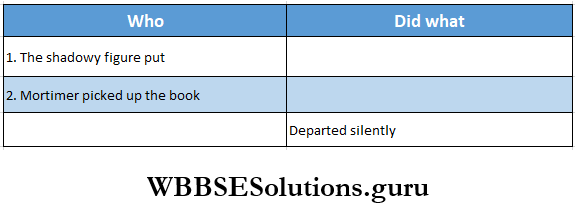
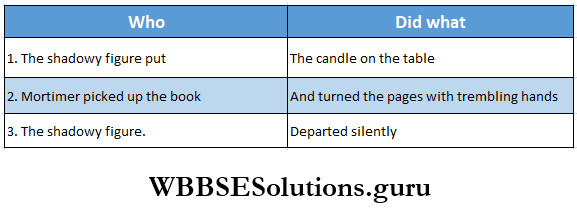
WBBSE Solutions For Class 8 English Third Summative Evaluation Test Who And What

Answer:

WBBSE Solutions For Class 8 English Third Summative Evaluation Test Who And What Answer

Read the poem and do as directed:

Someone came knocking
At my wee, small door,
Someone came knocking;
I’m sure-sure-sure;
I listened, I opened,
I looked to left and right,
But nought there was a stirring
In the still, dark night;
Only the busy beetle
Tap-tapping in the wall,

Only from the forest
The screech-owl’s call,
Only the cricket whistling
While the dewdrops fall,
So I know not who came knocking
At all, at all, at all.

1. Fill in the blanks with words given in the above poem:

Question 1. Someone is _________ at the door.
Answer: Knocking

Question 2. I _______ outside the window.
Answer: Looked

Question 3. A cute __________ was trying to climb the wall.
Answer: Bettle

Question 4. I saw a huge tiger in the __________
Answer: Frest

Question 5. I was surprised to see my sister when I ________ the door.
Answer: Opened

Reading Comprehension (Unseen)

Read the following passage and answer the questions given below:

Tansen had a high position in Akbar’s Court. This was not liked by many. They requested Akbar to ask Tansen to sing Deepak Raag. It was a wonderful Raag. When sung properly, it makes the atmosphere so warm that gradually the ‘Deepak’ or lamp will catch fire and ultimately the singer himself will die out of immense heat. Akbar was ignorant of the effect of the Raag. So he ordered Tansen to sing ‘Deepak’. Tansen knew that it was almost a death sentence for him. But he could not disobey the emperor. Fortune favours the brave. He was not born to turn back at unseen danger. He taught his daughters. Saraswati and Rupavati, the disciples of Haridas Swami, the Raag ‘Meghamalhar’ that brings rain. On the fateful day, Tansen began to Alaap and the air became warm. As the tempo of the raag was created, the birds fell down dead. People cried in horror as flames shot up everywhere and unlit lamps burnt. Tansen himself was gasping for breath. At the moment Saraswati and Rupavati began singing the Raag ‘Meghamalhar’. The rain came down and everything was all right again.

1. Answer the questions:

Question 1. Who was Tansen?
Answer: Tansen had a high position in Akbar’s court.

Question 2. What was so special of Raag ‘Deepak’?
Answer: When sung properly, Raag Deepak makes the atmosphere so warm that gradually the ‘Deepak’ or lamp will .catch fire and ultimately the singer himself will, die out of immense heat.

Question 3. What were the names of Tansen’s daughters?
Answer: Saraswati and Rupavati were the names of Tansen’s daughters.

2. Complete the sentence with information from the text:

Question 1. Akbar was ignorant __________
Answer: Akbar was ignorant of the effect of the Raag

Question 2. Fortune _______
Answer: Fortune favours the brave

Question 3. Raag ‘Meghamalhar’ was sung by _________
Answer: Raag ‘Meghamalhar’ was sung by Tansen’s daughters—Saraswati and Rupavati

3. Write True or False:

Question 1. Tansen knew that to sing ‘Deepak’ was almost a death sentence for him.
Answer: True

Question 2. Raag “Meghamalhar’ brings rain.
Answer: True

Question 3. Tansen’s daughters were the disciple of Harigopal Swami.
Answer: False

Grammar And Vocabulary

1. Fill in the blanks with proper articles and prepositions:

Question 1. He goes _____ church every sunday in _______ morning ________ rickshaw.
Answer: He goes to church every sunday in the morning in a rickshaw.

Do as directed:

Question 1. Mother said to her daughter, “Why are you crying?” (Change the narration)
Answer: Mother asked her daughter why was she crying.

Question 2. He says, “I am happy.” (Change the narration)
Answer: He said that he is happy:

Question 3. The girl knows it. (Change the voice)
Answer: It is known by the girl

Question 4. I have lost my book. (Change the voice)
Answer: My book has been lost

Question 5. A strong wind ________ (blew, is blowing, has been blowing) since last night. (Fill in the blank with the correct verb)
Answer: Has been blowing

Question 6. They ________ (have met, met, were meeting) him last week.
Answer: Met

Question 7. Do not disturb me, otherwise I won’t help you. (Change into a complex sentence)
Answer: If you disturb me, I won’t help you.

Question 8. He went to inspect what had happened. (Change into a simple sentence)
Answer: He went to inspect the happenings

Question 9. You will do well in the examination I am sure of it. (Join the sentence)
Answer: I am sure that you will do well in the examination.

Question 10. That is the house. I once lived there. (Join the sentence)
Answer: That is the house I lived in once.

2. Find out the word which means opposite to:

  1. Low
  2. Cool
  3. Front

Answer:

  1. High
  2. Warm
  3. Back

Writing

Question 1. Write an autobiography of a Smartphone.
Answer:

Autobiography of a SmartPhone

I represent the discovery of the 21st century. I am a replacement of a number of instruments! of the 20th century-laptop, phones, TV, radio, music player, alarm, calendars, calculators, fax machines, banking just to name a few. Compared to the size of these instruments, I am tiny. However, I can do it! I everything that these instruments can do, and even more.

The best part about me is I can fit in a pocket and need little space. I am in the hands of everyone, from different walks of life-automobile drivers to a rocket scientists. I am the pulse of everyone’s life and I am proud that I can be of use and help humanity.

Question 2. You have just joined a new school. Write a page in your diary about the experience of shifting from familiar surrounding to new one.
Answer:

16.10.2022

Today I started 8th grade in a brand-new school. Since father got transferred at his job, we! I had to shift base from Kolkata to Uttarpara. I was excited and nervous at the same time. I met my I teachers and all of them introduced me as the new kid in class and made me feel welcome. I have not made any friends yet, but one of my classmates, Vinay, asked me to join him in a basketball game on the playground during lunch. I was very happy to be able to play with them. He introduced me to his friends as well and they were really nice to me.

Third Summative Evaluation Test Set 3

Reading Comprehension (Seen)

Read the passsage below and do as directed:

The next year the war came, in which I was engaged for five years. With the war behind me, I had a great desire to breathe a little pure air, and I set out again along the trail through that deserted country. The land had not changed. Ever since the day before, I had been thinking about the shepherd who planted trees. Ten thousand oaks, I had said to myself, must really take up a lot of space.

When I met Elzeard Bouffier this time, I found that the war had not disturbed him at all. He had continued with his planting. The oaks of 1910 were now ten years old and were taller than me and than him. The scene was impressive I was actually speechless and we passed the whole day in silence, walking through. his forest. It was three sections, eleven kilometers long overall and, at its widest point, three kilometers wide. When I considered that this had all sprung from the hands and from the soul of this one man-without technical aids-it struck me that men could be as effective as God in domains other than destruction.

1. Choose the correct alternative:

Question 1.The war continued for:

  1. Ten years
  2. Five years
  3. Two years

Answer: 2. Five years

Question 2. When the narrator met Elzeard Bouffier after 10 years he:

  1. Had retired
  2. Continued with his planting
  3. Was old and frail

Answer: 2. Continued with his planting

Question 3. The oaks of 1910 were now old.

  1. 2 years
  2. 10 years
  3. 5 years

Answer: 2. 10 years

2. Complete the following sentences with information from the text:

Question 1. After the war, the narrator had a great desire to ________
Answer: Breathe a little pure air.

Question 2. Ever since the day before, the narrator had been thinking _______
Answer: About the shepherd who planted trees.

Question 3. The oak trees planted in 1910 were now _________
Answer: 10 years old.

3. Answer the following questions:

Question 1. What was the realisation of the author after seeing the oak forest?
Answer: After seeing the vast oak tree forest, the author realised that men could be as effective as God in domains other than destruction.

Question 2. How did the war affect Elzeard Bouffier?
Answer: The war had not disturbed him at all. He had continued with his planting.

Read the poem and do as directed:

Someone came knocking
At my wee, small door;
Someone came knocking;
I’am sure sure sure
I listened, I opened,
I looked to left and right,
But nought there was a stirring
In the still, dark night;
Only the busy beetle
Tap-tapping in the wall,

Only from the forest
The screech-owl’s call,
Only the cricket whistling
While the dewdrops fall,
So I know not who came knocking,
At all, at all, at all.

1. Fill in the following chart with information from the text :
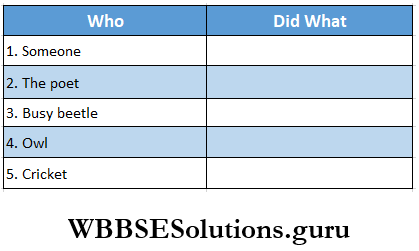
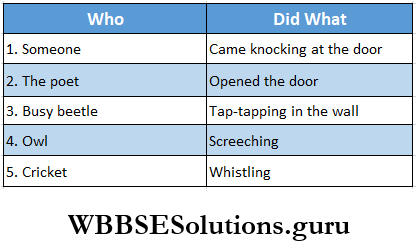
WBBSE Solutions For Class 8 English Third Summative Evaluation Test Who And Dis What

Answer:

WBBSE Solutions For Class 8 English Third Summative Evaluation Test Who And Did What Answer

Reading Comprehension (Unseen)

Read the passage and do as directed:

The Kimono is the national dress of Japan worn by both men and women. The word Kimono means ‘clothing’ or literally ‘something to wear’ and it has been just that for the Japanese for several hundred years. With changing times though, the people of Japan now wear the Kimono only on special or ceremonial occasions.

Kimonos are ‘T’ shaped robes that fall up to the ankles. The garment has a flat collar. and wide sleeves that fall to the wrists. It is always worn left side overnight and held together at the waist by a broad sash called ‘obi’. Most women’s Kimonos are one standard size and tucked in to fit the weaves. However, very tall and large-sized women have to have their Kimonos stitched to their size. Men wear a shorter version of the women’s Kimono, called haori, along with hakama or loose-fitting pants.

These days a kimono can cost upto 10,000 dollars! Also, a silk one is but normally more expensive than a cotton one. Today, in Japan, more women than men wear kimonos but only on special occasions like tea ceremonies, weddings, and funerals.

1. Write whether the statements are True or False:

Question 1. Kimono is national dress of India.
Answer: False

Question 2. Kimonos are ‘T’ shaped robes that fall up to the ankles.
Answer: True

Question 3. Men’s kimono in Japan is called haori.
Answer: True

2. Fill in the blank with word from the text:

Question 1. The word Kimono means _______
Answer: Clothing

Question 2. The kimono has a ________ collar.
Answer: Flat

Question 3. The broad sash tied at the waist is called __________
Answer: Obi

3. Choose the correct answer:

Question 1. The national dress of Japan is called-

  1. Lungi
  2. Kaftan
  3. Kimono

Answer: 3. Kimono

Question 2. The kimono is worn by-

  1. Both men and women
  2. Only men
  3. Only women

Answer: 1. Both men and women

Question 3. Very tall women need to get their kimonos

  1. Tucked in
  2. Stitched up
  3. 10,000 dollars

Answer: 2. Stitched up

4. Answer the questions:

Question 1. What is the national dress of Japan?
Answer: The national dress of Japan is Kimono.

Question 2. What is the sash of a Kimono called?
Answer: The sash of the Kimono is called ‘obi’

Question 3. Nowadays, when does the men and women wear the kimono?
Answer: Nowadays a kimono is worn on special occassion like tea ceremonies, wedding and funerals

Grammar And Vocabulary Do as directed:

Question 1. Princess September was a princess. She was very unhappy. (Join using adjective clause)
Answer: Princess September who was a princess was very unhappy

Question 2. Travelling by train gives me great pleasure. (Underline the phrase).
Answer: Travelling by train.

Question 3. He is poor. He is honest. (Join the sentence)
Answer: He is poor but honest.

Question 4. The boy is good. I know the boy (Join the sentence)
Answer: I know the good boy.

Question 5. Mother said to me, “Respect the elders.” (Change the narration)
Answer: Mother advices me to respect the elders

Question 6. “How selfish I had been !” said the giant. (Change the narration)
Answer: The giant lamented that he was very selfish.

Question 7. They laughed at us. (Change the voice)
Answer: We were laughed at by them

Question 8. Let him buy a new car. (Change the voice)
Answer: Let a new car be bought by him

Question 9. The birds are flying in the sky. (Underline the main clause)
Answer: The birds are flying in the sky.

Question 10. The man jumped over the fence. (Underline the subordinate clause)
Answer: The man jumped over the fence..

Question 11. They ________ (work) since Monday last. (Fill in the blank with proper form of verb given in the bracket)
Answer: They have been working since Monday last.

Question 12. A good boy ________ (obey) his parents. (Fill in the blanks with proper form of verb given in the bracket)
Answer: A good boy obeys his parents.

Fill in the blanks with appropriate articles and prepositions:

Question 1. I went _____the market to buy ______ apple and _____ orange _____ puja.
Answer: I went to the market to buy a apple and an orange for puja.

Find out words which mean:

  1. Formal religious or public events
  2. Joint connecting the foot with the leg
  3. Dress
  4. Costing a lot of money

Answer:

  1. Ceremonial
  2. Ankle
  3. Garment
  4. Expensive

Writing

Question 1. Write an autobiography of a river.

[Hints: broad and mighty river-born in the Himalayas – flow to meet the mighty ocean – useful to many – cause destruction when it rains heavily.)

Answer:

As Lord Tennyson rightly said, ‘Men may come and men may go, but I go on forever’. For centuries and through civilizations, I have flown from the tall Himalayas to the mighty oceans. I have been the cradle of civilizations, providing water for agriculture, transport for their boats, and fertile soil on the banks to grow their crops. I might flow quietly, but, with heavy rains, my quiet flow can turn into a huge flood and cause mass destruction. I signify both birth and death, and that is why I am worshipped as a Mother and a Holy river.

Question 2. Write a paragrah on “Your Hobby”.

[Hints: hobby means an activity done with pleasure – during our leisure – your hobby – when you do it – how it benefits you).

Answer:

My favourite passion or hobby is photography. I like it because I can freeze a moment in time. Earlier, I used to carry a big camera that my father bought for me, but now, my tool is my Smart Phone. I can take as many pictures as I want, share them with my friends and family in a matter of seconds. I would love to travel across the world and explore my passion.


WBBSE Solutions For Class 8 English Functional Grammar Chapter 12 Prepositions

WBBSE Chapter 12 Prepositions

Prepositioh কোনো Noun বা Pronoun-এর পূর্বে বসে তার সাথে Sentence-এর অন্য পদগুলির সম্পর্ক বুঝিয়ে দেয়।

নীচের উদাহরণগুলি দেখো :

He came to me

Put it on the table.

Preposition-গুলিকে মোটামুটি নিম্নলিখিতভাবে ভাগ করা যেতে পারে :

1. Prepositions of Time (at, in, on, within, from, to, with, since, for, during, after)

  • at: 6 o’clock, at the moment, at night, at intervals, at the age of 16
  • in: the morning, in the end, in 1988, in a week, in a month’s time on Monday,
  • on: 20th June, on that day.
  • within: a week
  • from: from Sunday to Tuesday, from tomorrow
  • to: a quarter to ten
  • with: a stick, with him.
  • since: ill since Monday last
  • for: for a week, for many days
  • during: during the whole night, during the day
  • after: after a month, after a week.

Read And Learn More WBBSE Class 8 English Functional Grammar

ব্যবহারের তারতম্য :

In, within

সময় নির্দেশ করতে in = at the end of

Examples:

  1. He will come in a week (এক সপ্তাহ পরে)
  2. He will come within a week (এক সপ্তাহ মধ্যে )

After, In

“পরে” অর্থে “after” অতীত কাল নির্দেশ করে, এবং “in” ভবিষ্যৎ কাল নির্দেশ করে।

Examples:

  1. He will come in a week – এক সপ্তাহ পরে আসবেন।
  2. He came after a week — এক সপ্তাহ পরে এসেছিলেন।
  3. He will finish the work in a month –একমাস পরে করবেন।
  4. He finished the work after a month –একমাস পরে করেছিলেন !

Since, For, From

হতে বা ধরে অর্থে (তিন দিন ধরে পীড়িত, সোমবার হতে আসব) এই তিনটি Preposition-ই ব্যবহৃত হয়। কিন্তু :

  • For – space of time ( সময়ের ব্যাপ্তি) বোঝায়।
  • Since – past point of time (অর্থাৎ অতীতের একটি নির্দিষ্ট সময় হতে বোঝায়।)
  • From – past, present ও future (তিন রকম point of time-ই বোঝায়।

Examples:

  1. He has been here for a week— তিনি এখানে এক সপ্তাহ ধরে আছেন।
  2. I have not seen you for many days – আমি তোমাকে অনেকদিন হল দেখি নি।
  3. He has been here since or from Monday last— তিনি এখানে গত সোমবার হতে আছেন।
  4. He will be here from (since হবে না) next Monday—তিনি এখানে পরবর্তী সোমবার হতে থাকবেন ।
  5. He will begin work from (since হবে না) today— তিনি এই কাজটি আজ হতে শুরু করবেন।
  6. He has been doing it since or from 1980 – তিনি এটা ১৯৮০ সাল হতে করছেন।
  7. He has been doing it for two years – তিনি এটা দুই বছর ধরে করছেন।

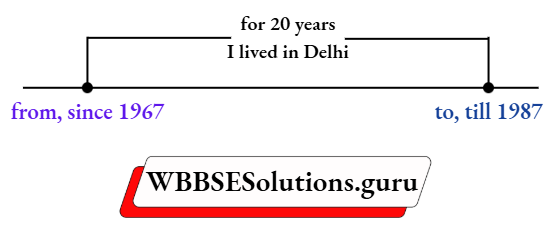
নীচের diagramটি লক্ষ্য করে :

WBBSE Solutions For Class 8 English Functional Grammar Chapter 12 Prepositions For 20 Years I Lived In Delhi

WBBSE Solutions For Class 8 English Functional Grammar Chapter 12 Prepositions

এইবার নীচের Sentence-গুলি দেখো :

Examples:

  1. I lived in Delhi for 20 years from 1967 to 1987 – আমি দিল্লিতে ১৯৬৭ সাল হতে ১৯৮৭ সাল পর্যন্ত—এই ২০ বছর বসবাস করেছিলাম।
  2. I have been living in Delhi since 1967 – আমি ১৯৬৭ সাল হতে দিল্লিতে বসবাস করছি।
  3. I lived in Delhi till 1987 – আমি দিল্লিতে ১৯৮৭ সাল পর্যন্ত বসবাস করেছিলাম।

In, On, At

মাস, কাল, ঋতু বোঝাতে in ব্যবহৃত হয়। যথা :

Examples:

  1. He will come in January.
  2. It happened in 1950.
  3. He will come here in Summer.

তারিখ ও বারের নামের পূর্বে on ব্যবহৃত হয়। যথাঃ

He came here on 7th March. Nupur will go to Kolkata on Sunday.

নির্দিষ্ট সময় (point of time) বোঝাতে at ব্যবহৃত হয়। যথা ঃ

I shall go there at 5 p.m. Please come here on Monday at 4 p.m.

সময়ের ব্যাপক অর্থে in বসে। যথা ঃ

  • In the morning
  • In the evening
  • In the daytime
  • In the afternoon.
  1. In the morning, on Monday evening
  2. At night, at sunset, at dawn, at noon
  3. On-time – He came on time. ; In time – He came in time.
  4. ‘on’ is used for dates and for particular days or specified parts of days, ‘at’ for a point of time; ‘in’ for a portion of the day.

I shall see you on October 5th / on Sunday on Christmas day / on Saturday afternoon/ at 6 o’clock in the afternoon.

WBBSE Class 8 English Functional GrammarWBBSE Class 8 English Reading Skills
WBBSE Solutions For Class 8 EnglishWBBSE Solutions For Class 8 Maths


মনে রেখো ‘yesterday’; ‘today’s ‘tomorrow ‘word-গুলির পূর্বে কোনো preposition বসে না। যেমনঃ

I went there yesterday. Go there tomorrow.

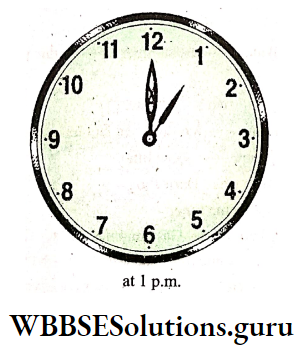
নীচের ছবিটি লক্ষ্য করো :

IN → 1992

IN → February

ON → 3rd

AT → 1 P.M

WBBSE Solutions For Class 8 English Functional Grammar Chapter 12 Prepositions at

2. Prepositions of Place (at, in, on, above, over, under)

  • at: at Serampore, at Howrah station, at 54, Chowringhee Road (but, in Chowringhee Road), at school, at university, at lunch.
  • in: in Kolkata, in his office, in the Writers’ Buildings, in Rash Behari Avenue
  • on: on desk, on the table, on the third floor, on the river bank, on land
  • above: above the trees, above me in the class, above average
  • over: over our heads, over the table, all over the world
  • under: under a tree, under my umbrella

ব্যবহারের তারতম্য :

Above, Over

Example:

  • Above = at a higher level than
  • Over = directly above

At, In

At ছোটো স্থানের পূর্বে এবং in বড়ো স্থানের পূর্বে বসে।

Examples:

  1. He lives at Serampore.
  2. He has a shop at Bally in Howrah.
  3. He lives in Kolkata
  • At Burdwan—বর্ধমান শহরে।
  • In Burdwan—বর্ধমান জেলায় ।

In, Into

কোনো কিছুর মধ্যে বা ভিতরে থাকা বোঝালে in এবং বাইরে থেকে ভিতরে গতি বা অবস্থা বা আকারের পরিবর্তন বোঝালে into হয়।

Examples:

  1. He is in the room.
  2. He fell into the well.
  3. The fish lives in water.
  4. He came into the room.
  5. The boys play in the field.
  6. Ice melts into water.

কিন্তু come in (come into হয় না)।

3. Prepositions of Movement and Directions (in, at, from, to, into)

  • in: come in, in the east
  • at: tiger running at the deer
  • from, to: from station to his house, went to Mumbai, to the east.
  • into: fell into the well, came into the room. (কোনো কিছুর ভিতরে প্রবেশ করা অর্থে into ব্যবহৃত হয়য়)

At or To

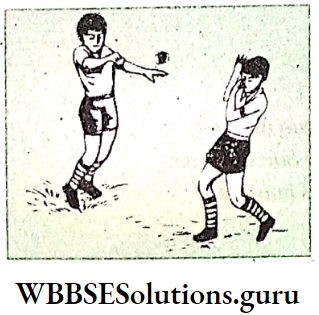
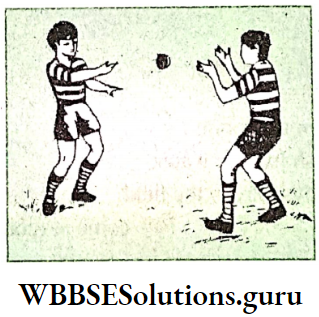
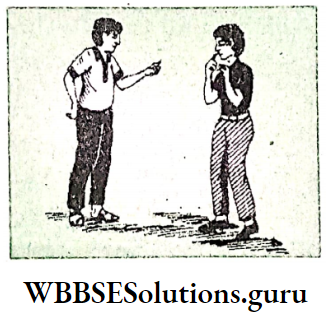
নীচের ছবিতে at ও to-এর ব্যবহারের পার্থক্য লক্ষ্য করো। Aggression বা আক্রমণাত্মক অর্থে’ at ও coop- eration বা সহযোগিতা অর্থে to ব্যবহৃত হয়।

WBBSE Solutions For Class 8 English Functional Grammar Chapter 12 Prepositions Don't Throw It At Me

Don’t throw it at me—আমার দিকে এটা ছুড়ো না।

WBBSE Solutions For Class 8 English Functional Grammar Chapter 12 Prepositions Throw It To Me

Throw it to me—আমাকে এটা ছুড়ে দাও।

WBBSE Solutions For Class 8 English Functional Grammar Chapter 12 Prepositions Shouting At Him

Shouting at him—-বকাবকি করা, গালি দেওয়া

WBBSE Solutions For Class 8 English Functional Grammar Chapter 12 Prepositions Shouting To Him

Shouting to him – আন্তরিকভাবে অভিনন্দন জানানো।

4. Prepositions of State or Manner (in, by, with)

  • in: in danger, in a hurry, in love, in trouble, in difficulty, in ruins, in the dark, in power, pay in cash (but, by cheque), in pain, in sorrow.
  • by: catch by hand, by bus, by train, by chance, by post, by accident
  • with: with difficulty, with a smile, beautiful with long hair, with my father

(from, of)

from: Wine is made from grapes.; Steel is made from iron ores.

Here the matter has lost its original composition in the process of manufacture. (পদার্থের মূল গঠনের পরিবর্তন হয়েছে।

of: The table is made of wood; The bridge is made of steel.

Here the material remains unchanged in the process of manufacture. (এখানে প্রক্রিয়াকরণে পদার্থের মূল গঠনের কোন পরিবর্তন হয়নি।)

5. Prepositions of Agent or Method (in, with, in)

by:

  1. a machine driven by steam, done by hand, struck by lightning, a novel by Sarat Chandra,
  2. a music by Hemanta Kumar, written by him, pay by cheque (but, in cash).

with: with his own hand, written with a pen, beaten with a stick.

in: written in ink or in pencil.

ব্যবহারের তারতম্য :

By, With

By যে কাজ করে (agent বা doer) তাকে নির্দেশ করে ; with যা দ্বারা কিছু করা হয় তাকে নির্দেশ করে।

Examples:

  1. This work was done by him with his own hand.
  2. This letter was written by him with a good pen.
  3. He struck me with a stick.

নীচে আরও কিছু Preposition-এর বিভিন্ন প্রকার ব্যবহার দেখানো হল :

At

  • Value: The house is priced at Rs. 2, 50,000.00.
  • Occupation: He is at work.
  • Direction: The dog ran at me.

By

  • Nearness in place or time—Sit by me. He will come by 9 o’clock.
  • According to—It is 10 o’clock by my watch.
  • Manner—He caught me by the hand.
  • Means of travel—We traveled by bus/boat/train, etc. (but on foot or horseback or bicycle.)

For

  • In exchange for — I bought it for fifty rupees.
  • On account of — I did this for you.
  • In the direction of — He started for Kolkata.
  • During — I know him for three years.

In

  • State — He is in danger.
  • Direction — The sun rises in the east.

Of

  • Origin — He comes of a good family.
  • Cause — He died of cholera.
  • About — I do not know anything of it.

On

  • Lying against — The book is on the table.
  • Close to, against — Kolkata is on the river Hooghly.
  • Time — He was born on that day.
  • Because of — I congratulated him on. his success.

Over

  • More than — He is over fifty.
  • At a higher level — The sky is over our head.
  • Purpose — I went to see him.
  • Direction towards — He has gone to Mumbai. I went to him.

Under

  • Less than — The price is under ten rupees.
  • Subject to — The case is under trial.

With

  • Accompanied by: I went there with my father.
  • Point of reference: I differ from you.

Between

WBBSE Solutions For Class 8 English Functional Grammar Chapter 12 Prepositions Between

Among

WBBSE Solutions For Class 8 English Functional Grammar Chapter 12 Prepositions Among

সাধারণত দু’য়ের মধ্যে অর্থে between ও দু’য়ের অধিকের মধ্যে অর্থে among ব্যবহৃত হয়।

  1. What is the difference between these two things ? – এই দুইটি জিনিসের মধ্যে পার্থক্য কী ?
  2. Among his books, this one is the best — তার বইগুলির মধ্যে এটাই সর্ব্বোৎকৃষ্ট।
  3. Divide these things between the two sisters — এইসব জিনিসগুলি দুই বোনের মধ্যে ভাগ করে দাও।


WBBSE Solutions For Class 8 English Functional Grammar Chapter 13 Appropriate Prepositions

WBBSE Chapter 13 Appropriate Prepositions

ইংরাজিতে কোন্ শব্দের পর রীতিসঙ্গত (appropriate) কী Preposition বসবে তা ঠিক করা আছে। এটা Idiom বা বাক্যের শিষ্ট প্রয়োগের বিষয়। নীচে কয়েকটি উদাহরণ

Abide by (a decision)– Abide by this decision.

Abide in, at (a place)– I shall not abide long in Kolkata (or at Ranaghat). Absent from I was absent from the class.

Accompanied by (a person), with (a thing)- I was accompanied there by Jadu. He is suffering from fever accompanied with a headache.

According to, (in) accordance with – According to (or, In accordance with) your advice, I went there.

Read And Learn More WBBSE Class 8 English Functional Grammar

Account for (কৈফিয়ত দেওয়া ) – You shall have to account for your conduct.

Accused of – He was accused of theft.

Acquit (one) of (a charge) – He was acquitted of this charge.

Acquainted with I am acquainted – with him.

Affection for; affectionate to He has affection for me. He is affectionate to me.

Afraid of – I am afraid of him.

Agree with (a person), on (a point), to (a proposal) – I agree with him on that point. He agreed to the proposal.

Aim at – The hunter aimed at the tiger.

Alarmed at – We were alarmed at the news.

Ambition for; ambitious of He has no ambition for fame. He is not ambitious of fame.

Angry with (a person), for (doing something), at, about (a thing)-He was angry with me for my being there. He was angry at or about my failure.

Anxious about, for – I am anxious about the result. He is anxious for news.

Appeal to, against, for He appealed to me for help. We shall appeal against your decision.

Appetite for – I have no appetite for food

Apply to, for – He applied to the bank for a loan (ধার).

Appointed to – He was appointed to (a post).

Ashamed of – He is ashamed of his conduct.

Ask of (a person) – I asked a favour of him.

Ask (a person) for (a thing)- I asked him for a favour.

Astonished at – I was astonished at the news.

Attach to – Attach this slip to the letter.

Attacked by (a person), with (fever)– He was attacked by robbers. He was attacked with fever.

Attend to – Attend to your father.

Attend upon – I attend upon the patient (রোগী).

Attention to – Pay attention to your son.

Avail (oneself) of – He availed himself of my help.

Aware of – I am aware of the fact.

Beg (a person) for (a thing)- He begged me for the favour.

Beg (a thing) of (a person)- He begged the favor of me.

Belong to – This book belongs to me. Beware of -Beware of the enemy.

Bestow on – He bestowed a favour on me.

Blind of, in (an eye) to (a thing) – He is blind of or in an eye. He is blind to his son’s faults.

Boast of – Do not boast of wealth.

Born of – He was born of poor parents.

Care for Careful of, (take) Care of – He does not care for me. Be careful of your health. Take care of your health.

Change of – There was a change of colour in the sky.

The charge against (noun or pronoun) – What is the charge against him?

Charge (verb) a person with – He was charged with theft. The police charged him with theft.

Close to – His house is close to mine.

Compare with, to (ভিন্ন প্রকৃতির জিনিসের মধ্যে) – Compare Akbar with Aurangzeb. Anger is compared to fire.

(In) Comparison with – He is rich in comparison Differ from, in, with, on–This thing differs from with his brother.

Complain to (a person), against (another), of about, (a thing) – The boys complained to the Headmaster against him (or, about his conduct). He complained of headache.

WBBSE Solutions For Class 8 English Functional Grammar Chapter 13 Appropriate Prepositions

Composed of – What is water composed of?

Confident of – I am confident of success.

Consist of, in – This sentence consists of three clauses. Happiness consists in contentment. Contrary to – You acted contrary to my advice.

Control over – He has no control over his son.

Convinced of – I am convinced (satisfied) of your innocence.

Cure (a person) of (a disease); a cure (noun) for (a disease) He is cured of his disease. There is no cure for this disease. Deal in, with, by-He deals in rice. He deals roughly with his customers. He dealt ill by me.

Depend on – Always depend on God.

Deprive of – I shall not deprive you of your share.

Desire for, desirous of – I have no desire for wealth. I am not desirous of wealth. Despair of – He despairs of success.

Devoid of – The boy is devoid of (without) common sense.

Devoted to – He is devoted to me.

Die of (a disease); by (violence), from (a cause), for (something) – He died of cholera; or, by poison; or, from overwork; or, for his country.

Differ from, in, with, on – This thing differs from that in color. I differ with You on this point.*

Difference between – There is no difference between the two.

Different from – This thing is different from that.**

Digress (verb), degression (n), from – The speaker digressed from – the main topic. We did not like the speaker’s digression from the main topic.

Inquired of, about – He inquired of me about the matter.

Discussion with – I had a discussion with him in Inquired for, after (a person)- He inquired for or this matter.

Distinguish between (two), (one) from (another) – I cannot distinguish between the two. Try to distinguish right from wrong.

No money is due to him. Dull of, at – He is dull of hearing. He is dull (weak) or Physics.

Eager for, after, about (COD) – He is eager for or after fame. He is eager about the result.

Escape from – There is no escape from death.

Familiar with, to – I am familiar with him. This is familiar to me.

Fix to, on, in – Fix this stamp to letter. He fixed his eyes on me. The idea became fixed in his mind.

Fond of, fondness for – He is fond of me. He has great fondness for me.

Full of, filled with ― The cup was full of (or, was filled with) milk.

after me (আমার সম্বন্ধে জিজ্ঞাসা করল) Inquire into – I shall inquire into the matter.

Insist on – He insisted on my doing this.

Interfer with (a person), in (a thing) – Don’t interfere with me in my business.

Invite to I invited him to the meeting.

Jealous of – He is jealous of my fame.

Lame of or in – He is lame of or in one leg.

Laugh at – Do not laugh at a lame man.

Live on, for, by – Cows live on grass.

Live for a high ideal. Live by honest means.

Long for – I long for peace.

Married to – Ram was married to Sita.

Necessary for, to Industry is necessary for or to success.

In (need) of – I am in need of money. (Any or no) need for Have you any need for money?

Glad at, of – I am glad at his success.

I am glad Object to — I object to the proposal of his help.

Grateful to (a person) for (a thing)– I am grateful to him for his help.

Guilty of He is guilty of theft. Hanker after — He hankers after fame.

Hope of, for; hopeful or hopeless of – I have no hope of success. He hopes for success.

I am hopeful or hopeless of success. Ignorant of – I am ignorant of the matter.

Ill of, with (fever)- He is ill of or with fever. Include in – His name is included in the list.

Innocent of – He is innocent of the crime.

Objection to, against (a proposal), against (a person)– I have no objection to or against the proposal (or, against him).

Obliged to, for – I am obliged to you for your help.

WBBSE Class 8 English Functional GrammarWBBSE Class 8 English Reading Skills
WBBSE Solutions For Class 8 EnglishWBBSE Solutions For Class 8 Maths


Owe to – I owe my all to him. Part from, with – It is painful for a mother to par from her son. I cannot par with (do without) this book.

Pleased with (a man) at his conduct – I am please with him at his conduct.

Popular with, for – He is popular with everybod for his goodness.

Prefer to – I prefer hea to wealth.

Present (a thing) to (a person), present (a person) with (a thing) – I presented the book to him. I presented him with the book.

Preside over –  He presided over the meeting.

Prevent from – He prevented me from going.

Pride in, proud of He takes pride in his son. He is proud of his son.

Proof of, against – This is a proof of his honesty.

He is proof against temptation.

Result of (noun) – The result of the examination is not yet out.

Rid of – Get rid of your bad habit.

Rob (a man) of (a thing)- He robbed me of my purse.

Satisfied with – He was satisfied with me.

Short of – I am short of funds.

Similar to – This thing is similar to that.

Stare at something ( একদৃষ্টে তাকানো ) – She is staring at the moon.

Prohibit from – He prohibited me Stare (a man) in (the face) – He is staring me in from going there.

Refer to (উল্লেখ করা ; বিচারের জন্য প্রেরণ) ) – Refer the matter to him for enquiry.

Reference to – This has a reference to your previous letter.

Regard for – I have no regard for him.

(In or with) regard to – In or with regard to that matter, I have nothing to say.

Rely on – You may rely on my word.

Repent of – I repent of my conduct.

Remind (a person) of – He reminded me of my promise.

Respect for – I have no respect for him.

(In) respect of – He is senior to me in respect of (সম্বন্ধে) age.

(With) respect to – We had a talk with respect to that matter.

Respite from – I need respite from heavy work.

Respond to – Respond to the roll-call the face.

Suffer from, for – He is suffering from fever. He suffered for his misdeeds.

Supply (a thing) to (a person), supply (a person) with (a thing) – He supplied food to the boys. He supplied the boys with food.

Sure of I am sure of success. Sympathy for, with- I have no sympathy for, or with him in his misery. I feel no sympathy with his misery.

Sympathise with, in – I sympathize with him in his misery.

Taste of – The taste of this fruit is sweet.

Taste for – I have no taste for music.

Tired of (waiting), by (a walk), or with (exertion)- I am tired of waiting for you.

I am tired by the long walk, or with exertions. True to – Be true to your words.

Trust in (God) – Trust in God.

Trust (a thing) to (a person); Trust (a person) with (a thing) (ভারার্পণ করা) — You may trust the work to me or trust me with the work.

Vain of – She is vain of her dress.

Responsible to, for – I am responsible to (In) view of — In view of what you him for my actions.

Result (verb) from (a cause), in (an effect)

Misery results from vice. Vice results in misery. say, I pardon you this time. (With a) view to – He came here with a view to getting my approval.

Wait for (a person) at (a place)– We waited for you at the corner.

Wait upon – She waited upon the guests.

Want of-There is no want of doctors here. Worthy of – He is worthy of praise.

WBBSE Solutions For Class 8 English Functional Grammar Chapter 14 Phrasal Or Group Verbs

WBBSE Chapter 14 Phrasal Or Group Verbs

নীচের sentence গুলি দেখো :

Kamala has put on a new dress — কমলা একটি নতুন পোষাক পড়েছে।

He gets up early in the morning everyday—সে প্রতিদিন ভোরে উঠে।

I came across him in the street-তার সাথে আমার হঠাৎ রাস্তায় দেখা হল।

Read And Learn More WBBSE Class 8 English Functional Grammar

লক্ষ্য করো, প্রত্যেকটি sentence-এ Verb-এর পরে একটি Preposition অথবা Adverb বসে যুক্ত শব্দ দুটি – একত্রে অন্য একটি অর্থে ব্যবহৃত হয়েছে।

Put on — পোষাক পরা

Get up—উঠে পড়া

Come across—হঠাৎ সাক্ষাৎ হওয়া

WBBSE Solutions For Class 8 English Functional Grammar Chapter 14 Phrasal Or Group Verbs

এইরূপ, যখন কোনো Verb একটি Preposition অথবা Adverb-এর সঙ্গে বসে একত্রে অন্য অর্থে ব্যবহৃত হয় তখন তাদের Phrasal Verb বা Group Verb বলা হয়।

WBBSE Class 8 English Functional GrammarWBBSE Class 8 English Reading Skills
WBBSE Solutions For Class 8 EnglishWBBSE Solutions For Class 8 Maths

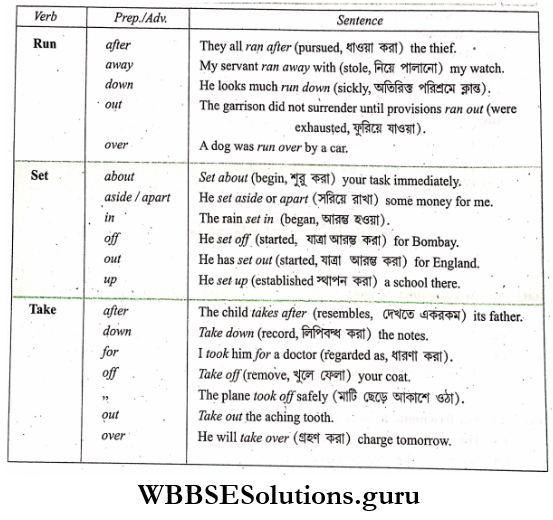
নীচের ছকটি দেখো :

WBBSE Solutions For Class 8 English Functional Grammar Chapter 14 Phrasal Or Group Verbs-1

কিছু Phrasal verb বা Group verb-এর উদাহরণ দেওয়া হল।

WBBSE Solutions For Class 8 English Functional Grammar Chapter 14 Phrasal Or Group Verbs

WBBSE Solutions For Class 8 English Functional Grammar Chapter 14 Phrasal Or Group Verbs-2

WBBSE Solutions For Class 8 English Functional Grammar Chapter 14 Phrasal Or Group Verbs-3

WBBSE Solutions For Class 8 English Functional Grammar Chapter 14 Phrasal Or Group Verbs-4

WBBSE Solutions For Class 8 English Functional Grammar Chapter 16 Clauses

WBBSE Chapter 16 Clauses

As he is ill, he cannot come.

This is the boy who did it.

প্রথম বাক্যে দুইটি অংশ “As he is ill” এবং “he cannot come” – প্রত্যেকটি একটি সম্পূর্ণ Sentence, কারণ প্রত্যেকটিতেই Subject ও Predicate আছে। আবার প্রত্যেকটিই “As he is ill, he cannot come”—এই সম্পূর্ণ Sentence-টির একটি অংশ।

এইরূপ দ্বিতীয় বাক্যে “who did it” ও “This is the boy”—এই দুইটি ছোটো Sentence সম্পূর্ণ বড়ো Sentence-এর অংশ।

এইরূপ যে ছোটো Sentence কোনো বৃহত্তর Sentence-এর অংশ তাকে Clause বলে। A Clause is a sentence forming part of a bigger sentence.

Kinds of Clauses

Clause তিন শ্রেণির, যথা ঃ

  1. Principal Clause
  2. Subordinate বা Dependent
  3. Co-ordinating Clause

Principal Subordinate Dependent Clause

  • As he is ill, he cannot come.
  • This is the boy who did it.

উপরের উদাহরণ দুটি নিয়ে আরও আলোচনা করা যাকঃ

Read And Learn More WBBSE Class 8 English Functional Grammar

প্রথম উদাহরণে “he cannot come” এই clause-টিই প্রধান বক্তব্য প্রকাশ করছে। “As he is ill” এই clause-টি “he cannot come”—এই clause-টির উপর নির্ভর না করে সম্পূর্ণ বক্তব্য প্রকাশ করতে পারে না।

দ্বিতীয় বাক্যে “This is the boy” এই clause-টিই প্রধান বক্তব্য প্রকাশ করছে। “who did it” এই clause-টি “this is the boy” এই clause-টির উপর নির্ভর না করে সম্পূর্ণ অর্থ প্রকাশ করতে পারে না।

WBBSE Solutions For Class 8 English Functional Grammar Chapter 16 Clauses

এইরূপ যে Clause প্রধান বক্তব্য প্রকাশ করে তাকে Principal Clause এবং যে Clause অন্য Clause-এর উপর নির্ভরশীল তাকে Dependent Clause বা Subordinate Clause বলে।

A clause that is dependent on another clause is called a Subordinate or Dependent Clause. A clause which stands by itself and on which the Subordinate Clause depends is called the Principal Clause.is ill” “who did it”
“he cannot come” “this is the boy”

WBBSE Class 8 English Functional GrammarWBBSE Class 8 English Reading Skills
WBBSE Solutions For Class 8 EnglishWBBSE Solutions For Class 8 Maths


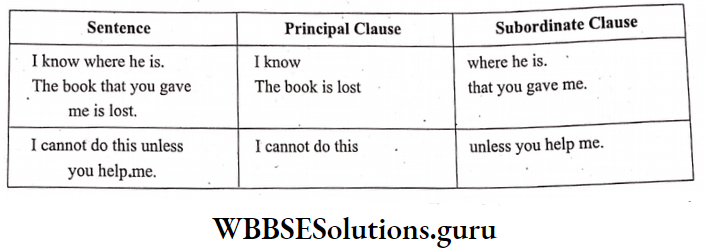
নীচের sentence-গুলিতে আরও কিছু Principal ও Subordinate Clause-এর উদাহরণ দেওয়া হল ঃ

WBBSE Solutions For Class 8 English Functional Grammar Chapter 16 Clauses Conditional Sentences

মনে রেখো, Finite Verb-ই Clause-এর মূল জিনিস। প্রত্যেক Clause-এ একটি Finite Verb থাকতে হবে এবং একটি Sentence-এ যতটি Finite Verb’ ততটি Clause থাকে।

Co-ordinate Clause

নীচের sentence-গুলি দেখোঁ :

He went home and then left for Delhi.

He is poor, but he will help you.

প্রথম বাক্যে “He went home” এবং “then (he) left for Delhi” এই দুইটি clauses ; কিন্তু কেউ কারও উপর নির্ভর না করে পুরোপুরি অর্থ বোঝায়। এরা উভয়েই সমপদস্থ এবং and দ্বারা যুক্ত হয়েছে। দ্বিতীয় বাক্যে “He is poor” ও “he will help you”এই দুইটি clauses সমপদস্থ, bit দ্বারা যুক্ত হয়েছে।
বলে।

এইরূপ একই sentence-এর মধ্যে সমপদস্থ যে সব clause থাকে তাদেরকে Co-ordinate Clause

A Co-ordinate Clause is of the same rank as another and is connected by a Co-ordinating Conjunction with the latter.

Co-ordinating clause- and, but, for, or, not only – but also, either-or, neither-nor, therefore Co-ordinating Conjunctions

He left the place, but I remained there.

He is poor and cannot do it.

Either you must come or I shall go.

I cannot come, for I am ill.

Read or you will fail.

Subordinate Clauses তিন রকমের :

  1. Noun Clause – Noun
  2. Adjective Clause – Adjective
  3. Adverbial Clause – Adverb

Noun Clause

Noun Clause বাক্যে Noun-এর কাজ করে। এটি সাধারণত Conjunction that (expressed or understood) what, whose, how, why Interrogative Pronoun Interrogative Adverb

Noun Clause-কে Nominal Clause ও বলা হয়।

Noun Clause-এর ব্যবহার :

1. Subject to a verb:

That he is ill is known to all.

When he will come is uncertain.

বাক্য দুটিতে “That he is ill” ও “When he will come” এই দুটি Noun Clauses যথাক্রমে ‘is known” ও “is”-Subjects.

2. Object to a verb:

I know when he will come.

He said that he would go.

বাক্য দুটিতে “when he will come” ও “that he would go ” এই দুটি Noun Clauses যথাক্রমে “know” “said”- Objects.

3. Object to a preposition:

It rests on how he behaves.

এখানে Noun Clause-টি “on” এই Preposition-এর Object-রূপে ব্যবহৃত হচ্ছে।

4. In apposition to a noun or “it”.

There is a rumour that he is ill.

It is true that he has come.

“that he is ill” “that he has come” “rumour” “it”- Apposition.

Adjective Clause

Adjective Clause বাক্যে adjective-এর কাজ করে এবং ইহা কোনো Noun বা Pronoun-কে qualify করবে। এরা সাধারণতঃ Relative Pronoun বা Relative Adverb দ্বারা introduced হয় :

Relative Pronouns-who, which, that, as.

Relative Adverbs-when, where, how, why, whence, as.

Adjective Clause-এর ব্যবহার :

I know the boy who did it.

This is the place where he was born.

I have lost the book (which) you gave me.

I know the time when he will come.

This is the reason why he failed.

উপরের বাক্যগুলিতে italicised clauses পাঁচটি যথাক্রমে “boy”, “place”, “book”, “time”, “reason”-কে Adjective রূপে qualify করছে।

লক্ষ্য করো, প্রত্যেকটি Subordinate Clause একটি Relative Pronoun বা Relative Adverb দ্বারা আরম্ভ হয়েছে, এবং এই Relative-এর Antecedent আছে। সেইজন্য Adjective Clause-কে অনেক সময় Relative Clause বলা Antecedent Clause- Noun Clause 1, I know who did it (object to know).

I have lost what you gave me. (obj. to have lost)

নীচের উদাহরণগুলি দেখো :

1. I know the boy who did it.

এখানে Adjective Clause-টি who এই Relative Pronoun দ্বারা শুরু হয়েছে। Adjective Clause which, what, that, whatever, whoever প্রভৃতি অন্যান্য Relative Pronoun দ্বারাও শুরু হতে পারে।

2. I know the reason why (for which) he was crying.

এখানে Adjective Clause-টি why এই Relative Adverb দ্বারা শুরু হয়েছে। where = in which, when (= on which, at which) প্রভৃতি অন্যান্য Relative Adverb দ্বারাও Adjective clause শুরু হতে পারে :

This is the place where he was born.

I know the time when he will come.

Non-Defining Relative Clause

My grandmother, who is over ninety, is still healthy.

উপরের sentence-টি হতে “who is over ninety” এই Relative Clause-টি সরিয়ে নিয়ে sentence-টি হয় My grandmother is still healthy এবং sentence-টিতে এটাই আসল কথা। অর্থাৎ who is over ninety—এই word-গুলি দ্বারা grandmother সম্বন্ধে বেশি information দেওয়া হয়েছে।

এইরূপে যে clause-দ্বারা Noun সম্বন্ধে অতিরিক্ত information দেওয়া হয় তাকে Non-Defining Relative Clause বলা হয়। আরও উদাহরণ :

Rabin babu, who is a teacher, lives here.

My uncle, whom everybody loves, is in Kanpur.

WBBSE Chapter 16 Clauses Examples

Question 1. Join the words under Column A with those under B using the Relative Pronouns ‘who’, ‘what’, ‘whose’, ‘which’, ‘whom’, ‘that’ to complete the sentences. Two are done for you.
Answer:

It is Arun whose uncle is a doctor.

This is the story that was told by Ramen.

Question 2. Join the pair of sentences using a Relative Pronoun where necessary. Begin the new sentence with words given in italics. (You may change a or a to the if necessary). One is done for you.

I am reading a book. It has two pages missing.

Answer: The book that I am reading has two pages missing.

  1. We used to live in a flat. It has just been sold.
  2. An old lady lives in this house. She is over seventy.
  3. Pranab wrote this book. He lives at Jadavpore.
  4. You are looking for Pranati. She has just come.
  5. The boy is my brother. He came top in the examination.
  6. My sister gave me a wall clock. It costs over five hundred rupees.

Adverbial Clause

Adverbial clause বাক্যে Adverbial-এর কাজ করে। ইহা কোনো Verb, Adjective বা অন্য Adverb-কে modify করে। Adverbial clause নিম্নলিখিত প্রকারের হয় :

1. Adverbial Clauses of Time এর দ্বারা সময় নির্দেশ হয় এবং এর পূর্বে সাধারণতঃ when, while, after, before, till, until, since

He came when I was there. You went after I had come.

Strike while the iron is hot.

2. Adverbial Clauses of Place এর দ্বারা কোনো স্থান নির্দেশ হয় এবং এর পূর্বে সাধারণতঃ where, whence, wherever প্রভৃতি শব্দ ব্যবহৃত হয়। যথা ঃ

Stay where you are.

Return whence you came.

3. Adverbial Clauses of Reason or Cause – Because, as, since, that প্রভৃতি শব্দগুলি এইরূপ clause-এর পূর্বে বসে। যথাঃ

He cannot come because he is ill.

As he is ill, he cannot come.

Since you are ill, you need not come.

4. Adverbial Clauses of Purpose এর দ্বারা কোনো উদ্দেশ্য বোঝায় এবং এর পূর্বে সাধারণতঃ that, in order that, so that, lest

We read that we may learn.

He works hard in order that he may succeed.

5. Adverbial Clauses of Result that, so that, such, that ইত্যাদি শব্দ বসে। যথা ঃযথাঃ

What have I done that you rebuke me?

I am so tired that I cannot walk.

He is such a fool that I cannot depend on him.

6. Adverbial Clauses of Manner এর দ্বারা ধরন বা রকম বোঝায় এবং এর পূর্বে as ব্যবহৃত হয়।

Travel as you like.

It happened as I expected.

7. Adverbial Clauses of Condition or Supposition এর দ্বারা কোনো শর্ত বোঝায় এবং এর পূর্বে if, unless, in case, whether, on condition, supposing that f যথাঃ

If I succeed, I shall help you.

I shall not go unless you come.

I may come in case I have time.

8. Adverbial Clauses of Concessions though, although, even if, even

Though he is poor, he is honest.

I shall go even if you do not come with me.

9. Adverbial Clauses of Comparison or Degree এর দ্বারা তুলনা বোঝায় এবং এর পূর্বে so-as, as-as, than প্রভৃতি শব্দ বসে। যথাঃ

He is not so fooling as you think.

He is as wise as you (are).

e is taller than you (are).

একই Clause প্রয়োগ অনুসারে তিন প্রকারেরই হতে পারে :

I know where he lives-Noun clause, object to ‘know’.

I know the place where he lives-Adj. clause, qualifying the noun ‘place’.

I shall go where he lives-Adv. clause, modifying the verb ‘shall go.’

Question 3. Find out the Noun, Adjective, Adverbial clauses from the following sentences:
Answer:

Noun clause:

  1. I know where he lives. – where he lives
  2. I know when he will come. – when he will come
  3. The truth is he is ill. – he is ill
  4. When he will come is uncertain. – when he will come
  5. I heard what he had said. – what he had said
  6. I do not believe what he says. – what he says
  7. It depends on how he fares. – how he fares
  8. It is said that he will resign. – that he will resign
  9. That he is intelligent is admitted by all.- that he is intelligent

Adjective Clause:

  1. The book that you gave me is lost. – that you gave me
  2. This is the man whom I saw.- whom I saw
  3. I know the day when he will come – when he will come
  4. The plan that you wish to follow is very complicated. – that you wish to follow
  5. The girls you saw are my sisters. – you saw
  6. The story that you told me is very interesting – that you told me
  7. People who are. rich are not always happy.- who are rich
  8. Tell me the way how he did it.- the way how he did it

Adverbial Clause:

  1. He came here when there was none.- when there was none
  2. As he is ill, he cannot come. – As he is ill
  3. If you sit idle, you cannot. prosper. – If you sit idle
  4. He could not come since he is ill. – since he is ill
  5. Do as I tell you.- as I tell you
  6. Because you are ill, you should take rest – Because you are ill
  7. He spoke so loud that everybody could hear him.- so loud that everybody could hear him
  8. When I was a child, I learnt how to swim.- when I was a child
  9. Though he is weak, he will try – though he is weak

More About Conditional Sentences

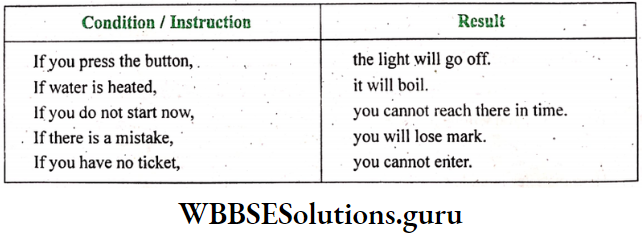
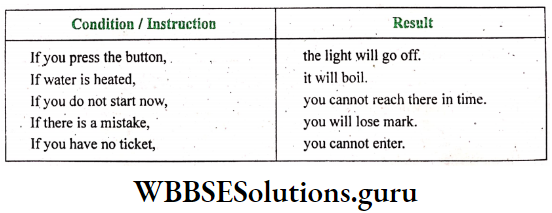
‘If’ clause সর্বদাই conditional sentence-এ ব্যবহৃত হয় এবং তা sentence-এর প্রথমে বা পরে বসতে পারে। এতে sentence-এর অর্থের কোনো পরিবর্তন হয় না। Instruction দিতেও এই clause ব্যবহৃত হয়। নীচের উদাহরণগুলি লক্ষ্য করো।

WBBSE Solutions For Class 8 English Functional Grammar Chapter 16 Clauses Conditional Sentence

WBBSE Solutions For Class 8 English Functional Grammar Chapter 16 Clauses Conditional Sentences

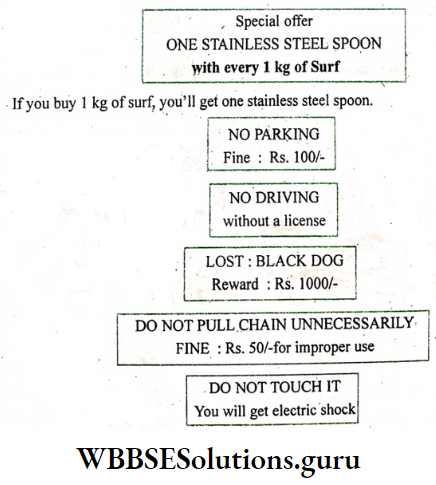
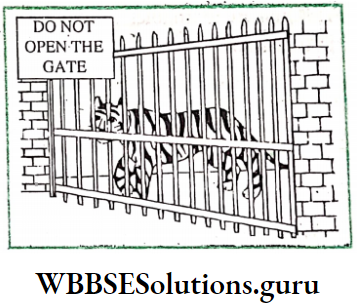
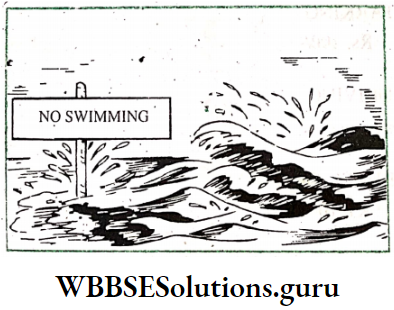
Question 4. Write a conditional sentence for each of the following signs. One is done for you.
Answer:

1.

WBBSE Solutions For Class 8 English Functional Grammar Chapter 16 Clauses Conditional Sentences For Folowing Signs

2.

WBBSE Solutions For Class 8 English Functional Grammar Chapter 16 Clauses You'll Probably Be Safe If You Stay In Your Car

You’ll Probably Be Safe If You Stay In Your Car.

WBBSE Solutions For Class 8 English Functional Grammar Chapter 16 Clauses You'll Probably Get An Electric Shock

You’ll Probably Get An Electric Shock.

WBBSE Solutions For Class 8 English Functional Grammar Chapter 16 Clauses You'll Probably Cause A Fire

You’ll Probably Cause A Fire.

WBBSE Solutions For Class 8 English Functional Grammar Chapter 16 Clauses The Tiger Will Probably Bite You

The Tiger Will Probably Bite You.

WBBSE Solutions For Class 8 English Functional Grammar Chapter 16 Clauses You'll Probably Get Into Difficulties

You’ll Probably Get Into Difficulties.

WBBSE Solutions For Class 8 English Functional Grammar Chapter 16 Clauses You'll Probably Get Into Troubles

You’ll Probably Get Into Troubles.

WBBSE Solutions For Class 8 English Functional Grammar Chapter 17 Simple And Complex Sentences Transformation Of Sentences

WBBSE Chapter 17 Simple And Complex Sentences Transformation Of Sentences

গঠন-প্রকৃতি অনুসারে Sentence-গুলিকে তিন ভাগে ভাগ করা হয় :

  1. Simple
  2. Complex
  3. Compound

Simple Sentence

Simple Sentence-এ মাত্র একটি Subject ও একটি Finite Verb থাকে। Subject এবং Verb-এর qualifying words, Objects ইত্যাদি থাকতে পারে। কিন্তু মূল জিনিস—Finite Verb মাত্র একটি ও Subject মাত্র একটি। নীচের বাক্যগুলিতে প্রধান Subject-word ও Verb-টি italics-এ দেওয়া আছে :-

Read And Learn More WBBSE Class 8 English Functional Grammar

Complex Sentence

  1. I came.
  2. I came home.
  3. I came home yesterday.
  4. The good boy obeys his parents.

Complex Sentence.

Principal Clause Subordinate Clauses

থাকে। মনে রেখো যতটি Finite Verbs ততটি Clauses.

I know when he will come.

This is the place where he was born.

As you are rich, you must help those who are poor.

দ্বিতীয় বাক্যেও মাত্র দুটি finite verbs (is, was born ) ; সুতরাং মাত্র দুটি clauses: “This is the place ” এটি Principal, “where he was born” aft Subordinate Adj. clause, qualifying place.

তৃতীয় বাক্যে তিনটি finite verbs (are, must help, ure), সুতরাং তিনটি clauses: দুইটি Subordinate ও একটি Principal.

As you are rich-Sub. Adv. clauses, qualifying must help.

You must help those-Principal clause.

Who are poor-Sub. Adj. clause, qualifying those.

Compound Sentence-এর সম্বন্ধে তোমরা পরে পড়বে।

Transformation Of Sentences

কোনো sentence-এর অর্থ সম্পূর্ণ বজায় রেখে তার আকার বা form পরিবর্তন করা যায়। একে Transformation (Conversion) of Sentences

নীচে Simple ও Complex sentence-এর Conversion-এর কিছু উদাহরণ দেওয়া হল।

Simple into Complex

Simple Sentence-এর কোনো word বা phrase কে Subordinate Clause-এ পরিণত করে Simple Sentence-Complex Sentence- Subordinate Clauseft Noun, Adjective Adverb Clause হতে পারে।

Noun Clause

Simple: I know his name.
Complex: I know what his name is.

Simple: He came at 5 p.m.
Complex: It was 5 p.m. when he came.

Simple: He will certainly go.
Complex: It is certain that he will go.

Simple: Tell me your address.
Complex: Tell me where you live.

Simple: He declared his innocence.
Complex: He declared that he was innocent.

Simple: You may criticise my action.
Complex: You may criticise what I do.

Adjective Clause

Simple: He is the last man to do it.
Complex: He is the last man that would do it.

Simple: He is a rich man.
Complex: He is a man who is rich.

Simple: I follow my father’s example.
Complex: I follow the example which was set by my father.

Simple: I have no money to spare.
Complex: I have no money that I can spare.

Simple: This is my birthplace.
Complex: This is the place where I was born.

Adverb Clause

Simple: He is too weak to walk.
Complex: He is so weak that he cannot walk.

Simple: In spite of his poverty, he is happy.
Complex: Though he is poor, he is happy.

Simple: Only students are allowed here.
Complex: You can be allowed here only if you are a student.

Simple: On seeing the lion, he ran away.
Complex: When he saw the lion he ran away.

Complex into Simple

Complex Sentence-কে Simple Sentence-এ পরিবর্তন করতে হলে Subordinate clause-কে একটি phrase বা word-এ পরিণত করতে হয়। যথা :

Noun Clause

Complex: I know what his intention is.
Simple: I know his intention.

Complex: Tell me where he lives.
Simple: Tell me his address.

Complex: He wants that I should go.
Simple: He wants me to go.

Adjective Clause

Complex: He was the last man who went there.
Simple: He was the last man to go there.

Complex: I have a story which I want to tell you.
Simple: I have a story to tell you.

Complex: Only those boys who will work hard will succeed.
Simple: Only hard working boys will succeed.

Adverb Clause

Complex: He is so weak that he cannot walk.
Simple: He is too weak to walk.

Complex: He left after I had come.
Simple: He left after my arrival.

Complex: Though he is ill, he will come.
Simple: In spite of his illness he will come.

WBBSE Solutions For Class 8 English Functional Grammar Chapter 17 Simple And Complex Sentences Transformation Of Sentences

WBBSE Chapter 17 Simple And Complex Sentences Transformation Of Sentences Examples

1. State if the sentences are Simple or Complex. Identify the clauses also.

  1. He came home last night.-Simple
  2. It was dark when he came.-Complex
    • It was a dark-Principal clause.
    • when he came–Sub. Adv. clause.
  3. I know that he is intelligent.-Complex
    • I know–Principal clause.
    • that he is intelligent-Sub. Noun clause.
  4. I admit my fault.- simple
  5. He knows that the teacher is angry with him. -Complex
    • He knows-Principal clause
    • that the teacher is angry with him-Sub. Noun clause.
  6. He is buried here.-Simple
  7. He gave me a nice box.-Simple
  8. He gave me a box that was nice. – Complex
    • He gave me a box-Principal clause.
    • that was nice-Sub. Adj. clause.
  9. He heard the judgment that the judge passed.-Complex
    • He heard the judgement-Principal clause.
    • that the judge passed– Sub. Adj. clause.
  10. I told him to be brief. Simple
  11. I told him that he should be brief.-Complex.
    • I told him-Principal clause.
    • that he should be brief-Sub. Noun clause.”
WBBSE Class 8 English Functional GrammarWBBSE Class 8 English Reading Skills
WBBSE Solutions For Class 8 EnglishWBBSE Solutions For Class 8 Maths


2. Convert the following Shapie sentences into Complex ones.

Using Noun clauses: I know his name. I am sure of his passing. We have heard of his success. I know him to be guilty. I desire to go. The teacher noted your absence.
Answer:

I know what his name is. I am sure that he will pass. We have heard that he has succeeded. I know that he is guilty. I desire that I should go. The teacher noted that you were absent.

Using Adjective clauses: He was the last boy to come to school today. He did not get the letter written by me. Only intelligent boys will pass the examination. The men in the room  ushed out,
Answer:

He was the last boy who came to school today. He did not get the letter that I wrote to him. Only those boys who are intelligent will pass the examination. The men who were inside the room rushed out.

Using Adverb clauses: I went there in the evening. He came at night. He was glad to hear this. He could not come to school today for his illness. You cannot succeed without hard work.
Answer:

I went there when it was evening. It was night when he came. He was glad when he heard this. As he was ill, he could not come to school today. You cannot succeed if you do not work hard.

3. Convert the following Simple sentences into Complex ones. One is done for you.
Answer:

I wish you success. Can you tell me the time? I want to go home. I believe in his honesty. This is his birthplace. The report of his illness is true. A brave boy will not fear this. This is my house. He is a man of his word. Alexander, the king of Macedonia, invaded India.

He was the first boy to do it. He saw a big tiger. I could not come on account of illness. He left after my departure. I am too weak to run. He came just at 5 p.m. Wait here till my return. You are too lazy to shine in life. He is not a man to tell a lie.

4. Convert the following Complex sentences into Simple ones. One is done for you.
Answer:

I know where he was born I know his birthplace. He told me what his name was. I pray that he may be successful in life. That he is clever is admitted by all. He did not get the letter that I wrote to him. I have nothing that I can do. Only those boys who are intelligent will pass.

We must love those who live near us. I asked him why he had come late. He acted as a wise man does. He left after I had come. He is pleased that you have succeeded. Though he is poor, he is honest. I am so tired that I cannot walk.

That he will fail is certain. This is the house where he was born. I told him that he should be brief. I have no book that I can lend you. The reply which he has made was foolish. The opinion you have formed of me is unjust.

WBBSE Solutions For Class 8 English Functional Grammar Chapter 18 Transformation Of Sentences

WBBSE Chapter 18 Transformation Of Sentences

কোনো sentence-এর অর্থ সম্পূর্ণ বজায় রেখে তার রূপ Simple Sentence থেকে Complex Sentence- কীভাবে পরিবর্তন করা যায় তা তোমরা পূর্ববর্তী Chapter-এ দেখেছ। অন্যান্য আরও কিছু ক্ষেত্রে কীরূপভাবে এইরূপ Sentence-এর পরিবর্তন করা যায় তা দেখো।

Interchange of Affirmative and Negative Sentences. হ্যাঁ-জ্ঞাপক Sentence হতে না জ্ঞাপক Sentence

ইংরাজিতে বিভিন্নভাবে এই পরিবর্তন করা যায়। যথা ঃ

Read And Learn More WBBSE Class 8 English Functional Grammar

1. ‘No, ‘not’, ‘never? ইত্যাদি না জ্ঞাপক শব্দের পরে negative prefix অথবা বিপরীতার্থক শব্দ (antonym) বসিয়ে ঃ

  • Affirmative (হ্যাঁ-জ্ঞাপক)
    • He is a bad boy
    • This answer is right.
    • This information is true.
    • He always minds his lessons.
    • This is possible.
    • Everybody will admit it.
    • He is competent for the post.
  • Negative (না-জ্ঞাপক)
    • He is not a good boy.
    • This answer is not wrong.
    • This information is not false.
    • He never neglects his lessons.
    • This is not impossible.
    • Nobody will deny it.
    • He is not incompetent for the post.

WBBSE Solutions For Class 8 English Functional Grammar Chapter 18 Transformation Of Sentences

2. Double Negatives

  • Affirmative
    • I know him.
    • I am hopeful
    • He saw you.
    • We finished everything.
  • Negative
    • It is not that I do not know him.
    • I am not without hope.
    • He did not fail to see you.
    • We left nothing unfinished.

3. Too ব্যবহার করে অথবা তা বাদ দিয়ে :

  • Affirmative
    • He is too weak to carry the bag.
    • He is so good that he would help others.
  • Negative
    • He is so weak that he cannot carry the bag.
    • He is too good not to help others.

4. Nore, but প্রভৃতি word ব্যবহার করে :

  • Affirmative
    • Only students are allowed to enter the hall.
    • You are the only person fit for the post.
    • You must attend the meeting.
    • This is all I want.
  • Negative
    • None but the students are allowed to enter the hall.
    • No other person but you is fit for the post.
    • You cannot but attend the meeting.
    • I want nothing but this.

5. বিবিধ উপারে

  • Affirmative
    • Every rose has a thorn.
    • It is often difficult to speak the truth.
    • I like only sweets.
    • All must be present in the class.
  • Negative
    • There is no rose without a thorn.
    • It is not always easy to speak the truth.
    • I like nothing but sweets.
    • No one can be absent from the class.

Interchange of Assertive and Exclamatory Sentences সাধারণ বাক্য এবং বিস্ময়সূচক বাক্যের পরিবর্তন

  • Exclamatory
    • How fast he runs!
    • Alas! what bad news.
    • What a charming scenery!
    • Hurrah! my friend is coming.
  • Assertive
    • He runs very fast.
    • It is very bad news.
    • The scenery is very charming.
    • I rejoice that my friend is coming.
WBBSE Class 8 English Functional GrammarWBBSE Class 8 English Reading Skills
WBBSE Solutions For Class 8 EnglishWBBSE Solutions For Class 8 Maths


Interchange of Interrogative and Assertive Sentences প্রশ্নবোধক বাক্য এবং সাধারণ বাক্যের পরিবর্তন

কোনো-কোনো ক্ষেত্রে প্রশ্ন এমনভাবে করা হয় যে তার উত্তর কী হবে সহজেই অনুমান করা যায়। এইসব ক্ষেত্রে হ্যাঁ-জ্ঞাপক (affirmative) প্রশ্নের না জ্ঞাপক (Negative) উত্তর এবং না-জ্ঞাপক (negative) প্রশ্নের হ্যাঁ-জ্ঞাপক (affirmative) উত্তরই স্বাভাবিকভাবে বোঝায়।

  • Interrogative
    • Is he not a great fool?
    • Who does not know him?
    • Can I ever forget you?
    • Can their glory ever fade?
    • What is the use of this statue?
    • Who has not heard of Netaji?
    • Is that the way you should behave?
  • Assertive
    • He is a great fool.
    • Everybody knows him.
    • I can never forget you.
    • Their glory can never fade.
    • There is no use of this statue.
    • Everybody has heard of Netaji.
    • That is not the way you should behave.

Interchange of Degree of Comparison

Positive: Amal is not so tall as Bimal.
Comparative: Bimal is taller than Amal.

Positive: He is ferocious as a tiger.
Comparative: A tiger is not more ferocious than he.

Positive: He is the best boy in the class.
Comparative: He is better than any other boy (or, all other boys) in the class.

Positive: No other boy in the class is so good as he is.
Comparative: Iron is the most useful of all metals.

Positive: Iron is more useful than any other metal (or, all other metals).
Comparative: No other metal is so useful as Iron.

WBBSE Solutions For Class 8 English Functional Grammar Chapter 19 Verbing Form Participles And Gerunds

WBBSE Chapter 19 Verbing Form Participles And Gerunds

Participles

নীচের Sentence গুলি লক্ষ্য করো :

I found him reading.

He jumped from the moving train.

I found him reading a book.

Read And Learn More WBBSE Class 8 English Functional Grammar

উপরের প্রত্যেকটি sentence-এ Verb-এর সাথে ing যোগ হয়ে word টি Adjective-এর মতো কোনো noun বা pronoun-কে qualify করছে।

প্রথম Sentence-এ ‘reading ‘ Adjective-এর মতো ব্যবহৃত হয়ে him-কে qualify করছে।

দ্বিতীয় Sentence-এ ‘moving’ Adjective-এর মতো ব্যবহৃত হয়ে train-কে qualify করছে।

তৃতীয় Sentence-এ ‘reading’-এর মধ্যে Verb ও Adjective দুইটিরই ক্রিয়া আছে ; adjective রূপে him-কে qualify করে, আর verb রূপে এর object “book”.

WBBSE Solutions For Class 8 English Functional Grammar Chapter 19 Verbing Form Participles And Gerunds

সুতরাং উপরের তিনটি Sentence-এ Verb-এর শেষে ing যোগ হয়ে wordটি হয় শুধু Adjective বা Adjective ও Verb দুইটিরই ক্রিয়া করে। এরকম word-কে Present Participle বলে।

নীচে এরূপ আরও কয়েকটি sentence দেওয়া হল ঃ

I saw him running for shelter.

He found the boys playing in the field.

The people watched the stone rolling down the hill.

The baby started crying.

Present Participle যুক্ত Simple Sentence-কে দুইটি clause-এ ভাগ করে Complex Sentence-এ পরিবর্তিত করা যায়। নীচের উদাহরণগুলি লক্ষ্য করো।

Simple: I saw people running for shelter.”
Complex:

  • I saw that people were running for shelter. (Noun cl.)
  • I saw the people who were running for shelter. (Adj. cl.)

Simple: I noticed Bimal playing in the field.
Complex:

  • I noticed that Bimal was playing in the field. (Noun. cl.)
  • I noticed Bimal who was playing in the field. (Adj. cl.)

Simple: This is a hanging bridge.
Complex: This is a bridge that is hanging. (Adj. cl.)

WBBSE Class 8 English Functional GrammarWBBSE Class 8 English Reading Skills
WBBSE Solutions For Class 8 EnglishWBBSE Solutions For Class 8 Maths


Gerunds

নীচের sentence গুলি লক্ষ্য কর :

He is fond of reading.

He is fond of reading books.

উপরের প্রথম sentence-এ ‘reading’ word টি শুধু Noun-এর মত ব্যবহৃত হয়েছে—objective case, governed by the preposition of.

দ্বিতীয় sentence-এ ‘reading’-এর মধ্যে Verb ও Noun দুইটিরই ক্রিয়া আছে— Noun-রূপে ‘of এই Preposition. এর object, আর Verb রূপে এর object books.

সুতরাং এই দুইটি sentence-এ ‘reading’ word টি Verb থেকে গঠিত হয়ে হয় শুধু Noun, বা Noun ও Verb দুটিরই ক্রিয়া করে। এ রকম word-কে Gerund বলে।

Verb-এর শেষে ing যোগ হয়ে যে word শুধু Noun বা Noun ও Verb উভয়েরই ক্রিয়া করে তাকে Gerund বলে।

Gerund এর ব্যবহার :

  1. Verb Subject: Walking is a good exercise.
  2. Verb object: I learn drawing. Stop playing.
  3. Preposition – object He is fond of reading.
  4. Complement – It is a capital saying.
  5. Compound noun – A sleeping room; drinking water; a walking stick.

WBBSE Solutions For Class 8 English Functional Grammar Chapter 21 Concord Or Agreement

WBBSE Chapter 21 Concord Or Agreement

বাক্যে word-এর Number, Gender, Person ও Case-এর পরস্পর সম্বন্ধ ঠিক রাখাকেই Concord বা Agreement বলে।

সাধারণ কয়েকটি নিয়ম দেওয়া হল :-

Subject, Verb Pronoun:

Subject-number, gender person, Verb 4 Pronoun-433 number, gender ও person হয়।

He goes. They go. I am. We are. The boy plays. The boys play. The girl has done her work. The bird is in its nest.

“And”:

যখন দুই বা ততোধিক singular Noun বা Pronoun “and” দ্বারা যুক্ত করে subjects-রূপে ব্যবহার করা হয়, তখন তাদের Verb ও Pronoun সাধারণত plural হয়—
ব্যতিক্রম :

Read And Learn More WBBSE Class 8 English Functional Grammar

  1. Ram and Shyam have gone to their houses.
  2. She and her brother are playing in their garden.

WBBSE Solutions For Class 8 English Functional Grammar Chapter 21 Concord Or Agreement

কিন্তু যদি:

1. কিন্তু যদি Noun-গুলি একই ব্যক্তি বা বস্তু বোঝায় তবে Verb ও Pronoun-গুলি singular হবে—

  1. The Headmaster and Secretary has done his work.
  2. The Viceroy and Governor-General has given his consent to the bill.

প্রথম বাক্যে একই ব্যক্তি Headmaster ও Secretary ; দ্বিতীয় বাক্যেও একই ব্যক্তি Viceroy ও Governor- General। এইজন্য উভয় ক্ষেত্রেই has ও his ব্যবহৃত হয়েছে। his-

যদি Headmaster ও Secretary বিভিন্ন লোক হতেন তবে Secretary-র পূর্বেও the বসত এবং has ও their―The Headmaster and the Secretary have done their works. have

2. যখন প্রত্যেকটি singular Noun-এর পূর্বে each, every বা no বসে তখনও Verbটি singular হয়—

  1. Each man and each woman gets a prize.
  2. Every star and every planet is created by God.
  3. No friend and no relative cares for me.

3. যখন and দ্বারা যুক্ত singular Noun-গুলি একটি collective idea প্রকাশ করে তখনও Verb singular হয়—

  1. A hue and cry was raised.
  2. The long and the short of the story is this.

3. Either—or, Neither–or-এর (হয় ইহা –নতুবা তাহা) ব্যবহার :–

  1. যখন দুই বা ততোধিক singular subjects either or, neither nor দ্বারা যুক্ত করা হয় তখন Verb ও Pronoun singular
    • Either he or his brother is guilty.
    • Neither he nor his brother is guilty.
    • Neither he nor his brother has done his job.
  2. যখন বিভিন্ন numbers এর subjects either or, neither nor দ্বারা যুক্ত হয় তখন plural number-টি Verb-এর কাছে বসে এবং Verb-টি plural হয়-
    • Neither the father nor the sons were present.
    • Either he or they have done this.
WBBSE Class 8 English Functional GrammarWBBSE Class 8 English Reading Skills
WBBSE Solutions For Class 8 EnglishWBBSE Solutions For Class 8 Maths


4. দেশ ও পুস্তকের নাম Plural form-এর হলেও এদের Verb ও Pronoun উভয়ই singular হয়— 

  1. The United States of America is a rich country.
  2. The Folk Tales of Bengal is a good book.

5. with ও as well as দ্বারা বিভিন্ন subjects যুক্ত হলে Verb-টি তাদের পূর্বের subject অনুযায়ী হয়-

  1. He with his wife has gone to his mother.
  2. They with their father have gone home.
  3. He as well as his friends was present there.

WBBSE Solutions For Class 8 English Functional Grammar Chapter 22 Punctuation

WBBSE Chapter 22 Punctuation

বাক্যের মধ্যে বিভিন্ন বিরাম-চিহ্ন ব্যবহৃত হয়। এগুলিকে punctuation marks বলে। এদের মধ্যে নিম্নলিখিত কয়টিই প্রধান :

Comma (,); Semicolon (;); Full stop Period (.); Note of Interrogation [(TIKE BE)? ];

Note of Exclamation [ (বিস্ময় বা উচ্ছ্বাসবোধক চিহ্ন)! ] ; এবং Quotation marks বা Inverted commas (“-“).

Use of the Comma (,)

পড়বার সময় সবচেয়ে কম সময় বিরামের জন্য এই চিহ্ন ব্যবহৃত হয়। সাধারণ নিয়মগুলি এই ঃ

Read And Learn More WBBSE Class 8 English Functional Grammar

1. একই Part of speech দুটির বেশি একত্রে ব্যবহৃত হলে তাদের মধ্যে comma বঙ্গে। যথা ঃ

Ramesh, Jatin and Suren are brothers.

She is tall, fair, and intelligent.

Example:

1. উপরের বাক্য দুটি এভাবেও লেখা চলে :

  • Ramesh, Jatin, and Suren are brothers.
  • She is tall fair and intelligent.

2. দুটি মাত্র same Part of Speech যুক্ত হলে comma বসে না :

  • Ram and Shyam are brothers.
  • She is tall and fair.

2. Nouns, Pronouns বা Phrases যখন apposition-রূপে ব্যবহৃত হয় তখন তাদেরকে comma দ্বারা পৃথক্ করতে হয়। যথা :

  • Sarala, my sister, went there.
  • Asoke, the king of Pataliputra, invaded Kalinga.
  • Satish Babu, Headmaster of the school, is a good man.

3. Vocative case-কে মূল Sentence হতে আলাদা করবার জন্য comma বসে। যথা :

  • Boys, listen to me.
  • I appeal to you, my friends, to leave the place.

4. Absolute phrase-এর পর comma বসে :

  • The sun having set, we left the place.
  • To speak the truth, I consider him a fool.

5. Adverbial clause-কে পৃথক করার জন্য comma বসে :

  • As she is ill, she cannot come.
  • If you work hard, you will succeed.

Example: কিন্তু যদি Adverbial clause-টি Principal clause-এর পরে বসে তবে প্রায়ই comma বসে না, বিশেষতঃ যদি clause-টি ছোটো হয় :

  • I was glad when I saw you.
  • He came after I had left.

WBBSE Solutions For Class 8 English Functional Grammar Chapter 22 Punctuation

6. Co-cromate clauses যদি and দ্বারা যুক্ত হয়, কিন্তু তাদের Subject-গুলি different হয়, অথবা Co-ordinate clauses যদি and ভিন্ন অন্য conjunction দ্বারা যুক্ত হয়, কিন্তু Subject – গুলি same হয়, তা হলে এই clause-গুলির মধ্যে comma হয় ও

  • He is ill, and his father also is away.
  • He is ill but will go there.

Example: কিন্তু and দ্বারা যুক্ত Co-ordinate clause-এর যদি একই Subject থাকে তবে comma বসে না :

I came and found him there.

7. Quotation marks-এর পূর্বে comma বসে ঃ

  • He said, “I can do it.”
  • You said, “Go there.”

Semicolon (;)

Comma অপেক্ষা দীর্ঘতর সময় থামবার দরকার হলে Semicolon বসে। সাধারণত এর প্রয়োজন হয় :

1. Co-ordinate clause-এর মধ্যে যখন কোনো Conjunction থাকে না :

  • To err is human; to forgive, divine.
  • I have heard his statement; it is an impossible story.

2. But, yet, siill প্রভৃতি Conjunction দ্বারা যখন বিভিন্ন Subject-বিশিষ্ট Co-ordinate clause যুক্ত হয় :

  • I at once went there, but he had already left.
  • He helped me, yet I failed.

Full stop (.)

1. Sentence-R GT:

  • He has gone away.
  • I have seen the boy.

2. সংক্ষিপ্তরূপ ( abbreviation)-এর পর ঃ

M. A. (Master of Arts); Esq., Hon., Mr., Dr., inst. ( instant).

Example:

  1. আজকাল Mr. ও Dr.-এর পর Full stop না দিয়েও লেখা চলে।
  2. BBC, MP, USA, UNESCO প্রভৃতি সংক্ষিপ্ত word-গুলি আজকাল বহুল পরিমাণে ব্যবহারে প্রায় word রূপেই গণ্য হয়। এসব ক্ষেত্রে তাই full stop প্রায়ই ব্যবহার করা হয় না।

Note of Interrogation (?).

WBBSE Class 8 English Functional GrammarWBBSE Class 8 English Reading Skills
WBBSE Solutions For Class 8 EnglishWBBSE Solutions For Class 8 Maths


প্রশ্ন জিজ্ঞাসা করতে ব্যবহৃত হয় :

  • When will you go?
  • How old are you?

Note of Exclamation (!)

আকস্মিক উচ্ছ্বাস প্রকাশ করতে এটা ব্যবহৃত হয় :

  • Bravo! my boy.
  • Alas! I am ruined.
  • What a sight!

Question Marks or Inverted Commas (“—”)

কাহারও কথা উদ্ধৃত করতে এটা ব্যবহৃত হয় !

  • I said, “He will come.”
  • She said, “I cannot go.”

Use of the Capital Letter

প্রত্যেক Sentence-এর প্রথমে :

  • He is a good boy.
  • He reads in class 7.

Poetry-র প্রত্যেক পংক্তির প্রথমে :

  • Oft I had heard of Lucy Gray
  • And, when I crossed the wild
  • I chanced to see at break of day
  • The solitary child.

Proper Noun And Proper Adjective-

  • I saw him at Hooghly.
  • My sister’s name is Kamala.
  • He is a German.
  • He is an Indian Christian.
  • I shall go there on Sunday, or in January.

ঈশ্বর অর্থে God এবং তৎপরিবর্তে যে সব Pronoun বসে তার প্রথমে :

Oh God, we pray to Thee. It is You who made us.

I3 O যখন পৃথক word-রূপে ব্যবহৃত হয় :

It is I who did it. O solitude!

First words of a Direct Narration:

He said, “You are right.”

কিন্তু, প্রত্যক্ষ উক্তির (Direct Narration) কোনো বাক্যাংশ যদি বিরতির পরে নতুন quotation mark-এর মধ্যে লিখতে হয়, সেক্ষেত্রে প্রথম wordটি capital letter-এ সুরু হয় না। যেমন : “I have,” said he, “ never done you any wrong.”

ব্যক্তিবোধক object- (Personified Object)-এর প্রথমে :

O Death! how cruel you are!

চিঠির সম্বোধনে

Dear Sir

Punctuate the following:

1. latika went to delhi

Latika went to Delhi.

2. he will come to Kolkata on monday.

He will come to Kolkata on Monday.

3. the ganga is very dear to the hindus

The Ganga is very dear to the Hindus.

4. the teacher said london stands on the Thames

The teacher said, “London stands on the Thames.”

5. what is your name asked the teacher

“What is your name?” asked the teacher.

6. he was honest sincere hard-working and faithful

He was honest, sincere, hard-working, and faithful.

7. Why are you angry with ram.

Why are you angry with Ram?

8. When i went to his house on sunday last his father rebate babu said why have you come here whom do you want.

When I went to his house on Sunday last, his father Rebati babu said, “Why have you come here? Whom do you want ?”