WBBSE Solutions For Class 6 English Functional Grammar Lesson 8 Possessive Forms

Lesson 8 Possessive Forms Nouns

  • This is Ram’s book.
  • I went to Sunil’s house.

Read And Learn Also WBBSE Class 6 English Functional Grammar

প্রথম senterice-এ বইটি কার? (Whose ?)—এই প্রশ্নের উত্তরে বলছে রামের (Ram’s)। অর্থাৎ book-এর সাথে Ram-এর সম্বন্ধ বোঝাচ্ছে। সেইরূপ দ্বিতীয় sentence-এ Sunil এর সাথে house- এর সম্বন্ধ বোঝাচ্ছে, অর্থাৎ Sunil’s house দ্বারা বাড়ীটির সাথে সুনীলের অধিকার সম্বন্ধ বা possession বোঝাচ্ছে। এই অধিকার সম্পর্ক বোঝাবার জন্য Ram ও Sunil — এই word দুটি যথাক্রমে Ram’s ও Sunil’s হয়েছে।
কোন জিনিসের সাথে কর্তার অধিকার সম্বন্ধ বোঝাতে নির্দিষ্ট Noun বা Pronoun)-কে Possessive form-এ ব্যবহার করতে হয়।
WBBSE Solutions For Class 6 English Functional Grammar Lesson 8 Possessive Forms

এই Possessive form-এ রূপান্তরের কতকগুলি নিয়ম আছে।

1.

  • Ram’s book বা the book of Ram—রামের পুস্তক।
  • The boy’s name বা the name of the boy — বালকটির নাম।
  • The boys’ names বা the names of the boys – বালকদের নাম।
  • The bird’s nest বা the nest of the bird—পাখিটির বাসা।
  • The horses’ tails বা the tails of the horses— ঘোড়াগুলির লেজ।
  • The dogs’ tails বা the tails of the dogs — কুকুরগুলির লেজ ।
  • The ladies’ programme বা the programme of the ladies —  মহিলাদের অনুষ্ঠান।
  • The children’s toys বা the toys of the children —শিশুদের খেলনাগুলি।
  • The women’s college বা the college of the women-মেয়েদের  কলেজটি।
  • The men’s clothes বা the clothes of the men – পুরুষদের পোষাক।
  • Paresh’s pen— পরেশের কলম।
  • Dickens’s novel — ডিকেন্সের নভেল।

WBBSE Grammar Lesson 8 Solutions

লক্ষ্য কর :

1. যে সকল Noun-এ চেতন অর্থাৎ প্রাণীবাচক (animate) পদার্থ বোঝায় তাদের শেষে ‘s (apostrophe এবং s) বসিয়ে বা এদের পূর্বে of বসিয়ে possessive form করা হয়।

2. তবে Noun-টির Plural form-এ শেষে যদি s বা es থাকে তবে তার পরে কেবলমাত্র apostrophe (‘) sign বসে, apostrophe -র পরে s বসে না।

2.

  • The roof of the house — বাড়ীর ছাদ।
  • The door of the room—ঘরের দরজা।
  • The pages of the book — বইয়ের পাতাগুলি ।
WBBSE Class 6 English Functional GrammarWBBSE Class 6 English Reading SkillsWBBSE Solutions For Class 6 English


লক্ষ্য কর :
Noun-টি যদি অচেতন পদার্থ (inanimate) বোঝায় তবে সাধারণতঃ তার পূর্বে of বসিয়ে possessive form করা হয়, ‘s বসিয়ে হয় না।

3.

  • One day’s leave — একদিনের ছুটি।
  • A week’s lesson —এক সপ্তাহের পড়া।
  • The sun’s rays—সূর্যের রশ্মি।
  • One month’s leave — এক মাসের ছুটি।
  • Today’s weather – আজকের আবহাওয়া। A boat’s crew —নৌকার  মাঝি।
  • Country’s cell — দেশের ডাক।
  • Five years’ labour — পাঁচ বছরের পরিশ্রম।

লক্ষ্য কর: কোন কোন ক্ষেত্রে অচেতন পদার্থ (inanimate) বোঝালেও ‘s (apostrophe এবং s)
বসিয়ে possessive করা হয়।

Lesson 8 Pronouns

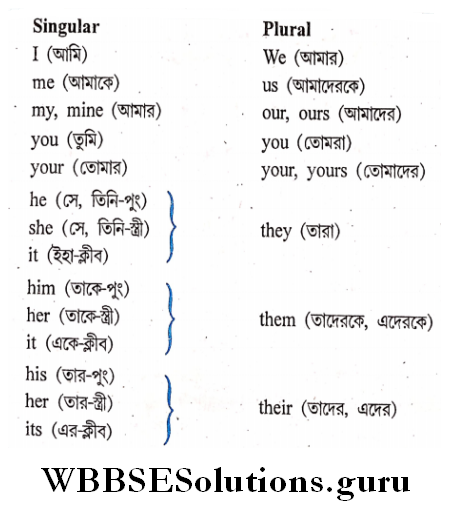
Pronoun-এর Possessive’ form নীচে লক্ষ্য কর :

Pronoun – Possessive form

  • I (আমি) – my, mine (আমার)
  • We (আমরা) – our, ours (আমাদের)
  • You (তুমি, তোমরা) – your, yours (তোমার, তোমাদের)
  • He (সে-পুং ) – his (তার)
  • She (সে-স্ত্রী) – her, hers (তার)
  • It – its (ইহার )
  • They (তারা) – their, theirs (তাদের)

4

  • My mother – আমার মা।
  • Your book—তোমার (আপনার) বই।
  • His pen — তার (পুং) কলম।
  • Her pen—তার (স্ত্রী) কলম।
  • Our country – আমাদের দেশ।
  • Your house—তোমাদের (আপনাদের) বাড়ী।
  • Their garden — তাঁদের বাগান।
  • Their price– তাদের মূল্য।
  • Its name—ইহার নাম।

English Grammar Lesson 8 Answers Class 6

লক্ষ্য কর :

1. Your বললে ‘তোমার’, ‘তোর’, ‘আপনার’, ‘তোমাদের’, ‘তোদের’, ‘আপনাদের’— সবই বোঝায়। Their বললে ‘তাদের’, ‘এদের’, ‘ওদের’ ইত্যাদি সবই বোঝায়।

2. ‘তাহার’ বোঝালে পুরুষের ক্ষেত্রে his এবং স্ত্রীলোকের ক্ষেত্রে her ব্যবহৃত হয়। Its—এই শব্দটিতে কোন (‘) apostrophe নাই।
বাংলায় যেমন ‘আমার’, ‘তোমার’, ‘তাহার’ প্রভৃতি সম্বন্ধ পদ বিশেষ্যের (Noun) পূর্বে বসে, সেইরূপ ইংরাজীতে my, our, your, his ইত্যাদি pronoun -গুলি possessive word রূপে Noun-এর পূর্বে বসে। তাই এদের বলা হয় Possessive Adjectives.

5.

নীচের sentence-গুলি দেখ:

  • This is my pen. (এইটি আমার কলম ।) = This pen is mine. (এই কলমটি আমার।)
  • This is your chair. (এইটি তোমার চেয়ার।) = This chair is yours. (এই চেয়ারটি তোমার।)
  • This is her dress. (এইটি তার পোষাক। = This dress is hers. (এই পোষাকটি তার।)
  • That is our school. (ঐটি আমাদের বিদ্যালয়।) = That school is ours. (ঐ বিদ্যালয়টি আমাদের।)
  • This is his bag. (এটা তার ব্যাগ।) = This bag is his. (এই ব্যাগটি তার।)
  • It is their house. (এটা তাদের বাড়ী।) = This house is theirs.(এই বাড়ীটি তাদের।)

Class 6 English Grammar Exercises Wbbse

লক্ষ্য কর :

1. উপরের ডান দিকের এবং বাঁদিকের sentence-গুলি আলাদা ভাবে লেখা হলেও উভয়েরই অর্থ এক।

2. mine (আমার), ours (আমাদের), yours (তোমার বা তোমাদের) his (তার-পুং ) hers (তার-স্ত্রী) theirs (তাদের)—এইসব Pronoun -গুলিও possessive word রূপে ব্যবহৃত হয়। এগুলির পরে Noun ব্যবহৃত হয় না এবং এরা সাধারণতঃ sentence-এর শেষে বসে। এই word-গুলিকে Possessive Pronouns বলা হয়।

3. Ours, hers, its, yours, theirs—এই শব্দগুলিতে ‘s’-এর পূর্বে কোন (‘) apostrophe বসে না।

  • Rice mill — চালের কল।
  • School fee—স্কুলের বেতন।
  • Golden chain – সোনার চেন।
  • Puja holiday — পূজার ছুটি।
  • Iron safe—লোহার সিন্দুক।
  • Rain water — বৃষ্টির জল।
  • Street dog—রাস্তার কুকুর।
  • Coal mine—কয়লার খনি।

ব্যবহার করা হয়। উপরের word-গুলিতে কোন কোন সময় সম্বন্ধবাচক word-টি Adjective-রূপে rice, school, golden ইত্যাদি Noun-গুলি Adjective-রূপে ব্যবহার করা হয়েছে।.
WBBSE Solutions For Class 6 English Functional Grammar Lesson 2 Classification Of Sentences

Lesson 2 Classification Of Sentences

অর্থ অনুসারে sentence-গুলিকে পাঁচভাগে ভাগ করা যায়; এবং এদের প্রত্যেকটি আবার ‘হ্যাঁ- জ্ঞাপক’ (Affirmative) ও ‘না- জ্ঞাপক’ (Negative) হতে পারে :-

Assertive sentence— যে sentence সাধারণভাবে শুধু কোনও অবস্থা, ঘটনা বা বিবৃতি প্রকাশ করে তাকে Assertive Sentence বা Statement বলে। যথা ঃ-

WBBSE Class 6 English Solutions

Read And Learn Also WBBSE Class 6 English Functional Grammar

Affirmative (হ্যাঁ-জ্ঞাপক) – Negative (না-জ্ঞাপক)

  • I know him. – I do not know him.
  • The boy reads. – The boy does not read.
WBBSE Class 6 English Functional GrammarWBBSE Class 6 English Reading SkillsWBBSE Solutions For Class 6 English


Interrogative Sentence — যে sentence- এ কোনও প্রশ্ন জিজ্ঞাসা করা হয় তাকে Interrogative Sentence বা Question বলে। যথা :-

Affirmative – Negative

  • Why did you do it? – Why did you not do it?
  • Is he ill? – Is he not ill?

WBBSE Solutions For Class 6 English Functional Grammar Lesson 2 Classification Of Sentences

Imperative Sentence — যে sentence-এ কোন আদেশ (order), উপদেশ বা অনুরোধ বোঝায় তাকে Imperative Sentence বলে। যথা :-

WBBSE Class 6 English Functional Grammar

Affirmative – Negative

  • Come here – Do not come here
  • Go home – Do not go home

Optative Sentence – যে sentence-এ কোন ইচ্ছা বা প্রার্থনা প্রকাশ করা হয় তাকে Optative Sentence বলে। যথা :–

  • May he live long.
  • God bless you.

WBBSE board Exam Preparation Class 6

Exclamatory Sentence – যে sentence-এ শুধু আনন্দ, দুঃখ, ঘৃণা প্রভৃতি মনের কোন আকস্মিক উচ্ছ্বাস প্রকাশ করা হয় তাকে Exclamatory Sentence বলে। যথা :–

  • How nice!
  • What a fool you are!
  • Hurrah! we have won.
  • Alas! he is no more.

Classification Of Sentences four kinds of sentences

WBBSE Solutions For Class 6 English Functional Grammar Lesson 7 Gender Of Nouns And Pronouns

Lesson 7 Gender Of Nouns And Pronouns

  • This is a boy.
  • He is old.
  • The girl is playing.
  • She laughs.
  • I have a pen.
  • Obey your parents.

Read And Learn Also WBBSE Class 6 English Functional Grammar

এখানে boy ও he দ্বারা পুরুষ প্রাণী এবং girl ও she দ্বারা স্ত্রীলোক বোঝাচ্ছে। কিন্তু pen দ্বারা পুরুষ বা স্ত্রী কিছুই বোঝায় না, এটা একটি অচেতন বস্তুকে বোঝাচ্ছে। আবার parents word-টি দ্বারা স্ত্রী ও পুরুষ দুই শ্রেণীকেই বোঝাচ্ছে।

WBBSE Class 6 English Functional GrammarWBBSE Class 6 English Reading SkillsWBBSE Solutions For Class 6 English


Boy he Masculine Gender 4 girl she Feminine Gender, pen parents যথাক্রমে Neuter ও Common Gender.

WBBSE Solutions For Class 6 English Functional Grammar Lesson 7 Gender Of Nouns And Pronouns

ইংরাজীতে চারিটি Gender (লিঙ্গ) আছে :

  • Masculine (পুংলিঙ্গ)
  • Feminine (স্ত্রীলিঙ্গ)
  • Neuter (ক্লীবলিঙ্গ)
  • Common (উভয়লিঙ্গ)

1. যে word-গুলিতে কেবল পুরুষ জাতি বোঝায় সেগুলিকে Masculine gender (পুংলিঙ্গ)
বলা হয়। যথা :

Gender Of Nouns And Pronouns masculine gender

2. যে word-গুলিতে কেবল স্ত্রী জাতি বোঝায় সেগুলিকে Feminine gender (স্ত্রীলিঙ্গ) বলা হয় ।

Gender Of Nouns And Pronouns feminine gender

3. যে word-গুলিতে কেবল অচেতন পদার্থ বোঝায় সেগুলিকে Neuter gender (ক্লীবলিঙ্গ) বলা হয়।

Gender Of Nouns And Pronouns neuter gender

4. যে word-গুলিতে স্ত্রী ও পুরুষ উভয় জাতির প্রাণী বোঝায় সেগুলিকে Common gender (উভয়লিঙ্গ) বলা হয়। যথা :

  • Friend
  • Child
  • Person
  • Parent
  • Baby

Lesson 7 Gender Of Nouns

Masculine Noun কে Feminine Noun -এ পরিবর্তিত করার সাধারণতঃ ৩টি উপায় আছে :

Word -টি একেবারে পরিবর্তন করে :

Masculine – Feminine

  • Bachelor (অবিবাহিত পুরুষ) – Maid, spinster (অবিবাহিতা মেয়ে)
  • Dog (কুকুর) – Bitch (কুকুরী
  • Drone (পুং মৌমাছি – Bee (স্ত্রী মৌমাছি)
  • Boy (বালক) – Girl (বালিকা)
  • Horse (ঘোড়া) – Mare (স্ত্রী ঘোড়া)
  • Brother (ভাই) – Sister (ভগ্নী)
  • King (রাজা) – Queen (রাণী
  • Buck (পুং হরিণ, খরগোশ) – Doe (স্ত্রী হরিণ,
  • Bull, Ox (ষাঁড়) – Cow (গাভী)
  • Lord. (প্রভু, সম্ভ্রান্ত) – Lady (প্রভুপত্নী, সম্ভ্রান্ত
  • Monk (সন্ন্যাসী) – Nun (সন্ন্যাসিনী)
  • Cock (মোরগ) – Hen (মুরগী)
  • Peacock (ময়ূর) – Pea hen (ময়ূরী)

WbbSE English Grammar Lesson 7

Masculine – Feminine

  • Papa (বাবা) – Mamma (মা)
  • Nephew (ভাগ্নে, ভাইপো) – Niece (ভাগিনেয়ী, ভাইঝি)
  • Father (পিতা) – Mother (মা)
  • Stag (হরিণ) – Hind (হরিণী)
  • Lad (বালক) – Lass (বালিকা)
  • Son (পুত্র) – Daughter (কন্যা)
  • Male (পুরুষ) – Female (স্ত্রীলোক )
  • Sir (মহাশয়) – Madam (মহাশয়া)
  • Man (পুরুষমানুষ) – Woman (স্ত্রীলোক )
  • Uncle (খুড়া, জ্যাঠা) – Aunt (খুড়িমা, জেঠিমা, মামিমা প্রভৃতি
  • Wizard (জাদুকর) – Witch (ডাইনি)

2. Masculine-এর শেষে “-ess” যোগ করে, ক্ষেত্র বিশেষে বানানের সামান্য পরিবর্তন। ঘটিয়ে :

Masculine – Feminine

  • Actor (অভিনেতা) – Actress (অভিনেত্রী)
  • Prince (রাজপুত্র) – Princess (রাজকন্যা)
  • Author ( গ্রন্থকার ) – Authoress (গ্রন্থকর্তী)
  • Inspector (পরিদর্শক) – Inspectress (পরিদর্শিকা)
  • Emperor (সম্রাট) – Empress (সম্রাজ্ঞী)
  • Lion (সিংহ) – Lioness (সিংহী)
  • God (দেবতা) – Goddess (দেবী)
  • Master (শিক্ষক) – Mistress (শিক্ষয়িত্রী)
  • Hunter (শিকারী) – Huntress (স্ত্রী শিকারী)
  • Poet (কবি) – Poetess (নারী কবি)
  • Host (অতিথি সেবক) – Hostess ( অতিথি
  • Heir (এয়্যার) – Heiress (উত্তরাধিকারী)
  • Tiger (বাঘ) – Tigress (বাঘিনী )
  • Tutor (গৃহশিক্ষক) – Tutress (গৃহশিক্ষিকা)

3. Compound word-এর মধ্যেই Masculine-এর পরিবর্তে Feminine word বসিয়ে :

English Grammar Lesson 7 Answers Class 6

Masculine – Feminine

  • Father-in-law (শ্বশুর – Mother-in-law (শ্বাশুড়ী)
  • Grandfather (ঠাকুর্দা) – Grandmother (ঠাকুরমা, দিদিমা )
  • Manservant (চাকর) – Maid-servant (চাকরাণী)
  • Schoolmaster (শিক্ষক) – Schoolmistress (শিক্ষিকা)
  • Landlord (বাড়ীওয়ালা) – Landlady (বাড়ীওয়ালি)

4. Miscellaneous (বিবিধ) :

Masculine – Feminine

  • Bridegroom (বর) – Bride (কনে)
  • Hero (বীর, নায়ক) – Heroine (বীররমণী, নায়িকা)
  • Master – Miss
  • Mr (মহাশয়) – Mrs (মহাশয়া)
  • Widower (বিপত্নীক) – Widow (বিধবা )

Lesson 7 Gender of Inanimate (অচেতন) objects

অচেতন পদার্থ সাধারণতঃ Neuter Gender বলে বিবেচিত হয়। কিন্তু কখনো কখনো কতকগুলি অচেতন পদার্থের উপর ব্যক্তিত্ব আরোপ (personified) করা হয়, তখন তারা গুণানুসারে Masculine বা Feminine রূপে গণ্য হয়।

1. যে সমস্ত জিনিস শক্তি (strength), বিরাটত্ব (greatness), শৌর্ষ (courage) ইত্যাদির জন্য বিখ্যাত তারা Masculine । যথা : Sun, Summer, Thunder, Death.

2. কিন্তু যে সমস্ত জিনিস কোমলতা (tendernes), সৌন্দর্য (beauty), স্নিগ্ধতার ( mildness) জন্য বিখ্যাত তারা Feminine । যথা : Moon, Hope, Earth, Nature, Night.

Online Study Material For Wbbse Class 6

3. দেশ ও জাহাজের নামও Feminine । যথা : India, the Titanic (জাহাজের নাম)। (iv) ছোট শিশু ও ইতর শ্রেণীর জীব সাধারণতঃ Neuter বলে গণ্য হয়। যথা :

  • The bird returns to its nest.
  • The child is crying for its mother.

Lesson 7 Gender Of Nouns And Pronouns Gender Of Pronouns

যে noun-এর পরিবর্তে pronoun-টি ব্যবহৃত হয়, সেই noun-এর যে gender, pronoun-টিরও সেই gender হয়, যেমন :

  • Rana went there with his mother.
  • Rekha said that she was ill.

Noun-এর মতো pronoun-এরও gender অনুযায়ী বিভিন্ন রূপ আছে, যেমন :

Masculine – Feminine

  • He (সে) – she (সে)
  • His (তার) – her, hers (তার)
  • Him (তাকে – her (তাকে
  • Neuter – Common
  • It (ইহা) – I, we, you, they,
  • Its (ইহার) – my, our, their, theirs, your, yours, mine
  • It (ইহাকে – me, us, you, them

WBBSE Solutions For Class 6 English Functional Grammar Lesson 6 Number

Lesson 6 Number

ব্যক্তি বা বস্তুর সংখ্যাকে Number (বচন) বলে। ইংরাজীতে Number দুইটি :-

Singular (একবচন) : যে noun বা pronoun-এ একটিমাত্র সংখ্যা বোঝায় তার Singular number হয়।
tree, man, I, he, it, she, this book, dog.

Read And Learn Also WBBSE Class 6 English Functional Grammar

Plural (বহুবচন) : যে noun বা pronoun একের অধিক সংখ্যা বোঝায় তার Plural number
হয়।

Two boys, many trees, gardens, we, they.

WBBSE Solutions For Class 6 English Functional Grammar Lesson 6 Number Singular And Plural

1. Singular Noun-কে Plural করিবার নিয়ম :

1. অধিকাংশ noun-এর শেষে সাধারণত ‘s’ যোগ করে plural হয়। যথা :-

WBBSE Class 6 English Functional GrammarWBBSE Class 6 English Reading SkillsWBBSE Solutions For Class 6 English


WBBSE Class 6 English Functional Grammar

Singular – Plural

  • Boy (বালক) – Boys
  • Book (বই) – Books
  • Girl (বালিকা) – Girls
  • Table (টেবিল) – Tables
  • House (বাড়ী) – Houses
  • Chair (চেয়ার) – Chairs
  • Ant (পিঁপড়া) – Ants
  • Pen (কলম) – Pens
  • Car (গাড়ী) – Cars
  • King (রাজা) – Kings
  • Cat (বিড়াল) – Cats
  • Tree (গাছ) – Trees
  • Dog (কুকুর) – Dogs
  • Pencil (পেনসিল) – Pencils
  • Bird (পাখী) – Birds
  • Leg (1) – Legs
  • Doll (পুতুল) – Dolls
  • Room (ঘর) – Rooms
  • River (নদী) – Rivers
  • Lion (সিংহ) – Lions
  • Brother (ভাই) – Brothers
  • Sister (ভগ্নী) – Sisters
  • Eye (চক্ষু) – Eyes

2. কিন্তু যে সব singular noun-এর শেষে “s”, “ss”, “sh”, “এ” ও soft “ch” (অর্থাৎ যে “ch”-এর উচ্চারণ চ্-এর মত) থাকে তাদের শেষে “es” যোগ করে plural হয়। যথা :-

WBBSE Solutions For Class 6 English Functional Grammar Lesson 6 Number

Singular – Plural

  • Gas (গ্যাস) – Gases
  • Bench – Benches
  • Glass (গ্লাস) – Glasses
  • Box (বাক্স) – Boxes
  • Bush (ঝোপ – Bushes
  • Fox (খেঁকশিয়াল) – Foxes
  • Bus (বাস) – Buses
  • Fish (মাছ) – Fishes
  • Ass (গাধা) – Asses
  • Dish (থালা ) – Dishes
  • Class (ক্লাশ) – Classes
  • Watch (ঘড়ি) – Watches
  • Inch (ইঞ্চি) – Inches
  • Branch (গাছের ডাল) – Branches

Class 6 English Grammar Exercises Wbbse

3. কিন্তু যদি “ch”-এর উচ্চারণ “ক্”-এর মতো হয় তবে শুধু “” যোগ করে plural
হয়। যথা :-

Singular – Plural

  • Monarch (রাজা বা রাণী – Monarchs
  • Stomach (পাকস্থলী) – Stomachs

4. যদি noun-এর শেষে “” এবং তার পূর্বে consonant থাকে, তা হলে plural করবার সময় “y”-কে “+” করে পরে “es” যোগ করতে হবে। যথা :-

Singular – Plural

  • Body (শরীর) – Bodies
  • Army (সামরিক বাহিনী – Armies
  • City (শহর) – Cities
  • Lady (মহিলা) – Ladies
  • Sky (আকাশ) – Skies

কিন্তু যদি ‘y’-এর পূর্বে vowel থাকে তবে শুধু “” যোগ করে plural হয়। যথা :-

Singular – Plural

  • Boy (বালক) – Boys
  • Day (দিন) – Days
  • Play (নাটক) – Plays
  • Key (off) – Keys

5. যদি noun-এর শেষে “f” বা “fe” থাকে তবে plural করবার সময় “f” বা “–fe”-কে “–y”-তে change করে পরে “es” যোগ করতে হয়। যথা ঃ—

Singular – Plural

  • Calf (বাছুর) – Calves
  • Thief (চোর) – Thieves
  • Half (অর্ধেক) )- Halves
  • Wife (স্ত্রী) – Wives
  • Life (জীবন) – Lives
  • Knife (ছুরি) – Knives

6. কিন্তু কতকগুলি noun আছে যাদের শেষে “f” বা “-fe” থাকলেও শুধু “–s” যোগ করে plural হয়। যথা :-

WBBSE Class 6 English Textbook Answer

Singular(বেঁটে) – Plural

  • Chief (প্রধান) – Chiefs
  • Proof (প্রমাণ) – Proofs
  • Roof (ছাদ) – Roofs
  • Safe (সিন্দুক) – Safes
  • Dwarf (বামন) – Dwarfs
  • Handkerchief (রুমাল) – Handkerchiefs

7. কিন্তু noun-এর শেষে “f” থাকলে শুধু “” যোগ হয়। যথা :-

Singular – Plural

  • Cliff (খাড়া পাহাড়) – Cliffs
  • Puff (ফুৎকার) – Puffs

8. যদি noun-এর শেষে “–” থাকে, এবং তার পূর্বে consonant থাকে, তবে সাধারণত “es” যোগ করে plural হয়। যথা :-

Singular – Plural

  • Hero (বীর) – Heroes
  • Buffalo (মহিষ ) – Buffaloes
  • Mango (আম) – Mangoes
  • Potato (আলু) – Potatoes

9. কিন্তু যদি noun-এর শেষে “–o” থাকে, এবং তার পূর্বে vowel থাকে, তবে সাধারণত “–s” যোগ করে plural হয়। যথা :—

Singular – Plural

  • Bamboo (বাঁশ) – Bamboos
  • Radio (বেতারযন্ত্র).- Radios
  • Cuckoo (কোকিল) – Cuckoos
  • Studio (স্টুডিও) – Studios

10. কতকগুলি noun-এর শুধু vowel পরিবর্তন করে plural হয়। যথা :

Singular – Plural

  • Foot (পায়ের পাতা) – Feet
  • Mouse (ইঁদুর) – Mice
  • Goose (রাজহংসী) – Geese
  • Tooth (দাঁত) – Teeth
  • Man (মানুষ) – Men
  • Woman (স্ত্রীলোক ) – Women

11. কয়েকটি Noun-এ –en যোগ করে plural করতে হয়। যথা

Singular – Plural

  • Ox (ষাঁড় ) – Oxen
  • Child (শিশু) – Children
  • Brother (ভাই) – Brethren (also, brothers)

2. Plural of Compound Nouns

1. একাধিক word দ্বারা noun গঠিত হলে তাকে Compound Noun বলে। সাধারণতঃ Compound Noun-এর যে word টি প্রধান তার পর “s” যোগ করে সমস্ত শব্দটির plural করতে হয়। যথা :-

Singular – Plural

  • Father-in-law – Fathers-in-law
  • Commander-in-chief – Commanders-in-chief
  • Maid-servant – Maid-servants
  • Son-in-law – Sons-in-law

2. কিন্তু যখন Compound words-এর বিভিন্ন অংশের মধ্যে hyphen (-) থাকে না, তখন সাধারণতঃ সমস্ত word-টির পরে “s” যোগ করে plural হয়।

WBBSE Board Exam Preparation Class 6

Singular – Plural

  • Bookcase (বইয়ের আলমারী) – Bookcases
  • Handful (মুষ্টিমেয়) – Handfuls
  • Mouthful (মুখভরা) – Mouthfuls
  • Grandfather (দাদু) – Grandfathers

3. কয়েকটি Compound word-এর উভয় অংশকেই plural করতে হয়।

Singular – Plural

  • Man-servant (চাকর) – Men-servants
  • Woman-servant (চাকরাণী) – Women-servants

4. যদি কোন noun-এর শেষে man থাকে এবং এই man-এর অর্থ ‘মানুষ’ হয়, তবে সেই noun-এর plural করতে হলে man-কে men করতে হয়। যথা :-

Singular – Plural

  • Englishman (ইংরেজ) – Englishmen
  • Gentleman (ভদ্রলোক) – Gentlemen
  • Nobleman (সম্ভ্রান্তশ্রেণীর লোক ) – Noblemen
  • Washerman (ধোপা) – Washermen

5. কিন্তু যদি man-এর অর্থ “মানুষ” না হয়, এবং তা শব্দটির একটি অঙ্গ হয়, তবে noun-র শেষে “s” যোগ করে plural হয়। যথা :-

Singular – Plural

  • German (জার্মান) – Germans.
  • Mussalman (মুসলমান) – Mussalmans
  • Roman (রোমান) – Romans

3. Letters of Alphabet (বর্ণমালা) এবং numbers-এর ক্ষেত্রে শুধু —’s যোগ করে plural হয়। যথা :-

  • There are three M.A.’s in the school.
  • There are two 3’s and three 1’s in the number.
  • বর্তমানে কেউ কেউ শুধু “—s”ই যোগ করে :
  • There are three M.A.s. in this school.

4. Nouns Singular in form but plural in use

কতকগুলি noun দেখতে singular হলেও এরা plural রূপে ব্যবহৃত হয়। যথা :-

  • The cattle (গবাদি পশুগুলি) are grazing (চরছে) in the field.
  • Mankind (মানবজাতি) live in society.
  • The police have arrested the dacoits.
  • People (লোকেরা) are happy here.

5. Nouns plural in form but singular in use

কতকগুলি noun-দেখতে plural হলেও এরা সর্বদা singular রূপে ব্যবহৃত হয়। যথাঃ—

  • The news is true.
  • Mathematics (or Politics, or Physics) is a difficult subject.
  • He was sent to the gallows (ফাঁসি কাঠ).

WBBSE Class 6 English Textbook Answer

6. Nouns used only in the singular

কতকগুলি noun সর্বদাই singular রূপে ব্যবহৃত হয়। এদের কোন plural form নেই। যথাঃ

  • He gave me some advice ,(advices )
  • I have got all the information (R) I wanted. (informations)
  • Remove all the furniture or luggage from here.
  • She likes poetry (কবিতা) (furnitures luggages)
  • The scenery of the place is very nice. (sceneries)
  • He has learnt the alphabet. (alphabets)
  • She has long hair(hairs).

7. Nouns used only in the plural

কতকগুলি noun-এর কোন singular নেই। এরা সর্বদাই plural form-এ ব্যবহৃত হয়। যথা :-

Give alms to the poor.

  • The ashes were thrown into the river.
  • His clothes were dirty.
  • Thanks are due to him.
  • I have lost my spectacles .
  • Put on your trousers.
  • Where are my scissors ?
  • All his riches are gone.

8. Nouns which have the same form in both the numbers

কতকগুলি Noun-এর Singular ও Plural-এ একই form। যথা :

Singular – Plural

  • Deer (হরিণ) – deer
  • Sheep (ভেড়া) – sheep
  • Public (জনসাধারণ) – public
  • Cannon (কামান) – cannon

The enemy had one cannon (or three cannon).
There is a deer (or sheep)
There are three deer (or sheep)

WBBSE Class 6 English Functional Grammar

Lesson 6 Number Number Of Pronouns

Pronouns-এর number সেটা যে noun-এর পরিবর্তে বসেছে সেই অনুযায়ী হয়। যথা :—

  • The boy (or boys) has (or have) done his (or their) work.
  • The girl (or girls) has (or have) done her (or their) work.

Pronoun-এরও Singular ও Plural হয়, তবে singular pronoun-এর plural করবার কোন নির্দিষ্ট নিয়ম নেই। প্রায় প্রত্যেকেরই নিজস্ব plural form আছে। কেবল “self” যুক্ত pronoun-এর plural-এ “selves” হয়। নীচে কতকগুলি সাধারণ pronoun-এর singular ও plural form দেওয়া হল।

Number singular and plural

Who, whose, whom, which, what:

Singular – Plural

  • Who (কে, যে) – Who (কারা, যারা)
  • Which (কোটি, যেটি) – Which (কোন্‌গুলি, যেগুলি)
  • Whose (কাদের, যাদের) – Whose (কার, যার
  • Whom (কাকে, যাকে) – Whom (কাদেরকে, যাদেরকে)
  • What (কি, যা ) – What (কি কি, যেগুলি)
  • I know the boy who did it. – I know the boys who did it.
  • This is the man whom I saw. – These are the men whom I saw.

WBBSE Solutions For Class 6 English Functional Grammar Lesson 5 Articles

Lesson 5 Articles

A, An এবং The—এই তিনটি word-কে Article বলা হয়। নীচে এদের ব্যবহার দেখান হল :

  • I have a cat— আমার একটি বিড়াল আছে।
  • The king has an elephant — রাজার একটি হাতি আছে।
  • Look at the dog—কুকুরটির দিকে তাকাও ৷

Read And Learn Also WBBSE Class 6 English Functional Grammar

এখানে a বা an কোন বিশেষ বিড়াল বা হাতিকে নির্দেশ করছে না। কিন্তু the একটি বিশেষ কুকুরকে নির্দেশ করছে।
কাজেই A এবং An-কে Indefinite Article ও The-কে Definite Article বলে।

WBBSE Solutions For Class 6 English Functional Grammar Lesson 5 Articles indefine and indifine articles

‘A’ বা ‘An’ কোন নির্দিষ্ট ব্যক্তি বা বস্তুকে বোঝায় না বলে তাদেরকে Indefinite Article
বলে।

WBBSE Class 6 English Functional GrammarWBBSE Class 6 English Reading SkillsWBBSE Solutions For Class 6 English


Class 6 English Grammar Exercises Wbbse

গণনা করা যায় এমন Noun যদি কেবল একটি মাত্র বোঝায় তবে তার পূর্বে ‘A’ বা ‘An’ বসে। ‘The’ সাধারণতঃ কোন নির্দিষ্ট ব্যক্তি বা বস্তুকে বোঝায় বলে তাকে Definite Article বলে।

WBBSE Solutions For Class 6 English Functional Grammar Lesson 5 Articles

A ও An-এর ব্যবহারের পার্থক্য :

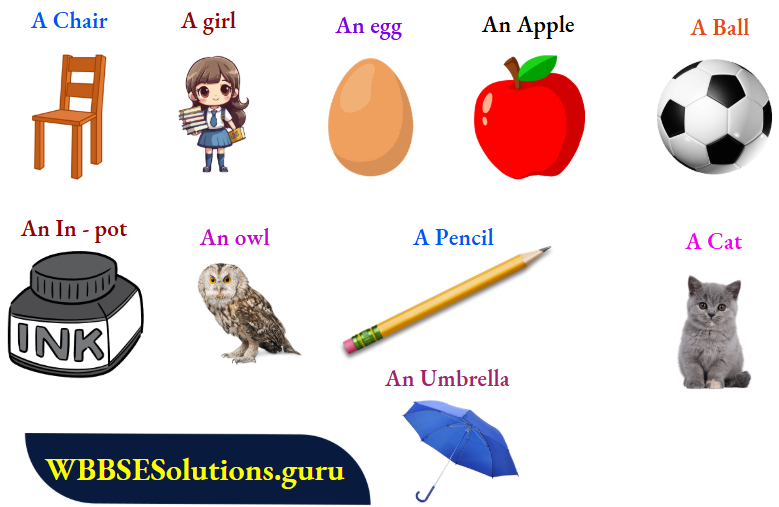
(a) Vowel (a, e, i, o, u) বা Vowel sound (অর্থাৎ যার উচ্চারণ vowel-এর মতো)-এর পূর্বে an বসে। কিন্তু consonant এর পূর্বে a বসে। যথা :

An ass, an eye, an ox, an hour, an M. A., a boy, a school, a B. A., a D.Sc. উপরের উদাহরণে hour ও M. A – এর প্রথম অক্ষর consonant হলেও তাদের উচ্চারণ vowel-এর মতো। “Hour”-এর উচ্চারণ “our”, “M.A.”-এর উচ্চারণ “Em. A.”। এইজন্য এদের পূর্বে an বসেছে।

নীচের উদাহরণগুলি লক্ষ্য কর :

WBBSE Solutions For Class 6 English Functional Grammar Lesson 5 Articles Articles A and An

A ও An-এর আরও কিছু উদাহরণ নীচে দেওয়া হল:

  • a dog
  • a cow
  • a tiger
  • a pen
  • an ant
  • an eagle
  • an enemy
  • an instrument

কোন শব্দের প্রথম উদাহরণ যদি “ইউ” বা “ওয়া” হয়, তা হলে তার পূর্বে an না বসে বসে। যথা :

WBBSE Class 6 English Textbook Answers

a useful book, a European, a one-eyed man, a university, a one-rupee note.

কোন singular noun যদি কোন প্রাণী বা বস্তুর সাধারণ নাম অর্থাৎ শ্রেণী বা জাতি বোঝায়, তা হলে singular common noun-এর পূর্বে a, an বা the বসে থাকে। যথা :

A or The cow is a useful animal (Cow is a useful animal dog is faithful to its master (Dog is faithful) Give me a the book (শুধু Give me book হবে না)।

Lesson 5 Articles The

“The’-এর অন্যতম প্রধান ব্যবহার হচ্ছে নির্দিষ্ট করে কিছু দেখান। কোন একটি নির্দিষ্ট প্রাণী বা বস্তুর কথা বোঝালে তার ইংরাজী শব্দের পূর্বে the বসে। বাংলায় সাধারণতঃ এই সব শব্দের শেষে টি, টা, খানা, খানি থাকে। যথা :

Articles the sentences

এইরূপ আরও উদাহরণ :

Articles the sentences.

The ব্যবহারের নিয়ম :

1. সাধারণতঃ কোন Proper noun-এর পূর্বে the বসে না। যথা :

Anjali, Pabitra, India, West Bengal, Kolkata, June, Monday, etc.

2. কিন্তু নদী, সমুদ্র, পর্বতমালা (mountain ranges), জাতি (nation), দ্বীপপুঞ্জ, সংবাদপত্র, ধর্মগ্রন্থ, জাহাজের নাম, বিখ্যাত ঘটনা, সাধারণের স্থান (public places ) এবং যে সকল স্থানের নামের কোন ভৌগোলিক অর্থ আছে বা যে দেশ অনেকগুলি ছোট দেশ দ্বারা গঠিত—তাদের নামের পূর্বে the বসে। যথা :

English Grammar Lesson 5 Answers Class 6

The Ganga, the Bay of Bengal, the Himalayas, the Indians, the Andamans, the Ananda Bazar Patrika, the Geeta, the Bible, the Titanic (জাহাজের নাম), the | French Revolution, the Second World War, the High Court, the Punjab, the Deccan, the U.K., the U.S.A., etc.

কিন্তু একটি পর্বত বা দ্বীপ বোঝালে the বসে না। যথা : Everest, Greenland, Java.

3. Trains, aeroplanes, spacecraft (ট্রেন, প্লেন বা আকাশযান)—এর নামের পূর্বে The বসে। যথা :
The Rajdhani Express, the Kaniska, the Skylab, the Sputnik.

4. কতকগুলি সুপরিচিত বস্তু (যা একটিমাত্র আছে) এবং দিকের নামের পূর্বে the বসে। যথা : the earth; the sun, the moon, the sky, the east, the west ইত্যাদি।

5. Nation বা People-এর নামের পূর্বে the বসে। কিন্তু তাদের ভাষার নামের পূর্বে the বসে না। যথা :

The English (ইংরেজ জাতি); কিন্তু English (ইংরাজী ভাষা)। The French (ফরাসী জাতি); French (ফরাসী ভাষা)।

6. প্রাণী বা উদ্ভিদের জাতি বোঝায়, এমন শব্দের singular noun-এর (একবচন) পূর্বে the বসে। যথাঃ গরু (গরু জাতি) ঘাষ খায় — The cow eats grass.

গোলাপ (সকল) মিষ্টি গন্ধ দেয়— The rose gives sweet smell.

Man যখন সমস্ত মানুষ্যজাতি অর্থে ব্যবহৃত হয় তখন তার পূর্বে the বসে না। যথা : Man is mortal.

কিন্তু যখন কোন নির্দিষ্ট মানুষকে বোঝাবার জন্য man ব্যবহৃত হয় তখন তার পূর্বে the বসে। যথাঃ I know the man who lives here.

7. Father ও Mother যখন বক্তার বাবা ও মাকে বোঝায় তখন তাদের পূর্বে the হবে না । কিন্তু সাধারণভাবে সমস্ত পিতা ও মাতাকে বোঝাতে তাদের পূর্বে article বসে। যথা:

Father (= my father) will come here. কিন্তু — A father cannot bear the sight. (i) বাদ্যযন্ত্রের নামের পূর্বে the বসে। যথা :

Bina’s mother plays the Violin. My sister plays the Sitar. Her father plays the Piano.

WBBSE Board Exam Preparation Class 6

কিন্তু I play football and my brother plays cricket. Games-এর নামের পূর্বে the বসে না ।

8. যখন কোন Adjective noun রূপে ব্যবহৃত হয়ে কোন বিশেষ একটি শ্রেণী বা বর্ণকে বোঝায় তখন তাদের পূর্বে the ব্যবহৃত হয়। যথা :

  • The rich (= rich men) are not always happy.
  • You should help the poor (= poor men).

এখানে প্রথম বাক্যে “the rich” দ্বারা ধনী ব্যক্তিবর্গ এবং “the poor” দ্বারা দরিদ্র ব্যক্তিবর্গকে বোঝাচ্ছে।

এখন ‘a’, ‘an’ এবং ‘the’-এর ব্যবহারের পার্থক্য লক্ষ্য কর :

  1. I saw five tigers. A tiger came forward. The tiger was very big.
  2. There are many oranges. Give me an orange. The orange is very sweet.

A tiger : পাঁচটি tiger-এর যে কোনও একটি। The tiger ; যে tiger-টি অগ্রসর হয়েছিল,
অন্যগুলি নয় ।

An orange : অনেকগুলি orange-এর যে কোনও একটি। The orange : যে orange-টি দেওয়া হয়েছিল সেইটি, অন্যটি নয়।