WBBSE Third Summative Evaluation Fundamentals Of History Set 1

Third Summative Evaluation Fundamentals Of History Group A

Choose The Correct Answer

Question 1. In which year did the Aristocratic Revolt take place?

  1. 1788
  2. 1789
  3. 1791
  4. 1793

Answer: (1) 1788

Question 2. When did the ‘Storming of Tuilleries’ take place?

  1. April 1792
  2. May 1792
  3. June 1792
  4. August 1792.

Answer: (4) August 1792.

Question 3. Who wrote the book, ‘The Sansculottes’?

  1. Edmund Burke
  2. Thomas More
  3. Albert Skule
  4. Adam Smith.

Answer: (3) Albert Skule

Question 4. Name the country with whom France signed the Treaty of Tilsit.

  1. Russia
  2. Prussia
  3. Italy
  4. Spain

Answer: (1) Russia

Question 5. Where did Napoleon’s coronation take place?

  1. Leipzig
  2. Elba Island
  3. Saint Helena
  4. Notre Dame

Answer: (4) Notre Dame

WBBSE Third Summative Evaluation Fundamentals Of History Set 1

Question 6. Whom did Napoleon make the king of Naples?

  1. Murat
  2. Jerome
  3. Louis
  4. Godoy

Answer: (1) Murat

Question 7. The Frankfurt Parliament framed the Constitution for –

  1. Italy
  2. France
  3. Germany
  4. Russia

Answer: (3) Germany

Question 8. Who wrote the book, ‘Organization of Labour’?

  1. Louis Blanc
  2. Guizot
  3. Karl Marx
  4. Thiers.

Answer: (1) Louis Blanc

Question 9. The Vienna note admitted the Russian guardianship over the Greek Orthodox Church in-

  1. France
  2. Turkey
  3. Sardinia
  4. Britain

Answer: (2) Turkey

Question 10. Who discovered the Flying Shuttle?

  1. Crompton
  2. James Watt
  3. John Kay
  4. George Stephenson

Answer: (3) John Kay

Question 11. When was the Open Door Policy issued?

  1. 1897
  2. 1898
  3. 1899
  4. 1900

Answer: (3) 1899

Question 12. David Livingstone was famous —

  1. Inventor
  2. Explorer
  3. Scientist
  4. Painter

Answer: (2) Explorer

Question 13. What was Lusitania – .

  1. A painting
  2. A ship
  3. A country
  4. A poem

Answer: (2) A ship

Question 14. Who was the leader of the Spanish Civil War?

  1. Hitler
  2. Mussolini
  3. Alphonso III
  4. General Franco

Answer: (4) General Franco

Question 15. Who headed the Gestapo?

  1. Joseph Goebbels
  2. Rudolf Hess
  3. Wagner
  4. Heinrich Himmler

Answer: (4) Heinrich Himmler

Question 16. Admiral Hideki Tojo was the Prime Minister of

  1. Japan
  2. China
  3. Spain
  4. Ethiopia

Answer: (1) Japan

Question 17. Who dropped an atomic bomb on Hiroshima?

  1. England
  2. France
  3. USA
  4. Soviet Union

Answer: (3) USA

Question 18. When did Japan attack Manchuria?

  1. 1931
  2. 1932
  3. 1933
  4. 1934

Answer: (1) 1931

Question 19. In which year was the U.N.O. founded?

  1. 1944
  2. 1945
  3. 1946
  4. 1947

Answer: (2) 1945

Question 20. Who is called the “Father of the League of Nations’?

  1. Lloyd George
  2. Winston Churchill
  3. Woodrow Wilson
  4. Harry S. Truman

Answer: (3) Woodrow Wilson

Third Summative Evaluation Fundamentals Of History Group B

Answer the following questions :

Attempt one question from each sub-groups, in all answer 16 questions.

Third Summative Evaluation Fundamentals Of History Sub-Group 2.1

Answer each of the following questions in one sentence.

Question 1. Name the leader of the physiocrats of France.
Answer: Francois Quesnay was the leader of the physiocrats in France.

Question 2. When was the Continental System Introduced?
Answer: The Continental System was introduced in 1806.

Question 3. Which country was known as the ‘manufacturer of the world’?
Answer: England was called the ‘manufacturer of the world.

Question 4. Who followed the policy of ‘Blood and Iron’?
Answer: Otto Von Bismarck followed the policy of ‘Blood And Iron’.

Third Summative Evaluation Fundamentals Of History Sub-Group 2.2

Identify which of the following is ‘True’ or ‘False’

Question 1. Democracy is a form of government based on the sovereignty of the people.
Answer: True

Question 2. The concept of Dictatorship was the outcome of the French Revolution.
Answer: False

Question 3. The Frankfurt Proposals offered Napoleon an honourable truce.
Answer: True

Question 4. In 1783, Napoleon successfully expelled the British army from Toulon.
Answer: False

Third Summative Evaluation Fundamentals Of History Sub-Group 2.3

Match Column A with Column B

Column AColumn B
1. Count Cavour(a) Russia
2. Alexander II(b) Piedmont-Sardinia
3. Verelst(c) French leader
4. Poincare(d) Governor of Bengal


Answer:  (1) b, (2) a, (3) d, (4) c

Third Summative Evaluation Fundamentals Of History Sub-Group 2.4

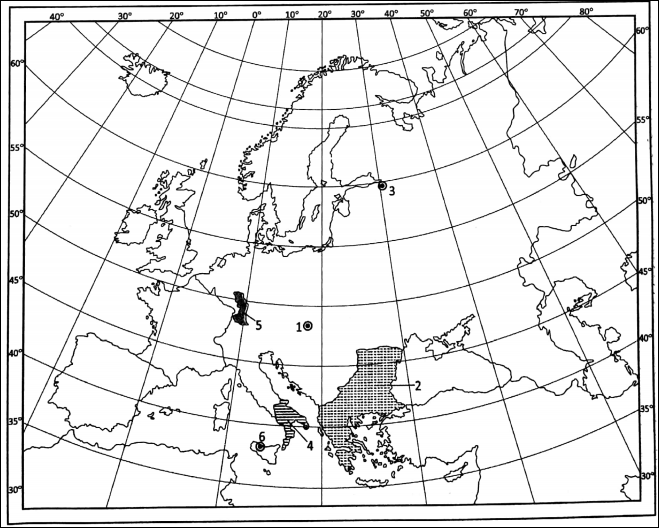
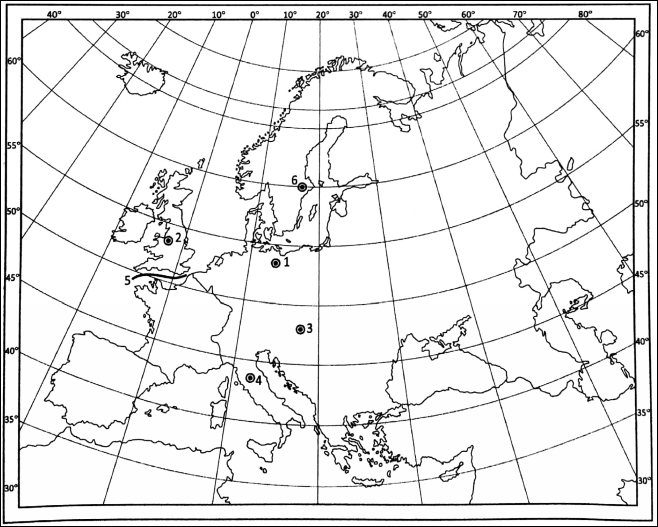
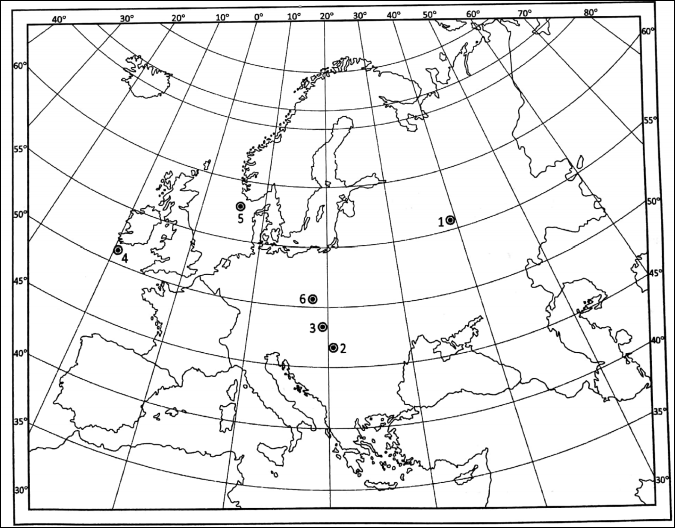
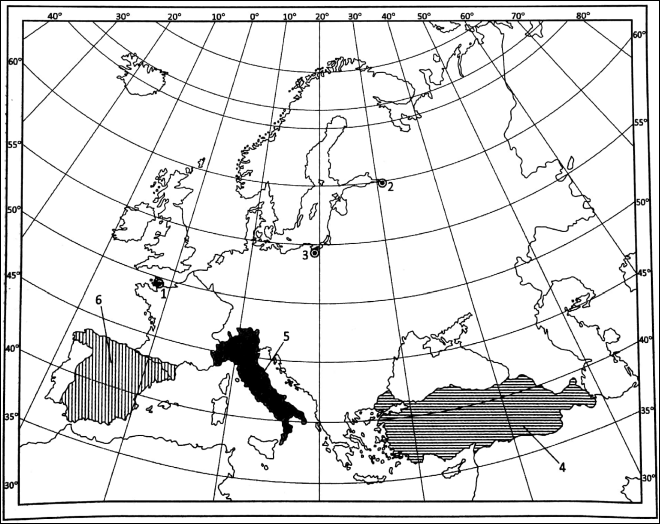
On the given outline map of India, locate and label the following places :

1. The capital of Hungary after the First World War
2. The capital of Russia after the Bolshevik Revolution, Moscow
3. Belgrade
4. Normandy

OR (Only for Blind Students)

Question 1. The Saar Valley was put under an International Commission) for ________ years.
Answer: 15

Question 2. The Treaty of Portsmouth was signed between Japan and __________.
Answer: Russia

Question 3. Hitler attacked Poland on ______ 1939.
Answer: 1st September

Question 4. Benito Mussolini died in the year __________ .
Answer: 1945

Third Summative Evaluation Fundamentals Of History Sub-Group 2.5

Select the correct interpretation of the following statements

Question 1. Russia under the Czars was a prison house of nations.

  1. The Czars imposed repressive policies on the non-Russian people who formed almost 20% of the Russian population.
  2. The non -Russians were opposed to the despotic Czars.
  3. The non-Russians wanted to uphold the ideas of nationalism much to the dislike of the Czars.

Answer:  1. The Czars imposed repressive policies on the non-Russian people who formed almost 20% of the Russian population.

Question 2. After the First World War, it seemed an age of democracy had dawned in Europe.

  1. It was because the European nations rejected Communism.
  2. It was because democracy envisaged the extension of voting rights.
  3. It was because all the states in Europe were moving towards parliamentary politics.

Answer:  3. It was because all the states in Europe were moving towards parliamentary politics.

Question 3. The League of Nations pledged to perform social and economic welfare activities.

  1. It worked for deprived nationalities, women, children, and workers.
  2. It established the International Monetary Fund.
  3. It established the Food and Agricultural Organization.

Answer: 1. It worked for deprived nationalities, women, children, and workers.

Question 4. The Security Council is the vital organization of the United Nations Organization.

  1. It takes care of the economic and social matters
  2. It is the executive committee of the United Nations.
  3. It looks after the progress of the underdeveloped countries.

Answer:  2. It is the executive committee of the United Nations.

Third Summative Evaluation Fundamentals Of History Group C

Answer the following questions in two or three sentences only (any eleven)

1. Who was Diderot?
2. What was the Law of Suspects?
3. What is the importance of the Treaty of Amiens?
4. Why is Napoleon regarded as the destroyer of the revolution?
5. Why was the Vienna Congress summoned?
6. Why was Turkey called the ‘Sick man of Europe’?
7. What is colonialism?
8. Mention any two importance of the invention of the telegraph.
9. What was the ‘Herrenvolk Theory’ of Hitler?
10. What was Narodnaya Volya?
11. why did Italy leave the League of Nations?
12. What is aggressive nationalism?
13. What was the Geneva Protocol?
14. Who were the signatories of the Atlantic Charter?

Third Summative Evaluation Fundamentals Of History Group D

Answer the following questions in seven or eight sentences each.

Attempt one question from each sub-group. Answer six questions in all. 

 Sub-Group: D1

1. Why did the Revolution first occur in France?
2. Write a note on Reign of Terror

Sub-Group: D2

3. How did Napoleon come to power in France?
4. How did Napoleon unite Italy?

 Sub-Group: D3

5. What were the results of the Metternich System?
6. What were the causes of the Crimean War?

Sub-Group: D4

7. Why did Industrial Revolution begin in England?
8. What was the impact of industrialization on transport and communication?

Sub-Group: D5

9. Discuss the political background of the Russian Revolution.
10. Discuss Woodrow Wilson’s Fourteen Points.

Sub-Group: D6

11. Write a note on Anschuluss
12. Write a note on Anschluss Why is the Second World War regarded as a global war?

Third Summative Evaluation Fundamentals Of History Group E

Answer any one question in fifteen or sixteen sentences.

1. What were the results of the French Revolution?
2. How was Germany unified?
3. Write a note on the New Economic Policy of Lenin.

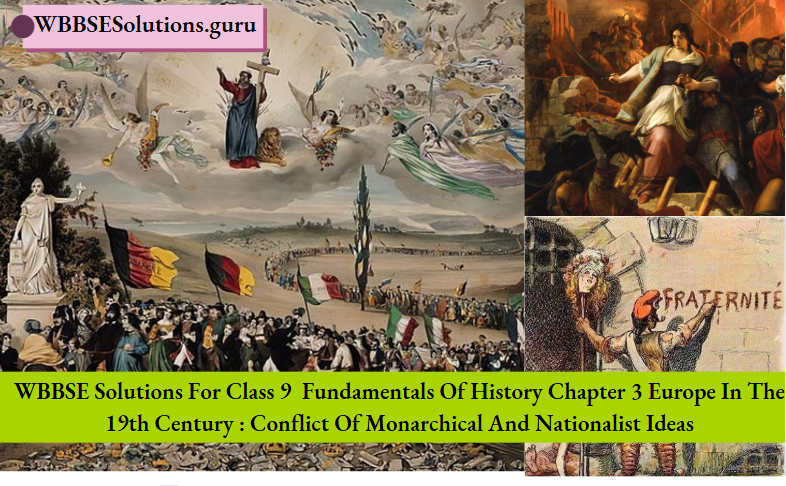
WBBSE Solutions For Class 9 Fundamentals Of History Chapter 3 Europe In The 19th Century: Conflict Of Monarchical And Nationalist Ideas

WBBSE Chapter 3 Europe In The 19th Century: Conflict Of Monarchical And Nationalist Ideas Syllabus

Concept of Nationalism and concept of the Nation-State; Conflict of Monarchical and Nationalist states ideas: Vienna Settlement; Metternich System. Revolutions of 1830 and 1848—In what ways did these two Revolutions represent the conflict between Monarchical and Nationalist ideas?

Expression of Nationalist ideas in Italy (Risorgimento, Young Italy) and Germany; Brief discussion on the making of Nation-States in Italy and Germany; Blood and Iron Policy of Bismarch; Ottoman Empire and the rise of Balkan Nationalism; Crimean War; Tsar Alexander ll’s abolition of Serfdom.

Did you know? : The July Monarch; The July Revolution of 1830 and Raja Rammohan Ray; Zollverem; Ems Telegram; Greek nationalism and the Hetairia Philike. (Contemporary paintings, photographs, and maps. Maps of Europe In 1815, the Centresotcevouion of 1848, Italy, Germany, and the Ottoman Empire. Timeline of important Incidents concerning these topics).

WBBSE Solutions For Class 9 Fundamentals Of History

WBBSE Chapter 3 Europe In The 19th Century: Conflict Of Monarchical And Nationalist Ideas Synopsis

1. Conflict of Monarchial and Nationalist ideas :

The fall of Napoleon Bonaparte ushered in a new age in the history of Europe. It left Europe amid two conflicting ideas
(1) Autocratic monarchy, church, and feudalism or monarchical ideas
(2) The ideas perpetuated by the French Revolution like democracy, nationalism, and liberalism.

2. The Congress of Vienna :

After the exile of Napoleon, the first international conference of Europe was held in Vienna between September 1814 and June 1815. All the European states barring the Pope and the Sultan of Turkey attended this conference. Though the Big Four namely Austria, Prussia, England, and Russia dominated this conference, it was the Austrian Chancellor, Prince Klemens Von Metternich who had the ultimate say. He presided over the Vienna Conference of 1815.

To solve the complex situation that arose after the Napoleonic wars and the French Revolution the leaders of the Vienna Congress adopted three basic principles. The Principle of Legitimacy ii.The Principle of Compensation iii.The Principle of Balance of Power.

3. The July and February Revolutions in France :

These principles restored the pre-revolutionary era and brought back the old monarchies, compensated the allies who helped to defeat Napoleon, and prevented France from becoming aggressive in the future. But it completely ignored the will of the common people or the trend of the time. As a result, the Revolutions of 1830 and 1848 in France sparked nationalism in many countries of Europe.

The July Revolution (1830J brought an end to the Divine right of Kingship in France. It also sealed the fate of the Bourbon dynasty forever. After the February Revolution (1848), Louis Philippe, the ruler of the Orleans dynasty, abdicated and France was declared a ‘Republic.’

4. Unification of Italy and Germany :

Italy and Germany emerged as nation-states. The Greeks who were also influenced by the lofty ideals of the French Revolution declared independence in 1830. Italy was divided into many small kingdoms. It was Giuseppe Mazzini, Camilo Benso Cavour, and Giuseppe Garibaldi who enabled the Italian unification. (1870) In Germany it was primarily the blood and iron and the coal and iron policies of Otta Von Bismarck that paved the path of German unification(1871) through three wars against Denmark (1864), Austria (1866) and France (1870).


5. The Crimean War :

The weakness of the Ottoman Empire and the hopes and aspirations of the Christian nationalities created trouble in the Balkan region. The Russian aggression on Turkey made England, Austria, and France join hands in support of Turkey which ultimately led to the Crimean War (1854 to 1856). The Treaty of Paris brought an end to the Crimean War but the pertinent issue of the ‘Eastern Question’ remained unresolved.

Meanwhile, during the peasant revolt in Russia Czar Alexander II signed the “Edict of became rampant and the serfs became Emancipation” and abolished serfdom in desperate for their freedom. Finally in 1861, Russia.

WBBSE Solutions For Class 9 Fundamentals Of History Chapter 3 Europe In The 19th Century Conflict Of Monarchical And Nationalist Ideas

WBBSE Chapter 3 Europe In The 19th Century: Conflict Of Monarchical And Nationalist Ideas Important Words With Their Meanings

1. Conflict
A serious disagreement.

2. Monarch
A sovereign head of a state

3. Nationalism
Advocacy of or support for the political independence of a particular nation or people.

4. Republic
A state in which supreme power is held by the people and their elected representatives and a president is elected or nominated rather than a monarch

5. Pact
A formal agreement between individuals or parties.

6. Treaty
A formally concluded and ratified agreement between states.

7. Czar
An emperor of Russia before 1917

WBBSE Solutions For Class 9 Fundamentals Of HistoryWBBSE Class 9 English Functional Grammar
WBBSE Class 9 Fundamentals Of History Long Answer QuestionsWBBSE Class 9 English Reading Skill
WBBSE Class 9 Fundamentals Of History Short Answer QuestionsWBBSE Class 9 English Writing Skill
WBBSE Class 9 Fundamentals Of History Very Short Answer QuestionsWBBSE Class 9 Maths Multiple Choice Questions
WBBSE Class 9 Fundamentals Of History Multiple Choice QuestionsWBBSE Solutions For Class 9 Maths
WBBSE Notes For Class 9 Geography and Environment


8. Emancipation
The fact or process of being set free from legal, social, or political restrictions.

9. Dynasty
A line of hereditary rulers of a country.

10. Reform
Make changes to improve.

WBBSE Chapter 3 Europe In The 19th Century: Conflict Of Monarchical And Nationalist Ideas Names Of Some Important Personalities

1Napoleon BonaparteThe Emperor of France
2Prince MetternichThe Chancellor of Austria
3CastlereaghThe British Prime Minister
4Alexander IThe Czar of Russia
5TalleyrandThe French Diplomat at the Vienna Congress
6Louis XVIIIThe Bourbon Monarch
7Charles XThe Bourbon Monarch
8Louis PhilippeFrench King from the Orleans Dynasty
9Raja Rammohan RoyThe first modern man of India, a social reformer.
10GuizotPrime Minister of Louis Philippe
11Louis NapoleonThe nephew of Napoleon Bonaparte later took the name Napoleon III and called himself the “Emperor of the French”.
12MazziniA patriotic leader of the Italian unification movement
13Count CavourA patriotic leader of the Italian unification movement
14GaribaldiA nationalist and patriotic General of Italy
15BismarckThe Prime Minister of Prussia gave leadership to the unification movement of Germany.
16Francis IThe Emperor of Austria
17Frederick William IIThe Emperor of Prussia
18William IThe First Emperor of Germany
19Prince Alexander YpsilantisThe First Emperor of Germany
20Czar Alexander IIThe Russian Emperor abolished serfdom.


WBBSE Chapter 3 Europe In The 19th Century: Conflict Of Monarchical And Nationalist Ideas Chronological Table

DatesEvents
1815(1) Defeat of Napoleon in the Battle of Waterloo, (2) Congress of Vienna (3) Concert of Europe formed (4) Quadruple Alliance
1818The Congress of Aix-la-Chapelle
1819Decree of Carlsbad issued by Metternich.
1820The Congress of Troppau
1823The Monroe Doctrine was announced.
1824Charles X became the king of France
1829Treaty of Adrianople
1830(1) The July Revolution in France, (2) The Dethronement of Charles X (3) The Accession of Louis Philippe as the ruler of France
1831Young Italy founded
1833Treaty of Unkair Skllessi
1848February Revolution in France
1849Frankfurt Parliament
1852(1) Louis Napoleon declared himself the emperor of France (2) Count Cavour became the Prime Minister of Piedmont-Sardinia
1854The Crimean War began
1856(1) End of the Crimean War (2) Peace Treaty of Paris signed.
1858Pact of Plombieres
1859Treaty of Villafranca
1861Emancipation of serfs in Russia
1862Bismarck became the prime minister of Prussia.
1864The war between Denmark and Prussia
1865Treaty of Gastein
1866Battle of Sadowa
1870(1) Battle of Sedan (2) Italian unification
1871(1) Unification of Germany (2) William I became the German Emperor
1878Treaty of Berlin


WBBSE Chapter 3 Europe In The 19th Century: Conflict Of Monarchical And Nationalist Ideas Fill In The Blanks

Question 1. The fall of Napoleon led to the conference of important European powers at __________ in 1815.

  1. Vienna
  2. Parma
  3. Sicily
  4. Savoy

Answer: 1. Vienna

Question 2. The Principle of Legitimacy applied to the _______.

  1. Feudal lords
  2. Common man
  3. Monarchical rights
  4. Rights of the clergy

Answer: 3. Monarchical rights

Question 3. Prince Hardenberg represented _________ at the Vienna Congress.

  1. Russia
  2. Prussia
  3. Sweden
  4. Austria

Answer: 2. Prussia

Question 4. Following the Principle of Legitimacy, the _________ family was in charge of the monarchy in Holland

  1. Bourbon
  2. Habsburg
  3. Orange
  4. Orleans

Answer: 3. Orange

Question 5. Napoleon had to abdicate after the Battle of the Nations in _______.

  1. 1814
  2. 1815
  3. 1816
  4. 1819

Answer: 1. 1814

Question 6. One of the first two nation-states of Europe was _______.

  1. Prussia
  2. Russia
  3. Austria
  4. France

Answer: 4. France

Question 7. __________ presided over the Vienna Conference of 1815.

  1. Metternich
  2. Alexander 1
  3. Nicholas 1
  4. Talleyrand

Answer: 1. Metternich

Question 8. Following the Principle of Legitimacy, the _____ dynasty once again occupied the throne in Sardinia and Piedmont.

  1. Stuart
  2. Romanov
  3. Savoy
  4. Orange

Answer: 3. Savoy

Question 9. A bund comprising 39 __________ kingdoms was formed

  1. French
  2. German
  3. Russian
  4. Turkish

Answer: 2. German

Question 10. The Concert of Europe was formed in __________.

  1. 1813
  2. 1814
  3. 1815
  4. 1816.

Answer: 3. 1815

Question 11. Following the Principle of Legitimacy ___________ of the Bourbon dynasty ascended the throne of France,

  1. Louis XIV
  2. Louis XV
  3. Louis XVI
  4. Louis XVIII

Answer: 4. Louis XVIII

Question 12. The great Indian personality _________ was very happy at the success of the July Revolution of 1830.

  1. Swami Vivekananda
  2. Raja Rammohan Roy
  3. Louis Vivian Derozio
  4. Rabindranath Tagore

Answer: 2. Raja Rammohan Roy

Question 13. In __________ France was declared a Republic for the first time.

  1. 1789
  2. 1790
  3. 1791
  4. 1792

Answer: 4. 1792

Question 14. On _____ France was declared a Republic for the second time.

  1. July 1830
  2. February 1848
  3. July 1836
  4. February 1854

Answer: 2. February 1848

Question 15. ___________ became the President of the provisional republican government of France after the February Revolution of 1848.

  1. Polignac
  2. Capponi
  3. Lamartine
  4. Cantu

Answer: 3. Lamartine

Question 16. Historian ___________ called the period from 1815 to 1848 as the “Age of Metternich

  1. Fisher
  2. A.J.P. Taylor
  3. David Thompson
  4. Louis Blanc

Answer: 1. Fisher

Question 17. ___________ Was the leader of the July Revolution Of 1830 in France.

  1. St.Simon
  2. Polignac
  3. Francis 2
  4. Adolphe Thiers.

Answer: 4. Adolphe Thiers.

Question 18. __________ was known as the “Father of European Conservatism”.

  1. Castlereagh
  2. Talleyrand
  3. Metternich
  4. Alexander I

Answer: 3. Metternich

Question 19. Metternich was the Chancellor of Austria for a period of _________ years.

  1. 15
  2. 20
  3. 30
  4. 40

Answer: 4. 40

Question 20. ________ was the last Bourbon monarch of France.

  1. Louis IV
  2. Louis XV
  3. Louis XVI
  4. Louis XVIII

Answer: 4. Louis XVIII

Question 21. Italy was reduced to a mere “Geographical Expression” by ______.

  1. Alexander I
  2. Metternich
  3. Mazzini
  4. Garibaldi

Answer: 2. Metternich

Question 22. Louis Napoleon was the ___________ of Napoleon Bonaparte.

  1. Cousin
  2. Brother
  3. Nephew
  4. Grandson

Answer: 3. Nephew

Question 23. ____________ was the birthplace of the Renaissance in Europe in the 15th Century.

  1. France
  2. Italy
  3. Denmark
  4. England

Answer: 2. Italy

Question 24. Young Italy was founded by ___________.

  1. Giuseppe Mazzini
  2. Giuseppe Garibaldi
  3. Count Cavour
  4. Victor Emmanuel.

Answer: 1. Giuseppe Mazzini

Question 25. ____________ was considered the “Brain of the Italian Unification Movement”.

  1. Mazzini
  2. Garibaldi
  3. Count Cavour
  4. Louis Kossuth.

Answer: 3. Count Cavour

Question 26. Philike Hetairia was a secret society formed in __________.

  1. Japan
  2. Greece
  3. Holland
  4. Hungary

Answer: 2. Greece

Question 27. The Troppau Protocol was implemented in _________.

  1. 1821
  2. 1822
  3. 1823
  4. 1824

Answer: 1. 1821

Question 28. The Treaty of Plombieres was signed between Count Cavour and ____________.

  1. Bismarck
  2. Nicholas I
  3. Louis Napoleon
  4. Louis Kossuth

Answer: 3. Louis Napoleon

Question 29. The Treaty of Plombieres was signed in _____.

  1. 1852
  2. 1854
  3. 1856
  4. 1824

Answer: 4. 1824

Question 30. Bismarck had to fight ___________ to achieve the unification of Germany.

  1. Three
  2. Four
  3. Five
  4. Six

Answer: 1. Three

Question 31. The Austro-Prussian war took place in ________.

  1. 1856
  2. 1866
  3. 1870
  4. 1871

Answer: 2. 1866

Question 32. The Franco-Prussian war took place in __________.

  1. 1854
  2. 1866
  3. 1870
  4. 1871

Answer: 3. 1870

Question 33. __________ of Turkey tried to bring about enlightened reforms or Tanzimat.

  1. Abdul Mazid
  2. Sultan Mohammad 2
  3. Abdul Aziz
  4. Abdul Hamid 2

Answer: 2. Sultan Mohammad 2

Question 34. Czar ________ of Russia supported the Pan-Slav movement.

  1. Alexander 1
  2. Nicholas 1
  3. Alexander 2
  4. Nicholas 2

Answer: 3. Alexander 2

Question 35. The Treaty of Reichstadt was made in ________.

  1. 1870
  2. 1871
  3. 1875
  4. 1877

Answer: 4. 1877

Question 36. Around __________ soldiers lost their lives in the Crimean War.

  1. 4,00,000
  2. 5,00,000
  3. 6,00,000
  4. 8,00,000

Answer: 2. 5,00,000

Question 37. The crown of a united Germany was offered to ___________.

  1. Victor Emmanuel 2
  2. Francis 2
  3. Bismarck
  4. Frederick William 4

Answer: 4. Frederick William 4

Question 38. England and France supported __________ in the Crimean War.

  1. Russia
  2. Turkey
  3. Greece
  4. China

Answer: 1. Turkey

Question 39. Carbonari was a secret society formed in _________.

  1. Greece
  2. Italy
  3. Russia
  4. Spain

Answer: 2. Italy

Question 40. _________ was the leader of the Red Shirts.

  1. Cavour
  2. Metternich
  3. Garibaldi
  4. Kamal Pasha

Answer: 3. Garibaldi

Question 41. __________ was given the title, “Czar the Liberator”.

  1. Alexander 1
  2. Nicholas 1
  3. Alexander 2
  4. Napoleon 3

Answer: 3. Alexander 2

Question 42. The ” Edict of Emancipation” was signed on ___________.

  1. 1861
  2. 1862
  3. 1863
  4. 1864

Answer: 1. 1861

Question 43. The “Edict of Emancipation”, was declared to give freedom to the ______.

  1. Women
  2. Nobles
  3. Clergies
  4. Serfs

Answer: 4. Serfs

Question 44. Prince Leopold belonged to the _________ dynasty.

  1. Bourbon
  2. Hohenzollern
  3. Orleans
  4. Stuart

Answer: 2. Hohenzollern

Question 45. The Treaty of Gastein was signed by Denmark in ________.

  1. 1865
  2. 1866
  3. 1867
  4. 1868

Answer: 1. 1865

Question 46. Zollverein was founded under the initiative of ___________.

  1. Mazzini
  2. Bismarck
  3. Mazzen
  4. Hegel

Answer: 3. Mazzen

Question 47. __________ gave the right of self-rule to Norway.

  1. King of Holland
  2. King of Sweden
  3. King of Prussia
  4. King of Russia

Answer: 2. King of Sweden

Question 48. After the February Revolution in 1848, Metternich fled in disguise to __________.

  1. Greece
  2. Egypt
  3. England
  4. America

Answer: 3. England

Question 49. The last Holy Roman Emperor was _______.

  1. Charlemagne
  2. Charles 4
  3. Frederick 1
  4. Francis 2

Answer: 4. Francis 2

Question 50. _________ became the King of Prussia in 1861

  1. Frederick 1
  2. William 1
  3. Francis 1
  4. Charles MarteI.

Answer: 1. William 1

WBBSE Chapter 3 Europe In The 19th Century: Conflict Of Monarchical And Nationalist Ideas Identify Which Of The Following Is “True” Or “False”

Question 1. The concept of “nation-states “did not come into being only in the 19th Century.
Answer: True

Question 2. Europe witnessed a period of conflict of ideas between the forces of conventionalism and the change in the post-Napoleonic period.
Answer: True

Question 3. The power of the kings declined in the Middle Ages due to the influence of middle-class people in society.
Answer: False

Question 4. The French Revolution gave birth to the concept of modern nationalism in Europe.
Answer: True

Question 5. The leaders of the Vienna Conference wanted to solve the problems related to the “Balance of Power” in Europe only.
Answer: False

Question 6. Austria, Russia, Prussia, and England were the “Big Four” of the Vienna Congress.
Answer: True

Question 7. Applying the “Principle of Legitimacy”, Belgium was forced to join Holland.
Answer: True

Question 8. In reality, the leaders of the Vienna Congress were motivated more by their self-interests than the “Principle of Legitimacy”.
Answer: True

Question 9. Following “The Principle of Compensation “, Prussia was given Poland and Lombardy.
Answer: False

Question 10. Russia gained Finland, Bessarabia, and large parts of Poland as a result of the application of “The Principle of Compensation”.
Answer: True

Question 11. The Vienna Congress led to the formation of a “Police System” by Prince Metternich.
Answer: True

Question 12. In 1815 the Orleans Dynasty was restored in France.
Answer: False

Question 13. Louis XVIII rejected his liberal systems and turned to a despotic ruler in 1820.
Answer: True

Question 14. Metternich Age is also known as the age of conflict between monarchical and nationalist ideas in Europe.
Answer: True

Question 15. Friedrich von Gentz was the Secretary of the Vienna Congress of 1815.
Answer: True

Question 16. Raja Ram Mohan Roy met the great poet Sir Thomas More in France.
Answer: True

Question 17. The term, Risorgimento means rebirth.
Answer: True

Question 18. The Vienna Congress provided the basis upon which the present-day UNO is created.
Answer: True

Question 19. Metternich was a follower of Rousseau.
Answer: True

Question 20. Charles X was the nephew of Napoleon Bonaparte.
Answer: False

Question 21. The factory workers of Russia framed the famous slogan “Bread or Lead”.
Answer: False

Question 22. Louis Philippe had a great fondness for the bourgeois.
Answer: True

Question 23. The great historian, David Thomson opined that the seeds of the February Revolution were in reality sown at the time of the July Revolution in France.
Answer: True

Question 24. General Marmont was asked to put an end to the Revolution in Paris by Charles X on July 1830.
Answer: True

Question 25. As a result of the July Revolution King Charles X and his son had to ultimately leave France and take shelter in England.
Answer: True

Question 26. Bismarck considered the French Revolution to be “chaotic and anarchic”.
Answer: False

Question 27. Taking advantage of the July Revolution of 1830, Belgium freed itself from Holland.
Answer: True

Question 28. It was the Bonapartists who wanted Louis Philippe to rule in France.
Answer: False

Question 29. Louis Napoleon re-installed monarchy in France in December 1852.
Answer: True

Question 30. Daumier had drawn a cartoon of the Conference of the French National Assembly.
Answer: True

Question 31. Italy was conquered by Napoleon Bonaparte in 1796.
Answer: True

Question 32. Mazzini was the son of a famous poet of Genoa.
Answer: False

Question 33. To become a member of Mazzini’s Young Italy Party the member was required to pay a monthly fee of 50 cents.
Answer: True

Question 34. Count Cavour was an engineer by profession.
Answer: True

Question 35. In 1861, Victor Emmanuel II was declared the king of united Italy.
Answer: True

Question 36. The period from 1870 to 1890 is known as the Age of Bismarck.
Answer: True

Question 37. Germany under the rule of Bismarck had adopted measures against the Roman Catholic Churches because they supported Austria.
Answer: True

Question 38. The Young Turk Movement was initiated by Kamal Pasha, Anwar Pasha, and Talat Beg.
Answer: True

Question 39. The population of Balkan was a combination of Greeks, Christians, and Muslims.
Answer: True

Question 40. Zollverein was a tariff union or customs union.
Answer: True

Question 41. The formation of Zollverein laid the foundation for the unification of Germany.
Answer: True

Question 42. Czar Alexander II declared himself as the savior of the Slavic Community in 1867.
Answer: False

Question 43. The Treaty of Capitulation was signed between the French and the Russians in 1740.
Answer: False

Question 44. Most of the German states were included in the Zollverein by 1866.
Answer: True

Question 45. Karageorge was the leader of the Greeks.
Answer: True

Question 46. Philike Hetairia wanted to put an end to the Ottoman Rule in Greece.
Answer: True

Question 47. The Treaty of Kuchuk – Kainarji was signed in 1774.
Answer: True

Question 48. In 1862, Romania was born.
Answer: True

Question 49. The Battle of Leipzig took place in 1813.
Answer: True

Question 50. Secret societies were formed in Germany to protest against the oppressive policies adopted by Metternich.
Answer: True

WBBSE Chapter 3 Europe In The 19th Century: Conflict Of Monarchical And Nationalist Ideas Match Column A with Column B

Question 1.

1.    AB
(1) July Revolution(a) 1854
(2) February Revolution(b) 1789
(3) French Revolution(c) 1830
(4) Crimean was(d) 1848


Answer: (1) C, (2) D, (3) B, (4) A

Question 2.

2.    AB
(1) Francis II(a) Prussia
(2) Frederick William III(b) Austria
(3) Count Nesselrode(c) Great Britain
(4) Arthur Wellesley(d) Russia


Answer: (1) B, (2) A, (3) D, (4) C

Question 3.

3.    AB
(1) Castlereagh(a) Austria
(2) Alexander 1(b) Prussia
(3) Metternich(c) Russia
(4) Prince Hardenberg(d) Great Britain


Answer: (1) D, (2) C, (3) A, (4) B

Question 4.

4.    AB
(1) Tudor(a) Russia
(2) Romanov(b) Holland
(3) Orange(c) France
(4) Bourbon(d) England


Answer: (1) D, (2) A, (3) B, (4) C

Question 5.

5.    AB
(1) Talleyrand(a) Germany
(2) Cavour(b) Hungary
(3) Bismarck(c) France
(4) Louis Kossuth(d) Italy


Answer: (1) C, (2) D, (3) A, (4) B

Question 6.

6.    AB
(1) Adolphe Thiers(a) Italy
(2) Leopardi(b) Germany
(3) Hegel(c) Greece
(4) Skoufas(d) France


Answer: (1) D, (2) A, (3) B, (4) C

Question 7.

7.    AB
(1) Congress of Vienna(a)    1819
(2)    Congress of Troppau(b)    1818
(3)    Congress of Aix-laChapelle(c)    1815
(4)    Decree of Carlsbad(d)    1820


Answer: (1) C, (2) D, (3) A, (4) B

Question 8.

8.    AB
(1)    William I(a)    Ruler of Russia
(2)    Francis I(b)    Emperor of Germany
(3)    Alexander I(c)    King of France
(4)    Charles X(d)    Emperor of Austria


Answer: (1) B, (2) D, (3) A, (4) C

Question 9.

9.    AB
(1)    Pacts of Plombiers(a)    1864
(2)    Treaty of Paris(b)    1865
(3)    Treaty of Gastein(c)    1858
(4)    Treaty of Vienna(d)    1856


Answer: (1) C, (2) D, (3) B, (4) A

Question 10.

10.    AB
(1)    1861(a)    Frankfurt Parliament
(2)    1878(b)    Young Italy
(3)    1831(c)    Emancipation of Serfs
(4)    1849(d)    Treaty of Berlin


Answer: (1) C, (2) D, (3) B, (4) A

Question 11.

11.    AB
(1)    Carbonari(a)    Germany
(2)    Zollverein(b)    Russia
(3)    Second Monarchy(c)    Italy
(4)    Edict of Emancipation(d)    France


Answer: (1) C, (2) A, (3) D, (4) B

Question 12.

12.  AB
(1) Mazzini(a) Redshirts
(2) Bismarck(b) Young Italy
(3) Garibaldi(c) Hetairia Philike
(4) Skoufas(d) Ems Telegram


Answer: (1) B, (2) D, (3) A, (4) C

Question 13.

13.    AB
(1) Quadruple Alliance(a) 1833
(2) Treaty of Adrianople(b) 1815
(3) Treaty of Unkair Skelessi(c) 1866
(4) Peace Treaty of Prague(d) 1829


Answer: (1) B, (2) D, (3) A, (4) C

Question 14.

14.    AB
(1) Battle of Sedan(a) 1871
(2) Austro-Prussian War(b) 1859
(3) Battles of Magenta and Solferino(c) 1870
(4) Treaty of Frankfurt(d) 1866


Answer: (1) C, (2) D, (3) B, (4) A

Question 15.

15.    AB
(1) William I(a) 1852
(2) Bismarck(b) 1855
(3) Count Cavour(c) 1861
(4) Czar Alexander II(d) 1862


Answer: (1) C, (2) D, (3) A, (4) B

Question 16.

16.    AB
(1) Czar the Liberator(a) Metternich
(2) Brain of Italian unification(b) Alexander II
(3) Prince of Diplomacy(c) Bismarck
(4) Blood and iron policy(d) Count Cavour


Answer: (1) B, (2) D, (3) A, (4) C

Question 17.

17.    AB
(1) Count Benedetti(a) Turkey
(2) Hauser(b) Greece
(3) Adamantios Korais(c) France
(4) Kamal Pasha(d) Germany


Answer: (1) C, (2) D, (3) B, (4) A

Question 18.

18.    AB
(1) Florence Nightingale(a) poet
(2) Giuseppe Garibaldi(b) Kaiser
(3) William 1(c) Kaiser
(4) Constantine Rhigas(d) nurse


Answer: (1) D, (2) C, (3) B, (4) A

Question 19.

19.    AB
(1) Bismarck(a) Emperor of France
(2) Nicholas I(b) Mazzini of Hungary
(3) Napoleon III(c) Sick man of Europe
(4) Louis Kossuth(d) Policy of coal and iron


Answer: (1) D, (2) C, (3) A, (4) B

Question 20.

20.    AB
(1) Belgian revolt(a) 1848
(2) Parliamentary reforms in Great Britain(b) 1815
(3) Resignation of Metternich(c) 1832
(4) The Battle of Waterloo(d) 1831


Answer: (1) D, (2) C, (3) A, (4) B

WBBSE Chapter 3 Europe In The 19th Century: Conflict Of Monarchical And Nationalist Ideas Select The Correct Option Of The Following Statements:

Question 1. The concept of the nation-state did not originate only in the 19th Century.

  1. In England and France there existed powerful monarchic nation-states in the Middle Ages.
  2. The king was regarded as the symbol of nationalism.
  3. The rise of Napoleon Bonaparte was a blow to European society.

Answer: 1. In England and France there existed powerful monarchic nation-states in the Middle Ages.

Question 2. The Principle of Legitimacy was guided by the self-interests of the Big Four.

  1. Prussia received Danzig.
  2. Belgium was joined to Holland by application of force.
  3. Finland became a part of Russia.

Answer: 2. Belgium was joined to Holland by application of force.

Question 3. Historian Fisher regarded the years between 815 to 1848 as the “Age of Metternich”.

  1. Metternich considered the French Revolution as “chaotic and anarchic”.
  2. Metternich introduced the policy of Divide and Rule in Austria.
  3. Metternich had an unchallenged authority on the politics of Europe between the period 1815 to 1848.

Answer: 3. Metternich had an unchallenged authority on the politics of Europe between the period 1815 to 1848.

Question 4. One of the three basic principles of the Vienna Congress was the “Balance of Powers

  1. It aimed at establishing the supremacy of France.
  2. It aimed at the unification of Italy.
  3. It aimed to ensure that neither France nor any other powers of Europe became too strong to disrupt peace and equilibrium.

Answer: 3. It aimed to ensure that neither France nor any other powers of Europe become too strong to disrupt peace and equilibrium.

Question 5. The July Monarchy was also known as the Bourgeois Monarchy.

  1. It was called so because Louis Philippe was a bourgeois.
  2. It was called so due to the presence of the bourgeois.
  3.  It was called so because it paved the path toward the Second French Republic.

Answer: 2. It was called so due to the presence of the bourgeois.

Question 6. Raja Ram Mohan Roy was a supporter of the French Revolution.

  1. He was happy at the success of the July Revolution.
  2. He was a great admirer of Napoleon.
  3. He was a social reformer.

Answer: 1. He was happy at the success of the July Revolution.

Question 7. The European powers convened an international conference at Vienna in 1815.

  1. Napoleon made great changes to the map of Europe.
  2. It was aimed at resolving the problems and reconstruction of the European kingdoms.
  3. To establish the Divine Right theory of kingship.

Answer: 2. It was aimed at resolving the problems and reconstruction of the European kingdoms.

Question 8. A “bund ” comprising a loose confederation of 39 German states was created.

  1. It was done to achieve the unification of Germany.
  2. The leaders of the Vienna Congress thus strengthened the power of the Germans.
  3. It showed that the Principle of Legitimacy was largely motivated by the self¬interests of the leaders of the Vienna Congress.

Answer: 3. It showed that the Principle of Legitimacy was largely motivated by the self¬interests of the leaders of the Vienna Congress.

Question 9. Paris was the mother of Revolutions.

  1. Paris was the capital of France.
  2. The February Revolution started in Paris and then spread over Europe.
  3.  A large number of nationalist organizations were formed in Paris which inspired nationalist movements in 15 countries of Europe.

Answer: 1. aris was the capital of France.

Question 10. The extreme nationalists became very active during the reign of Charles X in France.

  1.  It was largely due to the autocratic policies adopted by Charles X.
  2. The king failed to fulfill the demands of the workers.
  3. The economic condition of France was deplorable.

Answer: 1. It was largely due to the autocratic policies adopted by Charles X.

Question 11. Metternich issued the Carlsbad decrees in Germany.

  1. To curb the political aspirations of the students of the German Universities and the newspapers.
  2. To oppose the formation of the Zollverein.
  3. To curb the influence of Mazzen, the economist upon the German people.

Answer: 1. To curb the political aspirations of the students of the German Universities and the newspapers.

Question 12. The July Monarchy was established in France in 1830.

  1.  It was because the July Revolution put an end to the Second Republic.
  2. It was because of the four autocratic ordinances issued by Polignac on 26th July
  3. Charles X was dethroned on the 30th of July and Louis Philippe of the Orleans dynasty was proclaimed as the king of France.

Answer: 3. Charles X was dethroned on the 30th of July and Louis Philippe of the Orleans dynasty was proclaimed as the king of France.

Question 13. The German nationalists summoned the Frankfurt Parliament in 1848.

  1. To celebrate the success of the February Revolution in France.
  2. To unite the whole of Germany, to inculcate among them a feeling of Ideological unity.
  3. To excite the members of the secret societies in Germany against Metternich.

Answer: 2. To unite the whole of Germany, to inculcate among them a feeling of Ideological unity.

Question 14. As a result of the February Revolution of 1848, Metternich had to leave Austria and take refuge in England.

  1. This was because the Revolution primarily aimed at the Metternich System.
  2. Metternich opposed the coal and iron policy of Bismarck.
  3. Metternich turned the Concert of Europe into a reactionary machinery.

Answer: 1. This was because the Revolution primarily aimed at the Metternich System.

Question 15. Charles X was a staunch supporter of the Divine Monarchy and the old regime.

  1. Charles X followed the policy of ” divide and rule ‘.
  2. Charles X acknowledged the policy of universal suffrage.
  3. Charles X upheld despotism and supremacy of the Catholic Church.

Answer: 3. Charles X upheld despotism and supremacy of the Catholic Church.

Question 16. A secret society called the ” Carbonari” was formed in Italy.

  1. This was formed with the idea of freeing Italy by way of armed Revolutions.
  2. This was formed to create a public opinion among the people of Italy.
  3. This was formed to strike a terror in the minds of the Austrian leaders.

Answer: 1. This was formed with the idea of freeing Italy by way of armed Revolutions.

Question 17. After the downfall of Napoleon, there was the restoration of the monarchy in France.

  1. The leaders of the Vienna Congress supported the dynastic monarchy.
  2. National resistance prompted the leaders of the Vienna Congress to restore monarchical rule in France.
  3. The common people of France supported the idea of absolute monarchy in France.

Answer: 1. The leaders of the Vienna Congress supported the dynastic monarchy.

Question 18. Mazzini was the founder of ” Young Italy “.

Mazzini founded this organization to launch armed Revolutionary movements.
Mazzini founded this organization to spread the ideas of patriotism and nationalism across the cities and villages.
Mazzini wanted to bring about constitutional monarchy in Italy.

Answer: 2. Mazzini founded this organization to spread the ideas of patriotism and nationalism across the cities and villages.

Question 19. Zollverein was formed in 1833 by King Frederick William III of Prussia.

  1. It was an economic union that ultimately helped in the unification of Germany.
  2. It was a union which aimed against the political ambition of Austria.
  3. It was formed to bring political unity among the German states.

Answer: 1. It was an economic union that ultimately helped in the unification of Germany.

Question 20. William, I appointed Otto von Bismarck as the Prussian Prime Minister in 1862.

  1. This was important because Bismarck was a strong believer in the French Revolution.
  2. Bismarck was appointed the Prime Minister for his belief in a monarchy.
  3. This was important because Bismarck made the unification of Germany possible by following both his blood and iron and coal and iron policies.

Answer: 3. This was important because Bismarck made the unification of Germany possible by following both his blood and iron and coal and iron policies.

Question 21. Alexander II is regarded as, the” Czar the Liberator “.

  1. He freed the serfs from the age-old custom of exploitation and torture of their feudal lords.
  2. He supported the Russian nationalists in forming the secret societies.
  3. He withdrew all press censorship.

Answer: 1. He freed the serfs from the age-old custom of exploitation and torture of their feudal lords.

Question 22. Florence Nightingale is regarded as one of the pioneers of modern nursing.

  1. There was a total absence of nurses in Europe during the time of the Crimean War.
  2. During the time of the Crimean War, she led a group of nurses to the war front to give medical care to the wounded soldiers.
  3. There were no proper hospitals to take care of the wounded soldiers.

Answer: 2. During the time of the Crimean War she led a group of nurses to the war front to give medical care to the wounded soldiers.

Question 23. Turkey was called, ‘The sick man of Europe”

  1. Turkey had weak military strength.
  2. Turkey had made no reforms to improve her position.
  3. Turkey was neither strong enough to deal with internal revolts nor external attacks.

Answer: 3. Turkey was neither strong enough to deal with internal revolts nor external attacks.

Question 24. The Treaty of Frankfurt made the unification of Germany a reality.

  1. The French army was defeated at the Battle of Sedan.
  2. The Ems Telegram infuriated the French people.
  3. Germany annexed the French provinces of Alsace and Lorraine

Answer: 3. Germany annexed the French provinces of Alsace and Lorraine

WBBSE Solutions For Class 9 Fundamentals Of History Chapter 2 Revolutionary Ideals, Napoleonic Empire And Idea Of Nationalism

WBBSE Chapter 2 Revolutionary Ideals, Napoleonic Empire, And Idea Of Nationalism Syllabus

Napoleon Bonaparte’s rise to power (in brief). The Code Napoleon in respect of the ideals of the French Revolution. Conflict of the Napoleonic Empire with the Ideals of the French Revolution; Conflict between Imperial Ideology and the ideals of the Liberte, Egalite, and Fraternite; Conflict between the Napoleonic Empire and new ideas of Nationalism, Reconstitution of Europe, Nationalist reactions against the Napoleonic Empire, Reactions of the people of France, Germany and the Iberian Peninsula against Napoleon; Invasion of Russia.

Did you know? The Continental System; The Battle of Trafalgar, Elba, and the Hundred Days (in brief with St. Helena) (Contemporary paintings of/on Napoleon Bonaparte and different aspects of his activities. Maps of the Napoleonic Empire with dates of imperial expansion. Timeline of Napoleon’s rise to power and other important incidents).

WBBSE Solutions For Class 9 Fundamentals Of History

WBBSE Chapter 2 Revolutionary Ideals, Napoleonic Empire, And Idea Of Nationalism Synopsis

1. End of Directory rule :

The Reign of Terror was followed by the Rule of the Directory in France in the period between 1795 and 1799. This rule was exposed to various dangers like lawlessness, intrigues, food riots, etc. To bring an end to this crisis Napoleon Bonaparte a young and promising Lieutenant was asked to solve the ensuing crisis. Napoleon proved himself worthy of himself, rose to the post of Major General through his military successes, and finally overthrew the incompetent rule of the Directory on 9th November 1799.

2. Napoleon’s rise to power:

He introduced a new system of administration called the ‘Consulate’ and assumed the all-powerful post of the First Consul, marking the beginning of the ‘Age of Napoleon’ (1799 to 1814) Napoleon, first became the Consul for a period of ten years, then in 1802, he made himself the Consul for life and finally in 1804 he became the Emperor of France by a Senate- proposed plebiscite.

3. Administrative Reforms of Napoleon :

Napoleon left his legacy not only as a great warrior but also as an efficient administrator and reformer. The most important achievement of Napoleon was the formulation of ‘Code Napoleon’, which earned him the title of Justinian II. A uniform pattern of local government was introduced throughout France. He established a national educational network, a university, a banking system, and a network of museums and libraries. He repaired and constructed a large number of roads and bridges. He introduced new taxes.

4. Growth of the Napoleonic Empire :

Napoleon set up a huge empire in Europe by conquering the countries of Italy, German states, Prussia, Holland, Switzerland, Denmark, Spain, Portugal, and Naples on the surface, tried to uphold the lofty ideals of the French Revolution like equality and fraternity. The ideal of Liberty was not propagated by him either in France or in the conquered countries. Napoleon’s rule over the empire was mainly designed to serve the interests of France.

It rested on force and the military. Nowhere did he allow his subjects to enjoy individual liberty. Napoleon’s imperial ideology conflicted with the revolutionary ideals of ‘Liberty, Equality, and Fraternity. As a result, he is regarded both as the ‘ Son of the Revolution and the Destroyer of the Revolution’. Napoleon also gave importance to reorganizing the conquered states and introduced economic and social reforms. The growth of nationalism in the countries of Spain, Germany, and Italy was an indirect outcome of Napoleon’s rule.

WBBSE Solutions For Class 9 Fundamentals Of HistoryWBBSE Class 9 English Functional Grammar
WBBSE Class 9 Fundamentals Of History Long Answer QuestionsWBBSE Class 9 English Reading Skill
WBBSE Class 9 Fundamentals Of History Short Answer QuestionsWBBSE Class 9 English Writing Skill
WBBSE Class 9 Fundamentals Of History Very Short Answer QuestionsWBBSE Class 9 Maths Multiple Choice Questions
WBBSE Class 9 Fundamentals Of History Multiple Choice QuestionsWBBSE Solutions For Class 9 Maths
WBBSE Notes For Class 9 Geography and Environment


5. Decline of Napoleonic Empire:

The Spanish Ulcer and the Continental System largely contributed to the downfall of Napoleon. When the Czar of Russia refused to abide by the Continental System, Napoleon took the fatal decision of undertaking his Moscow expedition. This not only destroyed his military strength it also affected his image of power and glory. His allies united, formed the European Coalition, and defeated Napoleon in the Battle of Nations. Renouncing the throne, Napoleon signed the Treaty of Fontainebleau and left France.

6. Elba and the Hundred Days of Napoleon’s rule :

He was exiled to Elba from where he kept a keen watch on the conditions and events in Europe and France. Finding the upheavals in France under the Bourbon King Louis XVIII and the conflicts among the allies, Napoleon invaded France with 1050 soldiers on 1″ March 1815. He regained power and ruled France for 100 days from 20th March 1815 to 29th June 1815.

7. Battle of Waterloo and exiled to St. Helena :

Finally, on 18th June 1815, Napoleon was defeated by the Duke of Wellington the British Commander, and the Prussian General Blucher in the Battle of Waterloo. On 15th July Napoleon finally surrendered to the British Navy and was exiled to the island of St. Helena where he died on 5th May 1821 at the age of 52.

WBBSE Solutions For Class 9 Fundamentals Of History Chapter 2 Revolutionary Ideals, Napoleonic Empire And Idea Of Nationalism

WBBSE Chapter 2 Revolutionary Ideals, Napoleonic Empire, And Idea Of Nationalism Important Words With Their Meanings

1. Equality
The state of being equal in status, rights, and opportunity.

2. Liberty
The power or scope to act as one pleases.

3. Fraternity
Friendship and mutual support within a group.

4. Republic
A state in which supreme power is held by the people and their elected representatives, which has an elected or nominated president rather than a monarch.

5. Coalition
A temporary alliance for combined action, especially of political parties forming a government.

6. Code
A system or set of laws.

7. Talent
natural aptitude or skill

8. Troops
soldiers or armed forces

9. Plebiscite
The direct vote of all the members of an electorate on an important public question such as a change in the constitution.

10. Expedition
A journey was undertaken by a group of people with a particular purpose, especially that of exploration, research or war.

WBBSE Chapter 2 Revolutionary Ideals, Napoleonic Empire, And Idea Of Nationalism Names of Some Important People

1. Napoleon Bonaparte    The Emperor of France
2. Pius VII                         The Pope
3. Louis XVII                     Became the king of France in 1814 when Napoleon was exiled to Elba
4. Admiral Nelson            The British army officer who defeated Napoleon in the Battle of the Nile
5. Arthur Wellesley          The Duke of Wellington who defeated Napoleon in the Battle of Waterloo
6. Alexander  I                  The Czar of Russia.
7. Charles IV                     The ruler of Spain
8. Kutuzov                        A Russian military general

WBBSE Chapter 2 Revolutionary Ideals, Napoleonic Empire, And Idea Of Nationalism Chronological Table

DatesEvents
15th August 1769Napoleon Bonaparte was born
1785Napoleon became the second Lieutenant
1789The French Revolution took place
1793Napoleon regained the Port of Toulon from England.
1793Napoleon became the Brigadier General
1798The Battle of The Pyramids took place.
1798The Battle of the Nile took place
1799Established the Consulate System and overthrew the Rule of the Directory ( by Napoleon), Napoleon became the First Consul
1800The Bank of France founded
1801Concordat of 1801in the Battle of Jena, The Treaty of Tilsit was signed between the Russian Czar and Napoleon of France.
1802Napoleon confirmed as the First Consul for life
1802The Treaty of Amiens signed between France and England
1804Napoleon became the Emperor of France, Introduced Code Napoleon
1805The Battle of Trafalgar took place in which Napoleon was defeated by the English
1806Continental System was introduced, The Berlin Decree was issued
1807The Milan Decree was Issued, Napoleon occupied Portugal and Prussia defeated France in the Battle of Jena, The Treaty of Tilsit was signed between the Russian Czar and Napoleon of France.
1808During the peninsular war launched by Spain and Portugal against France, the University of France was established.
1812Napoleon’s Moscow Expedition
1813Battle of Leipzig or the Battle of Nations fought in which Napoleon was defeated.
1814Napoleon was exiled to Elba
1815Napoleon was defeated in the Battle of Waterloo
1821Napoleon died


WBBSE Chapter 2 Revolutionary Ideals, Napoleonic Empire, And Idea Of Nationalism Fill In The Blanks

Question 1. Napoleon was born in the city of __________.

  1. Naples
  2. Florence
  3. Ajaccio
  4. Paris

Answer: 3. Ajaccio

Question 2. The major ideal of the French Revolution that was truncated by Napoleon was __________.

  1. Equality
  2. Liberty
  3. Fraternity
  4. Religious Tolerance

Answer: 2. Liberty

Question 3. Napoleon introduced a new system of administration called the _________.

  1. Directory
  2. National Assembly
  3. Consulate
  4. National Convention

Answer: 3. Consulate

Question 4. Napoleon was first appointed the Consul for __________ years.

  1. 5
  2. 7
  3. 9
  4. 10

Answer: 4. 10

Question 5. In _________ Napoleon became the Consul for life.

  1. 1802
  2. 1804
  3. 1806
  4. 1808

Answer: 1. 1802

Question 6. Napoleon became the ‘Emperor of the French in __________.

  1. 1802
  2. 1804
  3. 1806
  4. 1808

Answer: 2. 1804

Question 7. Napoleon formed a Commission with __________ eminent lawyers of France.

  1. 2
  2. 4
  3. 6
  4. 8

Answer: 2. 4

Question 8. ‘Code Napoleon’ gave much importance to ___________ laws which brought about stability in the country.

  1. Greek
  2. French
  3. Roman
  4. English

Answer: 3. Roman

Question 9. The capital of Austria was _________.

  1. Rome
  2. Vienna
  3. Genoa
  4. Versailles

Answer: 2. Vienna

Question 10. Napoleon started the Rule of the Consulate in _________.

  1. 1797
  2. 1798
  3. 1799
  4. 1802

Answer: 2. 1799

Question 11. The Battle of Trafalgar took place on 21st October __________.

  1. 1805
  2. 1806
  3. 1808
  4. 1809

Answer: 1. 1805

Question 12. Eugene was Napoleon’s _________.

  1. Cousin
  2. Step-son
  3. Brother
  4. Nephew

Answer: 2. Step-son

Question 13. Napoleon was inspired by the Carolingian Emperor _________.

  1. Pepin the Short
  2. Charles Martel
  3. Charlemagne
  4. Adelaide of Vermandois

Answer: 3. Charlemagne

Question 14. Napoleon built his ___________ between 1805 to 1812.

  1. Code
  2. Army
  3. Confederation of Rhine
  4. Grand Empire

Answer: 3. Grand Empire

Question 15. Napoleon ruled France for only __________ days after his return from Elba.

  1. 100
  2. 200
  3. 300
  4. 400

Answer: 1. 100

Question 16. Napoleon called the __________ ‘The Nation Of Shopkeepers’

  1. Germany
  2. England
  3. Austria
  4. Russia

Answer: 2. England

Question 17. The Battle of Ulm was fought between France and ________ in 1805.

  1. England
  2. Spain
  3. Austria
  4. Portugal

Answer: 3. Austria

Question 18. The famous Battle of Waterloo took place in __________.

  1. 1815
  2. 1816
  3. 1817
  4. 1818

Answer: 1. 1815

Question 19. Napoleon established the _______ Museum.

  1. British
  2. Indian
  3. Louvre
  4. American

Answer: 3. Louvre

WBBSE Chapter 2 Revolutionary Ideals, Napoleonic Empire, And Idea Of Nationalism Identify Which Of The Following Is “True” Or “False”:

Question 1. Napoleon Bonaparte is regarded as one of the most able and skilled army Commanders in the world.
Answer: True

Question 2. Napoleon Bonaparte took an interest in the writings of the French philosophers.
Answer: True

Question 3. Napoleon Bonaparte joined the French artillery as a Lieutenant.
Answer: True

Question 4. As a boy, Napoleon never dreamt of freeing Corsica from the French domination.
Answer: False

Question 5. In 1783, Napoleon successfully expelled the British army from Toulon.
Answer: False

Question 6. Napoleon Bonaparte put an end to the rule of the Directory in 1799.
Answer: True

Question 7. France was under the rule of the Directory between 1795 to 1799.
Answer: True

Question 8. The British Admiral Nelson defeated Napoleon Bonaparte in the Battle of the Nile.
Answer: True

Question 9. France was under the rule of the Consulate from 1800 to 1804.
Answer: False

Question 10. France was governed by a small Council comprising of three Consuls during the rule of the Consulate.
Answer: True

Question 11. Napoleon was first appointed the Consul for a brief period of five years.
Answer: False

Question 12. ‘Code Napoleon’ comprises of 2287 articles.
Answer: True

Question 13. Napoleon Bonaparte was regarded as ” The Justinian II’ because of his legal reforms.
Answer: True

Question 14. During the Rule of the Directory, Napoleon took up the work of internal reconstruction of France.
Answer: False

Question 15. ” Code Napoleon “rejected many liberal ideas of the French Revolution of 1789.
Answer: True

Question 16. ” Code Napoleon” insisted on an equal division of estates among sons and daughters.
Answer: False

Question 17. Lefebvre called, ” Code Napoleon” was the Bible of the French Society.
Answer: True

Question 18. David Thomson remarked that Napoleon was a tyrant who was more humane than the other autocrats of modern times.
Answer: True

Question 19. Napoleon called Russia, ‘A Nation of Shopkeepers’.
Answer: False

Question 20. In 1802, Napoleon Bonaparte became the Consul for life.
Answer: True

Question 21. Napoleon’s crowning as the Emperor of the French was graced by Pope Pius VII.
Answer: True

Question 22. Napoleon’s defeat at the Battle of Trafalgar marked the beginning of his end.
Answer: True

Question 23. Napoleon dreamt of building a large European Empire like the Carolingian emperor Charles Martel.
Answer: False

Question 24. The Berlin Decree and the Milan Decree formed the Continental System of Napoleon.
Answer: True

Question 25. Napoleon’s Continental System failed.
Answer: True

Question 26. It was Napoleon’s conquests that made the people of Europe accept nationalism and reject democracy.
Answer: True

Question 27. The Helvetic Republic later came to be known as the Confederation of the Rhine.
Answer: False

Question 28. King Ferdinand II of Naples belonged to the Bourbon dynasty.
Answer: True

Question 29. Napoleon introduced the Continental System to promote the economic interest of England.
Answer: False

Question 30. The “Spanish Ulcer” was the first step to Napoleon’s ruin.
Answer: True

Question 31. Malet and Lafon spread the rumor of Napoleon’s death in Russia.
Answer: True

Question 32. Hardenberg and Stein were the followers of Napoleon.
Answer: False

Question 33. Wittgenstein, York, Bullo, and Blucher were the Commanders of the Fourth Coalition.
Answer: True

Question 34. Napoleon defeated Austria in the Battle of Dresden in 1813.
Answer: True

Question 35. The Battle of Dresden is known as the Battle of Nations.
Answer: False

Question 36. The Frankfurt Proposals offered Napoleon an honorable truce.
Answer: True

Question 37. After his return from Elba Napoleon reigned in France for 100 days.
Answer: True

Question 38. Napoleon was taken to St. Helena on the east coast of Africa.
Answer: False

Question 39. Napoleon signed the Treaty of Fontainebleau on 1st May and left England.
Answer: False

Question 40. Napoleon Bonaparte died on 5lh May 1821.
Answer: True

Question 41. Napoleon won a victory in the Battle of Waterloo.
Answer: False

Question 42. Napoleon was tolerant towards other religions.
Answer: True

Question 43. Russia declared Orders in Council against Napoleon.
Answer: False

Question 44. Napoleon advocated careers open to talent and introduced it in France.
Answer: True

Question 45. 13th Vendemiarie is the day when the existence of the National Convention was threatened by the Parisian mob.
Answer: True

Question 46. Robespierre helped Napoleon to overthrow the Rule of the Directory.
Answer: False

Question 47. Napoleon became the Emperor of the French in 1809.
Answer: False

Question 48. The inclement weather in Moscow was one of the reasons for the failure of Napoleon’s Moscow expedition.
Answer: True

Question 49. The Duke of Wellington defeated Napoleon in the Battle of Waterloo.
Answer: True

Question 50. The Popular revolt in Lisbon prevented Napoleon from fully occupying Portugal.
Answer: True

WBBSE Chapter 2 Revolutionary Ideals, Napoleonic Empire, And Idea Of Nationalism Match Column A With Column B

Question 1.

1.    AB
(1) Napoleon Bonaparte (a) 1768 AD
(2) Treaty of Campo-Formlo(b) 1793 AD
(3) Corsica subjugated to Genoa(c) 17th October 1797
(4) Victory at Toulon harbor by the Frenchd) 15th August 1769


Answer: (1) D, (2) C, (3) A, (4) B

Question 2.

2.    AB
(1) Napoleon Bonaparte(a)    Bourbon Monarch
(2) Nelson(b)    French Emperor
(3) Pius VII(c)    British Admiral
(4) Ferdinand II(d)    Pope


Answer: (1) B, (2) C, (3) D, (4) A

Question 3.

3.    AB
(1)    Justinian II(a)    Holland
(2)    Code Napoleon(b)    Continental System
(3)  Economic Blockade(c)   Napoleon Bonaparte
(4)   Republic of Batavia (d)   Legal reforms


Answer: (1) C, (2) D, (3) B, (4) A

Question 4.

4.    AB
(1)    Louis(a)    Naples
(2)    Jerome(b)    Italy
(3) Eugene(c)    Westphalia
(4) Joseph(d)    Holland


Answer: (1) D, (2) C, (3) B, (4) A

Question 5.

5.    AB
(1) Peninsular War(a)    1813
(2)    Battle of Leipzig(b)    1807
(3)    Napoleon’s Moscow Expedition(c)    1808
(4)    Treaty of Tilsit(d)    1812


Answer: (1) C, (2) A, (3) B, (4) D

Question 6.

6.    AB
(1)   Louvre Museum(a) Czar of Russia
(2)  Alexander I(b) Arthur Wellesley
(3) Letizia Ramolinio(c) France
(4) Duke of Wellingtond) Napoleon’s mother


Answer: (1) D, (2) A, (3) C, (4) B

Question 7.

7. AB
(1) Milan Decree1807
(2) Battle of Trafalgar1806
(3) Beginning of the rule of the Consulate1805
(4) Battle of Jena1799


Answer: (1) A, (2) C, (3) D, (4) B

Question 8.

8.    AB
(1) Confederation of Rhine(a) 1815
(2) Napoleon died(b) 1802
(3) Battle of Waterloo(c) 5th May 1821
(4) Treaty of Amiens(d) 1806


Answer: (1) D, (2) C, (3) A, (4) B

Question 9.

9.    AB
(1) Berlin Decree(a) 1805
(2) Milan Decree(b) 1806
(3) Battle of Ulm(c) 1804
(4) Napoleon became the Emperor(d) 1807


Answer: (1) B, (2) D, (3) A, (4) C

Question 10.

10.    AB
(1) First coalition(a) 1805
(2) Second Coalition(b) 1813
(3) Third Coalition(c) 1799
(4) Fourth Coalition(d) 1793


Answer: (1) D, (2) C, (3) A, (4) B

Question 11.

11.    AB
(1) Battle of the Nile(a) 1807
(2) Bank of France established(b) 1804
(3) Orders in Council(c) 1800
(4) Coronation of Napoleon(d) 1798


Answer: (1) D, (2) C, (3) A, (4) B

WBBSE Chapter 2 Revolutionary Ideals, Napoleonic Empire, And Idea Of Nationalism Select The Correct Answer To The Following Statements

Question 1. Napoleon was promoted to the post of Brigadier General.

  1. Napoleon welcomed the revolution.
  2. Napoleon completed his education in the military academics of Paris and Brienne.
  3. Napoleon regained the Toulon harbor from the British.

Answer: 3. Napoleon regained the Toulon harbor from the British.

Question 2. 9,h November 1799 is an important date in the history of France.

  1. Code Napoleon was established.
  2. Napoleon ended the rule of the Directory.
  3. Napoleon was promoted to the post of Brigadier from Lieutenant.

Answer: 2. Napoleon ended the rule of the Directory.

Question 3. The Battle of Nile was an important event in the history of France.

  1. France recovered Toulon from the English.
  2. Napoleon proved himself as the Brigadier.
  3. Napoleon was defeated by Admiral Nelson exposing the weakness of France in the naval battle.

Answer: 3. Napoleon was defeated by Admiral Nelson exposing the weakness of France in the naval battle.

Question 4. Napoleon introduced a new system of administration called the ‘Consulate’.

  1. It put an end to Absolute Monarchism.
  2. This gave way to the ‘ Age of Napoleon’
  3. It wanted to put an end to the lawlessness that prevailed in France.

Answer: 2. This gave way to the ‘ Age of Napoleon’

Question 5. It is regarded as the most important and glorious achievement of Napoleon.

  1. Code Napoleon’ was formulated by Napoleon.
  2. Napoleon brought economic reforms through his Continental System.
  3. Napoleon reformed the education system in France.

Answer: 1. Code Napoleon’ was formulated by Napoleon.

Question 6. In 1804, Napoleon declared himself as the ‘Emperor of the French’.

  1. Napoleon successfully crushed the rule of the Directory.
  2. Napoleon uprooted feudalism in France.
  3. Another dynastic monastery was established in France.

Answer: 3.  Another dynastic monastery was established in France.

Question 7. Code Napoleon was one of the most important achievements of Napoleon.

  1. France had 360 arbitrary laws.
  2. Code Napoleon gave France a legal uniformity.
  3. Several European countries adopted the principles of Code Napoleon’.

Answer: 2. ‘Code Napoleon’ gave France a legal uniformity.

Question 8. Napoleon introduced the Continental System in 1806 AD.

  1. By introducing the Continental System, Napoleon wanted to curb the power of England.
  2. Napoleon introduced the Continental System to establish the naval supremacy of France.
  3. Napoleon felt the Continental System would help to improve the economic condition of France.

Answer: 1. By introducing the Continental System, Napoleon wanted to curb the power of England.

Question 9. Statement: Napoleon’s expedition to Moscow failed.

  1. Napoleon’s army was inexperienced compared to the Russians.
  2. Napoleon failed to assess the geographical vastness of Russia.
  3. The inclement weather in Russia led to a disastrous outcome.

Answer: 3. The inclement weather in Russia led to a disastrous outcome.

Question 10. The Concordat of 1801 was an agreement between Napoleon Bonaparte and Pope Pius VII.

  1. Napoleon wanted to end the breach caused by the church reforms and confiscations enacted during the French Revolution.
  2. Napoleon wanted Pope Pius VII to be present at his coronation.
  3. Napoleon wanted Pope Pius VII to ordain him with Divine Rights to rule the people of France.

Answer: 1. Napoleon wanted to end the breach caused by the church reforms and confiscations enacted during the French Revolution.

Question 11. In 1800, Napoleon established the ‘Bank of France’.

  1. This was done to adopt the Continental System.
  2. He wanted to give loans to the poor peasants of France.
  3. He wanted to reform the economic system prevalent in France.

Answer: 3. He wanted to reform the economic system prevalent in France.

Question 12. Napoleon Bonaparte was the child of the revolution.

  1. Wherever Napoleon and his troops went the ancient regime ended and spread the message of equality and fraternity.
  2. He truncated the concept of liberty.
  3. He stripped the National Convention of its sovereign powers.

Answer: 1. Wherever Napoleon and his troops went the ancient regime ended and spread the message of equality and fraternity.

Question 13. The Battle of Leipzig is also called the Battle of Nations.

  1. Thirteen European nations got together against Napoleon in this battle.
  2. The importance of nations was established through this battle.
  3. It helped the German nation to gain independence from France.

Answer: 1. Thirteen European nations got together against Napoleon in this battle.

Question 14. The Spanish ulcer was the first step towards Napoleon’s ruin.

  1. This encouraged the Russians to completely ignore the Treaty of Tilsit.
  2. Spain’s victory in 1808 was a severe blow to Napoleon.
  3. The Spanish War made European countries like Portugal, Prussia, Austria, and Russia rebel against French domination.

Answer: 3. The Spanish War made European countries like Portugal, Prussia, Austria, and Russia rebel against French domination.

Question 15. It was one of the chief causes of the downfall of Napoleon’s empire –

  1. Napoleon’s army was only able to win a quick victory.
  2. Napoleon’s ‘Grand Army’ was not built under the will of the people.
  3. Napoleon’s military was comprised of unenterprising mercenaries.

Answer: 2. Napoleon’s ‘Grand Army’ was not built under the will of the people.

WBBSE Model Test Paper Fundamentals Of History Set 2

WBBSE Model Test Paper Fundamentals Of History

Second Summative Evaluation

Choose The Correct Answer

Question 1. When did the July Revolution take place in France?

  1. 1830
  2. 1835
  3. 1840
  4. 1845

Answer: (1) 1830

Question 2. Garibaldi’s men were called –

  1. Brown Shirts
  2. Black Shirts
  3. Red Shirts
  4. White Shirts

Answer: (3) Red Shirts

Question 3. Polignac was the minister of –

  1. Louis Napoleon
  2. Louis XV
  3. Charles X
  4. Louis Philippe

Answer: (3) Charles X

Question 4. In which year was the Treaty of Tientsin signed?

  1. 1858
  2. 1862
  3. 1864
  4. 1866

Answer: (1) 1858

Question 5. Where did the ‘Luddite Riot’ take place?

  1. Russia
  2. Germany
  3. France
  4. England

Answer: (4) England

WBBSE Model Test Paper Fundamentals Of History Set 2

Question 6. Who was the leader of the International Working Men’s Association?

  1. Wilfred Owen
  2. Proudhon
  3. Karl Marx
  4. Louis Blanc

Answer: (3) Karl Marx

Question 7. Where did the Great Depression of 1929 begin?

  1. USA
  2. Germany
  3. Britain
  4. France

Answer: (1) USA

Question 8. The swastika was the symbol related to-

  1. Woodrow Wilson
  2. Adolf Hitler
  3. Benito Mussolini
  4. General Franco.

Answer: (2) Adolf Hitler

Model Test Paper Fundamentals Of History  Answer The Following In A Single Sentence :

Question 1. Who established Young Italy?
Answer: Young Italy was established by Giuseppe Mazzini.

Question 2. Who invented the Spinning Jenny?
Answer: James Hargreaves invented the Spinning Jenny.

Question 3. In which year was the Treaty of St.Germain signed?
Answer: In 1919, the Treaty of St.Germain was signed.

Model Test Paper Fundamentals Of History  Identify The Sentences As True Or False:

Question 1. Count Cavour published a paper called ‘ Resorgimento’.
Answer: True

Question 2. Industrial Revolution first began in France.
Answer: False

Question 3. Mir Jafar was the Nawab of Bengal during the Battle of Plassey.
Answer: False

Model Test Paper Fundamentals Of History  Select The Correct Option Of The Following Statements

Question 1. Charles Fourier dreamt of a society formed on the basis of a ‘commune’.

1. He thought the system will be popular in America.

2. He was against personal property and capitalism and wanted to annul them.

3. He wanted to set up ‘communes’ to help the women and children.

Answer: 2. He was against personal property and capitalism and wanted to annul them.

Question 2. ln 1917, the resources of the Allied Powers increased greatly.

1. It was by this time Germany became weak.

2. It was during this time the European economy became quite strong.

3. It was the participation of USA that strengthened the power of the Allies.

Answer: 3. It was the participation of USA that strengthened the power of the Allies.

Answer the following in two or three sentences. (any four) 2×4

(1) State any two reasons that led to the development of nation-states in Europe.

(2) What was the’s Telegram’?

(3) Who was Robert Owen?

(4) What is imperialism?

(5) What was April Theses?

(6) What was the New Deal Policy?

Answer the following in seven or eight sentences. (any two) 4×2

(1) What were the causes behind the rise of Balkan nationalism?

(2) What was a Ghetto?

(3) Write a note on The Weimar Republic.

Answer the following in fifteen or sixteen sentences. (anyone) 1×8.

(1) Critically assess the Metternich System.

(2) What were the causes of the First World War?

(3) Critically estimate the Treaty of Versailles.

WBBSE Solutions For Class 9 Fundamentals Of History Chapter 7 The League Of Nations And The United Nations Organisation

WBBSE Chapter 7 The League Of Nations And The United Nations Organisation Syllabus

Formation and structure of the League of Nations. Nature and structure of the United Nations Organisation; UN Charter.

WBBSE Chapter 7 The League Of Nations And The United Nations Organisation Synopsis

1. Formation of the League of Nations :

The atrocities and devastation of the First World War left an indelible mark on the minds of the common people as well as the leaders of the world who started finding ways to establish peace in the world even before the First World War ended.

US President Woodrow Wilson mentioned the League of Nations in his ‘ Fourteen Points Programme (8th January 1918) and took the initiative of establishing an international organization that would undertake the responsibility of resolving all international disputes peacefully and ensuring global security.

WBBSE Solutions For Class 9 Fundamentals Of History

The League Covenant was officially adopted in 1919 and the first session of the League took place on 10th January 1920. The League of Nations had its headquarters in Geneva.

2. The structure of the League of Nations:

The League of Nations operated through different departments.

The League Assembly
The League Council
A Secretariat
A Permanent Court of International Justice
An International Labour Organization

3. Failure of the League of Nations :

Initially, the League of Nations was able to solve the international issues that arose soon after the First World War but gradually it became weak.

The absence of the USA as a member of the League, her lack of an army, navy or air force, the selfishness of the Big Powers, the rise of dictatorship in the 1930s and certain other factors contributed to the failure of the League of Nations.

Though the League had successfully executed its duties in the social and humanitarian fields for the development of the people across the world it utterly failed to perform its primary duty—of preventing a war and maintaining global peace and security.

The outbreak of the Second World War in 1939 openly showcased the failure of the League Of Nations.

WBBSE Solutions For Class 9 Fundamentals Of History Chapter 7 The League Of Nations And The United Nations Organisation

4. Formation of the UNO:

The horrors of the Second World War (1939-45) surpassed the First World War (1914-18) by leaps and bounds and once again the people as well as the leaders felt the need to establish an international peace organization.

Thus on 24th October 1945 at the behest of the USA, the Soviet Union and England formed the United Nations Organization which has its headquarters at New York.

5. Basic Principles of UNO:

According to the UN Charter, the fundamental duties of the organization are –

To remove all possibilities of war and establish peace and security in the world; to reassert faith in the dignity of people and human rights; use of international types of machinery for the social, economic, scientific and cultural development of human beings; to reaffirm in the equal rights of nations and foster proper coordination by the UN among all the member- states who are willing to fulfil these objectives.

6. The structure of UNO:

The United Nations Organization executes its functions through six principal organs.

They are—

The General Assembly
The Security Council
The Economic and Social Council heads 13 organizations like FAO, IMF, WHO etc.
The Trusteeship Council
The International Court of Justice
The Secretariat.
The UNO started with a total number of 51 members in 1945 and today its membership is at 193.

WBBSE Solutions For Class 9 Fundamentals Of HistoryWBBSE Class 9 English Functional Grammar
WBBSE Class 9 Fundamentals Of History Long Answer QuestionsWBBSE Class 9 English Reading Skill
WBBSE Class 9 Fundamentals Of History Short Answer QuestionsWBBSE Class 9 English Writing Skill
WBBSE Class 9 Fundamentals Of History Very Short Answer QuestionsWBBSE Class 9 Maths Multiple Choice Questions
WBBSE Class 9 Fundamentals Of History Multiple Choice QuestionsWBBSE Solutions For Class 9 Maths
WBBSE Notes For Class 9 Geography and Environment


7. The UNO Charter:

The Preamble of the UN Charter depicts its true spirit. The Preamble reads as follows:

We The Peoples Of The United Nations determined

1. To save succeeding generations from the scourge of war, which twice in our lifetime has brought untold sorrow to mankind, and

2. To regain faith in fundamental human rights, in the dignity and worth of the human person, in the equal rights of men and women and of nations large and small, and

3. To establish conditions under which justice and respect for the obligations arising from treaties and other sources of international law can be maintained, and to promote social progress and better standards of life in larger freedom,

And For These Ends

  1. To practice tolerance and live together in peace with one another as good neighbours, and
  2. To unite our strength to maintain intematioiiaJ-peace and security, and
  3. To ensure, by the acceptance of principles and the institution of methods, that armed force shall not be used, save in the common interest, and
  4. To employ international machinery for the promotion of the economic and social advancement of all peoples,

Have Resolved To Combine Our Efforts To Accomplish These Aims

Accordingly, our respective Governments, through representatives assembled in the city of San Francisco, who have exhibited their full powers found to be in good and due form, have agreed to the present Charter of the United Nations and do hereby establish an international organization to be known as the United Nations.

WBBSE Chapter 7 The League Of Nations And The United Nations Organisation Important Words With Their Meanings

1. Assembly
A group of people gathered together in one place for a common purpose

2. Convened
Come or bring together for a meeting or activity

3. Dispute
A disagreement or argument

4. Recommendation
A suggestion or proposal as to the best course of action, especially one put forward by an authoritative body

5. Covenant
An agreement

6. Global
Worldwide

7. Veto
A constitutional right to reject a decision

8. Violate
Break or fail to comply with ( a rule or formal agreement)

9. Armaments
Military weapons and equipment

10. Preamble
An introductory part of a statute or deed, stating its purpose, aim and jurisdiction.

WBBSE Chapter 7 The League Of Nations And The United Nations Organisation Names of some Important Persons

Woodrow WilsonPresident of USA
Franklin D. RooseveltPresident of USA
Winston ChurchillPrime Minister of England
Trygve LieFirst Secretary-General of U.N.O
Antonio GuterresPresent Secretary-General of U.N.O
Guy RyderExecutive Director of ILO
Dr. Tedros Adhanom GhebreyesusDirector-General of WHO
Dr. Poonam Khetrapal SinghRegional Director of the WHO South-East Asia Region
Audrey AzoulayDirector-General of UNESCO
Kristalina GeorgievaManaging Director and Chairwoman of IMF.


WBBSE Chapter 7 The League Of Nations And The United Nations Organisation Chronological Table

DotesEvents
1.   1919(1)Paris Peace Conference (2) League Covenant adopted
2.   1920The First Session of the League of Nations took place
3.  1922The Permanent Court of International Justice opened
4.   1939Beginning of the Second World War
5.   1941Atlantic Charter signed
6.   1942Washington Declaration
 7.   1943Moscow Declaration, Tehran Conference
8.   1945(1) End of the Second World War (2) Yalta Conference (3) San Francisco Conference (4) Formation of United Nations Organization.


WBBSE Chapter 7 The League Of Nations And The United Nations Organisation Some Important Facts

1. Names Of The Secretary Generals Of the U.N.O.

Antonio Guterres1st January 2017-till date
Ban Ki-Moon1st January 2007 to December 2016
Kofi Annan1st January 1997 to December 2006
Boutros Boutros-Ghali1st January 1992 to December 1996
Javier Perez de Cuellar1st January 1982 to December 1991
Kurt Waldheim1st January 1972 to December 1981
U. Thant1st January 1961 to December 1971
Dag Hammarskjold10th  April 1953 to December 1960
Trygve Lie1st February 1946 to 1952


2. According to UNESCO, there are 38 World Heritage Sites in India. The city of Jaipur has been declared as a World Heritage Site by UNESCO in 2019

3. At present (2020) the World Health Organization is working hard to fight against the Coronavirus Disease ( COVID-19)

4. The United Nations quoted on 5th August 2020 –

1. “From the League of Nations to the UN, 100 years of international cooperation have brought nations closer in the collective effort to promote peace.

2.  From 3rd to 9th August 2020 centenary flags floated above the Mont-Blanc Bridge to celebrate 100 years of Multilateralism in Geneva.

WBBSE Chapter 7 The League Of Nations And The United Nations Organisation Fill In The Blanks

Question 1. The League of Nations was formed after the ________ World War.

  1. First
  2. Second
  3. Third
  4. Fourth

Answer: 1. First

Question 2. The League of Nations was entrusted with the task of implementing ________.

  1. Wars
  2. Peace
  3. Laws
  4. Treaties.

Answer: 2. Peace

Question 3. _________ was called the ‘Father of the League of Nations’.

  1. Clemenceau
  2. Lloyd George
  3. Woodrow Wilson
  4. Winston Churchill

Answer: 3. Woodrow Wilson

Question 4. _________ is known as the Foundation Day of the League of Nations.

  1. 10th January 1920
  2. 12th January 1920
  3. 15th January 1920
  4. 20th January 1920.

Answer: 1. 10th January 1920

Question 5. The League Covenant was officially adopted at the ________.

  1. Potsdam Conference
  2. Yalta Conference
  3. San Francisco Conference
  4. Paris Peace Conference

Answer: 4. Paris Peace Conference

Question 6. In 1920, the League of Nations had ___________ members in its first session.

  1. 40
  2. 45
  3. 48
  4. 50

Answer: 1. 40

Question 7. _________ was not a member of the League of Nations.

  1. Germany
  2. Italy
  3. USA
  4. Soviet Union

Answer: 3. USA

Question 8. The Allied States who signed the peace Covenant were considered _______ Members.

  1. Non-Original
  2. Legal
  3. United
  4. Founding

Answer: 4. Founding

Question 9. The League Council had sessions at least ________ a year.

  1. Once
  2. Twice
  3. Thrice
  4. Four times

Answer: 3. Thrice

Question 10. The League Assembly met _________ a year.

  1. Once
  2. Twice
  3. Thrice
  4. Four times

Answer: 1. Once

Question 11. _______ fundamental Principles are mentioned in Article 2 of the U.N. Charter.

  1. 5
  2. 6
  3. 7
  4. 8

Answer: 3. 7

Question 12. The 51 countries which first signed the Charter of the United Nations are called the ________ Members.

  1. Security
  2. Original
  3. Legal
  4. Charter

Answer: 4. Charter

Question 13. The Secretariat of the United Nations comprises of _________ employees.

  1. 1000
  2. 10,000
  3. 12,000
  4. 15,000

Answer: 2. 10,000

Question 14. The headquarters of UNICEF is in ________.

  1. London
  2. Paris
  3. New York
  4. Vienna

Answer: 3. New York

Question 15. The UN Charter was amended in _______.

  1. 1950
  2. 1951
  3. 1952
  4. 1954

Answer: 1. 1950

Question 16. The UNO was founded in ________.

  1. 1919
  2. 1930
  3. 1945
  4. 1947

Answer: 3. 1945

Question 17. The number of principal organs of the United Nations is_______.

  1. 4
  2. 6
  3. 8
  4. 10

Answer: 2. 6

Question 18. Trygve Lie belonged to the country of _______.

  1. Italy
  2. China
  3. Seoul
  4. Norway

Answer: 4. Norway

Question 19. Woodrow Wilson belonged to _________.

  1. USA
  2. England
  3. France
  4. Soviet Union

Answer: 1. USA

Question 20. The Atlantic Charter was released in _____.

  1. 1939
  2. 1940
  3. 1941
  4. 1942

Answer: 3. 1941

WBBSE Chapter 7 The League Of Nations And The United Nations Organisation Identify Which Of The Following Is “True” Or “False”:

Question 1. The League of Nations functioned through an Assembly, a Council and a permanent Secretariat.
Answer: True

Question 2. The League Covenant contained 26 Articles specifying its objects, structure, etc.
Answer: True

Question 3. The League of Nations was born out of the deep desire for peace.
Answer: True

Question 4. The Foundation Day of the League was 1“ April 1920
Answer: False

Question 5. Woodrow Wilson’s famous ‘Fourteen Points Programme’ mentioned about the League of Nations.
Answer: True

Question 6. The League Covenant consists of 40 paragraphs.
Answer: False

Question 7. The primary aim of the League was to resolve all international disputes peacefully.
Answer: True

Question 8. The League of Nations pledged to look after the social and economic welfare of the people.
Answer: True

Question 9. The defeated states who joined the League of Nations were called Non-Original members.
Answer: True

Question 10. The League of Nations headquarters was in New York.
Answer: False

Question 11. The League Assembly was formed with representatives of the States which signed the Covenant.
Answer: True

Question 12. The League Assembly handled the functions of the League.
Answer: False

Question 13. The USA declined to join the League of Nations.
Answer: True

Question 14. The temporary members of the League Council were elected by the League Assembly.
Answer: True

Question 15. The League Council had sessions only twice a year.
Answer: False

Question 16. A few welfare organizations functioned under the League.
Answer: True

Question 17. The League Council discussed and resolved global problems unanimously.
Answer: True

Question 18. The duties of the International Labour Organization were to improve the condition of women only.
Answer: False

Question 19. Each member State of the League of Nations belonged to the International Labour Organization.
Answer: True

Question 20. The Minorities Committee was one of the organizations under the League.
Answer: True

Question 21. The United Nations Organization was formed mainly due to the initiatives of England, the USA and the USSR.
Answer: True

Question 22. Article 1 of the Charter of the UN mentions four fundamental purposes.
Answer: True

Question 23. All Member states were not given equal sovereign status by the UN.
Answer: False

Question 24. All the 51 countries that signed the Charter of the United Nations are called Charter Members.
Answer: True

Question 25. The United Nations-run its activities through 9 principal organizations.
Answer: False

Question 26. The vital organization of the United Nations is the Security Council.
Answer: True

Question 27. The Security Council consisted of 15 members.
Answer: True

Question 28. The International Court of Justice was established at The Hague.
Answer: True

Question 29. The Secretariat is an important organization of the United Nations.
Answer: True

Question 30. The headquarters of the United Nations are in New York.
Answer: True

WBBSE Chapter 7 The League Of Nations And The United Nations Organisation Match Column A with Column B

Question 1.

1.    AB
(1) Fourteen Points Programme(a) 1945
(2) League of Nations(b) 1919
(3) United Nations Organization(c) 1918
(4) Berlin Peace Conference(d) 1920


Answer: (1) c, (2) d, (3) a, (4) b

Question 2.

2.  AB
(1)    Woodrow Wilson(a)    England
(2)    Lloyd George(b)    Italy
(3) Vittorio Orlando(c)    France
(4) Georges Clemenceau(d)    USA


Answer: (1) d, (2) a, (3) b, (4) c

Question 3.

3.    AB
(1) Postdam Conference(a) Soviet Union
(2) San Francisco Conference(b) Austria
(3) Yalta Conference(c) Germany
(4) Vienna Conference(d) USA


Answer: (1) c, (2) d, (3) a, (4) b

Question 4.

4.  AB
(1) Geneva Conference(a) 1943
(2) Yalta Conference(b) 1941
(3) Atlantic Charter(c) 1954
(4) Tehran Conference(d) 1945


Answer: (1) c, (2) d, (3) b, (4) a

Question 5.

5.     AB
(1) United Nations Organization(a) ILO
(2) World Health Organization(b) UNO
(3) International Labour Organization(c) IMF
(4) International Monetary Fund(d) WHO


Answer: (1) b, (2) d, (3) a, (4) c

Question 6.

6.    AB
(1) UNO(a) Geneva
(2) International Court of Justice(b) New York
(3) League of Nations(c) Newfoundland
(4) Atlantic Charter(d) Hague


Answer: (1) b, (2) d, (3) a, (4) c

Question 7.

7.    AB
(1) IMF(a) Montreal
(2) ILO(b) Rome
(3) FAO(c) Washington
(4) ICAO(d) Geneva


Answer: (1) c, (2) d, (3) b, (4) a

Question 8.

8.    AB
(1) Trygve Lie(a) Korea
(2) U. Thant(b) Ghana
(3) Kofi Annan(c) Norway
(4) Ban ki-Moon(d) Myanmar


Answer: (1) c, (2) d, (3) b, (4) a

Question 9.

9.    AB
(1) WHO(a) 1946
(2) UNESCO(b) 1943
(3) UNICEF(c) 1945
(4) UNRRA(d) 1948


Answer: (1) d, (2) c, (3) a, (4) b

Question 10.

10.    AB
(1) Sir Eric Drummond(a) Father of League of Nations
(2) Lord Byron(b) Secretary General of the United Nations
(3) Trygve Lie(c) Secretary General of League of Nations
(4) Woodrow Wilson(d) English poet.


Answer: (1) c, (2) d, (3) b, (4) a

WBBSE Chapter 7 The League Of Nations And The United Nations Organisation Select The Correct Option Of The Following Statements :

Question 1. Woodrow Wilson’s recommendation of the League of Nations at the Paris Peace Conference was unanimously accepted.

  1. It was because the USA played a significant role in the First World War.
  2. The politicians and statesmen who participated in the First World War wanted to set up an organization to settle disputes peacefully.
  3. It was formed to cripple Germany and maintain the balance of power in Europe.

Answer: 3. It was formed to cripple Germany and maintain the balance of power in Europe.

Question 2. The USA did not join the League of Nations.

  1. The USA was against the idea of peace as it would hamper her interests.
  2. The USA did not join the League of Nations for its headquarters were in Geneva
  3. The US Senate prevented her from joining the League of Nations.

Answer: 3. The US Senate prevented her from joining the League of Nations.

Question 3. Woodrow Wilson was called the ‘Father of the League of Nations

  1. His Fourteen Points Programme mentioned the League of Nations which he presented at the Paris Peace Conference.
  2. A committee was formed under Woodrow Wilson which drafted the League Covenant that was officially adopted at the Paris Peace Conference in 1919.
  3. Woodrow Wilson inculcated in the minds of the nations who met at the Paris Peace Conference the fear of war.

Answer: 3. Woodrow Wilson inculcated in the minds of the nations who met at the Paris Peace Conference the fear of war.

Question 4. The League of Nations pledged to perform social and economic welfare activities.

  1. It worked for deprived nationalities, women children and workers.
  2. It established the International Monetary Fund
  3. It established the Food and Agricultural Organization.

Answer: 3. It established the Food and Agricultural Organization.

Question 5. The League Assembly was the League organization with the highest authority.

  1. It was important for it to perform welfare functions.
  2. It was important because it was formed with the Founding Members of the League.
  3. It had the power to make decisions on world peace, security, political matters and problems related to minorities.

Answer: 3. It had the power to make decisions on world peace, security, political matters and problems related to minorities.

Question 6. The League of Nations failed.

  1. The rise of Hitler was responsible for the failure of the League.
  2. The sectarian and selfish attitude of the big powers led to the failure of the League.
  3. The absence of the USSR in the League was the reason for its failure.

Answer: 3. The sectarian and selfish attitude of the big powers led to the failure of the League.

Question 7. The United Nations Organization was founded on 24,h October 1945.

  1. It was formed to reconstruct Europe.
  2. It was formed for the people’s demand for peace and security.
  3. It was formed for the politicians who wanted to form a new international organization.

Answer: 2. It was formed for the people’s demand for peace and security.

Question 8. The Security Council is the vital organization of the United Nations.

  1. It is the executive committee of the United Nations.
  2. It looks after the economic and social matters.
  3. It looks after the underdeveloped countries.

Answer: 1. It is the executive committee of the United Nations.

Question 9. The trusteeship system was established in Cameroon, Somaliland, Tanganyika and some other countries.

  1. They are permanent members of the United Nations.
  2. The Trusteeship Council aimed to look after underdeveloped countries.
  3. It was done to promote international cooperation.

Answer: 2. The Trusteeship Council aimed to look after underdeveloped countries.

Question 10. The International Court of Justice which is situated at the Hague is extremely important.

  1. The members of the UNO are bound to follow the decisions of the International Court of Justice.
  2. It is comprised of 15 extremely capable judges.
  3. The International Court of Justice maintains international security.

Answer: 1. The members of the UNO are bound to follow the decisions of the International Court of Justice.

WBBSE Solutions For Class 9 Fundamentals Of History Map Pointing

WBBSE Solutions For Class 9 Fundamentals Of History Map pointing Chapter 1 Some Aspects Of The French Revolution

WBBSE Solutions For Class 9 Fundamentals Of History Map Pointing

Question 1. Locate and label the following on the map of Europe

Answers:

(1) Capital of Britain
(2) The place where the peasant movement took place during the French Revolution of 1789—Normandy
(3) The Papal Kingdom— Rome
(4) An Important Port City of France: Toulon
(5) A centre of the French Revolution of 1789: Paris
(6) Bordeaux— A centre of Aristocratic Rebellion

WBBSE Solutions For Class 9 Fundamentals Of History


WBBSE Solutions For Class 9 Fundamentals Of History Map Pointing Chapter 1 Map Of Europe


Chapter 2 Revolutionary Ideals, Napoleonic Empire And Idea Of Nationalism

Question 1. Locate and label the following on the map of Europe

Answers:

(1) Confederation of the Rhine
(2) Corsica—Birthplace of ‘Napoleon’
(3) Moscow
(4) Battlefield of Waterloo in 1815
(5) Capital of Portugal—Lisbon
(6) Battlefield of Leipzig in 1813.


WBBSE Solutions For Class 9 Fundamentals Of History Map Pointing Chapter 2 Map Of Europe


Chapter 3 Conflict Of Monarhical And nationalist Ideas

Question 1. Locate and Label the following in the map of Europe :

Answers:
(1) Capital of Austria – Vienna
(2) The Ottoman empire in Europe
(3) The capital of Czarist Russia-St. Petersburg
(4) The Papal Kingdom during the Unification of Italy
(5) Alsace and Lorraine at the time of German unification
(6) A centre of Italy during the February Revolution of 1848—Palermo


WBBSE Solutions For Class 9 Fundamentals Of History Map Pointing Chapter 3 Map Of Europe


Chapter 4 Industrial Revolution: Colonialism And Imperialism

Question 1. Locate and label the following map of Europe

Answers:

(1) An industrial city of Germany-Berlin
(2) A cotton textile industrial centre of England-Liverpool
(3) The iron industrial region of Austria.
(4) The silk industrial region of Italy—Florence
(5) The English Channel
(6) The iron industrial region of Sweden.


WBBSE Solutions For Class 9 Fundamentals Of History Map Pointing Chapter 4 Map Of Europe


Chapter 5 Europe In The 20th Century

Question 1. Locate and label the following in the map of Europe

Answers:

(1) The capital of Russia after the Bolshevik Revolution — Moscow
(2) The capital of Yugoslavia after the First World war — Belgrade
(3) The capital of Hungary after the first World War—Budapest
(4) The battlefield of Lusitania in 1915
(5) The battlefield of Jutland in 1916
(6) The Battlefield of Lemberg during the First World War


WBBSE Solutions For Class 9 Fundamentals Of History Map Pointing Chapter 5 Map Of Europe


Chapter 6 The Second World War And Its Aftermath


WBBSE Solutions For Class 9 Fundamentals Of HistoryWBBSE Class 9 English Functional Grammar
WBBSE Class 9 Fundamentals Of History Long Answer QuestionsWBBSE Class 9 English Reading Skill
WBBSE Class 9 Fundamentals Of History Short Answer QuestionsWBBSE Class 9 English Writing Skill
WBBSE Class 9 Fundamentals Of History Very Short Answer QuestionsWBBSE Class 9 Maths Multiple Choice Questions
WBBSE Class 9 Fundamentals Of History Multiple Choice QuestionsWBBSE Solutions For Class 9 Maths
WBBSE Notes For Class 9 Geography and Environment


Answers:

(1) Place of D-Day. Normandy
(2) The battlefield of Stalingrad during the Second World War.
(3) The Port of Danzig.
(4) Turkey during the Second World War
(5) Italy during the Second World War
(6) Spain during the Second World War


WBBSE Solutions For Class 9 Fundamentals Of History Map Pointing Chapter 6 Map Of Europe


Chapter 7 The League Of Nations And The Unite Nations Organisations

Question 1. Locate and label the following in the World Map

Answers:

(1) India
(2) Hiroshima
(3) Washington
(4) San Francisco
(5) Headquarters of the League of Nations, Geneva
(6) Australia


WBBSE Solutions For Class 9 Fundamentals Of History Map Pointing Chapter 7 World Map


Question 2. Locate and label the following on the map of the world

Answers:

(1) Hiroshima
(2) France
(3) England
(4) Geneva
(5) New York
(6) The Hague


WBBSE Solutions For Class 9 Fundamentals Of History Map Pointing Chapter 7 Map Of The World


WBBSE Solutions For Class 9 Fundamentals Of History Chapter 1 Some Aspects Of The French Revolution

WBBSE Chapter 1 Some Aspects Of The French Revolution Syllabus

France as the “Political Prison” and the “Museum of Economic Errors”-Brief analysis of taxation system example Corvee; Pre-revolutionary social structure of France and the idea of Divine Monarchy; Different critiques posed by Philosophers towards the French absolutism and fiscal policies (individual biography of philosophers not needed); Development of popular opinion in opposition to the existing social hierarchy and unequal distribution of wealth; Opposition to the Monarchy by the Aristocracy.

Fall of the Bastille-Conflict of the Royalty with the Girondists and the Jacobins regarding the Estates General; Tennis Court Oath; Storming of the Bastille; Fall of Bastille as a symbol of the downfall of the French Monarchy, National Constituent Assembly; Execution of the King.

WBBSE Solutions For Class 9 Fundamentals Of History

Call to save the Revolution-Internal crises and foreign attacks on the Revolution; Jacobin rule. Peoples’Revolution, People of the Revolution-Connections between the people of the lower strata of French society and the French Revolution; Participation of urban and rural poor in the Revolution; Women and the French Revolution, Declaration of the Rights of Man and the Citizen; Role of rumors in mass psychology (brief analysis).

Liberte, Egalite, The larger impact of the ideals of the French Revolution; New French Constitution; Abolition of Feudalism; Declaration of the democratic Rights of the Citizens.

Did you know? Ancien Regime; Third Estate; Bourgeoisie; “The Reign of Terror”; Tipu Sultan and the Jacobin Club; Sans Culottes.

(Contemporary paintings of/on the French Revolution and its different aspects. Maps during the time of the Revolution, Diagram on Pre-Revolutionary French social structure. Timeline of the Revolution).

WBBSE Chapter 1 Some Aspects Of The French Revolution Synopsis

1. End of the Ancient Regine:

Before the outbreak of the French Revolution in 1789, France was under the Ancien Regine marked by automatic rule by the Bourbon dynasty, centralized administration, inherited privilege of the nobility, exploitation of the commoners, etc.

The reign of the Bourbon Monarch Louis XVI witnessed an extremely significant event in the history of Europe—the French Revolution (1789). The Revolution was the culmination of protests against absolute monarchy, social injustice, economic and political exploitation, and the preaching of the philosophers Montesquieu, Voltaire, Rousseau, etc.

2. Conflict of the Royalty with the Third Estate:

The summoning of the States General by Louis XVI and the subsequent attempt to thwart the demand of the Third Estate members for individual voting rights resulted in the famous “Tennis Court Oath’. By this oath, the Third Estate decided not to disperse until a new constitution of France was drawn. The oath declared the end of the absolute monarchy and the beginning of peoples’ sovereignty.

3. The fall of the Bastille :

In the meantime, the mob attacked the Fort of Bastille on 14th July 1789 and set the prisoners free. The States General gave way to the Constituent Assembly that drafted a declaration of the rights of Man and Citizens and transformed the King into a constitutional head. This was a moral victory of liberal values over the absolute monarchy and it created an atmosphere of horror and terror among the absolute monarchs of Europe. The King who tried to flee to England with his family was captured and imprisoned.

4. Declaration of the First French Republic:

In 1792, a new body called the National Convention abolished the monarchy and declared France a Republic, subsequently, the King was guillotined in 1793. Historians call the incident of the fall of the monarchy in France the ‘Second French Revolution.’

WBBSE Solutions For Class 9 Fundamentals Of HistoryWBBSE Class 9 English Functional Grammar
WBBSE Class 9 Fundamentals Of History Long Answer QuestionsWBBSE Class 9 English Reading Skill
WBBSE Class 9 Fundamentals Of History Short Answer QuestionsWBBSE Class 9 English Writing Skill
WBBSE Class 9 Fundamentals Of History Very Short Answer QuestionsWBBSE Class 9 Maths Multiple Choice Questions
WBBSE Class 9 Fundamentals Of History Multiple Choice QuestionsWBBSE Solutions For Class 9 Maths
WBBSE Notes For Class 9 Geography and Environment


5. War against the First European Coalition:

The execution of the King infuriated the Royalists and the French Republic got involved in a war with European countries like Austria, Prussia, Spain, and Holland who were supporters of monarchical rule.

6. Establishment of the Reign of Terror:

To protect France from internal and external crises, a “Reign of Terror” (September 1793-July 1794) was unleashed by the Jacobins under their Leader Robespierre to subvert all criticisms. Hundreds and thousands of people were executed during this period which ultimately ended with the guillotining of Robespierre in July 1794. The incident came to be known in history as the Thermidorian Reaction.

7. End of Directory rule:

In November 1795, a new Government called ‘Directory’ came to power but soon again internal rebellion started in France, and Napolean Bonaparte, an Army General, who was given the task of fighting the situation, overthrew the rule of the Directory and assumed supreme power, thus marking the end of the French Revolution.

WBBSE Solutions For Class 9 Fundamentals Of History Chapter 1 Some Aspects Of The French Revolution

WBBSE Chapter 1 Some Aspects Of The French Revolution Important words with their meanings

1. Revolution
An action was taken by a large group of people to try to change the government of a country, especially by violent action.

2. Equality
The situation in which everyone has the same rights and advantages in the social or political order.

3. Liberty
The freedom to go where you want, do what you want, and express freely.

4. Fraternity
The feeling of support among the people in the same group.

5. Monarchy
The system of government or rule by a king or queen.

6. Despotic
Autocratic

7. Philosophers
A person who has developed a set of ideas and beliefs about the meaning of life.

8. Extravagance
Lack of restraint in spending money or using resources.

9. Feudalism
A social system existed in the Middle Ages in Europe, in which people worked and fought for nobles who owned land giving them protection and land in return.

10. Oppression
A situation in which people are governed unfairly and cruelly and prevented from having opportunities and freedom.

11. Royalists
A person who supports the principle of monarchy or a particular monarchy.

12. Hostage
A person who is caught and kept prisoner

13. Constitutional Monarchy
It is a form of monarchy in which the sovereign exercises authority by a written or unwritten constitution.

14. Absolute Monarchy
It is a form of monarchy in which the monarch holds supreme authority and where that authority is not restricted by any written laws, legislature, or customs.

WBBSE Chapter 1 Some Aspects Of The French Revolution Names Of Some Important Books On The French Revolution

Editor                                                              Books
1. Edmund Burke’s                              Reflections on the Revolution in France
2. Georges Lefebvre                           The French Revolution from 1793 to 1799
3. David Thomson                              Europe Since Napoleon
4. H.A.L. Fisher                                   A History of Europe
5. Albert Goodwin                             The French Revolution
6. George Rude                                 Revolutionary Europe
7. Eric Hobsbawm’s The Age of Revolution
8. Alfred Cobban’s Social Interpretation of the French Revolution

WBBSE Chapter 1 Some Aspects Of The French Revolution Tenure of Some Of The Bourbon Kings

1. Louis XIII                     1610 to 1643
2. Louis XIV                     1643 to 1715
3. Louis XV                      1715 to 1774
4. Louis XVI                      1774 to 1792

WBBSE Chapter 1 Some Aspects Of The French Revolution Tenure of the Finance Ministers Of Louis XVI

1. Turgot                           1774 to 1776
2. Necker                          1777 to 1781 and 1788 to 1789
3. Calonne                        1783 to 1787
4. Brienne                         1787 to 1788

WBBSE Chapter 1 Some Aspects Of The French Revolution Names Of Some Authors And Their Books

Authors                                                               Books
1. Montesquieu                                  (a) The Spirit of Laws (b) The Persian Letters
2. Voltaire                                           (a) Candide (b) Lettres Philosophiques (Letters on the English)
3. Jean Jacques Rousseau                  (a) Social Contract (b) Discourse on the Origin of Inequality (c) Emile
4. Denis Diderot                                 (a) Complied a 35-volume Encyclopedia
5. Abbe Sieyes                                   (a) What is the Third Estate?

WBBSE Chapter 1 Some Aspects Of The French Revolution Chronological Table

Dates                                                     Events

1. 1643-1715                                        Reign of Louis XIV
2. 1688                                                 Glorious Revolution of England
3. 1774-1793                                        Reign of Louis XVI
4. In 1783                                                 America became independent
5. 1786                                                 Calonne proposed taxation on land
6. 1787                                                 Assembly of the Notables took place
7. 1788                                                Aristocratic Revolt took place
8. January 1789                                   Formation of the States -General
9. January 1789                                   Abbe Sieyes wrote the book- ‘What is the Third Estate?’
10. 5th May 1789                               The first meeting of the States-General
11. 20th June 1789                             Tennis Court Oath took place
12. On 14th July 1789                              Fall of Bastille took place
13. 4th August 1789                          Constituent Assembly declared the Abolition of Feudalism
14. 26th August 1789                        Declaration of Rights of Man and Citizen
15. 5th October 1789                        Women of France marched to Versailles, The King returned to Paris
16. 1790                                            The properties of the Church were confiscated by the Constituent Assembly
17. 12th July 1790                             Civil Constitution of the Clergy -the law was passed
18. 20th June 1791                            Louis XVI tried to escape to Austria
19. 21st June 1791                            Louis XVI’s attempt to flee from France foiled
20. 20th June 1792                           Sans-culottes marched to the Palace of Tuileries
21. 10th August 1792                      Abolition of Absolute Monarchy in France, Second French Revolution took place
22. 21st September 1792                 First Session of the National Convention, France became a republic
23. 21st January 1793                      Execution of Louis XVI took place
24. 2nd June 1793                           Girondins were banished completely from the National Assembly
25. 27th July 1793                           Robespierre joined the Committee of Public Safety
26. 5th April 1794                            Execution of Danton
27. 27th-28th July 1794                  Fall of Robespierre, his execution, and end of Reign of Terror
28. 2nd November 1795                 Rule of Directory began
29. 1797                                         The first coalition of the European powers was demolished by Napoleon
30. 1799                                          Rule of the Directory ended and Napoleon Bonaparte came to power through a coup

WBBSE Chapter 1 Some Aspects Of The French Revolution Names Of Some Important People

1. Marie Antoinette                                      Queen of Louis XVI
2. Adam Smith                                             wrote ‘An Enquiry into the Nature and Causes of The Wealth of Nations
3. Francois Quesnay’s                                  ‘Theory of Taxation’
4. Mirabeau                                                  Wrote ‘Friend of Mankind”
5. Olympe de Gouges                                  Wrote ‘The Rights of Women
6. Marie Olympe de Gouges                        Wrote ‘Declaration of the Rights of Women and Female Citizens’
7.  J.A.R. Marriott                                          Wrote ‘The Eastern Question
8. Jean-Paul Marat                                        A revolutionary French journalist
9. Leopold II                                                 The king of Austria who supported Louis XVI, brother of Marie Antoinette
10.  Danton                                                  A Jacobin leader
11. Barnard-Rene de Launay                       The person in charge of the fortress prison of Bastille at the time of its fall

WBBSE Chapter 1 Some Aspects Of The French Revolution Fill In The Blanks

Question 1. The French Government was referred to as a ‘Political Prison’ by _____.

  1. Adam Smith
  2. Napoleon
  3. Georges Lefebvre
  4. Rousseau

Answer: 3. Georges Lefebvre

Question 2. The French King reopened the ‘States-General’ after a period of ______ Years.

  1. 150
  2. 160
  3. 175
  4. 180

Answer: 3. 175

Question 3. ‘What I desire is decree is’ said by _______.

  1. Louis XVI
  2. Louis XVII
  3. Louis XV
  4. Louis XIV

Answer: 1. Louis XVI

Question 4. The French economy is described as the ” Museum of Errors” by _____

  1. Rousseau
  2. Robespierre
  3. Adam Smith
  4. Labruge

Answer: 3. Adam Smith

Question 5. Taille was a _______ tax.

  1. Land
  2. Religious
  3. Salt
  4. Wealth

Answer: 4. Wealth

Question 6. Gabelle was the tax imposed on _____.

  1. Religious
  2. Salt
  3. Land
  4. Production

Answer: 2. Salt

Question 7. The _______ estate comprised nearly 97 percent of the French population.

  1. First
  2. Second
  3. Third
  4. Fourth

Answer: 3. Third

Question 8. Montesquieu was a famous _______ philosopher.

  1. Russian
  2. French
  3. German
  4. British

Answer: 2. French

Question 9. The Second Estate in France consisted of the ________.

  1. Aristocracy
  2. Bourgeoisie
  3. Clergy
  4. Sans-culottes

Answer: 1. Aristocracy

Question 10. The first phase of the French Revolution was started by the _______.

  1. Sans-culottes
  2. Bourgeoisie
  3. Clergy
  4. Aristocracy

Answer: 4. Aristocracy

Question 11. The ‘Tennis Court Oath’ was taken in _____.

  1. 1789 A.D
  2. 1791 A.D
  3. 1790 A.D
  4. 1792 A.D

Answer: 1. 1789 A.D

Question 12. There were _______ Directors in the Directory.

  1. Six
  2. Four
  3. Five
  4. Eight

Answer: 3. Five

Question 13. The most famous Director of France was ______.

  1. Quesnay
  2. Carnot
  3. Turgot
  4. Necker

Answer: 2. Carnot

Question 14. The reign of Robespierre was known as the period of ______ terror.

  1. Red
  2. Blue
  3. White
  4. Orange

Answer: 1. Red

Question 15. Napoleon led a military coup in ______ to seize the administrative power of France.

  1. 1789 A.D
  2. 1791 A.D
  3. 1796 A.
  4. 1799 A.D

Answer: 4. 1799 A.D

WBBSE Chapter 1 Some Aspects Of The French Revolution Identify Which Of The Following Is “True” Or “False”

Question 1. During the reign of Louis XV around 150000 royal writs known as lettre de cachet were issued.
Answer: True

Question 2. Georges Lefebvre was a famous historian of the French Revolution.
Answer: True

Question 3. Voltaire was an eminent Russian philosopher.
Answer: False

Question 4. Intendants were the pillars of the French administration during the pre-revolutionary period.
Answer: True

Question 5. The weakness of the French monarchs made the ‘Intendents’ corrupt.
Answer: True

Question 6. The French term ”Ancien Regime means dark age’.
Answer: False

Question 7. The Second Estate of French Society comprised the common people.
Answer: False

Question 8. The ‘Enclosure System’ strengthened the small farmers.
Answer: False

Question 9. The Priests and Vicars belonged to the lower clergy.
Answer: True

Question 10. The Third Estate formed almost 97% of the French population.
Answer: True

Question 11. According to the Divine Right Theory, the king was the representative of God on earth.
Answer: True

Question 12. The Bourbon Monarchs were against the Divine Right Theory of kingship.
Answer: False

Question 13. Montesquieu was a famous French philosopher.
Answer: True

Question 14. ‘Discourse on the Origin of Inequality’ was the creation of Rousseau.
Answer: True

Question 15. The Physiocratic school of thought was formed under the leadership of Quesnay and Turgot.
Answer: True

Question 16. Rousseau wrote a book on fiscal policy known as ‘Theory of Taxation’.
Answer: False

Question 17. Turgot became the finance minister in 1776 A.D.
Answer: False

Question 18. The French finance minister, Necker wanted to abolish the Corvee system.
Answer: False

Question 19. Bastille was an old prison used as a fortress.
Answer: False

Question 20. Paris was regarded as the place for the ‘Mother of all revolutions’.
Answer: True

Question 21. 508 members of the First Estate represented at the Estates General.
Answer: False

Question 22. The Jacobins wanted the execution of the king.
Answer: True

Question 23. The Tennis Court Oath provided social recognition to the Bourgeoisie class.
Answer: True

Question 24. The tax imposed on income from trade and industry was known as Patente.
Answer: True

Question 25. The French Revolution continued till 1818 A.D.
Answer: False

Question 26. The rule of the Consulate with Napoleon at the head began in 1789 A.D.
Answer: False

Question 27. The Jacobin rule in France continued till 1794 A.D.
Answer: True

Question 28. The king of Austria, Leopold II sympathized with Louis XVI.
Answer: True

Question 29. Historian Guedalla considered the war in France as the fight between the idealists and the monarchists.
Answer: True

Question 30. Queen Marie Antoinette was guillotined in October 1795 A.D.
Answer: False

Question 31. The Bill of Rights of England was followed while framing the Declaration of the Rights of Man and Citizen in France.
Answer: True

Question 32. France took part in the American War of Independence.
Answer: True

Question 33. The concept of Dictatorship was the outcome of the French Revolution.
Answer: False

Question 34. Robespierre initiated the period of White Terror in France.
Answer: False

Question 35. Tipu Sultan was a member of the Jacobin Club.
Answer: True

Question 36. Equality, Fraternity, and Freedom were the main ideals of the French Revolution.
Answer: True

Question 37. De Corday d’Armont provided leadership to the French women at the time of the Revolution.
Answer: True

Question 38. The United States of America’s Declaration of Independence was framed in 1689 A.D.
Answer: False

Question 39. Cullote means knee-length trousers.
Answer: True

Question 40. Democracy is a form of government based on the sovereignty of the people.
Answer: True

WBBSE Chapter 1 Some Aspects Of The French Revolution Match column A with column B

Question 1.

1.  AB
(1)    Taille(a)    Salt Tax
(2)    Capitation(b)    Labour Tax
(3)    Gabelle(c)    Wealth Tax
(4)    Corvee(d)    Production Tax


Answer: (1) C, (2) D, (3) A, (4) B

Question 2.

2.  AB
(1) Rousseau(a)    Wealth of Nations
(2) Montesquieu(b)    General Will
(3) Voltaire(c)    The Spirit of Laws
(4) Adam Smith(d)    Philosophical Dictionary


Answer: (1) B, (2) C, (3) D, (4) A

Question 3.

3.    AB
(1) Upper Clergy(a) Third Estate
(2) Peasants(b) Second Estate
(3) Nobles(c) Priest
(4) Lower Clergy(d) Bishop


Answer: (1) D, (2) A, (3) B, (4) C

Question 4.

4.    AB
(1) Louis XV(a) Austria
(2) Louis XVI(b) Prussia
(3) Leopold II(c) Butterfly Monarch
(4) Frederick Wilhelm II(d) Lock Smith King


Answer: (1) C, (2) D, (3) A, (4) B

Question 5.

5. AB
(1) 1614 A.D(a) Reign of Terror
(2) 1561 A.D(b) Closure of Sessions of Estate General
(3) 1789 A.D(c) Contract of Poissey
(4) 1793 A.D(d) Tennis Court Oath


Answer: (1) B, (2) C, (3) D, (4) A

Question 6.

6.    AB
(1) Olympede Gouges(a) The Sans-culottes
(2) Pauline Leon(b) The Rights of Women
(3) J.A.R Marriott(c) Society of Revolutionary Republican Women
(4) Albert Soboul(d) The Eastern Question


Answer: (1) B, (2) C, (3) D, (4) A

Question 7.

7. AB
(1) Louis XV(a) First Estate
(2) Clergy(b) Bourbon Monarch
(3) Aristocrat(c) The Third Estate
(4) Bourgeoisie(d) Second Estate


Answer: (1) B, (2) A, (3) D, (4) C

Question 8.

8. AB
(1)    Rousseau(a)    The Sans-culottes
(2)    Montesquieu(b)    Candide
(3)    Voltaire(c)    Discourse on the Origin of Inequality
(4) Albert Soboul(d)    The Persian Letters


Answer: (1) C, (2) D, (3) B, (4) A

Question 9.

9. AB
(1) Turgot(a) Mayor
(2) Marquis de Launay(b) Physiocrat
(3)    Bailly(c) Governor
(4)    Quesnay(d) Finance Minister


Answer: (1) D, (2) C, (3) A, (4) B

Question 10.

10.    AB
(1) White Terror(a) Jacobins
(2) Red Terror(b) Physiocrats
(3) Bill of Rights(c) Thermidorian
(4) French Economists(d) England


Answer: (1) C, (2) D, (3) A, (4) B

Question 11.

11.    AB
(1) Ancien Regime(a) Bailly
(2) National Guard(b) Rousseau
(3) Finance Minister(c) William Doyle
(4) General Will(d) Neckar


Answer: (1) C, (2) A, (3) D, (4) B

Question 12.

12.    AB
(1)    Louis XIV(a)    First Consul
(2)    Marie Antoinette(b)    Physiocrat
(3) Napoleon(c)    Queen of France
(4) Quesnay(d)    Bourbon Monarch


Answer: (1) D, (2) C, (3) A, (4) B

Question 13.

13.    AB
(1) Intendents(a) City dwellers
(2) Farmers Generate(b) Government Officials
(3) Bourgeoisie(c) Daily laborers
(4) Sans-culottes(d) tax-collectors


Answer: (1) B, (2) D, (3) A, (4) C

Question 14.

14.    AB
(1) Upper-Clergy(a) Second Estate
(2) Lower Clergy(b) Traders
(3) Bourgeoisie(c) Vicars
(4) Nobility(d) Archbishop


Answer: (1) D, (2) C, (3) B, (4) A

Question 15.

15.    AB
(1) Montesquieu (a)    1712
(2)    Rousseau (b)    1694
(3)    Diderot (c)    1689
(4)    Quesnay (d)    1713


Answer: (1) C, (2) A, (3) D, (4) B

Question 16.

16.    AB
(1)    September Assassination (a) 1793
(2) The Rule of Directory begins (b) 1791
(3) Adoption of the New Constitution (c) 1792
(4) Regin of terror (d) 1795


Answer: (1) C, (2) D, (3) B, (4) A

WBBSE Chapter 1 Some Aspects Of The French Revolution Select The Correct Interpretation Of The Following Statements

Question 1. History considers the French rulers directly responsible for the French Revolution.

  1. The arrogance of the Bourbon dynasty.
  2. The French Monarchs reverted to the despiteful policy of Absolute Monarchy.
  3. The fiscal policies adopted by the French Monarchs.

Answer: 2. The French Monarchs reverted to the despiteful policy of Absolute Monarchy.

Question 2. 18th-century France was a museum of economic errors

  1. The incoherent economic policies of the French Finance Ministers.
  2. The Bourbon kings failed to estimate the dissatisfaction of the masses.
  3. The erratic taxation system and economic measures of the French government.

Answer: 3. The French government’s erratic taxation system and economic measures.

Question 3. The Finance Minister of Louis XVI, Calonne drew up a comprehensive economic reform plan.

  1. It was drawn to appease the French Parlement.
  2. The French Government faced with economic bankruptcy.
  3. The Aristocrats favored this economic reform.

Answer: 2. The French Government faced with economic bankruptcy.

Question 4. The French Revolution took place in 1789.

  1. It was only due to the despotic rule of the Bourbon Monarchs.
  2. Socioeconomic, political, and intellectual factors contributed to the outbreak.
  3. The inhuman attitude of the French Queen Marie Antoinette.

Answer: 2. The socio-economic-political and intellectual factors contributed to its outbreak.

Question 5. The Bourbon Monarchs believed in Explanation

  1. They believed in the Divine Right Theory of Kingship.
  2. They supported the idea of Democratic rule.
  3. They championed the concept of Equality.

Answer: 1. They believed in the Divine Right Theory of Kingship.

Question 6. The Aristocrats revolted in France. 

  1. They revolted taking advantage of the weaknesses of Louis XVI.
  2. They were opposed to the growing power of the clergy.
  3. Their advantage of not paying the taxes was proposed to be taken away.

Answer: 3. Their advantage of not paying the taxes was proposed to be taken away.

Question 7. Political Clubs began to form after the States General was in session.

  1. The political philosophers spoke regularly in the Clubs
  2. As political parties were absent at that time, the Clubs played an important role in shaping the minds of the French people.
  3. The Clubs attempted to save the Revolution through terror and gained much popularity.

Answer: 3. As political parties were absent at that time, the Clubs played an important role in shaping the minds of the French people.

Question 8. Girondins were opposed to the concept of France being ruled by mob law.

  1. They hated Robespierre and the Jacobin ideas.
  2. They generally belonged to high-born families.
  3. They only wanted to act as pressure groups to influence the people.

Answer: 2. They generally belonged to high-born families.

Question 9. The Fort of Bastille was hated by the people of France.

  1. It was the symbol of the autocratic power of the French monarchs.
  2. It was the fortress prison in the city of Paris.
  3. It generated fear amongst the common people.

Answer: (1) It symbolized the autocratic power of the French monarchs.

Question 10. The conflict between the King and the Third Estate was evident after the opening of the States General.

  1. The Third Estate favored the financial reforms of Calonne.
  2. The elected members of the Third Estate opposed voting by Estates.
  3. The members of the Third Estate wanted to become the nation’s lawmakers.

Answer: 2. The elected members of the Third Estate opposed voting by Estates.

Question 11. By March 1793 most of the countries of Europe were at war with France.

  1. The Edict of Fraternity became a challenge to every European power.
  2. The European countries generally adhered to Absolute Monarchy and opposed the French Revolution.
  3. The French Revolution started spreading the idea of Democracy.

Answer: 1. The Edict of Fraternity challenged every European power.

Question 12. The French treasury became empty during the rule of Louis XVI.

  1. The extravagance of Louis XVI and his queen.
  2. The war expenditure and the royal excesses depleted the French treasury.
  3. The exemption of taxes of the First and the Second Estates.

Answer: 2. The war expenditure and the royal excesses depleted the French treasury.

Question 13. Louis XVI summoned the States General on 5th May 1789.

  1. To mark the beginning of the French Revolution.
  2. Under extreme economic crisis and revolutionary circumstances, he was forced to summon the States General.
  3. The king yielded to the demands of the priests.

Answer: 2. Under extreme economic crisis and revolutionary circumstances he was forced to summon the States General.

Question 14. Schooling became compulsory for girls in France

  1. French women played a significant role during the Revolution.
  2. The church wanted to educate French women.
  3. Laws were framed by the revolutionary government to improve the condition of French women.

Answer: 3. Laws were framed by the revolutionary government to improve the condition of French women.

Question 15. The Declaration of the Rights Of Man and Citizen was extremely significant.

  1. It emphasized the three basic principles of the French Revolution – Liberty, Equality, and Fraternity.
  2. It abolished feudalism in France.
  3. It declared the democratic rights of the women of France.

Answer: 1. It emphasized the three basic principles of the French Revolution – Liberty, Equality, and Fraternity.

WBBSE Model Test Paper Fundamentals Of History Set 1

WBBSE Model Test Paper Fundamentals Of History Set 1

First Summative Evaluation

 Choose The Correct Answer

Question 1. The French Revolution owes its beginning to the misrule of the

  1. Habsburg Dynasty
  2. Savoy Dynasty
  3. Orleans Dynasty
  4. Bourbon Dynasty

Answer: (4) Bourbon Dynasty

Question 2. Who said, ‘To save the nation the king must die.’?

  1. Robespierre
  2. Carnot
  3. Marabou
  4. Voltaire

Answer: (1) Robespierre

Question 3. The book, ‘The Citizen’ was written by-

  1. Rousseau
  2. Simon Schama
  3. Voltaire
  4. Willart

Answer: (2) Simon Schama

Question 4. Who was known as the ‘Butterfly Monarch’?

  1. Napoleon
  2. Charles Martel
  3. Louis XV
  4. Charlemagne

Answer: (3) Louis XV

Question 5. When was Turgot appointed as the Finance Minster?

  1. 1774
  2. 1778
  3. 1783
  4. 1789

Answer: (1) 1774

WBBSE Model Test Paper Fundamentals Of History Set 1

Question 6. Name the island where Napoleon was born.

  1. Naples
  2. Milan
  3. Corsica
  4. Elbe

Answer: (3) Corsica

Question 7. When did Napoleon first become the Consul of France?

  1. 1789
  2. 1797
  3. 1798
  4. 1799

Answer: (4) 1799

Question 8. Whom did Napoleon appoint as the Viceroy of Italy?

  1. Mugat
  2. Jerome
  3. Eugene
  4. Joseph

Answer: (3) Eugene

Question 9. Who had called the’Code of Napoleon’as the Bible of the French Society?

  1. David Thomson
  2. Lefebvre
  3. G.Rude
  4. Grant and Temperly

Answer: (2) Lefebvre

Question 10. Which country was referred by Napoleon as the ‘Nation of Shopkeepers’?

  1. Austria
  2. Britain
  3. Russia
  4. Belgium

Answer: (2) Britain

Model Test Paper Fundamentals Of History Match Column A With Column B :

Question 1.

AB
(1)    Napoleon Bonaparte(a)    Westphalia
(2)    TipuSultan(b)    15th August
(3)    Jerome(c)    Mysore


Answer: (1) b, (2) c, (3) a

Locate and label the following on the map of Europe

Questions:

(1) The Papal Kingdom – Rome

(2) Capital of Britain – London

(4) Moscow

Answers:

1. Prussian
2. 1774
3. Naples

Model Test Paper Fundamentals Of History Fill in the blanks. (For the visually impaired only)

(1) Brunswick wasthe Commander of the ______ army.

(2) Louis XVI ascended the throne of France in _______ .

(3) King Ferdinand II of the Bourbon dynasty was ousted from ________ in southern Italy.

Answer the following in two or three sentences. (any four)

(1) What is meant by Ancien Regime?

(2) Who were the serfs?

(3) Which period is known as the ‘Age of Napoleon’ in France?

(4) What is known as the Civil Code?

(5) What was the Fourth European Coalition?

Answer the following in seven or eight sentences. (any two) 4×2

(1) How was feudalism abolished in France?

(2) Clarify the three watchwords of the French Revolution,

(3) What is ‘Legion of Honour’?

Answer the following in fifteen or sixteen sentences. (any one) 1×8.

(1) Why was the States-General summoned? What was its result?

(2) What were the factors that contributed to the failure of Napoleon Bonaparte?

WBBSE Class 9 Fundamentals Of History Chapter 4 Industrial Revolution: Colonialism And Imperialism

WBBSE Class 9 Fundamentals Of History Chapter 4 Industrial Revolution: Colonialism And Imperialism Syllabus

What is the Industrial Revolution? When did it take place? Which were the location of the Industrial Revolution? Comparative discussion on Industrial revolutions in England and the Continent (using diagrams, timelines and maps).

Impact of Industrial Revolution on the Society, polity and Economy; Experience of England-Rise of an Industrial Society and its internal divisions; Rise of new Cities; migration from rural areas to the urban centres; Development of a bourgeois-Capilatist political system; Inequality of distributing the resources; Rise of new classes.

Different critiques of the Industrial Society-Socialist critiques; Critiques by Kari Marx and Friedrich Engels. A brief discussion on the process of colonial expansion as an outcome of the Industrial Revolution; Which European powers established their colonies outside of Europe? identify these locations with a map; Development of communication and transportation, mainly the railway, Suez Canal and Telegraph, system; Transformation of India from an exporter to an importer and its designation as ‘The Jewel in the Crown of the British Empire.’

WBBSE Solutions For Class 9 Fundamentals Of History

Colonial rivalry and European Imperialism—Economic aspect of colonial rivalry; Search for markets to sell the surplus; Relations between the colonial rivalry and the jingoistic nationalism (in this context the discussion should be based on non-Indian experiences, mainly on the scramble for China and Africa); Conflict of Imperial powers; The First World War (upto its outbreak); A brief overview of the First World War based on maps, timelines and charts.

Did you know? ‘ Revolution in Industrial Technology; Ghetto; Factory system; Industrial Revolution and the position of women; Paris Commune; Henry de Saint-Simon and Charles Fourier; Tripple Alliance and Triple Entente; Sarajevo Incident.

(Contemporary paintings, newspaper reports and cartoons, maps, photographs etc.; Maps of the centres of the Industrial Revolution in Europe; Map of the First World War locating areas of expansion and its years and dates; Time-line of relevant issues; Diagrams and Statistical Data where ever possible).

WBBSE history solutions Industrial Revolution Chapter 4 Chapter 4 Industrial Revolution: Colonialism And Imperialism Synopsis

1. A peaceful revolution :

18th-century Europe witnessed a change in the method of production and transportation and the replacement of physical labour by power-driven machinery. This transformation of a qualitative and quantitative nature in industrial production through the application of scientific inventions ushered in a revolution which was altogether different from the ‘Revolutions’ that had hitherto taken place. (viz. French Revolution of 1789).

This peaceful revolution which meant a huge amount of production in a short time by use of technologies refers to the term- industrial Revolution, first coined by a French writer, Blanqui and subsequently used and popularised by Marx, Engels, Toynbee and others. The Industrial Revolution was preceded by a commercial and agricultural revolution which produced capital to invest.

2. Locations of industrial revolution :

The Industrial Revolution first started in England and then gradually spread to other parts of Europe like Belgium, France, Germany, Russia etc.

3. Impact of industrial revolution :

The Industrial Revolution had a great impact on the socio-political and economic life of the people of Europe. The Industrial Revolution led to the decline of the rural population and the small cottage industries. An urban society dependent on industries emerged which gave birth to various problems.

Two new classes, the rich capitalist class (owners of factories) and the exploited labourers, (workers of factories) came into existence. The rise of cities, the formation of the ‘ghettos’, the development of the Bourgeoisie- Capitalist political system, the concept of Socialism, the Workers’ movements, and the development of transport and communication were some of the features of the Industrial Revolution.

WBBSE Solutions For Class 9 Fundamentals Of HistoryWBBSE Class 9 English Functional Grammar
WBBSE Class 9 Fundamentals Of History Long Answer QuestionsWBBSE Class 9 English Reading Skill
WBBSE Class 9 Fundamentals Of History Short Answer QuestionsWBBSE Class 9 English Writing Skill
WBBSE Class 9 Fundamentals Of History Very Short Answer QuestionsWBBSE Class 9 Maths Multiple Choice Questions
WBBSE Class 9 Fundamentals Of History Multiple Choice QuestionsWBBSE Solutions For Class 9 Maths
WBBSE Notes For Class 9 Geography and Environment


4. Birth of capitalism, colonialism and Imperialism :

The success of the Industrial Revolution depended on the availability of raw materials and suitable markets to sell surplus production. As a result, the capitalists in the industrially advanced countries of Europe pressured their governments to establish colonies in Asia and Africa. This naturally gave birth to colonization and aggressive imperialism.

5. Imperialist rivalry :

The imperialist rivalry of the industrially developed nations of Europe led to the creation of two camps by 1907. The camp was formed by the members of the Triple Alliance (1882) with Germany, Italy and Austria-Hungary and the other camp was formed by the members of the Triple Entente England, Russia and France. The feeling of distrust, the arms race, the amassing of troops and compulsory military training made the situation apt for the outbreak of war.

6. The First World War:

The three crises that made the war inevitable were the Balkan crisis, the Morocco crisis and the Agadir crisis. Finally, the murder of the Austrian Prince Archduke Franz Ferdinand and his wife Sophie by a member of a Slav terrorist namely Princip in Sarajevo on June 28th 1914 provided the immediate cause of the outbreak of the First World War. The First World War commenced with Austria’s attack on Belgrade the capital of Serbia on 28th July 1914. It ended In 1918 with the signing of an armistice after the surrender of Germany.

WBBSE Solutions For Class 9 Fundamentals Of History Chapter 4 Industrial Revolution Colonialism And Imperialism

Industrial Revolution and imperialism notes for Class 9 WBBSE Chapter 4 Industrial Revolution: Colonialism And Imperialism Important Words With Their Meanings

1. Conflict
A serious disagreement.

2. Industrial
Relating to or characterized by industry

3. Scientific
Based on the methods and principles of science

4. Capitalist
A person who uses his wealth to invest in trade and industry for profit under the principles of capitalism

5. Factory
A building where goods are manufactured or assembled by machine

6. Worker
A person who works in a specified way

7. Invention
The action of inventing something

8. Colony
A country or area under the full or partial political control of another country

9. Imperialism
A policy of extending a country’s power through colonization, the use of military force and other means.

10. Exploitation
Unfairly treating someone in order to gain a benefit

11. Aggression
Readiness to attack.

WBBSE Class 9 history Industrial Revolution and imperialism WBBSE Chapter 4 Industrial Revolution: Colonialism And Imperialism Names Of Some Important Persons And Their Work

AuqusteBlanquiintroduced the term ’Industrial Revolution
Arnold ToynbeeThe historian who popularized the term ‘Industrial Revolution.’
Phyllis Deane He wrote the book The First Industrial Revolution.
Robert OwenFather of English Socialism, started the cooperative movement
Henri de Saint SimonFather of French Socialism, wrote the book ‘Neo Christianism’
Charles FourierDreamt of a society based on the ‘ commune’
ProudhonUtopian Socialist
Karl MarxFather of modern scientific socialism. Tv/o of his most important writings are – The Communist Manifesto and Das KapjlaJ or Capital
Friedrich EngelsA close associate of Karl Marx believed in Scientific Socialism and wrote The Communist Manifesto along with Karl Marx
J. A HobsonEconomic-Historian. Wrote the book, ‘Imperialism- A Study’.
V. I. Lenin Russian Communist leader. Wrote – ’ Imperialism: The Highest Stage of Capitalism’
 David ThomsonHistorian


Industrial Revolution’s global impact for Class 9 students Chapter 4 Industrial Revolution: Colonialism And Imperialism Names Of Some Of The Scientists And Their Inventions

1. John Kay                                  Flying Shuttle
2. James Hargreaves                   Spinning Jenny
3. Richard Arkwright                   Water Frame
4. Samuel Crompton                   Spinning Mule
5. Edmund Cartwright                 Power Loom
6. James Watt                              Steam Engine
7. George Stephenson                Steam Locomotive
8. Samuel Morse                         Telegraph
9. Humphry Davy                        Safety Lamp
10. Alexander Graham Bell          Telephone

WBBSE Chapter 4 Industrial Revolution: Colonialism And Imperialism Some Facts Related To The Industrial Revolution

1. Air Pollution, a major global problem has its origin from the Industrial Revolution.

2. The Reforms introduced in the Parliament of England in the 19th Century resulted in the outcome of the Industrial Revolution.

3. The penicillin vaccine and the vaccine for smallpox were discovered during the time of the Industrial Revolution.

4. The first modern factory was a water-powered cotton spinning mill. The mill Chronological Table was located in the village of Cromford Derbyshire. Today, the mill is a UNESCO World Heritage Site.

5. Canal-building increased so much from 1790 to 1800 that it is known as ‘Canal- Mania’ and likewise an intense period of railway building in the 1840s is known as ‘Railway- Mania’.

6. The Stockton and Darlington Railway (SKDR) was the first passenger railway to use steam trains to transport passengers.

WBBSE history Chapter 4 solutions and notes Industrial Revolution Chronological table

DatesEvents
1733Flying Shuttle invented by John Kay
1757The Battle of Plassey
1764Spinning Jenny was invented by James Hargreaves.
1769(1)    Steam Engine invented by James Watt  (2)    Water Frame invented by Richard Arkwright
1779Spinning Mule invented by Samuel Crompton
1785Power Loom invented by Edmund Cartwright
1811Form of pavement invented by John McAdam
1814Steam Locomotive invented by George Stephenson
1818Birth of Karl Marx
1825The railroad built in England to use steam Locomotives
1833Factory Law passed in England
1835Construction of railways in Belgium, Germany
1837Construction of railways in France
1837The telegraph invented by Samuel Morse
1838Railway Construction in Russia
1839-40The First Opium War
1842The Treaty of Nanking
1848Communist Manifesto published
1859Construction of the Suez Canal
1869Opening of Suez Canal
1876Alexander Graham Bell invented the Telephone
1878Berlin Congress
1882Formation of Triple Alliance
1899Open Door Policy in China
1907Formation of Triple Entente
1912First Balkan War
1913Second Balkan War
1914Sarajevo Incident
1914The outbreak of the First World War
1918The First World War ended.


WBBSE Chapter 4 Industrial Revolution: Colonialism And Imperialism Fill In The Blanks

Question 1. There was a change in the mode of production in the 18th Century due to the ________.

  1. Scientific inventions
  2. Geographical discoveries
  3. Political stability
  4. Globalization.

Answer: 1. Scientific inventions

Question 2. The term Industrial Revolution came into vogue as early as ________.

  1. 1830
  2. 1837
  3. 1845
  4. 1860

Answer: 2. 1837

Question 3. According to Arnold Toynbee, the Industrial Revolution in England started in _________.

  1. 1740
  2. 1750
  3. 1760
  4. 1770

Answer: 3. 1760

Question 4. The Industrial Revolution had begun first in _________.

  1. Germany
  2. Italy
  3. France
  4. England

Answer: 4. England

Question 5. The Industrial Revolution began in Europe after the fall of ________.

  1. Napoleon Bonaparte
  2. Louis Philippe
  3. Charles X
  4. Napoleon 3

Answer: 1. Napoleon Bonaparte

Question 6. The railway construction in France started in _________.

  1. 1830
  2. 1832
  3. 1848
  4. 1849

Answer: 2. 1832

Question 7. The first railway line between Moscow and St. Petersburg was completed in __________.

  1. 1850
  2. 1851
  3. 1852
  4. 1853

Answer: 2. 1851

Question 8. Russia witnessed the beginning of industrial development from the time of _________.

  1. Nicholas 1
  2. Nicholas 2
  3. Alexander 2
  4. Alexander 2

Answer: 4. Alexander 2

Question 9. It is said that by 1914 around __________ millions of rubles of foreign currency were invested in Russia

  1. 2000
  2. 3000
  3. 4000
  4. 5000

Answer: 1. 2000

Question 10. In Germany, the railway was constructed with help from _______.

  1. France
  2. England
  3. Russia
  4. Spain

Answer: 2. England

Question 11. Archduke Franz Ferdinand was the heir to the throne of __________.

  1. Prussia
  2. Russia
  3. Austria
  4. Sweden

Answer: 3. Austria

Colonialism and industrialization Class 9 WBBSE study guide

Question 12. _________ was the leader of the International Working Men’s Association.

  1. Lenin
  2. Engels
  3. Fourier
  4. Karl Marx

Answer: 4. Karl Marx

Question 13. David Livingstone was an __________.

  1. Astronaut
  2. Economist
  3. Artist
  4. Explorer

Answer: 4. Explorer

Question 14. Flying Shuttle was invented in ________.

  1. 1731
  2. 1732
  3. 1733
  4. 1734

Answer: 3. 1733

Question 15. _______ came to be known as the Dark Continent.

  1. Asia
  2. Africa
  3. Europe
  4. Australia

Answer: 2. Africa

Question 16. The ‘Luddite Riot’ broke out in ____________.

  1. England
  2. Spain
  3. Portugal
  4. France

Answer: 1. England

Question 17. The ‘March of the Blanketeers’ started from _______.

  1. Manchester
  2. Birmingham
  3. Paris
  4. Berlin

Answer: 1. Manchester

Question 18. In ________ the monopoly of the East India Company’s trade with India was abolished

  1. 1812
  2. 1813
  3. 1814
  4. 1815

Answer: 2. 1813

Question 19. ________ established its supremacy over the Shangtung region.

  1. Austria
  2. England
  3. Germany
  4. Russia

Answer: 3. Germany

Question 20. _______ forced China to cede Formosa and other islands.

  1. England
  2. France
  3. Germany
  4. Japan

Answer: 4. Japan

Question 21. __________ invented the Telegraph.

  1. Samuel Morse
  2. John Kay
  3. James Watt
  4. Humphry Davy

Answer: 1. Samuel Morse

Question 22. The Battle of __________ marked the beginning of the colonial rule of the British in India

  1. Travancore
  2. Plassey
  3. Buxar
  4. Daniela

Answer: 2. Plassey

Question 23. In __________ Queen Victoria assumed the title of the Empress of India

  1. 1875
  2. 1876
  3. 1877
  4. 1878

Answer: 3. 1877

Question 24. ________ named India as the brightest jewel in the crown of the British Empire.

  1. David Livingstone
  2. Karl Marx
  3. Lord Mountbatten
  4. Benjamin Disraeli

Answer: 1. Benjamin Disraeli

Question 25. _______ was killed in the Sarajevo Incident.

  1. Winston Churchill
  2. Benjamin Franklin
  3. Franz Ferdinand
  4. Gavrilo Princip.

Answer: 3. Franz Ferdinand

WBBSE Chapter 4 Industrial Revolution: Colonialism And Imperialism Identify Which Of The Following Is “True ” Or “False”

Question 1. According to Phyllis Deane, the current convention is to date the first Industrial Revolution from 1780.
Answer: True

Question 2. Historians prefer to call it ‘ Industrial Evolution’ instead of ‘Industrial Revolution
Answer: True

Question 3. It is stated that the Industrial Revolution started in France and spread to other European countries later.
Answer: False

Question 4. The spinning Jenny was invented in 1764-65.
Answer: True

Question 5. Water Frame was invented in 1769.
Answer: True

Question 6. The spinning Mule was invented in 1779.
Answer: True

Question 7. Power Loom was invented in 1787.
Answer: True

Question 8. The Steam Engine was invented in 1769.
Answer: True

Question 9. The Steam Locomotive was invented in 1714.
Answer: False

Question 10. German experts went to different European states to help them in their industrial development.
Answer: False

Question 11. The Industrial Revolution couldn’t be successful without a substantial supply of raw materials and a market.
Answer: True

Question 12. America colonized India and England.
Answer: False

Question 13. The British government provided direct help to the Industrial Revolution.
Answer: False

Question 14. The Industrial Revolution changed the way of life of the people in Europe.
Answer: True

Question 15. The emergence of the factory system was due to the Industrial Revolution.
Answer: True

Question 16. The Industrial Revolution had a remarkable impact on the cotton textiles.
Answer: True

Question 17. V.l. Lenin wrote the book, ‘Imperialism is the Highest Stage of Capitalism’.
Answer: True

Question 18. Zollverein was formed in Germany in 1830
Answer: False

Question 19. Africa had a rich reserve of gold, rubies and diamonds.
Answer: True

Question 20. The two significant natural resources for the Industrial Revolution were iron and coal.
Answer: True

Question 21. Tunisia was occupied by the French in 1760.
Answer: False

Question 22. The Industrial Revolution in England occurred before the Agricultural Revolution.
Answer: False

Question 23. Napoleon III reorganized the Bank of France.
Answer: True

Question 24. The ‘Peterloo Massacre’ took place in 1918.
Answer: False

Question 25. Mussolini attacked Ethiopia in 1925.
Answer: False

Question 26. Mein Kampf was written by Friedrich Engels.
Answer: False

Question 27. Das Kapital was written by Karl Marx.
Answer: True

Question 28. The Communist Manifesto was published in 1848.
Answer: True

Question 29. The period between 1870 to 1914 is known as the ‘Age of Imperialism’.
Answer: True

Question 30. The Portuguese were the first to colonise Malaya.
Answer: True

Question 31. The Hawaiian Islands were occupied by Russia in 1893.
Answer: False

Question 32. Kaiser William II had the dream of establishing the authority of the Teutonic race in the world.
Answer: True

Question 33. The First Opium War was fought between the years 839 to 1842.
Answer: True

Question 34. John Hay declared the ‘Open Door Policy’ in 1914.
Answer: False

Question 35. The period from 1871 to 1913 is regarded as the ‘Age of Armed Peace’.
Answer: True

Question 36. The Treaty of Tientsin was signed in 1856.
Answer: True

Question 37. Alexander Graham Bell invented the Telephone System.
Answer: True

Question 38. Arthur Wellesley was the British General during the Battle of Plassey.
Answer: False

Question 39. Gavrilo Princip was a Slav by nationality.
Answer: True

Question 40. The First World War began on 28th July 1914.
Answer: True

Class 9 WBBSE notes on imperialism and industrialization

WBBSE Class 9 History Chapter 4 solutions – Industrial Revolution: Colonialism And Imperialism Match Column A with Column B

Question 1.

1. AB
(1) AugusteBlanqui(a) The First Industrial Revolution.
(2) Karl Marks(b) The Industrial Revolution.
(3) Saint Simon(c)   Das Kapital
(4) Phyllis Deane(d)   Neo Christianism


Answer: (1) B, (2) C, (3) D, (4) A

Question 2.

2. AB
(1) Flying Shuttle(a) James Watt
(2) Steam Engine(b) Edmund Cartwright
(3) Water Frame  Britain(c) John Kay
(4) Power Loom(d) Richard Arkwright


Answer: (1) C, (2) A, (3) D, (4) B

Question 3.

3.    AB
(1) Spinning Jenny(a) 1779
(2) Steam Locomotive(b) 1769
(3) Spinning Mule(c) 1765
(4) Steam Engine(d) 1814


Answer: (1) C, (2) D, (3) A, (4) B

Question 4.

4.    AB
(1) Samuel Morse(a) Cooperative Movement
(2) Robert Owen(b) Steamship
(3) James Hargreaves(c) Telegraph
(4) Robert Fulton(d) Spinning Jenny


Answer: (1) C, (2) A, (3) D, (4) B

Question 5.

5.    AB
(1) Charles Fourier(a) Scientific Socialism
(2) Mazzen(b) Commune
(3) Louis Blanc(c) Zollverein
(4) Karl Marx(d) Utopians


Answer: (1) B, (2) C, (3) D, (4) A

Question 6.

6.    AB
(1) Dutch(a) Philippines
(2) French(b) Malaya
(3) Spanish(c) Laos
(4) Portuguese(d) Ceylon


Answer: (1) D, (2) C, (3) A, (4) B

Question 7.

7.    AB
(1) Birth of Karl Marx(a) 1848
(2) Communist Manifesto(b) 1833
(3) Factory Law in England(c) 1869
(4) Opening of the Suez Canal(d) 1818


Answer: (1) D, (2) A, (3) B, (4) C

Question 8.

8.  AB
(1) Triple Alliance(a) 1879
(2) Triple Entente(b) 1899
(3) Dual Alliance(c) 1907
(4) Open Door Policy(d) 1882


Answer: (1) D, (2) C, (3) A, (4) B

Question 9.

9. AB
(1) Russia(a) Fukien
(2) France(b) Weihai
(3) Japan(c) Port Arthur
(4) England(d) Annam


Answer: (1) C, (2) D, (3) A, (4) B

Question 10.

10.    AB
(1) The First World War started(a) 1918
(2) The First Opium War started(b) 1914
(3) Unification of Germany(c) 1839
(4) The First World War ended(d) 1870


Answer: (1) B, (2) C, (3) D, (4) A

Question 11.

11.    AB
(1) Alexander Graham Bell(a) metal road
(2) John McAdam(b) blast furnace
(3) Eli Whitney(c) telephone
(4) John Smeaton(d) cotton gin


Answer: (1) C, (2) A, (3) D, (4) B

Question 12.

12.    AB
(1) Telegraph(a) 1815
(2) Safety Lamp(b) 1760
(3) Blast Furnace(c) 1876
(4) Telephone(d) 1837


Answer: (1) D, (2) A, (3) B, (4) C

Question 13.

13.    AB
(1) Maxim Gorky(a) Organisation of Labour
(2) Adam Smith(b) Mother
(3) Louis Blanc(c) Utopia
(4) Thomas More(d) The Wealth of Nations


Answer: (1) B, (2) D, (3) A, (4) C

Question 14.

14.    AB
(1) The Communist Manifesto(a) 1847
(2) Das Kapital(b) 1848
(3) A Contribution to the  Critique of Political Economy(c) 1867
(4) The Poverty of Philosophyd) 1859


Answer: (1) B, (2) C, (3) D, (4) A

Colonialism and Imperialism in Industrial Revolution for WBBSE Class 9

WBBSE Chapter 4 Industrial Revolution: Colonialism And Imperialism Select The Correct Option Of The Following Statements

Question 1. Scholars differ in their opinion about the exact meaning of the term, ‘Industrial Revolution’.

  1. The Industrial Revolution meant production by machine without the help of human labour.
  2. The Industrial Revolution refers to the number of scientific inventions and their industrial application leading to a huge development in quality and quantity in industrial production.
  3. The Industrial Revolution refers to the large-scale change in the social, political and economic life of people in Europe in the 18th Century.

Answer: 2. The Industrial Revolution refers to the number of scientific inventions and their industrial application leading to a huge development in quality and quantity in industrial production.

Question 2. England had a substantial supply of raw materials and markets to sell the surplus produce.

  1.  England had colonies in America and the Indian subcontinent.
  2. The Industrial Revolution began in England first, in Europe.
  3. The scientific inventions created a conducive atmosphere for industrial development in England.

Answer: 1. England had colonies in America and the Indian subcontinent.

Question 3. The ‘Protective Policy ‘ was very important for industrial expansion.

  1. It protected the industrial labour force.
  2. It was a ‘Tariff Act’ protecting machine-made industrial products.
  3. It was a policy adopted by France, Russia, and Germany to prevent British goods from hampering their industrial growth.

Answer: 3. It was a policy adopted by France, Russia, and Germany to prevent British goods from hampering their industrial growth.

Question 4. British industrialists took the task of building railroads.

  1. It helped them to receive Government help.
  2. They had a cheap supply of labour from India.
  3. It helped them in the quick movements of raw materials and industrial goods.

Answer: 3. It helped them in the quick movements of raw materials and industrial goods.

Question 5. Industrialisation in France was slow.

  1. The French Revolution and the Napoleonic wars made the situation unfit for industrialization.
  2. The Bourbon Monarchs were opposed to the idea of industrial growth.
  3. The French people were more concerned with their intellectual pursuits.

Answer: 1. The French Revolution and the Napoleonic wars made the situation unfit for industrialization.

Question 6. The actual beginning of Industrialisation in Russia started during the time of Czar Alexander II

  1. The previous Czars were opposed to industrial expansion.
  2. The construction of railways in 1862 provided the impetus to industrial development in Russia.
  3. The abolition of serfdom created an atmosphere for the industry to flourish in Russia.

Answer: 3. The abolition of serfdom created an atmosphere for the industry to flourish in Russia.

Question 7. The Industrial Revolution had a deep social impact.

  1. It gave birth to two sections of the population in the society the Capitalist class and the Labour class.
  2. Both the factory owners and workers now enjoyed equal status in the society.
  3. The middle class became the most important in the society.

Answer: 1. It gave birth to two sections of the population in the society the Capitalist class and the Labour class.

Question 8. As the industries developed the Capitalists amassed huge profits.

  1. The industrialists reaped huge economic benefits by exploiting the working class.
  2. Huge incentives were provided by the Governments to expand industrialization.
  3. Machine-made products or industrial products being cheap were sold in huge quantities.

Answer: 1. The industrialists reaped huge economic benefits by exploiting the working class.

Question 9. As a result of the Industrial Revolution, cities became more and more crowded.

  1. The Capitalists made investments to develop the cities.
  2. City life provided freedom to people.
  3. The poor peasants from the villages thronged the cities in search of jobs.

Answer: 3. The poor peasants from the villages thronged the cities in search of jobs.

Question 10. The workers became the most important constituent of the factories.

  1.  It was because they were large in number.
  2.  They were responsible for the production of different kinds of goods at a meagre pay.
  3.  The workers were important for they knew about the despicable conditions in the factories.

Answer: 2. They were responsible for the production of different kinds of goods at a meagre pay.

Question 11. Charles Fourier dreamt of a society formed based on a ‘commune’.

  1. He dreamt of this system assuming they would be extremely popular in America.
  2. He was against personal property and capitalism and wanted to annul them.
  3. He wanted to ensure the happiness of the women and children and wanted to set up ‘communes’.

Answer: 2. He was against personal property and capitalism and wanted to annul them.

Question 12. The Luddite Riots took place between 1811 and 1816.

  1. The continuous ill effect on the working class community in the factories led to this upheaval.
  2. The rural community being affected by the industrial expansion rose in rebellion.
  3. The workers united and demanded an equal share of profit from the factory owners.

Answer: 1. The continuous ill effect on the working class community in the factories led to this upheaval.

Question 13. The period from 1870 to 1914 is regarded as the period of Neo-Imperialism.

  1. In this period imperialist motives were a result of the French Revolution.
  2. This period witnessed an unprecedented pursuit of overseas territorial power.
  3. The concept of Neo-Imperialism emerged as a result of the teachings of Friedrich Engels.

Answer: 2. This period witnessed an unprecedented pursuit of overseas territorial power.

Question 14. India was called the Jewel in the Crown of the British Empire.

  1. India was a colony of the British.
  2. India was greatly influenced by the Industrial Revolution in Europe.
  3. India was the provider as well as the importer of the goods from England.

Answer: 3. India was the provider as well as the importer of the goods from England.

Question 15. The geographical location of the Suez Canal has great importance.

  1. It provides the shortest route through the water between Europe and Asia.
  2. It hindered the establishment of new colonies by the Europeans.
  3. It separated India from the rest of the world.

Answer: 1. It provides the shortest route through the water between Europe and Asia.

Question 16. The ‘Open Door Policy’ was announced by John Hay in 1899.

  1. It put an end to the Opium Wars.
  2. It helped in the imperialist policy of America.
  3. It upheld the sovereignty of China.

Answer: 3. It upheld the sovereignty of China.

Question 17. The Sarajevo Incident was the immediate cause of the First World War.

  1. It was due to the dual alliance that Bismarck entered with Austria-Hungary.
  2. The war erupted on the question of controlling the Suez Canal.
  3. As a result of the Sarajevo Incident, Austria attacked Serbia.

Answer: 3. As a result of the Sarajevo Incident, Austria attacked Serbia.

WBBSE Solutions For Class 9 Fundamentals Of History Chapter 6 The Second World War And Its Aftermath

WBBSE Chapter 6 The Second World War And Its Aftermath Syllabus

Fascism and Nazism versus Democratic ideals; Outbreak of the Second World War; Locating the main theatres of conflict chronologically with the aid of maps; Discussion on the course of the Second World War using timelines; Struggle between Soviet Russia and Germany.

USA and the Second World War; the impact of Second World War on contemporary World history; Technological changes in war weaponry; Second World War as a truly “global” war; The qualitative and quantitative changes in the destructiveness of war; Aggressive Nationalism versus Internationalism.

Did you know? : Anglo-French policy of appeasement; Rome-Berlin-Tokyo axis; Battle of Leningard; The Pearl harbour incident; Hiroshima-Nagasaki.(Contemporary paintings, newspaper reports and cartoons, maps, photographs etc.

WBBSE Solutions For Class 9 Fundamentals Of History

Maps of Europe (in 1939 and 1945), Map on the Second World War locating areas of expansion and its years and dates; Timeline of relevant issues; Comparative diagrams and statistical data related to the expansion and impact of the two World Wars).

WBBSE Chapter 6 The Second World War And Its Aftermath Synopsis

1. Democracy versus Dictatorship :

The Second World War that took place between 1939 and 1945 was in many ways a continuation, after an uneasy 20 years hiatus, of the disputes left unsettled by First World War.

It was a global war that involved the majority of the countries of the world -including the great powers -leading to the formation of two opposing military alliances, namely the Axis Powers and the Allied Powers.

It was also a fight between two political ideologies -Dictatorship and Democracy. The principal belligerents were Germany, Italy and Japan forming the Axis Powers and England, Soviet Union, United States of America, France and China forming the Allied Powers.
WBBSE Solutions For Class 9 Fundamentals Of History Chapter 6 The Second World War And Its Aftermath

2. Causes of Second World War :

The immediate cause of the outbreak of the Second World War was Germany’s attack on Poland on 1st September 1939 and the subsequent declaration of the war against Germany by Britain and France.

Despite the pacifist attempts that were made after the First World War, its aftermath caused revanchist nationalism in many European states and it was most significantly observed in the case of Germany.

The humiliating Treaty of Versailles that tried to undermine her military power and cripple her economy made her look forward for an opportunity to avenge her defeat. Hence it is said that ‘The Treaty of Versailles sowed the seeds of the Second World War’.

The Weimar Republic that was formed in Germany after the First World War was weak and it failed to resolve the issues that arose, like the heavy burden of compensation that was imposed upon Germany by the Treaty of Versailles.

As a result inflation, unemployment problems, and heavy taxation became the pressing issues of the hour. It was at this time, Hitler with his fine oratory and shrewd political skill exploited the discontent of his countrymen.

Another crucial event of the period was the Great Depression of 1929 which largely contributed to the rise of Nazism under Adolf Hitler in Germany.

Italy who was on the winning side during the First World War was unable to reap many advantages from it and in the period between 1922 to 1925.

The Fascist movement led by Benito Mussolini in Italy abolished democracy, socialism, and liberalism and followed an aggressive expansionist policy with the aim of making Italy a world power.

In the meantime, Hitler became the Chancellor of Germany in 1933 abolished democracy and adopted radical and racially motivated movements in order to reverse the order of the world.

He secured Germany economically and politically and rejected the Treaty of Versailles (1919). He reorganized the German army, violated the conditions of the Treaty of Versailles, embarked upon an aggressive policy towards the neighbouring countries, broke treaties and promises, annexed Austria, annexed Czechoslovakia and went ahead to form the Rome-Berlin-Tokyo Axis in order to disturb the Balance of Power.

WBBSE Solutions For Class 9 Fundamentals Of HistoryWBBSE Class 9 English Functional Grammar
WBBSE Class 9 Fundamentals Of History Long Answer QuestionsWBBSE Class 9 English Reading Skill
WBBSE Class 9 Fundamentals Of History Short Answer QuestionsWBBSE Class 9 English Writing Skill
WBBSE Class 9 Fundamentals Of History Very Short Answer QuestionsWBBSE Class 9 Maths Multiple Choice Questions
WBBSE Class 9 Fundamentals Of History Multiple Choice QuestionsWBBSE Solutions For Class 9 Maths
WBBSE Notes For Class 9 Geography and Environment


The Western democracies like Britain and France were alarmed by the rise of communism and its influence in Eastern Europe and followed a policy of Appeasement.

They remained inactive even at the time when Germany, Italy, and Japan the Axis powers violated the Treaty of Versailles or on important events like German militarization, the annexation of Austria and seizing of the Rhineland by Hitler.

They wanted to avert another war by taking such a stance and even went to the extent of signing the Munich Agreement. Similar policies were adopted against Japan’s occupation of Manchuria and Italy’s annexation of Abyssinia.

3. The outbreak of the Second World War :

The Second World War ensued with the attack of Germany on Poland.

Initially, Germany was gaining success but the turn of events started with Germany’s disastrous Russian campaign which marked the ‘Beginning of the end’ for Nazi Germany.

At the beginning of the war USA maintained a neutral position, But the rise of Fascism and Nazism, the growing influence of Japan the failure of the Disarmament Conference alarmed USA.

The USA amended its Neutrality Policy in 1939 and adopted the ‘Cash and Carry’ policy to help the Allies.

In the meantime, the US President Franklin D. Roosevelt further adopted the Good Neighbour policy, signed a defence treaty with Canada, made military training compulsory for American youths (age 21 to 31) and built military garrisons on Bermuda and Newfoundland. In 1941 the US Senate passed the ‘Lend -Lease Act’ which turned America into the ‘Arsenal of Democracy’.

USA also declared a ‘Shoot -at -Sight’ order on German submarines and warships as German submarines attacked her merchant navy. Thus it was an undeclared war like situation between USA and Germany by the end of 1941.

4. Collapse of the Axis powers :

However, it was Japan’s attack on the US naval base in Pearl Harbour on 7th December 1941 that made USA give up her position of isolation and she declared war on Japan on 8th December 1941. America’s entry into the war on the side of the Allies changed the fate of the war and the win for the Allies became easier.

The fall of Italy deteriorated the condition of the Axis Powers which suffered more after the Operation Overlord in June 1944.

The combined attack by the Red Army and the Anglo-French military force cornered Germany from both the Eastern and the Western Fronts.

With the suicide of Hitler on April 1945, Germany had no other option but to sign the Instrument of Surrender on May 7th 1945.
The Allies now wanted Japan to surrender but Japan paid no heed to that and consequently faced the severe and devastating impact of the atomic bombs that were dropped by USA on her cities of Hiroshima and Nagasaki.

This forced Japan to surrender and sign the Instrument of Surrender on 2nd September 1945, marking the end of the Second World War.

At the end of the war millions of people died, millions became homeless, the European economy declined and the war saw the use of many deadly weapons including the atomic bombs which were extremely destructive.

It was one of the deadliest wars that was ever fought in the world. Soviet Union also was heavily affected by the war.

5. Impact of the Second World War:

The end of the war saw the beginning of a new era -the gradual decline of the European colonial empires and rise of two Super Powers- the Soviet Union and the United States of America. The ideological conflicts between Communist Soviet Union and the Capitalist USA ushered in the period of Cold War.

European politics was then led by the two, one of whom had never been considered as a European nation though it was within Europe itself, and the other who is not even a country of Europe.

Europe got divided into two Blocs – the US-led Western Bloc and a Soviet-led Eastern Bloc. Some nations stayed out of the Cold War through the Non-Aligned Movement.

As a result of the war the Allies formed the United Nations Organization on October 1945 with the view of settling global issues through peaceful negotiations.

The end of the war also increased the rate of colonization from the great powers and Vietnam and others became independent over countries like India, Sri Lanka, and Indonesia, over the years.

WBBSE Chapter 6 The Second World War And Its Aftermath Important Words With Their Meanings

1. Appeasement
The action or process of appeasing.

2. Pact
A formal agreement between individuals or parties.

3. Neutrality
Impartiality.

4. Aggressive
Ready or likely to attack or confront, characterized by or resulting from aggression.

5. Indemnity
Security or protection against a loss or other financial burden.

6. Qualitative
Relating to, measuring, or measured by the quality of something rather than its quantity.

7. Quantitative
Relating to, measuring or measured by the quantity of something rather than its quality.

8. Destructive
Causing great or irreparable damage.

9. Nuclear weapons
A bomb or missile that uses nuclear energy to cause an explosion.

10. Deliverance
The action of being rescued or set free.

WBBSE Chapter 6 The Second World War And Its Aftermath Names Of Some Important Person

1. Adolf HitlerThe Dictator or Nazi Leader of Germany
2. Benito MussoliniThe Dictator or Fascist Leader of Italy
3. General FrancoThe Military Dictator of Spain
4. Neville ChamberlainPrime Minister of England
5. Winston ChurchillPrime Minister of England
6. Clement AttleePrime Minister of England
7. Edouard DaladierPrime Minister of France
8. Paul ReynaudPrime Minister of France
9. Philippe PetainPrime Minister of France
10. Charles de GaulleProvisional President of France, architect of France’s Fifth Republic
11. Haile SelassieEmperor of Ethiopia
12. Hideki TojoPrime Minister of Japan
13. Franklin D. RooseveltPresident of USA
14. Harry S. TrumanPresident of USA
15. Dwight D. EisenhowerAllied Supreme Commander and later President of USA
16. George MarshallUS Secretary of State
17. J. R. OppenheimerFather of the atomic bombs
18. Douglas MacArthurUS Military General
19. HirohitoEmperor of Japan
20. Joseph StalinGeneral Secretary of the Communist Party of the Soviet Union and the premier of the Soviet Union.


WBBSE Chapter 6 The Second World War And Its Aftermath Some Important Facts

1. Molotov Cocktail

A breakable glass bottle containing a flammable substance such as Petrol, alcohol, napalm-like mixture, with some motor oil added with usually a source of ignition such as a burning cloth wick held in place by the bottle’s stopper is called a ” Molotov Cocktail “.

The name “Molotov Cocktail” was coined by the Finnish during the Winter War.

The name was a derogatory reference to the Soviet Foreign Minister Vyacheslav Molotov who was one of the architects of the Molotov-Ribbentrop Pact signed between Russia and Germany in the year 1939.

The ” Molotov Cocktail ” (often referred to as the Petrol Bomb ) was widely used by both the Allied and the Axis powers mainly against tanks of each side.

It came to be known as a crude but very effective weapon during the 2nd World War.

2. Dunkirk Evacuation –

Operation Dynamo also known as the “Dunkirk Evacuation” and the “Miracle of Dunkirk” was the evacuation of Allied soldiers from the beaches and harbours of Dunkirk, North of France between 26th May and 4th June 1940.

During the six-week Battle of France, a large number of Belgian, British and French troops were cut off and surrounded by the German Troops on the beaches of Dunkirk.

3. Kamikaze – the Divine Wind

In the closing stages of the Pacific Campaign during the 2nd World War the Japanese unleashed the Kamikaze or Suicide attacks on US and Allied Naval forces.

Kamikaze aircrafts were pilot-guided explosive missiles and the pilots would attempt to crash their aircraft deliberately into Allied ships, especially aircraft carriers.

Japan was suffering from a diminishing capacity of war and they were losing pilots faster than they could replace. This led to the Kamikaze attacks as Allied forces advanced towards the Japanese mainland.
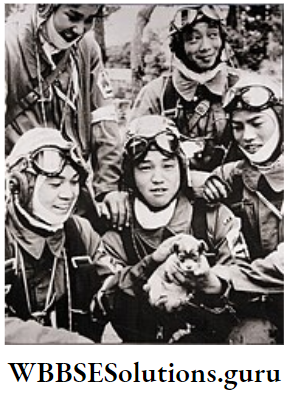
WBBSE Solutions For Class 9 Fundamentals Of History Chapter 6 The Second World War And Its Aftermath Kamika The Divine Wind

About 3,800 Kamikaze pilots died during the war with more than 7,000 naval personnel dead from such attacks. Over an eight-day period, 3,38,226 soldiers were rescued by a hastily assembled fleet of over 800 vessels.

Little ships of Dunkirk, a flotilla of hundreds of merchant marine boats, fishing boats, pleasure crafts, yachts, and lifeboats came to the rescue.

British Prime Minister Winston Churchill called this incident a “colossal military disaster” and “a miracle of deliverance”

4. Chindits

The Long Range Penetration Group, special operations units of the British and Indian Armies were nicknamed the Chindits. The Chindits were the creation of Brigadier Orde Charles Windgate.

They saw action during the Burma Campaign of the 2nd World War during 1943-44.

The Chindits performed long-range penetration raids behind enemy lines attacking Japanese troops, facilities and lines of communication.

They had to march through extremely difficult terrain and were often weakened by malaria and dysentery.

There is much debate as to the high casualty rate compared to the military value of the achievements of the Chindits.
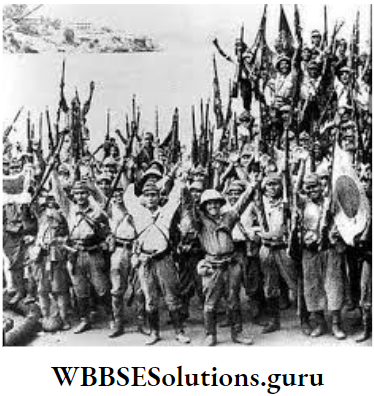
WBBSE Solutions For Class 9 Fundamentals Of History Chapter 6 The Second World War And Its Aftermath Chindits

5. SAS ( Special Air Service )

The Special Air Service was a British Army Commando unit formed by David Stirling in 1941 originally known as the “L Detachment”.

The unit achieved great success in operating behind enemy lines during the North Africa Campaign against the Germans and the Italians.

Assisted by the Long Range Desert Groups they created havoc amongst the Germans and were successful in attacking and destroying several German aircraft, men and machinery.

They also fought in Italy and carried out operations supporting the Allied advance into France, Belgium, the Netherlands and eventually into

Germany on the Western front. The success of the SAS led other countries in the world to create such Special forces and the SAS still counts as one of most efficient Special forces in the world.
WBBSE Solutions For Class 9 Fundamentals Of History Chapter 6 The Second World War And Its Aftermath Special Air Service

WBBSE Chapter 6 The Second World War And Its Aftermath Fill In The Blanks

Question 1. Immediately after the First World War, it appeared that an age of _________ had dawned

  1. Democracy
  2. Socialism
  3. Capitalism
  4. Communism.

Answer: 1. Democracy

Question 2. In 1920 most of the European nations except _______ were democratic

  1. England
  2. Russia
  3. Belgium
  4. France

Answer: 2. Russia

Question 3. _________ was one of the features of Fascism.

  1. Liberalism
  2. Democracy
  3. Nationalism
  4. Equality

Answer: 3. Nationalism

Question 4. The German invasion of _______ marked the beginning of the Second World War.

  1. Austria
  2. Russia
  3. France
  4. Poland

Answer: 4. Poland

Question 5. ________ the US President, mentioned in his ‘Fourteen Point Principle’ the right to self-rule.

  1. Woodrow Wilson
  2. H.C Hoover
  3. F.D Roosevelt
  4. Richard Nixon

Answer: 1. Woodrow Wilson

Question 6. The New Deal Policy was announced by the US President ________.

  1. Woodrow Wilson
  2. H.C Hoover
  3. F.D Roosevelt
  4. Richard Nixon

Answer: 3. F.D Roosevelt

Question 7. Italy joined Germany and Japan on ________, 1937 and the Rome-Berlin —Tokyo-Axis was formed

  1. 6th November
  2. 7th November
  3. 8th November
  4. 9th November

Answer: 1. 6th November

Question 8. Adolf Hitler invaded Denmark and Norway in ________.

  1. 1939
  2. 1940
  3. 1941
  4. 1942

Answer: 2. 1940

Question 9. Adolf Hitler made a simultaneous attack on Holland, Belgium and Luxemburg on ________.

  1. 1940
  2. 1941
  3. 1942
  4. 1943

Answer: 1. 1940

Question 10. Winston Churchill signed the Anglo-Soviet Agreement on ________.

  1. 1937
  2. 1939
  3. 1941
  4. 1943

Answer: 3. 1941

Question 11. The ‘Scorched Earth Policy’ was adopted by _________.

  1. Italy
  2. Hungary
  3. Germany
  4. Russia

Answer: 4. Russia

Question 12. ________ attacked the US naval base in Pearl Harbour on 7th December 1941.

  1. Japan
  2. Hungary
  3. Italy
  4. Germany.

Answer: 1. Japan

Question 13. The atomic bomb dropped at Nagasaki killed _____ civilians.

  1. 20,000
  2. 30,000
  3. 40,000
  4. 50,000

Answer: 3. 40,000

Question 14. The Second World War continued for a period of _______ years.

  1. 3
  2. 4
  3. 5
  4. 6

Answer: 4. 6

Question 15. The ideological conflict between the capitalist power USA and the Socialist power USSR is known as the ______.

  1. Phony War
  2. Blitzkrieg
  3. Cold War
  4. World War

Answer: 3. Cold War

Question 16. The Second World War officially ended on _______.

  1. 8th May 1945
  2. 18th May 1945
  3. 25th May 1945
  4. 31st May 1945

Answer: 1. 8th May 1945

Question 17. ________ pointed out that ‘the Second World War was a good war’.

  1. Eric Hobsbawm
  2. E. H. Carr
  3. A.J.P. Taylor
  4. David Thomson

Answer: 3. A.J.P. Taylor

Question 18. In 1934, Adolf Hitler took the title of _________.

  1. Kaiser
  2. II Duce
  3. Fuhrer
  4. Czar

Answer: 3. Fuhrer

Question 19. Hideki Tojo was the Prime Minister of _________.

  1. Poland
  2. Hungary
  3. Czechoslovakia
  4. Japan

Answer: 4. Japan

Question 20. Maginot Line was built in _________.

  1. Spain
  2. France
  3. Japan
  4. Poland

Answer: 2. France

Question 21. Haile Selassie was the emperor of _________.

  1. Spain
  2. Ethiopia
  3. Syria
  4. Poland

Answer: 2. Ethiopia

Question 22. The atom bomb named _________ was dropped at Nagasaki.

  1. Little Girl
  2. Little Boy
  3. Fat Man
  4. Fat Woman

Answer: 3. Fat Man

Question 23. The atom bomb named _________ was dropped at Hiroshima

  1. Little Girl
  2. Little Boy
  3. Fat Man
  4. Fat Woman

Answer: 2. Little Boy

Question 24. Albert Einstein was a _______.

  1. Christian
  2. Zoroastrian
  3. Jew
  4. Muslim

Answer: 3. Jew

Question 25. The Munich Pact was signed between the leaders of ________ nations.

  1. 2
  2. 4
  3. 6
  4. 8

Answer: 2. 4

WBBSE Chapter 6 The Second World War And Its Aftermath Identify Which Of The Following Is “True” Or “False”

Question 1. The Second World War broke out on 1st September 1939.
Answer: True

Question 2. Around 50 million people died and nearly 40 million people were wounded in the Second World War.
Answer: True

Question 3. In 1920, Russia was the only democratic state in Europe.
Answer: False

Question 4. The Treaty of Versailles is regarded as one of the reasons for the Second World War.
Answer: True

Question 5. Democracy never allowed any mutual regard and compromise.
Answer: False

Question 6. Aggressive nationalism is one of the features of Fascism.
Answer: True

Question 7. Appeasement was a form of foreign policy that tried to avoid war.
Answer: True

Question 8. In 1939, Hitler occupied the whole of Czechoslovakia.
Answer: True

Question 9. In 1930, the Munich Pact was signed.
Answer: False

Question 10. Adolf Hitler was the ‘Father of Nazism’
Answer: True

Question 11. Benito Mussolini was the ‘Father of Fascism’.
Answer: True

Question 12. Daladier was the Foreign Secretary of Italy.
Answer: False

Question 13. The Anglo-French policy of appeasement failed to prevent war.
Answer: True

Question 14. E.H. Carr called the Treaty of Versailles a ‘dictated peace’.
Answer: True

Question 15. Kaiser William II was known as the third Bismarck of Germany.
Answer: False

Question 16. Woodrow Wilson mentioned the right to self¬rule in his ‘Fourteen Points Principle’.
Answer: True

Question 17. The Allies signed the Munich Agreement in matters regarding Czechoslovakia.
Answer: True

Question 18. In 1939, the Rome-Berlin-Tokyo axis was formed.
Answer: False

Question 19. On November 25th 1936, Germany and Japan concluded the Anti-Comintern Pact.
Answer: True

Question 20. The first instance of Anglo-French appeasement was the Anschluss.
Answer: True

Question 21. Neville Chamberlain was the Prime Minister of Britain.
Answer: True

Question 22. Hitler signed the ‘Ten-Year Non-Agression Pact’ with Italy.
Answer: False

Question 23. Russia occupied Finland on 30th November 1939.
Answer: True

Question 24. Hitler attacked Holland, Belgium and Luxemburg on 10th May 1940.
Answer: True

Question 25. Paul Reynaud was the Prime Minister of France.
Answer: True

Question 26. Japan attacked Manchuria in 1929.
Answer: False

Question 27. Hitler followed the policy of Pan-Germanism.
Answer: True

Question 28. One of the central principles of Fascism was economic self-sufficiency.
Answer: True

Question 29. The government of Marshal Petain was known as the Vichy Government.
Answer: True

Question 30. On 15th August 1943, nearly a thousand Luftwaffe launched a series of raids on England.
Answer: True

Question 31. The Anglo-Soviet Treaty was signed in 1939.
Answer: False

Question 32. Hitler called his invasion of Russia, ‘Operation Sea Lion’.
Answer: False

Question 33. The ‘Lend-Lease Act’ was passed by the U.S. Senate.
Answer: True

Question 34. From 1st October 1941 to 1st July 1942 USA sent 400 aeroplanes to Russia.
Answer: True

Question 35. The Russian Red Army was led by Martial Voroshilov during the Second World War.
Answer: True

Question 36. In 1941, Pearl Harbour was attacked by Russia.
Answer: False

Question 37. USA entered the Second World War in 1941.
Answer: True

Question 38. Hideki Tojo was the Prime Minister of Japan.
Answer: True

Question 39. The Anglo-American force landed on the coast of Normandy on the ‘D-Day’.
Answer: True

Question 40. In August 1945, Mussolini was shot and killed.
Answer: False

Question 41. Hitler married Eva Braun.
Answer: True

Question 42. Only 36 hours after his wedding Hitler committed suicide.
Answer: True

Question 43. The USA dropped an atomic bomb on Hiroshima.
Answer: True

Question 44. The Battle of Leningrad is also known as the Seize of Leningrad.
Answer: True

Question 45. Pearl Harbour was in Japan.
Answer: False

Question 46. The Second World War is regarded as a really ‘global war’.
Answer: True

Question 47. The United Nations Organization helped in the growth of internationalism.
Answer: True

Question 48. The growth of international terrorism in the present world is a danger to the spirit of internationalism.
Answer: True

Question 49. The colonial empires of Britain and France disappeared after the Second World War.
Answer: True

Question 50. Japan surrendered on 2nd September 1945.
Answer: True

WBBSE Chapter 6 The Second World War And Its Aftermath Match Column A With Column B

Question 1.

1.    AB
(1)    Stalin(a)    Germany
(2)    Daladier(b)    Italy
(3)    Mussolini(c)    Russia
(4)    Hitler(d)    France


Answer: (1) c, (2) d, (3) b, (4) a

Question 2.

2.    AB
(1) Abraham Lincoln(a)    Religious reformer
(2)    Swami Vivekananda(b)    Jewish Scientist
(3)    Albert Einstein(c)    Fascist Leader
(4)    Benito Mussolini(d)    President of USA


Answer: (1) d, (2) a, (3) b, (4) c

Question 3.

3.    AB
(1) Charles de Gaulle(a) Japan
(2) Hideki Tojo(b) USA
(3) F.D.Roosevelt(c) England
(4) Winston Churchill(d) France


Answer: (1) d, (2) a, (3) b, (4) c

Question 4.

4.    AB
 (1) Italy(a) Imperialism
(2) Russia(b) Fascism
(3) Germany(c) Socialism
(4) Japan(d) Nazism


Answer: (1) b, (2) c, (3) d, (4) a

Question 5.

5. AB
(1) Franz Joseph I(a) Emperor of Ethiopia
(2) MehmedV(b) Czar of Bulgaria
(3) Haile Selassie(c) Emperor of Austria
(4) Ferdinand I(d) Sultan of Turkey


Answer: (1) c, (2) d, (3) a, (4) b

Question 6.

6.    AB
(1) Neville Chamberlin(a) Russia
(2) Harry S. Truman(b) France
(3) Edouard Daladier(c) England
(4) Marshal Voroshilov(d) USA


Answer: (1) c, (2) d, (3) b, (4) a

Question 7.

7.    AB
(1) Cash and Carry(a) Germany
(2) Vichy Government(b) Russia
(3) Scorched Earth Policy(c) USA
(4) Reich(d) France


Answer: (1) c, (2) d, (3) b, (4) a

Question 8.

8.    AB
(1) Anton Drexler(a)    Democratic Party
(2) Franklin D. Roosevelt(b)    German Socialist party
(3) Winston Churchill (c)    Nationalist Party
(4) General Franco(d) Conservative party


Answer: (1) b, (2) a, (3) d, (4) c

Question 9.

9.    AB
(1) 1919(a) Disarmament Conference
(2) 1933(b)    Atom Bomb Dropped
(3) 1945(c)    Pearl Harbour Incident
(4) 1941(d) Paris Peace Conference


Answer: (1) d, (2) a, (3) b, (4) c

Question 10.

10.    AB
(1) Hirohito(a) Hitler’s wife
(2) Eva Braun(b) Chancellor of Austria
(3) Arthur Seyss(c) Supreme Allied Commander
(4) General Eisenhower(d) Empoeorof Japan


Answer: (1) d, (2) a, (3) b, (4) c

Question 11.

11.    AB
(1) Truman Doctrine(a) 1945
(2) Battle of Midday(b) 1947
(3) Potsdam Conference(c) 1944
(4) Deliverance Day(d) 1942


Answer: (1) b, (2) d, (3) a, (4) c

Question 12.

12.    AB
(1) Kamikaze(a) Mass murder of Jewish people
(2) Holocaust Organization(b) International Peace
(3) UNO(c) World Health Organization
(4) WHO(d) Japanese aircraft


Answer: (1) d, (2) a, (3) b, (4) c

Question 13.

13.    AB
(1) 1940(a) Atom bomb dropped
(2) 1943(b) Deliverance Day
(3) 1944(c) Italy invaded by Allied Powers
(4) 1945(d) Germany occupied France


Answer: (1) d, (2) c, (3) b, (4) a

Question 14.

14.    AB
(1) 1939(a) Battle of Dunkirk
(2) 1940(b) US army landed in North Africa
(3) 1941(c) Outbreak of Second World War
(4) 1942(d) Pearl Harbour Incident


Answer: (1) c, (2) a, (3) d, (4) b

Question 15.

15.    AB
(1) Operation Torch(a) Russia
(2) Operation Barbarossa(b) USA
(3) Operation Overlord(c) England
(4) Operation Sea Lion(d) Normandy


Answer: (1) b, (2) a, (3) d, (4) c

Question 16.

16.    AB
(1) 1937(a) Battle of Madagascar
(2) 1942(b) Battle of Normandy
(3) 1938(c) Rome Berlin Tokyo Axis
(4) 1944d) Munich Pact


Answer: (1) c, (2) a, (3) d, (4) b

Question 17.

17.    AB
(1) Dictated Peace(a) Winston Churchill
(2) Arsenal of Democracy(b) E.H. Carr
(3) A miracle of Deliverance(c) Prof. W. Knapp
(4) A day of supreme folly for Japan(d) F.D. Roosevelt


Answer: (1) b, (2) d, (3) a, (4) c

Question 18.

18.    AB
(1) General Franco(a) Germany
(2) Marshal Zhukov(b) France
(3) Paul Reynaud(c) Spain
(4) Von Paulus(d) Russia

Answer: (1) c, (2) d, (3) b, (4) a

Question 19.

19.    AB
(1)    Fat Man(a)    India
(2)    First World(b)    Hiroshima
(3)    Third World(c)    Nagasaki
(4)    Little Boy(d)    USA


Answer: (1) c, (2) d, (3) a, (4) b

Question 20.

20.    AB
(1)    Jawaharal Nehru(a)    First atom bomb
(2)    Robert Oppenheimer(b)    Fourteen Point Programme
(3)    Woodrow Wilson(c)    Propaganda Minister of Hitler
(4)    Josef Goebbels(d)    First Prime Minister of India

Answer: (1) d, (2) a, (3) b, (4) c

WBBSE Chapter 6 The Second World War And Its Aftermath Select The Correct Option Of The Following Statements

Question 1. The Second World War is called a global war.

  1. Most of the countries in the world were involved in this war.
  2. It brought about a qualitative change like the war.
  3. The involvement of Japan in the war made it a global war.

Answer: 1. Most of the countries in the world were involved in this war.

Question 2. Germany invaded Poland on 1st September 1939.

  1.  It was an expansionist policy of Adolf Hitler.
  2. It was the immediate cause of the Second World War.
  3.  It was a sign of the autarchy of Germany.

Answer: 2. It was the immediate cause of the Second World War.

Question 3. After the First World War, it seemed an age of democracy had dawned in Europe.

  1. It was because the European nations rejected Communism.
  2. It was because democracy envisaged the extension of voting rights.
  3. It was because all the states in Europe were moving towards parliamentary politics.

Answer: 3. It was because all the states in Europe were moving towards parliamentary politics.

Question 4. Twenty years after the First World War most European states were under dictatorship.

  1. Democracy wanted to strengthen the power of the parliament which was opposed by the people.
  2. The democratic concept of ‘mutual regard and compromise’ was rejected by the mass
  3. The rise of extremely charismatic dictators paved the way for the growth of dictatorial rule in Europe.

Answer: 2. The democratic concept of ‘mutual regard and compromise’ was rejected by the mass

Question 5. Mussolini annexed and occupied Abyssinia.

  1. The people of Abyssinia welcomed Fascist rule.
  2. Mussolini made special deals with England and France and won a victory in the Second Italo-Ethiopian War.
  3. It was Mussolini’s protest against the economic sanctions imposed upon her by the League of Nations.

Answer: 2. Mussolini made special deals with England and France and won a victory in the Second Italo-Ethiopian War.

Question 6. Adolf Hitler and Benito Mussolini supported General Franco in the Spanish Civil War.

  1. Both of them found a Fascist Comrade in General Franco.
  2. Both of them followed a policy of ‘Appeasement’ with Spain.
  3. Both of them ignored Britain and France in this way.

Answer: 2. Both of them found a Fascist Comrade in General Franco.

Question 7. Both the Western democracies and the Nazi groups were not in favour of Russia.

  1. They were against Russia because of her absence from the League of Nations.
  2. They were against the different political ideology that Russia nurtured called Socialism.
  3. They were against the Russian Red Army.

Answer: 2. They were against the different political ideology that Russia nurtured called Socialism.

Question 8. The Treaty of Versailles helped in the emergence of the Nazi Party under Adolf Hitler in Germany.

  1. The Treaty of Versailles reduced the military strength of Germany.
  2. The Treaty of Versailles was humiliating for Germany.
  3. The Nazi Party under Hitler vented their anger against the Treaty of Versailles and disregarded the clauses of the treaty one by one.

Answer: 3. The Nazi Party under Hitler vented their anger against the Treaty of Versailles and disregarded the clauses of the treaty one by one.

Question 9. Britain and France adopted a policy of appeasement with Germany.

  1. Britain and France became weak after the First World War and were not in a position to check the growing power of Germany under Hitler.
  2. They adopted this policy to avoid a big confrontation.
  3. They were inspired by the Nazi rule of Adolf Hitler in Germany.

Answer: 1. They adopted this policy to avoid a big confrontation.

Question 10. The Rome-Berlin-Tokyo Axis was formed in 1937.

  1. The main purpose of the pact was to thwart Russia and Communism.
  2. They formed this axis to disregard the Treaty of Versailles.
  3. They formed the axis to sever their connection with the League of Nations.

Answer: 1. The main purpose of the pact was to thwart Russia and Communism.

Question 11. The Anglo-Soviet Agreement was signed in 1941.

  1. Winston Churchill signed this agreement to avoid any Russo-German alliance.
  2. By the treaty, it was decided that both England and Russia would Jointly resist Germany.
  3. By the Treaty Winston Churchill agreed to send warplanes to Russia.

Answer: 2. By the treaty it was decided that both England and Russia would Jointly resist Germany.

Question 12. The ‘Lend-Lease Act was passed by the U.S. Senate.

  1. By this Act, the USA allowed England to supply food and weapons to her colonies.
  2. The Act allowed the USA to establish its supremacy in Europe.
  3. It was a program under which the United States supplied food, oil and other materials to England, France, Soviet Union and other Allied Nations between 1941 to 1945.

Answer: 3. It was a program under which the United States supplied food, oil and other materials to England, France, the Soviet Union and other Allied Nations between 1941 to 1945.

Question 13. The Battle of Stalingrad is a memorable chapter in the history of the Second World War.

  1. It was the first major German loss during the Second World War.
  2. The Nazis had great success and captured about 800,000 square kilometres of Russian territory.
  3. Hitler launched this attack on Russia to destroy her.

Answer: 1. It was the first major German loss during the Second World War.

Question 14. The USA joined the Second World War in 1941.

  1. The USA joined the war on the side of the Allied due to the repeated insistence of England and France.
  2. Japan’s bombing of Pearl Harbour prompted her to join the war.
  3. The interest of the USA in the Far East made her join the war.

Answer: 2. Japan’s bombing of Pearl Harbour prompted her to join the war.

Question 15. The USA dropped atomic bombs on the Japanese cities of Hiroshima and Nagasaki.

  1. In this way, USA took her revenge for the Pearl Harbour Incident,
  2. As Japan paid no heed to the Allies’ demand for surrender, the USA dropped atomic bombs in two of her cities.
  3. In this way, the USA showed its military strength to the rest of the world.

Answer: 2. As Japan paid no heed to the Allies’ demand for surrender, the USA dropped atomic bombs in two of her cities.

Question 16. The Cold War began after the end of the Second World War.

  1. It saw the division of the world into three categories First World, Second World and Third World.
  2. It heralded technological and tactical changes in the warfare.
  3. The ideological conflict between the capitalist USA and communist Russia marked the beginning of the Cold War.

Answer: 3. The ideological conflict between the capitalist USA and communist Russia marked the beginning of the Cold War.

Question 17. 6th June 1944 is regarded as the D-Day.

  1. On this day the Allies utilized more than 5,000 ships and landing craft to land more than 150,000 troops on five beaches in Normandy.
  2. It was on this day Mussolini was shot and killed.
  3. This day ended the Second World War.

Answer: 1. On this day the Allies utilized more than 5,000 ships and landing craft to land more than 150,000 troops on five beaches in Normandy.

Question 18. India, Pakistan, Algeria, and Nigeria emerged as independent countries.

  1. The Cold War led to the emergence of these independent nations.
  2. The destruction of the war made European countries like England and France very weak.
  3. After the Second World War, the colonial empires of Britain and France disappeared.

Answer: 3. After the Second World War the colonial empires of Britain and France disappeared.

Question 19. After 1945 it was clear that the two superpowers would enjoy a great influence on global matters.

  1. Europe was destined for some years of poverty.
  2. The Second World War resulted in the emergence of the USA and USSR as major world powers.
  3. After 1945 the world was relieved from the evils of Fascism.

Answer: 3. The Second World War resulted in the emergence of the USA and USSR as major world powers.

Question 20. The United Nations Organization was formed on 24th October 1945.

  1. It was formed to end the Second World War.
  2. It was formed to act as a bulwark against any further progress of aggressive nationalism
  3. It was formed by world leaders to solve global problems peacefully through negotiations.

Answer: 2. It was formed by world leaders to solve global problems peacefully through negotiations.