WBBSE Solutions For Class 10 Life Science Chapter 5 Environmental Pollution

WBBSE Chapter 5 Environment Its Resources And Their Conservation Environmental Pollution Introduction To Pollution

Human activities introduce various types of contaminants into the natural environment. The contaminants bring about adverse changes to the biosphere.

This results in environmental pollution.

Pollution is an undesirable change in the physio-chemical and biological characteristics of the biosphere that has adverse effects on living organisms, the environment, living conditions, cultural assets of human beings, raw material resources, or industrial processes.

WBBSE Solutions For Class 10 Life Science Chapter 5 Environmental Pollution

Pollutants:

The foreign substances or energies or naturally occurring materials causing pollution of the environment (i.e., the polluting agents) are called pollutants.

Examples: Particulate matter, oxides of carbon/sulfur/nitrogen, Hydrocarbons, sewage, discarded radioactive wastes, etc.

Read and Learn More WBBSE Solutions For Class 10 Life Science

WBBSE Chapter 5 Environmental Pollution Introduction To Pollution Types Of Pollution

The common pollution problems that we have to face can be classified in three ways –

According to the component of the environment that is being polluted; for example-

  1. Air pollution,
  2. Water pollution and
  3. Land (soil) pollution.

According to the physical nature of the pollutant; for example-

  1. Gaseous pollution,
  2. Dust pollution,
  3. Noise pollution,
  4. Thermal pollution,
  5. Radioactive pollution etc.

According To Origin:

Pollution can be classified into two broad groups – natural and artificial or anthropogenic (manmade).

1. Natural pollutions are those which originate from natural processes e.g., forest fires, volcanic eruptions, dust storms, natural organic and inorganic decays, the release of microbes, pollens, spores, etc.

2. Artificial or anthropogenic pollution is that whthatriginate due to activities of man; for example industrial pollution, agricultural pollution, automobile pollution, domestic pollution, etc.

WBBSE Notes For Class 10 Geography And EnvironmentWBBSE Notes For Class 10 History And Environment
WBBSE Solutions For Class 10 Life ScienceWBBSE Class 10 Life Science Multiple Choice Questions
WBBSE Solutions for Class 10 MathsWBBSE Class 10 Maths Multiple Choice Questions
WBBSE Notes For Class 10 Physical Science And Environment


3. The anthropogenic polpollutione isajor problem because they are increasing day by day due to overpopulation.

Among the various man-made pollution problems, the largest ones are air pollution, water pollution, soil pollution, noise pollution, and radioactive pollution because these are very common (i.e., frequently occurring) and they produce deleterious effects on a vast population.

WBBSE Chapter 5 Topic B Environmental Pollution Air Pollution Definition

Any adverse change in the composition of the atmosphere that occurs due to the activities of man or some natural event and endangers human life is called air pollution or atmospheric pollution.

Causes And Effects Of Air Pollution

Causes-

Greenhouse Gases:

1. CO2, CH4/ water vapor, N2O, SF6, and CFC are liberated from different industrial sources and have different grades of global warming potential (GWP) when they are compared wconcerningCO2, which has a GWP of 1.

2. CO2, NO2, SO2, and hydrocarbons from automobile and industrial sources.

3. SPM (Suspended Particulate Matter), which are of two types SPM10  (diameter of μ and SPM2.5μ (diameter of 2.5μ liberated from automobile exhaust, building dust, etc.

They may be fibrous material of plant or animal origin, fly ash particles, oil particles, or fungal spores.

Environmental Pollution Class 10

Effects-

1. Green House Effect:

GHGs absorb shorter UV rays of the sun and also those which are reflected from the Earth’s surface causing elevation of global temperature,

Global Warming:

It results in the melting of ice and snow in the permanent glaciers.

The water level in the ocean rises causing infiltration of saline water, flooding of low-lying areas, extreme reduction in agricultural productivity, and unprecedented changes in the wind and global precipitation pattern,

Effect On Biomes:

Due to the shifting of climatic belts as a consequence of global warming, vegetation would gradually also shift in the same direction to stay in favorable climatic conditions.

Those species which will be unable to do so shall die. Thus there will be losses of genetic resources on a large scale. All important biomes shall be affected.

2. Acid rain: These gases get dissolved in rainwater producing different types of acids like Carbonic acid (H2SO3), Nitrous acid (HNO2) Nitric acid (HN03), Sulphurous acid (H2SO3) or Sulphuric acid (H2SO4), etc.

The acid-laden aerosols come downwards as acid precipitation or acid rain. Acid rain is corrosive affects aquatic ecosystems, causes disbalance to mineral cycles, kills soil microbes by changing their pH, and damages monuments, plants, etc.

Oxides of nitrogen are responsible for the formation of peroxyacetyl nitrate (PAN) and peroxybenzoyl nitrate (PBN) which cause acute irritation of eyes and respiratory problems.

NO2 may cause pulmonary edema besides being an important constituent of photochemical smog.

NO is responsible for the depletion of the stratospheric ozone layer.

Sulphar retards photosynthesis and inhibits carbon assimilation. Plants exposed to SO2 for long durations suffer from necrosis and interveinal chlorosis.

SO2 is capable of causing the thickening of the mucous layer of the trachea, bronchial constriction, and hypertrophy of mucous glands.

Hydrocarbons in excess cause necrosis of leaves, chlorosis of floral buds, irritation of mucous membranes, and bronchial constriction. Many hydrocarbons are known to have carcinogenic properties.

3. SPM reduces visibility and prevents the sun rays from entering the atmosphere reducing photosynthetic productivity,

They may also cause lung diseases like chronic obstructive pulmonary disease (COPD) and other respiratory distress like apnoea, dyspnoea, or difficulty in breathing.

Environmental Pollution Class 10

It may damage the surfactant in the lining of alveolate and induce respiratory distress syndrome,

SPM is also capable of causing various types of allergies.

WBBSE Chapter 5 Environmental Pollution Control Of Air Pollution

The atmosphere has several built-in cleaning processes such as dispersion, gravitational settling, flocculation, absorption, rain-washout, etc., to cleanse the atmosphere.

However, control of contaminants at their source level is desirable through effective preventive methods or control technologies.

Source Control:

  1. Some measures that can be adopted in this direction are:
  2. Using unleaded petrol.
  3. Using fuels with low sulfur and ash content.
  4. Encouraging people to use public transport, walk, or use a cycle as opposed to private vehicles.
  5. Ensuring that houses, schools, restaurants, and playgrounds are not located on busy streets.
  6. Planting trees along busy streets as they remove particulates, and carbon dioxide and absorbs noise.
  7. Industries and waste disposal sites should be situated outside the city preferably on the downwind side of the city.
  8. Catalytic converters should be used to help control emissions of carbon monoxide and hydrocarbons.

Control Measures In Industrial Centres:

  1. Emission rates should be restricted to permissible levels by every industry.
  2. Incorporation of air pollution control
  3. Continuous monitoring of the atmosphere for pollutants should be carried out to know the emission levels.

Equipment Used To Control Air Pollution:

  1. Air Pollution can be reduced by adopting the following approaches.
  2. Ensuring sufficient supply of oxygen to the combustion chamber and adequate temperature so that the combustion is complete thereby eliminating much of the smoke consisting of partly burnt ashes and dust.
  3. To use mechanical devices such as scrubbers, cyclones, bag houses, and electrostatic precipitators in manufacturing processes. These methods retain hazardous materials allowing clean smoke to go out through the chimney.
  4. Wet scrubbers can additionally reduce sulfur dioxide emissions.
  5. The air pollutants collected must be carefully disposed of the factory fumes may be dealt with by chemical treatment.

WBBSE Chapter 5 Environmental Pollution Water pollution Definition

Water pollution is the phenomenon in which water is rendered unsuitable for consumption by man and other animals or habitation of aquatic plants and animals due to the mixing of any poisonous material or pollutant with it.

Causes And Effects Of Water Pollution

Causes-

1. Agricultural Runoff:

It includes pesticides, herbicides, phosphate and nitrate fertilizer, and other mixed organic pollutants including different phosphates and nitrates that are washed down by either rainwater or Irrigation water to nearby low-lying lakes and other water bodies.

2. Sewage disposal:

The sewage water contains some pathogens like Vibrio cholera, Micrococcus, Salmonella type, etc.

3. Industrial discharge and oil contamination

Effects-

The deposition of excess nutrients in the water bodies results in eutrophication causing an increase in BOD (Biochemical Oxygen Demand) and algal bloom.

It also increases COD, which oxidizes different chemical compounds and thereby reduces the DO (dissolved oxygen) killing aquatic life including fish.

The increase in sewage level causes contamination of water by different pathogenic organisms that cause cholera, gastroenteritis, and typhoid. The problem becomes more acute due to poor sanitation.

  1. Leads to an abundance of microbes.
  2. Creates a deficit of oxygen in aquatic systems.
  3. Algal blooms are created
  4. Causes an increase in toxic trace elements.

Reduction of growth:

Pesticides have some direct harmful effects on plants including poor root hair development, shoot yellowing, F, and reduced plant growth.

Effect On Animals:

Reduction in biodiversity:

Pesticides inflict extremely widespread damage to biota.

Reduction In Animal Feed:

Widespread application of pesticides can eliminate food sources that certain types of animals need, causing the animals to relocate, change their diet, or starve.

Food chain effect:

Poisoning from pesticides can travel up the food chain; for example, birds can be harmed when they eat insects and worms that have consumed pesticides.

The killing of earthworms:

The earthworms are killed, which reduces soil fertility. The pesticide also can accumulate in these organisms, which gets into the body of the predators.

Wbbse Class 10 Life Science Pollution Notes

Killing Of Birds:

In England, the use of pesticides in gardens and farmland has seen a reduction in the number of Common Chaffinches. About 72 million birds are killed by pesticides in the United States each year.

Bald eagles are common examples of non-target organisms that are impacted by pesticide use. Rachel Carson’s landmark book Silent Spring dealt with the loss of bird species due to the bioaccumulation of pesticides in their tissues.

Thinning of eggshell:

DDT-induced eggshell thinning has especially affected European and North American bird populations.

The herbicide paraquat (dipyridylium), when sprayed onto bird eggs, causes growth abnormalities in embryos and reduces the number of chicks that hatch successfully.

Additionally, it causes an increase in the amount of pesticides through the phenomenon called biomagnification.

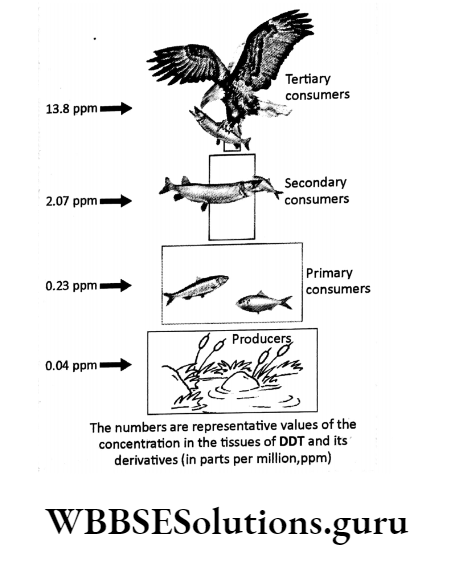
Biomagnification simply denotes enhancement in the concentration of a particular substance (such as a toxic chemical) in the tissues of tolerant organisms at successively higher levels along the food chain.

By this method, a toxic substance enters the food chain at a very low concentration and as it moves up into the consumers of the higher trophic level, its concentration increases, which might induce lethality in these animals.

WBBSE Solutions For Class 10 Life Science Chapter 5 Environment Its Resources And Their Conservation Topic B Environmental Pollution barker

At each level of the food chain, more than half the biomass is lost through excretion, respiration, and decay; but most of the toxic substances (such as DDT) are retained since DDT is metabolized and excreted much more slowly than other nutrients.

Thus DDT accumulates in the bodies (especially in fat) and as a result, becomes highly concentrated in carnivores. This is why the hazard of DDT to nontarget animals is particularly acute for those species living at the top of food chains.

This phenomenon can operate both in terrestrial as well as aquatic ecosystems.

Barker in 1958 showed that the concentration of DDT in the soil below elm trees is 10 ppm, and the earthworm contained 86 ppm of DDT. The Robin bird died after consuming 11-12 such earthworms and the liver of the dead bird showed 744 ppm of DDT, while their brain showed 250 ppm of DDT.

Woodwell (1967) showed 0.002 ppm of DDT in the body of zooplanktons, it increased to 2.07 ppm in the body of needle fishes and 75.5 ppm in the body of fish-eating gulls.

Thus, the adverse effect of DDT is felt in the body of higher consumers by the phenomenon of biomagnification.

Effect On Human Beings:

Similar biomagnification can be observed in the case of heavy metals like mercury causing Minamata disease, and lead causing anemia in mammals.

Humans become more susceptible to cancers, liver and kidney failure, respiratory disorders, birth defects in pregnant women, and Brain damage and heart diseases as a result of mercury, cadmium, lead, cobalt, chromium, and other chemical poisonings.

For instance, diseases like hepatitis and cancer have been attributed to consuming seafood that has Been poisoned by mercury and aromatic hydrocarbons.

WBBSE Chapter 5 Environmental Pollution Control Of Soil Pollution

  1. Reduction of synthetic pesticides.
  2. Using organic manure.
  3. Use of biofertilizer.
  4. Adoption of biological control.
  5. Use of genetically modified crops that can resist insect pests, like Bt cotton

WBBSE Chapter 5 Environmental Pollution Noise Pollution  Definition

An increase of noise i.e., unwanted and loud sound which is displeasing to the ear, in the surroundings is called noise pollution or sound pollution.

Control of Noise Pollution

Control At Receiver’s End:

For people working in noisy installations, ear-protection aids like earplugs, ear-muffs, noise helmets, headphones, etc. must be provided to reduce occupational exposure.

Suppression of Noise at Source:

This is possible if working methods are improved by:

Designing, fabricating, and using quieter machines to replace the noisy ones.

Proper lubrication and better maintenance of machines.

Installing noisy machines in soundproof chambers.

Covering noise-producing machine parts with sound-absorbing materials to check noise production.

Reducing the noise produced by a vibrating machine by vibration damping i.e. making a layer of damping material (rubber, neoprene, cork, or plastic) beneath the machine.

Using silencers to control noise from automobiles, ducts, exhausts, etc., and conveyor systems with ends opening into the atmosphere.

Use glass wool or mineral wool covered with a sheet of perforated metal for mechanical protection.

Acoustic Zoning:

Increased distance between source and receiver by the zoning of noisy industrial areas, bus terminals, railway stations, aerodromes, etc.

Being away from the residential areas would go a long way in minimizing noise pollution. There should be silence zones near residential areas, educational institutions, and above all, hospitals.

Wbbse Class 10 Life Science Pollution Notes

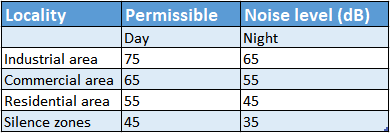
The permissible noise levels in different types of localities are:

WBBSE Solutions For Class 10 Life Science Chapter 5 Environment Its Resources And Their Conservation Topic B Environmental Pollution locality

Sound Insulation at Construction Stages:

  1. Sound travels through the cracks that get left between the door and the wall. To reduce noise, this space (jamb frame gap) should be packed with sound-absorbing material.
  2. Sound insulation can be done by constructing windows with double or triple panes of glass and filling the gaps with sound-absorbing materials.
  3. Acoustical tiles, hair felt, perforated plywood, etc., can be fixed on walls, ceilings, floors, etc., to reduce noise (especially for soundproof recording rooms, etc.)

Planting of Trees:

Planting green trees and shrubs along roads, hospitals, educational institutions, etc., helps in noise reduction to a considerable extent.

Legislative Measures:

Strict legislative measures need to be enforced to curb the menace of noise pollution.

Some of these measures could be:

  1. Minimum use of loudspeakers and amplifiers especially near silence zones.
  2. Banning pressure horns in automobiles.
  3. Framing and implementation of a strict Noise Pollution Act.

WBBSE Chapter 5 Environmental Pollution Fill In The Blanks

Question 1. The presence of life in the hydrosphere, lithosphere, and atmosphere constitutes the_______________
Answer: Biosphere

Question 2. The contaminating bacteria in the water body is called _______________.
Answer: Coliforms

Question 3. The diameter of ordinary SPM is_______________ .
Answer: 10

Question 4. COPD occurs due to _______________pollution.
Answer: Air

Question 5. Cholera causing virus is_______________ .
Answer: Rotavirus

Question 6. DDT’s full name is _______________.
Answer: Dichloro diphenyl trichloroethane

Question 7. Increased mineralization of the water body is called_______________.
Answer: Eutrophication

Question 8. Typhoid is a_______________ disease.
Answer: Waterborne

Question 9. _______________liberated from the agricultural field is a gas.
Answer: Methane, greenhouse

Question 10. Wetland is also called of_______________ nature.
Answer: Kidney

Question 11. _______________ cultivation along hill slopes prevents soil erosion.
Answer: Terrace

Question 12. The fertility of the soil is retained by crop_______________.
Answer: Rotation

Environmental Pollution Class 10 MCQs

Question 13. The global warming potential of CO2 is _______________.
Answer: One

Question 14. Too much humus in the soil makes it _______________.
Answer: Acidic

Question 15. The full form of PAN is_______________ .
Answer: Peroxy acetyl nitrate

Question 16. 03 layer is present in the _______________.
Answer: Stratosphere

Question 17. _______________ and should be present in the fertilizer.
Answer: Nitrogen, phosphorous; potassium

Question 18. The unit of noise pollution is _______________.
Answer: Decibel

Question 19. Noise pollution is measured by _______________.
Answer: Sound level matter

Question 20. The fungal spores of air are sampled by_______________ sampler.
Answer: Anderson

Question 21. PAN is a_______________ pollutant.
Answer: Secondary

Question 22. CFC was used as a _______________.
Answer: Coolant

Question 23. The limit of noise as per law in West Bengal is up to_______________.
Answer: 90(dB)

Environmental Pollution Class 10 MCQs

Question 24. The coliforms are kept under control by the use of_______________.
Answer: Chlorine

Question 25. _______________denotes enhancement in the concentration of a particular toxic substance along the food chain.
Answer: Biomagnification

WBBSE Chapter 5 Environmental Pollution Write True Or False

Question 1. SO2 and NO2 cause acid rain.
Answer: True

Question 2. Arsenic pollution causes Minamata disease.
Answer: False

Question 3. Volcanic eruptions are an example of natural pollution.
Answer: True

Question 4. Pesticides and fertilizers do not act as soil pollutants.
Answer: False

Question 5. Crop rotation should involve a legume crop.
Answer: True

Question 6. Oxides of nitrogen retard the rate of photosynthesis.
Answer: False

Environmental Pollution Class 10 MCQs

Question 7. Water vapor is a greenhouse gas.
Answer: True

Question 8. Overexposure to noise has a masking effect on ordinary sound intensities.
Answer: True

Question 9. Hookworm larvae enter the human body through contaminated water.
Answer: False

Question 10. Bioplastic is produced by fungi.
Answer: False

Question 11. Sewage disposal causes air pollution.
Answer: False

Question 12. Stone cancer is induced by acid rain.
Answer: True

Question 13. Pollen grain may cause allergy.
Answer: False

Question 14. CFC is used as a fuel.
Answer: False

Question 15. Fly ash is liberated from thermal power plants.
Answer: True

Question 16. SO2 is a greenhouse gas.
Answer: False

Question 17. Coliforms are units of soil pollution.
Answer: False

Question 18. Skin cancer is also called melanoma.
Answer: True

Question 19. Tinnitus is caused by air pollution.
Answer: False

Question 20. Eutrophication lowers both BOD and COD.
Answer: False

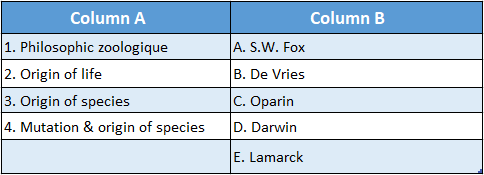
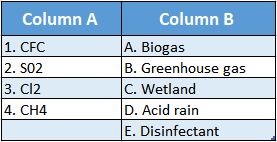
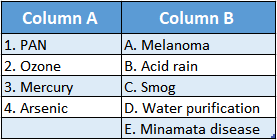
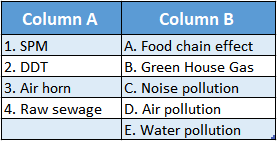
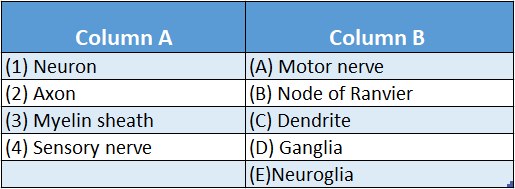
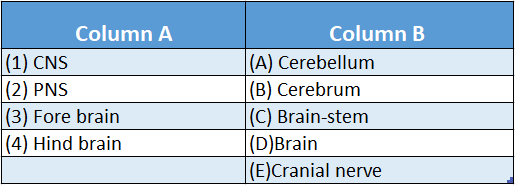
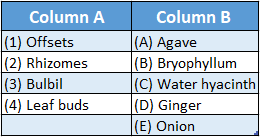
WBBSE Chapter 5 Environmental Pollution Match The Columns

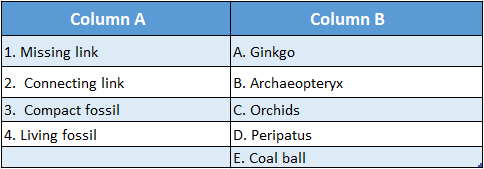
WBBSE Solutions For Class 10 Life Science Chapter 5 Environment Its Resources And Their Conservation Topic B Environmental match the columns
Answer: 1-B,2-D,3-E,4-A

WBBSE Solutions For Class 10 Life Science Chapter 5 Environment Its Resources And Their Conservation Topic B Environmental match the columns 3
Answer: 1-C,2-D,3-E,4-A

WBBSE Solutions For Class 10 Life Science Chapter 5 Environment Its Resources And Their Conservation Topic B Environmental match the columns 2
Answer: 1-D,2-A,3-D,4-E

WBBSE Chapter 5 Environmental Pollution Very Short Answer Type Questions

Question 1. Name two gases causing acid rain.
Answer: SO2, NO2.

Question 2. What type of pollution is associated with eutrophication?
Answer: Water.

Question 3. Name the gas having the highest global warming potential.
Answer: SF6¯

Question 4. What is the name given to pollution by algae?
Answer: Algal bloom.

Question 5. What is the name given to the increase in pollutants across the food chain?
Answer: Biomagnification.

Question 6. Name the most powerful anti-pollution act in India.
Answer: Environmental Pollution Act (EPA); 1986.

Question 7. State the level of sound at which pollution is caused.
Answer: 120 dB.

Control Measures Of Pollution Class 10

Question 8. Name two disinfectants used in water pollution.
Answer: Potassium permanganate, Chlorine.

Question 9. Give the full form of CNG.
Answer: Compressed Natural Gas.

Question 10. Which one is the most common indicator organism that represents polluted water?
Answer: E. coli

Question 11. Name the oxide of nitrogen acting as a greenhouse gas.
Answer: Nitrous oxide.

Question 12. Name the gas that brings about the depletion of oxygen from hemoglobin.
Answer: Carbon monoxide.

Question 13. What is the diameter of the respiratory particulate matter?
Answer: 2-5

Question 14. Among the following four terms, one includes the other three. Find out that term and write it:
PAH, Hydrocarbon pollutant, PBN, PAN.
Answer: Hydrocarbon pollutant.

Question 15. Give examples of two places that are categorized as silence zones in terms of noise levels.
Answer: Hospitals and educational institutions.

Question 16. A pair of related terms is given below. Based on the relationship in the first pair, write the suitable word in the gap of the second pair:
Answer: Cholera: Vibrio cholerae:: Typhoid: Salmonella typhi

Question 17. Choose the biodegradable pollutants from the list given below:
Answer: Radioactive waste, Sewage, DDT, Agricultural Waste

Question 18. What is the difference between bioaccumulation and biomagnification?
Answer: Bioaccumulation refers to the accumulation of a toxic chemical in the tissue of a particular organism.

Biomagnification refers to the increased concentration of a toxic chemical the higher an animal is on the food chain.

Control Measures Of Pollution Class 10

Question 19. Plants/animals from which of the following groups are most susceptible to biomagnification— primary producer, primary consumer, secondary consumers, or tertiary consumers?
Answer: Tertiary consumers

Question 20. Name two extremely toxic metals.
Answer: Cadmium and Arsenic.

WBBSE Chapter 5 Environmental Pollution Short Answer Type Questions With Answers

Question 1. Name the major air pollutants.
Answer:

The major air pollutants.

CO2, CO, SOx, NOx, and SPM

Question 2. How is the ozone hole formed?
Answer:

Formation of the ozone hole

The nascent chlorine liberated from industrial sources reacts with oxygen in the stratosphere to produce oxides of chlorine. This results in the prevention of ozone layer formation and thinning of the ozone layer causing ozone hole.

Question 3. What is the positive impact of the greenhouse effect?
Answer:

The positive impact of the greenhouse effect

The greenhouse effect in the world has created a suitable environment for the Earth to sustain life. Without naturally occurring greenhouse gases, the earth’s average temperature would be -18°C instead of the much warmer 15°C.

Thus the greenhouse effect keeps the earth warm enough to sustain life.

Question 4. Give examples (two each) of simple and complex biodegradable pollutants.
Answer:

Simple biodegradable pollutants: Domestic wastes, fecal matter

Complex biodegradable pollutants: Polymeric resins, synthetic persistent pesticides.

Question 5. What is photochemical smog?
Answer:

Photochemical smog

Water vapor, particulates, ozone, various hydrocarbons, and oxides of nitrogen react with each other in the presence of sunlight to create photochemical smog or oxidizing type of pollutants.

Radioactive waste, sewage, DDT, agricultural waste Sewage, and agricultural waste.

Causes And Effects Of Pollution Class 10

Question 6. What is eutrophication?
Answer:

Eutrophication

The addition of excess nutrients to a water body results in the overgrowth of algal forms causing an increase in BOD and killing of aquatic fauna including fish. This overgrowth of algae is known as eutrophication.

This prevents oxygen from getting into the water, making it hypoxic and creating a dead zone where no organisms can survive.

Question 7. What is the non-target effect?
Answer:

Non-target effect

The application of excess pesticide in a plant body results in its accumulation in the soil, which results in the killing of friendly organisms in the soil and a reduction in soil fertility, this is called the non-target effect.

In a paddy field, paddy pests may be the target organism but earthworms, rhizobium, etc are nontarget organisms. Indiscriminate use of pesticides kills target as well as non-target organisms.

Question 8. Explain BOD.
Answer:

BOD

The amount of biodegradable organics present in water is indirectly measured in terms of the requirement of oxygen in the microbial degradation process which is called BOD or Biological Oxygen Demand.

Polluted water contains biodegradable organics such as starch, fat, alcohol, esters, etc. Microbial degradation of these materials occurs through oxidation that lowers the dissolved oxygen level In water.

The higher the concentration of biodegradable organics In water, the less the concentration of dissolved oxygen In It.

Question 9. Mention the effects of acid rain. The damages of acid palpitation are as follows :
Answer:

The effects of acid rain

The corrosive action of the acid content in the rain damages buildings, steel, and stone structures.

Acid precipitation affects aquatic ecosystems, microbial communities, and mineral cycles.

Disturbs the soil chemistry. Low pH causes the release of toxic metals and trace elements which undergo biomagnification In living organisms.

An excessive amount of hydrogen ions adversely affects biological membranes, the electron transport system, and several pH-specific biochemical reactions.

Question 10. Briefly mention the effects of biomagnification. Effects of biomagnification:
Answer:

Impact On Human Health: 

Humans become more susceptible to cancers, liver & kidney failures, respiratory disorders, brain damage, and heart diseases due to mercury, cadmium, lead, cobalt, and other chemical poisoning.

For instance, diseases like hepatitis and cancer happen due to the consumption of seafood that is poisoned by mercury and PAHs.

Effect on reproduction & development of marine creatures:

Seabird eggs are laid with thinner shells than normal and can result in birds crushing their eggs instead of incubating them. Selenium and mercury destroy the reproductive organs of fish.

Disruption Of the Food Chain: 

Many sea creatures depend on the natural food chain for survival.

When chemicals and toxins are carried into soils, rivers, lakes, or oceans and taken up by various organisms, it disrupts the interconnected relationships within the food chain.

This happens when small animals ingest or plants absorb the toxic elements after which they are eaten by bigger animals, consequently affecting the entire natural food chain.

The creatures or plants are intoxicated with chemicals such as mercury, copper, chromium, cobalt, etc may be consumed by humans and top animals in the food chain leading to susceptibility to diseases, reproductive disorders, and even death.

Causes And Effects Of Pollution Class 10

Destruction Of Coral Reefs: 

Coral reefs are destroyed by cyanide which is used in leaching gold and in fishing. When destroyed, the survival of aquatic creatures is highly compromised.

WBBSE Chapter 5 Environmental Pollution Long Answer Type Questions

Question 1. Define pollution. What is anthropogenic pollution? Give examples of two greenhouse gases.
Answer:

Types Of Pollution

The common pollution problems that we have to face can be classified in three ways –

According to the component of the environment that is being polluted; for example-

  1. Air pollution,
  2. Water pollution and
  3. Land (soil) pollution.

According to the physical nature of the pollutant; for example-

  1. Gaseous pollution,
  2. Dust pollution,
  3. Noise pollution,
  4. Thermal pollution,
  5. Radioactive pollution etc.

According To Origin:

Pollution can be classified into two broad groups – natural and artificial or anthropogenic (manmade).

1. Natural pollutions are those which originate from natural processes e.g., forest fires, volcanic eruptions, dust storms, natural organic and inorganic decays, the release of microbes, pollens, spores, etc.

2. Artificial or anthropogenic pollution is that whthatriginate due to activities of man; for example industrial pollution, agricultural pollution, automobile pollution, domestic pollution, etc.

3. The anthropogenic polpollutione isajor problem because they are increasing day by day due to overpopulation.

Among the various man-made pollution problems, the largest ones are air pollution, water pollution, soil pollution, noise pollution, and radioactive pollution because these are very common (i.e., frequently occurring) and they produce deleterious effects on a vast population.

Air Pollution Definition

Any adverse change in the composition of the atmosphere that occurs due to the activities of man or some natural event and endangers human life is called air pollution or atmospheric pollution.

Causes And Effects Of Air Pollution

Causes-

Greenhouse Gases:

1. CO2, CH4/ water vapor, N2O, SF6, and CFC are liberated from different industrial sources and have different grades of global warming potential (GWP) when they are compared concerning CO2, which has a GWP of 1.

2. CO2, NO2, SO2, and hydrocarbons from automobile and industrial sources.

3. SPM (Suspended Particulate Matter), which are of two types SPM10 (diameter of 10μ and SPM2.5μ (diameter of 2.5μ liberated from automobile exhaust, building dust, etc.

They may be fibrous material of plant or animal origin, fly ash particles, oil particles, or fungal spores.

Effects-

1. Green House Effect:

GHGs absorb shorter UV rays of the sun and also those which are reflected from the Earth’s surface causing elevation of global temperature,

Global Warming:

It results in the melting of ice and snow in the permanent glaciers.

The water level in the ocean rises causing infiltration of saline water, flooding of low-lying areas, extreme reduction in agricultural productivity, and unprecedented changes in the wind and global precipitation pattern,

Effect On Biomes:

Due to the shifting of climatic belts as a consequence of global warming, vegetation would gradually also shift in the same direction to stay in favorable climatic conditions.

Those species which will be unable to do so shall die. Thus there will be losses of genetic resources on a large scale. All important biomes shall be affected.

2. Acid rain: These gases get dissolved in rainwater producing different types of acids like Carbonic acid (H2C03), Nitrous acid (HNO2) or Nitric acid (HN03), Sulphurous acid (H2SO3) or Sulphuric acid (H2SO4), etc.

The acid-laden aerosols come downwards as acid precipitation or acid rain. Acid rain is corrosive affects aquatic ecosystems, causes disbalance to mineral cycles, kills soil microbes by changing their pH, and damages monuments, plants, etc.

Oxides of nitrogen are responsible for the formation of peroxyacetyl nitrate (PAN) and peroxybenzoyl nitrate (PBN) which cause acute irritation of eyes and respiratory problems.

NO2 may cause pulmonary edema besides being an important constituent of photochemical smog.

NO is responsible for the depletion of the stratospheric ozone layer.

Sulphar retards photosynthesis and inhibits carbon assimilation. Plants exposed to SO2 for long durations suffer from necrosis and interveinal chlorosis.

SO2 is capable of causing the thickening of the mucous layer of the trachea, bronchial constriction, and hypertrophy of mucous glands.

Hydrocarbons in excess cause necrosis of leaves, chlorosis of floral buds, irritation of mucous membranes, and bronchial constriction. Many hydrocarbons are known to have carcinogenic properties.

3. SPM reduces visibility and prevents the sun rays from entering the atmosphere reducing photosynthetic productivity,

They may also cause lung diseases like chronic obstructive pulmonary disease (COPD) and other respiratory distress like apnoea, dyspnoea, or difficulty in breathing.

It may damage the surfactant in the lining of alveolate and induce respiratory distress syndrome,

SPM is also capable of causing various types of allergies.

Types Of Pollution Class 10

Question 2. List out the major causes of air pollution. Mention two source control methods to check air pollution.
Answer:

Air Pollution Definition

Any adverse change in the composition of the atmosphere that occurs due to the activities of man or some natural event and endangers human life is called air pollution or atmospheric pollution.

Causes And Effects Of Air Pollution

Causes-

Greenhouse Gases:

1. CO2, water vapor, N2O, SF6, and CFC are liberated from different industrial sources and have different grades of global warming potential (GWP) when they are compared wconcerningCO2, which has a GWP of 1.

2. CO2, NO2, SO2, and hydrocarbons from automobile and industrial sources.

3. SPM (Suspended Particulate Matter), which are of two types SPM10 (diameter of 10μ and SPM2.5μ (diameter of 2.5μ liberated from automobile exhaust, building dust, etc.

They may be fibrous material of plant or animal origin, fly ash particles, oil particles, or fungal spores.

Effects-

1. Green House Effect:

GHGs absorb shorter UV rays of the sun and also those which are reflected from the Earth’s surface causing elevation of global temperature,

Global Warming:

It results in the melting of ice and snow in the permanent glaciers.

The water level in the ocean rises causing infiltration of saline water, flooding of low-lying areas, extreme reduction in agricultural productivity, and unprecedented changes in the wind and global precipitation pattern,

Effect On Biomes:

Due to the shifting of climatic belts as a consequence of global warming, vegetation would gradually also shift in the same direction to stay in favorable climatic conditions.

Those species which will be unable to do so shall die. Thus there will be losses of genetic resources on a large scale. All important biomes shall be affected.

2. Acid rain: These gases get dissolved in rainwater producing different types of acids like Carbonic acid (H2C03), Nitrous acid (HNO2) or Nitric acid (HN03), Sulphurous acid (H2SO3) or Sulphuric acid (H2SO4), etc.

The acid-laden aerosols come downwards as acid precipitation or acid rain. Acid rain is corrosive affects aquatic ecosystems, causes disbalance to mineral cycles, kills soil microbes by changing their pH, and damages monuments, plants, etc.

Oxides of nitrogen are responsible for the formation of peroxyacetyl nitrate (PAN) and peroxybenzoyl nitrate (PBN) which cause acute irritation of eyes and respiratory problems.

NO2 may cause pulmonary edema besides being an important constituent of photochemical smog.

NO is responsible for the depletion of the stratospheric ozone layer.

Sulphar retards photosynthesis and inhibits carbon assimilation. Plants exposed to SO2 for long durations suffer from necrosis and interveinal chlorosis.

SO2 is capable of causing the thickening of the mucous layer of the trachea, bronchial constriction, and hypertrophy of mucous glands.

Hydrocarbons in excess cause necrosis of leaves, chlorosis of floral buds, irritation of mucous membranes, and bronchial constriction. Many hydrocarbons are known to have carcinogenic properties.

3. SPM reduces visibility and prevents the sun rays from entering the atmosphere reducing photosynthetic productivity,

They may also cause lung diseases like chronic obstructive pulmonary disease (COPD) and other respiratory distress like apnoea, dyspnoea, or difficulty in breathing.

It may damage the surfactant in the lining of alveolate and induce respiratory distress syndrome,

SPM is also capable of causing various types of allergies

Question 3. What are the effects of water pollution? Does noise pollution affect animals? Explain. 
Answer:

Water pollution Definition

Water pollution is the phenomenon in which water is rendered unsuitable for consumption by man and other animals or habitation of aquatic plants and animals due to the mixing of any poisonous material or pollutant with it.

Causes And Effects Of Water Pollution

Causes-

1. Agricultural Runoff:

It includes pesticides, herbicides, phosphate and nitrate fertilizer, and other mixed organic pollutants including different phosphates and nitrates that are washed down by either rainwater or Irrigation water to nearby low-lying lakes and other water bodies.

2. Sewage disposal:

The sewage water contains some pathogens like Vibrio cholera, Micrococcus, Salmonella type, etc.

3. Industrial discharge and oil contamination

Effects-

The deposition of excess nutrients in the water bodies results in eutrophication causing an increase in BOD (Biochemical Oxygen Demand) and algal bloom.

It also increases COD, which oxidizes different chemical compounds and thereby reduces the DO (dissolved oxygen) killing aquatic life including fish.

The increase in sewage level causes contamination of water by different pathogenic organisms that cause cholera, gastroenteritis, and typhoid. The problem becomes more acute due to poor sanitation.

  1. Leads to an abundance of microbes.
  2. Creates a deficit of oxygen in aquatic systems.
  3. Algal blooms are created.d
  4. Causes an increase in toxic trace elements.

Reduction of growth:

Pesticides have some direct harmful effects on plants including poor root hair development, shoot yellow, ng, and reduced plant growth.

Effect On Animals:

Reduction in biodiversity:

Pesticides inflict extremely widespread damage to biota.

Reduction In Animal Feed:

Widespread application of pesticides can eliminate food sources that certain types of animals need, causing the animals to relocate, change their diet, or starve.

Food chain effect:

Poisoning from pesticides can travel up the food chain; for example, birds can be harmed when they eat insects and worms that have consumed pesticides.

The killing of earthworms:

The earthworms are killed, which reduces soil fertility. The pesticide also can accumulate in these organisms, which gets into the body of the predators.

Killing Of Birds:

In England, the use of pesticides in gardens and farmland has seen a reduction in the number of Common Chaffinches. About 72 million birds are killed by pesticides in the United States each year.

Bald eagles are common examples of non-target organisms that are impacted by pesticide use. Rachel Carson’s landmark book Silent Spring dealt with the loss of bird species due to the bioaccumulation of pesticides in their tissues.

Thinning of eggshell:

DDT-induced eggshell thinning has especially affected European and North American bird populations.

The herbicide paraquat (dipyridylium), when sprayed onto bird eggs, causes growth abnormalities in embryos and reduces the number of chicks that hatch successfully.

Additionally, it causes an increase in the amount of pesticides through the phenomenon called biomagnification.

Biomagnification simply denotes enhancement in the concentration of a particular substance (such as a toxic chemical) in the tissues of tolerant organisms at successively higher levels along the food chain.

By this method, a toxic substance enters the food chain at a very low concentration and as it moves up into the consumers of the higher trophic level, its concentration increases, which might induce lethality in these animals.


WBBSE Solutions For Class 10 Life Science Chapter 5 Environment Its Resources And Their Conservation Topic B Environmental Pollution barker

Types Of Pollution Class 10

At each level of the food chain, more than half the biomass is lost through excretion, respiration, and decay; but most of the toxic substances (such as DDT) are retained since DDT is metabolized and excreted much more slowly than other nutrients.

Thus DDT accumulates in the bodies (especially in fat) and as a result, becomes highly concentrated in carnivores. This is why the hazard of DDT to nontarget animals is particularly acute for those species living at the top of food chains.

This phenomenon can operate both in terrestrial as well as aquatic ecosystems.

Barker in 1958 showed that the concentration of DDT in the soil below elm trees is 10 ppm, and the earthworm contained 86 ppm of DDT. The Robin bird died after consuming 11-12 such earthworms and the liver of the dead bird showed 744 ppm of DDT, while their brain showed 250 ppm of DDT.

Woodwell (1967) showed 0.002 ppm of DDT in the body of zooplanktons, it increased to 2.07 ppm in the body of needle fishes and 75.5 ppm in the body of fish-eating gulls.

Thus, the adverse effect of DDT is felt in the body of higher consumers by the phenomenon of biomagnification.

Effect On Human Beings:

Similar biomagnification can be observed in the case of heavy metals like mercury causing Minamata disease, and lead causing anemia in mammals.

Humans become more susceptible to cancers, liver and kidney failure, respiratory disorders, birth defects in pregnant women, and Brain damage and heart diseases as a result of mercury, cadmium, lead, cobalt, chromium, and other chemical poisonings.

For instance, diseases like hepatitis and cancer have been attributed to consuming seafood that has Been poisoned by mercury and aromatic hydrocarbons.

Question 4. What is soil pollution? Discuss its effects on animals in brief.
Answer:

Soil Pollution

  1. Reduction of synthetic pesticides.
  2. Using organic manure.
  3. Use of biofertilizer.
  4. Adoption of biological control.
  5. Use of genetically modified crops that can resist insect pests, like Bt cotton

Question 5. Mention two causes of noise pollution. How does it affect human beings? What is acoustic zoning?
Answer:

Noise Pollution  Definition

An increase of noise i.e., unwanted and loud sound which is displeasing to the ear, in the surroundings is called noise pollution or sound pollution.

Control of Noise Pollution

Control At Receiver’s End:

For people working in noisy installations, ear-protection aids like earplugs, ear-muffs, noise helmets, headphones, etc. must be provided to reduce occupational exposure.

Suppression of Noise at Source:

This is possible if working methods are improved by:

Designing, fabricating, and using quieter machines to replace the noisy ones.

Proper lubrication and better maintenance of machines.

Installing noisy machines in soundproof chambers.

Covering noise-producing machine parts with sound-absorbing materials to check noise production.

Reducing the noise produced by a vibrating machine by vibration damping i.e. making a layer of damping material (rubber, neoprene, cork, or plastic) beneath the machine.

Using silencers to control noise from automobiles, ducts, exhausts, etc., and conveyor systems with ends opening into the atmosphere.

Use glass wool or mineral wool covered with a sheet of perforated metal for mechanical protection.

Acoustic Zoning:

Increased distance between source and receiver by the zoning of noisy industrial areas, bus terminals, railway stations, aerodromes, etc.

Being away from the residential areas would go a long way in minimizing noise pollution. There should be silence zones near residential areas, educational institutions, and above all, hospitals.

The permissible noise levels in different types of localities are:

WBBSE Solutions For Class 10 Life Science Chapter 5 Environment Its Resources And Their Conservation Topic B Environmental Pollution locality

Sound Insulation at Construction Stages:

  1. Sound travels through the cracks that get left between the door and the wall. To reduce noise, this space (jamb frame gap) should be packed with sound-absorbing material.
  2. Sound insulation can be done by constructing windows with double or triple panes of glass and filling the gaps with sound-absorbing materials.
  3. Acoustical tiles, hair felt, perforated plywood, etc., can be fixed on walls, ceilings, floors, etc., to reduce noise (especially for soundproof recording rooms, etc.)

Planting of Trees:

Planting green trees and shrubs along roads, hospitals, educational institutions, etc., helps in noise reduction to a considerable extent.

Legislative Measures:

Strict legislative measures need to be enforced to curb the menace of noise pollution.

Some of these measures could be:

  1. Minimum use of loudspeakers and amplifiers especially near silence zones.
  2. Banning pressure horns in automobiles.
  3. Framing and implementation of a strict Noise Pollution Act.

WBBSE Chapter 5 Fill In The Blanks

Question 1. An inflammable greenhouse gas produced from paddy fields is______________.
Answer: Methane (CH4).

Question 2. The fine droplets of smoke, ashes, dust, pollen grains, etc, are suspended in the air, collectively called which causes various lung diseases.
Answer: Suspended Particulate Matters (SPM).

WBBSE Chapter 5 Write True Or False

Question 1. A degradable pollutant is responsible for biomagnification.
Answer: False

Question 2. Acid rain is caused by SO2 and NO2 gases formed due to air pollution.
Answer: True

WBBSE Chapter 5 Very Short Answer Type Questions

Question 1. Among the following four terms, one includes the other three. Find it out and write it: Pesticides used in agriculture, Typhoid, Water pollution, liquid wastes from factories.
Answer: Water pollution.

WBBSE Solutions For Class 10 Life Science Chapter 5 Nitrogen Cycle

WBBSE Chapter 5 Environment Its Resources And Their Conservation Nitrogen Cycle

Introduction to Nitrogen Cycle:

Nitrogen was originally formed in the hearts of stars through the process of nuclear fusion.

When ancient stars exploded, they flung nitrogen-containing gases across the universe. When the earth was formed, nitrogen was a main ingredient in its atmosphere.

The present-day earth’s atmosphere is composed of about 78% nitrogen, about 21% oxygen, and about 1% other gases.

This is an ideal balance because too much Oxygen can be toxic to cells as well as being highly flammable.

Nitrogen, on the other hand, is inert and harmless in its gaseous form.

WBBSE Solutions For Class 10 Life Science Chapter 5 Nitrogen Cycle

Nitrogen is one of the primary nutrients critical for the survival of all living organisms since it is a necessary component of many biomolecules such as proteins, DNA, and chlorophyll.

Although nitrogen is very abundant in the atmosphere as dinitrogen gas (N2), it is largely inaccessible in this form to most organisms, making nitrogen a scarce resource and often limiting primary productivity in many ecosystems.

This is because of the strong triple bond between the N atoms in N2 molecules (NN) that makes it relatively inert, whereas organisms need reactive nitrogen to be able to incorporate it into cells.

Read and Learn More WBBSE Solutions For Class 10 Life Science

For plants and animals to be able to use nitrogen, N2 gas must first be converted to a more chemically available form such as ammonium (NH4+), nitrate (NO3), or organic nitrogen (such as urea).

Thus, nitrogen undergoes many different transformations in the ecosystem, changing from one form to another as organisms use it for growth and in some cases, energy.

The movement of nitrogen between the atmosphere, biosphere, and geosphere in different forms is called the nitrogen cycle.

As a major biogeochemical cycle, the nitrogen cycle consists of various reservoirs of nitrogen and processes by which those reservoirs exchange nitrogen.

Nitrogen Cycle Class 10

The nitrogen cycle is the biogeochemical cycle by which nitrogen is converted into multiple chemical forms as it circulates among the atmosphere, and terrestrial and marine ecosystems keeping the balance between the gaseous nitrogen and its form that is useful in biological processes.

WBBSE Notes For Class 10 Geography And EnvironmentWBBSE Notes For Class 10 History And Environment
WBBSE Solutions For Class 10 Life ScienceWBBSE Class 10 Life Science Multiple Choice Questions
WBBSE Solutions for Class 10 MathsWBBSE Class 10 Maths Multiple Choice Questions
WBBSE Notes For Class 10 Physical Science And Environment


The different stages of the nitrogen cycle, which are not altogether sequential, fall into the following classifications:

1. Nitrogen fixation
2. Nitrogen assimilation (ie. nitrogen uptake through organismal growth)
3. Ammonification (ie., nitrogen mineralization through decay)
4. Nitrification
5. Denitrification.

Illustrates the above stages simply:

WBBSE Solutions For Class 10 Life Science Chapter 5 Environment Its Resources And Their Conservation Topic A Nitrogen Cycle atmospheric

Microorganisms, particularly bacteria, play major roles in all of the principal nitrogen transformations.

Because these processes are microbially mediated, or controlled by microorganisms, these nitrogen transformations tend to occur faster than geological processes like plate motion which is a part of the carbon cycle.

The rates are affected by environmental factors that influence microbial activity, such as temperature, moisture, and resource availability.

The involvement of prokaryotes in the nitrogen cycle can be shown by a simple.

WBBSE Solutions For Class 10 Life Science Chapter 5 Environment Its Resources And Their Conservation Topic A Nitrogen Cycle Nitrogen cycle

WBBSE Chapter 5 Nitrogen Cycle Nitrogen Fixation

Any natural or industrial process that involves the conversion of atmospheric nitrogen to ammonia and water-soluble nitrites or nitrates which is metabolized by most organisms is referred to as nitrogen fixation.

It can be of three types:

1. Natural or Atmospheric
2. Biological
3. Industrial

About 10% of natural nitrogen fixation takes place by physiochemical methods and 90% by biological methods.

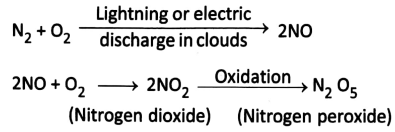
Natural or Atmospheric nitrogen fixation: The fixation of atmospheric nitrogen is a very energy-intensive endeavor.

Under the influence of lightning and thunder, N2 and O2 in the air react to form nitric oxide (NO).

The nitric oxides are again oxidized with oxygen to form different nitrogen oxides.


WBBSE Solutions For Class 10 Life Science Chapter 5 Environment Its Resources And Their Conservation Topic A Nitrogen


During the rains, NO, combines with rainwater to form nitrous acid (HNO2) and nitric acid (HNO3). The acids fall on the soil along with rain water and react with the alkaline radicals to form water-soluble nitrates \(\left(\mathrm{NO}_3{ }^{-}\right)\) and nitrites \(\left(\mathrm{NO}_2^{-}\right)\)

\(2 \mathrm{NO}_2+\mathrm{H}_2 \mathrm{O} \longrightarrow \mathrm{HNO}_2+\mathrm{HNO}_3
(Rainwater)\) \(\mathrm{HNO}_3+\mathrm{Ca} \text { or K Salts } \longrightarrow \text { Ca or K nitrates }
(In soil) \quad (Soluble in water)
\)

The nitrates are soluble in water and as a result, are directly absorbed by the roots of the plants.

Biological nitrogen fixation:

The conversion of molecular nitrogen in the atmosphere into organic nitrogenous compounds through the agency of some living organisms like bacteria and cyanobacteria with the help of an enzyme called nitrogenase is called biological nitrogen fixation.

The action of nitrogenase requires cofactors like iron and molybdenum. Nitrogenase is destroyed in the presence of Oxygen, so these organisms are either anaerobic in nature or they remove oxygen from the site of nitrogenase.

Nitrogen Cycle Class 10

The process of nitrogen fixation involves the conversion of nitrogen to ammonia by gradual reduction. This ammonia is directly used by the organisms to produce complex proteins.

Nitrogen fixers:

Only certain bacteria, some blue-green algae, and leguminous plants Nitrogen fixers:

Only certain bacteria, etc can fix atmospheric nitrogen.

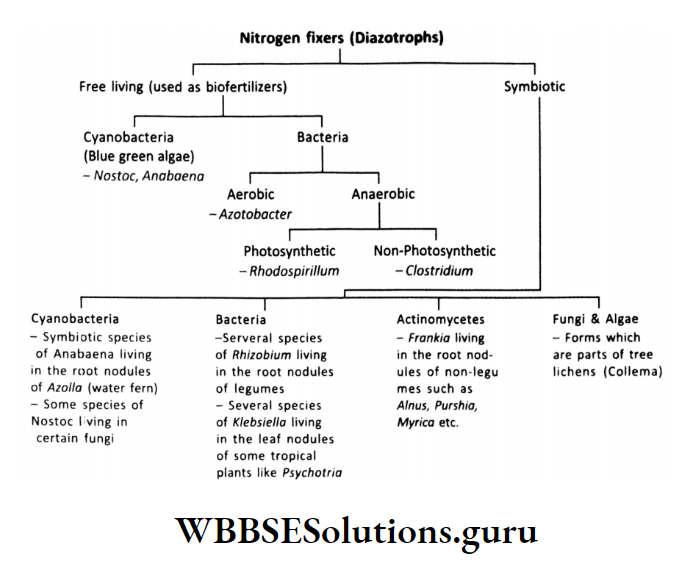
The different types of nitrogen-fixing organisms are represented in the table below:


WBBSE Solutions For Class 10 Life Science Chapter 5 Environment Its Resources And Their Conservation Topic A Nitrogen Cycle Nitrogen fixes diazotrophs

Mechanism of nonsymbiotic biological N2-fixation:

It requires the presence of hydrogenase and nitrogenase enzyme systems, ferredoxin (a non-heme iron protein) as an electron carrier, pyruvate (an electron donor & energy source), and cofactors like Thiamine Pyro Phosphate, coenzyme-A, inorganic phosphate, and Mg+.

The breakdown of pyruvate produces acetyl phosphate and electrons.

Ferridoxin accepts electrons and gets reduced. [Mechanism of Symbiotic Biological Nitrogen Fixation:]

Acetyl phosphate reacts with ADP to generate ATP.

In the presence of reduced ferredoxin and ATP, nitrogen is absorbed on the surface of the enzyme nitrogenase.

Electrons are now transferred to N2.

Reduction of nitrogen takes place and the enzyme is set free only when nitrogen has been completely reduced to ammonia.

Mechanism Of Symbiotic Biological Nitrogen Fixation:

Symbiotic nitrogen fixation occurs in plants that harbor nitrogen-fixing bacteria within their tissues. The best-studied example is the association between legumes and bacteria in the genus Rhizobium.

Rhizobia are Gram-negative bacilli that live freely in the soil (especially where legumes have been grown). However, they cannot fix atmospheric nitrogen until they have invaded the roots of the appropriate legume.

The Infection Thread

The interaction between a particular strain of rhizobia and the “appropriate” legume is mediated by the “Nod factor” secreted by the rhizobia and transmembrane receptors on the cells of the root hairs of the legume.

Different strains of rhizobia produce different Nod factors, and different legumes produce receptors of different specificity.

If the combination is correct, the bacteria enter an epithelial cell of the root and then migrate into the cortex. Their path runs within an intracellular channel that grows through one cortex cell after another.

This infection thread is constructed by the root cells, not the bacteria, and is formed only in response to the infection.

When the infection thread reaches a cell deep in the cortex, it bursts and the rhizobia are engulfed by endocytosis into membrane-enclosed symbiosomes within the cytoplasm.

At this time the cell goes through several rounds of mitosis without cytokinesis so the cell becomes polyploid. The cortex cells then begin to divide rapidly forming a nodule.

This response is driven by the translocation of cytokinins from epidermal cells to the cells of the cortex.

The rhizobia also go through a period of rapid multiplication within the nodule cells. Then they begin to change shape and lose their motility.

The bacteroids, as they are now called, may almost fill the cell. Only now does nitrogen fixation begin.

Root nodules are not simply structureless masses of cells. Each becomes connected by the xylem and phloem to the vascular system of the plant.

Thus the development of nodules, while dependent on rhizobia, is a well-coordinated developmental process of the plant. In addition, the legume host supplies one critical component of nitrogenase —the key enzyme for fixing nitrogen.

The bacteroids need oxygen to make their ATP (by cellular respiration). However, nitrogenase is strongly inhibited by oxygen. Nodules are filled with hemoglobin.

So much of it, in fact, that a freshly-cut nodule is red.

The hemoglobin of the legume (called leghaemoglobin), like the hemoglobin of vertebrates, probably supplies just the right concentration of oxygen to the bacteroids to satisfy their conflicting requirements.

Wbbse Class 10 Life Science Nitrogen Cycle

The metal molybdenum is a critical component of nitrogenase and so is absolutely essential for nitrogen fixation. The whole process of nitrogen fixation is controlled by nef genes.

Because of the specificity of the interaction between the Nod factor and the receptor on the legume, some strains of rhizobia will infect only peas, some only clover, some only alfalfa, etc.

The treating of legume seeds with the proper strain of rhizobia is a routine agricultural practice.

Industrial Nitrogen Fixation:

The industrial production of ammonia is carried out by mixing nitrogen and hydrogen at high temperatures and pressure (i.e. about 150-250 millibar and 400- 500°C).

The process known as the Haber-Bosch process, requires an iron catalyst (magnetite or Fe304) which removes oxygen from the environment.

\(\mathrm{N}_2+3 \mathrm{H}_2 \rightleftharpoons 2 \mathrm{NH}_3\)

WBBSE Chapter 5 Nitrogen Cycle Nitrogen Assimilation

Nitrogen assimilation is the formation of organic nitrogen compounds like amino acids from inorganic nitrogen compounds present in the environment.

Plants absorb nitrogen from the soil in the form of nitrate (NO3+) and ammonium (NH4+). In aerobic soils, nitrate is usually the predominant form of available nitrogen that is absorbed.

Ammonia can predominate in grasslands and in flooded, anaerobic soils. Both ammonium and nitrate are taken up by plants by using several transporters.

Nitrogen is transported from the root to the shoot via the xylem in the form of nitrate, dissolved ammonia, and amino acids.

Nitrate is reduced to nitrite by the enzyme nitrate reductase and nitrite is then reduced to ammonia in a series of two-electron transfers by nitrite reductase.

Ammonia (both absorbed and synthesized) is incorporated into amino acids via the GS- GOGAT pathway.

\(\mathrm{NO}_3^{-} \underset{2 e^{-}}{\longrightarrow} \mathrm{NO}_2^{-} \underset{6 e^{-}}{\longrightarrow} \mathrm{NH}_3\)

WBBSE Chapter 5 Nitrogen Cycle Ammonification

The process is also called nitrogen mineralization, which involves the conversion of complex organic nitrogenous compounds present in the dead bodies of plants and animals to ammonium ions.

It is essentially carried out by an array of bacteria present in the soil like Bacillus ramosus, Bacillus vulgaris, Bacillus my codes, etc. in the presence of enzymes like GS, GOGAT, GDH, etc.

The ammonia released in the soil changes the soil pH and reduces the toxic acidophilic bacteria. This ammonia becomes the substrate for the nitrifying bacteria, which ultimately increases soil fertility.

Amino acid + Oxygen→ Keto acid + Ammonia

Wbbse Class 10 Life Science Nitrogen Cycle

WBBSE Chapter 5 Nitrogen Cycle Nitrification

The stagewise microbial conversion of ammonium ion to nitrite and then nitrite to nitrate is called nitrification.
The process occurs in two steps.

The first step is Nitritation, carried out by Nitrosomonas. \(\mathrm{NH}_3+\mathrm{O}_2 \rightarrow \mathrm{NO}_2+\mathrm{H}^{+}+\mathrm{H}_2 \mathrm{O}\)

The second step is called Nitratation, carried out by Nitrobacter. \(\mathrm{NO}_2+\mathrm{O}_2 \rightarrow \mathrm{NO}_3\)

Some soil conditions controlling nitrification rates are:

  1. Substrate availability (ie., presence of NH4+)
  2. Availability of 02 (c) Soil drainage
  3. Soil pH
  4. Soil temperature

WBBSE Chapter 5 Nitrogen Cycle Denitrification

The process involves the reduction of soil nitrate to nitrogen gas by bacteria like Bacillus denitrificans, Thiobacillus denitrificans, Paracoccus denitrificans, Micrococcus, Thiobacillus thiolates, Pseudomonas, etc.

Denitrifying microbes require a very low oxygen concentration as well as organic C for energy. More than one enzymatic pathway has been identified in the reduction process.

The denitrification process may generate a series of oxides of nitrogen, which also includes N2O, which is a greenhouse gas and may cause global warming.

\(2 \mathrm{NO}_3^{-} \rightarrow 2 \mathrm{NO}_2 \rightarrow 2 \mathrm{NO} \rightarrow \mathrm{N}_2 \mathrm{O} \rightarrow \mathrm{N}_2\)

Steps Of Nitrogen Cycle Class 10

Direct reduction from nitrate to ammonium compounds is possible, which is also called dissimilatory nitrate reduction (DNRA), which is carried out by bacteria like Alcaligenes, Bradyrhizobium, etc.

Some genes known in microorganisms that denitrify include nir, nos, etc.

WBBSE Chapter 5 Nitrogen Cycle Diagrammatic Sketch Of The Nitrogen Cycle


WBBSE Solutions For Class 10 Life Science Chapter 5 Environment Its Resources And Their Conservation Topic A Nitrogen Cycle Diagrammatic Sketch Of The Nitrogen Cycle

WBBSE Chapter 5 Nitrogen Cycle Significance Of The Nitrogen Cycle

There are several importance of the nitrogen cycle which are mentioned below:

The nitrogen cycle brings in the inert nitrogen from the air into the biochemical process in plants and then to animals.

Plants need nitrogen to synthesize chlorophyll and so the nitrogen cycle is absolutely essential for them.

During ammonification, the bacteria help degrade decomposing animal and plant matter. This helps in naturally cleaning up the environment.

Due to the nitrogen cycle, nitrates and nitrites are released into the soil which helps in enriching the soil with nutrients needed for cultivation.

Animals obtain nitrogenous compounds from plants. Nitrogen is needed as an integral part of cell composition. It is due to the nitrogen cycle that animals are also able to utilize the nitrogen present in the air.

WBBSE Chapter 5 Nitrogen Cycle Human Activities And Nitrogen Cycle

Human activities have greatly influenced the nitrogen cycle. The increase in the global population has necessitated an increase in the production of food.

This is mainly done by the addition of nitrogen-enriched fertilizer including urea in the soil, which has resulted in the liberation of more nitrogenous compounds in nature. This has affected the global ecosystem in the following ways:

The increased generation of nitrous oxide (N2O) results in global warming and increased melting of permafrost causing elevation of water levels in the sea and ocean.

Elevation in the level of NO and NO2 due to the burning of fossil fuel results in acid rain, which damages the leaf surface reducing the photosynthetic productivity, reducing soil pH and fertility of the soil, and damaging buildings and monuments.

This increases the population of acidophilic bacteria, which may cause pathogenicity in animals including human beings.

Steps Of Nitrogen Cycle Class 10

The reduction in the pH of water bodies including streams and lakes and the discharge of agricultural runoff containing excess nitrates cause the destruction of aquatic fauna including fish.

The acidic pH of water damages the pipeline and also the drainage system.

WBBSE Chapter 5 Nitrogen Cycle Fill In The Blanks

Question 1. The percentage of Nitrogen in the atmosphere is____________________
Answer: 78%

Question 2. The bio-geochemical cycle include oxygen, carbon and____________________ .
Answer: Nitrogen

Question 3. The protein sub units are called____________________ .
Answer: Amino acid

Question 4. Nostoc is a____________________ that fixes nitrogen.
Answer: Cyanobacteria

Question 5. The percentage of nitrogen in protein is____________________ .
Answer: 16%

Question 6.____________________ is synthesized during lightning.
Answer: No

Nitrogen Cycle Class 10 MCQs

Question 7. Ammonia to nitrate conversion is called____________________.
Answer: Nitrification

Question 8. NO to NO2 conversion occurs by____________________ .
Answer: Oxidation

Question 9. Leg-haemoglobin transports____________________ .
Answer: Oxygen

Question 10. ____________________ causes ammonification.
Answer: Bacillus mycoides

Question 11. HN03 reacts with calcium of rock to produce____________________ .
Answer: calcium nitrate

Question 12. During acid rain, the common acids formed are sulfurous and ____________________acid.
Answer: Nitrous

Question 13. The Alnus nodule contains____________________ .
Answer: Frankia

Question 14. Nitrogen is____________________ to ammonia during .
Answer: Reduced Nitrogen fixation

Question 15. ____________________ is a denitrifying bacteria.
Answer: Pseudomonas

Question 16. The smog is created by which forms ____________________.
Answer: NO2 Pan (Peroxy Acettl Nitrate)

WBBSE Chapter 5 Nitrogen Cycle Match The Column

WBBSE Solutions For Class 10 Life Science Chapter 5 Environment Its Resources And Their Conservation Topic A Nitrogen Cycle match the column
Answer: 1-C,2-D,3-A,4-B

WBBSE Solutions For Class 10 Life Science Chapter 5 Environment Its Resources And Their Conservation Topic A Nitrogen Cycle match the column2
Answer: 1-C,2-D,3-A,4-B

WBBSE Chapter 5 Nitrogen Cycle Write True Or False

Question 1. Nitrogen is directly absorbed from nature by higher organisms.
Answer: False

Question 2. The plant absorbs nitrate from the soil.
Answer: True

Question 3. Pseudomonas helps in nitrification.
Answer: False

Question 4. Fertilizer contains N, P, and K.
Answer: True

Question 5. Protoplasm contains inorganic nitrogen.
Answer: False

Question 6. Bacillus ramosus is a nitrifying bacteria.
Answer: False

Question 7. Anabaena is a nitrogen-fixing bacteria.
Answer: False

Question 8. Thiobacillus is a denitrifying bacteria.
Answer: True

Nitrogen Cycle Class 10 MCQs

Question 9. The atmosphere contains 78% nitrogen
Answer: True

Question 10. Nitrogen dioxide is a greenhouse gas.
Answer: False

Question 11. Azotobacter is a free-living nitrogen-fixing bacteria.
Answer: True

Question 12. Oxygen is a poison for nitrogenase enzymes.
Answer: True

WBBSE Chapter 5 Nitrogen Cycle Very Short Answer Type Questions

Question 1. Name endophytic cyanobacteria.
Answer: Anabaena azollae.

Question 2. Name two free-living nitrogen-fixing bacteria.
Answer: Azotobacter and Clostridium.

Question 3. Which bacteria convert Ammonia to nitrite?
Answer: Nitros monas.

Question 4. Name the most important compound containing nitrogen in the cytosol.
Answer: Amino acid.

Question 5. Name the enzyme that fixes atmospheric nitrogen.
Answer: Nitrogenase.

Question 6. Name the red-colored pigment present in the nodule of the leguminous plant.
Answer: Leg-haemoglobin (Lb).

Question 7. What amount of ATP is needed to fix one molecule of N2?
Answer: 16 ATP.

Question 8. What is the name of a nitrogen-fixing gene?
Answer: if gene.

Question 9. Name two gram-ve nitrogen-fixing bacteria.
Answer: Klebsiella and Rhizobium.

Question 10. Name the co-factor for nitrogenase.
Answer: Fe and Mo.

Nitrogen Cycle Class 10 MCQs

Question 11. What are diazotrophs?
Answer: The nitrogen-fixing bacteria and archaea are together called diazotrophs.

Question 12. State the equation for biological nitrogen fixation.
Answer: \(\mathrm{N}_2+8 \mathrm{H}^{+}+8 \mathrm{e} \rightarrow 2 \mathrm{NH}_3+\mathrm{H}_2\)

Question 13. Name a marine cyanobacterium fixing nitrogen.
Answer: Trichodesmium.

Question 14. Name 2 nitrogen-fixing lichen.
Answer: isobaric and Peltigera.

Question 15. Name 2 plants showing actinorhiza.
Answer: Ain us sp and Myrica sp.

Question 16. A pair of related terms is given below. Based on the relationship in the first pair, write the suitable word in the gap of the second pair.
Answer: Rhizobium: root nodule:: Klebsiella: leaf nodules

Steps Of Nitrogen Cycle Class 10

Question 17. Which one is the most predominant method of nitrogen fixation?
Answer: Biological nitrogen fixation

Question 18. Give examples (one each) of legumes that are poor fixers and good fixers of nitrogen.
Answer: Poor fixer—Common beans Good fixer—Soybeans

WBBSE Chapter 5 Nitrogen Cycle Short Answer Type Questions

Question 1. What is the nitrogen cycle?
Answer:

Nitrogen cycle

The nitrogen cycle is the biogeochemical cycle by which nitrogen is converted into multiple chemical forms as it circulates among the atmosphere, and terrestrial and marine ecosystems keeping the balance between the gaseous nitrogen and its form that is useful in biological processes.

Question 2. What is ammonification?
Answer:

Ammonification

Ammonification, also called nitrogen mineralization, involves the conversion of complex organic nitrogenous compounds present in the dead bodies of plants and animals to ammonium ions by an array of bacteria present in soil like Bacillus ramosus, Bacillus vulgaris, etc.

Amino acid + Oxygen→ Ketoacid + Ammonia

Nitrogen Cycle Diagram Class 10

Question 3. What is nitrification?
Answer:

Nitrification

The biological degradation of ammonia to nitrite and nitrite to nitrate by bacteria like Nitrosomonas and Nitrobacter is called nitrification.

\(\begin{aligned}
& \mathrm{NH}_3+\mathrm{O}_2 \rightarrow \mathrm{NO}_2+\mathrm{H}^{+}+\mathrm{H}_2 \mathrm{O} \\
& 2 \mathrm{NO}_2+\mathrm{O}_2 \rightarrow 2 \mathrm{NO}_3
\end{aligned}\)

Question 4. What is denitrification?
Answer:

Denitrification

The biological conversion of soil-borne nitrite or nitrate to nitrogen gas by bacteria like Pseudomonas is called denitrification.

\(2 \mathrm{NO}_3^{-} \rightarrow 2 \mathrm{NO}_2 \rightarrow 2 \mathrm{NO} \rightarrow \mathrm{N}_2 \mathrm{O} \rightarrow \mathrm{N}_2\)

Question 5. What is Haber-Bosch process?
Answer:

Haber-Bosch process

The chemical process of generating ammonia by mixing nitrogen and hydrogen under high temperatures (400-500 °C) and pressure (about 150-250 millibar) in the presence of an iron catalyst is called the Haber-Bosch process.

\(\mathrm{N}_2+3 \mathrm{H}_2 \rightleftharpoons 2 \mathrm{NH}_3\)

Question 6. What are the constituents of NOx?
Answer:

The constituents of NOx

NO, NO2, and N2O.

Question 7. What is the role of diazotrophs in the nitrogen cycle?
Answer:

The role of diazotrophs in the nitrogen cycle

The diazotrophs are bacteria containing molybdenum or vanadium nitrogenase enzyme systems which combine nitrogen and hydrogen to produce biologically useable ammonia under normal temperature and pressure. Thus diazotrophs facilitate the consumption of nitrogen by plants by fixing them.

Question 8. How does Rhizobium develop symbiotic associations with legume plants?
Answer:

Inside the root nodules of leguminous plants, Rhizobium differentiates into bacteroids and fixes atmospheric nitrogen into ammonium using the enzyme nitrogenase.

Ammonium is then converted to amino acids before it is exported to the plant. In return, the plant supplies the bacteria with carbohydrates in the form of organic acids.

The plant also provides the bacteroid oxygen for cellular respiration, tightly bound by leghaemoglobins.

This way the symbiotic relationship of Rhizobium develops with the legume plants involving a signal exchange between both partners and the development of symbiotic structures.

Question 9. What is the role of nitrogen in the legume plant?
Answer:

The role of nitrogen in the legume plant

Nitrogen is used for protein and enzyme synthesis, amino acid and nucleic acid, and chlorophyll biosyntheses.

Thus plants with sufficient nitrogen experience high rates of photosynthesis and typically exhibit vigorous plant growth and development.

Question 10. What is biofertilizer?
Answer:

Biofertilizer

A substance containing the nitrogen-fixing free-living bacteria like Azatobacter, and Clostridium and cyanobacteria like Nostoc, and Anabaena that increases soil fertility through nitrogen fixation and thereby promotes growth by increasing the supply or availability of primary nutrients to the plant is called biofertilizer.

Biofertilizers provide eco-friendly organic agro-input since the microorganisms in them restore the soil’s natural nutrient cycle and build soil organic matter.

Importance Of Nitrogen Cycle Class 10

Question 11. Name the acids formed from nitrogenous oxides.
Answer:

Nitrous acid and nitric acid are produced from oxides of nitrogen like nitric oxide and nitrogen dioxide.

Question 12. What is Leghaemoglobin?
Answer:

Leghaemoglobin

Leghaemoglobin is an oxygen carrier and hemoprotein found in the nitrogen-fixing root nodules of leguminous plants.

It is produced by legumes only in response to the roots being colonized by nitrogen-fixing rhizobia as part of the symbiotic interaction between the plant and the bacteria.

The holoprotein (protein + heme cofactor) is red in color, has close chemical & structural similarities to hemoglobin, and has a high affinity for oxygen.

Question 13. List two main human activities that alter the nitrogen cycle.
Answer:

Two main human activities that alter the nitrogen cycle in both aquatic and terrestrial ecosystems are-

  1. Burning of fossil fuels
  2. Application of nitrogen-based fertilizers in agriculture which often ends up in a runoff

Question 14. List out the sources of nitrogen to plants. Sources of nitrogen to plants:
Answer:

  1. Atmospheric molecular nitrogen
  2. Nitrates, nitrites & ammonia in the soil
  3. Aminoacids (organic nitrogen) in soil
  4. Small insects (in the case of insectivorous plants)

WBBSE Solutions For Class 10 Life Science Chapter 4 Survival Strategies Adaptation

WBBSE Chapter 4 Survival Strategies Adaptation Introduction To The Concept Of Adaptation

Living organisms have to continuously react directly to the environments in which they grow and survive.

As the environment changes rapidly, to survive in those changed conditions, living organisms have to undergo modifications accordingly.

Modifications or changes allow an organism to better adapt to its environment and help it to survive and have more offspring. Otherwise, there is a chance of extinction.

These modifications which make the species best fitted to its environment are called adaptations. Organisms adapting themselves to new environments undergo genetic mutations to produce new varieties of offspring through the process of natural selection.

WBBSE Solutions For Class 10 Life Science Chapter 4 Survival Strategies Adaptation

This process, happening over successive generations, results in evolution. Thus adaptation is the cause and evolution is the effect.

The permanent morphological, physiological, and behavioral modifications, that occur within an organism to enable it to survive successfully within a particular environmental condition, are known as adaptations.

Read and Learn More WBBSE Solutions For Class 10 Life Science

Adaptations can be morphological or anatomical, behavioral, and physiological. Anatomical or morphological adaptations are physical features such as an animal’s shape.

Behavioral adaptations can be inherited or learned and include tool use, language, and swarming behavior. Physiological adaptations include the ability to make venom; but also more general functions such as temperature regulation etc.

The types of adaptations are categorized by observable or measurable means, but genetic change is the basis of all adaptations.

Most organisms have combinations of all these types of adaptations based on how genetic changes are expressed in them to survive the new conditions.

Adaptation Class 10 Life Science

Significance Of Adaptations:

To cope with the changing environment to survive and propagate.

To enable organisms to adjust to the environment by morphological, physiological, and behavioral modifications.

To overcome the adverse conditions of the environment.

To propagate favorable modifications to the next generation to help the evolutionary process.

WBBSE Notes For Class 10 Geography And EnvironmentWBBSE Notes For Class 10 History And Environment
WBBSE Solutions For Class 10 Life ScienceWBBSE Class 10 Life Science Multiple Choice Questions
WBBSE Solutions for Class 10 MathsWBBSE Class 10 Maths Multiple Choice Questions
WBBSE Notes For Class 10 Physical Science And Environment


Relation Between Adaptation And Evolution:

All organisms undergo adaptations to survive and thrive. Some adaptations are structural. Structural adaptations are physical features of an organism like the bill of a bird or the fur of a bear.

Other adaptations are behavioral. Behavioral adaptations are the things organisms do to survive. For example, bird calls and migration are behavioral adaptations.

Based on body chemistry and metabolism, physiological adaptations usually don’t show from the outside.

They consist of features like more efficient kidneys for desert animals like kangaroo rats, compounds that prevent blood coagulation in mosquito saliva, etc.

Adaptations are the cause of evolution.

Evolution is a change in a species over long periods.

Adaptations usually occur because a gene mutates or changes by accident Some useful mutations can help an animal or plant to survive better than others without the mutation.

For example, imagine a bird species. Suppose, one day a bird is born with a beak that is longer than the beaks of other birds in the species.

The longer beak naturally helps the bird to catch more food. Because the bird can catch more food, it is healthier than the other birds lives longer, and breeds more.

In due course, the bird passes the gene for a longer beak onto its offspring. As a result, they also live longer and have more offspring and the gene continues to be inherited generation after generation.

Eventually, it so happens that the longer beak can be found in all of the resulting species. This doesn’t, of course, happen overnight. It takes thousands of years for a mutation to be found in an entire species.

Over time, finally, the animals that are better adapted to their environment survive and breed. Animals that are not well adapted to an environment may not survive.

Adaptation Class 10 Life Science

The characteristics that help a species to survive in an environment are passed on to future generations.

Those characteristics that don’t help the species to survive slowly disappear leading to the extinction of these particular species. This is the essence of natural selection which brings about evolution.

Thus it can be summarised that since evolution is the aggregate changes to the genotype of an organism as a result of natural selection, hence evolution is the long-term effect of adaptation.

WBBSE Chapter 4 Survival Strategies Adaptation Behavior And Adaptation

Behavioral adaptation is the process by which an organism or a species changes its pattern of action to better suit its environment, which allows better survival and reproduction.

Any behavior that helps to ensure the survival of an organism specifically, and its species generally, can be considered as a behavioral adaptation.

A behavioral adaptation is something an animal does – how it acts – usually in response to some type of external stimulus.

Examples of some behavioral adaptions are- what an animal can eat, how an animal moves, how an animal may protect itself, etc.

Animals adapt their behavior according to the requirements of the current situation.

The behavior may be learned and passed on from one generation to another or it may become an instinctive behavior passed on genetically.

A wide range of sensory organs supply the animal’s nervous system with information about the immediate environment (external cues, such as odor, sound, or visual signals), but also about the current state of the body (internal cues).

Depending on both external and internal cues, the nervous system switches modulates, or sustains the pattern of activity in its output organs to change the current behavior or to maintain it.

Some behavioral adaptations benefit the group while others benefit the individual to the detriment of the group.

Migration, for example, benefits the group because the target destination has conditions that favor the survival of the group although many individuals die due to the rigors of the journey.

By contrast, some behaviors, such as infanticide among lions, benefit only the individual. A male lion who displaces another usually kills all the offspring of the other male.

This does not enhance the survival of the group, but it causes the adult females to go into estrous and then they bear the offspring of the new leader, who ultimately benefits by the propagation of his genes.

WBBSE Chapter 4 Survival Strategies Adaptation Examples Of Adaptation

Adaptations are of three types. Some adaptive features of different organisms are discussed below.

Morphological Adaptations:

Morphological or structural adaptations are the physical features of an organism, such as shape, body covering, armament, etc that help the organism to survive in its ecological niches.

Some examples are-

Cactus (conversion of leaf into spine or reduction in the number of leaves):

Cacti are the most common forms of xerophytes that have adaptations to survive in an environment with little liquid water, such as a desert.

The desert climate, also known as the arid climate, is a climate in which there is an excess of evaporation over precipitation.

The often bald, rocky, or sandy surfaces of arid climates evaporate the scanty precipitation so that the water level becomes very low. The problem is compounded by intense sunshine all year round.

Adaptation Class 10 Life Science

Importance of water conservation:

If the water vapor potential inside a leaf is higher than outside, the water vapor will diffuse out of the leaf down this pressure gradient. This loss of water vapor is called transpiration.

The water vapor diffuses through the open stomata. Transpiration is natural and inevitable for plants and a significant amount of water is lost through this process.

However, plants living in dry conditions must be adapted to decrease the size of the open stomata, lower the rate of transpiration, and consequently, reduce water loss to the environment.

Without sufficient water, plant cells lose turgor. This is known as plasmolysis. If the plant loses too much water, it will pass its permanent wilting point and die.

Adaptations Of Cactus:

From the point of view of plants, the rate of transpiration is governed by the number of stomata, stomatal aperture i.e., the size of the stomata opening, leaf area (allowing for more stomata), and the presence of a waxy cuticle.

In cacti, leaves are small, much less in number, scaly, and often modified into sharply pointed spines.

Lamina may be long narrow needle-like or divided into many leaflets. Spines, thorns, or needles do not bear stomata. It prevents the loss of water by transpiration.

Foliage leaves become thick fleshy and succulent or tough and leathery in texture.

The epidermis is covered with a thick cuticle to reduce the rate of transpiration.

Stomata are generally confined to the lower epidermis of leaves called hypognathous. Stomata are present in pits called sunken stomata. They are lined with hair.

Examples: Opuntia, Acacia, Aloe, etc.

WBBSE Solutions For Class 10 Life Science Chapter 4 Evolution And Adaptation Topic B Survival Strategies Adaptation Cactus

The swim bladder of fish:

The swim bladder or air bladder is an internal gas-filled organ that contributes to the ability of a fish to control its buoyancy, and thus to stay at its current water depth without having to waste energy in swimming.

The swim bladder is connected to the gut by a small duct called the pneumatic duct.

The Role Of the Swimbladder In the Aquatic Adaptation Of Fish Is Summarised As:

It is a specially built double-chambered sac (in some fishes swim bladder is single-chambered).

The anterior sac has a gland (Red gland) to release a gas to inflate the bladder and some special tuft of capillaries (Rete mirabile) of the posterior chamber suck the gas to squeeze it.

Thus, by increasing or decreasing the gas in the swim bladder, the fish changes the buoyancy of its body and can move at different levels of water.

The dorsal position of the swim bladder lowers the center of mass below the center of volume, allowing it to act as a stabilizing agent.

WBBSE Solutions For Class 10 Life Science Chapter 4 Evolution And Adaptation Topic B Survival Strategies Adaptation swim bladder of fish

Detailed Functions Of Swim Bladder:

The normal gaseous content of the swim bladder of fresh-water fishes near the surface is approximately that of the atmosphere.

The composition varies with the species, pressure, temperature, amounts, and kinds of dissolved gases, and with the seasons of the year.

When fishes are placed in water containing little or no oxygen, the oxygen in the swim bladder diminishes; indicating that the swim bladder may act as a reservoir from which the blood may draw oxygen in times of need.

Adaptation Class 10 Life Science

A perch is enabled to go into the water with low oxygen content without asphyxiation.

The effect of increased pressure in the surrounding water is to increase both the percentage of oxygen and carbon dioxide in the swim bladder.

If carbon dioxide is increased in the medium in which perch are living, the volume of the fish is changed and the fish automatically rise in the water.

This response would be of adaptive value, causing the fish to move out of deeper water containing larger amounts of carbon dioxide into the safer zones above.

The primary function of the swim bladder of most freshwater fishes is hydrostatic.

Perch possesses no voluntary muscular control over the size of the swim bladder.

Under conditions where high oxygen percentages are found in the swim bladder, a higher tension of the gases exists than that in the blood. This indicates an active secretion.

Under conditions where fishes are not changing their depth rapidly, the gases in the swim bladder are probably kept constant by simple diffusion of gases from the blood.

A “rete mirabile” partially surrounds the walls of the swim bladder and furnishes a rich supply of blood. It is apparently how the gases are transferred from the blood to the swim bladder.

The mechanism by which gas is secreted into the swim bladder can be explained on a chemical and physical basis. The hydrogen ion concentration of the swim bladder gland is increased by external stimulation.

This indicates the secretion of a substance by the gland which may aid in the secretion of gases into the swim bladder.

The apparent secretion of oxygen is believed to be brought about by an increased flow of blood because of the dilatation of the capillaries and increased tension of the oxygen due to the local dissociation of oxygen from oxy-hashemoglobin.

The swim bladder is a mechanism that enables the fish to actively maintain its stability in the midst of changing external conditions.

Air sac of bird:

Because flight is a very energetically expensive activity, birds need a much more efficient respiratory system. They have lungs, but they have also developed numerous air sacs through which air circulates.

Usually, birds have nine air sacs (three paired and three unpaired).

Air sacs are very thin-walled with few blood vessels. So they do not play a direct role in gaseous exchange. They act as bellows to ventilate the lungs.

Some are tucked into the body cavity and some are inside some of the bird’s hollow bones. These air sacs allow a continuous flow of air through the respiratory system, without any wasted space. This is also called dual respiration.

WBBSE Solutions For Class 10 Life Science Chapter 4 Evolution And Adaptation Topic B Survival Strategies Adaptation air sac of bird

Most birds have 9 air sacs, as

  1. one interclavicular sac,
  2. two cervical sacs,
  3. two anterior thoracic sacs,
  4. two posterior thoracic sacs, and
  5. two abdominal sacs.

Functionally, these 9 air sacs can be divided into anterior sacs (interclavicular, cervicals, & anterior thoracics) & posterior sacs (posterior thoracics & abdominals).

Survival Strategies Class 10

Role Of Air Sacs:

Air sacs store oxygenated air which is used to supply additional oxygen during the flight. During inspiration, air comes in contact with the alveoli of the lungs causing the first gaseous exchange. Then air enters the air sacs.

WBBSE Solutions For Class 10 Life Science Chapter 4 Evolution And Adaptation Topic B Survival Strategies Adaptation role of air sacs

During expiration, oxygenated air comes out of air sacs and flows over the alveoli thus coming in contact with the alveoli for the second time causing a second gaseous exchange.

Thus, in one complete breathing cycle, gaseous exchange takes place twice in the lungs.

This is how the air sacs facilitate dual respiration which provides increased functional efficiency of lungs, greater oxygen supply, higher rate of respiration, and consequent energy production that are needed for volant adaptation.

Air-filled sacs reduce the specific gravity of the body which helps in flight.

These also help in maintaining the body balance in flying conditions.

WBBSE Chapter 4 Survival Strategies Adaptation Physiological Adaptations

Physiological adaptations refer to the metabolic or physiological adjustments within the cells or tissues of an organism in response to external environmental stimuli resulting in the improved ability of an organism to maintain homeostasis or to cope with its changing environment.

Some examples are—

Salt adaptation in Sundri; A mangrove is a shrub or small vegetation that grows in coastal saline or brackish water, in areas with low-oxygen soft soil, and has to cope with varying salinity.

Many mangrove species have leaves with glands that excrete salt. Some species can also tolerate the storage of large amounts of salt in their leaves which are discarded when the salt load is too high.

All species of mangroves can exclude at least 80% of external salt during water uptake.

To deal with salt, all mangrove trees exclude some salt at the root level, and all can tolerate more salt in their tissues than other plants, often in quantities that would kill other plants.

WBBSE Solutions For Class 10 Life Science Chapter 4 Evolution And Adaptation Topic B Survival Strategies Adaptation physilogical adaptations

Mangrove adaptations to their environment:

Mangroves have to physically adapt their leaves, their roots, and their reproductive methods to survive in a harsh, dynamic environment of soft, low-oxygen soils and varying salinity.

Leaf Adaptations To Saline Conditions:

Many mangrove species, such as the Grey Mangrove and the River Mangrove (common species along the Redlands coast), have leaves with glands that excrete salt.

Some species such as the Grey Mangrove can also tolerate the storage of large amounts of salt in their leaves – which are discarded when the salt load is too high.

Mangroves can also restrict the opening of their stomata (these are small pores through which carbon dioxide and water vapor are exchanged during photosynthesis).

Survival Strategies Class 10

This allows the mangrove to conserve its fresh water, an ability vital to its survival in a saline environment.

Mangroves can turn their leaves to reduce the surface area of the leaf exposed to the hot sun. This enables them to reduce water loss through evaporation.

Root Adaptations To Soft, Saline, Low Oxygen Soils:

A distinctive feature of mangroves is their far-reaching, exposed roots. While these roots come in many different shapes and sizes, they all perform an important function – structural support in soft soils.

Some species of mangroves have pneumatophores, which are aboveground roots showing negative geotropism.

These are filled with spongy tissue and peppered with small holes in the aerial portion that offer structural support and allow oxygen to be transferred to the roots trapped below ground in the anaerobic (low oxygen) soils.

The roots of many mangrove species are also adapted to stop the intake of a lot of salt from the water before it reaches the plant.

Reproductive Adaptations To Tidal Environment:

Some mangrove species have evolved to produce seeds that float. The tide acts as the method of dispersal to avoid the crowding of young plants.

Other mangrove species are viviparous.

They retain their seeds until after it has germinated and a long, cylindrical propagule has formed.

When it has matured to this stage, the parent tree drops it into the water, where it remains dormant until it finds the soil and can put out roots. This phenomenon is known as viviparous germination.

Adaptations of camel (Camel’s ability to withstand extreme water loss and the shape of RBC in camel):

Camels live in hot deserts.

Camels adapted to desert areas can survive and reproduce despite extreme temperatures and limited water availability using a variety of physiological adaptive mechanisms to either avoid or tolerate environmental conditions that can result in heat stress and dehydration.

Tolerance of fluid loss:

Camels can handle extreme dehydration since they are known to lose safely body water equivalent to 40% of their body weight, a loss that would be lethal in any other animal.

The small oval erythrocyte (RBC) of the camel can continue to circulate in situations of increased blood viscosity.

On the other hand, camels can take in a very large amount of water in one session to make up for previous fluid loss. In other animals, this would result in severe osmotic problems.

Camels can do this because water is absorbed very slowly from their stomach and intestines, allowing time for equilibration. Furthermore, their erythrocytes can swell to 40% over the normal size without bursting.

Formation of dry feces:

Cattle lose 20 to 40 liters of fluid daily through feces, whereas camels lose only 1.3 liters. Fluid is absorbed in the end part of the intestines where the small fecal balls are produced.

Role of the rumen (a compartment of the stomach):

The rumen helps maintain water balance in two ways. First, the rumen of hydrated ungulates and the foregut of camels contain a large volume of water, approximately equal to 20% of body weight, and may buffer ungulates against short-term water deprivations.

During the first few days of dehydration, the fluid contained in the rumen is used to maintain the water balance of blood and body tissues and represents a large portion (50-70%) of the water lost during dehydration.

Second, after dehydration in some species, the rumen plays a role in the prevention of hemolysis and osmotic tissue shock during rapid rehydration.

Role of the kidney:

The camel’s kidney plays a major role in the process of conserving water by increasing the osmolarity of urine. The kidney is characterized by a long loop of Henley and a well-developed medulla.

During dehydration, the kidneys reduce water losses both by decreasing the glomerular filtration rate and by increasing the tubular reabsorption of water. A dehydrated camel urinates only drops of concentrated urine.

This concentrated urine not only serves to conserve water but also allows camels to drink water that is more concentrated than seawater (above 3% NaCI) and to eat salty plants that would otherwise be toxic.

In response to increased blood osmolarity, a larger release of ADH hormone leads to a fast renal response that causes increased reabsorption of water. This leads to a smaller volume of more concentrated urine being excreted.

The shape of erythrocytes of camels:

The oval-shaped nonnucleated erythrocytes of camel can resist osmotic variation without rupturing; these cells can swell to almost twice their initial volumes following rehydration.

The oval RBC can easily flow quicker in a dehydrated state of the animals as compared to the round-shaped blood cells in other mammals. The RBCs are also enormously expansible.

Because of shorter and less saturated fatty acid chains in the red cell membranes, these are more fluid and have remarkable stretching ability.

Survival Strategies Class 10

The ellipsoid shape of camel erythrocytes is very stable and they may expand with distilled water to 400% before they rupture.

Another unique feature of the erythrocytes is their long life span when the camel is dehydrated. The life span of the erythrocytes of hydrated camels is 90 to 120 days.

When camels are chronically dehydrated during summer, the life span of erythrocytes extends to 150 days. Erythrocyte turnover is water and energy-expensive. Therefore, extending the life span of erythrocytes reduces energy and water expenditure.

WBBSE Chapter 4 Survival Strategies Adaptation Behavioral Adaptations

Behavioral Adaptations are inherited systems of behavior (whether inherited as instincts or as a neuro-psychological capacity for learning) that enable organisms to adjust to their environment to ensure survival.

Some examples are—

Problem-solving in chimpanzees:

Just like humans, chimpanzees create and use tools to make their lives easier.

Termites are one of the chimpanzee’s favorite foods, but how to reach the creatures deep within their mounds presents quite a problem to them. Chimpanzees pick up a twig and stripe the leaves off of it.

Then pushing the twig into one of the holes in the termite mound, they leave it there for a moment and slowly pull it out. As termites cling to the twig, they pick them off with their lips and scrunch them. This way they use the stem as a tool to ‘fish’ for insects.

WBBSE Solutions For Class 10 Life Science Chapter 4 Evolution And Adaptation Topic B Survival Strategies problem solving in chimpanzee

Chimpanzees have also been seen using tools such as stone hammers to chop up and reduce food into smaller bite-sized portions Chimpanzees like eating nuts.

They hammer them open with stone or wood.

WBBSE Solutions For Class 10 Life Science Chapter 4 Evolution And Adaptation Topic B Survival Strategies Adaptation chimpanzes eating Nuts

Non-human primates especially chimpanzees self-medicate. Chimpanzees in the wild appear to practice herbal medicine. They consume numerous items with medicinal properties, such as anti-bacterial agents and deworming herbs.

As they live in large groups, these animals are highly efficient in scaring away predators, finding food, and defending territory. They usually forage on the ground and never stick to a specific area for a long time.

Wbbse Class 10 Life Science Adaptation Notes

Chimpanzees, being adapted to form a highly social community, manipulate, deceive, control their emotions, and actively engage in a complex social environment.

WBBSE Solutions For Class 10 Life Science Chapter 4 Evolution And Adaptation Topic B Survival Strategies Adaptation chimpanzes

They can quickly pass on important information through visual or vocal means. Various body movements relay information about dominance, excitement, and aggression.

Chimpanzees and humans are “more closely related to each other than either is to any other living primate.

The average stretch of human DNA is almost 99% identical to the corresponding stretch of chimp DNA, but small differences in DNA can lead to numerous differences in the proteins generated by the DNA.

Comparing proteins from chimps and humans, only about 75% are found to be identical. Still, that is a lot of overlap, so it is not surprising that chimps are the closest to human intelligence of all non-human animal species.

For a long time, psychologists have been impressed by the intelligence of chimpanzees. Perhaps the most famous example comes from Wolfgang Kohler in his book The Mentality of Apes (1925).

Kohler suspended bananas out of the reach of chimpanzees. He found that chimps could assemble two sticks to make a single instrument to reach out to the bananas.

They also proved to be capable of piling up boxes to reach the bananas. And they could combine these techniques when necessary.

Communication in honeybees:

Communication is an adaptation that helps animals survive.

Animals use communication to attract mates, warn off predators, mark territory, and identify themselves. Bees communicate through dances, vibrations, and body chemical signals.

The most prominent mode of communication among honey bees is through a series of dances done by foraging worker bees who return to the hive with news of nectar, pollen, or water.

The details of the dance languages were worked out by Karl von Frisch (1967).

The Scout Or Collector Worker Bees Perform Two Common Types Of Dances:

The round dance and the waggle dance.

The round dance is simpler and it communicates that the food source is near the hive.

For a food source found at a greater distance from the hive, the worker bee performs the waggle dance in a figure-eight (8) pattern. It involves a shivering side-to-side motion of the abdomen.

Wbbse Class 10 Life Science Adaptation Notes

The bee first runs straight ahead for a precise distance wagging her abdomen from side to side. Then she turns left and circles back to the starting point, where she starts forward again, waggling the same distance as before.

When she reaches the point where she turns, she circles back to the right. Depending on how plentiful the nectar is, eight may be repeated several times.

WBBSE Solutions For Class 10 Life Science Chapter 4 Evolution And Adaptation Topic B Survival Strategies Adaptation waggle dance and round dance

The waggle dance includes information about the direction and energy required to fly to the goal. Energy expenditure (or distance) is indicated by the length of time it takes to make one circuit.

For example, a bee may dance 8-9 circuits in 15 seconds for a food source 200 meters away, 4-5 for a food source 1000 meters away, and 3 circuits in 15 seconds for a food source 2000 meters away.

The direction of the food source is indicated by the direction the dancer faces during the straight portion of the dance when the bee is waggling.

WBBSE Solutions For Class 10 Life Science Chapter 4 Evolution And Adaptation Topic B Survival Strategies Adaptation hive

If she waggles while facing straight upward, then the food source may be found in the direction of the sun. If she waggles at an angle of 60 degrees to the left or upward, the food source may be found 60 degrees to the left of the sun.

Similarly, if the dancer waggles 120 degrees to the right or upward, the food source may be found 120 degrees to the right of the sun. The dancer emits sounds during the waggle run that help the recruits determine the direction in the darkness of the hive.

Chapter 4 Topic B Survival Strategies Adaptation Fill In The Blanks

Question 1. A ________________ adaptation is something an animal does how it acts – usually in response to some type of external stimulus.
Answer: Behavioural

Question 2. Cacti have many adaptations that allow them to live in ________________ areas.
Answer: Dry Leaves

Question 3. Most species of cacti have reduced or lost true ________________, retaining only spines.
Answer: Swim Bladder

Question 4. The________________ is an internal gas-filled organ that contributes to the ability of a fish to control its buoyancy.
Answer: Pneumtophores

Question 5. Breathing roots of Halophytes are known as Many species have leaves with glands________________
Answer: Mangrove

Question 7. ________________ have been known to lose safely body water equivalent to 40% of its body weight.
Answer: Camels

Question 8. Just like humans, chimpanzees create and use ________________ to make their lives easier.
Answer: Tools

Question 9. Chimpanzees in the wild appear to practice ________________ medicine.
Answer: Herbal

Wbbse Class 10 Life Science Adaptation Notes

Question 10. The details of the dance languages of________________ were worked out by Karl von Frisch.
Answer: Bees

Question 11. The tuft of capillaries present in the posterior chamber of the swim bladder is known as________________
Answer: Rete mirabile

WBBSE Chapter 4 Survival Strategies Adaptation Write True Or False

Question 1. Any behavior that helps ensure the survival of an organism specifically, and its species generally, can be considered as a behavioral adaptation.
Answer: True

Question 2. Animal migration is an example of behavioral adaptation.
Answer: True

Question 3. Cacti have many adaptations that allow them to live in saline areas.
Answer: False

Question 4. The spines protect the cactus from predators.
Answer: True

Question 5. The swim bladder or air bladder is an internal fluid-filled organ that contributes to the ability of a fish to control its buoyancy.
Answer: False

Question 6. Usually, birds have nineteen air sacs.
Answer: False

Question 7. All mangrove trees exclude some salt at the root level.
Answer: True

Examples Of Adaptation In Animals Class 10

Question 8. Camels can take in a very large amount of water in one session to make up for previous fluid loss.
Answer: True

Question 9. Chimpanzees use tools such as iron hammers to chop up and reduce food into smaller bite-sized portions.
Answer: False

Question 10. Two common types of bee dances are the so-called round dance and the waggle dance.
Answer: True

WBBSE Chapter 4 Survival Strategies Adaptation Very Short Answer Type Questions

Question 1. What is behavioral adaptation?
Answer: Behavioural adaptation is the process by which an organism or a species changes its pattern of action to better suit its environment, which allows better survival and reproduction,

Example: Migration.

Question 2. To which environmental condition are cacti adapted?
Answer: Dry, arid, desert conditions with low or very low precipitation.

Question 3. What are the uses of spines in cacti? 
Answer: Protection from predators and reduction of loss of water by transpiration.

Question 4. State the main function of the swim bladder in a fish.
Answer: It contributes to the ability of a fish to control its buoyancy besides controlling its stability.

Question 5. How many air sacs are there in a bird?
Answer: Usually birds have nine air sacs (three paired and three unpaired).

Question 6. Are the air sacs of birds supplied with blood capillaries?
Answer: No.

Question 7. Name the network of blood vessels found around the swim bladder of fish.
Answer: Rete mirabile

Examples Of Adaptation In Animals Class 10

Question 8. How Sundari plants are adapted to the salty estuarine environment?
Answer: Their tissue fluid can tolerate more salt.

Question 9. State the utility of the hump of camels.
Answer: The fat within the hump can be metabolized for energy.

Question 10. Name two favorite foods of chimpanzees.
Answer: They prefer to eat termites and nuts.

Question 11. Give examples of two animals that exhibit secondary volant adaptation.
Answer: Draco and Tree Frog.

Question 12. A pair of related terms is given below. Based on the relationship in the first pair, write the suitable word. 
Answer: In the gap of the second pair: developed root system : Hydrophytes:: Highly developed root system: Xerophytes.

Human erythrocytes: biconcave:: Camel’s erythrocytes: oval.

morphological adaptation: a thick layer of fat in polar bears:: physiological adaptation: production of venom

Question 13. Name a mammal that shows volant adaptation.
Answer: Bat.

Question 14. Among the following four terms, one includes the other three. Find out that term and write it: Hibernation, behavioral adaptation, migration, living in troops. 
Answer: behavioral adaptation.

Question 15. Give an example of physiologically dry soil.
Answer: Salt marsh.

Question 16. Which part of the cactus performs photosynthesis?
Answer: Phylloclade containing chloroplasts performs photosynthesis in cacti.

Question 17. Name one fish that does not have a swim bladder.
Answer: Shark

Question 18. Name a secondary aquatic animal.
Answer: Whale

Examples Of Adaptation In Animals Class 10

Question 19. In which plant does viviparous germination occur?
Answer: Rhizophora

Question Name a plant that has a pneumatophore.
Answer: Sundari (Heritiera minor)

WBBSE Chapter 4 Survival Strategies Adaptation Short Answer Type Questions

Question 1. What is a phylloclade?
Answer:

Phylloclade

The thick, flat, fleshy green morphologically modified stems of cacti are known as phylloclade. These can perform photosynthesis besides the normal functions of a stem.

Question 2. What are the functions of the swim bladder of a fish?
Answer:

The functions of the swim bladder of a fish

The swim bladder or air bladder is an internal gas-filled organ that contributes to the ability of a fish to control its buoyancy, and thus to stay at its current water depth without having to waste energy in swimming.

Also, the dorsal position of the swim bladder moves the center of mass below the center of volume, allowing it to act as a stabilizing agent.

Question 3. What are the air sacs of birds?
Answer:

The air sacs of birds

Usually, birds have nine very thin-walled air sacs.

Some are tucked into the body cavity and some are inside some of the bird’s hollow bones. These air sacs allow a continuous flow of air through the respiratory system, without any wasted space.

Types Of Adaptation In Plants And Animals Class 10

Question 4. Write about the salt adaptations of Mangrove plants.
Answer:

The salt adaptations of Mangrove plants

Many mangrove species have leaves with glands that excrete salt.

Some species can also tolerate the storage of large amounts of salt in their leaves which are discarded when the salt load is too high. All species of mangroves can exclude at least 80% of external salt during water uptake.

Question 5. What are the adaptations of RBCs of camels?
Answer:

The adaptations of RBCs of camels

The small oval erythrocyte (RBC) of the camel can continue to circulate in situations of increased blood viscosity.

Furthermore, their erythrocytes can swell to 240% of normal size without bursting. The erythrocytes have a long life span when the carnal is dehydrated.

Question 6. How do chimpanzees collect termites as their food?
Answer:

Termites are one of chimpanzees’ favorite food but how to reach the creatures deep within their mounds presents quite a problem.

Chimps pick up a twig and stripe the leaves off it. Then pushing the twig into one of the holes in the termite mound, they leave it there for a moment and slowly pull it out.

As termites cling to the twig, they pick them off with their lips and scrunch them. They thus use the stem as a tool to ‘fish’ for insects.

Question 7. State the significance of the wagtail dance of honey bees.
Answer:

The significance of the wagtail dance of honey bees

The worker bee performs the waggle dance in eight (8) patterns to communicate the message about a food source that is located at a greater distance from the hive.

Depending on how plentiful the nectar is eight may be repeated several times. The waggle dance includes information about the direction and energy required to fly to the goal.

Energy expenditure (or distance) is indicated by the length of time it takes to make one circuit. The direction of the food source is indicated by the direction the dancer faces during the straight portion of the dance when the bee is waggling.

Question 8. Mention the significance of the modification of the leaves of cacti into spines.
Answer:

The leaves bear stomata, but the spines do not. Hence the leaves of cacti are modified into spines to reduce the rate of transpiration.

Question 9. What do you mean by physiologically dry soil?
Answer:

Physiologically dry soil

Plants cannot absorb water from soil that contains a greater concentration of mineral salts even if it is rich in water, because endosmosis cannot occur in the root hairs in such soil.

This type of soil is known as physiologically dry soil. This type of salt marsh is found in the river delta and along the coastline.

Question 10. What is halophyte?
Answer:

Halophyte

The plants that grow in a river delta and show morphological, physiological, and reproductive adaptations in response to tagline marshy lands are known as halophytes.

Examples: Sundari (Heritiera), Rhizophora, Garan, etc.

Question 11. Mention two adaptive features of halophytes.
Answer:

The presence of pneumatophores and viviparous germination are two adaptive features of halophytes.

Question 12. Differentiate between primary and secondary aquatic animals.
Answer:

Difference between primary and secondary aquatic animals

WBBSE Solutions For Class 10 Life Science Chapter 4 Evolution And Adaptation Topic B Survival Strategies Adaptation primary aquatic animals

Question 13. Mention two adaptive features of secondary aquatic animals.
Answer:

Two adaptive features of secondary aquatic animal

  1. Adaptive features of secondary aquatic animals:
  2. Presence of blabber (thick layer of fat below the skin) to maintain body temperature in cold water
  3. Presence of an oar-shaped flipper which is the modified forelimb.

Types Of Adaptation In Plants And Animals Class 10

Question 14. What is meant by a secondary volant animal?
Answer:

Secondary volant animal

The animals that can fly in the air but whose ancestors were either terrestrial or aquatic are known as secondary volant animals.

Example: Flying lizard (Draco), Flying fish (Exocoetus), Flying squirrel (Petaurista), etc.

Question 15. What is mimicry?
Answer:

Mimicry

Mimicry is a type of defensive adaptation by which some animals and plants protect themselves by camouflage or by alarming coloration or structural pattern.

Example: Leaf insect (Phyllium) and stick insect (Euryacantha) camouflage with leaf and dry sticks respectively to escape predation.

Question 16. What is keel?
Answer:

Keel

The sternum of a pigeon is modified into a boat-shaped structure that provides added space to hold the sturdy flight muscles. This triradiate flat bony plate is called the keel.

Question 17. What is double adaptation?
Answer:

Double adaptation

Some animals are adapted to survive in two different environments. This is known as double adaptation.

Pigeons can walk on the ground as well as fly in the air, frogs can leap on land and swim in the water, etc. These are examples of double adaptation.

Question 18. What is vivipary germination?
Answer:

Vivipary germination

Plants growing in saline marshes show a peculiar type of germination known as vivipary. In such cases, the seeds begin germination before their liberation from the fruits.

The radicle becomes elongated and considerably swollen.

Then the seeds get detached from the parent plant and come vertically downward. The radicle pierces the muddy soil below and thus gets fixed. Lateral roots are soon formed for anchorage and the plumule is kept above the surface of saline water.

Examples: Rhizophora, Ceriops, etc.

WBBSE Solutions For Class 10 Life Science Chapter 4 Evolution And Adaptation Topic B Survival Strategies Adaptation vivipary germination

Question 19. Mention the adaptive features of a halophyte which is adapted to grow in physiologically dry soil.
Answer:

Sundari (Heritiera minor) is a halophytic plant, which grows on salty marshes of river delta. It has the following adaptive features:

Root:

  1. The root system is not very elaborate.
  2. Stilt roots grow to support the plant body to stand erect in soft mud.
  3. Pneumatophores grow vertically above the substratum to get oxygen from the atmosphere.
  4. Root buttresses are also found to support the plants to stand erect on the soft muddy soil.

Stem:

Evergreen plants with strong and branched stems.

The epidermis is coated with cuticle or wax. Vascular and mechanical tissues are well developed.

Leaf:

Thick leaves, coated with cuticle and wax. Cells contain mucilage. Palisade parenchyma is dense. Stomata are sunken.

Question 20. Which is the special adaptation of maguro (Clarias) fish?
Answer:

Magur (Clarias) inhabits muddy water with very low oxygen concentration.

To solve the problem, the fish has adapted itself for aerial respiration with the help of a specially built air-breathing organ, called a respiratory tree placed at the two sides of its head.

Question 21. Which adaptive features are found in the hind limbs of a pigeon for perching?
Answer:

Pigeons show double adaptation.

Apart from volant adaptations, they are also adapted specially to sit on the branch of a tree.

Out of the four digits of the hindlimb, three are directed forward and one in a backward direction arrangement helps pigeons to grip the branches well while they sit on them.

Moreover, the hindlegs of the pigeon are fitted with the body in a ‘Z’ shape. This arrangement acts as a shock absorber while they land from a flight.

Types Of Adaptation In Plants And Animals Class 10

Question 22. Mention two behavioral adaptations of camels to survive in desert climates.
Answer:

Food habit:

Camels eat green herbs and this causes indirect intake of sufficient moisture to maintain the body’s hydration. On the other hand, they can survive for several months without food.

Water intake:

A camel can go a week or more without water. When a suitable opportunity arises, they can drink up to 32 gallons (46 liters) of water in one drinking session to make up for previous water loss.

WBBSE Chapter 4 Very Short Answer Type Questions

Question 1. Mention one morphological adaptation of cactus to prevent transpiration.
Answer: In cactus leaves are small, much less in number, scaly, and often modified into sharp pointed spines to prevent transpiration.

Question 2. Mention one adaptation of the Sundari plant for salt tolerance.
Answer: In Sundari, pneumatophores grow vertically above the substratum to get oxygen from the atmosphere.

WBBSE Solutions For Class 10 Life Science Chapter 4 Evolution

WBBSE Chapter 4 Evolution And Adaptation Topic A Evolution Introduction To The Concept Of Evolution

The term evolution means a change in life form over a long period. According to the Big Bang hypothesis, our earth originated due to the explosion of a condensed gaseous body and was a glowing fireball containing a molten mass of gases and vapors of various elements.

The temperature was about 5000 to 6000°C. As the earth moved away from the sun, it was getting cooled. This led to the condensation of gases.

The heavy elements like iron, nickel, etc. occupied the core of the earth while the lighter elements like helium, hydrogen, oxygen, nitrogen, and carbon occupied the atmosphere of the earth.
WBBSE Solutions For Class 10 Life Science Chapter 4 Evolution               n

For its first billion years, no life existed on Earth. After the formation of the atmosphere and clouds, water vapor came down as rain. Continuous rain led to the formation of water bodies.

Simple compounds react with each other during lightning to form complex organic compounds. Before life appeared, polymerization reactions generated the carbohydrates, lipids, amino acids, and nucleic acids of which organisms are composed.

Molecules of these organic compounds formed aggregates in water bodies that developed essential features of life. Thus they were the first living cells formed on Earth.

Read and Learn More WBBSE Solutions For Class 10 Life Science

Evolution can thus broadly be classified into two different types:

Chemical evolution or homogeny:

It is the process by which the Earth after it was formed, gradually became habitable and was capable of sustaining life, and

Organic evolution:

It occurred after homogeny, which meant the formation of complex life forms from simpler ones. The first process occurred over one billion years, between 4.5 and 3.5 billion years ago.

The second process started with the formation of the first life form and is even continuing today.

Evolution Class 10 Life Science

Organic evolution has two steps:

Biogeny (the transformation of organic compounds to protocells) and Cognogeny (the Diversification of protozoa into metazoa, metaphyta, and various other forms).

Mutation is the cause of organic evolution and evolution is the cause of biodiversity on Earth.

Organic evolution is the slow but gradual change in the heritable characteristics of biological populations over successive generations through the process of reproduction & variation resulting in the origin of complex diverse new species from simpler organisms.

WBBSE Solutions For Class 10 Life Science Chapter 4 Evolution And Adaptation Topic A Evolution Evolution

WBBSE Chapter 4 Topic A Evolution Significance Of Evolution

It produces complex life forms capable of adapting to changing environments.

It results in adaptive radiation enabling species to survive in variable environmental conditions.

It formed new species by genetic mutation with a new set of characters.

It enriches the biodiversity of the world.

In 1953 Urey and his student Miller devised an experiment to give direct evidence of the molecular evolution of life or abiogenic origin

WBBSE Chapter 4 Topic A Evolution Origin Of Life

Earth is believed to have originated about 4.5 billion years ago. How life originated on Earth is a matter of speculation.

Alexander Oparin, a Soviet biochemist, suggested the possibility of the abiogenetic formation of the simplest organic substances—hydrocarbons.

These led to the formation of protein-like compounds and then colloidal systems which were capable to give rise to life through gradual improvement.

WBBSE Chapter 4 Topic A Evolution Abiogenesis Or Spontaneous generation Or Naturalistic theory

Russian biochemist A.I. Oparin and English biologist J.B.S Haldane suggested a theory that complex organic molecules were formed through a series of chemical reactions under the influence of lightning.

Evolution Class 10 Life Science

Organic compounds like water, ammonia, methane, alcohol, amino acids, etc produce ‘hot soup’ or ‘primordial soup’ within water bodies where smaller organic compounds combine to form large organic compounds like polypeptides, proteins, nucleic acids, carbohydrates, etc.

WBBSE Notes For Class 10 Geography And EnvironmentWBBSE Notes For Class 10 History And Environment
WBBSE Solutions For Class 10 Life ScienceWBBSE Class 10 Life Science Multiple Choice Questions
WBBSE Solutions for Class 10 MathsWBBSE Class 10 Maths Multiple Choice Questions
WBBSE Notes For Class 10 Physical Science And Environment


These compounds produced the first living cell. Thus life is believed to have originated in oceans. The stage of chemical evolution is completed with the origin of proteins, nucleoproteins, and nucleic acids.

The process involved in the formation of a living cell from simple inorganic and organic nonliving elements is called abiogenesis or spontaneous generation of life from nonliving matters.

Oparin assumed that natural forces made some molecules in a colloidal solution mix and organize to form droplets called coacervates.

Successful coacervates gradually became better organized to give rise to the first living cells. The formation of coacervates was called coacervation.

Salient Features Of Coacervates Were As Follows:

They were stable, spherical in shape with uniform diameter and microscopic.

They had double-layered boundaries around them.

They were motile and capable of growth,

They could reproduce through binary fission, budding, and fragmentation.

WBBSE Chapter 4 Topic A Evolution Urey And Miller’s Experiment

In 1953 Urey and his student Miller devised an experiment to give direct evidence of the molecular evolution of life or the abiogenic origin of life.

In this experiment, they took a mixture of methane, ammonia, and hydrogen (in the ratio of 2:2:1) in a discharge tube which was connected to a flask containing boiling water.

The hydrocarbon mixture within the discharge tube resembled the primitive atmosphere of Earth and the flask containing boiling water resembled the primitive sea.
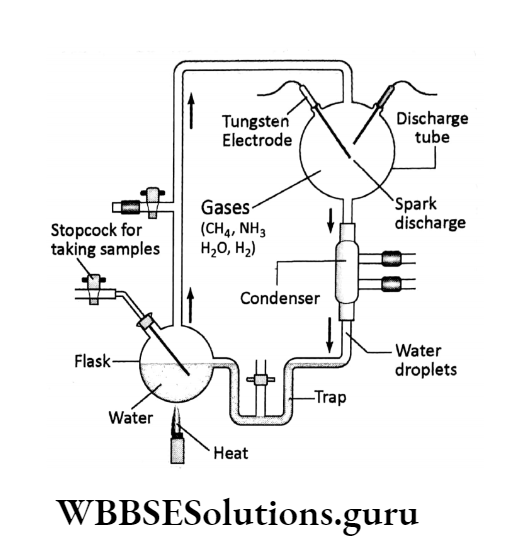
WBBSE Solutions For Class 10 Life Science Chapter 4 Evolution And Adaptation Topic A Evolution urey and millers experiment

The water vapor from boiling water simulated torrential rain which formed the water bodies on Earth.

The gas mixture in the tube was subjected to electric discharge at 75000 volts for 7 days to resemble vigorous lightning and violent electrical storms in early Earth.

It was then cooled with the help of a condenser and liquified and the liquid was collected in another flask. On analyzing the jelly-like liquid it was found to contain simple organic compounds such as amino acids, hydroxy acids, and aliphatic acids.

The amino acids included glycine, alanine, aspartic acid, and glutamic acid. In this experiment, alpha-alanine predominated over beta-alanine.

Evolution Class 10 Life Science

Modern proteins contain only alpha amino acids. Miller argued that amino acids were formed on primitive Earth under the influence of ultraviolet light and lightning. The resultant liquid contained no nucleic acids.

Inference:

From the experimental observation, Miller concluded that organic molecules were synthesized abiotically in early Earth under the energetic influence of thunderstorms, cosmic radiations, etc. Thus the phenomenon of the chemical origin of life was proved.

Conditions on earth at the time of the origin of life differed greatly from those of today. No free oxygen was present in Earth’s early atmosphere.

The reducing atmosphere of early Earth helped chemical reactions to occur that produced a molecular soup.

Under conditions that resemble Earth’s primitive reducing atmosphere, small molecules essential to living systems formed and polymerized.

Moreover, these molecules accumulated in the seas because the rate of their formation was greater than the rate at which they were destroyed.

In a somewhat similar experiment, Sydney Fox obtained complicated molecules of protein having similar properties to the coacervates of Oparin.

Fox called those molecules as microspheres which, like coacervates, were immiscible in the surrounding medium.

WBBSE Chapter 4 Topic A Evolution RNA World Hypothesis

It should be kept in mind that complex protein is not life. Primitive life is represented by DNA or desoxyribonucleic acid which has the ability to produce protein.

Thus according to an alternative view, life forms were created from a single-stranded ribonucleic acid or RNA, which can behave as an enzyme (catalytic function) or protein (ribozyme).

Though unstable, it has the ability to replicate spontaneously and can produce protein by the process of translation or even double-stranded DNA by the process of reverse transcription.

RNA was the first molecule of heredity and DNA evolved after RNA-based proto-life became surrounded by membranes that provided an environment in which DNA is stable.

This is called the RNA world hypothesis and is presently considered the most legitimate way of origin of life.

WBBSE Chapter 4 Topic A Evolution Major Evolutionary Events

Origin of Earth:

Formation of the Earth some 5000 million years ago in the form of a mass of burning gases separated from the sun as per the Big Bang hypothesis. The temperature was about 5000 to 6000°C.

Formation of water, methane, and ammonia:

Gradual cooling of the Earth and hardening of the Earth’s crust, creation of clouds followed by precipitation, and formation of the small and large water bodies.

The primitive earth contained large amounts of hydrogen, nitrogen, carbon & oxygen. Of these, hydrogen combined with nitrogen to form ammonia, with oxygen to form water, and with carbon to form methane.

Compounds like ammonia, methane, etc got dissolved in rainwater and accumulated in the sea. Mineral rocks also dissolved ” leading to the accumulation of minerals and salts in seawater. Thus the first chemicals formed on the earth were water, ammonia, methane, and others.

Formation of micro and macromolecules:

The next step was the formation of micromolecules like amino acids, fatty acids, purine, pyrimidines, etc. in the form of colloids.

The micromolecules combined in various ways to form macromolecules like proteins, lipids, nucleic acids & nucleoproteins. The first formed proteins were called proto-proteins.

In the next step, nucleic acids were formed from phosphoric acid, sugar, purines, and pyrimidines. The nucleic acids and proteins combined together to form nucleoproteins.

Coacervation:

Formation of lipid membrane-bound structures commonly called coacervates. They exhibited certain properties of cells.

Development of monera and protista:

Coacervates developed into provirus which gradually grew into two fundamental types-the monera and the Protista.

Oxygen revolution:

The emergence of the first photosynthetic bacteria or cyanobacteria having chlorophyll (a universal photosynthetic pigment) and blue-green pigments like phycocyanin.

These organisms had the ability of oxygenic photosynthesis which resulted in the liberation of oxygen in the atmosphere that turned the reducing environment to oxidizing environment.

The advent of multicellularity:

The prokaryotic organisms became diversified and divided repeatedly to produce multicellular prokaryotes.

The accumulation of free oxygen in the earth’s atmosphere made possible the evolution of aerobic metabolism, eukaryotes, sexual recombination, and multicellularity.

Formation of eukaryotes:

The emergence of nuclear membranes produced the first formed eukaryotes, which were initially unicellular and later became multicellular.

All early cells were haploid. Diploid cells appeared when some cells failed to divide after their DNA was duplicated. Diploid cells were better protected from harmful mutations.

Diversification to other forms:

Emergence of aquatic invertebrate animals.

The emergence of aquatic vertebrates in the form of fishes and their diversification.

The gradual development of land plants, and their colonization resulted in the massive modification of the terrestrial habitat, adding more oxygen to the terrestrial environment.

Diversification of terrestrial habitats with the development of new adaptive features which modified the Earth’s landscape.

The gradual shift of animal species from aquatic to terrestrial habitats initially for a short time in the form of four-limbed amphibians later creating a permanent terrestrial group of animals in the form of reptiles

The emergence of the highest-evolved land mammals.

WBBSE Chapter 4 Topic A Evolution Theories Of Organic Evolution

Several theories have been proposed by different evolutionists. A few important theories are mentioned here.

WBBSE Chapter 4 Topic A Evolution Lamarck’s Theory

Lamarck’s theory, known as Lamarckism, was proposed by French biologist Jean Baptista de Lamarck (1744-1829) and the theory was discussed in detail in his book ‘Philosophic Zoologique’ in 1809.

Lamarckism comprises of following propositions or assumptions.
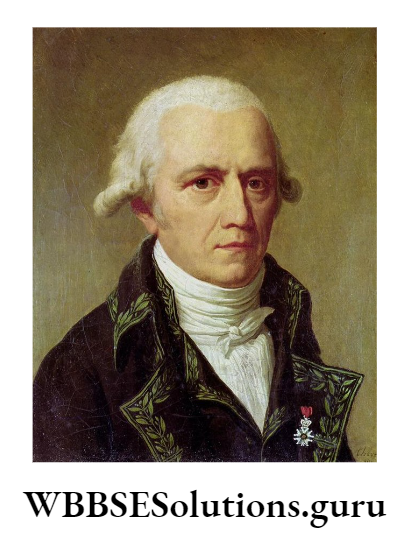
WBBSE Solutions For Class 10 Life Science Chapter 4 Evolution And Adaptation Topic A Evolution jean baptista de lamarck.jpg

1. New needs and their effects:

Continuous changes in environment create new needs in organisms to become better adapted or more suited to the changed environment.

As a result, certain organs are extensively used and certain others are disused. Lamarck quoted the example of the influence of the environment on plants in support of his view.

He observed differences in the same species of plants grown in different environmental conditions. When plants are grown in fertile soil, they become healthy & luxuriant; the same plants grown in unfertile soil are weak and thin.

2. Use and disuse:

Continuous use of an organ or organs tends to develop them highly, whereas disuse results in a gradual reduction, degeneration, and complete disappearance.

Examples in favor of the Use theory:

The long neck of a giraffe, webbed feet of aquatic birds, bicep muscles & long legs of wading birds, etc.

Examples in favor of disuse theory:

Loss of limbs in snakes, degeneration of eyes in cave animals, degeneration of wings in flightless birds, vestigial organs in man, etc.

3. Internal urge of an organism:

Animals and plants have the ability to grow and increase in size. According to Lamarck, this increase is due to desire which is some sort of an internal urge of the animal to attain the maximum size.

4. Inheritance of acquired characters:

The changes acquired in an organism, during its lifetime, due to the use and disuse of organs and under the influence of the environment are called acquired characteristics.

The characteristics acquired by an organism during its lifetime are inherited by the offspring. It means that changes are cumulative over a period of time and are inherited by the next generation.

As per this proposition, the long neck of the giraffe and the degenerated wings of the kiwi are acquired characters. Hence, they are inherited by their progeny generation after generation.

WBBSE Chapter 4 Topic A Evolution Examples In Favor Of Lamarckism

Several examples were put forward in support of Lamarckism, of which a few are—

Giraffe:

The ancestors of giraffes had short necks and fore-limb, like horses. They were browsers, but due to much competition in that mode of food habit with scarcity in surface vegetation, they tried to stretch their neck and forelimbs to obtain leaves, as food, from the top branches of trees.

As a result, there were slight elongations of these organs. These acquired characteristics were inherited by the next generation and further elongation occurred due to the accumulation of similar efforts.

As a result, the present-day giraffe has developed a much longer neck and forelimbs.

Aquatic birds:

Aquatic birds like ducks have evolved from terrestrial ancestors. Ducks have all their fingers covered by a flap of skin called webbed feet that helps in swimming. Thus, because of the constant use of fingers for swimming, webbed feet have evolved.

Snakes:

Snakes evolved from lizard-like ancestors having two pairs of limbs. But due to their burrowing habit, they used to crawl on the abdominal muscle.

Prolonged disuse caused a reduction and disappearance of these organs. Present-day snakes like Boa & Python have vestigial pectoral girdles and pelvic girdles though they are limbless.

WBBSE Solutions For Class 10 Life Science Chapter 4 Evolution And Adaptation Topic A Evolution lamarcks giraffe

Cave dwellers:

Cave-dwelling animals like Proteus anguinus (amphibia) and Amblyopsis (fish) initially had normal eyesight, but due to living in a dark environment, they did not use their eyes and ultimately lost their power to see.
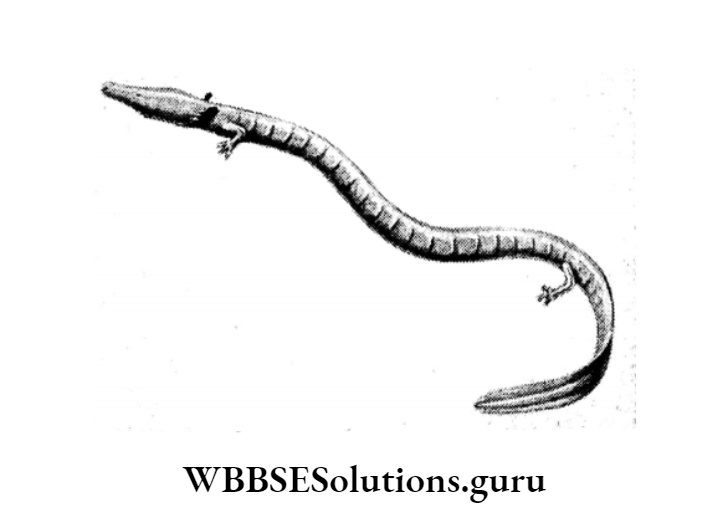
WBBSE Solutions For Class 10 Life Science Chapter 4 Evolution And Adaptation Topic A Evolution cave dweellers

Emergent hydrophytes:

The effect of environment and inheritance of acquired characters is clearly seen in emergent hydrophytes like Ranunculus aquatilis.

Here the submerged leaves are dissected while the emerged ones are simply lobed. When the plant is grown out of water, all the leaves are undissected. In the submerged environment, all the leaves are dissected.

WBBSE Chapter 4 Topic A Evolution Criticism Of Lamarckism

Internal urge:

This principle states that when there are new needs, new structures or organs develop as per the desire of the animals. Every human being has a desire to fly.

If Lamarck’s principle is correct, every individual, who desires to fly, should develop wings; but this does not happen.

Use and disuse:

The heart is put to use continuously throughout the lifespan of an organism; still, it remains the same size generation after generation. Thus the theory of use and disuse has met with strong objections.

Inheritance of acquired characters:

This theory is much contradicted. Weismann, in his famous experiment, had cut off the tails of rats for 22 generations and allowed them to breed; but tail-less offspring were never born.

Piercing of the nose and ears in Indian women, and circumcision of the penis in Muslims and Jews are age-old customs, but they are not inherited.

In the old tradition, Chinese women used to wear iron shoes in order to have small feet, but their children at the time of birth always had normal feet. These examples prove that acquired characters are not inherited.

WBBSE Chapter 4 Topic A Evolution Neo-Lamarckism

Long-forgotten Lamarckism has been revived as Neo-Lamarckism in the light of recent findings in genetics which confirm that environment does affect the form, structure, color, size, etc. and these characteristics are inheritable.

Neo-Lamarckism States That:

Germ cells may be formed from somatic cells indicating similar nature of chromosomes and genetic constitution in both the two types of cell lines.

This fact is established in phenomena like regeneration in earthworms, vegetative propagation in Bryophyllum with foliar buds, etc.

The effect of the environment on germ cells is indirectly passed on through the somatic cells.

Heslop Harrison, an entomologist, found that a pale variety of moth, Selenia bipinnaria when fed on manganese-coated food, a true breeding melanic variety of moth is produced.

Germ cells may be directly affected by environmental factors.

Tower, an American entomologist, exposed the young ones of some potato beetles to temperature fluctuations and found that though beetles remained unaffected with no somatic change the next generation had marked changes in the body coloration.

Germ cells can carry forward the somatic changes to the next progeny.

WBBSE Chapter 4 Topic A Evolution Darwin’s Theory Of Evolution

During the beginning of the 19th century, it was generally believed that species had remained unchanged since their creation.

A new era of biology began on 24th November 1859, the day Darwin published his famous book “On the Origin of Species by Means of Natural Selection or The Preservation of Favoured Races in the Struggle for Life”. (Popularly known as—The Origin of Species).

Darwin made two major points in The Origin of Species—

Branching Descent:

Many species of organisms presently inhabiting the earth are descendants of ancestral species that were different from the modern species. Variation is the law of nature.

Living organisms of ancestral species had to adapt to changing environments due to variations, as these had a competitive advantage.

Natural Selection:

He proposed a mechanism for the evolutionary process, which is termed natural selection.

The basic concept of natural selection is that a population can change over generations if individuals that possess certain heritable traits leave more offspring than other individuals.

Natural selection is the differential success in the reproduction of different phenotypes resulting from the interaction of organisms with their environment.

WBBSE Chapter 4 Topic A Evolution Darwin’s Contribution

Charles Darwin (1809-1882) was born in Shrewsbury in England. From his boyhood, he was much interested in nature. Darwin’s father, a famous physician, could not see his son’s future as a naturalist and sent him to the University of Edinburgh to study medicine.
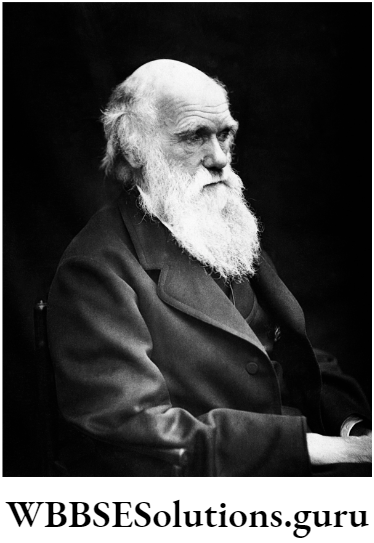
 

WBBSE Solutions For Class 10 Life Science Chapter 4 Evolution And Adaptation Topic A Evolution Charles Darwin.jpg

However Charles was not at all interested in studying medicine and surgery and left medical school without a degree.

He enrolled at Cambridge University with the intention of becoming a clergyman.

Darwin received his B. A. degree from Cambridge.

Reverend John Henslow, a professor of Botany at Cambridge University, recommended Darwin’s name to Captain Robert Fitz Roy, who was preparing the survey ship HMS Beagle for a voyage around the world.

In 1831, Darwin left England aboard the Beagle.

The main mission of the voyage was to chart poorly known stretches of the South American coastline.

During this expedition, Darwin observed and collected thousands of South American plants and animals and also studied their adaptations.

Wbbse Class 10 Life Science Evolution Notes

Geologic observation and geographic distribution of species also impressed Darwin during the voyage.
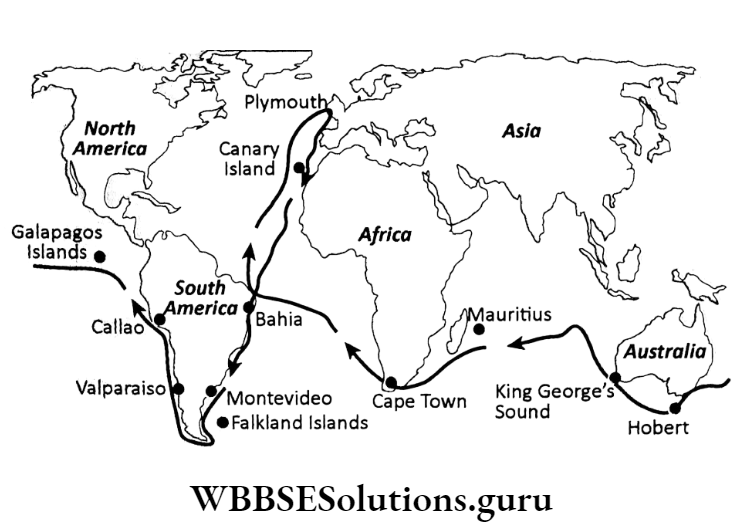
WBBSE Solutions For Class 10 Life Science Chapter 4 Evolution And Adaptation Topic A Evolution galapagos

In the Galapagos (a group of geologically young volcanic islands located near the equator about 900 km West of South America), Darwin observed and studied several organisms, specifically, some birds (finches) and turtles.

Although quite similar, they seemed to be different species and some were unique to specific islands, while others were distributed on two or more adjacent islands.

The slight phenotypic differences amongst the finches did not allow them to cross-breed.

After his return to England in 1836, Darwin reassessed his observations during the voyage and began to perceive adaptation to the environment and the origin of new species as closely related processes.

Though Darwin wrote a long essay on the origin of species and natural selection, he was reluctant to publish his theory because he anticipated the uproar it might cause.

In June 1848, Darwin received a manuscript from Alfred Russel Wallace (1823-1913), a British naturalist, working in the East Indies (Malay Archipelago), who had developed a theory of natural selection similar to that of Darwin.

Wallce’s paper, along with extracts from Darwin’s unpublished 1844 essay was presented at a meeting of the Linnean Society of London on July 1, 1848.

Darwin’s The Origin of Species was published on November 24, 1859.

Although Wallace was the first to write up his ideas for publication, he is a great admirer of Darwin and agreed that Darwin has developed the idea of natural selection so extensively that he should be regarded as its main architect.

WBBSE Chapter 4 Topic A Evolution The Origin Of Species As Per Darwinism

Darwin developed two main ideas —

Evolution explains the unity and diversity of life,

Natural selection is a cause of adaptive evolution.

Evolution And Branching Descent:

Darwin proposed that the history of life is like a tree, with several branchings from a common trunk to the tips of the youngest twigs, representing the diversity of living organisms.

Each fork of the tree represents the ancestor of evolutionary branches from that point. Asian elephants and African elephants are similar because they shared a common ancestor and the same line of descent.

Most branches of evolution are dead ends and about 99% of all species that have ever lived have now become extinct.

Natural Selection and Adaptation:

Regarding the working of natural selection and explanation of adaptation, evolutionary biologist Ernst Mayr (1982) has viewed the logic

Darwin’s theory of natural selection is into three inferences based on five observations:


WBBSE Solutions For Class 10 Life Science Chapter 4 Evolution And Adaptation Topic A Evolution obeseravtions and inferences

Darwin considered an important connection between Natural selection resulting from the struggle for existence and the ability of organisms to overproduce.

Darwin conceived this idea from an essay by Thomas Malthus(1798), on population growth.

Malthus proposed that much of human suffering famine, disease, war, etc were the consequence of the human population’s potential for faster growth than the availability of food and other resources.

In every generation environmental factors filter out heritable variations, favoring some characters over others. Organisms with favorable traits produce more offspring than organisms without those traits.

Increases in the frequencies of favored traits in a population are an important source of evolutionary modification.

WBBSE Chapter 4 Topic A Evolution Salient Features Of Darwin’s Theory Of Natural Selection

The important features of Darwin’s theory are as follows—

1. Prodigality of reproduction:

Organisms have enormous fertility and they multiply in geometric ratio.

A few examples are—

Insects lay hundreds of eggs.

Plants produce thousands of seeds. A single fern produces a few million spores.

A salmon fish lays several hundred eggs at a time.

Elephant, the slowest breeder, lives for about 90 years. They attain reproductive maturity at about the age of 30 and give rise to about 6 offspring per head during their lifetime.

It is calculated that, if all offerings survive, then 19 million descendent elephants will be produced in 750 years from a single female.

2. Limitation of food and space:

Though a population tends to increase geometrically; food, space, and other resources on Earth are limited and they are liable to increase only arithmetically.

Limited food and space, which together form the major part of the carrying capacity of the environment, are the two main limiting factors that do not allow a population to grow indefinitely.

The struggle for existence:

Due to the rapid multiplication of populations but limited food & space, there starts an everlasting competition

between individuals having similar requirements.

In this competition, every living organism desires to have an upper hand over others.

Wbbse Class 10 Life Science Evolution Notes

The struggle for existence may be of three different types—

Intraspecific struggle:

It is the struggle between members of the same species because they share similar environmental resources.

Examples:

Two dogs struggling for a piece of meat.

Interspecific struggle:

It is the struggle for the members of different species due to sharing the same ecological conditions.

Example:

The struggle between predator and prey.

Environmental or extra-specific struggle:

It is the struggle of individuals with environmental constraints like floods, drought, earthquakes, extreme heat or cold disease, etc.

Out of these three forms of struggles, the intraspecific struggle is the strongest type as the needs of the individuals of same species are most similar.

Example:

Sexual selection in which a cock with a more beautiful comb and plumage has a better chance to win a hen than a cock with a less developed comb.

Similarly, cannibalism is another example of intraspecific struggle as in this individuals eat the members of the same species.

4. Variation:

Except for identical twins, no two individuals are alike and their requirements also vary. This is known as variation and by these variations, some individuals become better adapted to their environment.

According to Darwin, the variations are continuous. Adaptively useful variations pass to the next generation, while the others disappear.

Examples of variations with competitive advantages are increased speed in prey, increased water conservation in plants, etc.

5. Natural selection:

Individuals with favorable variations and greater reproduction ability are selected by nature. Unfit individuals are rejected by nature.

Characters, selected by nature, pass to the next generation. Sorting out of individuals with useful variations from a
heterogeneous population by nature was called natural Selection by Darwin. So natural selection acts as a restrictive force and not a creative force.

6. Survival of fittest and origin of species:

Descendents with favorable variations, selected by nature, will survive because they are the fittest to adapt to their environment; while the unfits will become extinct.

Originally, the phrase ‘the survival of the fittest, was first used by Herbert Spencer.

7. Speciation:

According to Darwinism, useful variations appear in every generation and are inherited from one generation to another.

So the useful variations go on accumulating and Darwin considered that, after several generations, the descendants with continuous and gradual variations will be so distinct from their ancestors, that they will form a new species.

So, according to Darwinism, evolution is a gradual process and speciation occurs by gradual changes in the existing species.

WBBSE Chapter 4 Topic A Evolution Examples Of Natural Selection

Skeletal adaptations:

Giraffes, lizards, and many other known species adapted to their environments through genetic changes to their skeletons.

Giraffes developed long necks to reach food sources higher up in trees, so members of the giraffe population who didn’t develop a long neck died out.
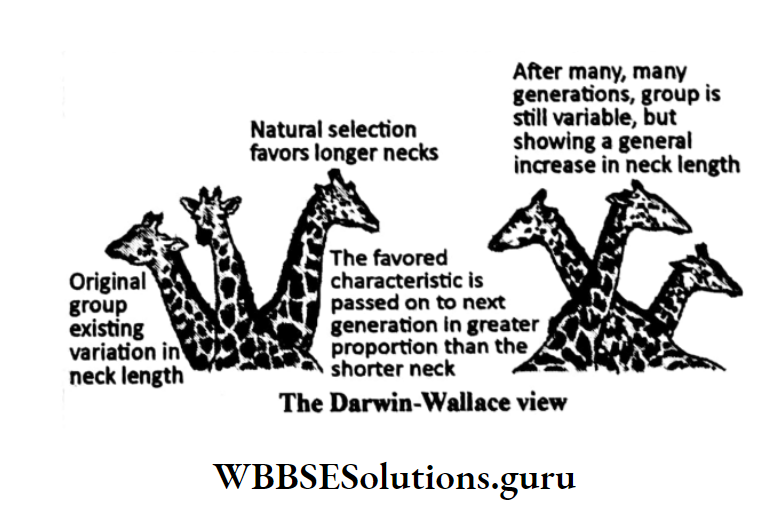
WBBSE Solutions For Class 10 Life Science Chapter 4 Evolution And Adaptation Topic A Evolution skeletal adaptations

At the same time, certain lizards with one characteristic are passed on to the next generation in greater proportion than the shorter neck region developed longer leg bones to help them climb up during periods of flood and to escape predators in the ground;

shorter-legged lizards of the same population died out until only the lizards with long legs survived.

Coloration:

Many species of deer mouse, peppered moth, and peacock have adapted to their environment through adaptations in coloring.

Once the optimal coloration is present, natural selection occurs when members of the species without the adaptive coloring died out more quickly and therefore, did not reproduce as abundantly.

Bacteria:

Bacteria can adapt to new food sources that were previously unusable.

Some bacteria have adapted to the presence of deadly antibiotics and exhibited traits that let them not only survive but also reproduce to generate offsprings that are also resistant to the antibiotics.

WBBSE Chapter 4 Topic A Evolution Criticism Of Darwinism

Criticism against Darwinism relates to the following points:

Darwin had no idea about genetics. So he could not explain the cause of variation and the actual process of inheritance of variation.

He did not distinguish between inheritable and non-heritable variations.

Darwinism explains only the existence of useful variations, but it does not give any idea about useless variations like the vestigial organs.

Natural selection says that a new species is evolved by the gradual accumulation of useful variations. If this is true then there should be intermediate forms, but in most cases, such intermediate forms are not recognized.

Wbbse Class 10 Life Science Evolution Notes

WBBSE Chapter 4 Topic A Evolution Neo-Darwinism

It is the refinement of the original theory of Natural Selection and is also known as the Synthetic theory of evolution. The salient features of Neo- Darwinism are as follows:

Rapid multiplication:

All organisms multiply in a geometrical ratio, producing more number of offsprings than what can survive.

Limited food and space:

Food, space & other basic necessities are limited.

The struggle for existence:

Intraspecific, interspecific, and environmental struggles for existence appear among the organisms due to both the high rate of multiplication and the limitation of resources.

Genetic variations:

These are inheritable variations that can occur due to the following reasons—

Mutations:

It may be genetic, chromosome aberrations, or gene mutations.

Gene Recombination:

These are new combinations of genes that may arise due to crossing over.

Hybridization:

It causes the intermingling of genes belonging to different groups.

Genetic drift:

It is the change in gene number and gene frequency in a small isolated population.

Natural Selection:

Natural selection operates upon the genotype of the individual. Effects may be advantageous when they have positive selection pressure or disadvantageous when they have negative selection pressure.

Individuals having genes with negative selection pressure are eliminated before reaching maturity.

Origin of new species:

There are various barriers separating two or more interbreeding groups into distinct populations.

An isolated population of a species independently develops different types of mutations which ultimately accumulate over several generations to form a new species.

WBBSE Chapter 4 Topic A Evolution Hugo De Vries Mutation Theory

Hugo de Vries studied plants of evening primrose, Oenothera Lamarkiana, and put forward a theory of evolution called the mutation theory.

Salient Features Of Mutation Theory:

  1. Mutations are the raw materials of evolution.
  2. Mutations appear all of a sudden and become operational immediately.
  3. AII mutations are inheritable
  4. Useful mutations are selected by nature.
  5. Lethal mutations are eliminated.
  6. Accumulation of several variations produces new species.
  7. Evolution is a jerky and discontinuous process.

WBBSE Chapter 4 Topic A Evolution Evidences For The Theory Of Evolution

The 4.5-4.8 billion years of the Earth’s history involve great alteration of geography, geology, and climate.

The changes in the earth’s appearance and character included the development of the atmosphere, formation of land surfaces and continental drift, variation in sea level, sedimentation, mountain-building, volcanism, seasonality, and glaciation.

A geologic era is a subdivision of geologic time that is separated by catastrophic extinction boundaries.

Sedimentary rocks formed over the past 570-600 million years suggest that three different eras be recognized:

The Paleozoic, Mesozoic, and Cenozoic.

All time prior to the start of the Paleozoic is referred to as the Precambrian.

The Earth calendar shows that the Precambrian accounts for 9/10ths of the entire history of the Earth.

The three eras mentioned above are divided into 12 geologic periods, and some of the periods are further broken down into epochs.

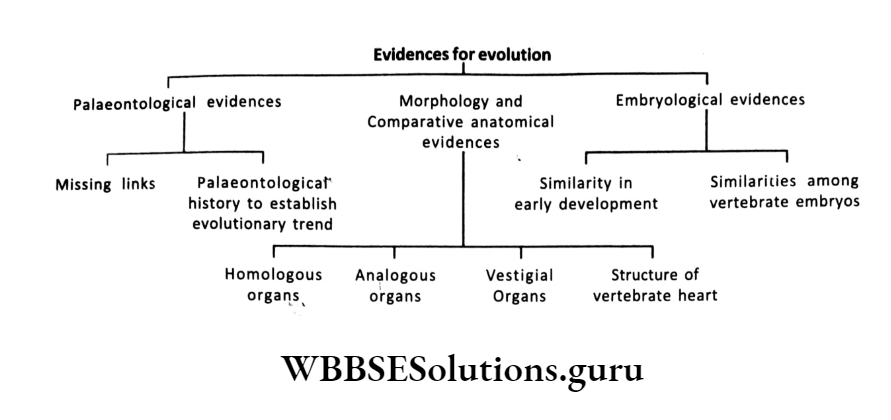
WBBSE Solutions For Class 10 Life Science Chapter 4 Evolution And Adaptation Topic A Evolution Gelogical time scale

WBBSE Solutions For Class 10 Life Science Chapter 4 Evolution And Adaptation Topic A Evolution Evidences for evolution

WBBSE Chapter 4 Topic A Evolution Palaeontological Evidence

Paleontology is the study of fossils. Leonardo da Vinci is known as the father of paleontology. However, George Cuvier is considered the founder of modern paleontology.

The evidence of evolution gained from the knowledge of fossils is called palaeontological evidence.

The fossils are the remains or impressions of hard parts of past individuals in the strata of the earth that provide acceptable evidence in support of evolution.

The original land mass of ancient earth is converted into rock strata containing fossil records. There are different methods of determining the ages of rocks and fossils.

Fossilization is the process by which a plant or animal becomes a fossil. Depending upon fossilization, fossils are of many types.

Wbbse Class 10 Life Science Evolution Notes

Types Of Fossils:

Compactions:

These are fossils found in peat, brown coals (lignite), and other soft sediments. The plant remains, frequently seeds and fruits of the Tertiary or younger, are entirely of original organic material.

They are three-dimensional fossils that have been somewhat flattened and reduced in volume.

Compressions and impressions:

When fine-grained sedimentary deposits containing dead plants are subjected to the extreme weight of overlying strata, so that the air and water are driven out, compressions and impressions may form.

The plant matter usually leaves but also trunks, stems, and roots, are reduced to a thin carbonaceous film.

If a two-dimensional positive image is formed, it is called compression. In this case, the only original organic matter left of the leaf or stem is the thin layer of carbon. Negative images, or imprints, are called impressions.

They are also twodimensional, but they are lacking in any original material. Those compressions which have remnants of waxy leaf cuticles can give thin peels suitable for microscopic examination.

Leaf venation is evident. The cellular structure of underlying remains can be detected. Some deformation of the plant does occur. Compressions and impressions are not necessarily found together.

Petrifactions:

In some sedimentary deposits, the surrounding water is high in mineral content; Silica (Si02) or Calcium Carbonate (CaC03) may be present, but also iron and manganese oxides.

These salts precipitate out of the solution and collect inside any plant matter present. The plant matter may be replaced during mineralization, but usually, cell cavities are filled, enclosing the original plant material.

Theories Of Evolution Class 10

Thin sections from throughout these three-dimensional fossils reveal beautifully preserved cell structures under the microscope. Striking colors result from the presence of oxides.

The best-known petrifactions are the petrified woods, particularly those of the Petrified Forest in Arizona and of Yellowstone National Park.

Casts and molds:

These fossils consist of no original plant material, and they show no cellular structure.

They are, though, very useful and accurate renditions of surface structure or internal layering of wood and bark. When a root or stem trapped in sediment decays away, the surrounding deposits may be solid enough to retain their shape.

The mold which results solidifies as a faithful copy of the exterior surface of the solid plant part. If the cavity left behind is then filled with new deposits, a cast is produced, identical to the original plant. Many times molds and casts occur together.

Intact Preservations:

The entire animal or plants are preserved as a whole because of the prevailing temperature being below the freezing point, e.g. Fossil of Mammoth.

Significance of fossils in organic evolution:

By comparing fossils of different organisms, it is possible to tell the phylogenetic relationships between organisms.

Fossil records show a gradual increase in the complexity of organisms over time. Older lower rock strata contain fossils showing simple structures while younger upper rock strata contain fossils showing more complex structures.

Some fossil records have been used to reconstruct an almost complete evolutionary history of the development of certain organisms.

Example: human fossils and fossils of horses.

Fossil records provide ideas about the possible cause of extinction of the prehistoric organisms.

Palaeontological evidence help understand evolution in several ways—

Missing links:

The missing links refer to transitional fossils of organisms that are intermediate between two groups and share the characteristics of both but are extinct from the earth.

Missing links like Archaeopteryx were transitional forms between reptiles and birds. Their fossils have been found in the limestone rocks of the Jurassic period of Solenhofen in Bavaria, Germany.

Theories Of Evolution Class 10

It is a missing link between reptiles & birds.

It was about the size of a crow and had both reptilian and avian characters as pointed out below:
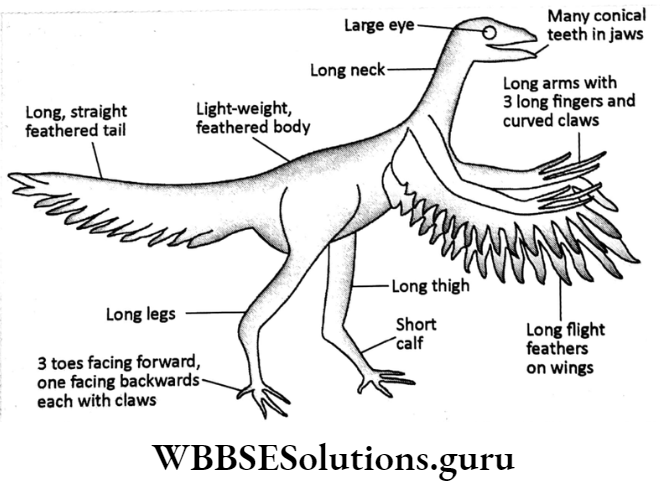
 

WBBSE Solutions For Class 10 Life Science Chapter 4 Evolution And Adaptation Topic A Evolution dinousour

Reptilian characters:

  1. Presence of teeth in beak,
  2. Each finger-ends into a claw,
  3. A long tail with free caudal vertebrae.

Avian characters:

  1. The presence of feathers on the body,
  2. Rounded cranium with the intimate fusion of bones,
  3. Forelimbs modified into wings and having only three fingers,
  4. Presence of 4-toes in each foot and adopted for perching as in birds.

The study of missing links focuses on a group in transition representative that explains the possible mechanism of evolution and transition between two groups.

Palaeontological history to establish evolutionary trend:

An evolutionary trend can be either a directional change within a single lineage or a parallel change across lineages.

Almost all fossils related to the intermediate stages of the evolution of horses exhibit an evolutionary trend.

A series of fossils from different geological periods have been discovered, regarding the evolution of the modern horse (Equus ferus).

The earliest known fossil of the horse was that of Eohippus (= Hyracotherium) which was present during the Eocene period. This animal was about the size of a cat (30 cm high at the shoulders) with a short head and neck.

They had forefeet with four complete fingers (2, 3, 4, and 5) and one splint of the first finger, and hind feet with three functional toes (2, 3, and 4) and two splints of first and fifth toes.

Gradually through the development of a series of species like Orohlppus, Mesohippus, Miohippus, Parahippus, Marychippus, Pliohippus, etc., the modern species of horse (Equus) has developed.

Theories Of Evolution Class 10

The fossil records show gradual changes of the species for adjustment to their environment in two respects:

Food-getting mechanism and to attain speed.

The modern horse is about 150 cm in height at the shoulders with a long head and neck. Both fore and hind feet of modern horses have one finger one toe, and two splints.

WBBSE Solutions For Class 10 Life Science Chapter 4 Evolution And Adaptation Topic A Evolution fore foot and hind foot

WBBSE Chapter 4 Topic A Evolution Morphology And Comparative Anatomical Evidence

The sources of evidence of evolution are known as radius and ulna.

The radius and Morphology Comparative Anatomy Are The Following:

Homologous Organs:

The organs in different organisms that have the same embryonic origin and have basic structural similarities but are functional and may or may not be alike are called homologous structures or organs.

WBBSE Solutions For Class 10 Life Science Chapter 4 Evolution And Adaptation Topic A Evolution forelimbs

In animals:

Forelimbs:

The forelimbs of all vertebrates except the fishes have a common bony structural plan. The upper portion of the forelimb is supported by a bone known as the humerus.

Below the humerus, there are two bones the ulna followed by carpals, metacarpals, and phalanges. If the bones of the forelimb in the different classes of vertebrates are examined, a striking similarity will be revealed throughout the series.

The wings of a bird or bat, the forelimb of a horse, the forelimb of a seal and whale, and the forelimb of man are all homologous though they perform different functions.

If we compare the bony elements of the above vertebrate animals, they show a basic similarity in the bony architecture of forelimbs. However, due to adaptation in diverse modes of life, there are some modifications in all skeletal structures.

In the case of birds and bats, the forelimbs are modified into wings or patagium for flying purposes. So there are some changes in the bones due to the aerial mode of life.

In horses, the digits of the forelimb are reduced to get adapted to running on land. In seals and whales, the forelimbs, consisting of five digits, are modified into a flipper for swimming.

In monkeys, it is used for climbing and arboreal life. In man, it is used for the manufacturing and manipulation of tools and for various other non-locomotory purposes.

Darwin’S Theory Of Evolution Class 10 

Though there are some modifications in bones for adaptation to different environmental conditions yet the basic plan of arrangement of bones remains the same.

This basic similarity of architecture in bones reflects that they have evolved from a common ancestor and modifications are due to the evolutionary process. This similarity in different organisms is called divergent evolution.

Brain:

The common pattern of the brain in vertebrates suggests a common ancestor.

Mouth parts of insects:

In the insect’s basic plan of mouth, parts are the same but modified according to the mode of feeding.

In plants:

Homologous organs are also present in plants and are performing various functions.

Leaf:

In plants like pitchers, Venus fly traps, poinsettia, and cacti, the leaves show different functions and shapes.

The pitcher plant and the Venus flytrap use leaves to trap and digest insects. The bright red leaves of poinsettia, though leaves, look like flower petals.

The cactus leaves are modified into small spines to perform protective functions. Again, the tendril of a pea plant & the spines of a barberry plant are homologous organs.

The tendril of a pea plant is a modified leaf used to provide mechanical support. In barberry plants, the spines are modified leaves meant for protection.

Stem:

The stems of Opuntia, ginger, and potato are modified respectively into phylloclade [Opuntia), rhizome (ginger) & tuber (potato) for preparation & storage of food. All of these are modified forms of stems, modified to adapt to their respective environments.

Analogous Organs:

The organs of the different organisms that are different in origin and structures but have similar functions are called analogous structures or organs.

In animals:

Wings:

A classical example is the wings of insects and the wings of birds and bats (mammals).

Like birds or bats, the wings are also developed in most of insects since they perform the same function.

However there is no developmental or structural similarity between the wings of insects with that of birds or bats. The wing of an insect is membranous

The same selection pressure is supported by veins, but those of birds and bats are derived from forelimbs which is supported by bones.

Hence the wings of insects are analogous structures to those of birds and bats as they perform the same function.

This superficial similarity has developed due to the adaptation to a similar environment. It is called convergent evolution.
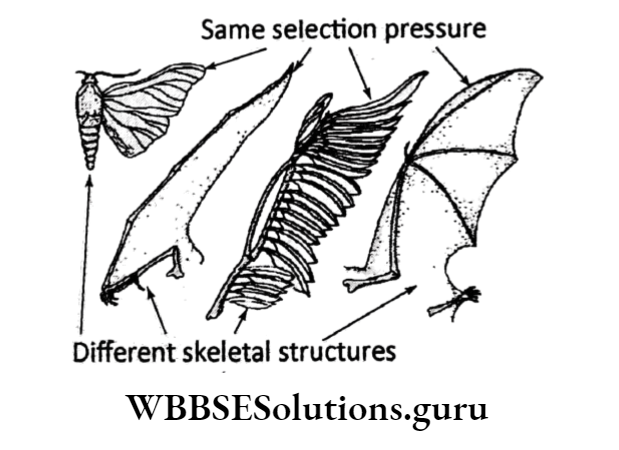
 

WBBSE Solutions For Class 10 Life Science Chapter 4 Evolution And Adaptation Topic A Evolution wings

Gliding wings:

The two animals sugar gliders & flying squirrels can glide in the air using their gliding wings. Both species are different from each other in many ways.

Flying squirrels is a placental mammals whereas sugar glider is a marsupial mammals like kangaroos. To adapt to a common function, both animals evolved similar gliding wings.

In plant:

Climbers:

A tendril of the pea plant is the modified form leaf and the tendril of jhumkalata is the modified form of the stem. The tendrils of both plants perform the same function as climbers.

Storage of food:

Potato & sweet potato also show similar characteristics but have different origins. Potato is a modified stem meant for the storage of food.

Sweet potato is a modified root also meant for the storage of food, so they are analogous.

Vestigial organs:

The organs which are present in reduced form but non-functional in possessors, but were fully formed and functional in ancestors and related species are called vestigial organs.

There are several examples of vestigial organs in living organisms—

Human vestigial organs:

Some of the vestigial organs found in humans are- the nictitating membrane of the eye, vermiform appendix, muscles of the pinna, coccyx (tail bone), canines and wisdom teeth, body hairs, mammary glands, nipples in males, etc.

Darwin’s Theory Of Evolution Class 10 

The appendix is not of any use in modern man, but it is believed that for our ancestors, the appendix was much larger and it was mostly used for the consumption of woody material such as tree bark.

Human ancestors had tails before and since, we no longer needed them, over time, while in the fetus, the tail (coccyx) has been absorbed by the body.
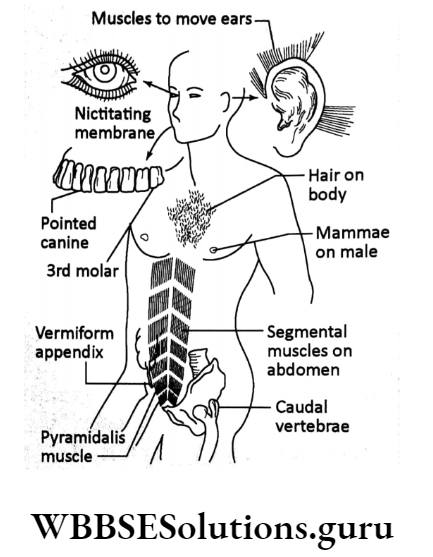
 

WBBSE Solutions For Class 10 Life Science Chapter 4 Evolution And Adaptation Topic A Evolution muscles to move ears

Vestigial organs of other animals:

A few important examples are vestiges of pelvic girdles and hind limbs of pythons and Green Land whales; wings of flightless birds like kiwi, ostrich, etc; splint bones (2nd and 4th digits) of limbs of horses, etc.

Vestigial organs in plants:

Notable examples are leaves are reduced to scales in Asparagus, Ruscus, Cuscata, etc; vestigial stamens (staminodes) found in flowers
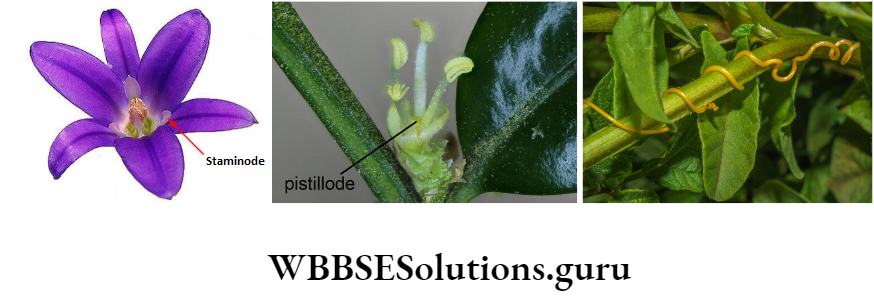
 

WBBSE Solutions For Class 10 Life Science Chapter 4 Evolution And Adaptation Topic A Evolution staminode pistiliode and scaly leaf of cuscuta

of several plants belonging to Labiatae, Cucurbitaceae, etc; nonfunctional pistils (pistil lodes) of male flowers of Cucurbitaceae; ray florets of sunflower lack stamens while the pistil is rudimentary with small nonfunctional stigma and ovule-less ovary.

The presence of vestigial organs indicates that organisms have evolved from ancestors since they were large, beneficial, and functional in ancestors but, in line with the concept of Natural selection, they are no longer useful for the current organisms.

Organisms have kept the traits that are useful and have lost the traits that are not useful.

Structure Of Vertebrate Heart:

A comparative study of the structural plan of hearts of different classes of vertebrates such as fishes, amphibians, reptiles, birds, and mammals will show the basic similarity with gradual complexities.

The heart in vertebrates is mainly composed of two toads and frogs, the two-chambered heart of fishes has become three-chambered (two auricles and one ventricle).

The auricle is divided into two only to prevent the admixture of oxygenated and deoxygenated blood. The heart of reptiles is also three chambered but there is a tendency for the division of the ventricle by an incomplete partition.

But in the heart of birds and mammals, the ventricle is completely divided into two chambers. So the heart of birds and mammals is composed of two auricles and two ventricles i.e. four-chambered heart.

Darwin’s Theory Of Evolution Class 10 

Here the oxygenated blood and deoxygenated blood are completely separated and this is in response to the change of habitat and to satisfy the demand for oxygen in these terrestrial animals.

Thus the simple heart of fishes gradually modifies to different classes of vertebrates and ultimately becomes a complex structure in mammals.

WBBSE Solutions For Class 10 Life Science Chapter 4 Evolution And Adaptation Topic A Evolution structure of vertebrate heart

Thus the study of heart chambers, auricles,s and ventricles. The auricle receives the blood through veins and the ventricle distributes the blood to the different parts of the body through arteries.

In the case of fishes which are aquatic animals, the heart is composed of two chambers- a single auricle and a single ventricle.

But in response to the change of habitat from water to land in amphibians like toads and frogs, the two-chambered hearts of fishes have become three-chambered (two auricles and one ventricle).

The auricle is divided into two only to prevent the admixture of oxygenated and deoxygenated blood. The heart of reptiles is also three chambered but there is a tendency for division of the ventricle by an incomplete partition.

But in the heart of birds and mammals, the ventricle is completely divided into two chambers. So the heart of birds and mammals is composed of two auricles and two ventricles i.e. four-chambered heart.

Here the oxygenated blood and deoxygenated blood are completely separated and this is in response to the change of habitat and to satisfy the demand for oxygen in these terrestrial animals.

Thus the simple heart of fishes gradually modifies to different classes of vertebrates and ultimately becomes a complex structure in mammals.

Thus the study of the heart from fish to mammals supports organic evolution.

WBBSE Chapter 4 Topic A Evolution Embryological Evidences

Comparative studies of embryos of different organisms show some resemblances.

The similarity in early development:

All triploblastic animals develop from single-celled zygote to three-layered gastrula stages through processes like cleavage, blastulation, gastrulation, etc.

These stages of embryogeny are fundamentally similar in all the animals suggesting a common ancestor.

Similarities among vertebrate embryos:

Due to common ancestry, embryos of different vertebrates like fishes, amphibians, reptiles, birds, and mammals resemble each other so closely, during the early development period, that it is very difficult to distinguish them.

A few similarities are the presence of gill clefts, notochord, tail, etc., the development of limb buds in a similar way, and the notochord getting replaced by a vertebral column in all of them.

Again embryos of closely related animals are more alike than those of other animals which are not so closely related.

For example, the embryo of a fish is more like that of an amphibian than that of a reptile or a bird; the embryo of a monkey is more similar to that of a man than that of a reptile.

As development proceeds, the embryos of these diverse animals progressively diverge from the common pattern & attain their respective adult morphogenesis.

From these observations, Von Baer (1828) put forward Baer’s law which was later modified by Ernst Haeckel (1866) as Recapitulation theory or Biogenetic law.

The law states that ‘Ontogeny Repeats Phyllogeny’, which means that an organism, during its development (ontogeny) passes through its ancestral history (phylogeny).

Its significance is that if the development of an organism is studied from its embryo, then the ancestral history of that organism becomes clear.
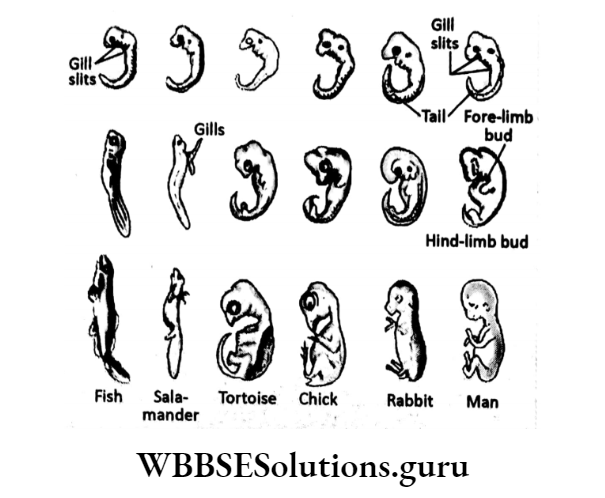
WBBSE Solutions For Class 10 Life Science Chapter 4 Evolution And Adaptation Topic A Evolution embryological evidences

WBBSE Chapter 4 Topic A Evolution Evolution Of Plant Animal Life

Compared to prokaryotic organisms such as bacteria, plants, and animals have a relatively recent evolutionary origin. DNA evidence suggests that the first eukaryote evolved from prokaryotes between 2500 and 1000 million years ago.

Thus eukaryotes as a taxon date from the Proterozoic eons, the final eon of the Precambrian era.

WBBSE Chapter 4 Topic A Evolution Evolution Of Plant Life on the Earth

The oldest known life consists of forms of bacteria, blue-green algae, and green algae, all of which probably resided in saltwater environments.

The stromatolites were formed by the action of early plant life. They are the indirect evidence of early life, rather than consisting entirely of fossilized life.

Stromatolites are layered mounds, columns, and sheet-like sedimentary rocks that were originally formed by the growth of layer upon layer of cyanobacteria, a single-celled photosynthetic microbe.

Bacteria and blue-green algae have a prokaryotic organization. Their cells lack true nuclei, because of the absence of a nuclear membrane.

The cellular unit of plants and animals is the more advanced eukaryotic cell, in which nuclear material is set off from the cytoplasm of the cell by a nuclear membrane.

Lamarckism And Darwinism Class 10

Eukaryotic cells first appeared in the fossil record 2.5 billion years ago. These cells were evidently photosynthetic and they most closely resembled the green algae. They have developed into higher plant forms.

Some Of These Developments Are Listed Below

Thallophytes:

Algae:

These eukaryotic plants, which are classified primarily on the basis of color (green, golden-brown, brown, red) lack true roots, stems, and leaves.

Fungi:

These non-photosynthetic plants also have undifferentiated plant bodies with a unique filamentous structure called mycelia and participate in decomposition activity or may also survive as a parasite.

Bryophytes:

(mosses and liverworts) These plants possess a greater specialization of tissues than is found among the thallophytes. True roots do not exist, but the mosses and liverworts have distinct leaf-like forms. Their fossils are quite rare.

Tracheophytes ; (club mosses):

They are also called lycopods or lycopsids, and possess true roots, stems, and leaves, as is true with all tracheophytes. The most common living members are Lycopodium and Selaginella, which enjoy widespread distribution.

The club mosses are characterized by scale-like leaves and a dichotomous branching of the stem.

During the Carboniferous, the most conspicuous forms were the arborescent lycopsids, especially Lepidodendron and Sigillaria. Their remains are one of the chief ingredients of coal.

Horsetails:

These lower vascular plants are also called sphenopsids. Equisetum is the only living genus. The leaves are reduced in size, and the stem and cones of horsetails are characterized by the presence of ridges (nodes and internodes).

Pteropslds:

These plants are differentiated into root, stem, and leaves. True ferns are a group of plants that appeared fairly early in the history of land plants, and they continue to adapt successfully to the earth’s environments.

Gymnosperms:

They are also called naked-seeded trees. Most of these plants have become extinct and few are living right now,

some of these are discussed below:

Cycads:

They have short, thick trunks and apical crowns of leaves that are classified separately on the basis of reproductive anatomies (particularly cone structure). Some present-day cycads are arborescent, an Australian species growing as tall as 60 feet.

Ginkgo:

One species remains alive today, native to remote forests of China, and planted widely as an ornamental tree.

Leaves of these plants are fan-shaped, sometimes deeply lobed, and with a characteristic venation.

Because the Ginkgo has remained largely unchanged in appearance for many millions of years, it is referred to as a living fossil.

Conifers:

The conifers represent the largest group of gymnosperms.

The seven present-day families include pine, spruce, fir, hemlock, juniper, cypress, bald cypress, and the largest form of life on earth, the Sequoia (gigantea is the largest plant; sem previews is the tallest).

Conifers are usually evergreens and their leaves appear as needles. They are more prevalent in temperate parts of the world.

Angiosperms:

They are the most advanced plants on earth, they are also called flowering plants. They have covered seed, and ovules remain in hollow ovaries.

They are abundant and exceedingly diverse plants, with more than 200,000 species known to exist.

Angiosperms first appeared 135 million years ago and they began their present dominance 70 to 100 million years ago.

The two basic forms of angiosperms are the monocotyledons and dicotyledons, which are distinguished by the number of embryonic leaves, the arrangement of vascular bundles in stems and roots, leaf venation, and groupings of petals in the flowers.

Angiosperm families are grouped primarily on the basis of floral structure.

The following trends in evolution are commonly observed in plants:

Energy generation:

The method of energy generation has occurred in the following way; early life forms must necessarily have existed under anaerobic conditions.

They were heterotrophic forms of life, meaning that food and necessary nutrients were obtained externally, most likely through processes of fermentation.

Later, autotrophic organisms developed which could produce their own food, through the process of photosynthesis. A consequence of autotrophic life is the development of aerobic life.

Cellular organization:

Prokaryotic cells, with less organized nuclear material, lead to eukaryotic cells, with true nuclei; unicellular life forms leading to multicellularity.

Ecological niches:

The plants occupied aquatic (marine and freshwater) forms and later led to the development of the land plant.

Differentiation of plant tissues:

The development occurred in the form of branching; evolution of roots, stems, and leaves; development of the seed. Early land plants lacked branching.

The greater complexity of growth was attained by plants that had a dichotomous pattern of branching, with two equal axes being formed at each fork.

Ultimately, trilateral branching off a main stem evolved. The evolution of the seed is considered to be one of the most significant advances of land plants.

Plant size:

The herbaceous habit led to the arborescent habit. It is not to be assumed that larger plants are more complex or advanced plants.

It is true, in the plant world as well as the animal world, that many life forms have followed a trend towards larger and larger representatives.

The club mosses and horsetails are examples of plants that achieved gigantism and dominance, only to be followed by the extinction of the large forms.

Size of the Reproductive Spores:

Asexual reproduction was followed by sexual reproduction. Early land plants were homosporous; they had reproductive spores of one type & one size.

An important advance in the move towards seed production was heterosporous reproduction, where two distinct reproductive cells, of differing sizes, were produced by plants.

The development of sexual reproduction and of the seed allows for increased efficiency of reproduction and the increased possibility of genetic variability.

Coevolution with animals:

The angiosperms have undergone an accelerated evolution during their 135 million-year history largely as a response to the pressures exerted by insect predators.

They have adapted to life with insects not only as a means for defense as is the case with the conifers, but also in ways that have increased the reproductive advantage and dispersal advantage of these plants.

Lamarckism And Darwinism Class 10

The wide variety of flower types among the angiosperms, and the extremely elaborate ways in which some species have coevolved with particular species of insects (orchids and wasps, for example)

Give ample evidence that they have attained a degree of success in exploiting their environments that has never been attained by other plant types.

WBBSE Chapter 4 Topic A Evolution Evolution Of Animals

The unicellular animal cells are represented by protozoa. The oldest fossil evidence of multicellular animals, or metazoans, burrows that appear to have been made by smooth, worm-like organisms.

Such trace fossils have been found in rocks from China, Canada, and India, but they tell us little about the animals that made them apart from their basic shape.

In 2016, scientists reported that, about 800 million years ago, a minor genetic change in a single molecule called GK-PID may have allowed organisms to go from a single-cell organism to one of many cells.

Between 620 and 550 million years ago (during the Vendian Period) relatively large, complex, soft-bodied multicellular animals
appeared in the fossil record for the first time.

These animals include sponges that represent multicellular organisms without any definite cellular organization. The animal is sedentary, it has a calcareous body and multiple pores called ostia.

The first differentiation occurred in the form of the outer ectoderm and endoderm with the mesoglea in between; they have a cavity inside called coelenteron, e.g. Hydra and Jellyfish.

Helminths:

The first triploblastic animal then appeared was in the form of tapeworms (Platyhelminthes). Their body is dorsoventrally flattened and they are without any cavity inside. The animal is bisexual and can exhibit self-fertilization.

The pseudocolor appeared in the nematode, which is lined by endoderm, but the sexes are different and they require both the male and female for sexual reproduction.

Annelids:

The true coelomate animal appeared next in the form of annelids, which has a metamerically segmented body and tubular alimentary canal; they have pigmented blood and closed vasculature, e.g. Earthworm.

Arthropods:

The next group of animals had jointed appendages, well-developed hearts, open circulation, and internal fertilization. This group of animals represents the largest group of invertebrates.

Mollusca:

This group of animals has developed a heart and an intermediate between open and closed circulation. The animal has a muscular foot and an outer shell enclosing a soft body covered by a mantle.

Echinodermata:

These are the highest-evolved invertebrates with a developed cerebral ganglia, water vascular system, and haemal system.

Chordate:

This group is the highest evolved with a notochord, dorsal nerve cord, and pharyngeal gill slit.

The group starts with hemichordates, followed by Urochordata, and Cephalochordata, and the most advanced group is Vertebrata. The Vertebrata evolved through fishes, amphibia, reptiles, aves, and mammals.

WBBSE Chapter 4 Topic A Evolution Fill In The Blanks

Question 1. The fossils are found mostly in________________ rock.
Answer: Sedimentary

Question 2. The life originated before________________ years ago.
Answer: 3.5 Billion

Question 3. Peripatus joins________________ and arthropods.
Answer: Annelids

Question 4. ________________ joins gymnosperms and angiosperms.
Answer: Gnetum

Question 5. The coccyx is a________________ organ in man.
Answer: Vestigial

Question 6. The incomplete ventricular septum is found in the heart of________________.
Answer: Reptiles

Evolution Class 10 MCQs

Question 7. The competition between members of different species is known as ________________ struggle.
Answer: Interspecific

Question 8. The________________ law was given by Haeckel.
Answer: Biogenetic

Question 9. ________________ coined the word evolution.
Answer: Lycll

Question 10. ________________ has led to global biodiversity.
Answer: Evolution

Question 11. Origin of Life on Earth was written by________________.
Answer: Oparin

Question 12. The highest evolved invertebrate phylum is________________
Answer: Echinodermata

Question 13. Protovirus originated from________________ .
Answer: Protein

Question 14. Ginkgo is a________________ .
Answer: Living fossil

Question 15. changed the earth’s atmosphere from a reducing to an oxidizing one________________.
Answer: Photosynthesis

Question 16. Flippers of the whale are similar to ________________ of man.
Answer: Hands

Question 17. ________________ are called the connecting link between the living and nonliving.
Answer: Viruses

Question 18. Mammoth is an example of________________ .
Answer: Intact preservation

Question 19. ________________ joins pteridophyte and gymnosperms.
Answer: pteridosperm

Question 20. ________________ is the raw material of evolution.
Answer: Mutation

WBBSE Chapter 4 Topic A Evolution Write True Or False

Question 1. Amphibia has 3 chambered heart.
Answer: True

Question 2. The earliest horse is Merrychippus.
Answer: False

Question 3. The earliest first living units are called protobionts.
Answer: True

Question 4. The use and disuse theory was proposed by Darwin.
Answer: False

Question 5. Mutation theory was proposed by Lamarck.
Answer: False

Question 6. Natural Selection theory was proposed by Darwin.
Answer: True

Evolution Class 10 MCQs

Question 7. Birds are glorified reptiles.
Answer: True

Question 8. Pteridosperm is in between the pteridophyte and the gymnosperm.
Answer: True

Question 9. Ginkgo is a missing link.
Answer: False

Question 10. Gnetum connects gymnosperm and angiosperm.
Answer: True

Question 11. Food, space, and other basic necessities of organisms are unlimited.
Answer: False

Question 12. Archaeopteryx is a missing link.
Answer: True

Question 13. Urey and Miller disapproved of Oparin’s theory.
Answer: False

Question 14. Vascular tissues first appeared in pteridophytes.
Answer: True

Question 15. Fishes have 3 chambered hearts.
Answer: False

WBBSE Chapter 4 Topic A Evolution Match The Column
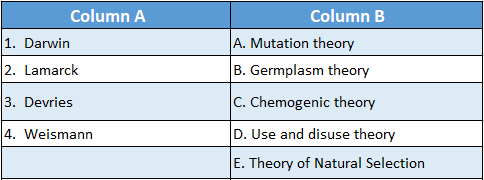
WBBSE Solutions For Class 10 Life Science Chapter 4 Evolution And Adaptation Topic A Evolution match the column 1
Answer: 1-E,2-D,3-A,4-B
WBBSE Solutions For Class 10 Life Science Chapter 4 Evolution And Adaptation Topic A Evolution match the column 2
Answer: 1-B,2-E,3-D,4-A
WBBSE Solutions For Class 10 Life Science Chapter 4 Evolution And Adaptation Topic A Evolution match the column 3
Answer: 1-B,2-D,3-A,4-A
WBBSE Solutions For Class 10 Life Science Chapter 4 Evolution And Adaptation Topic A Evolution match the column 4
Answer: 1-E,2-C,3-D,4-B
WBBSE Solutions For Class 10 Life Science Chapter 4 Evolution And Adaptation Topic A Evolution match the column 5
Answer: 1-E,2-C,3-B,4-A


WBBSE Chapter 4 Topic A Evolution Very Short Answer Type Questions

Question 1. What is the full form of LUCA?
Answer: Last Universal Common Ancestor, also called the Last Universal Ancestor (LUA).

Question 2. Name the link between the gymnosperm and the angiosperm.
Answer: Gnetum.

Question 3. Name the Eon when life started.
Answer: Proterozoic Eon.

Question 4. Name the membrane-bound Procell.
Answer: Coace private.

Question 5. Give the other name for proteinoid.
Answer: Microsphere.

Question 6. Where did life start?
Answer: In Ocean.

Evolution Class 10 MCQs

Question 7. State the duration of organic evolution.
Answer: 3.5 billion years.

Question 8. Name the organs which are structurally the same, but functionally different.
Answer: Homologous organs.

Question 9. Name the vestigial organ of the human eye. 
Answer: Nictitating membrane.

Question 10. Name the animal connecting reptiles and mammals.
Answer: Duck-billed platypus.

Question 11. Name the ship on which Darwin undertook his voyage.
Answer: H.M.S. Beagle.

Question 12. Name the oldest living fish.
Answer: Coelacanth.

Question 13. Name the connecting link between fishes and amphibia.
Answer: Latimaria.

Question 14. A pair of related terms is given below. On the basis of the relationship in the first pair, write the suitable word in the gap of the second pair.
Answer:

Flood: environmental struggle:: the battle to grab mating partner: Intraspecific struggle

Peripatus: Connecting link between Annelida & Arthropoda:: Pteridosperm: Connecting link between Pteridophyta and Gymnosperm

Macroevolution: Grand scale evolution of geological time::Microevolution: Genetic level evolution

Question 15. Which theory was proposed by Weisman? 
Answer: Germplasm theory.

Question 16. Name the functional form of the Appendix. 
Answer: Caecum.

Question 17. Name the book written by Lamarck.
Answer: Philosophic Zoologique.

Question 18. What is a mutant?
Answer: An organism formed by mutation.

Question 19. Name the phylum showing pseudocolor.
Answer: Aschelminthes.

Question 20. Name the type of heart found in fish.
Answer: Venous heart.

Question 21. Among the following four terms, one includes the other three. Find out that term and write it:
Answer: 

  1. Darwin’s point, vestigial organs, auricular muscles, Erector pili vestigial organs.
  2. Natural selection, mutation, Neo Darwinism, Darwinism Neo Darwinism

Question 22. Name a plant with pistilode-
Answer: Asparagus.

Question 23. Name a living fossil within a pteridophyte.
Answer: Psilotum.

Question 24. Where should a mutation occur for evolutionary success?
Answer: In germplasm DNA.

Question 25. Use the proper scientific term to explain the better adaptation of certain individuals among a population.
Answer: Natural Selection.

Question 26. Choose the odd one and write it: Species diversification, mutation, species death, evolution.
Answer: Species death.

Question 27. Name the smallest unit of living organisms that can undergo evolution.
Answer: A population.

Evolution Class 10 MCQs

Question 28. Give examples of living fossils (one each) from the animal and plant kingdom.
Answer: Bony fish Coelacanth (Latimeria menadoensis) Ginkgo biloba (Gymnosperm)

Question 29. Which type of animals has been fossilized most?
Answer: Invertebrates.

Question 30. What is ontogeny?
Answer: Ontogeny is the origin and development of an organism usually from the time of fertilization of the egg to the organism’s mature form (embryonic development).

WBBSE Chapter 4 Topic A Evolution Short Answer Questions With Answers
Question 1. What do you mean by LUCA?
Answer:

LUCA

LUCA (The last universal common ancestor) or LUA is the most recent common ancestor of all current life on earth.

LUCA is not the first living organism on earth, but only one of many early organisms, whereas the others became extinct. LUCA is estimated to have lived some 3.5 to 3.8 billion years ago.

LUCA had a single cell with a water-based cytoplasm enclosed by a lipid bilayer membrane. It had a set of 355 genes, a ring-shaped coil of DNA composed of four nucleotides, and was an anaerobic, C02 fixing, and thermophilic organism.

LUCA evolved in areas like deep sea vents and could tolerate environmental extremes like high salinity, acidity, or temperature.

Question 2. What are coacervates ?
Answer:

Coacervates

Coacervates consist of a colloidal protein with an outer lipoprotein membrane and represent a protocell.

Also called microspheres or proteinoids, they not only could move around but also exhibit endosmosis or exosmosis when kept under hypotonic and hypertonic conditions.

They do not contain any cell organelle but have enzymatic properties and therefore can be the center of different biochemical reactions.

Question 3. What is proto ribosome?
Answer:

Proto ribosome

The granular or fibrous RNA proteinoid complex which can perform a ribosome-related function is called a proto ribosome.

Question 4. How proteinoid is generated?
Answer:

Sidney Fox (1957-58) applied dry heat to a mixture of 18 amino acids and then cooled it. They joined to produce a polypeptide called proteinoid in the presence of water.

Question 5. How was organic molecule first produced in the world?
Answer:

When the temperature of the Earth went down to 100°C, hydrocarbons and water reacted with each other to produce biomacromolecules of fatty acid, sugar, nucleotide, amino acids, purine, pyrimidines, etc in the form of colloids.

Question 6. How protovirus was produced?
Answer:

The small nucleoprotein molecules joined with each other to produce a larger nucleoproteinoid which is also called the provirus.

Question 7. What is meant by the inheritance of acquired characteristics?
Answer:

Inheritance of acquired characteristics

As per Lamarckism, the changes or characters acquired by an organism in its lifetime are transmitted to the next generation.

It means that changes are cumulative over some time. This is known as the inheritance of acquired characteristics.

Question 8. Distinguish between homologous and analogous organs.
Answer:

Difference between homologous and analogous organs

WBBSE Solutions For Class 10 Life Science Chapter 4 Evolution And Adaptation Topic A Evolution Homologous and analogous

Question 9. What is organic evolution?
Answer:

Organic evolution

The slow but gradual process by which simple life forms are converted to relatively complex life forms over successive generations through the process of reproduction & variation is called organic evolution.

Evolution Class 10 MCQs

Question 10. What is the RNA world hypothesis?
Answer:

RNA world hypothesis

The RNA world states that RNA acted as an enzyme that developed into protein and gave rise to DNA by reverse transcription. Thus life forms were created from RNA. RNA was the first molecule of heredity and DNA evolved after it.

Question 11. How origin of new species was explained?
Answer:

The origin of new species was mentioned by Darwin, but he could not explain it.

It was later explained by Hugo deVries, who showed that because of the sudden & permanent modification or mutation of the constituent gene, new species are created.

Thus mutations are the raw materials of evolution.

Question 12. How is it possible that birds have originated from reptiles?
Answer:

The Archaeopteryx, which is a fossil bird is a missing link between reptiles and birds.

Like reptiles, they had teeth in the jaw, clawed digits, and long tails, and like birds, they had feathers, anterior limbs modified to form wings, and a round cranium.

Thus the presence of both reptilian and avian characters explains the mechanism of transmission between the two classes. Hesperornis was a flightless toothed aquatic bird and also an intermediate between reptiles & birds.

Such missing links sharing the characters of two groups prove the origin of birds from reptiles in the evolutionary process.

Question 13. What is the source of energy in the ancient world?
Answer:

The source of energy in the ancient world

UV rays, X-rays, cosmic rays, electric discharges from lightning, and the heat of volcanic lava were the possible sources of energy in the ancient world.

Question 14. What was the nature of the environment of the ancient Earth?
Answer:

The nature of the environment of the ancient Earth

The environment of the ancient Earth was reducing in nature.

The environment contained hydrogen, methane, ammonia, and water vapor.

There was no free Oxygen. More UV rays could enter the lower atmosphere of the Earth but absorption of UV was low. The ambient temperature was quite high compared to the present-day temperature.

Question 15. What is Dolio’s law?
Answer:

Dolio’s law

Evolution is irreversible. This is called Dolio’s law.

Question 16. What is speciation?
Answer:

Speciation

Speciation refers to the formation of new species. Factors that influence speciation are mutation, hybridization, recombination, polyploidy, natural selection, genetic drift, and isolation.

Question 17. Name and explain a vestigial behavior of human beings.
Answer:

The formation of goose bumps in humans under stress is a vestigial reflex or behavior.

A possible function of human evolutionary ancestors was to raise the body’s hair, making the ancestor appear larger to scare off predators.

Raising the hair was also used to trap an extra layer of air to keep the body warm. Due to the diminished amount of hair in humans, the reflex formation of goosebumps when cold is also vestigial.

Question 18. Explain the Germplasm theory in brief.
Answer:

The Germplasm theory

The germ plasm theory was proposed by August Weismann. The theory states that each organism is formed of two types of cells— somatic cells and germ cells.

The somatic cells constitute all the body cells except the germ cells of gonads and they perish with the death of the organism. Any character, acquired by the organism in its somatic cells, can not therefore be transmitted to its offspring.

That is why the facial scar of a soldier is not inherited by his son or daughter. The germ cells or gametes are transmitted from parents to the offspring.

So any change occurring in the germplasm cells is only transmitted to the offspring. The proposal of germplasm theory gave a huge blow to Lamarckism.

Question 19. Mention the factors on which the modern synthetic theory of evolution is based. Explain the phenomenon of elongation of the neck of a giraffe as per the modern concept of evolution.
Answer:

The modern Synthetic theory of evolution is based on the following factors:

  1. Genetic variability in populations
  2. Genetic and chromosomal mutation
  3. Natural Selection
  4. Reproductive isolation
  5. The ancestors of giraffes had necks and forelimbs of different lengths.

With changes in situations, as giraffes were forced to reach leaves on tall trees to access limited food in heterogeneous environments, the giraffes with longer necks and forelimbs had an advantage over others.

These long-necked giraffes had a better chance of survival and the genes controlling the traits were selected by nature as useful mutations.

Accumulation of variations produced new species when these giraffes reproduced and thus, the offsprings possessed the same advantageous variations.

This becomes a case of directional selection or progressive selection in which deviant individuals develop adaptations in response to environmental change and tend to survive and produce more offspring while the other section of individuals who cannot respond to environmental change are eliminated.

This explains how the present-day giraffe with long necks and forelimbs came into existence.

Question 20. What is parallel evolution?
Answer:

Parallel evolution

Analogous organs (having different origins and structures) have a superficial resemblance due to adaptations in similar environments and for the execution of the same function.

This type of evolution is known as parallel evolution. For example, the wings of insects, birds, and bats show this type of evolution since all these organs undergo adaptations to suit the flight of the organisms involved.

Question 21. What do you mean by convergent evolution?
Answer:

Convergent evolution

When similar parts of different animals or plants belonging to different groups are modified for the same purpose to adapt themselves in similar habitats or environments, it is known as convergent evolution.

For example, the same organ (fore limb) of whales and fish have been modified into flippers and fins respectively to suit the aquatic environment.

Both flippers and fins perform the common functions of swimming, steering, and balancing by undergoing convergent evolution.

Among plants, the phylloclade of cactus, the stipule of sweet pea, and the phyllode of Acacia undergo adaptations to perform the same type of functions under similar environmental conditions. These are analogous organs and they show convergent evolution.

Evolution Class 10 Life Science

Question 22. What is divergent evolution?
Answer:

Divergent evolution

When the same basic organs belonging to similar groups of organisms become adapted by specialization to different functions in different environments, it is known as divergent evolution.

The forelimbs of vertebrates are made up of the same structural elements, but whales use them as paddles for swimming, man uses them for holding or gripping, birds and bats use the wings for flying, and horses for running.

In plants, the phylloclade of cactus, cladode of Satamuli (Asparagus), the tendrils of Marjorie, and the rhizome of ginger are different modifications of the stem to perform different functions.

These are homologous organs that evolved due to the adaptation of these organisms to different environments. Hence these are examples of divergent evolution.

Question 23. What is a connecting link? Give examples.
Answer:

Connecting link

Animals exhibiting characters of two adjacent taxonomic groups that are still surviving on earth are called connecting links.

They afford very good evidence of organic evolution since the presence of characteristics of both groups indicates the evolution of one from another.

Peripatus is a connecting link between arthropods and annelids. Its arthropod characters are claws, jaws, hemocoel, trachea, and dorsal tubular heart.

The annelidan characters are continuous muscle layers in the body wall, unjoined legs, and nephridia. Neopilina is a connecting link between annelids and molluscans.

It is the only segmented mollusk that has a cup-shaped shell. Its visceral mass is divided into five segments each with a pair of shell muscles, gills, auricles, and nephridia.

Chimaera is a connecting link between cartilaginous and bony fishes. It has a cartilaginous skeleton, ventral mouth, dorsal fins, etc.

It resembles bony fish since it has a small mouth with fleshy lips, four pairs of gills, the absence of a cloaca, a separate anus, and a urinogenital aperture.

Balanoglossus, a protochordate, is a connecting link between invertebrates and chordates. It is a chordate because it contains a notochord, tubular nerve chord, and gill slits. The invertebrate characters include the phosphagen and the larva.

Wbbse Class 10 Life Science Evolution Notes

Question 24. Differentiate between inherited and acquired characters. Give examples of each type.
Answer:

Difference between inherited and acquired characters

Characters that are passed on from parents to offspring are known as inherited characters. Only those characters which have a gene for them are inherited.

Example: Colour of eyes. Characters that appear in an individual’s lifetime but that are not transmitted to the next generation are acquired characters.

Acquired characters do not produce changes in the DNA of germ cells, so they are not inherited.

Example: obese body.

Fill In The Blanks

Question 1. The earliest ancestor in the evolution of the horse is
Answer: Eohippus

Question 2. Homologous organs evolve due to evolution.
Answer: Divergent

Question 3. was the aggregate of some large colloidal molecules during the early phase of the origin of life.
Answer: Coacervate

Write True Or False

Question 1. The fundamental tenet of the evolutionary theory of Darwin is the process of natural selection.
Answer: True

Question 2. In Lamarck’s opinion, organisms can acquire any particular inheritable physical trait according to their need.
Answer: True

Question 3. According to Darwin organisms reproduce at geometric ratios.
Answer: True

Very Short Answer Type Questions

Question 1. Which type of evolution is indicated by homologous organs?
Answer: Divergent evolution.

Short Answer Type Questions With Answers

Question 1. Write the names of reactants used and one organic compound formed in the experiment of Miller and Urey in connection with the chemical origin of life.
Answer: 

Urey and Millar’s experiment Reactants used: 

A mixture of methane, ammonia, and hydrogen (in the ratio of 2:2:1) and water vapor organic compound formed (product): Amino acids such as glycine, alanine, aspartic acid, and glutamic acid.

Question 2. Write four important features modified in the evolution of the horse.
Answer:

Evolution of horse:

Increase in size:

Eohippus (30 cm high at shoulders) Mesohippus (61 cm high at shoulders) Merychippus (102 cm high at shoulders) Equus (150 cm high at shoulders).

Lengthening of limbs and feet to attain a speed

Reduction of lateral digits: 

Eohippus had forefeet with four complete fingers (2,3,4 and 5) and one splint of the first finger and hind feet with three functional toes (2, 3, and 4) and two splints of the first and fifth toes. Both the fore and hind feet of modern horses have one finger and one toe and two splints.

Increase in length and thickness of the third digit.

Question 3. Mention two features of internal structures on the basis of which ‘flipper of whales’ and ‘wings of birds’ are considered homologous organs.
Answer: Both the flipper of whales and the wings of birds are modified forelimbs of vertebrates.

The upper portion of the fore limb is supported by the humerus. Below the humorous, there are radius and ulna. These two bones are followed by carpals, metacarpals, and phalanges. Thus the bones reveal a striking similarity.

Flipper is a typically flat forelimb evolved for movement through the water. In the case of birds, the forelimbs are modified into wings for flying purposes in the aerial mode of life.

Hence, though there are some modifications in the bones for adaptation to different environmental conditions, the basic plan of arrangement of bones remains the same. Hence these are homologous structures.

Question 4. Write the names of one each vestigial organ present in the vertebral column and alimentary canal in the human body.
Answer:

Human vestigial organ Present in the vertebral column:

A vestigial tail or coccyx at the end of the vertebral column Present in the alimentary canal: Vermiform appendix of the caecum.

Question 5. Write in chronological sequence the names of four main fossil ancestors during the course of the evolution of horses.
Answer:
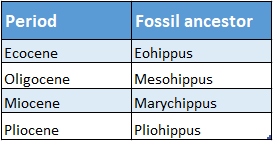
 

WBBSE Solutions For Class 10 Life Science Chapter 4 Evolution And Adaptation Topic A Evolution period


Question 6. Explain the process of Natural Selection as proposed by Darwin with the help of a suitable example. 
Answer:

Salient Features Of Darwin’s Theory of Natural Selection

The important features of Darwin’s theory are as follows—

1. Prodigality of reproduction:

Organisms have enormous fertility and they multiply in geometric ratio.

A few examples are—

Insects lay hundreds of eggs.

Plants produce thousands of seeds. A single fern produces a few million spores.

A salmon fish lays several hundred eggs at a time.

Elephant, the slowest breeder, lives for about 90 years. They attain reproductive maturity at about the age of 30 and give rise to about 6 offspring per head during their lifetime.

It is calculated that, if all offerings survive, then 19 million descendent elephants will be produced in 750 years from a single female.

2. Limitation of food and space:

Though a population tends to increase geometrically; food, space, and other resources on Earth are limited and they are liable to increase only arithmetically.

Limited food and space, which together form the major part of the carrying capacity of the environment, are the two main limiting factors that do not allow a population to grow indefinitely.

Wbbse Class 10 Life Science Evolution Notes

The struggle for existence:

Due to the rapid multiplication of populations but limited food & space, there starts an everlasting competition

between individuals having similar requirements.

In this competition, every living organism desires to have an upper hand over others.

The struggle for existence may be of three different types—

Intraspecific struggle:

It is the struggle between members of the same species because they share similar environmental resources.

Examples:

Two dogs struggling for a piece of meat.

Interspecific struggle:

It is the struggle for the members of different species due to sharing the same ecological conditions.

Example:

The struggle between predator and prey.

Environmental or extra-specific struggle:

It is the struggle of individuals with environmental constraints like floods, drought, earthquakes, extreme heat or cold disease, etc.

Out of these three forms of struggles, the intraspecific struggle is the strongest type as the needs of the individuals of same species are most similar.

Example:

Sexual selection in which a cock with a more beautiful comb and plumage has a better chance to win a hen than a cock with a less developed comb.

Similarly, cannibalism is another example of intraspecific struggle as in this individuals eat the members of the same species.

4. Variation:

Except for identical twins, no two individuals are alike and their requirements also vary. This is known as variation and by these variations, some individuals become better adapted to their environment.

According to Darwin, the variations are continuous. Adaptively useful variations pass to the next generation, while the others disappear.

Examples of variations with competitive advantages are increased speed in prey, increased water conservation in plants, etc.

5. Natural selection:

Individuals with favorable variations and greater reproduction ability are selected by nature. Unfit individuals are rejected by nature.

Characters, selected by nature, pass to the next generation. Sorting out of individuals with useful variations from a
heterogeneous population by nature was called natural Selection by Darwin. So natural selection acts as a restrictive force and not a creative force.

Theories Of Evolution Class 10

6. Survival of fittest and origin of species:

Descendents with favorable variations, selected by nature, will survive because they are the fittest to adapt to their environment; while the unfits will become extinct.

Originally, the phrase ‘the survival of the fittest, was first used by Herbert Spencer.

7. Speciation:

According to Darwinism, useful variations appear in every generation and are inherited from one generation to another.

So the useful variations go on accumulating and Darwin considered that, after several generations, the descendants with continuous and gradual variations will be so distinct from their ancestors, that they will form a new species.

So, according to Darwinism, evolution is a gradual process and speciation occurs by gradual changes in the existing species.

Examples Of Natural Selection

Skeletal adaptations:

Giraffes, lizards, and many other known species adapted to their environments through genetic changes to their skeletons.

Giraffes developed long necks to reach food sources higher up in trees, so members of the giraffe population who didn’t develop a long neck died out.


WBBSE Solutions For Class 10 Life Science Chapter 4 Evolution And Adaptation Topic A Evolution skeletal adaptations


At the same time, certain lizards with one characteristic are passed on to the next generation in greater proportion than the shorter neck region developed longer leg bones to help them climb up during periods of flood and to escape predators in the ground;

shorter-legged lizards of the same population died out until only the lizards with long legs survived.

Coloration:

Many species of deer mouse, peppered moth, and peacock have adapted to their environment through adaptations in coloring.

Once the optimal coloration is present, natural selection occurs when members of the species without the adaptive coloring died out more quickly and therefore, did not reproduce as abundantly.

Bacteria:

Bacteria can adapt to new food sources that were previously unusable.

Some bacteria have adapted to the presence of deadly antibiotics and exhibited traits that let them not only survive but also reproduce to generate offspring that are also resistant to the antibiotics.

Question 7. Tigers are extinct but there are many deer in the jungle. A few tigers are brought from another sanctuary and released in such a jungle. Imagine and write the names of different kinds of struggles for existence those tigers have to be involved in.
Answer:

The struggle for existence:

Intra-specific struggle due to the sharing of similar environmental resources

Interspecific struggle coming from members of other predator species, if any

Environmental struggle due to new geographical location and geological conditions of the jungle.-

WBBSE Chapter 1 Long Answer Type Questions

Question 1. Show the major evolutionary events with the help of a flow chart.
Answer:

Major Evolutionary Events

Origin of Earth:

Formation of the Earth some 5000 million years ago in the form of a mass of burning gases separated from the sun as per the Big Bang hypothesis. The temperature was about 5000 to 6000°C.

Formation of water, methane, and ammonia:

Gradual cooling of the Earth and hardening of the Earth’s crust, creation of clouds followed by precipitation, and formation of the small and large water bodies.

The primitive earth contained large amounts of hydrogen, nitrogen, carbon & oxygen. Of these, hydrogen combined with nitrogen to form ammonia, with oxygen to form water, and with carbon to form methane.

Compounds like ammonia, methane, etc got dissolved in rainwater and accumulated in the sea. Mineral rocks also dissolved ” leading to the accumulation of minerals and salts in seawater. Thus the first chemicals formed on the earth were water, ammonia, methane, and others.

Formation of micro and macromolecules:

The next step was the formation of micromolecules like amino acids, fatty acids, purine, pyrimidines, etc. in the form of colloids.

The micromolecules combine in various ways to form macromolecules like proteins, lipids, nucleic acids & nucleoproteins. The first formed proteins were called proto-proteins.

In the next step, nucleic acids were formed from phosphoric acid, sugar, purines, and pyrimidines. The nucleic acids and proteins combine to form nucleoproteins.

Coacervation:

Formation of lipid membrane-bound structures commonly called coacervates. They exhibited certain properties of cells.

Development of monera and protista:

Coacervates developed into provirus which gradually grew into two fundamental types monera and the Protista.

Oxygen revolution:

The emergence of the first photosynthetic bacteria or cyanobacteria having chlorophyll (a universal photosynthetic pigment) and blue-green pigments like phycocyanin.

These organisms had the ability of oxygenic photosynthesis which resulted in the liberation of oxygen in the atmosphere that turned the reducing environment to oxidizing environment.

The advent of multicellularity:

The prokaryotic organisms became diversified and divided repeatedly to produce multicellular prokaryotes.

The accumulation of free oxygen in the earth’s atmosphere made possible the evolution of aerobic metabolism, eukaryotes, sexual recombination, and multicellularity.

Formation of eukaryotes:

The emergence of nuclear membranes produced the first formed eukaryotes, which were initially unicellular and later became multicellular.

All early cells were haploid. Diploid cells appeared when some cells failed to divide after their DNA was duplicated. Diploid cells were better protected from harmful mutations.

Diversification to other forms:

Emergence of aquatic invertebrate animals.

The emergence of aquatic vertebrates in the form of fishes and their diversification.

The gradual development of land plants, and their colonization resulted in the massive modification of the terrestrial habitat, adding more oxygen to the terrestrial environment.

Diversification of terrestrial habitats with the development of new adaptive features which modified the Earth’s landscape.

The gradual shift of animal species from aquatic to terrestrial habitats initially for a short time in the form of four-limbed amphibians later creating a permanent terrestrial group of animals in the form of reptiles

The emergence of the highest-evolved land mammals.

Question 2. Describe the brief outline of the chemical origin of life mentioning Miller and Urey’s experiment.
Answer:

Abiogenesis Spontaneous Generation Or Naturalistic Theory

Russian biochemist A.I. Oparin and English biologist J.B.S Haldane suggested a theory that complex organic molecules were formed through a series of chemical reactions under the influence of lightning.

Organic compounds like water, ammonia, methane, alcohol, amino acids, etc produce ‘hot soup’ or ‘primordial soup’ within water bodies where smaller organic compounds combine together to form large organic compounds like polypeptides, proteins, nucleic acids, carbohydrates, etc.

These compounds produced the first living cell. Thus life is believed to have originated in oceans. The stage of chemical evolution is completed with the origin of proteins, nucleoproteins, and nucleic acids.

The process involved in the formation of a living cell from simple inorganic and organic nonliving elements is called abiogenesis or spontaneous generation of life from nonliving matters.

Oparin assumed that natural forces made some molecules in a colloidal solution mix and organize to form droplets called coacervates.

Successful coacervates gradually became better organized to give rise to the first living cells. The formation of coacervates was called coacervation.

Salient Features Of Coacervates Were As Follows:

They were stable, spherical with uniform diameter and microscopic.

They had double-layered boundaries around them.

They were motile and capable of growth,

They could reproduce through binary fission, budding, and fragmentation.

Urey and Miller’s Experiment

In 1953 Urey and his student Miller devised an experiment to give direct evidence of the molecular evolution of life or the abiogenic origin of life.

In this experiment, they took a mixture of methane, ammonia, and hydrogen (in the ratio of 2:2:1) in a discharge tube which was connected to a flask containing boiling water.

The hydrocarbon mixture within the discharge tube resembled the primitive atmosphere of Earth and the flask containing boiling water resembled the primitive sea.

WBBSE Solutions For Class 10 Life Science Chapter 4 Evolution And Adaptation Topic A Evolution urey and millers experiment


The water vapor from boiling water simulated torrential rain which formed the water bodies on Earth.

The gas mixture in the tube was subjected to electric discharge at 75000 volts for 7 days to resemble vigorous lightning and violent electrical storms in early Earth.

It was then cooled with the help of a condenser and liquified and the liquid was collected in another flask. On analyzing the jelly-like liquid it was found to contain simple organic compounds such as amino acids, hydroxy acids, and aliphatic acids.

The amino acids included glycine, alanine, aspartic acid, and glutamic acid. In this experiment, alpha-alanine predominated over beta-alanine.

Modern proteins contain only alpha amino acids. Miller argued that amino acids were formed on primitive Earth under the influence of ultraviolet light and lightning. The resultant liquid contained no nucleic acids.

Inference:

From the experimental observation, Miller concluded that organic molecules were synthesized abiotically in early Earth under the energetic influence of thunderstorms, cosmic radiations, etc. Thus the phenomenon of the chemical origin of life was proved.

Conditions on earth at the time of the origin of life differed greatly from those of today. No free oxygen was present in Earth’s early atmosphere.

The reducing atmosphere of early Earth helped chemical reactions to occur that produced a molecular soup.

Under conditions that resemble Earth’s primitive reducing atmosphere, small molecules essential to living systems formed and polymerized.

Moreover, these molecules accumulated in the seas because the rate of their formation was greater than the rate at which they were destroyed.

In a somewhat similar experiment, Sydney Fox obtained complicated molecules of protein having similar properties to the coacervates of Oparin.

Fox called those molecules microspheres which, like coacervates, were immiscible in the surrounding medium.

Theories Of Evolution Class 10

Question 3. Describe two major tenets of Lamarck’s evolutionary theory. How the comparative anatomy of hearts act as proof in favor of evolutionary theory? 
Answer:

Lamarck’s Theory

Lamarck’s theory, known as Lamarckism, was proposed by French biologist Jean Baptista de Lamarck (1744-1829) and the theory was discussed in detail in his book ‘Philosophic Zoologique’ in 1809.

Lamarckism comprises of following propositions or assumptions.

WBBSE Solutions For Class 10 Life Science Chapter 4 Evolution And Adaptation Topic A Evolution jean baptista de lamarck.jpg

1. New needs and their effects:

Continuous changes in the environment create new needs in organisms to become better adapted or more suited to the changed environment.

As a result, certain organs are extensively used and certain others are disused. Lamarck quoted the example of the influence of the environment on plants in support of his view.

He observed differences in the same species of plants grown in different environmental conditions. When plants are grown in fertile soil, they become healthy & luxuriant; the same plants grown in unfertile soil are weak and thin.

2. Use and disuse:

Continuous use of an organ or organs tends to develop them highly, whereas disuse results in a gradual reduction, degeneration, and complete disappearance.

Examples in favor of the Use theory:

The long neck of a giraffe, webbed feet of aquatic birds, bicep muscles & long legs of wading birds, etc.

Examples in favor of disuse theory:

Loss of limbs in snakes, degeneration of eyes in cave animals, degeneration of wings in flightless birds, vestigial organs in man, etc.

3. Internal urge of an organism:

Animals and plants can grow and increase in size. According to Lamarck, this increase is due to desire which is some sort of an internal urge of the animal to attain the maximum size.

4. Inheritance of acquired characters:

The changes acquired in an organism, during its lifetime, due to the use and disuse of organs and under the influence of the environment are called acquired characteristics.

The characteristics acquired by an organism during its lifetime are inherited by the offspring. It means that changes are cumulative over some time and are inherited by the next generation.

As per this proposition, the long neck of the giraffe and the degenerated wings of the kiwi are acquired characters. Hence, they are inherited by their progeny generation after generation.


WBBSE Solutions For Class 10 Life Science Chapter 2 Growth And Development

WBBSE Chapter 2 Continuity Of Life Growth And Development Introduction To The Concept Of Growth And Development

Our life starts from a single fertilized cell. This cell is under constant interaction with the environment in the mother’s womb (functional state of life) and after birth with the outside world.

This interaction leads to our growth and development. Growth occurs by the addition of new substances, both protoplasmic and apoplastic (ie. nonliving substances which become components of the tissues).

Cell growth occurs during the post-mitotic phase and interphase. During growth, anabolism is higher than catabolism.

WBBSE Solutions For Class 10 Life Science Chapter 2 Growth And Development

Growth in unicellular organisms is not pronounced because, in this case, growth means enlargement of the cell only.

Growth in multicellular organisms is pronounced, because it begins with a single cell, and then, over time, newer cells are added to it and so, it grows in volume.

The growth of all multicellular organisms is governed by the reproduction & growth of all the individual cells that constitute the body of the organism.

Read and Learn More WBBSE Solutions For Class 10 Life Science

Division of each cell and their growth into thousands in number, or their changing into tissues, blood, or bone, is part of the process of development.

For example, the multicellular plant body, as it grows, produces roots, stems, leaves, flowers, fruits & seeds by the differentiation of its cells, tissues, and organs This results in external differentiation in shape called development.

‘Growth’ and ‘Development’ are often used as synonymous terms. But growth is different from development. Growth means an increase in size, height, weight, length, etc. which can be measured.

Growth And Development In Plants Class 10

Development, on the other- hand, implies a change in shape, form, or structure resulting in improved working or functioning, which happens all through the life cycle.

Development distinguishes one kind of organism from another. Growth and development are the two important characteristics of a living organism. Normally growth contributes to development.

WBBSE Notes For Class 10 Geography And EnvironmentWBBSE Notes For Class 10 History And Environment
WBBSE Solutions For Class 10 Life ScienceWBBSE Class 10 Life Science Multiple Choice Questions
WBBSE Solutions for Class 10 MathsWBBSE Class 10 Maths Multiple Choice Questions
WBBSE Notes For Class 10 Physical Science And Environment


In reality though ‘growth and development’ are different, but they are inseparable. Generally, processes of growth and development go on simultaneously.

To be successful in survival, multicellular organisms have to undergo various phases of growth and development.

Importance of growth:

Growth is an essential, permanent, and irreversible feature of all living organisms that enables them to gradually mature into adult forms.

Growth involves the healing of wounds to protect the adult organism from adverse environmental conditions.

Some protozoans, sponges, and coelenterates are capable of either epimorphic or morphallactic regeneration of the lost part of the body or the entire body itself by the growth and differentiation of cells from the remaining piece of that part.

WBBSE Chapter 2 Growth And Development Growth

Growth is a permanent and irreversible increase in size or volume and dry mass due to the result of an increase in cell number (by mitosis) or cell size or both or due to the accretion of cellular materials when anabolism exceeds catabolism.

Growth involves cell division followed by cells becoming specialized. Growth can be measured as an increase in height, wet mass, and dry mass.

Height and wet mass can be measured when an organism is alive, but dry mass can only be measured when an organism has all its water removed and is dead.

However, dry mass is the best measure of growth. Dry mass is a more reliable measure of mass than fresh mass because the former excludes the fluctuating water concentrations in the biological material measured which is present in the latter.

Dry mass is the solid matter with all water removed. Let a plant sample be taken. Blot the plant to remove any free surface moisture.

Then put the plant in an oven or desiccator overnight until it is dehydrated in an atmosphere of low heat. Let the plant be cooled in a dry environment.

This would produce a dry mass. Weighing the sample on a sensitive scale gives the weight of the dry mass.

Growth in an organism consists of a permanent and more or less irreversible increase in size, commonly accompanied by an increase in solid matter, dry mass, and amount of cytoplasm.

During the growth of a multi-cellular organism, there is an increase in the number of cells. This however excludes an increase in water content and stored food materials (e.g. fat) because these are not permanent.

For example, when a plant cell is placed in a solution of higher water potential than itself, there is a net gain of water via osmosis and when placed in a solution of lower water potential, there is a net loss of water.

Hence these temporary changes are not to be considered for growth measurement.

Growth And Development In Plants Class 10

Once growth occurs in the living body, ie. there is an increase in dry weight accompanied by an increase in the size & volume of the living organism, it can not be reversed. The growth hormones have a great role in controlling both embryonic and post-embryonic growth.

If energy is obtained at the expense of protoplasmic proteins, it results in degrowth. The process in which reserve food material is utilized and exhibits negative growth is degrowth.

Degrowth results when catabolism is higher than anabolism.

Development may be defined as a series of progressive, non-repetitive, organized & genetically programmed changes through cellular differentiation that ultimately increases the complexity of an organism as it grows.

As the number of cells increases, they become differentiated (specialized for different tasks) and change shape to adapt to a specific function.

Development is closely related to growth. Development involves the differentiation of cells, an increase in dry mass (growth), and an increase in the complexity of an organism, e.g. development in flowering plants consists of the growth of a zygote into an embryo within a seed, the process of germination and growth of a seedling into an adult plant.

The main difference between growth and development is that growth involves only a quantitative change whereas development involves both quantitative and qualitative changes. Thus growth is a subset of development.

WBBSE Chapter 2 Growth And Development Types Of Growth

Growth is of different types based on different parameters as outlined below

Based on Growth & Multiplication Of Cells:

Auxetic growth:

When the volume of the body increases due to the growth of cells and not by their number, eg. growth in nematodes, rotifers, etc.

Multiplicative growth:

Here growth results due to cell division and consequent increase in cell number by mitosis, eg. growth in embryos.

Accretionary growth:

Here growth occurs due to the mitotic multiplication of some special types of reserve cells occurring in specific locations of the body, eg. post-embryonic growth of animals.

Based on continuity:

Positive growth:

Positive growth occurs when anabolism exceeds catabolism.

Negative growth:

Degrowth is termed negative growth.

In plants during the germination of a seed and the production of a seedling, there is an increase in cell number, cell size, fresh mass, length, volume, and complexity of form but the dry mass may decrease because the reserves are being used up.

From this point of view, germination is considered to include a period of negative growth which becomes positive only when the seedling starts to photosynthesize.

Before that the stored food is hydrolyzed to be used for respiration and sugars are oxidized to carbon dioxide and water, causing a net decrease in mass.

Based on the period of growth:

Limited growth:

Here growth takes place up to a certain period and then the organism dies. Plant organs like leaves, flowers, and fruits show limited growth.

Unlimited growth:

Here growth never ceases. Fishes, reptiles, and woody perennial plants show unlimited growth.

Based on organs undergoing growth:

Somatic growth:

This involves the growth of the somatic organs. In plants, it is the growth of roots, stems, leaves, etc, and in animals, somatic growth is the growth of organs like the heart, lungs, liver, etc.

Growth And Development In Plants Class 10

Reproductive growth:

This involves the growth of the reproductive organs. In plants, it is the growth of floral buds, flowers, seeds, etc whereas in animals it refers to the growth of male and female genitals.

WBBSE Chapter 2 Growth And Development Phases Of Growth

Growth Includes Three Phases As Follows

Cell Division:

One of the ways to achieve growth in an organism is by an increase in cell number as a result of mitosis cell division. In multicellular animals, the zygote divides repeatedly by mitosis to produce the morula stage.

The cells of the morula form a hollow ball with a monolayer known as a blastula. After this, a three-cell layered gastrula is formed. Cells of gastrula divide and get engaged to form the different organs in the embryonic stage.

In plants, cell division is localized in the meristematic regions.

The apical meristems of the stem tip and root tip are primarily responsible for the growth in length of the axis and the lateral meristems, cambium, and cork cambium are instrumental to the secondary increase in thickness in the stems of dicotyledons and gymno- sperms and roots of dicotyledons.

Cell Enlargement:

This is an irreversible increase in cell size due to an increased rate of anabolism than catabolism. For example, an increase in the length of stems and roots is brought about by the elongation of cells.

As the cells increase in size, vacuoles containing the cell sap begin to appear inside the cells and the vacuoles gradually fuse & expand to form a single vacuole at the center of the cells,

WBBSE Class 10 Life Science Notes

Consequently, with the appearance of the vacuole, the cells become osmotically active and thereby allow more water to enter into the cells as a result of which the cells increase in size.

Growing organisms also produce additional organic materials in their cytoplasm, which contributes to the dry mass of the cells.

WBBSE Solutions For Class 10 Life Science Chapter 2 Continuity Of Life Topic D Growth And Development

Cell Differentiation:

This contributes more to development than growth. In any multicellular organism, all the cells derived from the zygote by mitosis are genetically identical.

Therefore a liver cell, for example, contains the same set of genetic instructions as a kidney cell. As cells differentiate, different genes are switched on or off in response to the environment without losing their identifying characteristics.

Thus full-grown cells undergo genetic differentiation to become more specialized for a specific function.

Cell differentiation results in both somatic growth and reproductive growth in an organism. The cells once differentiated remain unchanged till their death.

WBBSE Solutions For Class 10 Life Science Chapter 2 Continuity Of Life Topic D Growth And Development cell division

WBBSE Chapter 2 Growth And Development Human Lifespan Development

The term lifespan development refers to age-related changes that occur from birth, throughout a person’s life, into and during old age. The stages of human lifespan development are

1. Infancy (Birth to two years):

While the infant is dependent on adults for most things, many psychological characteristics undergo rapid development.

During this stage, the bond that develops between the infant and his/her primary caregiver is important in terms of the infant’s later emotional development.

The infants use the sense organs while all the organs of the body undergo rapid growth at this stage.


WBBSE Solutions For Class 10 Life Science Chapter 2 Continuity Of Life Topic D Growth And Development human lifespan

2. Childhood (Two to ten years):

During this stage, children become increasingly independent from their parents as they learn to do things themselves and gain more self-control due to the tremendous growth of neural fibers inside the brain.

The children’s cognitive skills develop during this stage, and they also begin to develop an understanding of what is right and wrong due to the correct coordination of the nervous system.

WBBSE Class 10 Life Science Notes

Adolescence (Ten to twenty years):

The onset of puberty marks the beginning of adolescence. It is dominated by seeking independence from parents and developing one’s own identity.

Compared to the child, an adolescent’s thought processes are more logical, complex, and idealistic. This stage is characterized by very rapid growth but the rate of growth differs in boys and girls.

Secondary sex characters develop. A significant increase in the growth of reproductive organs is observed. Spermatogenesis and Oogenesis start in males and females respectively at this stage-this causes attainment of sexual maturity.

4. Adulthood:

Biologically an adult human being is self-sufficient, has fully developed somatic organs, and has achieved sexual maturity with all primary & secondary sex characters well developed both in male and female.

This may be divided into-

Early Adulthood (Twenty to forty years):

This is the stage of establishing personal and financial independence and establishing & consolidating a career. For many, it is also the time in which individuals select a partner, develop an ongoing intimate relationship, and begin a family.

In human beings, growth stops completely at the age of 22-23 years, i.e. once somebody attains the early adulthood stage.

Middle Age (Forty to sixty-five years):

This is a period of expanding social and personal involvements and responsibilities, advancing a career, and supporting offspring in their development to become mature individuals.

5. Older Age or late adulthood or senescence (Sixty five years plus):

Senescence means the state or process of ageing-in humans it means old age. It involves an increase in impairment of physiological functions with age, resulting in a decreased ability to deal with a variety of stresses and an increased susceptibility to diseases.

It is, therefore, a period of considerable adjustment to changes in one’s life and self-perceptions. For many older people, this is a very liberating time when they no longer have the day-to-day responsibility of looking after their children or working.

Certain aspects of sensory and perceptual skills, muscular strength, and certain kinds of memory tend to diminish with age, rendering older people unsuitable for some activities.

WBBSE Class 10 Life Science Notes

There is, however, no conclusive evidence that intelligence deteriorates with age, rather it is more closely associated with education and standard of living. Senescence ultimately results in death.

WBBSE Chapter 2 Growth And Development Fill In The Blanks

Question 1. Our life starts from a single fertilized cell known as________________.
Answer: Zygote

Question 2. ________________means an irreversible increase in size, height, weight, length, etc. which can be measured.
Answer: Growth

Question 3. ________________implies a change in shape, form, or structure resulting in improved working or in functioning.
Answer: Development

Question 4. Dry mass is the solid matter with all ________________removed.
Answer: Water

Question 5. The term ________________ development refers to age-related changes that occur from birth, throughout a person’s life, into and during old age.
Answer: Lifespan

WBBSE Class 10 Life Science Notes

Question 6. The Branch of Biology that deals with the study of the process of aging is called________________.
Answer: Gerontology

WBBSE Chapter 2 Growth And Development Write True Or False

Question 1. Our life starts from a mass of cells.
Answer: False

Question 2. The single fertilized cell is known as the zygote.
Answer: True

Question 3. Growth involves an irreversible increase in the dry mass of an organism.
Answer: True

Question 4. The wet mass is a more reliable index of growth than the dry mass.
Answer: False

Question 5. Cell differentiation occurs in unicellular organisms.
Answer: False

Plant Growth And Development Class 10 MCQS

Question 6. Human childhood is from 2-10 years.
Answer: True

Question 7. The onset of puberty marks the beginning of senescence.
Answer: False

Question 8. Plants exhibit determinate growth.
Answer: False

WBBSE Chapter 2 Growth And Development Match The Column

WBBSE Solutions For Class 10 Life Science Chapter 2 Continuity Of Life Topic D Growth And Development match the column
Answer: 1-E,2-A,3-D,4-C

WBBSE Chapter 2 Growth And Development Very Short Answer Type Questions

Question 1. What is dry mass?
Answer: Dry mass is the solid matter with all water removed.

Question 2. What is cell enlargement?
Answer: Increase in cell size.

Question 3. What is lifespan development?
Answer: The term lifespan development refers to age-related changes that occur from birth, throughout a person’s life, into and during old age.

Question 4. What are the divisions of our adulthood? Adulthood may be divided into- early adulthood, middle age, and older Age or late
Answer: adulthood or senescence.

Question 5. Which type of plant tissue exhibits growth?
Answer: Meristematic tissue.

Question 6. Name a class of animals whose growth takes place in steps in an intermittent manner.
Answer: Arthropods.

Question 7. Name the period of the growth curve which shows maximum growth.
Answer: Log phase.

Plant Growth And Development Class 10 MCQS

Question 8. Among the following four terms, one includes the other three. Find out that term and write it.
Answer: log phase, growth curve, stationary phase, senescent phase
Growth, differentiation, development, and increase in complexity characteristics of growth.

  1. Growth Curve
  2. Development

Question 9. Name two environmental factors that hamper normal growth.
Answer: Drought & pollution.

Question 10. What is the average lifespan?
Answer: It is the average number of years survived by the members of a population. For humans, the average life span varies between 80-100 years.

WBBSE Chapter 2 Growth And Development Short Answer Type Questions With Answers

Question 1. What is growth? Mention a few important
Answer:

Growth

Growth is a permanent and irreversible increase in size or volume and dry mass due to the result of an increase in cell number (by mitosis) or cell size or both or due to the accretion of cellular materials when anabolism exceeds catabolism.

Characteristics Of Growth:

1. Growth is quantitative and measurable.
2. Growth comprises of irreversible increase in height, weight, size, and shape of body parts & organs like the brain, muscles, etc.
3. It happens due to cell division and cell enlargement.
4. Growth is for a limited period ie. determinate for animals and indeterminate for plants.

Question 2. Explain the growth curve, rate of growth, and the percentage growth.
Answer:

Growth curve:

If an organism’s measurements (height, mass, etc) are plotted against time, an S-shaped ‘sigmoid’ curve is obtained which represents the growth pattern of all organisms, plants or animals, unicellular or multicellular forms.

This is known as the growth curve. Growth tends to be slow at the initial stage of cell division and the phase is called the lag phase.

The growth rate becomes maximum during the phase of cell elongation and this phase is called the log phase or exponential phase. As adult size is reached, growth slows down and at last, it finally stops.

This phase of growth is known as the stationary phase.

Rate of growth:

Rate of growth refers to the plot of growth increments against time, ie., the estimation of the increase in the size of the organism that takes place during successive intervals of time.

Plant Growth And Development Class 10 MCQS

In most of organisms, the growth rate increases steadily until it reaches a maximum, after which it gradually falls, giving a bell-shaped curve.

Percentage growth:

The increase in growth over a period of time, when expressed as a percentage growth that has already taken place, is the percentage growth.

It expresses the quantum of growth that has already occurred. Growth is fastest at the beginning of life, after which it gradually slows down. This is true for most organisms, both animal and plant.

WBBSE Solutions For Class 10 Life Science Chapter 2 Continuity Of Life Topic D Growth And Development percentage growth

Question 3. What do you mean by a grand period of growth? Write the differences between plant and animal growth.
Answer:

Grand period of growth

The period of maximum elongation of the body corresponding to the log phase of the growth curve is known as the grand period of growth.

The differences between plant and animal growth

WBBSE Solutions For Class 10 Life Science Chapter 2 Continuity Of Life Topic D Growth And Development plant and animal growth

Question 4. Name two of the external & internal factors that affect the growth of organisms.
Answer:

External factors: Light, water
Internal factors: Nutrition, Hormone

Question 5. Give the names of a few hormones that control human growth.
Answer:

Human growth in the first 10-13 years of age is controlled by thymosin. Growth at the end of childhood and during puberty is controlled by thyroxine and somatotropic hormones.

Question 6. How does the growth of unicellular animals vary?
Answer:

The growth of unicellular organisms like the bacterial population follows the typical S-shaped curve when a culture is inoculated with bacteria and the increase in cell number is plotted on a graph as a function of time.

Plant Growth And Development Class 10 MCQS

The Growth Curve Can Be Divided Into Four Parts:

  1. Lag phase
  2. Log phase
  3. Stationary phase and
  4. Senescent phase.

The lag phase is a period of cell adjustment to the new medium, a period of protoplasmic synthesis, cell enlargement, and preparation for division.

The log phase is the period of active cell division. The more cells there are, the more offsprings follow each division.
The stationary phase is the period in which there is no net increase in cell number.

This means that the rate of cell division equals that of cell death.

In the senescent phase, there is a decline in the number of viable cells in the population as during this time the rate of cell death exceeds that of cell replenishment.

This is the sign of senescent culture and the population continues to die unless the medium is changed.

WBBSE Solutions For Class 10 Life Science Chapter 2 Continuity Of Life Topic D Growth And Development stationary phase

Question 7. What do you mean by direct and indirect development? Give examples.
Answer:

Direct and indirect development

The post-embryonic development in which the embryo is directly developed into an adult animal without the involvement of any intermediate or larval form is known as direct development.

Examples: reptiles, birds, and mammals.

The post-embryonic development in which the embryo becomes an independent intermediate stage called a larva which undergoes metamorphosis to produce the adult form is known as indirect development.

Examples: amphibians, insects, etc.

Question 8. Growth can not be thought of as an increase in size only justify with examples.
Answer:

Growth is a subset of development. Growth is often thought of as an increase in size, but it is not an adequate definition.

The size of a plant cell may increase as it takes up water by osmosis, but this process is easily reversible and thus cannot be considered as growth.

Life Science Class 10 Chapter 2 WBBSE

On the other hand, when a zygote divides repeatedly to form a ball of cells (early embryo), there is an increase in cell number without an increase in size (volume and mass).

This is called cleavage and is the result of cell division without a subsequent increase in the size of daughter cells. This process is considered growth despite the fact that there is no increase in size.

Question 9. What is the relationship between aging and senescence? Mention two important features of senescence.
Answer:

The relationship between aging and senescence

The process of growing old by progressive deterioration of the structures & functions of the cells, tissues, and organs of the body that leads to old age or senescence is called again. Hence aging is the cause and senescence is the effect.

Class 10 Life Science Chapter 2 Solutions

Features Of Old Age Or Senescence:

This refers to an age group of sixty-five years plus wherein considerable adjustments need to be made in one’s life and self-perceptions due to impairment of physiological functions, decreased ability to deal with stresses, and increased susceptibility to diseases.

Certain aspects of sensory and perceptual skills, muscular strength, and certain kinds of memory tend to diminish with age, rendering older people unsuitable for some activities.

WBBSE Solutions For Class 10 Life Science Chapter 2 Sexual Reproduction in Flowering Plants

WBBSE Chapter 2 Sexual Reproduction In Flowering Plants Introduction To Flower

The flower is the most attractive organ of the plant that is solely concerned with reproduction, ultimately resulting in the formation of fruits and seeds.

The flower is equivalent to a shoot, having an axis (called Thalamus) with several specialised leaves (accessory whorls like sepals and petals) meant for reproduction.

Flowers may arise singly, as in the china rose- the stalk of the single flower is called a peduncle. More commonly, flowers arise in groups at the axils of special leaves or the terminal position.

WBBSE Solutions For Class 10 Life Science Chapter 2 Sexual Reproduction in Flowering Plants

A branch or a branch system bearing a cluster of flowers is called an inflorescence. The branched floral axis is called rachis and the branches are the pedicels. Flowers having pedicels are called pedicellate and those without pedicels or stalks are sessile.

Read and Learn More WBBSE Solutions For Class 10 Life Science

WBBSE Solutions For Class 10 Life Science Chapter 2 Continuity Of Life Topic C Sexual Reproduction in Flowering Plants Flower

WBBSE Chapter 2 Sexual Reproduction In Flowering Plants Typical Structure Of A Flower

A typical flower has four sets of floral leaves arranged on a short axis called the thalamus in a definite order. They are calyx, corolla, androecium and gynoecium.

Of the four sets of floral leaves the last two, androecium and gynoecium, are directly concerned with reproduction. They are known as reproductive whorls or essential whorls.

Flowering Plants Reproduction Process

The outer two sets, calyx and corolla, do not take any active part in reproduction, but just help in the process. So they are called accessories or helping whorls. Calyx and corolla are often collectively referred to as perianth.

Protective Structures:

Flower buds develop either at the apex of the stem or at the axils of special leaves called bracts. Bracts are generally small green bodies though in some cases they become brightly coloured.

WBBSE Notes For Class 10 Geography And EnvironmentWBBSE Notes For Class 10 History And Environment
WBBSE Solutions For Class 10 Life ScienceWBBSE Class 10 Life Science Multiple Choice Questions
WBBSE Solutions for Class 10 MathsWBBSE Class 10 Maths Multiple Choice Questions
WBBSE Notes For Class 10 Physical Science And Environment


These outermost leafy structures present in some flowers, which are represented by bracts and bracteoles, that respectively cover the inflorescence stalk and individual flowers, function as protective structures to the flower.

China rose has a whorl of green bracts placed beneath the calyx called the epicalyx.

WBBSE Chapter 2 Sexual Reproduction In Flowering Plants Parts Of A Flower

Thalamus:

The thalamus is the short abbreviated axis bearing the four sets of floral leaves.

It is the swollen end of the pentacle or pedicel with four nodes and very much compressed internodes. The floral leaves remain inserted on the nodes in whorls or spirally.

Function:

Floral whorls are arranged on the thalamus separately and successively.

Calyx:

The calyx is the outermost accessory set of floral leaves consisting of individual units called sepals (Fig. 2.45). Sepals are usually green inconspicuous bodies.

Sepals of some plants become coloured like the petals and are called petaloids, eg.
Krishnachura.

The sepals of the calyx may be united (gamosepalous) or they may be free (polysepalous). In many cases, sepals fall off before the flowers fully open out.

Flowering Plants Reproduction Process

They are called caducous sepals, eg. Poppy; while in others they fall off with other parts after fertilization. These are deciduous sepals.

The calyx may sometimes be retained even after the fruit is formed, it is called persistent calyx; it can grow along with the fruit (accrescent) as in brinjal or it can just be retained without any size change (marcescent) e.g. tomato.

WBBSE Solutions For Class 10 Life Science Chapter 2 Continuity Of Life Topic C Sexual Reproduction in Flowering Plants Floral

Function:

Sepals protect the inner parts of the flower in bud condition from heat, cold, rain etc.

Green sepals perform photosynthesis.

Coloured and showy sepals help in pollination by attracting insects.

A persistent feathery calyx helps the distribution of fruit by the wind.

Corolla:

It is the second accessory or protective whorl inside the calyx, represented by coloured leafy structures called petals containing different pigments like orange-carotene, red-lycopene, violet-anthocyanin etc.

They are often sweetly scented. The petals of Debdaru are called sepaloid as they are green and sepal-like in appearance.

They also exhibit a specific pattern of arrangement, remaining in one or multiple whorls, which also falls off with the maturity of the fruit.

The petals also can be united (gamopetalous) as in Datura or they can be free (polypetalous) as in the china rose. The free petals often have two parts narrow stalk called a claw and an upper flat blade known as a limb.

Sometimes it looks like a butterfly (papilionaceous) as in a pea flower.

Function:

In the bud stage of the flower, the corolla encloses the essential whorls and protects them from external heat, rain and insect attack.

They attract insects for pollination through colour, scent and nectaries or by providing a seat for them.

Androecium:

It is the first essential whorl and the male reproductive structure of a flower, represented by individual subunits called stamens.

Each stamen is divided into two major parts, the slender stalk-like filament and the apical sac-like anther, containing the yellow-coloured male reproductive spores or pollen grains, which come out through a specific line of dehiscence.

In china rose, one pollen sac is present in each anther lobe. The stamens may either be attached by cohesion or may be attached to the calyx (episepalous) or corolla (epipetalous).

In China, the stamens are called monadelphous since the filaments are united to form one bundle with the anthers remaining free.

The stamens of a flower may be of equal or unequal length. All stamens do not always bear fertile anthers. In Kalkasunde four out of ten stamens are sterile. They are called staminodes.


WBBSE Solutions For Class 10 Life Science Chapter 2 Continuity Of Life Topic C Sexual Reproduction in Flowering Plants Androecium

Function:

Anther of stamen produces male reproductive gametes or units of flower called pollen grains or pollinia.

Gynoecium or pistil:

It is the innermost female reproductive whorl with the individual units called carpels. Pistil may be made of one, two, three or many carpels.

Accordingly, they are monocarpellary, bicarpellary or polycarpellary. The monocarpellary pistil is called simple while others are termed as compound. Each carpel consists of three specific parts, viz.

the uppermost flat receptive structure called the stigma, the middle filamentous portion called style and the basal swollen portion called the ovary.

WBBSE Solutions For Class 10 Life Science Chapter 2 Continuity Of Life Topic C Sexual Reproduction in Flowering Plants ovary

The stigma that receives the pollen grain, is sticky or feathery to trap the pollen grain. The germination of the pollen grain produces the pollen tube which carries the male gametes into the ovary.

The ovary contains one or more egg-shaped bodies called the ovules which remain in a specific arrangement called placentation. It is the site for fertilization.

After fertilization, the ovules produce the seeds while the entire ovary produces the fruit. The fruits and seeds are disseminated by specific agents, which help in the perpetuation of the flowering plants.

In China multiple carpels are united at the common ovary and style portion with carpels remaining free only in the region of stigma.

Such a pistil is known as syncarpous.

Function:

The ovary contains ovules which are the female gametes that become the seeds after fertilization takes place. Seeds germinate to form new plants.

Some Descriptive Terms

A flower having all four floral sets is said to be complete, but if one or more sets are absent, it is incomplete.

When both stamens and carpels are present in the same flower, it is hermaphrodite or bisexual; if only one of them is present, the flower is unisexual.

Unisexual flowers may be staminate or male, or pistillate or female according to the stamens or carpels present in them. If both the whorls are absent the flower is neuter.

Wbbse Class 10 Life Science Notes

Thus unisexual and neutered flowers are incomplete.

A plant is called monoecious when it bears both staminate and pistillate flowers, eg. Gourd; but when the plants bear either staminate or pistillate flowers only, they are called dioecious, eg. palms. Some plants like mango, mangosteen etc bear all types of flowers bisexual, unisexual and even neutered.

They are called polygamous.

A flower is called regular when the individual parts of the whorls are similar in size and shape, as in China rose; but if the parts are dissimilar, the flower is irregular, eg. pea, Atasi etc.

A flower is termed actinomorphic when it can be cut into two halves by any number of planes passing through the centre. Regular flowers are usually actinomorphic.

It is zygomorphic, when it can be cut into two halves by only one plane through the centre, eg. pea. When even that is not possible, a flower is said to be asymmetrical having no symmetry, eg. Canna.

WBBSE Chapter 2 Sexual Reproduction In Flowering Plants Description Of China Rose Hibiscus Rosa Sinensis

Flowers:

Solitary, pedunculate, complete, regular, hermaphrodite.

Bracts 5 or more forming a whorl called epicalyx. Calyx: Sepals 5, gamosepalous, tubular.

Corolla:

Regular, showy, petals 5, slightly united at the base with the staminal column Androecium: Stamens many, monadelphous, anthers-free, one-celled.

Gynoecium:

Carpels 5, syncarpous, stigma 5, ovary- 5 chambered with many ovules.

WBBSE Chapter 2 Sexual Reproduction In Flowering Plants Pollination

Flowers are essentially meant for reproduction through seeds. The two reproductive organs, stamens and carpels, contain male and female gametes inside pollen grains and ovules respectively.

For fertilization, which involves a union of the two dissimilar gametes, the pollen grains must be carried to the stigma of the carpels. This process of transference of the pollen grains from the anthers to the stigma is known as pollination.

The transfer of pollen grains from the anther of a flower to the stigma of the same or a different flower of the same species is called pollination.

WBBSE Solutions For Class 10 Life Science Chapter 2 Continuity Of Life Topic C Sexual Reproduction in Flowering Plants Pollination

WBBSE Chapter 2 Sexual Reproduction In Flowering Plants Self-Pollination

The transfer of pollen grain from the anther of a flower to the stigma of the same flower (evidently bisexual) or the stigma of another flower (bisexual or unisexual) of the same plant, is called self-pollination.

When the pollination occurs in the same flower, it is called autogamy and when the pollination occurs between two different flowers of the same plant, it is called geitonogamy.

WBBSE Solutions For Class 10 Life Science Chapter 2 Continuity Of Life Topic C Sexual Reproduction in Flowering Plants geitonogamy

In either of the processes, only one parent plant is concerned with producing the offspring. Therefore the progeny becomes weaker due to the lack of recombination of contrasting characters.

Adaptations That Facilitate Self-Pollination Are As Follows:

Cleistogamous flower:

The flowers are minute, underground and do not open on maturity, so there cannot be any cross-pollination, e.g. Commeima.

The stamens and carpels mature at the same time in a bisexual flower.

It is likely then that some of the pollen grains are necessarily dropped on the stigma of the same flower through the agency of wind or insects. This phenomenon is known as homogamy.

Examples: Cactus, Pea etc.

The stamens are bigger than the carpels and grow just above the stigma.

The pollen grains have unique proteins in their outer coats, which are specific for the stigma of the same flower.

WBBSE Chapter 2 Sexual Reproduction In Flowering Plants Cross-Pollination

The transfer of pollen grains from the anther of one flower to the stigma of another flower (bisexual or unisexual) borne by two separate parent plants belonging to the same species or closely related species is called cross-pollination.

Pollen Grain Cross When the pollination takes place between two flowers borne by two separate plants of the same species, it is called xenogamy, while if it occurs between two closely related species, it is called hybridism.

In this process, two parent plants are concerned and therefore, the progeny often becomes stronger and healthier owing to the recombination of contrasting characters. Unisexual flowers are always cross-pollinated.

Adaptations That Facilitate Cross Pollination Are As Follows:

The flower is unisexual like in palms. This is called Dicliny.

The anther and stigma mature at different times. This is called Dichogamy.

Examples: Chinarose, Champa etc.

There is some physical barrier between the anther and the stigma e.g. Gynostegium of Calotropis. This is called Herkogamy.

The anthers are never released outside but are borne within sac-like structures called pollinia, which can easily be carried by insects, e.g. Orchid flowers.

There is an unusual growth of the style, which makes them taller than others, so pollen grains cannot reach the stigma. This is called Heteromorphism.

Wbbse Class 10 Life Science Notes

Pollen grains are light in weight, produced in bulk amounts and are not easily destroyed.

There is another phenomenon called self-sterility in which the pollen of a flower has no fertilizing effect on the stigma of the same flower, eg.

Tea flowers, grasses, and some orchids are self-sterile. Only pollen applied from other plants or other species is effective in such cases.

WBBSE Chapter 2 Sexual Reproduction In Flowering Plants Merits And Demerits Of Self And Cross-Pollination

WBBSE Solutions For Class 10 Life Science Chapter 2 Continuity Of Life Topic C Sexual Reproduction in Flowering Plants self pollution and cross pollution

WBBSE Chapter 2 Sexual Reproduction In Flowering Plants Agents Of Cross-Pollination

There are different agents that help in cross-pollination. Based on the type of agents, cross-pollination may be broadly divided as

WBBSE Solutions For Class 10 Life Science Chapter 2 Continuity Of Life Topic C Sexual Reproduction in Flowering Plants agents of cross polution

Anemophily or pollination with the help of wind: In this case, the wind is the abiotic agent of pollination.

Floral Character:

Flowers are generally smaller, devoid of any colour, nectar and fragrant odour. Pollen grains are light-weight, and produced in bulk amounts. Stigma is feathery and branched. Anthers are easily cut off from the filament, that is, they are versatile in nature.

Anemophilous plants:

Paddy, maize, bamboo etc.

(H) Hydrophily or pollination with the help of water: In this case, water is the abiotic agent of pollination.

Floral Character:

Flowers are small, inconspicuous, lightweight, colourless and can float easily on the surface of the water. Floral parts are covered by a waxy layer to prevent flowers from getting wet easily.

Pollen grains are impervious to water. Male flowers are superior in position in comparison to the female flower. Male flowers mature slightly before female ones. Stigmas are provided with bristles to catch nearby floating pollen grains.

Hydrophilous plants:

Hydrilla, Vallisneria etc.

Zoophily or pollination with the help of animals:

In this case, animals are the biotic agent of pollination. Depending on the nature of pollinators, zoophilous plants are categorized as:

Entomophily or pollination with the help of insects:

Insects are the pollinators for entomophilous plants.

Floral Character:

The flowers have a corolla tube. The nectaries are present. The anthers are large & projected outward from the corolla, while carpels remain within. The flowers are showy. Stigma may be sticky in nature. Pollen grains are rough, large and sweet in taste.

Entomophilous plants:

Mango, Sunflower, Karabi etc.

Ornithophily or pollination with the help of birds:

Birds pollinate ornithophilous plants.

Floral Character:

The flowers are large, showy and conspicuous.

They are mostly red in colour. The corolla is stout and may remain in the form of a tube, The pollen grains are produced in bulk amounts and are sticky in nature.

Ornithophilous plants:

Shimul, Palash etc.

Malacophily or pollination with the help of slugs, snails and squirrels:

Land plants like chrysanthemums and water plants like Lemna show malacophilous. Arisaema (snake plant) is often visited by snails. Squirrels also visit a large number of malacophilous plants and play a role in their pollination.

Floral Character:

Flowers are usually small. Male and female flowers are arranged in the same spadix. There may be attractive apathy bracts with nectar glands at the basal region of the inflorescence.

Sexual Reproduction In Flowering Plants

Chiropteriphily or pollination with the help of bats: Bat pollination is most common in tropical and desert areas that have many night-blooming plants.

Floral Character:

Bat-pollinated flowers tend to be large and showy, white or light-coloured, open at night and have strong musty odours. They are often large and have bell-shaped or ball of stamens. Flowers are rich with nectar.

Chiropteriphilous Plants:

Agave, Kadam etc.

WBBSE Chapter 2 Sexual Reproduction In Flowering Plants Fertilization And Development Of New Plant

Pollen grains are carried to the stigma of a flower by pollination. It is a necessary preliminary to the more important process called fertilization.

Fertilization is the process of the union of two dissimilar haploid isogametes (male and female). It is also known as syngamy. In angiosperms, it is internal and takes place between pollen grain and ovule.

WBBSE Solutions For Class 10 Life Science Chapter 2 Continuity Of Life Topic C Sexual Reproduction in Flowering Plants new plants

WBBSE Chapter 2 Sexual Reproduction In Flowering Plants Stages Of Syngamy Or Sexual Reproduction

Germination Of Pollen & Formation Of Male Gamete:

Uninucleate pollen grains generally become binucleate before liberation from the anthers. Of the two, the larger one is the tube nucleus and the smaller one is the generative nucleus.

Subsequent to pollination while resting on the stigma of the carpels, the stigmatic fluid stimulates germination of the pollen grain, as a result of which the exine is stretched and intine with the protoplasmic contents comes out through a weak spot, germ pore, to form a tube, called the pollen tube.

WBBSE Solutions For Class 10 Life Science Chapter 2 Continuity Of Life Topic C Sexual Reproduction in Flowering sexual reprodution

The tube nucleus is located at the tip of the pollen tube and is followed by the generative nucleus. Now the pollen tube elongates and pushes its way through the style ultimately reaching the ovary.

During the growth of the pollen tube, the tube nucleus gradually disintegrates and the generative nucleus divides into two nuclei, called sperm nuclei. They are the haploid (n) male gametes.

WBBSE Solutions For Class 10 Life Science Chapter 2 Continuity Of Life Topic C Sexual Reproduction in Flowering pollen tube

Formation of female gamete:

The embryo sac contains the haploid (n) egg at the micropyle end and the diploid (2n) definitive or secondary nucleus at its centre.

Fertilization:

After piercing into the embryosac, the pollen tube bursts at its tip liberating the two male gametes within the embryo sac.

One male gamete fuses with the egg, i.e., the female gamete, and that results in Pollen grains’ actual fertilisation. The fertilised egg soon secretes a wall around itself and forms the diploid (2n) zygote called oospore, which in the course of time, develops into the embryo.

WBBSE Solutions For Class 10 Life Science Chapter 2 Continuity Of Life Topic C Sexual Reproduction in Flowering Fertilization

The second male gamete moves on to the definitive nucleus located at the centre of the embryo sac and fuses with it, forming the triploid (3n) endosperm nucleus.

Sexual Reproduction In Flowering Plants

Though the second method is subsidiary to fertilisation it is nevertheless important, because the endosperm nucleus ultimately produces the nutritive tissue endosperm by method of free cell formation. This behaviour of the male gametes is called double fertilisation.

WBBSE Chapter 2 Sexual Reproduction In Flowering Plants Post-Fertilization Changes

After fertilization, the ovule gets transformed to produce the seed and the entire ovary forms the fruit. Thus the seed is the bearer of the future plant in the form of an embryo.

The different structures of the ovule transforming into the corresponding structures in the seed are-

The seed remains intact for a short period of dormancy before getting germinated to produce the radicle and then the plumule and thereby the entire seedling is generated.

WBBSE Solutions For Class 10 Life Science Chapter 2 Continuity Of Life Topic C Sexual Reproduction in Flowering Plants structure of ovule

WBBSE Chapter 2 Sexual Reproduction In Flowering Plants Fill In The Blanks

Question 1. Sepals are usually______________ in colour.
Answer: Green

Question 2. Corolla are formed of units called______________ .
Answer: Petals

Question 3. Gamopetalous flower includes______________ petals.
Answer: United

Question 4. The unit of androecium is______________ .
Answer: Stamen

Question 5. The unit of______________ is carpels.
Answer: Gynoecium

Question 6. The parts of stamen are and ______________.
Answer: Filament, they

Class 10 Life Science Chapter 2 MCQS

Question 7. The carpel consists of stigma, ______________ and ovary.
Answer: Style

Question 8. Pollination involves the transfer of pollen grain from to______________.
Answer: Anther, Stigma

Question 9. The ovule is present within ______________.
Answer: Ovary

Question 10. ______________ is pollination within the same flower.
Answer: Autogamy

Question 11. ______________is pollination between two flowers of the same plant.
Answer: Geitonogamy

Question 12. Pollination by wind is called______________ .
Answer: Anemophily

Question 13. When the pollen tube penetrates the nucleus through the micropyle, the condition is called the______________
Answer: Programs

Question 14. Pollination by water is called______________ .
Answer: Hydrophily

Question 15.______________ flower always shows self-pollination.
Answer: Cleistogamous

Question 16.______________ is also called accessary cells.
Answer: Synergids

Question 17. Pollination by bats is also called ______________.
Answer: Chiropteriphily

Class 10 Life Science Chapter 2 MCQS

Question 18. The fusion nucleus is ______________in nature.
Answer: Triploid

Question 19. Ornithophily is pollination by ______________ .
Answer: Birds

Question 20. Wind pollinated flower has______________ stigma.
Answer: Feathery

WBBSE Chapter 2 Sexual Reproduction In Flowering Plants

Question 1. The phenomenon of double fertilization is also called triple fusion.
Answer: True

Question 2. The essential whorls are four in number.
Answer: False

Question 3. The gynoecium is formed of carpels.
Answer: True

Question 4. Stamens are units of the male reproductive whorl.
Answer: True

Question 5. Vallisneria is pollinated by air.
Answer: False

Question 6. Kadam is a self-pollinated flower.
Answer: False

Question 7. Geitonogamy occurs within the same plant.
Answer: True

Question 8. The zygote develops from a fusion nucleus.
Answer: False

Class 10 Life Science Chapter 2 MCQS

Question 9. Sepals may help in photosynthesis.
Answer: True

Question 10. Flower is a modified shoot.
Answer: True

Question 12. Stigma of chinarose is five lobed.
Answer: True

Question 13. Endosperm is haploid in a gymnosperm.
Answer: True

Question 14. Fragrant flowers with well-developed nectaries are adapted for anemophily.
Answer: False

Question 15. The antipodals are haploid in nature.
Answer: True

WBBSE Chapter 2 Sexual Reproduction In Flowering Plants Very Short Answer Type Questions

Question 1. What is pollination by insects called?
Answer: Entomophily.

Question 2. Name the unit of the corolla.
Answer: Petals.

Question 3. if there are 4 microspore mother cells in anthers, what will be the number of pollen grains?
Answer: 4 (mother cells) x 4 = 16 pollen grains through meiosis.

Question 4. Name the gland that produces nectar.
Answer: Nectaries.

Question 5. Name the innermost whorl.
Answer: Gynoecium.

Class 10 Life Science Chapter 2 MCQS

Question 6. Name the type of flower which has fused petals.
Answer: Gamopetalous.

Question 7. Name the bract of chinarose.
Answer: Epicalyx.

Question 8. State the nature of stigma in insect-pollinated flowers.
Answer: Sticky.

Question 9. What is the other name for undifferentiated sepals and petals?
Answer: Perianth

Question 10. Name the nutritive layer of the anther.
Answer: Tapetum.

Question 11. Name two wind-pollinated flowers.
Answer: Paddy, wheat.

Question 12. What are the units of perianth called?
Answer: Tepals.

Question 13. What is the nature of the endosperm?
Answer: Triploid (3n).

Question 14. Name the part of the flower where the whorls are arranged.
Answer: Thalamus.

Question 15. Name a plant where pollinia (ie. pollen grains occurring in masses) are found.
Answer: Calotropis (Madar).

Question 16. What is the name of the stalkless flower?
Answer: Sessile.

Question 17. What is the name given to a flower with 4 whorls?
Answer: Complete.

Class 10 Life Science Chapter 2 MCQS

Question 18. Name the flower that can be cut into two halves at any plane.
Answer: Actinomorphic.

Question 19. How many nuclei participate in double fertilization?
Answer: egg (n) + secondary nucleus (2n) + [2 x male gamete (n) ] = 5 nuclei

Question 20. Among the following four terms, one includes the other three. Find out the term and write it:
Answer:

  1. Stigma, style, carpel, ovary
  2. Malacophilous, ornithophily, myrmecophily, zoophily
  3. Carpel
  4. Zoophily

Question 21. How many types of hydrophilous plants are there?
Answer:

Two types: Hypohydrogamous (pollination taking place completely underwater) and Epihydrogamous (pollination taking place on the water’s surface).

Question 22. What is microsporogenesis?
Answer: Microspore or pollen grain formation within the anther is called microsporogenesis.

Question 23. Name the three nuclei of the egg apparatus at the micropyle end.
Answer: The middle nucleus is the egg and the other two are called synergids.

Question 24. Out of the eight nuclei in the embryo sac, which one degenerates after fertilization?
Answer: The antipodals (3 nuclei) and the synergids (2 nuclei) degenerate after fertilization.

Question 25. A pair of related terms is given below. Based on the relationship in the first pair, write the suitable word in the gap of the second pair:
Answer:

sepals:calyx:: petals: corolla

Paddy: anemophily:: Hydrill: hydrophily

WBBSE Chapter 2 Sexual Reproduction In Flowering Plants Short Answer Type Questions

Question 1. What is autogamy?
Answer:

Autogamy

The transfer of pollen grains from the anther of a flower to the stigma of the same flower (evidently bisexual) or to the stigma of another flower (bisexual or unisexual) of the same plant is called autogamy or self-pollination. Evcactus, pea etc.

Question 2. What is allogamy?
Answer:

Allogamy

The transfer of pollen grains from the anther of one flower to the stigma of another flower (bisexual or unisexual) borne by two separate parent plants belonging to the same species or closely related species is known as allogamy or cross-pollination.

Question 3. What is double fertilization?
Answer:

Double fertilization

The process of double fertilization takes place in angiosperms where after the discharge of two male gametes into the embryo sac, the first male gamete fertilizes the egg to produce the diploid zygote (2n) while the second male gamete fertilizes the diploid fusion nucleus to produce the triploid endosperm mother nucleus (3n).

Wbbse Solutions Class 10 Life Science

Thus both the male gametes participate in fertilization, ie. fertilization takes place twice: true fertilization or syngamy and triple fusion. Hence it is known as Double fertilization.

Consequent to double fertilization, the zygote develops into the embryo and the endosperm nucleus into the endosperm which supplies nutrition to the embryo.

Question 4. What is porogamy?
Answer:

Porogamy

The entry of the pollen tube through the micropylar pore of the ovule during fertilization is called porogamy. It occurs in the majority of angiosperm plants.

Question 5. What is monogamy?
Answer:

Monogamy

The entry of the pollen tube through the integument of the ovule during fertilization is called misogamy, e.g. Cucurbita.

Question 6. What is chalazogamy ?
Answer:

Chalazogamy

The entry of the pollen tube through the chalaza during fertilization is called chalazogamy, e.g. Casuarina.

Question 7. What is a monoecious plant?
Answer:

Monoecious plant

The plant where the pollination occurs between the male and female flower of the same plant is called a monoecious plant, e.g. Gourd. These plants carry male and female flowers on the same plant. They are also called homothallic plants.

Question 8. What is the nature of the endosperms in gymnosperm? A gymnosperm plant has 24 chromosomes in the microspore mother cell. How many chromosomes are there in its endosperm?
Answer:

Nature of the endosperms in gymnosperm

The endosperm of gymnosperm is haploid and it is formed before fertilization. Since the diploid (2n) microspore mother cell of the gymnosperm has 24 chromosomes, both its haploid (n) microspore and endosperm (n) contain 12 chromosomes each.

Wbbse Solutions Class 10 Life Science

Question 9. Explain the construction embryo sac before double fertilization. In an angiosperm, there are 12 chromosomes in the microspore mother cell. How many chromosomes does it have in the endosperm?
Answer:

The female gametophyte or embryo sac consists of eight nuclei. Out of these eight nuclei four lie at one end of the embryo sac and the remaining four at the other.

One nucleus from each pole moves towards the centre and is known as the polar nucleus. Both polar nuclei fuse with each other to form a diploid nucleus known as the secondary nucleus (2n).

The remaining three nuclei at the chalazal end organize themselves to form the antipodal cells and the three nuclei towards the micropyler end constitute the egg apparatus.

The central cell of the egg apparatus constitutes the female gamete or the egg and the other two cells are called synergids. Since the diploid microspore mother cell (2n) of the angiosperm has 12 chromosomes, the triploid endosperm (3n) has 18 chromosomes.

Since the diploid microspore mother cell (2n) of the angiosperm has 12 chromosomes, the triploid endosperm (3n) has 18 chromosomes

WBBSE Solutions For Class 10 Life Science Chapter 2 Continuity Of Life Topic C Sexual Reproduction in Flowering Plants angiosperm

Question 10. Mention the differences between self-pollination and cross-pollination.
Answer:

The differences between self-pollination and cross-pollination

WBBSE Solutions For Class 10 Life Science Chapter 2 Continuity Of Life Topic C Sexual Reproduction in Flowering Plants self and cross pollination

WBBSE Objective Type Questions Write True Or False

Question 1. Self-pollination or cross-pollination can be exercised in flowers of pea plants according to the need.
Answer: True

Question 2. The carpel of flowering plants collects pollen grains with the help of a hairy and sticky style.
Answer: False

WBBSE Solutions For Class 10 Life Science Chapter 1 Response And Physical Coordination In Animals – Nervous System

WBBSE Chapter 1 Control And Coordination In Living Organisms Response And Physical Coordination In Animals Nervous System Introduction To Nervous System

The system comprising of a complex network of nerves, cells, brain & spinal cord that receives a stimulus both external & internal), transmits it to other parts of the body for interpretation & command, and sends the corresponding motor output is known as the Nervous System.

The Nervous System Performs Three Basic Functions:

Receiving stimuli through sensory neurons from internal and external environments and passing them to the brain; interpretation and processing of the input stimuli in the brain and then feeding response back to the body parts through motor neurons.

WBBSE Solutions For Class 10 Life Science Chapter 1 Response And Physical Coordination In Animals - Nervous System

WBBSE Chapter 1 Response And Physical Coordination In Animals-Nervous System Neural Control And Coordination

Our body exhibits a unique example of the division of labor among different cells, tissues, organs, and systems. Let us examine these with examples from daily life.

WBBSE Solutions Chapter 1 Control And Coordination In Living Organisms Topic D Response And Physical Coordination In Animals Nervous System nervous system

During running and exercise a person’s breathing and heart rate both increase. For the person to become more active his muscles will need to produce more energy.

They can do this by breaking down glucose from the consumed food, but to do this they need plenty of oxygen.

The brain then sends signals to the muscles that control breathing (the diaphragm and the intercostal muscles between the ribs) so that they shorten and relax more often.

WBBSE Class 10 Life Science Chapter 1 Solutions

This causes the person to take more breaths. As a result, more oxygen will be absorbed in the lungs and carried to the muscles that are being used to exercise the muscles belonging to the arms and legs.

Read and Learn More WBBSE Solutions For Class 10 Life Science

The heart rate increases to increase the cardiac output to cater to the enhanced need for blood supply to the effector’s muscles.

So, during these activities, the muscular system, respiratory system, circulatory system, nervous system, etc. get involved in a coordinated manner.

Here, in this example, the stimulus is of internal origin. The brain interprets the signal and sends motor commands to effector organs of both the respiratory & circulatory systems as a part of neural coordination.

When you step out in bright sunlight, you partly close your eyes to keep out the bright light. You may start sweating as the temperature rises to maintain the body temperature through thermolysis (or, the mechanism of heat loss by the body).

These are coordinated responses to stimuli. The physical part of this response and coordination in animals involves the nervous system.

WBBSE Notes For Class 10 Geography And EnvironmentWBBSE Notes For Class 10 History And Environment
WBBSE Solutions For Class 10 Life ScienceWBBSE Class 10 Life Science Multiple Choice Questions
WBBSE Solutions for Class 10 MathsWBBSE Class 10 Maths Multiple Choice Questions
WBBSE Notes For Class 10 Physical Science And Environment


WBBSE Chapter 1 Response And Physical Coordination In Animals-Nervous System The Nervous Pathway To Respond To Stimuli

This indicates that the first event in this sequence is a “Stimulus” (“Stimuli” is the plural form). It may be internal or external.

In this context, a stimulus may be defined as a physiochemical change in the environment that the human sensory receptors can detect, e.g. sound, physical contact, taste, visual sensation, hunger, etc. Irritability or sensitivity is a characteristic feature of all living organisms.

The next stage in the pathway is the “Sensory Receptors” sensing the stimulus. These receptors are located all over the body but some types of receptors are in specific areas of the body (e.g. taste buds on the tongue in the mouth).

Sensory neuron(s) then transmit information from the sensory receptor(s) to the Central Nervous System (CNS i.e. the brain and spinal cord).

WBBSE Class 10 Life Science Chapter 1 Solutions

This happens because peripheral nerves are connected to the spinal cord via the network of nerves within the nervous system.

The information so received by the CNS is further transmitted by relay neuron(s).

Finally, an effector (muscle and gland) brings about a response.

This pathway may be explained by a common example of our response after hearing the doorbell.


WBBSE Solutions Chapter 1 Control And Coordination In Living Organisms Topic D Response And Physical Coordination In Animals Nervous System sensory neuron


The ringing of the doorbell is the external stimulus. It generates sound waves that travel through the air.

The air-borne sound waves travel down through the ear canal and strike the tympanic membrane, causing it to vibrate. This vibration passes through the middle ear ossicles to the inner ear and finally stimulates the hair cells of the Organ of Corti.

The ear acts as the sensory photoreceptor for the sound stimulus. It is the movement of these hair cells which converts the vibrations into afferent nerve impulses,

The nerve impulses travel over the central auditory sensory pathways to the auditory cortex of the brain,

The brain or CNS interprets the impulses as sound and generates a response (in this case it is the action to open the door),

The response is achieved through motor nerves by our body movement to open the door.

Communication between receptors and effectors – Between the receptors and effectors are the conducting cells of the nervous system, termed neurons.

WBBSE Class 10 Life Science Chapter 1 Solutions

These are the basic structural and functional units of the nervous system. They are spread throughout the body of the organism forming a complex communication network. Neurons communicate through an electrochemical process.

Difference Between Mode Of Action Of Hormone And Nervous System:

Both nervous and endocrine systems are the basic systems that regulate the biological processes inside an organism but through different means of passing signals.

However, the basic differences between them, regarding mode of action-

WBBSE Solutions Chapter 1 Control And Coordination In Living Organisms Topic D Response And Physical Coordination In Animals Nervous System nervous

WBBSE Chapter 1 Topic D Response And Physical Coordination In Animals Nervous System Components Of Nervous System

The nervous system is made up of three basic elements nerve cells or neuron interstitial cells including neuroglia cells and connective tissue remains associated with the above elements.

Structure And Function Of Different Parts Of Neuron:

Neurons are the basic structural and functional units of the nervous system, which are readily excitable electrically to transmit information inside the bodies of animals.

The signaling or signal passing is carried out through both electrical and chemical means-

The human brain contains about 100 billion neurons.

Although the morphology of various types of neurons differ in some respects, they normally contain four distinct regions with different functions the cell body, the dendrites, the axon, and the axon terminals.

WBBSE Solutions Chapter 1 Control And Coordination In Living Organisms Topic D Response And Physical Coordination In Animals Nervous System neuron

WBBSE Chapter 1 Topic D Response And Physical Coordination In Animals Nervous System Type Of Neurons

Neurons May Be Classified As Follows:

WBBSE Solutions Chapter 1 Control And Coordination In Living Organisms Topic D Response And Physical Coordination In Animals Nervous System sensory neurons chart

According to function:

According To Function, Neurons Are Of Three Types.

1. Sensory neurons:

These run from the various types of stimulus receptors (e.g., touch, odor, taste, sound, vision, etc.) to the central nervous system (the brain and spinal cord).

2. Inter-neurons:

These are found exclusively within the spinal cord and brain. They are stimulated by signals reaching them from sensory neurons, other interneurons, or both. Interneurons are also called association neurons or adjustors.

3. Motor neurons:

These transmit impulses from the central nervous system to the muscles and glands that carry out the response.

According to structure:

WBBSE Class 10 Life Science Chapter 1 Solutions

According To Structure, Neurons Are Of Two Types.

1. Golgi I neuron:

A Golgy type I neuron has a long axon that begins in the grey matter of the central nervous system and may extend from there.

2. Golgi II neuron:

A Golgy type II neuron has a short axon or no axon at all.

According To The Number Of Processes:

Neurons are of four types

1. Apolar neuron:

An apolar neuron contains only the cell body and there is neither any dendron nor any axon.

2. Unipolar neuron:

A unipolar neuron has only one protoplasmic process originating from the cell body.

3. Bipolar neuron:

A neuron having one axon & one dendron originating from the opposite poles of the cell body is called a bipolar neuron.

4. Multipolar neuron:

A multipolar neuron has many dendrites and one axon arising from several poles of the cell body.

WBBSE Solutions Chapter 1 Nerve

Inter-relationship among, neurons, nerve fibers, and nerves.

A neuron or nerve cell is the fundamental unit of signal processing; an electrically excitable cell that processes and transmits information through electrical and chemical signals.

Dendrites are like antennae that receive information and pass it to the cell body. The cell body is a processor/integrator that decides to send action potential through the axon and at a certain frequency.

A bundle of several thousands of axons with associated connective tissue & blood vessels that lie outside the brain & spinal cord is called a nerve.

It may be myelinated (or medullated) or nonmyelinated (or non-medullated) nerve fiber. The diameter of a non-medullated nerve is less than that of the medullated one.

Class 10 Life Science Nervous System Solutions

Often the cell body sits somewhere and has its axon reaching several feet away. The axons are bundled together and go in a pipe sort of structure. It may either carry information to the brain (sensory) or from the brain (motor) or mixed.

Usually the term “nerve” is reserved for bundles of axons traveling outside the brain; inside the brain bundles of axons are called “fiber tracts” or “commissures.”

Each nerve is covered by three connective tissue layers, starting with the inner endoneurium, which covers the nerve fibers; the middle layer called the perineurium, and the outer layer over the perineurium, called the epineurium.

There are blood vessels within a nerve.

WBBSE Chapter 1 Topic D Response And Physical Coordination In Animals Nervous System Types Of Nerve

Nerves Are Categorized Into Three Groups Based On The Direction In Which Signals Are Conducted:

1. Afferent or sensory nerves conduct signals from receptors to the central nervous system since these are made up of sensory neurons only. Example – 1st (Olfactory) and 2nd (Optic) cranial nerves

2. Efferent or motor nerves conduct signals from the central nervous system along motor neurons to the effector organs like target muscles and glands.

Example- 3rd (Oculomotor) and 4th (Trochlear) cranial nerves.

Mixed nerves contain both afferent and efferent axons and thus conduct both incoming sensory information and outgoing muscle commands in the same bundle. Example- 5th (Trigeminal) and 7th (Facial) cranial nerves, spinal nerves.


WBBSE Class 10 Life Science Chapter 1 Control And Coordination In Living Organisms Mixed Nerves

WBBSE Chapter 1 Response And Physical Coordination In Animals Nervous System Neuroglia

Neuroglia is commonly known as glial cells or glia.

These comprise the interstitial tissue of the central nervous system. All glial cells are much smaller but far more numerous than the neurons. The cells do not possess axons.

Glial Cells Are Of Six Types-

  1. Macroglia
  2. Microglia
  3. Astrocytes (star-shaped)
  4. Oligodendrocytes
  5. Schwann cells and
  6. Satellite cells.

Functions:

  1. Neuroglias provide mechanical support to neurons,
  2. These prevent neuronal impulses from spreading in unwanted directions,
  3. These cells can remove foreign materials by phagocytosis,
  4. Neuroglia maintains homeostasis.

WBBSE Chapter 1 Response And Physical Coordination In Animals Nervous System Ganglia

Ganglia (singular = ganglion) are ovoid structures containing cell bodies of neurons and glial cells supported by connective tissue.

Ganglia function like relay stations-one nerve enters and another exits.

Formation:

In vertebrates, the ganglion is a cluster of neural bodies outside the central nervous system.

In the central nervous system, such collections of neurons are called nuclei. A spinal ganglion, for instance, is a cluster of nerve bodies positioned along the spinal cord at the dorsal and ventral roots of a spinal nerve.

Class 10 Life Science Nervous System Solutions

Function:

Ganglia provide relay points and intermediary connections between different neurological structures in the body, such as the peripheral and central nervous systems.

WBBSE Chapter 1 Response And Physical Coordination In Animals Nervous System Synapse

In the nervous system, a synapse is a structure that permits the axon terminal of one neuron to pass an electrical or chemical signal to the dendrite or cell body of the consecutive neuron through a small gap separating the two neurons in one way (forward conduction) only.

WBBSE Solutions Chapter 1 Topic D Response And Physical Coordination In Animals Nervous System Presynaptic

So it essentially consists of a presynaptic neuron, a post-synaptic neuron, and a synaptic gap.

Structure: The synapse consists of-

A presynaptic ending that contains neurotransmitters, mitochondria, and other cell organelles,

A post-synaptic ending that contains receptor sites for neurotransmitters, and

A synaptic cleft or space between the presynaptic and postsynaptic endings.

Function:

At the synaptic terminal (the presynaptic ending), an electrical impulse triggers the migration of vesicles containing neurotransmitters toward the presynaptic membrane.

The vesicle membrane fuses with the presynaptic membrane releasing the neurotransmitters into the synaptic cleft.

The neurotransmitter molecules then diffuse across the synaptic cleft where they can bind with receptor sites on the post-synaptic ending to generate the electrical response in the postsynaptic neuron.

Neurotransmitters are neurochemicals that are released into the synaptic cleft to transmit a nerve impulse from the presynaptic to the postsynaptic neurons. A few neurotransmitters are- acetylcholine, dopamine, gamma-aminobutyric acid (GABA), serotonin, etc.

Types:

Structurally synapses may be of three types-axodendritic (formed by the axon terminal of

one neuron with the dendrite of another), axosomatic (formed by the axon terminal of one neuron with the cell body of another), and aquaponic (formed by axon terminals of both neurons).

Class 10 Life Science Nervous System Solutions

WBBSE Chapter 1 Response And Physical Coordination In Animals Nervous System Types Of Nervous System

The nervous system is divided into the central nervous system and the peripheral nervous system.

The Central Nervous System Is Divided Into Two Parts the brain and the spinal cord. The peripheral nervous system is divided into two major parts the somatic nervous system and the autonomic nervous system.

The somatic nervous system comprises the craniospinal nerves that we actively control, like jumping with our legs or moving our arms.

The autonomic nervous system comprises a set of nerves that work automatically. The brain controls its functioning for us; for example- automatic pumping of the heart, breathing, etc.

WBBSE Solutions Chapter 1 Control And Coordination In Living Organisms Topic D Response And Physical Coordination In Animals Nervous System types of nervous system

1. Central Nervous System:

The brain and the spinal cord which lie within the craniovertebral axis together make up the central nervous system.

The brain lies protected inside the skull and from there controls all the body functions by sending and receiving messages through nerves.

The average adult human brain weighs 1.3 to 1.4 kg. The brain contains about 100 billion nerve cells (neurons) and trillions of “support cells” called glia.

The spinal cord is about 44cm long in an adult person. The vertebral column that houses the spinal cord, is about 70 cm long. However, the sizes may vary according to the body size and sex. Therefore, the spinal cord is much shorter than the vertebral column.

2. Peripheral Nervous System:

The peripheral nervous system carries messages to and from the central nervous system.

Messages travel through the cranial nerves, which branch out from the brain through various openings of the bones of the cranium of the skull and go to many places such as the ears, eyes, face, heart, lungs, etc.

There are 12 pairs of cranial nerves. Out of these 2 pairs are sensory and the rest are mixed nerves in function.

Messages also travel through the spinal nerves, which branch out from the spinal cord through the intervertebral foramen and supply different parts of the body.

There are 31 pairs of spinal nerves – 8 cervical, 12 thoracics, 5 lumbar, 5 sacral, and 1 coccygeal. Functionally all spinal nerves are of mixed type.

WBBSE Solutions Chapter 1 Control And Coordination In Living Organisms Topic D Response And Physical Coordination In Animals Nervous central nervous system

3. Autonomic nervous system:

Is a division of the peripheral nervous system that influences the function of internal organs without our will via motor neurons.

It regulates bodily functions such as the heart rate, digestion, respiratory rate, pupillary response, urination, and sexual arousal.

WBBSE Chapter 1 Response And Physical Coordination In Animals Nervous System Brain And Spinal Cord

Together, the brain and spinal cord form the central nervous system.

This complex system controls the things we choose to do, like walking and talking, and the things our body does automatically, like breathing and digestion of food.

The central nervous system is also involved with our senses and memory.

The brain or Encephalon is a soft, spongy mass of nerve cells and supportive tissue that lies at the cephalic end of the spinal cord within the cranium.

Class 10 Life Science Nervous System Solutions

The brain is made of three main parts:

The forebrain, midbrain, and hindbrain. The forebrain consists of the cerebrum, thalamus, and hypothalamus. The midbrain consists of the tectum and tegmentum.

The hindbrain is made of the cerebellum, pons, and medulla. Often the midbrain, pons, and medulla are together referred to as the brain stem. The parts work together, but each has special functions.

WBBSE Solutions Chapter 1 Control And Coordination In Living Organisms Topic D Response And Physical Coordination In Animals Nervous System sensory neurons chart

The cerebrum, the largest part of the brain, fills most of the upper skull. It has two halves called the left and right cerebral hemispheres.

The cerebrum uses information from our senses to tell us what’s going on around us and tells our body how to respond. The brain is divided into two halves.

Since the nerves cross when they enter the brain, the left side of our brain controls the right half of our body and the right side controls the left.

Each half also controls specialized functions. The right and left sides of the cerebrum are connected by a thick band of nerve fibers called the corpus callosum.

The cerebral cortex (thin outer layer of tissue) is grey because nerves in this area lack the insulation that makes most other parts of the brain appear to be white.

The cortex covers the outer portion (1.5mm to 5mm) of the cerebrum and cerebellum. The portion of the cortex that covers the cerebrum is called the cerebral cortex.

The cerebral cortex consists of folded bulges called gyri (singular = gyrus) that create deep furrows or fissures called sulci (singular = sulcus).


WBBSE Solutions Chapter 1 Control And Coordination In Living Organisms Topic D Response And Physical Coordination In Animals Nervous brain


The folds in the brain add to its surface area and therefore increase the amount of grey matter and the quantity of information that can be processed.

Most of the actual information processing in the brain takes place in the cerebral cortex.

The cerebral cortex is divided into lobes each having a specific function. For example, there are specific areas involved in vision, hearing, touch, movement, and smell.

Other areas are critical for thinking and reasoning. Although many functions, such as touch, are found in both the right and left cerebral hemispheres, some functions are found in only one cerebral hemisphere.

For example, in most people, language abilities are found in the left hemisphere. The lobes of the cerebral cortex are –

(1) parietal Lobe – involved in the reception and processing of sensory information from the body,

(2) frontal Lobe – involved with decision-making, problem-solving, and planning,

(3) occipital Lobe – involved with vision, and

(4) temporal Lobe – involved with memory, emotion, hearing, and language.

The cerebellum is the area of the hindbrain that controls motor movement coordination, balance, equilibrium, and muscle tone.

Like the cerebral cortex, the cerebellum is comprised of white matter and a thin, outer layer of densely folded grey matter. The folded outer layer of the cerebellum (cerebellar cortex) has smaller and more compact folds than those of the cerebral cortex.

Physical Coordination In Animals Class 10 Notes

The cerebellum contains hundreds of millions of neurons for processing data. It relays information between body muscles and areas of the cerebral cortex that are involved in motor control.

The brain stem connects the brain with the spinal cord. It controls hunger and thirst and some of the most basic body functions, such as body temperature, blood pressure, and breathing.

The spinal cord is made up of bundles of nerve fibers. It runs down from the brain through the vertebral canal in the center of the bones of the spine.

These bones protect the spinal cord. The spinal cord rapidly narrows below the lumbar region to form a cone-shaped structure called conus medullaris.

In the transverse section, the spinal cord consists of central grey matter, peripheral white matter, and a central canal. Grey matter is composed of nerve cells, nerve fibers, and neuroglial cells.

The central canal runs through the whole length of the spinal cord and is continuous above the fourth ventricle of the brain.


WBBSE Solutions Chapter 1 Control And Coordination In Living Organisms Topic D Response And Physical Coordination In Animals Nervous System dorsal root


WBBSE Chapter 1 Response And Physical Coordination In Animals Nervous System Meninges And CSF

The brain is protected by the bones of the skull and by a covering of three thin membranes called meninges. The outer layer of the meninges is called the dura mater.

This protects the brain from movements that may stretch and break brain blood vessels. The middle layer of the meninges is called the arachnoid.

It is the protective membrane that covers the brain and spinal cord. The inner layer, the one closest to the brain, is called the pia mater.

It functions to cover and protect the CNS, to protect the blood vessels and enclose the venous sinuses near the CNS, to contain the cerebrospinal fluid (CSF), and to form partitions with the skull.

Under the dura mater, the fluid-filled space is known as subdural space and the space in between the arachnoid & the pia mater is called the subarachnoid space.

The brain is also cushioned and protected by cerebrospinal fluid (CSF). This is a watery, clear, colorless fluid flowing through the ventricles and in spaces between the meninges.

Physical Coordination In Animals Class 10 Notes

CSF contains glucose, protein, lactic acid, various cations & anions, etc.

Cerebrospinal fluid brings nutrients from the blood to the brain and removes waste products from the brain. It acts as a cushion or buffer for the brain inside the skull.

Like the brain, the spinal cord is also covered by the meninges and cushioned by cerebrospinal fluid.

WBBSE Chapter 1 Response And Physical Coordination In Animals’ Nervous System Reflex Action

When a receptor is stimulated, it sends a signal to the central nervous system, where the brain coordinates the response. But sometimes a very quick response is needed, one that does not need the involvement of the brain.

This is called a reflex action. Reflex actions are rapid and happen without the involvement of thinking. For example, you would pull your hand away from a hot flame without thinking about it.

Even coughing and sneezing are reflexes. They clear the airways of irritating things.

Reflex action is a spontaneous involuntary (automatic) motor response due to a sensory stimulus that either may be harmful or routine in nature.

Examples:

  1. Blinking of eyelids,
  2. Contraction of pupils when exposed to light,
  3. Withdrawal of hand when one touches a hot object,
  4. Sneeze reflex when the nose is irritated,
  5. Cough reflex when the throat is irritated,
  6. Lacrimal reflex as tears are produced to clear objects from the eye.

WBBSE Chapter 1 Response And Physical Coordination In Animals Nervous System Types Of Reflex Action

Reflexes Are Of Two Types:

  1. Inborn or simple or unconditioned or natural reflex and
  2. Acquired or complex or conditioned reflex.

Inborn Or Simple Or Unconditioned Or Natural Reflex:

In this type of reflex, the brain is not involved. The receptor is stimulated which is conducted to the spinal cord by the effector.

The effector neuron from the spinal cord conducts a response to the muscle or the gland. This causes an immediate reaction. It does not involve any thinking or reasoning.

Unconditioned reflex is a natural response present since the birth of an individual and occurs even in newborn babies. For example, blinking of eyes when strong light falls on the eyes.

Response And Physical Coordination In Animals Class 10 WBBSE

The moving away of hand in response to pin-prick or heat is an example of this type.

Some other examples of unconditioned responses include gasping in pain after being stung by a bee, jerking your hand back after touching a hot plate on the oven, and jumping at the sound of a loud noise. In each of the above examples, the response occurs centers of the brain.

The reflexes that are not present since the birth of an individual but are acquired as a result of repeated practice and/or training are called conditioned or acquired reflex actions.


WBBSE Solutions Chapter 1 Control And Coordination In Living Organisms Topic D Response And Physical Coordination In Animals Nervous types of relaction


Example:

Swimming, cycling, writing, playing a musical instrument, etc.

The neural pathways in response to conditioned stimulus develop after practice. It is not transmitted through heredity. It may be lost if the conditioned stimulus is discontinued over a long period.

A series of experiments were conducted by Ivan Pavlov, a Russian biologist which demonstrated conditioned reflex. He found that when a bell was rung every time a dog was given food, the dog showed salivation only at the sound of the bell.

The ringing of the bell is called the conditioned stimulus. The dog had, thus, ‘learned’ to associate the sound of the bell to food and this made it salivate at the sound of the bell.

WBBSE Chapter 1 Response And Physical Coordination In Animals Nervous System Components Of Relax Arc

The sequences of events in a simple reflex action are stimulus receptor sensory neuron relay neuron motor neuron effector.

An arc-like neural pathway formed by a chain of neurons between receptor & effector organs through which reflex action takes place is called the reflex arc.

A reflex arc consists of five components:

Receptor:

It is a specialized sensory ending that detects a stimulus (change in the environment),

Sensory Neuron:

It forms the afferent limb of the arc and sends a signal to the relay neuron;

The relay neuron at the nerve center:

It lies in the grey matter of the spinal cord, or the brain stem. It sends the signal to the motor neuron,

The motor neuron:

It sends a signal to the effector and forms the efferent limb of the arc.

The effector:

It produces a response (the hand is pulled away quickly in response to an open flame) according to the directives of the nerve center. It may be a muscle, gland, or visceral organ.

WBBSE Solutions Chapter 1 Control And Coordination In Living Organisms Topic D Response And Physical Coordination In Animals Nervous cycle

WBBSE Chapter 1 Response And Physical Coordination In Animals Nervous System Importance Of Different Reflexes In Everyday Life

The speed of our reactions plays a large part in our everyday life.

We might duck in response to a loud sound, dodge if we see something coming towards us, retract if we touch something hot, or pull away if we stand on something sharp. A few common examples are-

1. Blinking Of the Eye:

Blinking is a semi-autonomic rapid closing of the eyelid. A single blink is determined by the forceful closing of the eyelid, not the full opening and closing.

Response And Physical Coordination In Animals Class 10 WBBSE

Purpose:

It is an essential function of the eye that helps to spread tears across and removes irritants from the surface of the cornea and conjunctiva.

WBBSE Solutions Chapter 1 Control And Coordination In Living Organisms Topic D Response And Physical Coordination In Animals Nervous System flow chart 1

Coughing:

The cough reflex has both sensory (afferent) mainly via the vagus nerve and motor (efferent) components.

Pulmonary irritant receptors (cough receptors) in the epithelium of the respiratory tract are sensitive to both mechanical and chemical stimuli.

The bronchi and trachea are so sensitive to light touch that slight amounts of foreign matter or other causes of irritation initiate the cough reflex.

Response And Physical Coordination In Animals Class 10 WBBSE

Purpose:

The cough reflex removes foreign material from the respiratory tract before it reaches the lungs.

WBBSE Solutions Chapter 1 Control And Coordination In Living Organisms Topic D Response And Physical Coordination In Animals Nervous System flow chart 2

Sneezing:

Sneezing is a protective reflex and is sometimes a sign of various medical conditions.

A sneeze is the expulsion of air from the lungs through the nose and mouth, most commonly caused by the irritation of the nasal mucosa.

Sneezing is a coordinated protective respiratory reflex that occurs due to stimulation of the upper respiratory tract, particularly the nasal cavity.

Purpose:

Sneezes protect our body by clearing the nose of bacteria & viruses. It expels mucus containing irritants and foreign particles to cleanse the nasal cavity.

The Components Of the reflex arc are:

WBBSE Solutions Chapter 1 Control And Coordination In Living Organisms Topic D Response And Physical Coordination In Animals Nervous System flow chart 3

WBBSE Chapter 1 Response And Physical Coordination In Animals’ Nervous System Eyes And Coordination With Environment

In order to be able to learn about and/or solve problems presented to them by their environment, humans must be able to take in information from that environment;

process it quickly and accurately; decide when, how, and what action to take; and then perform or execute that action. To receive information from the environment we are equipped with sense organizer

A sense organ is a specialized bodily structure that receives or is sensitive to internal or external stimuli. It is composed of receptors. Human sense organs are the eyes, ears, tongue, skin, and nose.

The Eye As A Sense Organ-Its Location, Structure, And Function

The sense organ consisting of photosensitive receptors (the rod & cone cells) and which helps us in vision is known as the eye.

The two eyes are located in the deep cavities of the skull called orbits on the frontal part of the cranium.

The structure of different parts of the human eye and their corresponding functions are given below:


WBBSE Solutions Chapter 1 Control And Coordination In Living Organisms Topic D Response And Physical Coordination In Animals Nervous system retina


WBBSE Solutions Organisms Chapter 1 Control And Coordination In Living Organisms Topic D Response And Physical Coordination In Animals Nervous System human eye

WBBSE Chapter 1 Response And Physical Coordination In Animals Nervous System Binocular Vision

We humans are largely binocular beings. Each eye alone gives us roughly a 130-degree field of vision. With two eyes, we can see nearly 180 degrees.

Because our eyes sit side by side, each eye captures a slightly different view. When signals from the two eyes reach the brain, they are superimposed and processed into a single picture with depth.

As a result, we get a 3D picture and can judge distances well. Binocular vision is vision using two eyes with overlapping fields of view and a good perception of depth to create a single visual image.

Advantages Of Binocular Vision:

Increased depth perception to clearly distinguish between nearness & farness.

Flexibility to focus on the image directly with one eye in case the other one is damaged or blinded.

Allows 3D vision.

Visibility beyond an obstacle.

Most birds and lizards have monocular vision their eyes are on each side of their head. This gives them a greater field of view, which is useful for spotting predators.

However, they have poor depth perception. Monocular vision is the vision in which both eyes are used separately to increase the field of view while the perception of depth becomes limited.

Response And Physical Coordination In Animals Class 10 WBBSE

Advantages Of Monocular Vision:

It enables the animal to see its surroundings and to detect the predators that might be ambushing from the sides.

It provides a wider range of vision.

WBBSE Chapter 1 Response And Physical Coordination In Animals’ Nervous System Accommodation Viewing Near And Distant Objects

The accommodation is a reflex action of the eye, in response to focusing on a near object, then looking at a distant object (and vice versa), comprising coordinated changes in vergence, lens shape, and pupil size.

Mechanism of accommodation:

The lens is responsible for accommodation, i.e., the adjustment of the eye for observing near or far objects. It does this by changing its shape.

This changes the focal length of the lens and permits it to focus the image formed on it by the cornea. The lens is suspended from the muscular ciliary body by a number of delicate zonule fibers attached to its equator.

In the normal relaxed condition (that is, with no tension placed on the fibers by contraction of the ciliary muscle) the lens’ shape is such as to refract rays from distant objects, and the eye is focused at infinity.

Accommodation for close vision requires tension to be exerted to deform the lens. Contraction of the muscles of the ciliary body tugs at the fibers and changes the shape of the lens. Thus, the eye adjusts the shape of the lens to keep objects in focus.

Looking at distant objects:

Ciliary muscles relaxed → lens becomes thin→ focal length of the lens increases.

Looking At Objects Closer To The Eye:

Ciliary muscles contract→ increases the curvature of the eye lens → lens becomes thick → focal length of the lens decreases.

WBBSE Solutions Chapter 1 Control And Coordination In Living Organisms Topic D Response And Physical Coordination In Animals Nervous System distance eye

The young human eye can change focus from distance (infinity) to as near as 6.5cm from the eye. The amplitude of accommodation declines with age.

Mammals, birds & reptiles vary their optical power by changing the form of the elastic lens using the ciliary body. Fish & amphibians vary their power by changing the distance between the rigid lens and the retina with muscles.

An example of accommodation can be cited from daily life situations. Good vision for drivers is a crucial factor in road safety, both for the pedestrians and passengers of the car.

This is required to avoid road accidents by taking note of obstacles, traffic signals, and road directions. Distance acuity is probably the most important visual skill for driving.

WBBSE Life Science Class 10 Chapter 1 Questions And Answers

Distance acuity is the ability to focus and see clearly at far distances. Even the simplest reactions in driving take at least 0.4 seconds.

A driver has to change focus quickly and easily from the road to the dashboard and back again. Being able to see color is also pretty important in car driving.

WBBSE Chapter 1 Response And Physical Coordination In Animals Nervous System Defects Of Visions And Corrective Measures

A person with normal eyes can, by accommodation, see all objects that are at a distance greater than about 25 cm from the eye.

If due to certain abnormalities the eye is unable to accommodate itself to various distances, then the eye is said to be defective.

Some common defects of the eye are—

1. Myopia:

Near-sightedness, also called myopia is the common name for impaired vision in which a person sees near objects clearly while distant objects appear blurred.

In such a defective eye, the image of a distant object is formed in front of the retina and not at the retina itself. Consequently, a nearsighted person cannot focus clearly on an object farther away than the far point of the defective eye.

Causes:

This defect arises because the power of the eye is too great due to the decrease in the focal length of the crystalline lens.

This may arise due to either-

Excessive curvature of the cornea, or

Elongation of the eyeball.

Correction:

This defect can be corrected by using a concave (diverging) lens. A concave lens of appropriate minus (-) power or focal length can bring the image of the object back to the retina itself.

WBBSE Solutions Chapter 1 Control And Coordination In Living Organisms Topic D Response And Physical Coordination In Animals Nervous System conacave convex

2. Hyperopia or hypermetropia:

Far-sightedness, also called hyperopia or hypermetropia, is the common name for a defect in vision in which a person sees near objects with blurred vision, while distant objects appear in sharp focus.

In this case, the image is formed behind the retina.

Causes:

This defect arises because either

the focal length of the eye lens is too great, or

the eyeball becomes too short so that light rays from the nearby object cannot be brought to focus on the retina to give a distinct image.

Correction:

This defect can be corrected by using a convex (converging) lens of appropriate focal length. Eyeglasses with converging lenses supply the additional focusing plus (+) power required for forming the image on the retina.

3. Presbyopia:

Presbyopia is a progressive form of farsightedness that affects most people by their early 40s. The power of accommodation of the eye decreases with aging.

Most people find that the near point gradually recedes.

WBBSE Life Science Class 10 Chapter 1 Questions And Answers

Causes:

It arises due to the gradual weakening of the ciliary muscles and diminishing flexibility of the crystalline lens.

Correction:

Simple reading eyeglasses with convex lenses correct most cases of presbyopia.

Sometimes, a person may suffer from both myopia and hypermetropia. Such people often require bifocal lenses.

In the bifocal lens, the upper portion of the bifocal lens is a concave lens, used for distant vision. The lower part of the bi-focal lens is a convex lens, used for reading purposes.

Cataract:

Generally, this defect can be found in aged or old people. Persons with this defect get blurred vision which sometimes even leads to total blindness.

The reason for this defect is that the lens loses its transparency and becomes opaque due to the deposition of protein material and calcium minerals in the lens.

This opaque condition of the lens does not allow the light rays from an object to pass through the lens. This defect can be rectified by surgically removing the lens and it has to be replaced by a highly convex lens.

Before intraocular lenses (lOLs) were developed, people had to wear very thick eyeglasses or special contact lenses to be able to see after cataract surgery.

Now, with cataract lens replacement by phacoemulsification or phaco surgery, several types of IOL implants are available to help people enjoy improved vision.

WBBSE Chapter 1 Response And Physical Coordination In Animals Nervous System Fill In The Blanks

Question 1. Between the receptors and effectors are the conducting cells of the nervous system, termed______________
Answer: Neurons

Question 2. ______________are specialized for the conduction of a particular type of electric impulse, called an action potential, outward, away from the cell body toward the axon terminus.
Answer: Axons

Question 3. ______________is a dense group of nerve cell bodies present in most animals.
Answer: Ganglion

Question 4. The central nervous system is divided into two parts: the brain and the______________.
Answer: Spinal cord

Question 5. In human there are______________ pairs of cranial nerves.
Answer: 12

Question 6. The forebrain consists of the______________ , thalamus, and hypothalamus.
Answer: Cerebrum

WBBSE Life Science Class 10 Chapter 1 Questions And Answers

Question 7. ______________is associated with vision, hearing, motor control, sleep/wake, arousal and temperature regulation.
Answer: Mid-brain

Question 8. The funnel-shaped structure of the cell body from where the axon arises is known as the______________.
Answer: Axon Hillock

Question 9. Salivation on smelling one’s favorite food is an example of reflex.
Answer: Control

Question 10. The______________ is the thin, transparent tissue that covers the outer surface of the eye.
Answer: Conjunctive

Question11. The______________ is the area of the eye that contains the pigment which gives the eye its color.
Answer: Iris

Question 12. Near-sightedness, also called______________ is the common name for impaired vision in which a person sees near objects clearly while distant objects appear blurred.
Answer: Myopia

Question 13. The middle layer of covering of a nerve is known as the______________.
Answer: Perineurium

Question 14. An axosomatic type of synapse is formed between the axon terminal of one neuron with the______________ of another.
Answer: Cell body

Response And Physical Coordination In Animals Class 10 WBBSE

Question 15. Cycling is an example of______________ reflex action.
Answer: Acquired

WBBSE Chapter 1 Response And Physical Coordination In Animals Nervous System Write True Or False

Question 1. Unconditioned reflex action occurs in newborn babies also.
Answer: True

Question 2. The nervous system is made up of two major types of cells known as neurons and neuroglia.
Answer: True

Question 3. Almost every neuron has multiple axons.
Answer: False

Question 4. Gaps that occur at regular intervals in the myelin sheath of medullated nerve fibers, between adjacent Schwann cells are known as nodes of Ranvier.
Answer: False

Question 5. Sensory neurons are found exclusively within the spinal cord and brain.
Answer: False

Response And Physical Coordination In Animals Class 10 WBBSE

Question 6. Information from one neuron flows to another neuron across a synapse.
Answer: True

Question 7. The nervous system is divided into the central nervous system and the autonomic nervous system.
Answer: False

Question 8. The autonomic nervous system is voluntarily controlled.
Answer: False

Question 9. The right and left sides of the cerebral cortex are connected by a thick band of nerve fibers called the cerebral hemispheres.
Answer: False

Question 10. The pons is a portion of the hindbrain that connects the cerebral cortex with the medulla oblongata.
Answer: True

Question 11. The brain is protected by the bones of the skull and by a covering of three thin membranes called meninges.
Answer: True

Question 12. Pavlov, a Russian biologist demonstrated conditioned reflexes.
Answer: True

Question 13. No perception of vision is there in the fovea centralis.
Answer: False

Response And Physical Coordination In Animals Class 10 WBBSE

Question 14. In cataracts, the eye lens loses its transparency & becomes opaque.
Answer: True

Question 15. In nervous coordination, the signal transmission is slow and the functions are long-lasting.
Answer: False

WBBSE Chapter 1 Response And Physical Coordination In Animals Nervous System Match The Columns

WBBSE Solutions Chapter 1 Control And Coordination In Living Organisms Topic D Response And Physical Coordination In Animals Nervous match the column
Answer: 1-A,2-C,3-B,4-A


WBBSE Solutions Chapter 1 Control And Coordination In Living Organisms Topic D Response And Physical Coordination In Animals Nervous match the column 2
Answer: 1-D,2-E,3-B,4-A


WBBSE Solutions Chapter 1 Control And Coordination In Living Organisms Topic D Response And Physical Coordination In Animals Nervous match the column 3
Answer: 1-D,2-C,3-B,4-E

WBBSE Chapter 1 Response And Physical Coordination In Animals Nervous System Very Short Answer Type Questions

Question 1. Which neurons transmit information from the sensory receptor(s) to the central nervous system?
Answer: Sensory neurons.

Question 2. What is a nerve?
Answer: A nerve is an enclosed, cable-like bundle of axons with associated connective tissue & blood vessels in the peripheral nervous system.

Question 3. What is the nature of the 5th (trigeminal) cranial nerve?
Answer: It is a mixed nerve.

Question 4. What is the corpus callosum?
Answer: The right and left sides of the cerebral cortex are connected by a thick band of nerve fibers called the corpus callosum.

Question 5. What is the cerebral cortex?
Answer: The cerebral cortex is the outer layer of the cerebrum section of the brain.

WBBSE Class 10 Life Science Chapter 1 Solutions

Question 6. What are meninges?
Answer: The brain is protected by the bones of the skull and by a covering of three thin membranes called meninges.

Question 7. In which type of reflex, the brain is not directly involved?
Answer: Inborn or simple or unconditioned reflex.

Question 8. Why the blind spot of the eye is not sensitive to light?
Answer: This is not sensitive to light because there are no rods or cones there.

Question 9. How myopia can be corrected?
Answer: This defect can be corrected by using a concave lens. (‘—’ power).

Question 10. What is presbyopia?
Answer: Presbyopia is a progressive form of farsightedness that affects most people by their early 40s.

Question 11. Why does the flow of signals in a synapse occur from the axonal end of one neuron to the dendritic end of another neuron but not the reverse?
Answer: When a nerve impulse arrives at the synaptic knob of a presynaptic axon terminal of a neuron, it triggers exocytosis of synaptic vesicles to release neurotransmitter molecules.

Neurotransmitters diffuse across the synaptic cleft and bind to the neurotransmitter receptors to generate electrical impulses for onward transmission.

Hence, an electrical signal is first converted to a chemical signal at the axonal end, and then again it is reconverted to an electrical signal.

Since the neurotransmitter molecules are absent at the dendrite end of the neuron, hence a dendrite cannot convert an electrical impulse to a chemical signal.

Question 12. Why nerve cells do not divide?
Answer: Though a fully developed nerve cell body contains centrosomes, the cell body cannot divide. The role of the centrosome is not yet known. Therefore in an animal body, the number of neurons present in a newborn baby is the same as that present in an adult, i.e. the number remains unchanged, only the size increases.

WBBSE Class 10 Life Science Chapter 1 Solutions

Question 13. State the location and functions of its granules.
Answer: Nissl granules are present in the cytoplasm of the cell body of a neuron. These help in the transmission of nerve impulses.

Question 14. What are collaterals?
Answer: Axons may form lateral branches called collaterals.

Question 15. Which type of photoreceptor cells are more sensitive to light and why?
Answer: Rod cell receptors are stimulated in low light intensity whereas to simulate cone cell receptors more intensity of light is required. Hence rod cells are more sensitive to light than cone cells

Question 16. Mention the size and weight of an adult brain.
Answer: Size: About 1500 cc.
Weight: About 1200-1400g (nearly 2% of total body weight)

Question 17. What are filum terminale ?
Answer: From the tip or conus medullaris of the spinal cord, the non-nervous fibrous tissue filaments called filum terminale pass downwards.

Question 18. Which one is the largest cranial nerve?
Answer: Trigeminal (5th cranial nerve).

Question 19. Which areas act as the highest centers for the Autonomic Nervous system?
Answer: Hypothalamus and extrapyramidal area of the cerebral cortex.

Question 20. Mention the refractive indices of the components of refractory media of the human eye.
Answer:

Cornea → 1.37 (nearly)
Aqueous humor → 1.33 (nearly)
Lens → 1.40 to 1.42 Vitreous humor → 1.34 (nearly)

WBBSE Class 10 Life Science Chapter 1 Solutions

Question 21. A pair of related terms is given below. Based on the relationship in the first pair, write the suitable word in the gap of the second pair:
Answer:

Sneezing: Inborn reflex action:: Cycling Acquired reflex action _______________
__________: 12 pairs:: Spinal nerves: 31 pairs Cranial nerves
Optic nerve : sensory:: Trochlear:________________Motor

Question 22. Among the following four terms, one includes the other three. Find out that term and write it:

  1. Dopamine, neurotransmitters, serotonin, acetylcholine neurotransmitters
  2. Refractory media, cornea, aqueous humor, vitreous humor refractory media.

WBBSE Chapter 1 Response And Physical Coordination In Animals Nervous System Short Answer Type Questions

Question 1. Show the pathway of nerve impulse transmission in a word diagram.
Answer:

The pathway of nerve impulse transmission in a word diagram

Stimuli → Sensory receptors → Sensory neuron→ CNS (spinal cord) → Relay neuron → Brain or simple reflex arc → Motor neuron Effector (muscle or gland).

Question 2. Mention any two functions of the nervous system
Answer:

Any two functions of the nervous system

It perceives the changes around us by receiving stimuli through sensory neurons intensity (i.e. dim light),

whereas to stimulate cone cell receptors more intensity of light is required (i.e. bright light). Hence rod cells are more sensitive to light than cone cells.

It controls and coordinates all the activities of the effectors (muscles, glands, or visceral organs) in response to outside changes.

Question 3. What is neuroglia?
Answer:

Neuroglia

Neuroglia are commonly known as glial cells or sometimes as glia. These non-neuron cells of the nervous system are important to maintain homeostasis as well as to form myelin.

Neuroglia are also important for the protection of neurons in the brain, and there are almost the same number of neuroglia cells as the number of neuron cells in the human brain.

The structure of this cell is like a spider or an octopus, but there is no axon as in neurons.

Question 4. What are interneurons?
Answer:

Interneurons

These are found exclusively within the spinal cord and brain. They are stimulated by signals reaching them from sensory neurons, other interneurons, or both.

Interneurons are also called association neurons or adjustors. It is estimated that the human brain contains 100 billion (1011) interneurons averaging 1000 synapses on each; that is, some 1014 connections.

Question 6. What are ganglia?
Answer:

Ganglion

Ganglion (plural ganglia) is a dense group of nerve-cell bodies present in most higher animals. In vertebrates, the ganglion is a cluster of neural bodies outside the central nervous system.

In the central nervous system, such collections of neurons are called nuclei. A spinal ganglion, for instance, is a cluster of nerve bodies positioned along the spinal cord at the dorsal and ventral roots of a spinal nerve.

The dorsal root ganglia contain the cell bodies of afferent nerve fibers. Efferent neurons are present in the ventral root ganglia.

Ganglia provide relay points and intermediary connections between different neurological structures in the body, such as the peripheral and central nervous systems.

WBBSE Class 10 Life Science Chapter 1 Solutions

Question 7. Classify the following as conditioned or unconditioned reflex actions:

  1. Applying the brake of a car at a red signal.
  2. Sweating
  3. opening the door on hearing the doorbell
  4. looking left or right before crossing the road
  5. knee jerk.

Mention the differences between conditioned and unconditioned reflex actions.

  1. Conditioned reflex action
  2. Unconditioned reflex action

WBBSE Solutions Chapter 1 Control And Coordination In Living Organisms Topic D Response And Physical Coordination In Animals Nervous Conditioned and unconditioned reflex


Question 8. How many types of reflex arcs are there?
Answer:

Asynaptic Reflex Arc:

This type of reflex arc does not contain any synapse and a single neuron acts both as sensory & motor components.

Monosynaptic Reflex Arc:

It is made up of one sensory & one motor fiber with one synapse in between.

Disynaptic reflex arc:

It consists of two synapses between three neurons.

Polysynaptic reflex arc:

There are many synapses in this type of arc.

Complex reflex arc:

It involves several reflex arcs spanning several spinal segments.

WBBSE Class 10 Life Science Chapter 1 Solutions

Question 9. Name a neuron that possesses an axon only. Differentiate between axon & dendron. The amacrine cell of the retina of the human eye Possesses an axon only.
Answer:

WBBSE Solutions Chapter 1 Control And Coordination In Living Organisms Topic D Response And Physical Coordination In Animals Nervous Axon And Dendron

Question 10. Mention one similarity and one dissimilarity between the nervous system and the endocrine system.

Similarity:

Both the nervous system and the endocrine system coordinate, regulate and integrate all the physiological functions in the animal body.

While the mode of coordination is chemical in nature for the endocrine system, it is electrochemical in nature in the case of the nervous system.

Dissimilarity:

Nervous control is rapid with a short-lived effect. Endocrinal control is slow but with long-lasting effects.

Question 11. What are the lobes of the cerebral cortex?
Answer:

The lobes of the cerebral cortex

The cerebral cortex is divided into several lobes, as- parietal lobe— is involved in the reception and processing of sensory information from the body;

frontal lobe- involved with decision-making, problem-solving, and planning; occipital lobe- involved with vision; and temporal lobe — involved with memory, emotion, hearing, and language.

Question 12. What are the functions of the cerebellum?
Answer:

The functions of the cerebellum

The cerebellum receives information from the sensory systems, the spinal cord, and other parts of the brain and then regulates motor movements.

The cerebellum coordinates voluntary movements such as posture, balance, coordination, and speech, resulting in smooth and balanced muscular activity. It is also important for learning motor behaviors.

Question 13. State the location of the medulla oblongata.
Answer:

The location of the medulla oblongata

Medulla oblongata, also called medulla, is the lowest part of the brain and the lowest portion of the brainstem.

The medulla oblongata is connected by the pons to the midbrain and is continuous posteriorly with the spinal cord, with which it merges at the opening (foramen magnum) at the base of the skull.

Question 14. What are the components of the reflex arc?
Answer:

A reflex arc consists of five components of receptors:

  1. Detects a stimulus (change in the environment),
  2. A sensory neuron sends a signal to the relay neuron,
  3. The relay neuron at the nerve center sends the signal to the motor neuron,
  4. The motor neuron: sends a signal to the effector and
  5. The effector produces a response (a muscle or gland or visceral organ).

Question 15. What is the importance of blinking of eyes?
Answer:

The importance of blinking of eyes

Blinking is a semi-autonomic rapid closing of the eyelid. A single blink is determined by the forceful closing of the eyelid, not the full opening and closing.

It is an essential function of the eye that helps to spread tears across and removes irritants from the surface of the cornea and conjunctiva.

Class 10 Life Science Nervous System Solutions

Question 16. Distinguish between sensory, motor, and mixed nerve.
Answer:

Difference between sensory, motor, and mixed nerve

WBBSE Solutions Chapter 1 Control And Coordination In Living Organisms Topic D Response And Physical Coordination In Animals Nervous sensory nerve


Question 17. What is a photoreceptor? Give examples. Enumerate The difference Between rod and cone cells.
Answer:

Photoreceptor

A photoreceptor is a specialized structure or cell (enterocele receptor) that is sensitive to light falling on it and can convert the light impulse into a nerve impulse.

There are three known photoreceptor cells in mammalian eyes:

Rods, Cones, And Photosensitive Retinal Ganglion Cells.

WBBSE Solutions Chapter 1 Control And Coordination In Living Organisms Topic D Response And Physical Coordination In Animals Nervous rod and cone cells


Question 18. Distinguish between cerebrum & cerebellum.
Answer:

Difference between cerebrum & cerebellum

WBBSE Solutions Chapter 1 Control And Coordination In Living Organisms Topic D Response And Physical Coordination In Animals Nervous Cerebrum

Question 19. What are the causes of hypermetropia?
Answer:

The causes of hypermetropia

Hypermetropia arises because either the focal length of the eye lens is too great, or The eyeball becomes too short so that light rays from the nearby object cannot be brought to focus on the retina to give a distinct image.

Question 20. What is a cataract?
Answer:

Cataract

Generally cataracts can be found in old age people. Persons with this defect get blurred vision and it sometimes even leads to total blindness.

The reason for this defect is that the lens loses its transparency and become opaque due to the deposition of protein material and calcium mineral in the lens.

This opaque condition of the lens does not allow the light rays from an object to pass through the lens.

Question 21. How cataract can be rectified?
Answer:

Cataracts can be rectified by surgically removing the lens and it has to be replaced by a highly convex lens. Before intraocular lenses (lOLs) were developed,

people had to wear very thick eyeglasses or special contact lenses to be able to see after cataract surgery.

Now, with cataract lens replacement by phacoemulsification or phaco surgery, several types of IOL implants are available to help people enjoy improved vision.

Question 22. What are aqueous humor & vitreous humor? Mention their functions.
Answer:

Aqueous humor

Aqueous humor is a transparent, watery extracellular fluid that fills up the chamber in front of the eye lens. It is secreted from the ciliary epithelium.

Functions:

  1. Maintains intraocular pressure & inflates the globe of the eye.
  2. Provides nutrition to the posterior cornea, lens, etc.
  3. Acts as a refracting medium.
  4. Contains immunoglobulins that defend against pathogens.
  5. The vitreous humor is a transparent, colorless, gelatinous mass that fills the space in the eye between the lens and the retina.

Functions:

  1. It maintains the shape & pressure of the eye.
  2. Acts as a refractive medium.
  3. It contains phagocytes which keep the visual axis clear most of the time.

Chapter 1 Response And Physical Coordination In Animals Nervous System Long Answer Type Questions

Question 1. Show the nervous pathway with the help of a word diagram. Briefly explain the functioning of the pathway with the help of the doorbell reflex.
Answer:

The Nervous Pathway To Respond To Stimuli

This indicates that the first event in this sequence is a “Stimulus” (“Stimuli” is the plural form). It may be internal or external.

In this context, a stimulus may be defined as a physiochemical change in the environment that the human sensory receptors can detect, e.g. sound, physical contact, taste, visual sensation, hunger, etc. Irritability or sensitivity is a characteristic feature of all living organisms.

The next stage in the pathway is the “Sensory Receptors” sensing the stimulus. These receptors are located all over the body but some types of receptors are in specific areas of the body (e.g. taste buds on the tongue in the mouth).

Sensory neuron(s) then transmit information from the sensory receptor(s) to the Central Nervous System (CNS i.e. the brain and spinal cord).

This happens because peripheral nerves are connected to the spinal cord via the network of nerves within the nervous system.

The information so received by the CNS is further transmitted by relay neuron(s).

Finally, an effector (muscle and gland) brings about a response.

This pathway may be explained by a common example of our response after hearing of the doorbell.

WBBSE Solutions Chapter 1 Control And Coordination In Living Organisms Topic D Response And Physical Coordination In Animals Nervous System sensory neuron

The ringing of the doorbell is the external stimulus. It generates sound waves that travel through the air.

The air-borne sound waves travel down through the ear canal and strike the tympanic membrane, causing it to vibrate. This vibration passes through the middle ear ossicles to the inner ear and finally stimulates the hair cells of the Organ of Corti.

The ear acts as the sensory photoreceptor for the sound stimulus. It is the movement of these hair cells which converts the vibrations into afferent nerve impulses,

The nerve impulses travel over the central auditory sensory pathways to the auditory cortex of the brain,

The brain or CNS interprets the impulses as sound and generates a response (in this case it is the action to open the door),

The response is achieved through motor nerves by our body movement to open the door.

Class 10 Life Science Nervous System Solutions

Communication between receptors and effectors – Between the receptors and effectors are the conducting cells of the nervous system, termed neurons.

These are the basic structural and functional units of the nervous system. They are spread throughout the body of the organism forming a complex communication network. Neurons communicate through an electrochemical process.

Difference Between Mode Of Action Of Hormone And Nervous System:

Both nervous and endocrine systems are the basic systems that regulate the biological processes inside an organism but through different means of passing signals.

However, the basic differences between them, regarding mode of action is-

WBBSE Solutions Chapter 1 Control And Coordination In Living Organisms Topic D Response And Physical Coordination In Animals Nervous System nervous

Question 3. Draw a labeled diagram of the human eye.
Answer: Diagram of the human eye:


WBBSE Solutions Chapter 1 Control And Coordination In Living Organisms Topic D Response And Physical Coordination In Animals Nervous system retina

Question 8. Mention the location of the following

  1. sulcus & gyrus
  2. inspiratory & expiratory centers
  3. conus medullaris Enumerate the differences between the brain & spinal cord.

Answer:

  1. sulcus & gyrus → cerebral cortex in the forebrain
  2. inspiratory & expiratory centres → pons in hindbrain
  3. conus medullaris → spinal cord

WBBSE Solutions Chapter 1 Control And Coordination In Living Organisms Topic D Response And Physical Coordination In Animals Spinal Cord

Question 9. Which part of the eye-

  1. Acts as the diaphragm of a camera
  2. Prevents the reflection of extra light within it.
  3. Give the differences between blind spots and yellow spots.

Answer:

  1. Iris
  2. Choroid

Question 9. Which part of the eye

  1. Acts As a Diaphram of the camera
  2. prevents reflections Of extra light within it.

Give the differences between blind spots and yellow spots.
Answer:

  1. It is
  2. Choroid

Class 10 Life Science Nervous System Solutions

WBBSE Solutions Chapter 1 Control And Coordination In Living Organisms Topic D Response And Physical Coordination In Animals Nervous blind and yellow spot


Question 10. Identify the animals having monocular & binocular vision:

Eagles, lizards, lions, owls, fish, snakes & cows. Give the differences between monocular & binocular vision. What is the normal field of view of human beings?
Answer:

Monocular vision: lizards, cows, fish Binocular vision: eagles, lions, snakes, owls. The field of view of human Beings is 190º for binocular vision.

WBBSE Solutions Chapter 1 Control And Coordination In Living Organisms Topic D Response And Physical Coordination In Animals Nervous Monocular vision


Example 11. Explain with a diagram how myopia can be corrected. What type of lens is needed to correct presbyopia?
Which defect of the eye cannot be cured by any type of spectacle lens?
Answer:

Defects Of Visions And Corrective Measures

A person with normal eyes can, by virtue of accommodation, see clearly all objects that are at a distance greater than about 25 cm from the eye.

If due to certain abnormalities the eye is unable to accommodate itself to various distances, then the eye is said to be defective.

Some common defects of the eye are—

1. Myopia:

Near-sightedness, also called myopia is the common name for impaired vision in which a person sees near objects clearly while distant objects appear blurred.

In such a defective eye, the image of a distant object is formed in front of the retina and not at the retina itself. Consequently, a nearsighted person cannot focus clearly on an object farther away than the far point of the defective eye.

Causes:

This defect arises because the power of the eye is too great due to the decrease in the focal length of the crystalline lens.

This may arise due to either-

Excessive curvature of the cornea, or

Elongation of the eyeball.

Correction:

This defect can be corrected by using a concave (diverging) lens. A concave lens of appropriate minus (-) power or focal length is able to bring the image of the object back to the retina itself.

WBBSE Solutions Chapter 1 Control And Coordination In Living Organisms Topic D Response And Physical Coordination In Animals Nervous System conacave convex

2. Hyperopia or hypermetropia:

Far-sightedness, also called hyperopia or hypermetropia, is the common name for a defect in vision in which a person sees near objects with blurred vision, while distant objects appear in sharp focus.

In this case, the image is formed behind the retina.

Causes:

This defect arises because either

the focal length of the eye lens is too great, or

the eyeball becomes too short so that light rays from the nearby object cannot be brought to focus on the retina to give a distinct image.

Correction:

This defect can be corrected by using a convex (converging) lens of appropriate focal length. Eyeglasses with converging lenses supply the additional focusing plus (+) power required for forming the image on the retina.

3. Presbyopia:

Presbyopia is a progressive form of farsightedness that affects most people by their early 40s. The power of accommodation of the eye decreases with aging.

Most people find that the near point gradually recedes.

Causes:

It arises due to the gradual weakening of the ciliary muscles and diminishing flexibility of the crystalline lens.

Correction:

Simple reading eyeglasses with convex lenses correct most cases of presbyopia.

Sometimes, a person may suffer from both myopia and hypermetropia. Such people often require bifocal lenses.

In the bifocal lens, the upper portion of the bifocal lens is a concave lens, used for distant vision. The lower part of the bi-focal lens is a convex lens, used for reading purposes.

Cataract:

Generally, this defect can be found in aged or old people. Persons with this defect get blurred vision which sometimes even lead to total blindness.

The reason for this defect is that the lens loses its transparency and become opaque due to the deposition of protein material and calcium mineral in the lens.

This opaque condition of the lens does not allow the light rays from an object to pass through the lens. This defect can be rectified by surgically removing the lens and it has to be replaced by a highly convex lens.

Before intraocular lenses (lOLs) were developed, people had to wear very thick eyeglasses or special contact lenses to be able to see after cataract surgery.

Now, with cataract lens replacement by phacoemulsification or phaco surgery, several types of IOL implants are available to help people enjoy improved vision.

Bi-focal lenses are needed to correct presbyopia.

Cataracts can not be corrected by using spectacle lenses.

Question 12. Give a brief description of the event rides of the brain. Mention the functions of CSF.
Answer:

There are four communicating cavities or ventricles within the brain.

Two lateral ventricles are The field of view of human beings is 190° for binocular vision. present within the cerebral hemisphere.


WBBSE Solutions Chapter 1 Control And Coordination In Living Organisms Topic D Response And Physical Coordination In Animals Nervous System CSF

The third ventricle is a median cavity that is bounded by the thalamus and hypothalamus. The first and second lateral ventricles communicate with the third ventricle through an aperture, called the interventricular foramen or foramen of Monro.

The fourth ventricle is the most inferior and communicates anteriorly with the third ventricle by plexus, located in the walls and roofs of the ventricles.

Protection: CSF acts as a soft cushion and shock absorber to both the brain & spinal cord & helps to prevent damage against mechanical blows.

Supply of nutrition & O2: It supplies nutrition & O2 to nerve cells of CNS. It also distributes peptides, neuroendocrine factors & other nutrients.

Excretion: CSF drains out metabolites from the nerve tissues of the CNS.

WBBSE Chapter 1 Fill In The Blanks

Question 1. The process of necessary adjustment of the focal length of the lens in the human eye is called
Answer: Accommodation.

WBBSE Chapter 1 Write True Or False

Question 1. The hypothalamus helps to maintain body balance in humans.
Answer: False

Question 2. Acetylcholine and adrenaline are neurotransmitters.
Answer: True

WBBSE Chapter 1 Very Short Answer Type Questions

Question 3. Choose the odd one and write it:
Answer: Glossopharyngeal, Occulomotor, Trigeminal, Oxytocin, since it is a hormone produced by the hypothalamus while the other three are cranial nerves.

Question 4. What is the function of the fluid present in the intermediate chamber between the lens and retina of the eyeball?
Answer:

Aqueous humor is a transparent, watery extracellular fluid that fills up the chamber in front of the eye lens. It is secreted from the ciliary epithelium.

Functions:

  1. Maintains intraocular pressure & inflates the globe of the eye.
  2. Provides nutrition to the posterior cornea, lens, etc.
  3. Acts as a refracting medium.
  4. Contains immunoglobulins that defend against pathogens.
  5. The vitreous humor is a transparent, colorless, gelatinous mass that fills the space in the eye between the lens and the retina.

Functions:

  1. It maintains the shape & pressure of the eye.
  2. Acts as a refractive medium.
  3. It contains phagocytes which keep the visual axis clear most of the time.

WBBSE Solutions For Class 10 Life Science Chapter 1 Response And Chemical Coordination In Animals Hormones

Chapter 1 Response And Chemical Coordination In Animals Hormones Introduction To Chemical Messengers

Our body is made up of billions of cells that are organized into different tissues. The tissues constitute organs, and different organs constitute systems such as the digestive, respiratory, and circulatory systems.

The ability of an organism to detect changes and make appropriate responses is called sensitivity. Anything to which an organism responds and reacts is called a stimulus. In animals, the responses are quicker and more obvious.

WBBSE Solutions For Class 10 Life Science Chapter 1 Response And Chemical Coordination In Animals Hormones

In multicellular animals, the process of responding to stimuli is different. The responses occur within seconds, but through a complex communication network involving several life processes like movement, locomotion, transport, respiration, etc.

For example, when you step out in bright sunlight, you partly close your eyes to keep out the bright light. You may start sweating as the temperature rises.

Read and Learn More WBBSE Solutions For Class 10 Life Science

These are coordinated responses to stimuli. Metabolic processes within the organism itself also create several stimuli to which the organism has to react.

Response and coordination in animals involve the sense organs, nervous system, and chemical messengers called hormones.

WBBSE Solutions For Class 10 Life Science Chapter 1 Hormones Coordinator

The area receiving the stimulus and the reacting organs are connected by the nervous system. On the other hand, the endocrine system is a chemical messenger system consisting of hormones, the group of glands that secrete the hormones, and the feedback loops that the hormones drive.

The objective of both the nervous system and the endocrine system is the same to keep controlled conditions within limits that maintain life (called homeostasis), but the way of achieving the objective is different.

While the nervous system regulates body activities by responding rapidly using nerve impulses, the endocrine system responds slowly, though no less effectively, by releasing hormones.

Class 10 Life Science Animal Hormones Solutions

A hormone is an organic chemical, synthesized & secreted by a cell, a gland, or an organ in one part of the body into the body or tissue fluid, and that affects cells in other parts of the organism.

In essence, it is a chemical messenger that transports a signal from one cell to another to carry out chemical coordination in a living body. The first identified hormone was Secretin and it was discovered by W.M. Bayliss & E.H. Starling.

WBBSE Chapter 1 Need For Regulation Of Different Activities Of The Animal Body

(E.G Human) And The Role Of Hormones

To perform a particular function the component organs of each system depend on each other and work in harmony. In the absence of such coordinated working, an organism cannot do many things that it normally does.

There are several examples of coordination in our bodies —

Piloerection Of Body Hair Or Goose Bumps:

WBBSE Notes For Class 10 Geography And EnvironmentWBBSE Notes For Class 10 History And Environment
WBBSE Solutions For Class 10 Life ScienceWBBSE Class 10 Life Science Multiple Choice Questions
WBBSE Solutions for Class 10 MathsWBBSE Class 10 Maths Multiple Choice Questions
WBBSE Notes For Class 10 Physical Science And Environment


Goosebumps result from the erection of the hairs on our skin. Involuntary, or uncontrollable response to cold temperatures or strong emotions.

When we are in a cold environment, our thermoreceptors send a signal to our brain that our body temperature is decreasing.

This triggers the release of the hormone epinephrine (adrenaline), which targets the erector pili (smooth muscles surrounding hair follicles) and causes them to contract.

The contraction of these muscles causes our hair to stand erect. These raised hairs cause the insulating air layer to expand, allowing our body to retain more heat.

WBBSE Solutions For Class 10 Life Science Chapter 1 Goose Booms

Maintenance of blood glucose level:

Most cells in the human body use sugar called glucose as their major source of energy.

To ensure a constant supply of glucose to cells, blood glucose levels must be maintained at relatively constant levels.

In a healthy person, blood glucose levels are restored to normal levels primarily through the actions of two pancreatic hormones, namely insulin, and glucagon.

Combating Stress:

In the modern environment, one is exposed to various stressful conditions. Stress can lead to changes in the serum level of many hormones.

Some of these changes are necessary for the fight or flight response to protect oneself. Adrenaline, along with nor-epinephrine, is largely responsible for the immediate reactions that we feel when we are stressed and they therefore combat stress.

Class 10 Life Science Animal Hormones Solutions

Along with the increase in heart rate, adrenaline also gives us a surge of energy which we might need to run away from a dangerous situation. It also helps us to focus our attention during emergency response.

Maintenance of blood pressure:

Blood pressure is the pressure exerted by circulating blood upon the walls of vessels. Hormonal responses exist for both lowering and raising blood pressure.

They act in various ways, including vasoconstriction, vasodilation, and alteration of blood volume. The kidneys provide a hormonal mechanism (the renin-angiotensin-aldosterone system) for the regulation of blood pressure by managing blood volume.

Epinephrine and nor-epinephrine hormones, secreted by the adrenal medulla, raise blood pressure by increasing heart rate and the contractility of the heart muscles and by causing vasoconstriction of arteries and veins.

Antidiuretic hormone (ADH), a hormone produced by the hypothalamus and released by the posterior pituitary, raises blood pressure by stimulating the kidneys to retain water (raising blood pressure by increasing blood volume).

The hormone Atrial Natriuretic Peptide (ANP), produced by the atrium of the heart, lowers blood pressure by way of vasodilation.

Control Of Bmr:

Basal Metabolic Rate (BMR) is the rate of energy expended by animal (such as human) bodies when at rest. The thyroid hormones triiodothyronine (T3) and thyroxine (T4) are the main regulators of BMR.

BMR increases when the quantity of these hormones increases in the blood. Some other hormones such as testosterone, insulin, and human growth hormone (HGH) can also increase the body’s metabolic rate.

Influence on sexual behaviors:

In most animal species the brain controls and regulates sexual behavior primarily using hormones. The sex hormones are estrogen and testosterone.

Sexual behavior is influenced by the hypothalamus. It stimulates the pituitary gland to release the sex hormones.

The hypothalamus secretes the appropriate releasing factor into the blood, which reaches the pituitary and stimulates it to secrete gonadotrophic hormone.

In the female, the target gland of the gonadotrophic hormone is the ovary.

Class 10 Life Science Animal Hormones Solutions

The ovary has two functions, the first one is to produce eggs, and the other is to secrete hormones (estrogen and progesterone).

The ovarian hormones make feedback loops to the hypophysis and develop sexual characteristics that distinguish females from males. In the male, the target gland of the gonadotrophic hormone is the testis.

WBBSE Solutions For Class 10 Life Science Chapter 1 Ovary

Like the ovary, the testis also has a dual role:

sperm production and hormone production. Androgens (testosterone) are the hormones released by the testis.

Pituitary hormones stimulate the production of testicular hormones, which, in turn, regulate the production of pituitary hormones using feedback.

Chapter 1 Characteristics Of Animal Hormones General Characteristics Of Hormones Are As Follows

Hormones are secreted by ductless endocrine glands directly into the blood. These are never stored in any other place of the animal or human body for future use except the secreting glands or tissues.

Chemically hormones may be proteinous or non-proteinous. These are classified as Amine hormones (amino acid derivatives), steroid hormones, Polypeptide hormones, and Proteinous hormones.

The secretion of hormones is regulated by the nervous system through the feedback effect. There are positive feedback systems but the negative feedback loop is more common in the endocrine system.

Most hormones are highly soluble in water and are conducted freely in the bloodstream. Lipid soluble hormones are conducted in bound form with transport protein.

Hormones cannot act on the secretory cells from where these are secreted.

Hormones generally act at a site remote from their place of production after being transported through the circulatory system. When a hormone influences the activities of a particular organ, it is called the target organ of that hormone.

Chemical Coordination In Animals Class 10 Notes

Hormones influence the biochemical activities of target organs but these never initiate any processes. It works individually in very low concentration.

Acting as a biochemical messenger, hormones usually cause long-term effects like changes in behavior, growth, etc.

Hormones are destroyed and excreted immediately after their functions are over.

Chapter 1 The General Characteristics Of Hormones Are Elaborated As Follows

WBBSE Solutions For Class 10 Life Science Chapter 1 Endocrine Gland

Sources Of Animal Hormones:

Endocrine glands are ductless glands that always secrete chemicals directly into the blood.

Endocrine glands secrete hormones into the blood. Blood then transports the hormones to all parts of the body, but the hormone only affects target cells, because of the presence of receptors for the hormone on the target cells.

The major glands of the human endocrine system, each of which produces one or more specific hormones, are the hypothalamus, the pituitary, the thyroid, the parathyroid, the islet cells of the pancreas, the adrenal, the testes (in men) and the ovaries (in. women).

Chemical nature of animal hormones is based on chemical composition, hormones are classified into the following major types:

WBBSE Solutions For Class 10 Life Science Chapter 1 Hormones

Steroid Hormones:

These are derived from cholesterol, e.g. androgens, estrogens, etc.

Amine Hormones:

These are derived from the amino acids tyrosine and tryptophan and have an amino group (-NH2), e.g. thyroxine, epinephrine, etc.

Polypeptide Hormones:

They comprise less than 100 amino acids, e.g., short peptide hormones are oxytocin, and ADH (antidiuretic hormone).

Proteinous Hormones:

Generally composed of more than 100 amino acids, e.g., LH, FSH. The LH and FSH are glycoprotein hormones.

Chemical Coordination In Animals Class 10 Notes

Feedback control:

The secretion of most, if not all, hormones is regulated by some type of closed-loop control system known as a feedback mechanism

(because the amount released or secreted is sensed and that information is relayed back to the secretory cell by a variety of ways). Feedback control is mostly negative, rarely positive.

In a negative feedback control, the synthesis of a hormone slows down or halts when its level in the blood rises above the normal or threshold limit.

In the less common positive feedback mechanism, one hormone further stimulates the production of another hormone instead of diminishing it. Some examples of feedback control are given below.

The hypothalamus, in response to some external stimulus, produces a thyrotropin-releasing hormone for the secretion of thyrotropic hormone.

The thyrotropin-releasing hormone (TRH) stimulates the anterior pituitary lobe to secrete thyrotropic hormone. The latter in turn stimulates the thyroid gland to produce thyroxine.

If thyroxine is in excess, it exerts an influence on the hypothalamus and anterior pituitary lobe, which then secrete a lesser amount of releasing hormone and thyroid-stimulating hormone (TSH) respectively.

A rise in the TSH level in the blood may also exert a negative feedback effect on the hypothalamus and retard the secretion of TRH. This restores the normal blood-thyroxine level.

WBBSE Solutions For Class 10 Life Science Chapter 1 Postively And Negatively Feedback

Sometimes, the accumulation of a biochemical increases its own production. For example, uterine contraction at the onset of labor stimulates the release of the hormone oxytocin, which intensifies uterine contractions.

The contractions further stimulate the production of oxytocin. This is a positive feedback control.

Mode Of Transport Of Animal Hormones:

Most hormones are secreted into the general circulation to exert their effects on appropriate distant target tissues. Water-soluble hormone molecules circulate in watery blood plasma in a free state, (i.e. not attached to other molecules).

Steroid and thyroid hormones are less soluble in aqueous solution and over 90% circulate in blood as complexes bound to specific transport proteins like plasma globulins or albumin.

The transport proteins make the lipid-soluble hormones temporarily water-soluble and act as a ready reserve of hormones.


WBBSE Solutions For Class 10 Life Science Chapter 1 Control And Coordination In Living Organisms Topic C Response And Chemical Coordination In Animals Hormones Thyroid stimulating hormone

Functioning And Fate Of Hormones:

The chemical structure of a hormone enables it to combine with a receptor in the cells of its target. The receptor may be present on the plasma membrane of the cell or inside the cytoplasm or nucleus.

Only a hormone’s “target” cells, which have receptors for that hormone, will respond to its signal. When the hormone binds to its receptor, it forms a receptor-hormone complex.

This complex changes and enters into the nucleus of the target cell. Within the nucleus, it increases the synthesis of cell protein and takes part in the metabolic process of the cell.

All hormones diminish within the body at differing rates based on their chemical half-life. Once hormones have served their function on their target organs/tissues, these are destroyed.

These are either destroyed by the liver or the tissues of the target organs and excreted out of the body.

Role Of Hormones As Biochemical Messengers and Regulators:

Hormones are informational molecules that carry the message of metabolic change from the endocrine glands to the target cells or organizer

These are released into the extracellular fluid, where they are diffused into the bloodstream. The latter carries them from the site of production to the site of action.

Hormones stimulate or inhibit one or more Physiological processes for the welfare of the body.

Maintenance of the internal chemical environment of the body to a constant is called homeostasis. Hormones play a major role in maintaining homeostasis through their integrated action.

These also play a leading role in the chemical coordination of the living body. Thus hormones are known as chemical messengers.

Chemical Coordination In Animals Class 10 Notes

Chapter 1 Topic C Response And Chemical Coordination In Animals Hormones Difference Between Hormone And Enzyme

There is a group of chemicals present inside the animal body which accelerates a series of biochemical reactions by performing as organic catalysts.

These are known as enzymes. Just as a hormone functions on its target cells by forming a receptor-hormone complex, an enzyme also forms an enzyme-substrate complex to carry out a particular biochemical reaction on a substrate.

So, after going through the characteristics of hormones the natural question that may arise in somebody’s mind is, “Is there any difference between the hormones and the enzymes?

The Major Differences Between Hormones And Enzymes Are Enumerated As Follows:

WBBSE Solutions For Class 10 Life Science Chapter 1 Control And Coordination In Living Organisms Topic C Response And Chemical Coordination In Animals hormone and emzyme

Chapter 1 Human Endocrine Glands And The Hormones Secreted From Them General Types of Hormones in Man

General Hormone:

The hormones which are secreted from one endocrine gland and that act on distant target organs are called general hormones.

Examples:

Insulin, thyroxin, etc.

Tropic Hormone:

The hormones which are secreted from one endocrine gland and that act on another endocrine gland as target organs are called tropic hormones.

Example:

Hormones of the anterior pituitary like STH, TSH, ACTH, FSH, etc.

Explanation Of Action Of Tropic Hormone:

Thyroid-stimulating hormone (TSH) is a tropic hormone that is secreted from the pituitary gland. It influences the secretion of thyroxin from the thyroid gland.

Here TSH acts as a tropic hormone and the thyroid gland is the target gland. The secretion of tropic hormones is controlled by the hypothalamus.

Stress Or Emergency Hormone:

The hormones that are secreted under physiological stress or strain (e.g. fear, anxiety, shock, grief, etc) to trigger the Fight or flight response to combat the emergencies are called the stress or emergency hormone.

Example:

Adrenaline, noradrenaline.

Local Hormone:

The hormones that are secreted from certain tissues of the body and that act at the same site of origin or in nearby organs in a strictly localized manner are called the Stress or emergency hormones are called local hormones

Example:

Adrenaline, Noradrenaline.

Once these are secreted, the local hormones enter into the bloodstream, make a round trip through the body and finally reach the target organizer

Local hormones that act on neighboring cells are called paracrine and those that act on the same cell that secretes them are called autocrine.

Chemical Coordination In Animals Class 10 Notes

Examples:

Gastrin, somatostatin, etc.

Gastrin is secreted from the mucous layer of the stomach and acts on the stomach itself to secrete gastric juice.

Somatostatin is secreted from the 5-cell islets of Langerhans in the Pancreas and controls the secretions of p-cells and a-cells of the same gland.

Chapter 1 Tabular Summary of Human Endocrine Glands And The Hormones

WBBSE Solutions For Class 10 Life Science Chapter 1 Control And Coordination In Living Organisms Topic C Response And Chemical Coordination In Animals hormone human endocrine Glands


WBBSE Solutions For Class 10 Life Science Chapter 1 Funtions Of Harmones

Chapter 1 Human Endocrine Glands And The Hormones

The Major Endocrine Glands Of the Human Body, With Their Locations, Hormonal Secretions, And Roles Are Mentioned Below

Hypothalamus:

It is known as the master gland.

Location:

The hypothalamus is a part of the brain located superior and anterior to the brain stem and inferior to the thalamus.

Functions:

Apart from serving many different functions in the nervous system, it is also responsible for the direct control of the endocrine system through the pituitary gland.

The hypothalamus contains special cells called neurosecretory cells—neurons that secrete hormones. It regulates the anterior pituitary by secreting different releasing hormones (-RH) and the posterior pituitary by secreting neurohormones.

Hormonal secretions:

Thyrotropin-releasing hormone (TRH)

Growth hormone-releasing hormone (GHRH)

Growth hormone-inhibiting hormone(GHIH)

Gonadotropin-releasing hormone (GnRH)

Corticotropin-releasing hormone(CRH)

Oxytocin

Antidiuretic hormone (ADH)

Functions Of The Hormones:

All of the releasing (-RH) and inhibiting hormones (-IH) affect the function of the anterior pituitary gland. TRH stimulates the anterior pituitary gland to release thyroid-stimulating hormone.

GHRH and GHIH work to regulate the release of growth hormone—GHRH stimulates growth hormone release, and GHIH inhibits its release. GnRH stimulates the release of follicle-stimulating hormone and luteinizing hormone while CRH stimulates the release of adrenocorticotropic hormone.

The last two hormones oxytocin and antidiuretic hormone are produced by the hypothalamus and transported to the posterior pituitary, where they are stored and later released.

Pituitary:

The pituitary gland is also known as the hypophysis.

Location:

It is a small pea-sized lump of tissue connected to the inferior portion of the hypothalamus of the brain by a small stalk known as the infundibulum or the pituitary stalk.

Situated in a small depression in the sphenoid bone called the sella turcica, the pituitary gland is made of two completely separate structures: the anterior and posterior pituitary glands.

WBBSE Class 10 Life Science Chapter 1 Solutions 

Anterior Pituitary:

The anterior pituitary gland is the true glandular part of the pituitary gland.

Hormonal secretions:

The anterior pituitary produces the following important tropic hormones:

Adrenocorticotropic hormone (ACTH):

It is secreted from the corticotroph cells of the anterior pituitary.

Functions:

It stimulates the adrenal cortex, the outer part of the adrenal gland, to produce its hormones.

It stimulates the secretion of cortical hormones (particularly glucocorticoids and sex steroids).

Growth hormone (GH) Or Somatotropic hormone (STH) or Somatotropin:

It is secreted from the somatotroph cells of the anterior pituitary.

Functions:

STH indirectly stimulates the growth of epiphyseal cartilage and thus helps in bone growth.

STH stimulates the growth of muscles and other visceral organs of the body.

STH synthesizes muscle protein. It raises blood glucose levels. It causes loss of body fat by mobilizing depot fat.

Thyroid-stimulating hormone (TSH):

It is a tropic hormone secreted from the thyrotropin cells of the anterior pituitary.

Functions:

TSH generally regulates the growth of the thyroid gland.

It maintains the synthesis of thyroid hormones from the thyroid gland.

WBBSE Class 10 Life Science Chapter 1 Solutions 

Gonadotropic hormones(GTH):

It is secreted from the gonadotroph cells of the anterior pituitary and influences gonads (ovary or testis). It includes two hormones Follicle-stimulating hormone (FSH):

It is a glycoprotein hormone.

Functions:

In females—

FSH increases the size and weight of the ovaries,

It helps in the maturation of immature follicles into mature Graafian follicles,

It stimulates the secretion of estrogen from the Graafian follicles.

In males, FSH induces the development of seminiferous tubules and spermatogenesis.

Luteinizing hormone (LH) or Interstitial cell-stimulating hormone (ICSH):

It is also a glycoprotein hormone.

Functions:

In females—

In the presence of FSH, the LH ruptures the Graafian follicles causing ovulation

It helps in the formation, maturation, and persistence of corpus luteum in the ovary,

It stimulates the secretion of progesterone from the corpus luteum. In males, LH stimulates the secretion of testosterone in the testis.

Prolactin (PRL), luteotropic hormone (LTH) or luteotropin:

Prolactin is also known as the ‘maternity hormone’ since it is secreted mainly during lactation.

Functions:

It stimulates the development of mammary glands of the breast during pregnancy.

It initiates and maintains the secretion of milk from the mammary glands of breasts.

It stimulates the secretion of progesterone.

Posterior Pituitary:

The posterior pituitary gland is not glandular tissue at all, but nervous tissue instead. The posterior pituitary is a small extension of the hypothalamus.

Hormonal secretions:

The Neurosecretory Cells Secrete Two Neurohormones In The Hypothalamus That Are Stored And Released By The Posterior Pituitary:

Oxytocin triggers uterine contractions during childbirth and the release of milk during breastfeeding.

Antidiuretic hormone (ADH) or Vasopressin:

After secretion, it is transported through the blood to act on blood vessels (arterioles), renal tubules, etc.

Functions:

In small doses, vasopressin acts as an antidiuretic hormone (ADH) that increases the reuptake of water in the kidneys. ADH thus decreases the volume of excretory urine and urine becomes more concentrated.

Vasopressin stimulates the contraction of involuntary smooth muscles of the urinary bladder, ureter, intestine, uterus, etc.

In large doses, vasopressin raises blood pressure by affecting arteriolar and capillary constrictions.

Thyroid:

The thyroid gland is a butterfly-shaped gland consisting of two lobes located at the base of the neck and wrapped around the lateral sides of the trachea.

Hormonal secretion:

The thyroid gland produces three major hormones: Calcitonin, Triiodothyronine (T3), and Thyroxine (T4).

Thyroxine (T4) is the main hormone secreted into the bloodstream by the thyroid gland. It is the inactive form and most of it is converted to an active form called triiodothyronine(T3) by organs such as the liver and kidneys.

The hormones T3 and T4 work together to regulate the body’s metabolic rate. Increased levels of T3 and T4 lead to increased cellular activity and energy usage in the body.

It has been observed that T3 is more active than T4.

Functions of T3 & T4:

Effect on BMR:

Thyroid hormones help BMR to increase by increasing both oxygen uptake and tissue metabolism. Hence these are known as calorigenic hormones.

Effect On Metabolism:

Thyroid hormone increases blood sugar levels. It enhances protein synthesis in low doses but depresses protein synthesis in high doses. T4 decreases serum cholesterol & phospholipids.

WBBSE Class 10 Life Science Chapter 1 Solutions 

Effect On Growth:

Thyroid hormones help in skeletal, muscular, sexual & mental growth.

Effect On Cardiovascular System:

Thyroxin enhances heart rate, cardiac output, and blood pressure.

Effect On Respiration:

Thyroid hormones increase the rate and depth of respiration by increasing utilization of 02 and formation of C02.

Effect On Gl Tract:

T4 increases the absorption of food, secretion of digestive juices, and movement of the GI tract.

Effect On RBC:

Thyroid hormones help in the development of RBC.

Effect on body temperature regulation:

In a cold environment, the secretion of thyroid hormones increases and this causes increased heat production. This helps in thermoregulation and prevents a fall in the body temperature.

Calcitonin:

Calcitonin is a protein hormone.

Functions:

Calcitonin is secreted in response to the rise of calcium in the blood. It decreases calcium levels in the blood by affecting the absorption of calcium into the matrix of bones.

Adrenal:

The adrenal glands are a pair of roughly triangular glands located immediately on the upper pole of each kidney. Hence these are called Suprarenal glands.

The adrenal glands are each made of two distinct layers, the outer adrenal cortex, and the inner adrenal medulla.

Hormonal secretions of the adrenal cortex:

The adrenal cortex produces many cortical hormones in three classes glucocorticoids, mineralocorticoids, and androgens.

Glucocorticoids have many diverse functions, including the breakdown of proteins and lipids to produce glucose,

Minerals corticoids, as their name suggests, are a group of hormones that help to regulate the concentration of mineral ions.

Androgens, such as testosterone, are produced at low levels in the adrenal cortex to regulate the growth and
the activity of cells that are receptive to male hormones.

Response And Chemical Coordination In Animals Class 10 WBBSE

Hormonal Secretions Of Adrenal Medulla:

The adrenal medulla produces the hormones epinephrine (adrenaline) and nor-epinephrine (nor-adrenaline) under stimulation by the sympathetic division of the autonomic nervous system.

It also secretes another hormone called dopamine.

Epinephrine or adrenaline:

Epinephrine, together with norepinephrine, steps up metabolism as a part of the Fight or flight response to prepare the human body to face emergency stressful conditions like those of muscular exertion, pain, shock, injury, fear, anxiety, fall of blood pressure, etc.

Hence these two hormones are known as emergency hormones.

Functions:

Effect on the circulatory system:

Epinephrine constricts all blood vessels except coronary vessels & vessels connected with skeletal muscles. As a result both blood pressure & heart rate increase.

In general, it stimulates the increase of conductivity, contractility, heart rate & cardiac output.

Effect on muscles:

Epinephrine increases the excitability, contractility & tone of skeletal muscles. It inhibits the tone of involuntary muscles present in the stomach, intestine & bronchiole. It ensures a delay in the onset of muscle fatigue.

Effect on internal organs:

It inhibits intestinal movement and causes contraction of the spleen & dilation of the pupil. It constricts renal arteries to decrease renal circulation which causes decreased urine output.

Effect on respiration:

It causes dilatation of bronchioles and increases the rate & depth of respiration.

Effect on metabolism:

Epinephrine increases blood sugar by stimulating the breakdown of liver glycogen, the formation of glucose from lactic acid, etc.

Nor-epinephrine or nor-adrenaline:

Like epinephrine, nor-epinephrine also stimulates the increase of heart rate, enhancement of both systolic and diastolic blood pressure, an increase of respiration rate & widening of the pupil.

It also stimulates the contraction of skeletal muscles.

Pancreas:

The pancreas is a large elongated gland located in the abdominal cavity just inferior and posterior to the stomach.

Hormonal Secretions:

The pancreas is considered to be a heterocrine or mixed gland as it contains both endocrine and exocrine tissue. The endocrine function consists primarily of the secretion of the two major hormones, insulin, and glucagon.

The endocrine cells of the pancreas are found in small groups throughout the pancreas called islets of Langer Within these islets are two major types of cells alpha and beta cells.

The alpha cells produce the hormone glucagon and the beta cells produce the hormone insulin.

Insulin:

It is an antidiabetogenic protein hormone that lowers blood sugar levels.

Functions:

Effect on carbohydrate metabolism:

Insulin increases the oxidation of glucose in the cells, stimulates the formation & storage of glycogen in the liver & muscle, inhibits the formation of glucose from non-carbohydrates in the liver, and increases the permeability of glucose through the cell membrane from blood to the cells.

All these activities result in the maintenance of optimum levels of blood sugar.

Effect on protein metabolism:

It increases protein synthesis in the body.

Effect on fat metabolism:

It also decreases lipid & cholesterol levels in the blood & prevents the formation of harmful ketone bodies in the liver.

Glucagon:

It is anti-insulin in nature. Together with insulin, it maintains a steady level of blood sugar in the body.

Functions:

Effect on carbohydrate metabolism: It stimulates liver glycogen to undergo breakdown to be converted into glucose which increases blood sugar levels.

Response And Chemical Coordination In Animals Class 10 WBBSE

Effect on protein metabolism:

Glucagon hydrolyses protein into amino acids and increases nitrogen excretion through urine.

Effect on fat metabolism:

It stimulates the increase of fat & cholesterol level in the blood.

Gonads:

The gonads and ovaries in females and testes in males are responsible for producing the sex hormones of the body.

Testes:

The testes are a pair of ellipsoid Fun(Iami iniaIs of Lifi Sell no organs found in the scrotum of males that produce the androgen testosterone in males after the start of puberty.

Testosterone:

It has effects on many parts of the body, including the muscles, bones, sex organs (both primary & secondary), and hair follicles,

During puberty, testosterone controls the growth and development of the sex organs and secondary sex characteristics like muscular growth, breaking of voice, growth of hair on the face, chest, etc.

Ovaries:

The ovaries are a pair of almond-shaped glands located in the pelvic body cavity lateral and superior to the uterus in females. The ovaries produce the female sex hormones progesterone and estrogens. It also secretes another hormone called relaxin.

Estrogen:

Oestrogen stimulates the growth, development, and functional activities of primary and secondary sex organs in females during puberty.

It regulates the menstrual cycle and stimulates breast development.

It enhances the deposition of fat in the female body.

Progesterone:

In the presence of estrogen, progesterone stimulates the complete development of the primary & secondary female sex organizer

It is most active during ovulation & pregnancy. It helps the embedding of embryos in the uterus and stimulates the development & maintenance of pregnancy.

It also regulates the menstrual cycle & breast development at puberty.

Relaxin:

It is secreted from the uterus at the terminal stage of pregnancy. It facilitates the expulsion of the fetus from the uterus by causing relaxation of the pelvic ligaments.

Response And Chemical Coordination In Animals Class 10 WBBSE

Chapter 1 Response And Chemical Coordination In Animals Hormones Hormonal Disorders

Endocrine disorders or hormonal disorders are typically an endocrine disease that results when a gland produces too much (hyper-secretion) or too little (hypo-secretion) of an endocrine hormone, called a hormone imbalance.

Some important hormonal disorders of humans are—

Dwarfism:

Pituitary dwarfism is decreased bodily growth due to hormonal problems (hyposecretion of STH) in childhood.

Causes:

Pituitary dwarfism, or growth hormone deficiency, is a condition in which the pituitary gland does not make enough growth hormone (hypo-function of STH).

Pituitary gland dysfunction can be congenital, which means that the child is born with the abnormality, or can be acquired during or after birth. It tends to run in families.

Symptoms:

The main symptom of pituitary dwarfism is below-average growth, although body proportions will be normal. Other characteristics might include an immature appearance, a chubby body build, a prominent forehead, and an underdeveloped bridge of the nose.


WBBSE Solutions For Class 10 Life Science Chapter 1 Pituitary And Dwarfism


Diabetes insipidus (Dl) is a condition in which the kidneys are unable to prevent the excretion of water due to the hyposecretion of ADH leading to the excretion of an abnormally large amount of urine from the body.

Causes:

During the day, our kidneys filter the blood many times. Normally, most of them are reabsorbed and only a small amount of concentrated urine is excreted.

Dl occurs when the kidneys cannot concentrate the urine normally due to a decrease in the reabsorption of water in the renal tubules and a large amount of dilute urine is excreted.

The amount of water excreted in the urine is controlled by antidiuretic hormone (ADH). Dl caused by a lack of ADH is called central diabetes insipidus.

Excessive thirst that may be intense or uncontrollable, usually with the need to drink large amounts of water.

Excessive urine volume,

Excessive urination, often needing to urinate every hour throughout the day and night.

Goitre:

Goitre is a swelling (hypertrophy) of the thyroid gland in the neck due to hypothyroidism.

Response And Chemical Coordination In Animals Class 10 WBBSE

Causes:

Iodine deficiency, leading to hypothyroidism, is the major cause of endemic goiter. The thyroid gland needs iodine to manufacture thyroid hormones, which regulate the body’s rate of metabolism.

WBBSE Solutions For Class 10 Life Science Chapter 1 Diabetes Insipidus

Hypothyroidism is the result of an underactive thyroid gland, and this causes goiter. Because the gland produces too little thyroid hormone, it is stimulated to produce more, leading to swelling.

WBBSE Solutions For Class 10 Life Science Chapter 1 Hypothyroidism

Symptoms:

The main symptom of goiter is swelling of the thyroid gland, which causes a lump to develop in the front of the neck.

The following are the main symptoms that can result from neck swelling- symptoms of tightness, cough, and hoarseness; Trouble swallowing (dysphagia), dry & rough skin, hair loss, excessive fatigue, etc.

Diabetes mellitus:

Diabetes mellitus is a chronic, lifelong condition that affects the body’s ability to use the energy found in food.

There are two major types of diabetes:

  1. Type-1 diabetes and
  2. Type-2 diabetes.

Type-1 diabetes is also called insulin-dependent diabetes. It used to be called juvenile-onset diabetes because it often begins in childhood.

Type-2 diabetes used to be called adult-onset diabetes, but with the epidemic of obese and overweight kids, more teenagers are now developing type-2 diabetes.

Type-2 diabetes is also called non-insulin-dependent diabetes.

Causes:

All types of diabetes mellitus have something in common. Normally, our body breaks down the sugars and carbohydrates we eat into glucose.

Glucose fuels the cells in our body. But the cells need insulin, a hormone, in the bloodstream to take the glucose and use it for energy.

With diabetes mellitus, either the body doesn’t make enough insulin or it can’t use the insulin it produces, or a combination of both.

In Type-2 diabetes, the pancreas usually produces some insulin. But either the amount produced is not enough for the body’s needs, or the body’s cells are resistant to it.

WBBSE Life Science Class 10 Chapter 1 Questions And Answers 

Symptoms:

Since the cells cannot take in the glucose, it builds up in the blood. High levels of FuncIaivientaIs of UFe Sconce
blood glucose can damage the tiny blood vessels in the kidneys, heart, eyes, or nervous system.

That is why diabetes – especially if left untreated – can eventually cause heart disease, stroke, kidney disease, blindness, and damage to nerves in the feet.

The early symptoms of untreated diabetes are related to elevated blood sugar levels and loss of glucose in the urine. The high amount of glucose in the urine can cause increased urine output and lead to dehydration.

This condition is called Polyuria. Dehydration causes increased thirst and water consumption. This condition is known as polydipsia.

The inability of insulin to perform normally has effects on protein, fat, and carbohydrate metabolism. A relative or absolute insulin deficiency eventually leads to weight loss despite an increase in appetite.

This condition is called polyphagia. Some untreated diabetes patients also complain of fatigue, nausea, and vomiting. Fluctuations in blood glucose levels can lead to blurred vision.

Extremely elevated glucose levels can lead to lethargy and coma.

WBBSE Solutions For Class 10 Life Science Chapter 1 Main Symptoms Of Diabetes

The Common Hormonal Disorders Are Summarised In The Following Table:

WBBSE Solutions For Class 10 Life Science Chapter 1 Control And Coordination In Living Organisms Topic C Response And Chemical Coordination In Animals Hormones hormonal disorder

WBBSE Solutions For Class 10 Life Science Chapter 1 Control And Coordination In Living Organisms Topic C Response And Chemical Coordination In Animals hormone Hormonal disorder

Chapter 1 Response And Chemical Coordination In Animals Hormones Differences Between Endocrine And Exocrine Glands

The glands Of Our Body Can Be Divided Into Two Classes: Endocrine And Exocrine Glands.

Endocrine glands:

The glands which are devoid of ducts & that secrete their products directly into the interstitial fluid surrounding the secretory cells are called ductless endocrine glands.

Examples: Pituitary, Thyroid, Adrenal gland, etc.

WBBSE Solutions For Class 10 Life Science Chapter 1 Control And Coordination In Living Organisms Topic C Response And Chemical Coordination In Animals Hormones endocrine glands

Exocrine glands:

The glands which possess ducts & that secrete their products into those ducts to be carried over to the body cavities, organs, or the outer surface of the body are called the ductular exocrine glands.

Example:

Salivary glands, sweat glands, mammary glands, etc.

Some Of The Distinctions That Separate The Endocrine And Exocrine Systems Include The Following:

WBBSE Solutions For Class 10 Life Science Chapter 1 Control And Coordination In Living Organisms Topic C Response And Chemical Coordination In Animals hormone exocine glands

Chapter 1 Response And Chemical Coordination In Animals Hormones Fill In The Blanks

Question 1.___________ is known as the antidiabetogenic hormone.
Answer: Insulin

Question 2. The sex hormones are estrogen and ___________.
Answer: Testosterone

Question 3. ___________are chemical messengers.
Answer: Hormones

WBBSE Life Science Class 10 Chapter 1 Questions And Answers 

Question 4. The hormone has an effect on___________ cells only.
Answer: Target

Question 5. Steroid hormones are derived from___________.
Answer: Cholesterol

Question 6. The ___________is a part of the brain located inferior to the thalamus.
Answer: Hypothalamus

Question 7. The pituitary gland is also known as the___________ .
Answer: Hypophysis

Question 8. The adrenal cortex produces many cortical hormones in 3 classes: glucocorticoids, mineralocorticoids, and___________.
Answer: Androgens

Question 9. The pancreas is considered to be a___________ or mixed gland as it contains both endocrine and exocrine tissue.
Answer: Hetrocrine

Question 10. Diabetes___________ is a condition in which the kidneys are unable to prevent the excretion of water.
Answer: Insipidus

Question 11.___________ is the swelling of the thyroid gland in the neck.
Answer: Goitre

Question 12. Type-2 diabetes is also called ___________diabetes.
Answer: Lifestyle

Question 13. The glands of our body can be divided into two classes: endocrine and___________ glands.
Answer: Exocrine

Question 14. In a healthy person, blood glucose levels are restored to normal levels primarily through the actions of two pancreatic hormones, namely insulin and___________.
Answer: Glucagon

WBBSE Life Science Class 10 Chapter 1 Questions And Answers 

Question 15.___________ response prepares the human body to face emergency actions against stress or impending danger.
Answer: Fight or flight

Question 16. The thyroid hormones triiodothyronine and are___________ the main regulators of BMR.
Answer: Thyroxine

Chapter 1 Response And Chemical Coordination In Animals Hormones Write True Or False

Question 1. Goosebumps result from the erection of the hairs on our skin.
Answer: True

Question 2. A-cells of Islets of Langerhans secrete insulin.
Answer: False

Question 3. ADH increases the volume of excretory urine and urine and thus becomes hypotonic.
Answer: False

Class 10 Life Science Animal Hormones Solutions

Question 4. In most animal species the brain controls and regulates sexual behavior primarily using hormones.
Answer: True

Question 5. Hormones are chemical messengers that circulate in the brain.
Answer: False

Question 6. A hormone specific to a target cell can only affect that target tissue because of the presence of receptors for the hormone in the target cells.
Answer: True

Question 7. Polypeptide hormones are composed of more than 100 amino acids.
Answer: False

Question 8. All hormones diminish within the body at differing rates based on their chemical half-life.
Answer: True

Question 9. The secretion of most hormones is regulated by some type of closed-loop control system known as a feedback mechanism.
Answer: True

Question 10. The hypothalamus contains special cells called neurosecretory cells that secrete hormones.
Answer: True

Question 11. TRH stimulates the anterior pituitary gland to release the testosterone-stimulating hormone.
Answer: False

Question 12. The posterior pituitary is made up of nervous tissue.
Answer: True

Question 13. Adrenocorticotropic hormone is secreted from the posterior pituitary.
Answer: False

Question 14. The hormones T3 and T4 work together to regulate the body’s metabolic rate.
Answer: True

Question 15. The exocrine cells of the pancreas are found in small groups throughout the pancreas called islets of LangerhAnswer:
Answer: False

Class 10 Life Science Animal Hormones Solutions

Question 16. The gonads—ovaries in females and testes in males—are responsible for producing the growth hormones of the body.
Answer: False

Question 17. Endocrine disease results when a gland produces too much or too little of an endocrine hormone.
Answer: True

Question 18. Persons with diabetes insipidus have excess urine volume.
Answer: True

Question 19. line deficiency, leading to hypothyroidism is me major cause of dwarfism.
Answer: False

Question 20. pe-2 diabetes is also called non-insulin-dependent diabetes.
Answer: True

Chapter 1 Topic C Response And Chemical Coordination In Animals Hormones Match The columns

WBBSE Solutions For Class 10 Life Science Chapter 1 Control And Coordination In Living Organisms Topic C Response And Chemical Coordination In Animals hormones match the coloumn 1
Answer: 1-5,2-4,3-1,4-2

WBBSE Solutions For Class 10 Life Science Chapter 1 Control And Coordination In Living Organisms Topic C Response And Chemical Coordination In Animals hormones match the column 2
Answer: 1-4,2-3,3-2,4-5

WBBSE Solutions For Class 10 Life Science Chapter 1 Control And Coordination In Living Organisms Topic C Response And Chemical Coordination In Animals hormones match the column 3
Answer: 1-4,2-5,3-3,4-2

WBBSE Solutions For Class 10 Life Science Chapter 1 Control And Coordination In Living Organisms Topic C Response And Chemical Coordination In Animals hormones match the column 5
Answer: 1-4,2-1,3-4,4-2

Chapter 1 Response And Chemical Coordination In Animals Hormones Very Short Answer Questions

Question 1. What is sensitivity?
Answer: The ability of an organism to detect changes and make appropriate responses thereby is called sensitivity.

Question 2. How does chemical coordination take place in the animal body?
Answer: Chemical coordination in animals takes place through hormones which acts as a biochemical messenger.

Question 3. What is Cutis anserina?
Answer: Goosebumps resulting out of the erection of hairs in our skin.

Question 4. Name the smallest endocrine gland of the human body.
Answer: The Pineal Body is attached to the roof of the third ventricle of the brain. It secretes the hormone called Melatonin.

Question 5. What are neurohormones?
Answer: The chemical substances (hormones) that are secreted from the neurosecretory cells present in the hypothalamus are known as neurohormones.

Example: Vasopressin and Oxytocin.

Chemical Coordination In Animals Class 10 Notes

Question 6. What is the name of the hormone secreted by the atria of the heart?
Answer: Atrial natriuretic peptide (ANP).

Question 7. What are endocrine glands?
Answer: These are glands without ducts that secrete hormones directly into the interstitial fluid surrounding the secretory cells.
Give an example of an amine hormone. Thyroxine/epinephrine/ nor-epinephrine/ histamine (anyone).

Question 9. What is homeostasis?
Answer: The maintenance of the internal chemical environment of the body to a constant is called homeostasis.

Question 10. What is the function of TRH?
Answer: The thyrotropin-releasing hormone (TRH) stimulates the anterior pituitary lobe to secrete thyrotropic hormone.

Question 11. Where TSH is secreted?
Answer: Anterior pituitary

Question 12. What is T3?
Answer: It is the hormone triiodothyronine, secreted from the thyroid.

Question 13. Name the group of hormones that help to regulate the concentration of mineral ions in the body.
Answer: Mineralocorticoids are secreted from the adrenal cortex.

Question 14. Which hormones control the “fight-or-flight” response to stress?
Answer: Adrenaline and nor-adrenaline are secreted from the adrenal medulla.

Question 15. What is the cause of pituitary dwarfism?
Answer: Hypo-function of pituitary gland leading to hyposecretion of STH in childhood.

Question 16. Which hormone controls the amount of water excreted in urine?
Answer: The amount of water excreted in the urine is controlled by antidiuretic hormone (ADH) created from the posterior pituitary.

Question 17. What is type 1 diabetes?
Answer: Type-1 diabetes is called insulin-dependent diabetes which results due to the hyposecretion of insulin from the pancreas.

Question 18. What do you mean by calorigenic hormone?
Answer: Thyroid hormones (Thyroxin & Triiodothyronine) are known as calorigenic hormones because these increase oxygen uptake & tissue metabolism as a result of which BMR increases.

Chemical Coordination In Animals Class 10 Notes

Question 19. What are catecholamines?
Answer: The hormones of the adrenal medulla, i.e. epinephrine, norepinephrine & dopamine are together called catecholamines.

Question 20. Name two hormones that are antagonistic in functions.
Answer: Insulin (antidiabetogenic) and glucagon (hyperglycemic in function) are antagonistic hormones in the human body.

Among the following four terms, one includes the other three. Find out that term and write it:

Polyuria, polydipsia, Diabetes mellitus, polyphagia Diabetes mellitus

Thyroid gland, Pituitary gland, Adrenal gland, endocrine gland Endocrine gland

Question 22. A pair of related terms is given below. Based on the relationship in the first pair, write the suitable word in the gap of the second pair:
Answer:

Thyroid gland: ductless gland:: salivary gland: ductular gland _________

_________: Hyposecretion of thyroid in childhood:: Dwarfism: Hyposecretion of STH in childhood Cretinism Insulin dependent: type-1 diabetes::

_________: type-2 diabetes non-insulin-dependent

_________: a-cells :: Insulin : P-cells Glucagon

Question 23. Choose the odd one and write it:
Answer:

Testosterone, estrogen, epinephrine, progesterone epinephrine: It is an emergency hormone while the other examples are sex hormones.

STH, Gastrin, TSH, ACTH Gastrin: It is a local hormone while the other examples are tropic hormones.

Chapter 1 Response And Chemical Coordination In Animals Hormones Short Answer Type Questions With Answers

Question 1. What is chemical coordination? Why are hormones called chemical messengers?
Answer:

Chemical coordination

The animal body has two levels of coordination:

nervous coordination and chemical coordination. Chemical coordination occurs through the endocrine system by secreting hormones that stimulate or inhibit one or more welfare of the body.

Chemical coordination aims to maintain homeostasis of the internal chemical environment of the body.

Hormones are informational molecules that carry the message of metabolic changes from the endocrine glands to the target cells or organizer Hormones play a major role in maintaining homeostasis through their integrated action throughout the body.

These are secreted at one part of the body and then transported by the blood to another part for stimulating or inhibiting one or more physiological processes.

Chemical Coordination In Animals Class 10 Notes

Since the hormone functions chemically at a site far away from its place of origin, it is known as a chemical messenger.

Question 2. Enumerate the differences between plant and animal hormones.
Answer:

The differences between plant and animal hormones

WBBSE Solutions For Class 10 Life Science Chapter 1 Control And Coordination In Living Organisms Topic C Response And Chemical Coordination In Animals hormone plant and animal

Question 3. What are target organs or target cells? Give examples.
Answer:

Target organs or target cells

The organ or group of cells on which the excretory product (hormones) of another system (i.e. endocrine system) acts to bring about biochemical changes in the concerned organ is called the target organ or target cell.

The Target Organ Is Acted On In Three Ways As Per The Hormonal Pathway:

Endocrine action:

The hormone is distributed in blood and binds to a distant target cell.

Example:

The anterior pituitary secretes TSH to act on the thyroid gland. Hence thyroid gland is the target organ of TSH.

Paracrine action:

The hormone acts locally by diffusing from its source to target cells in the neighborhood.

Example:

After being secreted from the pancreas, Insulin acts on the liver. Thus liver is the target organ of insulin.

WBBSE Class 10 Life Science Chapter 1 Solutions

Autocrine action:

The hormone acts on the same secretory cell that produces it.

Example:

Secreted from the 8-calls of Islets of Langerhans, Somatostatin controls the secretions of p and a-cells of the same gland.

This is an example of autocrine action.

WBBSE Solutions For Class 10 Life Science Chapter 1 Autocrine Action

Question 4. Write a few general functions of the hormones.
Answer:

General functions of the hormones:

Hormones act as slow-controlling chemicals to maintain the chemical coordination of the animal body.

These may initiate the synthesis of new molecules, change of permeability of cell membrane, transport of substances into or out of the target cells, contraction or relaxation of muscles, alteration of metabolic reactions, etc.

Hormones control the differentiation & maturation of gonads, sexual activities, and secondary sexual characteristics of animals.

Hormones play a vital role in Flight response and thermotaxic (i.e. the controlling mechanism of body temperature).

In some animals metamorphosis & overall growth are controlled by hormonal actions. As an example, the metamorphosis of a tadpole into a toad is one of the important functions of thyroid hormones.

Question 5. Differentiate between local hormones & tropic hormones.
Answer:

Difference between local hormones & tropic hormones

WBBSE Solutions For Class 10 Life Science Chapter 1 Control And Coordination In Living Organisms Topic C Response And Chemical Coordination In Animals local And tropic harmone

Question 6. What are Bradycardia & Tachycardia? What are their hormonal causes?
Answer:

Bradycardia:

Bradycardia is an abnormally slow heart rate of less than 60 beats per minute. Hypothyroidism is a cause of bradycardia.

A rapid heartbeat of more than 100 beats per minute that may be regular or irregular but is out of proportion to age and level of exertion or activity is known as Tachycardia.

WBBSE Class 10 Life Science Chapter 1 Solutions

Tachycardia can be caused due to hyperthyroidism.

Question 7. How hormones are transported inside the human body?
Answer:

Characteristics Of Animal Hormones General Characteristics Of Hormones Are As Follows

Hormones are secreted by ductless endocrine glands directly into the blood. These are never stored in any other place of the animal or human body for future use except the secreting glands or tissues.

Chemically hormones may be proteinous or non-proteinous. These are classified as Amine hormones (amino acid derivatives), steroid hormones, Polypeptide hormones, and Proteinous hormones.

The secretion of hormones is regulated by the nervous system through the feedback effect. There are positive feedback systems but the negative feedback loop is more common in the endocrine system.

Most hormones are highly soluble in water and are conducted freely in the bloodstream. Lipid soluble hormones are conducted in bound form with transport protein.

Hormones cannot act on the secretory cells from where these are secreted.

Hormones generally act at a site remote from their place of production after being transported through the circulatory system. When a hormone influences the activities of a particular organ, it is called the target organ of that hormone.

Hormones influence the biochemical activities of target organs but these never initiate any processes. It works individually in very low concentration.

WBBSE Class 10 Life Science Chapter 1 Solutions

Acting as a biochemical messenger, hormones usually cause long-term effects like changes in behavior, growth, etc.

Hormones are destroyed and excreted immediately after their functions are over.

Question 8. How the glucose level of our body is regulated by hormones?
Answer:

Most cells in the human body use glucose as their major source of energy.

Glucose molecules are broken down within cells in order to produce adenosine triphosphate (ATP) molecules, the energy-rich molecules that power numerous cellular processes.

To ensure a constant supply of glucose to cells, blood glucose levels must be maintained at relatively constant levels.

In a healthy person, blood glucose levels are restored to normal levels primarily through the actions of two pancreatic hormones, namely insulin, and glucagon.

Insulin is an antidiabetogenic protein hormone. It increases the oxidation of glucose at the cellular level. It stimulates the formation & storage of glycogen in the liver and muscle after taking glucose from the blood.

Insulin inhibits gluconeogenesis & increases glucose entry through the cell membrane from the blood.

Glucagon, on the other hand, is an anti-insulin protein hormone. It does not help glucose to enter the cells. It stimulates glycogenolysis and prevents gluconeogenesis.

Response And Chemical Coordination In Animals Class 10 WBBSE

Thus it acts as a diabetogenic hormone.

Hence insulin and glucagon are antagonistic hormones.

In the human body, the normal blood glucose level is maintained by both the hypoglycemic insulin and the hyperglycemic glucagon hormones.

Question 9. State the role of hormones in the control of BMR.
Answer:

The role of hormones in the control of BMR

Basal Metabolic Rate (BMR) is the rate of energy expended by animal (such as human) bodies when at rest. The thyroid hormones triiodothyronine (T3) and thyroxine (T4) are the main regulators of BMR.

BMR increases when the quantity of these hormones in the blood increases because these hormones increase oxygen uptake and tissue metabolism.

Thyroid hormones are thus known as calorigenic hormones. Some other hormones such as testosterone, insulin, and human growth hormone (HGH) can also increase the body’s metabolic rate.

Question 10. What is feedback control of hormone functioning?
Answer:

Characteristics Of Animal Hormones General Characteristics Of Hormones Are As Follows

Hormones are secreted by ductless endocrine glands directly into the blood. These are never stored in any other place of the animal or human body for future use except the secreting glands or tissues.

Chemically hormones may be proteinous or non-proteinous. These are classified as Amine hormones (amino acid derivatives), steroid hormones, Polypeptide hormones, and Proteinous hormones.

The secretion of hormones is regulated by the nervous system through the feedback effect. There are positive feedback systems but the negative feedback loop is more common in the endocrine system.

Most hormones are highly soluble in water and are conducted freely in the bloodstream. Lipid soluble hormones are conducted in bound form with transport protein.

Hormones cannot act on the secretory cells from where these are secreted.

Response And Chemical Coordination In Animals Class 10 WBBSE

Hormones generally act at a site remote from their place of production after being transported through the circulatory system. When a hormone influences the activities of a particular organ, it is called the target organ of that hormone.

Hormones influence the biochemical activities of target organs but these never initiate any processes. It works individually in very low concentration.

Acting as a biochemical messenger, hormones usually cause long-term effects like changes in behavior, growth, etc.

Hormones are destroyed and excreted immediately after their functions are over.

Question 11. What is flight response? Why are hormones of the adrenal medulla known as emergency hormones?
Answer:

Flight response

The fight or flight response (or acute stress response) is a physiological response to prepare the animal body to face emergencies comprising of harmful events or attacks or threats to survival physical & emotional stress etc.

Emergency or stressful conditions require more energy.

The energy is provided by increasing heartbeat, blood pressure, respiration rate, blood glucose level, and cellular metabolism and by increasing blood supply to the heart, skeletal muscles & brain through dilated arterioles.

Under physical emotional or mental stress the central nervous system stimulates the adrenal medulla through the hypothalamus to release more adrenaline & noradrenaline.

Both hormones act to increase systolic & diastolic blood pressure, cardiac output, blood sugar level, etc. Adrenaline also causes the contraction of the spleen to squeeze out the stored blood in it.

The result is the enhanced rate of metabolism that prepares the body to face the stresses. Thus both adrenaline & noradrenaline are responsible for the flight response.

Hence these are known as emergency hormones. The hormones also cause the contraction of erector pili muscles of the skin to create goosebumps under stress.

Question 12. Why is the hypothalamus known as the ‘master gland’?
Answer:

Hypothalamus known as the ‘master gland’

The hypothalamus is a part of the brain located superior and anterior to the brain stem and inferior to the thalamus.

It serves many different functions in the nervous system and is also responsible for the direct control of the endocrine system through the pituitary gland.

The hypothalamus contains special cells called neurosecretory cells neurons that secrete hormones. It controls the anterior pituitary by secreting different releasing (-RH) & inhibiting (-IH) hormones and the posterior pituitary by secreting neurohormones.

The pituitary secretes several tropic hormones that control the functions of other major endocrine glands. Since the hypothalamus regulates the pituitary, hence it is called the master gland.

Response And Chemical Coordination In Animals Class 10 WBBSE

Question 13. Write about the structure and location of the pituitary gland. How many hormones are secreted by this gland?
Answer:

The pituitary gland, also known as the hypophysis, is a small pea-sized lump of tissue connected to the inferior portion of the hypothalamus of the brain.

Situated in a small depression in the sphenoid bone called the sellaturcica, the pituitary gland is made of two completely separate structures the posterior and anterior pituitary glands.

WBBSE Solutions For Class 10 Life Science Chapter 1 Pituitary

Nine types of hormones are secreted by the pituitary gland in all. These are

From anterior pituitary (7 types):

STH, ACTH, TSH, FSH, LH, LTH & MSH.

From posterior pituitary (2 types):

Vasopressin & Oxytocin.

Question 14. What is hyperglycemia?
Answer:

Hyperglycemia

Due to less secretion or lack of insulin, the stored liver glycogen breaks down by glycogenolysis into glucose due to the actions of other hormones.

In the absence of insulin, glucose can not also enter into the cell and cellular oxidation of glucose is hampered. This results in an increase in blood glucose levels. This is known as hyperglycemia.

Question 15. What are primary and secondary sex characters? Which hormones control these characters in male & female?
Answer:

Primary and secondary sex characters

While humans are born with very obvious primary sex characteristics (or body structures directly concerned with reproduction) that allow us to distinguish males from females,

(such as the penis in men and the vagina in women), secondary sex characteristics, on the other hand, are features that appear at puberty (though they later become equally prominent).

These secondary characteristics are features such as the appearance of pubic hair, breast development, etc. (in females) and the appearance of beards, muscular body growth, change of voice, etc. (in males).

Testosterone, the male reproductive hormone secreted from the testis, controls the primary & secondary sex characteristics in males.

In females, the two steroid hormones estrogen & progesterone, secreted from the ovary, control these characteristics.

WBBSE Life Science Class 10 Chapter 1 Questions And Answers 

Question 16. Enumerate the differences between Diabetes mellitus and Diabetes insipidus.
Answer:

The differences between Diabetes mellitus and Diabetes insipidus

WBBSE Solutions For Class 10 Life Science Chapter 1 Control And Coordination In Living Organisms Topic C Response And Chemical Coordination In Animals vitamin and hormone

Question 17. Mention the differences between vitamins and hormones.
Answer:

The differences between vitamins and hormones

WBBSE Solutions For Class 10 Life Science Chapter 1 Control And Coordination In Living Organisms Topic C Response And Chemical Coordination In Animals pheromone and hormone

Question 18. What are pheromones ? How do they differ from hormones?
Answer:

Pheromones

Pheromones are species-specific highly volatile chemical agents that get released in minute amounts into the environment from the animals to evoke behavioral, developmental, or reproductive responses in receivers.

These are chemosignals that are also known as ectohormones.

Question 19. What are the types of diabetes mellitus?
Answer:

The types of diabetes mellitus

There are two major types of diabetes mellitus: type 1 diabetes and type 2 diabetes.

Type 1:

Diabetes is called insulin-dependent diabetes. It used to be called juvenile-onset diabetes because it often begins in childhood. This type of diabetes may be caused by a genetic predisposition.

Type 2:

Diabetes used to be called adult-onset diabetes, but with the epidemic of obese and overweight kids, more teenagers are now developing type 2 diabetes. Type 2 diabetes is also called non-insulin-dependent diabetes or Life Style Diabetes.

Chapter 1 Fill In The Blanks

Question 1. Due to a deficiency of iodine, the synthesis of____________hormone is hampered.
Answer: Thyroxin

Chapter 1 Write True Or False

Question 1. Dilute urine is profusely eliminated by a person affected with Diabetes Insipidus.
Answer: True

Chapter 1 Very Short Answer Type Questions

Question 1. Choose the odd one and write it: TSH, ACTH, GTH, CSF
Answer: CSF, because it is the cerebrospinal fluid present in the ventricles of the brain and central canal of the spinal cord. TSH, ACTH & GTH are hormones.

Chapter 1 Short Answer Type Questions

Question 1. Write two roles of GTH in the secretion of hormones from the reproductive glands in the human body.
Answer:

Human Endocrine Glands And The Hormones Secreted From Them General types of hormones in man

General Hormone:

The hormones which are secreted from one endocrine gland and that act on distant target organs are called general hormones.

Examples:

Insulin, thyroxin, etc.

Tropic Hormone:

The hormones which are secreted from one endocrine gland and that act on another endocrine gland as target organs are called tropic hormones.

Example:

Hormones of the anterior pituitary like STH, TSH, ACTH, FSH, etc.

Explanation Of Action Of Tropic Hormone:

Thyroid-stimulating hormone (TSH) is a tropic hormone that is secreted from the pituitary gland. It influences the secretion of thyroxin from the thyroid gland.

Here TSH acts as a tropic hormone and the thyroid gland is the target gland. The secretion of tropic hormones is controlled by the hypothalamus.

Stress Or Emergency Hormone:

The hormones that are secreted under physiological stress or strain (e.g. fear, anxiety, shock, grief, etc) to trigger the Fight or flight response to combat the emergencies are called the stress or emergency hormone.

Example:

Adrenaline, noradrenaline.

Local Hormone:

The hormones that are secreted from certain tissues of the body and that act at the same site of origin or in nearby organs in a strictly localized manner are called the Stress or emergency hormones are called local hormones

Example:

Adrenaline, Noradrenaline.

Once these are secreted, the local hormones enter into the bloodstream, make a round trip through the body and finally reach the target organizer

Local hormones that act on neighboring cells are called paracrine and those that act on the same cell that secretes them are called autocrine.

Examples:

Gastrin, somatostatin, etc.

Gastrin is secreted from the mucous layer of the stomach and acts on the stomach itself to secrete gastric juice.

Somatostatin is secreted from the 5-cell islets of Langerhans in the Pancreas and controls the secretions of p-cells and a-cells of the same gland.

Question 2. List the names of hormones related to the following functions:
Answer:

  1. Regulation of sugar level in blood
  2. Stimulation for the secretion of hormones

Question 2. Choose the odd one and write it: Dwarfism, Goitre, Thalassaemia, Diabetes Mellitus.
Answer:

  1. Thalassaemia, because it is a genetic disease.
  2. Dwarfism, Goitre & Diabetes Mellitus are hormonal disorders from the Thyroid gland.
  3. Causing the growth of the Corpus Leteum and stimulating the secretion of Progesterone hormone in the female body.
  4. Increasing blood pressure due to anxiety.
  5. Insulin
  6. Thyroid Stimulating hormone (TSH)
  7. Luteinising Hormone (LH)
  8. Adrenaline

WBBSE Solutions For Class 10 Life Science Chapter 2 Reproduction

WBBSE Chapter 2 Reproduction Introduction To The Concept Of Reproduction

The physiological process by which a parent organism produces its kind called the offspring leading to the continuity or perpetuity of a species is known as reproduction or breeding.

It is a fundamental characteristic feature of an organism but is not considered an essential process like respiration, nutrition, excretion, etc for the survival of an organism.

An organism can survive without reproduction but by reproduction, an organism ensures its continuity in the perspective of eternal time frame.

Organisms produce their progeny by reproduction and thus increase the size of their population.

Continuity Of Race:

Read and Learn More WBBSE Solutions For Class 10 Life Science

After a certain span of life, each organism will die naturally. To compensate for the loss, there must be new birth by reproduction to maintain the continuity of race.

Had the process of reproduction not been there, then all the plants and animals would have become extinct. Hence reproduction helps organisms to maintain race and heredity.

Wbbse Class 10 Continuity Of Life Notes – Variation & Evolution:

Recombination of genetic factors occurs during sexual reproduction. This leads to variation amongst individuals in a population. These variations, aided by natural selection, end in evolution.

Relationship between growth and reproduction:

Organisms mature through growth. In plants and animals, the growth of the somatic organs is called somatic growth and that of the reproductive organ is called reproductive growth.

Reproductive growth in plants is the growth of floral buds, flowers, fruits, seeds, etc but in animals, it signifies the growth of the testis in males and the ovary in females.

Life Science Class 10 Chapter 2 Reproduction

Thus in the course of growth, the reproductive organs of an organism attain cell differentiation and maturity. Then only the organism can produce gametes and finally, it can reproduce to create the offspring.

Therefore, growth and reproduction are closely related.

WBBSE Solutions For Class 10 Life Science Chapter 2 Reproduction

WBBSE Chapter 2 Topic B Reproduction Modes Of Reproduction

Four types of reproduction are found in the plant & animal kingdom.

These Are:

  1. Asexual reproduction
  2. Sexual reproduction
  3. Vegetative reproduction &
  4. Parthenogenesis or parthenocarpy.

Reproduction In Animals Is Of Three Types:

Asexual, sexual, and parthenogenesis. However, plants carry out all four types of reproduction as mentioned above.

Wbbse Class 10 Continuity Of Life Notes

WBBSE Chapter 2 Topic B Reproduction Asexual Reproduction

The process of reproduction by which offspring are produced from a single parent organism through the formation of spores or by direct cell division and without the fusion of gametes is called asexual reproduction.

The spores are the unit of asexual reproduction in plants. Unicellular spores contain a nucleus and some cytoplasm enclosed by a thick cell wall or membrane. Lower plants like algae, fungi, etc.

Reproduce asexually by producing spores that are either motile zoospores as in Ulothrix or non-motile aplanospores as in Chlamydomonas.

Fungi like Mucor may have non-motile spores called sporangiospores within the spore-bearing structures called sporangium.

In animals, asexual reproduction is observed in different forms, like binary and multiple fissions in Amoeba, budding and fragmentation in Hydra, etc.

WBBSE Notes For Class 10 Geography And EnvironmentWBBSE Notes For Class 10 History And Environment
WBBSE Solutions For Class 10 Life ScienceWBBSE Class 10 Life Science Multiple Choice Questions
WBBSE Solutions for Class 10 MathsWBBSE Class 10 Maths Multiple Choice Questions
WBBSE Notes For Class 10 Physical Science And Environment


Asexual Reproduction In Bacteria

Asexual reproduction in bacteria occurs through several methods like Binary fission, Zoogloea stage, Conidia formation, Gonidia formation, Cyst formation, Budding, Fragmentation, Akinetes formation, Exospore formation, Endospore formation, etc.

Some Gram +ve bacteria, especially bacilli and certain blue-green bacteria, produce thick-walled endospores during unfavorable conditions. During endospore formation, a portion of cytoplasm and a copy of bacterial

chromosome dehydrate and get encased by a very thick wall called the spore coat. The endospore can remain dormant for several decades and can tolerate harsh environments, heat, dehydration, toxic chemicals, polar ice, etc.

Life Science Class 10 Chapter 2 Reproduction

They germinate only under favorable conditions. The protoplasm absorbs water, swells up, and becomes active. The swollen protoplast breaks the spore covering either at the equator or at the end.

It comes out as a new bacterium surrounded by a thin core wall.

But since with the advent of favorable conditions the spore germinates to produce the same bacterial cell, it is not considered as true asexual reproduction. Fortunately, most bacteria do not produce endospores.

WBBSE Solutions For Class 10 Life Science Chapter 2 Continuity Of Life Topic 2 Reproduction Spore cell


WBBSE Chapter 2 Reproduction Sexual Reproduction

Sexual Reproduction is a form of reproduction that involves the fusion of haploid male and female reproductive cells (gametes) to create a diploid zygote through a process called fertilization.

It is the primary method of reproduction for the vast majority of macroscopic organisms including almost all eukaryotes (which includes animals and plants).

Sexual reproduction occurs through pollination & fertilization in higher plants and by the fusion of male spermatozoa and female ovum in animals.

This type of reproduction involves meiosis cell division which may be pre-zygotic or post-zygotic.

Types of sexual reproduction:

Sexual reproduction involves the union of two types of gametes. Based on the morphology and physiology of these gametes,

This process can be classified as follows—

Conjugation:

This is a simple type of sexual reproduction in which two unspecialized and identical cells unite to develop a cytoplasmic connection, through which the nucleus of one cell enters into the adjoining cell and the two nuclear contents get mixed.

By this process, a zygospore (2n) is formed.

This diploid (2n) cell then undergoes meiosis to grow into new progenies.

This type of sexual reproduction is found in algae [Spirogyra) where it can be between the ‘+’ and filaments (Scalariform) or within the same filament (lateral) and in some protozoa [Paramoecium).

The successive stages in the conjugation of Spirogyra are-

WBBSE Solutions For Class 10 Life Science Chapter 2 Continuity Of Life Topic 2 Reproduction Endospores

Syngamy:

This type of sexual reproduction involves the union of male and female gametes.

Syngamy can be classified into the following three types—

isogamy:

This process involves the union of two completely identical types of gametes. Isogamy is found in Spirogyra, Chlamydomonas etc.

Anisogamy:

This sexual reproduction occurs by the union of two structurally different types of gametes. Anisogamy is found in Chlamydomonas.

Oogamy:

Sexual reproduction in which a smaller and highly motile male gamete unites with a significantly larger and non-motile female gamete is called oogamy.

Oogamy is the most advanced type of sexual reproduction wherein the fusing gametes (male & female) differ from each other in every aspect such as size, motility, behavior, structure etc, and are called heterogametes.

Oogamy is found in Oedogonium and many other higher plants and animals.

WBBSE Solutions For Class 10 Life Science Chapter 2 Continuity Of Life Topic 2 Reproduction isogamy

Life Science Class 10 Chapter 2 Reproduction

WBBSE Chapter 2 Topic B Reproduction Differences Between Asexual And Sexual Reproduction

E:\Life science\pdf\images\ch-2 topic B\WBBSE Solutions For Class 10 Life Science Chapter 2 Continuity Of Life Topic 2 Reproduction Asexual and sexucal reproduction.png

WBBSE Chapter 2 Topic B Reproduction Vegetative Reproduction

Vegetative reproduction is basically a special type of asexual reproduction where a vegetative part of the plant body, separated from the original plant body, develops and grows into a new plant by simple cell division.

The Vegetative Reproduction Is Of Two Kinds:

  1. Methods of natural vegetative reproduction and
  2. Methods of artificial vegetative reproduction.

It occurs naturally through budding, fission, fragmentation, etc. Artificially this reproduction can be carried out by cutting, grafting, etc.

WBBSE Chapter 2 Topic B Reproduction Parthenogenesis or parthenocarpy

Parthenogenesis is a form of asexual reproduction in which the growth and development of the embryo occur without fertilization.

In animals, parthenogenesis means the development of an embryo from an unfertilized egg cell. It is common in rotifers, aphids, bees, and crustaceans.

Some vertebrates like lizards also reproduce by parthenogenesis. Parthenogenesis may be natural or artificial.

Natural parthenogenesis occurs regularly in the life cycle of some animals. It is of two types:

Complete and incomplete parthenogenesis.

Complete parthenogenesis:

It is also called obligatory partheno-genesis.

In this case, the males are completely absent and the females develop from the unfertilized eggs as is found in aphids, phyllopods, and rotifers.

It is also found in some vertebrates.

A lizard Lacerta Mexico Americana reproduces exclusively by parthenogenesis with no males, in the population.

Incomplete parthenogenesis:

In this case sexual generation alternates with parthenogenesis generation.

For example, in bees and wasps, some eggs develop without fertilization and produce males, while those eggs that are fertilized develop into females.

In Gall fly, the larvae may lay eggs which develop parthenogenetically into a new generation of larvae. This is called paedogenetic parthenogenesis or paedogenesis.

In many sexually reproducing animals, the egg can be activated by artificial methods to start the development without fertilization.

This is called artificial parthenogenesis. Eggs of Sea urchin can be made to develop successfully if treated with weak salt solutions, weak organic acids, electric shock or by shaking in seawater, or by pricking the egg with a glass needle.

In higher plants, the process of formation of fruits without pollination and fertilization is called parthenocarpy. Parthenocarpy is a form of asexual reproduction seen in flowering plants.

The fruits are generally seedless. During cultivation, parthenocarpy is introduced along with other plant hormones including gibberellin and it results in maturing of the ovaries without the process of fertilization and produces bigger and pulpy fruits.

Pineapples, bananas, cucumber, grapes, watermelon, oranges, pears,s, etc are some examples of parthenocarpy. In some plants, pollination or another stimulation is required for parthenocarpy. This is termed stimulative parthenocarpy.

Plants that do not require pollination or other stimulation to produce parthenocarpic fruits have vegetative parthenocarpy.

Seedless cucumbers are an example of vegetative parthenocarpy and seedful watermelon is an example of stimulative parthenocarpy.

WBBSE Chapter 2 Topic B Reproduction Asexual Reproduction

In asexual reproduction, the offspring arises from a single organism and inherit the genes of that parent only without involving the fusion of gametes and changes in the number of chromosomes. The unit of reproduction is commonly formed from the somatic cells of the parent.

Meiosis does not occur in asexual reproduction.

Features Of Asexual Reproduction:

It involves a single parent and offspring inherit the genes of that parent only.

There is neither any gamete formation nor any fertilization.

This is a simple & easier method of reproduction in which the whole process takes place in a small period of time.

Rapid multiplication takes place in this process whereby many offsprings can be produced from an individual parent.

There is scope for limited variation among Offspring

This method may help an organism either to regenerate to overcome unfavorable conditions.WBBSE Solutions For Class 10 Life Science Chapter 2 Continuity Of Life Topic 2 Reproduction Asexual reproduction

WBBSE Chapter 2 Topic B Reproduction Fission

Fission is the mitotic division of a single entity or cell into two or more daughter parts and the regeneration of those parts into separate entities each resembling the original parent.

Organisms in the domains of Archaea, Bacteria, and Protists (eg. sporozoans & algae) reproduce by fission.

WBBSE Solutions For Class 10 Life Science Chapter 2 Continuity Of Life Topic 2 Reproduction isogamy

Fission can be further classified as:

Binary Fission:

In this process, a cell directly divides into two daughter cells by simple amitosis.

It can be of the following types-

Simple binary fission:

When division occurs in any plane but it is always at a right angle to the elongated dividing nucleus, eg., Amoeba

Life Science Class 10 Chapter 2 Reproduction

Longitudinal binary fission:

When division occurs along the longitudinal axis, eg., Euglena, Vorticella.

Transverse binary fission:

When division occurs along the transverse axis of the organism, eg., Paramoecium, diatoms, bacteria, Planaria.

Oblique Binary Fission:

When division occurs at an angle to the transverse axis, eg., Ceratium, Gonyaulax.

Multiple fission:

The nucleus of the parent cell divides several times by amitosis to produce many nuclei. This is not immediately followed by cytokinesis.

Later on, each nucleus gathers a small amount of cytoplasm around it and the mother cell splits into many tiny daughter cells creating multiple fission.

A type of multiple fission is known as encystation. During adverse environmental conditions, the cells of certain protozoa develop a thick outer coating around their cell body, which is called a cyst. Now the nucleus undergoes several divisions.

Then each daughter nucleus gets some cytoplasm and transforms into a tiny cell or pseudospore. Thus several daughter cells are developed inside the cyst.

Now it is called a spore. With the onset of a favorable environment, the cyst breaks, and thus numerous daughter cells are liberated

Examples, Amoeba, Plasmodium, etc. There may be other types of multiple fission like Schizogony and Plasmotomy. Schizogony is a type of multiple fission present in plasmodium.

Reproduction Chapter Class 10 WBBSE

Schizogonies are of two types—

Liver schizogony and RBC schizogony.

Plasmotomy is the division of a multinucleate protozoan into several small, multinucleate daughters without nuclear division.

The daughters grow and regain the normal number of nuclei by nuclear divisions. It takes place in Opalina and Pelomyxa.

Green algae can also divide into more than two daughter cells by multiple fission. The exact number of daughter cells depends on the species of algae and on the effect of temperature and light.

schizogony and RBC schizogony

Plasmotomy is the division of a multinucleate protozoan into several small, multinucleate daughters without nuclear division.

The daughters grow and regain the normal number of nuclei by nuclear divisions. It takes place in Opalina and Pelomyxa.

Green algae can also divide into more than two daughter cells by multiple fission. The exact number of daughter cells depends on the species of algae and on the effect of temperature and light.

WBBSE Solutions For Class 10 Life Science Chapter 2 Continuity Of Life Topic 2 Reproduction opalina

WBBSE Chapter 2 Topic B Reproduction  Fragmentation

It is the process by which the multicellular filamentous body of the organism breaks at any point into two or more small slender parts and each of the broken filaments or parts produces an independent individual.

WBBSE Solutions For Class 10 Life Science Chapter 2 Continuity Of Life Topic 2 Reproduction fragmentation

In Spirogyra, this process occurs in favorable climates or rainy seasons. Fragmentati] on also occurs in the animal body where it breaks into two or more pieces each of which grows into a new individual. Example- It occurs in flatworms & Microstomum.

WBBSE Chapter 2 Topic B Reproduction Sporulation

This type of asexual reproduction is found amongst nonflowering plants.

In this process, some specialized cells are formed within specific sacs by repeated division of the cytoplasm within the cell, which is covered with the cell wall or a protective wall.

These cells are commonly known as spores. According to their nature spores are given specific names such as zoospore, aplanospore, conidia, etc.

These spores form the first cell of the gametophytic generation and they germinate to develop daughter plants. Example-Mucor, Dryopteris, Pogonatum, etc.

Spores are broadly classified into two major types, motile and non-motile. Motile spores or zoospores are found in algae & fungi (eg. Chlamydomonus & Ulothrix) and are equipped with cilia or flagella.

Reproduction Chapter Class 10 WBBSE

They can swim freely in the water. Non-motile spores or aplanospores are found in algae, conidia (ex. Penicillium), and sporangiospores found in fungi (ex. Rhizopus).

Homospores and heterospores are found in relatively higher plants like bryophytes and pteridophytes.

If the spores are of similar shape and size, they are called homospores (eg., Lycopodium, Riccia, Dryopteris) and if the spores are of different shape and size, they are called heterosporous (eg., Selaginella).

WBBSE Chapter 2 Topic B Reproduction Budding

In this process, a small wort-like structure or a lateral protuberance develops from a certain part of the vegetative body. It is called a bud.

Gradually this bud grows by mitosis into a small daughter individual and gets separated from the parental organism. This process of asexual reproduction is called budding.

Budding occurs in some protozoans (ex. budding of yeast cells in nutrient-rich medium) and certain lower animals such as sponges (Scypha), coelenterates (Hydra), annelids (Chaetopterus) and tunicates (Salpa).

There are two types of budding:

Exogenous or external budding:

Initially, a small outgrowth of the parent’s body develops into a miniature individual, it then separates from the mother to lead a free life. This is called exogenous budding.

Example: Hydra.

Endogenous or internal budding:

In freshwater sponges (eg. Spongilla) and marine sponges (eg. Sycon), the parent individual releases a specialized mass of cells enclosed in a common opaque envelope called the gemmule.

Gemmules are thought to be internal buds. Each gemmule, on germination, gives rise to offspring. This type of budding is called endogenous budding.

WBBSE Solutions For Class 10 Life Science Chapter 2 Continuity Of Life Topic 2 Reproduction exogenous

WBBSE Chapter 2 Topic B Reproduction Regeneration

It is typically found in animals whereby if a part of the animal is cut off, the cut-off vegetative fragment of the body will grow and reconstruct the complete organism.

Regeneration Is Of Two Types:

Incomplete or reparative regeneration:

Here only a part of the body is regenerated to replace the lost part or to repair the damaged body organs. In this type of regeneration, the wound is repaired or closed by the expansion of the adjoining epidermis over the wounds.

Example:

regeneration of limbs in salamanders, regeneration of lost tails in lizards, etc. In some animals like-starfish, some part of the body is broken off on being threatened by a predator.

This phenomenon of self-mutilation of the body is called autotomy.

Example:

Crabs break off their legs on approaching the enemy, starfish break off an arm, Holothurians throw off their internal viscera, etc.

Complete regeneration:

Regenerative capacity is very high among the sponges and coelenterates. The process of development of the whole organism from any fragment of an individual is called complete regeneration.

In sponges, the entire body can be reconstructed from isolated body cells. The cells rearrange and reorganize to form a bilayered sponge body wall.

Reproduction Chapter Class 10 WBBSE

In hydra and planaria, small fragments of the body can give rise to a whole animal. When a hydra or a planarium is cut into many pieces, each individual part regenerates into a whole individual.

WBBSE Solutions For Class 10 Life Science Chapter 2 Continuity Of Life Topic 2 Reproduction sponge body wall

WBBSE Chapter 2 Topic B Reproduction Vegetative Propagation

It is the process by which the plant part is separated from the plant body and it develops into a new plant body.

Characteristics of vegetative reproduction:

It is simple and rapid and allows plants to avoid the complicated process of producing sexually reproducing organs such as flowers and subsequent seeds & fruits.

New daughter organisms are produced from already existing forms.

Offsprings are practically clones of the parent plant.

If a plant has favorable traits, it can continue to pass down its advantageous genetic information to the offspring.

Vegetative propagation prevents genetic diversity.

Artificial vegetative reproduction results in the improvement of both the quality and quantity of plants.

Types of vegetative propagation:

It is of two major types—

Spontaneous or natural and artificial.

Natural vegetative propagation

Different plant parts are variously modified for vegetative propagation.

WBBSE Chapter 2 Topic B Reproduction Natural Vegetative Propagation

Different plant parts are variously modified for vegetative propagation.

WBBSE Solutions For Class 10 Life Science Chapter 2 Continuity Of Life Topic 2 Reproduction Formation of new plant from vegetative plant

Natural vegetative propagation in higher plants:

Root:

The storage root acts as a structure for perpetuation, they help the organism to survive during unfavorable conditions and also germinate to produce a new plant body. e.g. Root tuber of sweet potato, Dahlia.

WBBSE Solutions For Class 10 Life Science Chapter 2 Continuity Of Life Topic 2 Reproduction root

Stem:

The stem may also act as a parenting organ, which can grow and propagate on land and water and when separated, produces a new plant body. e.g. Offset of Water Hyacinth.

The propagation of stem in terrestrial plants is brought about by runner and stolon, e.g. There are various artificial methods like strawberries and grasses. Rhizomes are cutting, grafting, micropropagation, etc.

WBBSE Solutions For Class 10 Life Science Chapter 2 Continuity Of Life Topic 2 Reproduction stem

underground horizontally growing stems having nodes, internodes, and axillary buds. Branches grow from these buds.
A tuber is a modified underground stem tip.

The eyes or buds present on the tuber grow into new plants. The bulb is a modified shoot that has short stems and apical & axillary buds that grow to form shoots.

Class 10 Life Science Reproduction Notes

Leaf:

The leaf may become a propagating organ with the presence of storage food in the lamina and adventitious buds present at the edge of the lamina may germinate to produce a new plant body. e.g. Leaf of Bryophyllum.

WBBSE Solutions For Class 10 Life Science Chapter 2 Continuity Of Life Topic 2 Reproduction leaf


WBBSE Chapter 2 Topic B Reproduction Artificial Vegetative Propagation

This process is usually practiced for the reproduction of those plants that produce 236 either very few seeds or do not produce any viable seeds at all.

There are various artificial methods like strawberries and grasses. Rhizomes are cutting, grafting, micropropagation, etc.

Cutting:

When any part of the stem or root is cut off, it may contain adventitious buds, which germinate to produce a new plant body. Stem cuttings are generally used to obtain new plants.

The mature stem of a plant bearing nodes and lateral buds can be cut and planted in moist soil. After a few days, new roots develop from the underground cut ends and the cutting becomes a new plant.

WBBSE Solutions For Class 10 Life Science Chapter 2 Continuity Of Life Topic 2 Reproduction cutting

At times roots are not easily produced in the cuttings and, hence, they are treated with synthetic growth hormones like IAA, IBA, NAA, etc to stimulate root formation.

Plants like rose, china rose, banana, sugarcane, orange, grapes, etc are propagated by stem cutting.

Grafting:

It is a unique process where a superior plant stem from an aerial portion is cut off obliquely and it is joined with the lower part of the stem of the same species but of inferior variety.

The superior plant stem is known as the scion and the rooted shoot of the other plant is called the stock. The rootstock is generally derived from a plant resistant to diseases and efficient in water and mineral absorption.

They are covered with manure and tied with a string or tape or rubber tubing etc. This results in the fusion of cambia and the formation of new vascular tissue to produce a single plant of superior variety.

The method is commonly practiced for economically useful plants like rose, mango, apple, pear, guava, rubber, etc.

The process of grafting is successful in dicot stem but it is not successful in monocot stem because the vascular bundles are scattered and the cambium is absent in the vascular bundles, so the continuity of vascular tissue is not formed between the scion and the stock.

WBBSE Solutions For Class 10 Life Science Chapter 2 Continuity Of Life Topic 2 Reproduction Grafting

Micropropagation:

The term ‘micro’ means minute pieces.

Small pieces or tissues are cut off from the plant body and are propagated in semi-solid or liquid media containing essential nutrients and phytohormones in an aseptic or sterilized condition.

These pieces grow into an undifferentiated mass called callus tissue and by adjusting the level of the phytohormones like auxin and cytokinin, they regenerate into plantlets.

Class 10 Life Science Reproduction Notes

Plantlets are then transferred to pots or nursery beds and allowed to grow into full plants. The process is the propagation of plants by tissue culture

This process ensures rapid propagation of the same plant body within a short time.

It is particularly useful in the case of coconut and other monocot plants, where grafting is not successful because of the absence of cambial tissue.

This method has also been employed in the commercial production of orchid carnations, chrysanthemums, Asparagus, potatoes, etc.

WBBSE Solutions For Class 10 Life Science Chapter 2 Continuity Of Life Topic 2 Reproduction microprogation

WBBSE Chapter 2 Topic B Reproduction Alternation of Generation

Explanation:

The life cycle of all individual organisms has two unique phases, viz. the sporophytic generation or the diploid phase, and the gametophytic generation or the haploid phase.

The former reproduces asexually to produce the haploid spores, which germinate to produce the gametophytes containing the reproductive organs.

They produce the gametes which undergo sexual union to produce the diploid individual again. Thus the diploid phase is again initiated.

This alternation occurs in all plant and animal organisms but is most pronounced in pteridophytes like ferns (Dryopteris).

The alternation of diploid (2n) asexual sporophytic form and haploid (n) sexual gametophytic form in a cyclic manner in the life cycle of an organism is known as the alternation of generation.

It is also known as metagenesis or heterogenesis.

In Dryopteris, the parent plant body is diploid. It is differentiated into root-like rhizoids, rhizomatous stems, and compound leaves.

It is called the sporophyte.

WBBSE Solutions For Class 10 Life Science Chapter 2 Continuity Of Life Topic 2 Reproduction Alternation of generation

The lower surface of the leaf bears the sori, which contains the stalked sporangia having the diploid spore mother cells. It undergoes reduction division to produce haploid spores.

Spore marks the beginning of the haploid gametophytic generation. The spore germinates to produce the filamentous primary protonema, branched secondary protonema, and the heart-shaped thalloid prothallus.

The prothallus has photosynthetic cells and is independent of the sporophytic plant, it develops the male sex organ or the club-shaped antheridium and the female sex organ or the flask-shaped archegonium.

The antheridium produces the multi-flagellate antherozoids, which swim towards the archegonial neck by chemotactic movement and fuses the egg in the venter of the archegonium to produce the zygote and marks the beginning of the sporophytic generation.

The zygote gradually develops into a matured sporophyte.

In this way, the alternation of generation is distinctly observed in fern with both the sporophyte and the gametophyte being independent of each other.

Alternation of generation also takes place in lower plants because the haploid plants are prevalent, and the stages are not distinctly differentiated.

Class 10 Life Science Reproduction Notes

In the brown algae Ectocarpus, the sporophytic and gametophytic plant bodies look the same, so it is called isomorphic alternation of generation.

In red algae Polysiphonia, there are two types of the sporophytic plant body, viz tetra sporophyte and carposporophyte and also the gametophyte, so this type of alternation of generation is called triphasic alternation of generation.

Metagenesis:

Among animals, many invertebrates have an alternation of sexual and asexual generations (eg., protozoans, jellyfish, flatworms, hydra, obelia, etc), but the alternation of haploid and diploid generations is unknown.

Animals Like Hydra, Obelia, Jellyfish Etc Belonging To The Phyllum Cnideria Often Exhibit Two Forms:

polyp (usually fixed) and medusa (free-living).

The sedentary colonial asexual polyp phase gives rise by budding to medusa which represents a sexual generation.

However, both polyp and medusa are diploids (2n). The formation of polyp and medusa in an alternate manner is known as metagenesis. It is a modified form of alternation of generation.

WBBSE Solutions For Class 10 Life Science Chapter 2 Continuity Of Life Topic 2 Reproduction metagenisis

WBBSE Class 10 Reproduction Topic Explanation

WBBSE Chapter 2 Topic B Reproduction Fill In The Blanks

Question 1. The alternation of generation shows____________and ____________ generation.
Answer: Sporophytic, Gametophytic

Question 2. The fusion of 2 haploid gametes produce diploid____________
Answer: Zygote

Question 3. The sporangiospore is observed in____________.
Answer: Mucor

Question 4. Asexual haploid motile spore is also called____________
Answer: Zoospore

Question 5. Bacteria reproduces mostly by____________.
Answer: Binary fission

WBBSE Class 10 Reproduction Topic Explanation

Question 6. The asexual spore of bacteria is also called ____________
Answer: Endospore

Question 7. Paramoecium exchanges nuclei by____________.
Answer: Conjugation

Question 8. Ideal alternation of generation is found in ____________
Answer: Fern

Question 9. Spirogyra reproduces vegetatively by____________.
Answer: Fragmentation

Question 10. Multinucleate zoospore is also called____________.
Answer: Synzoospore

Question 11. Yeast reproduces vegetatively by ____________.
Answer: budding

Question 12. Underground modified stem in potato is called____________
Answer: Tuber

Question 13. Water hyacinth reproduces vegetatively by____________
Answer: Offset

Question 14. Starfish shows healing of a wound by____________.
Answer: Regeneration

Question 15. Oxalis propagates vegetatively by____________ .
Answer: Offset

WBBSE Chapter 2 Topic B Reproduction True Or False

Question 1. Water hyacinth shows a sub-aerial modification of the stem.
Answer: True

Question 2. An undifferentiated mass of tissue is also called a callus.
Answer: True

Question 3. Spirogyra reproduces vegetatively by conjugation.
Answer: False

Question 4. A callus mass contains all totipotent cells.
Answer: False

Question 5. Dahlia propagates by runner.
Answer: False

Question 6. Honeybees may exhibit parthenogenesis.
Answer: True

Question 7. Rhizopus exhibits sporangiospores.
Answer: True

WBBSE Class 10 Life Science Chapter 2 Question Answers

Question 8. Ulothrix reproduces asexually by zygospore.
Answer: False

Question 9. Polysiphonia exhibits triphasic alternation of generation.
Answer: True

Question 10. Hydra exhibits metagenesis.
Answer: True

Question 11. Plasmodium carries out sexual reproduction in humans.
Answer: False

Question 12. Scion and stalk are used in layering.
Answer: False

Question 13. Isomorphic alternation of generation is found in Ectocarpus.
Answer: True

Question 14. Multiple fission is observed in Amoeba.
Answer: True

Question 15. Bacteria do not exhibit true sexual reproduction.
Answer: True

WBBSE Class 10 Life Science Chapter 2 Question Answers

WBBSE Chapter 2 Topic B Reproduction Match The Column

WBBSE Solutions For Class 10 Life Science Chapter 2 Continuity Of Life Topic 2 Reproduction match the column 1
Answer: 1-B,2-A,3-D,4-C

WBBSE Solutions For Class 10 Life Science Chapter 2 Continuity Of Life Topic 2 Reproduction match the column 2
Answer: 1-B,2-C,3-D,4-A

WBBSE Solutions For Class 10 Life Science Chapter 2 Continuity Of Life Topic 2 Reproduction match the column 3
Answer: 1-D,2-C,3-A,4-B

WBBSE Solutions For Class 10 Life Science Chapter 2 Continuity Of Life Topic 2 Reproduction match the column 4
Answer: 1-C,2-D,3-A,4-B

WBBSE Class 10 Life Science Chapter 2 Question Answers

WBBSE Chapter 2 Topic B Reproduction Very Short Answer Type Questions

Question 1. What is the name of the asexual spore in bacteria?
Answer: Endospore.

Question 2. Name the two ways of vegetative reproduction in Yeast.
Answer: Fission and budding.

Question 3. Name the process of alternation of generation in Hydra.
Answer: Metagenesis.

Question 4. Name the method of vegetative reproduction in Ulothrix.
Answer: Fragmentation.

Question 5. What is the name of the diploid spore of Mucor?
Answer: zygospores

Question 6. Name the asexual spore of Rhizopus.
Answer: Sporangiospore.

Question 7. What is the life cycle with equal distribution of haploid and diploid phases known as?
Answer: Haplo-diplobiontic life cycle.

Question 8. A pair of related terms is given below. On the basis of the relationship in the first pair write the suitable word in the gap of the second pair.
Answer:

Isogamy: Sexual union of two completely identical gametes:: Anisogamy: Sexual union of two structurally different types of gametes

Zoospores:
Motile spores:: aplanospores: nonmotile spores

Asexual phase : Polyp:: Sexual phase: Medusa

Question 9. Name the propagating structure of Marsilea.
Answer: Runner.

Question 10. Name the propagating structure of Meatha.
Answer: Stolon.

Question 11. Name the propagating structure of the Chrysanthemum.
Answer: Sucker.

Question 12. Name the propagating structure of sweet potato.
Answer: Root tuber.

Question 13. Name the propagating organ of Asparagus.
Answer: Fleshy root.

Reproduction Topic 2 Class 10 Solutions

Question 14. Name two animals showing regeneration.
Answer: Planaria, Hydra.

Question 15. Name the first cell of sporophytic generation.
Answer: Zygote.

Question 16. Name the first cell of gametophytic generation.
Answer: Spore.

Question 17. Name a plant showing an epiphyllous bud.
Answer: Bryophyllum.

Question 18. Name the propagating structure of ginger.
Answer: Rhizome.

Question 19. Among the following four terms, one includes the other three. Find out that term and write it:
Answer:

  1. Spoliation, budding, asexual reproduction, regeneration
  2. Callus tissue, plantlets, explant, tissue culture.
  3. Asexual reproduction
  4. Tissue culture names the tube that helps in conjugation.

Question 20. Name a tube that helps in conjugation.
Answer: Conjugation tube.

Question 21. Name a plant and an animal where parthenogenesis is evident.
Answer: Plant- Spirogyra Animal- male bee

Question 22. Mention two inherent characteristics of amoeba and yeast that enable them to reproduce asexually.
Answer:

  1. Unicellular with simple body organization
  2. Uniparental condition

Question 23. In haploid organisms that undergo sexual reproduction, name the stage in the life cycle when meiosis occurs.
Answer: Meiosis can take place only in a diploid post-zygotic stage because the zygote is the only diploid cell in the life cycle of such organisms.

WBBSE Class 10 Life Science Chapter 2 Question Answers

Question 24. What is sexual dimorphism?
Answer: Sexual dimorphism is the existence of two morphological forms for males and females of the same species.
Example: human, cockroach, etc.

Question 25. There is no natural death in single-celled organisms like amoeba and bacteria- why? There is no natural death in Answer: single-celled organisms because the parental body is distributed among the offspring through the simplest mode of reproduction by cell division.

Reproduction Topic 2 Class 10 Solutions

Question 26. Mention one difference between endogamy and exogamy
Answer:

WBBSE Solutions For Class 10 Life Science Chapter 2 Continuity Of Life Topic 2 Reproduction endogamy and exogamy

Question 27. Name two common methods of graving.
Answer: Tongue (whip) Grating and crown grafting.

Question 28. Why do we refer to offspring formed by asexual methods of reproduction as clones?
Answer: The offspring that are produced due to the asexual method of reproduction are not only similar to one another but are also exact copies of their parent hence such a group of morphologically and genetically similar individuals is called clones.

Question 29. In what circumstances grafting is a better technique to be used?
Answer: Grafting is used in horticulture for a variety of purposes: to repair injured trees, to adapt varieties to adverse soil or climatic conditions, to propagate those plants whose seeds remain dormant for a prolonged period, and to produce multifaceted or multiflowered plants.

Question 30. What is a larva?
Answer: Larva is a juvenile free-living stage of some insects, amphibians, etc which hatch from eggs and are morphologically not similar to the adult. They develop into adults through a process of abrupt transformation called metamorphosis.

Examples: Caterpillars of butterflies, tadpoles of frogs, etc.

WBBSE Chapter 2 Topic B Reproduction Short Answer Type Questions With Answers

Question 1. What is reproduction?
Answer:

Reproduction

The physiological process by which a parent organism generates its own kind called the offspring leading to the continuity or perpetuity of a species is known as reproduction or breeding.

Question 2. What is vegetative reproduction?
Answer:

Vegetative reproduction

A special type of asexual reproduction in plants where a vegetative part gets separated from the original plant body and develops into an adult individual plant by simple cell division is called vegetative reproduction.

Question 3. What is blastogenic reproduction?
Answer:

Blastogenic reproduction

The asexual mode of reproduction that occurs by amitosis is called blastogenic or somatogenic reproduction.

Question 4. What is anisogamy?
Answer:

Anisogamy

The fusion of two games that are structurally similar but functionally different is called anisogamy. It is found in Chlamydomonas braunii.

Question 5. What is bulbil?
Answer:

Bulbil

The swollen, leafy adventitious bud having storage starch in it is called bulbil, e.g. Garlic bulbil. These may be modifications of flowers. Bulbils grow into new plants when shed from the mother plant by way of natural vegetative propagation.

Reproduction Topic 2 Class 10 Solutions

Question 6. What is gemma?
Answer:

Gemma

Gemmae are green, multicellular, asexual buds that develop in small leafy cup-like structures attached to the thallus of the bryophyte Marchantia. They help in vegetative propagation.

Question 7. What is oogamy?
Answer:

Oogamy

The fusion of two gametes (a smaller motile male gamete & a larger nonmotile female gamete) that are structurally, functionally, and developmentally different is called oogamy, e.g. Chlamydomonas coccifera. It is the most advanced type of sexual reproduction found in higher plants and animals.

Question 8. What is a zygospore?
Answer:

Zygospore

The thick-walled diploid spore formed by the fusion of two iso gametangia is called a zygospore, e.g. Spirogyra, Mucor.

Question 9. What is parthenogenesis?
Answer:

Parthenogenesis

Parthenogenesis is a form of asexual reproduction in which the growth and development of the embryo occur without fertilization. The entire animal develops from the unfertilized ovum. e.g. Honey bee males, rotifers, aphids, etc.

Question 10. What is multiple fission?
Answer:

Multiple fission

In unicellular animals like Amoeba, the cell may develop a thick wall and the nucleus divides repeatedly to produce a multinucleated form, which separates from each other and develop into an adult animal at a later stage. This is called multiple fission.

Question 11. What are adventitious buds?
Answer:

Adventitious buds

The specialized swollen buds developing in the different regions of the plant like root, stem, and leaf which separate from the parent plant and develop into a new plant body are called adventitious buds.

Reproduction Topic 2 Class 10 Solutions

Question 12. What is micro-propagation?
Answer:

Micro-propagation

The process by which a minute plant fragment (explant) is grown aseptically in a specialized culture media and the fragments are separated from this tissue mass to grow into individual plants is called micropropagation or propagation of plants by tissue culture.

Question 13. What is pseudomycelium ?
Answer:

Pseudomycelium

The yeast cell reproduces by budding, but these buds do not separate from the parent cell and instead produce a chain of cells called peseudomycelium.

Question 14. What is an alternation of generation?
Answer:

Alternation of generation

The alternation of diploid (2n) asexual sporophytic and haploid (n) sexual gametophytic generation in a cyclic manner in the life cycle of an organism is called Alternation of generation. It is ideally observed in ferns. It is also called metagenesis or heterogenesis.

Question 15. List out the advantages of artificial vegetative reproduction in plants.
Answer:

Importance of artificial vegetative reproduction:

  1. Naturally, parthenocarpic plants like bananas, pineapples, grapes, and flowering plants like roses, china-rose, etc do not develop seeds. These plants can be propagated by artificial vegetative reproduction.
  2. By this method of reproduction, the qualitative features of plants can be retained unaltered generation after generation.
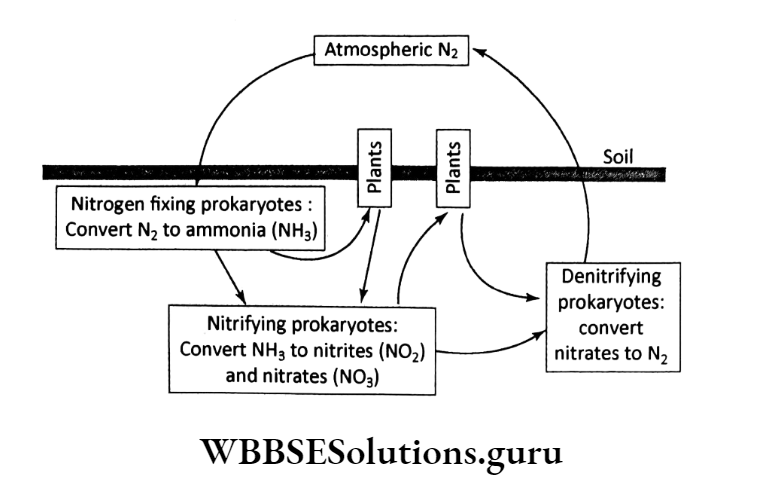
  3. Plants like mango, apple, and guava take a long time to develop fruits. By grafting, the fruiting of these plants can be quickened.
  4. It is a cheaper, easier, and more rapid method of multiplication wherein all plants developed by this method are genetically similar.

Question 16. Mention the advantages and disadvantages of asexual reproduction.

Advantages of asexual reproduction:

  1. In this process, a single parental member performs reproduction.
  2. The progeny are genetically identical to their mother.
  3. This process is very easy and a large number of progeny are produced in a short period of time.

Disadvantages of asexual reproduction:

  1. This process does not involve meiosis, so no genetic recombination occurs in it. Progenies do not acquire any variation of the character.
  2. Progenies cannot adapt to the changing environment, hence do not get the favor of natural selection and may get extinct from nature.
  3. This process never helps in the origin of new species.

Question 17. With which type of reproduction do we associate the reduction division? Mention the significance of sexual reproduction.
Answer:

Reduction division or meiosis is associated with sexual reproduction, because:

The cell or meiocyte that gives rise to gametes has a diploid number of chromosomes and it is only by reducing the number by half that we can get haploid garnets through meiosis.

The constancy of chromosome number can be maintained from generation to generation through meiosis only.

Significance of sexual reproduction:

During sexual reproduction paternal and maternal characters are united by the union of gametes.

Sexual reproduction involves meiotic cell division before gamete formation or after fertilization. In this process recombination of genetic factors takes place. Therefore new genetic variations are seen in the progeny.

Sexual reproduction helps the progeny to adapt to the changing environment.

The variations, produced during sexual reproduction, being selected by nature take part in the origin of new species.

Question 18. ‘Fertilization is not an obligatory event for fruit production in certain plants’ — explain why?
Mention the significance of parthenogenesis.
Answer:

Some fruits like pineapple, banana, cucumber, grapes, etc are developed from unfertilized ovaries without pollination and fertilization through parthenocarpy which is a form of asexual reproduction seen in flowering plants.

These fruits are generally seedless. During cultivation, parthenocarpy is introduced along with other plant hormones including gibberellin and it results in maturing of the ovaries without the process of fertilization and produces bigger & pulpy fruits.

Hence it is evident that fertilization is not an obligatory event for fruit production in certain plants.

Parthenogenesis is a means of reproduction, sex determination, higher multiplication, prevention of sterility in races, maintenance of similarity in population, and production of polyploidy animals.

Question 19. Enumerate the differences between external and internal fertilization.
Answer:

The differences between external and internal fertilization

WBBSE Solutions For Class 10 Life Science Chapter 2 Continuity Of Life Topic 2 Reproduction External and internal


Question 20. Do bacteria reproduce sexually? If so, name the types of sexual reproduction that they carry out.
Answer:

Genetic studies Indicate that something like sexual reproduction, involving the fusion of two different cells and a transfer of hereditary factors, occurs in bacteria, although infrequently.

Typical sexual reproduction through the union of gametes is absent in bacteria. There are no fertilization and meiosis also.
Gene transfer occurs in bacteria through three methods Conjugation, Transformation, and Transduction.

Question 21. What are monoecious and dioecious organisms? Give examples.
Answer:

The plants carrying both male and female unisexual flowers on the same plant body are monoecious plants.

Examples: Gourd, Chara, etc. They are also called homothallic plants.

A bisexual or monoecious animal possesses both the male and female reproductive organs in the same animal body.
Examples: earthworms, snails, etc.

These are also known as hermaphrodites. The plants where male and female flowers are borne on separate plant bodies are dioecious or heterothallic plants.

Examples: Papaya, Marchantia, etc.

A unisexual or dioecious animal is either male or female, i.e. they have male and female reproductive structures on different sexes; Ex. Cockroaches, Human beings, etc.

Life Science Class 10 Chapter 2 Reproduction

Question 22. Give differences between zoospore and zygote.
Answer:

Differences between zoospore and zygote

WBBSE Solutions For Class 10 Life Science Chapter 2 Continuity Of Life Topic 2 Reproduction Zoospore and zygote

Question 23. what is the difference between the alternation of generations seen in plants and the sexual reproduction seen in mammals?
Is it better to have a more dominant sporophyte or a more dominant gametophyte in the life cycle of a plant?
Answer:

Mammals do not alternate generations and do not have variations between haploid and diploid states.

Some animals, like honey bees, do vary between haploid and diploid, but this determines their gender within a generation and does not change over generations.

In plants, however, the case is different and the gametophyte is dependent on the sporophyte and vice versa.

Neither the sporophyte nor the gametophyte should be more dominant. The dominance of a particular generation depends entirely on the successes and failures of the past generations of a species.

If the sporophyte tends to be weaker or is predated more, it will become a less prominent feature in the reproductive cycle. The same is equally true for the gametophyte.

Each species has formed a life cycle that has allowed it to survive to the present, so all are essentially equal.

Question 24. Which generation does the flowering plants in your garden represent— sporophyte or gametophyte?
In Bryophytes which stage is dominant? If the chromosome numbers in meiocytes of human beings, elephants, rice, and onion are 46, 56, 24 & 32 respectively, then what will be the chromosome number in gametes of these species?
Answer:

Flowering plants represent the sporophyte generation.

Gametophyte stage is dominant in Bryophytes.

Chromosome number in gametes: human beings = 23, elephant = 28 rice = 12, onion = 16

WBBSE Solutions For Class 10 Life Science Chapter 1 Locomotion As A Type Of Response In Animals

WBBSE Chapter 1 Locomotion As A Type Of Response In Animals Introduction To Locomotion

Most animals have the power of locomotion through the movements of the locomotory organs including movements of muscles, bones, and joints.

Animal locomotion is any of a variety of movements of different body parts (usually called the locomotory organs) that results in the progression of the whole organism from one place to another.

The study of movements is called kinesiology.

It is not that all the animals can perform locomotion. Some phylum Porifera and phylum Mollusca animals are sedentary aquatic animals without locomotory organs.

They are sessile animals and remain attached to submerged substances.

Read and Learn More WBBSE Solutions For Class 10 Life Science

Example:

Freshwater & marine sponge, Neptune cup, oysters, barnacles, etc.

WBBSE Chapter 1 Locomotion As A Type Of Response In Animals Reasons And Motivations Behind Locomotion

Animals move for various reasons, such as to find food, a mate, a suitable microhabitat, or to escape from predators.

Hunt For Food & Water:

Since animals can not prepare food, they are to perform locomotion to find a suitable area with plenty of food & water.

To seek shelter & escape from predators:

Locomotion increases the chances of survival of an organism by allowing the organism to seek shelter in favorable habitat, and to escape dangerous situations by avoiding predators.

Dispersal for mating or breeding:

Locomotion enables members of the species to disperse to find suitable mates to coordinate breeding activity and the survival of the young.

Search for a new & favorable environment:

Animals, especially birds, migrate from areas of low or decreasing resources to areas of high or increasing resources. The two primary resources being sought are food and nesting locations. Escaping from cold is also a factor.

WBBSE Solutions For Class 10 Life Science Chapter 1 Locomotion As A Type Of Response In Animals

Basic differences between movement and locomotion:

Though, in the case of animals, we often use the terms movement and locomotion, interchangeably, there are definite differences between the two.

Locomotion occurs at the organism level while movement can occur at any biological level from cellular to organisms.

In simple words, locomotion is movement from one place to another. It involves shifting of the entire body parts (e.g. a person moving or running) and movement consists of a change in shape, size, or direction of various body parts (e.g. shaking of your hands).

Locomotion In Animals Class 10 Life Science Pdf 

All kinds of locomotion are movements, but all kinds are not.

Movement is the motion that occurs in an organism or a body with or without the involvement of any change in the position or location of the organism or the body. At the same time, locomotion is defined as the voluntary movement of an organism from one place to another either in search of food or shelter or mate or to escape from the predators.

Therefore, the differences between movement and locomotion may be summarized in a tabular form as below:

WBBSE Solutions For Class 10 Life Science Chapter 1 Control And Coordination In Living Organisms Topic E Locomotion As A Type Of Response In Animals Movement And locomotion

WBBSE Chapter 1 Locomotion As A Type Of Response In Animals Different Types Of Animal Locomotion

Animal locomotion arises from complex interactions among sensory systems, the processing of sensory information into patterns of motor output, the musculoskeletal dynamics that follow motor stimulation, and the interaction of appendages and body parts with the environment.

These processes conspire to produce motions and forces that permit stunning maneuvers with important ecological and evolutionary consequences.

Many bacteria and protozoa are capable of locomotion, but animals move over much greater distances by a much larger variety of means, such as burrowing, running, hopping, flying, and swimming.

The mode of locomotion used by an animal depends on the size of the animal and the medium in which it moves—whether water, air, or land. A few different types of locomotion are discussed here.

WBBSE Chapter 1 Locomotion As A Type Of Response In Animals Amoeboid Locomotion Involving Pseudopodia

Locomotory organ:

Pseudopodia or false feet.

Process:

The amoebas move from place to place by forming temporary finger-like projections called pseudopodia or false feet derived as blunt projections of the cytoplasm.

A pseudopodium may form at any place on the surface of the body. The cytoplasm of the amoeba consists of a central fluid plasma surrounded by a more viscous plasma gel.

The sheet of plasma gel at the root of the cytoplasmic protrusion slowly thins out and is converted into plasmas.

The central granular part of the cytoplasm, that is the plasmas, then flows into the cytoplasmic outgrowth by streaming movement through the gap in the plasma gel sheet.

Next to this, the stiff plasma gel at the opposite end of the animal is gradually converted into fluid plasmas which rush forward into the pseudopodium.

WBBSE Notes For Class 10 Geography And EnvironmentWBBSE Notes For Class 10 History And Environment
WBBSE Solutions For Class 10 Life ScienceWBBSE Class 10 Life Science Multiple Choice Questions
WBBSE Solutions for Class 10 MathsWBBSE Class 10 Maths Multiple Choice Questions
WBBSE Notes For Class 10 Physical Science And Environment


While returning back along the sides of the finger-like tube, the plasma is again converted into plasma gel.

Many pseudopodia appear simultaneously but usually, one of them is extended and the others are retracted.

The sort of peculiar motion by thrusting out pseudopodia and then flowing into one of them by sol-gel transformation is known as an amoeboid movement.

Effective locomotion occurs only when the animal is in contact with the substratum and not when it is floating on the surface of the water.

The tip of the pseudopodium may adhere to the substratum by secreting a sticky juice and the entire animal glides forward into the pseudopodium.

Locomotion In Animals Class 10 Life Science Pdf 

The speed of locomotion usually ranges from 0.5 to. 5 (in per second. In favorable conditions, the speed may be as high as 25 mm per hour.

WBBSE Solutions For Class 10 Life Science Chapter 1 Control And Coordination In Living Organisms Topic E Locomotion As A Type Of Response In Animals plasmagel

WBBSE Chapter 1 Locomotion As A Type Of Response In Animals Ciliary Locomotion In Paramoecium

Locomotory organ:

Cilia

Process:

Locomotory organ:

Cilia

Process:

Paramecia move with the assistance of small hair-like structures called cilia that project from granular structures called basal bodies on all sides of their bodies

The single-celled organisms use these hairs like oars, beating them against the water to move around in pursuit of food and to avoid predators.

The whole complement of cilia beat in a rhythmic pattern, (metachronal rhythm), so that the waves of contraction pass over the cell body.

WBBSE Solutions For Class 10 Life Science Chapter 1 Control And Coordination In Living Organisms Topic E Locomotion As A Type Of Response In Animals single celled organisms

WBBSE Solutions For Class 10 Life Science Chapter 1 Control And Coordination In Living Organisms Topic E Locomotion As A Type Of Response In Animals cell body

Since cilia can beat either forwards or backward, the animal, therefore, can swim in both directions rapidly. In normal circumstances, however, it runs forward.

As the cilia beat obliquely backward, the animal rotates on its long axis during its forward progression. The cilia in the oral groove are longer and more or less fused.

They beat obliquely against the axis of the groove and hence the anterior end of the animalcule is swerved to one side or the other alternately.

As a result of the combination of forward motion, rotation, and lateral swerving, the animal is compelled to follow a spiral path. It can never swim in a straight line.

WBBSE Solutions For Class 10 Life Science Chapter 1 Control And Coordination In Living Organisms Topic E Locomotion As A Type Of Response In Animals swin in straight line

WBBSE Chapter 1 Locomotion As A Type Of Response In Animals Flagellar Locomotion In Euglena

Locomotory organ:

Flagellum

Process:

The protozoa Euglena move by a flagellum (plural, flagella),  of an outer contractile protoplasmic sheath and an inner elastic axial filament called an axoneme.

The flagellum is located on the anterior (front) end, which turns and twists in such a way as to pull the cell through the water.

Flagellum is attached to an inward pocket called the reservoir. Movement of flagellum is related to the contraction of its all fibrils.

A series of spiral waves pass successively from the base to the tip of the backwardly directed flagellum with increasing velocity and amplitude.

Locomotion In Animals Class 10 Life Science Pdf 

The waves proceed along the flagellum in a spiral manner and cause the body of Euglena to rotate once in a second. Thus, in its locomotion, it traces a spiral path about a straight line and moves forward. The rate of movement is about 3 mm per minute.


WBBSE Solutions For Class 10 Life Science Chapter 1 Control And Coordination In Living Organisms Topic E Locomotion As A Type Of Response In Animals Flagellum

WBBSE Chapter 1 Locomotion As A Type Of Response In Animals Swimming In Fish

Locomotory organ:

Muscular tail assisted by paired & unpaired fins

Fins:

The fish bears certain appendages known as the fins. The fins are membranous extensions of the skin and are supported by fin rays. The fins are either—

  1. Median unpaired fish or
  2. Lateral paired fins.

WBBSE Solutions For Class 10 Life Science Chapter 1 Control And Coordination In Living Organisms Topic E Locomotion As A Type Of Response In Animals fish

The Median Fins Are:

Anterior and posterior dorsal fins are placed on the dorsal surface of the fish. The dorsal fins serve to protect the fish against rolling and assist it in sudden turns and stops,

The caudal fin at the end of the tail. The tail acts as the propulsion organ and the caudal fin acts as the steering apparatus for change of direction

The anal or ventral fin is located on the ventral surface behind the anus. This fin is used to stabilize the fish i.e., to maintain the vertical position of the fish while swimming.

The Lateral Paired Fins Are:

Pectoral fins, one on each side of the body and placed behind the opercula. The pectoral fins are used for steering, to change direction, and as a brake to slow down or stop the movement,

Pelvic fins are placed on the ventral side of the body below and behind the pectoral fins. The pelvic fins are used for balance and to keep the fish steady by preventing rolling movements.

Myotomes:

The trunk and tail bear powerful V-shaped segmental muscles called myotomes on both sides of the backbone. Successive myotomes are separated by delicate partitions of connective tissue. These muscles are utilized for swimming.

Process:

A fish performs three types of movement-forward motion, change of direction or brake or stop and balancing. The streamlined body shape and overlapping scales allow it to move easily through the water with minimal frictional drag.

During swimming, the tail is swept from side to side to bend the body on either side alternately and produce a thrust that propels the fish forward.

The sweeping of the tail is due to the contraction and relaxation of the myotomes on either side of the body that works antagonistically against the vertebral column.

The contraction of the myotomes on the right side of the body bends the tail to the right, while the contraction of the myotomes on the left side of the body bends the tail to the left.

When the muscles of the right side contract, those of the left side relax, and vice versa. The fish pushes the water backward & sideways but the body moves forward.

WBBSE Solutions For Class 10 Life Science Chapter 1 Control And Coordination In Living Organisms Topic E Locomotion As A Type Of Response In Animals fish scales movement

WBBSE Chapter 1 Locomotion As A Type Of Response In Animals Flight In A Bird

Locomotory organ:

Wings, Quill or flight feathers & flight muscles for flight.

Birds are generally digitigrade animals (toe-walkers) who use only their hindlimbs to walk (bipedalism).


WBBSE Solutions For Class 10 Life Science Chapter 1 Control And Coordination In Living Organisms Topic E Locomotion As A Type Of Response In Animals Flight in a bird

Wings:

Forelimbs are modified into wings. Wings are composed of bones, muscles, nerves, blood vessels, and feathers. In resting condition, the wings remain folded into the body. During the flight, birds flap their wings using flight muscles.

Quill or flight feathers:

These feathers have a strong rachis (or shaft) having barbules with an interlocking arrangement.

These are of the following four types:

Remiges:

The quill feathers occurring on the wings and serving the purpose of flight are called remiges. Each wing of a pigeon has 23 remiges.

Rectrices:

The quill feathers that form the tail are called the rectrices. In the region, twelve long rectrices are arranged in semicircles on the tail. The rectrices act as a brake in alighting and as a rudder in vertical or lateral steering.

Coverts:

The quill feathers covering the basis of wing quills and tail quills are called coverts. These help to generate buoyant force in flight.

Types Of Locomotion In Animals Class 10 Notes

Contours:

The quill feathers forming the general covering of the body are called contours. These provide warmth and smooth airflow without turbulence.

Flight muscles:

The highly vascularized muscles which operate the wings during flight are called flight muscles. These are pectoral/ accessory and tensor.

Pectoral muscles:

These are the most significant muscles that remain attached to the keel of the sternum and to the wings and provide up & down movements to the wings.

There are two types:

Pectoralis Major:

It is very large, powerful, and triangular-shaped.

When the pectoralis major muscle contracts, the wing is pulled downwards and forwards, so that the body of the region is lifted up and propels itself through the air. Since it causes the downstroke of the wings, it is also called depressor muscle.

Pectoralis Minor:

It is a small & elongated muscle that elevates the wing during flight (upstroke of the wing).

Accessory muscles; Coraco-brachialis longus and coracobrachialis brevis help in depressing the wings and rotation of wings in the glenoid cavity.

Tensor muscles:

Three tensor muscles keep the wing stretched in flight.

Sternum:

The breast bone called the sternum is enlarged in birds for flight muscle attachment.

Chief modes of flight:

There are four main types of flight in birds and all the types may be used by the same bird at different times,

Gliding:

It is the simplest mode in which wings remain motionless,

Flapping:

It is the most common type in which the wings move upward and forward, downward and backward, and then more rapidly upward than downward,

Soaring:

It is a highly specialized mode and consists of circling & gliding,

Hovering:

In this flight, the body becomes vertical and motionless.

WBBSE Chapter 1 Locomotion As A Type Of Response In Animals Locomotion In Human

Bipedalism, a type of locomotion involving movement on two feet duly assisted by alternate contraction & relaxation of muscles, movement of synovial joints, etc., is the mode of locomotion performed by human beings.

Bipedal locomotion is completed in three steps- propulsion, support, and balance.

During walking, one leg always rests on the ground. It supports the body weight. The other leg moves forward.

In the moving leg, the heel is first raised from the ground, followed by the toes, and the entire leg is thus carried up & forward.

It is then placed on the ground to cause propulsion.

During forward propulsion, the heel of the moving leg touches the ground first, followed by the toes, and thus a step is completed.

A similar forward step occurs in the other leg also.

Types Of Locomotion In Animals Class 10 Notes

locomotion are as under:

During propulsion, there is alternate swinging of the arms- the right arm swings with the left leg and the left arm with the right leg. This process helps to maintain balance between the right and left sides of the body.

The major bones, joints & muscles associated with bipedal locomotion are as under:

Activity, Bones

Bipedalism or Walking-Pelvic girdle, Femur, Tibia, and Fibula

Joints, Muscles 

Pelvic joint-hamstring
Knee joint-Gasstrocnemius
Rectus-Femoris


WBBSE Solutions For Class 10 Life Science Chapter 1 Control And Coordination In Living Organisms Topic E Locomotion As A Type Of Response In Animals human body

Balance In Bipedalism:

Cerebellum and inner ear play a vital role to maintain balance and equilibrium during bipedal locomotion.

Position Feedback From Inner Ear:

The vestibular system in each inner ear is made up of three semicircular canals and two otolith organs which together provide constant feedback to the cerebellum about the head movement.

Each semicircular canal has a different orientation to detect a variety of movements such as nodding or rotating.

The movement of fluid inside the canals caused by head movements stimulates tiny hairs that send messages via the vestibular nerve to the cerebellum.

The two otolith organs (called the saccule & the utricle) send messages to the brain about body movement in a straight line and also about where the head is in relation to gravity, such as tilting, leaning, or lying down.

These organs contain small crystals that are displaced during these movements to stimulate tiny hairs, which transmit the messages via the vestibular or balance nerve to the cerebellum.

The Brain’s Movement Control Centre:

The cerebellum acts as the body’s movement and balance control center.

It receives messages about the body’s position from the inner ear, eyes, muscles, and joints and sends messages to the muscles to make any postural adjustments required to maintain balance.

It also coordinates the timing and force of muscle movements initiated by other parts of the brain.

WBBSE Chapter 1 Locomotion As A Type Of Response In Animals Role Of Movable Joints And Skeletal Muscles In Locomotion Joints

Different types of joints enable the bones forming the joints to move relative to each other in different ways and to a different extent, i.e. from freely moveable to hardly any movement at all.

The junction between two bones or between a bone and a cartilage forms joints or an articulation that permits varying degrees of movements by functioning as a fulcrum and using the force generated by the muscles to carry out the movements.

Joints Are Classified Into Three Groups:

Immovable,

Slightly Movable And

Freely Movable Or Synovial Joints.

The Term Arthrology Is Applied To The Study Of Joints.

Types Of Locomotion In Animals Class 10 Notes

Immovable Joints:

Fibrous joints do not allow any movement. This type of joint is shown by the flat skull bones which fuse end to end with the help of dense fibrous connective tissues in the form of sutures to form the cranium.

Slightly Movable Joints:

In cartilaginous

Joints Are Classified Into Three Groups:

Immovable,

Slightly Movable And

Freely Movable Or Synovial Joints.

The term arthrology is applied to the study of joints.

Immovable Joints:

Fibrous joints do not allow any movement. This type of joint is shown by the flat skull bones which fuse end to end with the help of dense fibrous connective tissues in the form of sutures to form the cranium.

Slightly movable Joints:

In cartilaginous joints, the bones involved are joined together with the help of cartilage. The joints between the adjacent vertebrae in the vertebral column are of this pattern and it permits limited movements.

Freely movable or Synovial joints or diarthrosis joints are the only joints that have a fluid-filled synovial cavity between the articulating surfaces of the two bones.

These are freely movable joints mostly present between the limb bones. They permit a great deal of movement.

Ball & socket joint (between humerous & pectoral girdle), hinge joint (knee joint), pivot joint (between atlas and axis), gliding joint (between the carpals) and saddle joint (between carpal and metacarpal of thumb) are some examples.

At a synovial joint, the adjacent bones are often so shaped that an enlargement of one fits into a depression of the other. This makes the bones less likely to disarticulate during movement.

A layer of hyaline cartilage, called articular cartilage, covers the ends of the bones.

The cartilages provide a smooth and somewhat elastic surface and reduce friction. A space, called a synovial cavity, between the two bones gives them free movement.

The cavity is lined by a fibrous synovial membrane containing secretory cells.

The latter secrete a thick sticky synovial fluid. This fluid lubricates the joint to allow nearly frictionless movement of bones on each other. The entire joint is surrounded by an articular capsule composed of connective tissue.

This allows movement of the joint as well as resistance to dislocation. Articular capsules may also possess ligaments that hold the bones together.

Synovial joints are capable of the greatest movement of the three structural joint types; however, the more mobile a joint, the weaker the joint.

WBBSE Solutions For Class 10 Life Science Chapter 1 Control And Coordination In Living Organisms Topic E Locomotion As A Type Of Response In Animals Bone

Two common examples of freely movable joints of the human body are briefly discussed below:


WBBSE Solutions For Class 10 Life Science Chapter 1 Control And Coordination In Living Organisms Topic E Locomotion As A Type Of Response In Animals Hinge joints

Hinge joints allow movement in one plane only (similar to door hinges). Here one rounded surface fits into another in such a way that movement is only possible in one plane, as it occurs in the movement of a hinge.

The cylindrical surface of one bone fits into the groove of another to form a hinge joint. They have a convex (curved outward) part of the bone that fits into the concave (curved inward) part of another bone.

This type of joint either bends or straightens a limb. The elbow, knee, and joints between phalanges (in fingers & toes) are all hinge joints. The knee joins the thigh bone (femur) to the shin bone (tibia).

Wbbse Life Science Class 10 Chapter 1 Questions And Answers

The smaller bone that runs alongside the tibia i.e., the fibula and the kneecap (patella) are the other bones that make the knee joint.

WBBSE Solutions For Class 10 Life Science Chapter 1 Control And Coordination In Living Organisms Topic E Locomotion As A Type Of Response In Animals Ball and socket joint

The ball and socket joint occurs in bones where the rounded head fits into the socket or cavity of another bone.

These bones allow the greatest degree of movement. Here one rounded extremity fits into the socket or cavity of another bone, permitting movement in all directions, as it occurs in a ball within a socket or cup-shaped cavity.

Movement may be rotational or in any plane.

The shoulder (head of the humerus of the upper arm fits into the glenoid cavity of the pectoral girdle or shoulder girdle) and hip joints [head of the femur of the thigh fits into the acetabulum cavity of the pelvic or hip girdle] are ball and socket joints.

WBBSE Chapter 1 Locomotion As A Type Of Response In Animals Skeletal and Muscular Systems

The skeletal system is composed of bones, the human skeletal system. The human skeleton is cartilage and ligaments.

There are 206 bones divided into the following parts:

WBBSE Solutions For Class 10 Life Science Chapter 1 Control And Coordination In Living Organisms Topic E Locomotion As A Type Of Response In Animals human Skeleton

The total number of skeletal muscles in the body is 656. They cover the bony parts of the skeleton in almost every part of the body giving the organism its characteristic shape.

Skeletal or voluntary muscles help in the movement of the limbs, locomotion, and liberation of heat & energy.

WBBSE Chapter 1 Locomotion As A Type Of Response In Animals Movement

Anatomical terms of movement are used to describe the actions of skeletal muscles on the skeleton. Muscles contract to produce movement at joints where two or more bones meet.

Different types of movements, that occurs in our body are—

They refer to increasing and decreasing the angle between two body parts. Flexion at the elbow is decreasing the angle between the ulna and the humerus.

Extension at the elbow is increasing the angle between the ulna and the humerus.

For example, the muscle at the top and front of the arm, the biceps brachii, flexes or bends the arm at the elbow, whereas the muscle at the back of the arm, the triceps brachii, straightens it back out, extending it.

WBBSE Solutions For Class 10 Life Science Chapter 1 Control And Coordination In Living Organisms Topic E Locomotion As A Type Of Response In Animals flexsion and extension

Abduction refers to the movement of limbs away from the midline. When a body is in the anatomical position, abduction refers to raising the upper extremities out to the sides.

Adduction refers to the movement of limbs toward the midline. Bringing the abducted upper extremities back down to the sides of the body is adduction. Drawing your fingers (or toes) close together is also adduction.

Wbbse Life Science Class 10 Chapter 1 Questions And Answers

An example of an abductor is the supraspinatus of the arm and shoulder. An example of an adductor is the adductor longus muscle of the upper leg.

WBBSE Solutions For Class 10 Life Science Chapter 1 Control And Coordination In Living Organisms Topic E Locomotion As A Type Of Response In Animals Abduction and adduction

Rotation describes the movement of the limbs around their long axis. Two types of rotations are observed.

Medial rotation:

This movement is turning a body part around its long axis, with the anterior surface moving towards the midline, like when we turn our whole lower extremity so that our foot points inward.

Lateral rotation:

We laterally rotate when we move a body part around its long axis with the anterior surface moving away from the midline, like turning our whole lower extremity so that our foot points out towards the side.

An example of a medial rotator is the gluteus medius situated on the outer surface of the pelvis, and a lateral rotator is a deltoid muscle located on the uppermost part of the arm and the top of the shoulder.

WBBSE Solutions For Class 10 Life Science Chapter 1 Control And Coordination In Living Organisms Topic E Locomotion As A Type Of Response In Animals roration


WBBSE Chapter 1 Locomotion As A Type Of Response In Animals Fill In The Blanks

Question 1. Paramecia move with the assistance of small hair-like structures called_____________.
Answer: Cilia

Question 2. The vertebral column of a fish is flexible and can be moved sideways by the contraction and relaxation of antagonistic muscles called_______________.
Answer: Myotomes

Question 3. ______________ joints are the only joints that have a space between the adjoining bones.
Answer: Synovial

Question 4. ______________refers to a movement that decreases the angle between two body parts.
Answer: Flexion

Wbbse Life Science Class 10 Chapter 1 Questions And Answers

Question 5. Locomotion requires a perfectly coordinated activity of muscular,______________ and systems.
Answer: Skeletal, Natural

Question 6. Fish has median fins and lateral______________ fins.
Answer: Umpaired, Paired

Question 7. In birds, the most powerful, large, and triangular-shaped flight muscle is known as______________.
Answer: Pectoralis major

Question 8. ______________and play a vital role in maintaining body balance during bipedal locomotion in human beings.
Answer: Cerebellum, inner, etc

WBBSE Chapter 1 Locomotion As A Type Of Response In Animals Write True Or False

Question 1. Animals perform locomotion for a variety of reasons, such as to find food, a mate, a suitable microhabitat, or to escape predators.
Answer: True

Question 2. Bipedalism involves movement on two feet.
Answer: True

Question 3. Abduction and adduction are two terms that are used to describe movements towards or away from the midline of the body.
Answer: True

Question 4. When a cow uses its tail to drive away flies, it is an example of locomotion.
Answer: False

Question 5. Skeletal muscles are involuntary muscles.
Answer: False

WBBSE Chapter 1 Locomotion As A Type Of Response In Animals Match The Column

WBBSE Solutions For Class 10 Life Science Chapter 1 Control And Coordination In Living Organisms Topic E Locomotion As A Type Of Response In Animals match the column 1
Answer: 1-C,2-A,3-B,4-D

WBBSE Solutions For Class 10 Life Science Chapter 1 Control And Coordination In Living Organisms Topic E Locomotion As A Type Of Response In Animals match the column 2
Answer: 1-E,2-A,3-B,4-C

WBBSE Chapter 1 Locomotion As A Type Of Response In Animals Very Short Answer Type Questions

Question 1. What are pseudopodia?
Answer: These are temporary cytoplasmic blunt extensions formed by sol-gel transformation for locomotion, as found in Amoeba.

Question 2. What are remiges?
Answer: The flight feathers of the wings of birds are called remiges.

Question 3. What is arthrology?
Answer: The term arthrology is applied to the study of joints.

Question 4. What is a ‘ball and socket’ joint?
Answer: The ball and socket joint occurs in bones where the rounded head of one bone fits into the socket or cavity of another bone allowing the greatest degree of movement.

Wbbse Life Science Class 10 Chapter 1 Questions And Answers

Question 5. Name the cells/tissues in the human body which exhibit:
Answer:

  1. Amoeboid movement
  2. Ciliary movement
  3. Macrophages and leucocytes in blood exhibit amoeboid movement
  4. Coordinated movement of cilia is observed in the ciliated epithelium lining of the trachea.

Question 6. Name the movable skull bone in the human skeleton.
Answer: Mandible (lower jaw)

Question 7. Name the cup-shaped bone that covers the knee.
Answer: Patella.

Question 8. Classify the following as movement or locomotion:
Answer:

  1. The bees leave their hive in search of pollen
  2. The elephant uses its trunk to pick up a log
  3. Locomotion
  4. Movement

Question 9. Among the following four terms, one includes the other three. Find out that term and write it: saddle joint, pivot joint, synovial joint, hinge joint.
Answer: Synovial joint.

Question 10. Name the joints involved in the activity of lifting an object by the hand.
Answer: Shoulder joint, elbow joint, and wrist joint.

WBBSE Chapter 1 Locomotion As A Type Of Response In Animals Short Answer Type Questions

Question 1. State the difference between flagella and cilia concerning location and number.
Answer:

The difference between flagella and cilia about location and number

Location: While cilia cover the entire surface, the flagellum is present at one end of a cell.

Number:

A cell contains many cilia (a few hundred per cell) whereas the number of flagella is usually 1 or 2 only.

Question 2. Distinguish between the ball & socket joint and the hinge joint.
Answer:

Difference between the ball & socket joint and the hinge joint

WBBSE Solutions For Class 10 Life Science Chapter 1 Control And Coordination In Living Organisms Topic E Locomotion As A Type Of Response In Animals ball and socket

Question 3. Name the locomotory organ of hydra. Describe the various modes of locomotion performed by it.
Answer:

The locomotory organs of the hydra are basal discs and tentacles.

Hydra performs locomotion by-

  1. Walking
  2. Looping
  3. Somersault and
  4. Glide.

Walking:

It bends down and attaches the tentacles to the substratum with the help of nematocysts. It now releases and removes the basal disc to a new position and again stands up by disengaging the tentacles. This type of locomotion is called walking.

Locomotion As A Type Of Response In Animals Class 10 Wbbse

looping:

The hydra may bend its body to perform a looping movement like that of a leech.

Somersault:

When in a hurry, the animal runs by performing a series of somersaults.

Gliding:

Hydra may glide considerably by dragging the basal disc.

Question 4. What are joints?
Answer:

Joints

The junction between two bones or between a bone and cartilage forms joints or an articulation that permits varying degrees of movements by functioning as a fulcrum and using the force generated by the muscles to carry out the movements.

Joints Are Classified Into Three Groups:

immovable, slightly movable, and freely movable or synovial joints.

Question 5. What are synovial joints?
Answer:

Synovial joints

Synovial joints are the only joints that have a fluid-filled synovial cavity between the articulating surfaces of the two bones. These are freely movable joints mostly present between the limb bones. They permit a great deal of movement.

Question 6. What do you mean by adduction and abduction?
Answer:

Adduction and Abduction

Abduction and adduction are two terms that are used to describe movements towards or away from the midline of the body. Abduction refers to the movement of limbs away from the midline.

When a body is in the anatomical position abduction refers to raising the upper extremities out to the sides.

Adduction refers to the movement of limbs toward the midline. Bringing the abducted upper extremities back down to the sides of the body is adduction. Drawing our fingers (or toes) close together is also adduction.
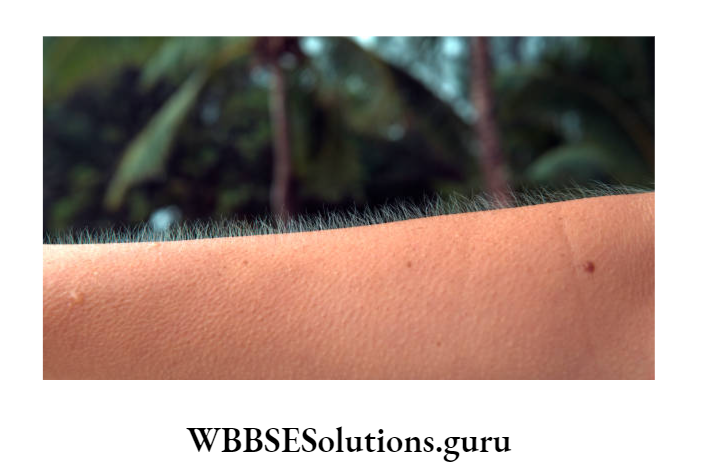
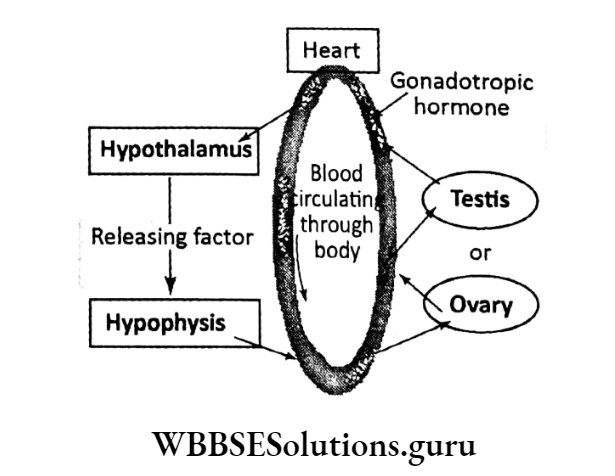
WBBSE Chapter 1 Locomotion As A Type Of Response In Animals Long Answer Type Questions

Question 1. Write about the motives of animal locomotion. What are the basic differences between movement and locomotion?
Answer:

Reasons And Motivations Behind Locomotion

Animals move for a variety of reasons, such as to find food, a mate, a suitable microhabitat, or to escape from predators.

Hunt For Food & Water:

Since animals can not prepare food, they are to perform locomotion to find out suitable area with plenty of food & water.

To seek shelter & escape from predators:

Locomotion increases the chances of survival of an organism by allowing the organism to seek shelter in favorable habitat, and to escape dangerous situations by avoiding predators.

Dispersal for mating or breeding:

Locomotion enables members of the species to disperse to find suitable mates to coordinate breeding activity and the survival of the young.

Locomotion As A Type Of Response In Animals Class 10 Wbbse

Search for a new & favorable environment:

Animals, especially birds, migrate from areas of low or decreasing resources to areas of high or increasing resources. The two primary resources being sought are food and nesting locations. Escaping from cold is also a factor.

Basic differences between movement and locomotion:

Though, in the case of animals, we often use the terms movement and locomotion, interchangeably, there are definite differences between the two.

Locomotion takes place at the organism level while movement can take place at any biological level from cellular to organisms.

In simple words, locomotion is movement from one place to another and involves shifting of the entire body parts (e.g. a person moving or running) and movement involves a change in shape, size, or direction of various body parts (e.g. shaking of your hands).

All kinds of locomotion are movements but all kinds of movements are not locomotion.
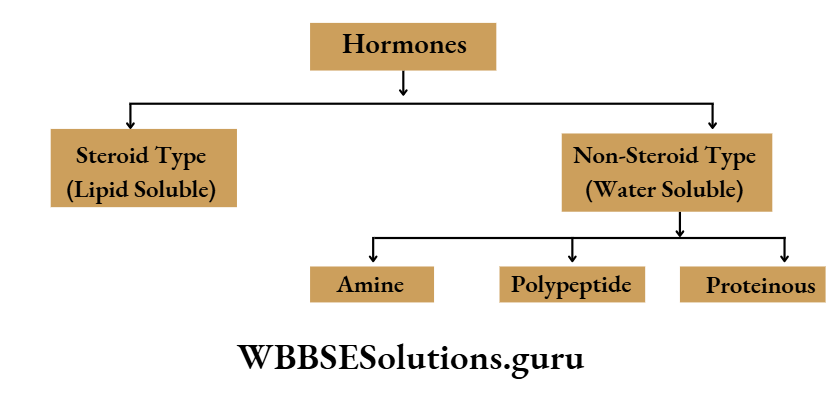
Movement is the motion that occurs in an organism or a body with or without the involvement of any change in the position or location of the organism or the body,

while locomotion is defined as the voluntary movement of an organism from one place to another either in search of food or shelter or mate or to escape from the predators.
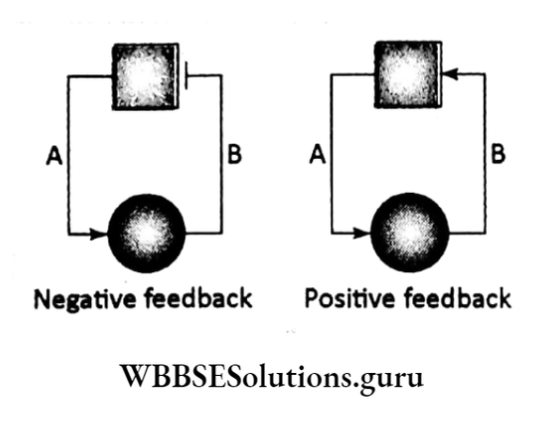
Therefore, the differences between movement and locomotion may be summarized in a tabular form as below:

WBBSE Solutions For Class 10 Life Science Chapter 1 Control And Coordination In Living Organisms Topic E Locomotion As A Type Of Response In Animals Movement And locomotion

WBBSE Objective Type Questions Write True Or False

Question 1. Flagella is the locomotory organ of Paramoecium.
Answer: False