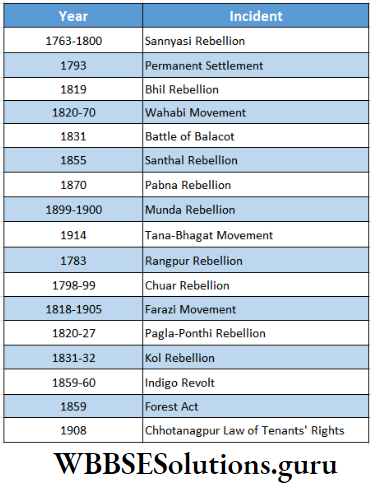
Peasants Working Class And Left Movements In Twentieth Century India Characteristics And Observations Introduction:
- If we analyse the genre of peasant and working-class movements, it will be observed that the labour movement was much more organised than the peasant movement.
- The peasant organisations were lagging in the way the workers’ organisations were growing since the nationalist movements. The peasant movements were primarily against the landlords.
- Sometimes they took the form of anti-government revolts. At times, peasant rebellion assumed communal colours because of the prevalence of the caste system. In that respect, the labour movements had far-reaching implications.
- The main purpose of the labour movement was to protest against the oppression and deprivation of the workers in the hands of the factory. owners. While the target of the farmers was the landlords, money lenders and government, the target of the workers was the entrepreneurs.
Read and Learn More WBBSE Notes For Class 10 History And Environment

The Relationship Of Congress And Leftist Politics In Twentieth Century India
Before the emergence of Mahatma Gandhi in Indian politics, several revolts took place viz.,
- The revolt of the Chenchu Tribes of Andhra (1916),
- Farmers revolt in the Bastar district (1910) against the ban on Jhum cultivation in Jabalpur,
- Revolt of the Khond people in Orissa (1914) and
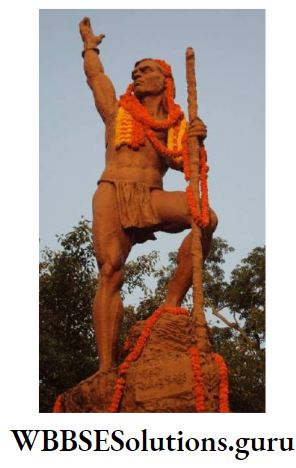
- Tana Bhagat Movement of the Mundas, which, in the. interests of the mass movement eventually merged with the Gandhian Movement.
- When the farmers of Rajasthan were united against feudal oppression, Congress connected itself with the farmers in the larger interests of a mass movement (1913).
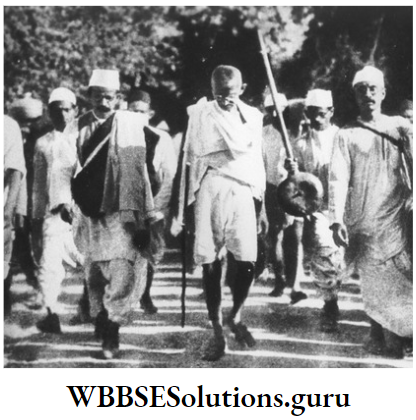
- In the history of farmers’ rebellion, Champaran in Bihar and Kheda in Gujarat are of great importance. During this time, because of the Congress’ connection with the farmers, many Gandhian leaders like Rajkumar Shukla, Rajendraprasad and Jamunalal Bajaj, joined the farmers’ movement.
WBBSE Class 10 History Notes
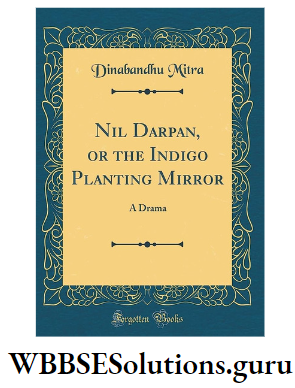
- As a result, the Government was forced to withdraw the Teen Kathiya system and promulgated the Champaran Cultivation Law in 1918. According to the Teen Kathiya system, it was mandatory for the farmers to cultivate indigo in 3 kottas of land for every bigha (20 kottas) owned by them.
- However, during 1919-20, the Congress leaders refused to support the farmers actively, in spite of a request from Swami Vidyananda, leader of the Indigo farmers’ rebellion in Darbhanga and Bhagalpur in Bihar.
- The 1920’s decade was of great historical importance as far as the farmers’ movement is concerned because it was known as the golden era of leftist organisation. A greater connection of Congress and Leftist politics with the farmers can be noted during this time.
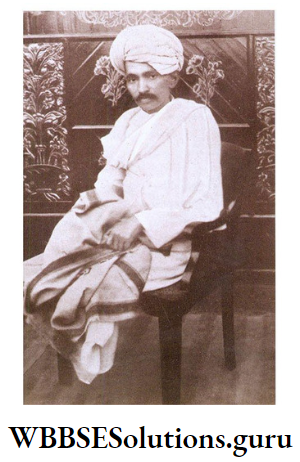
- Gandhiji considered it to be a reasonable idea to connect with the farmers’ movement in the larger interests of a national movement. During the non-cooperation movement, a certain spice trader from Udaipur called himself a representative of Mahatma Gandhi and joined the farmers’ movement.
- The Moplah Revolt (1873-1921) of Malabar was a militant farmers’ rebellion. Moplahs were the Muslim peasants of the Malabar coast of Kerala who were originally descendants of Arab merchants. Gandhiji was shell-shocked at the death of 10,000 Muslim farmers in this rebellion in 1921. In the 1920s, the leftist powers played an important role in strengthening the organisation of the farmers’ movement.
- In 1922, Leftist leader Manabendranath Roy, in his book India in Transition and What Do We Want, called the Gandhian Philosophy as ‘a pathetic and frustrating expression of reactionary forces’. Sripad Amrit Dange, Muzaffar Ahmed and Singafavellu Chettiyer, followers of Mr Roy, put more emphasis on Dual Organisation.
- The leftist parties covertly supported the farmers’ movement while maintaining contacts with Indian National Congress, thereby strengthening the left organisations in the country.
- Dange had mentioned it in his journal Socialist (1922). The two journals, Birendranath Chattopadhyay’s ‘Atmoshakti’ and Abani Mukherjee’s ‘Dhumketu’, were published with the same aim in view.
- The leftist leader Singaravellu strongly criticised the Gaya Congress Session (December 1922) and the decision to withdraw the Non-Cooperation Movement.

- Under these circumstances, the leftists took up a new political strategy and initiated the formation of a political party with people from both inside and outside Congress. The purpose was
- To keep the Congress on its toes and
- To keep the reactionary forces in Congress at bay so that in future the Communist Party can assume leadership at the national level.
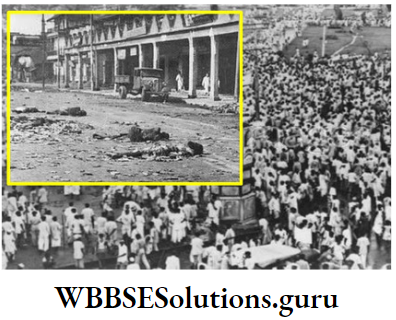
- Hence, the leftists tried to strengthen the peasant movement while maintaining cordial relationship with the Congress. In 1923, Singaravellu formed the ‘Hindustan Labourer-Peasant Party’ and having accepted the leadership of the Congress, expressed his willingness to work as a workers-farmers wing of the National Congress.
- He was the first person to observe May Day in India on 1st May 1923. Muzaffar Ahmed established the Labour Swaraj Party in 1925 and Congress Labour Party was established in 1926 for the same purpose.
WBBSE Class 10 History Notes
- Later, these local organisations were united together and the Workers and Peasants Party was formed in the interests of the farmers’ movement at the national level. This organisation was very strong in Punjab, Uttar Pradesh, Bengal and Bombay. During 1926-27, the left Leader Dharani Goswami started a farmers’ movement against the landlords and moneylenders of Rajshahi and Mymensingh. He formed ‘Young Comrades League’ for this movement.
- The principle characteristic of the peasant movement in 1929-30 was that it was a revolt against the landlords, sub-lease holders and tenants’ rights.prevalent at that time.
- Many Muslims and lower caste Hindus like namashudra formed tenants groups without depending on Congress. Later, this got transformed into the ‘Krishak Proja Party’ of Fazlul Haque. Strong farmers’ movements against the landlords started taking shape from this time onwards.
- In the middle of the third decade, The Communist Party of India (1925), the Congress Socialist Party (1934) and some Congressmen with leftist tendencies wanted to form an all-India farmers’ association. As a result of this endeavour, All India Kishan Sabha was formed in April 1936.
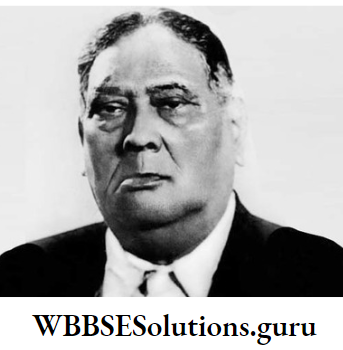
- When the Communist Party of India was banned in July 1934, many communist leaders became members of this organisation This was a fantastic time of unity between the Congress and the Leftists. In 1934 Jayprakash Nararyan and Acharya Narendra Deb formed the Congress Socialist Party with leaders of both, the Congress and left parties.

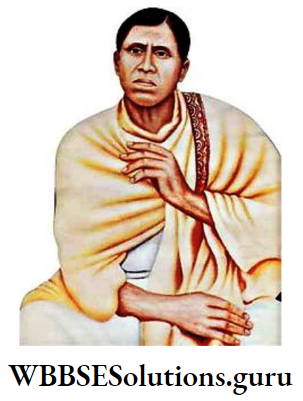
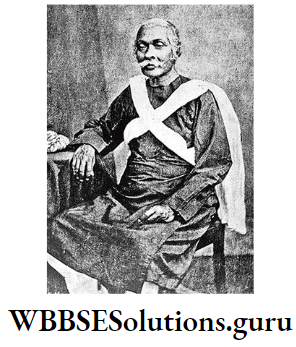
- Anyway, the All India Kishan Sabha was formed jointly by the Communist Socialist Party and the Congress in 1936 and the Andhra Congress farmer leader N. G..Ranga was elected as the first General Secretary and Swami Sahajananda Saraswati was elected the first President.

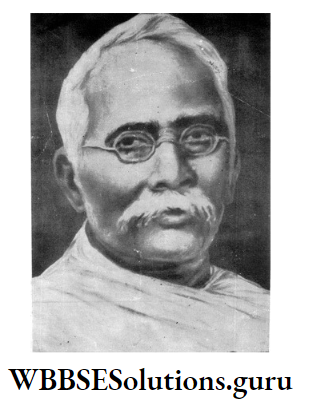
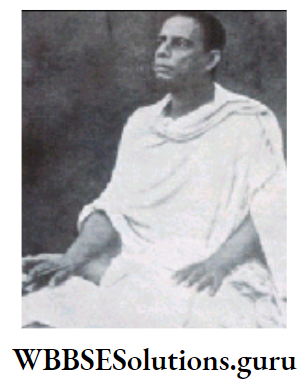
- Sahajananda was the leader of Kishan Sabha from 1935-38. In 1936, at the behest of the Kishan Sabha, the Congress adopted an agriculture-based programme. After 1938, Subhash Chandra Bose became known as a leftist leader of Congress.
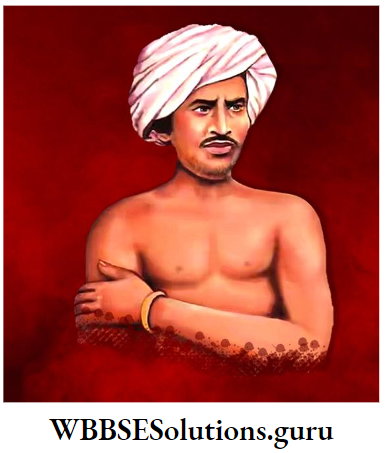
- In 1939, under the leadership of Congress Socialist leader Nabakrishna Chowdhury, farmers’ Swami Sahajananda Saraswati movement became quite violent in some places.
1. Peasant’s Role during Anti-Partition Movement Introduction: A novel genre of farmers’ rebellion developed during the Anti-Partition Movement. Rabindranath Tagore, in his lecture named ‘Swadeshi Samaj’ said, people would become more powerful and independent if ‘co-operative farming and jointly owned farms develop in all the villages’.
- Aswini Kumar Dutta formed the ‘Swadesh Bandhab Samity’ (1906) to solve problems in the villages and to safeguard the interests of the peasants, which solved 523 local issues. Till 1907, this organisation had 1000 branches.
- During the Anti-Partition Movement, the farmers’ rebellion had a communal character, because, whenever the farmers demanded justice and protested against the landlords, the Government labelled the farmers’ rebellion as communal unrest.
- It was easy for the Government to investigate the rebelling farmers, who were mostly Muslims, against the landlords and moneylenders who were mostly Hindus. During 1906-07, farmers’ unrest took the form of communal riots in Komilla and Mymensingh.
- The Muslim farmers tore off the loan agreement papers of the Hindu moneylenders. At that time the Muslims brought out a booklet called ‘Nabab Saheber Subichar’ and wanted help from Nawab Salimullah.
- Rabindranath Tagore, in his novel ‘Ghare Baire’, had described how the British took advantage of the helplessness of the poor Muslim peasants. During 1906-07 the farmers of Pratapgarh in Uttar Pradesh also suffered similar predicaments. 936 farmers were ousted from their lands.
- During Anti-partition Movement, the scheduled caste Hindus, like the Namahshudra, had not given much importance to the Nationalist Movement like the poor Muslim farmers.
WBBSE Class 10 Environment Chapter 6 Solutions
- The Hindu farmers were oppressed by the higher caste people to such an extent that the Nationalist Movement led by people of higher caste did not have much appeal to them. Dr Sumit Sarkar in his book ‘The Swadeshi Movement in Bengal’ iterated that since there was no agriculture-based programme during Anti-partition Movement, the peasants did not participate in a movement led by the middle class.
- Aurobindo Ghosh in his essay ‘Passive Resistance’ (attack without arms) wrote, the landlords are patriots, hence any movement by those who pay them taxes, cannot be accepted. If the landlords are not happy, the Anti-Partition Movement would suffer. But Sumit Sarkar said that the role of the landlords in the movement has been unduly highlighted.
- After the Partition of Bengal, the five Muslim-dominated districts of East Bengal viz.,. Dhaka, Faridpur, Tripura, Barishal and Mymensingh was witnessed strong revolts.
- In 1907, the Muslim farmers of Jamalpur and Dewangunj areas of Mymensingh started savage rioting. But, it can be said that, the farmers were successful in keeping the British Government under tremendous pressure. Thus, on 12th December 1911, the British Government decided to announce their decision to partition Bengal.
Conclusion: While analysing the Anti-Partition Movement, the first thing that comes to mind is that the leaders of the movement did not adopt any programme for the exclusive benefit of the farmers.
- In the journal ‘Bengali’, Surendranath Banerjee expressed his concern about the distress of the farmers and wrote that the leaders were least bothered about the difficulties of the farmers due to the high rates of taxes imposed upon them or the oppression by the moneylenders. Nobody thought about forming an organisation of the farmers to deal with their demands.
- Moreover, the farmers never adopted the tactful fight through passive resistance or boycott. While a large section of the country’s population belonged to the peasant class, their absence surely reduced the steam of the movement.
2. Peasant during the Peaceful Non-Cooperation Movement:
The injustice to Turkey by British through the treaty of Sevres (14 May 1920), the Jalianwallabag massacre (13th April 1919), high prices of essential goods, high revenue, govt. oppression etc. were the background of Non-Cooperation Movement. Apart from these
- Support of Congress leaders Madan Mohan Malavya, Vallavbhai Patel, Jawaharlal Nehru and
- Support of the Home Rule League members to the Congress strengthened the peasant movement during Non-Cooperation Movement. Besides ‘UP Kishan Sabha’ (1918) of Indranarayan Dwivedi and Gouri Sankar Mishra added a new spirit to the movement.
Rajasthan: During the Non-Cooperation Movement of Gandhiji, farmers’ movements from different corners of India added a new force to the Nationalist Movement.
- Fight against feudalism was an important aspect of farmers’ rebellion at that time. All over Rajasthan, the farmers demanded that the farmers should be recognized as rightful owners of the land and neither the state, nor the landlords. This particular movement by the farmers was stronger and more organised. Bijoy Singh Pathik and Maniklal Verma were leaders of the peasants.
- On the other hand Motilal Tejwat organised the Bhil tribes of Udayapur and Jaynarayan Byash in Marwar united the peasants for no tax movement. The farmers of Bijolia managed to wrestle out some benefits even from big landlords.
- This movement was called ‘Bijalia Satyagraha’. When the Bhil Tribes joined forces with the farmers and started a joint movement, the Maha Rana repressed them in a violent way. Towards the end of the Non-Cooperation Movement, even the police indulged in arson and burned down two Bhil-dominated villages and gunned down 156 protesting farmers of Alwar in Rajasthan (1925).
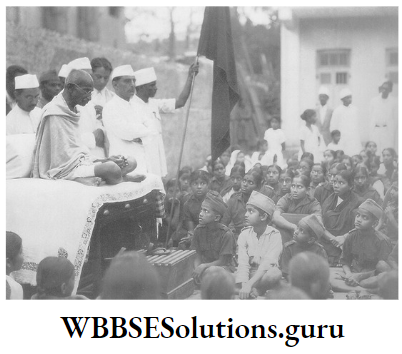
Role of Nehru in U.P.: During the Non-Co-operation movement, the farmers’ rebellion was indeed a mass movement. Jawaharlal Nehru’s autobiography, ‘The Discovery of India’, tell us that the political ideals of the Congress had influenced the farmers’ movement in India.
- So, the Congress endeavoured to establish cordial relationships between the landlords and the farmers, request the Government to formulate laws in the interests of the farmers, to form village Panchayats (local self-government) and to promote cooperation between the rulers and the ruled. Nehru founded ‘Ayadhya Kishan Sabha’ in 1920.
Role of Baba Ramchandra in UP: Baba Ramchandra was the main leader of UP Kishan Sabha (1928), which was founded by Gourishankar Mishra and Indra Narayan Dwivedi. Due to his leadership, Members of UP Kishan Sabha started aggressive movement which was not supported by Gandhiji.
- But many Congressmen joined the members of this Kishan Sabha and strengthened the peasant movement in Sultanpur, Raiberili and Pratapgarh regions in U.P. Baba Ramchandra was the Icon of this peasant movement for this reason, Ramchandra was arrested by police which made reaction among his followers. To protest against the arrest of Ramchandra, his followers founded “Eka” movement (1921) and Bardouli Satyagraha (1928).
United Province: The peasant leader Baba Ramchandra of Faizabad was in the forefront of this movement. The farmers were mortified, when Ramchandra was arrested in Ayodhya Taluk on false charges of theft. In Sultanpur, Faizabad, Pratapgarh and Raiberili of Uttar Pradesh, the peasants burned down the houses of the landlords and courted arrests in the hands of the police.
- Jawaharlal Nehru formed the ‘Ayodhya Kishan Sabha’ in 1920 in order to control the militant behaviour of the farmers. This Sabha had 350 branches all over Uttar Pradesh. Baba Ramchandra and Gourishankar Mishra became members of this organisation. Fierce revolt broke out under the banners of this Sabha but it failed because of tortures meted out by the police.
Gujarat: The farmers’ movement of Bardauli in Gujarat was known for other characteristic features. There, at the request of the head men of 60 villages, Vallavbhai Patel started the ‘Boycott paying taxes’ movement as a protest against the atrocities of the landlords.
- Both common and higher classes of farmers, as well as many women like Patel’s daughter Maniben Patel Bhaktiba, Mithuben Petit, Sardaben Shah and Sarda Mehta, joined in a united movement against the oppression of the landlords.
- As a result, the Government reduced the rate of taxes there by 6-03%. The Bardauli Farmers’ Movement was comparatively stronger and better organised. Similarly, Vidyananda and Rajendraprasad were instrumental in giving an anti-landlord colour to the farmers’ movement in Gaya; Darbhanga and Munger in Bihar. The ‘Unionist Party’ of Fazli Hossain had taken the lead in the Farmers’ Movement in the Punjab.
WBBSE Class 10 Environment Chapter 6 Solutions
Bengal: The Farmers’ Movement in Bengal was in the hands of the worthy leader ‘Deshapran’ Birendranath Sashmal. In 1920 he started revolts in Medinipur to stop “Chowkidari Taxes’ and to boycott ‘Union Board’.
- In 1921, the leaders of the Non-Cooperation Movement gave a call to the jute farmers to stop the cultivation of jute in the bordering areas of Rajshahi, Nadia and Pabna-Rashidabad in Bengal.
- Jitendralal Banerjee in Birbhum and Someswar Prasad Chowdhury, a devoted follower of Deshbandhu, led this militant farmers’ movement in Rajshahi. Apropos it may be mentioned that sharecroppers and sub-lease holders of Dhaka, Pabna, Khulna, and Nadia fought in order to gain rights over the land they tilled.
- Andhra In 1921-22, during Non-Cooperation Movement, the farmers of Andhra stopped paying taxes to the Government under the leadership of Congress leaders Konda Venkatappaiyya and O. T. Prakasham. However, Alluri Sitharam Raju, farmer leader in the ‘Rumpa’ areas of Andhra, transformed the farmers’ movement into guerrilla warfare. In 1924, with the help of Assam Rifles, the Madras Government had subdued the Rumpa revolt and killed Sitharam Raju.
- Bihar Swami Vidyananda took the leadership of peasant movement first in Madhubani and then in Darbhanga, Muzaffarpur, Bhagalpur, Purnia districts of Bihar against high taxation and additional revenue imposed by Landlords. Police and peasants conflicted at that time. Finally, Zamindars surrendered themselves to the peasants.
- Deccan Yaquab Hassan took the leadership of the peasants’ revolt of Malabar and Sitharam Raju became the leader of the Rumpa revolt (1922-24), the peasants of Godabari Valley. This movement was spread in Guntur, Kudappa etc. districts of Andhra Pradesh. Prof N. G. Ranga founded ‘Ryot Sabha’ in 1923 in the Guntur district.
Role of Lefts: The leftists had strengthened the peasant movement during Non- Cooperation Movement. The Peasant Movement had its own agenda and characteristics but it added a new perspective to the anti-British national movement.
- The most important was the role of the farmers in the mass movement in India. During this time of the twentieth century, some peasants’ associations and local organisations had inspired the peasant movement.
- Peasant Movement was a grand success against feudal oppression at the time of the Non-Cooperation Movement. However, the farmers could not adhere to the non-violent policy of Gandhiji at all times.
- So, he never supported the farmers who adopted the method of violent protests. He just recognised the participation of the farmers in the interests of the mass movement.
3. Eka Movement:
Eka Movement Introduction: From the Hindi word ‘Ekta’ (unity) the word ‘Eka’ has come. The Eka Movement started in Hardoi, Bahraich, Sitapur and Barabanki districts of North West Ayodhya in UP in 1921-22. Though the movement was started by local Congress leaders, later radical leader Madari Pasi, Gabibdas and Sahreb took the reins of the movement in their own hands. Leaders of many backward communities had joined in the Eka Movement.
Eka Movement Objectives: The principle objectives or causes of this movement were
- The farmers would pay their taxes in cash or money
- They were not forced pay tax with their cultivated crops,
- They did not tolerate the “Bet Begari system” or forced labour.
- Oppression of the tax collectors of Zamindar-Feudal lord’s on peasants,
- Collection of additional and illigal taxes by the thikadars,
- The poor peasants were whimsically evicted from land and property,
- Without any document or receipt tax was collected,
- Pay only recorded tax and solve problems through village Parichyat and make unity among peasants.
Eka Movement Evaluation: The farmers would get a chance to make some profits as the price of agricultural produce had increased substantially by that time. Anyway, the Government adopted a policy of ruthless oppression and the police restrained the movement by arresting Madari Pasi in June 1922. According to Jawaharlal Nehru “All rural areas were electrified with marvellous fanaticism”.
4. Bardauli Satyagraha (12th February, 1928):
Bardauli Satyagraha Introduction: The peasant movement by the Gandhian protesters, which was started in Bardauli Taluk of Surat District in Gujarat, is known as the ‘Bardauli Movement’. After the Ryotwari land revenue settlement in place of zamindars government had become the owner of land and revenue to protest against it on request of peasants of 60 villages, Vallavbhai Patel join the movement.
Bardauli Satyagraha Causes: Main causes of the movement were
- The wealthy Patidars or Zamindars of Bardauli belonged to the Sunabi-Patidar community of farmers. They got their land cultivated by the ‘Rinadas’, who belonged to lower class or weaker clan and were also called ‘Kaliparaj’ or ‘the dark-skinned folks’, who were 60% of the total population.
- The higher caste people of Bardauli were known as ‘Ujaliparaj’ or ‘the fair-skinned folks’, who indulged in oppression, exploitation, forced labour and raping the women of the dark-skinned people called ‘Kaliparaj’. Oppression by the moneylenders was a matter of regular occurrence.
- Moreover, the rate of taxes was increased to 22% (1927) although the price of cotton had decreased. Under these circumstances, the Gandhian idealists ‘Mehta Brothers’ Kunwarji Mehta, Kalyanji Mehta and Dayalji Desai, requested Vallavbhai Patel (4th Feb. 1928) to organise a Tax boycott movement.
- Vallavbhai Patel was welcomed by women as “Sardar” and Gandhiji said Bardauli made easier to ger “Swaraj”. Bardauli Satyagraha Patrika played vital role to unite peasants. Slowly, Bardauli came to the forefront of national politics.
- For terrible flood and famine in Bardauli in 1925 agricultural crops were destroyed, but yet government imposed first 30% revenue which was reduced later in 21.97%. It was the another cause, of this movement,
- As per “Hali System” lower caste “Kaliparaj” people worked hard in the land of the upper caste “Ujaliparaj” and were ruthlessly tortured, exploited and evicted form land,
- Peasants were united and conscious against hali system, dowry system and drinking wine and they were widely supported by Hindu Muslims, women and students.
- Gandhiji called the lower caste people of this area as ‘Raniparaj’ or ‘forest dwellers’. They. joined this movement. The workers of the cotton mills of Ahmedabad handed over a subscription of Rs.1300/- to the participants of the movement.
- The leaders of the ‘Girni Kamgar Union’ (1928) of Bombay also extended their help. Even the communists gave mental support to the movement. The leaders of the movement were Narahari Parek, Rabi Sankar Byash, Mohanlal Pande, Mithuben Patel, Maniben Patel, Sarada Mehta, Bhakti Bai, Lalji Narunji, K.M. Munshi, etc.
- As a result, instead of adopting a policy of suppression, the Government set up an enquiry committee to investigate the matter and subsequently reduced the rate of taxes from 22% to 6.25%.
WBBSE Class 10 Environment Chapter 6 Solutions
Bardauli Satyagraha Importance: In spite of the success of the non-violent, Satyagraha Movement of Bardauli, R. S. Nimbakar, leader of the ‘Worker and Peasant Party’ of Bombay, felt that the Congress had led the movement with narrow and limited views.
- As a result in August 1928 governor general Willingdon appointed “Broomfield Maxwell Investigation Committee” in 1928 on the basis which rate of tax reduced in 6.03% the movement stopped.
- Historian D. N. Dhanagare said that this movement was directed in the interests of the higher caste Patidars instead of being a fight against the oppression by the landlords.
5. Peasants Revolt during Civil Disobedience Movement:
- The factors like
- Anti-Simon Commission Movement (1927-28),
- Nehru Report (1928) of Motilal Nehru,
- Demand for complete independence or ‘Purna Swaraj’ in the Lahore Congress Sesson (1929) by Jawaharlal Nehru,
- Failure of Gandhiji’s ‘Eleven Point demands’ including salt and abgari tax (1930) and
- The Great Economic Depression (1929- 31) and economic crisis etc. together affected the peasants and common men of India.
- In this regard
- ‘Patidar Yubak Mandal’ in Bardouli (1928),
- Andhra Provincial Ryots Association (1928) of M. B. Naidu and N. G. Ranga,
- Bihar Provincial Kishan Sabha (BPKS) of Swami Sahajananda Saraswati (1929),
- Bankim Mukherjee and Muzaffar Ahmed’s ‘Bengal Provincial Kishan Sabha’ played a vital role.
- ‘All India Workers and Peasants Party’ (1928) of R. S. Nimbakar and ‘Young Comrades League’ (1930) of Dharani Goswami in Kishorgunj and Mymensingh encouraged. peasant for movement.
- During Civil Disobedience Movement (1930-33), the peasants’ revolt had assumed a much organised form. As a result of the Great Depression all over the world, the condition of the farmers deteriorated even further. So, Swami Sahajananda Saraswati, Swami Kariananda Sharma, Jadunanadan Sharma, Panchanan Sharma and Pandit Rahul Sansgkrityayan led the farmers in a revolt.
- In the Punjab, with the initiative of Akali Dal organisations like ‘Riyasati Prajamandal Party’, ‘Krishak Akali’ and ‘Keerti Kishan’ strengthened the farmers’ movement.
- In 1933-34, N. G. Ranga, B. M. Naidu and T. Prakasham formed the ‘Royti. Sabha’ for the protection of the farmers. Soon afterwards, South Indian Federation of Peasants and Agricultural Labourer was formed.
- In this way, a number of steps were taken to build a strong organisational base for Peasant Movement during the Civil Disobedience Movement. ‘Andhra Provincial Ryots’ Association (1928) of N. G. Ranga and M. B. Naidu.
- In the 1930’s decade the peasant movement was reorganised because of the effect of the Great Depression. The price of agricultural products went down considerably during the Depression, but the rates of revenue payable to the Government or taxes of landlords remained the same.
- The price of factory-produced goods also did not go down. As a result there was no end to the woes of the farmers, burdened with heavy rents and taxes. Accordingly, Civil Disobedience Movement quickly turned into a protest to stop taxes and rents.
- This was the main characteristic feature of the movement during this time. But Gandhiji did not support non-payment of taxes or protests against the landlords. He was more interested in ‘Ryot Swaraj’.
- In 1929 the All India Index for agricultural products was 203, which went down to 171 in 1930 and 127 in 1931. The lands, which were taken away from the farmers by the landlords due to non-payment of taxes during the Great Depression, are called ‘Bokasto Land’. The rebellion to get back this land was known as ‘Bokasto Movement’.
- In 1931, leftist leaders like Jadunandan Sharma, Panchanan Sharma and Rahul Sankrityayan of Bihar gave a violent turn to the Bokasto Movement. Dr. Binita Damodaran in her book ‘Broken Promises’ admired the leaders in the peasant movement of Bihar.
- Besides in Patiala of Punjab the peasants were called ‘Mujara’ who started a movement for the abolition of feudal rule, Congress did not show much interest in this matter. But still, Civil Disobedience Movement was dependent on the Farmers’ Movement to a great extent.
- The Congress Committee in UP under Jawaharlal Nehru supported the no-rent and no-revenue campaign of peasants. All India Congress Working Committee (AICWC) approved it.
- For this agitation and campaign nearly 10,000 congress volunteers were accused. The Workers and Peasant’s Party (1927) founded by S. A. Dange, P. C. Joshi, Muzaffar Ahmed and others empowered the peasant movement in both the provincial and national levels.
- The Congress Socialist Party (1934) also played vital role in it. According to Dr Bipan Chandra said ‘No- revenue was a movement of zaminder not to pay revenue to the government and no-rent was a movement of the tenants not to pay rent to the zaminders.
WBBSE Solutions for Class 10 History Chapter 6
6. Peasant Movement during Quit India Movement:
Peasant Movement during Quit India Movement Origin: During Quit India Movement, the main characteristic feature of peasant movement was to mobilise mass movement against the repressive policies of the Government.
- When Quit India Movement spread throughout the length and breadth of the country, the peasants could come in contact with this movement. The wholehearted and spontaneous participation of the farmers in Uttar Pradesh, Bihar, Madhya Pradesh and Bengal. gave a full-fledged form to Quit India Movement.
- The Peasants Movement took a deadly turn in Bihar and Medinipur in Bengal. Especially, in Medinipur and Birbhum there was a remarkable mass awakening. Ratan Mani was the leader of ‘Riang Rebellion’ of Tripura in 1942. Quit India Movement turned into people’s war because of the participation of the peasant class.
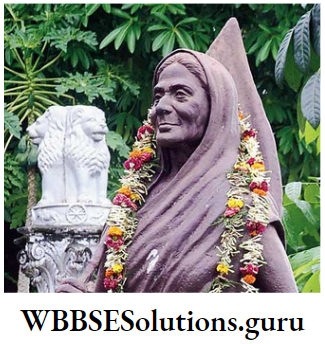
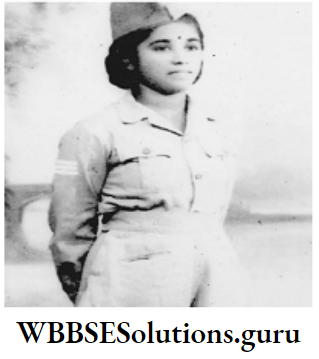
Medinipur The farmers set fires to many police stations, while laid siege on others. On 29th September, a group of 20,000 people tried to occupy the police station and court in the town of Tamluk, without caring for the police and ignoring inclement weather and flood. The people of Medinipur would never forget the bravery of Matangini Hazra (Gandhiburi), the 73-year-old woman from a peasant family in the village of Alinan.
- Lakshmi Narayan Das, Purimadhab Pramanik and Jeeban Krishna Bera also died in the encounter. In six police station areas, in Tamluk sub-division of Medinipur District, namely, Tamluk, Moyna, Pashkura, Mahishadal, Sutahata and Nandigram, Peasant Movement turned into a mass movement because of the participation of the peasant class.
- A large number of armed farmers of ‘Bidyut Bahini’, founded by Ajoy Mukherjee, Satish Samanta and Sushil Dhara, ignored police firing and occupied Sutahata and Nandigram police stations.
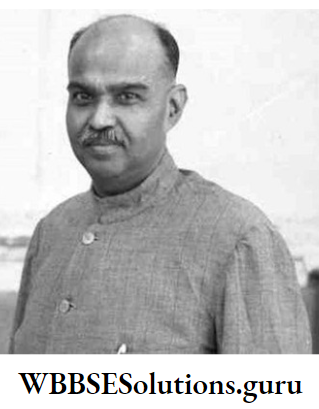
- On 20th November 1942, Shyama Prasad Mukhopadhyay, the then Finance Minister of Bengal, resigned from the council of ministers as a protest against Government oppression and police atrocities in Contai and Tamluk Sub-divisions, demanding independent enquiry. He had formed ‘The Bengal Relief Committee’ and saved people during the famine of 1943.
Bengal The Peasant Movement of Tamluk and Contai inspired farmers and lower-class people of Birbhum, Bardhamaan, Howrah, Hooghly, Dinajpur, Dhaka, Faridpur and Barishal gave a mass appeal to Quit India Movement.
- In the revolts of Dhaka, students, youth, middle class and the working class joined the farmers. In Bolpur, Birbhum, thousands of Santhal adivasis and Muslim farmers attacked railway station and other government institutions.
- In Balurghat, North Bengal, people of Santhal and Rajbangshi community snatched away firearms from the police and engaged in combat with them. In syhlet and Naogaon also, the movement became people oriented. Tribal farmers of Talcher in Orissa also played similar roles Peasant Movement during Quit India Movement
WBBSE Solutions for Class 10 History Chapter 6
Other States: In the states such as the Punjab, Bengal, Uttar Pradesh and Tamil Nadu, where the progress of agriculture was comparatively higher, the rich and influential farmers, in the interests of their own class, remained aloof from the Quit India Movement.
- However, large tracts of agricultural land in Eastern India being undeveloped, the lower classes of farmers and common man spontaneously participated in the movement. So, excitement at the national level and deplorable financial crisis were the primary feature of this time.
- Small farmers and agricultural workers were badly affected by the famine of 1943, post war inflation, price escalation of basic goods etc. For these reasons it was quite justified for the farmers of this class to join the movement,
- All India Kishan Sabha (AIKS) founded in 1936 had a great influence in the peasant movement during Quit India Movement. Apart from this new congress ministers formed in 1937 and the Bihar Provincial Kishan Sabha (BPKS) joined the peasant movement.
- They started movement with the demands like moratorium on debts and abolition of zamindari system. The communist leader P. C. Joshi wrote an essay in the paper National Front’ on the transformation of the peasant’s Struggle into the people’s struggle.
Peasant Movement during Quit India Movement Impacts: Active participation of the farmers at various places
- Transformed Quit India Movement into mass uprising. The heat of the movement could be felt in every state, district, sub-division and village.
- In Orissa a new independent government called ‘Chashi- Muliya Raj’ was formed under the leadership of Pabitra Mohan.
- In Medinipur ‘Tamralipta Jatiya Sarkar’ was formed by Ajoy Mukherjee.
- In Madhya Pradesh, ‘Swadhin Jatiya Sarkar’ (independent national government) was formed.
- The ‘Patri Sarkar’ formed in Maharashtra also looked after the interests of the farmers.
- Quit India Movement was withdrawn after Gandhiji was released from the prison on 8th August 1944. But Farmers’ Movement had not lost its steam.
- The next outbursts of farmers’ discontent were the Tebhaga Rebellion (1946-49), Telengana Movement (1946-51) and Punnapra-Vialar Movement of Trivancore (1946-51), which further strengthened the movement in general.
The Connection Of The Labour Movement In Twentieth Century India With The National Congress And Leftist Politics
The Connection Of The Labour Movement In Twentieth Century India With The National Congress And Leftist Politics Introduction:
- The Nationalist Congress leader G. Subrahmanya Ayre wrote an essay ‘Problem of our Labour’ (1901) and criticise both the Congress and British Govt. for ignoring the interests of the labours.
- A humanist Brahmo leader Sashipada Banerjee was the first supporter of the labour movement. He found the ‘Sramajibi Samiti’ in 1870 at Baranagar. However, he published a monthly magazine ‘Bharater Sramajibi’ in 1874 to create public openion about the miserable conditions of the workers. Thereafter, the first organised labour strike of India was held in the ‘Empress Mills’ of Nagpur in 1877.
- Narayan Meghaji Lokhande founded ‘Bombay Mills Association in 1890. The first labour movement in Bengal was started with the strike in the Budge Budge Jute Mill’ in 1895. But the first largest organised and united labour movement started with the strike by the ‘G. I. P. Railway’s Signalmen’ in 1899. The preparation for this strike was taken for two years.
- If we analyse the development of the Farmers’ Movement in the Twentieth Century India, it can be observed that it had close link with the National Congress and leftist politics. Since the Non-Cooperation Movement, the leftists worked with the Congress through legal methods on one hand, while covertly strengthening their organisation with support of the labourers. But it was Gandhiji who started the first labour movement by forming ‘Mazdoor Mahajan Sabha’ in 1917.
- The Congress had strong organisational base for quite some time, but the leftist political organisation started after World War I, with the influence of the Russian Revolution (1917).
- During 1928-29 the labourers’ organisations, at the initiative of the leftists, called a number of strikes which had great political importance. Gandhiji, in the interest of mass movement, had extended his support to these strikes. In this way, a connection developed between the Congress and the leftists through labour movement. Communistic ideals developed among the workers because of their connection with the leftists.
- The ‘Workers and Peasants Party’ (1927) had an important role to play in bringing together Congress and the leftists during labour. movement. Because of this party, leftist influence on Congress increased considerably.
- So, ‘Bam Sanghati’ or solidarity with the left was declared within the Congress. ‘Girni Kamgarh Union’ (1928) of Bombay led a successful labour movement with the influence of the party.
- In December 1929, a contingent of thousands of workers, led by leftists, went to the Calcutta conference of Congress with a demand for ‘Purna Swaraj’ or complete independence. The demand of the workers was included in the programme of Congress.
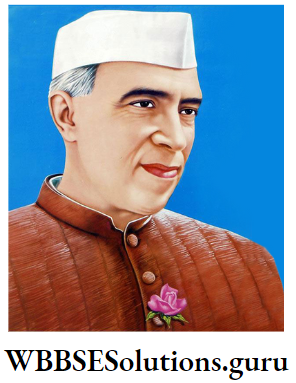
- Jawaharlal Nehru and Motilal Nehru formed the ‘Meerut Defence Committee to support the leftists who accused in the Meerut conspiracy case. But, during Non-Cooperation Movement, the leftists were detached from the Congress in spite of workers’ strikes.
- The leftists formed the ‘Anti-Gandhi League’ in 1934 and strengthened the labour movement. But, in the 1937 elections as per the law for the governance of India, 1935, the leftists had supported the Congress.
The Connection Of The Labour Movement In Twentieth Century India With The National Congress And Leftist Politics Evaluation: As a result, the Congress formed the council of ministers in a number of provinces and thwarted the rights of the workers.
- However, later, the Congress and the leftists were found jointly supporting the labour movement. Yet, on 22nd February 1946, when there was a mutiny on the ship called ‘Talwar’ in Bombay, the Congress took action against the striking workers.
1. Labour Movement during the Anti-Partition of Bengal Movement:
- Monopoly dominent of British capital in the industries of Bengal was the main grievance of the workers. Shyamsundar Chakraborty, Brahmabandhab Upadhyay etc, supported to the workers. In September 1905 the first labour strike during swadeshi period was held in the ‘Burn Iron workers’ of Howrah.
- Then the workers of ‘Govt of India’s Press’, ‘East India Railway’, ‘Jute Mill’ and the strikers of the Railway founded ‘Railway Men’s Union’ in September 1906.
Class 10 History Chapter 6 Question Answers
Labour Movement during the Anti-Partition of Bengal Movement Causes:
During the Anti-Partition of Bengal Movement, the workers had become very important. In a government survey report named, ‘Administration of Bengal under Andrew Froser’, it was stated that, ‘The main characteristic feature of labour movement at this time was workers’ ‘industrial unrest’ and ‘the role of professional rebels’. Labourer strikes. in the manufacturing organisations run by the whites started increasing by leaps and bounds. The main reasons were
- Escalation of price,
- National deprivation and insult,
- Active support of the nationalist leaders and
The campaign and development of public opinion by the nationalist journals in the interests of the labourers.
Role of Nationalists: During Anti-Partition of Bengal Movement many nationalist leaders formed trade unions, gave legal counsel and collected contributions for ‘strike funds’.
- A part from this, many leaders gave lectures, at various places, in support of the striking workers and helped to maintain the pace of labour movement. A few important leaders among them were Bipin Chandra Pal, Chittaranjan Das and Liaquat Hossain.
- The leaders in the Benaras Congress Session (1906) opposed the Partition of Bengal but did not have open support in the peasant movement.
Role of Nationalists Leaders: Four important people who came forward to organise the labour movement were Probhat Kusum Roychowdhury, Premtosh Basu, Aswini Kumar Bandopadhyay and Apurbo Kumar Ghosh.
- Out of these four men, Premtosh Basu was owner of a printing press in North Calcutta and the rest were barristers by profession. These leaders united the workers of government press, railway workshop, jute mill and truck labourers and led a successful labour movement.
A main reason for the success of the movement was the fact that foreign funds and control of the colonial government reigned supreme in all these cases.
Role of Nationalists Strikes: In September 1905, 247 clerks of Martin-burn Company of Howrah and, for the first time, workers of the ‘Calcutta Tram Company’ stopped work and called a strike. Inspired by Aswini Kumar Bandopadhyay and Apurbo Ghosh, 950 guards of ‘East India Railway struck work’, demanding higher salary.
- The labourers of ‘Clive Jute Mill’ in Budge Budge and the labourers and scavenging crew of ‘Calcutta Corporation’ actively participated in labour movement through a strike. In July 1906, the clerks of the ‘East India Rail’ formed a ‘Railway Workers Union’ for the first time. At the initiative of Bipin Chandra Pal, Liaquat Hossain and Shyamsundar Chakraborty, many coolies and labourers of Asansol, Ranigunj and Jamalpur came under its purview.
Role of Nationalists Press strike: On 16th October 1905, the day on which the partition of Bengal was finally put into effect, the labourers, along with people from all walks of life, protested on the streets.
- The labourers in the Jute mills and railway workshops struck work without any prior notice. On 21st October, the workers of the ‘Bengal Secretariat Press’ formed, a Press Union (1905) in support of the strike by the workers of the ‘India Government Press’.
Role of Nationalists Spread: On August 1906, Aswini Kumar Bandopadhyay formed the ‘Indian Mill Workers Union’ in Budge Budge and merged the Labour Movement with the National Anti-Partition of Bengal Movement. This was a remarkable feature of the labour movement at that time.
- Monoranjan Guha Thakurta, in his journal ‘Nabashakti’ (1907) requested the workers of Bengal to take lesson from the workers of Russia. In this connection it can be mentioned that the labourers of the tea gardens ånd mines were somewhat neglected by the labour leaders. They were indifferent to boycott or other nationalist activities.
Outside Bengal: In connection with Partition of Bengal, the workers of a cloth mill owned by a foreigner, in Tuticorin, Tamil Nadu launched extensive work strike and confrontations under the leadership of Chidambaram Pillai and Subramanyam Shiv in 1907.
- Around this time, the workers of Rawalpindi arms factory and railway workshop, under the leadership of Ajit Singh and Lala Lajpat Rai, struck work as an Anti-British Movement in the Punjab. In 1908 Bal Gangadhar Tilak was imprisoned in Mandalay Prison of Burma for writing in the journals, ‘Marathi’ and ‘Kesahri’, against atrocities of the state.
- On protest, the garment traders of Bombay kept the market. closed for 10 days and the workers of Bombay’s garment factory and railway workshop ignored police brutalities and struck work for 6 days.
- During this time 16 workers were killed and 50 were injured in police bullets. Lenin had sent a congratulatory message to the Indian workers at that time. After World War I, the labour movement took a new turn.
2. Labour Movement At The Time Of Non-Violent, Non-Cooperation Movement
Labour Movement At The Time Of Non-Violent, Non-Cooperation Movement Origin: The main feature of labour movement during non-Cooperation was the beginning of an organised and militant labour movement.
- The Government resorted to two kinds of approaches to control the labourers’ movement-to destroy the movement through oppression on one hand and sympathise with the workers by forming various enquiry commissions on the other.
- But before the non-cooperation movement first trade-union organisation like the ‘Madras Labour Union’ was founded by B. P. Wadia in 1918 and was supported by Singaravelu Chettier and G. Ramanajulu Naidu.
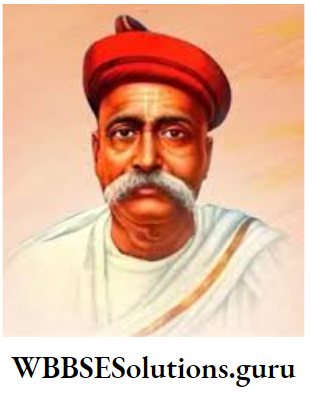
Labour Movement At The Time Of Non-Violent, Non-Cooperation Movement Formations of AITUC: The All India Trade Union Congress (AITUC) was formed on 31st October 1920, in which Joseph Baptista, N. M. Joshi and Bal Gangadhar Tilak had an important role to play.
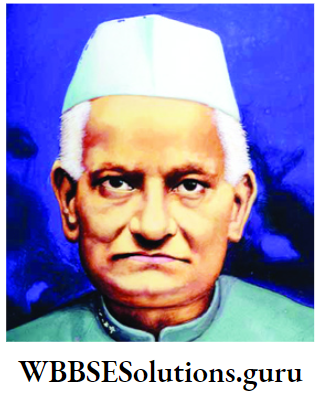
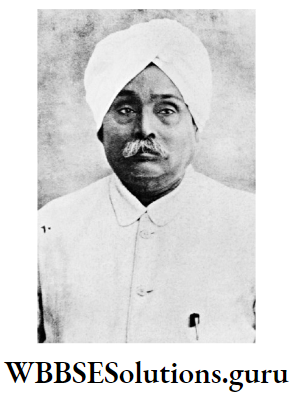
The first elected president of AITUC was Lala Lajpat Rai and the first Vice-President was Joseph Baptista. Dewan Chamanlal was the first General Secretary of AITUC. The left leader Sripad Amrita Dange said, although Gandhiji was not much enthusiastic about the formation of AITUC, people like Lajpat Rai, Tilak, Motilal Nehru, Vitthalbhai Patel and Mohammad Ali Jinnah had important contributions in it.
- It may be mentioned that ‘Ahmedabad Mazdoor Mahajan Sabha’ of Gandhiji never joined the AITUC. Main objectives of AITUC were
- To help and co-ordinate the activities of all the organisations of the workers in all provinces all over India,
- To fulfill the interests of the working class regarding social, political and economic issues and
- To strengthen trade union movement of India. After that president of the Gaya Congress Session (1922). C. R. Das said “The Congress must take Labour and peasantry in hand and organised them both”.
A handbill of AITUC read like this, ‘Indian workers’ political independence is useless without economic independence. So please do not ignore your struggle for national independence. You are an integral part of the freedom movement. If you ignore this, your own freedom will be jeopardised.
Class 10 History Chapter 6 Question Answers
Role of Khilafat: After this, the labour movement, centred round the Khilafat Non-Cooperation Movement in 1919-21, became very important. In 1920 the number of unions were 125, with 2,50,000 members. Although the workers responded very well to the Non-violent Non-cooperation movement, very often they resorted to violence to protest against the Government’s repressive policies.
- While protesting against Gandhiji’s imprisonment, 28 of the protesting workers were killed and 123 were severely injured only in Gujarat. Such brutality on the working class affected the labour unions in Calcutta and Bombay. Multiple ‘strikes took place in Bombay, Kanpur and Jamalpur railway workshop.
- This time, the workers called strikes in support of movements like the. Khilafat and Non-Cooperation. In April 1919, the workers of the North. West province of India observed Bharat Bandh. In 1919, 110 labour strikes took place in. Bengal alone.
- At that time there were only 40 permanent unions, which became 55 in 1921 and 75 in 1922. But according to the report of the ‘Industrial Agitations Committee’, there, were 137 labour strikes in Bengal during 1920-21.
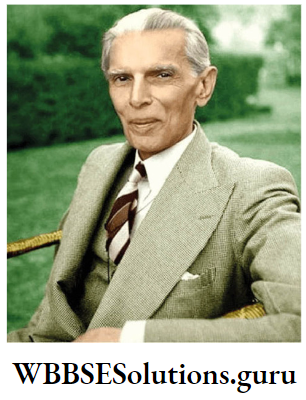
Labour strikes During the Non-Violent, Non-Cooperation Movement, the labourers’ strikes were spontaneous. A few local Congress leaders also supported them. The workers of East Bengal Rail and Steamer Company struck work as a protest against the firing on the tea garden labourers of Assam and the coolies of Chandpur (Komilla District) railway station.
- In January 1921, the workers of Calcutta Tram Company called a strike against the retrenchment of workers and a demand for higher salaries. In this case monetary demands were predominant. But the reasons behind the railway strikes of Jhajha, Kumardubi and Tundula, the main reason was the European officials’ racial discrimination against the Indian workers.
Leaders In the November of 1921, the labourers of Belgachhia Tram Depot of Calcutta joined hands with jute mill workers and, together with 5,000 labourers from the port, clashed with the police.
- At this time, when Congress called for a boycott of the visit of the ‘Prince of Wales’-Edward VIII (1921), the labourers responded in great numbers and observed an all India national strike.
- The labourers of Bombay attacked the Parsis when they went to welcome the prince. The workers’ unions during this time were led by moderate, middle-class leaders like N. M. Joshi, Annie Besant, Joseph Baptista, Byomkesh Chakraborty, Prabhat Kusum Roy Chowdhury and Hemanta Sarkar.
- Many radical young labour leaders like Mrinal Kanti Basu and Jitendralal Banerjee joined the moderates, thereby changing the character of the movement altogether.
Chauri-Choura incident: A shocked Mahatma Gandhi withdrew the Non- cooperation Movement after the Chouri Choura massacre on 5th February 1922 and as a result, the labour movement also ebbed.
- But no one can deny the contribution of the workers in giving the movement a mass appeal. We are informed from a survey by the ‘Royal Commission of Labour’ (1931), that there were 336 labour strikes in 1921. In that case, during 1924-27, there were, on an average, 130 workers’ strikes per year. In the Jharia Conference” of AITUC, the enthusiasm of the labourers was at its zenith.
Conclusion: Towards the end of the Non-Cooperation Movement, effective strikes were called in the railways in Eastern India by Biswananda and Darshananda ‘Jamshedpur Labour Organisation’ (1920) formed by Surendra Nath Halder was more interested in militant activities.
- Gandhiji told Sapoorji Shaklatwala, the communist leader of Great Britain, ‘The Indian workers are unorganised and at times communal’. In fact, although the workers wanted Gandhiji, yet, the question remains whether he wanted them or not.
3. Labour Movement during Civil Disobedience Movement:
Labour Movement during Civil Disobedience Movement Background: The force of Labour Movement did not ebb during Civil Disobedience Movement. On 26th January 1930, Congress celebrated the first independence day of India and soon afterwards, 20,000 workers of Bombay started a rebellion on 4th February. They demanded ‘Purna Swaraj’ or complete independence. At that time most of the striking workers were railway workers.
Role of Gandhiji: On 6th April 1930, Gandhiji disobeyed the ‘Salt Law’ and started the Civil Disobedience Movement through satyagraha. On the same day, the workers of G. I. P. Railwaymen’s Union resorted to a unique form of protest. They came in droves, brandishing red flags, and lay down on the tracks of all the stations of Northern Bombay. The police gunned down a number of them.
- In 1928 A. D. about 1,50,000 cotton mill workers of ‘Girni Kamgarh Union’ of Bombay went on strike for six months at a stretch. During that time 25,000 workers out of 60,000 of that union endured the tortures of the police and continued strike for 26 days and they demanded the animal conference of Congress in Calcutta (Dec. 1928 A.D.).
- At this time more than 5,00,000 workers participated in 203 strikes in the country. Out of this around 110 strikes were of cotton mills. In that year, 5 railway workers were shot dead in Howrah and Liluah.
- ‘Red Trade Union Congress’, the leftist labour organisation almost finished the cotton mills. The most important event of 1928 A.D. was the workers of various jute mills and TISCO went on strike with the demand for 56 hours duty in a week.
- Due to worldwide depression in 1928 A.D. the mill owners and others tried to destroy the labour organisations with the help of the Government. As a result, the workers had to initiate a militant movement.
West Bengal Class 10 History Important Questions
Whitley Commission 1929 A.D.: In 1929 A.D. it was mentioned in ‘Whitley Commission’ report the poverty of 3rd population of the workers. But in spite of that, Government did not become aware of this fact.
- Over and above, by passing the ‘Trade Dispute Bill’ and ‘Public Safety Act’ in 1929 A.D. the degree of torture and oppression upon the workers increased a lot. On the other hand, after the Jharia Conference’ in 1928 A.D. the movement of AITUC did not slower down though the communists detached themselves from this organisation.
Armed and militant movement: In 1930-31 A.D. during the time of civil disobedience, the workers of the cotton mills of Sholapur, being very much tortured by the owners and the Government, started militant movements.
- Some labour leaders like Srikrishna Sarada, Qurban Hossain, Malappa Dhane Shesthy and Jagannath Sindhre were sentenced to death because, some people were killed by the agitating workers.
- On the other hand, Fazlul Haque of Bengal formed ‘Bengal Praja Party’ in 1926-28 A.D. and communist organisations like ‘Workers and Peasants Party’ started travelling in Bengal, Bombay, Punjab, Central provinces, Madras etc. against the extreme expolitation of the zamindar class. The Government brought false charges against many communist leaders as the labour movement turned into an armed and militant movement.
Meerut Conspiracy Case: On 20th March, 1929 A.D. Government started ‘Meerut Conspiracy Case’ against 33 union leaders. In that case, the leaders like Mujaffar Ahmed, Sripad Amrit Dange, Gangadhar Adhikary, P. C. Joshi, Mirajkar, Benjamin Bradly, Philip Sprat etc. were sentenced with long-term imprisonment. On the basis on this case in 1933 A. D. all the publicities of Congress and the communist parties were banned. It was a serious challenge towards the growth of the labour movement.
- Reformative labour leaders like V. V. Giri and N. M. Joshi left AITUC and formed ‘All India Trade Union Federation’ (AITUF) and so they had tiffs with the leftist labour leaders. Again, communists like Somnath Lahiri and Ranadive left the association with Congress and formed the ‘Red Trade Union Congress’ (RTUC) in 1931.
- In this way, because of idealistic breakups on one hand and suppressive policies of the government on the other, the labour movement started ebbing in 1931. In 1935, when the communists kept aside their rivalries and joined together with AITUC, the Labour Movement was once again revived.
The Formation and objectives of the Congress Socialist Party (1934 A.D.): In the context of the Meerut conspiracy case, when the trend of labour movement was decaying, Jayprakash Narayan and Acharya Narendra Dev united the ideas of communist and Congress parties and formed the ‘Congress Socialist Party’.
- Jayprakash Narayan had played a unique role in uniting the labour movement with the movement of independence. A new phase was initiated when Jawaharlal Nehru and Subhas Chandra Bose of the Congress joined the leftist labour movement and ‘The National Trade Union Federation’, set up by Jamunadas Mehta and V. V. Giri had jointly started labour movement with the Congress Socialist Party.
- A powerful movement was started against the ‘Rationalisation Scheme’ 1934 A.D. of all industrialists. The rise of the labout movement was proved by the participation of 2,20,808 labourers in 159 strikes in 1934 A.D.
- The Congress Socialist Party was founded by Jayprakash Narayan and Acharya Narendra Deb for some objectives like
- To establish socialist form of government,
- To abolish the zamindary system,
- To recognise the occupying right of tenants,
- To excuse the old debts of the poor peasants,
- To formulate the agrarian wages of the peasants,
- To ensure the swaraj for peasants and workers.
- To adopt a Nationalisation Scheme in all industries,
- To mix the ideals of the Communist Party of India and the Indian. National Congress for strengthening ‘National Trade Union Federation”.
Evaluation: Historian Sumit Sarkar says that the movement which was started by the Congress, received its militancy by the working class struggle. In that way the working class movement was a progressive trend in the history of the freedom movement.
- Subhas Chandra Bose was eager to fulfil the economic freedom and other demands of the working class and to form a Government with the workers, as parallel to the British Government.
- But Gandjhiji criticised Subhas’s policy of utilising the workers for political interests. The working class movement was non-violent, as it was guided by the ideal of communism. In spite of the Congress, could not fulfil the interests of the workers as it feared to be unpopular to the Birla Company.
- So the working class movement could not be organised like the ludite movement. Inspite of that Sumit Sarkar had acknowledged ‘As for labour, it concrete achievement in the building up to a fairly strong, countrywide trade union movement should not be underestimated’.-Modern India.
West Bengal Class 10 History Important Questions
4. Labour Movement during Quit India Movement:
- In 1942, during Quit India Movement, a pan Indian mass movement started against the nationwide British imperialism. The Communist Party of India did not participate in it. The communist leaders instructed the working class not to participate in Quit India Movement. But, they ignored that instruction and joined the movement. The labourers actively participated in Quit India Movement, in spite of the fact that the communists remained aloof from the line ‘people’s war’.
- On 9th August 1942, at the onset of Quit India Movement, when Gandhiji and other. prominent leaders were arrested, the workers observed general shutdown and strikes for one whole week without anybody’s instructions.
- The vibes of that labour movement could be felt at Delhi, Kanpur, Lucknow, Bombay, Nagpur, Jamshedpur, Madras, Bangalore and Ahmedabad. In Jamshedpur, the labourers of Tata Iron and Steel Company kept the factory closed for 13 consecutive days. In between 1937 to 1939 member of trade union increased form 271 to 562 that made a tremendous impact in the movement.
- During Quit India Movement, the workers iterated that until and unless a national government was formed, they would not rejoin their duties. Just like the workers of TISCO, shut down for 13 days, thousands of workers in the garment factories of Ahmedabad continued. their strike for 90 days in support of the Quit India Movement.
- It is noted that, during Quit India Movement, the labourers invariably avoided the communists or were scared of them. As a result, lesser number of labourers was found joining the movement where there was greater communist influence. However, in some places, ordinary communist leaders moved out of their party lines and joined with the labourers in Quit India Movement.
- From May to July of 1942, the leaders of Tram Workers’ Union in communist-dominated Calcutta, ignored party diktats and many times joined the strikes. The Communist Party of India following the ‘People’s War line disliked for join the Quit India Movement.
5. Workers and Peasants Party:
Workers and Peasants Party Foundation: Phases of Workers and Peasants Party are
- In 1925, ‘Labour Swaraj Party was formed under the leadership of Muzaffar Ahmed and Hemanta Kumar Sarkar in Kanpur. It was later renamed as ‘Peasants and Workers Party’ (1927).
- Dr. Naresh Chandra Sengupta proposed first for the foundation of ‘All Bengal Peasants and Workers Party’ (1926). In 1927 ‘Workers and Peasants Party’ was founded to spread communist activities in Bengal, Bombay, UP and Punjab.
- Muzaffar Ahmed was secretary of this party in Bengal, Mohan Singh Josh in Punjab, P. C. Joshi in UP and S. S. Mirajkar in Bombay.
- Member of ‘Workers and Peasants. Party’ of Bengal were Hemanta Kumar Sarkar, Dharani Goswami, Gopen Chakraborty and poet Kazi Nazrul Islam.
- In December, 1928 ‘All India Workers and Peasants Conference’ was held. Its secretary was R. S. Nimbakar.
Workers and Peasants Party Activities:
- This party’s main activity was to form the militant labour movement in the big industries of India.
- As a result the activities of this party was limited only in the urban and industrial areas.
- In 1928, a group of politicians with communists formed ‘All India Workers’ and Peasants’ Party.
- The party was active in Bengal, Bombay, the Punjab and Uttar Pradesh.
- Naresh Sen Gupta was the leader of this party in Bengal. He demanded the abolition of the zamindari system.
- The Workers’ and Peasants’ Party (1928) was constituted by unifying local organisations like Singaravellu Chettiyar’s ‘Labour. Kishan Party of Hindustan’ (1923), ‘Labour Swaraj Party (1925) formed by Muzaffar Ahmed and Hemanta Kumar Sarkar in Bengal and ‘Congress Labour Party’ (1926) of Bombay.
- Two British communists, Phillip Sprat and Benjamin Bradley, took a lot of initiative in the formation of Workers’ and Peasants’ Party.
- Communist influence increased within Congress through this party.
- But the members did not associate themselves with the ‘Communist League’. However, they were extremely successful in mobilising the trade union movement.
- Two famous mouthpieces were the ‘Langal’ edited by Kazi Nazrul Islam and ‘Ganabani’ of Muzaffar Ahmed.

WBBSE Notes For Class 10
6. The Participation of Leftist Politics in the Anti-Colonial Movement in Twentieth-century India-Characteristic features and Discussions:
The Participation of Leftist Politics in the Anti-Colonial Movement in Twentieth-century India Origin: People from all sections of society developed apathy against the oppression and deprivation policies of the British. Subsequently, leftist politics grew in power using this favourable condition in their favour.
- Leftist politics got a well-defined character with the influence of the Russian Revolution (1917) and with the formation of the Communist Party of India by Manabendranath Roy, Abani Mukherjee and others in Tashkend in 1920. However, after the Communist Party was set up in India in 1925, the character of anti-colonial leftist politics totally changed.
The Participation of Leftist Politics in the Anti-Colonial Movement in Twentieth-century India Popularity: Leftist politics started moving towards a more orderly and organised fashion towards the anti-colonial movement. Leftist politics started gaining popularity after the formation of AITUC in 1920. A large section of the Indian populace was labourers and farmers, who supported. the democratic ideals of communism and participated in the anti-British colonial movement through strikes.
- Whenever anti-colonial national freedom movements led by the bourgeois class, assumed revolutionary character, it received full support of leftist politics. Hence, we can say that leftist politics had a direct connection with the Non-Cooperation movement, Anti-Simon Commission Movement (1928), or Civil Disobedience Movement.
- But the leftists could never accept the reformatory, bourgeois in Congress party. Many leftist Indian leaders like Manabendra Roy opined that the Indian workers were politically more conscious and organisationally stronger and so, the people of M. N. Roy India would accept communism wholeheartedly and make the freedom movement a great success.
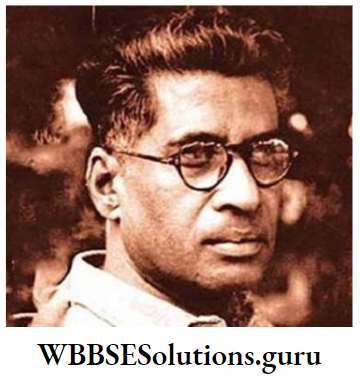
The Participation of Leftist Politics in Anti-Colonial Movement in twentieth-century India Policies: Many politicians joined the left politics having lost their faith in Gandhian principles. It was not just independence, but economic and social equality gained importance in leftist politics.
- The leftists wanted to reform and control the Congress and make it a member of the ‘Anti-Colonial League’, thereby strengthening the anti-British movement even further. Hence, during Anti-Simon Commission Movement, the left and the Congress, along with other political. parties fought together. This made the movement more militant and progressive at the same time.
The Participation of Leftist Politics in the Anti-Colonial Movement in Twentieth-century India Trade Union: The strikes and other movements undertaken by different labour organisations, with leftist tendencies, added extra mileage to the freedom struggle of India.
- The trade union movement was not only for the working class but also in the larger interests of the anti-colonial movement. Because of the uncontrolled influence and display of the power of the communists, a number of clashes and divides took place in leftist politics. For example, Dewan Chamanlal left the AITUC and formed Indian Trade Union Federation under the leadership of V.V. Giri.
The Participation of Leftist Politics in the Anti-Colonial Movement in Twentieth-century India Left activity: It must be noted that, in the beginning, the communist organisation was not very strong in the rural areas. So, the rural farmers often became prey to state terrorism.
- The British colonists were somewhat weary of the leftist politics and its organisation, in spite of the shortcomings of communism. For that reason, the Government introduced. two suppressive bills namely, Public Safety Bill and Trade Disputes Bill, in order to oust foreign communists, from India and ban workers’ strikes respectively.
- Many people are of opinion that the communists opposed these two bills and instigated the workers to start a militant movement. However, a few Congressmen accepted these activities of the leftists.
The Participation of Leftist Politics in Anti-Colonial Movement in Twentieth-century India Meerut Case: Around this time, in order to weaken the communist movement, 33 leftist trade union leaders were convicted under a false lawsuit in Meerut Conspiracy Case (1929-33) and jailed.
- The people who were convicted in the Meerut Case were M. A. Dange, M. S. Mirajkar, Nimbakar, Ghate, Gangadhar Adhikari, Dharani Goswami, Gopen Chakraborty, Shibnath Banerjee, Muzaffar Ahmed, Kazi Nazrul Islam, P. C. Joshi, Maqbul Fida among others and British communist leaders like Benjamin Bradley and Phillip Sprat.
- Prof Harold John Laski, Albert Einstein and Roman Rolland wrote letters to the Government protesting against the verdict of this conspiracy case. Because of this verdict, the Communist Party of India, the Young Workers’ League and 12 other trade unions were banned in India in 1934.

WBBSE Notes For Class 10
The Participation of Leftist Politics in the Anti-Colonial Movement in twentieth-century India Failure: During Civil Disobedience Movement, there was a vacuum in the leadership. of leftist politics. J. P. Hythcox and J. S. Mathur said that between 1930 and 1931, 70% of strikes had failed. The reasons for this failure were,
- Extreme leftist ideals,
- All strikes were not conducted by the left,
- Many trade union leaders were behind bars and
- Presence of reformatory leaders.
The Participation of Leftist Politics in the Anti-Colonial Movement in twentieth-century India Nature: The nature of leftist movement changed a lot when it got connected to the anti-colonial movement of India. The leftists implored people to join the anti-imperialist revolutionary movement because, the bourgeois class, with the blessings of the government, had lost its bite.
- At the same time, people were also told to continue fighting against the local supporters, that is, Indian landlords and capitalists, who were actually sycophants of imperial-colonial rule. In 1934, the Congress and leftists started to fight together. But the leftists had not accepted the reconciliatory and compromising attitude of the Congress.
- So, the leftists continued their protests against reconciliatory policy while remaining within Congress. They formed a Gandhi Boycott Committee in Calcutta.
The Participation of Leftist Politics in Anti-Colonial Movement in Twentieth-century India CPI and Left Movement: In March 1925, the Communist Party of India prepared to adopt a united front to start an anti-imperialist movement. It was stated there that they would wrangle out full and unconditional independence from the British, they would not join the British Parliament and stop all dialogues with the British colonial rulers.
- It was the aim of leftist politics to form a united front from fop to bottom and to strengthen the united nationalist revolutionary movement. The leftists felt that an anti-imperialist front could make the anti-colonial movement a success.
- When World War 2 started in 1939, the leftists called it an Imperialist war. So, taking advantage of the war, the leftists intensified their anti-colonial movement. The leftists initiated mass movements in Kanpur, Patna, Punjab, Andhra and Malabar regions in 1940.
The Participation of Leftist Politics in the Anti-Colonial Movement in Twentieth-century India People’s War But, when German Nazi forces attacked Communist Soviet Russia in 1941, the lefts assured to help the British Government in all respects. In this way the ‘Imperialist War’ overnight became ‘People’s War’. The communists supported the Cripps’ Mission.
- The Communist party asked the Congress and the Muslim League to form a ‘National Government’. Satisfied with this kind of loyalty, the British Government withdrew all bans from the Communist Party and released their leaders from the jail.
- For this reason when Gandhiji, started Quit India Movement in 1942, there was a mass awakening, but the leftists distanced themselves from the movement. They called the freedom fighters as Mad Patriots.
- The term Peoples’ War appealed to the intellectuals. As a result, Indian People’s Theatre Association or IPTA was formed during this time (1942-44).
- After 1946, the main aim of leftist politics was to unify and organise the farmers’ and labour movements. The observation of Rashid Ali Day (12th February 1946), students’ movements and farmers’ movements in places like Telengana and Tebhaga intensified the left movements.
- In 1947 when interim Government was in force, the then Home Minister Sardar Ballav Bhai Patel ordered the arrest of all leftist leaders.

The Participation of Leftist Politics in the Anti-Colonial Movement in twentieth-century India Characteristics: If we discuss the participation of leftist politics in the anti-colonial movement of the twentieth century, a number of interesting features can be observed.
- Firstly, during the first decade of the twentieth century leftist politics had hardly any organised existence. There was some organised form after World War 1.
- Secondly, birth of leftist politics’ was from the Russian Revolution. So, armed revolutionary movement started against the British imperialist power which speeded up the nationalist movements of the Congress.
- Thirdly, the leftists converted the anti-colonial movement into a mass movement. The main feature of their movement was to raise an uncompromising war against the British.
- Fourthly, mass awakening started through participation in the anti-colonial movement of leftist politics. They had helped in bringing success to India’s Freedom struggle, sometimes by giving a lot of importance to Congress and sometimes by joining it.
- Fifthly, the leftists supported various labour organisations and used the strikes as tools of the anti-imperialist movement.
- Sixthly, the leftists kept their protests alive sometimes by supporting the Congress and sometimes criticizing it. However, economic demands and democratic ideals were always more important to them than political freedom.
- Seventhly, through their labour organisations, the leftists sent a clear message to the Congress and British that economic independence was the primary demand and characteristic of their movement.
- Eighthly, a noticeable feature of leftist politics was the participation of British communists. But the Indians were way led a number of times because of their influence.
- Ninthly, during the anti-colonial movement, the leftists were found wavering ‘from their ideals at times. Sometimes, they had to move away from extreme left ideals also.

WBBSE History And Environment Chapter 6 Peasants Working Class And Left Movements In Twentieth Century India Very Short Question And Answers
Question 1. What was Moplah Revolt?
Answer:
Moplah Revolt of Malabar was a militant farmers’ rebellion in which thousands of Muslim Farmers had died.
Question 2. What was the name of the party established by the leftist leader Singaravellu?
Answer:
Hindustan Workers-Farmers Party.
Question 3. Which organisation was formed, by Aswini Kumar Dutta to solve problems in the villages and to safeguard the interests of the peasants?
Answer:
Swadesh Bandhab Samity.
West Bengal Class 10 History Important Questions
Question 4. What was the most important aspect of farmers’ rebellion during the non-cooperation movement?
Answer:
Fight against feudalism was the most important aspect of farmers’ rebellion during. non-cooperation movement.
Question 5. Who was the founder of ‘Ayodhya Kishan Sabha’?
Answer:
Jawaharlal Nehru.
Question 6. What was the outcome of the Bardauli Movement?
Answer:
Government was forced to reduce taxes of the farmers by 6.03%.
Question 7. Who was the leader of farmers’ movement in Bengal?
Answer:
Deshapran Birendranath Sasmal
Question 8. Where did the workers struck work for the first time as a part of labour movement?
Answer:
The workers of Calcutta Tram Company stopped work and called a strike as a part of labour movement in Bengal.
Question 9. Name the two bills that were passed by the Government in order to oust foreign Communists and ban workers’ strikes respectively.
Answer:
Public Safety Bill and Trade Disputes Bill.
WBBSE History And Environment Chapter 6 Peasants Working Class And Left Movements In Twentieth Century India True Or False
Question 1. During the farmers’ movement, Congress and the leftists worked together.
Answer: True
Question 2. Gandhiji started the first labour movement by forming ‘Mazdoor Mahajan Sabha’.
Answer: True
Question 3. Strikes and trade unions were important features of the labour movement during Quit India Movement.
Answer: False
WBBSE History And Environment Chapter 6 Peasants Working Class And Left Movements In Twentieth Century India Fill In The Blanks
Question 1. The All India Trade Union Congress was formed in ________
Answer: 1920
Question 2. Mahatma Gandhi withdrew the Non-Cooperation Movement after the _______
Answer: Chouri Choura massacre
Question 3. ‘Labour Swaraj Party’ was formed under the leadership of _______
Answer: Muzaffar Ahmed and Hemanta Kumar Sarkar
Question 4. Manabendranath Roy was a ________ leader.
Answer: Leftist
Question 5. The principal demand of the _______ovement was that the farmers would pay taxes _______ with money and not with their cultivated crops.
Answer: Eka
Class 10 History Chapter 6 Question Answers
Peasants Working Class And Left Movements In Twentieth Century India Characteristics And Observations Short Answers
Question 1. Why did the farmers’ rebellion during Anti-Partition Movement take a communal character?
Answer:
Whenever farmers demanded justice and protested against the landlords, the Government labelled it as communal unrest. It was easy for the Government to instigate the poor farmers, who were mostly Muslims, against the landlords and money-lenders, who were mostly Hindus.
Question 2. How was the Communist Party of India formed?
Answer:
Leftist politics was greatly influenced by the Russian Revolution and the Communist party of India was formed by Manabendranath Roy, Abani Mukherjee and others in Taskend in 1920. Communist Party was set up in India in the year 1925.
Question 3. What was the ‘Meerut Conspiracy Case’?
Answer:
Around the third decade of the twentieth century, in order to weaken the communist movement, 33 leftist trade union leaders were convicted under a false lawsuit in ‘Meerut Conspiracy Case’ (1929-33) and jailed. Because of this verdict, the Communist Party of India, Young Workers’ League and 12 other trade unions were banned in India in 1934.