WBBSE Solutions For Class 6 English Reading Skills Unseen Vocabulary

Reading Skills Unseen Vocabulary

Meaning Of A Few Words

নীচে কিছু ইংরাজী শব্দের বাংলা অর্থ দেওয়া হল। এইগুলি মুখস্ত কর।

  • I— আমি
  • He—সে (পুরুষ)
  • She—সে (স্ত্রীলোক )
  • You—তুমি, তোমরা
  • It—ইহা
  • This—এইটি
  • That—এটি
  • Is——হওয়া
  • Am—হওয়া
  • Do করা Go—যাওয়া
  • Are হওয়া
  • Has- আছে
  • Have-আছে
  • Had——ছিল

Read And Learn Also WBBSE Solutions For Class 6 English

  • No না
  • Me — আমাকে
  • My—আমার
  • Him তাকে
  • His—তার (পুরুষ) তার,
  • Her- তাকে (মহিলা)
  • Your— তোমার
  • See― দেখা
  • Sit বসা
  • Say–বলা
  • Tell -বলা
  • Cry — কাঁদা
  • Fly—উড়া
  • Give — দেওয়া
  • Take—নেওয়া
  • What কি ?
  • Who – কে ?
  • Here —এখানে
  • We—আমরা
  • Us- আমাদেরকে
  • Our – আমাদের
  • They—তারা
  • These—এইগুলি
  • Those —ঐগুলি
  • Their—তাদের
  • Them — তাদেরকে
  • Make—তৈরী করা
  • Like—পছন্দ করা
  • Look— তাকিয়ে থাকা
  • Laugh— হাসা
  • Call-ডাকা
  • Come আসা
  • Sing — গান করা
  • Stand—দাঁড়ান
  • Where- কোথায় ?
  • When — কখন ?
  • Above — উপরে
  • Yes – হাঁ
  • Good – ভাল
  • Bad — মন্দ
  • Nice — সুন্দর
  • There — সেখানে
  • Long — লম্বা
  • Below -নীচে
  • Beautiful— সুন্দর
  • Short—ছোট, খাটো
  • Today – আজ
  • Small — ছোট
  • Near কাছে
  • Tomorrow — কাল
  • Large—বড়
  • Far দূরে
  • Big–বড়
  • Warm-গরম
  • Up—উপরে
  • Sweet—মিষ্টি
  • Down — নীচে
  • Morning সকাল
  • Evening—সন্ধ্যা
  • Day—দিন
  • Tall — লম্বা
  • Night—রাত্রি
  • Father-পিতা
  • Mother—মাতা
  • Brother—ভাই
  • Sister ভগ্নী
  • Ask—প্রশ্ন করা
  • Bad খারাপ
  • Son — পুত্র
  • Daughter——কন্যা
  • Boy—বালক
  • Girl – বালিকা
  • Uncle—কাকা
  • Aunt — কাকিমা
  • Grandfather—ঠাকুর্দা
  • Grandmother—ঠাকুমা

WBBSE Solutions For Class 6 English Reading Skills Unseen Vocabulary

Class 6 Vocabulary Worksheets

Opposite Words

  • Beautiful — সুন্দর
  • Begin—শুরু করা
  • Answer—উত্তর দেওয়া
  • Good — ভালো Ugly—কুৎসিৎ
  • Finish — শেষ করা
  • End — শেষ
  • Beginning—সুরু
  • Big—বড়
  • Small — ছোট
  • Black — কালো
  • White — সাদা
  • Bitter — তিক্ত
  • Sweet — মিষ্টি
  • Cowardly—ভীরু, কাপুরুষ
  • Bold — সাহসী
  • Buy—কেনা
  • Careful—সাবধানি
  • Cool —ঠাণ্ডা
  • Dead —মৃত
  • Death—মৃত্যু
  • Difficult —কঠিন
  • Dry—শুষ্ক
  • Empty—শূন্য
  • Enemy—শত্রু
  • Forget— ভুলে যাওয়া
  • Give — দেওয়া
  • Large—বড়
  • Happy —সুখী
  • Sell — বেচা
  • Careless—অসাবধানি
  • Warm — গরম
  • Alive—জীবিত
  • Life—জীবন
  • Easy — সহজ
  • Wet — সিক্ত
  • Full—পূর্ণ
  • Friend—বন্ধু, মিত্র
  • Remember—স্মরণ করা
  • Take — নেওয়া
  • Small — ছোট
  • Unhappy—অসুখী
  • Hard – কঠিন
  • High—উঁচু
  • Hot—উম্ম
  • Idle — অলস
  • Intelligent—বুদ্ধিমান
  • Joy—আনন্দ
  • Kind—সদয়
  • Late — দেরি
  • Laugh—হাসা
  • Light—হাল্কা
  • Like — পছন্দ করা
  • Little — ক্ষুদ্র
  • Love — ভালোবাসা
  • Long — দীর্ঘ
  • Loose — ঢিলে
  • Lose — হারানো
  • Make — তৈরী করা
  • Near—নিকটবর্তী
  • New—নতুন
  • Peace — শান্তি
  • Poor — দরিদ্র
  • Punishment — শাস্তি
  • Quick— দ্রুত
  • Quiet — শান্ত
  • Regular—নিয়মিত
  • Remember মনে করা
  • Small — ক্ষুদ্র
  • Strong কড়া
  • Soft — কোমল
  • Low — নীচু
  • Cool —ঠাণ্ডা
  • Active—পরিশ্রমী
  • Dull—নির্বোধ
  • Sorrow—কষ্ট
  • Unkind—নির্দয়
  • Early — শীঘ্র
  • Cry—কাঁদা
  • Heavy — গুরুভার
  • Dislike—অপছন্দ করা
  • Big — বড়
  • Hatred—ঘৃণা
  • Short – হ্রস্ব
  • Tight—আঁটোসাটো
  • Gain — লাভ করা
  • Destroy—ধ্বংস করা
  • Far — দূর
  • Old —পুরানো
  • War — যুদ্ধ
  • Rich — ধনী
  • Reward — পুরস্কার
  • Slow — মন্থর
  • Unquiet—অশান্ত
  • Irregular—অনিয়মিত
  • Forget—ভুলে যাওয়া
  • Large—বৃহৎ
  • Soft — নরম

নীচে কিছু বাংলা শব্দের ইংরাজী দেওয়া হল। এইগুলি মুখস্ত কর।

Vocabulary Practice For Class 6 Students

Animals
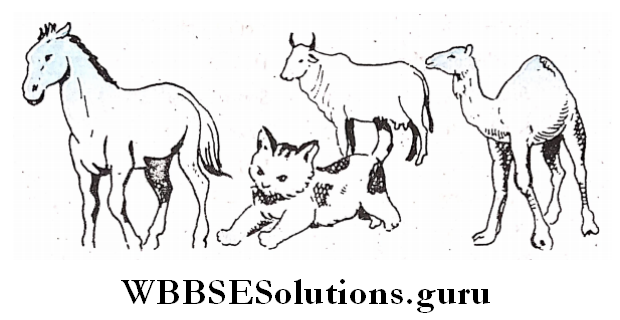
WBBSE Solutions For Class 6 English Reading Skills Unseen Vocabulary animals

  • Ass ভালুক—— Bear
  • হাতি — Elephant
  • ব্যাঙ— Frog
  • শিয়াল — Jackal
  • ভেড়া—Lamb
  • মহিষ — Buffalo
  • চিতাবাঘ—Leopard
  • গরু – Cow
  • উট—Camel
  • বিড়াল — Cat
  • হরিণ — Deer
  • শিয়াল – Fox
  • সিংহ — Lion
  • ছাগল — Goat
  • মরগী—Hen
  • ষাঁড় – Ox
  • বাঁদর — Monkey
  • কাঠবেড়ালী — Squirrel
  • শুয়োর—Pig
  • ইঁদুর — Rat
  • গণ্ডার—Rhinoceros
  • বাঘ – Tiger
  • নেকড়ে—Wolf
  • কুকুর—Dog

Birds

  • টিয়া — Parrot
  • ময়ূর – Peacock
  • কাক-Crow.
  • পেঁচা — Owl
  • পায়রা – Pigeon
  • (পিজিয়ন ) রাজহাঁস – Swan
  • মোরগ — Cock

Insects (Cott).

  • মৌমাছি — Bee
  • মশা – Mosquito
  • পিঁপড়া—Ant
  • পঙ্গপাল – Locust
  • মাছি—Fly
  • আরশোলা — Cockroach

WBBSE Class 6 Unseen Vocabulary 

Sounds Of Animals And Insects (প্রাণী ও পতঙ্গ এবং তাদের ধ্বনি)

প্রাণী – ধবলি

  • Asses – Bray
  • Cats – Mew
  • Bees – Hum
  • Sparrows (চড়ুই পাখি – Chirp
  • Cocks – Crow
  • Crows – Caw
  • Lambs – Bleat
  • Cuckoos – Coo
  • Lions – Roar
  • Dogs – Bark
  • Owls – Hoot
  • Ducks – Quack
  • Pigs – Grunt
  • Elephants – Trumpet
  • Snakes – Hiss
  • Frogs – Croak
  • Sparrows – Chirp
  • Hens – Cackle
  • Squirrels – Squeak
  • Horses – Neigh
  • Tigers – Roar
  • Jackals – Howl
  • Wolves – Howl

Animals And Their Kids (পশু এবং তাদের ছানা)

Animals and their kids:

  • Cat – Kitten
  • Chicken – Chick
  • Horse – Colt (Male) , Foal, Filly (Female)
  • Cow – Calf
  • Deer – Fawn
  • Lion – Cub
  • Dog – Pup, Puppy
  • Owl – Owlet
  • Duck – Duckling
  • Pig – Piglet
  • Frog – Tadpole
  • Sheep -Lamb
  • Goose – Gosling
  • Tiger – Cub

Animals And Insects And Their Dwellings (পশু-পাখি এবং পতঙ্গের বাসস্থান)

Animals and Insects and their Dwellings:

  • Bee – Hive
  • Bird – Nest
  • Dog – Kennel
  • Cat – Cattery
  • Deer – Fold
  • Horse – Stable
  • Lion – Den
  • Pig – Sty
  • Sheep =- Fold
  • Spider – Web
  • Tiger – Lair

Fruit

  • আঙ্গুর — Grape
  • কাঠাল— Jackfruit
  • চীনা বাদাম Groundnut
  • পেয়ারা — Guava
  • পেঁপে—Papaya
  • আম – Mango
  • কমলা – Orange
  • আনারস – Pineapple
  • লিচু — Litchi

Colour (রং)

  • সাদা — White
  • সবুজ – Green
  • কমলা— Orange
  • বেগুনী — Violet
  • নীল — Blue
  • হলুদ – Yellow
  • কালো — Black
  • লাল – Red
  • এরোপ্লেন—Aeroplane
  • বাতাস— Air
  • বই – Book
  • বিছানা — Bed

Class 6 English Vocabulary WBBSE

Miscellaneous (বিবিধ)

  • গরুর গাড়ী — Bullock Cart
  • বাক্স — Box
  • মোটর গাড়ী—Car
  • বাড়ী — House /Home
  • দোয়াত কালি—Inkpot
  • চাবি — Key
  • রাজা— King
  • বেধ — Bench
  • ব্ল্যাকবোর্ড — Blackboard
  • বেলুন—Balloon
  • বালতি — Bucket
  • বাস গাড়ী — Bus
  • নৌকা — Boat
  • মসজিদ—Mosque
  • গুহা — Cave
  • চেয়ার – Chair
  • দরজা – Door.
  • ডিম – Egg
  • বাগান – Garden
  • বন্দুক Gun
  • জাহাজ——Ship
  • নদী — River
  • চাঁদ – Moon
  • পুকুর – Pond
  • সূর্য — Sun
  • রাণী — Queen
  • তারা — Star
  • ঘর— Room
  • রবিবার—Sunday
  • সোমবার — Monday
  • আকাশ—Sky

Days In A Week (সাপ্তাহিক দিন)

  • মঙ্গলবার — Tuesday
  • বুধবার – Wednesday
  • ঘুড়ি— Kite
  • বাতি — Lamp
  • তালা— Lock
  • আলো—Light
  • চিঠি — Letter
  • গাছের পাতা— Leaf
  • টেবিল—Table
  • গাছ — Tree
  • চা — Tea
  • জানালা — Window
  • হাত ঘড়ি— Watch
  • বৃহস্পতিবার—Thursday
  • শুক্রবার—Friday
  • শনিবার—Saturday

Number (সংখ্যা)

  • এক – One
  • দুই — Two
  • তিন—Three
  • চার – Four
  • পাঁচ— Five
  • ছয় — Six
  • সাত— Seven
  • আট—Eight
  • নয়— Nine
  • দশ—Ten

Class 6 English Vocabulary WBBSE

Know Your Body (তোমার শরীরকে জান)

  • হাত – Hand
  • পা — Leg
  • মাথা — Head
  • দাঁত—Teeth
  • চোখ — Eye
  • ঘাড় — Neck
  • কনুই — Elbow
  • কাঁধ — Shoulder
  • হাতের পাতা — Palm
  • নাক – Nose
  • চুল—Hair
  • কান Ear
  • আঙ্গুল – Finger
  • কোমড় — Waist
  • হাঁটু— Knee
  • মুখ— Mouth
  • পায়ের আঙ্গুল – Toe
  • গোড়ালি — Heel
  • পায়ের পাতা — Foot
  • টাক মাথা — Bald Head
  • কপাল — Forehead
  • ভুরু—Eyebrow
  • বুক Chest
  • গোঁফ—Moustache
  • হাতের বুড়ো আঙ্গুল — Thumb
  • দাড়ি — Beard
  • কোঁকড়ানো চুল—Curly Hair
  • ঠোঁট—Lip
  • গলা — Throat
  • চিবুক—Chin
WBBSE Solutions For Class 6 English First Summative Evaluation Test Set 1

Class 6 English First Summative Evaluation Test Set 1 Reading Comprehension (Seen)

Question 1. Read the following passage and answer the given questions :

In the morning, Bholenath’s wife discovered the tiger tied to the tree and screamed in fear. Hearing her, the neighbours came running out of their huts. Bholenath was sleeping. He came out, too. The people were all mystified. “Who tied this tiger to the tree ?” They asked.

A neighbour said, “I think Bholenath can tell us. I saw him last night dragging. an animal through the storm.’ Bholenath was too frightened to admit his mistake. Everyone looked questioningly at Bholenath.

Read And Learn Also WBBSE Solutions For Class 6 English

In the meantime, the tiger, disturbed and confused by all the people, had chewed through the rope. It ran away, to the jungle. The villagers were relieved. Bholenath now saw an opportunity to brag.

Class 6 English First Summative Evaluation WBBSE

“It is I who captured the tiger last night. I even pulled its ears.” Bholenath announced proudly. Everyone marvelled at his bravery. Soon the news of Bholenath’s bravery reached the king. The king was highly impressed. He made Bholenath the Commander-in-chief of the king’s army. Bholenath and his wife were given a huge house to live in.

WBBSE Solutions For Class 6 English First Summative Evaluation Test Set 1

1. Fill in the blanks with words from the above passage:

1. The people were all mystified “who tied this tiger to the tree?” they asked.

2. Bholenath was too frightened to admit his mistake.

3. The king made Bholenath the Commander-in-chief of his army.

WBBSE Class 6 English Functional GrammarWBBSE Class 6 English Reading SkillsWBBSE Solutions For Class 6 English


2. Answer the following questions:

Question 1. When did Bholenath’s wife discover the tiger?
Answer:

Bholenath’s wife discovered the tiger in the morning.

WBBSE Class 6 English Summative Test Set 1 Solutions

Question 2. How did the king reward Bholenath for his bravery?
Answer:

The king rewarded Bholenath for his bravery by appointing him the Commander-in-chief of his army.

Class 6 English First Summative Evaluation Test Set 1 Grammar

Question 2. Do as directed:

1. Underline and classify the noun.

  1. She gave me few books.

Answer: Books (common noun)

2. Underlined the abstract noun.

  1. I was amazed at her beauty.

Answer: Beauty

3. Fill in the blank with proper form given in the brackets.

1. They Went (go/went/gone) to the market yesterday.

4.  Give the opposite gender of the following nouns.

  1. Tiger X Tigress
  2. Horse X mare

5. Fill in the blank with article.

  1. He is a poor man.

Class 6 English First Summative Test Set 1 WBBSE

Class 6 English First Summative Evaluation Test Set 1 Writing

Question 3. Write a short paragraph on ‘Usefulness of Trees’.
Answer:

A short paragraph on ‘Usefulness of Trees’

Trees are our best friends. Without trees, there will be no life on earth. Trees give us oxygen which we breathe. Trees give us food and shelter. Some trees are used as medicine They are nature’s gift to us. The animais, birds and humans depend on them. So we shoul plant more and more trees every year.

WBBSE Solutions For Class 6 English Miscellaneous Lesson 1 Sentences

Lesson 1 Sentences

‘Partha book” বলতে আমরা বুঝি ‘পার্থ বই’। সুতরাং এতে মনের ভাব বা অর্থ সম্পূর্ণরূপে প্রকাশ পায় না। অতএব, এটা বাক্য নয়। কিন্তু ‘Partha reads a book’ বললে বোঝায় ‘পার্থ একটি বই পড়ে’। এতে মনের ভাব সম্পূর্ণরূপে প্রকাশ পেয়েছে। সুতরাং, এটা একটি বাক্য। এইরূপ,

  • Did – I did it.
  • Can do – I can do it.
  • They are – They are good boys.
  • Reads the book – Rabi reads the book.
  • What is – What is your name ?
  • In the garden – The boys play in the garden.

Read And Learn Also WBBSE Solutions For Class 6 English

Class 6 English Miscellaneous Lesson 1.2 WBBSE

লক্ষ্য কর, উপরের শব্দ (word) বা শব্দ সমষ্টি ( words) – গুলির মধ্যে বামদিকের শব্দগুলি কোন সম্পূর্ণ অর্থ বা মনের ভাব প্রকাশ করে না, কিন্তু ডানদিকের শব্দগুলি মিলিত হয়ে একটি সম্পূর্ণ অর্থ বা মনের ভাব প্রকাশ করছে। এইরূপ

WBBSE Class 6 English Functional GrammarWBBSE Class 6 English Reading SkillsWBBSE Solutions For Class 6 English


যখন দুই বা ততোধিক শব্দ বা words একত্রে বসে একটি সম্পূর্ণ অর্থ প্রকাশ করে, তখন সেই শব্দ-সমষ্টিকে Sentence বা বাক্য বলে।

WBBSE Solutions For Class 6 English Miscellaneous Lesson 1 Sentences

A Sentence is a word or group of words giving a complete sense.

লক্ষ্য রেখো, শুধু শব্দসমষ্টি হলেই sentence হয় না; সম্পূর্ণ অর্থ প্রকাশ করা চাই। সেইজন্য বামদিকের কোন শব্দসমষ্টিই sentence নয় – ডানদিকের প্রত্যেকটি শব্দসমষ্টি এক একটি sentence.

WBBSE English Miscellaneous Lesson 1.2 Solutions

কিছু কিছু ক্ষেত্রে মাত্র একটি শব্দ দিয়ে একটি বাক্য গঠন করা সম্ভব, যেমন—

  • Mira-is Arun your brother?
  • Roma-Yes.

এখানে ‘Yes’ শব্দটি একটি বাক্য গঠন করেছে।

সেইরূপ Go—যাও, Come—এস, Stop —থাম, প্রভৃতি আদেশবাচক এক-একটি শব্দই (word) এক-একটি sentence.

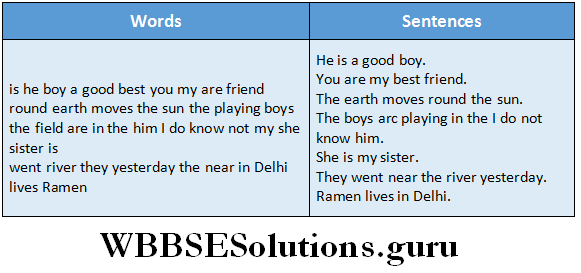
মনে রেখো, words (শব্দ সমষ্টি) পাশাপাশি বসে পূর্ণ অর্থ বা মনের ভাব প্রকাশ করলে তবেই একটি sentence গঠিত হয়। নীচে লক্ষ্য কর কিভাবে এলোমেলোভাবে দেওয়া wordsগুলি সঠিকভাবে বসিয়ে sentence গঠিত হয়েছে :

Sentences word and sentences

WBBSE Solutions For Class 6 English Miscellaneous Lesson 5 Reading And Writing Of Time Railway Time

Lesson 5 Reading And Writing Of Time Railway Time

নীচের ছবিগুলি দেখ ।

Reading And Writing Of Time Railway Time

একটি ঘড়ির দুটি কাঁটা আছে। বড় কাঁটাটি minutes নির্দেশ করে এবং ছোট কাঁটাটি hours নির্দেশ করে। প্রথম ছবিতে ছোট কাঁটাটি তিন (three) এবং বড় কাঁটাটি বার (twelve) নির্দেশ করছে।

So the time is three o’clock.

দ্বিতীয় ছবিতে ছোট কাঁটাটি সাত (seven) ও বড় কাঁটাটি বার (twelve) নির্দেশ করছে।

So the time is seven o’clock.

Read And Learn Also WBBSE Solutions For Class 6 English

তৃতীয় ছবিতে, ছোট কাঁটাটি চার (four) ও পাঁচের (five) মধ্যে রয়েছে, বড় কাঁটাটি ছয় (six) নির্দেশ করছে।

Class 6 English Miscellaneous Lesson 5 WBBSE

So the time is half-past four.

চতুর্থ ছবিতে, ছোট কাঁটাটি নয় (nine) ও দশের (ten) মধ্যে রয়েছে, বড় কাঁটাটি আট (eight) নির্দেশ করছে।

WBBSE Class 6 English Functional GrammarWBBSE Class 6 English Reading SkillsWBBSE Solutions For Class 6 English


So the time is twenty minutes to ten or forty minutes past nine.

পঞ্চম ছবিতে ছোট কাঁটাটি ছয় (six) ও সাত (seven)-এর মধ্যে রয়েছে, বড় কাঁটাটি ছয় (six) নির্দেশ করছে।

So the time is half-past six.

WBBSE English Miscellaneous Lesson 5 Solutions

ষষ্ঠ ছবিতে ছোট কাঁটাটি তিন (three) নির্দেশ করছে এবং বড় কাঁটাটি দুই (two) নির্দেশ করছে।

So the time is ten minutes past three.

WBBSE Solutions For Class 6 English Miscellaneous Lesson 5 Reading And Writing Of Time Railway Time

Lesson 5 Reading And Writing Of Time Railway Time Railway Time

রেলওয়ে time-এ’ সময় নির্দেশ করতে 24 ঘণ্টার জন্য 1 হতে 24 সংখ্যা ব্যবহৃত হয়।

  • 12 midnight to 12 noon a.m. (morning)
  • 12 noon to 12 mid nightp.m. (afternoon)

রাত্রি ১টা হতে দুপুর ১২টা পর্যন্ত সময়ের বিভিন্ন ঘণ্টাকে 1hr, 2hrs, 3hrs, 4hrs 12hrs-এই ভাবে চিহ্নিত করা হয়।

দুপুর ১টা হতে রাত্রি ১২টা পর্যন্ত সময়ের বিভিন্ন ঘণ্টাকে 13 hrs, 14 hrs, 18 hrs 24 hrs-এই ভাবে চিহ্নিত করা হয়।

এই প্রকার সময় নির্দেশ নিম্নরূপে করা হয় :

  • 02.00 hrs = 2 o’clock in the morning = 2 a.m.
  • 05:00 hrs = 5 o’clock in the morning = 5 a.m.
  • 10.00 hrs = 10 o’clock in the morning = 10 a.m.
  • 12.00 hrs = 12 o’clock in the morning = 12 noon
  • 13.00 hrs = 1 o’clock in the afternoon = 1 p.m.
  • 17.00 hrs = 5 o’clock in the afternoon = 5 p.m.
  • 22.00 hrs = 10 o’clock at night = 10 p.m.
  • 24.00 hrs = 12 o’clock at night i.e. midnight

Lesson 5 Reading And Writing Of Time Railway Time Examples Worked Out

Question 1. A clock has two hands. The long hand indicates minutes and the short hand indicates hours. Now draw three clocks. Show the position of the hands according to instructions and tell the time.

WBBSE Class 6 English Miscellaneous Exercises

1. The short hand is between six and seven and the long hand is at ten.

Reading And Writing Of Time Railway Time the short hand is between six and seven and the long hand is at ten

Answer:

It is ten minutes to seven.

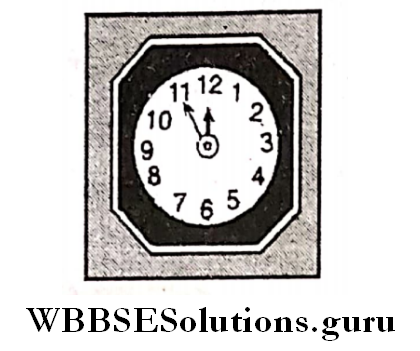
2. The short hand is at twelve and the long hand is at eleven.

Reading And Writing Of Time Railway Time the short hand is at twelve and the long is at eleven

Answer:

It is five minutes to twelve.

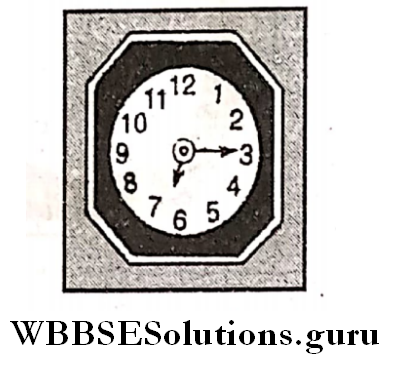
3. The short hand is between six and seven and the long hand is at three.

Reading And Writing Of Time Railway Time the short hand is between six and seven and the long is at three

Answer:

It is a quarter past six (not, quarter past six) or fifteen minutes past six.

Question 2. A clock has two hands. The long hand indicates minutes and the short hand indicates hours. Now draw three clocks. Show the position of the clock according to instructions and tell the time

1. The short hand is between seven and eight and the long hand is at two. It is?
Answer:

It is ten minutes past seven.

2. The short hand is at twelve and the long hand is at eleven. It is?
Answer:

It is five minutes to twelve.

Lesson 5 Miscellaneous Class 6 English Questions

3. The short hand is between three and four and the long hand is at nine. It is?
Answer:

It is a quarter to four (not, quarter to four) or fifteen minutes to four.

Reading And Writing Of Time Railway Time a clock has two hands

Question 3. Look at the clocks and write the time:

Reading And Writing Of Time Railway Time.

Answer:

  1. Ten minutes to six.
  2. 6 o’clock (a.m. or p.m.)
  3. Ten minutes past nine.

Lesson 5 Miscellaneous Class 6 English Questions

Question 4. Write the time in words

  1. 3-45
  2. 16.35
  3. 17.55
  4. 19-15
  5. 23.55

Answer:

  1. A quarter (not quarter) to four in the morning / 3-45 a.m.
  2. Thirty-five minutes past four in the afternoon. or, Twenty-five minutes to five in the afternoon / 4-35 p.m.
  3. Five minutes to six in the afternoon or Fifty-five minutes past five in the afternoon 5.55 p.m.
  4. A quarter (not quarter) past seven in the evening / 7-15 p.m.
  5. Five minutes to twelve midnight or Fifty-five minutes past eleven at night/11-55 p.m.

WBBSE Solutions For Class 6 English Miscellaneous Lesson 1 Locations Directions And Instructions

Lesson 1 Locations Directions And Instructions Locations

স্থান বা মানচিত্রের মধ্যে বিভিন্ন স্থান নির্দেশ করতে কিভাবে ইংরাজী sentence গঠন করা হয় নীচের উদাহরণগুলিতে দেখ।

1.

  • X is in the middle (of the page)
  • A is at the top.
  • B is at the bottom.
  • C is on the left.
  • D is on the right.

Read And Learn Also WBBSE Solutions For Class 6 English

  • X is between C and D.
  • C and D are on either side of X.
  • E is above X.
  • X is below E.
  • F is in the top left-hand corner.
  • G is in the bottom right-hand corner.

Locations Directions And Instructions Locations

2.

  • F is in the middle of the island.
  • A is in the north (of the island)
  • B is in the south (of the island)
  • C is in the east (of the island)
  • E is to the west (of the island)
  • D is in the west (of the island)
  • D is to the west of F
  • B is to the south of F

Locations Directions And Instructions Locations.

WBBSE Class 6 English Functional GrammarWBBSE Class 6 English Reading SkillsWBBSE Solutions For Class 6 English


লক্ষ্য কর : এখানে A, B, C, D দ্বীপের মধ্যে অবস্থিত বলে in এবং E দ্বীপের বাইরে অবস্থিত বলে to ব্যবহৃত হয়েছে। F-এর পশ্চিমে D এবং দক্ষিণে B অবস্থিত আছে বলে এদের ক্ষেত্রে to ব্যবহৃত
হয়েছে।

WBBSE Solutions For Class 6 English Miscellaneous Lesson 1 Locations Directions And Instructions

Class 6 English Miscellaneous Lesson 1 WBBSE

Lesson 1 Locations Directions And Instructions Directions (দিক নির্দেশ)

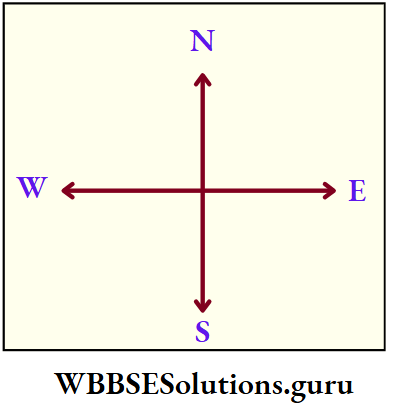
তুমি যদি কোন Map বা নক্সার দিকে তাকাও তা হলে :

  • Map-এর উপরের দিক
  • North নির্দেশ করে ।
  • Map-এর নীচের দিক
  • South নির্দেশ করে।
  • তোমার ডান দিক Map-এর East.
  • তোমার বাঁ দিক Map-এর West.

নীচের ছবিটি লক্ষ্য কর :

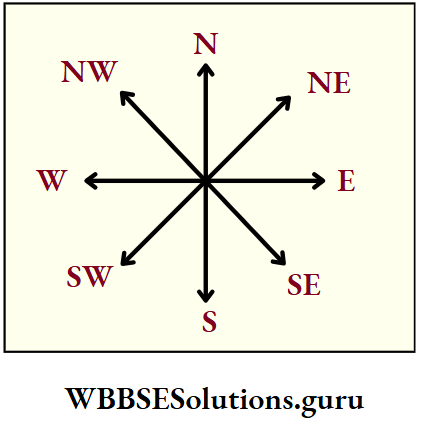
Locations Directions And Instructions directions

এবার নীচের ছবিটি লক্ষ্য কর :

Locations Directions And Instructions directions.

  • N = North
  • E = East
  • NE = North-East
  • SE = South East
  • S = South
  • W = West
  • NW = North-West
  • SW = South West.

WBBSE English Miscellaneous Lesson 1 Solutions

Lesson 1 Locations Directions And Instructions Instructions (নির্দেশ)

পথ বা দিক নির্দেশ করতে হলে কিভাবে ইংরাজী sentence গঠন করতে হয় নীচের উদাহরণ গুলিতে দেখ।

1.

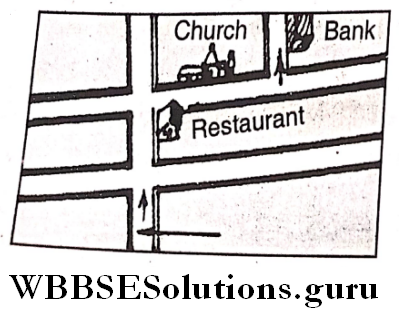
Locations Directions And Instructions instructions

2.

Locations Directions And Instructions instructions.

A : Can you tell me the way to the nearest Church, please ?

You : Go straight, take the second turn on your right near the restaurant. Walk forward and the Church is on your left.

3.

Locations Directions And Instructions instructions..

  1. If you go along Park Road towards west and take the first turn on right, you will enter Church Road.
  2. If you go along Park Road past Church Road, you will find a park on your left.
  3. If you enter Church Road and move forward, you will cross Bridge Road.
  4. If you turn left on Bridge, Road and go ahead (4), you can see a school on your left.
  5. If you turn right on Bridge Road and go straight ahead, you can see a library on your right. Further ahead, you will cross a bridge over a river.
  6. If you cross Bridge Road and go ahead along Church Road (Church Road , you can see a Church on your right and a monument straight ahead On Temple Road.
  7. If you trun left on Temple Road and walk a few steps (1), you can find a temple on the right.

WBBSE Class 6 English Miscellaneous Exercises

Lesson 1 Locations Directions And Instructions Examples Worked Out

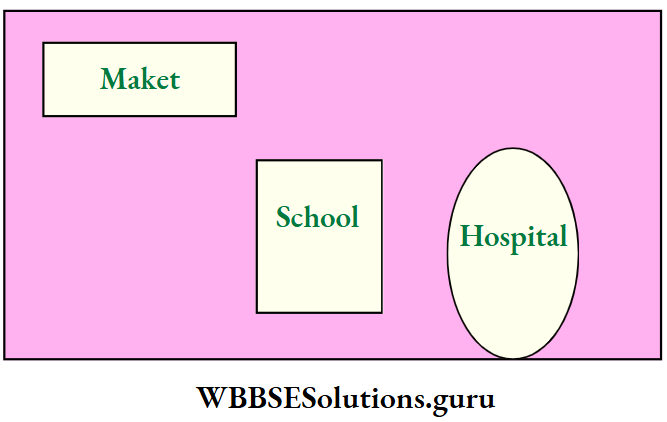
Question 1. Follow the instructions and draw the plan of your town.

  1. Draw a square in the middle.
  2. Write ‘School’ inside the square.
  3. Draw a circle to the south-east of the school.
  4. Write ‘Hospital’ in the circle.
  5. Draw a rectangle to the north-west of the school. (g) Write ‘Market’ in it.

Answer:

Locations Directions And Instructions instructions plan of your town

Question 2. Follow the directions and draw a figure.

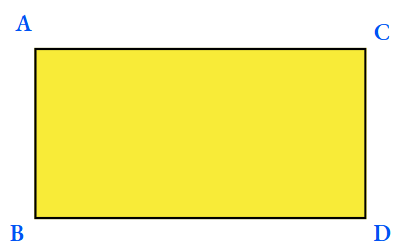
  1. Draw a straight line 2 inches long from top to the bottom.
  2. Now write A at the top of the line and B at the lower end.
  3. Now draw another line 3 inches long from ‘A’ point to the right at right angle to the line AB.
  4. Write ‘C’ at the end of this line..
  5. Draw another line 3 inches long from B to your right at right angle to line BA.
  6. Now write D at the end of this line.
  7. Now join ‘C’ and ‘D’.
  8. Now give the name of the shape.

Answer:

Locations Directions And Instructions the shape of ABCD is a rectangle

The shape of ABCD is a rectangle.

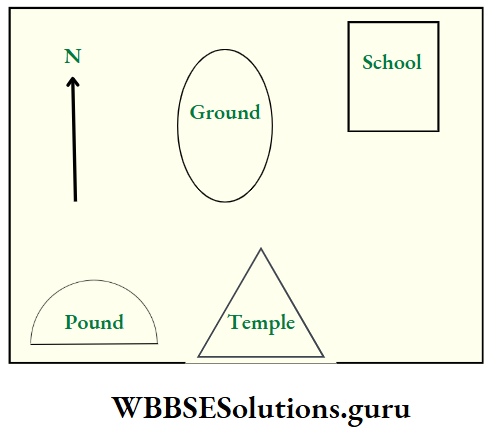
Question 3. Follow the instructions and draw a map.

  1. Draw a big rectangle.
  2. Draw a small circle in the middle of the rectangle and write ‘Ground’ within it.
  3. Draw a square to the north-east of the circle and write ‘School’ in it.
  4. Draw a semi-circle in the south-west corner of the rectangle and write ‘Pond’ in it.
  5. Draw a triangle to the south of the circle. Write Temple’ in it.
  6. Point out the north direction in the map.

Answer:

Locations Directions And Instructions

Lesson 1 Miscellaneous Class 6 English Questions 

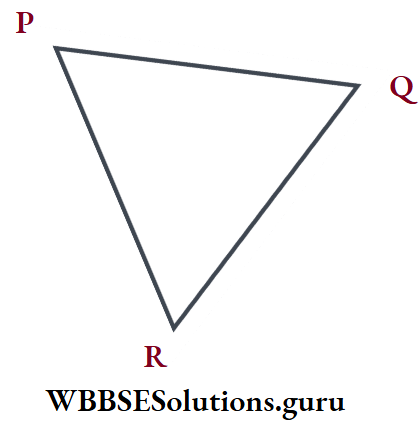
Question 4. Read the following instructions and draw the figure.

  1. Draw a vertical line.
  2. Write R at the bottom of the line.
  3. Write Q at the top end.
  4. From Q draw a line to the left at right angle to RQ.
  5. Write P at the end of the second line.
  6. Join PR.

What is the name of the figure?

Answer:

Locations Directions And Instructions traingle

The figure is a triangle.

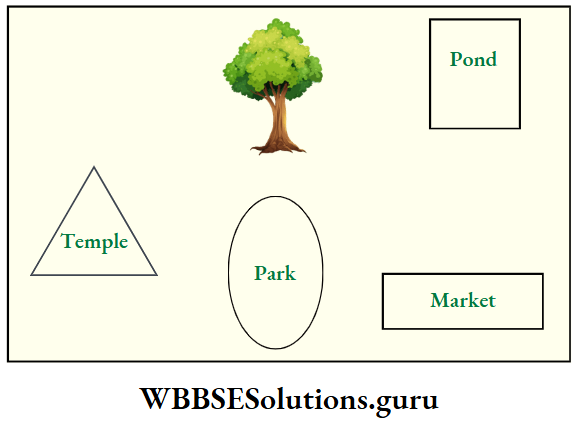
Question 5. Read the following sentences and draw the map :

  1. Draw a big rectangle.
  2. Draw a circle in the middle of the rectangle. Write ‘Park’ inside it.
  3. Draw a triangle to the west of the circle. Write ‘Temple’ inside it.
  4. Draw a square to the north-east of the circle. Write ‘Pond’ inside it.
  5. Draw a rectangle to the south-east of the circle. Write ‘Market’ inside it.
  6. Draw a tree to the north of the circle.

Answer:

Locations Directions And Instructions.

Question 6. Look at this plan and write seven sentences giving directions to draw it:

Locations Directions And Instructions...

Answer:

  1. Draw a big rectangle.
  2. Draw a small rectangle in its middle and write ‘Park’ in it.
  3. Draw a small rectangle at the north-west corner of the plan and write ‘Market’ in it.
  4. Draw another small rectangle at the north-east corner of the plan and write ‘School’ in it.
  5. Draw a square at the south-west corner of the plan and write ‘Pond’ in it.
  6. Draw a rectangle to the south of the park and mark it ‘Health Centre’.
  7. Draw a square at the south-east corner of the plan and write ‘Post Office’ in it.

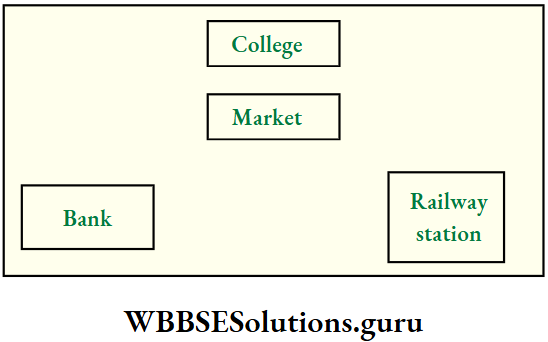
Question 7. Look at the plan and answer the questions below.

Locations Directions And Instructions....

Question 1. What is there to the north of the Market?
Answer:

There is a college to the north of the Market.

Question 2. Where is the Market?
Answer:

The Market is at the centre of the plan.

Lesson 1 Miscellaneous Class 6 English Questions 

Question 3. Where is the Rly. Station?
Answer:

The Rly. Station is to the south-east corner of the Market.

Question 4. Where is the Bank ?
Answer:

The Bank is to the south-west corner of the Market.

Question 8. Read the directions and draw the map.
Answer:

  1. Draw a big rectangle.
  2. Draw a circle in the middle. Write ‘Bus Stand’ in it.
  3. Draw a square to the north of the bus-stand and write ‘School’ inside it.
  4. Draw a rectangle to the south-east of the bus-stand and write ‘Park’ inside it.
  5. Draw a triangle to the north-west of the bus-stand and write ‘Bank’ inside it.
  6. Draw another square to the east of the bus-stand and write ‘Market’ inside it.

Answer:

Locations Directions And Instructions read the directions

Class 6 English Miscellaneous Lesson 1 WBBSE

Question 9. Look at the map and answer the following questions.

Locations Directions And Instructions map directions

Question 1. Where is the pond?
Answer:

The pond is at the centre of the plan.

Question 2. What is there to the south-west of the pond?
Answer:

There is a temple to the south-west of the pond.

Question 3. Where is the school?
Answer:

The school is to the north of the pond.

Question 4. What is there to the north of the Post Office ?
Answer:

There is a bank to the north of the Post-Office.

Question 5. Where is the market?
Answer:

The market is to the north-west of the pond.

Question 6. What is there to the south of the market?
Answer:

There is a temple to the south of the market.

Question 7. Where is the hospital?
Answer:

The hospital is there to the south-east of the pond.

WBBSE Solutions For Class 6 English Functional Grammar Lesson 18 Punctuation

Lesson 18 Punctuation

তোমরা জান বাংলায় সাধারণতঃ বাক্যের শেষে দাঁড়ি (1) এবং প্রশ্নবোধক বাক্যের শেষে প্রশ্নসূচক চিহ্ন (?) দ্বারা বাক্যের সমাপ্তি প্রকাশ করা হয়। এইগুলি এক এক রকমের বিরাম-চিহ্ন। ইংরাজীতেও একটি sentence শেষ হলে সমাপ্তি-চিহ্ন হিসাবে full stop (.) দেওয়া হয়, এবং Interrogative sentence এর শেষে প্রশ্নসূচক চিহ্ন (?) দ্বারা বাক্যের সমাপ্তি বোঝানো হয়। এই চিহ্নগুলি ছাড়াও ইংরাজীতে আরও কয়েকরকম বিরাম-চিহ্ন আছে। নীচের passage-টি দেখ—

Read And Learn Also WBBSE Class 6 English Functional Grammar

The teacher became angry with the student and said, “Why do you disturb the class ? Leave the room and do not return today. ”

WBBSE Class 6 English Functional GrammarWBBSE Class 6 English Reading SkillsWBBSE Solutions For Class 6 English


Functional Grammar Class 6 WBBSE

এখানে (.) ও (?) চিহ্ন ছাড়া (,) ও (“ ”) চিহ্নের ব্যবহার হয়েছে। এই চিহ্নগুলির সবই এক এক রকমের বিরাম চিহ্ন, এবং এদের নাম যথাক্রমে Full Stop, Note of Interrogation, Comma এবং Quotation Marks। এই চিহ্নগুলি দেখে একটি ইংরাজী রচনার অর্থ বুঝতে সুবিধা হয়। এই চিহ্নগুলি ব্যবহারের নির্দিষ্ট নিয়ম আছে। ঠিক ঠিক জায়গায় এই চিহ্নগুলি ব্যবহার করার নাম Punctuation

WBBSE Solutions For Class 6 English Functional Grammar Lesson 18 Punctuation

Lesson 18 Punctuation Full Stop (.)

1. এটা পূর্ণ বিরাম-চিহ্ন। একটি sentence শেষ হলে এই চিহ্ন দেওয়া হয়। যেমন : You may go now. I am reading.

2. Word-এর সংক্ষিপ্ত রূপ লেখার সময়ও এই চিহ্ন দেওয়া হয যেমন : Mr. Bose is present here. He is a B.A.

WBBSE Solutions for Class 6 English

Lesson 18 Punctuation Note of Interrogation (?)

Interrogative sentence (প্রশ্নবোধক বাক্য)-এর শেষে এই চিহ্ন বসে এবং এটিও পূর্ণ বিরাম-চিহ্ন। যেমন : Who is he? Why has he come here ?

Lesson 18 Punctuation Comma (,)

1. এটা সামান্য বিরতির চিহ্ন। একই Part of speech-এর একাধিক word পরপর থাকলে প্রত্যেকটির পরে comma এবং শেষের word-টির আগে and দিতে হয়, যেমন :
Reba, Rekha, Rupa and Rumki are four sisters.

2. উদ্ধৃত বাক্যের ঠিক পূর্বে এই চিহ্ন দিতে হয়, যথা :
Anil said, “I must go now.”

Class 6 English Grammar Solutions

Lesson 18 Punctuation Quotation Marks (” “)

এই চিহ্নকে Inverted Comma বলে। ইহা কখনও কখনও (‘ ‘) এইভাবেও বসে। কারও কোনও কথা উদ্ধৃত করতে এই চিহ্নের ব্যবহার হয়। যেমন :

My father said, “Go home now”.

Inverted Comma-এর মধ্যে অবস্থিত প্রত্যেকটি বাক্যের প্রথম শব্দ Capital letter দিয়ে আরম্ভ হয়ে থাকে।


WBBSE Solutions For Class 6 English Functional Grammar Lesson 17 Uses Of Capital Letters

Lesson 17 Uses Of Capital Letters

এ পর্যন্ত তোমরা নিশ্চয়ই লক্ষ্য করেছ যে English Alphabet দুই প্রকারের – বড় অক্ষর ও ছোট অক্ষর।

বড় হাতের অক্ষরগুলিকে Capital Letters বলে। যথা : A, B, C, D, E, F ইত্যাদি।

WBBSE Class 6 English Functional GrammarWBBSE Class 6 English Reading SkillsWBBSE Solutions For Class 6 English


WBBSE Class 6 English Grammar Lesson 17

ছোট হাতের অক্ষরগুলিকে Small Letters বলে। যথা : a, b, c, d, e, f ইত্যাদি।

WBBSE Solutions For Class 6 English Functional Grammar Lesson 17 Uses Of Capital Letters

WBBSE Class 6 English Solutions

Lesson 17 Uses Of Capital Letters Capital Letter গুলি ব্যবহারের নিয়ম

সাধারণতঃ নিম্নলিখিত ক্ষেত্রে Capital Letter বসে :

Read And Learn Also WBBSE Class 6 English Functional Grammar

  1. প্রত্যেক sentence-এর প্রথম অক্ষর : He is our teacher.
  2. মানুষের নামের প্রথম অক্ষর ও তার উপাধির প্রথম অক্ষর : His name is Pabitra Roy
  3. ঈশ্বরের নাম ও তার পরিবর্তে যে pronoun বসে, তাঁর প্রথম অক্ষর : God takes care of us all. We should pray to Him.
  4. স্থানের নামের প্রথম অক্ষর : I went to Kolkata. I live in Durgapur.
  5. Proper Noun ও Proper Adjective-এর প্রথম অক্ষর : The Ganga, Mita, the English.
  6. উদ্ধৃত বাক্যের প্রথম অক্ষর : Thus he said, “Obey your parents.”
  7. পদমর্যাদা বা উপাধির প্রথম অক্ষর : M.A., Rai Bahadur, Mr.
  8. “P” Pronoun : I know that I am weak.
  9. নদী, পর্বত, দিন, মাস, পর্ব ও প্রসিদ্ধ ঐতিহাসিক ঘটনার প্রথম অক্ষর :
    • নদীর নাম : The Ganga, the Indus.
    • পর্বতের নাম : Mount Everest, the Himalayas.
    • দিনের নাম: Friday, Sunday, Monday.
    • মাসের নাম : January, March, August.
    • পর্বের নাম : The Good Friday, The Durga Puja.
  10. জাতি বা ধর্মনির্বিশেষের নাম :
    জাতি : The Muslims, The Hindus, The Christians.
    ধর্ম : Islam, Hinduism, Christianity. .
  11. ইংরাজী কবিতার প্রত্যেক line-এর প্রথম শব্দটির প্রথম অক্ষর :
    • Soloman Grundy,
    • Born on Monday,
    • Christened on Tuesday,
    • Married on Wednesday,
    • Sick on Thursday,
    • Worse on Friday,
    • Died on Saturday,
    • Buried on Sunday.

WBBSE Solutions For Class 6 English Functional Grammar Lesson 16 Introductory There Introductory It

Lesson 16 Introductory There Introductory It Introductory “There”

  • There is a book on the table – টেবিলে একটি বই আছে।
  • There is no milk in the cup — কাপে দুধ নাই।
  • There are many stars in the sky — আকাশে অনেক তারা আছে।
  • There was a tiger in the cage — খাঁচাতে একটি বাঘ ছিল।

Read And Learn Also WBBSE Class 6 English Functional Grammar

WBBSE Class 6 English Solutions 

উপরের sentence-গুলি সবই “There” দ্বারা আরম্ভ হলেও “There” word-টির এখানে কোনও অর্থ নাই। কেবলমাত্র sentence গুলি আরম্ভ করার জন্যই এর ব্যবহার হয়েছে। এইরূপ ক্ষেত্রে একে Introductory “There” বলে।
কোন ব্যক্তি বা বস্তু কোথাও “আছে”, “ছিল”, “নেই” ইত্যাদি বোঝালে Introductory “There” দ্বারা sentenceটি আরম্ভ করা হয়। এইরূপ sentence-এ verb-টি “there”-এর পরে ও subject-টি verb-এর পরে বসে। verb-টি subject অনুসারে হয়।

WBBSE Class 6 English Functional GrammarWBBSE Class 6 English Reading SkillsWBBSE Solutions For Class 6 English
  • Is there no doctor in the village ? – গ্রামে কি কোনও ডাক্তার নেই?
  • Is there no cloud in the sky ? – আকাশে কি মেঘ নেই ?

লক্ষ্য করিও sentence-টি Interrogative হইলে verb-টি “There”-এর পূর্বে বসে।

WBBSE Solutions For Class 6 English Functional Grammar Lesson 16 Introductory There Introductory It

Lesson 16 Functional Grammar Class 6

Lesson 16 Introductory There Introductory It

Introductory “There”এর মতো Introductory “It”-এর ব্যবহার প্রচলিত আছে। এই “It”- এরও কোনও অর্থ নেই, কেবল sentence-টি আরম্ভ করাই এর কাজ। যেমন :

  • It is summer now – এখন গ্রীষ্মকাল।
  • It is very hot today – আজ বড় গরম ।
  • It is night – রাত্রি হয়েছে।
  • It is ten o’clock now – এখন বেলা দশটা।
  • It rains – বৃষ্টি পড়ে।
  • It is difficult to say now – এখন বলা কঠিন।
  • It is good for health to take bath everyday – প্রত্যহ স্নান করা স্বাস্থ্যের পক্ষে ভাল।
  • It was not proper for you to go there — তোমার সেখানে যাওয়া উচিত হয় নি।

বাংলায় যেখানে করা, বলা, যাওয়া, থাকা, হওয়া – প্রভৃতি ক্রিয়াপদ বাক্যের subject-রূপে ব্যবহৃত হয়, সে সমস্ত স্থানে আমরা Introductory “It” দ্বারা সেই বাক্যের শুরু করি।

WBBSE Solutions For Class 6 English Functional Grammar Lesson 15 Negative Sentences

Lesson 15 Negative Sentences

Negative Sentence-এর অর্থ ‘না-বাচক’ শব্দ। নীচের sentence গুলি লক্ষ্য কর।

Lesson 15 Negative Sentences Verb ‘To Be’

Present Tense:

Read And Learn Also WBBSE Class 6 English Functional Grammar

Affirmative – Nagative:

  • I am happy. – I am not happy.
  • We are poor. – We are not poor.
  • He is at home. – He is not at home.
  • They are honest. – They are not honest.

WBBSE Solutions For Class 6 English Functional Grammar Lesson 15 Negative Sentences

Lesson 15 Negative Sentences Past Tense

Affirmative – Nagative

  • I was happy. – I was not happy.
  • We were poor. – We were not poor.
  • He was angry. – He was not angry.
  • They were rich. – They were not rich.
WBBSE Class 6 English Functional GrammarWBBSE Class 6 English Reading SkillsWBBSE Solutions For Class 6 English

Lesson 15 Negative Sentences Future Tense

Affirmative – Nagative

  • I shall be happy. – I shall not be happy.
  • We shall be sorry. – We shall not be sorry.
  • He will be present. – He will not be present.

লক্ষ্য কর :

1. Negative sentence- ‘To be’ verb-43 am, is, are, was, were- ‘not’ word

2. Future Tense-এ (ভবিষ্যৎ কাল বোঝালে) Negative sentence করতে হলে shall বা will-এর ঠিক পরেই—অর্থাৎ shall/will এবং মূল verb ‘be’-এর মধ্যে — ‘not’ word-টি বসাতে হয় ।

Class 6 English Lesson 15 Answers

Lesson 15 Negative Sentences Verb “To Have”

Present Tense

1.

Affirmative – Nagative

  • I have a pen. – I have no pen.
  • He has a brother. – He has no brother.
  • We have a house. – We have no house.

2.

Affirmative – Nagative

  • I have a friend here. – do not have a friend.
  • He has a brother. – I He does not have a brother.
  • They have a servant. – They do not have a servant.

Lesson 15 Negative Sentences Past Tense

3.

Affirmative – Nagative

  • We had a dog. – We had no dog.
  • He had enemies. – He had no enemies.
  • Amit had a car. – Amit had no car.
  • I had money. – I had no money.

4.

Affirmative – Nagative

  • We had a dog. – We did not have (had ) a dog.
  • You had a friend. – You did not have (had) a friend.
  • Amit had a car. -Amit did not have (had) a car.
  • I had money. – I did not have (had) any money.

লক্ষ্য কর :

1. “To have” verb যখন মূল verb রূপে ব্যবহৃত হয়, তখন Negative Sentence-এ has, have ও had এর পরে ‘no’ বসে। ‘No’-এর পরে a বা an বসে না এবং ‘no’ word টি যেহেতু Adjective, এটা Noun-এর পূর্বে বসে। Singular ও Plural উভয়ের পুর্বেই ‘no’ বসে ।

2. “To have” verb-এর ক্ষেত্রে নাই বা ছিল না বোঝাতে ‘do’ verb-এর সাহায্য নিয়েও Negative sentence গঠন করা যায়। এক্ষেত্রে subject অনুযায়ী মূল verb-এর পূর্বে present tense ‘do not’ ‘does not’ past tense-4 “did not” verb ‘have’-এর রূপের কোন পরিবর্তন এখানে হয় না। উপরের উদাহরণের (2) ও (4) দেখ।

Class 6 Functional Grammar Lesson 15

Lesson 15 Negative Sentences Future Tense

Affirmative – Nagative

  • I shall have a book. – I shall not have a book.or, I shall have no book.
  • We shall have a holiday tomorrow. – We shall not have a holiday tomorrow. or, We shall have no holiday tomorrow.
  • He will have a book. – He will not have a book. or, He will have no book.

লক্ষ্য কর :

1. Future Tense – Negative sentence- ‘shall’ ‘will’-43 for (te shall/will ও মূল verb-এর মধ্যে) “not” বসাতে হবে।

2. অনেক সময় ‘will have’ ও ‘shall have’-এর পরে “no” বসিয়েও Negative sentence করা হয়। এখানে ‘no’ word টি কোন Noun-এর পূর্বে বসে।

Lesson 15 Negative Sentences Verbs other than “To Be” and “To Have”

To be” ও “To have” ছাড়া অন্য verb দ্বারা গঠিত sentence-এর Negative কিরূপে হয়

লক্ষ্য কর।

Lesson 15 Negative Sentences Present Tense

Affirmative – Nagative

  • I take tea in the morning. – I do not take tea in the morning.
  • You know him. – You do not know him.
  • He plays football. – He does not play (plays) football.
  • We help him. – We do not help him.
  • The boy goes to school. – The boy does not go (goes) to school.

Lesson 15 Negative Sentences Past Tense

Affirmative – Nagative

  • I liked him. – I did not like (liked) him.
  • We saw the boy. – We did not see (saw) the boy.
  • He came to our house. – He did not come (came ) to our house.
  • They played in the field. – They did not play (played) in the field.

Lesson 15 Negative Sentences Future Tense

Affirmative – Nagative

  • I shall go home. – I shall not go home.
  • He will run. – He will not run.
  • They will talk. – They will not talk.

লক্ষ্য কর :

1. “To be” এবং “To have” verb ভিন্ন অন্য সমস্ত verb-দ্বারা গঠিত sentence-এর Negative করতে হলে verb-এর পূর্বে subject অনুযায়ী Present tense-এ “do not” বা “does not” এবং Past tense- “did not”

2. Future Tense-4 shall will-‘not’

3. সমস্ত ক্ষেত্রেই মূল verb-এর রূপের কোন পরিবর্তন হয় না।

Lesson 15 Negative Sentences Present Continuous Tense

Affirmative – Nagative

  • He is reading the book. – He is not reading the book.
  • They are singing. – They are not singing.
  • You are writing a letter. – You are not writing a letter.

WBBSE English Lesson 15 Grammar Solutions

Lesson 15 Negative Sentences Present Perfect Tense

Affirmative – Nagative

  • I have seen him. – I have not seen him.
  • He has read the book. – He has not read the book.
  • You have done the job. – You have not done the job.
  • The girls have come today. – The girls have not come today.

Lesson 15 Negative Sentences Past Continuous Tense

Affirmative – Nagative

  • I was taking bath. – I was not taking bath.
  • He was teaching the boys. – He was not teaching the boys.
  • You were reading the newspaper. – You were not reading the newspaper.
  • We were going home. – We were not going home.

Present Continuous, Present Perfect, Past Continuous Tense-4 is, am, are, has, have, was, were auxiliary verb-43 “not” word-ft sentence করা হয়।

Lesson 15 Negative Sentences Negative Imperative (না জ্ঞাপক আদেশ-মূলক বাক্য)

Affirmative – Nagative

  • Go there. – Do not go there.
  • Open the door. – Do not open the door.
  • Tell him to come here. – Do not tell him to come here.

WBBSE Solutions For Class 6 English Functional Grammar Lesson 14 Interrogative Sentences

Lesson 14 Interrogative Sentences

Interrogative Sentences

WBBSE Solutions For Class 6 English Functional Grammar Lesson 14 Interrogative Sentences

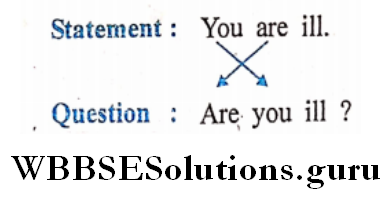
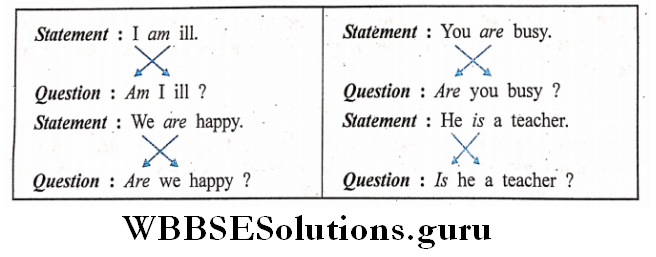
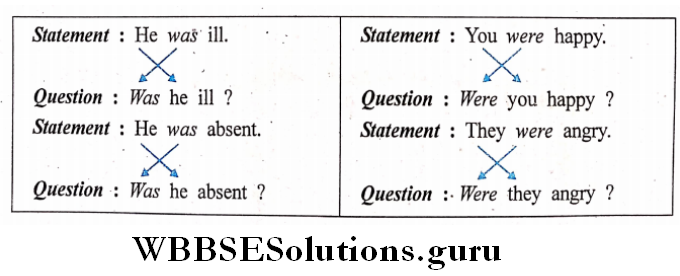
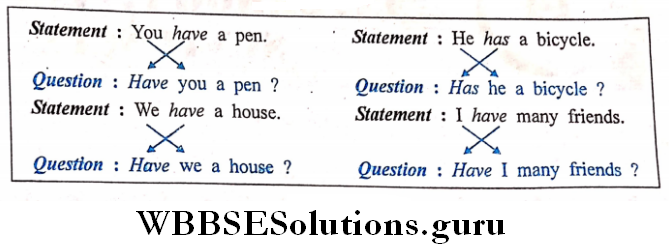
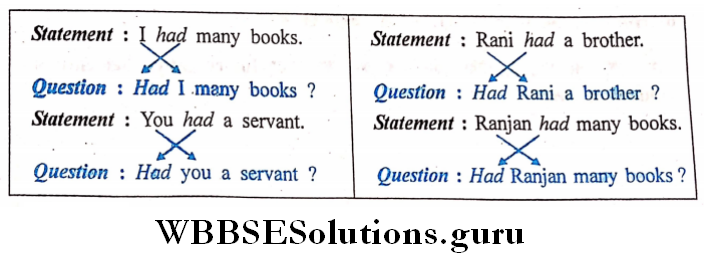
উপরের প্রথম Sentence-টি শুধুমাত্র একটি সাধারণ বক্তব্য (Statement) বোঝাচ্ছে, কিন্তু দ্বিতীয় Sentence-টির দ্বারা একটি প্রশ্ন (Question) করা হয়েছে। এই দ্বিতীয় Sentence-টি একটি Interrogative Sentence বা Question (প্রশ্নবোধক বাক্য)।

WBBSE Class 6 English Solutions

Read And Learn Also WBBSE Class 6 English Functional Grammar

যে বাক্য (Sentence) দ্বারা কোন প্রশ্ন করা হয় তাকে Interrogative Sentence বা Question (প্রশ্নবোধক বাক্য) বলে।

WBBSE Class 6 English Functional GrammarWBBSE Class 6 English Reading SkillsWBBSE Solutions For Class 6 English


এইবার নীচের উদাহরণগুলি দেখ :

1.

Interrogative Sentences 1

2.

Interrogative Sentences 2

3.

Interrogative Sentences 3

4.

Interrogative Sentences 4

WBBSE English Lesson 14 Grammar Solutions

মূল verb “To be” এবং “To have” হলে প্রশ্ন করবার সময় এই verb-টি Sentence-এর আরম্ভে থাকে ও তার পরে Subject-টি বসে। Present Tense ও Past Tense উভয় ক্ষেত্রেই এরূপ হয়।

5.

মূল verb “To have” হলে Subject-এর পূর্বে Present Tense-এ do বা does এবং Past Tense-এ did বসিয়েও Interrogative Sentence বা প্রশ্নবোধক বাক্য তৈরী করা যায়। এক্ষেত্রে মূল verb “To have”-এর কোন পরিবর্তন হয় না। যথা :

Interrogative Sentences 5