WBBSE Solutions For Class 6 English Reading Skills Lesson 3 The Rainbow

Lesson 3 The Rainbow

Word meanings:

  • Rainbow (রেইনবো – রামধনু
  • Sail (সেইল) – পাল তুলে ভেসে যাওয়া
  • Across the sky – আকাশের এক প্রান্ত থেকে অন্য প্রান্ত পর্যন্ত
  • Bow (বো) – ধনুক
  • Prettier (প্রেটিয়ার) – আরও সুন্দর
  • Bridge (ব্রিজ) – যুক্ত করে
  • Please (প্লিজ ) – মনে করো
  • Bridges – সেতু, সাঁকো
  • Heaven (হেভেন্) – আকাশ, স্বৰ্গ
  • Builds – তৈরী করে, নির্মান করে
  • Earth (আর্থ) – পৃথিবী
  • Far (ফার্ ) – আরও বেশি
  • Overtops (ওভ্যাপস্) – মাথা ছাড়িয়ে যায়

Read And Learn Also WBBSE Class 6 English Reading Skills

Substance :

The poet is a great lover of nature. He compares the beauties of certain man-made objects with those of natural objects of similar kind. She feels that clouds sailing in the sky are more beautiful than boats which sail on the rivers and seas. Bridges built over rivers are surely very charming no doubt. But the colourful rainbow that spreads through the sky seeming to bridge the earth to heaven looks more fascinating.

WBBSE Class 6 English Functional GrammarWBBSE Class 6 English Reading SkillsWBBSE Solutions For Class 6 English


Class 6 English Reading Comprehension PDF

বঙ্গানুবাদ :

কবি একজন মস্ত প্রকৃতি প্রেমিক। এখানে তিনি মনুষ্য-নির্মিত কিছু বস্তুর সৌন্দর্য্যের সাথে একই ধরণের প্রাকৃতিক জিনিসের সৌন্দর্য্যের তুলনা করেছেন। তিনি মনে করেন যে আকাশের ভাসমান মেঘেরা নদী এবং সমুদ্রে যে সব নৌকা ভেসে বেড়ায় তাদের চেয়ে অনেক বেশী সুন্দর। নদীর উপরে নির্মিত অনেক সুন্দর সুন্দর সেতু আছে, সে বিষয়ে সন্দেহ নাই । কিন্তু রঙ্গিন রামধনু আকাশে পরিব্যাপ্ত হয়ে পৃথিবী ও স্বর্গের মধ্যে যে সেতু নির্মান করে বলে মনে হয় তার সৌন্দর্য্য অনেক বেশী মনোমুগ্ধকর ।

WBBSE Solutions For Class 6 English Reading Skills Lesson 3 The Rainbow

Lesson 3 The Rainbow Examples Worked Out

Read the poem below and do as directed:

  • Boats sail on the rivers,
  • And ships sail on the seas;
  • But clouds that sail across the sky.
  • Are prettier than these.
  • There are bridges on the rivers,
  • As pretty as you please;
  • But the bow that bridges heaven,
  • And overtops the trees,
  • And builds a road from earth to sky,
  • Is prettier far than these.

1. Answer the questions below:

Question 1. Where do the boats sail ?
Answer:

The boats sail on the rivers.

Question 2. Where do the clouds sail ?
Answer:

The clouds sail across the sky.

Question 3. What is prettier than boats, ships and clouds ?
Answer:

The rainbow is prettier than boats, ships and clouds.

Question 4. What are the clouds compared to ?
Answer:

The clouds are compared to boats and ships.

Class 6 English Reading Skills Lesson 3 

Question 5. What does a rainbow do?
Answer:

A rainbow bridges heaven by building a road from earth to sky.

Question 6. Which, according to the poet, is the prettiest of all objects mentioned in the poem ?
Answer:

According to the poet, the rainbow is the prettiest of all objects mentioned in the poem.

2. Multiple Choice Question

Question 1. Ships sail on the

  1. Pond
  2. Sea
  3. Lake.

Answer: 2. Sea

Question 2. The poet talks about a bow that bridges-

  1. Heaven
  2. Sea
  3. River.

Answer: Heaven

WBBSE Class 6 English Chapter 3 Answers

Question 3. Bridges are on-

  1. Trees
  2. Rivers
  3. Buildings.

Answer: Rivers

Question 4. Clouds are prettier than-

  1. Rivers And Seas
  2. Rain And Sky
  3. Boats And Ships.

Answer: Boats and ships

Question 5. Rainbow builds a road from-

  1. Earth To Sky
  2. River To Sea
  3. Earth To Cloud.

Answer: Earth to sky

3. Fill in the blanks with appropriate words taken from the text. There are a few extra words.

  1. The girl is very pretty to look at.
  2. Dark clouds gathered on the horizon.
  3. A bridge has been built on the river.
  4. Be careful when you cross a main road.
  5. He picked up the bow to aim an arrow at the bird.

WBBSE Solutions For Class 6 English Reading Skills Lesson 4 The Shop That Never Was

Lesson 4 The Shop That Never Was

Word meanings:

Part-I

  • From Afar (ফ্রম অ্যাফার ) – অনেকদূর থেকে
  • Laughing At (লাফিং অ্যাট) – হাসাহাসি করছিলাম
  • Several Times (সেভরেল টাইম্স) – কয়েকবার
  • Tricks (ট্রিক্স) – জাদুর কৌশল
  • Dragged (ড্রাগ) – জোর করে টেনে নিয়ে গেল
  • Scratched – চুলকাল
  • Keenness (কীনেস্) – আগ্রহ

Read And Learn Also WBBSE Class 6 English Reading Skills

  • Unexpected (আন্এক্সপেকটেড) – অপ্রত্যাশিত
  • Forced (ফোর) – বাধ্য করা হয়েছিল
  • Stretched (স্ট্রেড) – বাড়িয়ে দিল (হাত)
  • Narrow (ন্যারো) – সংকীর্ণ, সরু
  • Merely (মেয়ারলি) – শুধুমাত্র
WBBSE Class 6 English Functional GrammarWBBSE Class 6 English Reading SkillsWBBSE Solutions For Class 6 English
  • Lit (লিট্‌ ) – আলোকিত
  • Blank (ব্ল্যাংক) – ফাঁকা
  • Counter (কাউন্টার্) – তাক
  • Palm (পাম্‌) – হাতের তালু
  • Crystal Balls (ক্রিস্টাল্ বল্স) স্ফটিক নির্মিত বল
WBBSE Solutions For Class 6 English Reading Skills Lesson 4 The Shop That Never Was

Part – II

  • Charge (চার্জ ) – দাম
  • Politely (পোলাইট্‌লি ) – বিনীতভাবে
  • Sword (সোর্ড) – শ্রদ্ধা তরবারী
  • Genuine (জেনুইন্ ) – আসল, প্রকৃত
  • Unique (ইউনিক্) – জুড়িহীন (যে রকম আর কোনও নেই)
  • Friendly (ফ্রেন্ডলি ) – বন্ধুভাবাপন্ন
  • Discovered (ডিসকাভার্ড ) – আবিষ্কার করল
  • Distrust (ডিস্ট্রাস্ট্) – সন্দেহ
  • Surprise (সারপ্রাইজ ) – বিস্ময়
  • Clockwork (ক্লওয়ার্ক) – ঘড়ির ন্যায়
  • Was Making Fun Of – পরিহাস করছিলেন কলকব্জা
  • Tugged (টাগ্‌ড্) – জোরে টানল
  • Swept (সোয়ে) – ভরে দিল
  • Fancied (ফ্যাসিড) – কল্পনা করেছিল
  • Amazement (অ্যামেজমেন্ট – বিস্ময়
  • Astonishing (অ্যাস্টনিশিং ) – বিস্ময়কর

Class 6 English Lesson 4 summary

Part – III

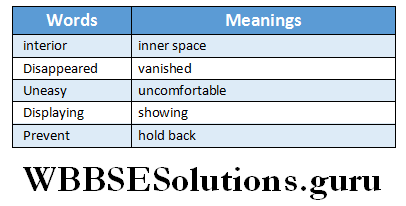
  • Uneasy (আইজি) – অস্বস্তি
  • Genuine (জেনুইন্‌) – আসল
  • The Way Out – বাইরে বের হবার রাস্তা
  • Hide And Seek – লুকোচুরি খেলা
  • Thud (থাড্‌) – দুম্ শব্দ
  • Collided (কোলাইডেড্ – ধাক্কা লাগল বাধা দেওয়া
  • Scared (স্কেয়ার্ড) – ভীত
  • At A Loss – হতভম্ব হয়ে যাওয়া
  • Frighten (ফ্লাইটেন) – ভয় পাইয়ে দেওয়া
  • Ran Off (র‍্যান অফ্ ) – ছুটে পালাল
  • Emptiness (এম্পটিনেস্) – শূন্যতা
  • Stared (স্টেয়ার্ড) – হতচকিতভাবে তাকালাম
  • Displaying (ডিসপ্লেয়িং) – দেখিয়ে
  • Cab (ক্যাব) – ট্যাক্সি
  • Disappeared (ডিএ্যাপিয়ার্ড) অদৃশ্য হয়ে গেছে
  • Interior (ইটিরিয়র্) – অভ্যন্তর, ভিতর
  • Disturbed (ডিস্টার্বড ) বিরক্ত – অক্ষত

Lesson 4 The Shop That Never Was Examples Worked Out

Read the texts below and do as directed:

I had seen the Magic Shop from afar several times. I had passed it once or twice, but never had I thought of going in. One day, my son, Gip dragged me up to the shop. There was such keenness in him that I was forced to get in.

It was a little narrow shop, not very well lit. On the shop counter, there were several crystal balls. On the floor, there were magic mirrors: one to draw you out. long and thin and one to make you short and fat. While we were laughing at all these, the shopman appeared.
“How can I help you?” said he.

“I want to buy my little boy a few simple tricks,” I said.

1. Answer the questions below:

Question 1. Why did the narrator go to the Magic Shop?
Answer:

Dragged by his son Gip, the narrator was forced to go to the Magic Shop to buy a few simple tricks for him.

Question 2. What was there on the shop counter?
Answer:

There were several crystal balls on the shop counter.

Question 3. What did they see on the floor?
Answer:

On the floor, they saw magic mirrors.

Question 4. What was interesting about the magic mirrors?
Answer:

The magic mirrors were very interesting as they would make one appear long and thin or short and fat.

Question 5. What did the narrator want to buy for his son ?
Answer:

He wanted to buy his son a few simple tricks.

Class 6 English Reading Skills

2. Write True Or False Statements.

Question 1. The narrator used to visit the Magic Shop quite often.
Answer:

False

Question 2. The magic mirrors were hung on the wall.
Answer:

False

Question 3. The narrator saw the Magic Shop several times from a distance.
Answer:

True

Question 4. The shop was a small one, not so well-lit.
Answer:

True

Question 5. The narrator went to the shop with his son and daughter.
Answer:

False

3. Rearrange the following sentences in the correct order as they come in the text. Put the numbers in the boxes.

Question 1. Gip dragged his father to the Magic Shop.
Answer:

The narrator has passed the shop once or twice.

Question 2. The narrator had passed the shop once or twice.
Answer:

Gip dragged his father to the magic shop.

Question 3. There were different kinds of magic mirrors in the shop.
Answer:

The shop was a small one, not so well-lit.

Question 4. The shop was a small one, not so well-lit.
Answer:

There were different kinds of magic mirrors in the shop.

Question 5. The narrator told the shopman what he wanted to buy.
Answer:

The shopman appeared.

WBBSE English Lesson 4 Answers

Question 6. The shopman appeared.
Answer:

The narrator told the shopman what he wanted to buy.

4. Fill in blanks with suitable words taken from the list. There are a few extra words.

List of words: keenness, laughing, tricks, several, draw, narrow, counter.

  1. I went to his place several times.
  2. The lane is very narrow.
  3. He had a great keenness to learn the subject.
  4. The lady at the counter received me smilingly.
  5. Don’t try to play tricks with me.

2. “It’s in your pocket,” said the shopman, and there it was.
“How much does it cost?” I asked.

“There is no charge for glass balls,” said the shopman politely. “We get them free.” He drew a business card from his cheek and handed it to me. “Genuine Magic Goods, sir,” he said.

He now turned towards Gip with a friendly smile and said, “You wanted a magic box, didn’t you ?”

“Yes,” Gip said.

“It’s in your pocket,” he said. Gip discovered the box with surprise. Then the shopman quickly went behind the counter and was absent for a while.

“Let’s look behind the counter, Gip,” I said. “He’s making fun of us.’ Just then, he appeared again from a dark corner of the room. “You’d like to see our showroom, Sir ?” said he. Gip tugged my finger forward.

1. Answer the questions below:

Question 1. “It’s in your pocket”, said the shopman-What is meant by ‘It’ here?
Answer:

‘It’ here means the glass balls.

Question 2. Where were the glass balls found?
Answer:

The glass balls were found in Gip’s pocket.

Question 3. Why was there no charge for the glass balls?
Answer:

The glass balls were of no charge as the shopman got them free.

WBBSE Class 6 Reading Skills PDF

Question 4. From where did the shopman draw his business card?
Answer:

The shopman drew his business card from his cheek.

Question 5. Why was Gip surprised?
Answer:

Gip was surprised because he unexpectedly found a magic box in his pocket.

2. Writing True Or False statements.

Question 1. Gip found the glassballs in his bag.
Answer:

False

Question 2. The shopman demanded no money as cost for the glassballs.
Answer:

True

Question 3. Gip found the magic box in his pocket.
Answer:

True

Question 4. The shopman was absent for a while as he left the shop.
Answer:

False

Question 5. The shopman proposed to show them his showroom.
Answer:

True

3. Rearrange the following sentences in the correct order. Write the numbers in the boxes.

Question 1. The shopman disappeared behind the counter.
Answer:

The shopman handed over a business card to the narrator.

Question 2. The shopman handed over a business card to the narrator.
Answer:

Gip found a magic box in his pocket.

Class 6 English Lesson 4 Summary

Question 3. Gip tugged the narrator’s finger.
Answer:

The shopman disappeared behind the counter.

Question 4. Gip found a magic box in his pocket.
Answer:

The narrator felt that the shopman was making fun of them.

Question 5. The shopman appeared from a dark corner.
Answer:

The shopman appeared from a dark corner

Question 6. The narrator felt that the shopman was making fun of them.
Answer:

Gip tugged the narrator’s finger.

4. Find words in the text which mean the following:

  • Real = genuine
  • Courteously = politely
  • Pulled = tugged
  • Amazement = surprise
  • Found = discovered

3. In the showroom, there were many things that Gip fancied. He turned to this astonishing man with respect. “Is that a magic sword ?” he said.

Class 6 English Reading Skills

“A Magic Toy Sword-this is a unique one! It neither bends, breaks, nor cuts the fingers,” replied the shopman. I tried to find out what they cost, but the shopman did not pay attention to me. He had got Gip now. I saw, with a feeling of distrust, that Gip was holding this person’s finger as usually he held mine.

The shopman showed Gip magic-trains that ran without steam, clockwork and a box of soldiers that all came alive when one said a magic word. “You’ve never seen such a one !” said the shopman. “You’ll take that box ?”

“We’ll take that box,” I said.

And the shopman swept the soldiers back again, shut the lid, and waved the box in the air. And there it was, in brown paper, tied up and with Gip’s full name and address on the paper. He laughed at my amazement.

1. Answer the questions below:

Question 1. What is the speciality of the Magic Toy Sword?
Answer:

The speciality of the Magic Toy Sword is that it neither bends, breaks, nor cuts fingers.

Question 2. Why did the narrator fail to find out the cost of the magic items?
Answer:

The shopman did not pay any heed to the narrator’s queries, and was more interested in showing Gip the magic tricks. So the narrator could not know the cost of the magic items.

Question 3. Why did the narrator have a feeling of distrust?
Answer:

The narrator had a feeling of distrust because he saw that Gip was holding the shopman’s finger as he usually held the narrator’s.

Question 4. What items did the shopman show to Gip?
Answer:

The shopman showed Gip a magic toy sword, magic-trains that ran without steam, clockwork and a box of soldiers that came alive when one said a magic word.

2. Write True Or False Statements.

Question 1. The toy sword was a unique one.
Answer:

True

Question 2. The sword was breakable.
Answer:

False

Question 3. The shopman kept telling the price of the magic items.
Answer:

False

Class 6 English Reading Skills

Question 4. The toy sword was a magic item.
Answer:

True

Question 5. The magic train was run by steam engine.
Answer:

False

3. Find out from the text words opposite in meaning of the following words:

  • Hatred X Respect
  • Confidence X Distrust
  • Rarely X Usually
  • Dead X Alive
  • Close X Shut

4. I felt very uneasy and began to look for the way out. Turning to Gip, I saw him standing on a stool. The shopman was holding a big drum in his hand.

“We’re playing hide and seek, daddy!” cried Gip.

And before I could prevent him, the shopman had put the big drum over him. “Take that off,” I cried, “this instant. You’ll frighten the boy.”

The shopman did so without a word. He held the big. drum towards me to show its emptiness. The stool was empty, too. My boy had disappeared! “Where is my boy?” I said.

“You see,” he said, displaying the drum’s interior, “this is genuine magic !” I jumped at him and fell into utter darkness.

1. Complete the sentences with information from the text.

Feeling very uneasy, the narrator looked for the way out.
The narrator cried at the shopman to take off the drum because he thought that his son would be frightened in the darkness inside the drum.

The shopman held the big drum to show that it was empty.”
When the narrator found that his son had disappeared, he jumped at the shopkeeper.

1. Complete the sentences with information from the text.

1. Feeling very uneasy, the narrator looked for the way out.

2. The narrator cried at the shopman to take off the drum because he thought that his son would be frightened in the darkness inside the drum.

3. The shopman held the big drum to show that it was empty.”

4. When the narrator found that his son had disappeared, he jumped at the shopkeeper.

WBBSE English Lesson 4 Answers

2. Answer the following questions :

Question 1. What was the shopman holding?
Answer:

The shopman was holding a big drum.

Question 2. What did the shopman do with the drum ?
Answer:

He made Gip stand on a stool and then put the big drum over him and vanished him.

Question 3. What type of game was Gip playing?
Answer:

Gip was playing hide and seek game.

Question 4. What did the shopman do with the drum and what was the narrator’s feeling at that?
Answer:

The shopman put the big drum over Gip who was standing on a stool. At this the narrator cried out asking him to take the drum off as that would frighten the boy.

Question 5. What happened to Gip’s father when he jumped at him?
Answer:

When Gip’s father jumped at the shopman he fell into utter darkness.

Question 6. What was the genuine magic?
Answer:

The genuine magic was that the shopman put a big drum over Gip, and when he took it off, Gip was found totally vanished.

3. Multiple Choice Questions

Question 1. Gip was made to stand on a

  1. Chair,
  2. Stool,
  3. Sofa.

Answer: 3. Stool

Question 2. Looking inside the drum the narrator found

  1. His Son Sitting Inside-It,
  2. It Was Empty,
  3. A Magic Box Inside It.

Answer: 2. It Was Empty

Question 3. About the shopman’s show, the narrator thought that his son would

  1. Be Frightened,
  2. Enjoy It,
  3. Be Very Angry.

Answer: 2. Be Frightened

WBBSE Class 6 Reading Skills PDF

Question 4. On removal of the drum, the narrator found his son

  1. Has Completely Disappeared,
  2. Sitting On The Stool,
  3. Standing On The Ground.

Answer: 1. Has Completely Disappeared

4. Complete the chart below with words from the text:
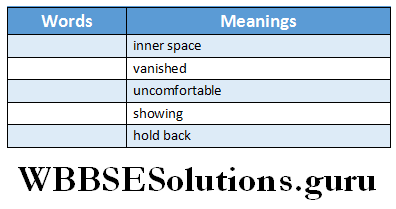
WBBSE Solutions For Class 6 English Reading Skills Lesson 4 The Shop That Never Was complete the chart

Answer:

WBBSE Solutions For Class 6 English Reading Skills Lesson 4 The Shop That Never Was complete the chart.

5 “Sorry, Sir, I didn’t see you coming,” someone said. I saw I was in Regent Street and I had collided with a man, and a yard away was Gip. He was carrying four parcels in his arm. He smiled at me. He did not look scared.

For a second I was at a loss. I stared round to see the door of the magic shop. It was not there. There was no door, no shop, nothing. I did the only thing possible in that mental state. I called for a cab.
I got in with Gip. “Dad !” said Gip at last, “that was a proper magic shop!” Gip looked completely undamaged.

He was neither scared, nor disturbed. There in his arms were four parcels containing items from the magic shop. Since then I have been up and down Regent Street several times looking for that shop. After all, I had not paid for the items.

1. Answer the questions below:

Question 1. Where did the narrator again find his son ?
Answer:

He found his son in Regent Street standing a yard away from him.

Question 2. What did Gip have in his hand?
Answer:

Gip had four parcels in his hand.

Question 3. How did he respond to his father?
Answer:

He responded to his father smilingly, not looking scared.

Question 4. Why was the narrator at a loss?
Answer:

The narrator was at a loss as he was totally confused for not being able to find the magic shop.

Question 5. Why did the speaker move up and down Regent Street?
Answer:

The speaker went up and down Regent Street to find the magic shop as he had not paid for the magic items.

2. Write True Or False Statements.

Question 1. Gip looked completely devastated.
Answer:

False

Question 2. The narrator collided with a man in Regent Street.
Answer:

True

Question 3. Gip considered it a proper magic shop.
Answer:

True

WBBSE Class 6 Reading Skills PDF

Question 4. The narrator could find the magic shop later on.
Answer:

False

Question 5. He did not pay for the magic items.
Answer:

True

3. Make sentences of your own with the following words:

The taxi collided with the car while trying to overtake it.

We hired a cab to go to his place.

He has gone to see a magic show.

It is not possible for me to go today.

I stared blankly at the paper in front of me.

WBBSE Solutions For Class 6 English Reading Skills Lesson 1 It All Began With Drip Drip

WBBSE Solutions For Class 6 English Reading Skills Lesson 1 It All Began With Drip Drip

Word meanings:

Part – I:

  • Caught (কট্) – কবলে পড়ল
  • Muttered (মাটরড) – গজগজ করল
  • Wandered (ওয়ান্ডারড্) – ঘুরঘুর করছিল
  • Shoved (শোভড়) – ঠেলাঠেলি করে সরাল
  • Looking For (লুকিং ফর্) – খোঁজে
  • Outskirts (আউট স্কার্টস্) – সীমান্ত অঞ্চলসমূহ

Read And Learn Also WBBSE Class 6 English Reading Skills

  • Frightened (ফ্রাইটেনড্) – ভয় পেয়ে গেল
  • Ill-Tempered (ইল্-টেমপারড্) বদমেজাজি
  • Dreadful (ড্রেডফুল) – ভয়ংকর
  • Huddled (হাডেলড্) – গুটিসুটি মেরে
  • Potter (পটার) – কুমোর; (যে মাটির জিনিস তৈরি করে)
  • Escape (এস্কেপ) -নিস্তার
  • Donkey (ডংকি) -গাধা
  • Drip-Drip (ড্রিপ-ড্রিপ) -টিপ্ টিপ্ (বৃষ্টি)

WBBSE Solutions For Class 6 English Reading Skills Lesson 1 It All Began With Drip Drip

English Reading Skills for Class 6 WBBSE

Part – II:

  • Shouted (শাউটেড) -চেঁচিয়ে উঠল
  • Confused (কনফিউজড) -ভ্যাবাচ্যাকা খাওয়া
  • Grabbed (গ্র্যান্‌ড) – জাপটে ধরল
  • Chewed (চিউড্) – চিবিয়েছিল
  • Lazy (লেজি) – কুঁড়ে
  • Brag – বড়াই করা
  • I Will Give You A Hard – তোর কপালে
  • Captured (ক্যাপচার্ড) – পাকড়াও করেছিল।
  • Time – দুঃখ আছে
  • Announced (এন্যাউন্‌ড) – ঘোষণা করল
  • Sturdy (স্টারডি) – শক্ত
  • Proudly (প্রাউডলি) – গর্বিত ভাবে
  • Screamed (স্ক্রিমড্) – ভয়ে চিৎকার করে উঠল
  • Marvelled (মারভেল্ড) – বিস্ময়ে অভিভূত হল
  • Bravery (ব্রেভারি) – সাহসিকতা
  • Neighbours (নেবাস) – প্রতিবেশীরা
  • Impressed (ইম্প্রেড) – প্রভাবিত হয়েছিল, খুশি হয়েছিল।
  • Mystified (মিষ্টিফায়েড ) – আশ্চর্য হয়ে গেল।
  • Admit (অ্যাডমিট) – স্বীকার করা
  • Commander-In-Chief (কম্যানডার-ইন-চিফ – সেনাধ্যক্ষ
  • Mistake (মিস্‌টেক্) – ভুল
  • Questioningly (কোয়েশ্চেনিংলি) – জিজ্ঞাসুভাবে

Part-III:

  • Entrust (এনট্রাষ্ট) – দায়িত্ব দেওয়া
  • Enemy (এনিমি ) – শত্রুপক্ষ
  • Protect (প্রোটেক্ট) – রক্ষা করা
  • Astonished (এ্যাস্টনিস্চ) – বিস্মিত হল
  • Despair (ডেপায়ার) – হতাশা
  • Scared (স্কেয়ার্ড) – ভয় পেল
  • Warrior (ওয়ারিয়ার) – যোদ্ধা
  • Magnificent (ম্যাগনিফিস্যান্ট) – জাঁদরেল
  • Stallion (স্ট্যালিয়ন্) – পুরুষ ঘোড়া
  • Single-Handedly – একাই
  • Defeat (ডিফিট্‌) – পরাজিত করা
  • Glumly (গ্লাম্‌ল – গোমড়ামুখে
  • Securely (সিকিওরলি) – তৎক্ষনাৎ
  • Instantly (ইন্‌স্ট্যান্টলি) – শক্ত করে
  • Reared (রিয়ারড্ – দিয়ে দাঁড়াল
  • Victory (ভিক্‌ট্টি) – পিছনের পায়ে ভর
  • Defended (ডিফেন্‌ডেড্)
  • Galloped (গ্যালপ্‌ড) – টগবগিয়ে ছুটে চলল
  • All By Himself – সে নিজে একাই
  • Desperately (ডেস্পারেটলি ) – প্রাণপনে
  • Awarded (এ্যাওয়ার্ডেড) – পুরস্কৃত করলেন
  • Mane (মেন) – কেশর
  • Legend ( লেজেন্ড) – কিংবদন্তি
  • Grasp (গ্র্যাম্প) – আঁকড়িয়ে ধরা
WBBSE Class 6 English Functional GrammarWBBSE Class 6 English Reading SkillsWBBSE Solutions For Class 6 English

WBBSE English Lesson 1 Solutions

Examples Worked Out

Read the texts below and do as directed:

1.

A tiger was caught in a storm. He had wandered near the village, looking for something to eat. On the outskirts of that village lived an ill-tempered old woman. The tiger huddled in shelter close to the wall of the woman’s hut.

The old woman was feeling very ill-tempered that night. The rainwater was leaking through the roof.

“There is no escape from this drip-drip”, she muttered angrily, pushing her bed around the room to keep it dry. She shoved the bed and a tin trunk against a wall. The wall shook.

“This drip-drip will be the death of me!” she shouted. The tiger on the opposite side of the wall felt the wall shake and was frightened. “The drip-drip must be a very dreadful creature,” he thought.

1. Answer the questions below :

Question 1. Why did the tiger wander near the village ?
Answer:

The tiger wandered near the village in search of food.

Question 2. Where did the old woman live ?
Answer:

The old man lived in a hut on the outskirts of a village.

Question 3. Why did she feel very ill-tempered that night?
Answer:

She felt ill-tempered that night because rainwater was leaking through the roof.

Question 4. Why did the old woman shift the bed and tin trunk against the wall?
Answer:

The old woman shifted the bed and the tin trunk against the wall to avoid leaking water drenching them.

2. Multiple Choice Questions:

Question 1. The tiger was wandering about

  1. In Full Day Light
  2. In The Evening
  3. At Night

Answer: 3. At Night.

Question 2. The old woman was-

  1. Soft-Spoken
  2. III-Tempered
  3. Very Timid.

Answer: 2. III-Tempered

Class 6 English Reading Skills

Question 3. The rain was coming in the old woman’s room through the-

  1. Door
  2. Window
  3. Roof.

Answer: 3. Roof.

Question 4. The tiger thought the drip-drip was

  1. A Dreadful Creature
  2. The Sound Of Rain Water
  3. Some Person Living In The Hut.

Answer: 1. A Dreadful Creature;

3.

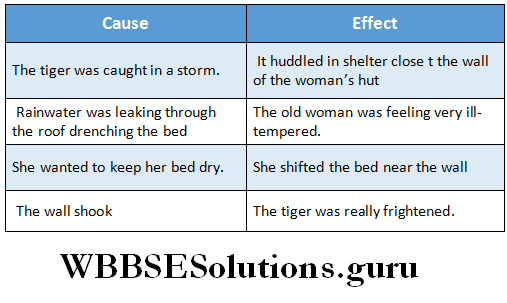
Question 1. Fill in the chart with information from the text.

WBBSE Solutions For Class 6 English Readingn skill lesson 1 It All Began With Drip Drip cause and effects.

Answer:

WBBSE Solutions For Class 6 English Readingn skill lesson 1 It All Began With Drip Drip cause and effects

4.

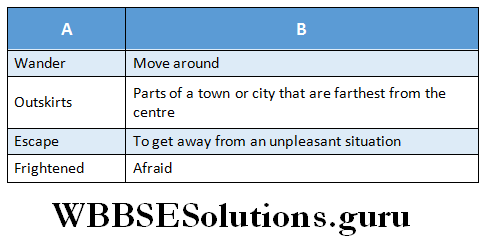
Question 1. Match the words in ‘A’ with their meanings in ‘B’.

WBBSE Solutions For Class 6 English Readingn skill lesson 1 It All Began With Drip Drip match the words with their meanings.

WBBSE Solutions For Class 6 English Readingn skill lesson 1 It All Began With Drip Drip match the words with their meanings

2.

In the morning, Bholenath’s wife discovered the tiger tied to the tree and screamed in fear. Hearing her, the neighbours came running out of their huts. Bholenath was sleeping. He came out, too.
The people were all mystified.

“Who tied this tiger to the tree ?” they asked. A neighbour said, “I think Bholenath can tell us. I saw him last night dragging an animal through the storm.”

Bholenath was too frightened to admit his mistake. Everyone looked questioningly at Bholenath. In the meantime, the tiger, disturbed and confused by all the people, had chewed through the rope. It ran away to the jungle. The villagers were relieved. Bholenath now saw an opportunity to brag.

“It is I who captured the tiger last night. I even pulled its ears,” Bholenath announced proudly. Everyone marvelled at his bravery.

1. Complete the sentences with information from the text.

1. Bholenath’s wife found in the morning that a tiger had been tied to the tree.

2. The neighbours came running out of their huts when Bholenath’s wife found in the morning that

3. Disturbed and confused by the people, the tiger had chewed through the rope and ran away to the jungle.

4. Bholenath announced proudly that he had captured the tiger the previous night.

Class 6 English Reading Skills

2. Write True Or False Statements.

Question 1. Bholenath’s wife cried out in fear.”
Answer: True

Question 2. Bholenath’s neighbours saw the tiger first the next morning.
Answer: False

Question 3. The people were all bewildered seeing the tiger tied to the tree.
Answer: True

Question 4. Bholenath admitted his mistake straightaway.
Answer: False

Question 5. The people were all confused.
Answer: False

3. Rearrange the following sentences in the correct order and write the numbers in the given boxes.

Question 1. The neighbours were bewildered.
Answer:

The next morning the tiger was discovered.

Question 2. The next morning the tiger was discovered.
Answer:

Bholenath’s wife shouted in fear.

Question 3. The tiger chewed through the rope.
Answer:

The nighbours came running.

Question 4. Bholenath started to brag.
Answer:

The neighbours were bewidered

Question 5. A neighbour told about Bholenath’s dragging an animal the previous night.
Answer:

A neighbour told about Bholenath’s dragging an animal the previous night.

Question 6. The tiger ran away to the jungle.
Answer:

The riger chewed through the rope

English Reading Skills for Class 6 WBBSE

Question 7. Bholenath’s wife shouted in fear.
Answer:

The tiger ran away to the jungle.

Question 8. The neighbours came running.
Answer:

Bholenath started to brag.

4. Answer the questions below:

Question 1. Who discovered the tiger in the morning?
Answer:

Bholenath’s wife discovered the tiger in the morning.

Question 2. What made the neighbours come running out of their huts?
Answer:

The scream of Bholenath’s wife after seeing the tiger made the neighbours come running out of their huts.

Question 3. Why did Bholenath bring the tiger home?
Answer:

In the dark stormy night, Bholenath mistook the tiger to be his donkey which he had lost, and quickly he dragged it home.

Question 4. Why were the people mystified?
Answer:

The people were mystified as they could not understand how the tiger could come there and who had tied it.

Question 5. Why were the villagers relieved?
Answer:

The villagers were relieved to see the tiger going away from their village.

Question 6. What was Bholenath doing when the tiger was discovered next morning?
Answer:

When the tiger was discovered, Bholenath was sleeping in his home.

5.

Question 1. Fill in the chart with information from the text.

WBBSE Solutions For Class 6 English Readingn skill lesson 1 It All Began With Drip Drip fill the chat with information from text.

Answer:

WBBSE Solutions For Class 6 English Readingn skill lesson 1 It All Began With Drip Drip fill the chat with information from text

6. Fill in the blanks with words taken from the text. There are a few extra words.

List of words: admit, storm, disturbed, discovered, relieved, bravery, frightened.

1. Columbus discovered America.

2. I felt relieved to see him recover quickly.

3. You must admit your fault.

4. A violent storm uprooted the trees.

5. We were very much frightened to see the fierce animal.

3. Soon the news of Bholenath’s bravery reached the king. The king was highly impressed. He made Bholenath the Commander-in-chief of the king’s army. Bholenath and his wife were given a huge house to live in.

A few months after that evening, news came that a neighbouring king has declared war. Bholenath and his king gathered at the royal court. The king told Bholenath, “You are the Commander-in-chief of my army. I entrust you with the duty of protecting my state.”

Bholenath came back home in utter despair. “I don’t even know how to ride a horse”, he told his wife helplessly, “How will I defend our borders against eight thousand enemy soldiers?”

“Don’t worry,” his wife said, “I’ll tie you to the horse.”

English Reading Skills for Class 6 WBBSE

1. Answer the questions below:

Question 1. How did the king reward Bholenath for his bravery?
Answer:

For his bravery, the king rewarded Bholenath by making him the Commander- in-chief of his army and giving him a big house to live in.

Question 2. What was the news that came after a few months?
Answer:

After a few months, the news came that a neighbouring king had declared a war against the king.

Question 3. What was the duty Bholenath was entrusted with by the king?
Answer:

The king entrusted Bholenath with the duty of protecting his state from the attack of the neighbouring king’s army.

Question 4. Why did Bholenath come back in utter despair?
Answer:

Bholenath came back in utter despair because he did not know how to ride a horse, and would not be able to fight against the enemy soldiers.

2. Multiple Choice Questions

Question 1. Hearing about Bholenath’s bravery, the king was-

  1. Angry
  2. Proud
  3. Impressed.

Answer: 3. Impressed.

Question 2. The king and Bholenath gathered at the-

  1. Playground
  2. Royal Court
  3. War Field.

Answer: 2. Royal Court

Question 3. The news of war made Bholenath-

  1. Happy
  2. Angry
  3. Sad.

Answer: 3. Sad.

Question 4. Bholenath did not know how to ride-

  1. A Horse
  2. A Camel
  3. An Elephant.

Answer: 1. A Horse,

3. Write True Or False Statements.

Question 1. The war was declared by the rebellious subjects.
Answer:

False

Question 2. In the army Bholenath held the post of the Commander-in-chief.
Answer:

True

Question 3. Bholenath was very confident of facing the enemy soldiers.
Answer:

False

Question 4. Bholenath’s wife assured him to help him in riding the horse.
Answer:

True

Question 5. The number of enemy soldiers was less than 10,000.
Answer:

True

4. Find out words from the text which mean the following:

  1. The feeling of having lost all hope despair
  2. Give in trust entrust
  3. Very big huge
  4. Living near neighbouring
  5. Protect from attack defend

4. In the morning, the king sent Bholenath a magnificient stallion. Bholenath got up glumly on the horse and his wife securely tied him to it with a rope. The horse did not like the feel of the tight ropes.

It reared suddenly and galloped off wildly. Bholenath hung desperately to its mane. Realising that the horse was headed straight for the enemy camp, Bholenath shouted in fear. The horse could not be stopped.

Bholenath noticed a large tree with its branches hanging over the road. As the horse galloped under the tree, Bholenath reached up to grasp the branches and pull himself free. But the branches broke away in his hands. The horse had entered the enemy camp.

1. Complete the sentences with information from the text.

The king sent to Bholenath a magnificent stallion.

The horse galloped off wildly because it did not like the feel of the tight rope.

Bholenath noticed a large tree with its branches hanging over the road.

Bholenath shouted in fear because the horse ran straight to the enemy camp.

WBBSE Solutions Class 6 English

2. Write True Or False Statements.

Question 1. Bholenath’s wife helped him by tying him securely to the horse with a rope.
Answer:

True

Question 2. The horse felt comfortable when it was tied with rope.
Answer:

False

Question 3. Bholenath rode on the horse quite comfortably.
Answer:

False

Question 4. The large tree was on the road.
Answer:

True

Question 5. Bholenath ultimately stopped the horse.
Answer:

False

3. Find words in the text which are opposite in meaning of the following words:

Cautiously X Desperately

Ordinary X Magnificient

Release X Grasp

Cheerfully X Glumly

Loosely X Securely

5. The enemy soldiers were astonished to see a wild-looking man tied to a fierce stallion, waving branches excitedly. “Help, help!” Bholenath was shouting. The enemy soldiers did not hear him. They were greatly scared.

“This must be some great warrior come single-handedly to defeat us!” The soldiers were overcome with fear and instantly ran away without putting up a fight.

Soon the news of Bholenath’s great victory spread. Everyone was amazed that he had defended his state all by himself against eight thousand enemy soldiers. The king awarded him in a public ceremony. Bholenath became a legend.

1. Answer the questions below.

Question 1. What made the enemy soldiers greatly scared?
Answer:

The enemy soldiers were greatly scared to see that a wild-looking man tied to a fierce stallion was waving branches of tree excitedly.

Question 2. What did the soldiers think of Bholenath when they saw him?
Answer:

The soldiers thought that he must be some great warrior who had came to defeat them single-handedly.

Question 3. What happened to the soldiers then?
Answer:

The soldiers were overcome with fear and they ran away immediately without putting up a fight.

Question 4. What impression did people form about Bholenath?
Answer:

Everyone looked upon him as a great warrior who had defended his state by defeating eight thousand soldiers all by himself.

WBBSE Solutions Class 6 English

Question 5. How did the king reward Bholenath?
Answer:

The king rewarded him in a public ceremony.

2. Write True Or False Statements.

Question 1. The enemy soldiers were happy to see Bholenath.
Answer:

False

Question 2. The enemy soldiers thought Bholenath to be a great warrior.
Answer:

True

Question 3. Bholenath defeated the soldiers single-handedly.
Answer:

False

Question 4. Bholenath became very famous.
Answer:

True

3. Fill in the blanks with words taken from the text. There are a few extra words.

  1. Alexander was a great warrior.
  2. The soldiers fought a fierce battle with the enemies.
  3. Try to overcome all difficulties by hard work.
  4. She was very astonished to see me there.
  5. Seeing the tiger, they were greatly scared.

WBBSE Solutions For Class 6 English Reading Skills Lesson 5 Land of the Pharaohs

WBBSE Solutions For Class 6 English Reading Skills Lesson 5 Land of the Pharaohs

Text (Rearranged in a Dialogue form):

Cairo, Egypt:

Ishan’s mother: So, finally we are in Cairo. We are going to Giza, Ishan, to see the three great pyramids.

Ishan : What’s a pyramid, Ma?

Read And Learn Also WBBSE Class 6 English Reading Skills

Mother: A pyramid is, a huge, triangular monument-the burial ground of the Pharaohs.

Ishan: And who is a Pharaoh?

Mother: A Pharaoh is an Egyptian King. The Pharaos lived around five thousand years ago.

Ishan: We are going to see so many interesting things. I wish father had come with us.

WBBSE Class 6 English Solutions

Mother: The prize I won at the singing competition entitled only two for a sponsored tour of Egypt. Your father wanted you and me to come.

Ishan: What’s that, Ma?

WBBSE Class 6 English Functional GrammarWBBSE Class 6 English Reading SkillsWBBSE Solutions For Class 6 English


Mother : That’s the Sphinx, Ishan. It’s a rock statue with a human head and a lion’s body. The Sphinx represents intelligence and strength. It guards the pyramids. It’s going to be quite a long walk in the sun. Wait here I will go and fetch a couple of sandwiches and water from the car. (Mother leaves the place.)

Sphinx : Ishan, Ishan

Ishan : Ma, the Sphinx is talking to me! (Ishan’s mother was already gone.)

Ishan : How do you know my name?

Sphinx : I know many things. I know you are Ishan from Raiganj. You study in class VI. Do you want to know the history of this place?

Ishan : I don’t like studying history. I can’t remember dry facts.

Sphinx : I will show you something you will never forget. Close your eyes and open them again. (Ishan closes his eyes and then opens them.)

Sphinx : Ishan, Egypt is the gift of the river Nile. You are now standing by the Nile. Now close your eyes and open them again.
(Ishan closes his eyes and then opens them.)

Sphinx : Around five thousand years ago, a great civilisation flourished in Egypt, mainly led by the Pharaohs. The kings were wise and the soldiers were brave. Ancient Egypt was also a land of prosperity and festivals.

Ishan : O Sphinx, tell me about the pyramids.

Sphinx : The pyramids were funerary edifices of the Pharaohs. Pharaoh Khufu’s pyramid is the biggest pyramid. Before the burial, the bodies of royal persons had to go through mummification. The Egyptian priests found a way to preserve the dead bodies. Spices, chemicals and oils were used by them. That is how they made a mummy. (Pointing out) Look, that’s queen Nefertiti; perhaps the most beautiful queen of Egypt. (Pointing out) He is king Tutenkhamun who died in his teens. His body is preserved as a mummy. (Pointing out) That’s Howard Carter who discovered Tutenkhamun’s tomb in 1922. (Mother returns)

WBBSE Class 6 English Solutions

Mother: I see you have not moved from the spot since I left you. We are going to see a lot of amazing things yet, the pyramid of Pharaoh Khufu and the tomb of Tutenkhamun.

Ishan: Ma, Khufu’s pyramid is the largest in Egypt and Tuten- khamun was a teen emperor !

Mother: I’m immensely surprised that Pharaohs and Egyptian history is so well known to you, Ishan! Are you beginning to like history?

Ishan: Yes. (Turning) Thank you, Sphinx !

Summary: This is the story of a little boy Ishan and his mother who have come to Cairo on a visit to Egypt. The mother has earned this trip as a prize for winning a singing competition.

As they move, they see the pyramid and the Sphinx, and the child learns about pyramids, Pharaos and the old history of Egypt. But in the beginning he is not at all interested in history.

When they stop at the Sphinx, the mother goes back to the car for bringing some snacks. Dumbfounded at the sight of the Sphinx, the boy imagines the Sphinx talking to him and telling him about the old Egyptian civilisation.

He now sees the Pharaos, pyramids, mummies, queen Nefertiti and Tutenkhaman. Egyptian civilization comes alive in front of him. Soon his daydream. ends, and he admits to his mother that he finds history very interesting.

বঙ্গানুবাদ : গল্পটি হল ঈশান নামে একটি ছোট্ট বাল ক এবং তার মাকে নিয়ে—যারা মিশর বেড়াতে বেড়িয়ে কায়রোতে এসেছে। বালকটির মা একটি সঙ্গীত প্রতিযোগিতায় জয়ী হয়ে পুরস্কারস্বরূপ এই ভ্রমণটা অর্জন করেছেন। যেতে যেতে তারা পিরামিড এবং স্ফিংক্স্ দেখতে পেল এবং শিশুটি তার মায়ের কাছে পিরামিড, ফারাও এবং প্রাচীন মিশরের ইতিহাস সম্বন্ধে কিছু জানতে পারল। কিন্তু প্রথমদিকে ইতিহাসে তার কোন আগ্রহই ছিল না। স্ফিংক্স্-এর কাছে এসে দাঁড়ালে তার মা গাড়ি থেকে কিছু খাবার আনতে গেলেন। স্ফিংকে দেখে হতচকিত হয়ে শিশুটির মনে হল সে যেন তার সঙ্গে কথা বলছে এবং মিশরের প্রাচীন

সভ্যতা সম্বন্ধে বলছে। সে তখন ফারাও, পিরামিড, মমি, রানি নেফারতিতি এবং তুতেনখামেনকে দেখতে পেল। প্রাচীন মিশরীয় সভ্যতা যেন জীবন্ত হয়ে তার চোখের সামনে ভেসে উঠল। শীঘ্রই তার দিবাস্বপ্ন ভাঙল এবং সে তার মায়ের কাছে স্বীকার করল যে ইতিহাস তার বেশ ভালই লাগছে।

WBBSE Solutions For Class 6 English Reading Skills Lesson 5 Land of The Pharaohs

Lesson 5 Class 6 English Questions And Answers

Examples Worked Out

Read the texts below and do as directed:

1. Cairo, Egypt.

So finally we are in Cairo.

We are going to Giza, Ishan, to see the three great pyramids. What’s a pyramid, Ma?

A pyramid is a huge triangular monument- the burial ground of the Pharaohs.

And who is a Pharao ?

A Pharaoh is an Egyptian king. The Pharaos lived around five thousand years ago.

We are going to see so many interesting things. I wish father had come with us.

The prize I won at the singing competition entitled only two for a sponsored tour of Egypt. Your father wanted you and me to come.

1. Answer the following questions:

Question 1. Where did Ishan and his mother go?
Answer:

Ishan and his mother went to Cairo in Egypt.

Question 2. What is a pyramid ?
Answer:

A pyramid is a huge triangular monument and the burial ground of the Pharaos.

Question 3. Where are the three great pyramids situated?
Answer:

The three great pyramids are situated in Giza.

Question 4. Who is a Pharaoh ?
Answer:

A Pharao is an Egyptian king who lived around five thousand years ago.

WBBSE Class 6 English Reading Skills Practice

Question 5. Why was Ishan’s father not able to accompany him to Egypt?
Answer:

The prize Ishan’s mother won in the singing competition entitled only two to a sponsored tour of Egypt. So his father did not join himself, and wanted Ishan and his mother to join the trip.

2. Multiple Choice Questions

Question 1. Cairo is in

  1. Thailand,
  2. Afganistan,
  3. Egypt.

Answer: Egypt

Question 2. The shape of a pyramid is —

  1. Cylindrical,
  2. Triangular,
  3. Rectangular.

Answer: Triangular

Question 3. A Pharao is an Egyptian-

  1. King
  2. Queen
  3. Soldier.

Answer: King

Question 4. Ishan’s mother won the prize for a trip to Egypt in a—

  1. Dancing Competition
  2. Singing Competition
  3. Painting Competition.

Answer: Singing Competition

Question 5. Pharaos lived around—

  1. Six Hundred Years Ago
  2. Fifty Thousand Years Ago
  3. Five Thousand Years Ago.

Answer: Five Thousand Years Ago

WBBSE Class 6 English Reading Skills Practice

3. Fill in the chart with information from the text:

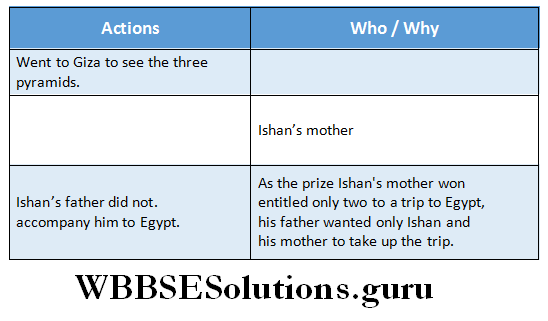
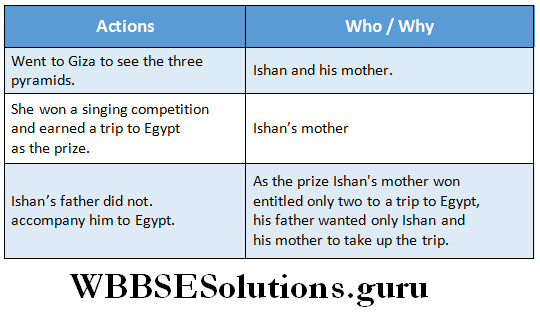
WBBSE Solutions For Class 6 English Reading Skills Lesson 5 Land of the Pharaohs fill the blanks.

Answer:

WBBSE Solutions For Class 6 English Reading Skills Lesson 5 Land of the Pharaohs fill the blanks

4. Fill in the blanks with words taken from the text. There are a few extra words.

List of words: Monument, entitlted, interesting, burial, triangular, competition, finally, thousand.

After many attempts he finally became successful.

The story was very interesting.

The Taj Mahal is a world famous monument.

She took part in the competition and won the first prize.

In the burial ground, we saw the tombs of the dead soldiers.

2. What’s that, Ma?

That’s the Sphinx, Ishan. It’s a rock statue with a human head and a lion’s body. The Sphinx represents intelligence and strength. It guards the pyramids. It’s going to be quite a long walk in the sun. Wait here. I will go and fetch a couple of sandwiches and water from the car. Ishan, Ishan

Ma, the Sphinx is talking to me!

How do you know my name?

I know many things. I know you are Ishan from Raiganj. You study in class VI. Do you want to know the history of this place?

I don’t like studying history. I can’t remember dry facts.

I will show you something you will never forget. Close your eyes and open them again.

Ishan, Egypt is the gift of the river Nile. You are now standing by the Nile.

WBBSE Class 6 English Solutions

1. Complete the sentences with information from the text

The Sphinx is a rock statue with a human head and a lion’s body.

The Sphinx represents intelligence and strength.

The main function of the Sphinx is to guard the pyramids.

Egypt is the gift of the river Nile.

Ishan’s mother went to fetch a couple of sandwiches and water from the car.

2. Write True Or False Statements. Give Supporting Sentences For Each Of Your Answers.

Question 1. The Sphinx is a lion’s statue.
Answer:

False

Question 2. Ishan lived in Raigang.
Answer:

True

Question 3. Ishan is a student of class 7.
Answer:

False

Question 4. History is Ishan’s favourite subject.
Answer:

False

Question 5. River Nile flows through Egypt.
Answer:

True

WBBSE Class 6 English Solutions

3. Rearrange the following sentences in the correct order. Write the numbers in the boxes.

Question 1. Ishan wanted to tell his mother that the Sphinx was talking to him.
Answer:

The Sphinx called Ishan by name.

Question 2. Ishan told that he can’t remember dry facts of history.
Answer:

Ishan wanted to tell his mother that the Sphinx was talking to him.

Question 3. The Sphinx asked Ishan to close his eyes and open them again. 
Answer:

The Sphinx knew many things about Ishan.

Question 4. Sphinx called Ishan by name.
Answer:

Ishan told that he cannot remember dry facts of history.

Question 5. Ishan found himself standing by the river Nile.
Answer:

The Sphinx asked Ishan to close his eyes and open them again.

Question 6. The Sphinx knew many things about Ishan.
Answer:

Ishan found himself standing by the river Nile.

4. Match the words in A with their meanings in B.

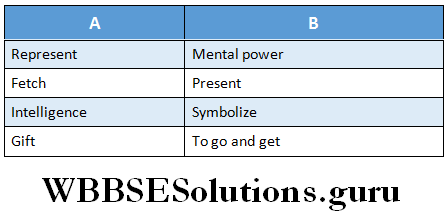
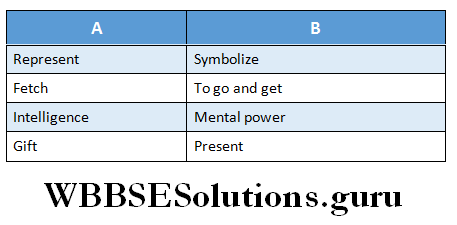
WBBSE Solutions For Class 6 English Reading Skills Lesson 5 Land of the Pharaohs match the words with their meaning

Answer:

WBBSE Solutions For Class 6 English Reading Skills Lesson 5 Land of the Pharaohs match the words with their meaning.

3. Around five thousand years ago, a great civilisation flourished in Egypt, mainly led by the Pharaohs. The kings were wise and the soldiers were brave. Ancient Egypt is also a land of prosperity and festivals.

Sphinx, tell me about the pyramids.

The pyramids were funerary edifices of the Pharaohs. Pharaoh Khufu’s pyramid is the biggest pyramid. Before the burial, the bodies of royal persons had to go through mummification. The Egyptian priests found a way to preserve the dead bodies. Spices, chemicals and oils were used by them. That is how they made a mummy.
Look, that’s queen Nefertiti; perhaps the most beautiful queen of Egypt.

He is king Tutenkhamun who died in his teens. His body is preserved as a mummy.

That’s Howard Carter who discovered Tutenkhamun’s tomb in 1922.

1. Answer the following questions.

Question 1. How did Egyptian civilization flourish?
Answer:

Around five thousand years ago Egyptian civilisation flourished near the river Nile, mainly led by the Pharaos. The Kings were wise and the soldiers were brave. It was a land of prosperity and festivals.

Question 2. What is mummification?
Answer:

Mummification was a process by which dead bodies of royal persons were preserved before burial by using spices, chemicals and oils.

Lesson 5 Class 6 English Questions And Answers

Question 3. Which is the biggest pyramid of Egypt?
Answer:

Pharaoh Khufu’s pyramid is the biggest pyramid of Egypt.

Question 4. Who was the most beautiful queen of Egypt?
Answer:

Queen Nefertiti was the most beautiful queen of Egypt.

Question 5. Who was Tutenkhamun ?
Answer:

Tutenkhamun was a king who died in his teens. His body is preserved as a mummy.

2. Write True Or False Statements. Give supporting sentences. for each of your answers :

Question 1. The Egyptian kings were not much clever.
Answer:

False

Question 2. Pharaos played a great part in flourishing Egyptian civilisation.
Answer:

True

Question 3. Every dead body was preserved as a mummy.
Answer:

False

WBBSE Class 6 English Solutions

Question 4. King Tutenkhamun was a teen emperor.
Answer:

True

Question 5. Howard Carter was an archeologist.
Answer:

True

3. Find words in the text opposite in meaning of the following words:

  • Modern X ancient
  • Declined X flourished
  • Poverty X prosperity
  • Live X dead
  • Cowardly X brave

WBBSE Solutions For Class 6 English Reading Skills Lesson 2 The Adventurous Clown

WBBSE Solutions For Class 6 English Reading Skills Lesson 2  The Adventurous Clown

Word meanings :

Part – I

  • Clown (ক্লাউন ) – জোকার
  • Longed (লংড্) – চাইত
  • Something Nobel (সামথিং নোবেল) – মহৎ কিছু
  • Adventures (অ্যাডভেন্চারস) – দুঃসাহসিক অভিযান
  • Climbed Down (ক্লাইম্বড্ ডাউন) – নেমে পড়ল
  • Runaway (রান্ অ্যাওয়ে) – পলায়নপর
  • Hero (হীরা) – বীর, নায়ক
  • Reins (রেইনজ্ ) – লাগাম
  • Dull (ডাল্ ) – একঘেয়ে
  • Held On (হেল্ড অন্) – আঁকড়ে ধরল
  • Grumble (গ্রাম্‌ল) – অসন্তোষ প্রকাশ করা
  • Puppy (পাপি) – কুকুরছানা
  • Turned Over (টার্নড় ওভার) – উল্টে গেল

Read And Learn Also WBBSE Class 6 English Reading Skills

Part-II

  • Spoiling (স্পয়েলিং) – নষ্ট করা
  • Upset (আপসেট্ ) – চালাকি
  • Trick (ট্রিক্) – বিচলিত
  • Shaken (শেক্‌) – কেঁপে উঠা
  • Toy Farm (টয় ফার্ম) – খেলনা খামার বাড়ি
  • Sailor (সেইলার্) – নাবিক
  • Wiping (ওয়াইপিং ) – মুছে
  • Tears (টিয়ার্স) – চোখের জল
  • Porridge (পরিজ্) – জলে বা দুধে সেন্ধ করা খইয়ের মন্ড
  • Put Out (পুট্ আউট) – নেভানো
  • Sobbed (স) – ফুঁপিয়ে কেঁদে উঠল
  • Ladder (ল্যাডার্ ) মই
  • Bowl (বোল ) – পাত্র
  • Bucket (র‍্যাকেট্) – বালতি
  • Collar (কলার ) – জামার কলার
  • Gold Fish (গোল্ড ফিস্) – মাছ একধরনের সোনালি
  • Roared (রোড) – গর্জন করে উঠল
  • Rescue (রেস্কিউ ) – উদ্ধার করা
  • Silly (সিলি ) – বোকার মত

WBBSE Solutions For Class 6 English Reading Skills Lesson 2 The Adventurous Clown

Part – III

  • Caught Hold Of – হাতে নিল
  • Locked (লড্) – তালাবদ্ধ করে রাখা
  • Dipped (ডি) – ডুবিয়ে দিল
  • Suddenly (সাডেলি) – হঠাৎ
  • Slipped (স্লিপ) – পিছলে গেল
  • Barked (বার্ড) – চিৎকার করে বলল
  • Banging (ব্যাংগিং) – ঠুকে গেল
  • Tinkle (টিংক্‌ল) – টং করে পড়ার শব্দ
  • Fiercely (ফিয়ার্সলি) – রেগে গিয়ে
  • Unlocked (আল্লড্) – তালা খুলল
  • Bump (বাম্প) – ঠোকর খাওয়া
  • Ran Off (র‍্যান অফ্ ) – ছুটে পালাল
  • From Drowning (ফ্রম্ ড্রাউনিং) ডুবে মরা থেকে
  • Climbed Up – ওপরে উঠে গেল
  • Nasty (ন্যাটি ) – নোংরা
  • Spoilt (স্পয়েন্ট) – নষ্ট করল
  • Blushed (ব্লাশড্) – লজ্জায় রাঙা হল
  • Peaceful (পিফুল) – শান্তি
WBBSE Class 6 English Functional GrammarWBBSE Class 6 English Reading SkillsWBBSE Solutions For Class 6 English

WBBSE Solutions Class 6 English Lesson 2

Examples Worked Out

Read the texts below and do as directed.

1. There was once a toy clown called Tuffy. He lived in a toy shop with many other toys. Tuffy longed to be a hero. He wanted to do something noble so that all the toys would cry out that he was a hero. He thought his little corner on the toy shelf was dull.

“Why do you grumble so much?” asked Timothy, the puppy dog. “Be happy with us, Tuffy. Why do you want to go off and have adventures ?”
“Adventures are always exciting. I want to do something that would make all the toys take notice of me. It’s so dull up here on our shelf,” replied Tuffy.
At night, the clown climbed down from his shelf to look for adventures. Now that night there was to be a grand race between two wooden horses and carts driven by wooden farmers. The race was just starting as Tuffy climbed down. One cart came racing by. The farmer riding it stood up and shouted!

1. Answer the questions below:

Question 1. Who was Tuffy?
Answer:

Tuffy was a toy clown.

Question 2. What did he want to be?
Answer:

He wanted to be a hero.

Question 3. What did he complain of?
Answer:

He complained of the shelf he lived on to be very dull.

Question 4. Why did Tuffy climb down from the shelf?
Answer:

Tuffy climbed down from his shelf to go off and look for adventures.

Question 5. What was happening when he just came down?
Answer:

When he was coming down, a race between two wooden horses and carts driven, by wooden farmers was just starting.

2. Multiple Choice Questions

Question 1. Tuffy lived in a

  1. Farm House
  2. Cottage;
  3. Toy Shop.

Answer: Toy Shop.

Question 2. Timothy was a

  1. Puppy Dog
  2. Kitten
  3. Toy Clown.

Answer: Puppy Dog

Question 3. The carts were driven by

  1. Live Farmers;
  2. Wooden Farmers;
  3. Live Horses.

Answer: Wooden Farmers;

Question 4. Timothy advised Tuffy

  1. Not To Grumble Much;
  2. To Have Adventures;
  3. To Leave The Shelf.

Answer: Not To Grumble Much;

Question 5. Tuffy climbed down the shelf

  1. In The Morning;
  2. In The Evening;
  3. At Night.

Answer: At Night.

WBBSE Solutions Class 6 English Lesson 2

3. Rearrange the following sentences in the correct order by putting the numbers in the boxes.

Question 1. Timothy advised Tuffy not to grumble.
Answer:

The clown Tuffy wanted to be a hero.

Question 2. The clown Tuffy wanted to be a hero.
Answer:

He found the little corner of the toy shelf to be dull.

Question 3. One cart just came racing by.
Answer:

Timothy advised Tuffy not to grumble.

Question 4. He found the little corner of the toy shelf to be dull.
Answer:

The clown climbed down from his shelf.

Question 5. The clown climbed down from his shelf.
Answer:

One cart just came racing by.

 Fill in the blanks with words given in the list. There is one extra word:

Tuffy, the toy clown lived in a toyshop. He wished to do something-noble. His friend, Timothy, felt that the clown always grumbled. But Tuffy thought that the adventures were always exciting.

2. “Goodness! An adventure already! A runaway horse!” thought Tuffy. “Now is my chance to be a hero”.

The horse and the cart came round again and Tuffy jumped at the reins. He held on to them and dragged the horse to one side. The cart turned over and the farmer fell down. Tuffy stood by, helping him up, feeling very proud that he had stopped the horse. But the farmer was terribly angry.

“What do you mean by spoiling my race like that ?” he shouted. “Now the other horse and cart will win! You silly, little clown!”
Tuffy was upset.

“You don’t understand I’m a hero !” He ran out and sat down in a toy farm wiping his tears. Suddenly Tuffy noticed a doll’s house in a corner of the shop. He saw smoke coming out of one of the windows. “Fire ! Fire!” shouted Tuffy. “Another adventure! I’ll put it out at once.”

1. Answer the questions below:

Question 1. What did Tuffy think seeing the runaway horse?
Answer:

Seeing the runaway horse, Tuffy thought that he would now have a chance to do some adventurous work to become a hero.

Question 2. What did Tuffy do and what was the result?
Answer:

Tuffy jumped at the reins, held on to them and dragged the horse to one side. As a result the cart turned over and the farmer fell down.

Question 3. Why did Tuffy feel very proud?
Answer:

Tuffy felt very proud because he had stopped a runaway horse and thought that he had done a heroic job.

Question 4. Why was the farmer terribly angry?
Answer:

The farmer was terribly angry because Tuffy made him fall down from the horse, and for that he would lose the race.

2. Write True Or False Statements.

Question 1. The farmer called the toy clown silly.
Anwer:

True

Class 6 English Reading Skills Lesson 2

Question 2. Tuffy prevented the farmer from falling down from the cart.
Answer:

False

Question 3. Tuffy brushed aside the farmer’s remarks.
Answer:

False

Question 4. Tuffy saw smoke coming out of one of the windows of the doll’s house.
Answer:

True

Question 5. Tuffy shied away from fighting the fire.
Answer:

True

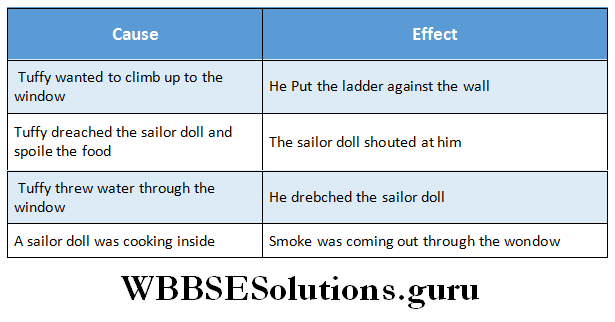
3. Complete the chart below:

WBBSE Solutions For Class 6 English Reading Skills Lesson 2 The Adventurous Clown complete the chart.

Answer:

WBBSE Solutions For Class 6 English Reading Skills Lesson 2 The Adventurous Clown complete the chart

3. He found a ladder and put it up against the wall of the doll’s house. Then he took a big bucket, filled it with water from the farm pond. He climbed the ladder and threw all the water in at the window.

Just then, someone caught him by the collar and roared, “And what do you think you’re doing playing a silly tick like that?” Poor Tuffy was shaken like a rat. “Don’t do that!” he shouted. “I am a hero! I was putting out the fire.

” Tuffy saw that he was speaking to a saibr doll who was making porridge. “Can’t I cook in peace without you coming and throwing water at me?”

“They won’t let me be a hero,” he sobbed. Soon after, he heard a cry and

looked around. There was a big bowl of water nearby. In it were swimming two fine goldfish. And there was a small doll too!
“She’s fallen in! I’ll rescue her! This is a real adventure at last!”

1. Answer the questions below:

Question 1. How did Tuffy, the toy clown, put out the fire?
Answer:

Tuffy collected a bucket of water from the pond and then climbing up the ladder, threw the water in at the window through which the smoke was coming out.

Question 2. Who caught Tuffy by the collar?
Answer:

A sailor doll caught Tuffy by the collar.

Question 3. Why was the sailor doll angry?
Answer:

The sailor doll was angry because Tuffy threw water on him and the food he was cooking.

Question 4. What did Tuffy see hearing a cry?
Answer:

Hearing a cry, Tuffy looked around and saw two goldfish and a doll in a big bowl of water nearby.

Question 5. What real adventure did Tuffy find at last?
Answer:

The real adventure at last was that Tuffy found a small doll in a big bowl of water and he decided to rescue her from drowning.

Class 6 English Reading Skills Lesson 2

2. Multiple Choice Questions

Question 1. Tuffy climbed up to the window by

  1. A Rope,
  2. A Ladder,
  3. Staircase.

Answer: 2. A Ladder

Question 2. He collected water from

  1. The Farm Pond,
  2. A Well,
  3. A Water Tap.

Answer: 1. The Farm Pond

Question 3. The sailor doll was

  1. Sleeping,
  2. Cooking,
  3. Cleaning The Room.

Answer: 2. Cooking

Question 4. Tuffy sobbed because he was

  1. Not Allowed To Be A Hero,
  2. Rebuked,
  3. Beaten Up.

Answer: 1. Not Allowed To Be A Hero

Question 5. Tuffy was shaken like a

  1. Cat,
  2. Puppy,
  3. Rat.

Answer: 3. Rat

3. Complete the chart with information from the text.

WBBSE Solutions For Class 6 English Reading Skills Lesson 2 The Adventurous Clown complete the chart with information from the text

Answer:

WBBSE Solutions For Class 6 English Reading Skills Lesson 2 The Adventurous Clown complete the chart with information from the text.

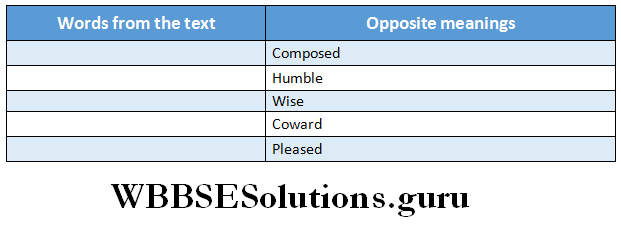
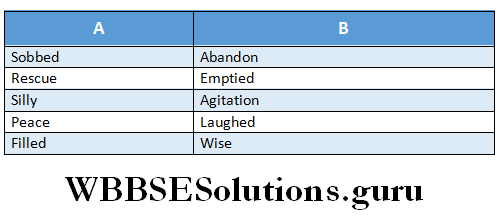
4. Match the words in ‘A’ with their opposite meanings in ‘B’.

WBBSE Solutions For Class 6 English Reading Skills Lesson 2 The Adventurous Clown match the words

Answer:

WBBSE Solutions For Class 6 English Reading Skills Lesson 2 The Adventurous Clown match the words.

4. He caught hold of a little net and dipped it into the water. He brought the little doll out. But she slipped out and fell on to the table banging her head.

She began to cry. Up came a policeman doll and said fiercely, “What are you doing, catching the doll and making her bump her head like that?”

“I was saving her from drowning!” said Tuffy.

“I was having such a lovely swim!” sobbed the little doll. “I swim with the goldfish every night. But that clown caught me in a nasty net and spoilt my fun. He isn’t a hero at all!”

The policeman locked Tuffy in a room in the police station. Suddenly he heard a noise outside the window of the room, “Tuffy, Tuffy !” barked a little voice. “It is I, Timothy. Here is the key to the door.”

Class 6 English Reading Comprehension PDF

1. Answer the questions below:

Question 1. Why did Tuffy put the little net in the water?
Answer:

Tuffy put the little net in the water to take out the little doll and save her from drowning.

Question 2. Why did the doll begin to cry?
Answer:

The doll began to cry because she slipped out of the net and hit her head on the table.

Question 3. By whom was Tuffy caught?
Answer:

Tuffy was caught by a policeman doll.

Question 4. “I was saving her from drowning !”-Who said this and to whom?
Answer:

Tuffy said this to the policeman when he asked him what he (Tuffy) was doing.

Question 5. What did the policeman do?
Answer:

The policeman put Tuffy under lock and key in a room in the police station.

2. Write True Or False Statements.

Question 1. Tuffy caught hold of the little doll by his hand and brought it out of water.
Answer:

False

Question 2. The doll fell down on the table and banged her head.
Answer:

True

Question 3. The doll complained to the policeman against Tuffy.
Answer:

True

Question 4. The doll was swimming in the water with another doll friend.
Answer:

False

Question 5. Timothy opened the lock to make Tuffy free.
Answer:

False

3. Find words in the text which have the following meanings:

  • Furiously = fiercely
  • Pleasant = lovely
  • Making sound after hitting something = banging
  • Shouted = barked
  • Cried with loud gasps = sobbed

5. The policeman locked Tuffy in a room in the police station. Suddenly he heard a noise outside the window of the room. “Tuffy, Tuffy!” barked a little voice. “It is I, Timothy. Here is the key to the door”.

Tinkle! The key fell to the floor and the clown quickly unlocked the door. Timothy and he ran off together and climbed up to the shelf.

“Thank you. You’re the hero !” he said. “I didn’t stop to think. But you saw I was in real trouble and you saved me.” The toy dog blushed.

“Oh! How peaceful it is up here. I’ll never want to leave this shelf again.” And, until he was sold, he never did!

Class 6 English Reading Comprehension PDF

1. Multiple choice Question

Question 1. The policeman locked Tuffy in

  1. A Classroom,
  2. A Room Of The Police Station,
  3. The Toyshop.

Answer: A Room Of The Police Station

Question 2. The little voice Tuffy heard was that of

  1. Timothy,
  2. The Policeman,
  3. The Little Doll.

Answer: Timothy

Question 3. “Tinkle’ is the sound of

  1. Opening Of The Gate
  2. A Ringing Bell
  3. Falling Of The Key.

Answer: Falling Of The Key

Question 4. The key was given to Tuffy by

  1. The Policeman
  2. Timothy
  3. A Sentry On Duty.

Answer: Timothy

2. Complete the sentences with information from the text.

1. Timothy came to the police station to give Tuffy the key of the door lock.

2. The door was unlocked by Tuffy himself.

3. After escaping from the police station, Tuffy reached straight to his peaceful toy shelf.

4. For helping him, Tuffy declared Timothy to be the real hero.

5. Timothy blushed because Tuffy considered him to be the real hero.

6. Tuffy found the shelf to be a very peaceful place.

3. Rearrange the sentences in proper order. Put the numbers in the boxes against each.

Question 1. Tuffy unlocked the door.
Answer:

The policeman locked Tuffy in the police station.

Question 2. Tuffy thanked Timothy for saving him.
Answer:

Timothy threw the key on the floor.

Question 4. Tuffy lived a peaceful life on the shelf till he was sold.
Answer:

Timothy took shelter on the shelf.

Question 5. Timothy took shelter on the shelf.
Answer:

Tuffy thanked Timothy for saving him.

Question 6. Timothy threw the key on to the floor
Answer:

Tuffy lived a peaceful life on the shelf till he was sold.

4. Match the words in ‘A’ with their meanings in ‘B’.

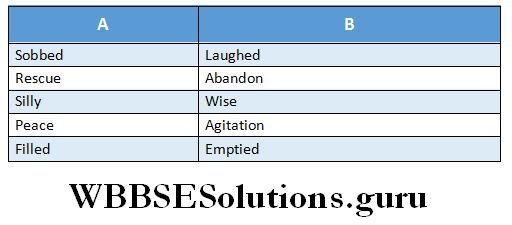
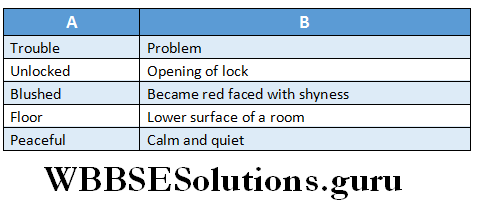
WBBSE Solutions For Class 6 English Reading Skills Lesson 2 The Adventurous Clown match the words with their meaning....

Answer:

WBBSE Solutions For Class 6 English Reading Skills Lesson 2 The Adventurous Clown match the words with their meaning....

WBBSE Solutions For Class 6 English Miscellaneous Lesson 4 Part Of Speech

WBBSE Solutions For Class 6 English Miscellaneous Lesson 4 Part Of Speech

তোমরা শিখেছ যে এক বা একাধিক word বা শব্দ মিলে একটি sentence গঠন করে যেমন : Sandip goes to school.

Read And Learn Also WBBSE Solutions For Class 6 English

উপরের sentenceটি Sandip, goes to school -এই চারটি word দ্বারা গঠিত হয়েছে। এই word-গুলি প্রত্যেকেই sentence-টির অংশ (part) এবং sentence-এর মধ্যে থেকে প্রত্যেকটি word-ই ভিন্ন ভিন্ন অর্থ প্রকাশ করছে। word-এর এই কাজ অনুযায়ী তাদের বিভিন্ন শ্রেণীতে বিভক্ত করা হয়। এদের এক একটি শ্রেণিকে Part of Speech বলে।

ইংরাজীতে Parts of Speech আট প্রকার। যথা :

Parts Of Sppech

ইংরাজীতে যত words আছে তাহারা প্রত্যেকেই এই আট প্রকার Parts of Speech-এর একটি হবেই। নীচের sentence-গুলি লক্ষ্য কর :

WBBSE Solutions For Class 6 English Miscellaneous Lesson 4 Part Of Speech

WBBSE Solutions For Class 6 English Miscellaneous Lesson 4 NOUNS (বিশেষ্য)

  • He is a doctor —সে একজন ডাক্তার
  • Ratan lives in Mumbai — রতন মুম্বাইতে বাস করে
  • The dog barks—কুকুরটি ঘেউ ঘেউ করে
  • I like meat—আমি মাংস পছন্দ করি।

এই sentence-গুলিতে doctor, Ratan, Mumbai, dog, meat — এই word-গুলি কোন কিছুর নাম বোঝাচ্ছে।

WBBSE Class 6 English Functional GrammarWBBSE Class 6 English Reading SkillsWBBSE Solutions For Class 6 English


Class 6 English Miscellaneous Lesson 4 WBBSE

WBBSE Solutions For Class 6 English Miscellaneous Lesson 4 Classification Of Nouns

Parts Of Speech classification of nouns

WBBSE Solutions For Class 6 English Miscellaneous Lesson 4 Proper Nouns

  • Parimal is my brother.
  • The Ganga is a big river.
  • We shall come on Sunday
  • I live in Delhi

এখানে প্রথম sentence-এ Parimal word টি একজন নির্দিষ্ট ব্যক্তির নাম বোঝাচ্ছে। সেইরূপ Sunday, Ganga, Delhi — এই word-গুলি নির্দিষ্ট একটি দিন, নদী বা স্থানের নাম বোঝাচ্ছে। এই word- Proper Nouns.

যে Noun দ্বারা কোনও বিশেষ ব্যক্তি, স্থান, কাল বা বস্তুর নাম বোঝায় তাকে Proper Noun বলে।

A Proper Noun is the name of one particular person, place, thing, event, etc.

নীচে আরও কতকগুলি Proper Noun-এর উদাহরণ দেওয়া হল :

Kolkata, Ram, the Taj Mahal, the Jamuna, Monday, Durga Puja, January, the Ramayana, etc.

Common Nouns

  • The man runs.
  • The old man walks.
  • The blind man sees nothing.

উপরের sentence-গুলিতে দেখ প্রতি ক্ষেত্রেই সাধারণভাবে পুরুষ মানুষ বোঝাতে ‘man’ word-টি ব্যবহৃত হয়েছে। অর্থাৎ ‘man’ word টি দ্বারা যে কোন পুরুষ মানুষকেই বোঝাচ্ছে। আবার দেখ :

  • The cow is a domestic animal.
  • The book is on the table.
  • The river is flowing.

উপরের sentence-গুলিতে cow, book, river—এই word-গুলি নির্দিষ্ট একটি প্রাণী বা বস্তুকে না বুঝিয়ে নিজ নিজ শ্রেণীর প্রত্যেককে বা সাধারণভাবে সকলকেই বোঝাচ্ছে। এই word-গুলিই Common Noun.

যে word দ্বারা একজাতীয় জীব বা বস্তুর কোন নির্দিষ্ট একটিকে না বুঝিয়ে তাদের সকলকেই বোঝায় তাকে Common Noun বা Class Noun বলে।

A Common Noun is the name of no one person or thing in particular but is common to any and every person or thing of the same kind.

নীচে আরও কতকগুলি Common Noun-এর উদাহরণ দেওয়া হল:

boy, building, city, country, lion, month, pen, sea, etc. Common Noun এবং Proper Noun-এর পার্থক্য লক্ষ্য কর :

Common Noun
(সাধারণ নাম).

Parts Of Sppech country india

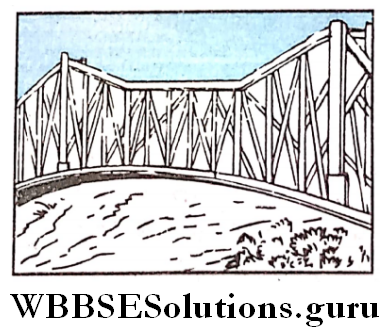
Parts Of Speech howrah bridge
Proper Noun (নির্দিষ্ট নাম ).

এইরূপ :

Parts Of Speech common noun and proper noun

WBBSE English Miscellaneous Lesson 4 solutions

Collective Nouns

  • A swarm of bees — এক ঝাঁক মৌমাছি
  • A flock of sheep — এক পাল ভেড়া

উপরের প্রথম sentence-এ “bees” word টি Common Noun কারণ এটা মৌমাছির সাধারণ নাম। কিন্তু “swarm” কথাটি কতকগুলি মৌমাছির সমষ্টিকে বোঝাচ্ছে, এটা Collective Noun.

সেইরূপ দ্বিতীয় sentence-এ “flock of sheep ” এই বাক্যাংশে “sheep” word টি Common Noun। কারণ এটা ভেড়ার সাধারণ নাম; কিন্তু “flock” word-টি Collective Noun, কারণ এটা | কতকগুলি ভেড়ার সমষ্টিকে বোঝাচ্ছে। “swarm” ও “flock” – এই word দুইটি পৃথকভাবে কোন একটি বা দুইটি মৌমাছি অথবা একটি বা দুইটি ভেড়াকে বোঝায় না।

এইরূপ—“Crowd of men”, “Army of soldier” বাক্যাংশে “Crowd” ও “Army” Collective Nouns, কারণ এরা যথাক্রমে men ও soldiers-এর সমষ্টিকে বোঝাচ্ছে। এইরূপ,

যে Noun দ্বারা একজাতীয় কতকগুলি প্রাণী বা বস্তুর সমষ্টি বোঝায়, স্বতন্ত্রভাবে তাদেরকে বোঝায় না, তাকে Collective Noun বলে।

A. Collective Noun is the name of a group or collection of persons or things taken as a whole.

নীচে আরও কতকগুলি Collective Noun-এর উদাহরণ দেওয়া হল :

A bunch of flowers – এক গুচ্ছ ফুল A bundle of sticks এক বাণ্ডিল লাঠি A gang of thieves – এক দল চোর

A team of workers — এক দল কাজের লোক A herd of cattle-এক পাল গবাদি পশু A group of people—এক দল লোক

Material Nouns

যে material বা পদার্থ দ্বারা কোন জিনিষ গঠিত হয় তাকে Material Noun বলে, জিনিষটিকে নয়। যেমন, “river” কথাটি Common Noun, কিন্তু এর উপাদান water word টি Material Noun. সেইরূপ, “ring” বা আংটি কথাটি Common Noun, কিন্তু এর উপাদান gold word-টি Material Noun. অতএব.

Material Noun দ্বারা কোন জিনিষের উপাদানকে বোঝায়, জিনিষকে নয়।

A Material Noun denotes the matter or substance of which things are made.

Material Noun এর আরও কয়েকটি উদাহরণ : milk, oil, silver, sugar, rice, tea, iron, butter, etc.

Abstract Nouns

Abstract Noun দ্বারা কোন মানুষ বা জিনিষের গুণ, অবস্থা, প্রকৃতি ইত্যাদি বোঝায়—মানুষ বা জিনিষকে বোঝায় না ।
softness, health, silence প্রভৃতি কথাগুলি কোন মানুষ বা জিনিষকে না বুঝিয়ে তাদের গুণ বা অবস্থা বোঝাচ্ছে।

An Abstract Noun is the name of quality (goodness, kindness), or state (health, illness), or action (arrival, departure) belonging to a person or an object.

Abstract Noun-এর আরও কয়েকটি উদাহরণ :

goodness, childhood, colour, small, danger, freedom ইত্যাদি।

Countable Nouns And Uncountable Nouns

আরও এক প্রকারে Noun-কে মোটামুটি দুই ভাগে ভাগ করা যায় :

  1. Countable Nouns
  2. Uncountable Nouns

Countable Nouns : যে সমস্ত Noun-কে এক, দুই, তিন করে গোনা যায় তাদেরকে Countable Nouns boy, apple, man, tree, house, etc.

কেবলমাত্র Countable Noun এরই plural form হয়, এবং এদের পূর্বে Singular -এ a, an, plural-many, few, a few, several a boy, an apple; a man, many boys, few apples, several houses

WBBSE Class 6 English Miscellaneous Exercises

Uncountable Nouns : যে Noun-গুলিকে এক, দুই, তিন করে গোনা যায় না তাদেরকে

Uncountable Nouns water, air, grass, wood, sand, glass, money, etc. এই Noun গুলিকে গোনা না গেলেও এদের পরিমাপ করা যায় এবং এদের কোন plural form হয় না এবং এদের পূর্বে a, an বসেনা। পরিমাণ বোঝাতে এদের পূর্বে much, little ইত্যাদি ব্যবহৃত হয়। , little water, much money, little grass

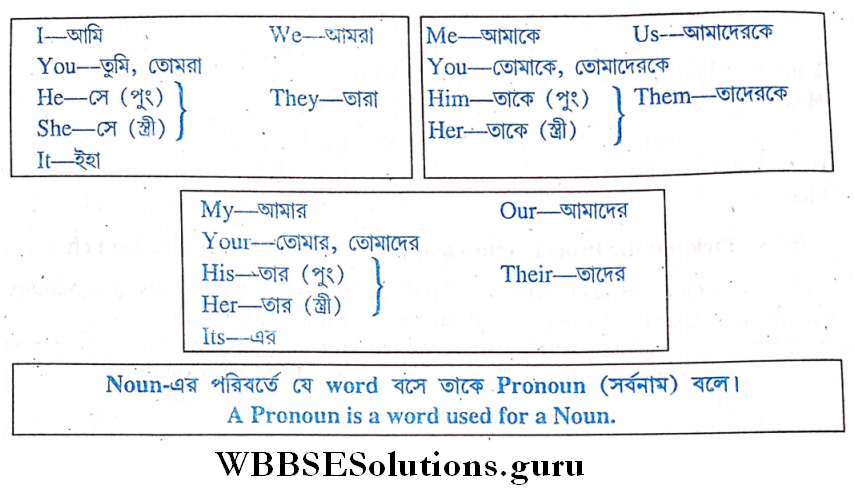
Parts Of Speech pronouns

Exercise

Adjectives (বিশেষণ)

Rumki is a good girl. She has long hair. I have many friends. Nupur has five rupees. He is poor.

উপরের বাক্যগুলিতে good, long, many, five, poor — এই word-গুলি যথাক্রমে Rumki, hair, friends, rupees ও he—এই শব্দগুলির গুণ, আকৃতি, পরিমাণ, সংখ্যা ও অবস্থা বোঝাচ্ছে। এই word-গুলিকে Adjective বলে। নীচে এইরূপ আরও কতকগুলি adjective-এর উদাহরণ দেওয়া হল :

  • hot (গরম)
  • big (বড়)
  • hard (শক্ত)
  • good (ভাল)
  • bad ( মন্দ)
  • soft (নরম)
  • kind (দয়ালু )
  • cruel (নিষ্ঠুর )
  • sour (টক)
  • poor’ (গরীব)
  • old (পুরাতন)
  • fat (মোটা)
  • honest (সৎ)
  • cold (ঠাণ্ডা)
  • sweet (মিষ্ট)
  • beautiful (সুন্দর)
  • lame (খোঁড়া)
  • tall (লম্বা)
  • blind (অন্ধ)
  • rich (ধনী)
  • famous (বিখ্যাত )
  • blue (নীল)
  • round (গোলাকার)
  • brave (সাহসী )
  • young (তরুণ)
  • weak (দুর্বল)
  • thin (রোগা )
  • sad (দুঃখিত happy (সুখী)
  • red (লাল) wise (জ্ঞানী)
  • new (নূতন)
  • strong (শক্তিশালী)
  • lazy ( অলস )
  • short (খাটো, বেঁটে)
  • small (ছোট)

যে word কোন Noun বা Pronoun-এর দোষ, গুণ, অবস্থা, সংখ্যা, পরিমাণ, আকৃতি ইত্যাদি বোঝায় তাকে Adjective বা বিশেষণ বলে।

An Adjective is a word which adds something to the meaning of a Noun or Pronoun. An Adjective is a “ describing word”.

পূর্বে Articles (a, an, the )-কে স্বতন্ত্র parts of speech বলা হত, এখন তারা Adjective রূপেই গণ্য হয়।

Parts Of Sppech adjectives

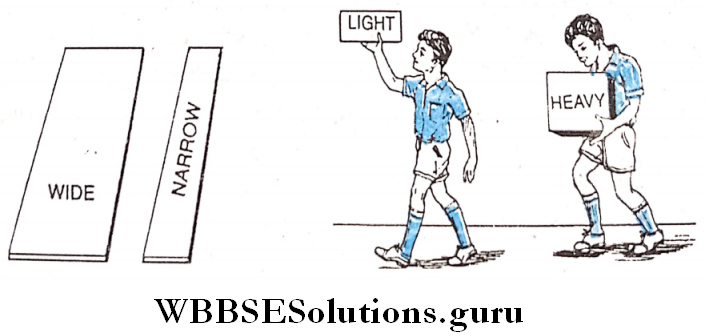
উপরের ছবিতে লক্ষ্য কর wide (চওড়া)-এর বিপরীত শব্দ narrow (সরু) এবং light (হাল্কা)-এর বিপরীত শব্দ heavy (ভারী)। এইরূপ আরও কিছু বিপরীত অর্থবোধক Adjective দেওয়া হল।

Parts Of Speech verbs...

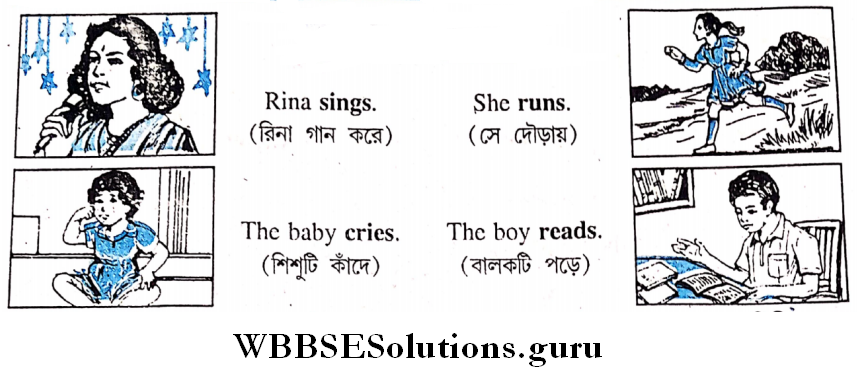
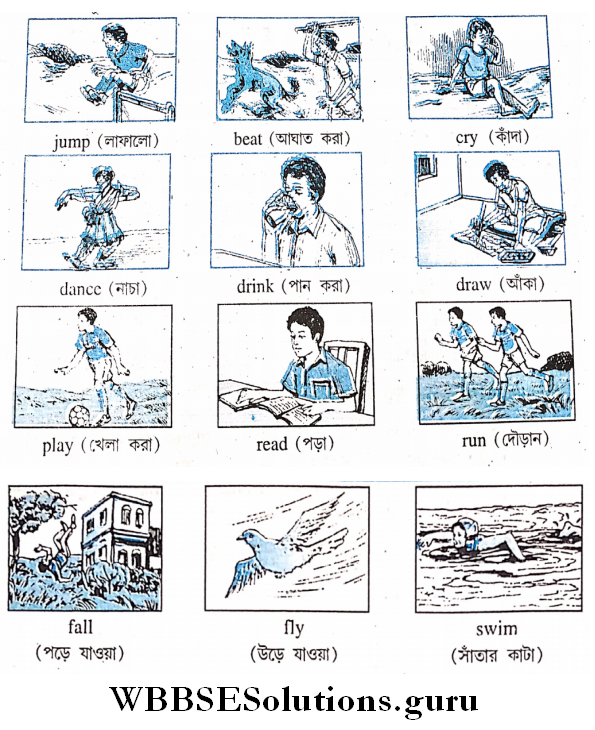
প্রথম বাক্যটিতে Rina কি করে (অর্থাৎ গান করে -sings) তা বোঝান হয়েছে। দ্বিতীয় বাক্যে She—এই Pronounটি দৌড়ায় ( runs) বোঝাচ্ছে। তৃতীয় বাক্যটিতে শিশুটি কি করে (অর্থাৎ কাঁদে- cries) তা বোঝাচ্ছে। সুতরাং উপরের এই sentence গুলিতে sings, runs, cries, reads — এই wordগুলি দ্বারা কোন কাজ করা বোঝাচ্ছে। এদের verb বলা হয়।
আবার দেখ :

  • Gargi is a good girl.
  • These are flowers.
  • I have a pen.

এখানে is এবং are দ্বারা হওয়া এবং have দ্বারা থাকা বোঝান হচ্ছে। এই word গুলিকেও verb বলা হয়।
নীচে কতকগুলি verb-এর উদাহরণ দেওয়া হল :

Parts Of Sepech verbs

WBBSE Class 6 English Miscellaneous Exercises

আরও কিছু verb-এর উদাহরণ :

  • live (বাস করা)
  • eat (খাওয়া)
  • walk (হাঁটা)
  • sleep, give, make
  • sell (বিক্রী করা)
  • talk (কথা বলা )
  • buy (ক্রয় করা )
  • travel (বেড়ান)
  • quarrel (ঝগড়া করা )
  • write (লেখা)
  • sit, like, take, say
  • stand, call, come, go

যে word দ্বারা ব্যক্তি বা বস্তুর কোনও কাজ করা অথবা হওয়া, থাকা ইত্যাদি বোঝায় তাকে verb বলা হয়।

A verb is a word which states something about a person or a thing.
মনে রাখবে, ইংরাজীতে verb ব্যতীত কোন sentence গঠিত হয় না।

Exercise

Adverbs (ক্রিয়ার বিশেষণ)

  • Mithu walks fast (দ্রুত).
  • I shall come soon ( শীঘ্র ).
  • I saw him there (ঐখানে ).

প্রথম বাক্যটিতে মিঠু কিভাবে (অর্থাৎ how) হাঁটে, fast word-টি দ্বারা তাই বোঝান হচ্ছে। দ্বিতীয় বাক্যে soon word-টি দ্বারা আমি কখন (অর্থাৎ when) আসব, তাই বোঝাচ্ছে। তৃতীয় বাক্যে আমি তাকে কোথায় (অর্থাৎ where ) দেখেছি, there (সেখানে) word-টি দ্বারা তাই বোঝান হচ্ছে। এখানে fast, soon ও there word গুলি Adverb । Adverb প্রধানতঃ verb-টি কিভাবে (how), কখন (when) এবং কোথায় ( where) ঘটে, তা প্রকাশ করে।

আবার লক্ষ্য কর :

This mango is very swect —এই আমটি খুব মিষ্টি।

এখানে verb wordটি ‘sweet’ -এই adjective-এর মাত্রা (খুব ভাল –very) প্রকাশ করছে। এই very word-টিও adverb.

Walk more quickly — আরও তাড়াতাড়ি হাঁট।

এখানে more word-টিও ‘quickly’-এই adverb-এর মাত্রা প্রকাশ করছে বলে এটাও adverb.

যে সব word Verb, Adjective কিংবা অন্য Adverb-এর সম্বন্ধে কিছু বলে অথবা এদের অর্থ সীমাবদ্ধ (modify) করে তাদের Adverb (ক্রিয়া-বিশেষণ) বলে। An Adverb is a word which generally adds something to the meaning of a Verb, an Adjective or an Adverb.

নীচের word-গুলি Adverb রূপে ব্যবহার করা যেতে পারে :

  • always (সর্বদা)
  • daily (রোজ)
  • here (এখানে)
  • late ( দেরী)
  • before (পূর্বে)
  • only (কেবল)
  • slowly (ধীরে)
  • over (উপরে)
  • often ( মাঝে মাঝে )
  • yesterday (গতকাল)
  • far ( দূরে )
  • very (খুব)
  • never (কখনোই না)
  • soon ( শীঘ্র )
  • now (এখন)
  • quickly ( শীঘ্র )
  • hardly (কদাচিৎ)
  • everyday (প্রতিদিন)
  • more (আরও)
  • there (ঐখানে)
  • when (কখন)
  • alone (একাকী)
  • near (নিকটে)
  • then (তখন)

সাধারণতঃ Adjective-এর পরে -ly যোগ করে Adverb করতে হয় যথা :

Parts Of Speech adverbs

Prepositions (পদান্বয়ী অব্যয়)

Parts Of Speech prepositions

  1. The cat is in the box.
  2. The cat is on the box.
  3. The cat jumps over the box.
  4. The cat is under the box.
  5. The cat is beside the box.
  6. The cat is behind the box.

behind—এই word-গুলির সাহায্যে cat-এর সাথে box-এর সম্পর্ক বোঝাচ্ছে; এবং এরা সর্বদাই box—এই Nounটির পূর্বে বসেছে। এইরূপ শব্দকে Preposition বলে। আরও দেখ :

  • He lives at Ranaghat — সে রানাঘাটে বাস করে।
  • Rana will go to Darjeeling — রানা দার্জিলিংয়ে যাবে।
  • Rumki will come with her mother — রুমকি তার মা’র সাথে আসবে।

পূর্বের পৃষ্ঠার sentence-গুলিতে at, to, with — এইসব word-গুলি যথাক্রমে Ranaghat (noun), Darjeeling (noun) ও her (pronoun)-এর পূর্বে বসেছে। আরও লক্ষ্য কর যে :

at শব্দটি He এবং Ranaghat এর ভিতরে সম্পর্ক প্রকাশ করছে।

to শব্দটি Rana এবং Darjeeling-এর ভিতরে সম্পর্ক প্রকাশ করছে।

with শব্দটি Rumki এবং ‘her mother’-এর ভিতরে সম্পর্ক প্রকাশ করছে।

এই at, to ও with word গুলিও Preposition.

Lesson 4 Miscellaneous Class 6 English Questions

মনে রেখো এই Preposition সর্বদা কেবল noun বা pronoun-এর পূর্বে বসে। নীচের word-গুলি preposition রূপে ব্যবহার করা যেতে পারে :

  • above (উপরে)
  • beside (পাশে)
  • from (হইতে)
  • within (মধ্যে)
  • after (পরে )
  • below (নীচে)
  • down (নীচে)
  • on (উপরে)
  • at (দিকে)
  • between (মাঝখানে)
  • with ( দ্বারা)
  • over (উপরে)
  • to (দিকে)
  • by (পাশে, সাথে)
  • in (মধ্যে)
  • under (নীচে)
  • for (জন্য, পক্ষে )
  • upon (উপরে)
  • into (মধ্যে)
  • up (নীচু হতে উপরে)

যে word কোন Noun বা Pronoun-এর পূর্বে বসে তার সাথে sentence-এর অন্য পদগুলির সম্পর্ক বুঝিয়ে দেয় তাকে Preposition বলে।

A Preposition is a word placed before a Noun or a Pronoun to show its relation to some other word in the sentence.

নীচে কিছু preposition-এর ব্যবহার দেখানো হল :

To

He will go to Delhi — সে দিল্লী যাবে।

I went to him – আমি তার নিকট গিয়েছিলাম।

The girls ran to the door – বালিকারা দরজার কাছে দৌড়িয়ে গেল।

I sent money to him – আমি তার নিকট টাকা পাঠিয়েছিলাম। লক্ষ্য কর :

(a) গতিবাচক verb-এর পরে ‘পর্যন্ত’, ‘প্রতি’, ‘অভিমুখে’ ইত্যাদি অর্থে ‘to’ preposition
ব্যবহার করা হয়।

(b) তবে go, come প্রভৃতির পরে ‘home’ (বাড়ী), ‘here’, ‘there’ word-গুলি থাকলে, এই ‘home’, ‘here’, ‘there’-এর পূর্বে to বসবে না। যথা : Go home. Come home. Go there. Come here.

From

He has come from Delhi সে দিল্লী হতে এসেছে।
The boy fell from the roof – বালকটি ছাদ হতে পড়ে গেল।
The boy took a book from me – – বালকটি আমার কাছ থেকে একটি বই নিয়েছিল। I shall be there from Tuesday to Saturday আমি মঙ্গলবার হতে শনিবার পর্যন্ত
“হইতে” অর্থে from ব্যবহৃত হয়।

“AT”, “In”, “On”

1.

  • He lives in Kolkata – সে কলকাতায় থাকে।
  • He died in Japan – তিনি জাপানে মারা গেলেন।
  • I saw him at Panagarh – আমি তাকে পানাগড়ে দেখেছিলাম।

সাধারণতঃ বড় শহর বা দেশের নামের পূর্ব্বে in ও ছোট শহর বা গ্রামের নামের পূর্ব্বে at বসে

2.

  • He will come in July — সে জুলাই মাসে আসবে।
  • The fish lives in water – মাছ জলে বাস করে।
  • I shall go at 6 a.m. – আমি সকাল ছয়টায় যাব।

3

  • He will come on Monday-সে সোমবার আসবে!
  • Sit on the bench — বেঞ্চের উপরে বস।
  • I went there on 4th May-আমি ৪ঠা মে সেখানে গিয়েছিলাম।
  • Hang the picture on the wall – ছবিটি দেওয়ালে বুলাও।

উপরে বা স্থানে, দিন, তারিখ বোঝাতে on ব্যবহৃত হয়। সময় বা ক্ষণ বোঝাতে at ব্যবহৃত হয়।

“In”, “Into”

  • He is in the room – সে ঘরে আছে।
  • He came into the room-সে ঘরে আসল ।
  • He swims in the river – সে নদীতে সাঁতার কাটে।
  • He fell into the river – সে নদীর মধ্যে পড়ে গেল।
  • They are running in the field – তারা মাঠে দৌড়াচ্ছে।
  • They ran into the forest – তারা দৌড়িয়ে বনে ঢুকল।

কোন কিছুর মধ্যে বা ভিতরে “থাকা” বোঝালে in বসে, আর বাহির হতে ভিতরে গতি বোঝালে into বসে।

Lesson 4 Miscellaneous Class 6 English Questions

“By”, “With” (দ্বারা, দিয়া)

  • It was done by me (বা I did it) – আমি এটা করেছিলাম।
  • I did it with my own hand- আমি নিজ হাতে এটা করেছিলাম।
  • The dog was beaten by him (He beat the dog)
  • He beat the dog with a stick — তিনি লাঠি দিয়ে কুকুরটিকে মারলেন।
  • I saw it with my own eyes – আমি স্বচক্ষে এটা দেখেছিলাম।
  • He sat by me – সে আমার পাশে বসেছিল।

সাধারণত যে কাজটি করে ইংরাজী অনুবাদে তার পূর্বে by এবং যার দ্বারা করা হয়, তার পূর্বে with বসে। ‘পাশে’ বা ‘নিকটে’ বোঝাতেও by ব্যবহার করা হয়।

  • I went to school with my brother – আমি আমার ভাইয়ের সাথে স্কুলে গিয়েছিলাম।
  • He came here with an umbrella – সে একটি ছাতা নিয়ে এখানে এল।

‘সহিত’, ‘সঙ্গে’ ইত্যাদি বোঝাতে with ব্যবহৃত হয়।

Exercise

Parts Of Sppech conjunctions - Copy Parts Of Sppech conjunctions. - Copy Parts Of Sppech conjunctions.. - Copy

1. প্রথম sentence-টিতে and word-টি ‘Rani’ ও ‘Mintu’–এই দুটি word-কে যুক্ত করেছে।

2. দ্বিতীয় sentence-টিতে and word-টি ‘Give me a chair’ এবং ‘a table’—এই দুটি বাক্যাংশকে যুক্ত করেছে।

3. তৃতীয় sentence-টিতে but word-টি ‘Birds can fly’ এবং ‘cats cannot’— এই দুটি
বাক্যাংশকে যুক্ত করেছে।

এই and ও but word দুটি এখানে Conjunctions.

যে শব্দ দুই বা ততোধিক শব্দ ও শব্দ সমষ্টিকে যুক্ত করে তাকে Conjunction (সংযোজক অব্যয়) বলে।

A Conjunction is a word which joins words or phrases or sentences together.

নীচের word-গুলি Conjunction রূপে ব্যবহৃত হতে পারে :

  • and —এবং
  • or — অথবা
  • for — জন্য
  • So—সুতরাং
  • still—তথাপি
  • if — যদি
  • lest — পাছে
  • unless — যদি না
  • but—কিন্তু
  • as— যেহেতু
  • though—যদিও
  • yet—তবুও
  • till—যে পর্যন্ত না)
  • therefore — অতএব
  • else— তা না হলে

নীচের sentence-গুলিতে কতকগুলি Conjunction-এর ব্যবহার লক্ষ্য কর:

  • I shall go if he comes.
  • Do not go till I come.
  • He is poor but honest.
  • I could not come as (because) I was ill.
  • You must read or you will fail.
  • He failed though he tried hard.

Class 6 English Miscellaneous Lesson 4 WBBSE

Exercise

Interjections (ভাবজ্ঞাপক অব্যয়)

নীচের sentence-গুলি লক্ষ্য কর :

Parts Of Speech injections

উপরের sentence-গুলিতে alas, hurrah, ah— এই word গুলিতে যথাক্রমে মনের বিষাদ, আনন্দ ও বিস্ময় বোঝাচ্ছে, আবার hallo word টি দ্বারা সম্বোধন করা বোঝাচ্ছে। এই word-গুলি Interjections.

যে সব word দ্বারা আনন্দ, দুঃখ, ঘৃণা, বিস্ময়, সম্বোধন ইত্যাদি মনের ভাব বোঝায় তাদের Interjection বলে।
An Interjection is a word which expresses some sudden feeling or emotion.

নীচে এইরূপ কতকগুলি Interjection-এর উদাহরণ দেওয়া হল :

সম্বোধন বোঝাতে – Ho ! Hallo ! Hello !

বিদায় জানাতে – Goodbye! Farewell !

উৎসাহ, প্রশংসা বোঝাতে – Bravo !

হর্ষ বা আনন্দ বোঝাতে – Hurrah!

দুঃখ বা বিষাদ বোঝাতে – Alas! Oh! Ah !

বিস্ময় প্রকাশ করতে – Ah !

ঘৃণা প্রকাশ করতে – Shame!

Cardinal And Ordinal Numbers-Writing Of Dates

Cardinal numbers দ্বারা সংখ্যা বোঝায়। যেমন :

  • 1 (One)
  • 2 (Two)
  • 3 (Three)
  • 4 (Four).
  • 5 (Five)
  • 6 (Six)
  • 7 (Seven)
  • 12 (Twelve)
  • 14 (Fourteen)
  • 30 (Thirty)

Ordinal numbers দ্বারা ক্রমপর্যায় বোঝায়। সেজন্য এগুলিকে ক্রমপর্য্যায়সূচক সংখ্যা বলা হয়। যেমন:

  • 1st (First)
  • 2nd (Second)
  • 3rd (Third)
  • 4th (Fourth)
  • 5th (Fifth)
  • 6th (Sixth)
  • 10th (Tenth)
  • 14th (Fourteenth)
  • 21st (Twenty-first)
  • 25th (Twenty-fifth)
  • 30th (Thirtieth)

নীচে একটি chart দেওয়া হল।

Cardinal And Ordinal Numbers Writing Of Dates cardinal numbers and ordinal numbers

Writing of Dates:

ইংরাজিতে তারিখ, মাস, সন Cardinal number ও Ordinal number—দুভাবেই লেখা যায়। যথাঃ

Cardinal – Ordinal

  • 3.6.94 = 3rd June, 1994
  • 25.3.99 = 25th March, 1999
  • 23.1.2000 = 23rd January, 2000
  • 15.8.1998 = 15th August, 1998

উপরের তারিখগুলিকে words-এ এইভাবে লেখা যায় :

  • Third of June, nineteen ninety four
  • Twenty fifth of March, nineteen ninety nine
  • Twenty third of January, two thousand
  • Fifteenth of August, nineteen ninety eight

WBBSE Solutions For Class 6 English Miscellaneous Lesson 3 Subject And Predicate Object

WBBSE Solutions For Class 6 English Miscellaneous Lesson 3  Subject And Predicate Object

Subject And Predicate (উদ্দেশ্য এবং বিধেয়):

Subject And Predicate Object subject and predicate

উপরের প্রথম sentence-টিতে Partha সম্বন্ধে বলা হয়েছে যে ‘sings’ অর্থাৎ সে গান করে। দ্বিতীয় sentence-টিতে My sister সম্বন্ধে বলা হয়েছে যে ‘has gone to school’ – অর্থাৎ সে স্কুলে
গেছে।

Read And Learn Also WBBSE Solutions For Class 6 English

তৃতীয় sentence-টিতে This boy সম্বন্ধে বলা হয়েছে যে ‘is known to me’– অর্থাৎ তাকে আমি চিনি ।
অতএব দেখা যাচ্ছে যে sentence-গুলির প্রত্যেকটিতে দুটি করে অংশ আছে। একটি অংশে কারও সম্বন্ধে কিছু বলা হয়েছে, এবং অন্যটিতে তার সম্বন্ধে যা বলা হয়েছে তা। সুতরাং-

  1. Sentence-এর মধ্যে যার সম্বন্ধে বা যাকে উদ্দেশ্য করে কিছু বলা হয় তাকে Subject বা উদ্দেশ্য বলে।
  2. Subject সম্বন্ধে যা কিছু বলা হয় তাকে Predicate বা বিধেয় বলে।

WBBSE Solutions For Class 6 English Miscellaneous Lesson 3 Subject And Predicate Object

কোন কোন সময়ে আদেশ, অনুরোধ বা উপদেশবাচক sentence-এ Subject উহ্য থাকে। যথা:

Sit down = (You) sit down. Go there = (You go there.

Lesson 3 Miscellaneous Class 6 English Questions

Subject ও Predicate বার করবার নিয়ম :

Sentence-এর verb-এর উপর “Who” (কে ?) বা “What” (কি ?) প্রশ্ন করে যে উত্তর পাওয়া যায় তাইই Subject (কর্তা)। যথা :-

Partha sings. My sister has gone to school. This boy is known to me.—এই sentence- গুলিতে “Who sings ?”, “Who has gone ?” এবং “What is known ?” প্রশ্ন করলে “Partha”, “My sister” এবং “This boy” – এই উত্তর পাওয়া যায় এবং এরা Subjects.

WBBSE Class 6 English Functional GrammarWBBSE Class 6 English Reading SkillsWBBSE Solutions For Class 6 English


সেইরূপ Subject কি করে, অথবা Subject সম্বন্ধে কি বলা হয়েছে, এই প্রশ্ন করে যে উত্তর পাওয়া যায় তাইই Predicate.

প্রত্যেক Sentence-এ Verb এবং কোন কোন সময় Object থাকবে। Verb ছাড়া কোন Sentence গঠিত হতে পারে না। Predicate-এর মধ্যে সাধারণতঃ এই Verb ও Object থাকে। Verb টিকে Finite Verb বলে।

নীচে আরও কতকগুলি Sentence-কে Subject এবং Predicate—এই দুই ভাগে ভাগ করা হল :

Subject And Predicate Object subject and predicate object

Object (কর্ম)

  • I know him.
  • The cow eats grass.
  • He gave me a book.

উপরের প্রথম বাক্যে ‘know’ verb-এর উপরে “Whom (কাকে ? )” প্রশ্ন করলে উত্তর পাওয়া যায় ‘him’। এই him শব্দটি এখানে verb-এর Object (কর্ম)।

দ্বিতীয় বাক্যে ‘cat’ verb-উপর What (কি ?) প্রশ্ন করলে উত্তর পাওয়া যায় ‘grass’। এই grass শব্দটি এখানে verb-এর Object (কর্ম)।

তৃতীয় বাক্যে ‘give’ verb-এর উপর “Whom (কাকে ?)” ও “What (কি ?)” প্রশ্ন করলে উত্তর পাওয়া যায় যথাক্রমে ‘me’ ও ‘book’। এই me ও book— word-গুলি এখানে verb-এর Objects (কর্ম)।

Verb-এর উপর “Whom (কাকে ?)” বা “What (কি ?)” প্রশ্ন করলে যে উত্তর পাওয়া যায় তাইই Object.

নীচে কতকগুলি sentence-এ object দেখান হল :

Subject And Predicate Object sentence and objects

Direct Object and Indirect Object:

verb (fell, give, ask, teach, lend, bring, pay, get object থাকে। একটি Direct object (মুখ্যকর্ম); অপরটি Indirect object (গৌণকর্ম)। সাধারণতঃ

Lesson 3 Miscellaneous Class 6 English Questions

Direct Object কোন বস্তু (thing) এবং Indirect object কোন ব্যক্তি বা প্রাণী (person or animal)- কে নির্দেশ করে। নীচের উদাহরণগুলি দেখ :

  • He gave me (Indirect object) a book (Direct object).
  • The boy told him (Indirect object) a story (Direct object).
  • Lend me (Indirect object) a pen (Direct object).
  • Give the dog (Indirect object) some meat (Direct object).

WBBSE Solutions For Class 6 English Miscellaneous Lesson 3 Family Chart Or Tree

একটি পরিবারের মানুষের মধ্যে তাহাদের পারস্পরিক বংশগত (অর্থাৎ জন্মগত) সম্পর্ক বোঝাবার জন্য একটি ছক বা chart তৈরী করা যায়। এই chart-কেই family chart বা family tree বলে।

Question 1. নীচে এইরূপ একটি family chart দেওয়া হল। এটা ভাল করে বুঝতে চেষ্টা কর। তিন পুরুষব্যাপী একটি পরিবারের সকলের পারস্পরিক সম্পর্ক ও পরিচয় chart-এর সাহায্যে বোঝান হচ্ছে।

Family Chart Or Tree chart

Answer:

এই family chart / tree দ্বারা বুঝান হইতেছে যে :

  1. Abhoy Roy ও Sova Roy স্বামী-স্ত্রী এবং পরিবারের কর্তা ও কর্ত্রী।
  2. উহাদের দুই কন্যা Namita এবং Kabita এবং এক পুত্র Samir.
  3. Samir এবং Mita স্বামী-স্ত্রী ।
  4. উহাদের দুই পুত্র Sunil ও Anil.

Arrow-যুক্ত লাইনগুলি ঠিক কাকে নির্দেশ করছে তা বিশেষভাবে লক্ষ্য কর। উপরের ছবিতে arrow- যুক্ত লাইনটি Samir-কে নির্দেশ না করে যদি Mita-কে নির্দেশ করত তা হলে বোঝাত যে Abhoy Roy ও Sova Roy-এর আর এক কন্যা Mita এবং Samir তার স্বামী। এইবার এই পরিবার সম্বন্ধে কতকগুলি প্রশ্ন ও তাদের উপর কি ভাবে দেওয়া হল নীচে দেখ ৷

WBBSEClass 6 English Miscellaneous Exercises 

Question 1. What is the name of Mr. Abhoy Roy’s wife?
Answer:

Mrs. Sova Roy

Question 2. How many sons and daughters do they have?
Answer:

One son and two daughters

Question 3. What is the relation between Sunil and Anil?
Answer:

They are brothers

Question 4. Who are Anil’s parents?
Answer:

Samir Roy and Mita Roy

Question 5. Who are Sunil’s grandparents?
Answer:

Abhoy Roy and Sova Roy

Question 6. What is the name of Sunil’s brother?
Answer:

Anil

Question 7. Who is Namita’s sister?
Answer:

Kabita

Question 8. Who is Kabita’s sister-in-law?
Answer:

Mita

WBBSE English Miscellaneous Lesson 3 Solutions

Question 9. Who are the aunts of Sunil. ?
Answer:

Namita and Kabita

Question 10. Who are the nephews of Namita?
Answer:

Sunil and Anil

Question 2. নীচের family chart-টি ভাল করে পড়। এবার এটা দিয়ে কিভাবে একটি passage লেখা হল তা দেখ।

Family Chart Or Tree saumithra family

Answer:

Sri Saumitra Sen is a school teacher. His wife’s name is Smt. Papia Sen. She is a housewife. They have two sons and one daughter. The sons are, Pradip and Sudip, and the daughter is Rinki. Pradip is a doctor and Sudip is a college student. Rinki is a school student.

Sudip-কে যদি তাদের family সম্বন্ধে একটি paragraph লিখতে বলা হয় তা হলে সে কি লিখবে দেখ :

I am Sudip Sen. I am a college student. Sri Saumitra Sen is my father. He is a teacher in a local school. My mother’s name is Papia Sen. She is a housewife. I have one brother Pradip and one sister Rinki. Pradip is a doctor. Rinki reads in a local school.

Question 3. নীচে Roy family-র একটি family chart / tree দেওয়া হল। Roy family সম্বন্ধে একটি paragraph কিভাবে লেখা হয়েছে দেখ।

Family Chart Or Tree ratan roy

Answer:

Ratan Roy is the head of the family. He is a retired professor. His wife is Durga Roy who is a housewife. They have two sons Ajoy and Prabir and one daughter Malati. Ajoy is an engineer. He is married to Namita. She is a bank clerk.

Class 6 English Miscellaneous Lesson 3 WBBSE

Prabir is a college student. Malati is a nurse. She is married to Sanjoy who is a school teacher. Ajoy and Namita have one son Bipul and one daughter Sabita. Bipul reads in Class VI. Sabita is just 3 years old. Malati and Sanjoy have one daughter Rekha. She reads in Class II.

Question 4. নীচের family-tree-টি দেখ। এইবার এই family-টি সম্বন্ধে একটি paragraph লেখ। মনে কর তুমি Surama — তুমি তোমার family সম্বন্ধে বলছ।

Family Chart Or Tree pranab family

Answer:

I am Surama Bose. I am a school student. Sri Pranab Bose is my father. He is a doctor. My mother Madhuri Bose is a teacher in a school. I have two brothers Subir and Siddhartha.

Subir is an engineer. He is married to Mala. She is a housewife. They have a son – Rana. He reads in Class III. Siddhartha has his own business. Mukta is his wife. She is a clerk in an office..

Question 5. নীচের paragraph-গুলি পড় এবং এগুলি থেকে কি ভাবে family chart / tree তৈরী করা হয়েছে দেখ।

1. Sanjoy Sen is the head of the family. Pratima Sen is his wife. They have a son Subir and two daughters Aruna and Mala. Subir is married to Lalita. They have a son Aditya and a daughter Sumita. Aruna is unmarried. Mala is married to Debashis. They have two daughters Sipra and Shyamali.

Family tree:

Family Chart Or Tree sanjaoy family

Now complete the sentences:

  • Debashis is Subir’s brother-in-law
  • Pratima Sen has three grand-daughters one grandson.
  • Aruna is Debashis’s sister-in-law
  • Lalita is Aruna’s sister-in-law
  • Aditya is Sumita’s brother
  • Pratima Sen is Lalita’s mother-in-law
  • Sanjoy Sen is Shyamali’s grandfather
  • Subir is Sipra’s uncle
  • Sumita is Mala’s niece

2. I am Biren Ghosh. I am a professor. My wife is a doctor. Her name is Mousumi Ghosh. We have two daughters. Their names are Aparna and Suparna. Aparna is a teacher. She works in a school. Suparna reads in Class VIII. Sumit is our son. He reads in a medical college.

Class 6 English Miscellaneous Lesson 3 WBBSE

Family Tree

Answer:

Family Chart Or Tree biren ghosh

WBBSE Solutions For Class 6 English Functional Grammar Lesson 12 Tense – Other Verbs

Lesson 12 Tense – Other Verbs

“To be” এবং “To have ” Verb-এর রূপ কি রকম হয় তা তোমরা শিখেছ। এখন অন্য Verb- এর Tense-এর রূপ কি প্রকারের হয় দেখ ।

প্রথমে “To do” verb লওয়া যাক :

Lesson 12 Tense – Other Verbs Present (Indefinite / Simple) Tense (বর্তমান কাল)

Tense other Verbs future tense

মনে রাখবে subject-টি third person, singular number হলে verb-এর শেষে “” বা “es” যোগ করা হয়। অন্য সমস্ত ক্ষেত্রে মূল verb-টি সোজাসুজি ব্যবহৃত হয়।

এই “s” বা “es” যোগ করবার কয়েকটি নিয়ম আছে :

Class 6 Functional Grammar Lesson 12

Read And Learn Also WBBSE Class 6 English Functional Grammar

1. কোন কোন verb-এর শেষে শুধু একটা “s” যোগ হয়। যথা :

  • He walks — সে হাঁটে।
  • The girl sings—বালিকাটি গান করে।
  • The teacher writes — শিক্ষক মহাশয় লেখেন।
  • Rina dances — রীণা নাচে।
  • The boy works—বালকটি কাজ করে। Subir reads—সুবীর পড়ে।
WBBSE Class 6 English Functional GrammarWBBSE Class 6 English Reading SkillsWBBSE Solutions For Class 6 English


2. Verb-টির শেষের অক্ষর যদি ‘o’ হয় তাহলে সেই verb-এর শেষে শুধুমাত্র ‘s’ বসাবে না, “es’ বসাবে। যথা :

  • He does – (does = do + es)
  • She goes – (goes = go + es)

3. যদি verb-এর শেষের অক্ষর ‘,’ হয় এবং ঠিক তার পূর্বে consonant থাকে তাহলে ‘y’-কে ‘i’ করতে হবে এবং সেই সঙ্গে ‘es’ যোগ করতে হবে। যথা :

  • He cries – ( cries = cry + es )
  • Ram tries – (tries = try + es)

কিন্তু যদি verb-এর শেষে ‘y’ থাকে এবং তার পূর্বে একটি vowel থাকে তবে শুধু ‘s’ যোগ করতে হয়। যথা :

  • He plays. (plays = play + s)
  • Arati prays. (prays = pray + s)
  • She says. (says = say + s)
  • He pays money. (pays = pay + s)

WBBSE Class 6 English Solutions 

4. Verb-এর শেষে যদি ‘s’, ‘ss’, ‘x’, ‘z’, ‘ch’ এবং ‘h’ থাকে তবে verb-এর শেষে ‘es’ যোগ করতে হয়। যথা : (passes = pass + es )

  • Ranu passes the book to me.
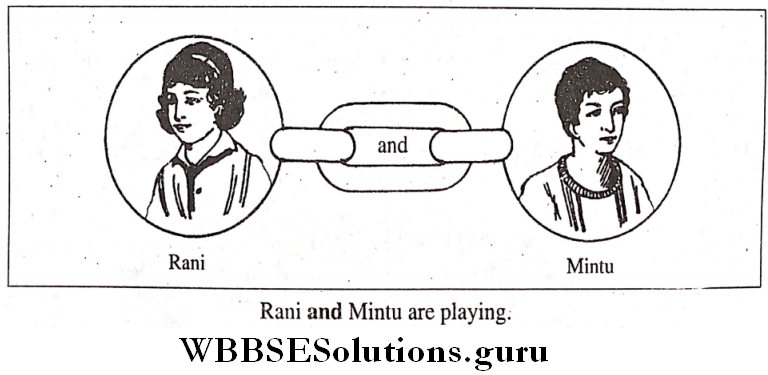
  • Arati washes cloth. (washes = wash + es)
  • He teaches us. (teaches = teach + es)
  • Sandip watches games. ( watches = watch + es)

WBBSE Solutions For Class 6 English Functional Grammar Lesson 12 Tense – Other Verbs

Lesson 12 Tense – Other Verbs Present Continuous/Progressive Tense

Verb-এর রূপ : is/am/are + verb + ing

কোন কাজ বর্তমানে চলছে এবং এখনও শেষ হয়নি বোঝালে verb-এর এই tense হয় যথা :

  • I am going—আমি যাইতেছি (যাচ্ছি)।
  • You are going— তুমি যাইতেছ (যাচ্ছ)।
  • He is going—সে যাইতেছে (যাচ্ছে)।
  • We are going – আমরা যাইতেছি (যাচ্ছি)।
  • You are going—তোমরা যাইতেছ (যাচ্ছ)।
  • They are going—তারা যাইতেছে (যাচ্ছে)।

লক্ষ্য কর :

1. সাধারণতঃ বাংলায় ক্রিয়ার (verb) পর ইতেছি, ইতেছ, ইতেছে থাকলে ইংরাজীতে verb-এর এই tense হয়।

2. এই tense-এ verb-এর শেষে ing যোগ করতে হয় এবং তার পূর্বে কর্তা (subject) I হলে am এবং কর্তা he, she, it অর্থাৎ Third Person Singular হলে is এবং অন্যান্য সমস্ত স্থলে are বসাতে হয় ।

3. Verb-এর শেষে ing যোগ করবার সময় তার শেষে যদি ‘e’ থাকে তবে ‘e’-টি তুলে দিতে হবে। যথা :

  • He is coming. – (coming = come + ing)
  • The sun is rising – ( rising = rise + ing)

Lesson 12 Tense – Other Verbs Present Perfect Tense

Verb-এর রূপ : has / have + verb (Past Participle form ) কাজটি এইমাত্র শেষ হয়েছে, বা পূর্বে শেষ হলেও ফল এখনও চলছে এরূপ বোঝালে Verb-এর এই tense হয়। যথা :

  • I have done it—আমি এটা করেছি (করিয়াছি)।
  • You have done it—তুমি এটা করেছ (করিয়াছ)।
  • He has done it — সে এটা করেছে (করিয়াছে)।
  • We have done it আমরা এটা করেছি (করিয়াছি)।
  • You have done it—তোমরা এটা করেছ (করিয়াছ)।
  • They have done it—তারা এটা করেছে (করিয়াছে)।
  • He has gone away — সে চলে গেছে (গিয়াছে)।
  • I have seen him—আমি তাকে দেখেছি (দেখিয়াছি)।

লক্ষ্য কর :

1. সাধারণতঃ বাংলায় ক্রিয়াপদের (verb)-এর পর ইয়াছি, ইয়াছ, ইয়াছে থাকলে ইংরাজীতে verb- এর এই tense হয়।

কিন্তু সব সময় নয়। যদি কাজটি অতীত কালে সম্পন্ন হয়ে থাকে এবং সেই কালটি নির্দেশ করা থাকে তা হলে verb-এর শেষে ইয়াছি, ইয়াছ, ইয়াছে থাকলেও এক্ষেত্রে verb-এর Simple Past Tense হয়, Present Perfect Tense হয় না। যেমন—

আমি তাকে কাল দেখেছি (দেখিয়াছি) — I saw (have seen নয়) him yesterday. এখানে সুস্পষ্ট অতীত কালের উল্লেখ আছে বলে অতীত কাল (Past Tense) হল, Present Perfect Tense নয়।

অতীতের কোন দিন, ক্ষণ, তারিখ ইত্যাদির উল্লেখ থাকলে এই tense হয় না।

2. এই tense-এ মূল verb-এর Past Participle form-এর পূর্বে has অথবা have বসাতে হয়। কর্তা (subject) Third person ও Singular number হলে has এবং অন্যান্য সমস্ত ক্ষেত্রে have বসে।

Lesson 12 Tense – Other Verbs Past Tense (অতীত কাল)

“To do” Verb-এর Tense-এর রূপ লক্ষ্য কর : Singular

Tense other Verbs past tense

মনে রাখিও :

Past Tense-এ Verb ‘To be ‘ ভিন্ন আর কোনও verb-এর Person বা Number অনুযায়ী রূপের কোন পরিবর্তন হয় না। Past Tense-এর রূপটি সর্বক্ষেত্রেই একভাবে ব্যবহৃত হয়। যেমন :

  • Sarala had We had
  • The boy went
  • I went
  • Sarala did We did
  • They did
  • They had
  • You went
  • You did
  • You had
  • We went
  • I did
  • I had
  • They went
  • The girls did
  • The girls had
  • He went

Functional Grammar Class 6 WBBSE

Lesson 12 Tense – Other Verbs Past Continuous/Progressive Tense

Verb-এর ‘রূপ : was / were + verb + ing

কোন কাজ অতীতকালে চলছিল বোঝালে verb-এর Past Continuous Tense হয়। বাংলায় ক্রিয়ার (verb) পর তেছিল, তেছিলাম, তেছিলে থাকলে verb-এর এই রূপ বোঝায়।

  • I was reading আমি পড়ছিলাম।
  • You were reading — তুমি পড়ছিলে।
  • He was reading — সে পড়ছিল।
  • The girl was sleeping — বালিকাটি
  • We were reading — আমরা পড়ছিলাম।
  • You were reading—তোমরা পড়ছিলে।
  • They were reading — তারা পড়ছিল।
  • The girls were singing—বালিকারা গান করছিল।

লক্ষ্য কর :

এই tense-এ মূল verb-এর শেষে ing যোগ করতে হয় এবং subject (কর্তা) First ও Third Person Singular Number-এ থাকলে subject-এর পর was এবং অন্যান্য সকল ক্ষেত্রে were বসাতে হয়।

Lesson 12 Tense – Other Verbs Future Tense (ভবিষ্যৎ কাল)

Verb-এর রূপ : shall/will + verb.

Tense other Verbs present indefinite simple tense

কাজটি পরে অর্থাৎ ভবিষ্যতে হবে বোঝালে Verb-এর Future Tense হয়। “To do” verb- এর রূপ লক্ষ্য কর :

মনে রাখিও :

1. Future Tense করবার সময় Present Tense- এর মূল Verb-এর পূর্বে First Person – এ (I We) shall 4 Second Third Person-4 will Singular Plural উভয় ক্ষেত্রেই এরূপ হয় ।

2. কিন্তু বক্তার প্রতিজ্ঞা, আদেশ, সংকল্প, উপদেশ বোঝাতে First Person-এ will এবং Second ও Third person-এ shall বসবে। you.

WBBSE Solutions For Class 6 English Functional Grammar Lesson 13 Very Many Much Any Each Every Some Something

Lesson 13 Very Many Much Any Each Every Some Something

1.

Lesson 13 Very — খুব, বেশী রকম

  • I am very happy. – আমি খুব সুখী।
  • The tree is very tall. – গাছটি খুব লম্বা।
  • The sum is very easy. – অঙ্কটি খুব সহজ।
  • I am very sorry. – আমি খুব দুঃখিত।

বাংলায় ‘খুব’ বা ‘বেশী রকম’ বোঝাতে very ব্যবহৃত হয়। সাধারণতঃ adjective ও adverb- এর পূর্বে very বসে।

Read And Learn Also WBBSE Class 6 English Functional Grammar

2.

Lesson 13 Many, much — অনেক

  • Many men – অনেক লোক
  • Many boys – অনেক বালক
  • Many books – অনেকগুলি বই
  • Many houses – অনেকগুলি বাড়ী
  • Much sugar – অনেকটা চিনি
  • Much milk – অনেকটা দুধ
  • Much oil – অনেকটা তেল
  • Much water – অনেকটা জল

WBBSE Solutions For Class 6 English Functional Grammar Lesson 13 Very Many Much Any Each Every Some Something

বাংলায় অনেক বোঝাতে Many ও Much এই উভয় শব্দই ব্যবহৃত হয়। কিন্তু ইংরাজীতে এদের ব্যবহারের একটি পার্থক্য আছে :

WBBSE English Lesson 13 Grammar Solutions

1. সাধারণতঃ যা একটি, দুটি করে গণনা করা যায় তার পূর্বে many বসে।

  • litres of oil
  • Coins
  • glasses
  • sweets
  • pens
  • pieces of paper books
  • pencils এইসব noun সর্বদা many-এর সাথে ব্যবহৃত হয়।
WBBSE Class 6 English Functional GrammarWBBSE Class 6 English Reading SkillsWBBSE Solutions For Class 6 English


2. যা গণনা করা যায় না, শুধু ওজন বা পরিমাপ করা যায় তার পূর্বে much বসে।

  • oil
  • gold
  • soap
  • petrol
  • bread
  • milk
  • butter

এইসব noun সর্বদা much-এর সাথে ব্যবহৃত হয়। wood paper

3.  many-র পর বহুবচন (plural), কিন্তু much-এর পর একবচন (singular) হয়।

Lesson 13 Any — যে কোন

  • Any girl (বা girls )
  • Any book (বা books)
  • Any boy — যে কোন (একটি) বালক
  • Any two boys — যে কোন দুইটি বালক
  • Each (বা every) boy—প্রত্যেক বালক

Lesson 13 Each, every — প্রত্যেকটি

  • Each (বা every) girl
  • Each (every) book
  • Any house — যে কোন গৃহ
  • Any three houses—যে কোনও তিনটি বাড়ী
  • Each (বা every) house—প্রত্যেকটি গৃহ

Any-র পর singular ও plural দুইই হতে পারে, কিন্তু each ও every-র পর শুধু singular হয়।

Class 6 Functional Grammar Lesson 13 

Lesson 13 Some — কোনও কিছুটা Something – কোন কিছু

  • some food — কিছুটা খাবার
  • some money – কিছু টাকা
  • some man – কোনও লোক
  • some men – কিছু লোক
  • some children – কিছু শিশু
  • There is something in the box — বাক্সে কিছু আছে।
  • Give me something to eat – আমাকে কিছু খেতে দাও।

নীচের উদাহরণগুলি লক্ষ্য কর :

  • Please give me some food – আমাকে কিছু খাবার দাও ।
  • Give him something to eat – তাকে কিছু খাবার জন্য দাও।
  • Do you want any sweet? – তুমি কি কোন মিষ্টি নেবে?
  • I don’t have any book(s) – আমার কোন বই নাই।

WBBSE Solutions For Class 6 English Functional Grammar Lesson 11 Tense (Continued) ‘Verb To Have’

Lesson 11 Tense (Continued) ‘Verb To Have’

“To have”-এর অর্থ কারও কিছু “থাকা”। “To be ” Verb-এর মতো এরও তিনটি Tense- এ বিভিন্ন form হয়।

Lesson 11 Tense (Continued) ‘Verb To Have’ Present (Indefinite / Simple Tense (বর্তমান কাল)

Tense Continued Verb To Have present indefinite simple tense

Class 6 English Lesson 11 Answers

লক্ষ্য কর :

1. Subject (কর্তা)-টি Singular হলে I ও You এই দুই ক্ষেত্রে অর্থাৎ “আমার” ও বোঝালে ক্রিয়ার ইংরাজী have হবে। অন্যান্য সমস্ত ক্ষেত্রে has হবে।

2. Plural-এ সর্বদাই have হবে।

Read And Learn Also WBBSE Class 6 English Functional Grammar

নীচের sentence গুলি লক্ষ্য কর :

  • I have a pen. – আমার একটি কলম আছে।
  • We have many dogs. . – আমাদের অনেকগুলি কুকুর আছে।
  • You have a bicycle. -তোমার একটি সাইকেল আছে।
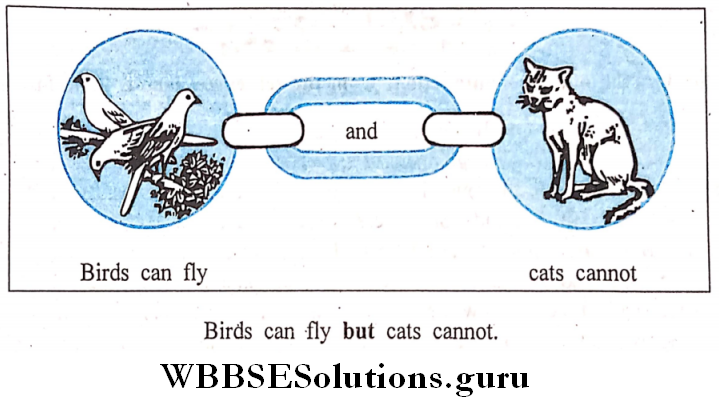
  • You have many friends. — তোমাদের অনেক বন্ধু আছে।
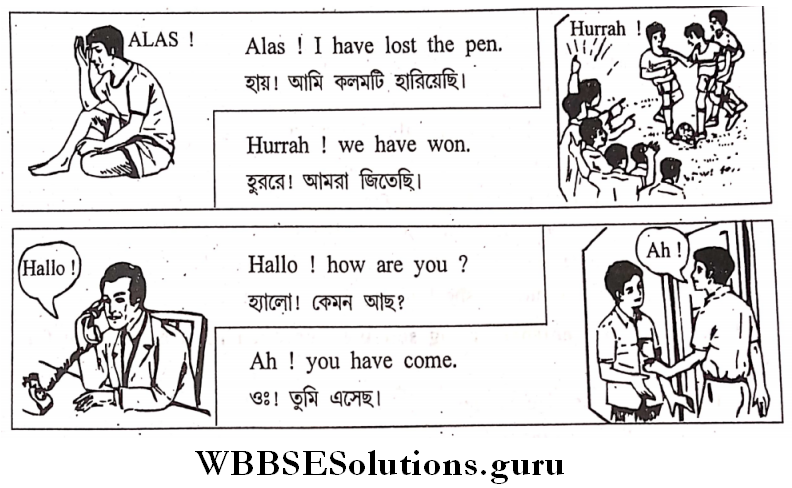
  • He has a gun. — তার একটি বন্দুক আছে।
WBBSE Class 6 English Functional GrammarWBBSE Class 6 English Reading SkillsWBBSE Solutions For Class 6 English
  • They have a big house. — তাদের একটি বড় বাড়ী আছে।
  • Amal has a brother. — অমলের একটি ভাই আছে।
  • Anita and Sabita have many toys. – অনিতা ও সবিতার অনেক খেলনা আছে।

WBBSE Solutions For Class 6 English Functional Grammar Lesson 11 Tense Continued Verb To Have

Lesson 11 Tense (Continued) ‘Verb To Have’ Past Tense

Tense Continued Verb To Have past tense

Class 6 Functional Grammar Questions & Answers 

লক্ষ্য কর :

“To have”-এর Past Tense-এ শুধু একটি মাত্র রূপ had । সমস্ত persons এবং singular ও plural উভয় ক্ষেত্রেই “ছিল” অর্থে had ব্যবহার করতে হয়।

নীচের sentence-গুলি লক্ষ্য কর :

  • I had a white dog. — আমার একটি সাদা কুকুর ছিল।
  • We had many books. – আমাদের অনেকগুলি বই ছিল।
  • You had a house. — তোমার বা তোমাদের একটি বাড়ী ছিল।
  • He had two daughters. — তার দুটি কন্যা ছিল।
  • They had many friends. — তাদের অনেক বন্ধু ছিল।
  • Ram had a nice picture. – রামের একটি সুন্দর ছবি ছিল।
  • Jadu and Madhu had many toys. যদু ও মধুর অনেক খেলনা ছিল।

Lesson 11 Tense (Continued) ‘Verb To Have’ Future Tense (ভবিষ্যৎ কাল)

Tense Continued Verb To Have future tense

WBBSE Class 6 English Solutions

লক্ষ্য কর :

1. Verb “To be”-এর ন্যায় এখানেও মূল Verb (have)-এর পূর্বে First Person-এ অর্থাৎ I We-4 shall 4 Second Third Person-4 will Singular Plural উভয় ক্ষেত্রেই এরূপ হবে।

2. কিন্তু বক্তার প্রতিজ্ঞা, আদেশ, সংকল্প, উপদেশ বোঝাতে First Person-এ will এবং Second Third Person-4 shall

এইবার নীচের sentence গুলি লক্ষ্য কর :

  • I will have the prize. — আমি (নিশ্চয়ই) পুরস্কারটি পাব।
  • We will have the prize. — আমরা (নিশ্চয়ই) পুরস্কারটি পাব।
  • You shall have the prize.   — তোমরা (নিশ্চয়ই) পুরস্কারটি পাবে।
  • He shall have the prize. —  সে (নিশ্চয়ই) পুরস্কারটি পাবে।
  • They will have the prize. — তারা পুরস্কারটি পাবে।