Model Question Paper Life Science Set 1 Group A
Answer to all questions is compulsory
1. Write the answer in complete sentences by choosing the correct answer for each question with the respective serial number.
Question 1. Select the correct pair-
- Cerebrum-Maintenance of the balance of the body
- Hypothalamus-Control of intelligence and emotion
- Cerebellum-Control of body temperature
- Medulla Oblongata-Control of heartbeat and swallowing of food
Answer: The correct Pair is- Medulla Oblongata—Control of heartbeat and swallowing of food.
Question 2. Identify which of the following statements is not true regarding Insulin-
- Helps in the absorption of glucose from the blood into most of the somatic cells
- Converts glucose into glycogen within liver and muscle cells
- Helps in the conversion of fat and protein into glucose
- Inhibits the conversion of protein and fat into glucose
Answer: The statement which is not true regarding Insulin is—Helps in the conversion of fat and protein into glucose.
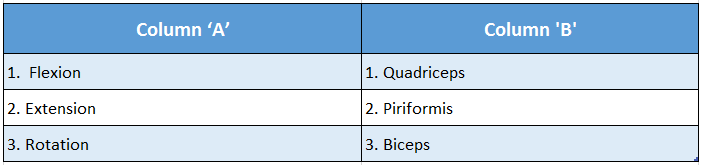
Question 3. Match the words of Column-A with that of Column-B and select which of the following options is correct-
- 1-1, 2-2,3-3
- 1-2, 2-3, 3-1
- 1-3, 2-1, 3-2
- 1-2, 2-1, 3-3
Answer: 3. 1-3, 2-1, 3-2
Question 4 Determine from the answers given below in which phases of karyokinesis during mitotic cell division following two incidents happen- 1. Daughter chromosomes tend to move apart from each other towards their own poles Nuclear membrane and nucleolus disappear
- 1. Prophase 2. Anaphase
- 1. Anaphase 2. Prophase
- 1. Telophase 2. Metaphase
- 1. Metaphase 2. Telophase
Answer: 2. During mitotic cell division—
- Daughter chromosomes tend to move apart from each other towards their own poles— Anaphase and
- Nuclear membrane and nucleolus disappear—Prophase
Question 5. Select which of the following is the feature of cross-pollination-
- Occurs within the same flower of the same plant
- Agents are not required
- Lesser chance of new characters being transmitted
- More wastage of pollen grains
Answer: The feature of cross-pollination is— More wastage of pollen grains.
WBBSE Class 10 Life Science Model Question Paper 2023
Question 6. Determine the number of DNA molecules that get coiled to form each chromosome in a newly formed daughter cell produced by mitotic cell division in the human body-
- 46
- 1
- 23
- Numerous
Answer: 2. The number of DNA molecules that get coiled to form each chromosome in a newly formed daughter cell produced by mitotic cell division in the human body is 1.
Question 7. Identify the genotype of guineapig having black colour and rough hair-
- BbRr, BBRr
- bbRR, bbRr
- BBrr, Bbrr
- bbrr, bbRr
Answer: 1. The genotype guineapig having black colour and rough hair are—BbRr, BBRr.
Question 8. Decide which of the following two were selected by Mendel as recessive traits-
- Colour of the flower-purple, the position of flower-axial
- Length of stem-dwarf, a form of ripe seed-wrinkled
- Form of the ripe seed-rund, the colour of seed- yellow
- Position of flower-axial, length of stem- tall
Answer: 2. Length of stem—dwarf and Form of ripe seed—wrinkled were two recessive traits selected by Mendel.
Question 9. Asses from the following, the probable genotype of parents having a haemophilic son and normal daughter-
- H || h, h

- H || H, H
- H || H, h
- H || h, H
Answer: 3. The probable genotype of parents having a haemophilic son and normal daughter are- H || H, h
Question 10. Parthenium is an exotic species in our country. Other indigenous species cannot survive in such places where it grows. This establishes one of the postulates of Darwin’s theory. Identify the postulate-
- Intraspecific struggle
- Interspecific struggle
- Struggle with environment
- Origin of new species
Answer: 2. The correct postulate is Interspecific struggle.
Question 11. Miller and Urey, in their experiment, were able to synthesize some preliminary constituents necessary for the creation of life. Identify the ones which were amino acids among them-
- Lactic acid, Acetic acid
- Urea, Adenine
- Glycine, Alanine
- Formic acid, Acetic acid
Answer: The amino acids were—Glycine and Alanine.
WBBSE Class 10 Life Science Model Question Paper 2023
Question 12. Decide for which of the following purposes bees demonstrate waggle dance-
- Search for reproductive mates
- Inform other worker bees about the direction and the distance of the source of food from the bee hive
- Selecting a place for the construction of the new bee hive
- Avoid attack by probable enemy
Answer: 2. Bees demonstrate waggle dance to-^ Inform other worker bees about the direction and the distance of the source of food from the bee hive.
Question 13. Identify which of the following is the correct information related to biosphere reserve-
- Conservation is promoted to local people and other biotic communities along with the conservation of the ecosystem
- National Park and Sanctuary are not included within the biosphere reserve
- The presence and participation of local people in the conservation of the ecosystem are not permissible
- Its size is usually smaller than a Sanctuary
Answer: 1. The correct information related to biosphere reserve is- conservation is promoted to local people and other biotic communities along with the conservation of the ecosystem.
Question 14. Decide which of the following pair is not correct-
- Poaching-Increase the endangeredness of gorilla
- Exotic species-Lantana, Tilapia
- Determination of hotspot-Number of endemic species and endangered species
- Greenhouse gas-Eutrophication
Answer: The wrong pair is—A greenhouse gas— Eutrophication
Question 15. Decide which of the following Project Tiger is located within our state-
- Bandipur
- Simlipal
- Sunderbans
- Kanha
Answer: Sunderbans Project Tiger is located within our state.
WBBSE Class 10 Life Science Model Question Paper 2023
Model Question Paper Life Science Set 1 Group B
2. Answer any 21 questions out of the 26 questions given below instructed.
Fill in the blanks with proper words in the following sentences (any five):
Question 1. Acharya Jagadish Chandra Bose proved the property of __________ by sending electrical impulses in Mimosa and Desmodium plants.
Answer: Sensitivity
Question 2. If gametes in humans were produced by mitosis instead of meiosis then the number of autosomes in a somatic cell of an offspring would have been __________.
Answer: 88
Question 3. A disease in the human population caused by a recessive gene located in the ‘X’ Chromosome is __________.
Answer: Haemophilia
Question 4. The hoof of modern horse is the transformation of the digit number __________ of their ancestors.
Answer: 3
Question 5. At the __________ phase of the nitrogen cycle, ammonia is converted into nitrite and nitrate by the action of some bacteria.
Answer: Nitrification
Question 6. To produce the bottled cold drinks widely sold in the market, a lot of __________ water is wasted.
Answer: 2.6 Fresh
Decide whether the following statements are true or false (any five):
Question 7. Tropic movement is the movement of growth in plants.
Answer: True
WBBSE Class 10 Life Science Model Question Paper 2023
Question 8. Crossing over takes place during mitotic cell division.
Answer: False
Question 9. Mendel used the term gene while describing his experiments related with heredity.
Answer: False
Question 10. The leaf of the Cactus is modified into the spine for the reduction of the rate of transpiration.
Answer: True
Question 11. Rhododendron is an endangered plant species conserved in the Eastern Himalaya hotspot.
Answer: True
Question 12. Choroid helps in the accommodation of the eye by changing the curvature and shape of the lens.
Answer: False
Match the words in Column-A with those which are most appropriate in Column-B and re-write the correct pair mentioning the serial no. of both Columns (any five):
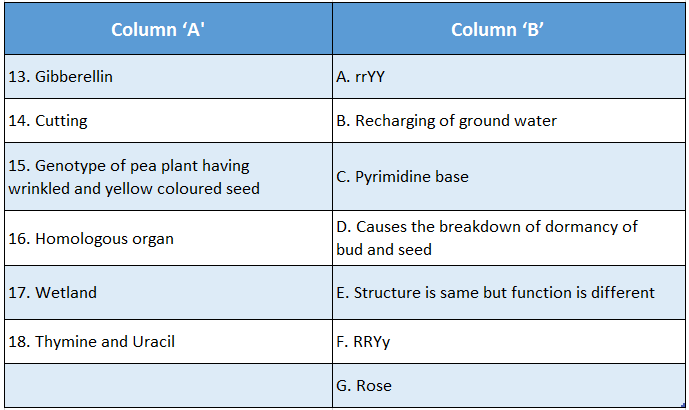
Answer: 13. D, 14. G, 15. A, 16. E, 17. B, 18. C
Answer in a single word or in a single sentence (any six):
Question 19. Choose the odd one and write it: Cerebrum, Hypothalamus, Pons, Thalamus
Answer: Pons
Class 10 Life Science Model Paper WBBSE 2023
Question 20. Where the Schwann cells are located?
Answer: Schwann cells are found in close contact with axons in the peripheral nerves.
Question 21. A pair of related terms is given below. On the basis of the relationship in the first pair write the suitable word in the gap of the second pair. Mitosis: Radicle :: Meiosis: __________.
Answer: Spore mother cell
Question 22. Which law did Mendel conclude from his dihybrid cross experiment?
Answer: Law of Independent Assortment
Question 23. Give an example of a variation found among healthy persons which is transmitted through generations.
Answer: Rolling tongue and non-rolling tongue
Question 24. How do Chimpanzees break open the hard shells for eating the nuts?
Answer: Chimpanzees put the nut on the flat surface of a hard stone and use another stone or tough piece of wooden branch as a hammer to break the shell of nut.
Question 25. Among the following four terms, one includes the other three. Find it out and write it: SPM, Air Pollution, Greenhouse gas, Lung disease.
Answer: Air pollution
Question 26. Name the practice which jointly the local peoples and forest department maintain for the reclamation of a forest.
Answer: Joint Forest Management (JFM)
Model Question Paper Life Science Set 1 Group C
3. Answer any 12 questions in 2-3 sentences out of the 17 questions given below.
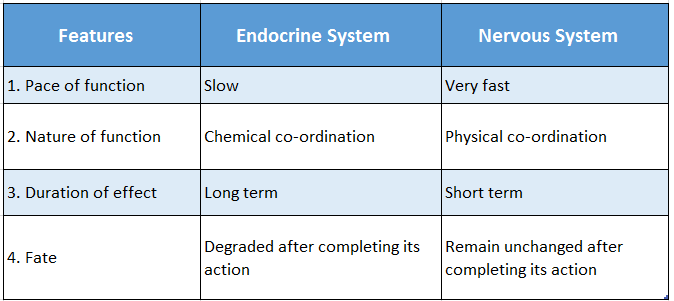
Question 1. Distinguish between the functions of hormones and the nervous system on the following parameters:
- Nature of function
- Pace of function
- A time span of function
- Fate
Answer:
Differences between the endocrine system and nervous system
Question 2. ‘A person can see distant objects distinctly but is unable to visualize near objects in a perfect way’-Predict what would be the probable cause and suggest the corrective measure for such a problem.
Answer:
Defects Of Visions And Corrective Measures
A person with normal eyes can, by virtue of accommodation, see clearly all objects that are at a distance greater than about 25 cm from the eye.
If due to certain abnormalities the eye is unable to accommodate itself to various distances, then the eye is said to be defective.
Some common defects of the eye are—
1. Myopia:
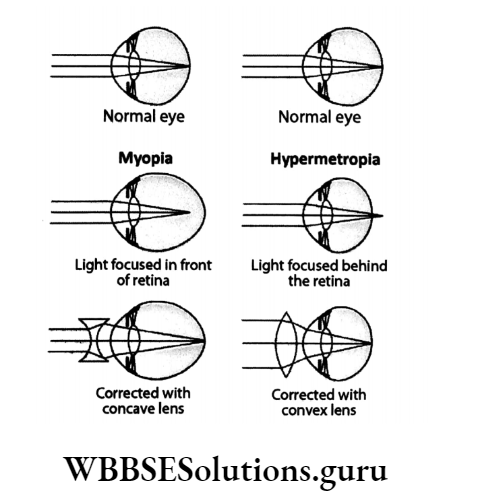
Near-sightedness, also called myopia is the common name for impaired vision in which a person sees near objects clearly while distant objects appear blurred.
In such a defective eye, the image of a distant object is formed in front of the retina and not at the retina itself. Consequently, a nearsighted person cannot focus clearly on an object farther away than the far point of the defective eye.
Class 10 Life Science Model Paper WBBSE 2023
Causes:
This defect arises because the power of the eye is too great due to the decrease in the focal length of the crystalline lens.
This may arise due to either-
Excessive curvature of the cornea, or
Elongation of the eyeball.
Correction:
This defect can be corrected by using a concave (diverging) lens. A concave lens of appropriate minus (-) power or focal length is able to bring the image of the object back to the retina itself.
2. Hyperopia or hypermetropia:
Far-sightedness, also called hyperopia or hypermetropia, is the common name for a defect in vision in which a person sees near objects with blurred vision, while distant objects appear in sharp focus.
In this case, the image is formed behind the retina.
Causes:
This defect arises because either
the focal length of the eye lens is too great, or
the eyeball becomes too short so that light rays from the nearby object cannot be brought to focus on the retina to give a distinct image.
Correction:
This defect can be corrected by using a convex (converging) lens of appropriate focal length. Eyeglasses with converging lenses supply the additional focusing plus (+) power required for forming the image on the retina.
3. Presbyopia:
Presbyopia is a progressive form of farsightedness that affects most people by their early 40s. The power of accommodation of the eye decreases with aging.
Most people find that the near point gradually recedes.
Causes:
It arises due to the gradual weakening of the ciliary muscles and diminishing flexibility of the crystalline lens.
Correction:
Simple reading eyeglasses with convex lenses correct most cases of presbyopia.
Sometimes, a person may suffer from both myopia and hypermetropia. Such people often require bifocal lenses.
In the bifocal lens, the upper portion of the bifocal lens is a concave lens, used for distant vision. The lower part of the bi-focal lens is a convex lens, used for reading purposes.
Class 10 Life Science Model Paper WBBSE 2023
Cataract:
Generally, this defect can be found in aged or old people. Persons with this defect get blurred vision which sometimes even lead to total blindness.
The reason for this defect is that the lens loses its transparency and become opaque due to the deposition of protein material and calcium mineral in the lens.
This opaque condition of the lens does not allow the light rays from an object to pass through the lens. This defect can be rectified by surgically removing the lens and it has to be replaced by a highly convex lens.
Before intraocular lenses (lOLs) were developed, people had to wear very thick eyeglasses or special contact lenses to be able to see after cataract surgery.
Now, with cataract lens replacement by phacoemulsification or phaco surgery, several types of IOL implants are available to help people enjoy improved vision.
Question 3. Analyze the role of synthetic plant hormones in increasing production and solving the problem of weeds in agriculture.
Answer:
Role of synthetic hormones:
Synthetic hormones are successfully used in agriculture and horticulture. The roles of these synthetic hormones are mentioned below.
1. Developing new plants from stem cuttings:
Cuttings are used for artificial vegetative propagation of different plants like roses, Hibiscus, marigold, Chrysanthemum, ‘etc. After cutting the twigs from a mother plant, a solution of synthetic auxin or auxin powder is applied at the cut end.
Then, these cuttings are planted in moistened soil. By the action of this hormone, adventitious roots grow from the cut end and the cutting grows as an individual daughter plant.
2. Preventing shedding of immature fruits:
Sometimes, immature fruits shed off from the plant if these plants are sprayed with synthetic auxin solution for a few times during ear y developmental phase of the fruits, the rate of immature shedding declines sharply.
Horticulturists spray auxin solution on mango, litchi, grapes, banana, and several other fruit plants to prevent immature shedding of fruits. Synthetic gibberellin and synthetic cytokinin are also effective.
Class 10 Life Science Model Question Paper With Answers
3. Destroying weeds:
Weeds growing in crop fields share water and nutrients with agricultural crops. This affects the quality of production. Scientists have revealed that the application of certain phytohormones destroys dicotyledonous herbs and shrubs.
Application of a synthetic auxin named 2, 4-D effectively kills dicotyledonous weeds from monocot crop (paddy, wheat, etc.) fields.
4. Production of parthenocarpic fruits:
Fruits, produced from the ovary without fertilization do not contain seeds and become larger. These are called parthenocarpic fruits. A treatment of auxin solution before the maturation of flowers triggers the development of the ovary.
As a result, seedless fruits are produced before fertilization. Synthetic auxin is successfully applied on the plants of guava, grapes, banana, watermelon, etc. to produce seedless fruits.
Synthetic gibberellin is comparatively more effective on tomato plants. These two synthetic phytohormones are used to produce parthenocarpic fruits.
Question 4. LH and ICSH control the secretion of hormones of the reproductive glands of the human body’-judge the validity of the statement.
Answer:
In the female body, Lutenising Hormone (LH) stimulates ovule secretion and the formation of corpus luteum from the Graafian follicle. It also helps in the secretion of progesterone hormone from the corpus luteum.
In the male body, Interstitial Cell Stimulating Hormone (ICSH) stimulates the interstitial cells of Leydig of testes to secrete testosterone.
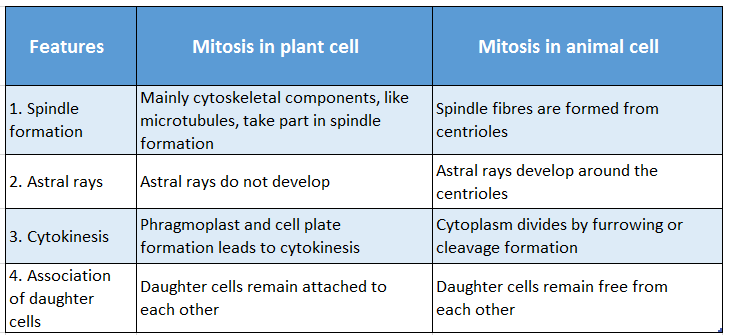
Question 5. How can you distinguish between the mitosis of plant cells and that of animal cells on the basis of the formation of spindle fiber and the process of cytokinesis?
Answer:
Distinguish between the mitosis of plant cells and that of animal cells are-
Question 6. Establish the relationship between the formation of malignant tumors in the human body with the loss of control in the cell cycle.
Answer:
The relationship between the formation of malignant tumors in the human body with the loss of control in the cell cycle
Checkpoints prevent uncontrolled cellular growth and thereby cancer. It mainly checks the genetic as well as physical integrity, if they found any genetic defect, they immediately arrest the cell from going to cellular division.
All cells will be checked in three stages. But if the genes which are responsible for the synthesis of checkpoints are mutated then they lost their control over cell division and the cells are going to divide in an uncontrolled way.
This uncontrolled cellular division gives rise to a cellular lump, called a tumor.
Class 10 Life Science Model Question Paper With Answers
Question 7. ‘The adventitious leaf bud plays a significant role in natural vegetative propagation of plant’-Evaluate the validity of the statement with a proper example.
Answer:
Natural Vegetative Propagation
Different plant parts are variously modified for vegetative propagation.

Natural vegetative propagation in higher plants:
Root:
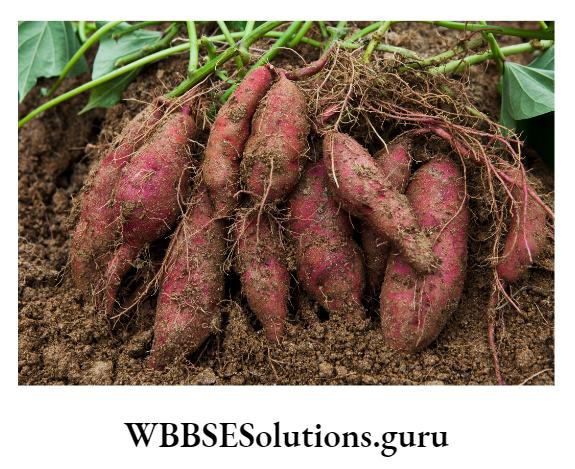
The storage root acts as a structure for perpetuation, they help the organism to survive during unfavorable conditions and also germinate to produce a new plant body. e.g. Root tuber of sweet potato, Dahlia.
Stem:
The stem may also act as a parenting organ, which can grow and propagate on land and water and when separated, produces a new plant body. e.g. Offset of Water Hyacinth.
The propagation of stem in terrestrial plants is brought about by runner and stolon, e.g. There are various artificial methods like strawberries and grasses. Rhizomes are cutting, grafting, micropropagation, etc.
underground horizontally growing stems having nodes, internodes, and axillary buds. Branches grow from these buds.
Tuber is a modified underground stem tip.
The eyes or buds present on the tuber grow into new plants. The bulb is a modified shoot that has short stems and apical & axillary buds that grow to form shoots.
Leaf:
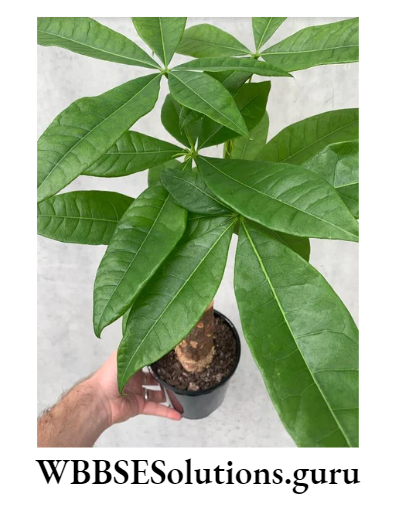
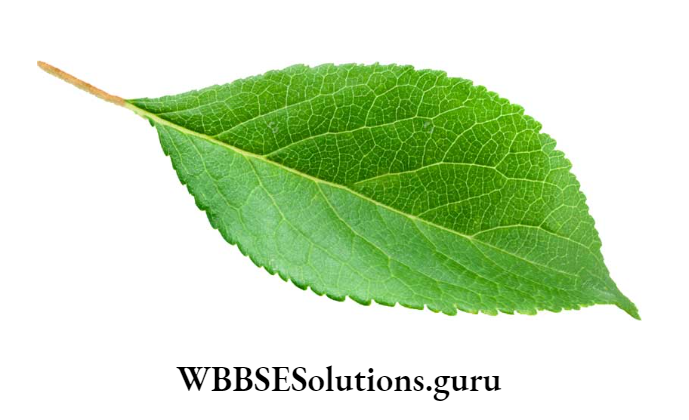
The leaf may become a propagating organ with the presence of storage food in the lamina and adventitious buds present at the edge of the lamina may germinate to produce a new plant body. e.g. Leaf of Bryophyllum.
Question 8. Show with the help of a cross, who is more important among parents in determining the sex of their offspring.
Answer:
Sex Determination In Human
The term sex refers to sexual phenotype. Most organisms have only two sexual phenotypes—male and female.
We, normally, define the sex of an individual organism in reference to its phenotype. The mechanism by which sex is established is termed sex determination.
Sometimes an individual organism has chromosomes that are normally associated with one sex. For example, the cells of female humans normally have two X chromosomes, and the cells of males have one X chromosome and one Y chromosome.
Class 10 Life Science Model Question Paper With Answers
Sex Determination In Humans:
In humans, Drosophila, and many other species, the cells of males and females have the same number of chromosomes, but the cells of males have a single X chromosome and a smaller sex chromosome, the Y chromosome.
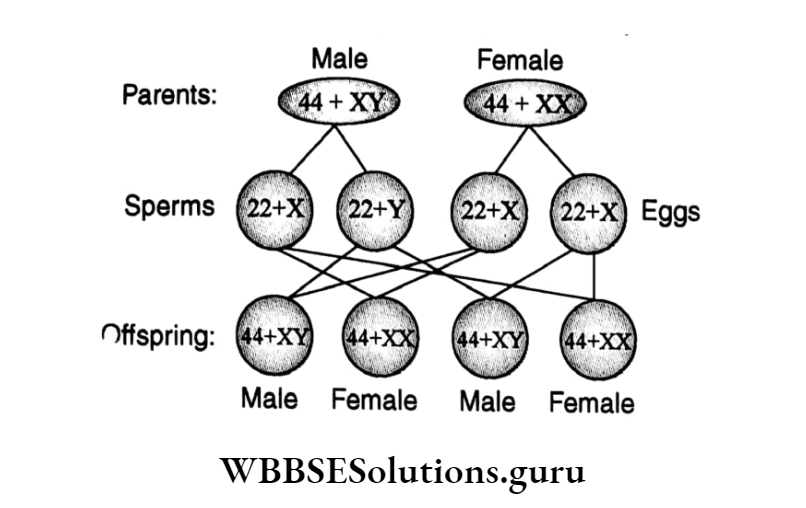
The Y chromosome is not Y shaped as is commonly assumed but is acrocentric. In this type of sex determination system, the male (44A + XY) is heterogametic because half of the male gametes have an X chromosome and the other half have a Y chromosome.
The female (44A + XX) is homogametic because all the eggs contain a single X chromosome. Fertilization of an egg (always X-bearing) with an X-bearing sperm produces female offspring (XX), but a Y-bearing sperm produces male offspring (XY).

The Total Chromosomes In Humans, In Each Body Cell, Can Be Represented As-
Female chromosomes – 44+XX where 44 are the autosomes and XX chromosomes are the sex chromosomes.
Male chromosomes – 44+XY where 44 are the autosomes and XY chromosomes are the sex chromosomes.
Although the X and Y chromosomes are not homologous, they pair and segregate into different cells in meiosis.
This is because of the fact that these chromosomes are homologous in small regions, called the pseudoautosomal region, in which they carry the same genes. In both types, the human X and Y chromosomes contain pseudoautosomal regions.
In humans and other placental mammals, maleness is due to a dominant effect of the Y chromosome. This is evidenced by the study of individuals with an abnormal number of sex chromosomes or aneuploidy.
XO persons (Turner syndrome) develop as females and XXY persons (Klinefelter syndrome) develop as males.
The dominant effect of the Y chromosome is exhibited early in development when it directs the primordial gonads to develop into testes.
Once the testes are formed, they secrete the hormone testosterone, which stimulates the development of male secondary sexual characteristics.
It is now known that the testis-determining factor (TDF) is the product of a gene called SRY (Sex-determining region Y), which is located outside the pseudoautosomal region in the short arm of the Y chromosome.
When fertilization occurs, the zygote (the initial cell from which a fetus grows) always inherits one of the mother’s X chromosomes, and either an X or a Y from the father, depending on which chromosome the fertilizing sperm cell happened to inherit.
One could say, then, that the father or, at least, his sperm determines the sex of the child.
The generally accepted theory is that males determine the sex because males can donate either an X chromosome or Y chromosome, while females can only donate an X chromosome to their offspring, making their contribution constant and the male’s contribution.
The variable, which under normal circumstances, determines the offspring’s genetic sex (at least, in humans Moreover, genetically there is a 50% chance of having a boy and a 50% chance of having a girl, as is found out from.
But there are actually slightly more boys born every year than girls.
It’s unclear why this is the case, but some research points out that more female fetuses die during pregnancy than male.
The Y chromosome contains all the directions that make the human zygote develop into a male. It is a relatively small chromosome with about 30 genes.
WBBSE Class 10 Life Science Previous Year Papers
In comparison, the X chromosome has between 800 and 900 genes.
With its limited number, the Y chromosome focuses primarily on male traits. It contains the all-important SRY gene, which instructs the embryo to develop male traits such as testicles.
Another gene unique to the Y chromosome is USP9Y, which contributes to sperm production.
Question 9. ‘Different genotypes produce the same phenotype’-Justify the statement in the form of a table by taking an example from the result of the dihybrid cross of the Pea plant.
Answer:
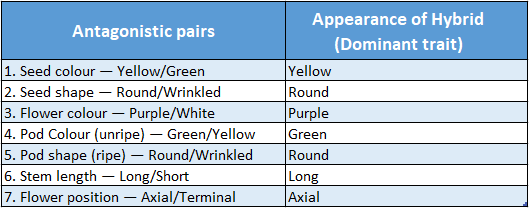
The seven pairs of characters as chosen by Mendel
Mating between individuals that differ in only one trait, such as seed color or stem length is known as a monohybrid cross.
In each monohybrid cross, one parent carries one form of the trait, and the other parent carries an alternative form of the same trait. Mendel selected seven such traits to study the monohybrid breeding experiment.
Each trait had two easily distinguishable, alternative appearances (phenotypes).
These are—
Experiment And Observation
Mendel carried out a series of monohybrid crosses.
For example, in the spring of 1854, he planted pure-breeding green peas and pure-breeding yellow peas and allowed them to grow into the parental (P) generation.
Later that spring when the plants had flowered, he dusted the female stigma of green-pea plant flowers with pollens from yellow-pea plants. He also performed the reciprocal cross between the female yellow pea plant and the male green pea plant.
In the fall (autumn), when he collected and separately analyzed the progeny peas he found that in both cases, the peas were all yellow.
The yellow peas, the progeny of the P generation, were the beginning of what we now call the first filial (Fx) generation. Mendel planted them and allowed the F1 plants to self-fertilize.
He then harvested and counted the peas of the resulting second filial (F2) generation, the progeny of the Fx generation.
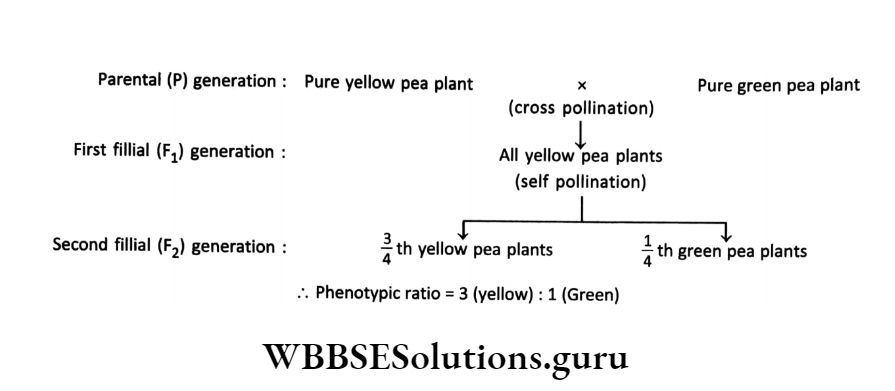
Among the progeny of one series of F1 self-fertilization, there were 6022 yellow and 2001 green peas, an almost perfect ratio of 3 yellow to 1 green.
The results of reciprocal crosses produced a similar ratio. Monohybrid crosses involving other traits (such as long and short stem length) also showed similar results.
Question 10. Give your opinion about probable suggestions which can be given to a pair of contenders before marriage in order to prevent the spread of a genetic disease from the society already known to you.
Answer:
Genetic Counselling
Thalassemia mutations and various abnormal hemoglobins interact to produce a wide range of disorders of varying degrees of severity.
Hemoglobin disorders are the most common worldwide inherited conditions. They are common in populations of tropical Africa, Asia, and the Mediterranean region and are spreading by migration throughout the world.
WBBSE Class 10 Life Science Previous Year Papers
A stem cell transplant is the only treatment that can cure thalassemia. But only a small number of people who have severe thalassemias are able to find a good donor match and have the risky as well as expensive procedure.
Genetic counseling, therefore, plays the most important part in thalassemia prevention programs considering the diversity and severity of the problem.
Genetic counseling is defined as the process by which patients or relatives at risk of a disorder that may be hereditary are advised of the consequences of the disorder and the probability of developing and transmitting it and the ways in which this may be prevented.
It Involves The Followings:
A correct diagnosis using genetic tests after evaluation of family history and medical records Explanation of the nature of disorder & the treatment available Estimation of genetic risk for parents and family members.
Communication of genetic risks and the options for avoiding them to avoid undue complications in an unbiased manner Support in making the right decision Accessibility for long-term contact and counseling.
Premarital screening for thalassemia and sickle cell should be made mandatory to decrease at-risk marriages.
The objective is to make people aware of the consequences of thalassemia on health and socio-economics so that they voluntarily ask for screening, and prevention and change their reproductive plans when a possible risk is found.
If the risk is found before marriage, the options are to remain single, not to marry another carrier or to marry irrespective of carrier status.
If the risk is found after marriage, the options are to separate and find a non-carrier partner, to have a few or no children, selective termination of pregnancy, or to take a chance and have children as usual.
There are therefore challenges involved in genetic counseling because all the available choices involve difficult moral and social problems and in most cases, there appears to be no right answer.
But on the other hand, once people understand the risk, they can not escape from making a choice even if the decision ‘not to choose’ is a choice.
Question 11. A good number of Tilapia fishes are released in a pond having only different indigenous fish species grown naturally. Think and write which types of the struggle for existence Tilapia fishes have to face in order to survive.
Answer:
The Tilapia fishes have to face three types of struggle for existence in the pond where they are released.
These are
Intra-specific struggle:
It is the struggle among all the newly released tilapia fishes for food and habitat
Inter-specific struggle:
It is the struggle between Tilapia and other naturally grown indigenous fishes for food and habitat.
Struggle with the environment:
The Tilapia fishes struggle with the condition of the pond where they are newly released. Water content, Temperature of water, amount of dissolved oxygen, poisonous substances present in that pond water, etc. are the obstacles that they struggle, to overcome.
Question 12. Prepare a list of roles air sacs of pigeons play to fly in the air.
Answer:
Importance of air sacs in pigeons:
Pigeon is a primary volant animal. It has nine non-vascular and non-muscular air sacs, emerging from the bronchioles, typically helping in flight.
The importance of air sacs in pigeons is-
- During the flight, the pigeon needs extra energy, the production of which requires additional oxygen. Oxygen concentration near the ground level is higher than that in the high sky. Before the flight, pigeons fill the air sacs with this oxygen-rich air. When in the high sky, these air sacs supply oxygen-rich air to the lungs.
- The air-filled sacs decrease the specific gravity of the body of the pigeon, which is also beneficial for flight.
Importance of air bladder in rohu fish:
- The air bladder in rohu fish helps it to move up and down in the water. The air bladder changes the buoyancy of the body and thus, assists it to go at different depths of water.
- The red gland in the anterior chamber of the air bladder fills gas in it to reduce the specific gravity of the body and thus helps the fish to move upward in water. On the other hand, the rete mirabile of the posterior chamber absorbs the gas to increase the specific gravity of the body of fish and helps the fish to go deeper in the water.
WBBSE Class 10 Life Science Previous Year Papers
Question 13.
- Structure and function
- Indicating the nature of evolution
Based on the above two features establish the concept of the analogous organ with the help of a proper example.
Answer:
Analogous organs are those organs that are different in structure and origin but perform similar functions.
Analogous organs indicate convergent evolution. For example, the wings of birds, wings of insects, and patagium of bats perform the same function, i.e., they help the organisms to fly but they have different structures.
Wings of birds are modifications of forelimbs, wings of insects are an outgrowth of insects’ exoskeleton and the patagium of the bat is actually a fold of skin between forelimbs and hind limbs.
All these structures point toward the fact that in the same environment, different structures may evolve to perform the same function. This further points toward convergent evolution.
Question 14. Relate the following phenomena with the trend of disturbance in the Nitrogen Cycle resulting from different human activities:
- Global Warming
- Acidification of soil and water of river and lake.
Answer:
Global warming:
Around 40% increase of N20 (nitrous oxide) in the environment is due to human activities. N20 is released in the environment as a result of the combustion of fossil fuel and the overuse of nitrogen-rich fertilizers.
This N2O is a greenhouse gas that absorbs infrared radiation or heat of the sunlight which reflects on the earth and facilitates the greenhouse effect and global warming.
Acidification of soil and water of rivers and lakes:
Oxides of nitrogen get dissolved in rainwater and form nitric acid, which is a major component of acid rain. Acid rain destroys aquatic plants and animals and disrupts the ecological equilibrium of rivers lakes, ponds, etc.
Apart from this, the destruction of forest resources and harm to architecture and monuments take place due to acid rain.
Question 15. Hilsa, Bee, Penguin, Rauwolfia- Assess which are the causes of the endangeredness of the above-mentioned organisms.
Answer:
Hilsa:
Facing threat due to overexploitation of this population.
Bee:
Loss of habitat, and excessive use of cell phones that project electromagnetic waves, damage the ability of bees to return to their colony. In that way, it destroys the navigation system of bees.
Penguin:
Penguin faces threats from geological events like a volcanic eruption, pollution, climatic changes, and severe weather.
Rauwolfia:
This type of medicinal plant faces threats due to overexploitation.
WBBSE Class 10 Life Science Model Question Paper 2023
Question 16. Discuss any two roles of the People’s Biodiversity Register (PBR) in conserving local biodiversity.
Answer:
Joint Forest Management or JFM:
The proper management of biodiversity by the joint action of local people and the forest department of the state government which is approved by the Indian government, is known as Joint Forest Management or JFM.

Role of JFM in the conservation of biodiversity:
In the conservation of biodiversity, the role of JFM is as follows
- The committee, formed by the local residents of any forest area, maintains coordination with the state forest department regarding the conservation of the biodiversity of that forest.
- The JFM committee members keep a vigil on the forest area along with their daily activities regarding forest fire, encroaching of the forest area, poaching, felling of trees, etc., and report it immediately to the forest department in case of any adversity.
People’s Biodiversity Register or PBR:
It is a ready reference prepared by the central forest department in accordance with the Biodiversity Law 2002. This document contains detailed information on the availability of local biodiversity, their habits and habitats, other behaviors, their ecological importance, etc.
Role of PBR in the conservation of biodiversity:
In the conservation of biodiversity, the role of PBR is as follows-
- PBR provides correct information about the biodiversity of the local areas so that, the rare and endangered animals and plants can be conserved properly.
- It makes people aware of the importance of the conservation of biodiversity and involves them directly with the conservation project.
- PBR makes the people aware of the sustainable utilization of forest resources and helps in the economic development of the area.
- PBR provides correct geographic information about conserved areas.
- Identify endangered species and collect information about the conservation of these species.
- Gather knowledge about local species and their cultural and social value.
- Gives an idea about the obtained product from species and their value along with their collection and transport procedure.
Question 17. Tabulate any of the four activities which are prohibited in a sanctuary following the provisions of the Wildlife Act.
Answer:
The four activities, that are prohibited in the sanctuary are-
- Human intervention in the sanctuary is strictly prohibited.
- Any human activity which disturbs wild animals is prohibited.
- Poaching, hunting, and fishing are strictly prohibited.
- Felling of trees is completely prohibited.
WBBSE Class 10 Life Science Model Question Paper 2023
Model Question Paper Life Science Set 1 Group D
Answer 6 questions or their alternatives given below.
Question 1. Draw a neat diagram of the vertical section of the eyeball of the human eye and label the following parts:
In order to be able to learn about and/or solve problems presented to them by their environment, humans must be able to take in information from that environment;
process it quickly and accurately; decide when, how, and what action to take; and then perform or execute that action. In order to receive information from the environment we are equipped with sense organizer
A sense organ is a specialized bodily structure that receives or is sensitive to internal or external stimuli. It is composed of receptors. Human sense organs are the eyes, ears, tongue, skin, and nose.
The Eye As A Sense Organ-Its Location, Structure, And Function
The sense organ consisting of photosensitive receptors (the rod & cone cells) and which helps us in vision is known as the eye.
The two eyes are located in the deep cavities of the skull called orbits on the frontal part of the cranium.
The structure of different parts of the human eye and their corresponding functions are given below:
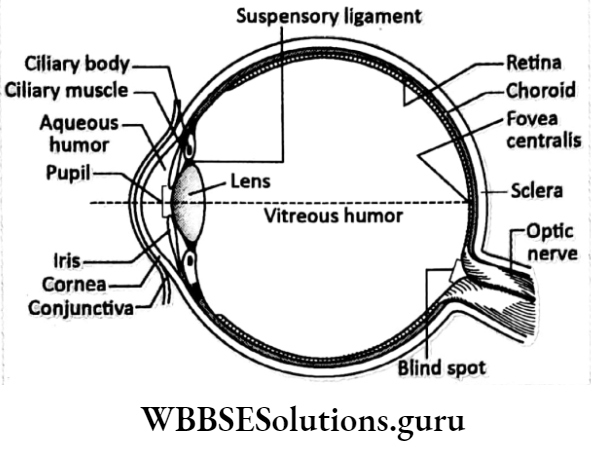
Or,
Explain the importance of the following parts of an eukaryotic chromosome:
- Centromere
- Telomere
Analyze the role of cell divisions in controlling growth, reproduction, and repair in an organism.
Answer:
The physical structure of eukaryotic chromosomes:
The morphological features of a chromosome appear ‘most distinctly under a microscope during the metaphase stage of cell division. From this study, we can find 5 parts of a chromosome. These parts are described below.
1. Chromatids:
In a metaphase chromosome, two identical and longitudinal strands are seen. These are chromatids. Two chromatids of the same chromosome are called sister chromatids, which remain attached to a constricted region or centromere.
Each chromatid carries one or a few very fine filaments along its length. These are called chromonemata (singular—chromonema). Each chromonema is composed of a longitudinally arranged coiled DNA.
Along each chromonema, several spherical linearly arranged bead-like structures are seen, which are called chronometers.
2. Primary constriction and centromere:
Each chromosome has a distinct constricted region at which the sister chromatids remain attached to each other. This is known as primary constriction.
At e primary constriction, a round plate-like and dense heterochromatin structure is seen, which is called the centromere. The centromere has a few adhesive points, called kinetochores, which attach to the spindle fibers during metaphase.
The DNA present in the .centromere is genetically inactive in nature.
WBBSE Class 10 Life Science Model Question Paper 2023
3. Secondary constriction:
Other than primary constriction, there are one or a few constricted regions in the chromosomes. These are called secondary constrictions. Generally, the nucleolus is seen affixed to the secondary constriction.
During the telophase of cell division, this region helps to reorganize the nucleolus. Therefore, secondary constriction is also known as nucleolar organizer region or NOR.
4. Satellite:
In a few chromosomes, a bulb-shaped terminal portion is seen beyond the secondary constriction. This is called a satellite or SAT body. The chromosomes with SAT body are called SAT chromosomes.
5. Telomere:
The terminal portions of a chromosome are called telomeres. These are genetically inactive regions of a chromosome. During interphase, telomeres help in DNA replication.
It also prevents the joining of a chromosome with another and controls the ageing and death of a cell.
Significance of cell cycle:
The significance of the cell cycle is mentioned below-
1. Controlling cell division:
Certain points of the cell cycle control cell division. These are known as checkpoints. In case of any functional disruption at any of those points, the cell division process becomes uncontrolled, which may lead to tumor formation.
Tumors are of two types-benign tumors and malignant tumors. Benign tumors are harmless but malignant tumor cells invade other tissues through blood or lymph and form tumors there.
This phenomenon is called metastasis, which is a characteristic feature of cancer cells.
2. Normal growth and wound healing:
Cell division helps an organism to grow in size. It also assists in wound healing.
Importance of cell division:
The importance of the cell cycle is given below.
1. Growth:
The number of cells in an organism increases due to cell division. The daughter cells produced by this process also grow in size. Therefore, the growth of any organism depends directly upon cell division.
2. Reproduction:
Amitosis, mitosis, and meiosis help in different types of reproduction processes. Simple unicellular organisms like Amoeba, reproduce by the amitosis process. Mitosis helps in asexual and vegetative reproduction in animals and plants.
By meiotic division, gametes and spores are formed. Therefore, meiosis helps in sexual and asexual reproduction.
3. Wound healing:
Mitosis helps in the repair of wounds and the regeneration of organs in plants and animals.
4. Transfer of genetic characters:
By cell division, the characters of the mother cell are transferred to the daughter cells. From a broader perspective, the newer characters in daughter cells help in adaptation and evolution.
Question 3. Tabulate three pairs of dominant-recessive traits of pea plants as selected by Mendel. State the first law of Mendel as deducted from the experiment of the Monohybrid cross.
Answer :
Three pairs of dominant-recessive traits of pea plant as selected by Mendel
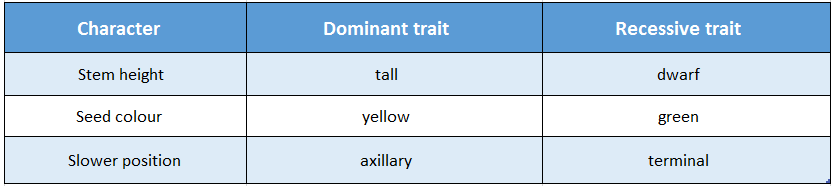
Or,
A color-blind female married a normal male. Judge the probability of color blindness among their children in the first filial generation. Show with the help of a cross how the first law of Mendel deviates in the case of the Four-O clock plant in F2 generation.
Answer:
Inheritance of color blindness:
Sex-Linked Inheritance
The gene is located in the sex chromosome. Sex chromosomes may be X or Y chromosomes.
But, as the Y chromosome is more or less genetically inert (functionless or inactive) with respect to the X chromosome, we generally consider sex-linked genes and X-linked genes to be synonymous.
Some X-linked recessive characteristics are- color blindness, hemophilia, etc.
Haemophilia
Haemophilia is a rare disorder in which blood doesn’t clot normally because it lacks sufficient blood-clotting proteins (clotting factors) causing the sufferer to bleed severely even from a slight injury.
Symptoms:
The major signs and symptoms of hemophilia are excessive bleeding and easy bruising.
Children who have mild hemophilia may not have signs unless they have excessive bleeding from a dental procedure, an accident, or surgery,
Bleeding can occur on the body’s surface (external bleeding) or inside the body (internal bleeding)— blood in stool, blood in urine, bruising, nose bleeds, heavy or prolonged periods, etc.
Swollen joints and pain in the joints.
Causes:
A defect in one of the genes that determine how the body makes blood clotting factor VIII or IX causes hemophilia. These genes are located on the X chromosomes.
Chromosomes come in pairs. The two types of hemophilia are factor VIII deficiency (hemophilia A) and factor IX deficiency (hemophilia B, or Christmas disease).
The most common type of hemophilia is called hemophilia A in which the person does not have enough clotting factor VIII (factor eight).
A less common type is hemophilia B in which a person does not have enough clotting factor IX (factor nine). Females have two X chromosomes, while males have one X and one Y chromosome.
Only the X chromosome carries the genes related to clotting factors. Haemophilia usually occurs more in males than in females. About 1 in 5,000 males are born with hemophilia each year.
A male who has a hemophilia gene on his X chromosome will have hemophilia. When a female has a hemophilia gene on only one of her X chromosomes, she does not have symptoms of hemophilia, since at least one of the X- chromosomes have a factor VIII or IX gene that works to produce normal or near normal levels of factors.
Class 10 Life Science Model Paper WBBSE 2023
However, some women who carry this gene may have a bleeding tendency. They are called ‘symptomatic carriers’. They are recognized as having mild hemophilia.
In very rare cases, some women have particularly low factor levels causing them to have moderate or severe hemophilia. In such cases, both X chromosomes are affected or one is affected and the other is missing or inactive.
Inheritance Of Haemophilia:
In this example, the mother is a carrier of the hemophilia gene and the father does not have hemophilia There is a 50% chance that each son will have hemophilia.
There is a 50% chance that each daughter will be a carrier of the hemophilia gene.
In this example, the father has hemophilia and the mother does not carry the hemophilia gene:
None of the sons will have hemophilia All daughters will carry the hemophilia gene In this example, the father does not have hemophilia and the mother does not carry the hemophilia gene
None of the children (either daughters or sons) will have hemophilia or carry the gene.
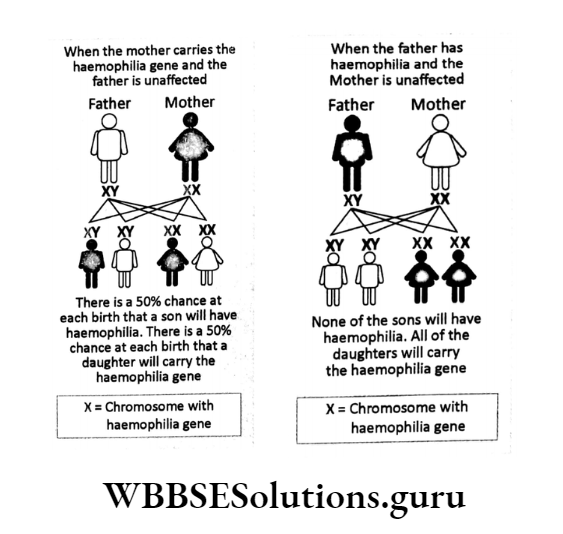
A Royal Disease:
Haemophilia is sometimes referred to as “the royal disease,” because it affected the royal families of England, Germany, Russia, and Spain in the 19th and 20th centuries.
Queen Victoria of England, who ruled from 1837-1901, is believed to have been the carrier of hemophilia B, or factor IX deficiency. She passed the trait on to three of her nine children.
Her son Leopold died of a hemorrhage after a fall when he was 30. Her daughters Alice and Beatrice passed it on to several of their children.
Alice’s daughter Alix married Tsar Nicholas of Russia, whose son Alexei had hemophilia.
Their family’s entanglement with Rasputin, the Russian mystic, and their deaths during the Bolshevik Revolution have been chronicled in several books and films.
Haemophilia was carried through various royal family members for three generations after Victoria and then disappeared.
Treatment of hemophilia:
Treatment of hemophilia involves regular injections of clotting factor medicine.
Color Blindness
Though most of us share a common color vision sensory experience, some people have a color vision deficiency, which means that their perception of colors is different from what most of us see.
Color-blind people are able to see things as clearly as other people but they are unable to fully ‘see’ red, green, or blue light.
Color blindness is the inability or reduced ability to see colors or to perceive obvious differences between two colors under normal lighting.
Symptoms:
Common symptoms of color blindness include difficulty in distinguishing between colors and inability to see shades or tones of the same color,
- People with Red-green color blindness are unable to see some shades of red and green,
- People with Blue-yellow color blindness are unable to see some shades of blue and yellow,
- People with complete color blindness do not see any colors.
Types:
Color blindness can be mild, moderate, or severe. Based on photo pigments defects in the three different kinds of cone cells that respond to blue, green & red light, color blindness can be of three types
Red-green color blindness:
People with this type of color blindness are unable to see some shades of red and green. Reds may appear brownish-yellow, and greens may look beige to some people.
Certain shades of orange, yellow, and green may appear yellow to others. Red may also appear black to some people. Red-green color blindness is sometimes called Daltonism after John Dalton, the famous scientist, who himself was red-green color blind.
Class 10 Life Science Model Paper WBBSE 2023
Blue-yellow color blindness:
People with this type of color blindness are unable to see some shades of blue and yellow. Blue may appear greener and it may be difficult to distinguish yellow and red from pink. Yellow may appear violet to some people.
Complete color blindness:
People with complete color blindness do not see any colors. Poor vision accompanies complete color blindness.
Red-green color blindness is the most common form of color vision deficiency in many parts of the world. It is also much more common in men than in women.
Blue-yellow color blindness affects men and women equally. Complete color blindness is rare.
Causes:
Color blindness is a genetic condition caused by a difference in how one or more of the light-sensitive cells found in the retina of the eye respond to certain colors.
Inherited forms of color blindness often are related to deficiencies in certain types of cones or outright absence of cones.
Usually, genes inherited from the parents cause the deficiency or are responsible for faulty photopigments.
Men are much more likely to be colorblind than women because the genes responsible for the most common, inherited color blindness are on the X chromosome.
Males only have one X chromosome, while females have two X chromosomes. In females, a functional dominant gene for normal vision on only one of the X chromosomes is enough to compensate for the loss on the other.
In X-linked inheritance, the mother carries the mutated gene on one of her X chromosomes and will pass on the mutated gene to 50 percent of her children.
Inheritance of colour blindness:
In X-linked inheritance, the mother carries the mutated gene on one of her X chromosomes and will pass on the mutated gene to 50 percent of her children.
Because females have two X chromosomes, the effect of a mutation on one X chromosome is offset by the normal gene on the other X chromosome.
In this case, the mother will not have the disease, but she can pass on the mutated gene and so is called a carrier.
If a mother is a carrier of an X-linked dis-ease (and the father is not affected), there is a, 1 in 2 chance that a son will have the disease, a 1 in 2 chance that a daughter will be a carrier of the disease, No chance that a daughter will have the disease.
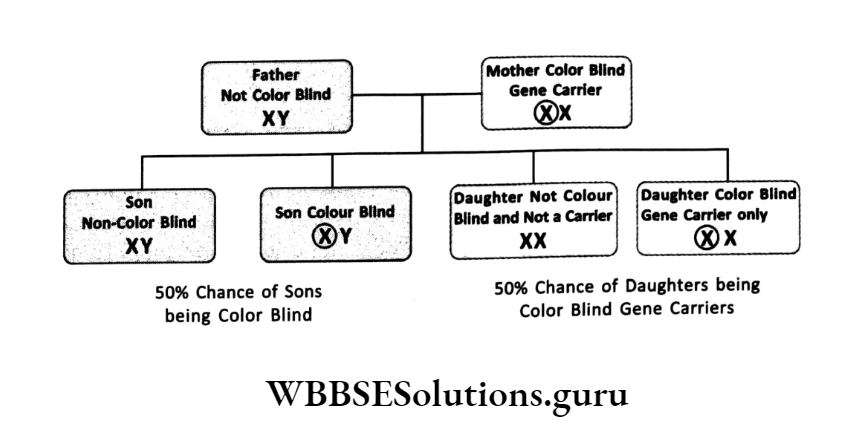
Treatment:
In general, treatments include blood transfusions, bone marrow transplants, medications, and supplements, etc.
People who receive blood transfusions receive extra iron that the body can’t easily get rid of and iron can accumulate in tissues, which can be potentially fatal.
The human body has no active mechanism for the excretion of iron.
Excess iron in vital organs, even in mild cases of iron overload, increases the risk for liver disease (cirrhosis, cancer), heart attack or heart failure, diabetes mellitus, osteoarthritis, osteoporosis metabolic syndrome, hypothyroidism, etc.
Hence the treatment of blood transfusion is to be followed with Iron chelation which involves the removal of excess iron from the bloodstream.
Inheritance of thalassemia:
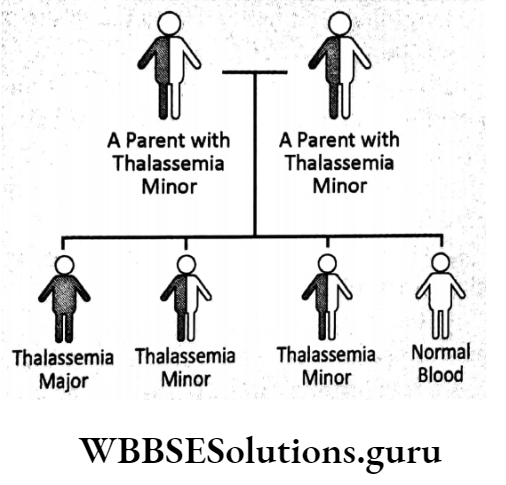
A child who inherits two thalassemia trait genes-one from each parent will have the disease.
A child of two carriers has a 25 percent chance of receiving two trait genes and developing the disease and a 50 per cent chance of being a thalassemia trait carrier.
As illustrated in marriages between two carriers (thalassemia minor) may result in – a 25% chance of thalassemia major children, a 50% chance of thalassemia minor children, and a 25% chance of normal children. Thus two thalassemia carriers should not get married.
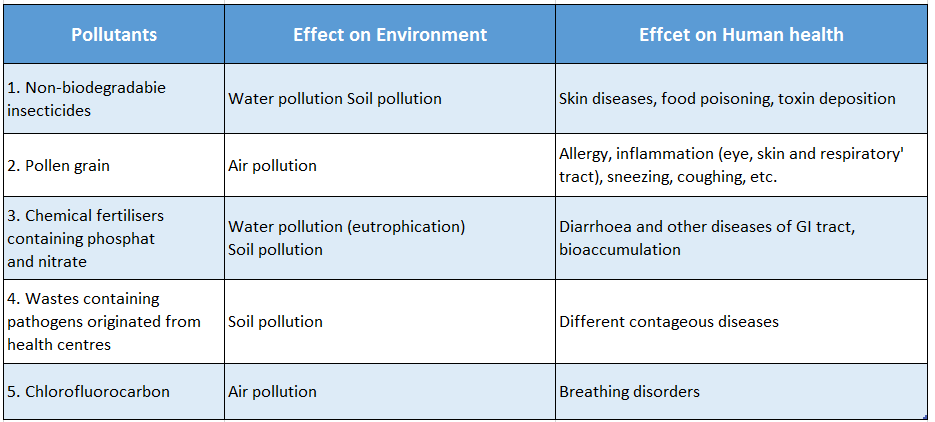
Question 4. Evaluate the effects of the following pollutants on the environment and human health:
- Non-biodegradable insecticides
- Pollen grain
- Chemical fertilizers containing phosphate and nitrate
- Wastes containing pathogens originated from health centers
- Chlorofluorocarbon
Answer:
Effects of Pollutants on the Environment and human health
Or,
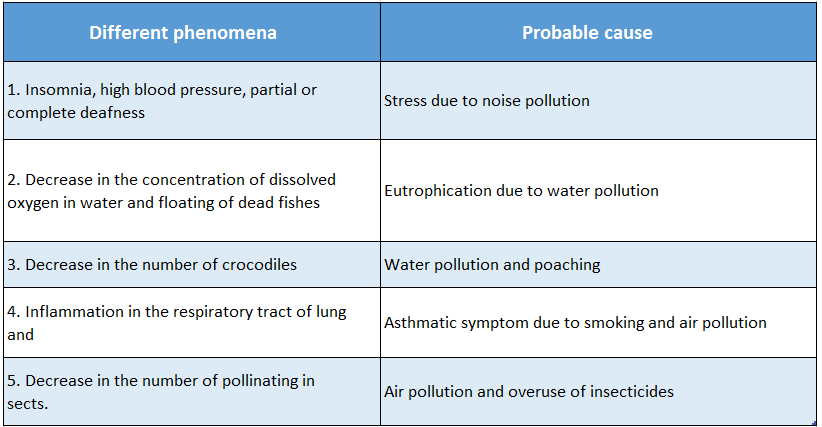
Speculate the probable causes of each of the following phenomena:
- Insomnia, High blood pressure, Partial or Complete deafness
- Decrease in the concentration of dissolved oxygen in the water and floating of dead fishes
- Decrease in the number of Crocodiles’ Inflammation in the respiratory tract of the lung
- Decrease in the number of pollinating insects
Answer:
Probable causes of different phenomena
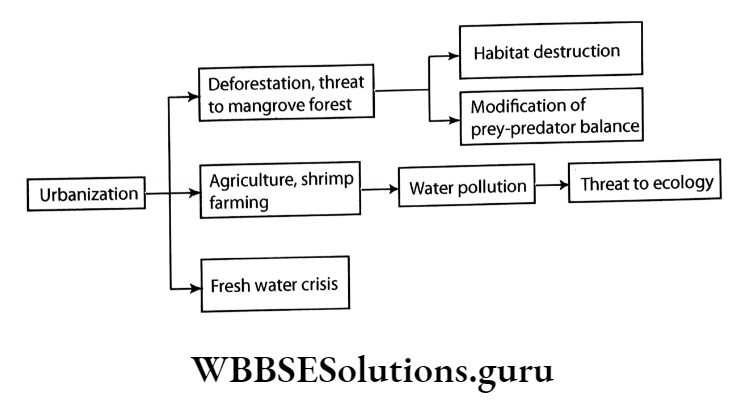
Question 5. ‘The ever-increasing population in the different cities of India is creating the crisis of ground water’-Support the statement with reasons on the basis of your experiences. Construct a concept map to show how the increase in human habitat is influencing the ecosystem of Sunderbans.
Answer:
Groundwater in aquifers below the surface of the earth is an important natural resource. It accounts for nearly 30% of all fresh water.
Class 10 Life Science Model Paper WBBSE 2023
Depletion of groundwater is caused due to the following reasons:
Overuse:
As the population continues to rise, frequent pumping of groundwater causes depletion since it does not have enough time to replenish itself. This has become a major cause in every big city and town.
Agricultural Needs:
Lack of adequate surface irrigation facilities leads to over-exploitation of groundwater to meet crop and livestock requirements. This is a persistent problem in Gangetic Plain and north India.
Anthropogenic pollution:
Groundwater contamination occurs due to the mixing of gas, oil, poisonous salts, and chemicals or pesticides rendering it unsafe.
The environmental effects of groundwater depletion include land subsidence, water shortage, loss of biodiversity, hampered precipitation rate, food shortage, etc.
(or)
Summarise which conservation measures have been adopted to increase the population of an endangered mammal exclusively found in the swampy grasslands under the foothills of the Eastern Himalayas. Discuss the role of biodiversity in maintaining the balance of the ecosystem of a river.
Answer:
Endangered mammal (Red panda) conservation measures:
Since river or lotic ecosystem refers to flowing water, hence biotic components are specialized to live with flow conditions. They include bacteria, primary producers, insects and other invertebrates, fish, and other vertebrates.
Bacteria decompose the organic matter, vegetation, and biofilm. They play a large role in energy recycling.
Primary producers:
These include phytoplanktons, mosses, liverworts, and many rooted plants. These are sources of energy and form microhabitats that shelter other fauna from predators and the water current.
Insects and other invertebrates act both as consumers and prey items in lotic systems.
Various species of fish and other vertebrates like salamanders, snakes, crocodiles, turtles, bird species, and mammals are part of the lotic ecosystem. They act as consumers and also as prey species to the larger vertebrates available.