
WBBSE Class 10 History And Environment Chapter 1 Ideas Of History Introduction of History
- In the universe, change is inevitable, without any exception. While going through this changing process, our ideas and contemplations have also undergone a transformation. New ideas have been born in different fields.
- As a result, history, as we know it. it today, is not the same as before. We have broken the barriers of tradition and brought many subjects within the purview of Historical Studies which were hitherto not discussed or highlighted. It has brought variety, novelty, and growth in the study of history. This trend will, no doubt, enrich and enhance the knowledge bank of the studies of history.
- Because history is ‘the mother of all sciences’ and ‘tower of experience’. The word ‘history’ has come from the Greek word ‘history’. It has come from the Latin word ‘history’ or ‘knowledge.
- According to Sir William Jones History is the scientific study of our complete past. The Greek scholar Herodotus is called “the father of history.” As per modern historiography royal history now has become the ‘history for you’, ‘history for me’, and ‘history. for all. These new ideas and trends are indeed quite relevant to the progressive society and modern generation.
Read and Learn More WBBSE Notes For Class 10 History And Environment

Ideas Of History Variety In The Studies Of Modern History
- From 19th century A.D., the study of history has recognised as a separate stuff, which is really ‘history of history’. Today history is the complete story of man’s life and struggle. It expanded the scope and variety of modern history.
- The modern trends in the studies of History help us to know the numerous aspects of history; for example, the history of new society, sports, food habits, art, clothes, transport, communication, etc.
- Local history, the history of individual cities, the history of environment and technology, and even the history of women’s studies have found their places in modern studies of History. The study of modern history has freed itself from all mundane bondage and expanded to a new horizon. Very often, old Government records, letters, and reports of Government officials and the Police help in the study of History.
Class 10 History Important Questions WBBSE
- Apart from these, biographies and autobiographies also occupy important place in the study of History, because they reveal many unknown facts. Similarly, magazines, newspapers, photographs, and information available in the internet are of great importance in the study of modern history. And that has added variety to the subject.
- In the words of historian G. M. Trevalion, ‘Study of history is the mother of the study of other social studies’. French philosopher Voltaire said about ‘eternal and universal history’, which is the main aim of most historians.
The purview of Social History is much wider. A society consists of millions of people, yet history has never given them their due recognition. The main purposes of New social history are-
- To bring the plight of these unrecognized masses to the limelight. It aims at giving due importance to the dignity, existence, and contribution of the common man in the development of a society.
- The History of the common man is the principal subject matter of Social History. Hence, the study of history should not be contained within history alone, but, new avenues can be opened through Geography, Sociology Environmental Studies, etc.
- Till now, the real history of the services rendered, the toiling and struggle of the people at large was never revealed. The aim now is to bring this truth to the forefront.
- Even Rabindranath was aware of such studies of History. He felt that the combined force of the nameless and faceless people in history has immense social power.
- Michael Foucault was the first person to take the initiative to include common people in the new Social History. He aimed to study the history of the common man. Foucault, in his book ‘Madness and Civilization’, has illustrated that the common man has an existence in society but is unrecognized in history.
- As a result, we find that, at present, criminals, thieves, anti-socials, mentally deranged people, and even eunuchs are being studied as a part of the larger society.
- The wide range and novelty.are special features of this new history. Instead of getting data from the ‘History Laboratory’ or ‘Historical Archives’, information is collected from society itself. With the foundation of ‘The Social Science Research Council in England in 1965 the study of New Social History took a revolutionary shape.


New Social History Importance:
- Firstly, If necessary, importance is attributed to ‘Old Social History’ (1850-1900) or ‘Social History’ (1901-1947). Studies in this New Social History started in the 1960s decade, having broken away from the banal form of historical studies and Fernand Braudel was the pioneer.
- He let go of the traditional system of historical studies and founded the ‘Annales School’ in France for a proper study of social history by collecting information from society itself.
- Secondly, Historian Harold Parkin of Lancasyre University was appointed as the Professor of new social history in 1969. That is why the 1970’s decade is called the ‘Golden Age’ of new social history.
- Thirdly, In the 1980’s decade, historical studies initiated by Dr. Ranajit Guha, Dr. Dipesh Chakraborty, Dr. Gautam Bhadra, and Dr. Partha Chatterjee with the lower strata of society, clearly shows the characteristic features of the new age of Social History.
- This social history gave birth to the study of ‘Subaltern history’ (1982). It aim is ‘to study the history from below.’ Founder of this subaltern history is Ranajit Guha. Fourthly, This new approach is an important source of History at present and can be called the ‘Mother of Modern History’.
- The new social history was widely discussed by the French scholars Marc Bloc and Lucien Favor in the journal called ‘The Annales’ (1928). They tried to express a complete or total history.
Class 10 History Important Questions WBBSE
2. History Of Sports: The main aspects of the history of sports are as
- In the history of sports the Olympic game started first in 776 B.C. in ancient Greece is mention worthy. Now various games like cricket, football, baseball, rugby, hockey, polo, etc. are parts of today’s culture. It is essential to know the influence of these games on our life.
- The game of cricket started in England. The cricket club was ‘Calcutta Cricket Club’ (1792) and ‘Oriental Cricket Club of the Persians’ (1848) in Bombay which had visited England first in 1886. It is also known as the game of 22 yards because the length of the pitch between the two wickets is 22 yards. The game of cricket was first played at Dartford in Surrey in 1709.
- However, rules of the game were laid down in 1744. From 1814 the Lords ground in England became the Mecca of international cricket. Professional cricket came into existence in 1962. ‘International Cricket Conference’ or ICC was formed in 1965, which was later renamed as ‘International Cricket Council’ (ICC) in 1989.
- The first women’s cricket club was established in England in 1887. Women’s Cricket Association (WCA) was formed in 1926 and the International Women’s Cricket Council (IWCC) in 1958. The first International Women’s Test Match was played in 1973. According to historian Dr. Ramchandra Guha “It views sport as a rational idiom, a share of activity that expresses, in concentrated for the values, Prejudices, divisions and unifying symbols of a society.”
- The rugby ball is like an oval-shaped football. England started playing rugby in 1823. ‘Rugby Football Union’ (RFU) was formed in 1871. Till 1995 rugby was considered to be an amateur game.
- Separate rules for rugby and football became into being after the ‘Football Association’ (FA) was established in London in 1863. The landmark event in the history of football in Bengal was the formation of the Mohan Bagan Atheletic Club in the July of 1889, ‘East Bengal Club (1920), and Hockey Club (1885-1886) in Kolkata.
- On 29th July 1911, the Mohan Bagan under the captainship of Shibdas Bhaduri, won the IFA shield having defeated the European East Yorkshire Civil and Military Teams. The Indian football team came fourth at the Melbourne Olympics in 1956.
- Eight times the Indian Hockey team had won the Olympic gold medal. The first gold in hockey was won by India in 1928 at Amsterdam Olympics. In 1932, India set a world record having defeated USA 24-1 at Los Angeles. In 1936, India won the gold medal in hockey at Berlin Olympics and the captain of the team, Dhyanchand, received the prize from none other than Hitler himself. The last time India won the gold medal in hockey was in 1980 at Moscow Olympics.
- in 1996, Kabaddi has replaced hockey as the National Game of India.

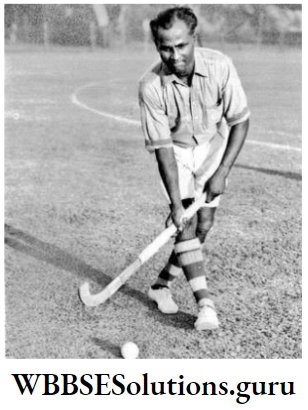
History of Sports Importance: The study of sports history started in Europe in 1970 and ‘The British Society of Sports History’ was founded in 1982. We know the history of sports from the books ‘Corner of Foreign. Field of Ram Chandra Guha, ‘A History of Indian Cricket’ of Mihir Bose, ‘A Social History of Indian Cricket of Kaushik Bandyopadhyay, ‘The Illustrated History of Indian Cricket, and ‘Twenty-two yards to Freedom’ of Boria Majumder, ‘The Games Ethic and Imperialism’ of J. A. Mangan, etc.
WBBSEW Class 10 History Syllabus
3. History Food Habits And Cuisine:
The purposes of studying the history of food habits are
- To know about the culinary diversity of a society and the source of such habits. When the food habit of people started undergoing various changes, it was observed at some point that people were consuming a kind of food made with flour or spaghetti and noodles, thin strings resembling the Indian semai, which are also made of flour and eggs.
- In Sicily, the Arab traders ate Pasta. Pasta is also made of flour and eggs and is also known as macaroni or spaghetti. This particular food is still popular in Italy. Similar food is also consumed in India and Japan.
- The comprehensive study of Food history have been found from the researched books like ‘Food, Drink, and Identity in Europe’ of Thomas Wilson, ‘Indian Food: A Historical Companion’ of K. T. Achaya, ‘Food and Cultural Study of Ben Taylor, etc.
- The main purpose of studying the history of food habit is to know about its diversity. The food habits of people differ from country to country. If we study the culinary history of India, we will see that in some regions rice is the staple diet, in some areas it is roti, while there are others who prefer millets, ‘depending on the climate and geographical features of that area.
- Apart from diverse food habits, in social history, we also study the evolution of food habits. It is interesting to know that common vegetables like the potato, ground nut, corn, tomato, chilies, sweet potato, soybean, or any other kind of bean were not known to our forefathers five hundred years ago.
- Many of our food items came from the American Indians (Red Indians). Plenty of oats are cultivated in Scotland and cakes are made with this cereal. So, Scotland is known as the ‘land of cakes’.
- Today, oats are widely consumed even in India.
History of Food Habits and Cuisine Importance:
- From the history of food habits we come to know that there was a time when the poor people of Ireland survived on potatoes.
- In the present times, when restaurant culture has become very popular, variety and luxury in food is a part of contemporary lifestyle.
- Recently the book ‘Culinary culture in Colonial India: A Cosmopolitan Pattern and The Middle Class written by Utsha Roy helps to know the changing food habits of the middle-class Bengalees.
4. History The Performing Arts:
Music: The main characteristic feature of the History of the practice of art is its varied nature.
- Music, dance, drama, and cinema are all parts of this branch of history. These should not be treated as mere entertainment, but they are the carriers of the cultural heritage of a society.
- If we study the history of music, we come to know that the Sama Vedas are the source of Indian music.
- The part of Birbhum District and the associated songs havea distinctive style which varies from region to region.
- Tappa, originally songs sung by the camel riders of the Punjab, was promoted by Gulam Nabi (1742-92) of Lucknow.
- The mind-blowing ‘thumri’ was promoted by Bade Gulam Ali Khan (1903-68).
- Again, Ghazal is a prelude to the songs sung in the praise of the kings in Arabia..
Dance forms also have their own aesthetic characters and variety. The masked ‘Chou’ dances of Purulia, Mohini Atyam (Karnataka), Krishnanatyam and Bharat Natyam (Tamilnadu), Odishi (performed by temple dancers or devadasis) of South India and Kathakali dance of Kerala and Malabar regions are perfect, examples of regional variations found in dance forms.
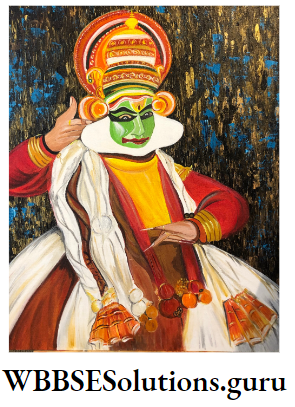
Drama: A wide range of variety can be noted in drama also. For example, rural- drama, street plays, one-act plays, musical plays, people’s theatre, etc. Near about 2000 years ago Bharat Muni wrote the book ‘Natyashastra’ and said that drama was popular in India.

The first theatre hall of Bengal was the ‘Hindu Theatre’ (1830) and then ‘National Theatre’, ‘Star Theatre’ (1884), etc. were founded. On 25th May 1943, anti-fascist writers and artists came together and formed the ‘Indian People’s Theatre Association (IPTA).
Cinema: The history of cinema consists of documentary films, art films, and commercial films. This stream of study is called ‘Film Studies’. Hiralal Sen and Mohilal Sen introduced short documentary films in Kolkata.
- The founder of the present day’s motion picture was Louis and Auguste. On 28th December 1895 the first motion picture emerged in Paris. ‘Bilwamangal was the first Bengali cinema made by Hiralal Sen, founder of ‘Royal Bioscope Company’: The first mythological feature film ‘Raja Harishchandra’ was released in 1913 by Dhundiraj Govind Phalke.
- But the film ‘Alam Ara’ was the first full-length motion picture released in 1931. The first motion picture ‘A wrestling Match’ made by Harishchandra Sakharam Bhatwadekar was released in 1896 in India. The ‘Dadasaheb Phalke Award’ is given to outstanding works in commercial films.
- New studies of modern history have been enriched by showcasing the varied forms of art practiced over a period of time. Jacob Burckhardt in his books Agonal Age’ and ‘Civilisation of Renaissance in Italy’ have elucidated how art and culture have influenced Renaissance in Italy.
- H. Zimmer in his book ‘Myths and Symbols in Indian Art and Civilisation’ has done extensive research on the importance of Indian arts and so has Tapati Guha Thakurata in her book ‘The Making of a New Indian Art, Artists, Aesthatics and Nationalism in Bengal’.
WBBSEW Class 10 History Syllabus
5. History Of Clothes And Dresses:
Variety and evolution are the specialities of this new history. Such as
- We come to know about the different kinds of dresses and attires worn by people of different regions, depending on the climate and preferences of the people.
- In Europe, there was a marked change in the clothes worn by people after the French revolution (1789). Women started wearing red hats, capris, and long skirts.
- While studying the history of clothes and dresses we can see that in England there was a revolutionary change in the dresses of men and women during the Victorian Age (1837-1901).
- In our country people shifted from traditional to Western attire during the British rule. Michael Madhusudan Dutta was the first person to wear European clothes (1843).
- But the dresses worn by the English-educated youth in India of 1885 were called Musalmani dress instead of Hindustani dress. Although the Bengali gentry started wearing boots, coats, hats, and ties, according to ‘Somprakash magazine (1881), ‘People of any region can be recognised by the dresses. they wear, but not the Bengali’.
- For hundreds of years ago Bengalee women knew the use of saree. The “brahmika style of saree” worn in the present-day society of Bengal has come from the women of the Jorasanko Tagore family in 19th century.
- A study of the history of dresses worn in India reveals that people living in warmer areas like Rajasthan preferred cotton clothes, while those living in colder places like Kashmir wore warm woolen clothes.
- The traditional dress of men in Kerala was ‘Mundu’ and sarees for women and in Bengal it was ‘Dhoti-Kurta’ for men and sarees for women. In the Punjab, the men wore ‘Lungi-Kurta’ and women wore ‘Salwar-Kameez’, in Gujarat the men wore ‘Angrakha’ and the women wore ‘Channia-Choli’.
- A sea change came about in the dresses of the English people after the Victorian Age (1901). Loose-fitting dresses became popular instead of the tight-fitting clothes worn earlier.

History of clothes and dresses Importance
- The dress history helps to know the social, religious, cultural, economic, political, and geographical changes and its impacts on dress. So the study of the history of clothes and dresses is very important today.
- For this reasons the Association of Dress Historians’ (1991) was set up in England.
- The book on dress was written an accountant of Augsburg city in Germany, named Matthaus Schwarz. His pictorial book on fashion is a document.
- After coming the British in India Colonel Dalton started writing about Indian dress. From 1950 the history of Indian dress and clothes are authentically written.
- A book like ‘Clothing Matters: Dress and Identify in India’ by Emma. Tarol, ‘Clothing. A Global History by Robert Ross etc. are important.
- Magazines and medical prescriptions also opined that loose-fitting dresses were a healthier option.
- Peter MacLean in his book ‘Fashion, Critical and Primary Sources’ published in four volumes (Oxford, 2009) has provided much researched information on the history and evolution of dresses.
6. History Of Transport And Communications: Important aspects of this new historical study are
- To bring the variations and evolution of transport and communication system to the forefront and show its importance in human life.
- From the literary sources like ‘Mangal Kavya’ and other it has been known that early transportation in India mainly based on boats, bullock carts, horse-driven carrages, palanquins, elephants, etc.
- An important aspect of this new History is the study of the history of communication system. Modern technology has brought about a revolution in the development of communication system with steam and petrol-driven means of transport.
- The three means of transport are water transport, land transport, and air transport. The first tram car carried by horse started in Kolkata in 1880s from Esplanade to Khidirpur and electric tram car started in 1902. The aeroplane flies in 1919 and in Dumdum, India in 1930.
- The transport system has become highly developed because of the introduction of new methods of communication.
- After Michael Faraday discovered ‘Electro Magnetic Induction’, controlled flow of electricity with the help of signals became very convenient.
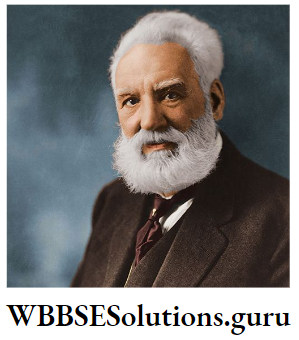
- Morse had used this theory to further develop the telegraph system. New avenues opened up in the history of communication when Graham Bell invented telephone in 1876.
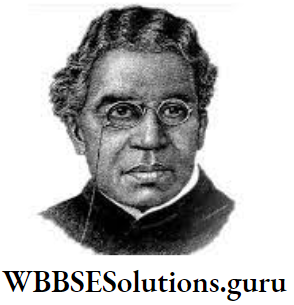
- In the field of telecom, in 1901 the Italian scientist, Marconi used the advanced electro-magnetic principles of Hertz and Jagadish Chandra Bose.
- The Calcutta Central Telephone Exchange was established on 28th January 1882 and then in other provinces. The motor bus services started in Bengal in the beginning of the 20th century.
History of Transport and Communications Importance:
- This study of the history of transportation started from 1960-1970.
- Mass media and mass communication became much simpler after the invention of radio and television in the decade between 1920 and 1930.
- Apart from these, news media, news photographs, radio bulletin, live television, e-mail (electronic mail), internet, mobile phones etc has totally changed the history of communication system.
- The first railway line of India was introduced in Bombay in 1853. Indian Railway was the fourth world largest Railway in 1910.
- It is the purpose of this new historical study to inform people of these developments. ‘The Transport History’ of John Armstrong, ‘Engines of change’. The Railroad that made India’ of Lan Karr, ‘Geography of Transportation in Eastern India under Britishraj’ by Sunil kumar Munsi, etc. are important sources of transport history.
- Some other famous books on transportation are ‘History of Modern India’ 1700-2000 of R. S. Chaurasia, ‘London and the Victorian Railway’ of David Brandon, ‘Indian Demands for Transportation’ of William Ernest Welt, etc.
Class 10 History Environment Book Pdf
7. History Of Visual Arts (painting and photography): Main aspects of the study of this history are
- The principal subject matter of visual art is the work of different artists including drawing, painting, cartoon, and photography.
- During the Renaissance period in the fifteenth century, artists like Michael Angelo, Leonardo da Vinci, and Raphael, etc. practiced art after obtaining trade licence from the authorities.
- All forms of art and craft came under its purview. It is said that Da Vinci’s famous portrait Mona Lisa was in fact the portrait of the wife of a noted businessman of Italy. The Medici and Flemish Berger families of Italy commissioned many painters and artists.
- In 1648, Louis 14, the king of France established the Academy Art to approve drawings and paintings of different artists.
- ‘Messers Bourne and Shepherd’ was the first photographic Institution that brought cameras in Calcutta in 1840 and opened a studio in 1864. Sri Ramakrishnadeva and Rabindranath Tagore were its customers.
- Camera was invented by Nishefore Niye Poche of France in 1826 and colour photography came in 1861. The first Indian ICS Satyendranath Tagore’s wife Jnanadanandini Devi developed the art of camera.
- Gradually ‘Calcutta school of Industrial Art’ (1854) or present-day Govt.
- Art College and ‘Photographic Society of Bengal’ (1856) etc. were established.
- Many renouned persons like Rajendralal Mitra, Priyanath Seth, and Kanailal Dey were members of the photographic society. Rabindranath Tagore, Abanindranath Tagore, Gaganendranath Tagore, and Ravi Verma (Kerala) were famous Indian painters.
- Samuel Bourne and Lala Dindayal were famous Indian photographers in 19th. century India. Photography came to India in 1860 through the East India Company.
- Kolkata is an important centre for modern Indian painting. ‘Calcutta Art School’ was founded by English are administrator Ernest Binfield Havell. He wrote the ‘A Handbook of Indian Art. Havell appointed Abanindranath Tagore as the Vice-principal of this art school. It is now known as ‘Bengal Art School’.
- The ‘Kala Bhavan’ of Shantiniketan under Nandalal Bose, Ram Kinkar Beij, Binod Behari Mukherjee, Jamini Roy, and Ganesh Pyne made an epoch in aesthetic modern Indian art. ‘Indian Academy of Fine Arts’ was set up in 1919.

History of Visual Arts (painting and photography) Importance:
- Paintings of different artists, indigenous paintings like the pat pictures of Behrampore and photographs of Mughal age, the era of East India Company, and later period provide us with great insight into the real history of that time.
- The special features of the visual art of that period were human figures, natural panorama, animals, gods and goddesses, and depiction of events in the backdrop of social and political scenario.
- An 1820 painting of a huge Muharram procession in Dhaka shows that only two persons had shoes on in the whole crowd.
- The Kalighat Temple painted by Thomas Daniel in 1792 can be easily identified from the prominent Dochaia (double-roofed) gate and the Atchala (eight-roofed) temple.
- This new approach to history helps to express a lot from pictures and photographs which were not known earlier.
- We know many information of the history of visual arts from the books such as ‘Photography in Victorian India’ by Deshmunda Roy, ‘India: Pioneering Photographers 1850-1900’ by John Falcon, etc.
8. History Of Architecture And Sculpture: The specialties of this area of history are
- To find out the building style and striking features of different schools of architecture.
- Architecture and sculpture include ornamentally designed buildings, lobbies, domes, pillars, arches, temple architecture, mosque architecture, church architecture, etc.
- European influence on Indian architecture and sculpture were predominant, particularly in the building of pillars, arches, and cornices.
- The Kalighat Temple was originally constructed as an indigenous Atchala (eight-roofed) building, but the later extensions in 1809 clearly bear European style.
- In 1712, the 700 feet long wall of Fort William was 40 feet thick and 18 feet high.
- Apart from these, the Hastings House (1770), Asiatic Society (1784), Town Hall (1813), Ochterlony Monument in Kolkata (1828), High Court Building (1872), etc. are examples of finest architecture.
- The High Court Building of Kolkata was the first example of neo-Gothic Architecture. The Calcutta Town Hall (1813), Indian Museum (1814), and Victoria Memorial (1921) at Kolkata is an example of Indian Architecture with marked European influence.


History of Architecture and Sculpture Importance:
- These are all examples of new studies of the history of Architecture. The books like ‘History of Indian and Eastern Architecture’ (1876) of James Fergusson, ‘An Imperial Vision’ (1989) of Thomas Melcalf, ‘Monument, Objects, Histories’ and ‘The Making of a New Indian Art (1992) of Tapati Guha Thakurta widely focused the features of Indian arts and architectures.
- It help to the various temple architectural styles like ‘roofing style’, ‘Bhanga style’, ‘Bangalow style’ etc. The Dakshineswar Kali Temple is the best example of the Bhanga Style of architecture. The chief architect of President’s House was Luton.
9. Local History: The basic tenets of the study of local history are
- The main objective of local history is ‘Start history at your door’.
- To know more about local history and to collect information, schools can organise tours and a ‘History Society’.
- The special feature of this branch of history is to study and construct local history from practical materials. As a result, the students can associate freely with the subject.
- Social scientists have adopted space or territory as the basis for constructing history. Modern researcher Dr. David Luden wrote the book ‘Early Capitalism and Local History in South India’ as an important step of the study of local history.
- In the recent times, space has been given greater importance while writing history. Space is closely linked to local history, micro-history, and the history of different families.
- Local history is also associated with traditions, economics, and sociology. Local history is also linked with globalization, albeit to a very small degree.
- It should be noted that there is a difference between locality and region. A region includes a locality, but a locality does not include a region. The relationship between the two can be shown like this (from bottom. to top): local->sub-regional->regional->national->international.
- This history is constructed. on the basis of local matters. In ‘St. Paul’s Western Side’ a conference called ‘A Flood of History was organised for the first time. The local people, teachers, students, and historians collected a good deal of information for the study of History.
- A study of local History results in camaraderie and friendship among neighboring areas. Social activities of man, community service, and social reforms are influenced by such friendly relationships. In the West Side Conference of America, local history has been called Community Empowerment through Neighbourhood History.
- Local Development and awareness are the key issues of this History. The lifestyle of people, culture, psychology, the past and present of urban life- are all taken into consideration while constructing the local History.
Local History Importance
- In the 1960’s decade local history was defined like this it is the history of a new village, history of a new city, history of a new locality, and also the story of the locality’s families, men, women, and children.
- History should be re-written for every generation and the source material should be none other than the local history.
- The speciality of this branch of History is to collect information by travelling in a region and analyzing various events and incidents that had taken place in that area.
- ‘Nadiya Kahini’ of Kumud nath Mallick, ‘Murshidabad Kahini” of Nikhilnath Ray, ‘History of Jessore and Khulna’ of Satishchandra Mitra, ‘History of Coochbehar of Amanatullah Ahmed, ‘A History of Jaypur’ of Dr. Jadunath Sarkar, etc. are some of the directions of the study of local History.
Class 10 History Environment Book Pdf
10. Urban History:
- If we analyse the history of the cities, we come to know that
- The cities started developing and extending after the Industrial revolution.
- The three main factors in the growth of cities are emergence of economics, colonisation of vast areas, and growth of democratic ideas.
- In the process of urbanisation, this method is equally applicable to all the countries of the world. Two cities can be named while discussing urbanisation in the nineteenth century. The first one is London in England, which, in the nineteenth century, was the largest city in the world. The second one is Bombay in India.
- Before the Industrial Revolution in the 1850’s decade, most of the Western countries had rural-based economy. During the initial period of Industrial Revolution, there were only two industrial towns in England, viz. Leeds and Manchester.
- In 1851, of the total population of Manchester, three fourth consisted of people who had migrated from rural areas. In 1750 in England and Wales, at least one in every nine persons lived in London, which had a population of 6,75,000. This number increased to 1 million in 1810 and 4 million in 1880.
- According to historian Gareth Stedman Jones, in the nineteenth century London was a city for all, including clerks, shopkeepers, teachers, craftsmen, soldiers, servants, hawkers, laborers, and beggars.
- In the course of time, problems of the city have increased and so have anti-social activities. There were 20,000 anti-social people in London alone in the 1870’s decade.
- In the cities roads, houses, and lifestyles of the people have undergone changes with the, growth of urbanisation.
- In colonised India, cities in the three Presidencies of Bombay, Madras and Calcutta developed to a great height.
- Historian Stephen Tharnstorm of Harvard University gave special effort on the study of Urban History in 1970. It encouraged Radharaman Mitra, Radha Prasad. Gupta, Purnendu Patri, Nikhil Sarkar, etc. to study the history of Kolkata.
- Bombay was declared as the capital city of the Presidency of Bombay in 1819. It was called a ‘city of dreams’.
- In the nineteenth century, the main cities of the Indian sub-continent were Bombay, Madras, Lucknow, Lahore, Surat, and Kolkata. Bombay (Mumbai) is called the ‘Business City’, Jaipur is called the ‘Pink City’ and Calcutta is called ‘the City of Culture’.

Urban History Importance:
- Hence, the subject matter of Urban History is to study the origin and evolution of cities.
- The new view of urban history have been expressed by Dr. S. N. Mukherjee, Rina Oldenberg, Pradip Singh, Dr. Narayani Gupta, and Dr. Aniruddha Ray.
- They thought that the study of urban history was neglected. Therefore Dr. Ashis Bose said ‘In India, urban history is non-existent.
- (The importance of urban history have been discussed by historian Louis Mumford in his book ‘Cities in History’ and Charles Tilly and W. Blocman in the book ‘Cities and the Rise of States in Europe.
11. Military History: Main aspects and features of this history are as
- Study of Military History has increased after the World War 2 and globalisation in general. Its importance has grown especially after the Second World War.
- Military equipments, military methods,military organisation, changes in military strategy, etc. have become subject matter of this branch of history.
- Richard J. Evans, Professor of Modern History in Cambridge University, wrote his book ‘In Defence of History’ in 1997 and proved that military history was indeed a part of traditional history and has immense importance in this field.
- Keith Windscuttle, an Australian historian, wrote his book ‘The Killing of History’ about the history of defense, with a critical view of the post-modern era.
Military History Importance:
- These writers have dealt mainly with military history which includes study of military methods, various wars fought earlier, and also Naval History as a branch of military history.
- This branch of history highlights the fact that armed forces are essential to defend a nation and its people from enemies,
- The study of New Military History started from the 1970’s decade. Since then, in historical studies, greater stress are being laid on
- soldiers than the Generals,
- psychology of war than tactics of warfare and
- the larger effect of war on society and culture
12. History Of Environment: Main aspects of the study of this history are as
- In the context of the history of the environment, the terms ecology and environment were first used in 1866 by the German zoologist H. P. Hackel. Madhab Gadgil and Ramchandra Guha discussed environmental problems, pollution, and the adverse effects of chemicals and insecticides in India and set up a separate Toxicology Department.
- On the basis of environmental studies and research, they wrote the book ‘This Fissured Lands, Ecological History of India’. Dr. Mahesh Rangarajan’s books “Hunting and Shooting’ and ‘Facing and Forest, Donald Ursir’s ‘The End of the Earth’ and ‘Green Imperialism’ of Richard Grove, etc are important to the study of the history of Environment.
- Studies on the History of Environment started in the United States during the 1940s and 1950’s decades. ‘World Environment Day’ or ‘Eco Day’ was first celebrated on 5th June 1974.
- The aim was to establish a friendly relationship with the environment, From 1980 it became a widely popular event. Environment is made up of the world around us with its flora and fauna.
- The History of Environment tells us that environment has an effect on our minds and bodies. Survival of the living being, intelligence, and development depend on the environment to a great extent.
- The future of our environment depends on how we treat the environment around us. In every country of the world primitive forest dwellers used to take extra care of their natural environment, so they are considered to be the true children of nature.
- Today industrialisation, urbanisation, development, and pollution of every kind stand as obstacles in saving the environment. Greeneries are being damaged and as a result, habitat of birds are being lost.
History of Environment Importance:
- The main importance of the new Environmental History is to make the present generation aware of these facts.
- Scientist and writer Rachel Carson (1962,) in. her book ‘The Silent Spring’, expressed her deep concern that if we keep ignoring nature and brutalise her in this way, she will surely take her revenge on us.
- This book became quite sensational all over the world including the US. It is still a vital document in the study of the environment and in creating awareness among people.
- The main aim of this branch of History is to create awareness about our environment. Movement for the protection of the environment have been organised today, such as the ‘Chipko Movement (1973), ‘Narmada Bachao Movement’ (1985) of Medha Patekar, ‘And the there-Garwal Movement’, etc. are important.
Class 10 History Environment Book Pdf
13. History Of Science Technology And Medicine: The features and aspects of this history are as
- The main subject matter of this study is the extent, variety, and evolution of science, technology, and medical science. In the recent times, the study of the history of science, technology, and medical science has become an integral part of the New Historical Studies.
- In 1927 Harvard University took special initiative and started this kind of study. In the 1930’s decade, the Soviet historian Boris Hessen stressed on the importance of the study of the history of Technology.
- We come to know how the Study of Science and Technology changed in the post-war (World War 2) period. In the decade of 1960, Thomas Koon also stressed on the importance of the History of Science.
- It has also been known how Technology is being used in the larger interest of human beings. At present we cannot imagine a life without the blessings of Science.
- Through this study we know about various scientific endeavours, experiments, different areas of research, and ‘the general revolution brought about by science.
- We also know that the origin of Mathematics and Science, the basis of modern Engineering studies, was from Greece, Mesopotamia, China, India, and Arabia.
- With this knowledge of History we can plan for future research and studies in the field of Science. Hippocrates, Selsus, and Gallen of Greece, the Unani doctors of Arabia, Vesalius, Paracelsus, etc. of Seventeenth-century Science. On the basis of their contribution, new ideas in this field of history can be developed.
- We also become aware of the history of developments in the areas of Immunology, Bacteriology, Virology, Chemotherapy, etc. during the Twentieth Century.


History of Science, Technology, and Medicine Importance:
- From the Study of the History of Science it has been known the Civil Engineering Department was opened in Hindu College in 1843 and the study of Medical Science in the Bengali language was started in 1852.
- Bankim Chandra as ‘Bigyan Rahasya’ (1895), Jagadish Chandra Bose’s book ‘Response in Living and Non-Living’, and Acharya Prafulla Chandra Ray’s ‘History of Hindu Chemistry’ were published.
- For the Study of Science ‘The Botanical Garden’ at Shibpur, the Geological Survey of India (1851), IACS (1876), ‘Indian Institute of Science’, ‘Council of Scientific and Industrial Research or CSIR (1942), etc have been founded.
- Some important books on the Study of the History of Science are ‘Science and the Raj’ of Deepak Kumar, ‘The History of Modern Science’ of S. G. Brush, ‘Science, Technology and Medicine in Colonial India’ of David Arnold etc. help to know the History of Science.
14. Women’s History: The study of women’s history is very relevant for many reasons
- Half of the world’s population consists of women, so, the study of the history of women’s existence has become an absolutely essential part of history. The year 1975 was celebrated as Women’s Year and the decade of 1975-85 was celebrated, as the decade of women.
- From time immemorial, with a few exceptions, women have been subject to male domination, deprivation, neglect, and injustice and study of women’s history started as a fight against these atrocities and establishing the rights of women.
- The main features of this branch of history are rise of Feminism, women’s resistance movements, political, economic, and social empowerment of women, women education, health, culture, etc.
- In other words the study of every aspect of a woman’s development is known as Feminism. Feminism is not just a theory, but many women’s movements and intellectual discussions have emerged out of this.
- Helen Dearsay said that the original purpose of women’s history is to give due importance to the contributions of women, to criticize subjects dealing with the derogation of women, to develop correct socio-economic and moral views about women, and transform women into complete citizens through social changes.
- Women’s history came to be included in the modern study of Sociology during the 1960’s decade in the US. Later on, it spread to Western Europe, especially in France. Subsequently, in India and other countries of Asia independent studies about the history of women came to be recognised.
- Since the 1980’s decade Calcutta and Jadavpur Universities, in their Women’s Studies Departments, are carrying on extensive high-quality research into the history of women.
- The main ingredient of Women’s history is obviously women and the idea of Eco-feminism evolved out of that. The term eco-feminism was first used by the French feminist Francois Doban in 1970. In his book ‘Feminism of Death’, Francois while using the term eco-feminism said that nature or environment and women were complementary to each other. Hence to hurt women is to hurt nature. But Indian feminists. prefer to use the term ‘womanism’ rather than ‘eco-feminism’.
Women’s History Importance:
- The purpose and importance of studying history of women is to bring all this information to the forefront.
- The famous French feminist Simon de Beauvoir in her book ‘The Second Sex’ (1949), has stressed on the importance of women’s movement but has rejected the idea of a separate entity for women.
- We come to know that history of women is inseparable from domestic history from the book ‘Democratic Revolution’ written by Steven Minz and Dr. Susan Kellog.
- Barabara Cann in her book ‘Women in English Social History-1800-1949’, has. also discussed in detail about the special role of women in English society.
- Many researched books like Aluwalia’s ‘Rethinking Boundaries of Feminism and Internationalism’, Geraldine Forbes’s ‘Women in Modern India’, Luis A. Tilly and G. W. Scott’s ‘Women, Work and Family’ (1978), Malobika Karlekar’s ‘Voice from within’ etc. are very helpful to the study of women history.
Ideas Of History Method Of Using Sources In Modern Indian History
- The whole process of acquiring data from a ‘historical event’, analysing the information, accepting or rejecting the same, collating the information, and arriving at a conclusion on the basis of this information is called ‘method of using materials in history’. It is essential to apply the correct method of using the materials while studying history in modern India
- All the available information is not necessarily historical material.
- History may become distorted if we do not properly analyse the information available from Government documents, autobiographies, letters, contemporary magazines, and newspapers while constructing history in modern India.
- Extra caution should be taken while constructing history from information and other materials because there is always the risk of providing wrong interpretation of society, politics, culture etc., as a result of which the country and the nation will suffer as a whole.
- So, one should be neutral and alert while applying this method of using historical information and other materials.
1. Government Documents (reports/narratives/letters of police/intelligence/ government officials):
- A great deal of information on Indian history is available from Government documents. The reports compiled by the police on a daily basis also reveal many facts of history.
- Only the police can provide correct information about murders, robberies, tyranny of anti-social. people etc. Reports and documents prepared by Government Detective Department, specially C.I.D., E.D., C.B.I. (Central Bureau of Investigation) are generally unprejudiced.
- A proper scientific analysis of these documents can reveal much information about history. These documents are of great historical importance because they are prepared after a minute and detailed analysis of incidents.
- Historical materials can also be procured from reports and files maintained by senior Government servants like the WBCS, IPS, and IAS officers. But one should always be on the lookout for deception, fraud, or simple lies in those documents.
- The historical deeds and documents, recombs, letters, and reports of high government officers are generally. preserved in a place which is called ‘Archives. The National Archieve is situated in Delhi.
2. Autobiographies and Memoirs:
- When a person writes ‘unadulterated truth about himself, it is called an autobiography. Memoirs are reminiscences or compilation of one’s memories. Some well-known autobiographies are: ‘Atmochorit’ of Debendra Nath Tagore, ‘Ramtanu Lahiri O Totkalin Banga Samaj” by Shibnath Shastri, ‘A Nation in the Making’ by Surendra Nath Banerjee, ‘Discovery of India’ by Jawaharlal Nehru, ‘India Wins Freedom’ by Maulana Abul Kalam Azad and ‘Probhabati Sambhashan’, the incomplete work of Iswar Chandra Vidyasagar.
- While applying the information gathered from these sources it is essential to assess the mindset of the author, any hidden purpose of writing, any mistakes in writing, whether the information was directly collected by the author or indirectly received from some other source, and finally the credibility of the materials gathered.
- An autobiography which helps in understanding the life of the author, but also the country, time, culture, and history of his time, is a true ingredient of New History.
Sattar Bathsar (Seventy Years) by Bipin Chandra Pal: If my autobiography consisted of my own memories alone, there would have been.no justification of promoting it to society. But the memoires of the seventy years of my life is actually about the modern history of Bengal’ From ‘Sattar Bathsar’.

Sattar Bathsar (Seventy Years) by Bipin Chandra Pal Importance
- Sattar Bathsar (1858-1957) is the autobiography of Bipin Chandra Pal. Many anecdotes of his life have found place in this book.
- His autobiography is not just a compilation of his personal memories, but we get to know a lot about contemporary society from this book.
- Although, at times, certain facts remain far from reality, yet ‘Sattar Bathsar’ can be considered as a dependable source of historical information.
- However, the material should be scientifically used without deviating from the correct method. The historical data collected should be properly assessed.
- The editor Ramananda Chattopadhyay of the ‘Prabasi’ patrika published the ‘Sattar Bathsar from 1333-1335 Bengali era. It was compiled and published in the form of a book in 1955.
Sattar Bathsar (Seventy Years) by Bipin Chandra Pal The contents:
- The book ‘Sattar Bathsar comprises of 27 chapters. In the first chapter called ‘Explanations’ he writes, ‘I have just turned seventy on last 22nd Kartik (October-November) 1333 (C.E.1926). Today, in this country, it is not a matter of joke to live till seventy’.
- It is not quite clear why he called the Bengali a ‘dead race’, because at that time Bengal was going through great awakening.
- He also wrote, ‘Rammohan had sowed the seed of new life in India’. In this way, anecdotes from the life of many people. have been intertwined with his own memories.
- He said, ‘This is the reason that memories of my short life of seventy years is of any real value. Otherwise, there would be no reason for my writing this book and present it to society.
- His autobiography has portrayed a genuine picture of society as a whole during his time.
Sattar Bathsar (Seventy Years) by Bipin Chandra Pal Evaluation:
- Firstly, ‘Sattar Bathsar’ is a memoir that gives us an insight into contemporary Calcutta, its students’ hostels, theatre halls, Presidency College, the influence of the ‘Brahmo Samaj’, ‘Hindu Mela’ of Nabagopal Mitra, patriotism, national schools, groups of freedom fighters and also tells us about people like Surendra Nath, Ananda Mohan Basu, Shibnath Sastri, and others.
- Secondly, We are told about happenings in Sylhet and Hindu- Muslim relations. From ‘Sattar Bathsar’ we come to know that many people from Manipur used to live in Srihatta. He remembered his mother’s love for him, at the same time he said that perhaps his mother was more affectionate towards his younger sister Kripa.
- Thirdly, In ‘Sattar Bathsar’ we get a vivid description of contemporary society, politics, religion, culture, festivals, functions, theatre, reading of folk and mythological tales, the disintegration of the Brahmo Samaj, Bharat Sabha, spread of western education and real nature of indigenous education. Fourthly, When we study history from these materials, the changes that took place from earlier times to modern age become quite clear. If we apply a proper philosophical method, the history of history can be derived from this book ‘Sattar Bathsar’.
Jibansmriti (1912) by Rabindra Nath Tagore: Rabindranath in his book ‘Jibansmriti’ (Memories) has told many stories from his childhood. The memoir ‘Jibansmriti’ was published as a form of book in 1912, just before his getting the ‘Noble Prize’. Rabindranath himself said that Jibansmriti is not the history of life, it is a picture of life in his memory.
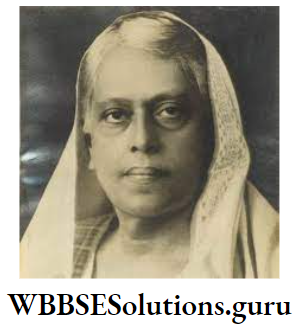
Jibansmriti (1912) by Rabindra Nath Tagore Importance:
- We come to know about the customs and traditions which were followed in the Tagore family residence at Jorasanko.
- He was brought up by a governess in his childhood and in his adolescent years he had to follow the strict discipline imposed by his teacher at home.
- During his childhood, while being confined to his own room, he used to watch the world move around him through the window.
- Jibansmriti’ has helped us to know many things about the society of that time. Lives of many others have been revealed to us along with a picture of the social lattice.
- From ‘Jibansmriti’ we come to know that revolutionary freedom movements were started by Rajnarayan Basu and Jyotirindranath Tagore at Jorasanko (1860), Nabagopal Mitra in Sankar Ghosh Lane, Kolkata (1870) and by Tinkori Chattopadhyay in Hooghly.
- Rabindranath was almost 50 years old when he wrote ‘Jibansmriti’ and many omissions and forgetfulness can be noted. There seem to be discrepancies between what was written by him and actual historical fact.
- For example, he wrote that he used to be admonished by a certain servant named Shyam. But in reality, Shyam joined the Tagore household when Rabindranath was a grown-up person and not a child anymore.
- Hence, materials from ‘Jibansmriti’ should be very closely scrutinised before applying them to construct proper history.
WBBSE Class 10 History Sample Papers
Jibansmriti (1912) by Rabindra Nath Tagore Evaluation
- Rabindranath himself said that ‘Jibansmriti’ was not a historical treatise of his life, but reminiscences of his life sketched from memory. Here he has given a description of the life and people seen by him at his Jorasanko and Sadar Street residences.
- In Jibansmriti we also find an account of how the Tagore family had gone beyond religious reforms and got themselves deeply involved in nationalism. He observed that externally the Tagore family seemed to be oriented in English culture and lifestyle, but deep within, ran a predominantly. strong Indian feeling.
Jibaner Jharapata by Sarala Debi Chowdhurani: I have made a garland out of the dry leaves of life which have already been shed-this is my memoir, my life’s story’-These were the opening lines of ‘Jibaner Jharapata’. This book helps to know
- Sarala Debi Chowdhurani (1872-1945) was the second daughter of Swarnakumari Debi and Janakinath Ghoshal. She was a graduate in English; having been awarded the ‘Padmavati gold medal.
- She wrote books like ‘Nababarsher Swapna’ (Dreams in the New Year), ‘Jibaner Jharapata’ (The Fallen Leaves of life), ‘Shibratrir Puja’ (Worship on Shibratri) etc.
- Jibaner Jharapata is a unique material in the study of Indian history.
- This book was published in as a series in the weekly magazine ‘Desh’ from 24th Kartik, 1351 to 26th Jaishtha, 1352. It was first published as a book on International Women’s Year, in 1975.
Jibaner Jharapata by Sarala Debi Chowdhurani Contents:
- The autobiography ‘Jibaner Jharapata’ tells us not only about the story of the young Sarala’s growing up into a lady, but also gives us glimpses of our country during that time. Normally a woman’s autobiography contains mundane incidents about daily life. But Sarala Debi boldly defied the diktats of society and wrote about her activities outside the confinements of her home.
- Many of these events have made their place in history. ‘Jibaner Jharapata’ is of immense importance to understanding Bengali society today. In those days she helped in women’s organisations, encouraged boys to undertake physical training and form clubs, and even sang herself in functions and conferences.
- As the first political leader of modern India, Sarala Devi had involvement with ‘Suhrid Samiti’ (1905) and pioneered the ‘Bharat Stri Mahamandal’ (1911).
- She introduced ‘Birashtami Utsav’ (1902) and ‘Pratapaditya Utsav’ (1903) to encourage the youths with the ideals of Lathi and sword fighting.
- Sarala Devi got married barister of Punjab Pandit Rambhanja Dutta Choudhury in 1905.
- The music for the first two lines of the song ‘Vande Mataram’ by Bankim Chandra was composed by her maternal uncle Rabindranath: But Jadu Bhatta set the music on ‘Vande Mataram’ first.
- Sarala Debi composed music for the remaining lines, sung the song ‘Vande Mataram’ in Calcutta Congress Conference (1905), and proposed to name it the National Song India.
Jibaner Jharapata by Sarala Debi Chowdhurani Evaluation: ‘Jibaner Jharapata’ is indeed steeped in history. As a result
- If attracted the attention of top intellectuals and politicians of that time.
- To build a nation from the roots, she wielded the pen to write about problems facing the nation and also participated in the freedom struggle and proved that after all women are not that soft-minded.
- This autobiography is not about only loving a child, but a saga of a woman’s love for the girl child and other women.
Letters written by Jawaharlal Nehru to his Daughter Indira Gandhi: Background:
- In 1928 Jawaharlal Nehru wrote 30 letters to his ten-year-old daughter Indira’s early name (Priyadarshini). Through these letters, he taught his daughter about Natural History and different civilizations of the world.
- These letters, written in English, were sent from Ananda Bhavan, Allahabad to Mussoorie, Uttarakhand where Indira lived in a residential school hostel. Munshi Premchanda had translated these letters in Hindi and named it ‘Pita ke Patra Putri ke Naam’. The letters had important role to play in developing
Indira into a great leader and fine human being. - In 1929 the letters were published by “Law Journal Press of Allahabad’ in a form of book named ‘Letters from a Father to his Daughter’. These letters were again published as a book by the Children’s Book Trust in 1973.
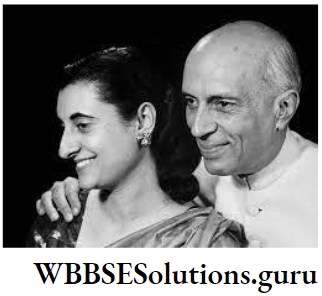
Jibaner Jharapata by Sarala Debi Chowdhurani Importance:
- In the first letter he wrote that one must overcome sluggishness and narrowness in order to understand the world at large. If we remain confined within the country in which we are born, we will never be able to know about different countries of the world and their people.
- Nehru wrote in a letter the people in every country think that they are more intelligent and superior to all others. Everybody wants to think well of himself and his country. We must try to accept what is good and reject what is bad. If a country has something good to offer, it must be forthrightly accepted.
- Nehru adviced Indira through a letter, if we keep accepting what is good, the world will become a dreamland of peace and happiness. Religion and morality are of utmost importance in our lives.
- In one of the letters he told Indira about the importance of agriculture for the supply of food.
- The politics and farsightedness of politicians were discussed in yet another letter. He said that the king should never forget that it was the people who had selected him to sit on the throne.
- In some letters while projecting India as a democratic republic, he maintained that growth of trade and commerce was essential for globalisation.
- Through his letters Nehru told his daughter that he wore handloom clothes instead of foreign clothes. He also told his daughter about various kinds of social divisions. Through the letters Nehry said his daughter ‘Morality is essential for maintaining peace and justice’.
- He told his daughter, ‘Power is not your right, but it is a special privilege, which must be used selflessly in an intelligent manner.”
WBBSE Class 10 History Sample Papers
3. Periodicals and Newspapers:
Periodicals are published at regular intervals. Some periodicals are ‘Sabuj-patra’, ‘Prabasi’, ‘Kollol’ etc. They are called magazines when they publish articles of entertainment. The Newspaper are generally published regularly with sufficient supply of various types of news and reports.
The difference between periodical and newspaper are as
Newspapers are printed daily on cheap paper and are distributed without any binding, whereas periodicals are printed on comparatively more expensive papers, binding, and are published weekly, fortnightly, monthly, tri-monthly, or yearly.
Periodicals generally do not deal with fresh current news, but they give more importance to personal views. On the other hand Newspapers deals with current news and events.
Periodicals with pictures started being published from the end of the Nineteenth century. Little magazines are periodical that made their appearance towards the beginning of the Twentieth century (1912). But newspapers starting it publishing after the publication of periodicals and magazines.
The first Bengali periodical to be published were ‘Digdarshan’ (April 1818) as a monthly paper and ‘Samachar Darpan’ (1818) as a weekly magazine published in Bengali and the first weekly English paper was the ‘Bengal Gazettee’ of James Augustus Hicky. But first daily Bengali newspaper was the ‘Sambad Prabhakar’ edited by Iswar Chandra Gupta (1831) by John Clarke Marshman.
Some periodicals worth mentioning from the olden times are the German magazine ‘Erbauliche Monaths-Unterredungen (1663-1668), the French magazine Journal des Scavans’ (1665), and ‘Philosophical Transaction’ published by the Royal Society in England (1665).
- Bangadarshan (1872): In April, 1872 Bankim Chandra Chattopadhyay started publishing the magazine Bangadarshan as a periodical.
- Originally, articles written by Bankim Chandra alone were published in this magazine.
- But it covered many topics like the Farmers’ Rebellion in the post-Indigo Revolt period.
- British oppression, mal-administration,
- Portrait of contemporary society, ‘Babu’ culture of Kolkata etc. In other words, Bangadarshan was a true mirror of the society at that time. Bangadarshan was published by Bankim Chandra for four years. He was the first person to stress the importance of nationalism and patriotism in a monthly journal.
- Bankim Chandra, the publisher of Bangadarshan, directly challenged the ‘Babu Culture’ or the decadent lifestyle of the young gentry of Kolkata. This trend was later followed by Jogendra Nath Bidyabhushan, publisher of ‘Arjadarshan’.
- Bangadarshan had witnessed three eras-the era of Bankim Chandra Chattopadhyay (1872- 1876), the era of Sanjib Chandra Chattopadhyay (1876-1887) and the era of Rabindra Nath Tagore (1901). When Bhudeb Chattopadhyay was publishing Bangadarshan, he laid more emphasis on ancient culture and theosophical life, rather than contemporary events.
- But Bankim Chandra was more intellectual in his approach. He laid more emphasis on the history and philosophy of Bengal. His Bengal was a land of valiant people, a holy place, which he worshipped through his song ‘Vande Mataram’ written in 1875.
- In Bangadarshan, Bankim Chandra scorned the English and Farsi languages and gave more importance to Bengali language, and brought about a Renaissance in Bengal. Dr. Ramesh Chandra Majumder remarked that Bangadarshan is the first literary newspaper, in Bengal.
- Somprakash (1858):
- Somprakash, the first political newspaper in Bengali, was published by Dwaraka Nath Bidyabhushan on 15th November 1858. It was a weekly journal where political news was published rather than creative literary work. From this magazine we come to know about the fate of British rule. Dwarakanath Bandopadhyay (1819-1886), the publisher of Somprakash, had the title ‘Bidyabhushan’. His two renowned students were Ramtanu Lahiri and Iswar
- Chandra Gupta (publisher of Sambad Prabhakar). Dwarakanath, an academic, journalist and social activist, published Somprakash magazine from Champatala in Kolkata. These lines were printed at the end of the magazine- ‘This magazine is published every Monday by Sri Gobinda Chandra Bhattacharya from house number 1, Siddheswar Lane of Champatala, Amherst Street’.
- It was called ‘Somprakash’ because it was published every Monday (Sombar): The Government banned the publication of the magazine because
- It had protested against the ‘Vernacular Press Act’ of Lord Lytton passed in 1878.
- This paper criticised government activities and oppressive measures on common people.
- Apart from this oppression of the European Indigo planters on poor Indigo cultivators were also reported in the ‘Somprakash’ during Indigo Revolt.
- For the publication anti British reports government asked for an apology to the editor. But he denied apology or fine. That is why the Somprakash was banned by Lytton. But after banned of Somprakash the same magazine came out again in a new form on 9th April, 1883 from Mirjapur Street. It was the responsibility of the newspaper to criticize the activities of the Government. Dwarakanath also published a monthly magazine called ‘Kalpadrum’ in 1878.
- He had constructed the D. V. A. School in Harinavi, Sonarpur-Rajpur Municipality, and Rajpur Post Office. It was Vidyasagar who proposed the publication of the weekly magazine. He wanted to bring to the notice of the Government the need for providing employment to the educated deaf and dumb people.

WBBSE Class 10 History And Environment Chapter 1 Ideas Of History Very Short Question And Answers
Question 1. What is the principal subject matter of Social History?
Answer: History of the common man is the principal subject matter of Social History.
Question 2. Who founded the ‘Annales School’?
Answer: Fernand Braudel.
Question 3. Where did the game of cricket start?
Answer: England.
Question 4. What is the source of Indian music?
Answer: Sam Veda.
Question 5. What is the name of the traditional dress worn by the men in Gujarat?
Answer: Angrakha.
Question 6. In which year did photography come to India?
Answer: In 1860.
WBBSE Class 10 History Sample Papers
Question 7. What is the name of the book written by Madhab Gadgil and Ramchandra Guha on environmental problems and pollution?
Answer: These Fissured Lands, an Ecological History of India’.
Question 8. What is the title of the autobiography of Bipin Chandra Pal?
Answer: Sattar Bathsar.
Question 9. What is the name of the book which is a compilation of letters written by Jawaharlal Nehru to Indira Gandhi?
Answer: Letters from a Father to his Daughter.
WBBSE Class 10 History And Environment Chapter 1 Ideas Of History True Or False
Question 1. New Social History is a study of kings and their empires.
Answer: False
Question 2. The song ‘Vande Mataram’ was composed by Rabidranath Tagore.
Answer: False
Question 3. The first Bengali periodical to be published was ‘Digdarshan”.
Answer: True
WBBSE Class 10 History And Environment Chapter 1 Ideas Of History Fill In The Blanks
Question 1. The autobiography of Sarala Debi Chowdhurani is called ______
Answer: Jibaner Jharapata
Question 2. The first women’s cricket club was established in England in _______
Answer: 1887
Question 3. After Michael Faraday discovered _______, the controlled flow of signals became very convenient. (Electro Magnetic Induction)
Answer: Electro Magnetic Induction
Question 4. The term eco-feminism was first used by the French feminist ______
Answer: Francois Doban
Question 5. Rabindranath in his book _______ has told many stories from his childhood.
Answer: Jibansmriti
WBBSE Class 10 History And Environment Chapter 1 Ideas Of History Short Question And Answers
Question 1. How are autobiographies and memoirs useful as source of historical information?
Answer:
Autobiographies and memoirs useful as source of historical information are as follows
When a person writes unadulterated truth about himself, it is called an autobiography and memoirs are personal reminiscences. Hence, it is possible to get authentic information about the events and people of that time from these materials.
Some well-known autobiographies are Jibansmriti’ of Rabindranath Tagore, ‘Atmochorit’ of Debendra Nath Tagore, ‘Ramtanu Lahiri O Totkalin Bango Samaj by Sibnath Shastri, ‘A Nation in the Making’ by Surendra Nath Banerjee, ‘Discovery of India’ by Jawaharlal Nehru, ‘India Wins Freedom’ by Maulana Abul Kalam Azad, etc.
Question 2. What are the advantages of using the internet in the study and collection of historical information?
Answer:
The advantages of using the internet in the study and collection of historical information
In the present age of electronic media, we get much information about history from the internet. The advantages of using the Internet are
- No books are needed;
- Information can be collected as and when required and
- Internet helps us by providing the correct information about many complex problems.