
Nineteenth-Century Bengal Magazines Newspapers And Literature As Reflections Of Culture Introduction
- The culture of nineteenth-century Bengal was best reflected through magazines, newspapers, and other literary activities. Now we shall examine the nature of magazines being published in those days.
- Like present-day magazines the nineteenth century were also published regularly in equal intervals. The magazines or journals were published with a specific directive in mind or maybe just for the sake of reading pleasure.
- The newspaper was a daily or periodical which focused on news items. Like the present times both were a medium for publication of stories, poems, essays, and serial novels. The three (magazines, newspapers, and literature) are an important source of our knowledge of the societies existing in those times.
Read and Learn More WBBSE Notes For Class 10 History And Environment

Nineteenth-Century Bengal Magazines Newspapers And Literature As Reflections Of Culture Bengal Bamabodhini 1863
Bamabodhini (1863) Origin: In the nineteenth century amongst the magazines in Bengal which focused on women’s issues-Bamabodhini was the most popular. This monthly periodical was published first in August 1863 and continued for sixty years till the publication of the last issue in 1922.
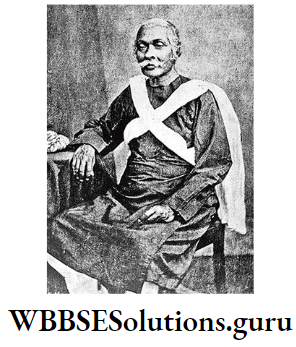
- The first editor of the magazine was Umesh Chandra Dutta (1840-1907) of Mazilpur, Jayanagar, 24 Pgs (S) who the ‘Bamabodhini Sabha’ a society that was devoted to the emancipation of women.
- He was the first Principal of the City College, Calcutta and at that time he published a weekly newspaper ‘Bharat Samskar’. In fact, the Bamabodhini was the mouthpiece of this society.
- Bamabodhini is actually a fusion of two words in Bengali, ‘Bama’ meaning women, and Bodhini meaning an ode to the woman. During the start of the publication of this periodical, Umesh Chandra Dutta was assisted in his work, especially by Kshetra Mohan Dutta and Basanta Kumar Dutta.
- After continuous editing of the magazine for 44 years by Umesh Chandra Dutta, the work was carried forward by other luminaries the prominent amongst them being Sukumar Dutta, Tarakumar Kabiratna, Surya Kumar Chattopadhyay and Kshetra Gopal Mukhopadhyay.
WBBSE Class 10 History Notes
- The last editor of this magazine was Ananada Kumar Dutta and the Bamabodhini lasted for total 60 years. Its best writer was Mankumari Basu.
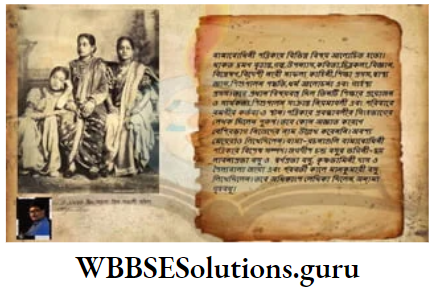
Bamabodhini (1863) Impacts: Usually the progressive luminaries contributed in form of writings to the Bamabodhini magazine.
- The topics usually dwelt on the existing issues of the then society and covered discussions on religions, laws, science, history, traditional medicines, child care, women’s education, etc.
- One of the primary goals of the magazine was to educate the housewife and bring to force their importance in the progress of the society.
- Bamabodhini without any qualms protested regularly against oppression of women in the society.
- The magazine stressed the only way to ensure progress of the society, was to ensure progress of the woman in the family and it was tried to understand that by educating a woman in the family, meant educating the whole family.
- Like Bamabodhini, Pyarichand Mitra (author of ‘Alaler Ghorer Dulal’) and Radhanath Sikdar also published the magazine ‘Monthly Paper’ in 1858, but this could run for only four years. Along with Umesh Chandra Dutta, two other members from the ‘Bamabodhini Society’, Ashutosh Ghosh and Santosh Kumar Dutta were part of the editorial board of the magazine. The main office of the magazine was located at 16, Raghunath Street, Simulia, Calcutta.
- The magazine catered to finding solutions to women’s problems. The main focus was the removal of ignorance and superstitious dogmas prevalent in society those days.
- This was evident from the first issue of the magazine itself where in the very beginning it was written, ‘Bamabodhini will cover the topics of language, geography, history, life’s character, science, health, law and justice, country, poem, home remedies, child care, skills, and home development. The essays published in the ‘Bamabodhini’ were codified by Pyarichand Mitra and Shibchandra Deb, in the book ‘Women Education’ (“Nari Shiksha”).
Bamabodhini (1863) Evaluation:
- In the second issue, the following lines were published-‘God is the father of all the people and his mercy is applicable equally to man and woman. He has bestowed the mind of men and women equally with the power to acquire knowledge, then why should you women who have eyes remain blind?
- In another one of its later issues, it had stressed the need for caring of the girl child and ensuring the need for her proper education. It had stated that if the light of education is not allowed to enter the mind of the woman, then mankind will not be benefited.
- The magazine went on to identify the main hindrances to woman’s education-paucity of time, lack of interest, and disinterest shown by teachers.
WBBSE Class 10 History Notes
- Hence the Bamabodhini took it upon itself to remove fear, ignorance, and superstitious dogmas from the mind of the women and replace these with the glowing light of knowledge, truth, power to analyse and most important identify the weaknesses and eradicate them completely.
- The efforts by this magazine had to a great extent been instrumental in converting the nineteenth-century Bengali woman in bondage into a modern free woman.
Nineteenth-Century Bengal Magazines Newspapers And Literature As Reflections Of Culture Hindu Patriot 1853
Hindu Patriot (1853) Origin:
- The Hindu Patriot was a weekly newspaper. It was a mouthpiece of the ‘British Indian Association’ (1851). It was started publishing on 6th January 1853. The first proprietor of this news paper was Madhusudhan Ray and the first managing editor of the paper (1849). was Girish Chandra Ghosh.
- In 1855 the proprietorship of the periodical changed hands and Haran chandra Mukherjee the elder brother of Harish Chandra Mukherjee (1824-1861) became its new owner and first editor. Basically, the latter was got associated with the editorial work of the newspaper along with his elder brother
Hindu Patriot (1853) Importance:
- As the first editor Harish Chandra played an important role during the Indigo Revolt (1860) and also the Sepoy Mutiny (1857). The Indigo Revolt was in reaction to the Indigo Tax imposed on the poor farmers along with the oppression by their British landlords. This was extensively covered by Harish Chandra in the Hindu Patriot. The newspaper was able to fire up the imagination of the people against the British oppressive rule on the poor farmers.
- Hindu Patriot also threw a lot of light on women’s education and widow remarriage. This newspaper encourages people to follow the path of John Elliot Drinkwater Bethune who had started the Bethune School for Girls in 1841
- Many advantages of widow remarriage were highlighted in this newspaper. Hindu Patriot also opposed the Hindu Divorce Law, oppression on the Santhal revolt (1855), and oppression of the European Indigo planters on the poor Indigo cultivators.
- This newspaper was highly critical of the British misrule in India. Everyone wanted the publication to be liberal. Harishchandra always advised the public through this paper to rise in revolt or movement whenever the British administration or Parliament failed to meet the aspirations of the people:
- However, he didn’t consider the British rule in India as an imperial rule. In fact he advised the people to learn from the British and their rule and become more enlightened in the process. This has been described in detail in the 11th October 1855 issue of the Hindu Patriot
- During the Sepoy Mutiny of 1857, the Act 15 of banning Hindu Intelligence was however not criticized in the newspaper. Ramgopal Sanyal commented that the newspaper had been even sympathetic to the British during these turbulent days. For this reason, Lord Canning and the contemporary British parliamentarian Lord Grenwill had been very impressed with the editorial of the newspaper.
Hindu Patriot (1853) Evaluation: The Hindu Patriot though popular was an expensive newspaper. This is the reason its circulation gradually went down. Coupled with this the sudden demise of
- Harishchandra Mukherjee almost sounded the death knell for the newspaper. Whatever efforts made by the subsequent editors Krishna Pada Pal from 1861 to 1884 and Sambhu Chandra Mukherjee all were in vain and the newspaper was soon closed down. In March 1892 the Hindu Patriot became a daily newspaper.
- Nineteenth Century Bengal Hutum Pyanchar Naksha 1862
Class 10 History Important Questions WBBSE
Nineteenth-Century Bengal Magazines Newspapers And Literature As Reflections Of Culture Hutum Pyanchar Naksha 1862
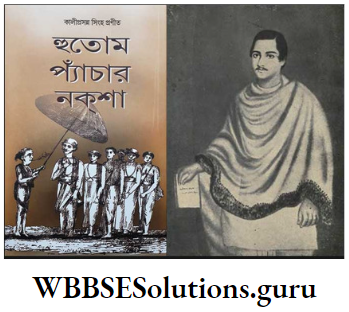
Background: Pandit Kaliprasanna Singha (23rd February 1841 to 24th July 1870) was famous for two brilliant works,
- Translation of the mammoth epic ‘Mahabharat’ to Bengali with the help of 10 scholars and.
- ‘Hutum Pyanchar Naksha’ in 1862, The translation took him several years (1858 to 1866), but his other works were plays ‘Babu’ (1858), ‘Bikramabarshi’ (1857), ‘Sabitri Satyavan’ (1858) and ‘Malati Madhab’ (1859). His disguised name was ‘Hutum Pyancha’ taken in 1861.
Hutum Pyanchar Naksha 1862 Importance:
- We are able to understand a lot about the society existing in nineteenth-century Bengal, through the Hutum Pyanchar Naksha. Though he was born in the rich Jora.. Shankha, Zamindar family, we can get the picture of the ordinary man on the streets, from this novel.
- Having an incredible memory, Kaliprasanna Singha’s multi-faceted talents were visible from his early childhood. Hutum Pyanchar Naksha is a remarkable timeless novel in which Calcutta’s Babu culture has been described eloquently. The Babu culture was evident mostly in Calcutta’s rich landlords, traders, rich alcoholics, and the unscrupulous rich. Bankim Chandra has described this class of people as one of the world’s ten avatars.
- In the book ‘Hutum Pyanchar Naksha’ Kaliprasanna ‘criticized
- Attitude of english educated middle class,
- Rich and prosperous babus and their social and moral degradation,
- Contemporary city-dwellers of Kolkata were divided by him into three types like
- Blind followers english culture,
- English educated new rational class,
- Orthodox hindu society without knowing English were dishonest and cheaters,
- Picture of ordinary Calcutta, where Kaliprasanna discussed charak, barware festivals, boy-kidnapper, flying Nilkantha Pakshi, Durgapuja, Rathyatra, and Ramlila festivals, etc.
- Kaliprasanna has described this in disciplined class in detail. In recent times writer Sunil Gangopadhyay has re-written this novel in a new format, ‘Sei Samay. Like the earlier writing this novel also tries to capture the society of the present day youth.
- On one hand Kaliprasanna was a writer, editor, and publisher on the other hand he was an accomplished social worker. On the publishing of his novel Hutum Pyanchar Naksha, in 1862, he started getting accolades from all corners. In this novel, he has criticized the middle class of the existing times.
- The novel throws light on the existing interpersonal behavior, religious occasions and festivities, and the various social groupings and societies of that time. This was the first Bengali book which was written in the colloquial language in a total of 140 pages. As it was very critical of certain classes of society, many feathers were ruffled by this novel. In retaliation two or three other novels were also published which tried to present a contradictory picture to the public.
Hutum Pyanchar Naksha 1862 Evaluation:
- Hutum Pyanchar Naksha was a very popular novel in Bengal in the nineteenth century. Till date innumerable editions of this book have been published.
- Bankim Chandra Chattopadhyay had compared this book of Charles Dickens’s ‘Sketches By Boz’. According to him this book in a very strong language has described all stratas of the society existing in the latter half of nineteenth century Bengal.
- This book like many others at that time has described vividly the dance of the nautch girls in the farm houses of the zamindars of Bengal.
- Even forty years before the publishing of this book Bhavani Charan Bandhopadhya in his book ‘Kolikata Kamalaloy (1823) had mentioned about similar trends in the society.
- Besides, this ‘Nabababubilas’ (1825) and ‘Babubilas’ (1831), Pyarichand Mitra’s ‘Aalaler Gharer Dulal’, Michael Madhusudhan Dutta’s ‘Ekei ki Bole Sabhyata’ and Dinabandhu Mitra’s ‘Sadhabar Ekadoshi’ all had described the nineteenth century Bengal society which find reflection in the book ‘Hutum Pyanchar Naksha’. Kaliprasanna also gave financial help to ‘Tatwabodhini’, ‘Somprakash’, ‘Bengalee’, ‘Hindu Patriot’ and ‘Mukherjee’s magazine’.
Class 10 History Important Questions WBBSE
Nineteenth-Century Bengal Magazines Newspapers And Literature As Reflections Of Culture Nil Darpan 1860
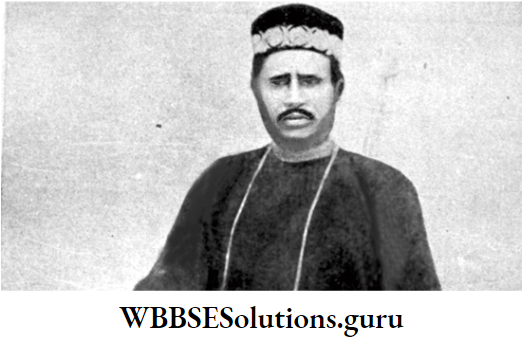
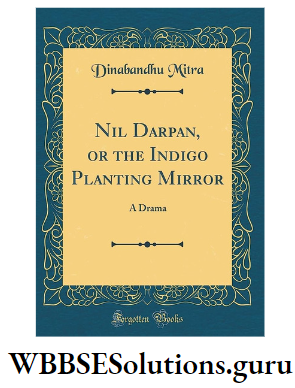
Famous writer and dramatist, Dinabandhu Mitra (1829-1873) composed the drama Nil Darpan in 1860. The real name of Dinabandhu Mitra was Gandharbanarayan with the pseudonym, ‘Kenchit Pathikenavipranitam’ (coffee) Dinabandhu wrote the. drama ‘Nil Darpan’, who was a staff of Postal department under British Government.
Importance aspects of Nil Darpan were
- This drama was based on the Indigo Revolt of 1859-60.
- The drama highlighted the oppression of the poor indigo farmers by the British landlords and money lenders.
- The analysis of the movement in the work is noteworthy. On 7th December, 1872 the drama was played for the first time in theaters.
- In this drama, the playwright had very aptly. projected the picture of the English gentleman Roghses. While viewing this play at Calcutta’s Great National Theatre, Vidyasagar got so worked up with the character of Roxes, played by Ardhendu Sekhar Mustafi that he threw a shoe at the actor.
- The christian clergy James. Long who was a great admirer of Dinabandhu Mitra wanted Michael Madhusudan Dutta to translate the drama into English. The British Government did not like this effort by the priest and ordered him to be put behind bars for three months. On request. of christian clergy Reverend James Long the drama ‘Nil Darpan’ was translated by Michael Madhusudan Dutta in English. For this reason Long Saheb was sent to jail and had to pay Rs. 20,000 as fine.
- It made reaction among the people of India. Nil Darpan was the first Bengali play to be translated into English. Bankim Chandra had compared the Nil Darpan, to Harriet Beecher Stowe’s Uncle Tom’s Cabin.
Nineteenth-Century Bengal Magazines Newspapers And Literature As Reflections Of Culture Grambarta Prakashika 1863
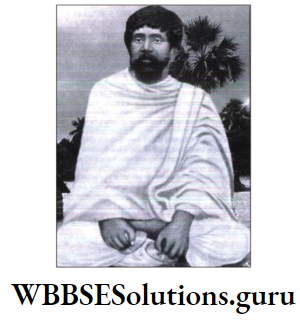
Grambarta Prakashika 1863 Origin: Grambarta was an important and exceptional periodical of nineteenth-century Bengal published first in April 1863. Its editor was a rural journalist ‘Kangal Harinath Mazumdar’ (1833-1896). He was a headmaster of Kumarkhali Bangla Pathsala of Bangladesh.
Grambarta Prakashika 1863 Importance:
- Only 19 episodes of his periodical ‘Grambarta’ was published by Jessor. As this periodical highlighted the life and condition of the villagers, and villages of Santipur, Meherpur Chakdaha, etc. its name had been “Grambarta. Prakashika”
- Its objective was to inform the whereabouts of the villagers to British Government for immediate action. So the name ‘Grambarta’, was meaningful no doubt.
- In 1864 (June- July months) this became a fortnightly magazine and in 1871 (April-May months) it got converted to a weekly magazine. First, this was printed in the Girish Bidyaratna Press and later on the magazine was published from Maturanath Press of Kumrakhali village in Pabna district (Present day Nadia).
- Kangal Harinath was helped many ways by Mathuranath Maitra. The magazine usually focused on culture, philosophy, and science. Rabindranath Kangal Harinath Tagore, Mir Musharaf Hossien, and Jalandhar Sen had contributed many essays to this magazine. Kangal Harinath continued to be the editor of this magazine alone for eighteen years.
- In this magazine, he had tried to bring forth the progress of Bengal’s education and also its misuse. He also tried to highlight the mistakes committed by the society and the politicians of those times like the oppression by the British, landlords, and money lenders on the indigo farmers have been sharply criticized by the magazine.
Grambarta Prakashika 1863 Evaluation:
- Kangal Harinath did not have formal education, but yet he thought that education is life. Though he was a hindu, he was highly inspired with the ideals of Brahmo leader Bijoy Krishna Goswami and Lalan Fakir.
- He composed the Baul Songs for village men by his new name “Kaħgal Fikirchand”. Besides the ‘Sambad Prabhakar’ of Iswar Chandra Gupta had a deep impact in his life.
- Harinath’s ‘Grambarta Prakashika’ had highlighted the sorrows and sufferings of the village people. He strictly criticised the oppressive Zamindars, money-lenders, indigo-planters, Zamindars of the Tagore family of Jorasanko.
- ‘Grambarta’ was the only literary magazine that supported the rival peasants in the Pubna Revolt (1870).
WBBSE History And Environment Notes PDF
Nineteenth-Century Bengal Education Culture Characteristics
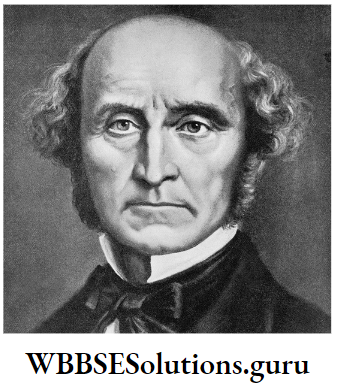
- Philosopher Jeremi Bentham (1748-1823), his pupil James Mill (1773-1836), and the latter’s son John Stuart Mill advocated the theory ‘greatest happiness for the greatest number’. This theory was called Hedonism. This western thinking and education, induced a new enthusiasm, energy and enlightened the Indian society and civilization.
- East India Company as such didn’t encourage the introduction of Western education in India. On the contrary, the company was apprehensive of this and there was a thinking that enlightening Indians with this education will be detrimental for the Company. Warren Hastings on the other hand was a great protagonist of the native education system. He started many endeavors for the encouragement of the learning of Indian languages.
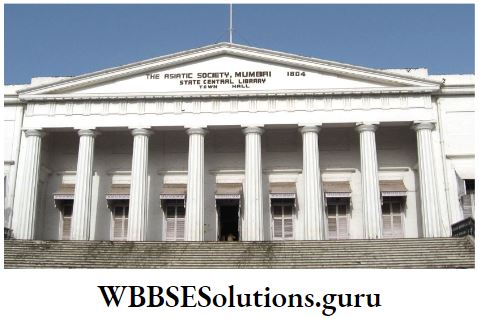
- In 1781 on the request of the Muslims, Hastings built the Calcutta Madrasa. In 1784 the Judge of Calcutta High Court, Sir William Jones established the Asiatic Society.
- In 1787, Charles Wilkins created the Bengali alphabet blocks to print Halhed’s Bengali Grammer book. In 1792, Jonathan Duncan established the Sanskrit College in Benaras.
- To ensure an able administration in India, Company thought that its staff must be educated in Indian languages, traditions, etc, and with this specific purpose, Lord Wellesley established the Fort William College in 1800.
Nineteenth-Century Bengal Education Culture Characteristics Conflicts Between Oriental And Western Education
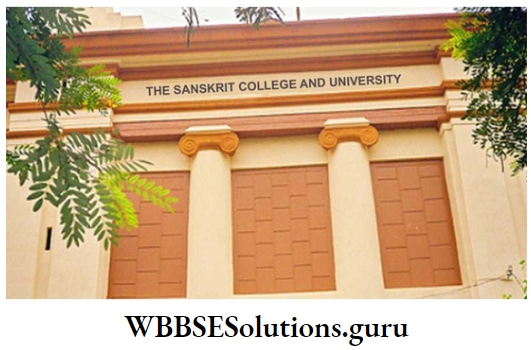
- Famous Orientalist H. H. Wilson in 1821 laid the foundation of the Sanskrit college in Calcutta. The College started functioning on 1st January 1824. The main function of the college was researching Hindu Literature and the influence of Western knowledge.
- For the growth of education, Lord Amherst instituted the General Committee of Public Instruction (GCPI) in 1823 A.D. This Committee, majority orientalist members like James Princep, W. W. Wilson, H. T. Colbrooke, and Halt Mackenzie had suggested the merger of ancient Indian and modern European science.
- They tried to spend government money for the growth and development of Indian Science and classical literature and its teaching through Sanskrit, Arabic, and Persian languages. Therefore they patronised the Sanskrit College, and traditional oriental institutes like Tole, Madrasah, etc. But they had also noted that it was essential to know English to study Western science and culture.
- This was the beginning of the competition between Oriental and Western education. The first evidence of this competition was visible when the Charter Act of 1813 was passed. The reason was that this law ensured the spending of rupees one lakh (Rs. 1,00,000) education-but on which education-Indian or Western.
- A tug of war ensured between the protagonists of Western and Indian education. This was called the Evangelical Movement. But the progressive-minded middle class wanted the induction of western education in India and that too without any governmental assistance. For this reason, Anglicist Raja Ram Mohan Roy wrote a letter to Lord Amherst in 1823 which reflected his strong views on the uselessness of Sanskrit education.
- In an essay published in 7th September 1833 in Sudhakar magazine, it was noted that other than the Brahmins no one else will be benefited by Sanskrit education.
- Favoring western education were the ‘Elphinston Minute’ (16th December 1823), Bombay Governor John Malcolm’s request (1828), the order by the Court of Directory (29th September 1830), and on 2nd February 1835 the ‘Macaulay Minute’.
- Anglicist Macaulay’s efforts on 7th March 1835 in spreading Western education in India met with very strong criticism from orientalist H. T. Princep, H. H. Wilson, and Brian Hudson.
- Through this conflict the western education system was followed and as a result the Calcutta Medical College (1835) and the Bombay Elphinston College were established in 1835 along with 14 new institutions.
- Finally, the ‘Auckland Minute’ of 24th November 1831 put the arguments to rest, when it declared that without disturbing the foundations of Western education, the government will spend an extra rupees thirty-one thousand on native education.
- Also, the medium of education will be Bengali and English and the students were given the freedom to pursue their studies in any one of the mediums of their desire.

Nineteenth-Century Bengal Education Culture Characteristics Spread Of English Education
Spread Of English Education Reasons:
- In 1803 William Ward commented that almost every village in Bengal had a school. Later on in Adam’s Report it has been stated that there were more than a hundred thousand schools in Bengal.
- But the conditions of these schools were not at all up to the mark. Historian Dr. Amitabha Mukherjee has also noted in his work Reform and Regeneration in Bengal, that this existing system.of education was ordinary and they had no access to modern education.

Spread of English Education Private Efforts: Bengalis were the first to show interest in English education. Dwarkanath Thakur was influenced by the English school opened by a Eurasian named Sherbon in Jorashanko.
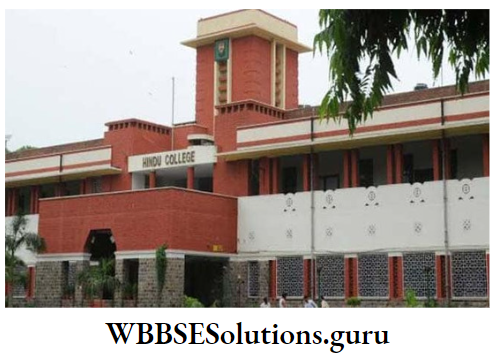
- In Calcutta, another Eurasian was employed as an English tutor in the house of Motilal Shil. Later on with the efforts of Radhakanta Deb, the Hindu College was established in 1817 and later on in 1855 this was renamed as the Presidency College.
- The prominent students of Hindu College were Bhudeb Mukhopadhya, Madhusudan Dutta, Parichand Mitra, and Rajnarayan Basu. Besides this David Hare opened an English school which today exists by the name of Hare School.
- In 1800 in Bhawanipore, Calcutta, and in 1824 in Chinsurah two English schools were opened. A new wave of development of schools and school books started taking place after the Calcutta School Book Society (1817) and the Calcutta School Society (1818) were established.
- The young lecturer in Hindu College Louis Henry Vivian Derozio and some of his students had established six primary schools in Calcutta in 1831. Ram Mohan himself had opened a school in Surikhana in Calcutta. In 1828, Gourmohan Adda had also opened a school by the name of Oriental Seminari.
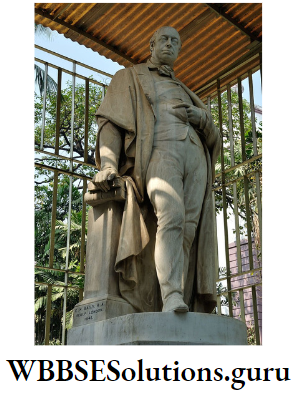
WBBSE History And Environment Notes PDF
Spread of English Education The efforts by Missionaries: The missionary groups which had made a lot of efforts in trying to open education institutions in India were the Clapham Group, Church Missionary Society, Calcutta Diocesan Committee, London Missionary Society, Church of Scotland, etc.
- In 1793, Baptist Missionary William Kerry and his wife Anna Kerry to spread the Christian religion opened a mission in Sreerampore.
- On Kerry’s instructions, the editor of Samachar Darpan and Dikdarshan, Marshman, and his associated William Ward had established the Sreerampore Baptist Mission. This Mission was able to publish the Bible in 27 Indian languages other than Bengali.
- They also took the responsibility to publish Bengali and Tamil Grammar books from their publishing house. The Sreerampore Mission went on to establish 126 schools imparting western education which catered to almost 10,000 Indian students.
- Charles Grant had commented in the book ‘Observations on the state of Society among the Asiatic Subjects of Great Britain’, that to save the people from the negative traits of the Hindu religion it is important to convert them to Christianity.
- The Mission had stared the Monterial System in which the students of higher classes were required to teach the students of the primary section. This system was started by Andrew Bell and is also known as the Bell System.
- Robert May of the London Missionary Society had established nearly 36 schools. The Church Missionary Society in 1799 had set up a few schools in Bengal and South India.
- The other establishments set up by the Missionaries were Bishos College, Shibpur (1820), Christian College, Madras (1837), Wilson College, Bombay, and ‘Belgium’s Jesuit Missionaries had set up the Lorreto House College and St. Xavier’s College.
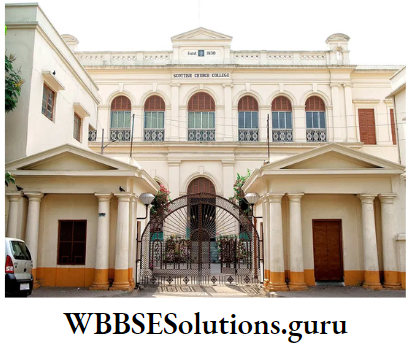
- In 1830 Alexander Duff established the General Assemblies Institution. Later on this came to be known as the Scottish Church College. In fact, the period from 1830 to 1857, is known as the “Duff’s era”.
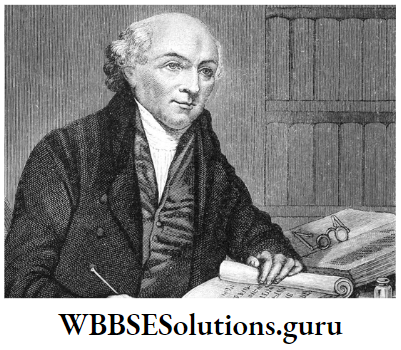
Spread of English Education Government Efforts: The first request to the East India Company to promote western education was made by two educationists Charles Grant and William Wilbur Force. The Company after passing of the Charter Act in 1813 had agreed to spend one lakh rupees for the promotion of education in India. The Charter of laissez faire’ in 1833 gave a new. direction to the promotion of education systems in India.
- The Education Secretary, Thomas Babington Edward Macaulay, was the Chairman of the General Committee of Public Instructions. He took up the work of spreading western education in India. But he had to face the resistance in his work by orientalists Princep and Wilsons.
- After many obstacles he presented his Minutes to the. Governor General. He stated in his Minutes that Oriental education is unscientific and narrow-minded. A single shelf of a good European Library was worth the whole native literature of India and Arabia.
- Lord William Bentinck was of the opinion that western education should be allowed to filter down into the masses. On receiving the Macaulay Minutes, lord Bentinck decided that western education should be imparted in English.
- Bentinck established the Calcutta Medical College, Madras University High School, Thomson Engineering College, and Bombay Elphinstone Institution in 1835. He felt that except the blood and the colour of the skin of the Indians everything else amongst them should be Indian.
- The great objective of the British Government ought to be the promotion of European literature and science among the native of India. In his times 14 schools were opened by the Government. This went up to 48 in a short span of two years.
- In Chandannagar one English school was opened. To promote western education in 1842 the Council of Education was formed. In 1844 Lord Hardinge in his ‘Educational Dispatch’ mentioned the need of English language skills for government employees and this language was also recognised as official language in the same year. Following this every Indian wanted to learn English for a bright future.
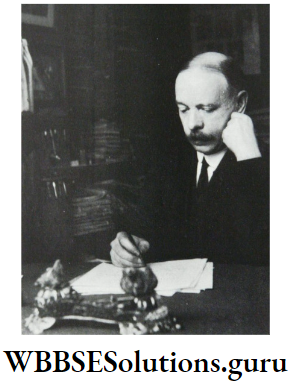
The Chairman for the Board of Controller, Charles Wood in his Wood’s Dispatch in 1854 had mentioned that
- There, was a synchronize the higher education in India to its primary education facilities.
- The need for promotion of English education in India through ‘Wood’s Despatch’ was very important for which it is known as “Magna Carta”.
- The immediate need was felt to establish three Universities in Calcutta, Bombay, and Madras Presidencies. Sir James William Colvile was the first vice chancellor of the Calcutta University.
- The other needs were the establishment of a separate education department (D.P.I.).
- Training facilities for training of teachers.
- It was also felt that a regular maintenance of the government schools was required and also a need for institution of grant-in-aid facilities for the non-governmental schools.
- It was also said that there was a need for middle schools and vastly increase the number of government primary schools.
- Under Lord Rippon, the first education commission was chaired by Sir William Hunter in 1882. This was known as the “Hunter Commission”. The commission espoused that more primary schools need to be established.
- The number of secondary schools also needs to be increased. Even the number of Universities was set to increase under the directives of the commission. Also scholarships needed to be instituted for the deserving students.
Conclusion: According to Dr. Judith, Brown, other than the Brahmins and other people of the higher strata of the society no one else benefited from the spurt in western education. In 1821 the illiterates consisted of nearly 14% of the population. Amongst the women illiteracy was nearly 18%.
WBBSE History And Environment Notes PDF
Nineteenth-Century Bengal Education Culture Characteristics Women’s Education And Iswarchandra Vidyasagar 1820 To1891
- In this era not only there was a spread in English education, but also there was a spurt in education of women. The main protagonists for the women’s education were Ram Mohan Roy, Radha Kanta Deb, David Hare, and Vidyasagar.
- In 1819 the Female Juvenile Society was established. This society published. Gourmohan Bidyalankar’s “Sri-Sikhya Bishayak” which expounded the need for women’s education.
- In 1828 the chief of this society Miss Cook established the ‘Calcutta Female School’. With the help of Vidyasagar and Dakshina Ranjan Mukherjee, ‘Bethun Saheb’ changed its name as Bethun School. In 1825 the Ladies Association was established.
- In 1845 the British Indian Society and Uttarpara’s zamindar Joy Krishna Mukherjee had set up a ‘Balika Bidyalaya’ and in 1847 Pyarichand Mitra had established a ‘Balika Bidyalaya’ in Barasat where role of Vidyasagar is remembered with honour.
- With the help of John Elliot Drinkwater Bethune, Vidyasagar established the Bethune School on 7th May 1849 and College in 1879 for Women In the Wood’s Despatch (1854) women education was included which encouraged Vidyasagar.
- After being appointed as assistant inspector of Bengali medium schools in South Bengal in 1855, Vidyasagar individually founded some girl schools and arranged for govt. aids for its in May 1857.
- The govt. approved two girls schools in Hooghly and Burdwan which inspired him to establish 40 girl schools in which total number of girls increased to 1348 in between November. 1857 to June 1848. Vidyasagar spent 3,400.
- Unfortunately in the later period govt. aids were given but schools were not affiliated. On the memory of his mother Bhagabati. Dévi Vidyasagar founded ‘Bhagabati Vidyalaya’ (1890) in his native village Birsingha, Midnapur.
- With the help of Miss Mari Karpenter, Annet Acroaid and Keshab Ch. Shene founded ‘Normal School’ for girls in 1872. In the spread of female education his friend Madan Mohan Tarkalankar (1817-1858) supported Vidyasagar and admitted two of his daughters Bhubanmala and Kundanmala to the Bethun School. Due to his inspiration, Kalikrishna Mitra founded the first girl school at Barasat, North 24 Parganas.
- After being the secretary of Bethun School in 1850 Vidyasagar became more advance in founding female schools. Vidyasagar founded “Stri-Siksha Bidhayani Sammilani” in many districts for spread of female education.
- He himself carried the cost of 3400 for 1300 girl students of 35 girl school, as govt disliked to pay any aid for them. Vidyasagar wrote “TTER ” i.e. ‘like son daughters are to be cared for and given education’ by the side of the carriage of the girls of the Bethun School.
- Vidyasagar opened nearly 35 schools, exclusively for the education of the girl child. Some of literary works included Barnoparichay (1855), Bodhodoy, Kathamala, Sitar Bonobas and Bhranti Bilas. Vidyasagar was in favour of the western education in India.
- He considered the British colonial occupation of India as blessing for the Indians. For this reason he never joined the numerous freedom movements against the British rule.
- It needs to be noted here that in 1870, when the Lt. Governor of Bengal, George Campbell scared with the youth of Bengal’s enthusiasm to undergo western education; to bring down the number of colleges in semi-towns, then a spontaneous movement was started against British.
- Vidyasagar instead of taking part in the protests quietly set up the Metropolitan Institution with his own money. Today this college goes by the name of Vidyasagar College. Vidyasagar kept his cultural ethos intact, in spite of taking up western education.
- That is why Professor Amalesh Tripathy had called him a ‘Traditional Modernizer’. Michael Madhusudan Dutta remarked about Vidyasagar, “He has the genious and wisdom of an ancient sage, the energy of an Englishman and the heart of a Bengali mother”.-Vidyasagar and Bengali Society by Binay Ghosh.
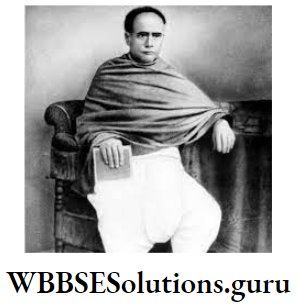
Nineteenth-Century Bengal Education Culture Characteristics Efforts To Spread Western Education Raja Ram Mohan Roy And Radha Kanta Deb
Both Raja Ram Mohan Roy and Radha Kanta Deb had played an equal role in the spread of western education in India. But their approach to the issue was quite different. While the former was more aggressive in his approach the latter had adopted a slow and steady approach to the problem of spreading western education.
WBBSE Class 10 Chapter 2 Summary
Nineteenth-Century Bengal Education Culture Characteristics Raja Ram Mohan Roy 1772 To1833
- Raja Ram Mohan Roy was like an angel who delivered Indian society into the modern world. Through the prism of western education he could see that the Bengali religious world was not only very. complex but also very inclusive.
- To get into the essence of religion he read the Upanishads in Sanskrit, Koran in Arabic, New Testament in Greek, and in Hebrew he read the Talmud and the Old Testament. On reading these he came to the conclusion that all the religious dogmas are meaningless.
- He had gained literacy in twelve worldwide languages. On being impressed by the preachers of the New Testament he wrote the book The Percepts of Jesus. Kishori Chand Mitra has for this reason named him as Religious Benthamite.
- Ram Mohan was vehemently opposed to polygamy and child marriage of the girls. Ram Mohan (1772-1833) was very impressed with western education and the development of science in the west. The work plan that Ram Mohan adopted against primitive dogmas prevalent in the society, included the emancipation of women in India.
- He challenged the mouthpiece of the old school of thought, the Samachar Chandrika through his own Samachar Darpan, Sambad Kumudi, Calcutta Journal, Indian Gazette, and the Friends of India. When in 1829 Bentinck banned the Sati practice through Regulation-17, Ram Mohan had sent him a congratulatory letter. Ram Mohan was highly impressed with western education.
- He had a special role to play in the establishment of the Hindu College in 1817. He gave special attention to Western science, philosophy, law, economics, and political science. He wrote a letter to Lord Amherst in 1823 demanding the introduction of western education and the study of Mathematics, Physics, Chemistry, and Anatomy.
- It was not enacted. Rammohan supported Scottish Missionary Alexander Duff of set up ‘General Assemblies Institution’ in 1830 A.D. Rammohan himself founded an English medium school at Sunrikhana, Kolkata. For the spread of english education, Rammohan himself founded ‘Pataldangha Anglo.
- Hindu School’. He helped David Hare to established ‘Hare School’ in 1818 A.D. Its early name was ‘Pataldangha Institution’. He had started a movement against the Press Act of 1826 and the Jury Act in 1827.
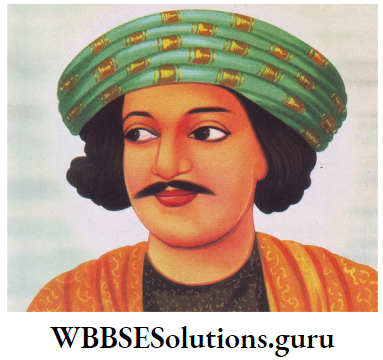
Raja-Ram Mohan Roy (1772-1833) Evaluation: Ram Mohan died in Bristol, London in 1833. He was laid to engrave or Samadhi in London itself. But Ram Mohan had his limitations and for this he had been criticized extensively.
- Firstly, though he stood up against some of the primordial customs existing in the society, he never made in comments against the caste system existing in the country. Also though he had raised his voice against the barbaric custom of sati, he did it only after his sister in law was sacrificed in this act. In his Brahma Samaj, he didn’t allow anyone other than a Brahmin to become an Acharya.
- Secondly, though he was a votary of the western education he was not able to clearly move away from his oriental-leanings.
- Thirdly, though he was against the Doctrine of Lapse and the Permanent Settlement Bill, he never fully protested against the zamindari system.
- According to historian Salauddin Ahmed, Ram Mohan was instead of an aggressive agent of change was more of a careful reformer. Dr. Ramesh Chandra Mazumdar remarked and compared him with famous muslim reformer Sir Syed Ahmed Khan. Rabindranath Tagore called Rammohan ‘the pioneer of modern India’ and ‘the father of modern India’.
Nineteenth-Century Bengal Education Culture Characteristics Radhakanta Deb
- Radhakanta belonged to the aristocratic family of Shobhabażar. The aristocracy was established by his grandfather Munshi Nabakrishna.
- Radhakanta had his primary education in Calcutta Academy. He had learnt both Sanskrit and French languages.
- After his father Gour Mohan’s demise he got associated to the managing council of the Hindu College in 1818. He continued to ‘do this for the next 32 years of his life and in this period contributed extensively towards the shaping of the college’s rules and regulations.
- He would help -college stúdents to pursue higher University education and also if necessary provide financial help for this purpose.
- Radhakanta wrote a scientific essay on the agricultural activities of the district of 24 Parganas. In 1832 he had translated a French book Horticultural into English and sent it to the Royal Horticultural Society in London. He received many accolades for this act. He had died in Brindavan, Mathura.
- Radhakanta was the first person to. stress the need for an engineering and agricultural college with the medium of instruction being Bengali.
- He was very enthusiastic for the spread of women’s education. Through his magazine Tatwabodhini, and his Hindu Charitable Institution had tried to break the influence of the Christian missionary activities.
- When he was at loggerheads with the government regarding the running of the Hindu College he resigned from its management council in 1850. But Radhakanta’s interest in the spread of Western education was not diminished due to this incident.
- In 1853 along with help from Debendranath Tagore, Motilal Shil, and Rajendra Lal Dutta he established the Metropolitan College. This was the first national college fully owned by Indians. However, due to the paucity of funds this college was later converted to a school.
- Radhakanta Deb (10.3.1783-19.4.1867) Evaluation: His book Shabdakalpadrum which ran into 8 volumes is highly appreciable. This huge work took work. The British government awarded him the title of ‘Raj Bahadur’ for this monumental piece of work. He was a member of the Zamindar Sabha and the Bengal British Society. The general idea prevalent in Britain is that Radhakanta was the first Hindu who had changed with times and was a great votary of women’s education.

Nineteenth-Century Bengal Education Culture Characteristics David Hare
David Hare was a Scott and had come to India to set up a business of watches in 1800 in Calcutta. After running this business for eighteen years he handed it over to his partner Grey and started involving himself in the education activity in India.
While in the business he had come across numerous classes of people and realized that the society in India was deeply affected by superstitions and primitive and often barbaric customs. He understood that the only way to free the Indians from these primitive dogmas was to expose them to the western education which was more scientific in nature. On his death David Hare was accused as an antagonist of the Bible and hence his body was refused burial at the Christian graveyard. For this reason he was buried at College Square.
- In 1816, through the Dewan Baidyanath Mukhopadhyay, he had sent a proposal to Justice Sir Edward Hyde East, to start a new educational institution. The result was the establishment of the Hindu College on 20th January 1817. In 1855 this was renamed as the Presidency College.
- Because of Hare’s initiative the ‘School Book Society’ and the ‘Indian School Society’ came up in the years 1817 and 1818 respectively. The three main objectives were first, to spread the western education, second, to open the distribution channels for English books and third, spread of the Christian religion through the Bibles.
- He was the chairman of the School Book Society and took care of the students of Hindu College who excelled in their studies. David Hare’s ‘Pataldanga Institution’ is now known as “Hare School”.
- To ensure regular attendance of the students at his schools ‘Arpuli Free Vernacular School’ and ‘Patoldanga English School’ and at his ‘Hindu College’, Hare used to institute many prizes.
- On 18th November 1828 he wrote a letter to the students who are able to see the light of modern education, will be responsible to spread modern education in the country. In 1825 he became the Director of the Management Committee of the Hindu College.
- In his whole life whatever income he was making was being spent on spread of modern education in Bengal. When the main funding agent for the School Society, ‘Barito and Company’ was found to be bankrupt then he himself started funding the School Society.
- But once ‘Macintosh and Co. closed down all his schools were shut down because of paucity of funds. ‘Arpuli Free Vernacular School’ and ‘Patoldanga English School’ were merged into one new entity known as Hare School.
- David Hare had contributed to the creation of the Calcutta Medical College on 1st June 1835. Being a member of the College’s management council he would encourage the students to learn how to dissect a dead body. Besides this he would try to give free medicines to the patients. He was against the students getting converted to Christianity in spite of him being a Christian. He was against the Jury Act and the Press Act. Even today he is held in very high esteem in the Bengali Society.
Nineteenth-Century Bengal Education Culture Characteristics John Elliot Drinkwater Bethune
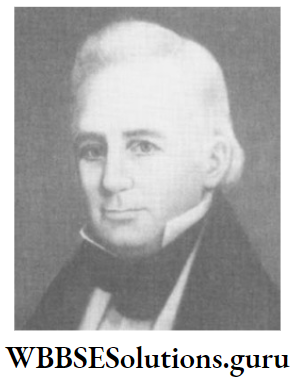
- Bethune was proficient in English, Bengali, Greek and Latin, German, French, and Italian languages. In 1837 he was appointed as a law advisor in the British Commonwealth Office.
- In 1848 he was appointed as the Law Minister to Governor General Lord Canning. On coming to India he became the Chairman of the Council of Education. With his initiative and the help of Dakshinarjan Mukherjee, Madanmohan Tarkalankar, and Vidyasagar the Native Female School was established with 21 female students on 7th May 1849.
- Presently this goes by the name of Bethune School. Later on the Bethune College was also formed for women. It was the first female college in Asia. He had donated his entire wealth for setting up these institutions. Besides this he had established the Female Juvenile Society and Calcutta Public Library. Bethun Saheb arranged the carriage for the girls to go to his school and college.
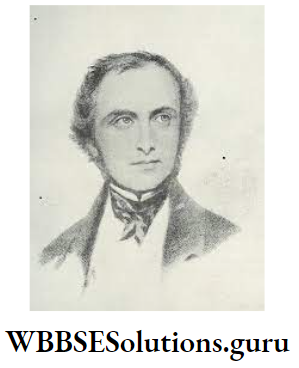
Nineteenth-Century Bengal Education Culture Characteristics The Development of Medical Research and Calcutta Medical College 1835
- With the initiative of Lord William Bentinck, on 28th January 1835 the Calcutta Medical College was established in Calcutta. In Asia this is supposed to be the second medical college established by the Europeans.
- The first one was Ecole De Medicine, Pondicherry. On 2nd February, 1835 this Madras. Medical College was established. After studying here for nearly five and half years the students were awarded the degree of Bachelor of Medicine and the Bachelor of Surgery (MBBS). The first principal of the college was M. J. Bramley (1835-1837).
- He was followed by David Hare (1837-1841), F. J. Mouat (1841-1851), and H. Goodway (1851- 1856). The first batch of 100 students were drawn from young boys in the age group of 14 to 20 years of age after a preliminary test.
- The first batch started its classes on 20th February 1835 in different venues like Hindu College, Hare School, or at the Scottish Church College. Every student was given a stipend of one rupee.
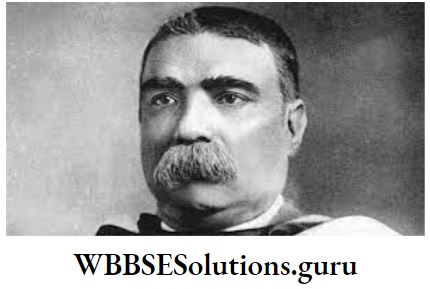
- After completion of studies in four to six years they were called Native Doctors. These doctors were then sent for general public service at a pay of ₹ 30 per month. Later on this salary was increased to 40 after seven years and to 50 after 14 years.
- The first batch of students included, Umacharan Seth, Rajkrishna Dey, Dwarkanath Gupta, and Nabin Chandra Mitra. On 29th June 1883, the first woman Kadambini Ganguly was admitted to the college. Next year Bidhumukhi Bose was admitted to the college. They were given a stipend of 20 every month.
- After the foundation of the Medical College its two famous Indian physicians were Madhusudan Gupta (1800-1856) and Dr. Surya Kumar Chakraborty (1824-1874). In his later life Surya Kumar got MD degree from foreign country and also passed the I.M.F. in the first position. Then he join the Medical College as a professor.
- Development of higher education and Calcutta University (1857): Sir Charles Wood the chairman of Board of control in his educational despatch named ‘Wood Despatch’ published on 19th July 1854 announced to establish the Calcutta University.
- The Calcutta University Act was passed on 24th January 1857 and the University started its functioning with 41 members of the Senet, a chancellor, and a Vice-Chancellor. At that time all the members of the governing were british government officials.
- Calcutta University came up under Lord Dalhousie on 24th January 1857. Based on the lines of Oxford University this is the first multi-disciplinary and secular Western-style university in Asia. Presently this University is considered 2nd in rank in India, 143rd in Asia, and 601st in the world. But in 2001 this.
- University got the credit of being a Five Star University. Four Nobel Laureates Ronal Ross, Rabindranath Tagore, CV Raman, and Amartya Sen are associated with this University. In the entire country, the maximum number of students study in the Calcutta University. This University has presently 14 campuses in Kolkata.
- The first Chancellor of it was Lord Canning. The first Vice Chancellor of the University was Sir James William Colvile (1857 to 1859). The next Vice-Chancellor was Sir William Richie (1857-1862).
- The first Bengali Vice-Chancellor was Sir Gurudas Banerji (1890-1892) and the next Bengali Vice-Chancellor was Sir Ashutosh Mukherjee (1906-1918). The first two women graduates who passed from this University 1882 were Kadambini Ganguli and Chandramukhi Basu and the first two male graduate passed in 1858 were was Bankim Chandra Chattopadhyay and Jadunath Bose.
- Calcutta University was founded as a role model of London University. In 1925 a famous educationist Henry Sharp proudly remarked, ‘the higher education from the Calcutta University is the passport to paradise in life’.
WBBSE History And Environment Chapter 2
Nineteenth-Century Bengal Social Reforms Characteristics
- With Western education, there was a rise in awareness which led to a revolution in the society which led to its reformation and development. The main characteristics of this reformation of society were first, the influence of Western education on society.
- Secondly, the active participation of the middle class in this, change.
- Thirdly, the rise of voices and movements against primitive and often barbaric customs and practices.
- Fourthly, the protests against the practices of the caste system, untouchability, child marriage, polygamy, Sati the drowning of children in Ganga Sagar, etc.
- Fifthly, the reformation of the male-dominated society.
- Sixthly, the creation of a new social structure over the decaying society ridden with primitive customs and practices.
- Seventhly, the reformation of the society through humane values, logic, nationalism, and scientific values.
- Eighthly, inspiring all the men and women in the society to rise against the customs that mainly existed for oppression and domination of sections of society.
- Ninthly, inspire the society to accept modern ideas like the widow. remarriage.
- Finally, the reformation of the society would not have been possible without the active participation of the Government, missionaries, and intellectuals.
Nineteenth-Century Bengal Social Reforms Characteristics Initiative By Brahmo Samaj
- In the nineteenth century Bengal based on the new thought process, induced by the western education Brahmo Samaj came into being. The Samaj based on the basic tenets of the Vedas. The Atmiya Sabha in 1815 and Brahmo Sabha in 1828 founded by Raja Ram Mohan Roy were converted to the Brahmo Samaj in 1830. After the death of Rammohan in 1833 Debendranath Tagore join the Brahmo Samaj in 1843.
- This was called the ‘Adi Brahmo Samaj’ and this existed till 1866. This Samaj was vehemently opposed to the customs like child marriage, Sati, polygamy, and the caste system.
- But Radhakanta Deb a votary of the old school of thought was against the outright banning of the custom of Sati. This led to a tussle between him and the members of Brahmo Samaj.
- Also, Debendranath Tagore though being at the helm of the affairs of Brahmo Samaj was not able to shed off his old beliefs and become a complete liberal. He was not fully reconciled to the new thoughts of the young leader Akshaya Kumar Dutta.
- Keshab Sen, in his speech Destiny of Human Life had said that the untouchability in Indian society was a disease. ‘Keshab ch. Sen joined the Brahmo Samaj in 1857 and developed prayer as means of spiritual illumination and substance. After studying the writings of Theodor Parker Kerhab founded a society named “Good Will Fraternity”.
- In 1859 he set up “Brahmo School” where weekly lectures were delivered and was greatly popular with the rising generation. In 1860 he published tracts of new Brahmoism and the first chapter was called “Young Bengal, this is for you!” The “Sangat Sabha” (1860) was founded by Keshab which was really a society of fellow believers to promote mutual spiritual intercourse among its members. It also served the famine striken people of Bengal.
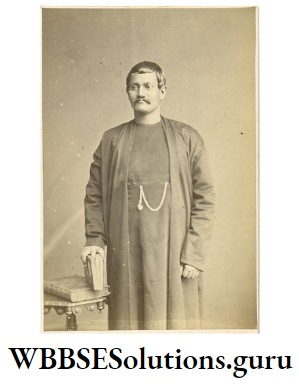
- On 13th April 1962 Debendranath elevated Keshab to the post of Acharya of Brahmo Samaj. He established the Brahmo Bandhu Sabha with the sole purpose of Keshab Chandra Sen (1838-1884) emphasizing on women’s power and help in spread of women’s education. For this purpose Keshab Chandra Sen was given the title of “Brahmanananda” by Debendra Nath Tagore.

On 15th November 1866 AD, Keshab established the Indian Brahmo Samaj, which could have members belonging to all religions of India. The tenets of “Indian Brahmo Samaj” were
- The vast universe is the temple of God,
- Wisdom is the pure land of pilgrimage,
- Truth is the everlasting scripture,
- Faith is the root of religion,
- Love is the true spiritual culture,
- Destruction of selfishness is true as criticism. He encouraged widow remarriage, education for women, and even established evening schools for them. He was strongly against child marriage, polygamy, and the purdah system.
In spite of being against such regressive customs like child marriage, he gave his own eleven years old, but as per rumour fourteen years old daughter Suniti Devi in married to 14 years, but as per rumour eighteen years old prince Nripendra Narayan of Cooch Behar.
- There was a strong rumour of child marriage in 1877, but Dr. David Kopf said that the marriage was not consummated until 1880 when Nripendra Narayan and Suniti were 18 and 16 respectively. He had broken the ‘Act-III of 1872’, which banned child marriage. In this act, minimum age for marriage was fixed in at least 14 years for females.
- Unsatisfied with this act of Keshab Sen, the prominent members Shibnath Shastri and Ananda Mohan Basu resigned membership of the ‘Indian Brahmo Samaj’ After coming out they convened a meeting at Town Hall and established the ‘Sadharan or Ordinary Brahmo Samaj’ on 15 May 1878 AD. Isolated in his own Brahamo Samaj, Keshab left it and formed the Nababidhan Brahmo Samaj in 1880 AD.
- In 1857 AD, on taking over the leadership of Brahmo Samaj, Keshab Chandra Sen* started movements against many social evils apart from child marriage. Under his stewardship, 54 branches of the Brahmo Samaj were set up in various places in, the country.
- Amongst them, fifty were in Bengal, two in United Province, and- one each in Madras and Punjab. Keshab Sen founded ‘Indian Reforms Association’ in 1870 for the spread of reform movement.
- He also introduced the ‘Brahmo Marriage Act’ popularly called Act-3 (1872) and Victoria College for female education. Act 3 mainly. based on the popularity of widow marriage and intercaste marriage and the prohibition of child marriage.
WBBSE History And Environment Chapter 2
Nineteenth-Century Bengal Social Reforms Characteristics Movement Against Sati 1829
Phases of the anti-sati movement were as
- The Christian Missionaries were the first to impress upon the British Government in India the need to ban the barbaric custom of Sati. In 1799, the Baptist Missionary from. Serampore, William Kerry was the first to start the movement against the evil custom. In 1802 he started research on this subject.
- In 1803, Carey arranged for a debate in the subject in the Fort William College. According to him this custom was not propagated by the Hindu religion.
- The main issue of Sati was the live cremation of the widow on the funeral pyre of her dead husband. Almost for 15 years, William Carey continued his movement against this cruel custom. Due to the stiff opposition by the fundamentalist Hindus the efforts by William Carey were in vain.
- Ram Mohan Roy on permanently settling down in Calcutta in 1814, started discussions on this matter with the Missionaries of Serampore. After this in 1817, he formally requested the British government to start an investigation in the subject. He started a movement against the custom through the press. Friend of India-now The Statesman and the Samachar Darpan but the ‘Samachar Chandrika’ Patrika of the fanatic hindu brahmins challanged against it.
- Two complaints were lodged against the custom to William Bentinck in May 1829 AD. On that basis on 4th December 1829, the anti-Sati act was passed in form of the Regulation 17.
- Though William Carey and the Serampore Missionaries had raised their voices against the custom as also protests were made by government employees Ramram Basu (1804) and Mritunjay Bidyalankar (1817). The main credit for this goes to Ram Mohan Roy because of his sustained campaign against the custom.
- No doubt the western educated ‘society of Calcutta which included Dwarkanath Tagore assisted Rammohan in this objective. The fundamentalist Hindus made an application against the Act in the Privy Council of the British Parliament in 11th July 1831 but Ram Mohan Roy went to England and debated in the Parliament against it. The request of the orthodox hindus was then rejected by the British Parliament.

Nineteenth-Century Bengal Social Reforms Characteristics Young Bengal
- The Young Bengal Association was started by Henry Louis Vivian Derozio (1809-31) as a movement against the social evils existing in India. After studying for some days in Bhagalpur, he came to Calcutta to join the Hindu College as a teacher of English language and History in 1826 AD. He was not only a teacher but also a friend of his students who formed, the main section of his followers. These followers came to be known as Derozians.
- The Derozians were mostly students of Hindu College. Some of his followers included Pyarichand Mitra, Radhanath Shikdar, Lalbehari Dey, Krishnamohan Banerjee, Ramtanu Lahiri, Ramgopal Ghosh, Rashik Krishna Mallick, and Dakshinaranjan Mukhapadhya. They formed the crux of the Young Bengal Association. Derozio died at the young age of 23 years.
- Several people had raised their voices against the activities of the Young Bengal Association. They mostly belonged to the conservative and fundamentalist sections of society. The reason was that the association was involved in activities against the Hindu customs of casteism, untouchability, and the superiority of the higher classes. But given his zeal in reforming the society he had himself succumbed to the bad habits of consumption of alcohol and beef.
- In spite of this he continued his campaign through the magazines, Parthenan, Hesaperus, Calcutta Literary Gazette, Calcutta Magazine, Indian Magazine, Bengal Annual, Kaleidoscope, Enquirer, and Gyananeshan. Derozio founded the ‘Academic Association’ in 1828, just to protect against castism, superstition, idol worshipping, etc. He was inspired with the book ‘Age of Reason’ by Thomas Paine which was the bible to the Ceroziaus.
- Derozio’s patriotic feeling was expressed in the book ‘Fakir of Jhungibeer’ written by him. He was highly inspired with the ideal of the French Revolution-equality, liberty, and fraternity. After his death, the Derozians founded the ‘Sadharan Jnanaryan Sabha’ in 1838. But a large number of Hindus criticised the radical reform movement of the Young Bengal.
Nineteenth-Century Bengal Social Reforms Characteristics Movement Favouring Widow Remarriage 1856
- In Indian society after the death of husband if his wife is not remarried then she is called a ‘widow’. Widows were neglected in India in the early times. The upper caste hindu widows specially had a suffer severely in the orthodox society as on the words of Prof.
- Alka Ranjan, they are an “inauspicious dependent society”. Therefore widow marry and wodow remarriage were smoothly considered as a socie-religious taboo in India society. Women’s property right was not reconquered.
- They were fully commoditized in the patriarchal society. “Dudra case and the (so-called) ‘Un-couthcable’-who represented approximately 80 percent of the Hindu population neither practice child marriage nor prohibited the remarriage of widows”-Lycy Carroll (1983).
- For the re-establishment through remarriage of widows attempts were made many times in the 18th century. Vidyasagar wrote an article ‘Balya Bibahayer Dosh’ (faults of child marriage) in the “Sarbasuvankari Patrika’ in 1850 to raise the measurable condition of the windows.
- He also wrote an article in support of widow remarriage to create public openion. in 1853. Vidyasagar wrote a booklet one “Widow Remarriage” (Bidhaba Bibaha Prachalita Hoa Uchit-Athat Bisayak Mantabya”). He also explained the “Parashar Samhita” in favour of widow marriage.
- It was opposed by Radhakanta Deb of Sovabazar. North Calcutta and Maharaja Krishna Chandra and his advisers of Nadia. The conservative society of Bengal rose in open protest against Vidyasagar.
- Radhakanta also submitted a letter with the signatures of 36,763 conservative people to British Government to stop Vidyasagar. On the other hand Vidyasagar sent a letter with the signatures of 987 influential persons to Lord Canning requesting him for passing the ‘Widow REmarriage Act’.
- Attempts were made for hindu widow remarriage by Raja Rajballav, Kalikrishna Mitra, and Nilkamal Bondopadhyay before Vidyasagar, but were in vain Western educated Indians, ‘British India Society’ and ‘Calcutta Press club’ jointly started a campaign advocating widow marriage.
- Akshay kumar Dutta, Joykrishna Mukherjee, and Ramnarayan Tarkaratna were famous supporters of the widow remarriage. East India Company’s government and christian missionaries of Serampur took steps in mitigating the sorrows and sufferings of the Hindu widows.
- ‘Jananveshan Patrika of the Young Bengal highly appreciated the positive role of Haldhar Mallik and Motilal Sil in the popularity of Hindu widow remarriage. Another journal ‘Bengal Spectator’ predicted that in near future all prejudices regarding widow marriage would be removed from society. Not only widow marriage, but Vidyasagar also wanted to provide economic support of the poor widows by founding the Hindy Family Annuity Fund (1872).
- Gradually widow remarriage was started among the lower castes. The wodow remarriage movement spread in Madras and Maharashtra. Pandita RAmabai founded ‘Widow Anociation’ (1870). The ‘Prarthana Samaj’ established ‘Wodow Marriage Association in 1883 and arranged the first wodow marriage in Maharashtra (1883).
- On the word historian Binoy Ghosh “In the history of 19th centyry social reform movement Vidyasagar’s widow marriage movement was the first all India movement”. The main protagonist of widow remarriage was Pandit Iswar Chandra Vidyasagar (1820- 91). He first declared his intention of starting.. a movement favouring the widow remarriage was when he was just 21 years of age.
- He also wrote a book outlining the necessity for the widow remarriage. After analyzing the ancient Hindu scriptures he came to the conclusion that
- There was no religious binding amongst the Hindus to stop a widow from getting remarried and
- The widow had absolute rights over her dead husband’s property. After consulting experts and collecting the witness signatures of 987 Pandits, he submitted an application to Lord Canning to legalize widow remarriage.
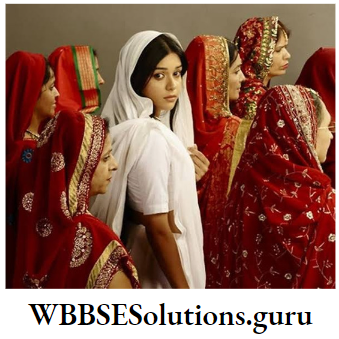
- Lord Canning was agreed to pass the ‘Widow Remarriage Act’ on 26th July 1856 through ‘And regulation-15’ was passed which legalize the remarrying of widows. With this act, the hereditary laws regarding transfer of properties to the widow as per the Hindu Act was also put into place.
- To set an example Vidyasagar had his son Narayan Chandra to marry a widow named Bhabasundari and this was the second ever widow remarriage to happen in the province of Bengal, The first campaign favoring the widow remarriage was Nilkanta Bandhopadhya. Some of the people who had supported Vidysagar in this movement included Maharaja of Burdwan and Keshab Chandra Sen.
- Historians Agarwal and Dandekar have stated that in the days of Vidyasagar, out of the age of 0-4 years married girls nearly 30 to 40 out of every 1000 girls became widows. In the age group of 10 about 40 to 60 were widowed. In the age group of 10 to 14 about 20-40 became widows and in the age group of 50-55 years, the number went up to 550.
- The first remarriage of widow took place on 7th December 1856 when Vidyasagar helped another widow eleven years old Kalimoti Mukhopadhya daughter of Brahmananda Mukhopadhyay to marry the professor of Sanskrit College, Srish Chandra Vidyaratna (Bandhopadhya). Vidyasagar donated nearly eighty thousand rupees (Rs. 80,000) to help nearly 62 widows to get remarried and start a new life.
WBBSE History And Environment Chapter 2
Nineteenth-Century Bengal Religious Reforms Characteristics And Observations
Side by side with the onset of the social reforms in Bengal the religious reforms also started in the nineteenth century. The main characteristics of the religious culture in this period were religious ceremonies, yagnas, and animal sacrifice, idol worship, etc.
Complex religious practices and the dictates by the orthodox priests were never really tolerated by the masses. People wanted the religious rules to be made more simpler so that they could be followed easily.
Nineteenth-Century Bengal Religious Reforms Characteristics And Observations Brahmo Samaj Evolution Division Characteristics And Conclusion
- With the advent of western education the society was evolving into a new modern dimension and during this times many groups were formed, the first and the most prominent amongst which was the Brahmo Samaj. Impressed by the Christian religion’s unitarian rules, Raja Rammohan Roy took on rent Kamal Basu’s residence and primarily established the base of Brahmo Samaj on 20th August 1824 AD.
- The Sabha used to take place every Saturday with the recitation of ‘Bhagwat Brahmo Sangeet’ and the Upanishads, followed by discussions on these subjects. In 1830 the name of the Brahmo Samaj was changed to ‘Calcutta Brahmo Samaj’.
- This name continued till 1866. But during the course of its evolution the Brahmo Samaj had undergone many changes and even division. This was primarily due to different opinions which were often at loggerheads with each other amongst the members of the Samaj.
- On 23rd January 1830 the Brahmo Samaj had its permanent location in Chitpore. The orthodox Hindus, meanwhile had created the Dharma Sabha (Chairman-Bhavani Charan Bandyopadhya & Secretary Radhakanta Deb) to oppose the reformation activities of the Brahmo Samaj.
- The orthodox Hindus had their main mouthpiece in the form of the newspaper ‘Samachar Chandrika’ which was in direct opposition to the periodical ‘Sambad- Koumudi’ published by Ram Mohan Roy.
- In the Chitpore location of Brahmo Samaj all people from all walks of life and following diverse religions were welcome and were allowed to have prayer meetings. After Rammohan Roy left for England in 1833 and his subsequent death the Brahmo Samaj started getting divided into different organizations.
- In 1839 AD, inspired by the thoughts and ideals of the Brahamo Samaj, Debendra Nath Tagore the eldest son of Dwarkanath Tagore (who was one of the founder members of Rammohan’s Brahmo Samaj) formed the ‘Tatwabodhini Sabha’ (1839) with its mouthpiece being the periodical ‘Tatwabodhini Patrika’ (1843).
- The editor of this periodical was Akshay Kumar Dutta. The main idea behind this magazine was the spread of the ideals of the Upanishads and carry out research in religious doctrines. Subsequently with twenty disciples. Debendra Nath Tagore converted to the Brahmo faith in 1843 AD. In 1845, Alexander Duff’s Hindu pupil Umesh Chandra Sarkar forcefully converted his wife to Christianity.
- This was vehemently opposed by the Brahmo Samaj. Duff. then in his work India and ‘Indian Mirror’ criticized the Hindu religion and culture. After these episodes it was felt that the Upanishad should be made the primary religious book for the Brahmo Samaj.
- In 1841 Maharshi Debendranath Tagore to rejuvenate the activities of the Brahmo Samaj, instituted the school Tatwabodhini Pathshala to impart education on the tenets of the Brahmo Samaj. The teacher in this school was Akshay Kumar Dutta.
Characteristics and Division: Between 1850 to 1856 is supposed to be the period when Brahmo Samaj itself went through many changes. Some of the changes led to the division of the Samaj later. The primary changes were:
- Under the leadership of Akhay Kumar Dutta the Brahmo Samaj started doing social work for the general public and started looking at social problems.
- There was in a way a movement within the intellectuals of Brahmo Samaj.
- A new strength to the movement was visible with the initiatives of Raj Narain Basu.
- To keep the Samaj vibrant various reform works in the society was undertaken.
- Under the influence of the intellectuals, women’s education and widow remarriage was encouraged and the evils like polygamy and alcohol consumption were vehemently opposed.
- However, with new more radical thoughts and opinions being voiced within the Samaj, Debendranath was not very happy with the evolving situation.
- In this period the Brahmo Samaj movement started taking shape of a social movement.
- After some time one of the Acharyas of the Brahmo Samaj, Keshab Chandra Sen started voicing opposition to the existing casteism, idol worship, etc which didn’t go down well with Debendra Nath Tagore. The latter then expelled Keshab Sen from the Samaj.
- This led Keshab Sen to form his own Bharatiya Brahmo Samaj in 1866 AD. To strike a balance between the mandir, church, and the masjid he formed the Bharatiya Brahmo Mandir.
- With his efforts in 1872 AD three laws were passed. These were the laws that were concerned with widow remarriage; inter caste marriage and banning of child marriages.
- Thus the Brahmo Samaj got divided into two institutions, the Aadi (old) Brahmo Samaj led by Debendra Nath Tagore and the Bharatiya Brahmo Samaj led by Keshab Chandra Sen. But there was a division of thoughts within the Bharatiya Brahmo Samaj regarding child marriage and two of its prominent members
- Shibnath Shastri and Ananda Mohan Basu resigned from its membership and formed the new Sadharan (ordinary) Brahmo Samaj (1878). Two years later Keshab Chandra Sen came up with a completely new association the Nababidhan Samaj (1880).
Evaluation: The Brahmo Samaj movement for nearly fifty years made a deep influence on Bengali and Indian society, religion, and culture. This could be viewed as firstly, it was instrumental in creating awareness in the Bengali society.
- Secondly, though there were certain limitations to the movement it was still successful in removing orthodox ideas from the minds of the people.
- Thirdly, from the time of Keshab Sen the movement had also influenced the formation of the nation-state.
- Fourthly, the values which was preached by the Brahmo Samaj didn’t give precedence to idol worship, animal sacrifice, and religious ceremonies. Lastly, we have to consider the yeoman service done to the nation by the Samaj in spread of western education.
WBBSE Class 10 History Notes
Nineteenth-Century Bengal Religious Reforms Characteristics And Observations Equality Of All Religions Sarbo Dharma Samanyay As Preached By Ramakrishna
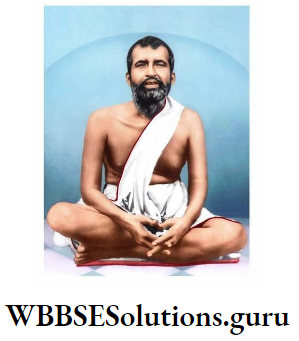
- Sri Ramakrishna Paramhansha Deb (1836-1886) had a primary role in reforming the Indian culture. His ideal of “Sarba-dharma-samonnya” is simply the concept of religious harmony. His opposition to social and religious orthodoxy and his teachings on the equality of all religions greatly influenced Indian society. The society was enlightened by his simple and liberal thoughts on religious matters.
- He was able to give the right direction to the people in their search for the eternal truth. Ramakrishna preached god was Omnipotent, and was called by various names like Krishna, Christ, and Allah.
- The faith and path for attaining God may be different but the objective was the same across all religions. Mahatma Gandhi had written about Ramakrishna Paramhansha and the latter’s life story itself gives us an idea of visualizing God directly. He was an icon for all religions.
- Swami Vivekananda was his most important disciple. Besides this Keshab Chandra Sen, Girish Ghosh, Vidyasagar, Noti Binodini were amongst other people who gained from his wisdom. Even Max Mueller had played glowing tributes to him.
- According to Ramakrishna Paramahansa, one can attain God by devotion or attaining knowledge or by simple devotion. to his work. One need not renounce his family or work to attain God.
- In 1875 Keshab Chandra Sen while meeting Ramakrishna for the first time had changed. his own outlook. After his meeting, Keshab Chandra Sen focused in his work more to attain God.
- Bijoy Krishna Goswami, Balaram Basu, Girish Chandra Ghosh, and Mahendranath Gupta were the prominent people who were influenced by Ramakrishna Paramahansa.
- People were able to see the simplicity of religion, the path to truth, new hope and aspirations when they met Ramakrishna. About all religions, he had commented “Jata Math, Tata Path” which literally means the more different the faiths more pathways are established for the attainment of God. He said “Yatra Jeeb Tatra Shib”.
- Bal Gangadhar Tilak commented if Ramakrishna was a living Veda then Swami Vivekananda was its mouthpiece. In his first biography, the writer Ramchandra Dutta has called him a sage of the middle classes.
Nineteenth-Century Bengal Religious Reforms Characteristics And Observations Swami Vivekananda’s Religious Culture
- Nababedanta- Characteristics and Conclusion.
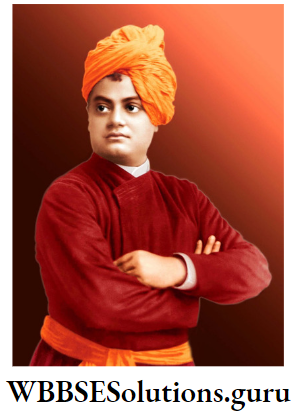
- Swami Vivekananda is one of the most popular sages of modern India. He had used the scientific analysis of Hinduism to oppose the orthodox values of the religion. Vivekananda (1863-1902) devoted his life for the betterment of his country and its people. He changed the entire religious discourse to the ideals of the Nababedanta.
- He had highlighted the evils of the Man-Making Religion i.e. he used to espouse that all religious dogmas were created by men themselves. That’s why he stressed on liberation of religions and practical Vedanta.
- Though he was a spiritual person, still he was impressed with the philosophical works of Mill, Bentham, and Hubert Spencer. He believed that the religions which could not wipe the tears off a widow’s eyes was no religion at all.
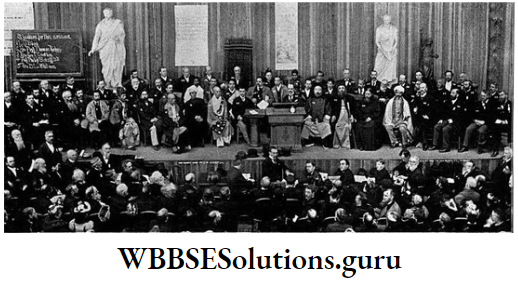
- On September 11th, 1893 he addressed the World Religious Conference in the Columbus Hall of Chicago as the only representative of the Hindus.
- He was a brilliant orator and in a very simple and precise language he had explained the tenets of the oriental culture and its. importance to the world. He had tried to bring down the walls between the oriental and the western cultures and had tried to bring out the tenets of a global culture. Jawaharlal Nehru had commented that he tried to fuse the eastern philosophy with the West’s objective quests.
- Swamiji dreamt of an equal India, errespective of all religions, castes, regional and class imbalances. That’s why The first Parliament of World’s Religions, held in Chicago in 1893, some experts feel that he was India’s first social reformer which was very much evident in his thoughts and ideas. This was all the more clear when he said, ‘let there be the awakening of the new India.
- Let it awake through plough and the hut of the tiller, let it awake through the huts of the fishermen, cobbler, and sweeper, let it awake through the shop of the grocer and the factory floor, let it awake through the markets and let India awake through its bushes forests and mountains’.
- Swamiji orchestrated the idea that to ensure service for the poor and the needy one has to be devoted to his country and his society. He advised ‘God resides in those who serve other people’.
Evaluation: Swamiji not only wanted the people to serve others but also dreamt of an awakened India through devotion to one’s country and advising all to be proud of their culture. As the main disciple of Ramakrishna Paramahansha, he established the Ramakrishna Mission on May 1st, 1897 AD. The objective was to serve many through many people. On 9th December 1898 AD he established the Ramakrishna Math in Belur.
Nature And Assessment Of the Bengal Renaissance
Nature And Assessment Of Bengal Renaissance Nature:
- Some feel that the Renaissance in Bengal was more intense and revolutionary than that in Europe.
- The Renaissance was visible in every sphere of life- literature, culture, society and also politics.
- The main nature of this Renaissance was the opposition and dismantling of ideas and customs pertaining to the middle ages. This resulted in a set of intellectuals, poets, artists, literary figures, and philosophers taking center stage for Bengal’s renaissance.
- The main awakenings and need for change was brought about through the writings of Pyarichand Mitra, Kishori Chand Mitra, Rajnarayan Basu, Bankim Chandra, and Rabindranath Tagore.
- The renaissance did of course create a rift between the Hindus and the Brahmo Samajis. According to Ramesh Chandra Majumdar the 18th century India was the darkest period of Indian history as many customs and conventions were not highlighted and enlighted till then.
- It is to be noted that at this time a liberal Europe had already started taking shape. It was the English who brought this positivism to India through the spread of Western education.
- Jawaharlal Nehru pointed out that due to the colonial rule it was only the upper classes of Hindus in Bengal who were benefited most with the Renaissance.
- Other classes continued to dwell in the darkness. In fact the leadership didn’t bother about the changes required in the lower strata of the society.
Debates regarding the Usage of the Concept of Renaissance in. relation to 19th Century Bengal:
- Nineteenth Century society in Bengal went through a rapid change due to the influence of colonial rule and Western education. This is also known as the Bengal Renaissance. But whether this change has to be defined as a renaissance is a matter of great debate amongst historians.
- Pandit Ashok Mitra was the first person to point out this change as a so-called Renaissance in 1951. He said that some landowners who had amassed huge wealth by oppressing landless laborers, had settled down in Calcutta and used their ill-earned wealth in the spread of Western education.
- The British helped them in this matter as it was in their self-interest. The common man had nothing to do with these changes in the upper strata of society. Binay Ghosh has that’s why said this has nothing to do with the concept of Renaissance. In fact he called this a myth and “a historical hoax”.
- Many historians like Broomfield said that the change in the society was limited to the Bengali middle Class which was an English creation. This gentry had no connections to the thousands of poor and unlettered people of the villages and cities.
- This was limited to the middle classes in their own island of change. The so-called renaissance was brought about by the persons who had benefited from firstly, Dalhousie’s Doctrine of Lapse. Secondly, the English East India Company’s selfish business interests had helped this class of people and lastly, the some chosen few who got Government jobs under British rule had adopted the changes.
- So it is debatable that the Renaissance as claimed in Bengal may not have been inclusive as that was in Europe. The protagonists of change in the Bengal society were building institutions and temples for showing off their philanthropic sides rather than in real interests in bringing change to the rank and file of the society.
- The leadership in this renaissance had its limitations as some progressive socio-economic leaders were not available to ensure that change percolates to the grass root levels.
- Even a social reformer like Vidyasagar had spent huge money for providing lunch to Brahmins during his Mother’s funeral. The english educated intellectuals of the urban areas were the forerunner Renaissance.
- These intellectual middle-class people gave birth to the socio-religious movement in 19 century Bengal. The emergence of this new awakening was known rebirth or renaissance of Bengal. It enlightened Bengal with western knowledge, literature, art and science. From Bengal, the rising tide of the renaissance spread all over India.
- This renaissance led the foundation of modern livelihood on the ruins of medieval thoughts and culture. As a result, equality and secularity along with the consciousness nationalism and internationalism became very popular. So the Bengal Renaissance in the nineteenth century was no doubt a historical event. It highlighted the glorious cultural life of Bengal.
- Though the widespread impacts of Renaissance is accepted, but the nature of the Renaissance is debatable. Some say that this awakening of Bengal was a result of Brahmo Movement.
- Another group of scholars remarked in a Hindu awakening. Some scholars gave importance on the role of Ramakrishna-Vivekananda in the Hindu awakening rather than the Brahmo Samaj. Historian Dr. Ramesh Chandra Majumder said that narrow Hindu nationalism a keen impact in the Bengal Renaissance.
- Marxist Historian, Dr. Rajani Palme Dutta in his book ‘India Today’, had however praised the reformers of 19th-century Bengal. Many feel that the reformers were not able to convert their institutions to productive enterprises.
- This probably was due to their dependence on the British rulers. American historian Dr. Kopf has not accepted the role played by Ram Mohan and Derozio in renaissance primarily because of the lack of percolation of their thoughts to the grass root level.
- Dr. Anil Sil has called the reformers as belonging to the ‘elitist group’ who were agents of their British rulers. Dr. Barun Dey feels it is just an enlightening of the Bengali society and in no way it can be called a Renaissance in Bengal. It was because the city dwellers only had gained from these reforms and the thousands in the rural areas continued to remain in the dark ages.
WBBSE Class 10 History Notes
WBBSE Class 10 History And Environment Chapter 2 Culture Characteristics And Discussions Very Short Questions And Answers
Question 1. Name two important works of Kaliprasanna Singha.
Answer: Hutom Pyanchar Naksha and the translation of Mahabharata.
Question 2. What was Hindu Patriot?
Answer: Hindu Patriot was a weekly newspaper.
Question 3. When did the Sanskrit College start functioning?
Answer: 1st January 1884.
Question 4. Name the school established by Iswar Chandra Vidyasagar.
Answer: Bethune School.
Question 5. Name the first national college fully owned by Indians.
Answer: The Metropolitan College.
Question 6. Which Medical College came into being at the initiative of Lord Bentinck?
Answer: The Calcutta Medical College.
Question 7. Who were the first two women ‘graduates from Calcutta University?
Answer: Kadambini Ganguli and Chandramukhi Basu.
Question 8. Who was primarily responsible for the abolition of Sati system?
Answer: Raja Rammohan Roy.
Question 9. Where did Swami Vivekananda deliver his famous speech as a representative of Hindu Religion?
Answer: In the Columbus Hall in Chicago.
Question 10. Name one organisation. which was set up as a part of religious reform in the 19th- century Bengal.
Answer: Brahmo Samaj.
WBBSE Class 10 History And Environment Chapter 2 Culture Characteristics And Discussions True Or False
Question 1. The Asiatic Society was set up by Radhakanta Deb.
Answer: False
Question 2. After passing of the Charter Act (1813), the Compny agreed to spend one lakh rupees on Indian education.
Answer: False
Question 3. Ecole de Medicine, Pondicherry was the first medical college of India.
Answer: True
Culture Characteristics And Discussions Fill In The Blanks
Question 1. _______ was the most popular Bengali magazine of the 19th century which focussed on women’s issues.
Answer: Bamabodhini
Question 2. _______ belonged to the aristocratic family of Sobhabazar.
Answer: Radhakanta Deb
Question 3. The original name of the Bethune School was _______
Answer: The Native Female School
Question 4. _______ was the first multi-discipline, western-style university in Asia.
Answer: Calcutta
Question 5. The ‘Young Bengal Association was formed by ________
Answer: Henry Louis Vivian Derozio
Class 10 History Important Questions WBBSE
WBBSE Class 10 History And Environment Chapter 2 Culture Characteristics And Discussions Short Question And Answers
Question 1. What was the role of Raja Rammohan Roy in the emancipation of women?
Answer:
The role of Raja Rammohan Roy in the emancipation of women
He tried to remove the primitive dogmas prevalent in society and spread education among women. He was also instrumental in stopping the practice of Sati or the burning of widows on the funeral pyre of the dead husband.
Question 2. What was the ‘Young Bengal Association’?
Answer:
The ‘Young Bengal Association’
The Young Bengal Association was started by Henry Louis Vivian Derozio as a movement against social evils existing in India. His followers were mostly students of Hindu College.
Question 3. What was Swami Vivekananda’s idea of religious reformation?
Answer:
Swami Vivekananda’s idea of religious reformation
Swami Vivekananda, one of the most popular sages of modern India, used scientific analysis of Hinduism to oppose orthodox values of the religion. He changed the entire religious discourse to the ideals of Naba Vedanta.