
Early Stages Of Collective Action Introduction
- “United we stand”-thus goes the proverbial saying. This power develops through collective action. Numerous institutions and organizations have been formed for the development of united and collective power.
- Initially, it was the rich and socially higher classes of people, influenced by Western education, who took the initiative for some united movement. Later on, the movement became universal among people irrespective of their race, caste, or creed This initiative was mostly against the British power, against superstitions and to promote nationalism.
Read and Learn More WBBSE Notes For Class 10 History And Environment

The Characteristics Of The Revolt Of 1857 And Its Nature
The first argument about the characteristics and nature of the Sepoy Mutiny of 1857 started in 1858. J. B. Norton, in his book ‘Topics for Indian Statesmen’, says that it was not just a revolt by the. soldiers, but gradually took the form of a mass uprising.
The Characteristics Of The Revolt Of 1857 And Its Nature Introduction:
- The historians greatly differ about the characteristics of the revolt. Some say that it is a fight between the ‘black and white’, while others call it people’s response to Feudalism and its ‘dying pangs’.
- Some call it the Sepoy Mutiny, while some call it the National Uprising. Again, others prefer to call this India’s first National Movement. The British Indian Association, Mohammedan Association, and Sir Syed Ahmed of Calcutta preferred to publicize the movement as Sepoy Mutiny.
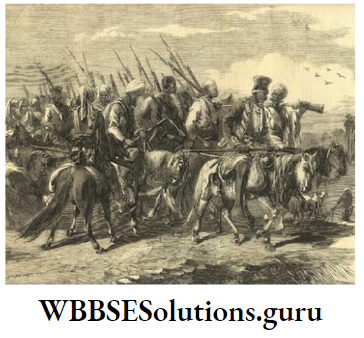
National Revolt: The nationalist historian, Rajanikanta Gupta in his book, Sipahi Juddher Itihash (The History of the Sepoy. War), has said, almost one lakh soldiers, inspired by the spirit of nationalism, wanted an end to British rule.
- Dr. Sashibhushan Chowdhury in his book, Civil Rebellion in Indian Mutiny, has not only called the Sepoy Mutiny a national war, but also described it as an unconscious machine of nationalism”.
- Promod Sen Gupta in his book ‘Bharatiya Mahabidroho’ (The Great Indian Mutiny) says mass uprisings in places like Lucknow, Ayodhya, and Bihar gave birth to strong nationalist feelings among people. The debate does not stop here.
- In July 1857, the Tory leader Disreily named this great revolt a National Revolt. English thinkers like Alexander Duff and Outram have also called this a national revolt V.A. Smith too agreed and called it a national revolt.
- Karl Marx accepted the national character of the movement. Though it started as a revolt among the soldiers, it developed a national character over time. The reason was, the revolting soldiers wanted to end. the foreign rule and proclaimed Bahadur Shah the Second as the emperor of India.
WBBSE Class 10 History Notes
Sepoy Mutiny: Among the people who named this revolt as Sepoy Mutiny, the names that are worth mentioning are Charles Reikes, Earl Roberts, John Silly, John Laurence, John Kae, etc.
- People like Al Stanley, Charles Bol, H. T. R. Holmes, G. W. Forrest, and Maleson also called the uprising of 1857 Sepoy Mutiny. Contemporary Indians who called this great revolt of 1857 as Sepoy Mutiny are Ishwar Chandra Gupta, Sambhu Chandra Mukherjee, Harish Chandra Mukherjee, Akshay Kumar Dutta, Durgadas Banerjee, Syed Ahmed Khan, Rajnarayan Basu and Dadabhai Nauraji among others.
- These people felt that since it was the soldiers who were active in this revolt from the beginning till the end, it should be apt to call it a Sepoy Mutiny. Hence the question of development of national feeling does not arise.
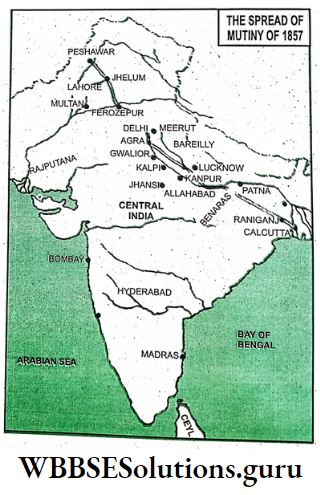
War of Independence: The revolutionary and nationalist leader Vinayak Damodar Savarkar, in his book ‘Indian War of Independence’ said that the revolt of 1857 was the ‘first war of Independence of India’.
- Historian Ashoke Mehta also supported this view. But, Ramesh Chandra Majumdar in his book ‘The Sepoy Mutiny and the Revolt of 1857’ was critical of this opinion and said, “The revolt of 1857 can be called neither national nor war of Independence.” Dr. Majumdar opined that people at that time had not yet understood the full meaning of nationalism.
- Hence, this was nothing but a revolt by the soldiers. However, historian Surendranath Sen in his book ‘Eighteen Fifty-Seven’ commented that the revolt of 1857 can be called a National movement.
- He was against Dr. Majumdar’s view and maintained that although it started as a revolt of the soldiers, it grew with the support of the masses. A mere rumor helped to bring the Hindu and Muslim communities together.
- Many Hindu soldiers were forbidden to wear a tilak (sacred mark on the forehead) or sport a turban. Prisoners in jail were often offered freedom if they accepted to be converted to Christianity. At the recommendations of the Inam Commission of Lord Dalhousie, large properties of both Hindus and Muslims were confiscated.
- This action angered both the Hindus and the Muslims alike. On 17th November 1857, Commissioner Harvey of Agra informed that the resentment among the Hindus and the Muslims gave rise to the revolt of the soldiers.
- Traveling thinks that Indians across all social strata wanted an improvement in the political condition and desperately wanted the re-establishment of a national government. From that perspective, it can be considered to be the first war of independence.
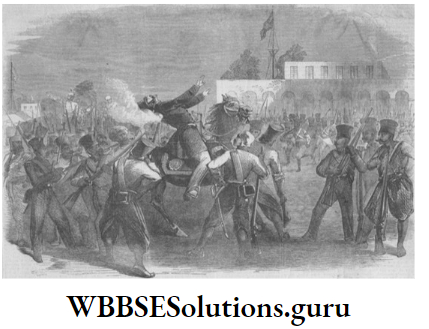
Feudal Revolt: Marxist historian Rajanipalme Dutta has called this revolt a military uprise against the Feudal and conservative powers. Jawaharlal Nehru in his book ‘Discovery of India’ has called this revolt reactionary.
- However, did not want to call it a ‘feudal revolt. P. C. Joshi in his book 1857 in Our History called it a National struggle directed by Feudal lords. Historian Hirendranath Mukherjee also held the same opinion.
- Communist leader E.M.S.Namboodripad, in his book ‘A History of Freedom Struggle’, has called this revolt a military uprising. Subaltern historians like Dr. Ranajit Guha and Gautam Bhadra feel that without the huge participation of the common man, this revolt would never have been such a great success.
- C. A. Baily, a Cambridge historian has said that from the onset of the mutiny, the revolt of the civilian masses and the military uprising have fuelled each other.
- As a result, nationalist feelings started developing among all, starting from artisans, daily laborers, and offended policemen to city dwellers.
WBBSE Class 10 History Notes
The Characteristics Of The Revolt Of 1857 And Its Nature Attitude Of The Educated Bengali Society Towards The Revolt Of 1857
- Educated Bengali Society did not support the Revolt of 1857. They thought that the leaders of the revolt of 1857 wanted to reestablish mediavel feudal society and state system in place of modern education and reforms of British.
- If we study contemporary papers and journals, we must see that educated Bengali society hated the mutineers, but paid their respect and homage to the British administration. Iswar Chandra Gupta disliked Laxmibai, Tantia Tope, Nana Saheb, etc. leaders.
- The icon of so-called educated Bengali society like Iswar Chandra Gupta, Sambhu Chandra Mukherjee, Akshay Kumar Dutta, Durga Das Banerjee, Rajnarayan Basu, Iswar Chandra Vidyasagar, Bankim Chandra Chattopadhyay, etc. compared the British rule in India as the blessings of God.
- Durgadas Banerjee in the book ‘Bidrohe Bengall directly underestimated the sepoys who started the revolt of 1857 in a large part of north India.
- Harish Chandra Mukherjee editor of the ‘Hindu Patriot’ said that during sepoy mutiny. soft-minded Lord Canning was gentle and kind-hearted to Indians. He wrote.
- “The loyalty”.” Bankim Chandra Chattopadhyay, “the father of Indian Nationalism,” thought the revolt of 1857 was epidemic dangerous, and harmful. By supporting ‘British Raj’ he said, we have to be ruled many years under British’.
- So he advised, it would be better to cooperate with the British and to be respectful to them with bended knees. Iswar Chandra Gupta editor of ‘Sambad Prabhakar’ criticized the sepoys as ‘arrogant, ungrateful and unlawful and therefore he prayed for “the victory of British in India forever”.
- Gouri Sankar Bhattacharya (1799-1859) editor ‘Of Sambad Bhaskar’ advised to dance with joy after the failure of the sepoys.
- Girish Chandra Ghosh had apathy towards the sepoys. He said, “A simple strike among the army has been magnified into national rebellion”. Kaliprasanna Singha, Harachandra Ghosh, and Kamalkrishna Bahadur convended a sabha at Metropoliton School, where they hated the sepoy mutiny.
- In the drama ‘Malati Madhab’ Kaliprasanna prayed for destruction of the sepoys. Jadunath Sarbadhikari, author of the first book on tourism written in the Bengali language ‘Tirthabharaman’ described the sepoys as ‘indisciplined and oppressive by nature’.
- Thus the educated Bengali Society had negative reactions towards the revolt of 1857.
The Characteristics Of The Revolt Of 1857 And Its Nature Proclamation Of The Queen
After the end of the revolt of 1857, ‘An Act for the Better Government of India’ was passed on 2nd August 1858, by which English East India Company’s rule in India was ended and Viceroy’s (royal representative) rule was introduced. Lord Canning after being appointed as the first viceroy of India, representing Victoria (1837-1901), the Queen of England, organised a formal court in Allahabad.

In this court, on 1st November 1858, he read out a proclamation on behalf of the Queen. This came to be known as “The Proclamation of the Queen”. In this proclamation, several promises were made for the benefit of India. For example,
- Indigenous kings without a son were allowed to adopt a son.
- Abolition of Title will no longer be a valid law.
- The British Government will not extend its empire on Indian soil anymore.
- Indians will be employed in the Government according to their qualifications.
- All Indians will be given, equal importance, irrespective of their race, religion, or caste.
- The Government will be bound to honor any agreement or treaty signed with the Company. Historian Bipan Chandra has called this a “political bluff’, and Dr. R. C. Majumder remarked it was “an era of broken pledges” because Queen wanted just to appease the people of India to gain political mileage. These benefits were not fulfilled, but yet Queen Victoria was given the title “Empress of India” on 1st January 1877.
Class 10 History Important Questions WBBSE
The Age Of Associations Characteristics And Analysis
- Political consciousness was a direct outcome of nationalism that developed in the nineteenth century. The main purpose of organizing meetings was to inculcate political consciousness and spread its activities and also to discuss various socio-political issues.
- Several organizations were formed during the period from 1828 to 1830. The Academic Association formed by Derozio was open to all independent discussions, In Calcutta, the Society for the Acquisition of General Knowledge was formed by Pyarichand Mitra, Debendranath Tagore, and two hundred other like-minded people.
Age of Association:
- The whole of the nineteenth century has seen the formation and development of many such associations. So, Cambridge historian Dr. Anil Sil, in his book ‘The Emergence of Indian Nationalism: Competition and Collaboration in the Late Nineteenth Century’, has called “this period an age of associations”. Because
- In the second half of the nineteenth century, a large number of political organizations emerged.
- They were instrumental in the development of political consciousness.
Some of the well-known political organizations were: ‘Puna Sarbojonik Sabha’ of Gopal Hari Deshmukh (1867), ‘Madras Mahajan Sabha’ (1884), ‘Madras Native Association’ (1852) and ‘East India Association, London’ of Dadabhai Naoroji and K. R. Cama (1866).
- In 1871 a branch of East India Association was formed in Bombay. Rangaiyya Naidu, the President of Mahajana Sabha (1884), spread the popularity of his association among small towns and villages.
- In 1885, Firoz Shah Mehta, Badruddin Tayebji, and Kashinath Trimbak Telang formed ‘The Bombay Presidency Association’. In 1886 Rajnarayan Basu formed a ‘Secret Samity’ in Midnapore and Jyotirindra Nath Tagore formed ‘Sanjeebani Sabha’. The ‘Indian Reform Society’ and ‘London Indian Society’ (1865) were formed. through foreign initiatives.
The Age Of Associations Characteristics And Analysis Bangabhasha Prakashika Sabha 1836
- Bangabhasha Prakashika Sabha was formed on 8th December 1836. Kalinath Ray Chowdhury, the zamindar of Taki, Prasanna Kumar Tagore, Dwarkanath Tagore, and some followers of Rammohan Roy formed this association.
- The first meeting of this association was convened under the first presidentship of Gaurishankar (Tarkabagish) Bhattacharya and the first secretary was Durgamohan Tarkabagish. The association vehemently opposed the imposition of taxes on non-taxable land.
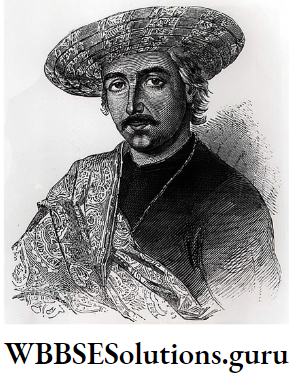
The main objectives and activities of Bangabhasa Prakashika Sabha were
- To create political consciousness in Bengal for the organization of a permanent political movement,
- To convene a meeting every Thursday to discuss religious, political, and philosophical matters,
- To oppose the tax on rent-free lands adopted by British Govt.
- Four-five thousand people signed a memorandum opposing government living tax,
- To pave the way for establishing organised political activities. But yet Bangabhasa Prakashika Sabha did not servive due to “lack of unity” (Dr. R. C: Majumder).
- The Secretary, poet Iswar Chandra Gupta, commented in the journal ‘Sambad Prabhakar (2-3-1852)-“Bangabhasha Prakashika Sabha was the first association among those that were formed to discuss matters. of the state”. Researcher Jogesh Chandra Bagol also said, ‘Bangabhasha Prakashika Sabha was the first political association, not only in Bengal but also in the whole of India’.
Class 10 History Important Questions WBBSE
The Age Of Associations Characteristics And Analysis Jamidar Sabha or Landholders’ Society 1837
- On 12th November 1837, zamindar Radhakanta Deb, Dwarkanath Tagore, and Prasanna Kumar Tagore, a disciple of Rammohan Roy met at the Hindu College and formed the Jamidar Sabha or Land Holders’ Association.
- Then its president was Radhakanta Deb and its secretary was Prasanna Kumar Tagore. In April 1838 the name of Zamindari Sabha was changed to the ‘Zamindari Association’. The latter name. was suggested by Dwarkanath Tagore.
- At this time Ramkamal Sen and Bhabani Charan Mitra were also associated with this society. The orientalist, Rajendra Lal Mitra, said, ‘This society was the pioneer of the freedom movement in this country’.
- He felt that this association looked after the interests of the landlord and tenants alike. Its main objectives were
- To oppose Regulation 3,
- To protect the interests of the zamindars of Bengal, Bihar, and Orissa,
- To bring the British bureaucracy in favor of zamindars,
- To spread the Permanent Settlement (1793) Act over India and
- To reform the Department of Police, judiciary, and Revenue. To become a member of this association, initially one had to pay Rs. 5/- and later a yearly subscription of Rs. 20/- had to be paid.
- They set up branches in different parts of India to fulfill the expectations of the people. On the recommendations of this association, the Government earmarked some non-taxable land in every village.
- The British rulers and Indian Zamindars could meet and come together under the banner of this association. Pyarichand Mitra said that this association had branches in England and Scotland. In July 1839 William Adam, a friend of Rammohan Roy, formed the British India Society.
- The members of the Land Holders’ Society assured to help the British India Society of London in different ways. In 1851, the educated Bengali middle class earnestly wanted to set up the largest political association.
- Hence, Land Holders’ Society and Bengal British India Society were combined together and the British Indian Association was formed in 1851. Zamindar Radhakanta Deb was its first President and Dwarkanath Tagore was the first secretary.
- This association opened branches in Madras and Puna with the initiative of Dendranath Tagore. It had branches in Bombay and Ayodhya too. MacPherson, a member of ‘The Carr Tagore Company’, placed several philanthropic proposals in the House of Commons, London, on behalf of the British Indian Association.

The Age Of Associations Characteristics And Analysis Bharat Sabha or Indian Association 1876
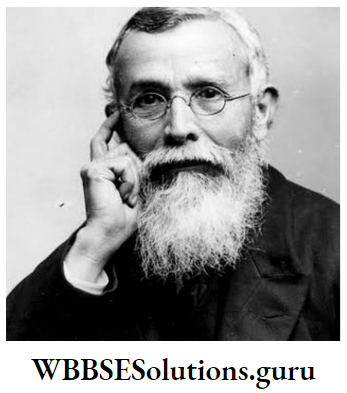
- Many people believe that the Indian League of Sisir Kumar Ghosh (1875) was merged with Bharat Sabha. Bharat Sabha or Indian Association was the largest political institution in the pre-Congress era.
- The movement organized by Bharatsabha was like a rehearsal for the organized freedom movement in this country. On 26th July 1876, Surendranath Banerjee formed the Bharat Sabha or Indian Association.
- In front of the huge congregation in Calcutta Albert Hall, he said that he considered the formation of the Bharat Sabha as a symbol of people’s expectations.
- Krishna Mohan Bandopadhyay was the first president and Ananda Mohan Basu was the first secretary of the Indian Association. Eminent people like Sibnath Sastry and Dwarakanath Gangopadhyay supported Surendranath.
- Bharat Sabha had four aims-First, to unite people of all races, religions, and communities for political purposes. Secondly, to develop strong public opinion throughout the country.
- Thirdly, to involve people in the mass movement, and fourthly, to unite the Hindus and Muslims together. Surendranath delivered a number of speeches in places like Meerut, Lucknow, and Lahore, where the main topics were unity of India, emergence of the Sikh community, etc.
- In his speeches, he mentioned the names of patriots like Cavour and Maccini who had led the Italian unity movement. Henry Cotton feels that the Bengali educated class, from Peshawar to Chattagram, became active in developing public opinion. Surendranath, the name itself, motivated the youth from Dhaka to Multan and inspired patriotic feelings among them.
- The Bharatsabha had an important role to play in the movement against the Ilbert Bill, bringing down the age of Indian ICS examinees from 21 to 19 years. The journal, The Bengalee, edited by Surendranath, as a front of Bharat Sabha was active in inculcating the spirit of nationalism. It provided a platform to develop a pan-Indian movement at large.
Class 10 History Important Questions WBBSE
The Age Of Associations Characteristics And Analysis Hindu Mela 1867 To 1880
Hindu Mela 1867 To 1880 Origin: Rajnarayan Basu (1826-1899), who was a favorite of the Bramho Movement leader Debendranath Tagore, and Nabogopal Mitra (1840-1894) were instrumental in regenerating Hinduism.
- Nabogopal Mitra had an important role to play in establishing the tradition and excellence of the Hindu religion. He established Jatiyo Mela in 1867. In 1870 it was renamed as Hindumela. Nabogopal Mitra was eternally indebted to Rajnarayan Basu (Grand Father of Indian Nationalism) for planning and setting up the Hindumela.
- The main purpose of Hindumela was to re-establish the dignity of the ancient Hindu religion and inspire people in the ideal of patriotism and freedom movement. In 1880 the Hindumela ceased to exist. In 1887 Swami Satyanand Agnihotri formed the Dev Samaj and continued the movement. Hindumela was also known as “Chaitramela”.
- From the writing of Satyendranath Tagore it has been known that Gonendranath Tagore was the first secretary and Nabagopal Mitra was. the first assistant secretary, of the Hindumela.
- Rajnarayan Bose’s organization ‘Sabha’ and Nabagopal Mitra’s ‘The National Paper’ (1865) helped to form Hindumela on 12th April 1867. However, Dwijendra Nath Tagore, Girish Chandra Ghosh, Pinaki Sarkar, etc. were involved in it.
Hindu Mela 1867 To 1880 Objective and Importance: Hindu Mela had some limitations like
- This mela was organized once in a year,
- It had no role in promoting strong Hindu-Muslim unity.
- There was a communal feeling among the Hindus,
- The Hindu nationalists only were the conveners of the mela,
- Besides this mela raised only Hindu nationalism, Hindu awakening, and unity only in India.
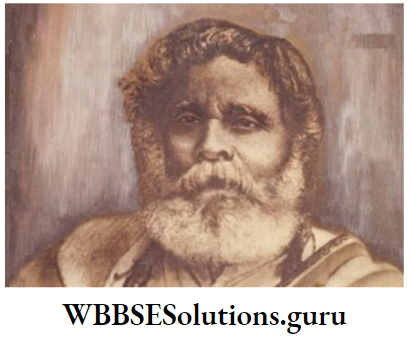
Hindu Mela 1867 To 1880 Objectives: The main objectives of the Hindumela were
- To spread the glory of the ancient Hindu religion among the educated youths,
- To develop the country with their effort,
- To encourage the study of native language and education,
- To respect our national emblems,
- To protect the educated youths of India from the hands of moral degradation and lavish Westernization,
- To raise the glory of India,
- To encourage the youths with physical education and physical training,
- To exhibit and sell the products of Indigenous industries,
To spread the ideal of patriotism and social welfare activities. Thus Hindumela had become jatiya or national mela for national development. Dr. Ramesh Chandra Majumder. raised three main objectives of the Hindumela, such as
- To spread nationalism,
- To create patriotism and
- To form the attitude of self-dependency among the Hindus.
Hindu Mela 1867 To 1880 Importance: The Hindumela had some limitations firstly, it was held only once a year, secondly, the remote villagers were not so encouraged with it and thirdly, it helped to spread Hindu awakening and Hindu nationalism only, but at the same time it was clear that the Hindumela was not the organization of Hindu religion. It greatly helped
- To spread the growth of nationalism and economic nationalism in India.
- In favour of the ideal of Hindumela Nabagopal Mitra founded ‘National Gymnasium’ etc.
- However, the ‘National Theatre’ was founded due to the influence of the Hindumela.
- Rabindranath Tagore said that the Hindumela helped to realize “India is our Swadesh”,
- The covert purpose of Hindumela was to inspire the Hindu youth to develop revolutionary ideals,
- Gaganendranath Tagore made the following observations-“This congregation of ours is not for religious ceremonies, for material benefits or fun and enjoyment-it is for our country, Bharat”.
WBBSE Class 10 History Syllabus
Expression Of Nationalism In Literature And Art
- There are numerous examples to prove that it is possible to develop nationalism through literature and art. However it should be noted that all literary works and art are not capable of developing this feeling. Mainly humanist and realist literature and art can help in this matter.
- If a literary work or piece of art does not uphold patriotism or sing the praise of the country and the race, it would be impossible for the same to help in the growth of nationalism. It would be extremely difficult for fictive imagination and ‘art for art’s sake’ to inspire nationalism unless there is a humanist touch.
- So, ‘some writers and artists try to add a human touch to their creations to bring about a true awakening of the nation and its people. It is not done for self-satisfaction alone; art and literature have important roles to play in the development of nationalist emotion.
- Old and Occidental literature, ‘no doubt, left a prominent mark on Indian art and literature. Books such as ‘Pamela’ by Samuel Richardson, ‘Hard Times (1858) and ‘Oliver Twist’ (1838) by Charles Dickens (1812-1870), ‘Germinal’ (1885) by Emil Zola, ‘Mayor of Casterbridge’ by Thomas Hardy, and ‘Robinson Crusoe’ (1917) by Daniel Defoe have influenced. Indian literature and hence helped in the growth of nationalist feelings.
- The first Malayalam novel ‘Indulekha’ is considered to be the best work of Chandu Menon (1847-1899). Similarly, books like ‘Rajshekhar Charitam’ by the eminent Telugu writer Kandukari Birshalingam (1848-1919), ‘Sebasadan’ (1916) by the famous Hindi writer Munshi Premchand, ‘Anguri Binimoy (1857), the first historical novel in Bengali by Bhudeb Mukhopadhyay and ‘Anandamath’ (1882) by Bankim Chandra Chattopadhyay were instrumental in developing nationalist feelings. Street plays (Jatra) and poetic duels (Kabir larai) also played an important part in this regard.
- Most of the literary works and art of the nineteenth century focussed on colonialism and the shortcomings of society: The message was mostly reformation and call for collective action.
- Injustice, superstition, exploitation, oppression, etc. became popular themes of art and literature. This trend was predominant in the writings of the Bengali writer Sarat Chandra Chattopadhyay (1876-1938) and the Oriya writer Fakir Mohan Senapati (1843-1918).
- Books like ‘Padmaraag’ by Rokeya Hossain (1880-1932), ‘Neeldarpan’ (1860) by Dinabandhu Mitra, ‘Gora’ (1910), and ‘Ghorey Bairey’ (1916) by Rabindranath Tagore were not mere literature, but strong nationalist feelings were deeply ingrained in them.
- Paintings of the Malabar artist Raja Rabi Barma (1848-1898) were quite inspiring. ‘Bharat Mata’ by Abanindranath Tagore and paintings of Nandalal Basu had their own. social implications.
Expression Of Nationalism In Literature And Art Anandamath 1882
- The great writer Bankim Chandra Chattopadhyay (1838-1898) helped in the development of militant nationalism in India through his essays and novels. His essay ‘Krishnacharitra’ stressed the need to establish the kingdom of Krishna in India.
- This emotion was further enhanced in his novel ‘Anandamath’ written in 1882. This was the first historical novel of Bankim Chandra. He dedicated this novel to the memory of Dinabandhu Mitra of ‘Neel Darpan’. ‘Debi Chowdhurani’ written in 1884 was second in the line of such novels.
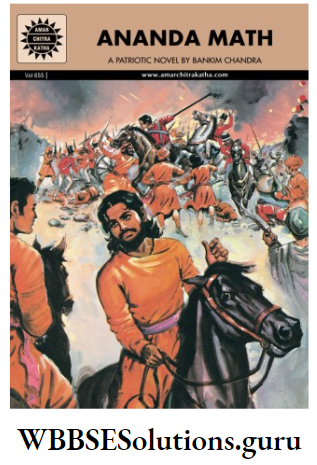
Anandamath 1882 Importance aspects:
- In ‘Anandamath’ Bankim Chandra promoted nationalism, because he has portrayed the self sacrifice of a group of patriots.
- This book influenced the youth to develop patriotism and groom them in militant nationalism. Barrister Promothonath Mitra used the term ‘Anushilon. Samiti’ (1902) from this book.
- For the revolutionaries of the ‘Anushilon Samiti’, ‘Anandamath’ was like a nationalist. Bible. In this novel the two characters of ‘Shanti’ and ‘Bhabananda’ shows exceptional strength. of mind.
- At the request of Surendranath Banerjee, Bankim Chandra composed the song ‘Bande Mataram’ in 1875, which was later included in ‘Anandamath’ as a guiding force. Through the song ‘Bande Mataram’ in this novel, Bankim Chandra portrayed a real life picture of India, our motherland. So, ‘Anandamath’ is considered to be an immortal creation of Bankim Chandra.
- Bankim Chandra wrote another novel, “Rajsingha’, in the same year, that is 1882. However, it did not receive the same accolade as ‘Anandamath’. Revolutionary Aurobindo Ghosh was greatly inspired by Bankim Chandra’s ideals and called him a teacher of nationalism.
- In this novel, Bankim Chandra drew a parallel between Hinduism and Nationalism. Since he was a great supporter of Hinduism, his thought is considered to be religious and conservative. But it is not entirely true, because, although ‘Anandamath’ was created by following the tradition of Hinduism.
- It had successfully inspired the spirit of nationalism among the. pan-Indian, irrespective of their religion, caste, or creed. In 1872 Bankim Chandra published his journal “Bangadarshan’. Though a number of essays and novels were published there, ‘Anandamath was not. Yet, the novel received unparalleled publicity.
- ‘Anandamath’ was written on the background of great famine of Bengal in 1770 (1176 Bengali era) and the Sannyasi revolt. (1760-1800). He requested countrymen to be united against British despotism. The novel had active role in awakening patriotism. For these reason government banned the novel.
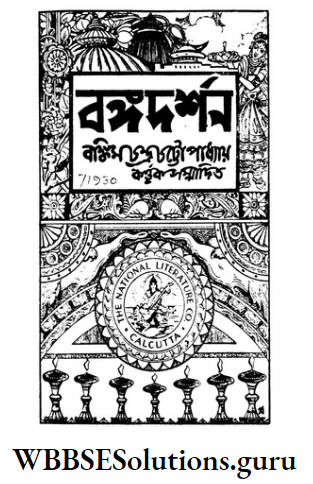
Anandamath 1882 Evaluation: Rabindranath Tagore felt that the three books that had important roles to play in India’s freedom movement were: ‘Gita’ by Lord Krishna, writings of Swami Vivekananda, and ‘Anandamath’ by Bankim Chandra. In ‘Anandamath’ Bankim Chandra sent this message to the people of India-“Motherland is your mother, patriotism is your religion, and serving the country is your worship”.
WBBSE Class 10 History Syllabus
Expression Of Nationalism In Literature And Art Bartaman Bharat 1905
- The individual’s life is in the life of the whole; the individual’s happiness is in the happiness of the whole; apart from the whole, the individual existence is inconceivable-this is an eternal truth and is the bed-rock on which the universe is built.-Bartaman Bharat or Modern India’ (2004, June) by Swami Vivekananda.
- The Hindu Indian sage, Swami Vivekananda (1863-1902), wrote a book named “Bartaman Bharat’ in Bengali, which was an essay. It was published in March 1899 from ‘Udbodhan’, the only Bengali publishing house of Ramkrishna Math and Ramkrishna Mission. Later in 1905, Swami Suddhananda published ‘Bartaman Bharat in the form of a book.

Bartaman Bharat 1905 Importance aspects:
- In this essay, Swamiji has discussed Indian history in a concise form. He had predicted that there would be a mass uprising in India in the near. future when the lower caste people will rule Indian society. In ‘Bartaman Bharat’, not only did he talk about the awakening of lower caste people, he thought deeply about the poor and the downtrodden people. He implored people to remove the caste barrier and consider every Indian as a “brother”.
- He started writing essays-Bharat Katha, Bartaman Bharat, Paribrajak, and Prachyo o Pashchatyo for this journal. Among these, Bartaman Bharat is a remarkable piece. In this essay, he iterated that in ancient India the Vaidik Brahmins ruled the land with the backing of the kings. But they lost their control in the course of time and the Vaishyas or the trading class started wielding more power. Then, as per Swamiji’s prediction, it was time for the rule of the lower caste.
- Swamiji pointed out that we should never forget that Sita, Savitri, and Damayanti are the ideals of all Indian women. He said, ‘The soil of India is my heaven; India’s well-being is my well-being’. In ‘Bartaman Bharat’ he also wrote that it would be foolish to blindly follow the Western culture.
- Swami Jitatmananda feels that in ‘Bartaman Bharat’ Swamiji is expected to live to witness the awakening of India. Srivastav, the author of ‘Teacher in Emerging Indian Society’, has written that through his essay Swamiji expressed his expectation that India should have an education system that will inspire people to be of service to humanity.
- ‘Patriotic saint’ Swami Vivekananda of India had a deep love for his motherland. His essay ‘Bartaman Bharat’ or ‘Modern India’ is the history of the real soul of India. The real history of a country is not the history of fights and battles, invasions and conquests, not even the record of the rise and the fall of dynasties, but it is the history of the evolution of the inner national life. So Modern India in this perspective, is very helpful for the growth of nationalism.
- In the beginning of the book Swamiji said about the power of the Vedic priests. He described the rise of kings and royal dynastics and the background of the importance of the Buddhist revolution. He raised the rise of Muslim royal powers, establishment of the British Raj, emergence of capitalist, imperialism, power of the Vaishyas, and finally the awakening of the Sudras.
- The conflict between east and West was also expressed in the book. At the end of ‘Bartaman Bharat’ Swamiji wrote in “Swadesh mantra”, “I am an Indian, every Indian is my brother. The ignorant Indian, the poor and destitute Indian, the Brahmin Indian, the Parish Indian, is my brother”.
Bartaman Bharat 1905 Evaluation: He said ‘India’s gods and goddesses are my God. India’s society is the cradle of my infancy, the pleasure garden of my youth, the sacred heaven, the Varanasi of my old age. O India! Forget not that the ideal of thy womanhood is Sita, Savitri, Damayanti.’
- At the end of Bartaman Bharat Swamiji also said, ‘Say, brother; the soil of India is my highest heaven, the good of India is my good. Mother of Strength, take away my weakness, take away my unmanliness, and make me a man.’
Class 10 History Environment Book Pdf
Expression Of Nationalism In Literature And Art Gora 1910
- Rabindranath Tagore (1861-1941) wrote three controversial novels. They are ‘Gora’ (1910), ‘Ghare Baire’ (1916), and ‘Char Adhyay’ (1938). Gora, written at the beginning of the twentieth century, dealt with doubts and conflicts in the minds of the Bengalis about social, moral, and national issues.
- The beginning of the twentieth century saw the emergence of a narrow-minded, proud nationalism among the educated Bengali society to promote militant political movements. In ‘Gora’ Tagore successfully promoted larger humanism having condemned the narrow-minded arrogance.
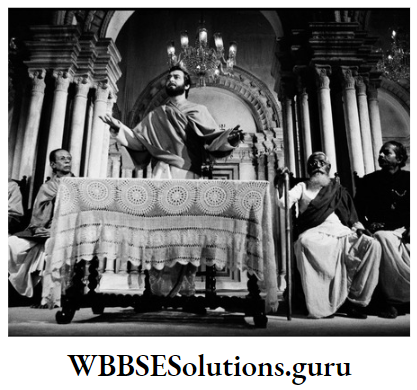
Gora 1910 Importance aspects:
- While Gora was preparing himself to fight an all-out war to uphold Hinduism, he came to know that he was not an Indian at all, but an Irishman by birth. This revelation destroyed his narrow-minded arrogance and brought him back to the ideals of a caste-less and liberal Indian society.
- Gora is set on a larger canvas of an epic; showing deep-rooted consciousness in the pursuit of truth in Indian society. The diverse ideals, leading to ultimate truth have made ‘Gora’ a wonder in its own value. The word Gora means fair complexioned. Gora is an Irishman. Like Nibedita or Annie Besant, his love for India brought him to this country.
- The novel ‘Gora’ by Rabindranath Tagore is more than a hundred years old. ‘Gora’ was written before ‘Gitanjali’. ‘Gora’ is the only novel of Rabindranath Tagore where the character Gora is the main protagonist. This is not to be found in any of his other novels. Through, the character of Gora, the writer has expressed his opinion that rebellion does not exist in the outside world, but lies within one’s self.
- However, the novel is not about fine analysis of Bengali language and Bengali people, but there is more to it. India is a diverse land with multiple races, languages, and ideals and in Gora we find a unification of all these diverse forces. Gora was written when the writer’s age was 47 to 49 years. The wonderful reminiscences of Jibonsmriti have not been written then.
- The easygoing style of writing brought out the spirit of Gora in a wonderful way. In the novel ‘Gora’, the helplessness and traditional beliefs of the Hindu religion have come to the forefront. time and again. At a later stage, it was revealed that Gora was born a westerner. His father had to give up ‘ritualistic practices because of Gora’s staunch beliefs.
- In the novel ‘Gora’ Rabindranath Tagore extremely highlighted the concept of nationalism. As a leader of the Anti-Partition Movement Rabindranath wanted complete development of the lifestyle of the Bengali and Indians. He never supported aggressive nationalism in place of patriotism. It was the political background of the novel ‘Gora’.
- Its central character was Gora himself, who was a man of principle and high personality. He was Irish by birth, but after the death of her foreign mother just after his birth, Gora was brought by Krishnadayalbabu and Anandamoyi. They thought of Gora as their son.
- Rabindranath drew the character Gora as an aggressive Hindu nationalist. When Gora knew that he was Irish, not Indian; then and there his pride in Hindutva was broken. Gora was mentally changed by the vast Indianness in his mind. Gora said, ‘Today I am Indian. There is no conflict in my mind about Hindu-Muslim-Christian. Today all races of India are my race. and their food is my food.
- Rabindranath through his novel ‘Gora’ tried to express the message of liberal, universal, and integrated national patriotism in place of blind and egoistic nationalism. In a specific era of Hindu nationalism conflict between man and society, society and religion, religion and humanism gave birth to many questions, from which the character. came out.
- The background of this novel was the conflict between neo-Hindu nationalism and Hindus of the Brahmo religion, where Gora was a national liberal character who after abolishing Hindu-Brahmo differences got married to Sucharita. As the symbol of secular nationalism Gora fully involved himself in the welfare activities of the country. For this reason, the novel “‘Gora’ is so important for us.
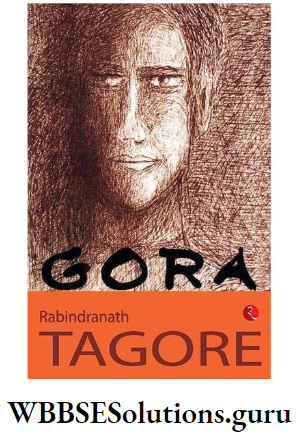
Gora 1910 Evaluation: Again, we find, that the same Gora preferred to take a holy dip at the confluence of the three rivers instead of the holy Ganges. It is written in the novel, “I am yours and you are mine”.
- Gora thinks, ‘Undifferentiated Brahman can also be found in particular. He is infinite, at the same time undifferentiated; he who is infinite is also formless. No faithful Indian will ever deny that God has surpassed even the infinite! Gora is a traveler.
- He is bound to move forward towards the future having expressed himself in this way. Many thinkers feel that Gora is none other than Rabindranath himself.
WBBSE Class 10 History Sample Papers
Expression Of Nationalism In Literature And Art Bharatmata Painting 1905
Abanindranath Tagore (1871-1951), nephew of Rabindranath was both an artist and a writer. What he created with his brush’ is painting and what he created with his words is literature. Abanindranath is called the father of modern Bengali art. His student Nandalal Basu kept this art trend alive.
Bharatmata Painting 1905 Importance aspects:
- In 1905 he created Bharatmata, which is considered to be an immortal creation of Abanindranath. This creation in watercolor is a world-renowned painting. It was painted at a time when the country was in a turmoil fighting the partition of Bengal.
- The specialty of Bharatmata is that it is Bangamata (Bengal as a mother). Through the brushes of the painter, mother India was portrayed as a Goddess of prosperity. She looks like a hermit; she is in fact Mother India herself. She is Indian tradition personified as Mother India.
- Abanindranath’s Bharatmata has four hands. A special characteristic of this painting is that a nationalist spirit flows through it. She wears saffron clothes and appears as a Hindu nun. On her two left hands, she holds a book and a bunch of paddy. On the two right hands, we find a pair of white clothing and a string of Rudraksha (sacred beads). It means Bharatmata gives us food, clothes, knowledge, and religion.
- The most important characteristic of Bharatmata is that she is a combination of all the gods and goddesses worshipped in India. Above all, she is Devi Durga. She is often seen as a lady on the back of a lion, in saffron clothing, and sporting the Indian national flag. In the second half of the Nineteenth Century, Kiran Chandra Banerjee wrote a play called ‘Bharat Mata’ in 1873.
- The famous painting Bharatmata by Abanindranath is of great historical importance because it is not just an artwork. It expresses the concept of the eternal mother. Motherland has been personified as a lady in this picture. Jayanta Sengupta, secretary and curator of the Victoria Memorial Hall, says ‘In this way the mother is seeking liberation through her sons.
- Among all the paintings of Abanindranath, this one is regarded as an icon and the most important among them all. The painting ‘Bharatmata’ is on display at Victoria Memorial Hall for viewing by the general public. Rabindra Bharati Society is also quite active in this matter.
- Sister Nivedita (Margaret Elizabeth Nobel) was a great patron of ‘Bharatmata’. She wanted the painting to be carried all over India, from Kashmir to Kanyakumari, thereby promoting the spirit of nationalism among all Indians.

Bharatmata Painting 1905 Evaluation: Abanindranath himself made this picture the main logo of Bengal School of Art. Hence he is considered to be the father of Modern Indian art. Of the 123 paintings of Abanindranath, Bharatmata holds the top position. He was influenced by modern western art, but still, he was a reformer of the Mughal and Rajput style of painting and should be considered as an inventor of a new style of art.
Expression Of Nationalism In Literature And Art The Cartoons Of Gaganendranath Tagore:
Gaganendranath Tagore (1867-1938) was the elder brother of Abanindranath Tagore (1871-1951). He learned painting from a Japanese artist and a Bengali artist. However, unlike Abanindranath, he did not follow indigenous tradition; instead we find the influence of French Cubism in his drawings.
The Cartoons Of Gaganendranath Tagore Importance aspects:
- Through his cartoons, he criticized colonialism in contemporary society. He criticized certain sections of the British Indian colonialist society and the ‘babu culture’ of Western-educated people through his cartoons and was able to enhance the fondness for traditional Indian culture among the Bengali gentry.
- His cartoons should not be taken at face value, because they inspired nationalism among all sections of society. Gaganendranath emerged as a cartoonist in the second half of the nineteenth century.
- His cartoons made a mockery, satire, and caricature of the then-British rule and helped to inspire nationalism. Montague Chemsford’s reforms were criticized by a cartoon as a weak rule. This is why. Lord Chelmsford became angry to see the Cartoon of Gaganendranath Tagore. He compared the Western education system in India with the factory.
- By the cartoons, Gaganendranath Tagore critisised the foreign rulers in one hand, and on the other hand he criticised the swadeshi leaders including his uncle Rabindranath Tagore. His cartoons on the inventions of Jagadish Chandra Bose and Prafulla Chandra Ray, Rabindranath’s first riding of the airplane, the acceptance of the ministership of Surendranath Banerjee, and on Sir Ashutosh Mukherjee are valuable deeds of history.
- In the book ‘Bidrupbajra’ of Gaganendranath Tagore, first cartoon is ‘Shankar Jater Bangali’. He expressed the character of new English stylished Bengali babus.
- His other cartoons named ‘Puchcha Paribartan’, ‘China Putul”, “Nirlajjya Ukil’, ‘University Machine, (Calcutta University is called “golddigger gymkhana” said by Brahamabandhab Upadhyay) ‘Sabar Urdhe Charka’, he criticized the weak points of the Bengalis, Bengali Ukils, Calcutta University and the Charka of Gandhiji, the symbol of Non-Co-operation Movement. He thought that ‘Chakra’ is not the solution of all. Apart from cartoons Gaganendranath also founded ‘The Indian Society for Oriental Art’ (1907) and ‘The Bengal Home Industries Association (1916).
The Cartoons Of Gaganendranath Tagore Evaluation: All of his book ‘Reform Screams’ published in 1922. His cartoons were published in ‘Prabasi’ and ‘Modern Review’ edited by Ramananda Chattopadhyay. The single-coloured or bi-coloured cartoons mirrored the Bengali society of that time.
- It was not just in Bengal, but the importance of Indian cartoons increased manifold under Gaganendranath. Hence, he is often called the father of modern nationalist Bengali cartoons.
- Bengali cartoons became very popular in illustrated magazines like ‘Panchananda’, ‘Bibhor’, ‘Bangabashi’, ‘Sachitra Bharat’, etc. Rabindranath Tagore was the inspiration for Bengali cartoonists like Jatindranath Sen, Rebati Bhushan, Chandi Lahiri, Debashish Deb, and Amal Chakraborty.
WBBSE Class 10 History Sample Papers
WBBSE Class 10 History And Environment Chapter 4 Early Stages Of Collective Action Very Short Question And Answers
Question 1. Name a few English people who called the Sepoy Mutiny a National Revolt.
Answer:
Tory leader Disreily and English thinkers like J.B. Norton, Alexander Duff, Maleson, Bol, James, Outram, and Holmes.
Question 2. Who formed the Society for the Acquisition of General Knowledge?
Answer:
Pyarichand Mitra, Debendranath Tagore, and two hundred other like-minded people.
Question 3. What was the name of the society formed by Kalinath Chowdhury, Prasanna Kumar Tagore, and Dwarkanath Tagore?
Answer:
Bangabhasha Prakashika Sabha.
Question 4. Which was the largest political institution in the pre-Congress era?
Answer:
Bharat Sabha or Indian Association.
Question 5. Name a few old, occidental literature that helped in the growth of nationalist feelings by influencing Indian Literature.
Answer:
‘Pamela’ by Samuel Richardson, ‘Hard Times’ and ‘Oliver Twist” by Charles Dickens, ‘Germinal’ by Emil Zola, ‘Mayor of Casterbridge’ by Thomas Hardy, and ‘Robinson Crusoe’ by Daniel Defoe.
Question 6. Name the famous painting by Abanindranath Tagore which greatly inspired nationalist feelings among the people.
Answer:
Bharat Mata
Question 7. Who wrote ‘Anandamath’?
Answer:
Bankim Chandra Chattopadhyay
Question 8. Who said these words: the soil of India is my heaven, India’s well-being is my well-being?
Answer:
Swami Vivekananda.
Question 9. Who was called the father of modern nationalist Bengali cartoons?
Answer:
Gaganendranath Tagore.
WBBSE Class 10 History And Environment Chapter 4 Early Stages Of Collective Action True Or False
Question 1. The Sepoy Mutiny was an uprising of the soldiers.
Answer: True
Question 2. On 1st December, 1877 Queen Victoria was proclaimed the Empress of India.
Answer: False
Question 3. The British rulers and Indian Zamindars could come together under the banner of Bharat Sabha.
Answer: False
WBBSE Class 10 History And Environment Chapter 4 Early Stages Of Collective Action Fill In The Blanks
Question 1. The Indian League of ________ was merged with Bharat Sabha. (Sisir Kumar Ghosh).
Answer: Sisir Kumar Ghosh
Question 2. Jatiyo Mela, set up by Rajnarayan Basu and Nabagopal Mitra was later renamed as _______
Answer: Hindu Mela
Question 3. The song Vande Mataram was composed by _________
Answer: Bankimchandra Chattopadhyay
Question 4. ‘Gora’ was written by __________(Rabindranath Tagore)
Answer: Rabindranath Tagore
Question 5. The first modern cartoon was published in ________
Answer: Amrita Bazar Patrika
WBBSE Class 10 History Sample Papers
WBBSE Class 10 History And Environment Chapter 4 Early Stages Of Collective Action Short Question And Answers
Question 1. What was the ‘Proclamation of the Queen’?
Answer:
‘Proclamation of the Queen’
On 1st November 1858 Lord Canning, as a representative of Queen Victoria, held a special court in Allahabad. In this proclamation a number of promises were made for the benefit of India and its people. This came to be known as ‘Proclamation of the Queen’.
Question 2. What were the aims of Bharat Sabha?
Answer:
The aims of Bharat Sabha
The aims of Bharat Sabha were to unite people of all races, religions, and communities; to develop strong public opinion throughout the country; to involve people in the mass movement, and to unite Hindus and Muslims.
Question 3. What was the significance of ‘Anandamath’ in developing nationalist feelings?
Answer:
The significance of ‘Anandamath’ in developing nationalist feelings
‘Anandamath’ had helped to develop militant nationalism in India. It portrayed” the self-sacrifice of a group of young patriots and influenced the youth to develop strong patriotism. In this novel, the two characters ‘Shanti’ and ‘Bhabananada’ show exceptional strength of mind.”