
Chapter 1 Response And Chemical Coordination In Animals Hormones Introduction To Chemical Messengers
Our body is made up of billions of cells that are organized into different tissues. The tissues constitute organs, and different organs constitute systems such as the digestive, respiratory, and circulatory systems.
The ability of an organism to detect changes and make appropriate responses is called sensitivity. Anything to which an organism responds and reacts is called a stimulus. In animals, the responses are quicker and more obvious.

In multicellular animals, the process of responding to stimuli is different. The responses occur within seconds, but through a complex communication network involving several life processes like movement, locomotion, transport, respiration, etc.
For example, when you step out in bright sunlight, you partly close your eyes to keep out the bright light. You may start sweating as the temperature rises.
Read and Learn More WBBSE Solutions For Class 10 Life Science
These are coordinated responses to stimuli. Metabolic processes within the organism itself also create several stimuli to which the organism has to react.
Response and coordination in animals involve the sense organs, nervous system, and chemical messengers called hormones.
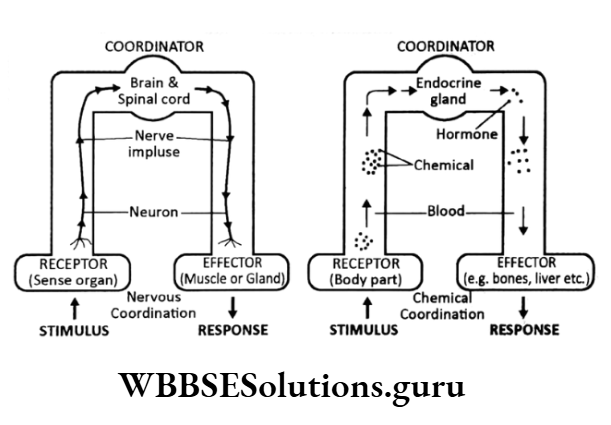
The area receiving the stimulus and the reacting organs are connected by the nervous system. On the other hand, the endocrine system is a chemical messenger system consisting of hormones, the group of glands that secrete the hormones, and the feedback loops that the hormones drive.
The objective of both the nervous system and the endocrine system is the same to keep controlled conditions within limits that maintain life (called homeostasis), but the way of achieving the objective is different.
While the nervous system regulates body activities by responding rapidly using nerve impulses, the endocrine system responds slowly, though no less effectively, by releasing hormones.
Class 10 Life Science Animal Hormones Solutions
A hormone is an organic chemical, synthesized & secreted by a cell, a gland, or an organ in one part of the body into the body or tissue fluid, and that affects cells in other parts of the organism.
In essence, it is a chemical messenger that transports a signal from one cell to another to carry out chemical coordination in a living body. The first identified hormone was Secretin and it was discovered by W.M. Bayliss & E.H. Starling.
WBBSE Chapter 1 Need For Regulation Of Different Activities Of The Animal Body
(E.G Human) And The Role Of Hormones
To perform a particular function the component organs of each system depend on each other and work in harmony. In the absence of such coordinated working, an organism cannot do many things that it normally does.
There are several examples of coordination in our bodies —
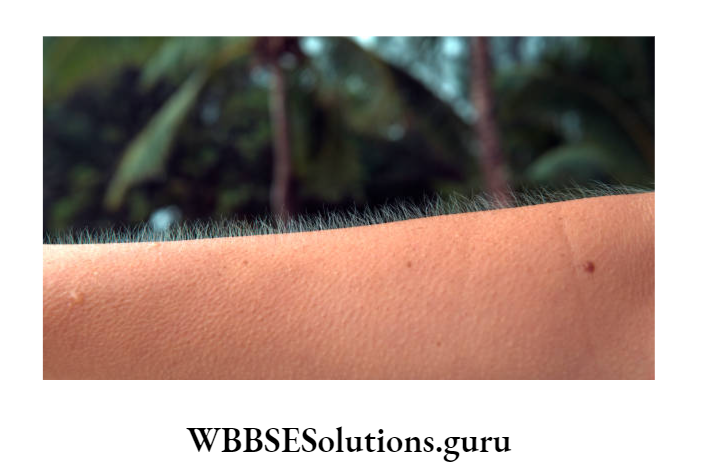
Piloerection Of Body Hair Or Goose Bumps:
Goosebumps result from the erection of the hairs on our skin. Involuntary, or uncontrollable response to cold temperatures or strong emotions.
When we are in a cold environment, our thermoreceptors send a signal to our brain that our body temperature is decreasing.
This triggers the release of the hormone epinephrine (adrenaline), which targets the erector pili (smooth muscles surrounding hair follicles) and causes them to contract.
The contraction of these muscles causes our hair to stand erect. These raised hairs cause the insulating air layer to expand, allowing our body to retain more heat.
Maintenance of blood glucose level:
Most cells in the human body use sugar called glucose as their major source of energy.
To ensure a constant supply of glucose to cells, blood glucose levels must be maintained at relatively constant levels.
In a healthy person, blood glucose levels are restored to normal levels primarily through the actions of two pancreatic hormones, namely insulin, and glucagon.
Combating Stress:
In the modern environment, one is exposed to various stressful conditions. Stress can lead to changes in the serum level of many hormones.
Some of these changes are necessary for the fight or flight response to protect oneself. Adrenaline, along with nor-epinephrine, is largely responsible for the immediate reactions that we feel when we are stressed and they therefore combat stress.
Class 10 Life Science Animal Hormones Solutions
Along with the increase in heart rate, adrenaline also gives us a surge of energy which we might need to run away from a dangerous situation. It also helps us to focus our attention during emergency response.
Maintenance of blood pressure:
Blood pressure is the pressure exerted by circulating blood upon the walls of vessels. Hormonal responses exist for both lowering and raising blood pressure.
They act in various ways, including vasoconstriction, vasodilation, and alteration of blood volume. The kidneys provide a hormonal mechanism (the renin-angiotensin-aldosterone system) for the regulation of blood pressure by managing blood volume.
Epinephrine and nor-epinephrine hormones, secreted by the adrenal medulla, raise blood pressure by increasing heart rate and the contractility of the heart muscles and by causing vasoconstriction of arteries and veins.
Antidiuretic hormone (ADH), a hormone produced by the hypothalamus and released by the posterior pituitary, raises blood pressure by stimulating the kidneys to retain water (raising blood pressure by increasing blood volume).
The hormone Atrial Natriuretic Peptide (ANP), produced by the atrium of the heart, lowers blood pressure by way of vasodilation.
Control Of Bmr:
Basal Metabolic Rate (BMR) is the rate of energy expended by animal (such as human) bodies when at rest. The thyroid hormones triiodothyronine (T3) and thyroxine (T4) are the main regulators of BMR.
BMR increases when the quantity of these hormones increases in the blood. Some other hormones such as testosterone, insulin, and human growth hormone (HGH) can also increase the body’s metabolic rate.
Influence on sexual behaviors:
In most animal species the brain controls and regulates sexual behavior primarily using hormones. The sex hormones are estrogen and testosterone.
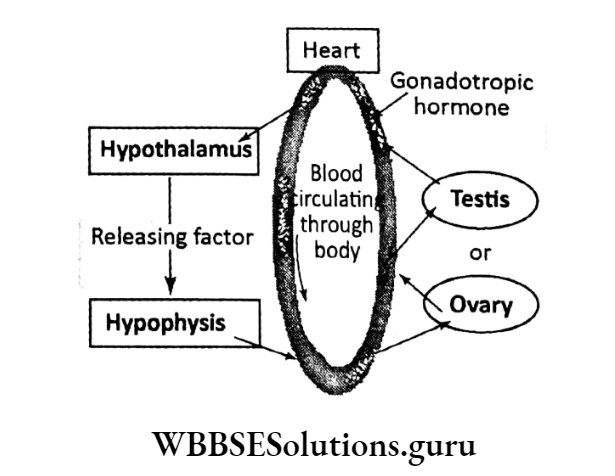
Sexual behavior is influenced by the hypothalamus. It stimulates the pituitary gland to release the sex hormones.
The hypothalamus secretes the appropriate releasing factor into the blood, which reaches the pituitary and stimulates it to secrete gonadotrophic hormone.
In the female, the target gland of the gonadotrophic hormone is the ovary.
Class 10 Life Science Animal Hormones Solutions
The ovary has two functions, the first one is to produce eggs, and the other is to secrete hormones (estrogen and progesterone).
The ovarian hormones make feedback loops to the hypophysis and develop sexual characteristics that distinguish females from males. In the male, the target gland of the gonadotrophic hormone is the testis.
Like the ovary, the testis also has a dual role:
sperm production and hormone production. Androgens (testosterone) are the hormones released by the testis.
Pituitary hormones stimulate the production of testicular hormones, which, in turn, regulate the production of pituitary hormones using feedback.
Chapter 1 Characteristics Of Animal Hormones General Characteristics Of Hormones Are As Follows
Hormones are secreted by ductless endocrine glands directly into the blood. These are never stored in any other place of the animal or human body for future use except the secreting glands or tissues.
Chemically hormones may be proteinous or non-proteinous. These are classified as Amine hormones (amino acid derivatives), steroid hormones, Polypeptide hormones, and Proteinous hormones.
The secretion of hormones is regulated by the nervous system through the feedback effect. There are positive feedback systems but the negative feedback loop is more common in the endocrine system.
Most hormones are highly soluble in water and are conducted freely in the bloodstream. Lipid soluble hormones are conducted in bound form with transport protein.
Hormones cannot act on the secretory cells from where these are secreted.
Hormones generally act at a site remote from their place of production after being transported through the circulatory system. When a hormone influences the activities of a particular organ, it is called the target organ of that hormone.
Chemical Coordination In Animals Class 10 Notes
Hormones influence the biochemical activities of target organs but these never initiate any processes. It works individually in very low concentration.
Acting as a biochemical messenger, hormones usually cause long-term effects like changes in behavior, growth, etc.
Hormones are destroyed and excreted immediately after their functions are over.
Chapter 1 The General Characteristics Of Hormones Are Elaborated As Follows

Sources Of Animal Hormones:
Endocrine glands are ductless glands that always secrete chemicals directly into the blood.
Endocrine glands secrete hormones into the blood. Blood then transports the hormones to all parts of the body, but the hormone only affects target cells, because of the presence of receptors for the hormone on the target cells.
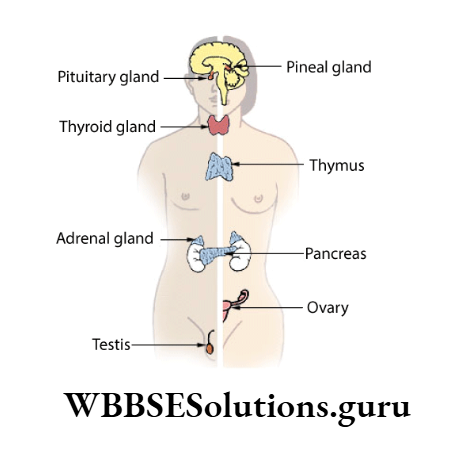
The major glands of the human endocrine system, each of which produces one or more specific hormones, are the hypothalamus, the pituitary, the thyroid, the parathyroid, the islet cells of the pancreas, the adrenal, the testes (in men) and the ovaries (in. women).
Chemical nature of animal hormones is based on chemical composition, hormones are classified into the following major types:
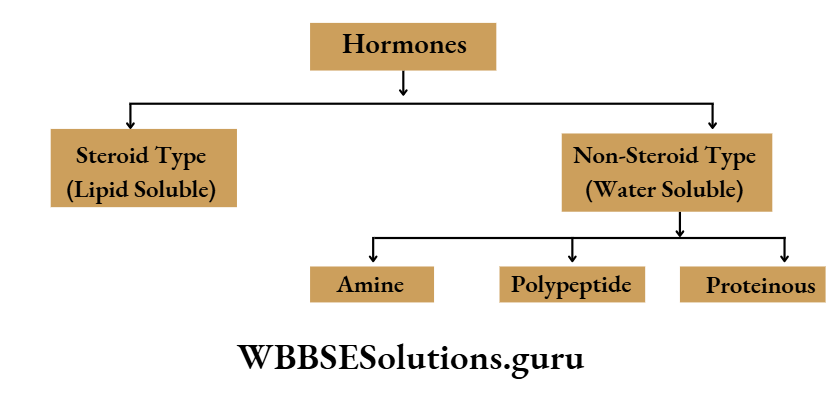
Steroid Hormones:
These are derived from cholesterol, e.g. androgens, estrogens, etc.
Amine Hormones:
These are derived from the amino acids tyrosine and tryptophan and have an amino group (-NH2), e.g. thyroxine, epinephrine, etc.
Polypeptide Hormones:
They comprise less than 100 amino acids, e.g., short peptide hormones are oxytocin, and ADH (antidiuretic hormone).
Proteinous Hormones:
Generally composed of more than 100 amino acids, e.g., LH, FSH. The LH and FSH are glycoprotein hormones.
Chemical Coordination In Animals Class 10 Notes
Feedback control:
The secretion of most, if not all, hormones is regulated by some type of closed-loop control system known as a feedback mechanism
(because the amount released or secreted is sensed and that information is relayed back to the secretory cell by a variety of ways). Feedback control is mostly negative, rarely positive.
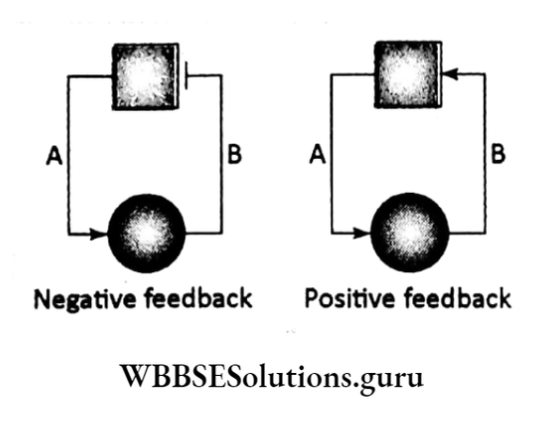
In a negative feedback control, the synthesis of a hormone slows down or halts when its level in the blood rises above the normal or threshold limit.
In the less common positive feedback mechanism, one hormone further stimulates the production of another hormone instead of diminishing it. Some examples of feedback control are given below.
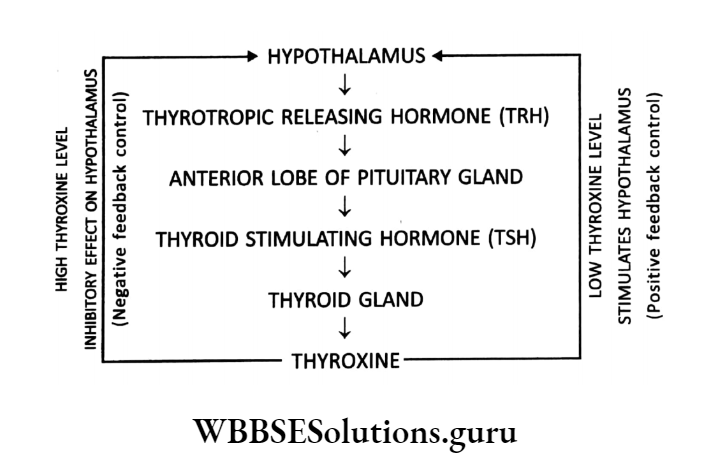
The hypothalamus, in response to some external stimulus, produces a thyrotropin-releasing hormone for the secretion of thyrotropic hormone.
The thyrotropin-releasing hormone (TRH) stimulates the anterior pituitary lobe to secrete thyrotropic hormone. The latter in turn stimulates the thyroid gland to produce thyroxine.
If thyroxine is in excess, it exerts an influence on the hypothalamus and anterior pituitary lobe, which then secrete a lesser amount of releasing hormone and thyroid-stimulating hormone (TSH) respectively.
A rise in the TSH level in the blood may also exert a negative feedback effect on the hypothalamus and retard the secretion of TRH. This restores the normal blood-thyroxine level.
Sometimes, the accumulation of a biochemical increases its own production. For example, uterine contraction at the onset of labor stimulates the release of the hormone oxytocin, which intensifies uterine contractions.
The contractions further stimulate the production of oxytocin. This is a positive feedback control.
Mode Of Transport Of Animal Hormones:
Most hormones are secreted into the general circulation to exert their effects on appropriate distant target tissues. Water-soluble hormone molecules circulate in watery blood plasma in a free state, (i.e. not attached to other molecules).
Steroid and thyroid hormones are less soluble in aqueous solution and over 90% circulate in blood as complexes bound to specific transport proteins like plasma globulins or albumin.
The transport proteins make the lipid-soluble hormones temporarily water-soluble and act as a ready reserve of hormones.
Functioning And Fate Of Hormones:
The chemical structure of a hormone enables it to combine with a receptor in the cells of its target. The receptor may be present on the plasma membrane of the cell or inside the cytoplasm or nucleus.
Only a hormone’s “target” cells, which have receptors for that hormone, will respond to its signal. When the hormone binds to its receptor, it forms a receptor-hormone complex.
This complex changes and enters into the nucleus of the target cell. Within the nucleus, it increases the synthesis of cell protein and takes part in the metabolic process of the cell.
All hormones diminish within the body at differing rates based on their chemical half-life. Once hormones have served their function on their target organs/tissues, these are destroyed.
These are either destroyed by the liver or the tissues of the target organs and excreted out of the body.
Role Of Hormones As Biochemical Messengers and Regulators:
Hormones are informational molecules that carry the message of metabolic change from the endocrine glands to the target cells or organizer
These are released into the extracellular fluid, where they are diffused into the bloodstream. The latter carries them from the site of production to the site of action.
Hormones stimulate or inhibit one or more Physiological processes for the welfare of the body.
Maintenance of the internal chemical environment of the body to a constant is called homeostasis. Hormones play a major role in maintaining homeostasis through their integrated action.
These also play a leading role in the chemical coordination of the living body. Thus hormones are known as chemical messengers.
Chemical Coordination In Animals Class 10 Notes
Chapter 1 Topic C Response And Chemical Coordination In Animals Hormones Difference Between Hormone And Enzyme
There is a group of chemicals present inside the animal body which accelerates a series of biochemical reactions by performing as organic catalysts.
These are known as enzymes. Just as a hormone functions on its target cells by forming a receptor-hormone complex, an enzyme also forms an enzyme-substrate complex to carry out a particular biochemical reaction on a substrate.
So, after going through the characteristics of hormones the natural question that may arise in somebody’s mind is, “Is there any difference between the hormones and the enzymes?
The Major Differences Between Hormones And Enzymes Are Enumerated As Follows:

Chapter 1 Human Endocrine Glands And The Hormones Secreted From Them General Types of Hormones in Man
General Hormone:
The hormones which are secreted from one endocrine gland and that act on distant target organs are called general hormones.
Examples:
Insulin, thyroxin, etc.
Tropic Hormone:
The hormones which are secreted from one endocrine gland and that act on another endocrine gland as target organs are called tropic hormones.
Example:
Hormones of the anterior pituitary like STH, TSH, ACTH, FSH, etc.
Explanation Of Action Of Tropic Hormone:
Thyroid-stimulating hormone (TSH) is a tropic hormone that is secreted from the pituitary gland. It influences the secretion of thyroxin from the thyroid gland.
Here TSH acts as a tropic hormone and the thyroid gland is the target gland. The secretion of tropic hormones is controlled by the hypothalamus.
Stress Or Emergency Hormone:
The hormones that are secreted under physiological stress or strain (e.g. fear, anxiety, shock, grief, etc) to trigger the Fight or flight response to combat the emergencies are called the stress or emergency hormone.
Example:
Adrenaline, noradrenaline.
Local Hormone:
The hormones that are secreted from certain tissues of the body and that act at the same site of origin or in nearby organs in a strictly localized manner are called the Stress or emergency hormones are called local hormones
Example:
Adrenaline, Noradrenaline.
Once these are secreted, the local hormones enter into the bloodstream, make a round trip through the body and finally reach the target organizer
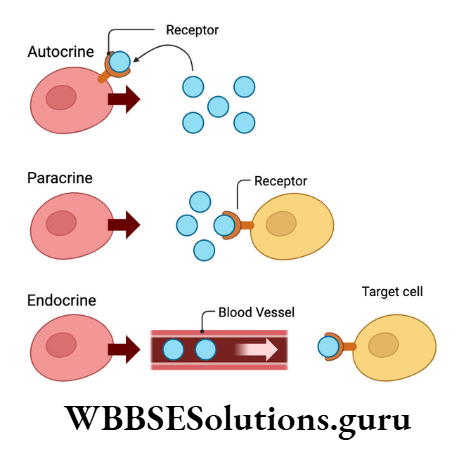
Local hormones that act on neighboring cells are called paracrine and those that act on the same cell that secretes them are called autocrine.
Chemical Coordination In Animals Class 10 Notes
Examples:
Gastrin, somatostatin, etc.
Gastrin is secreted from the mucous layer of the stomach and acts on the stomach itself to secrete gastric juice.
Somatostatin is secreted from the 5-cell islets of Langerhans in the Pancreas and controls the secretions of p-cells and a-cells of the same gland.
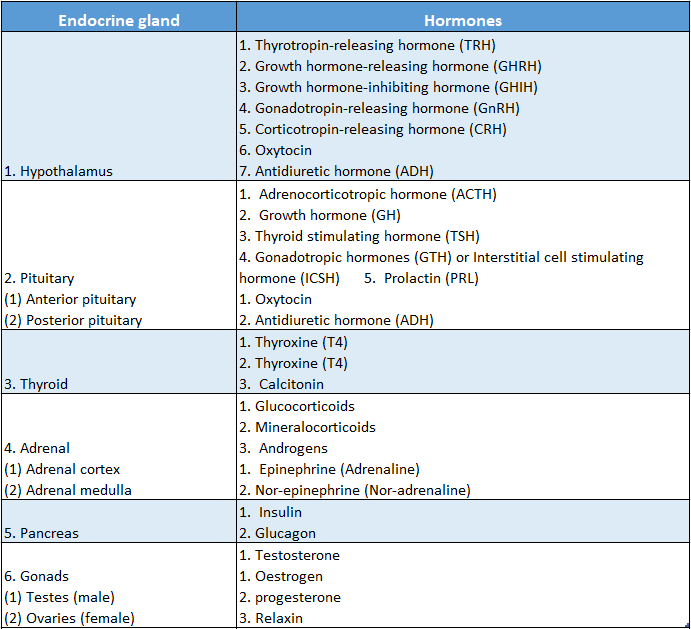
Chapter 1 Tabular Summary of Human Endocrine Glands And The Hormones
Chapter 1 Human Endocrine Glands And The Hormones
The Major Endocrine Glands Of the Human Body, With Their Locations, Hormonal Secretions, And Roles Are Mentioned Below
Hypothalamus:
It is known as the master gland.
Location:
The hypothalamus is a part of the brain located superior and anterior to the brain stem and inferior to the thalamus.
Functions:
Apart from serving many different functions in the nervous system, it is also responsible for the direct control of the endocrine system through the pituitary gland.
The hypothalamus contains special cells called neurosecretory cells—neurons that secrete hormones. It regulates the anterior pituitary by secreting different releasing hormones (-RH) and the posterior pituitary by secreting neurohormones.
Hormonal secretions:
Thyrotropin-releasing hormone (TRH)
Growth hormone-releasing hormone (GHRH)
Growth hormone-inhibiting hormone(GHIH)
Gonadotropin-releasing hormone (GnRH)
Corticotropin-releasing hormone(CRH)
Oxytocin
Antidiuretic hormone (ADH)
Functions Of The Hormones:
All of the releasing (-RH) and inhibiting hormones (-IH) affect the function of the anterior pituitary gland. TRH stimulates the anterior pituitary gland to release thyroid-stimulating hormone.
GHRH and GHIH work to regulate the release of growth hormone—GHRH stimulates growth hormone release, and GHIH inhibits its release. GnRH stimulates the release of follicle-stimulating hormone and luteinizing hormone while CRH stimulates the release of adrenocorticotropic hormone.
The last two hormones oxytocin and antidiuretic hormone are produced by the hypothalamus and transported to the posterior pituitary, where they are stored and later released.
Pituitary:
The pituitary gland is also known as the hypophysis.
Location:
It is a small pea-sized lump of tissue connected to the inferior portion of the hypothalamus of the brain by a small stalk known as the infundibulum or the pituitary stalk.
Situated in a small depression in the sphenoid bone called the sella turcica, the pituitary gland is made of two completely separate structures: the anterior and posterior pituitary glands.
WBBSE Class 10 Life Science Chapter 1 Solutions
Anterior Pituitary:
The anterior pituitary gland is the true glandular part of the pituitary gland.
Hormonal secretions:
The anterior pituitary produces the following important tropic hormones:
Adrenocorticotropic hormone (ACTH):
It is secreted from the corticotroph cells of the anterior pituitary.
Functions:
It stimulates the adrenal cortex, the outer part of the adrenal gland, to produce its hormones.
It stimulates the secretion of cortical hormones (particularly glucocorticoids and sex steroids).
Growth hormone (GH) Or Somatotropic hormone (STH) or Somatotropin:
It is secreted from the somatotroph cells of the anterior pituitary.
Functions:
STH indirectly stimulates the growth of epiphyseal cartilage and thus helps in bone growth.
STH stimulates the growth of muscles and other visceral organs of the body.
STH synthesizes muscle protein. It raises blood glucose levels. It causes loss of body fat by mobilizing depot fat.
Thyroid-stimulating hormone (TSH):
It is a tropic hormone secreted from the thyrotropin cells of the anterior pituitary.
Functions:
TSH generally regulates the growth of the thyroid gland.
It maintains the synthesis of thyroid hormones from the thyroid gland.
WBBSE Class 10 Life Science Chapter 1 Solutions
Gonadotropic hormones(GTH):
It is secreted from the gonadotroph cells of the anterior pituitary and influences gonads (ovary or testis). It includes two hormones Follicle-stimulating hormone (FSH):
It is a glycoprotein hormone.
Functions:
In females—
FSH increases the size and weight of the ovaries,
It helps in the maturation of immature follicles into mature Graafian follicles,
It stimulates the secretion of estrogen from the Graafian follicles.
In males, FSH induces the development of seminiferous tubules and spermatogenesis.
Luteinizing hormone (LH) or Interstitial cell-stimulating hormone (ICSH):
It is also a glycoprotein hormone.
Functions:
In females—
In the presence of FSH, the LH ruptures the Graafian follicles causing ovulation
It helps in the formation, maturation, and persistence of corpus luteum in the ovary,
It stimulates the secretion of progesterone from the corpus luteum. In males, LH stimulates the secretion of testosterone in the testis.
Prolactin (PRL), luteotropic hormone (LTH) or luteotropin:
Prolactin is also known as the ‘maternity hormone’ since it is secreted mainly during lactation.
Functions:
It stimulates the development of mammary glands of the breast during pregnancy.
It initiates and maintains the secretion of milk from the mammary glands of breasts.
It stimulates the secretion of progesterone.
Posterior Pituitary:
The posterior pituitary gland is not glandular tissue at all, but nervous tissue instead. The posterior pituitary is a small extension of the hypothalamus.
Hormonal secretions:
The Neurosecretory Cells Secrete Two Neurohormones In The Hypothalamus That Are Stored And Released By The Posterior Pituitary:
Oxytocin triggers uterine contractions during childbirth and the release of milk during breastfeeding.
Antidiuretic hormone (ADH) or Vasopressin:
After secretion, it is transported through the blood to act on blood vessels (arterioles), renal tubules, etc.
Functions:
In small doses, vasopressin acts as an antidiuretic hormone (ADH) that increases the reuptake of water in the kidneys. ADH thus decreases the volume of excretory urine and urine becomes more concentrated.
Vasopressin stimulates the contraction of involuntary smooth muscles of the urinary bladder, ureter, intestine, uterus, etc.
In large doses, vasopressin raises blood pressure by affecting arteriolar and capillary constrictions.
Thyroid:
The thyroid gland is a butterfly-shaped gland consisting of two lobes located at the base of the neck and wrapped around the lateral sides of the trachea.
Hormonal secretion:
The thyroid gland produces three major hormones: Calcitonin, Triiodothyronine (T3), and Thyroxine (T4).
Thyroxine (T4) is the main hormone secreted into the bloodstream by the thyroid gland. It is the inactive form and most of it is converted to an active form called triiodothyronine(T3) by organs such as the liver and kidneys.
The hormones T3 and T4 work together to regulate the body’s metabolic rate. Increased levels of T3 and T4 lead to increased cellular activity and energy usage in the body.
It has been observed that T3 is more active than T4.
Functions of T3 & T4:
Effect on BMR:
Thyroid hormones help BMR to increase by increasing both oxygen uptake and tissue metabolism. Hence these are known as calorigenic hormones.
Effect On Metabolism:
Thyroid hormone increases blood sugar levels. It enhances protein synthesis in low doses but depresses protein synthesis in high doses. T4 decreases serum cholesterol & phospholipids.
WBBSE Class 10 Life Science Chapter 1 Solutions
Effect On Growth:
Thyroid hormones help in skeletal, muscular, sexual & mental growth.
Effect On Cardiovascular System:
Thyroxin enhances heart rate, cardiac output, and blood pressure.
Effect On Respiration:
Thyroid hormones increase the rate and depth of respiration by increasing utilization of 02 and formation of C02.
Effect On Gl Tract:
T4 increases the absorption of food, secretion of digestive juices, and movement of the GI tract.
Effect On RBC:
Thyroid hormones help in the development of RBC.
Effect on body temperature regulation:
In a cold environment, the secretion of thyroid hormones increases and this causes increased heat production. This helps in thermoregulation and prevents a fall in the body temperature.
Calcitonin:
Calcitonin is a protein hormone.
Functions:
Calcitonin is secreted in response to the rise of calcium in the blood. It decreases calcium levels in the blood by affecting the absorption of calcium into the matrix of bones.
Adrenal:
The adrenal glands are a pair of roughly triangular glands located immediately on the upper pole of each kidney. Hence these are called Suprarenal glands.
The adrenal glands are each made of two distinct layers, the outer adrenal cortex, and the inner adrenal medulla.
Hormonal secretions of the adrenal cortex:
The adrenal cortex produces many cortical hormones in three classes glucocorticoids, mineralocorticoids, and androgens.
Glucocorticoids have many diverse functions, including the breakdown of proteins and lipids to produce glucose,
Minerals corticoids, as their name suggests, are a group of hormones that help to regulate the concentration of mineral ions.
Androgens, such as testosterone, are produced at low levels in the adrenal cortex to regulate the growth and
the activity of cells that are receptive to male hormones.
Response And Chemical Coordination In Animals Class 10 WBBSE
Hormonal Secretions Of Adrenal Medulla:
The adrenal medulla produces the hormones epinephrine (adrenaline) and nor-epinephrine (nor-adrenaline) under stimulation by the sympathetic division of the autonomic nervous system.
It also secretes another hormone called dopamine.
Epinephrine or adrenaline:
Epinephrine, together with norepinephrine, steps up metabolism as a part of the Fight or flight response to prepare the human body to face emergency stressful conditions like those of muscular exertion, pain, shock, injury, fear, anxiety, fall of blood pressure, etc.
Hence these two hormones are known as emergency hormones.
Functions:
Effect on the circulatory system:
Epinephrine constricts all blood vessels except coronary vessels & vessels connected with skeletal muscles. As a result both blood pressure & heart rate increase.
In general, it stimulates the increase of conductivity, contractility, heart rate & cardiac output.
Effect on muscles:
Epinephrine increases the excitability, contractility & tone of skeletal muscles. It inhibits the tone of involuntary muscles present in the stomach, intestine & bronchiole. It ensures a delay in the onset of muscle fatigue.
Effect on internal organs:
It inhibits intestinal movement and causes contraction of the spleen & dilation of the pupil. It constricts renal arteries to decrease renal circulation which causes decreased urine output.
Effect on respiration:
It causes dilatation of bronchioles and increases the rate & depth of respiration.
Effect on metabolism:
Epinephrine increases blood sugar by stimulating the breakdown of liver glycogen, the formation of glucose from lactic acid, etc.
Nor-epinephrine or nor-adrenaline:
Like epinephrine, nor-epinephrine also stimulates the increase of heart rate, enhancement of both systolic and diastolic blood pressure, an increase of respiration rate & widening of the pupil.
It also stimulates the contraction of skeletal muscles.
Pancreas:
The pancreas is a large elongated gland located in the abdominal cavity just inferior and posterior to the stomach.
Hormonal Secretions:
The pancreas is considered to be a heterocrine or mixed gland as it contains both endocrine and exocrine tissue. The endocrine function consists primarily of the secretion of the two major hormones, insulin, and glucagon.
The endocrine cells of the pancreas are found in small groups throughout the pancreas called islets of Langer Within these islets are two major types of cells alpha and beta cells.
The alpha cells produce the hormone glucagon and the beta cells produce the hormone insulin.
Insulin:
It is an antidiabetogenic protein hormone that lowers blood sugar levels.
Functions:
Effect on carbohydrate metabolism:
Insulin increases the oxidation of glucose in the cells, stimulates the formation & storage of glycogen in the liver & muscle, inhibits the formation of glucose from non-carbohydrates in the liver, and increases the permeability of glucose through the cell membrane from blood to the cells.
All these activities result in the maintenance of optimum levels of blood sugar.
Effect on protein metabolism:
It increases protein synthesis in the body.
Effect on fat metabolism:
It also decreases lipid & cholesterol levels in the blood & prevents the formation of harmful ketone bodies in the liver.
Glucagon:
It is anti-insulin in nature. Together with insulin, it maintains a steady level of blood sugar in the body.
Functions:
Effect on carbohydrate metabolism: It stimulates liver glycogen to undergo breakdown to be converted into glucose which increases blood sugar levels.
Response And Chemical Coordination In Animals Class 10 WBBSE
Effect on protein metabolism:
Glucagon hydrolyses protein into amino acids and increases nitrogen excretion through urine.
Effect on fat metabolism:
It stimulates the increase of fat & cholesterol level in the blood.
Gonads:
The gonads and ovaries in females and testes in males are responsible for producing the sex hormones of the body.
Testes:
The testes are a pair of ellipsoid Fun(Iami iniaIs of Lifi Sell no organs found in the scrotum of males that produce the androgen testosterone in males after the start of puberty.
Testosterone:
It has effects on many parts of the body, including the muscles, bones, sex organs (both primary & secondary), and hair follicles,
During puberty, testosterone controls the growth and development of the sex organs and secondary sex characteristics like muscular growth, breaking of voice, growth of hair on the face, chest, etc.
Ovaries:
The ovaries are a pair of almond-shaped glands located in the pelvic body cavity lateral and superior to the uterus in females. The ovaries produce the female sex hormones progesterone and estrogens. It also secretes another hormone called relaxin.
Estrogen:
Oestrogen stimulates the growth, development, and functional activities of primary and secondary sex organs in females during puberty.
It regulates the menstrual cycle and stimulates breast development.
It enhances the deposition of fat in the female body.
Progesterone:
In the presence of estrogen, progesterone stimulates the complete development of the primary & secondary female sex organizer
It is most active during ovulation & pregnancy. It helps the embedding of embryos in the uterus and stimulates the development & maintenance of pregnancy.
It also regulates the menstrual cycle & breast development at puberty.
Relaxin:
It is secreted from the uterus at the terminal stage of pregnancy. It facilitates the expulsion of the fetus from the uterus by causing relaxation of the pelvic ligaments.
Response And Chemical Coordination In Animals Class 10 WBBSE
Chapter 1 Response And Chemical Coordination In Animals Hormones Hormonal Disorders
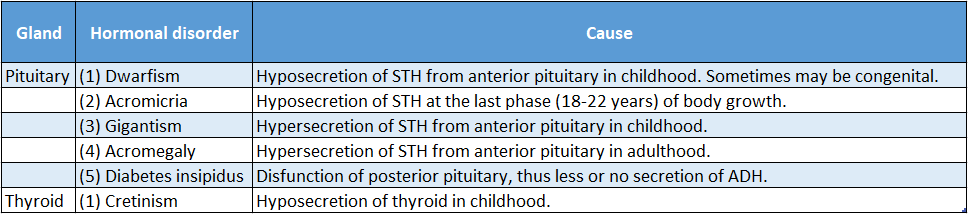
Endocrine disorders or hormonal disorders are typically an endocrine disease that results when a gland produces too much (hyper-secretion) or too little (hypo-secretion) of an endocrine hormone, called a hormone imbalance.
Some important hormonal disorders of humans are—
Dwarfism:
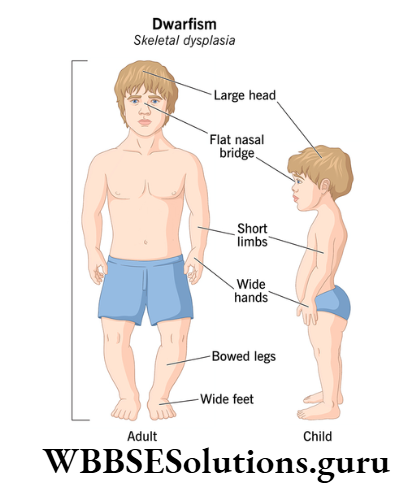
Pituitary dwarfism is decreased bodily growth due to hormonal problems (hyposecretion of STH) in childhood.
Causes:
Pituitary dwarfism, or growth hormone deficiency, is a condition in which the pituitary gland does not make enough growth hormone (hypo-function of STH).
Pituitary gland dysfunction can be congenital, which means that the child is born with the abnormality, or can be acquired during or after birth. It tends to run in families.
Symptoms:
The main symptom of pituitary dwarfism is below-average growth, although body proportions will be normal. Other characteristics might include an immature appearance, a chubby body build, a prominent forehead, and an underdeveloped bridge of the nose.
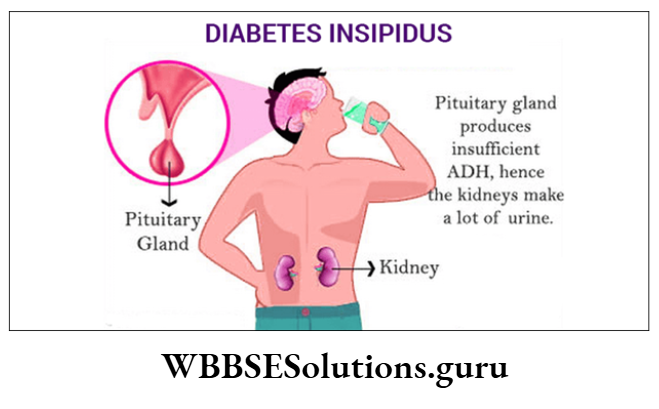
Diabetes insipidus (Dl) is a condition in which the kidneys are unable to prevent the excretion of water due to the hyposecretion of ADH leading to the excretion of an abnormally large amount of urine from the body.
Causes:
During the day, our kidneys filter the blood many times. Normally, most of them are reabsorbed and only a small amount of concentrated urine is excreted.
Dl occurs when the kidneys cannot concentrate the urine normally due to a decrease in the reabsorption of water in the renal tubules and a large amount of dilute urine is excreted.
The amount of water excreted in the urine is controlled by antidiuretic hormone (ADH). Dl caused by a lack of ADH is called central diabetes insipidus.
Excessive thirst that may be intense or uncontrollable, usually with the need to drink large amounts of water.
Excessive urine volume,
Excessive urination, often needing to urinate every hour throughout the day and night.
Goitre:
Goitre is a swelling (hypertrophy) of the thyroid gland in the neck due to hypothyroidism.
Response And Chemical Coordination In Animals Class 10 WBBSE
Causes:
Iodine deficiency, leading to hypothyroidism, is the major cause of endemic goiter. The thyroid gland needs iodine to manufacture thyroid hormones, which regulate the body’s rate of metabolism.
Hypothyroidism is the result of an underactive thyroid gland, and this causes goiter. Because the gland produces too little thyroid hormone, it is stimulated to produce more, leading to swelling.

Symptoms:
The main symptom of goiter is swelling of the thyroid gland, which causes a lump to develop in the front of the neck.
The following are the main symptoms that can result from neck swelling- symptoms of tightness, cough, and hoarseness; Trouble swallowing (dysphagia), dry & rough skin, hair loss, excessive fatigue, etc.
Diabetes mellitus:
Diabetes mellitus is a chronic, lifelong condition that affects the body’s ability to use the energy found in food.
There are two major types of diabetes:
- Type-1 diabetes and
- Type-2 diabetes.
Type-1 diabetes is also called insulin-dependent diabetes. It used to be called juvenile-onset diabetes because it often begins in childhood.
Type-2 diabetes used to be called adult-onset diabetes, but with the epidemic of obese and overweight kids, more teenagers are now developing type-2 diabetes.
Type-2 diabetes is also called non-insulin-dependent diabetes.
Causes:
All types of diabetes mellitus have something in common. Normally, our body breaks down the sugars and carbohydrates we eat into glucose.
Glucose fuels the cells in our body. But the cells need insulin, a hormone, in the bloodstream to take the glucose and use it for energy.
With diabetes mellitus, either the body doesn’t make enough insulin or it can’t use the insulin it produces, or a combination of both.
In Type-2 diabetes, the pancreas usually produces some insulin. But either the amount produced is not enough for the body’s needs, or the body’s cells are resistant to it.
WBBSE Life Science Class 10 Chapter 1 Questions And Answers
Symptoms:
Since the cells cannot take in the glucose, it builds up in the blood. High levels of FuncIaivientaIs of UFe Sconce
blood glucose can damage the tiny blood vessels in the kidneys, heart, eyes, or nervous system.
That is why diabetes – especially if left untreated – can eventually cause heart disease, stroke, kidney disease, blindness, and damage to nerves in the feet.
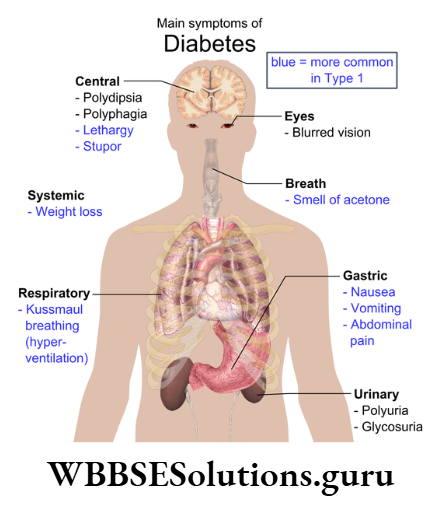
The early symptoms of untreated diabetes are related to elevated blood sugar levels and loss of glucose in the urine. The high amount of glucose in the urine can cause increased urine output and lead to dehydration.
This condition is called Polyuria. Dehydration causes increased thirst and water consumption. This condition is known as polydipsia.
The inability of insulin to perform normally has effects on protein, fat, and carbohydrate metabolism. A relative or absolute insulin deficiency eventually leads to weight loss despite an increase in appetite.
This condition is called polyphagia. Some untreated diabetes patients also complain of fatigue, nausea, and vomiting. Fluctuations in blood glucose levels can lead to blurred vision.
Extremely elevated glucose levels can lead to lethargy and coma.
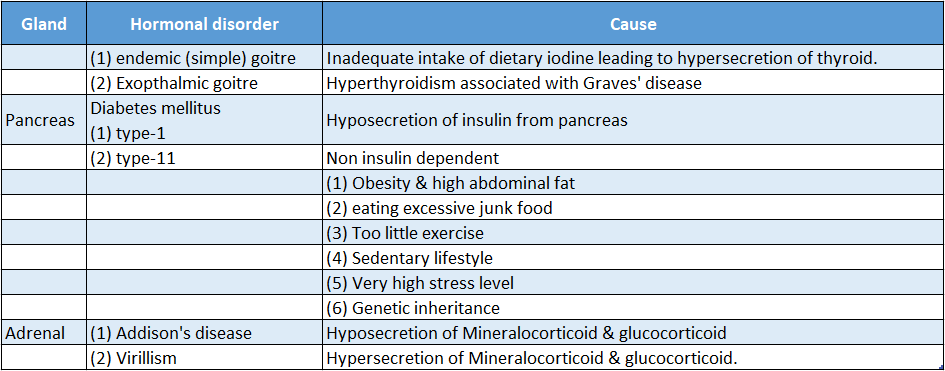
The Common Hormonal Disorders Are Summarised In The Following Table:
Chapter 1 Response And Chemical Coordination In Animals Hormones Differences Between Endocrine And Exocrine Glands
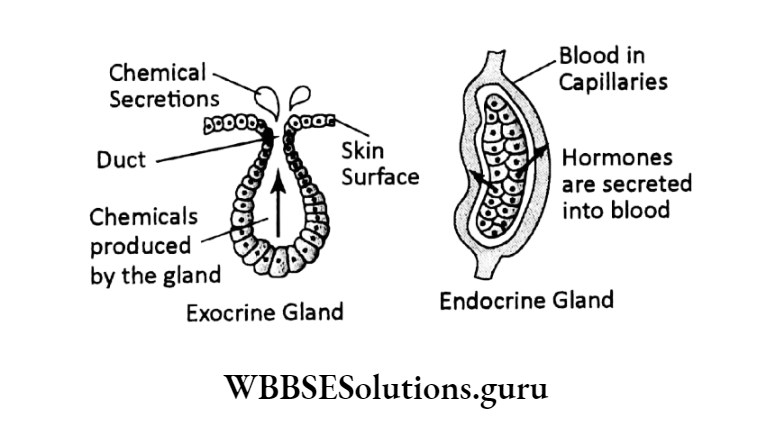
The glands Of Our Body Can Be Divided Into Two Classes: Endocrine And Exocrine Glands.
Endocrine glands:
The glands which are devoid of ducts & that secrete their products directly into the interstitial fluid surrounding the secretory cells are called ductless endocrine glands.
Examples: Pituitary, Thyroid, Adrenal gland, etc.
Exocrine glands:
The glands which possess ducts & that secrete their products into those ducts to be carried over to the body cavities, organs, or the outer surface of the body are called the ductular exocrine glands.
Example:
Salivary glands, sweat glands, mammary glands, etc.
Some Of The Distinctions That Separate The Endocrine And Exocrine Systems Include The Following:

Chapter 1 Response And Chemical Coordination In Animals Hormones Fill In The Blanks
Question 1.___________ is known as the antidiabetogenic hormone.
Answer: Insulin
Question 2. The sex hormones are estrogen and ___________.
Answer: Testosterone
Question 3. ___________are chemical messengers.
Answer: Hormones
WBBSE Life Science Class 10 Chapter 1 Questions And Answers
Question 4. The hormone has an effect on___________ cells only.
Answer: Target
Question 5. Steroid hormones are derived from___________.
Answer: Cholesterol
Question 6. The ___________is a part of the brain located inferior to the thalamus.
Answer: Hypothalamus
Question 7. The pituitary gland is also known as the___________ .
Answer: Hypophysis
Question 8. The adrenal cortex produces many cortical hormones in 3 classes: glucocorticoids, mineralocorticoids, and___________.
Answer: Androgens
Question 9. The pancreas is considered to be a___________ or mixed gland as it contains both endocrine and exocrine tissue.
Answer: Hetrocrine
Question 10. Diabetes___________ is a condition in which the kidneys are unable to prevent the excretion of water.
Answer: Insipidus
Question 11.___________ is the swelling of the thyroid gland in the neck.
Answer: Goitre
Question 12. Type-2 diabetes is also called ___________diabetes.
Answer: Lifestyle
Question 13. The glands of our body can be divided into two classes: endocrine and___________ glands.
Answer: Exocrine
Question 14. In a healthy person, blood glucose levels are restored to normal levels primarily through the actions of two pancreatic hormones, namely insulin and___________.
Answer: Glucagon
WBBSE Life Science Class 10 Chapter 1 Questions And Answers
Question 15.___________ response prepares the human body to face emergency actions against stress or impending danger.
Answer: Fight or flight
Question 16. The thyroid hormones triiodothyronine and are___________ the main regulators of BMR.
Answer: Thyroxine
Chapter 1 Response And Chemical Coordination In Animals Hormones Write True Or False
Question 1. Goosebumps result from the erection of the hairs on our skin.
Answer: True
Question 2. A-cells of Islets of Langerhans secrete insulin.
Answer: False
Question 3. ADH increases the volume of excretory urine and urine and thus becomes hypotonic.
Answer: False
Class 10 Life Science Animal Hormones Solutions
Question 4. In most animal species the brain controls and regulates sexual behavior primarily using hormones.
Answer: True
Question 5. Hormones are chemical messengers that circulate in the brain.
Answer: False
Question 6. A hormone specific to a target cell can only affect that target tissue because of the presence of receptors for the hormone in the target cells.
Answer: True
Question 7. Polypeptide hormones are composed of more than 100 amino acids.
Answer: False
Question 8. All hormones diminish within the body at differing rates based on their chemical half-life.
Answer: True
Question 9. The secretion of most hormones is regulated by some type of closed-loop control system known as a feedback mechanism.
Answer: True
Question 10. The hypothalamus contains special cells called neurosecretory cells that secrete hormones.
Answer: True
Question 11. TRH stimulates the anterior pituitary gland to release the testosterone-stimulating hormone.
Answer: False
Question 12. The posterior pituitary is made up of nervous tissue.
Answer: True
Question 13. Adrenocorticotropic hormone is secreted from the posterior pituitary.
Answer: False
Question 14. The hormones T3 and T4 work together to regulate the body’s metabolic rate.
Answer: True
Question 15. The exocrine cells of the pancreas are found in small groups throughout the pancreas called islets of LangerhAnswer:
Answer: False
Class 10 Life Science Animal Hormones Solutions
Question 16. The gonads—ovaries in females and testes in males—are responsible for producing the growth hormones of the body.
Answer: False
Question 17. Endocrine disease results when a gland produces too much or too little of an endocrine hormone.
Answer: True
Question 18. Persons with diabetes insipidus have excess urine volume.
Answer: True
Question 19. line deficiency, leading to hypothyroidism is me major cause of dwarfism.
Answer: False
Question 20. pe-2 diabetes is also called non-insulin-dependent diabetes.
Answer: True
Chapter 1 Topic C Response And Chemical Coordination In Animals Hormones Match The columns
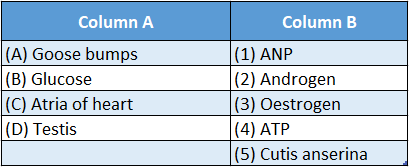
Answer: 1-5,2-4,3-1,4-2
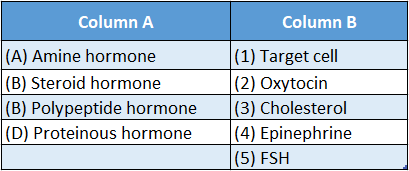
Answer: 1-4,2-3,3-2,4-5

Answer: 1-4,2-5,3-3,4-2
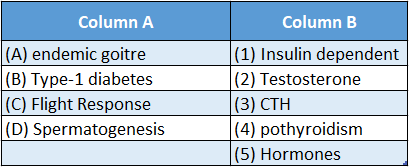
Answer: 1-4,2-1,3-4,4-2
Chapter 1 Response And Chemical Coordination In Animals Hormones Very Short Answer Questions
Question 1. What is sensitivity?
Answer: The ability of an organism to detect changes and make appropriate responses thereby is called sensitivity.
Question 2. How does chemical coordination take place in the animal body?
Answer: Chemical coordination in animals takes place through hormones which acts as a biochemical messenger.
Question 3. What is Cutis anserina?
Answer: Goosebumps resulting out of the erection of hairs in our skin.
Question 4. Name the smallest endocrine gland of the human body.
Answer: The Pineal Body is attached to the roof of the third ventricle of the brain. It secretes the hormone called Melatonin.
Question 5. What are neurohormones?
Answer: The chemical substances (hormones) that are secreted from the neurosecretory cells present in the hypothalamus are known as neurohormones.
Example: Vasopressin and Oxytocin.
Chemical Coordination In Animals Class 10 Notes
Question 6. What is the name of the hormone secreted by the atria of the heart?
Answer: Atrial natriuretic peptide (ANP).
Question 7. What are endocrine glands?
Answer: These are glands without ducts that secrete hormones directly into the interstitial fluid surrounding the secretory cells.
Give an example of an amine hormone. Thyroxine/epinephrine/ nor-epinephrine/ histamine (anyone).
Question 9. What is homeostasis?
Answer: The maintenance of the internal chemical environment of the body to a constant is called homeostasis.
Question 10. What is the function of TRH?
Answer: The thyrotropin-releasing hormone (TRH) stimulates the anterior pituitary lobe to secrete thyrotropic hormone.
Question 11. Where TSH is secreted?
Answer: Anterior pituitary
Question 12. What is T3?
Answer: It is the hormone triiodothyronine, secreted from the thyroid.
Question 13. Name the group of hormones that help to regulate the concentration of mineral ions in the body.
Answer: Mineralocorticoids are secreted from the adrenal cortex.
Question 14. Which hormones control the “fight-or-flight” response to stress?
Answer: Adrenaline and nor-adrenaline are secreted from the adrenal medulla.
Question 15. What is the cause of pituitary dwarfism?
Answer: Hypo-function of pituitary gland leading to hyposecretion of STH in childhood.
Question 16. Which hormone controls the amount of water excreted in urine?
Answer: The amount of water excreted in the urine is controlled by antidiuretic hormone (ADH) created from the posterior pituitary.
Question 17. What is type 1 diabetes?
Answer: Type-1 diabetes is called insulin-dependent diabetes which results due to the hyposecretion of insulin from the pancreas.
Question 18. What do you mean by calorigenic hormone?
Answer: Thyroid hormones (Thyroxin & Triiodothyronine) are known as calorigenic hormones because these increase oxygen uptake & tissue metabolism as a result of which BMR increases.
Chemical Coordination In Animals Class 10 Notes
Question 19. What are catecholamines?
Answer: The hormones of the adrenal medulla, i.e. epinephrine, norepinephrine & dopamine are together called catecholamines.
Question 20. Name two hormones that are antagonistic in functions.
Answer: Insulin (antidiabetogenic) and glucagon (hyperglycemic in function) are antagonistic hormones in the human body.
Among the following four terms, one includes the other three. Find out that term and write it:
Polyuria, polydipsia, Diabetes mellitus, polyphagia Diabetes mellitus
Thyroid gland, Pituitary gland, Adrenal gland, endocrine gland Endocrine gland
Question 22. A pair of related terms is given below. Based on the relationship in the first pair, write the suitable word in the gap of the second pair:
Answer:
Thyroid gland: ductless gland:: salivary gland: ductular gland _________
_________: Hyposecretion of thyroid in childhood:: Dwarfism: Hyposecretion of STH in childhood Cretinism Insulin dependent: type-1 diabetes::
_________: type-2 diabetes non-insulin-dependent
_________: a-cells :: Insulin : P-cells Glucagon
Question 23. Choose the odd one and write it:
Answer:
Testosterone, estrogen, epinephrine, progesterone epinephrine: It is an emergency hormone while the other examples are sex hormones.
STH, Gastrin, TSH, ACTH Gastrin: It is a local hormone while the other examples are tropic hormones.
Chapter 1 Response And Chemical Coordination In Animals Hormones Short Answer Type Questions With Answers
Question 1. What is chemical coordination? Why are hormones called chemical messengers?
Answer:
Chemical coordination
The animal body has two levels of coordination:
nervous coordination and chemical coordination. Chemical coordination occurs through the endocrine system by secreting hormones that stimulate or inhibit one or more welfare of the body.
Chemical coordination aims to maintain homeostasis of the internal chemical environment of the body.
Hormones are informational molecules that carry the message of metabolic changes from the endocrine glands to the target cells or organizer Hormones play a major role in maintaining homeostasis through their integrated action throughout the body.
These are secreted at one part of the body and then transported by the blood to another part for stimulating or inhibiting one or more physiological processes.
Chemical Coordination In Animals Class 10 Notes
Since the hormone functions chemically at a site far away from its place of origin, it is known as a chemical messenger.
Question 2. Enumerate the differences between plant and animal hormones.
Answer:
The differences between plant and animal hormones

Question 3. What are target organs or target cells? Give examples.
Answer:
Target organs or target cells
The organ or group of cells on which the excretory product (hormones) of another system (i.e. endocrine system) acts to bring about biochemical changes in the concerned organ is called the target organ or target cell.
The Target Organ Is Acted On In Three Ways As Per The Hormonal Pathway:
Endocrine action:
The hormone is distributed in blood and binds to a distant target cell.
Example:
The anterior pituitary secretes TSH to act on the thyroid gland. Hence thyroid gland is the target organ of TSH.
Paracrine action:
The hormone acts locally by diffusing from its source to target cells in the neighborhood.
Example:
After being secreted from the pancreas, Insulin acts on the liver. Thus liver is the target organ of insulin.
WBBSE Class 10 Life Science Chapter 1 Solutions
Autocrine action:
The hormone acts on the same secretory cell that produces it.
Example:
Secreted from the 8-calls of Islets of Langerhans, Somatostatin controls the secretions of p and a-cells of the same gland.
This is an example of autocrine action.
Question 4. Write a few general functions of the hormones.
Answer:
General functions of the hormones:
Hormones act as slow-controlling chemicals to maintain the chemical coordination of the animal body.
These may initiate the synthesis of new molecules, change of permeability of cell membrane, transport of substances into or out of the target cells, contraction or relaxation of muscles, alteration of metabolic reactions, etc.
Hormones control the differentiation & maturation of gonads, sexual activities, and secondary sexual characteristics of animals.
Hormones play a vital role in Flight response and thermotaxic (i.e. the controlling mechanism of body temperature).
In some animals metamorphosis & overall growth are controlled by hormonal actions. As an example, the metamorphosis of a tadpole into a toad is one of the important functions of thyroid hormones.
Question 5. Differentiate between local hormones & tropic hormones.
Answer:
Difference between local hormones & tropic hormones

Question 6. What are Bradycardia & Tachycardia? What are their hormonal causes?
Answer:
Bradycardia:
Bradycardia is an abnormally slow heart rate of less than 60 beats per minute. Hypothyroidism is a cause of bradycardia.
A rapid heartbeat of more than 100 beats per minute that may be regular or irregular but is out of proportion to age and level of exertion or activity is known as Tachycardia.
WBBSE Class 10 Life Science Chapter 1 Solutions
Tachycardia can be caused due to hyperthyroidism.
Question 7. How hormones are transported inside the human body?
Answer:
Characteristics Of Animal Hormones General Characteristics Of Hormones Are As Follows
Hormones are secreted by ductless endocrine glands directly into the blood. These are never stored in any other place of the animal or human body for future use except the secreting glands or tissues.
Chemically hormones may be proteinous or non-proteinous. These are classified as Amine hormones (amino acid derivatives), steroid hormones, Polypeptide hormones, and Proteinous hormones.
The secretion of hormones is regulated by the nervous system through the feedback effect. There are positive feedback systems but the negative feedback loop is more common in the endocrine system.
Most hormones are highly soluble in water and are conducted freely in the bloodstream. Lipid soluble hormones are conducted in bound form with transport protein.
Hormones cannot act on the secretory cells from where these are secreted.
Hormones generally act at a site remote from their place of production after being transported through the circulatory system. When a hormone influences the activities of a particular organ, it is called the target organ of that hormone.
Hormones influence the biochemical activities of target organs but these never initiate any processes. It works individually in very low concentration.
WBBSE Class 10 Life Science Chapter 1 Solutions
Acting as a biochemical messenger, hormones usually cause long-term effects like changes in behavior, growth, etc.
Hormones are destroyed and excreted immediately after their functions are over.
Question 8. How the glucose level of our body is regulated by hormones?
Answer:
Most cells in the human body use glucose as their major source of energy.
Glucose molecules are broken down within cells in order to produce adenosine triphosphate (ATP) molecules, the energy-rich molecules that power numerous cellular processes.
To ensure a constant supply of glucose to cells, blood glucose levels must be maintained at relatively constant levels.
In a healthy person, blood glucose levels are restored to normal levels primarily through the actions of two pancreatic hormones, namely insulin, and glucagon.
Insulin is an antidiabetogenic protein hormone. It increases the oxidation of glucose at the cellular level. It stimulates the formation & storage of glycogen in the liver and muscle after taking glucose from the blood.
Insulin inhibits gluconeogenesis & increases glucose entry through the cell membrane from the blood.
Glucagon, on the other hand, is an anti-insulin protein hormone. It does not help glucose to enter the cells. It stimulates glycogenolysis and prevents gluconeogenesis.
Response And Chemical Coordination In Animals Class 10 WBBSE
Thus it acts as a diabetogenic hormone.
Hence insulin and glucagon are antagonistic hormones.
In the human body, the normal blood glucose level is maintained by both the hypoglycemic insulin and the hyperglycemic glucagon hormones.
Question 9. State the role of hormones in the control of BMR.
Answer:
The role of hormones in the control of BMR
Basal Metabolic Rate (BMR) is the rate of energy expended by animal (such as human) bodies when at rest. The thyroid hormones triiodothyronine (T3) and thyroxine (T4) are the main regulators of BMR.
BMR increases when the quantity of these hormones in the blood increases because these hormones increase oxygen uptake and tissue metabolism.
Thyroid hormones are thus known as calorigenic hormones. Some other hormones such as testosterone, insulin, and human growth hormone (HGH) can also increase the body’s metabolic rate.
Question 10. What is feedback control of hormone functioning?
Answer:
Characteristics Of Animal Hormones General Characteristics Of Hormones Are As Follows
Hormones are secreted by ductless endocrine glands directly into the blood. These are never stored in any other place of the animal or human body for future use except the secreting glands or tissues.
Chemically hormones may be proteinous or non-proteinous. These are classified as Amine hormones (amino acid derivatives), steroid hormones, Polypeptide hormones, and Proteinous hormones.
The secretion of hormones is regulated by the nervous system through the feedback effect. There are positive feedback systems but the negative feedback loop is more common in the endocrine system.
Most hormones are highly soluble in water and are conducted freely in the bloodstream. Lipid soluble hormones are conducted in bound form with transport protein.
Hormones cannot act on the secretory cells from where these are secreted.
Response And Chemical Coordination In Animals Class 10 WBBSE
Hormones generally act at a site remote from their place of production after being transported through the circulatory system. When a hormone influences the activities of a particular organ, it is called the target organ of that hormone.
Hormones influence the biochemical activities of target organs but these never initiate any processes. It works individually in very low concentration.
Acting as a biochemical messenger, hormones usually cause long-term effects like changes in behavior, growth, etc.
Hormones are destroyed and excreted immediately after their functions are over.
Question 11. What is flight response? Why are hormones of the adrenal medulla known as emergency hormones?
Answer:
Flight response
The fight or flight response (or acute stress response) is a physiological response to prepare the animal body to face emergencies comprising of harmful events or attacks or threats to survival physical & emotional stress etc.
Emergency or stressful conditions require more energy.
The energy is provided by increasing heartbeat, blood pressure, respiration rate, blood glucose level, and cellular metabolism and by increasing blood supply to the heart, skeletal muscles & brain through dilated arterioles.
Under physical emotional or mental stress the central nervous system stimulates the adrenal medulla through the hypothalamus to release more adrenaline & noradrenaline.
Both hormones act to increase systolic & diastolic blood pressure, cardiac output, blood sugar level, etc. Adrenaline also causes the contraction of the spleen to squeeze out the stored blood in it.
The result is the enhanced rate of metabolism that prepares the body to face the stresses. Thus both adrenaline & noradrenaline are responsible for the flight response.
Hence these are known as emergency hormones. The hormones also cause the contraction of erector pili muscles of the skin to create goosebumps under stress.
Question 12. Why is the hypothalamus known as the ‘master gland’?
Answer:
Hypothalamus known as the ‘master gland’
The hypothalamus is a part of the brain located superior and anterior to the brain stem and inferior to the thalamus.
It serves many different functions in the nervous system and is also responsible for the direct control of the endocrine system through the pituitary gland.
The hypothalamus contains special cells called neurosecretory cells neurons that secrete hormones. It controls the anterior pituitary by secreting different releasing (-RH) & inhibiting (-IH) hormones and the posterior pituitary by secreting neurohormones.
The pituitary secretes several tropic hormones that control the functions of other major endocrine glands. Since the hypothalamus regulates the pituitary, hence it is called the master gland.
Response And Chemical Coordination In Animals Class 10 WBBSE
Question 13. Write about the structure and location of the pituitary gland. How many hormones are secreted by this gland?
Answer:
The pituitary gland, also known as the hypophysis, is a small pea-sized lump of tissue connected to the inferior portion of the hypothalamus of the brain.
Situated in a small depression in the sphenoid bone called the sellaturcica, the pituitary gland is made of two completely separate structures the posterior and anterior pituitary glands.
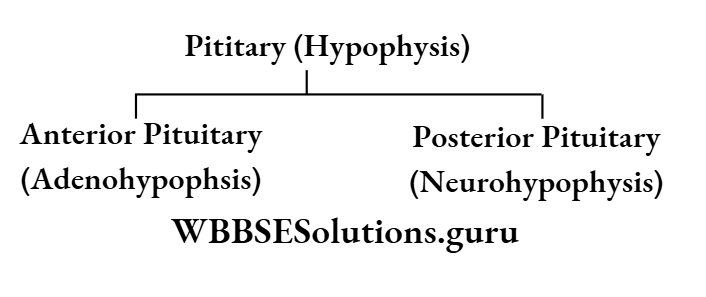
Nine types of hormones are secreted by the pituitary gland in all. These are
From anterior pituitary (7 types):
STH, ACTH, TSH, FSH, LH, LTH & MSH.
From posterior pituitary (2 types):
Vasopressin & Oxytocin.
Question 14. What is hyperglycemia?
Answer:
Hyperglycemia
Due to less secretion or lack of insulin, the stored liver glycogen breaks down by glycogenolysis into glucose due to the actions of other hormones.
In the absence of insulin, glucose can not also enter into the cell and cellular oxidation of glucose is hampered. This results in an increase in blood glucose levels. This is known as hyperglycemia.
Question 15. What are primary and secondary sex characters? Which hormones control these characters in male & female?
Answer:
Primary and secondary sex characters
While humans are born with very obvious primary sex characteristics (or body structures directly concerned with reproduction) that allow us to distinguish males from females,
(such as the penis in men and the vagina in women), secondary sex characteristics, on the other hand, are features that appear at puberty (though they later become equally prominent).
These secondary characteristics are features such as the appearance of pubic hair, breast development, etc. (in females) and the appearance of beards, muscular body growth, change of voice, etc. (in males).
Testosterone, the male reproductive hormone secreted from the testis, controls the primary & secondary sex characteristics in males.
In females, the two steroid hormones estrogen & progesterone, secreted from the ovary, control these characteristics.
WBBSE Life Science Class 10 Chapter 1 Questions And Answers
Question 16. Enumerate the differences between Diabetes mellitus and Diabetes insipidus.
Answer:
The differences between Diabetes mellitus and Diabetes insipidus

Question 17. Mention the differences between vitamins and hormones.
Answer:
The differences between vitamins and hormones
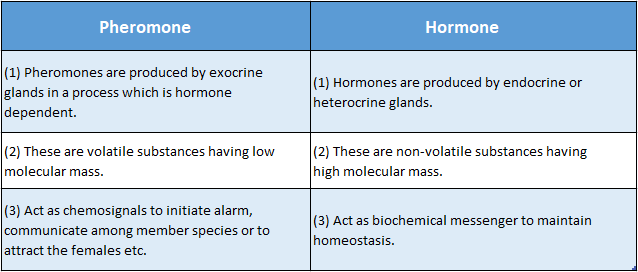
Question 18. What are pheromones ? How do they differ from hormones?
Answer:
Pheromones
Pheromones are species-specific highly volatile chemical agents that get released in minute amounts into the environment from the animals to evoke behavioral, developmental, or reproductive responses in receivers.
These are chemosignals that are also known as ectohormones.
Question 19. What are the types of diabetes mellitus?
Answer:
The types of diabetes mellitus
There are two major types of diabetes mellitus: type 1 diabetes and type 2 diabetes.
Type 1:
Diabetes is called insulin-dependent diabetes. It used to be called juvenile-onset diabetes because it often begins in childhood. This type of diabetes may be caused by a genetic predisposition.
Type 2:
Diabetes used to be called adult-onset diabetes, but with the epidemic of obese and overweight kids, more teenagers are now developing type 2 diabetes. Type 2 diabetes is also called non-insulin-dependent diabetes or Life Style Diabetes.
Chapter 1 Fill In The Blanks
Question 1. Due to a deficiency of iodine, the synthesis of____________hormone is hampered.
Answer: Thyroxin
Chapter 1 Write True Or False
Question 1. Dilute urine is profusely eliminated by a person affected with Diabetes Insipidus.
Answer: True
Chapter 1 Very Short Answer Type Questions
Question 1. Choose the odd one and write it: TSH, ACTH, GTH, CSF
Answer: CSF, because it is the cerebrospinal fluid present in the ventricles of the brain and central canal of the spinal cord. TSH, ACTH & GTH are hormones.
Chapter 1 Short Answer Type Questions
Question 1. Write two roles of GTH in the secretion of hormones from the reproductive glands in the human body.
Answer:
Human Endocrine Glands And The Hormones Secreted From Them General types of hormones in man
General Hormone:
The hormones which are secreted from one endocrine gland and that act on distant target organs are called general hormones.
Examples:
Insulin, thyroxin, etc.
Tropic Hormone:
The hormones which are secreted from one endocrine gland and that act on another endocrine gland as target organs are called tropic hormones.
Example:
Hormones of the anterior pituitary like STH, TSH, ACTH, FSH, etc.
Explanation Of Action Of Tropic Hormone:
Thyroid-stimulating hormone (TSH) is a tropic hormone that is secreted from the pituitary gland. It influences the secretion of thyroxin from the thyroid gland.
Here TSH acts as a tropic hormone and the thyroid gland is the target gland. The secretion of tropic hormones is controlled by the hypothalamus.
Stress Or Emergency Hormone:
The hormones that are secreted under physiological stress or strain (e.g. fear, anxiety, shock, grief, etc) to trigger the Fight or flight response to combat the emergencies are called the stress or emergency hormone.
Example:
Adrenaline, noradrenaline.
Local Hormone:
The hormones that are secreted from certain tissues of the body and that act at the same site of origin or in nearby organs in a strictly localized manner are called the Stress or emergency hormones are called local hormones
Example:
Adrenaline, Noradrenaline.
Once these are secreted, the local hormones enter into the bloodstream, make a round trip through the body and finally reach the target organizer
Local hormones that act on neighboring cells are called paracrine and those that act on the same cell that secretes them are called autocrine.
Examples:
Gastrin, somatostatin, etc.
Gastrin is secreted from the mucous layer of the stomach and acts on the stomach itself to secrete gastric juice.
Somatostatin is secreted from the 5-cell islets of Langerhans in the Pancreas and controls the secretions of p-cells and a-cells of the same gland.
Question 2. List the names of hormones related to the following functions:
Answer:
- Regulation of sugar level in blood
- Stimulation for the secretion of hormones
Question 2. Choose the odd one and write it: Dwarfism, Goitre, Thalassaemia, Diabetes Mellitus.
Answer:
- Thalassaemia, because it is a genetic disease.
- Dwarfism, Goitre & Diabetes Mellitus are hormonal disorders from the Thyroid gland.
- Causing the growth of the Corpus Leteum and stimulating the secretion of Progesterone hormone in the female body.
- Increasing blood pressure due to anxiety.
- Insulin
- Thyroid Stimulating hormone (TSH)
- Luteinising Hormone (LH)
- Adrenaline