
WBBSE Chapter 4 Evolution And Adaptation Topic A Evolution Introduction To The Concept Of Evolution
The term evolution means a change in life form over a long period. According to the Big Bang hypothesis, our earth originated due to the explosion of a condensed gaseous body and was a glowing fireball containing a molten mass of gases and vapors of various elements.
The temperature was about 5000 to 6000°C. As the earth moved away from the sun, it was getting cooled. This led to the condensation of gases.
The heavy elements like iron, nickel, etc. occupied the core of the earth while the lighter elements like helium, hydrogen, oxygen, nitrogen, and carbon occupied the atmosphere of the earth.
 n
n
For its first billion years, no life existed on Earth. After the formation of the atmosphere and clouds, water vapor came down as rain. Continuous rain led to the formation of water bodies.
Simple compounds react with each other during lightning to form complex organic compounds. Before life appeared, polymerization reactions generated the carbohydrates, lipids, amino acids, and nucleic acids of which organisms are composed.
Molecules of these organic compounds formed aggregates in water bodies that developed essential features of life. Thus they were the first living cells formed on Earth.
Read and Learn More WBBSE Solutions For Class 10 Life Science
Evolution can thus broadly be classified into two different types:
Chemical evolution or homogeny:
It is the process by which the Earth after it was formed, gradually became habitable and was capable of sustaining life, and
Organic evolution:
It occurred after homogeny, which meant the formation of complex life forms from simpler ones. The first process occurred over one billion years, between 4.5 and 3.5 billion years ago.
The second process started with the formation of the first life form and is even continuing today.
Evolution Class 10 Life Science
Organic evolution has two steps:
Biogeny (the transformation of organic compounds to protocells) and Cognogeny (the Diversification of protozoa into metazoa, metaphyta, and various other forms).
Mutation is the cause of organic evolution and evolution is the cause of biodiversity on Earth.
Organic evolution is the slow but gradual change in the heritable characteristics of biological populations over successive generations through the process of reproduction & variation resulting in the origin of complex diverse new species from simpler organisms.

WBBSE Chapter 4 Topic A Evolution Significance Of Evolution
It produces complex life forms capable of adapting to changing environments.
It results in adaptive radiation enabling species to survive in variable environmental conditions.
It formed new species by genetic mutation with a new set of characters.
It enriches the biodiversity of the world.
In 1953 Urey and his student Miller devised an experiment to give direct evidence of the molecular evolution of life or abiogenic origin
WBBSE Chapter 4 Topic A Evolution Origin Of Life
Earth is believed to have originated about 4.5 billion years ago. How life originated on Earth is a matter of speculation.
Alexander Oparin, a Soviet biochemist, suggested the possibility of the abiogenetic formation of the simplest organic substances—hydrocarbons.
These led to the formation of protein-like compounds and then colloidal systems which were capable to give rise to life through gradual improvement.
WBBSE Chapter 4 Topic A Evolution Abiogenesis Or Spontaneous generation Or Naturalistic theory
Russian biochemist A.I. Oparin and English biologist J.B.S Haldane suggested a theory that complex organic molecules were formed through a series of chemical reactions under the influence of lightning.
Evolution Class 10 Life Science
Organic compounds like water, ammonia, methane, alcohol, amino acids, etc produce ‘hot soup’ or ‘primordial soup’ within water bodies where smaller organic compounds combine to form large organic compounds like polypeptides, proteins, nucleic acids, carbohydrates, etc.
These compounds produced the first living cell. Thus life is believed to have originated in oceans. The stage of chemical evolution is completed with the origin of proteins, nucleoproteins, and nucleic acids.
The process involved in the formation of a living cell from simple inorganic and organic nonliving elements is called abiogenesis or spontaneous generation of life from nonliving matters.
Oparin assumed that natural forces made some molecules in a colloidal solution mix and organize to form droplets called coacervates.
Successful coacervates gradually became better organized to give rise to the first living cells. The formation of coacervates was called coacervation.
Salient Features Of Coacervates Were As Follows:
They were stable, spherical in shape with uniform diameter and microscopic.
They had double-layered boundaries around them.
They were motile and capable of growth,
They could reproduce through binary fission, budding, and fragmentation.
WBBSE Chapter 4 Topic A Evolution Urey And Miller’s Experiment
In 1953 Urey and his student Miller devised an experiment to give direct evidence of the molecular evolution of life or the abiogenic origin of life.
In this experiment, they took a mixture of methane, ammonia, and hydrogen (in the ratio of 2:2:1) in a discharge tube which was connected to a flask containing boiling water.
The hydrocarbon mixture within the discharge tube resembled the primitive atmosphere of Earth and the flask containing boiling water resembled the primitive sea.

The water vapor from boiling water simulated torrential rain which formed the water bodies on Earth.
The gas mixture in the tube was subjected to electric discharge at 75000 volts for 7 days to resemble vigorous lightning and violent electrical storms in early Earth.
It was then cooled with the help of a condenser and liquified and the liquid was collected in another flask. On analyzing the jelly-like liquid it was found to contain simple organic compounds such as amino acids, hydroxy acids, and aliphatic acids.
The amino acids included glycine, alanine, aspartic acid, and glutamic acid. In this experiment, alpha-alanine predominated over beta-alanine.
Evolution Class 10 Life Science
Modern proteins contain only alpha amino acids. Miller argued that amino acids were formed on primitive Earth under the influence of ultraviolet light and lightning. The resultant liquid contained no nucleic acids.
Inference:
From the experimental observation, Miller concluded that organic molecules were synthesized abiotically in early Earth under the energetic influence of thunderstorms, cosmic radiations, etc. Thus the phenomenon of the chemical origin of life was proved.
Conditions on earth at the time of the origin of life differed greatly from those of today. No free oxygen was present in Earth’s early atmosphere.
The reducing atmosphere of early Earth helped chemical reactions to occur that produced a molecular soup.
Under conditions that resemble Earth’s primitive reducing atmosphere, small molecules essential to living systems formed and polymerized.
Moreover, these molecules accumulated in the seas because the rate of their formation was greater than the rate at which they were destroyed.
In a somewhat similar experiment, Sydney Fox obtained complicated molecules of protein having similar properties to the coacervates of Oparin.
Fox called those molecules as microspheres which, like coacervates, were immiscible in the surrounding medium.
WBBSE Chapter 4 Topic A Evolution RNA World Hypothesis
It should be kept in mind that complex protein is not life. Primitive life is represented by DNA or desoxyribonucleic acid which has the ability to produce protein.
Thus according to an alternative view, life forms were created from a single-stranded ribonucleic acid or RNA, which can behave as an enzyme (catalytic function) or protein (ribozyme).
Though unstable, it has the ability to replicate spontaneously and can produce protein by the process of translation or even double-stranded DNA by the process of reverse transcription.
RNA was the first molecule of heredity and DNA evolved after RNA-based proto-life became surrounded by membranes that provided an environment in which DNA is stable.
This is called the RNA world hypothesis and is presently considered the most legitimate way of origin of life.
WBBSE Chapter 4 Topic A Evolution Major Evolutionary Events
Origin of Earth:
Formation of the Earth some 5000 million years ago in the form of a mass of burning gases separated from the sun as per the Big Bang hypothesis. The temperature was about 5000 to 6000°C.
Formation of water, methane, and ammonia:
Gradual cooling of the Earth and hardening of the Earth’s crust, creation of clouds followed by precipitation, and formation of the small and large water bodies.
The primitive earth contained large amounts of hydrogen, nitrogen, carbon & oxygen. Of these, hydrogen combined with nitrogen to form ammonia, with oxygen to form water, and with carbon to form methane.
Compounds like ammonia, methane, etc got dissolved in rainwater and accumulated in the sea. Mineral rocks also dissolved ” leading to the accumulation of minerals and salts in seawater. Thus the first chemicals formed on the earth were water, ammonia, methane, and others.
Formation of micro and macromolecules:
The next step was the formation of micromolecules like amino acids, fatty acids, purine, pyrimidines, etc. in the form of colloids.
The micromolecules combined in various ways to form macromolecules like proteins, lipids, nucleic acids & nucleoproteins. The first formed proteins were called proto-proteins.
In the next step, nucleic acids were formed from phosphoric acid, sugar, purines, and pyrimidines. The nucleic acids and proteins combined together to form nucleoproteins.
Coacervation:
Formation of lipid membrane-bound structures commonly called coacervates. They exhibited certain properties of cells.
Development of monera and protista:
Coacervates developed into provirus which gradually grew into two fundamental types-the monera and the Protista.
Oxygen revolution:
The emergence of the first photosynthetic bacteria or cyanobacteria having chlorophyll (a universal photosynthetic pigment) and blue-green pigments like phycocyanin.
These organisms had the ability of oxygenic photosynthesis which resulted in the liberation of oxygen in the atmosphere that turned the reducing environment to oxidizing environment.
The advent of multicellularity:
The prokaryotic organisms became diversified and divided repeatedly to produce multicellular prokaryotes.
The accumulation of free oxygen in the earth’s atmosphere made possible the evolution of aerobic metabolism, eukaryotes, sexual recombination, and multicellularity.
Formation of eukaryotes:
The emergence of nuclear membranes produced the first formed eukaryotes, which were initially unicellular and later became multicellular.
All early cells were haploid. Diploid cells appeared when some cells failed to divide after their DNA was duplicated. Diploid cells were better protected from harmful mutations.
Diversification to other forms:
Emergence of aquatic invertebrate animals.
The emergence of aquatic vertebrates in the form of fishes and their diversification.
The gradual development of land plants, and their colonization resulted in the massive modification of the terrestrial habitat, adding more oxygen to the terrestrial environment.
Diversification of terrestrial habitats with the development of new adaptive features which modified the Earth’s landscape.
The gradual shift of animal species from aquatic to terrestrial habitats initially for a short time in the form of four-limbed amphibians later creating a permanent terrestrial group of animals in the form of reptiles
The emergence of the highest-evolved land mammals.
WBBSE Chapter 4 Topic A Evolution Theories Of Organic Evolution
Several theories have been proposed by different evolutionists. A few important theories are mentioned here.
WBBSE Chapter 4 Topic A Evolution Lamarck’s Theory
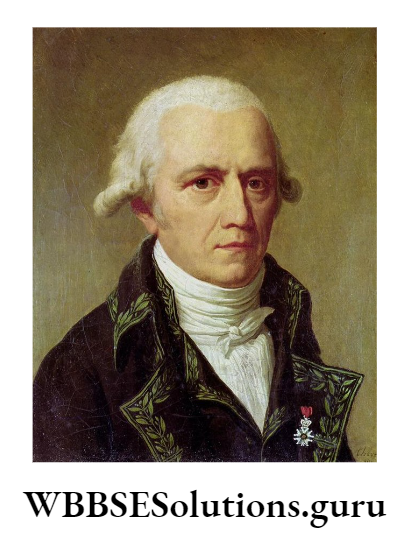
Lamarck’s theory, known as Lamarckism, was proposed by French biologist Jean Baptista de Lamarck (1744-1829) and the theory was discussed in detail in his book ‘Philosophic Zoologique’ in 1809.
Lamarckism comprises of following propositions or assumptions.
1. New needs and their effects:
Continuous changes in environment create new needs in organisms to become better adapted or more suited to the changed environment.
As a result, certain organs are extensively used and certain others are disused. Lamarck quoted the example of the influence of the environment on plants in support of his view.
He observed differences in the same species of plants grown in different environmental conditions. When plants are grown in fertile soil, they become healthy & luxuriant; the same plants grown in unfertile soil are weak and thin.
2. Use and disuse:
Continuous use of an organ or organs tends to develop them highly, whereas disuse results in a gradual reduction, degeneration, and complete disappearance.
Examples in favor of the Use theory:
The long neck of a giraffe, webbed feet of aquatic birds, bicep muscles & long legs of wading birds, etc.
Examples in favor of disuse theory:
Loss of limbs in snakes, degeneration of eyes in cave animals, degeneration of wings in flightless birds, vestigial organs in man, etc.
3. Internal urge of an organism:
Animals and plants have the ability to grow and increase in size. According to Lamarck, this increase is due to desire which is some sort of an internal urge of the animal to attain the maximum size.
4. Inheritance of acquired characters:
The changes acquired in an organism, during its lifetime, due to the use and disuse of organs and under the influence of the environment are called acquired characteristics.
The characteristics acquired by an organism during its lifetime are inherited by the offspring. It means that changes are cumulative over a period of time and are inherited by the next generation.
As per this proposition, the long neck of the giraffe and the degenerated wings of the kiwi are acquired characters. Hence, they are inherited by their progeny generation after generation.
WBBSE Chapter 4 Topic A Evolution Examples In Favor Of Lamarckism
Several examples were put forward in support of Lamarckism, of which a few are—
Giraffe:
The ancestors of giraffes had short necks and fore-limb, like horses. They were browsers, but due to much competition in that mode of food habit with scarcity in surface vegetation, they tried to stretch their neck and forelimbs to obtain leaves, as food, from the top branches of trees.
As a result, there were slight elongations of these organs. These acquired characteristics were inherited by the next generation and further elongation occurred due to the accumulation of similar efforts.
As a result, the present-day giraffe has developed a much longer neck and forelimbs.
Aquatic birds:
Aquatic birds like ducks have evolved from terrestrial ancestors. Ducks have all their fingers covered by a flap of skin called webbed feet that helps in swimming. Thus, because of the constant use of fingers for swimming, webbed feet have evolved.
Snakes:
Snakes evolved from lizard-like ancestors having two pairs of limbs. But due to their burrowing habit, they used to crawl on the abdominal muscle.
Prolonged disuse caused a reduction and disappearance of these organs. Present-day snakes like Boa & Python have vestigial pectoral girdles and pelvic girdles though they are limbless.

Cave dwellers:
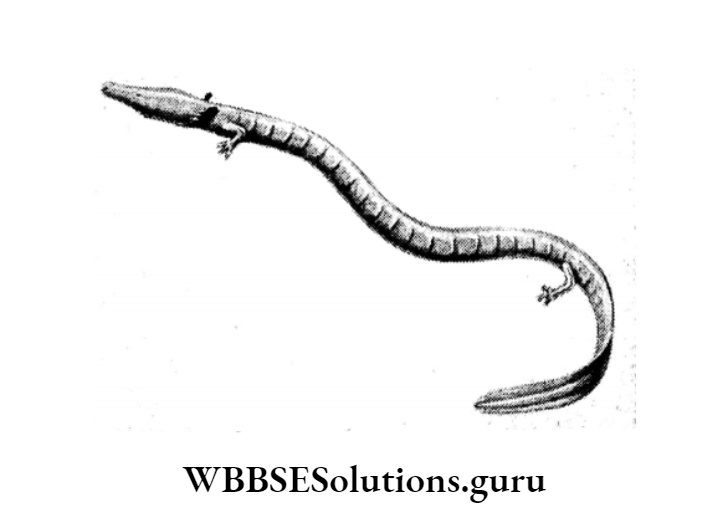
Cave-dwelling animals like Proteus anguinus (amphibia) and Amblyopsis (fish) initially had normal eyesight, but due to living in a dark environment, they did not use their eyes and ultimately lost their power to see.
Emergent hydrophytes:
The effect of environment and inheritance of acquired characters is clearly seen in emergent hydrophytes like Ranunculus aquatilis.
Here the submerged leaves are dissected while the emerged ones are simply lobed. When the plant is grown out of water, all the leaves are undissected. In the submerged environment, all the leaves are dissected.
WBBSE Chapter 4 Topic A Evolution Criticism Of Lamarckism
Internal urge:
This principle states that when there are new needs, new structures or organs develop as per the desire of the animals. Every human being has a desire to fly.
If Lamarck’s principle is correct, every individual, who desires to fly, should develop wings; but this does not happen.
Use and disuse:
The heart is put to use continuously throughout the lifespan of an organism; still, it remains the same size generation after generation. Thus the theory of use and disuse has met with strong objections.
Inheritance of acquired characters:
This theory is much contradicted. Weismann, in his famous experiment, had cut off the tails of rats for 22 generations and allowed them to breed; but tail-less offspring were never born.
Piercing of the nose and ears in Indian women, and circumcision of the penis in Muslims and Jews are age-old customs, but they are not inherited.
In the old tradition, Chinese women used to wear iron shoes in order to have small feet, but their children at the time of birth always had normal feet. These examples prove that acquired characters are not inherited.
WBBSE Chapter 4 Topic A Evolution Neo-Lamarckism
Long-forgotten Lamarckism has been revived as Neo-Lamarckism in the light of recent findings in genetics which confirm that environment does affect the form, structure, color, size, etc. and these characteristics are inheritable.
Neo-Lamarckism States That:
Germ cells may be formed from somatic cells indicating similar nature of chromosomes and genetic constitution in both the two types of cell lines.
This fact is established in phenomena like regeneration in earthworms, vegetative propagation in Bryophyllum with foliar buds, etc.
The effect of the environment on germ cells is indirectly passed on through the somatic cells.
Heslop Harrison, an entomologist, found that a pale variety of moth, Selenia bipinnaria when fed on manganese-coated food, a true breeding melanic variety of moth is produced.
Germ cells may be directly affected by environmental factors.
Tower, an American entomologist, exposed the young ones of some potato beetles to temperature fluctuations and found that though beetles remained unaffected with no somatic change the next generation had marked changes in the body coloration.
Germ cells can carry forward the somatic changes to the next progeny.
WBBSE Chapter 4 Topic A Evolution Darwin’s Theory Of Evolution
During the beginning of the 19th century, it was generally believed that species had remained unchanged since their creation.
A new era of biology began on 24th November 1859, the day Darwin published his famous book “On the Origin of Species by Means of Natural Selection or The Preservation of Favoured Races in the Struggle for Life”. (Popularly known as—The Origin of Species).
Darwin made two major points in The Origin of Species—
Branching Descent:
Many species of organisms presently inhabiting the earth are descendants of ancestral species that were different from the modern species. Variation is the law of nature.
Living organisms of ancestral species had to adapt to changing environments due to variations, as these had a competitive advantage.
Natural Selection:
He proposed a mechanism for the evolutionary process, which is termed natural selection.
The basic concept of natural selection is that a population can change over generations if individuals that possess certain heritable traits leave more offspring than other individuals.
Natural selection is the differential success in the reproduction of different phenotypes resulting from the interaction of organisms with their environment.
WBBSE Chapter 4 Topic A Evolution Darwin’s Contribution
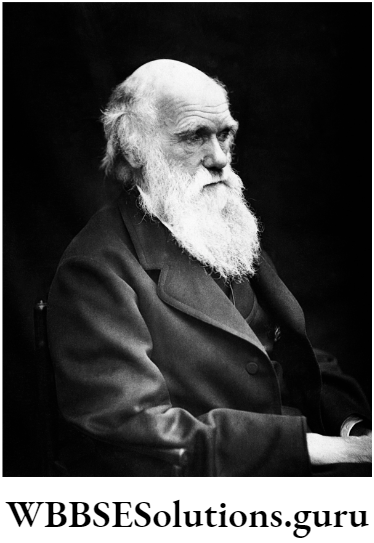
Charles Darwin (1809-1882) was born in Shrewsbury in England. From his boyhood, he was much interested in nature. Darwin’s father, a famous physician, could not see his son’s future as a naturalist and sent him to the University of Edinburgh to study medicine.
However Charles was not at all interested in studying medicine and surgery and left medical school without a degree.
He enrolled at Cambridge University with the intention of becoming a clergyman.
Darwin received his B. A. degree from Cambridge.
Reverend John Henslow, a professor of Botany at Cambridge University, recommended Darwin’s name to Captain Robert Fitz Roy, who was preparing the survey ship HMS Beagle for a voyage around the world.
In 1831, Darwin left England aboard the Beagle.
The main mission of the voyage was to chart poorly known stretches of the South American coastline.
During this expedition, Darwin observed and collected thousands of South American plants and animals and also studied their adaptations.
Wbbse Class 10 Life Science Evolution Notes
Geologic observation and geographic distribution of species also impressed Darwin during the voyage.
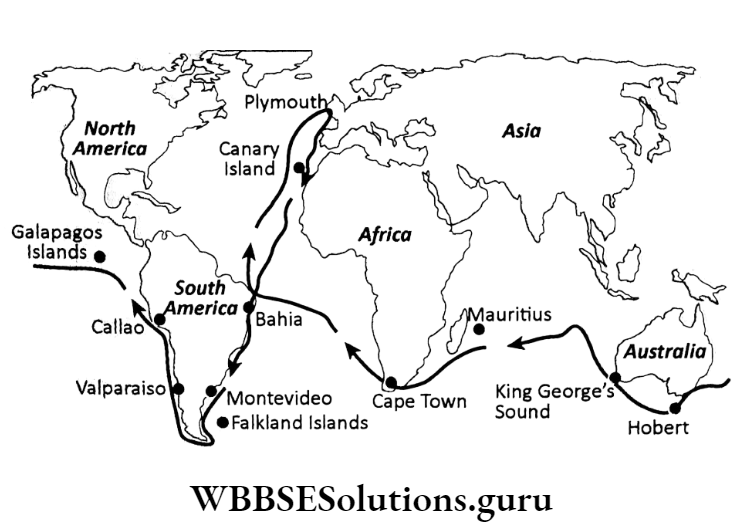
In the Galapagos (a group of geologically young volcanic islands located near the equator about 900 km West of South America), Darwin observed and studied several organisms, specifically, some birds (finches) and turtles.
Although quite similar, they seemed to be different species and some were unique to specific islands, while others were distributed on two or more adjacent islands.
The slight phenotypic differences amongst the finches did not allow them to cross-breed.
After his return to England in 1836, Darwin reassessed his observations during the voyage and began to perceive adaptation to the environment and the origin of new species as closely related processes.
Though Darwin wrote a long essay on the origin of species and natural selection, he was reluctant to publish his theory because he anticipated the uproar it might cause.
In June 1848, Darwin received a manuscript from Alfred Russel Wallace (1823-1913), a British naturalist, working in the East Indies (Malay Archipelago), who had developed a theory of natural selection similar to that of Darwin.
Wallce’s paper, along with extracts from Darwin’s unpublished 1844 essay was presented at a meeting of the Linnean Society of London on July 1, 1848.
Darwin’s The Origin of Species was published on November 24, 1859.
Although Wallace was the first to write up his ideas for publication, he is a great admirer of Darwin and agreed that Darwin has developed the idea of natural selection so extensively that he should be regarded as its main architect.
WBBSE Chapter 4 Topic A Evolution The Origin Of Species As Per Darwinism
Darwin developed two main ideas —
Evolution explains the unity and diversity of life,
Natural selection is a cause of adaptive evolution.
Evolution And Branching Descent:
Darwin proposed that the history of life is like a tree, with several branchings from a common trunk to the tips of the youngest twigs, representing the diversity of living organisms.
Each fork of the tree represents the ancestor of evolutionary branches from that point. Asian elephants and African elephants are similar because they shared a common ancestor and the same line of descent.
Most branches of evolution are dead ends and about 99% of all species that have ever lived have now become extinct.
Natural Selection and Adaptation:
Regarding the working of natural selection and explanation of adaptation, evolutionary biologist Ernst Mayr (1982) has viewed the logic
Darwin’s theory of natural selection is into three inferences based on five observations:

Darwin considered an important connection between Natural selection resulting from the struggle for existence and the ability of organisms to overproduce.
Darwin conceived this idea from an essay by Thomas Malthus(1798), on population growth.
Malthus proposed that much of human suffering famine, disease, war, etc were the consequence of the human population’s potential for faster growth than the availability of food and other resources.
In every generation environmental factors filter out heritable variations, favoring some characters over others. Organisms with favorable traits produce more offspring than organisms without those traits.
Increases in the frequencies of favored traits in a population are an important source of evolutionary modification.
WBBSE Chapter 4 Topic A Evolution Salient Features Of Darwin’s Theory Of Natural Selection
The important features of Darwin’s theory are as follows—
1. Prodigality of reproduction:
Organisms have enormous fertility and they multiply in geometric ratio.
A few examples are—
Insects lay hundreds of eggs.
Plants produce thousands of seeds. A single fern produces a few million spores.
A salmon fish lays several hundred eggs at a time.
Elephant, the slowest breeder, lives for about 90 years. They attain reproductive maturity at about the age of 30 and give rise to about 6 offspring per head during their lifetime.
It is calculated that, if all offerings survive, then 19 million descendent elephants will be produced in 750 years from a single female.
2. Limitation of food and space:
Though a population tends to increase geometrically; food, space, and other resources on Earth are limited and they are liable to increase only arithmetically.
Limited food and space, which together form the major part of the carrying capacity of the environment, are the two main limiting factors that do not allow a population to grow indefinitely.
The struggle for existence:
Due to the rapid multiplication of populations but limited food & space, there starts an everlasting competition
between individuals having similar requirements.
In this competition, every living organism desires to have an upper hand over others.
Wbbse Class 10 Life Science Evolution Notes
The struggle for existence may be of three different types—
Intraspecific struggle:
It is the struggle between members of the same species because they share similar environmental resources.
Examples:
Two dogs struggling for a piece of meat.
Interspecific struggle:
It is the struggle for the members of different species due to sharing the same ecological conditions.
Example:
The struggle between predator and prey.
Environmental or extra-specific struggle:
It is the struggle of individuals with environmental constraints like floods, drought, earthquakes, extreme heat or cold disease, etc.
Out of these three forms of struggles, the intraspecific struggle is the strongest type as the needs of the individuals of same species are most similar.
Example:
Sexual selection in which a cock with a more beautiful comb and plumage has a better chance to win a hen than a cock with a less developed comb.
Similarly, cannibalism is another example of intraspecific struggle as in this individuals eat the members of the same species.
4. Variation:
Except for identical twins, no two individuals are alike and their requirements also vary. This is known as variation and by these variations, some individuals become better adapted to their environment.
According to Darwin, the variations are continuous. Adaptively useful variations pass to the next generation, while the others disappear.
Examples of variations with competitive advantages are increased speed in prey, increased water conservation in plants, etc.
5. Natural selection:
Individuals with favorable variations and greater reproduction ability are selected by nature. Unfit individuals are rejected by nature.
Characters, selected by nature, pass to the next generation. Sorting out of individuals with useful variations from a
heterogeneous population by nature was called natural Selection by Darwin. So natural selection acts as a restrictive force and not a creative force.
6. Survival of fittest and origin of species:
Descendents with favorable variations, selected by nature, will survive because they are the fittest to adapt to their environment; while the unfits will become extinct.
Originally, the phrase ‘the survival of the fittest, was first used by Herbert Spencer.
7. Speciation:
According to Darwinism, useful variations appear in every generation and are inherited from one generation to another.
So the useful variations go on accumulating and Darwin considered that, after several generations, the descendants with continuous and gradual variations will be so distinct from their ancestors, that they will form a new species.
So, according to Darwinism, evolution is a gradual process and speciation occurs by gradual changes in the existing species.
WBBSE Chapter 4 Topic A Evolution Examples Of Natural Selection
Skeletal adaptations:
Giraffes, lizards, and many other known species adapted to their environments through genetic changes to their skeletons.
Giraffes developed long necks to reach food sources higher up in trees, so members of the giraffe population who didn’t develop a long neck died out.
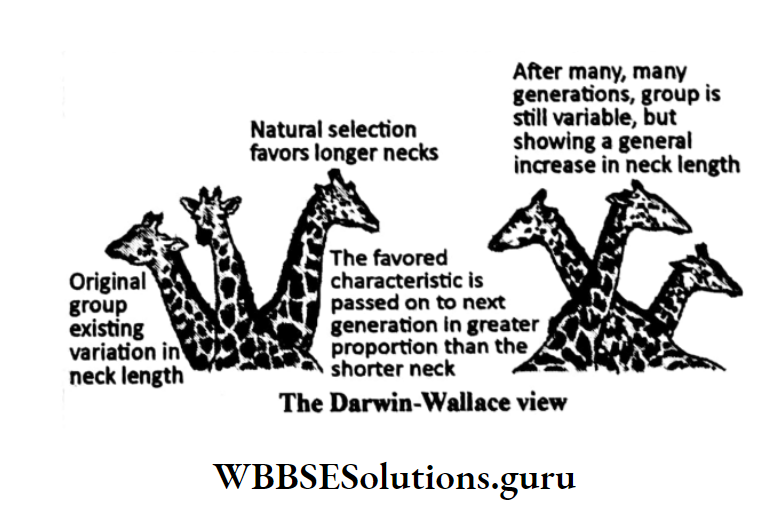
At the same time, certain lizards with one characteristic are passed on to the next generation in greater proportion than the shorter neck region developed longer leg bones to help them climb up during periods of flood and to escape predators in the ground;
shorter-legged lizards of the same population died out until only the lizards with long legs survived.
Coloration:
Many species of deer mouse, peppered moth, and peacock have adapted to their environment through adaptations in coloring.
Once the optimal coloration is present, natural selection occurs when members of the species without the adaptive coloring died out more quickly and therefore, did not reproduce as abundantly.
Bacteria:
Bacteria can adapt to new food sources that were previously unusable.
Some bacteria have adapted to the presence of deadly antibiotics and exhibited traits that let them not only survive but also reproduce to generate offsprings that are also resistant to the antibiotics.
WBBSE Chapter 4 Topic A Evolution Criticism Of Darwinism
Criticism against Darwinism relates to the following points:
Darwin had no idea about genetics. So he could not explain the cause of variation and the actual process of inheritance of variation.
He did not distinguish between inheritable and non-heritable variations.
Darwinism explains only the existence of useful variations, but it does not give any idea about useless variations like the vestigial organs.
Natural selection says that a new species is evolved by the gradual accumulation of useful variations. If this is true then there should be intermediate forms, but in most cases, such intermediate forms are not recognized.
Wbbse Class 10 Life Science Evolution Notes
WBBSE Chapter 4 Topic A Evolution Neo-Darwinism
It is the refinement of the original theory of Natural Selection and is also known as the Synthetic theory of evolution. The salient features of Neo- Darwinism are as follows:
Rapid multiplication:
All organisms multiply in a geometrical ratio, producing more number of offsprings than what can survive.
Limited food and space:
Food, space & other basic necessities are limited.
The struggle for existence:
Intraspecific, interspecific, and environmental struggles for existence appear among the organisms due to both the high rate of multiplication and the limitation of resources.
Genetic variations:
These are inheritable variations that can occur due to the following reasons—
Mutations:
It may be genetic, chromosome aberrations, or gene mutations.
Gene Recombination:
These are new combinations of genes that may arise due to crossing over.
Hybridization:
It causes the intermingling of genes belonging to different groups.
Genetic drift:
It is the change in gene number and gene frequency in a small isolated population.
Natural Selection:
Natural selection operates upon the genotype of the individual. Effects may be advantageous when they have positive selection pressure or disadvantageous when they have negative selection pressure.
Individuals having genes with negative selection pressure are eliminated before reaching maturity.
Origin of new species:
There are various barriers separating two or more interbreeding groups into distinct populations.
An isolated population of a species independently develops different types of mutations which ultimately accumulate over several generations to form a new species.
WBBSE Chapter 4 Topic A Evolution Hugo De Vries Mutation Theory
Hugo de Vries studied plants of evening primrose, Oenothera Lamarkiana, and put forward a theory of evolution called the mutation theory.
Salient Features Of Mutation Theory:
- Mutations are the raw materials of evolution.
- Mutations appear all of a sudden and become operational immediately.
- AII mutations are inheritable
- Useful mutations are selected by nature.
- Lethal mutations are eliminated.
- Accumulation of several variations produces new species.
- Evolution is a jerky and discontinuous process.
WBBSE Chapter 4 Topic A Evolution Evidences For The Theory Of Evolution
The 4.5-4.8 billion years of the Earth’s history involve great alteration of geography, geology, and climate.
The changes in the earth’s appearance and character included the development of the atmosphere, formation of land surfaces and continental drift, variation in sea level, sedimentation, mountain-building, volcanism, seasonality, and glaciation.
A geologic era is a subdivision of geologic time that is separated by catastrophic extinction boundaries.
Sedimentary rocks formed over the past 570-600 million years suggest that three different eras be recognized:
The Paleozoic, Mesozoic, and Cenozoic.
All time prior to the start of the Paleozoic is referred to as the Precambrian.
The Earth calendar shows that the Precambrian accounts for 9/10ths of the entire history of the Earth.
The three eras mentioned above are divided into 12 geologic periods, and some of the periods are further broken down into epochs.

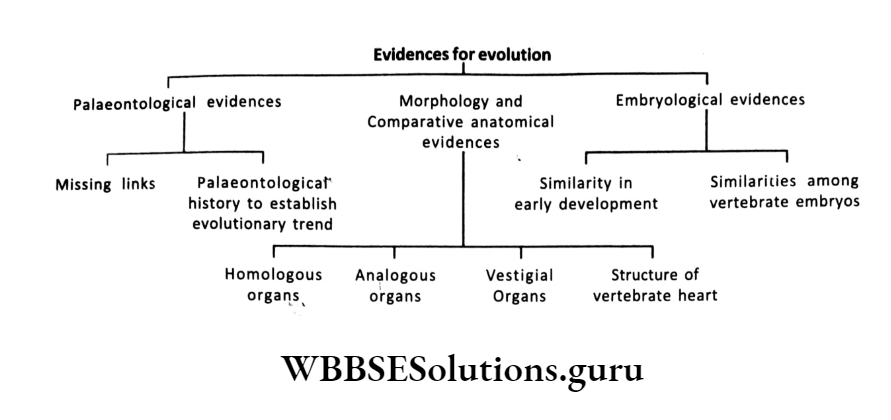
WBBSE Chapter 4 Topic A Evolution Palaeontological Evidence
Paleontology is the study of fossils. Leonardo da Vinci is known as the father of paleontology. However, George Cuvier is considered the founder of modern paleontology.
The evidence of evolution gained from the knowledge of fossils is called palaeontological evidence.
The fossils are the remains or impressions of hard parts of past individuals in the strata of the earth that provide acceptable evidence in support of evolution.
The original land mass of ancient earth is converted into rock strata containing fossil records. There are different methods of determining the ages of rocks and fossils.
Fossilization is the process by which a plant or animal becomes a fossil. Depending upon fossilization, fossils are of many types.
Wbbse Class 10 Life Science Evolution Notes
Types Of Fossils:
Compactions:
These are fossils found in peat, brown coals (lignite), and other soft sediments. The plant remains, frequently seeds and fruits of the Tertiary or younger, are entirely of original organic material.
They are three-dimensional fossils that have been somewhat flattened and reduced in volume.
Compressions and impressions:
When fine-grained sedimentary deposits containing dead plants are subjected to the extreme weight of overlying strata, so that the air and water are driven out, compressions and impressions may form.
The plant matter usually leaves but also trunks, stems, and roots, are reduced to a thin carbonaceous film.
If a two-dimensional positive image is formed, it is called compression. In this case, the only original organic matter left of the leaf or stem is the thin layer of carbon. Negative images, or imprints, are called impressions.
They are also twodimensional, but they are lacking in any original material. Those compressions which have remnants of waxy leaf cuticles can give thin peels suitable for microscopic examination.
Leaf venation is evident. The cellular structure of underlying remains can be detected. Some deformation of the plant does occur. Compressions and impressions are not necessarily found together.
Petrifactions:
In some sedimentary deposits, the surrounding water is high in mineral content; Silica (Si02) or Calcium Carbonate (CaC03) may be present, but also iron and manganese oxides.
These salts precipitate out of the solution and collect inside any plant matter present. The plant matter may be replaced during mineralization, but usually, cell cavities are filled, enclosing the original plant material.
Theories Of Evolution Class 10
Thin sections from throughout these three-dimensional fossils reveal beautifully preserved cell structures under the microscope. Striking colors result from the presence of oxides.
The best-known petrifactions are the petrified woods, particularly those of the Petrified Forest in Arizona and of Yellowstone National Park.
Casts and molds:
These fossils consist of no original plant material, and they show no cellular structure.
They are, though, very useful and accurate renditions of surface structure or internal layering of wood and bark. When a root or stem trapped in sediment decays away, the surrounding deposits may be solid enough to retain their shape.
The mold which results solidifies as a faithful copy of the exterior surface of the solid plant part. If the cavity left behind is then filled with new deposits, a cast is produced, identical to the original plant. Many times molds and casts occur together.
Intact Preservations:
The entire animal or plants are preserved as a whole because of the prevailing temperature being below the freezing point, e.g. Fossil of Mammoth.
Significance of fossils in organic evolution:
By comparing fossils of different organisms, it is possible to tell the phylogenetic relationships between organisms.
Fossil records show a gradual increase in the complexity of organisms over time. Older lower rock strata contain fossils showing simple structures while younger upper rock strata contain fossils showing more complex structures.
Some fossil records have been used to reconstruct an almost complete evolutionary history of the development of certain organisms.
Example: human fossils and fossils of horses.
Fossil records provide ideas about the possible cause of extinction of the prehistoric organisms.
Palaeontological evidence help understand evolution in several ways—
Missing links:
The missing links refer to transitional fossils of organisms that are intermediate between two groups and share the characteristics of both but are extinct from the earth.
Missing links like Archaeopteryx were transitional forms between reptiles and birds. Their fossils have been found in the limestone rocks of the Jurassic period of Solenhofen in Bavaria, Germany.
Theories Of Evolution Class 10
It is a missing link between reptiles & birds.
It was about the size of a crow and had both reptilian and avian characters as pointed out below:
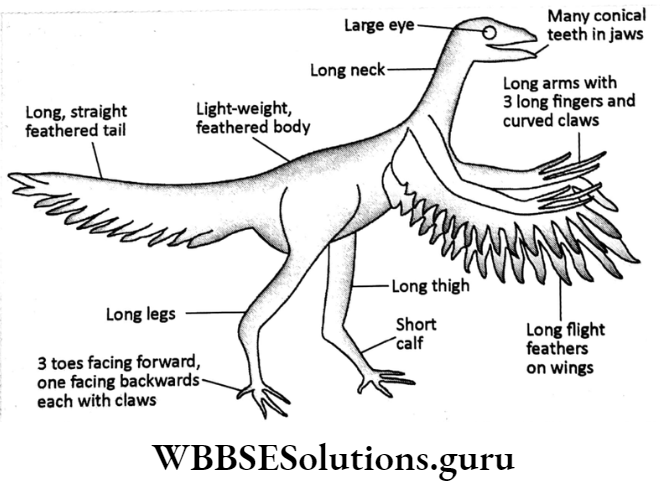
Reptilian characters:
- Presence of teeth in beak,
- Each finger-ends into a claw,
- A long tail with free caudal vertebrae.
Avian characters:
- The presence of feathers on the body,
- Rounded cranium with the intimate fusion of bones,
- Forelimbs modified into wings and having only three fingers,
- Presence of 4-toes in each foot and adopted for perching as in birds.
The study of missing links focuses on a group in transition representative that explains the possible mechanism of evolution and transition between two groups.
Palaeontological history to establish evolutionary trend:
An evolutionary trend can be either a directional change within a single lineage or a parallel change across lineages.
Almost all fossils related to the intermediate stages of the evolution of horses exhibit an evolutionary trend.
A series of fossils from different geological periods have been discovered, regarding the evolution of the modern horse (Equus ferus).
The earliest known fossil of the horse was that of Eohippus (= Hyracotherium) which was present during the Eocene period. This animal was about the size of a cat (30 cm high at the shoulders) with a short head and neck.
They had forefeet with four complete fingers (2, 3, 4, and 5) and one splint of the first finger, and hind feet with three functional toes (2, 3, and 4) and two splints of first and fifth toes.
Gradually through the development of a series of species like Orohlppus, Mesohippus, Miohippus, Parahippus, Marychippus, Pliohippus, etc., the modern species of horse (Equus) has developed.
Theories Of Evolution Class 10
The fossil records show gradual changes of the species for adjustment to their environment in two respects:
Food-getting mechanism and to attain speed.
The modern horse is about 150 cm in height at the shoulders with a long head and neck. Both fore and hind feet of modern horses have one finger one toe, and two splints.

WBBSE Chapter 4 Topic A Evolution Morphology And Comparative Anatomical Evidence
The sources of evidence of evolution are known as radius and ulna.
The radius and Morphology Comparative Anatomy Are The Following:
Homologous Organs:
The organs in different organisms that have the same embryonic origin and have basic structural similarities but are functional and may or may not be alike are called homologous structures or organs.

In animals:
Forelimbs:
The forelimbs of all vertebrates except the fishes have a common bony structural plan. The upper portion of the forelimb is supported by a bone known as the humerus.
Below the humerus, there are two bones the ulna followed by carpals, metacarpals, and phalanges. If the bones of the forelimb in the different classes of vertebrates are examined, a striking similarity will be revealed throughout the series.
The wings of a bird or bat, the forelimb of a horse, the forelimb of a seal and whale, and the forelimb of man are all homologous though they perform different functions.
If we compare the bony elements of the above vertebrate animals, they show a basic similarity in the bony architecture of forelimbs. However, due to adaptation in diverse modes of life, there are some modifications in all skeletal structures.
In the case of birds and bats, the forelimbs are modified into wings or patagium for flying purposes. So there are some changes in the bones due to the aerial mode of life.
In horses, the digits of the forelimb are reduced to get adapted to running on land. In seals and whales, the forelimbs, consisting of five digits, are modified into a flipper for swimming.
In monkeys, it is used for climbing and arboreal life. In man, it is used for the manufacturing and manipulation of tools and for various other non-locomotory purposes.
Darwin’S Theory Of Evolution Class 10
Though there are some modifications in bones for adaptation to different environmental conditions yet the basic plan of arrangement of bones remains the same.
This basic similarity of architecture in bones reflects that they have evolved from a common ancestor and modifications are due to the evolutionary process. This similarity in different organisms is called divergent evolution.
Brain:
The common pattern of the brain in vertebrates suggests a common ancestor.
Mouth parts of insects:
In the insect’s basic plan of mouth, parts are the same but modified according to the mode of feeding.
In plants:
Homologous organs are also present in plants and are performing various functions.
Leaf:
In plants like pitchers, Venus fly traps, poinsettia, and cacti, the leaves show different functions and shapes.
The pitcher plant and the Venus flytrap use leaves to trap and digest insects. The bright red leaves of poinsettia, though leaves, look like flower petals.
The cactus leaves are modified into small spines to perform protective functions. Again, the tendril of a pea plant & the spines of a barberry plant are homologous organs.
The tendril of a pea plant is a modified leaf used to provide mechanical support. In barberry plants, the spines are modified leaves meant for protection.
Stem:
The stems of Opuntia, ginger, and potato are modified respectively into phylloclade [Opuntia), rhizome (ginger) & tuber (potato) for preparation & storage of food. All of these are modified forms of stems, modified to adapt to their respective environments.
Analogous Organs:
The organs of the different organisms that are different in origin and structures but have similar functions are called analogous structures or organs.
In animals:
Wings:
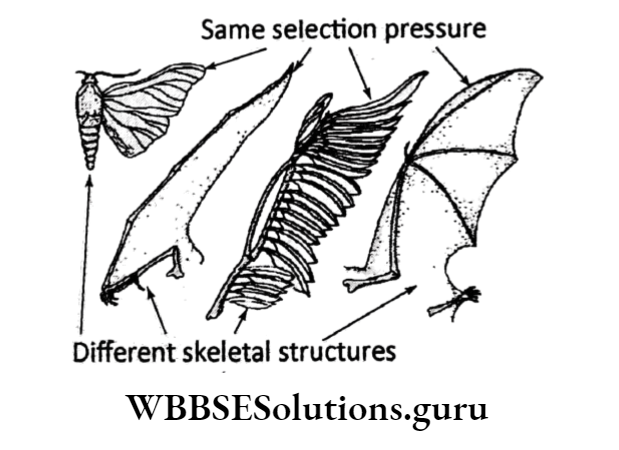
A classical example is the wings of insects and the wings of birds and bats (mammals).
Like birds or bats, the wings are also developed in most of insects since they perform the same function.
However there is no developmental or structural similarity between the wings of insects with that of birds or bats. The wing of an insect is membranous
The same selection pressure is supported by veins, but those of birds and bats are derived from forelimbs which is supported by bones.
Hence the wings of insects are analogous structures to those of birds and bats as they perform the same function.
This superficial similarity has developed due to the adaptation to a similar environment. It is called convergent evolution.
Gliding wings:
The two animals sugar gliders & flying squirrels can glide in the air using their gliding wings. Both species are different from each other in many ways.
Flying squirrels is a placental mammals whereas sugar glider is a marsupial mammals like kangaroos. To adapt to a common function, both animals evolved similar gliding wings.
In plant:
Climbers:
A tendril of the pea plant is the modified form leaf and the tendril of jhumkalata is the modified form of the stem. The tendrils of both plants perform the same function as climbers.
Storage of food:
Potato & sweet potato also show similar characteristics but have different origins. Potato is a modified stem meant for the storage of food.
Sweet potato is a modified root also meant for the storage of food, so they are analogous.
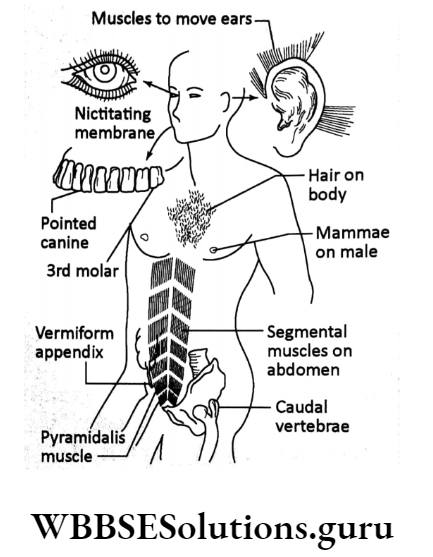
Vestigial organs:
The organs which are present in reduced form but non-functional in possessors, but were fully formed and functional in ancestors and related species are called vestigial organs.
There are several examples of vestigial organs in living organisms—
Human vestigial organs:
Some of the vestigial organs found in humans are- the nictitating membrane of the eye, vermiform appendix, muscles of the pinna, coccyx (tail bone), canines and wisdom teeth, body hairs, mammary glands, nipples in males, etc.
Darwin’s Theory Of Evolution Class 10
The appendix is not of any use in modern man, but it is believed that for our ancestors, the appendix was much larger and it was mostly used for the consumption of woody material such as tree bark.
Human ancestors had tails before and since, we no longer needed them, over time, while in the fetus, the tail (coccyx) has been absorbed by the body.
Vestigial organs of other animals:
A few important examples are vestiges of pelvic girdles and hind limbs of pythons and Green Land whales; wings of flightless birds like kiwi, ostrich, etc; splint bones (2nd and 4th digits) of limbs of horses, etc.
Vestigial organs in plants:
Notable examples are leaves are reduced to scales in Asparagus, Ruscus, Cuscata, etc; vestigial stamens (staminodes) found in flowers
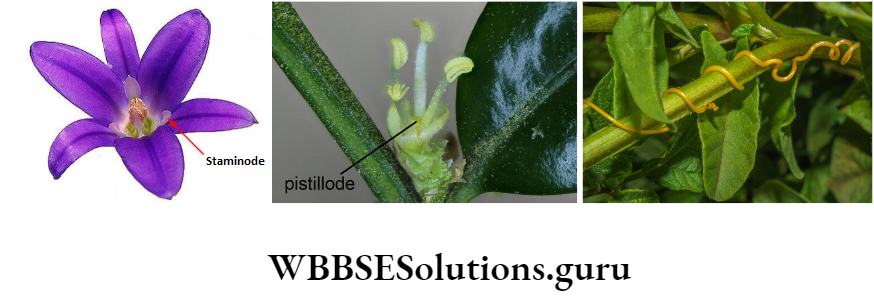
of several plants belonging to Labiatae, Cucurbitaceae, etc; nonfunctional pistils (pistil lodes) of male flowers of Cucurbitaceae; ray florets of sunflower lack stamens while the pistil is rudimentary with small nonfunctional stigma and ovule-less ovary.
The presence of vestigial organs indicates that organisms have evolved from ancestors since they were large, beneficial, and functional in ancestors but, in line with the concept of Natural selection, they are no longer useful for the current organisms.
Organisms have kept the traits that are useful and have lost the traits that are not useful.
Structure Of Vertebrate Heart:
A comparative study of the structural plan of hearts of different classes of vertebrates such as fishes, amphibians, reptiles, birds, and mammals will show the basic similarity with gradual complexities.
The heart in vertebrates is mainly composed of two toads and frogs, the two-chambered heart of fishes has become three-chambered (two auricles and one ventricle).
The auricle is divided into two only to prevent the admixture of oxygenated and deoxygenated blood. The heart of reptiles is also three chambered but there is a tendency for the division of the ventricle by an incomplete partition.
But in the heart of birds and mammals, the ventricle is completely divided into two chambers. So the heart of birds and mammals is composed of two auricles and two ventricles i.e. four-chambered heart.
Darwin’s Theory Of Evolution Class 10
Here the oxygenated blood and deoxygenated blood are completely separated and this is in response to the change of habitat and to satisfy the demand for oxygen in these terrestrial animals.
Thus the simple heart of fishes gradually modifies to different classes of vertebrates and ultimately becomes a complex structure in mammals.

Thus the study of heart chambers, auricles,s and ventricles. The auricle receives the blood through veins and the ventricle distributes the blood to the different parts of the body through arteries.
In the case of fishes which are aquatic animals, the heart is composed of two chambers- a single auricle and a single ventricle.
But in response to the change of habitat from water to land in amphibians like toads and frogs, the two-chambered hearts of fishes have become three-chambered (two auricles and one ventricle).
The auricle is divided into two only to prevent the admixture of oxygenated and deoxygenated blood. The heart of reptiles is also three chambered but there is a tendency for division of the ventricle by an incomplete partition.
But in the heart of birds and mammals, the ventricle is completely divided into two chambers. So the heart of birds and mammals is composed of two auricles and two ventricles i.e. four-chambered heart.
Here the oxygenated blood and deoxygenated blood are completely separated and this is in response to the change of habitat and to satisfy the demand for oxygen in these terrestrial animals.
Thus the simple heart of fishes gradually modifies to different classes of vertebrates and ultimately becomes a complex structure in mammals.
Thus the study of the heart from fish to mammals supports organic evolution.
WBBSE Chapter 4 Topic A Evolution Embryological Evidences
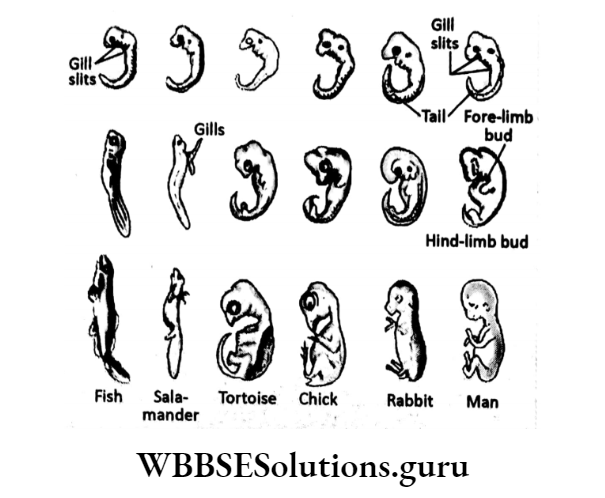
Comparative studies of embryos of different organisms show some resemblances.
The similarity in early development:
All triploblastic animals develop from single-celled zygote to three-layered gastrula stages through processes like cleavage, blastulation, gastrulation, etc.
These stages of embryogeny are fundamentally similar in all the animals suggesting a common ancestor.
Similarities among vertebrate embryos:
Due to common ancestry, embryos of different vertebrates like fishes, amphibians, reptiles, birds, and mammals resemble each other so closely, during the early development period, that it is very difficult to distinguish them.
A few similarities are the presence of gill clefts, notochord, tail, etc., the development of limb buds in a similar way, and the notochord getting replaced by a vertebral column in all of them.
Again embryos of closely related animals are more alike than those of other animals which are not so closely related.
For example, the embryo of a fish is more like that of an amphibian than that of a reptile or a bird; the embryo of a monkey is more similar to that of a man than that of a reptile.
As development proceeds, the embryos of these diverse animals progressively diverge from the common pattern & attain their respective adult morphogenesis.
From these observations, Von Baer (1828) put forward Baer’s law which was later modified by Ernst Haeckel (1866) as Recapitulation theory or Biogenetic law.
The law states that ‘Ontogeny Repeats Phyllogeny’, which means that an organism, during its development (ontogeny) passes through its ancestral history (phylogeny).
Its significance is that if the development of an organism is studied from its embryo, then the ancestral history of that organism becomes clear.
WBBSE Chapter 4 Topic A Evolution Evolution Of Plant Animal Life
Compared to prokaryotic organisms such as bacteria, plants, and animals have a relatively recent evolutionary origin. DNA evidence suggests that the first eukaryote evolved from prokaryotes between 2500 and 1000 million years ago.
Thus eukaryotes as a taxon date from the Proterozoic eons, the final eon of the Precambrian era.
WBBSE Chapter 4 Topic A Evolution Evolution Of Plant Life on the Earth
The oldest known life consists of forms of bacteria, blue-green algae, and green algae, all of which probably resided in saltwater environments.
The stromatolites were formed by the action of early plant life. They are the indirect evidence of early life, rather than consisting entirely of fossilized life.
Stromatolites are layered mounds, columns, and sheet-like sedimentary rocks that were originally formed by the growth of layer upon layer of cyanobacteria, a single-celled photosynthetic microbe.
Bacteria and blue-green algae have a prokaryotic organization. Their cells lack true nuclei, because of the absence of a nuclear membrane.
The cellular unit of plants and animals is the more advanced eukaryotic cell, in which nuclear material is set off from the cytoplasm of the cell by a nuclear membrane.
Lamarckism And Darwinism Class 10
Eukaryotic cells first appeared in the fossil record 2.5 billion years ago. These cells were evidently photosynthetic and they most closely resembled the green algae. They have developed into higher plant forms.
Some Of These Developments Are Listed Below
Thallophytes:
Algae:
These eukaryotic plants, which are classified primarily on the basis of color (green, golden-brown, brown, red) lack true roots, stems, and leaves.
Fungi:
These non-photosynthetic plants also have undifferentiated plant bodies with a unique filamentous structure called mycelia and participate in decomposition activity or may also survive as a parasite.
Bryophytes:
(mosses and liverworts) These plants possess a greater specialization of tissues than is found among the thallophytes. True roots do not exist, but the mosses and liverworts have distinct leaf-like forms. Their fossils are quite rare.
Tracheophytes ; (club mosses):
They are also called lycopods or lycopsids, and possess true roots, stems, and leaves, as is true with all tracheophytes. The most common living members are Lycopodium and Selaginella, which enjoy widespread distribution.
The club mosses are characterized by scale-like leaves and a dichotomous branching of the stem.
During the Carboniferous, the most conspicuous forms were the arborescent lycopsids, especially Lepidodendron and Sigillaria. Their remains are one of the chief ingredients of coal.
Horsetails:
These lower vascular plants are also called sphenopsids. Equisetum is the only living genus. The leaves are reduced in size, and the stem and cones of horsetails are characterized by the presence of ridges (nodes and internodes).
Pteropslds:
These plants are differentiated into root, stem, and leaves. True ferns are a group of plants that appeared fairly early in the history of land plants, and they continue to adapt successfully to the earth’s environments.
Gymnosperms:
They are also called naked-seeded trees. Most of these plants have become extinct and few are living right now,
some of these are discussed below:
Cycads:
They have short, thick trunks and apical crowns of leaves that are classified separately on the basis of reproductive anatomies (particularly cone structure). Some present-day cycads are arborescent, an Australian species growing as tall as 60 feet.
Ginkgo:
One species remains alive today, native to remote forests of China, and planted widely as an ornamental tree.
Leaves of these plants are fan-shaped, sometimes deeply lobed, and with a characteristic venation.
Because the Ginkgo has remained largely unchanged in appearance for many millions of years, it is referred to as a living fossil.
Conifers:
The conifers represent the largest group of gymnosperms.
The seven present-day families include pine, spruce, fir, hemlock, juniper, cypress, bald cypress, and the largest form of life on earth, the Sequoia (gigantea is the largest plant; sem previews is the tallest).
Conifers are usually evergreens and their leaves appear as needles. They are more prevalent in temperate parts of the world.
Angiosperms:
They are the most advanced plants on earth, they are also called flowering plants. They have covered seed, and ovules remain in hollow ovaries.
They are abundant and exceedingly diverse plants, with more than 200,000 species known to exist.
Angiosperms first appeared 135 million years ago and they began their present dominance 70 to 100 million years ago.
The two basic forms of angiosperms are the monocotyledons and dicotyledons, which are distinguished by the number of embryonic leaves, the arrangement of vascular bundles in stems and roots, leaf venation, and groupings of petals in the flowers.
Angiosperm families are grouped primarily on the basis of floral structure.
The following trends in evolution are commonly observed in plants:
Energy generation:
The method of energy generation has occurred in the following way; early life forms must necessarily have existed under anaerobic conditions.
They were heterotrophic forms of life, meaning that food and necessary nutrients were obtained externally, most likely through processes of fermentation.
Later, autotrophic organisms developed which could produce their own food, through the process of photosynthesis. A consequence of autotrophic life is the development of aerobic life.
Cellular organization:
Prokaryotic cells, with less organized nuclear material, lead to eukaryotic cells, with true nuclei; unicellular life forms leading to multicellularity.
Ecological niches:
The plants occupied aquatic (marine and freshwater) forms and later led to the development of the land plant.
Differentiation of plant tissues:
The development occurred in the form of branching; evolution of roots, stems, and leaves; development of the seed. Early land plants lacked branching.
The greater complexity of growth was attained by plants that had a dichotomous pattern of branching, with two equal axes being formed at each fork.
Ultimately, trilateral branching off a main stem evolved. The evolution of the seed is considered to be one of the most significant advances of land plants.
Plant size:
The herbaceous habit led to the arborescent habit. It is not to be assumed that larger plants are more complex or advanced plants.
It is true, in the plant world as well as the animal world, that many life forms have followed a trend towards larger and larger representatives.
The club mosses and horsetails are examples of plants that achieved gigantism and dominance, only to be followed by the extinction of the large forms.
Size of the Reproductive Spores:
Asexual reproduction was followed by sexual reproduction. Early land plants were homosporous; they had reproductive spores of one type & one size.
An important advance in the move towards seed production was heterosporous reproduction, where two distinct reproductive cells, of differing sizes, were produced by plants.
The development of sexual reproduction and of the seed allows for increased efficiency of reproduction and the increased possibility of genetic variability.
Coevolution with animals:
The angiosperms have undergone an accelerated evolution during their 135 million-year history largely as a response to the pressures exerted by insect predators.
They have adapted to life with insects not only as a means for defense as is the case with the conifers, but also in ways that have increased the reproductive advantage and dispersal advantage of these plants.
Lamarckism And Darwinism Class 10
The wide variety of flower types among the angiosperms, and the extremely elaborate ways in which some species have coevolved with particular species of insects (orchids and wasps, for example)
Give ample evidence that they have attained a degree of success in exploiting their environments that has never been attained by other plant types.
WBBSE Chapter 4 Topic A Evolution Evolution Of Animals
The unicellular animal cells are represented by protozoa. The oldest fossil evidence of multicellular animals, or metazoans, burrows that appear to have been made by smooth, worm-like organisms.
Such trace fossils have been found in rocks from China, Canada, and India, but they tell us little about the animals that made them apart from their basic shape.
In 2016, scientists reported that, about 800 million years ago, a minor genetic change in a single molecule called GK-PID may have allowed organisms to go from a single-cell organism to one of many cells.
Between 620 and 550 million years ago (during the Vendian Period) relatively large, complex, soft-bodied multicellular animals
appeared in the fossil record for the first time.
These animals include sponges that represent multicellular organisms without any definite cellular organization. The animal is sedentary, it has a calcareous body and multiple pores called ostia.
The first differentiation occurred in the form of the outer ectoderm and endoderm with the mesoglea in between; they have a cavity inside called coelenteron, e.g. Hydra and Jellyfish.
Helminths:
The first triploblastic animal then appeared was in the form of tapeworms (Platyhelminthes). Their body is dorsoventrally flattened and they are without any cavity inside. The animal is bisexual and can exhibit self-fertilization.
The pseudocolor appeared in the nematode, which is lined by endoderm, but the sexes are different and they require both the male and female for sexual reproduction.
Annelids:
The true coelomate animal appeared next in the form of annelids, which has a metamerically segmented body and tubular alimentary canal; they have pigmented blood and closed vasculature, e.g. Earthworm.
Arthropods:
The next group of animals had jointed appendages, well-developed hearts, open circulation, and internal fertilization. This group of animals represents the largest group of invertebrates.
Mollusca:
This group of animals has developed a heart and an intermediate between open and closed circulation. The animal has a muscular foot and an outer shell enclosing a soft body covered by a mantle.
Echinodermata:
These are the highest-evolved invertebrates with a developed cerebral ganglia, water vascular system, and haemal system.
Chordate:
This group is the highest evolved with a notochord, dorsal nerve cord, and pharyngeal gill slit.
The group starts with hemichordates, followed by Urochordata, and Cephalochordata, and the most advanced group is Vertebrata. The Vertebrata evolved through fishes, amphibia, reptiles, aves, and mammals.
WBBSE Chapter 4 Topic A Evolution Fill In The Blanks
Question 1. The fossils are found mostly in________________ rock.
Answer: Sedimentary
Question 2. The life originated before________________ years ago.
Answer: 3.5 Billion
Question 3. Peripatus joins________________ and arthropods.
Answer: Annelids
Question 4. ________________ joins gymnosperms and angiosperms.
Answer: Gnetum
Question 5. The coccyx is a________________ organ in man.
Answer: Vestigial
Question 6. The incomplete ventricular septum is found in the heart of________________.
Answer: Reptiles
Evolution Class 10 MCQs
Question 7. The competition between members of different species is known as ________________ struggle.
Answer: Interspecific
Question 8. The________________ law was given by Haeckel.
Answer: Biogenetic
Question 9. ________________ coined the word evolution.
Answer: Lycll
Question 10. ________________ has led to global biodiversity.
Answer: Evolution
Question 11. Origin of Life on Earth was written by________________.
Answer: Oparin
Question 12. The highest evolved invertebrate phylum is________________
Answer: Echinodermata
Question 13. Protovirus originated from________________ .
Answer: Protein
Question 14. Ginkgo is a________________ .
Answer: Living fossil
Question 15. changed the earth’s atmosphere from a reducing to an oxidizing one________________.
Answer: Photosynthesis
Question 16. Flippers of the whale are similar to ________________ of man.
Answer: Hands
Question 17. ________________ are called the connecting link between the living and nonliving.
Answer: Viruses
Question 18. Mammoth is an example of________________ .
Answer: Intact preservation
Question 19. ________________ joins pteridophyte and gymnosperms.
Answer: pteridosperm
Question 20. ________________ is the raw material of evolution.
Answer: Mutation
WBBSE Chapter 4 Topic A Evolution Write True Or False
Question 1. Amphibia has 3 chambered heart.
Answer: True
Question 2. The earliest horse is Merrychippus.
Answer: False
Question 3. The earliest first living units are called protobionts.
Answer: True
Question 4. The use and disuse theory was proposed by Darwin.
Answer: False
Question 5. Mutation theory was proposed by Lamarck.
Answer: False
Question 6. Natural Selection theory was proposed by Darwin.
Answer: True
Evolution Class 10 MCQs
Question 7. Birds are glorified reptiles.
Answer: True
Question 8. Pteridosperm is in between the pteridophyte and the gymnosperm.
Answer: True
Question 9. Ginkgo is a missing link.
Answer: False
Question 10. Gnetum connects gymnosperm and angiosperm.
Answer: True
Question 11. Food, space, and other basic necessities of organisms are unlimited.
Answer: False
Question 12. Archaeopteryx is a missing link.
Answer: True
Question 13. Urey and Miller disapproved of Oparin’s theory.
Answer: False
Question 14. Vascular tissues first appeared in pteridophytes.
Answer: True
Question 15. Fishes have 3 chambered hearts.
Answer: False
WBBSE Chapter 4 Topic A Evolution Match The Column
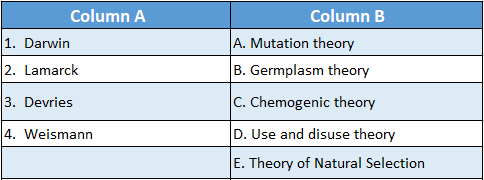

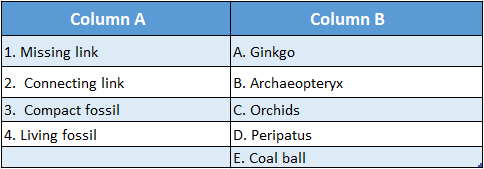
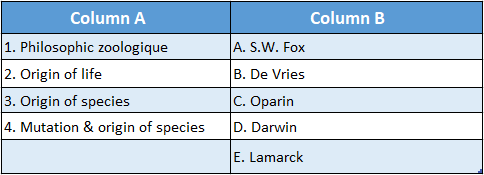
Answer: 1-E,2-C,3-D,4-B

WBBSE Chapter 4 Topic A Evolution Very Short Answer Type Questions
Question 1. What is the full form of LUCA?
Answer: Last Universal Common Ancestor, also called the Last Universal Ancestor (LUA).
Question 2. Name the link between the gymnosperm and the angiosperm.
Answer: Gnetum.
Question 3. Name the Eon when life started.
Answer: Proterozoic Eon.
Question 4. Name the membrane-bound Procell.
Answer: Coace private.
Question 5. Give the other name for proteinoid.
Answer: Microsphere.
Question 6. Where did life start?
Answer: In Ocean.
Evolution Class 10 MCQs
Question 7. State the duration of organic evolution.
Answer: 3.5 billion years.
Question 8. Name the organs which are structurally the same, but functionally different.
Answer: Homologous organs.
Question 9. Name the vestigial organ of the human eye.
Answer: Nictitating membrane.
Question 10. Name the animal connecting reptiles and mammals.
Answer: Duck-billed platypus.
Question 11. Name the ship on which Darwin undertook his voyage.
Answer: H.M.S. Beagle.
Question 12. Name the oldest living fish.
Answer: Coelacanth.
Question 13. Name the connecting link between fishes and amphibia.
Answer: Latimaria.
Question 14. A pair of related terms is given below. On the basis of the relationship in the first pair, write the suitable word in the gap of the second pair.
Answer:
Flood: environmental struggle:: the battle to grab mating partner: Intraspecific struggle
Peripatus: Connecting link between Annelida & Arthropoda:: Pteridosperm: Connecting link between Pteridophyta and Gymnosperm
Macroevolution: Grand scale evolution of geological time::Microevolution: Genetic level evolution
Question 15. Which theory was proposed by Weisman?
Answer: Germplasm theory.
Question 16. Name the functional form of the Appendix.
Answer: Caecum.
Question 17. Name the book written by Lamarck.
Answer: Philosophic Zoologique.
Question 18. What is a mutant?
Answer: An organism formed by mutation.
Question 19. Name the phylum showing pseudocolor.
Answer: Aschelminthes.
Question 20. Name the type of heart found in fish.
Answer: Venous heart.
Question 21. Among the following four terms, one includes the other three. Find out that term and write it:
Answer:
- Darwin’s point, vestigial organs, auricular muscles, Erector pili vestigial organs.
- Natural selection, mutation, Neo Darwinism, Darwinism Neo Darwinism
Question 22. Name a plant with pistilode-
Answer: Asparagus.
Question 23. Name a living fossil within a pteridophyte.
Answer: Psilotum.
Question 24. Where should a mutation occur for evolutionary success?
Answer: In germplasm DNA.
Question 25. Use the proper scientific term to explain the better adaptation of certain individuals among a population.
Answer: Natural Selection.
Question 26. Choose the odd one and write it: Species diversification, mutation, species death, evolution.
Answer: Species death.
Question 27. Name the smallest unit of living organisms that can undergo evolution.
Answer: A population.
Evolution Class 10 MCQs
Question 28. Give examples of living fossils (one each) from the animal and plant kingdom.
Answer: Bony fish Coelacanth (Latimeria menadoensis) Ginkgo biloba (Gymnosperm)
Question 29. Which type of animals has been fossilized most?
Answer: Invertebrates.
Question 30. What is ontogeny?
Answer: Ontogeny is the origin and development of an organism usually from the time of fertilization of the egg to the organism’s mature form (embryonic development).
Answer:
LUCA
LUCA (The last universal common ancestor) or LUA is the most recent common ancestor of all current life on earth.
LUCA is not the first living organism on earth, but only one of many early organisms, whereas the others became extinct. LUCA is estimated to have lived some 3.5 to 3.8 billion years ago.
LUCA had a single cell with a water-based cytoplasm enclosed by a lipid bilayer membrane. It had a set of 355 genes, a ring-shaped coil of DNA composed of four nucleotides, and was an anaerobic, C02 fixing, and thermophilic organism.
LUCA evolved in areas like deep sea vents and could tolerate environmental extremes like high salinity, acidity, or temperature.
Question 2. What are coacervates ?
Answer:
Coacervates
Coacervates consist of a colloidal protein with an outer lipoprotein membrane and represent a protocell.
Also called microspheres or proteinoids, they not only could move around but also exhibit endosmosis or exosmosis when kept under hypotonic and hypertonic conditions.
They do not contain any cell organelle but have enzymatic properties and therefore can be the center of different biochemical reactions.
Question 3. What is proto ribosome?
Answer:
Proto ribosome
The granular or fibrous RNA proteinoid complex which can perform a ribosome-related function is called a proto ribosome.
Question 4. How proteinoid is generated?
Answer:
Sidney Fox (1957-58) applied dry heat to a mixture of 18 amino acids and then cooled it. They joined to produce a polypeptide called proteinoid in the presence of water.
Question 5. How was organic molecule first produced in the world?
Answer:
When the temperature of the Earth went down to 100°C, hydrocarbons and water reacted with each other to produce biomacromolecules of fatty acid, sugar, nucleotide, amino acids, purine, pyrimidines, etc in the form of colloids.
Question 6. How protovirus was produced?
Answer:
The small nucleoprotein molecules joined with each other to produce a larger nucleoproteinoid which is also called the provirus.
Question 7. What is meant by the inheritance of acquired characteristics?
Answer:
Inheritance of acquired characteristics
As per Lamarckism, the changes or characters acquired by an organism in its lifetime are transmitted to the next generation.
It means that changes are cumulative over some time. This is known as the inheritance of acquired characteristics.
Question 8. Distinguish between homologous and analogous organs.
Answer:
Difference between homologous and analogous organs

Question 9. What is organic evolution?
Answer:
Organic evolution
The slow but gradual process by which simple life forms are converted to relatively complex life forms over successive generations through the process of reproduction & variation is called organic evolution.
Evolution Class 10 MCQs
Question 10. What is the RNA world hypothesis?
Answer:
RNA world hypothesis
The RNA world states that RNA acted as an enzyme that developed into protein and gave rise to DNA by reverse transcription. Thus life forms were created from RNA. RNA was the first molecule of heredity and DNA evolved after it.
Question 11. How origin of new species was explained?
Answer:
The origin of new species was mentioned by Darwin, but he could not explain it.
It was later explained by Hugo deVries, who showed that because of the sudden & permanent modification or mutation of the constituent gene, new species are created.
Thus mutations are the raw materials of evolution.
Question 12. How is it possible that birds have originated from reptiles?
Answer:
The Archaeopteryx, which is a fossil bird is a missing link between reptiles and birds.
Like reptiles, they had teeth in the jaw, clawed digits, and long tails, and like birds, they had feathers, anterior limbs modified to form wings, and a round cranium.
Thus the presence of both reptilian and avian characters explains the mechanism of transmission between the two classes. Hesperornis was a flightless toothed aquatic bird and also an intermediate between reptiles & birds.
Such missing links sharing the characters of two groups prove the origin of birds from reptiles in the evolutionary process.
Question 13. What is the source of energy in the ancient world?
Answer:
The source of energy in the ancient world
UV rays, X-rays, cosmic rays, electric discharges from lightning, and the heat of volcanic lava were the possible sources of energy in the ancient world.
Question 14. What was the nature of the environment of the ancient Earth?
Answer:
The nature of the environment of the ancient Earth
The environment of the ancient Earth was reducing in nature.
The environment contained hydrogen, methane, ammonia, and water vapor.
There was no free Oxygen. More UV rays could enter the lower atmosphere of the Earth but absorption of UV was low. The ambient temperature was quite high compared to the present-day temperature.
Question 15. What is Dolio’s law?
Answer:
Dolio’s law
Evolution is irreversible. This is called Dolio’s law.
Question 16. What is speciation?
Answer:
Speciation
Speciation refers to the formation of new species. Factors that influence speciation are mutation, hybridization, recombination, polyploidy, natural selection, genetic drift, and isolation.
Question 17. Name and explain a vestigial behavior of human beings.
Answer:
The formation of goose bumps in humans under stress is a vestigial reflex or behavior.
A possible function of human evolutionary ancestors was to raise the body’s hair, making the ancestor appear larger to scare off predators.
Raising the hair was also used to trap an extra layer of air to keep the body warm. Due to the diminished amount of hair in humans, the reflex formation of goosebumps when cold is also vestigial.
Question 18. Explain the Germplasm theory in brief.
Answer:
The Germplasm theory
The germ plasm theory was proposed by August Weismann. The theory states that each organism is formed of two types of cells— somatic cells and germ cells.
The somatic cells constitute all the body cells except the germ cells of gonads and they perish with the death of the organism. Any character, acquired by the organism in its somatic cells, can not therefore be transmitted to its offspring.
That is why the facial scar of a soldier is not inherited by his son or daughter. The germ cells or gametes are transmitted from parents to the offspring.
So any change occurring in the germplasm cells is only transmitted to the offspring. The proposal of germplasm theory gave a huge blow to Lamarckism.
Question 19. Mention the factors on which the modern synthetic theory of evolution is based. Explain the phenomenon of elongation of the neck of a giraffe as per the modern concept of evolution.
Answer:
The modern Synthetic theory of evolution is based on the following factors:
- Genetic variability in populations
- Genetic and chromosomal mutation
- Natural Selection
- Reproductive isolation
- The ancestors of giraffes had necks and forelimbs of different lengths.
With changes in situations, as giraffes were forced to reach leaves on tall trees to access limited food in heterogeneous environments, the giraffes with longer necks and forelimbs had an advantage over others.
These long-necked giraffes had a better chance of survival and the genes controlling the traits were selected by nature as useful mutations.
Accumulation of variations produced new species when these giraffes reproduced and thus, the offsprings possessed the same advantageous variations.
This becomes a case of directional selection or progressive selection in which deviant individuals develop adaptations in response to environmental change and tend to survive and produce more offspring while the other section of individuals who cannot respond to environmental change are eliminated.
This explains how the present-day giraffe with long necks and forelimbs came into existence.
Question 20. What is parallel evolution?
Answer:
Parallel evolution
Analogous organs (having different origins and structures) have a superficial resemblance due to adaptations in similar environments and for the execution of the same function.
This type of evolution is known as parallel evolution. For example, the wings of insects, birds, and bats show this type of evolution since all these organs undergo adaptations to suit the flight of the organisms involved.
Question 21. What do you mean by convergent evolution?
Answer:
Convergent evolution
When similar parts of different animals or plants belonging to different groups are modified for the same purpose to adapt themselves in similar habitats or environments, it is known as convergent evolution.
For example, the same organ (fore limb) of whales and fish have been modified into flippers and fins respectively to suit the aquatic environment.
Both flippers and fins perform the common functions of swimming, steering, and balancing by undergoing convergent evolution.
Among plants, the phylloclade of cactus, the stipule of sweet pea, and the phyllode of Acacia undergo adaptations to perform the same type of functions under similar environmental conditions. These are analogous organs and they show convergent evolution.
Evolution Class 10 Life Science
Question 22. What is divergent evolution?
Answer:
Divergent evolution
When the same basic organs belonging to similar groups of organisms become adapted by specialization to different functions in different environments, it is known as divergent evolution.
The forelimbs of vertebrates are made up of the same structural elements, but whales use them as paddles for swimming, man uses them for holding or gripping, birds and bats use the wings for flying, and horses for running.
In plants, the phylloclade of cactus, cladode of Satamuli (Asparagus), the tendrils of Marjorie, and the rhizome of ginger are different modifications of the stem to perform different functions.
These are homologous organs that evolved due to the adaptation of these organisms to different environments. Hence these are examples of divergent evolution.
Question 23. What is a connecting link? Give examples.
Answer:
Connecting link
Animals exhibiting characters of two adjacent taxonomic groups that are still surviving on earth are called connecting links.
They afford very good evidence of organic evolution since the presence of characteristics of both groups indicates the evolution of one from another.
Peripatus is a connecting link between arthropods and annelids. Its arthropod characters are claws, jaws, hemocoel, trachea, and dorsal tubular heart.
The annelidan characters are continuous muscle layers in the body wall, unjoined legs, and nephridia. Neopilina is a connecting link between annelids and molluscans.
It is the only segmented mollusk that has a cup-shaped shell. Its visceral mass is divided into five segments each with a pair of shell muscles, gills, auricles, and nephridia.
Chimaera is a connecting link between cartilaginous and bony fishes. It has a cartilaginous skeleton, ventral mouth, dorsal fins, etc.
It resembles bony fish since it has a small mouth with fleshy lips, four pairs of gills, the absence of a cloaca, a separate anus, and a urinogenital aperture.
Balanoglossus, a protochordate, is a connecting link between invertebrates and chordates. It is a chordate because it contains a notochord, tubular nerve chord, and gill slits. The invertebrate characters include the phosphagen and the larva.
Wbbse Class 10 Life Science Evolution Notes
Question 24. Differentiate between inherited and acquired characters. Give examples of each type.
Answer:
Difference between inherited and acquired characters
Characters that are passed on from parents to offspring are known as inherited characters. Only those characters which have a gene for them are inherited.
Example: Colour of eyes. Characters that appear in an individual’s lifetime but that are not transmitted to the next generation are acquired characters.
Acquired characters do not produce changes in the DNA of germ cells, so they are not inherited.
Example: obese body.
Fill In The Blanks
Question 1. The earliest ancestor in the evolution of the horse is
Answer: Eohippus
Question 2. Homologous organs evolve due to evolution.
Answer: Divergent
Question 3. was the aggregate of some large colloidal molecules during the early phase of the origin of life.
Answer: Coacervate
Write True Or False
Question 1. The fundamental tenet of the evolutionary theory of Darwin is the process of natural selection.
Answer: True
Question 2. In Lamarck’s opinion, organisms can acquire any particular inheritable physical trait according to their need.
Answer: True
Question 3. According to Darwin organisms reproduce at geometric ratios.
Answer: True
Very Short Answer Type Questions
Question 1. Which type of evolution is indicated by homologous organs?
Answer: Divergent evolution.
Short Answer Type Questions With Answers
Question 1. Write the names of reactants used and one organic compound formed in the experiment of Miller and Urey in connection with the chemical origin of life.
Answer:
Urey and Millar’s experiment Reactants used:
A mixture of methane, ammonia, and hydrogen (in the ratio of 2:2:1) and water vapor organic compound formed (product): Amino acids such as glycine, alanine, aspartic acid, and glutamic acid.
Question 2. Write four important features modified in the evolution of the horse.
Answer:
Evolution of horse:
Increase in size:
Eohippus (30 cm high at shoulders) Mesohippus (61 cm high at shoulders) Merychippus (102 cm high at shoulders) Equus (150 cm high at shoulders).
Lengthening of limbs and feet to attain a speed
Reduction of lateral digits:
Eohippus had forefeet with four complete fingers (2,3,4 and 5) and one splint of the first finger and hind feet with three functional toes (2, 3, and 4) and two splints of the first and fifth toes. Both the fore and hind feet of modern horses have one finger and one toe and two splints.
Increase in length and thickness of the third digit.
Question 3. Mention two features of internal structures on the basis of which ‘flipper of whales’ and ‘wings of birds’ are considered homologous organs.
Answer: Both the flipper of whales and the wings of birds are modified forelimbs of vertebrates.
The upper portion of the fore limb is supported by the humerus. Below the humorous, there are radius and ulna. These two bones are followed by carpals, metacarpals, and phalanges. Thus the bones reveal a striking similarity.
Flipper is a typically flat forelimb evolved for movement through the water. In the case of birds, the forelimbs are modified into wings for flying purposes in the aerial mode of life.
Hence, though there are some modifications in the bones for adaptation to different environmental conditions, the basic plan of arrangement of bones remains the same. Hence these are homologous structures.
Question 4. Write the names of one each vestigial organ present in the vertebral column and alimentary canal in the human body.
Answer:
Human vestigial organ Present in the vertebral column:
A vestigial tail or coccyx at the end of the vertebral column Present in the alimentary canal: Vermiform appendix of the caecum.
Question 5. Write in chronological sequence the names of four main fossil ancestors during the course of the evolution of horses.
Answer:
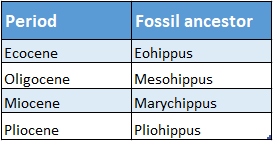
Question 6. Explain the process of Natural Selection as proposed by Darwin with the help of a suitable example.
Answer:
Salient Features Of Darwin’s Theory of Natural Selection
The important features of Darwin’s theory are as follows—
1. Prodigality of reproduction:
Organisms have enormous fertility and they multiply in geometric ratio.
A few examples are—
Insects lay hundreds of eggs.
Plants produce thousands of seeds. A single fern produces a few million spores.
A salmon fish lays several hundred eggs at a time.
Elephant, the slowest breeder, lives for about 90 years. They attain reproductive maturity at about the age of 30 and give rise to about 6 offspring per head during their lifetime.
It is calculated that, if all offerings survive, then 19 million descendent elephants will be produced in 750 years from a single female.
2. Limitation of food and space:
Though a population tends to increase geometrically; food, space, and other resources on Earth are limited and they are liable to increase only arithmetically.
Limited food and space, which together form the major part of the carrying capacity of the environment, are the two main limiting factors that do not allow a population to grow indefinitely.
Wbbse Class 10 Life Science Evolution Notes
The struggle for existence:
Due to the rapid multiplication of populations but limited food & space, there starts an everlasting competition
between individuals having similar requirements.
In this competition, every living organism desires to have an upper hand over others.
The struggle for existence may be of three different types—
Intraspecific struggle:
It is the struggle between members of the same species because they share similar environmental resources.
Examples:
Two dogs struggling for a piece of meat.
Interspecific struggle:
It is the struggle for the members of different species due to sharing the same ecological conditions.
Example:
The struggle between predator and prey.
Environmental or extra-specific struggle:
It is the struggle of individuals with environmental constraints like floods, drought, earthquakes, extreme heat or cold disease, etc.
Out of these three forms of struggles, the intraspecific struggle is the strongest type as the needs of the individuals of same species are most similar.
Example:
Sexual selection in which a cock with a more beautiful comb and plumage has a better chance to win a hen than a cock with a less developed comb.
Similarly, cannibalism is another example of intraspecific struggle as in this individuals eat the members of the same species.
4. Variation:
Except for identical twins, no two individuals are alike and their requirements also vary. This is known as variation and by these variations, some individuals become better adapted to their environment.
According to Darwin, the variations are continuous. Adaptively useful variations pass to the next generation, while the others disappear.
Examples of variations with competitive advantages are increased speed in prey, increased water conservation in plants, etc.
5. Natural selection:
Individuals with favorable variations and greater reproduction ability are selected by nature. Unfit individuals are rejected by nature.
Characters, selected by nature, pass to the next generation. Sorting out of individuals with useful variations from a
heterogeneous population by nature was called natural Selection by Darwin. So natural selection acts as a restrictive force and not a creative force.
Theories Of Evolution Class 10
6. Survival of fittest and origin of species:
Descendents with favorable variations, selected by nature, will survive because they are the fittest to adapt to their environment; while the unfits will become extinct.
Originally, the phrase ‘the survival of the fittest, was first used by Herbert Spencer.
7. Speciation:
According to Darwinism, useful variations appear in every generation and are inherited from one generation to another.
So the useful variations go on accumulating and Darwin considered that, after several generations, the descendants with continuous and gradual variations will be so distinct from their ancestors, that they will form a new species.
So, according to Darwinism, evolution is a gradual process and speciation occurs by gradual changes in the existing species.
Examples Of Natural Selection
Skeletal adaptations:
Giraffes, lizards, and many other known species adapted to their environments through genetic changes to their skeletons.
Giraffes developed long necks to reach food sources higher up in trees, so members of the giraffe population who didn’t develop a long neck died out.
At the same time, certain lizards with one characteristic are passed on to the next generation in greater proportion than the shorter neck region developed longer leg bones to help them climb up during periods of flood and to escape predators in the ground;
shorter-legged lizards of the same population died out until only the lizards with long legs survived.
Coloration:
Many species of deer mouse, peppered moth, and peacock have adapted to their environment through adaptations in coloring.
Once the optimal coloration is present, natural selection occurs when members of the species without the adaptive coloring died out more quickly and therefore, did not reproduce as abundantly.
Bacteria:
Bacteria can adapt to new food sources that were previously unusable.
Some bacteria have adapted to the presence of deadly antibiotics and exhibited traits that let them not only survive but also reproduce to generate offspring that are also resistant to the antibiotics.
Question 7. Tigers are extinct but there are many deer in the jungle. A few tigers are brought from another sanctuary and released in such a jungle. Imagine and write the names of different kinds of struggles for existence those tigers have to be involved in.
Answer:
The struggle for existence:
Intra-specific struggle due to the sharing of similar environmental resources
Interspecific struggle coming from members of other predator species, if any
Environmental struggle due to new geographical location and geological conditions of the jungle.-
WBBSE Chapter 1 Long Answer Type Questions
Question 1. Show the major evolutionary events with the help of a flow chart.
Answer:
Major Evolutionary Events
Origin of Earth:
Formation of the Earth some 5000 million years ago in the form of a mass of burning gases separated from the sun as per the Big Bang hypothesis. The temperature was about 5000 to 6000°C.
Formation of water, methane, and ammonia:
Gradual cooling of the Earth and hardening of the Earth’s crust, creation of clouds followed by precipitation, and formation of the small and large water bodies.
The primitive earth contained large amounts of hydrogen, nitrogen, carbon & oxygen. Of these, hydrogen combined with nitrogen to form ammonia, with oxygen to form water, and with carbon to form methane.
Compounds like ammonia, methane, etc got dissolved in rainwater and accumulated in the sea. Mineral rocks also dissolved ” leading to the accumulation of minerals and salts in seawater. Thus the first chemicals formed on the earth were water, ammonia, methane, and others.
Formation of micro and macromolecules:
The next step was the formation of micromolecules like amino acids, fatty acids, purine, pyrimidines, etc. in the form of colloids.
The micromolecules combine in various ways to form macromolecules like proteins, lipids, nucleic acids & nucleoproteins. The first formed proteins were called proto-proteins.
In the next step, nucleic acids were formed from phosphoric acid, sugar, purines, and pyrimidines. The nucleic acids and proteins combine to form nucleoproteins.
Coacervation:
Formation of lipid membrane-bound structures commonly called coacervates. They exhibited certain properties of cells.
Development of monera and protista:
Coacervates developed into provirus which gradually grew into two fundamental types monera and the Protista.
Oxygen revolution:
The emergence of the first photosynthetic bacteria or cyanobacteria having chlorophyll (a universal photosynthetic pigment) and blue-green pigments like phycocyanin.
These organisms had the ability of oxygenic photosynthesis which resulted in the liberation of oxygen in the atmosphere that turned the reducing environment to oxidizing environment.
The advent of multicellularity:
The prokaryotic organisms became diversified and divided repeatedly to produce multicellular prokaryotes.
The accumulation of free oxygen in the earth’s atmosphere made possible the evolution of aerobic metabolism, eukaryotes, sexual recombination, and multicellularity.
Formation of eukaryotes:
The emergence of nuclear membranes produced the first formed eukaryotes, which were initially unicellular and later became multicellular.
All early cells were haploid. Diploid cells appeared when some cells failed to divide after their DNA was duplicated. Diploid cells were better protected from harmful mutations.
Diversification to other forms:
Emergence of aquatic invertebrate animals.
The emergence of aquatic vertebrates in the form of fishes and their diversification.
The gradual development of land plants, and their colonization resulted in the massive modification of the terrestrial habitat, adding more oxygen to the terrestrial environment.
Diversification of terrestrial habitats with the development of new adaptive features which modified the Earth’s landscape.
The gradual shift of animal species from aquatic to terrestrial habitats initially for a short time in the form of four-limbed amphibians later creating a permanent terrestrial group of animals in the form of reptiles
The emergence of the highest-evolved land mammals.
Question 2. Describe the brief outline of the chemical origin of life mentioning Miller and Urey’s experiment.
Answer:
Abiogenesis Spontaneous Generation Or Naturalistic Theory
Russian biochemist A.I. Oparin and English biologist J.B.S Haldane suggested a theory that complex organic molecules were formed through a series of chemical reactions under the influence of lightning.
Organic compounds like water, ammonia, methane, alcohol, amino acids, etc produce ‘hot soup’ or ‘primordial soup’ within water bodies where smaller organic compounds combine together to form large organic compounds like polypeptides, proteins, nucleic acids, carbohydrates, etc.
These compounds produced the first living cell. Thus life is believed to have originated in oceans. The stage of chemical evolution is completed with the origin of proteins, nucleoproteins, and nucleic acids.
The process involved in the formation of a living cell from simple inorganic and organic nonliving elements is called abiogenesis or spontaneous generation of life from nonliving matters.
Oparin assumed that natural forces made some molecules in a colloidal solution mix and organize to form droplets called coacervates.
Successful coacervates gradually became better organized to give rise to the first living cells. The formation of coacervates was called coacervation.
Salient Features Of Coacervates Were As Follows:
They were stable, spherical with uniform diameter and microscopic.
They had double-layered boundaries around them.
They were motile and capable of growth,
They could reproduce through binary fission, budding, and fragmentation.
Urey and Miller’s Experiment
In 1953 Urey and his student Miller devised an experiment to give direct evidence of the molecular evolution of life or the abiogenic origin of life.
In this experiment, they took a mixture of methane, ammonia, and hydrogen (in the ratio of 2:2:1) in a discharge tube which was connected to a flask containing boiling water.
The hydrocarbon mixture within the discharge tube resembled the primitive atmosphere of Earth and the flask containing boiling water resembled the primitive sea.
The water vapor from boiling water simulated torrential rain which formed the water bodies on Earth.
The gas mixture in the tube was subjected to electric discharge at 75000 volts for 7 days to resemble vigorous lightning and violent electrical storms in early Earth.
It was then cooled with the help of a condenser and liquified and the liquid was collected in another flask. On analyzing the jelly-like liquid it was found to contain simple organic compounds such as amino acids, hydroxy acids, and aliphatic acids.
The amino acids included glycine, alanine, aspartic acid, and glutamic acid. In this experiment, alpha-alanine predominated over beta-alanine.
Modern proteins contain only alpha amino acids. Miller argued that amino acids were formed on primitive Earth under the influence of ultraviolet light and lightning. The resultant liquid contained no nucleic acids.
Inference:
From the experimental observation, Miller concluded that organic molecules were synthesized abiotically in early Earth under the energetic influence of thunderstorms, cosmic radiations, etc. Thus the phenomenon of the chemical origin of life was proved.
Conditions on earth at the time of the origin of life differed greatly from those of today. No free oxygen was present in Earth’s early atmosphere.
The reducing atmosphere of early Earth helped chemical reactions to occur that produced a molecular soup.
Under conditions that resemble Earth’s primitive reducing atmosphere, small molecules essential to living systems formed and polymerized.
Moreover, these molecules accumulated in the seas because the rate of their formation was greater than the rate at which they were destroyed.
In a somewhat similar experiment, Sydney Fox obtained complicated molecules of protein having similar properties to the coacervates of Oparin.
Fox called those molecules microspheres which, like coacervates, were immiscible in the surrounding medium.
Theories Of Evolution Class 10
Question 3. Describe two major tenets of Lamarck’s evolutionary theory. How the comparative anatomy of hearts act as proof in favor of evolutionary theory?
Answer:
Lamarck’s Theory
Lamarck’s theory, known as Lamarckism, was proposed by French biologist Jean Baptista de Lamarck (1744-1829) and the theory was discussed in detail in his book ‘Philosophic Zoologique’ in 1809.
Lamarckism comprises of following propositions or assumptions.
1. New needs and their effects:
Continuous changes in the environment create new needs in organisms to become better adapted or more suited to the changed environment.
As a result, certain organs are extensively used and certain others are disused. Lamarck quoted the example of the influence of the environment on plants in support of his view.
He observed differences in the same species of plants grown in different environmental conditions. When plants are grown in fertile soil, they become healthy & luxuriant; the same plants grown in unfertile soil are weak and thin.
2. Use and disuse:
Continuous use of an organ or organs tends to develop them highly, whereas disuse results in a gradual reduction, degeneration, and complete disappearance.
Examples in favor of the Use theory:
The long neck of a giraffe, webbed feet of aquatic birds, bicep muscles & long legs of wading birds, etc.
Examples in favor of disuse theory:
Loss of limbs in snakes, degeneration of eyes in cave animals, degeneration of wings in flightless birds, vestigial organs in man, etc.
3. Internal urge of an organism:
Animals and plants can grow and increase in size. According to Lamarck, this increase is due to desire which is some sort of an internal urge of the animal to attain the maximum size.
4. Inheritance of acquired characters:
The changes acquired in an organism, during its lifetime, due to the use and disuse of organs and under the influence of the environment are called acquired characteristics.
The characteristics acquired by an organism during its lifetime are inherited by the offspring. It means that changes are cumulative over some time and are inherited by the next generation.
As per this proposition, the long neck of the giraffe and the degenerated wings of the kiwi are acquired characters. Hence, they are inherited by their progeny generation after generation.