
WBBSE Chapter 5 Environment Its Resources And Their Conservation Topic D Biodiversity And Conservation Introduction To The Concept Of Biodiversity
Living organisms are characterized by diversity. Our earth supports nearly 5 to 10 million species of plants and animals as per IUCN.
Biodiversity (or Biological diversity) is defined as the variability among living organisms from all sources including terrestrial, marine, and other aquatic ecosystems and the ecological complexes of which they are part.
It includes genetic diversity, species diversity, and ecosystem diversity which together affect the complex ecological processes operating at different levels.
The term has several interpretations, and there are many ways to index, measure, characterize, and represent its complex organization.
Biodiversity plays an important role in ecosystem services, which maintain and improve human quality of life.
An understanding of biodiversity has, therefore, practical applications for species and ecosystem-level conservation planners, as they make management recommendations to consulting firms, governments, and industry.
Biodiversity is defined and measured as an attribute that has two components richness and evenness.
Read and Learn More WBBSE Solutions For Class 10 Life Science
Richness:
It signifies the number of groups of genetically or functionally related individuals. In most vegetation surveys, richness is expressed as the number of species and is usually called species richness.
Evenness:
It signifies the Proportions of species or functional groups present on a site. The more equal species are in proportion to each other, the greater the evenness of the site.
A site with low evenness indicates that a few species dominate the site.
Diversity Can Be Used To Describe Variation In Several Forms:
- Genetic (species, varieties, etc.)
- Life form (grasses, forb, trees, mosses, etc.)
- The functional group (deep-rooted, nitrogen-fixing, soil crust, evergreen, etc.)
- Biodiversity is the result of 3.5 billion years of evolution.
It has been subjected to periods of extinction.
The latest and most destructive stage of extinction is the Holocene extinction, which has occurred due to the impact of human beings on the environment. On Earth, biodiversity is unevenly distributed.
It varies globally and within regions. The various factors that influence biodiversity include temperature, altitude, precipitation, soil texture, etc.
For instance, ocean biodiversity is 25 times less than terrestrial biodiversity. Biodiversity also increases its form as it moves from colder poles towards the warmer tropics.
Biodiversity And Conservation Class 10
The United Nations has designated 2011-2020 as the United Nations Decade on Biodiversity.
WBBSE Chapter 5 Topic D Biodiversity And Conservation Levels Of Biodiversity
Biodiversity includes genetic diversity, species diversity, and community or ecosystem diversity.
Genetic diversity:
Genetic diversity may be defined as variation in genes within a particular species. It refers to the heritable variation. Sexual reproduction plays an important role in genetic diversity.
A species having more genetic diversity can adapt better to the change in environmental conditions.
- Different genetic information is stored in different species.
- For example, E.Coli has 10,000 genes.
- Drosophila has 13,000 genes.
- Homo Sapiens has 35,000 to 45,000 genes.
- The amount of genetic variation is the basis of speciation.
Species diversity:
Species diversity is the variety of different species In a given area.
It Is required to estimate the different species In a given area to know the species diversity.
For example, a forest may have 20 bird species, 50 plant species, and 10 mammal species. Greater varieties of species are found near the equator and lesser at the poles.
Community or ecosystem diversity:
Ecological diversity refers to the sum of the different types of environments of Ecosystems present in a region or the habitat, which is the total of the climate, vegetation, and geography of a region.
An ecosystem is a unit of the biosphere in which there is an interaction between living and non-living factors to maintain a continuous flow of energy.
It is a structural and functional unit of a biosphere. There are several kinds of habitats or ecosystems around the world. The variety of diversity of species in an ecosystem is influenced by the ecosystem itself.
Example of ecosystems:
Grassland, wetland, desert, aquatic ecosystem, etc.
Ecological diversity is the largest scale of biodiversity and within each ecosystem, there is a great deal of both the species and genetic diversity.
A region may have several ecosystems or it may have one. Wide expanses of oceans and deserts are regions of low ecological diversity. A mountain area that has lakes, forests, and grasslands would have higher biodiversity in this sense.
Community or ecosystem Biodiversity can be expressed at several spatial scales:
Alpha(α)Diversity:
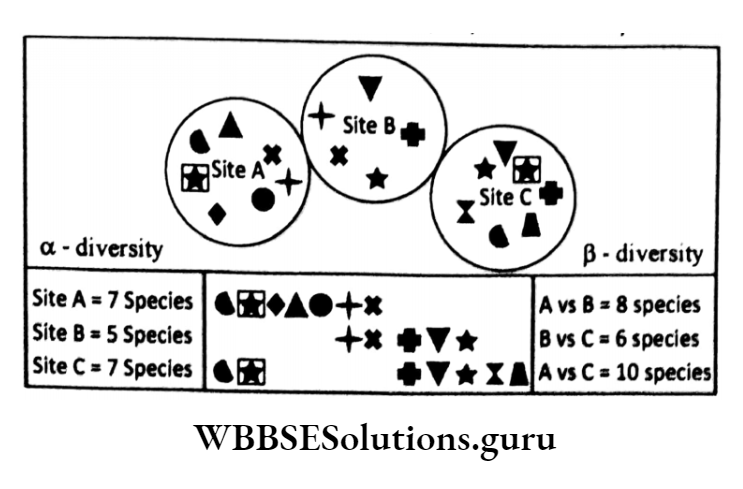
It refers to the richness and evenness of individuals within a habitat unit. For example in the A = 7 species, Site B = 5 species, Site C = 7 species.
Alpha Diversity is a local measure. This diversity changes frequently since species undergo frequent changes when the habitat changes.
Beta(β)Diversity:
It refers to the expression of diversity between habitats or the rate of replacement of species along a gradient of habitats like an altitudinal gradient or moisture gradient etc.
It is calculated by the following equation:
[3 diversity = (Number of species in habitat 1- Number of species of habitat 1 & 2 in common) + (Number of species in habitat 2 – Number of species of habitat 1 & 2 in common). = (H1-H1 & 2) + (H2- H1 & 2).
For example, C with 10 species differs between them and only 2 species in common.
Biodiversity And Conservation Class 10
Diversity expresses the ratio between local or diversity and regional diversity. Hence, the higher the hetero-genericity in habitats, the higher the dissimilarity between communities.
Gamma (γ) Diversity:
It refers to the landscape diversity or diversity of habitats within a landscape or region. In this example, the Gamma Diversity is 3 habitats with 12 species total diversity.
Naturally, it is a combination of both a and β-diversity. Alternatively, γdiversity is also defined as ‘geographic scale species diversity’.
In addition to the above three, recently molecular diversity has also been added as the newest level of biodiversity.
essential items and economic productivity of a country.
WBBSE Chapter 5 Topic D Biodiversity And Conservation Importance Of Biodiversity
Biodiversity includes the flora and fauna of a particular place. It controls the supply of essential items and the economic Productivity of a country

Sources Of Food Production:
Staple food crops like rice, wheat, barley, potato, and other vegetables, provide Nourishment to the world.

Sources Of Drugs and Medicines: Plants are the sources of drug molecules like Basak, Tulsi, ashwagandha, ipecac, etc., Which are used in the preparation of different bulk drugs and life-saving molecules.

Ecological Balance: Plants are useful for maintaining the ecological balance of a particular place sand binders are useful for protecting the seashore, trees growing along the slope of a hill prevent landslides, and mangrove vegetation near the sea shore helps to protect the hinterland from high-speed wind arising in the seas and ocean, etc.
Climate Control:
The rainfall of a particular place is controlled by the vegetation. It also ensures climate control of a place.
House building and furniture building process:
The wood from different timber-yielding plants like teak and sal is used in the making of houses and furniture.
Paper production:
The soft woody tissue of forest trees is used in the preparation of paper pulp for the manufacturing of paper.
Gum production:
The gums and adhesives of industrial importance are produced from the Acacia tree.
Resin production:
Resins are another useful product of gymnospermous wood like Pinus. They may be hard or soft in nature and are used in the paint industry as an organic solvent
Example: turpentine.
Wax production:
It takes place within the bee hive. It is a product produced by a honey bee [Apis indica) consisting of myristyl alcohol and esters of palmitic acid.
Wbbse Class 10 Life Science Biodiversity Notes
Leather Production:
The animal (cattle) hides which are slaughtered for meat are the potent source of leather, which is processed by the process of tanning using chemicals like tannins obtained from plant sources.
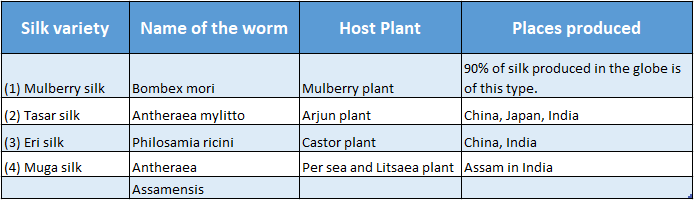
Silk Production:
It is a protein produced by the silkworm in its pupal stage and it consists of two major proteins, sericin, and fibroin.
The color and texture of silk thread depend on the nature of the leaf of the host plant which the silkworm larvae consume.
It may be classified into four major types in India as denoted in the table below:

Wool production:
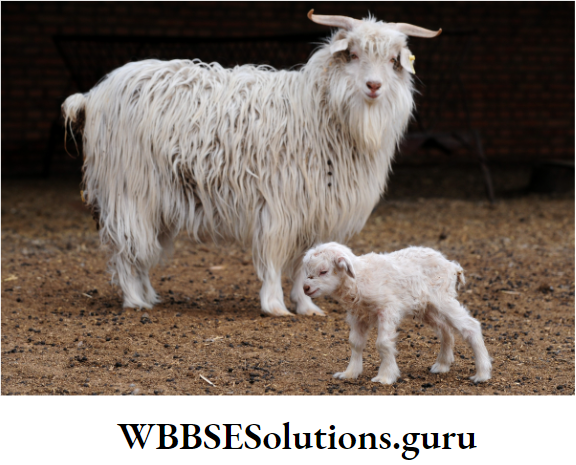
The wool is produced from the hair of sheep. The wool texture & strength depend on the type of sheep, but they are broad of three types short, medium, and long.
The Pashmina wool of Kashmir is world-famous. The first Pashmina goat Noori has been cloned in 2012.
Pearl production:
Pearls are produced from the pearl-producing oysters due to the entry of dust particles followed by the deposition of aragonite (CaC03), chitin, and luster around the particle.
They can be produced naturally or can be generated artificially by culturing. Natural pearls are more costly than artificial pearls and they have an irregular shape and more luster.
They vary in color and texture depending upon the variety of the bivalve (oyster) where it is produced.

Eco tourism:
Biodiversity is a source of economic wealth for many potential areas. Ecotourism, bird watching, wildlife safari, etc are growing outdoor recreational activities.
WBBSE Chapter 5 Topic D Biodiversity And Conservation Biodiversity Hotspots
Certain regions of the world are mega-diversity zones where a very large number of species are found. Norman Myers developed the concept of hotspots to designate these priority areas.
The hotspots are the richest and the most threatened reservoirs of flora and fauna on Earth.
A biodiversity hotspot is a biogeographic region with a significant reservoir of biodiversity that is under threat of destruction by human beings.
The Key Criteria To Determine A Hot Spot Are:
Number of endemic species, ie., the species which are restricted to only these areas, and
The degree of threat is measured in the manner of habitat loss.
The Hotspot status is designated by Conservation International (Cl).
Out of 35 globally identified biodiversity hotspots all over the world, there are only four in India which include
Eastern Himalayas (North Eastern Hilly states),
Indo- Myanmar (Burma) area including Andaman and Nicobar Islands,
Western Ghats and Srilanka and
Sundaland including the islands of the Andaman Sea.
Eastern Himalayas:
The Eastern Himalayas is the region encompassing Bhutan, north Eastern India, and Southern, Central, and Eastern Nepal.
The Eastern Himalayan hotspot has nearly 163 globally threatened species including the one-horned Rhinoceros (Rhinoceros unicornis), the wild Asian water Buffalo and in all 45 mammals, 50 birds, 17 reptiles, 12 amphibians, 3 invertebrates, and 26 plant species.
There are 10,000 plant species and 300 animal species like Golden langur, Himalayan tahr, pygmy hog, snow leopard, black bear, and Gangetic dolphin which are endemic in nature.
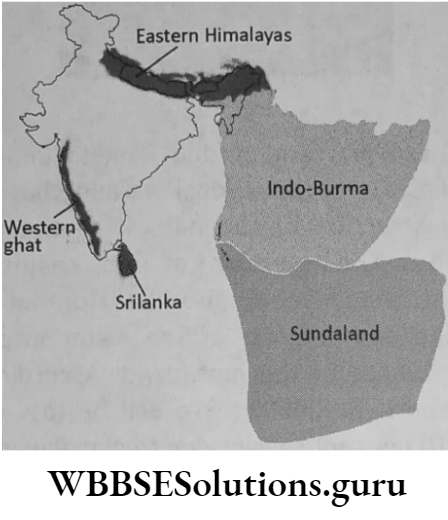
Indo-Burma:
The Indo-Burma region is spread out from Eastern Bangladesh to Malaysia and includes North Eastern India, South of the Brahmaputra River, Myanmar, and the Southern part of China’s Yunnan province.
This region is home to several primate species such as monkeys, langurs, gibbons, etc. Almost 1,300 bird species exist in this region including the threatened white-eared night heron and the orange-necked partridge.
There are about 13,500 plant species in this hotspot, with over half of them being endemic.
Wbbse Class 10 Life Science Biodiversity Notes
Western Ghats and Sri Lanka:
The Western Ghats are a chain of hills that run along the western edge of peninsular India. These regions have moist deciduous forests and rainforests.
Nearly 77% of the amphibians and 62% of the reptile species are found here. Sri Lanka which lies to the South of India, is also a country rich in species diversity.
The western ghats of India contain more than 30% of all plant, fish, herpeto-fauna, birds, and mammal species. Many species are endemic, such as Nilgiri tahr and the lion-tailed macaque.
Sundaland:
Sundaland (also called the Sundaic region) is a biogeographical region of South-eastern Asia that encompasses the Sunda shelf, the part of the Asian continental shelf that was exposed during the last ice age.
This biodiversity hotspot is dominated by two of the largest islands in the world, Borneo and Sumatra.
The islands of Sundaland are home to many Asian mammals including elephants, monkeys, apes, tigers, tapirs, and rhinoceros.
There are at least 117 endemic plant genera in the hotspot, 59 of these are found in Borneo, 17 in Sumatra, and 41 on the Malay Peninsula.
WBBSE Chapter 5 Topic D Biodiversity And Conservation Loss Of Biodiversity
The main cause of the loss of biodiversity can be attributed to the influence of human beings on the world’s ecosystem.
Human beings have deeply altered the environment, and have modified the territory, exploiting the species directly, for example by fishing and hunting, changing the biogeochemical cycles, and transferring species from one area to another of the planet.
The Loss Of Biodiversity May Be Due To Various Reasons Which Are Indicated Below:
Habitat destruction:
The destruction has played a key role in extinctions, especially the destruction of tropical rainforests.

Factors Contributing To Habitat Loss Are:
Overpopulation, deforestation, encroachment into forest areas, pollution (air, water, and soil contamination), and global warming or climate change.

Biodiversity and genetic diversity are codependent and diversity among species requires diversity within a species, and vice versa. If any one type is removed from the system, the cycle can break down, and the community becomes dominated by a single species.
Barriers such as large rivers, seas, oceans, mountains, and deserts encourage diversity by enabling independent evolution on either side of the barrier.
Invasion of species occurs when those barriers are destroyed or damaged. Without barriers, such species occupy new niches, which reduces the diversity substantially.
Hunting and Poaching:
Poaching has traditionally been defined as the illegal hunting, killing, or capturing of wild animals.
It is a severe threat to biodiversity, especially in economically poor South Asian countries since poachers kill animals like elephants, rhinoceros, and lions to illegally sell the horns, ivory, body parts, and skin at a high profit.
Moreover, some people cut the trees for wood and sell them at high rates causing large-scale deforestation.
Over-exploitation:
Over-exploitation occurs when a resource is consumed at an unsustainable rate. This occurs on land in the form of overhunting, excessive logging, poor soil conservation in agriculture, and the illegal wildlife trade.
All these factors are more acute in the relatively less developed countries with relatively high biodiversity resources.
Over-exploitation of a particular species reduces the size of the species’ population to the extent that it becomes on the verge of extinction.
The ever-growing illegal trade of tigers has resulted in the extinction of the big cat from many countries in South Asia.

Pollution:
Human activity influences the natural environment producing negative direct or indirect effects that alter the flow of energy, the chemical and physical constitution of the environment, and the abundance of the species.
Pollution may either reduce or eliminate populations of sensitive species. For example, pesticides have a direct link with the decline of falcons.
Lead poisoning also affects wildlife seriously. Eutrophication of water bodies drastically reduces aquatic species diversity.

Global Warming and Climate Change:
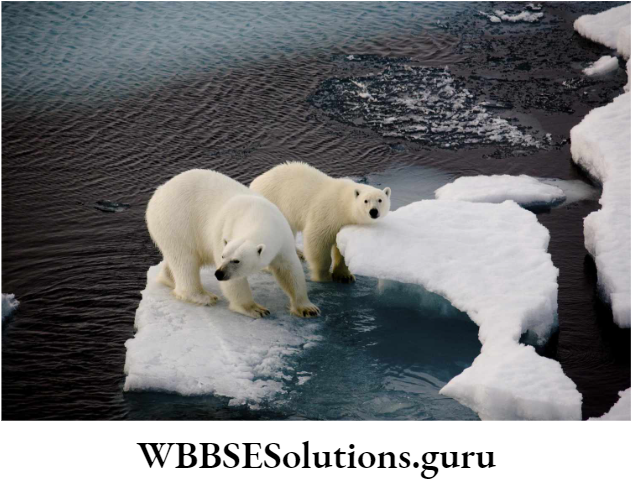
The direct impact of Global warming has been the destruction of the habitat of the polar species.
The melting of ice results in uncontrolled flood, modification of the wetland, and ingress of seawater into the water bodies of the hinterland.
According to a UN report, by 2050, there will be a loss of at least 10 percent of species due to global warming alone.
Wbbse Class 10 Life Science Biodiversity Notes
The heating of the earth’s surface due to climate change affects biodiversity because it endangers all the species that are adapted to the cold either due to the altitude or the altitude (mountain species).
Natural Calamities:
Major events of flood, drought, earthquake, and tsunami have resulted in the destruction of several species of plants and animals.
Changes in the salinity of water in the Indian part of the Sundarbans due to supercyclones have resulted in the loss of the Sundari tree.

Exotic Species:
New species entering a geographical region are called exotic or alien species.
The introduction of such alien invasive species may cause the disappearance of native species through competition in a changed biotic interactive environment.
The exotic species of water hyacinth introduced into the rivers & lakes of tropical countries including India has resulted in the modification of the lentic (stagnant water) ecosystem and has, as a result, eliminated many native aquatic species earlier native to the regions.
Similarly, Nile perch, an exotic predatory fish, introduced into Lake Victoria of South Africa has threatened the entire lake ecosystem by eliminating several freshwater native endemic species including the small Cichlid fish species.

Human Population Growth:
The geometric rise in human population levels during the twentieth century is the fundamental cause of the loss of biodiversity.
It has led to an unceasing search for more arable land for food production and livestock grazing and for wood for fuel, construction, and energy.
Previously undisturbed areas (which may or may not be suitable for the purposes to which they are constrained) are being transformed into agricultural or pasture land, stripped of wood, or mined for resources to support the energy needs of an ever-growing human population.
Importance Of Biodiversity Class 10
Humans also tend to settle in areas of high biodiversity, which often have relatively rich soils and other attractions for human activities. This leads to great threats to biodiversity, especially since many of these areas have numerous endemic species.
Agriculture:
The dramatic increase in the number of humans during the twentieth century has instigated a concomitant growth in agriculture, and has led to the conversion of wild lands to croplands, massive diversions of water from lakes, rivers, and underground aquifers, and, at the same time, has polluted water and land resources with pesticides, fertilizers, and animal wastes.
The result has been the destruction, disturbance, or disabling of terrestrial ecosystems and polluted, oxygen-depleted, and atrophied water resources.
Extinction of species:
Extinction is a process in which species disappear and new ones evolve to take their place down the long geological history of Earth.
Extinction may be natural, mass, or anthropogenic in nature. Natural extinction occurred in the geological past at a very slow rate. Mass extinction also occurred in the past.
It is the anthropogenic extinction due to human activities that are the most severe threat toward depletion of biodiversity occurring within a short period of time.
WBBSE Chapter 5 Topic D Biodiversity And Conservation Environmental Problems Of The Sundarbans
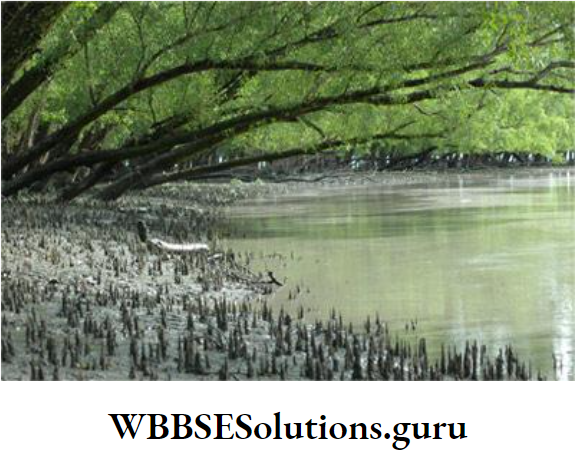
The Sundarbans constitute one of the largest mangrove ecosystems comprising the deltaic regions of the Hooghly River and its tributaries in West Bengal, India, and the Padma, and Brahmaputra deltaic regions of Bangladesh.
It consists of exotic species like Halophytic mangrove vegetation and the Royal Bengal Tiger, Marshy crocodile, and other animals.
It spans over 10,000 sq km approximately, 60% of which is in Bangladesh and the rest is in India. Because of its unique biodiversity, it is considered a World Heritage site by UNESCO.
There are about 245 genera of plants reported from Sundarbans by David Prain (1903).
The name itself comes from the Sundari tree (Heritero littoralis), though at present, it is highly endangered in India. The mangrove forest of Sundarbans is tolerant to saline water and shows typical halophytic adaptation.
The forest is famous for Royal Bengal Tigers (Panthera tigris) but apart from that, there are about 150 species of commercially important fishes, 8 amphibia, 35 reptiles, 270 species of birds, and 42 species of mammals.
This ecosystem has been subjected to severe stress and strain, which has made the forest highly vulnerable and if not protected right now, the city of Kolkata will suffer a lot in the future from unprotected storms and cyclones coming from the Bay of Bengal.

The Causes Of This Stress Are As Follows:
Urbanization:
The increasing population pressure has led to the spreading of urban dwellings into the forest. Though the core areas of the forest have been clearly demarcated, there has been increasing in the unauthorized deforestation process.
Thus the mangrove forest ecosystem is now in a captious position. The growing human population with few alternative livelihood opportunities poses a serious threat to the mangrove forests.
Importance Of Biodiversity Class 10
The rapidly expanding shrimp farming is a significant threat to mangrove forests. Due to illegal cutting, encroachment into forest areas, and illegal poaching of wildlife, the mangrove forest is losing biodiversity at an alarming rate.
Further threats are arising due to excessive pollution, global climate change, and sea level rise which are damaging the ecosystem’s biogeochemistry.
Agriculture:
In order to meet the increasing demand for food, the forest areas have been transformed into agricultural land by the locals.
Fresh water crisis:
The area remains at the confluence of perennial rivers and sea but due to the global greenhouse effect, the sea level is rising and it causes filtration of saline water into the internal territory causing serious crises in drinking water.
Habitat destruction:
The destruction of (iv)mangrove forest and the progressing human settlement and agricultural land have resulted in the loss of habitat for the animals, making them endangered and vulnerable. Thus they may get extinct in the future.
Pollution:
The pollution from different domestic dwellings, paint, and other hydrocarbons has resulted in the destruction of aquatic microflora and the destruction of the aquatic food chain.
Modification in the prey-predator balance:
The shrinking of mangrove vegetation has resulted in a reduction in the number of herbivores and as a result, the carnivores are becoming endangered. For example, the number of tigers has gone down deeply. Moreover, they are also getting killed illegally.
Submergence of Islands:
An increased number of islands are getting submerged due to rising water levels as a result of which the habitat is shrinking and it has reduced the biodiversity of the region considerably.
WBBSE Chapter 5 Topic D Biodiversity And Conservation Conservation Of Biodiversity
Currently, the planet is inhabited by several million species in about 100 different phyla. The point of concern is that the modern extinction rate is high, at 100 to 1000 times greater than previous extinction rates calculated over the eras.
Although new species appear, existing species go extinct at a rate 1000 times that of species formation. We are in fact in the midst of a mass extinction, a time when 75% or more of species are lost over a short geological time scale.
The last great mass extinction was 65 million years ago, at the end of the Cretaceous, when the dinosaurs went extinct.
The International Union for the Conservation of Nature (IUCN) estimates that 22% of known mammals, 32% of amphibians, 14% of birds, and 32% of gymnosperms are threatened with extinction.
Thus, humans should be concerned about saving biodiversity for the overall sustenance of life on Earth.
Biodiversity conservation is about saving life on earth in all its forms from excessive rates of extinction, maintenance of genetic variability within species, and keeping the natural ecosystem functioning and healthy.
WBBSE Chapter 5 Topic D Biodiversity And Conservation Concept of Threatened Species
IUCN has recognized the following categories of species based on threat perception in connection with extinction:
Endangered species:
These are in danger of extinction and their survival is unlikely if the causal factors continue to operate. Ex: rhinoceros, tiger, sloth bear, wild ass, etc.
Vulnerable species:
These are likely to move into the endangered category shortly if the causal factors continue to operate.
Rare species:
These are with small populations localized in some specific geographical areas only. These are not at present endangered or vulnerable but are at risk.
Threatened species:
These belong to either of the three categories mentioned, ie. either endangered or vulnerable, or rare.
Importance Of Biodiversity Class 10
Out of danger:
These are now relatively secure and do not face the threat of extinction at the present moment.
WBBSE Chapter 5 Topic D Biodiversity And Conservation General Modalities Of Conservation
The protection strategy cannot be a very simple one, because the problem is multidimensional.
Some of the major points are discussed below:
Increase of Inter-Governmental cooperation towards the common goal of protecting biodiversity.
Reduction of greenhouse gases for controlling global warming.
Undertaking special programs to protect endangered species which include protection from poaching or undertaking breeding programs.
Protection of the different biodiversity hotspots.
Exotic species that have become pests can be identified taxonomically [e.g., witha Digital Automated Identification System (DAISY), using a special barcode].
Judicious application of genetic engineering to produce GM crops.
The concept of a green or red data book maintaining the list of endangered species of plants and animals can be very effective in knowing the status of particular species.
General awareness amongst common people can lead to effective implementation of the conservation strategy.
Creation of gene banks in the form of germplasm banks.
Adding financial flavor to the conservation in the form of recreation or a nature park can make the system economically self-sustaining.
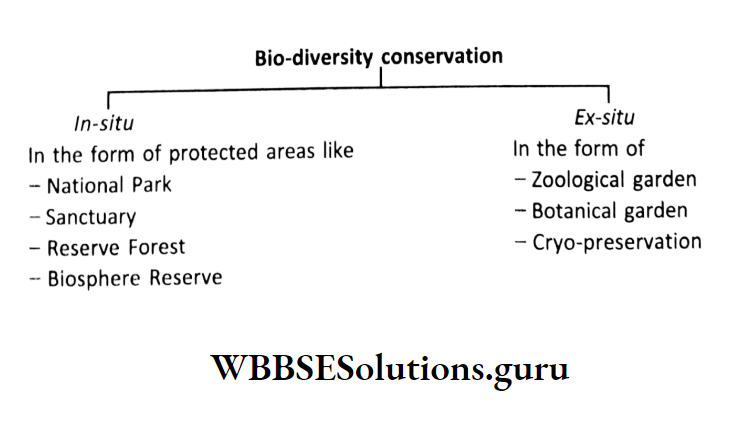
Two convenient approaches for the conservation of biological diversity are in situ conservation and ex-site conservation.
WBBSE Chapter 5 Topic D Biodiversity And Conservation Insitu Conservation
Institute conservation means the conservation of living resources through their maintenance and upkeeping within natural ecosystems and habitats in which their natural ecosystems and habitats in which they occur like a system of protected areas such as national parks, sanctuaries, reserve forests, Biosphere reserves,s, and serval others.


Advantages Of In-Situ Conservation:
The flora and fauna live in natural habitats without human interference.
The life cycles of the organisms and their evolution progress in a natural way.
In-situ conservation provides the required green cover and associated benefits to the environment.
This is less expensive and easy to manage.
The interests of indigenous people are protected.
Risks Associated With In-Situ Conservation:
vents in the survival and reproduction of species.
Environmental uncertainty due to random & unpredictable changes in weather, food supply, the population of predators, etc.
Natural catastrophes like floods, fires, or droughts may occur at random intervals.
Genetic uncertainty or random changes in genetic makeup due to genetic drift or inbreeding alters the survival and reproductive probabilities of individuals.
Methods Of Conservation Of Biodiversity Class 10
WBBSE Chapter 5 Topic D Biodiversity And Conservation Ex-situ Conservation
The ex-situ conservation of plants and animals includes the conservation of plants and animals outside their normal habitat by perpetuating sample populations in Zoological Gardens, Botanical Gardens, and Cryopreservation.
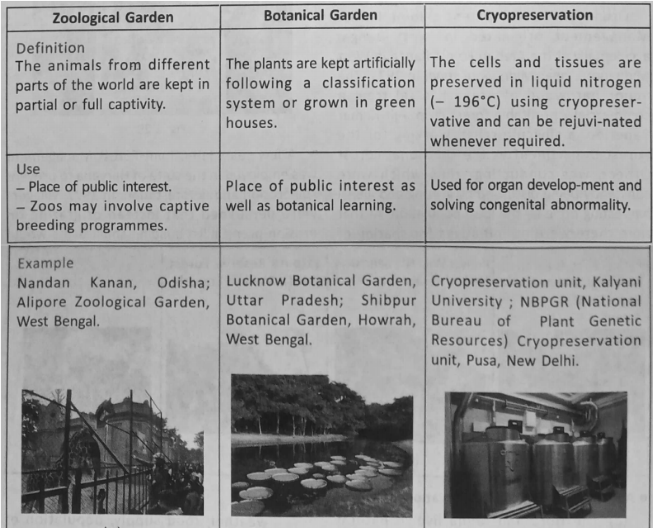
Advantages of ex-situ conservation:
It is extremely useful for the declining population of species.
Threatened species are bred in captivity and then released in their natural habitats.
Ex-situ centers offer the possibility of observing wild animals intimately, which is otherwise impossible.
WBBSE Chapter 5 Topic D Biodiversity And Conservation Joint Forest Management (JFM)
It is the official and popular term in India describing the partnerships in forest movement involving both the state forest departments and local communities.
The policies and objectives of the Joint Forest Movement are detailed in the Indian comprehensive National Forest Policy of 1988 and the Joint Forest Movement Guidelines of 1990 of the Government of India.
Origin and development:
Joint Forest Management originated in West Bengal accidentally at the Arabari Forest Range in West Midnapore, near Midnapore town in 1971.
The major hardwood of Arabari is the sal tree, a commercially profitable forest crop.
Ajit Kumar Banerjee, a silviculturist, working for the Forest Department as the Divisional Forest Officer, was conducting trials that were constantly being disturbed by grazing and illegal harvesting done by the local population.
At that time there were no initiatives for sharing of forest resources between the Government and the locals, with the Government considering many of the locals as “thieves”.
The forest official, against the suggestions of his coworkers, sought out representatives of eleven local villages and negotiated the terms of a contract with an ad hoc Forest Protection Committee.
The initial program involved 612 families managing 12.7 square kilometers of forests classified as “degraded”. 25% of profits from the forests were shared with the villagers.
The experiment was successful and was expanded to other parts of the state in 1987. JFM is still in force at Arabari.
A few years later, Joint Forest Management was employed in the state of Haryana to prevent soil erosion and deforestation.
In 1977, villagers were persuaded that instead of grazing on erosion-prone hills, building small dams would help agricultural output in areas currently under cultivation. The program led to the reforestation of many hills in the state.
After the initial success in West Bengal and Haryana, the JFM schemes received national importance in the legislation of 1988 and were thrust into the Guidelines of 1990.
As of 2005, 27 states of the Indian Union had various JFM schemes with over 63,000 Forest Protection Committee’s involvement in the joint management of over 140,000 km2 of forested land.

Objectives:
Conservation of forests in a sustainable manner by the government along with the participation of the local community.
In return for their services to the forest, the communities get the benefit of various forest products like fruits, rubber, gum, medicines, etc.
WBBSE Chapter 5 Topic D Biodiversity And Conservation Peoples Biodiversity Register (PBR)
The Biodiversity Board prepares the Biodiversity Registers for the local communities. Biodiversity registers are prepared with the help of the local people and hence referred to as the People’s Biodiversity Register (PBR).
Objectives:
Preparation of a Biodiversity Register is an attempt to realize biodiversity first at the Local Government level and then at the level of the states and the whole country.
Identification of biological resources and documentation are the prerequisites for the Register preparation, which can lead to new discoveries and development of new commercial products, patenting of such products, equitable distribution of benefits, if any, and through this, paving the way for a new economic order in the country through biodiversity conservation.
Utility of PBR:
PBR is not simply a register with names of species and their distribution in a given area.
It is a comprehensive database recording people’s traditional knowledge and insight into the status, uses, history, ongoing changes, and forces driving these changes on the biological diversity resources of their localities.
This provides information on the current utilization patterns of biodiversity and its economic benefits to the local communities.
The registers form baseline data for future management strategies required for the sustainable utilization of biodiversity in a decentralized manner.
Further, it helps equitable sharing of benefits arising out of the commercial utilization of biodiversity resources and knowledge of their uses.
The Biodiversity Register offers conservation, protection of IPR, and the traditional knowledge prevailing in rural communities.
Documentation:
People’s Biodiversity Registers (PBR) document folk knowledge of status, uses, history, ongoing changes and forces driving changes in biodiversity resources, gainers and losers in these processes, and people’s perceptions of how these resources should be managed.
A number of PBRs have been prepared in different parts of India beginning in 1995 through initiatives of NGOs and educational institutions working with local communities and village councils.
These attempts have been motivated by a desire to promote decentralized systems of management of natural resources and to create the basis for equitable sharing of benefits of commercial utilization of folk knowledge of uses of biodiversity.
The documents bring together important locality-specific information on biodiversity resources and the ecological processes affecting them.
They lead to the recognition of conservation-oriented local practices such as the protection of sacred groves. They help mobilize local communities to prudently manage local biodiversity resources in ways that would promote social justice.
It is, however, important to recognize that not all folk knowledge may be correct, nor all folk practices wise, and create systems of careful assessment of the material.
Methods Of Conservation Of Biodiversity Class 10
There are many encouraging signs globally, as well as within India, such as the coming force of the Convention on Biological Diversity, forces promoting decentralized democratic systems of governance, and institutions of co-management of natural resources.
which suggests that programs like PBR will have an important role to play in promoting conservation, sustainable use, and equitable sharing of benefits of biodiversity resources in the coming decades.
WBBSE Chapter 5 Topic D Biodiversity And Conservation Conservation Of Some Major Animals Tiger (Panthera Tigris) Conservation
The main protection initiative:
Project Tiger’ by the National Tiger Conservation Authority of the Government of India.
Initiation:
This initiative was started in 1973 by the then Prime Minister Mrs. Indira Gandhi and has, to date, established more than 48 tiger reserves throughout the country.
Objectives:
To ensure the maintenance of a viable population of tigers in India for scientific, economic, aesthetic, cultural, and ecological values.
To preserve, for all times areas of biological importance as a national heritage for the benefit, education, and enjoyment of the people.

Measures taken:
Habitat improvement:
In order to protect these animals as much as possible, tiger reserves have been established on reclaimed land, where human development and inhabitation are forbidden.
As a result of this program and its efforts, the population of Bengal Tigers has increased from about 1200 in 1973 to an impressive 2900+ in 2018.
Addressing man-animal conflict & anti-poaching initiative:
Project Tiger has also established the Tiger Protection Force with the aim of catching poachers and stopping the killing.
This initiative has been instrumental in relocating about 200,000 villagers in rural areas so that they are no longer living within the natural habitat of the tigers.
This reduces the risk of tiger attacks on humans (which often leads to the killing of the tiger for the safety of the villagers).
Strengthening infrastructure within tiger reserves including water development.
Rehabilitation of traditional hunting tribes living in & around tiger reserves.
Development of buffer or fringe area landscape.
Providing support to states for staff development and capacity building.
Example:
Sundarban and Buxa Tiger Reserve, West Bengal; Bandipur Tiger Reserve, Karnataka; Kanha Tiger Reserve, Madhya Pradesh; Sariska Tiger Reserve, Rajasthan, etc.
Importance of Tiger Conservation:
Tiger is a symbol of wilderness and the well-being of the ecosystem. By conserving and saving tigers the entire wilderness ecosystem is conserved.
In nature, barring human beings and their domesticates, the rest of the ecosystem is wild. Hence conserving wilderness is important and crucial to maintaining the life support system.
So saving tigers amounts to saving the ecosystem which is crucial for man’s own survival.
Tigers play a pivotal role in the health of the ecosystem. Tigers constitute the top carnivores in the ecosystem and are at the apex of the food chain.
The removal of a top carnivore from an ecosystem can have an impact on the relative abundance of herbivore species within a guild. Along with other major carnivores as leopards, it acts as a control mechanism for herbivores.
The interdependency of living forms in a food chain is obvious as the wild tiger is dependent upon herbivores for its survival and that he maintains its population which in turn prevents the grasslands from being overgrazed.
The herbivores depend upon producers such as grasses, herbs, shrubs, algae, fungi, and large trees for survival and they in turn maintain a balance in vegetation by controlling the extent of vegetation or flora.
Birds survive on herbs, shrubs, and trees for fruits and nectar and in turn act as seed dispersal agents for them to spread the population of the floral elements in an ecosystem.
Thus all life forms including tigers are interlinked with each other in an ecosystem and their survival depends upon how intact the ecosystem is.
Top carnivores, tigers, have an important role ultimately in ecosystems. Thus, the preservation to play in the structuring of communities and of tigers becomes an important consideration.
WBBSE Chapter 5 Topic D Biodiversity And Conservation Indian One-Horned Rhinoceros (Rhinoceros Unicornis) Conservation
Early Facts:
In 1910, all rhino hunting in India became prohibited. In 1984, five rhinos were relocated to Dudhwa National Park—four from the fields outside the Pabitora Wildlife Sanctuary and one from Goalpara.
The Indian rhinoceros was initially difficult to breed in captivity. The first recorded captive birth of a rhinoceros was in Kathmandu in 1826, but another successful birth did not occur for nearly 100 years.
In 1925, a rhino was born in Kolkata. No rhinoceros was successfully bred in Europe until 1956. On September 14, 1956, Rudra was born in Zoo Basel, Switzerland.
The Kaziranga National Park has the highest number of rhinos (2401) in India in 2015. Jaldapara in West Bengal has about the demise of other species of mammals, birds, insects, fish, and plants. Thus they play a vital role in the ecosystem.
When they browse, they keep the areas trimmed, making paths more accessible for smaller mammals. They also enrich the soil and help plants by spreading seeds through their dung.
Methods Of Conservation Of Biodiversity Class 10
Rhino-inhabited areas have about 20 times more grazing lawns than areas without rhinos. This affects not just the rhinos’ diet, but smaller grazing animals like zebra and antelope.
Thus the protection of the rhino population takes into account the protection of all other species interacting with the rhinos and those sharing the same habitat.
WBBSE Chapter 5 Topic D Biodiversity And Conservation Crocodile Conservation
Protection Initiative:
In response to declining crocodilian populations, a crocodile conservation program, the UNDP/FAO Crocodile Breeding and Management Project, was launched in 1975 in cooperation with the Government of India and the State Governments.

Indian Rhino Vision 2020:
Launched in 2005, Indian Rhino Vision 2020 is an ambitious effort to attain a wild population of at least 3000 greater one-horned rhinos spread over seven protected areas in Assam by the year 2020.
Measures taken:
Rhino translocation from overcrowded areas to other protected areas where they can breed,
Patrolling to foil poaching attempts,
Improved breeding techniques and monitoring methods,
Better habitat management.
Examples:
Kaziranga National Park, Manas National Park, Pabitora Wildlife Sanctuary, Assam; Jaldapara & Gorumara National Parks, West Bengal.
Rhinos as umbrella species:
Rhinos are an umbrella species. This means that their survival or demise directly impacts the survival or
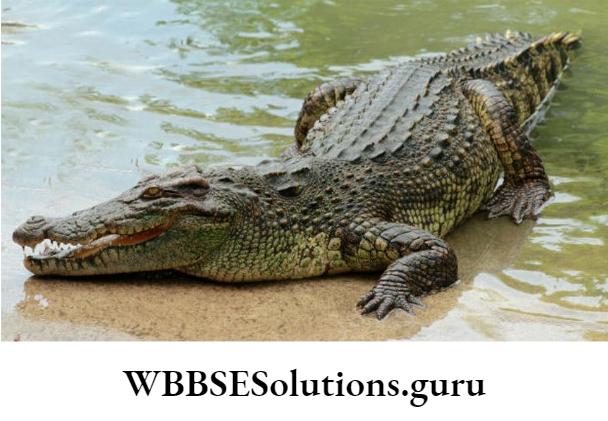
A survey of the status of the three species of crocodiles present in India:
Gharial-(Gavialis gangeticus):
Found in rivers of North India, it is considered in danger of extinction due to habitat destruction, incidental catches in fishing nets, and poaching.
Estuarine crocodile (Crocodylus porosus):
Considered formerly common along shores and rivers, it has now become extinct in the States of Kerala, Tamil Nadu, and Andhra Pradesh. Small populations persist in deltaic areas of Odisha, the Sunderbans (West Bengal), and the Andamans.
Mugger (Crocodylus palustris):
Formerly widespread and abundant, it is considered very depleted in numbers and most endangered in comparison to the other two species. They are the most common variety in India and range between 3500-4000 in India in 2019.
Primary Project Aims:
To boost reproductive output by a collection of wild-laid eggs with subsequent incubation and rearing of young until attainment of a size (less vulnerable to predation) suitable for release in the wild.
To locate, establish and manage a series of crocodile rehabilitation centers and sanctuaries in suitable habitats.
To promote captive breeding.
To take up research on egg collection, incubation, hatching, rearing, food conservation, habitat features, behavioral biology, etc.
To involve local people in the project intimately.
Methods Of Conservation Of Biodiversity Class 10
Example:
The greatest achievement has been the re-establishment of viable gharial breeding populations in Chambal and Satkoshia Gorge sanctuaries and the setting up of the Crocodile Breeding and Management Training Institute, Hyderabad.
Crocodile project sites in Odisha:
Bhitarkanika Sanctuary, Ramatirtha Centre, Tikarpara Centre, and Nandankanan Zoo.
Importance of crocodiles:
Though crocodiles are vicious, cold-blooded, and ugly, yet in an ecological perspective, crocodiles are an important group of organisms as they are the keystone species.
Young crocodiles are a food source for countless animals like fish, mammals, birds, snakes, crabs, etc. When they get bigger, the crocodiles in turn regulate the population of other animals.
Being the top predator, it controls the distribution and population of a large number of prey species. This allows an increase in biodiversity.
Crocodiles create habitats through burrowing and nest building. They create aquatic habitats so that plants and animals will have water during the dry seasons.
During the wet seasons, animals that live on land will have a place to survive.
Thus, it is important to conserve crocodiles as their presence would enable other species to survive as well.
WBBSE Chapter 5 Topic D Biodiversity And Conservation Red Panda (Ailurus fulgens) Conservation
Introduction:
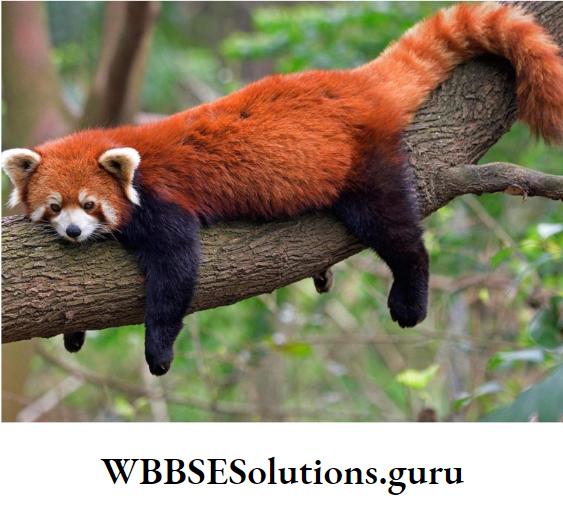
The highly threatened Red Panda is found in four states in India (Sikkim, West Bengal, Meghalaya, and Arunachal Pradesh).
Recent surveys have shown that habitat degradation (due to the need for fuel and shifting agricultural practices), killing by dogs, hunting, and extinction in some areas are the probable causes of its decline.
Research and monitoring need to be carried out as a matter of urgency to assess the population status so that focused conservation efforts can be initiated to secure and improve the present habitat conditions and reduce the immediate threats.
The aims of conservation are as follows:
To ascertain the present status of the Red Panda in the Kangchendozonga Landscape and the Western Arunachal landscape through research and updating of distribution map, habitat maps vis-a-vis maps of the human population, and agricultural expansion.
To evaluate the extent of the identified threats and suitable mitigation measures including control of dogs, poaching and trapping (for pets), threat of proposed highway including lobbying, the raising of local awareness, etc.
To ensure effective management interventions for the protection of red pandas in protected areas and community-conserved areas.
Threats To Biodiversity Class 10 Life Science
Including increasing the capacity of forest department staff, reduction in fuelwood extraction, official recognition of conservation areas, workshops for relevant stakeholders, training in community-based tourism activities, red panda re-introduction programs, etc.
Examples:
India has 20 protected areas with known or possible red panda populations in Sikkim, Arunachal Pradesh and West Bengal such as Singalila & Khangchendzonga National Parks in Sikkim and Namdhapa National Park in Arunachal Pradesh.
Ecological Importance of Red Panda Conservation:
Saving red pandas is important because they are an ambassador for clean air and water for approximately 500 million people.
The forests where red panda live are the lungs of South Asia and if these forests are intact and function properly, then we can ensure a healthy life for the people, animals, and plants of South Asia.
The mountain chains of the Eastern Himalayas and parts of south-western China, where red pandas are found, are the origin of South Asia’s three largest rivers, the Brahmaputra, Ganges and Yangtse, which provide water for half of China, northern and northwestern India, Nepal, Tibet Autonomous Region of China, Bhutan, and Myanmar.
According to conservation biologists, red pandas are an indicator of the overall health of their home, the Eastern Himalayan Broadleaf Forest, which is the central link in the Himalayan Hotspot.
Also, protecting the red panda is important to the preservation of the World’s natural heritage and global biodiversity because it is the only species of its kind in the world.
It is unique in its behavior and specialized in its habitat requirements, as well as the fact that they have no close living relatives. They are a living relict of times past.
WBBSE Chapter 5 Topic D Biodiversity And Conservation Asiatic Lion (Panthera Leo Persica) Conservation
Introduction:
Conservation efforts for the Asiatic Lion were made for the first time in the year 1910.
The Nawab of Junagadh imposed a ban on the hunting of lions within the boundaries of his province in 1879. The ban was continued even when India gained independence in 1947.
In the 1960s and 1970s, Gir forest, the home of the last surviving Indian Lions, was converted into a National Park and Sanctuary.
Presently Kuno Project or the Asiatic Lion Reintroduction Project is being undertaken to create viable genetic resources and to avoid the chance of extinction at Gir.

Under the Kuno project, a wildlife Sanctuary, known as the Kuno Wildlife Sanctuary, is being developed in Madhya Pradesh to create a near-natural habitat for the lions.
The aim behind the establishment of the sanctuary is to relocate the excess population of lions in Gir. The number was around 600 in 2018.
The framework of the project:
Shifting of villages out of the lion reintroduction site and improvement of wild habitat.
Fencing off of the sanctuary.
Eco-development, research, and monitoring.
Example:
Gir National Park, Gujarat; Kuno- Palpur Wildlife Sanctuary, Madhya Pradesh
Importance of lion conservation:
Lions play a key role in the food chain by helping to control the herbivore population. If the herbivore population is not regulated, the increase in competition among them would cause some to go extinct and thus this will reduce biodiversity.
The lions have a reputation for being the ‘chief’ predator of their habitat as they are known to kill even large herbivores such as elephants.
Threats To Biodiversity Class 10 Life Science
Lions prey mainly on herd animals.
Nature comes to play as lions take down the weakest of the herd. This keeps the herd population resilient and healthy. If lions did not exist, there would be a symbiotic relationship between parasites and herd animals.
This way, parasites could increase and spread throughout the herd, resulting in fewer healthy animals.
WBBSE Chapter 5 Topic D Biodiversity And Conservation Fill In The Blanks
Question 1. _____________ Describes the diversity of life.
Answer: Biodiversity
Question 2. _____________diversity is defined as the variation of genes within a particular species.
Answer: Genetic
Question 3. Sarpagandha is a_____________ plant.
Answer: Medicinal
Question 4. Gums are produced from_____________ tree.
Answer: Acacia
Question 5. Bombyx morifeed on _____________plants.
Answer: Mulberry
Question 6. _____________diversity refers to the expression of diversity between habitats.
Answer: Beta
Question 7. Chemically, aragonite of pearl is_____________ .
Answer: CaCO3
Question 8. Globally_____________ there are biodiversity hotspots.
Answer: 35
Question 9. In India, the lion-tailed macaque is found in_____________.
Answer: Western Ghats
Biodiversity And Conservation Class 10 MCQs
Question 10. Habitat destruction is the major cause of loss of_____________
Answer: Biodiversity
Question 11. In India,_____________ water hyacinth is a plant species.
Answer: Exotic
Question 12. _____________has identified Sundarban as World heritage site.
Answer: UNESCO
Question 13. Conservation in the biosphere is an example of _____________ conservation.
Answer: in-situ
Question 14. For cryopreservation of cells and tissues, liquid_____________ is used.
Answer: Nitrogen
Question 15. JFM, in India, originated at_____________ forest in West Bengal.
Answer: Arabari
Question 16. PBR stands for People’s Biodiversity _____________.
Answer: Register
Question 17. _____________ is conserved in Jaldapara of West Bengal.
Answer: Rhinoceros
Question 18. Crocodile Breeding and Management Training Institute is situated at_____________.
Answer: Hyderabad
Question 19. In India, Red Panda is conserved in Sikkim,_____________, Meghalaya, and Arunachal Pradesh.
Answer: West Bengal
Question 20. _____________forest is the home of Indian lions.
Answer: Gir
WBBSE Chapter 5 Topic D Biodiversity And Conservation Write True Or False
Question 1. Biodiversity includes species diversity, ecosystem diversity, and evolutionary diversity.
Answer: False
Question 2. Genetic diversity refers to the heritable variations.
Answer: True
Question 3. Ipecac is a medicinal plant.
Answer: True
Question 4. The rainfall of a particular place is controlled by an afforestation program.
Answer: True
Question 5. The more equal species are in proportion to each other, the lesser the evenness of the site.
Answer: False
Question 6. The Pashmina wool of West Bengal is world-famous.
Answer: False
Question 7. Some oysters can produce pearls.
Answer: True
Question 8. There are 14 biodiversity hotspots in India
Answer: False
Question 9. The lion-tailed macaque is an endemic species of Sundaland.
Answer: False
Question 10. Crocodiles is a keystone species in the ecosystem.
Answer: True
Biodiversity And Conservation Class 10 MCQs
Question 11. Germplasm bank is for ex-situ conservation of biodiversity.
Answer: True
Question 12. After West Bengal, JFM was introduced in Haryana.
Answer: True
Question 13. PBR is the attendance register for animals.
Answer: False
Question 14. Buxa Tiger Reserve is situated in Himachal Pradesh.
Answer: False
Question 15. Crocodylus porosus is an estuarine species.
Answer: True
WBBSE Chapter 5 Topic D Biodiversity And Conservation Match The Column
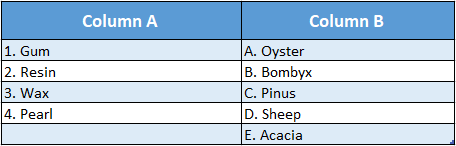
Answer: 1-E,2-C,3-B,4-A

Answer: 1-D,2-A,3-E,4-B
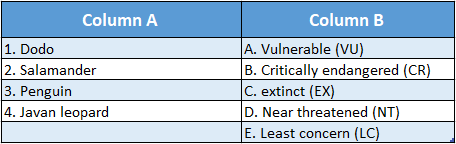
Answer: 1-C,2-D,3-A,4-B
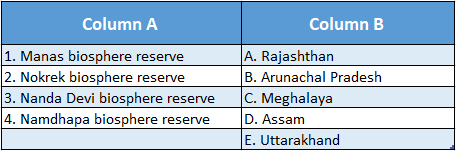
Answer: 1-D,2-C,3-E,4-B
WBBSE Chapter 5 Topic D Biodiversity And Conservation Very Short Answer Type Questions
Question 1. What is the term used to denote the richness and evenness of individuals within a habitat unit?
Answer: Alpha diversity.
Question 2. Name a type of ecosystem.
Answer: Grassland/ aquatic/ desert ecosystem.
Question 3. What is species diversity?
Answer: It is the variety of different species in a given area.
Question 4. Name two medicinal plants.
Answer: Basak and Tulsi.
Question 5. Name two plants used for furniture building.
Answer: Teak and Sal.
Question 6. Which plant can produce resin?
Answer: Pinus can produce resin.
Question 7. State two important products of Apis.
Answer: Honey and wax.
Question 8. Give the scientific name of pearl oyster.
Answer: Pinctada fucata.
Question 9. How many biodiversity hotspots are there all over the world?
Answer: There are 35 hotspots.
Question 10. How many biodiversity hotspots are there in India?
Answer: There are 4 hotspots.
Biodiversity And Conservation Class 10 MCQs
Question 11. Name an exotic plant species found in Indian water.
Answer: Water hyacinth.
Question 12. Give two examples of natural calamities.
Answer: Flood and drought.
Question 13. Give the scientific name of the Sundari tree.
Answer: Heritera littorals.
Question 14. What type of ecosystem is Sundarban?
Answer: Mangrove ecosystem.
Question 15. Name two places of in-situ conservation of biodiversity.
Answer: National park and sanctuary.
Question 16. Name two places of ex-situ conservation of biodiversity.
Answer: Zoological garden and botanical garden.
Question 17. Write the full form of JFM.
Answer: Joint Forest Management.
Question 18. Where did JFM originate in India?
Answer: At the Arabari forest of West Midnapore, West Bengal.
Question 19. Write the full form of PBR.
Answer: People’s Biodiversity Register.
Question 20. In which year was ‘Project Tiger’ started in India?
Answer: In 1973.
Question 21. Give the scientific name of Gharial.
Answer: Gavialis gangeticus.
Question 22. Give the scientific name of the one-horned rhinoceros.
Answer: Rhinoceros unicornis.
Question 23. Where is the home of Indian lions?
Answer: Gir Forest, Gujarat
Question 24. What do you mean by extractive reserves?
Answer: Extractive reserves are the areas that allow the local people to harvest natural forest products at a rate that does not destroy the ecosystem.
Question 25. Which ecosystem has the highest biodiversity?
Answer: Coral reef biodiversity.
Biodiversity And Conservation Class 10 MCQs
Question 26. Which Indian region is considered the cradle of speciation?
Answer: Eastern Himalayas.
Question 27. What is a latitudinal gradient?
Answer: It is a diversity index used to show the distribution of flora and fauna from the poles to the tropics.
Question 28. What is co-extinction?
Answer: It is the simultaneous extinction of multiple species where one is dependent on another species.
Example: Extinction of a host fish with parasites inside.
Question 29. When is an International Day of Biodiversity celebrated?
Answer: 22nd May of every year.
Question 30. A tropical lake ecosystem site contains 11 varieties of species. What is the alpha diversity scale of the site?
Answer: Alpha (α) diversity of the site is 11.
Question 31. A pair of related terms is given below. Based on the relationship of the first pair, write the suitable word in the gap of the second pair:
Answer:
Reserve forest:
in-situ conservation method::Botanical garden: Ex-situ conservation method
Beta diversity:
Expression of diversity between habitats::Diversity of habitats within a landscape Gamma diversity
Question 32. Among the following four terms, one includes the other three. Find out that term and write it.
Answer: Biosphere reserve, in-situ conservation, sanctuary, national park In-situ conservation
Sundaland, Western Ghats & Srilanka, Biodiversity hotspots, Eastern Himalayas Biodiversity Hotspots
Question 33. Name the different levels of biodiversity.
Answer: Genetic diversity, Species diversity, and Community/ecosystem/habitat diversity.
Question 34. Choose the odd one and write it:
Answer: The passenger pigeon, Dodo, snow leopard, woolly mammoth. Snow leopard since it is a vulnerable animal while the other ones are extinct animals.
Gene bank, sanctuary, national park, reserve forest. Gene bank since it is an ex-situ conservation method while the other three are in-situ conservation methods.
Question 35. Which is the most common crocodile species found in India?
Answer: The Mugger crocodile (Crocodylus palustris).
WBBSE Chapter 5 Topic D Biodiversity And Conservation Short Answer Type Questions With Answers
Question 1. What is meant by genetic diversity?
Two environments have a total of 13 species: A, B, C, D, E, F, G, H, l, J, K, L, and M.
Environment#1 contains 10 species: A to J.
Environment#2 contains 6 species: H to M.
Calculate the beta diversity of the two environments.
Answer:
Genetic diversity
Genetic diversity is the total number of genetic characteristics in the genetic makeup of a species, for example, between varieties of crops and breeds of livestock.
It refers to the heritable variation. A species having more genetic diversity can adapt better to the change in environmental conditions. Hence genetic diversity plays an important role in the survival and adaptability of a species.
Any change in the environment natural or human affects genetic diversity. Practices like harvesting, aquaculture, degradation of habitats, and inbreeding alter the sum of available genes affecting the capacity of tolerance.
The loss of genetic diversity is difficult to see or measure but the loss within a species can result in the loss of useful and desirable traits, eg. resistance to parasites.
Reduced diversity also eliminates options to use untapped resources for food production, industry, and medicine.
Calculation of β-diversity:
Number of species in environment # 1:10 (A to J)
Number of species in environment # 2:6 (H to M)
Number of common species in both environments : 3(H to J)
∴β – diversity = (H1- H1 & 2) + (H2 – H1 & 2)
= (10-3)+ (6-3)
= 7 + 3 = 10
That is, 10 species are either only in Environment #1 or only in Environment #2
Question 2. Explain the terms- species richness and species evenness.
Answer:
Richness:
The number of groups of genetically or functionally related individuals in an ecological community is referred to as richness.
In most vegetation surveys, richness is expressed as the number of species and is usually called species richness. It is simply a count of species and does not take into account the relative abundances.
For example, if we have two plots of land, A and B, and plot A has 24 species of plants while plot B has 84 species of plants, then plot B has higher species richness.
Evenness:
It refers to the Proportions of species or functional groups present on a site. The more equal species are in proportion to each other, the greater the evenness of the site.
A site with low evenness indicates that a few species dominate the site. Species evenness ranges from 0 to 1, with zero signifying no evenness and one, complete evenness.
Two habitats having the same number of species have the same species richness. On the other hand, the first may have a high species evenness and the second one a low evenness or vice versa.
In the example above, if the majority of the plants in plot B with 84 different types of species all come from one or two different species, this plot would have low species evenness compared to the plot A.
Threats To Biodiversity Class 10 Life Science
Question 3. How does biodiversity influence ecological balance?
Answer:
Ecological balance is a state of dynamic equilibrium within a community of organisms in which genetic, species and ecosystem diversity remain relatively stable and subject to gradual changes through natural succession.
The diversity of genes and species in ecological communities affects the functioning of the communities.
In agroecosystems, biodiversity performs a variety of ecological services beyond the production of food, including recycling of nutrients, regulation of microclimate & local hydrological processes, suppression of undesirable organisms, and detoxification of noxious chemicals.
More biologically diverse communities appear to be more productive than less diverse communities, and they also appear to be more stable in the face of perturbations.
Species diversity keeps the ecosystem running smoothly. For example, predators keep the population of mice under control, insects pollinate flowers and worms decompose leaf litter.
When a habitat becomes too scarce and the species that live there become vulnerable, the ecosystem falls out of equilibrium, and biodiversity is threatened.
Changes in biotic interactions among species—predation, parasitism, competition, etc., can lead to disproportionate and irreversible alterations of ecosystem processes.
Many changes in ecosystem services are brought about by the removal or introduction of organisms in ecosystems that disrupt biotic interactions.
For example, the ecosystem services provided by the coral reefs are dependent on a single key biotic interaction-the symbiosis with algae.
Biodiversity helps to preserve nature. Losing biodiversity can destroy a farmland’s ability to bounce back from disasters like fires and droughts.
Sand binders help to protect the seashore, trees growing along the slope of the hill prevent landslides, and mangrove vegetation near the seashore helps to protect the hinterland from high winds and storms.
Thus biodiversity and ecological balance are greatly interrelated.
Question 4. State the role of biodiversity in food production.
Answer:
Biodiversity Provides a High Variety Of Food:
crops, livestock, forestry, and fish, which are important food sources for the human species.
A wide range of species provides many thousands of food products, such as fruits, vegetables, nuts, meat, and food additives in the form of food colorings, flavorings, and preservatives, through agriculture and from the harvest of natural populations.
Question 5. What are the characteristics of biodiversity hotspots?
Answer:
To qualify as a biodiversity hotspot, a region must meet two strict criteria:
1. It must have at least 1,500 vascular plants as endemics — which is to say, it must have a high percentage of plant life found nowhere else on the planet.
A hotspot, in other/words, is irreplaceable.
2. It must have 30% or less of its original natural vegetation. In other words, it must have an appreciable threat perception of extinction.
Question 6. What are the biodiversity hotspots of India?
Answer:
India hosts 4 biodiversity hotspots:
- The Western Ghats and Srilanka
- The eastern Himalayas (northeastern hilly states)
- The indo-Burma region and
- The Sundaland or the Sundaic region (including the islands of Borneo and Sumatra.)
Question 7. Write the territories of the Sundaland biodiversity hotspot.
Answer:
The territories of the Sundaland biodiversity hotspot
Sundaland (also called Sundaic region) is a biogeographical region of southeastern Asia that includes the Nicobar group of Islands, Indonesia, Malaysia, Singapore, Brunei, and the Philippines.
This biodiversity hotspot is dominated by two of the largest islands in the world, Borneo and Sumatra. More than a million years ago, the islands of Sundaland were connected to mainland Asia.
As sea levels rose during the Pleistocene, this connection periodically disappeared, eventually leading to the current isolation of the islands.
Question 8. Why exotic species are considered a threat to biodiversity?
Answer:
According to the World Conservation Union, invasive alien species are the second most significant threat to biodiversity, after habitat loss.
In their new ecosystems, invasive alien species become predators, competitors, parasites, hybridizers, and diseases of native and domesticated plants and animals and they, cause the disappearance of native species through competition in a changed biotic interactive environment.
Three Common Examples Of Such Interactions Are Mentioned Below:
Water hyacinths clog rivers and lakes and threaten the survival of many aquatic species in several tropical countries including India.
Lantana camara has invaded many forest lands in various parts of India and offered competition to the native species of plants.
Nile perch, an exotic predatory fish introduced into Lake Victoria of South Africa, threatened the entire ecosystem of the lake by eliminating several native species of small Cichlid fish species that were endemic to this freshwater aquatic ecosystem.
Question 9. What is habitat destruction?
Answer:
Habitat destruction
A habitat is an ecological or environmental area where particular species of plants, animals, or other organisms live. Examples of habitats include forests, grasslands, marshes, estuaries, reefs, bays, the sea bed, etc.
This is the living area necessary for an ecosystem to remain healthy. Destruction means to change something so much that it can no longer exist as it once was.
So, when we put the two definitions together we get habitat + destruction = a home to species that have been changed to the point it no longer exist.
Habitat destruction occurs when enough change has happened to an area that can no longer support natural wildlife. This change can be in many forms, including destruction, fragmentation, and degradation.
But no matter how it happens, it reduces or destroys biodiversity. Apart from decreasing the range of certain organism populations, this can also decrease genetic diversity.
Habitat destruction by human activity is mainly to harvest natural resources for industrial production and urbanization.
Other important causes of habitat destruction are agriculture, mining, logging, trawling, etc.
One of the most famous examples of habitat destruction-related issues is the impact upon China’s giant panda, once found across the nation but now it is only found in fragmented and isolated regions in the southwest of the country as a result of widespread deforestation in the 20th century.
Threats To Biodiversity Class 10 Life Science
Question 10. What is in-situ conservation of biodiversity?
Answer:
On-situ conservation of biodiversity
In-situ conservation is on-site conservation or the conservation of genetic resources in natural populations of plant or animal species, such as forest genetic resources in natural populations of tree species.
It is the process of protecting an endangered plant or animal species in its natural habitat, either by protecting or cleaning up the habitat itself or by defending the species from predators.
It is applied to the conservation of agricultural biodiversity in agroforestry by farmers, especially those using unconventional farming practices.
In-situ conservation is being done by declaring the area as a protected area in the form of a National Park, sanctuary, reserve forest, or biosphere reserve.
Question 11. What are the advantages of in-situ conservation?
Answer:
The advantages of in-situ conservation
- The flora and fauna live in natural habitats without human interference.
- The life cycles of the organisms and their evolution progress in a natural way.
- In-situ conservation provides the required green cover and its associated benefits to our environment.
- It is less expensive and easy to manage.
- The interests of the indigenous people are also protected.
Question 12. What is ex-situ conservation of biodiversity?
Answer:
Ex-situ conservation
Ex-situ conservation is the preservation of components of biological diversity outside their natural habitats.
This involves the conservation of genetic resources, as well as wild and cultivated species, and draws on a diverse body of techniques and facilities.
Such strategies include the establishment of botanical gardens, zoos, conservation strands and genes, pollen seeds, seedlings, tissue culture, DNA banks, and cryopreservation.
Question 13. What are the advantages of ex-situ conservation?
Answer:
The advantages of ex-situ conservation
- It is useful for the declining population of species.
- Endangered animals on the verge of extinction are successfully bred.
- Threatened species are bred in captivity and then released in their natural habitats.
- Ex-situ centers offer the possibility of observing wild animals, which is otherwise not possible.
- It is extremely useful for conducting research and scientific work on different species.
Question 14. What is ecotourism?
Answer:
Ecotourism
Ecotourism is environmentally responsible travel to natural areas, to enjoy and appreciate nature (and accompanying cultural features, both past and present) that promote conservation.
It should have a low visitor impact and provide for beneficially active socio-economic involvement of local people. Most tourism in natural areas today is not ecotourism and is not, therefore, sustainable.
Ecotourism is distinguished by its emphasis on conservation, education, traveler responsibility, and active community participation.
Several famous ecotourism spots of our country are Sunderban Biosphere Reserve, West Bengal; Bandipur National Park, Karnataka; Chilika Lake, Orissa; Kaziranga National Park, Assam, etc.
Question 15. What are endemic species?
Answer:
Endemic species
A species is endemic if it only occurs within a limited, relatively small area, such as a single island or archipelago, mountain range, or forest.
Among primates, examples include all of the lemur species that are only found on the island of Madagascar. The lemur known as Berthe’s mouse lemur, is found only in the Kirindy forest on the island’s west coast.
Queen Alexandra’s birdwing is another example.
Found only in Papua New Guinea, it is the largest butterfly in the world. Its caterpillars rely on a single plant species for food-one that is seriously threatened by the destruction of the rainforests.
Question 16. Does species diversity follow any pattern?
Answer:
The diversity of species is lowest at the poles and increases towards the equator, with deserts being the obvious exception.
Tropical rainforests and coral reefs are among the planet’s richest and most diverse ecosystems. The areas with the greatest diversity of plant life are the tropical Andes and south-eastern Asia.
The Amazon basin, Madagascar, and parts of southern and central Africa also compare favorably. The same also holds true for animal life as well.
In Amazonas state in Brazil, 95 different species of ants have been found on a single tree as compared to around 50 species of ants found throughout the entire UK.
Colombia, located near the equator, has nearly 1400 species of birds, New York at 41°N has 105 species, and Greenland at 71°N has 56 species only.
The decrease in the species diversity from the equator towards the pole is termed as a latitudinal gradient in biodiversity.
The three hypotheses behind the latitudinal gradient are:
Solar Energy:
The presence of more solar energy contributes to more productivity and in turn, more diversity.
Tropical Environment:
It is more constant, less seasonal, and more predictable which caters to greater species diversity.
Speciation:
The tropical latitudes have remained undisturbed for millions of years allowing more diversification to happen as compared to temperate regions that had frequent glaciations in the past.
Question 17. Name three critically endangered animal species found in biodiversity hotspots of India.
Answer:
Namadhapa flying squirrel, Orange necked Patridge (bird), and Annamite striped rabbit.
Threats To Biodiversity Class 10 Life Science
Question 18. What are the Red Data Book and Green Data Book?
Answer:
Red Data Book and Green Data Book
The world’s most comprehensive inventory of the global conservation status of biological status is published by IUCN as the Red Data Book.
The IUCN aims to re-evaluate the data of species every five years if possible or at least every ten years.
Species are classified by the IUCN Red Book into nine groups, specified through criteria such as rate of decline, population size, geographic distribution, and distribution fragmentation.
The book in which communities of rare plants grown in protected areas or conservation of biodiversity are listed is termed a Green Data Book.
Fill In The Blanks
Question 1. ____________ is a biosphere reserve located in WestBengal.
Answer: Sunderban
Question 2. The name of one exotic species that affects the local biodiversity is____________.
Answer: Water hyacinth
Threats To Biodiversity Class 10 Life Science
Question 3. ____________ is derived from the root of the Sarpagandha plant which is used as medicine for lowering high blood pressure.
Answer: Rauwolfia serpentina
Question 4. The ex-situ conservation by keeping sample seeds in liquid nitrogen at a temperature of – 196°C is called ____________.
Answer: Cryopreservation.
Write True or False
Question 1. One-horned rhinoceros is conserved at Manas National Park of West Bengal.
Answer: False
Very Short Answer Type Questions
Question 1. Among the following four terms, one includes the other three. Find out that term and write it: Embryo, Meristematic tissue, Seed, Cryo preservation
Answer: Cryopreservation.
Question 2. Overall knowledge regarding local biological resources, PBR, Traditional belief regarding local biological resources, and Sustainable use of local biological resources.
Answer: PBR
Question 3. Write the name of the cause of the latest concern regarding the environment of SunderbAnswer:
Answer: Erosion of forested islands.
Question 3. Name one endangered animal conserved atSingalila National Park.
Answer: Red Panda.
Question 4. In which type of in situ conservation practice, the diversity, culture, and lifestyle of humans is preserved along with microorganisms, wild animals, and wild plants?
Answer: Biosphere reserve.