
Lesson 6 Number
ব্যক্তি বা বস্তুর সংখ্যাকে Number (বচন) বলে। ইংরাজীতে Number দুইটি :-
Singular (একবচন) : যে noun বা pronoun-এ একটিমাত্র সংখ্যা বোঝায় তার Singular number হয়।
tree, man, I, he, it, she, this book, dog.
Read And Learn Also WBBSE Class 6 English Functional Grammar
Plural (বহুবচন) : যে noun বা pronoun একের অধিক সংখ্যা বোঝায় তার Plural number
হয়।
Two boys, many trees, gardens, we, they.

1. Singular Noun-কে Plural করিবার নিয়ম :
1. অধিকাংশ noun-এর শেষে সাধারণত ‘s’ যোগ করে plural হয়। যথা :-
| WBBSE Class 6 English Functional Grammar | WBBSE Class 6 English Reading Skills | WBBSE Solutions For Class 6 English |
WBBSE Class 6 English Functional Grammar
Singular – Plural
- Boy (বালক) – Boys
- Book (বই) – Books
- Girl (বালিকা) – Girls
- Table (টেবিল) – Tables
- House (বাড়ী) – Houses
- Chair (চেয়ার) – Chairs
- Ant (পিঁপড়া) – Ants
- Pen (কলম) – Pens
- Car (গাড়ী) – Cars
- King (রাজা) – Kings
- Cat (বিড়াল) – Cats
- Tree (গাছ) – Trees
- Dog (কুকুর) – Dogs
- Pencil (পেনসিল) – Pencils
- Bird (পাখী) – Birds
- Leg (1) – Legs
- Doll (পুতুল) – Dolls
- Room (ঘর) – Rooms
- River (নদী) – Rivers
- Lion (সিংহ) – Lions
- Brother (ভাই) – Brothers
- Sister (ভগ্নী) – Sisters
- Eye (চক্ষু) – Eyes
2. কিন্তু যে সব singular noun-এর শেষে “s”, “ss”, “sh”, “এ” ও soft “ch” (অর্থাৎ যে “ch”-এর উচ্চারণ চ্-এর মত) থাকে তাদের শেষে “es” যোগ করে plural হয়। যথা :-
Singular – Plural
- Gas (গ্যাস) – Gases
- Bench – Benches
- Glass (গ্লাস) – Glasses
- Box (বাক্স) – Boxes
- Bush (ঝোপ – Bushes
- Fox (খেঁকশিয়াল) – Foxes
- Bus (বাস) – Buses
- Fish (মাছ) – Fishes
- Ass (গাধা) – Asses
- Dish (থালা ) – Dishes
- Class (ক্লাশ) – Classes
- Watch (ঘড়ি) – Watches
- Inch (ইঞ্চি) – Inches
- Branch (গাছের ডাল) – Branches
Class 6 English Grammar Exercises Wbbse
3. কিন্তু যদি “ch”-এর উচ্চারণ “ক্”-এর মতো হয় তবে শুধু “” যোগ করে plural
হয়। যথা :-
Singular – Plural
- Monarch (রাজা বা রাণী – Monarchs
- Stomach (পাকস্থলী) – Stomachs
4. যদি noun-এর শেষে “” এবং তার পূর্বে consonant থাকে, তা হলে plural করবার সময় “y”-কে “+” করে পরে “es” যোগ করতে হবে। যথা :-
Singular – Plural
- Body (শরীর) – Bodies
- Army (সামরিক বাহিনী – Armies
- City (শহর) – Cities
- Lady (মহিলা) – Ladies
- Sky (আকাশ) – Skies
কিন্তু যদি ‘y’-এর পূর্বে vowel থাকে তবে শুধু “” যোগ করে plural হয়। যথা :-
Singular – Plural
- Boy (বালক) – Boys
- Day (দিন) – Days
- Play (নাটক) – Plays
- Key (off) – Keys
5. যদি noun-এর শেষে “f” বা “fe” থাকে তবে plural করবার সময় “f” বা “–fe”-কে “–y”-তে change করে পরে “es” যোগ করতে হয়। যথা ঃ—
Singular – Plural
- Calf (বাছুর) – Calves
- Thief (চোর) – Thieves
- Half (অর্ধেক) )- Halves
- Wife (স্ত্রী) – Wives
- Life (জীবন) – Lives
- Knife (ছুরি) – Knives
6. কিন্তু কতকগুলি noun আছে যাদের শেষে “f” বা “-fe” থাকলেও শুধু “–s” যোগ করে plural হয়। যথা :-
WBBSE Class 6 English Textbook Answer
Singular(বেঁটে) – Plural
- Chief (প্রধান) – Chiefs
- Proof (প্রমাণ) – Proofs
- Roof (ছাদ) – Roofs
- Safe (সিন্দুক) – Safes
- Dwarf (বামন) – Dwarfs
- Handkerchief (রুমাল) – Handkerchiefs
7. কিন্তু noun-এর শেষে “f” থাকলে শুধু “” যোগ হয়। যথা :-
Singular – Plural
- Cliff (খাড়া পাহাড়) – Cliffs
- Puff (ফুৎকার) – Puffs
8. যদি noun-এর শেষে “–” থাকে, এবং তার পূর্বে consonant থাকে, তবে সাধারণত “es” যোগ করে plural হয়। যথা :-
Singular – Plural
- Hero (বীর) – Heroes
- Buffalo (মহিষ ) – Buffaloes
- Mango (আম) – Mangoes
- Potato (আলু) – Potatoes
9. কিন্তু যদি noun-এর শেষে “–o” থাকে, এবং তার পূর্বে vowel থাকে, তবে সাধারণত “–s” যোগ করে plural হয়। যথা :—
Singular – Plural
- Bamboo (বাঁশ) – Bamboos
- Radio (বেতারযন্ত্র).- Radios
- Cuckoo (কোকিল) – Cuckoos
- Studio (স্টুডিও) – Studios
10. কতকগুলি noun-এর শুধু vowel পরিবর্তন করে plural হয়। যথা :
Singular – Plural
- Foot (পায়ের পাতা) – Feet
- Mouse (ইঁদুর) – Mice
- Goose (রাজহংসী) – Geese
- Tooth (দাঁত) – Teeth
- Man (মানুষ) – Men
- Woman (স্ত্রীলোক ) – Women
11. কয়েকটি Noun-এ –en যোগ করে plural করতে হয়। যথা
Singular – Plural
- Ox (ষাঁড় ) – Oxen
- Child (শিশু) – Children
- Brother (ভাই) – Brethren (also, brothers)
2. Plural of Compound Nouns
1. একাধিক word দ্বারা noun গঠিত হলে তাকে Compound Noun বলে। সাধারণতঃ Compound Noun-এর যে word টি প্রধান তার পর “s” যোগ করে সমস্ত শব্দটির plural করতে হয়। যথা :-
Singular – Plural
- Father-in-law – Fathers-in-law
- Commander-in-chief – Commanders-in-chief
- Maid-servant – Maid-servants
- Son-in-law – Sons-in-law
2. কিন্তু যখন Compound words-এর বিভিন্ন অংশের মধ্যে hyphen (-) থাকে না, তখন সাধারণতঃ সমস্ত word-টির পরে “s” যোগ করে plural হয়।
WBBSE Board Exam Preparation Class 6
Singular – Plural
- Bookcase (বইয়ের আলমারী) – Bookcases
- Handful (মুষ্টিমেয়) – Handfuls
- Mouthful (মুখভরা) – Mouthfuls
- Grandfather (দাদু) – Grandfathers
3. কয়েকটি Compound word-এর উভয় অংশকেই plural করতে হয়।
Singular – Plural
- Man-servant (চাকর) – Men-servants
- Woman-servant (চাকরাণী) – Women-servants
4. যদি কোন noun-এর শেষে man থাকে এবং এই man-এর অর্থ ‘মানুষ’ হয়, তবে সেই noun-এর plural করতে হলে man-কে men করতে হয়। যথা :-
Singular – Plural
- Englishman (ইংরেজ) – Englishmen
- Gentleman (ভদ্রলোক) – Gentlemen
- Nobleman (সম্ভ্রান্তশ্রেণীর লোক ) – Noblemen
- Washerman (ধোপা) – Washermen
5. কিন্তু যদি man-এর অর্থ “মানুষ” না হয়, এবং তা শব্দটির একটি অঙ্গ হয়, তবে noun-র শেষে “s” যোগ করে plural হয়। যথা :-
Singular – Plural
- German (জার্মান) – Germans.
- Mussalman (মুসলমান) – Mussalmans
- Roman (রোমান) – Romans
3. Letters of Alphabet (বর্ণমালা) এবং numbers-এর ক্ষেত্রে শুধু —’s যোগ করে plural হয়। যথা :-
- There are three M.A.’s in the school.
- There are two 3’s and three 1’s in the number.
- বর্তমানে কেউ কেউ শুধু “—s”ই যোগ করে :
- There are three M.A.s. in this school.
4. Nouns Singular in form but plural in use
কতকগুলি noun দেখতে singular হলেও এরা plural রূপে ব্যবহৃত হয়। যথা :-
- The cattle (গবাদি পশুগুলি) are grazing (চরছে) in the field.
- Mankind (মানবজাতি) live in society.
- The police have arrested the dacoits.
- People (লোকেরা) are happy here.
5. Nouns plural in form but singular in use
কতকগুলি noun-দেখতে plural হলেও এরা সর্বদা singular রূপে ব্যবহৃত হয়। যথাঃ—
- The news is true.
- Mathematics (or Politics, or Physics) is a difficult subject.
- He was sent to the gallows (ফাঁসি কাঠ).
WBBSE Class 6 English Textbook Answer
6. Nouns used only in the singular
কতকগুলি noun সর্বদাই singular রূপে ব্যবহৃত হয়। এদের কোন plural form নেই। যথাঃ
- He gave me some advice ,(advices )
- I have got all the information (R) I wanted. (informations)
- Remove all the furniture or luggage from here.
- She likes poetry (কবিতা) (furnitures luggages)
- The scenery of the place is very nice. (sceneries)
- He has learnt the alphabet. (alphabets)
- She has long hair(hairs).
7. Nouns used only in the plural
কতকগুলি noun-এর কোন singular নেই। এরা সর্বদাই plural form-এ ব্যবহৃত হয়। যথা :-
Give alms to the poor.
- The ashes were thrown into the river.
- His clothes were dirty.
- Thanks are due to him.
- I have lost my spectacles .
- Put on your trousers.
- Where are my scissors ?
- All his riches are gone.
8. Nouns which have the same form in both the numbers
কতকগুলি Noun-এর Singular ও Plural-এ একই form। যথা :
Singular – Plural
- Deer (হরিণ) – deer
- Sheep (ভেড়া) – sheep
- Public (জনসাধারণ) – public
- Cannon (কামান) – cannon
The enemy had one cannon (or three cannon).
There is a deer (or sheep)
There are three deer (or sheep)
WBBSE Class 6 English Functional Grammar
Lesson 6 Number Number Of Pronouns
Pronouns-এর number সেটা যে noun-এর পরিবর্তে বসেছে সেই অনুযায়ী হয়। যথা :—
- The boy (or boys) has (or have) done his (or their) work.
- The girl (or girls) has (or have) done her (or their) work.
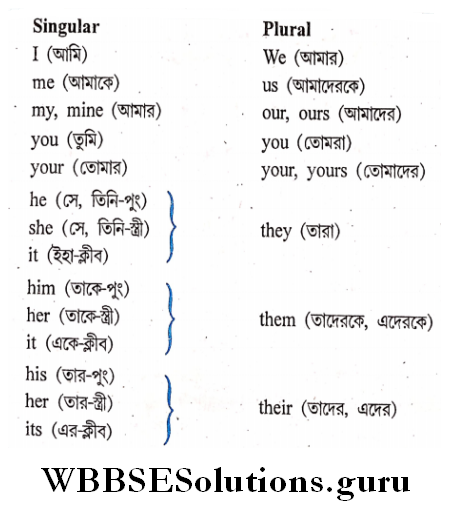
Pronoun-এরও Singular ও Plural হয়, তবে singular pronoun-এর plural করবার কোন নির্দিষ্ট নিয়ম নেই। প্রায় প্রত্যেকেরই নিজস্ব plural form আছে। কেবল “self” যুক্ত pronoun-এর plural-এ “selves” হয়। নীচে কতকগুলি সাধারণ pronoun-এর singular ও plural form দেওয়া হল।
Who, whose, whom, which, what:
Singular – Plural
- Who (কে, যে) – Who (কারা, যারা)
- Which (কোটি, যেটি) – Which (কোন্গুলি, যেগুলি)
- Whose (কাদের, যাদের) – Whose (কার, যার
- Whom (কাকে, যাকে) – Whom (কাদেরকে, যাদেরকে)
- What (কি, যা ) – What (কি কি, যেগুলি)
- I know the boy who did it. – I know the boys who did it.
- This is the man whom I saw. – These are the men whom I saw.