WBBSE Solutions For Class 6 English Miscellaneous Lesson 1 Sentences

Lesson 1 Sentences

‘Partha book” বলতে আমরা বুঝি ‘পার্থ বই’। সুতরাং এতে মনের ভাব বা অর্থ সম্পূর্ণরূপে প্রকাশ পায় না। অতএব, এটা বাক্য নয়। কিন্তু ‘Partha reads a book’ বললে বোঝায় ‘পার্থ একটি বই পড়ে’। এতে মনের ভাব সম্পূর্ণরূপে প্রকাশ পেয়েছে। সুতরাং, এটা একটি বাক্য। এইরূপ,

  • Did – I did it.
  • Can do – I can do it.
  • They are – They are good boys.
  • Reads the book – Rabi reads the book.
  • What is – What is your name ?
  • In the garden – The boys play in the garden.

Read And Learn Also WBBSE Solutions For Class 6 English

Class 6 English Miscellaneous Lesson 1.2 WBBSE

লক্ষ্য কর, উপরের শব্দ (word) বা শব্দ সমষ্টি ( words) – গুলির মধ্যে বামদিকের শব্দগুলি কোন সম্পূর্ণ অর্থ বা মনের ভাব প্রকাশ করে না, কিন্তু ডানদিকের শব্দগুলি মিলিত হয়ে একটি সম্পূর্ণ অর্থ বা মনের ভাব প্রকাশ করছে। এইরূপ

WBBSE Class 6 English Functional GrammarWBBSE Class 6 English Reading SkillsWBBSE Solutions For Class 6 English


যখন দুই বা ততোধিক শব্দ বা words একত্রে বসে একটি সম্পূর্ণ অর্থ প্রকাশ করে, তখন সেই শব্দ-সমষ্টিকে Sentence বা বাক্য বলে।

WBBSE Solutions For Class 6 English Miscellaneous Lesson 1 Sentences

A Sentence is a word or group of words giving a complete sense.

লক্ষ্য রেখো, শুধু শব্দসমষ্টি হলেই sentence হয় না; সম্পূর্ণ অর্থ প্রকাশ করা চাই। সেইজন্য বামদিকের কোন শব্দসমষ্টিই sentence নয় – ডানদিকের প্রত্যেকটি শব্দসমষ্টি এক একটি sentence.

WBBSE English Miscellaneous Lesson 1.2 Solutions

কিছু কিছু ক্ষেত্রে মাত্র একটি শব্দ দিয়ে একটি বাক্য গঠন করা সম্ভব, যেমন—

  • Mira-is Arun your brother?
  • Roma-Yes.

এখানে ‘Yes’ শব্দটি একটি বাক্য গঠন করেছে।

সেইরূপ Go—যাও, Come—এস, Stop —থাম, প্রভৃতি আদেশবাচক এক-একটি শব্দই (word) এক-একটি sentence.

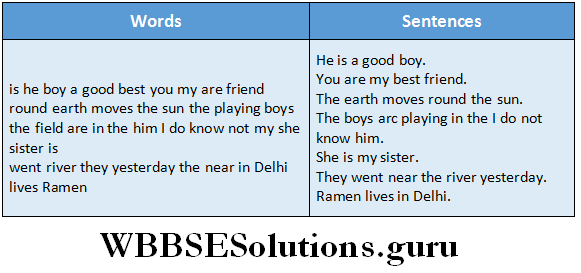
মনে রেখো, words (শব্দ সমষ্টি) পাশাপাশি বসে পূর্ণ অর্থ বা মনের ভাব প্রকাশ করলে তবেই একটি sentence গঠিত হয়। নীচে লক্ষ্য কর কিভাবে এলোমেলোভাবে দেওয়া wordsগুলি সঠিকভাবে বসিয়ে sentence গঠিত হয়েছে :

Sentences word and sentences

WBBSE Solutions For Class 6 English Miscellaneous Lesson 5 Reading And Writing Of Time Railway Time

Lesson 5 Reading And Writing Of Time Railway Time

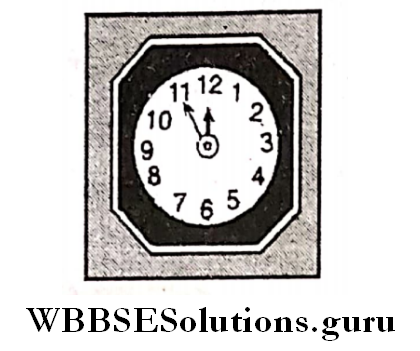
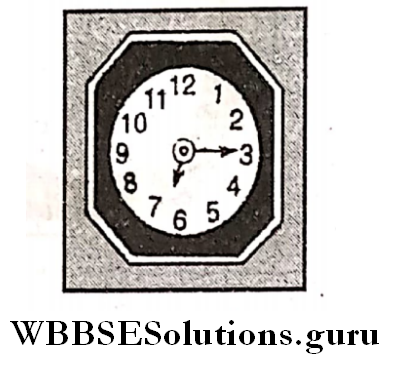
নীচের ছবিগুলি দেখ ।

Reading And Writing Of Time Railway Time

একটি ঘড়ির দুটি কাঁটা আছে। বড় কাঁটাটি minutes নির্দেশ করে এবং ছোট কাঁটাটি hours নির্দেশ করে। প্রথম ছবিতে ছোট কাঁটাটি তিন (three) এবং বড় কাঁটাটি বার (twelve) নির্দেশ করছে।

So the time is three o’clock.

দ্বিতীয় ছবিতে ছোট কাঁটাটি সাত (seven) ও বড় কাঁটাটি বার (twelve) নির্দেশ করছে।

So the time is seven o’clock.

Read And Learn Also WBBSE Solutions For Class 6 English

তৃতীয় ছবিতে, ছোট কাঁটাটি চার (four) ও পাঁচের (five) মধ্যে রয়েছে, বড় কাঁটাটি ছয় (six) নির্দেশ করছে।

Class 6 English Miscellaneous Lesson 5 WBBSE

So the time is half-past four.

চতুর্থ ছবিতে, ছোট কাঁটাটি নয় (nine) ও দশের (ten) মধ্যে রয়েছে, বড় কাঁটাটি আট (eight) নির্দেশ করছে।

WBBSE Class 6 English Functional GrammarWBBSE Class 6 English Reading SkillsWBBSE Solutions For Class 6 English


So the time is twenty minutes to ten or forty minutes past nine.

পঞ্চম ছবিতে ছোট কাঁটাটি ছয় (six) ও সাত (seven)-এর মধ্যে রয়েছে, বড় কাঁটাটি ছয় (six) নির্দেশ করছে।

So the time is half-past six.

WBBSE English Miscellaneous Lesson 5 Solutions

ষষ্ঠ ছবিতে ছোট কাঁটাটি তিন (three) নির্দেশ করছে এবং বড় কাঁটাটি দুই (two) নির্দেশ করছে।

So the time is ten minutes past three.

WBBSE Solutions For Class 6 English Miscellaneous Lesson 5 Reading And Writing Of Time Railway Time

Lesson 5 Reading And Writing Of Time Railway Time Railway Time

রেলওয়ে time-এ’ সময় নির্দেশ করতে 24 ঘণ্টার জন্য 1 হতে 24 সংখ্যা ব্যবহৃত হয়।

  • 12 midnight to 12 noon a.m. (morning)
  • 12 noon to 12 mid nightp.m. (afternoon)

রাত্রি ১টা হতে দুপুর ১২টা পর্যন্ত সময়ের বিভিন্ন ঘণ্টাকে 1hr, 2hrs, 3hrs, 4hrs 12hrs-এই ভাবে চিহ্নিত করা হয়।

দুপুর ১টা হতে রাত্রি ১২টা পর্যন্ত সময়ের বিভিন্ন ঘণ্টাকে 13 hrs, 14 hrs, 18 hrs 24 hrs-এই ভাবে চিহ্নিত করা হয়।

এই প্রকার সময় নির্দেশ নিম্নরূপে করা হয় :

  • 02.00 hrs = 2 o’clock in the morning = 2 a.m.
  • 05:00 hrs = 5 o’clock in the morning = 5 a.m.
  • 10.00 hrs = 10 o’clock in the morning = 10 a.m.
  • 12.00 hrs = 12 o’clock in the morning = 12 noon
  • 13.00 hrs = 1 o’clock in the afternoon = 1 p.m.
  • 17.00 hrs = 5 o’clock in the afternoon = 5 p.m.
  • 22.00 hrs = 10 o’clock at night = 10 p.m.
  • 24.00 hrs = 12 o’clock at night i.e. midnight

Lesson 5 Reading And Writing Of Time Railway Time Examples Worked Out

Question 1. A clock has two hands. The long hand indicates minutes and the short hand indicates hours. Now draw three clocks. Show the position of the hands according to instructions and tell the time.

WBBSE Class 6 English Miscellaneous Exercises

1. The short hand is between six and seven and the long hand is at ten.

Reading And Writing Of Time Railway Time the short hand is between six and seven and the long hand is at ten

Answer:

It is ten minutes to seven.

2. The short hand is at twelve and the long hand is at eleven.

Reading And Writing Of Time Railway Time the short hand is at twelve and the long is at eleven

Answer:

It is five minutes to twelve.

3. The short hand is between six and seven and the long hand is at three.

Reading And Writing Of Time Railway Time the short hand is between six and seven and the long is at three

Answer:

It is a quarter past six (not, quarter past six) or fifteen minutes past six.

Question 2. A clock has two hands. The long hand indicates minutes and the short hand indicates hours. Now draw three clocks. Show the position of the clock according to instructions and tell the time

1. The short hand is between seven and eight and the long hand is at two. It is?
Answer:

It is ten minutes past seven.

2. The short hand is at twelve and the long hand is at eleven. It is?
Answer:

It is five minutes to twelve.

Lesson 5 Miscellaneous Class 6 English Questions

3. The short hand is between three and four and the long hand is at nine. It is?
Answer:

It is a quarter to four (not, quarter to four) or fifteen minutes to four.

Reading And Writing Of Time Railway Time a clock has two hands

Question 3. Look at the clocks and write the time:

Reading And Writing Of Time Railway Time.

Answer:

  1. Ten minutes to six.
  2. 6 o’clock (a.m. or p.m.)
  3. Ten minutes past nine.

Lesson 5 Miscellaneous Class 6 English Questions

Question 4. Write the time in words

  1. 3-45
  2. 16.35
  3. 17.55
  4. 19-15
  5. 23.55

Answer:

  1. A quarter (not quarter) to four in the morning / 3-45 a.m.
  2. Thirty-five minutes past four in the afternoon. or, Twenty-five minutes to five in the afternoon / 4-35 p.m.
  3. Five minutes to six in the afternoon or Fifty-five minutes past five in the afternoon 5.55 p.m.
  4. A quarter (not quarter) past seven in the evening / 7-15 p.m.
  5. Five minutes to twelve midnight or Fifty-five minutes past eleven at night/11-55 p.m.

WBBSE Solutions For Class 6 English Miscellaneous Lesson 1 Locations Directions And Instructions

Lesson 1 Locations Directions And Instructions Locations

স্থান বা মানচিত্রের মধ্যে বিভিন্ন স্থান নির্দেশ করতে কিভাবে ইংরাজী sentence গঠন করা হয় নীচের উদাহরণগুলিতে দেখ।

1.

  • X is in the middle (of the page)
  • A is at the top.
  • B is at the bottom.
  • C is on the left.
  • D is on the right.

Read And Learn Also WBBSE Solutions For Class 6 English

  • X is between C and D.
  • C and D are on either side of X.
  • E is above X.
  • X is below E.
  • F is in the top left-hand corner.
  • G is in the bottom right-hand corner.

Locations Directions And Instructions Locations

2.

  • F is in the middle of the island.
  • A is in the north (of the island)
  • B is in the south (of the island)
  • C is in the east (of the island)
  • E is to the west (of the island)
  • D is in the west (of the island)
  • D is to the west of F
  • B is to the south of F

Locations Directions And Instructions Locations.

WBBSE Class 6 English Functional GrammarWBBSE Class 6 English Reading SkillsWBBSE Solutions For Class 6 English


লক্ষ্য কর : এখানে A, B, C, D দ্বীপের মধ্যে অবস্থিত বলে in এবং E দ্বীপের বাইরে অবস্থিত বলে to ব্যবহৃত হয়েছে। F-এর পশ্চিমে D এবং দক্ষিণে B অবস্থিত আছে বলে এদের ক্ষেত্রে to ব্যবহৃত
হয়েছে।

WBBSE Solutions For Class 6 English Miscellaneous Lesson 1 Locations Directions And Instructions

Class 6 English Miscellaneous Lesson 1 WBBSE

Lesson 1 Locations Directions And Instructions Directions (দিক নির্দেশ)

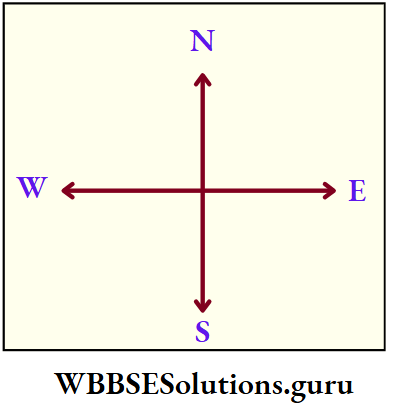
তুমি যদি কোন Map বা নক্সার দিকে তাকাও তা হলে :

  • Map-এর উপরের দিক
  • North নির্দেশ করে ।
  • Map-এর নীচের দিক
  • South নির্দেশ করে।
  • তোমার ডান দিক Map-এর East.
  • তোমার বাঁ দিক Map-এর West.

নীচের ছবিটি লক্ষ্য কর :

Locations Directions And Instructions directions

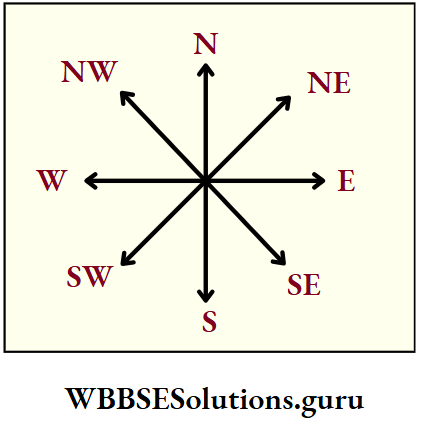
এবার নীচের ছবিটি লক্ষ্য কর :

Locations Directions And Instructions directions.

  • N = North
  • E = East
  • NE = North-East
  • SE = South East
  • S = South
  • W = West
  • NW = North-West
  • SW = South West.

WBBSE English Miscellaneous Lesson 1 Solutions

Lesson 1 Locations Directions And Instructions Instructions (নির্দেশ)

পথ বা দিক নির্দেশ করতে হলে কিভাবে ইংরাজী sentence গঠন করতে হয় নীচের উদাহরণ গুলিতে দেখ।

1.

Locations Directions And Instructions instructions

2.

Locations Directions And Instructions instructions.

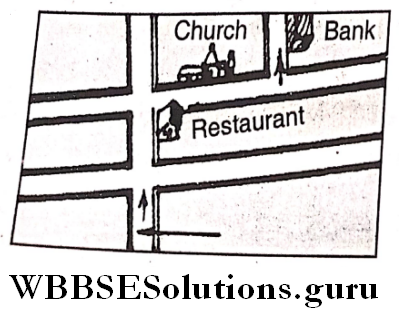
A : Can you tell me the way to the nearest Church, please ?

You : Go straight, take the second turn on your right near the restaurant. Walk forward and the Church is on your left.

3.

Locations Directions And Instructions instructions..

  1. If you go along Park Road towards west and take the first turn on right, you will enter Church Road.
  2. If you go along Park Road past Church Road, you will find a park on your left.
  3. If you enter Church Road and move forward, you will cross Bridge Road.
  4. If you turn left on Bridge, Road and go ahead (4), you can see a school on your left.
  5. If you turn right on Bridge Road and go straight ahead, you can see a library on your right. Further ahead, you will cross a bridge over a river.
  6. If you cross Bridge Road and go ahead along Church Road (Church Road , you can see a Church on your right and a monument straight ahead On Temple Road.
  7. If you trun left on Temple Road and walk a few steps (1), you can find a temple on the right.

WBBSE Class 6 English Miscellaneous Exercises

Lesson 1 Locations Directions And Instructions Examples Worked Out

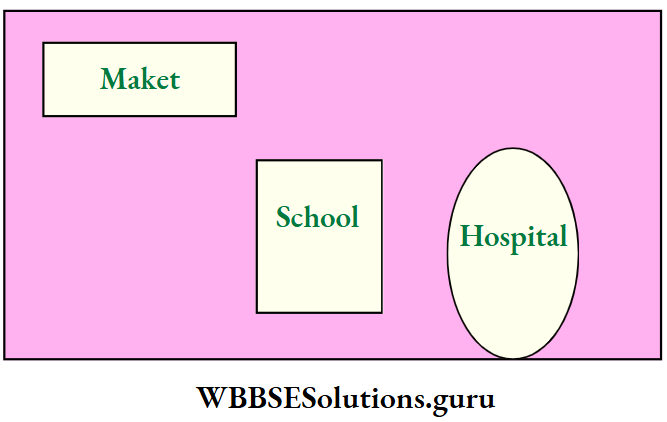
Question 1. Follow the instructions and draw the plan of your town.

  1. Draw a square in the middle.
  2. Write ‘School’ inside the square.
  3. Draw a circle to the south-east of the school.
  4. Write ‘Hospital’ in the circle.
  5. Draw a rectangle to the north-west of the school. (g) Write ‘Market’ in it.

Answer:

Locations Directions And Instructions instructions plan of your town

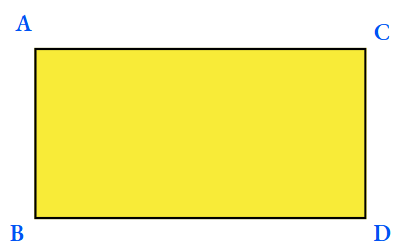
Question 2. Follow the directions and draw a figure.

  1. Draw a straight line 2 inches long from top to the bottom.
  2. Now write A at the top of the line and B at the lower end.
  3. Now draw another line 3 inches long from ‘A’ point to the right at right angle to the line AB.
  4. Write ‘C’ at the end of this line..
  5. Draw another line 3 inches long from B to your right at right angle to line BA.
  6. Now write D at the end of this line.
  7. Now join ‘C’ and ‘D’.
  8. Now give the name of the shape.

Answer:

Locations Directions And Instructions the shape of ABCD is a rectangle

The shape of ABCD is a rectangle.

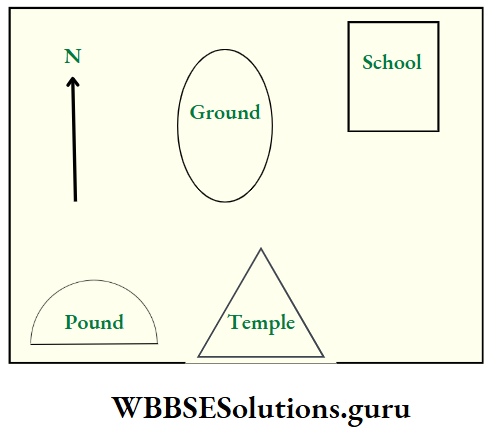
Question 3. Follow the instructions and draw a map.

  1. Draw a big rectangle.
  2. Draw a small circle in the middle of the rectangle and write ‘Ground’ within it.
  3. Draw a square to the north-east of the circle and write ‘School’ in it.
  4. Draw a semi-circle in the south-west corner of the rectangle and write ‘Pond’ in it.
  5. Draw a triangle to the south of the circle. Write Temple’ in it.
  6. Point out the north direction in the map.

Answer:

Locations Directions And Instructions

Lesson 1 Miscellaneous Class 6 English Questions 

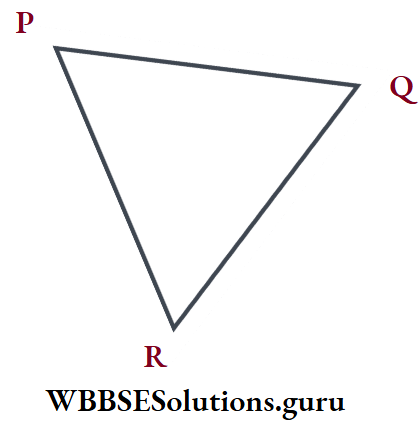
Question 4. Read the following instructions and draw the figure.

  1. Draw a vertical line.
  2. Write R at the bottom of the line.
  3. Write Q at the top end.
  4. From Q draw a line to the left at right angle to RQ.
  5. Write P at the end of the second line.
  6. Join PR.

What is the name of the figure?

Answer:

Locations Directions And Instructions traingle

The figure is a triangle.

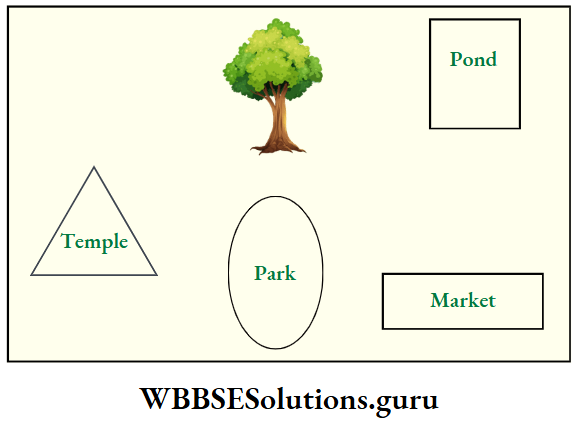
Question 5. Read the following sentences and draw the map :

  1. Draw a big rectangle.
  2. Draw a circle in the middle of the rectangle. Write ‘Park’ inside it.
  3. Draw a triangle to the west of the circle. Write ‘Temple’ inside it.
  4. Draw a square to the north-east of the circle. Write ‘Pond’ inside it.
  5. Draw a rectangle to the south-east of the circle. Write ‘Market’ inside it.
  6. Draw a tree to the north of the circle.

Answer:

Locations Directions And Instructions.

Question 6. Look at this plan and write seven sentences giving directions to draw it:

Locations Directions And Instructions...

Answer:

  1. Draw a big rectangle.
  2. Draw a small rectangle in its middle and write ‘Park’ in it.
  3. Draw a small rectangle at the north-west corner of the plan and write ‘Market’ in it.
  4. Draw another small rectangle at the north-east corner of the plan and write ‘School’ in it.
  5. Draw a square at the south-west corner of the plan and write ‘Pond’ in it.
  6. Draw a rectangle to the south of the park and mark it ‘Health Centre’.
  7. Draw a square at the south-east corner of the plan and write ‘Post Office’ in it.

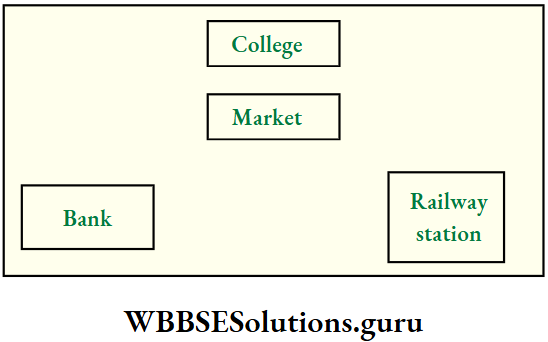
Question 7. Look at the plan and answer the questions below.

Locations Directions And Instructions....

Question 1. What is there to the north of the Market?
Answer:

There is a college to the north of the Market.

Question 2. Where is the Market?
Answer:

The Market is at the centre of the plan.

Lesson 1 Miscellaneous Class 6 English Questions 

Question 3. Where is the Rly. Station?
Answer:

The Rly. Station is to the south-east corner of the Market.

Question 4. Where is the Bank ?
Answer:

The Bank is to the south-west corner of the Market.

Question 8. Read the directions and draw the map.
Answer:

  1. Draw a big rectangle.
  2. Draw a circle in the middle. Write ‘Bus Stand’ in it.
  3. Draw a square to the north of the bus-stand and write ‘School’ inside it.
  4. Draw a rectangle to the south-east of the bus-stand and write ‘Park’ inside it.
  5. Draw a triangle to the north-west of the bus-stand and write ‘Bank’ inside it.
  6. Draw another square to the east of the bus-stand and write ‘Market’ inside it.

Answer:

Locations Directions And Instructions read the directions

Class 6 English Miscellaneous Lesson 1 WBBSE

Question 9. Look at the map and answer the following questions.

Locations Directions And Instructions map directions

Question 1. Where is the pond?
Answer:

The pond is at the centre of the plan.

Question 2. What is there to the south-west of the pond?
Answer:

There is a temple to the south-west of the pond.

Question 3. Where is the school?
Answer:

The school is to the north of the pond.

Question 4. What is there to the north of the Post Office ?
Answer:

There is a bank to the north of the Post-Office.

Question 5. Where is the market?
Answer:

The market is to the north-west of the pond.

Question 6. What is there to the south of the market?
Answer:

There is a temple to the south of the market.

Question 7. Where is the hospital?
Answer:

The hospital is there to the south-east of the pond.

WBBSE Solutions For Class 6 English Functional Grammar Lesson 18 Punctuation

Lesson 18 Punctuation

তোমরা জান বাংলায় সাধারণতঃ বাক্যের শেষে দাঁড়ি (1) এবং প্রশ্নবোধক বাক্যের শেষে প্রশ্নসূচক চিহ্ন (?) দ্বারা বাক্যের সমাপ্তি প্রকাশ করা হয়। এইগুলি এক এক রকমের বিরাম-চিহ্ন। ইংরাজীতেও একটি sentence শেষ হলে সমাপ্তি-চিহ্ন হিসাবে full stop (.) দেওয়া হয়, এবং Interrogative sentence এর শেষে প্রশ্নসূচক চিহ্ন (?) দ্বারা বাক্যের সমাপ্তি বোঝানো হয়। এই চিহ্নগুলি ছাড়াও ইংরাজীতে আরও কয়েকরকম বিরাম-চিহ্ন আছে। নীচের passage-টি দেখ—

Read And Learn Also WBBSE Class 6 English Functional Grammar

The teacher became angry with the student and said, “Why do you disturb the class ? Leave the room and do not return today. ”

WBBSE Class 6 English Functional GrammarWBBSE Class 6 English Reading SkillsWBBSE Solutions For Class 6 English


Functional Grammar Class 6 WBBSE

এখানে (.) ও (?) চিহ্ন ছাড়া (,) ও (“ ”) চিহ্নের ব্যবহার হয়েছে। এই চিহ্নগুলির সবই এক এক রকমের বিরাম চিহ্ন, এবং এদের নাম যথাক্রমে Full Stop, Note of Interrogation, Comma এবং Quotation Marks। এই চিহ্নগুলি দেখে একটি ইংরাজী রচনার অর্থ বুঝতে সুবিধা হয়। এই চিহ্নগুলি ব্যবহারের নির্দিষ্ট নিয়ম আছে। ঠিক ঠিক জায়গায় এই চিহ্নগুলি ব্যবহার করার নাম Punctuation

WBBSE Solutions For Class 6 English Functional Grammar Lesson 18 Punctuation

Lesson 18 Punctuation Full Stop (.)

1. এটা পূর্ণ বিরাম-চিহ্ন। একটি sentence শেষ হলে এই চিহ্ন দেওয়া হয়। যেমন : You may go now. I am reading.

2. Word-এর সংক্ষিপ্ত রূপ লেখার সময়ও এই চিহ্ন দেওয়া হয যেমন : Mr. Bose is present here. He is a B.A.

WBBSE Solutions for Class 6 English

Lesson 18 Punctuation Note of Interrogation (?)

Interrogative sentence (প্রশ্নবোধক বাক্য)-এর শেষে এই চিহ্ন বসে এবং এটিও পূর্ণ বিরাম-চিহ্ন। যেমন : Who is he? Why has he come here ?

Lesson 18 Punctuation Comma (,)

1. এটা সামান্য বিরতির চিহ্ন। একই Part of speech-এর একাধিক word পরপর থাকলে প্রত্যেকটির পরে comma এবং শেষের word-টির আগে and দিতে হয়, যেমন :
Reba, Rekha, Rupa and Rumki are four sisters.

2. উদ্ধৃত বাক্যের ঠিক পূর্বে এই চিহ্ন দিতে হয়, যথা :
Anil said, “I must go now.”

Class 6 English Grammar Solutions

Lesson 18 Punctuation Quotation Marks (” “)

এই চিহ্নকে Inverted Comma বলে। ইহা কখনও কখনও (‘ ‘) এইভাবেও বসে। কারও কোনও কথা উদ্ধৃত করতে এই চিহ্নের ব্যবহার হয়। যেমন :

My father said, “Go home now”.

Inverted Comma-এর মধ্যে অবস্থিত প্রত্যেকটি বাক্যের প্রথম শব্দ Capital letter দিয়ে আরম্ভ হয়ে থাকে।


WBBSE Solutions For Class 6 English Functional Grammar Lesson 17 Uses Of Capital Letters

Lesson 17 Uses Of Capital Letters

এ পর্যন্ত তোমরা নিশ্চয়ই লক্ষ্য করেছ যে English Alphabet দুই প্রকারের – বড় অক্ষর ও ছোট অক্ষর।

বড় হাতের অক্ষরগুলিকে Capital Letters বলে। যথা : A, B, C, D, E, F ইত্যাদি।

WBBSE Class 6 English Functional GrammarWBBSE Class 6 English Reading SkillsWBBSE Solutions For Class 6 English


WBBSE Class 6 English Grammar Lesson 17

ছোট হাতের অক্ষরগুলিকে Small Letters বলে। যথা : a, b, c, d, e, f ইত্যাদি।

WBBSE Solutions For Class 6 English Functional Grammar Lesson 17 Uses Of Capital Letters

WBBSE Class 6 English Solutions

Lesson 17 Uses Of Capital Letters Capital Letter গুলি ব্যবহারের নিয়ম

সাধারণতঃ নিম্নলিখিত ক্ষেত্রে Capital Letter বসে :

Read And Learn Also WBBSE Class 6 English Functional Grammar

  1. প্রত্যেক sentence-এর প্রথম অক্ষর : He is our teacher.
  2. মানুষের নামের প্রথম অক্ষর ও তার উপাধির প্রথম অক্ষর : His name is Pabitra Roy
  3. ঈশ্বরের নাম ও তার পরিবর্তে যে pronoun বসে, তাঁর প্রথম অক্ষর : God takes care of us all. We should pray to Him.
  4. স্থানের নামের প্রথম অক্ষর : I went to Kolkata. I live in Durgapur.
  5. Proper Noun ও Proper Adjective-এর প্রথম অক্ষর : The Ganga, Mita, the English.
  6. উদ্ধৃত বাক্যের প্রথম অক্ষর : Thus he said, “Obey your parents.”
  7. পদমর্যাদা বা উপাধির প্রথম অক্ষর : M.A., Rai Bahadur, Mr.
  8. “P” Pronoun : I know that I am weak.
  9. নদী, পর্বত, দিন, মাস, পর্ব ও প্রসিদ্ধ ঐতিহাসিক ঘটনার প্রথম অক্ষর :
    • নদীর নাম : The Ganga, the Indus.
    • পর্বতের নাম : Mount Everest, the Himalayas.
    • দিনের নাম: Friday, Sunday, Monday.
    • মাসের নাম : January, March, August.
    • পর্বের নাম : The Good Friday, The Durga Puja.
  10. জাতি বা ধর্মনির্বিশেষের নাম :
    জাতি : The Muslims, The Hindus, The Christians.
    ধর্ম : Islam, Hinduism, Christianity. .
  11. ইংরাজী কবিতার প্রত্যেক line-এর প্রথম শব্দটির প্রথম অক্ষর :
    • Soloman Grundy,
    • Born on Monday,
    • Christened on Tuesday,
    • Married on Wednesday,
    • Sick on Thursday,
    • Worse on Friday,
    • Died on Saturday,
    • Buried on Sunday.

WBBSE Solutions For Class 6 English Functional Grammar Lesson 16 Introductory There Introductory It

Lesson 16 Introductory There Introductory It Introductory “There”

  • There is a book on the table – টেবিলে একটি বই আছে।
  • There is no milk in the cup — কাপে দুধ নাই।
  • There are many stars in the sky — আকাশে অনেক তারা আছে।
  • There was a tiger in the cage — খাঁচাতে একটি বাঘ ছিল।

Read And Learn Also WBBSE Class 6 English Functional Grammar

WBBSE Class 6 English Solutions 

উপরের sentence-গুলি সবই “There” দ্বারা আরম্ভ হলেও “There” word-টির এখানে কোনও অর্থ নাই। কেবলমাত্র sentence গুলি আরম্ভ করার জন্যই এর ব্যবহার হয়েছে। এইরূপ ক্ষেত্রে একে Introductory “There” বলে।
কোন ব্যক্তি বা বস্তু কোথাও “আছে”, “ছিল”, “নেই” ইত্যাদি বোঝালে Introductory “There” দ্বারা sentenceটি আরম্ভ করা হয়। এইরূপ sentence-এ verb-টি “there”-এর পরে ও subject-টি verb-এর পরে বসে। verb-টি subject অনুসারে হয়।

WBBSE Class 6 English Functional GrammarWBBSE Class 6 English Reading SkillsWBBSE Solutions For Class 6 English
  • Is there no doctor in the village ? – গ্রামে কি কোনও ডাক্তার নেই?
  • Is there no cloud in the sky ? – আকাশে কি মেঘ নেই ?

লক্ষ্য করিও sentence-টি Interrogative হইলে verb-টি “There”-এর পূর্বে বসে।

WBBSE Solutions For Class 6 English Functional Grammar Lesson 16 Introductory There Introductory It

Lesson 16 Functional Grammar Class 6

Lesson 16 Introductory There Introductory It

Introductory “There”এর মতো Introductory “It”-এর ব্যবহার প্রচলিত আছে। এই “It”- এরও কোনও অর্থ নেই, কেবল sentence-টি আরম্ভ করাই এর কাজ। যেমন :

  • It is summer now – এখন গ্রীষ্মকাল।
  • It is very hot today – আজ বড় গরম ।
  • It is night – রাত্রি হয়েছে।
  • It is ten o’clock now – এখন বেলা দশটা।
  • It rains – বৃষ্টি পড়ে।
  • It is difficult to say now – এখন বলা কঠিন।
  • It is good for health to take bath everyday – প্রত্যহ স্নান করা স্বাস্থ্যের পক্ষে ভাল।
  • It was not proper for you to go there — তোমার সেখানে যাওয়া উচিত হয় নি।

বাংলায় যেখানে করা, বলা, যাওয়া, থাকা, হওয়া – প্রভৃতি ক্রিয়াপদ বাক্যের subject-রূপে ব্যবহৃত হয়, সে সমস্ত স্থানে আমরা Introductory “It” দ্বারা সেই বাক্যের শুরু করি।

WBBSE Solutions For Class 6 English Functional Grammar Lesson 15 Negative Sentences

Lesson 15 Negative Sentences

Negative Sentence-এর অর্থ ‘না-বাচক’ শব্দ। নীচের sentence গুলি লক্ষ্য কর।

Lesson 15 Negative Sentences Verb ‘To Be’

Present Tense:

Read And Learn Also WBBSE Class 6 English Functional Grammar

Affirmative – Nagative:

  • I am happy. – I am not happy.
  • We are poor. – We are not poor.
  • He is at home. – He is not at home.
  • They are honest. – They are not honest.

WBBSE Solutions For Class 6 English Functional Grammar Lesson 15 Negative Sentences

Lesson 15 Negative Sentences Past Tense

Affirmative – Nagative

  • I was happy. – I was not happy.
  • We were poor. – We were not poor.
  • He was angry. – He was not angry.
  • They were rich. – They were not rich.
WBBSE Class 6 English Functional GrammarWBBSE Class 6 English Reading SkillsWBBSE Solutions For Class 6 English

Lesson 15 Negative Sentences Future Tense

Affirmative – Nagative

  • I shall be happy. – I shall not be happy.
  • We shall be sorry. – We shall not be sorry.
  • He will be present. – He will not be present.

লক্ষ্য কর :

1. Negative sentence- ‘To be’ verb-43 am, is, are, was, were- ‘not’ word

2. Future Tense-এ (ভবিষ্যৎ কাল বোঝালে) Negative sentence করতে হলে shall বা will-এর ঠিক পরেই—অর্থাৎ shall/will এবং মূল verb ‘be’-এর মধ্যে — ‘not’ word-টি বসাতে হয় ।

Class 6 English Lesson 15 Answers

Lesson 15 Negative Sentences Verb “To Have”

Present Tense

1.

Affirmative – Nagative

  • I have a pen. – I have no pen.
  • He has a brother. – He has no brother.
  • We have a house. – We have no house.

2.

Affirmative – Nagative

  • I have a friend here. – do not have a friend.
  • He has a brother. – I He does not have a brother.
  • They have a servant. – They do not have a servant.

Lesson 15 Negative Sentences Past Tense

3.

Affirmative – Nagative

  • We had a dog. – We had no dog.
  • He had enemies. – He had no enemies.
  • Amit had a car. – Amit had no car.
  • I had money. – I had no money.

4.

Affirmative – Nagative

  • We had a dog. – We did not have (had ) a dog.
  • You had a friend. – You did not have (had) a friend.
  • Amit had a car. -Amit did not have (had) a car.
  • I had money. – I did not have (had) any money.

লক্ষ্য কর :

1. “To have” verb যখন মূল verb রূপে ব্যবহৃত হয়, তখন Negative Sentence-এ has, have ও had এর পরে ‘no’ বসে। ‘No’-এর পরে a বা an বসে না এবং ‘no’ word টি যেহেতু Adjective, এটা Noun-এর পূর্বে বসে। Singular ও Plural উভয়ের পুর্বেই ‘no’ বসে ।

2. “To have” verb-এর ক্ষেত্রে নাই বা ছিল না বোঝাতে ‘do’ verb-এর সাহায্য নিয়েও Negative sentence গঠন করা যায়। এক্ষেত্রে subject অনুযায়ী মূল verb-এর পূর্বে present tense ‘do not’ ‘does not’ past tense-4 “did not” verb ‘have’-এর রূপের কোন পরিবর্তন এখানে হয় না। উপরের উদাহরণের (2) ও (4) দেখ।

Class 6 Functional Grammar Lesson 15

Lesson 15 Negative Sentences Future Tense

Affirmative – Nagative

  • I shall have a book. – I shall not have a book.or, I shall have no book.
  • We shall have a holiday tomorrow. – We shall not have a holiday tomorrow. or, We shall have no holiday tomorrow.
  • He will have a book. – He will not have a book. or, He will have no book.

লক্ষ্য কর :

1. Future Tense – Negative sentence- ‘shall’ ‘will’-43 for (te shall/will ও মূল verb-এর মধ্যে) “not” বসাতে হবে।

2. অনেক সময় ‘will have’ ও ‘shall have’-এর পরে “no” বসিয়েও Negative sentence করা হয়। এখানে ‘no’ word টি কোন Noun-এর পূর্বে বসে।

Lesson 15 Negative Sentences Verbs other than “To Be” and “To Have”

To be” ও “To have” ছাড়া অন্য verb দ্বারা গঠিত sentence-এর Negative কিরূপে হয়

লক্ষ্য কর।

Lesson 15 Negative Sentences Present Tense

Affirmative – Nagative

  • I take tea in the morning. – I do not take tea in the morning.
  • You know him. – You do not know him.
  • He plays football. – He does not play (plays) football.
  • We help him. – We do not help him.
  • The boy goes to school. – The boy does not go (goes) to school.

Lesson 15 Negative Sentences Past Tense

Affirmative – Nagative

  • I liked him. – I did not like (liked) him.
  • We saw the boy. – We did not see (saw) the boy.
  • He came to our house. – He did not come (came ) to our house.
  • They played in the field. – They did not play (played) in the field.

Lesson 15 Negative Sentences Future Tense

Affirmative – Nagative

  • I shall go home. – I shall not go home.
  • He will run. – He will not run.
  • They will talk. – They will not talk.

লক্ষ্য কর :

1. “To be” এবং “To have” verb ভিন্ন অন্য সমস্ত verb-দ্বারা গঠিত sentence-এর Negative করতে হলে verb-এর পূর্বে subject অনুযায়ী Present tense-এ “do not” বা “does not” এবং Past tense- “did not”

2. Future Tense-4 shall will-‘not’

3. সমস্ত ক্ষেত্রেই মূল verb-এর রূপের কোন পরিবর্তন হয় না।

Lesson 15 Negative Sentences Present Continuous Tense

Affirmative – Nagative

  • He is reading the book. – He is not reading the book.
  • They are singing. – They are not singing.
  • You are writing a letter. – You are not writing a letter.

WBBSE English Lesson 15 Grammar Solutions

Lesson 15 Negative Sentences Present Perfect Tense

Affirmative – Nagative

  • I have seen him. – I have not seen him.
  • He has read the book. – He has not read the book.
  • You have done the job. – You have not done the job.
  • The girls have come today. – The girls have not come today.

Lesson 15 Negative Sentences Past Continuous Tense

Affirmative – Nagative

  • I was taking bath. – I was not taking bath.
  • He was teaching the boys. – He was not teaching the boys.
  • You were reading the newspaper. – You were not reading the newspaper.
  • We were going home. – We were not going home.

Present Continuous, Present Perfect, Past Continuous Tense-4 is, am, are, has, have, was, were auxiliary verb-43 “not” word-ft sentence করা হয়।

Lesson 15 Negative Sentences Negative Imperative (না জ্ঞাপক আদেশ-মূলক বাক্য)

Affirmative – Nagative

  • Go there. – Do not go there.
  • Open the door. – Do not open the door.
  • Tell him to come here. – Do not tell him to come here.

WBBSE Solutions For Class 6 English Functional Grammar Lesson 14 Interrogative Sentences

Lesson 14 Interrogative Sentences

Interrogative Sentences

WBBSE Solutions For Class 6 English Functional Grammar Lesson 14 Interrogative Sentences

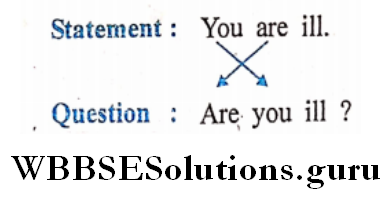
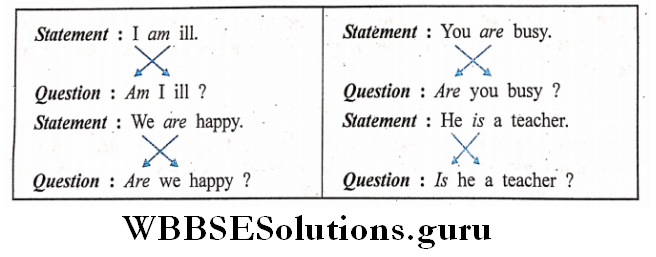
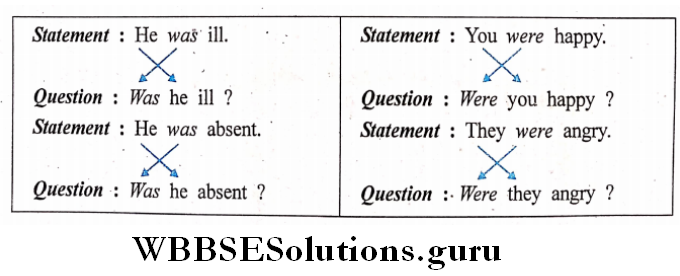
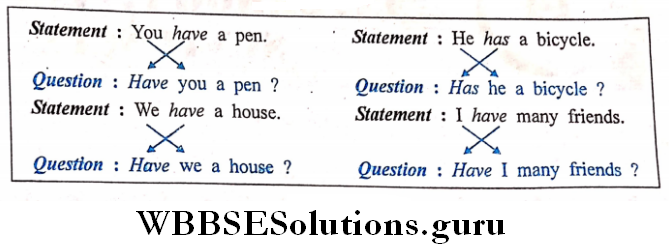
উপরের প্রথম Sentence-টি শুধুমাত্র একটি সাধারণ বক্তব্য (Statement) বোঝাচ্ছে, কিন্তু দ্বিতীয় Sentence-টির দ্বারা একটি প্রশ্ন (Question) করা হয়েছে। এই দ্বিতীয় Sentence-টি একটি Interrogative Sentence বা Question (প্রশ্নবোধক বাক্য)।

WBBSE Class 6 English Solutions

Read And Learn Also WBBSE Class 6 English Functional Grammar

যে বাক্য (Sentence) দ্বারা কোন প্রশ্ন করা হয় তাকে Interrogative Sentence বা Question (প্রশ্নবোধক বাক্য) বলে।

WBBSE Class 6 English Functional GrammarWBBSE Class 6 English Reading SkillsWBBSE Solutions For Class 6 English


এইবার নীচের উদাহরণগুলি দেখ :

1.

Interrogative Sentences 1

2.

Interrogative Sentences 2

3.

Interrogative Sentences 3

4.

Interrogative Sentences 4

WBBSE English Lesson 14 Grammar Solutions

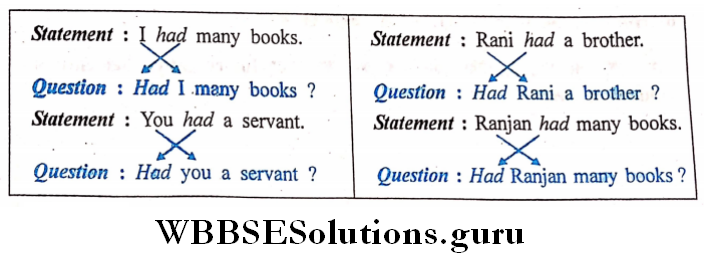
মূল verb “To be” এবং “To have” হলে প্রশ্ন করবার সময় এই verb-টি Sentence-এর আরম্ভে থাকে ও তার পরে Subject-টি বসে। Present Tense ও Past Tense উভয় ক্ষেত্রেই এরূপ হয়।

5.

মূল verb “To have” হলে Subject-এর পূর্বে Present Tense-এ do বা does এবং Past Tense-এ did বসিয়েও Interrogative Sentence বা প্রশ্নবোধক বাক্য তৈরী করা যায়। এক্ষেত্রে মূল verb “To have”-এর কোন পরিবর্তন হয় না। যথা :

Interrogative Sentences 5

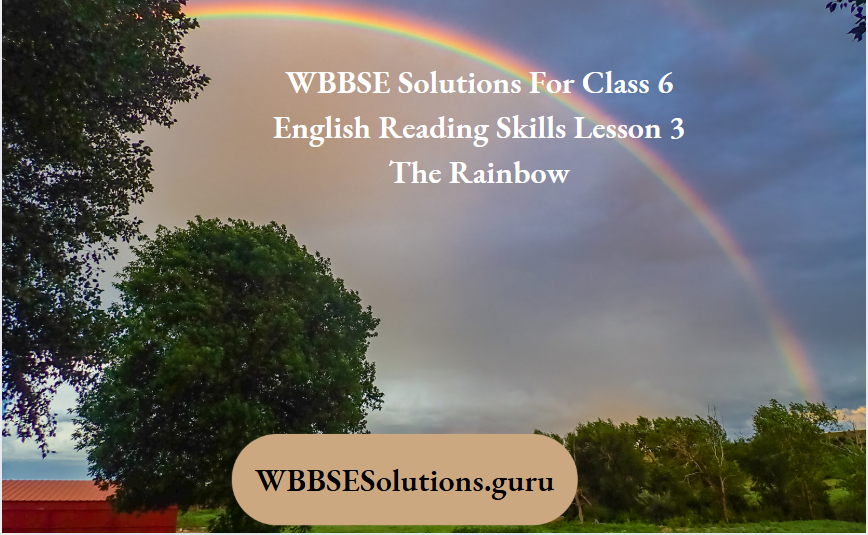
WBBSE Solutions For Class 6 English Reading Skills Lesson 3 The Rainbow

Lesson 3 The Rainbow

Word meanings:

  • Rainbow (রেইনবো – রামধনু
  • Sail (সেইল) – পাল তুলে ভেসে যাওয়া
  • Across the sky – আকাশের এক প্রান্ত থেকে অন্য প্রান্ত পর্যন্ত
  • Bow (বো) – ধনুক
  • Prettier (প্রেটিয়ার) – আরও সুন্দর
  • Bridge (ব্রিজ) – যুক্ত করে
  • Please (প্লিজ ) – মনে করো
  • Bridges – সেতু, সাঁকো
  • Heaven (হেভেন্) – আকাশ, স্বৰ্গ
  • Builds – তৈরী করে, নির্মান করে
  • Earth (আর্থ) – পৃথিবী
  • Far (ফার্ ) – আরও বেশি
  • Overtops (ওভ্যাপস্) – মাথা ছাড়িয়ে যায়

Read And Learn Also WBBSE Class 6 English Reading Skills

Substance :

The poet is a great lover of nature. He compares the beauties of certain man-made objects with those of natural objects of similar kind. She feels that clouds sailing in the sky are more beautiful than boats which sail on the rivers and seas. Bridges built over rivers are surely very charming no doubt. But the colourful rainbow that spreads through the sky seeming to bridge the earth to heaven looks more fascinating.

WBBSE Class 6 English Functional GrammarWBBSE Class 6 English Reading SkillsWBBSE Solutions For Class 6 English


Class 6 English Reading Comprehension PDF

বঙ্গানুবাদ :

কবি একজন মস্ত প্রকৃতি প্রেমিক। এখানে তিনি মনুষ্য-নির্মিত কিছু বস্তুর সৌন্দর্য্যের সাথে একই ধরণের প্রাকৃতিক জিনিসের সৌন্দর্য্যের তুলনা করেছেন। তিনি মনে করেন যে আকাশের ভাসমান মেঘেরা নদী এবং সমুদ্রে যে সব নৌকা ভেসে বেড়ায় তাদের চেয়ে অনেক বেশী সুন্দর। নদীর উপরে নির্মিত অনেক সুন্দর সুন্দর সেতু আছে, সে বিষয়ে সন্দেহ নাই । কিন্তু রঙ্গিন রামধনু আকাশে পরিব্যাপ্ত হয়ে পৃথিবী ও স্বর্গের মধ্যে যে সেতু নির্মান করে বলে মনে হয় তার সৌন্দর্য্য অনেক বেশী মনোমুগ্ধকর ।

WBBSE Solutions For Class 6 English Reading Skills Lesson 3 The Rainbow

Lesson 3 The Rainbow Examples Worked Out

Read the poem below and do as directed:

  • Boats sail on the rivers,
  • And ships sail on the seas;
  • But clouds that sail across the sky.
  • Are prettier than these.
  • There are bridges on the rivers,
  • As pretty as you please;
  • But the bow that bridges heaven,
  • And overtops the trees,
  • And builds a road from earth to sky,
  • Is prettier far than these.

1. Answer the questions below:

Question 1. Where do the boats sail ?
Answer:

The boats sail on the rivers.

Question 2. Where do the clouds sail ?
Answer:

The clouds sail across the sky.

Question 3. What is prettier than boats, ships and clouds ?
Answer:

The rainbow is prettier than boats, ships and clouds.

Question 4. What are the clouds compared to ?
Answer:

The clouds are compared to boats and ships.

Class 6 English Reading Skills Lesson 3 

Question 5. What does a rainbow do?
Answer:

A rainbow bridges heaven by building a road from earth to sky.

Question 6. Which, according to the poet, is the prettiest of all objects mentioned in the poem ?
Answer:

According to the poet, the rainbow is the prettiest of all objects mentioned in the poem.

2. Multiple Choice Question

Question 1. Ships sail on the

  1. Pond
  2. Sea
  3. Lake.

Answer: 2. Sea

Question 2. The poet talks about a bow that bridges-

  1. Heaven
  2. Sea
  3. River.

Answer: Heaven

WBBSE Class 6 English Chapter 3 Answers

Question 3. Bridges are on-

  1. Trees
  2. Rivers
  3. Buildings.

Answer: Rivers

Question 4. Clouds are prettier than-

  1. Rivers And Seas
  2. Rain And Sky
  3. Boats And Ships.

Answer: Boats and ships

Question 5. Rainbow builds a road from-

  1. Earth To Sky
  2. River To Sea
  3. Earth To Cloud.

Answer: Earth to sky

3. Fill in the blanks with appropriate words taken from the text. There are a few extra words.

  1. The girl is very pretty to look at.
  2. Dark clouds gathered on the horizon.
  3. A bridge has been built on the river.
  4. Be careful when you cross a main road.
  5. He picked up the bow to aim an arrow at the bird.

WBBSE Solutions For Class 6 English Reading Skills Lesson 4 The Shop That Never Was

Lesson 4 The Shop That Never Was

Word meanings:

Part-I

  • From Afar (ফ্রম অ্যাফার ) – অনেকদূর থেকে
  • Laughing At (লাফিং অ্যাট) – হাসাহাসি করছিলাম
  • Several Times (সেভরেল টাইম্স) – কয়েকবার
  • Tricks (ট্রিক্স) – জাদুর কৌশল
  • Dragged (ড্রাগ) – জোর করে টেনে নিয়ে গেল
  • Scratched – চুলকাল
  • Keenness (কীনেস্) – আগ্রহ

Read And Learn Also WBBSE Class 6 English Reading Skills

  • Unexpected (আন্এক্সপেকটেড) – অপ্রত্যাশিত
  • Forced (ফোর) – বাধ্য করা হয়েছিল
  • Stretched (স্ট্রেড) – বাড়িয়ে দিল (হাত)
  • Narrow (ন্যারো) – সংকীর্ণ, সরু
  • Merely (মেয়ারলি) – শুধুমাত্র
WBBSE Class 6 English Functional GrammarWBBSE Class 6 English Reading SkillsWBBSE Solutions For Class 6 English
  • Lit (লিট্‌ ) – আলোকিত
  • Blank (ব্ল্যাংক) – ফাঁকা
  • Counter (কাউন্টার্) – তাক
  • Palm (পাম্‌) – হাতের তালু
  • Crystal Balls (ক্রিস্টাল্ বল্স) স্ফটিক নির্মিত বল
WBBSE Solutions For Class 6 English Reading Skills Lesson 4 The Shop That Never Was

Part – II

  • Charge (চার্জ ) – দাম
  • Politely (পোলাইট্‌লি ) – বিনীতভাবে
  • Sword (সোর্ড) – শ্রদ্ধা তরবারী
  • Genuine (জেনুইন্ ) – আসল, প্রকৃত
  • Unique (ইউনিক্) – জুড়িহীন (যে রকম আর কোনও নেই)
  • Friendly (ফ্রেন্ডলি ) – বন্ধুভাবাপন্ন
  • Discovered (ডিসকাভার্ড ) – আবিষ্কার করল
  • Distrust (ডিস্ট্রাস্ট্) – সন্দেহ
  • Surprise (সারপ্রাইজ ) – বিস্ময়
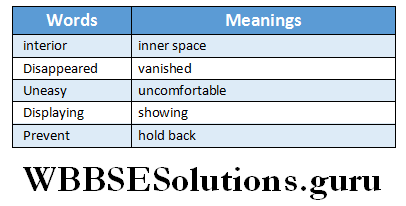
  • Clockwork (ক্লওয়ার্ক) – ঘড়ির ন্যায়
  • Was Making Fun Of – পরিহাস করছিলেন কলকব্জা
  • Tugged (টাগ্‌ড্) – জোরে টানল
  • Swept (সোয়ে) – ভরে দিল
  • Fancied (ফ্যাসিড) – কল্পনা করেছিল
  • Amazement (অ্যামেজমেন্ট – বিস্ময়
  • Astonishing (অ্যাস্টনিশিং ) – বিস্ময়কর

Class 6 English Lesson 4 summary

Part – III

  • Uneasy (আইজি) – অস্বস্তি
  • Genuine (জেনুইন্‌) – আসল
  • The Way Out – বাইরে বের হবার রাস্তা
  • Hide And Seek – লুকোচুরি খেলা
  • Thud (থাড্‌) – দুম্ শব্দ
  • Collided (কোলাইডেড্ – ধাক্কা লাগল বাধা দেওয়া
  • Scared (স্কেয়ার্ড) – ভীত
  • At A Loss – হতভম্ব হয়ে যাওয়া
  • Frighten (ফ্লাইটেন) – ভয় পাইয়ে দেওয়া
  • Ran Off (র‍্যান অফ্ ) – ছুটে পালাল
  • Emptiness (এম্পটিনেস্) – শূন্যতা
  • Stared (স্টেয়ার্ড) – হতচকিতভাবে তাকালাম
  • Displaying (ডিসপ্লেয়িং) – দেখিয়ে
  • Cab (ক্যাব) – ট্যাক্সি
  • Disappeared (ডিএ্যাপিয়ার্ড) অদৃশ্য হয়ে গেছে
  • Interior (ইটিরিয়র্) – অভ্যন্তর, ভিতর
  • Disturbed (ডিস্টার্বড ) বিরক্ত – অক্ষত

Lesson 4 The Shop That Never Was Examples Worked Out

Read the texts below and do as directed:

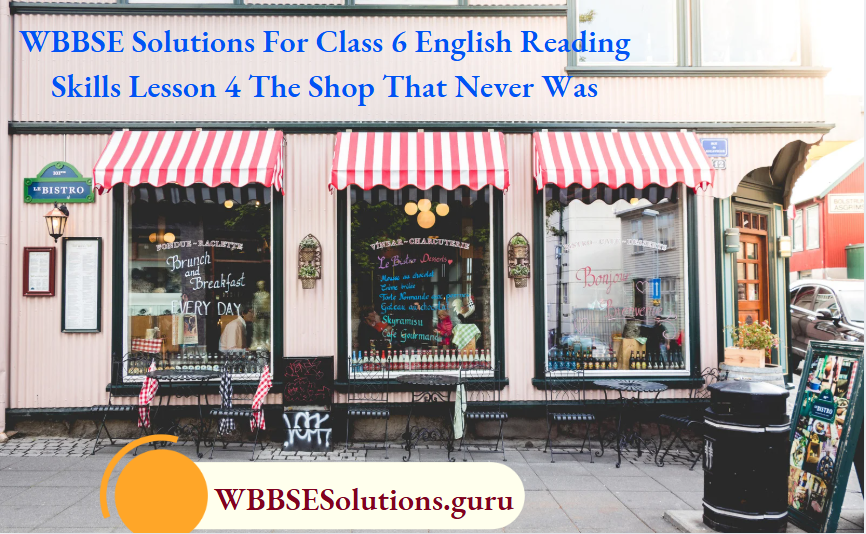
I had seen the Magic Shop from afar several times. I had passed it once or twice, but never had I thought of going in. One day, my son, Gip dragged me up to the shop. There was such keenness in him that I was forced to get in.

It was a little narrow shop, not very well lit. On the shop counter, there were several crystal balls. On the floor, there were magic mirrors: one to draw you out. long and thin and one to make you short and fat. While we were laughing at all these, the shopman appeared.
“How can I help you?” said he.

“I want to buy my little boy a few simple tricks,” I said.

1. Answer the questions below:

Question 1. Why did the narrator go to the Magic Shop?
Answer:

Dragged by his son Gip, the narrator was forced to go to the Magic Shop to buy a few simple tricks for him.

Question 2. What was there on the shop counter?
Answer:

There were several crystal balls on the shop counter.

Question 3. What did they see on the floor?
Answer:

On the floor, they saw magic mirrors.

Question 4. What was interesting about the magic mirrors?
Answer:

The magic mirrors were very interesting as they would make one appear long and thin or short and fat.

Question 5. What did the narrator want to buy for his son ?
Answer:

He wanted to buy his son a few simple tricks.

Class 6 English Reading Skills

2. Write True Or False Statements.

Question 1. The narrator used to visit the Magic Shop quite often.
Answer:

False

Question 2. The magic mirrors were hung on the wall.
Answer:

False

Question 3. The narrator saw the Magic Shop several times from a distance.
Answer:

True

Question 4. The shop was a small one, not so well-lit.
Answer:

True

Question 5. The narrator went to the shop with his son and daughter.
Answer:

False

3. Rearrange the following sentences in the correct order as they come in the text. Put the numbers in the boxes.

Question 1. Gip dragged his father to the Magic Shop.
Answer:

The narrator has passed the shop once or twice.

Question 2. The narrator had passed the shop once or twice.
Answer:

Gip dragged his father to the magic shop.

Question 3. There were different kinds of magic mirrors in the shop.
Answer:

The shop was a small one, not so well-lit.

Question 4. The shop was a small one, not so well-lit.
Answer:

There were different kinds of magic mirrors in the shop.

Question 5. The narrator told the shopman what he wanted to buy.
Answer:

The shopman appeared.

WBBSE English Lesson 4 Answers

Question 6. The shopman appeared.
Answer:

The narrator told the shopman what he wanted to buy.

4. Fill in blanks with suitable words taken from the list. There are a few extra words.

List of words: keenness, laughing, tricks, several, draw, narrow, counter.

  1. I went to his place several times.
  2. The lane is very narrow.
  3. He had a great keenness to learn the subject.
  4. The lady at the counter received me smilingly.
  5. Don’t try to play tricks with me.

2. “It’s in your pocket,” said the shopman, and there it was.
“How much does it cost?” I asked.

“There is no charge for glass balls,” said the shopman politely. “We get them free.” He drew a business card from his cheek and handed it to me. “Genuine Magic Goods, sir,” he said.

He now turned towards Gip with a friendly smile and said, “You wanted a magic box, didn’t you ?”

“Yes,” Gip said.

“It’s in your pocket,” he said. Gip discovered the box with surprise. Then the shopman quickly went behind the counter and was absent for a while.

“Let’s look behind the counter, Gip,” I said. “He’s making fun of us.’ Just then, he appeared again from a dark corner of the room. “You’d like to see our showroom, Sir ?” said he. Gip tugged my finger forward.

1. Answer the questions below:

Question 1. “It’s in your pocket”, said the shopman-What is meant by ‘It’ here?
Answer:

‘It’ here means the glass balls.

Question 2. Where were the glass balls found?
Answer:

The glass balls were found in Gip’s pocket.

Question 3. Why was there no charge for the glass balls?
Answer:

The glass balls were of no charge as the shopman got them free.

WBBSE Class 6 Reading Skills PDF

Question 4. From where did the shopman draw his business card?
Answer:

The shopman drew his business card from his cheek.

Question 5. Why was Gip surprised?
Answer:

Gip was surprised because he unexpectedly found a magic box in his pocket.

2. Writing True Or False statements.

Question 1. Gip found the glassballs in his bag.
Answer:

False

Question 2. The shopman demanded no money as cost for the glassballs.
Answer:

True

Question 3. Gip found the magic box in his pocket.
Answer:

True

Question 4. The shopman was absent for a while as he left the shop.
Answer:

False

Question 5. The shopman proposed to show them his showroom.
Answer:

True

3. Rearrange the following sentences in the correct order. Write the numbers in the boxes.

Question 1. The shopman disappeared behind the counter.
Answer:

The shopman handed over a business card to the narrator.

Question 2. The shopman handed over a business card to the narrator.
Answer:

Gip found a magic box in his pocket.

Class 6 English Lesson 4 Summary

Question 3. Gip tugged the narrator’s finger.
Answer:

The shopman disappeared behind the counter.

Question 4. Gip found a magic box in his pocket.
Answer:

The narrator felt that the shopman was making fun of them.

Question 5. The shopman appeared from a dark corner.
Answer:

The shopman appeared from a dark corner

Question 6. The narrator felt that the shopman was making fun of them.
Answer:

Gip tugged the narrator’s finger.

4. Find words in the text which mean the following:

  • Real = genuine
  • Courteously = politely
  • Pulled = tugged
  • Amazement = surprise
  • Found = discovered

3. In the showroom, there were many things that Gip fancied. He turned to this astonishing man with respect. “Is that a magic sword ?” he said.

Class 6 English Reading Skills

“A Magic Toy Sword-this is a unique one! It neither bends, breaks, nor cuts the fingers,” replied the shopman. I tried to find out what they cost, but the shopman did not pay attention to me. He had got Gip now. I saw, with a feeling of distrust, that Gip was holding this person’s finger as usually he held mine.

The shopman showed Gip magic-trains that ran without steam, clockwork and a box of soldiers that all came alive when one said a magic word. “You’ve never seen such a one !” said the shopman. “You’ll take that box ?”

“We’ll take that box,” I said.

And the shopman swept the soldiers back again, shut the lid, and waved the box in the air. And there it was, in brown paper, tied up and with Gip’s full name and address on the paper. He laughed at my amazement.

1. Answer the questions below:

Question 1. What is the speciality of the Magic Toy Sword?
Answer:

The speciality of the Magic Toy Sword is that it neither bends, breaks, nor cuts fingers.

Question 2. Why did the narrator fail to find out the cost of the magic items?
Answer:

The shopman did not pay any heed to the narrator’s queries, and was more interested in showing Gip the magic tricks. So the narrator could not know the cost of the magic items.

Question 3. Why did the narrator have a feeling of distrust?
Answer:

The narrator had a feeling of distrust because he saw that Gip was holding the shopman’s finger as he usually held the narrator’s.

Question 4. What items did the shopman show to Gip?
Answer:

The shopman showed Gip a magic toy sword, magic-trains that ran without steam, clockwork and a box of soldiers that came alive when one said a magic word.

2. Write True Or False Statements.

Question 1. The toy sword was a unique one.
Answer:

True

Question 2. The sword was breakable.
Answer:

False

Question 3. The shopman kept telling the price of the magic items.
Answer:

False

Class 6 English Reading Skills

Question 4. The toy sword was a magic item.
Answer:

True

Question 5. The magic train was run by steam engine.
Answer:

False

3. Find out from the text words opposite in meaning of the following words:

  • Hatred X Respect
  • Confidence X Distrust
  • Rarely X Usually
  • Dead X Alive
  • Close X Shut

4. I felt very uneasy and began to look for the way out. Turning to Gip, I saw him standing on a stool. The shopman was holding a big drum in his hand.

“We’re playing hide and seek, daddy!” cried Gip.

And before I could prevent him, the shopman had put the big drum over him. “Take that off,” I cried, “this instant. You’ll frighten the boy.”

The shopman did so without a word. He held the big. drum towards me to show its emptiness. The stool was empty, too. My boy had disappeared! “Where is my boy?” I said.

“You see,” he said, displaying the drum’s interior, “this is genuine magic !” I jumped at him and fell into utter darkness.

1. Complete the sentences with information from the text.

Feeling very uneasy, the narrator looked for the way out.
The narrator cried at the shopman to take off the drum because he thought that his son would be frightened in the darkness inside the drum.

The shopman held the big drum to show that it was empty.”
When the narrator found that his son had disappeared, he jumped at the shopkeeper.

1. Complete the sentences with information from the text.

1. Feeling very uneasy, the narrator looked for the way out.

2. The narrator cried at the shopman to take off the drum because he thought that his son would be frightened in the darkness inside the drum.

3. The shopman held the big drum to show that it was empty.”

4. When the narrator found that his son had disappeared, he jumped at the shopkeeper.

WBBSE English Lesson 4 Answers

2. Answer the following questions :

Question 1. What was the shopman holding?
Answer:

The shopman was holding a big drum.

Question 2. What did the shopman do with the drum ?
Answer:

He made Gip stand on a stool and then put the big drum over him and vanished him.

Question 3. What type of game was Gip playing?
Answer:

Gip was playing hide and seek game.

Question 4. What did the shopman do with the drum and what was the narrator’s feeling at that?
Answer:

The shopman put the big drum over Gip who was standing on a stool. At this the narrator cried out asking him to take the drum off as that would frighten the boy.

Question 5. What happened to Gip’s father when he jumped at him?
Answer:

When Gip’s father jumped at the shopman he fell into utter darkness.

Question 6. What was the genuine magic?
Answer:

The genuine magic was that the shopman put a big drum over Gip, and when he took it off, Gip was found totally vanished.

3. Multiple Choice Questions

Question 1. Gip was made to stand on a

  1. Chair,
  2. Stool,
  3. Sofa.

Answer: 3. Stool

Question 2. Looking inside the drum the narrator found

  1. His Son Sitting Inside-It,
  2. It Was Empty,
  3. A Magic Box Inside It.

Answer: 2. It Was Empty

Question 3. About the shopman’s show, the narrator thought that his son would

  1. Be Frightened,
  2. Enjoy It,
  3. Be Very Angry.

Answer: 2. Be Frightened

WBBSE Class 6 Reading Skills PDF

Question 4. On removal of the drum, the narrator found his son

  1. Has Completely Disappeared,
  2. Sitting On The Stool,
  3. Standing On The Ground.

Answer: 1. Has Completely Disappeared

4. Complete the chart below with words from the text:
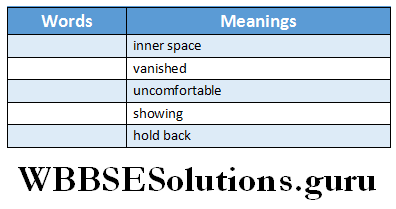
WBBSE Solutions For Class 6 English Reading Skills Lesson 4 The Shop That Never Was complete the chart

Answer:

WBBSE Solutions For Class 6 English Reading Skills Lesson 4 The Shop That Never Was complete the chart.

5 “Sorry, Sir, I didn’t see you coming,” someone said. I saw I was in Regent Street and I had collided with a man, and a yard away was Gip. He was carrying four parcels in his arm. He smiled at me. He did not look scared.
For a second I was at a loss. I stared round to see the door of the magic shop. It was not there. There was no door, no shop, nothing. I did the only thing possible in that mental state. I called for a cab.
I got in with Gip. “Dad !” said Gip at last, “that was a proper magic shop!” Gip looked completely undamaged.

He was neither scared, nor disturbed. There in his arms were four parcels containing items from the magic shop. Since then I have been up and down Regent Street several times looking for that shop. After all, I had not paid for the items.

1. Answer the questions below:

Question 1. Where did the narrator again find his son ?
Answer:

He found his son in Regent Street standing a yard away from him.

Question 2. What did Gip have in his hand?
Answer:

Gip had four parcels in his hand.

Question 3. How did he respond to his father?
Answer:

He responded to his father smilingly, not looking scared.

Question 4. Why was the narrator at a loss?
Answer:

The narrator was at a loss as he was totally confused for not being able to find the magic shop.

Question 5. Why did the speaker move up and down Regent Street?
Answer:

The speaker went up and down Regent Street to find the magic shop as he had not paid for the magic items.

2. Write True Or False Statements.

Question 1. Gip looked completely devastated.
Answer:

False

Question 2. The narrator collided with a man in Regent Street.
Answer:

True

Question 3. Gip considered it a proper magic shop.
Answer:

True

WBBSE Class 6 Reading Skills PDF

Question 4. The narrator could find the magic shop later on.
Answer:

False

Question 5. He did not pay for the magic items.
Answer:

True

3. Make sentences of your own with the following words:

The taxi collided with the car while trying to overtake it.

We hired a cab to go to his place.

He has gone to see a magic show.

It is not possible for me to go today.

I stared blankly at the paper in front of me.