WBBSE Solutions For Class 9 English Writing Skill Newspaper Report Writing

Writing Skill Newspaper Report Writing

Writing newspaper reports or reporting events like accidents, games and sports, meetings, festivals, etc. is done essentially in the same technique.

Some broad points are given and students are asked to write a report on them.

The best and easiest way to write a report based on the given points is to connect the different points in a logical way with suitable connectors or phrases so as to make a meaningful passage.

A report should be written in simple language to enable it to be easily understood.

(সংবাদপত্রের জন্য কোন ঘটনা, দুর্ঘটনা, সভা, উৎসব, খেলাধূলা ইত্যাদি বিষয়ে report সবই প্রায় একই নিয়মে লিখতে হয়। সূত্র অনুযায়ী ঘটনাগুলির পারস্পরিক ধারাবাহিকতা বজায় রেখে sentence-গুলিকে সুসংবদ্ধভাবে সাজিয়ে লিখতে হয়। Reportটি অতি সহজ এবং অর্থবহ হওয়া উচিত।

Read And Learn Also WBBSE Class 9 English Writing Skill

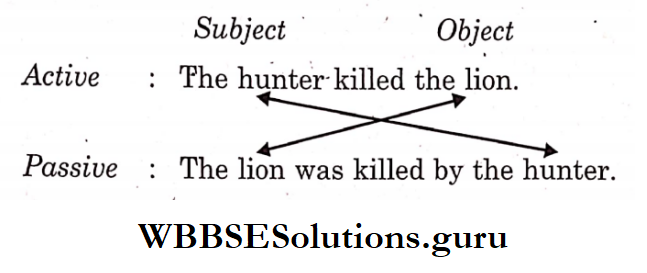
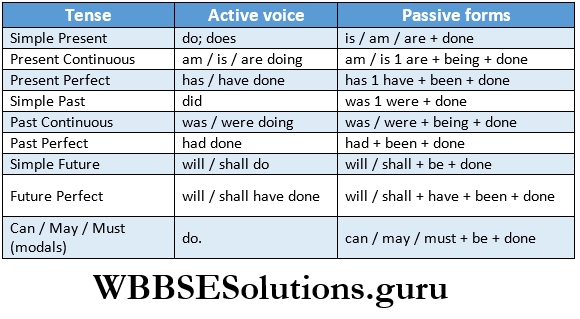
The basic rule of writing a report is that the sentences should be written in the passive voice as far as possible.

(Report লেখার সময় verb-গুলি অধিকাংশ সময়ে passive voice-এ করা হয়।) The following points may also be noted while writing a Newspaper Report:

WBBSE Solutions For Class 9 Fundamentals Of HistoryWBBSE Class 9 English Functional Grammar
WBBSE Class 9 Fundamentals Of History Long Answer QuestionsWBBSE Class 9 English Reading Skill
WBBSE Class 9 Fundamentals Of History Short Answer QuestionsWBBSE Class 9 English Writing Skill
WBBSE Class 9 Fundamentals Of History Very Short Answer QuestionsWBBSE Class 9 Maths Multiple Choice Questions
WBBSE Class 9 Fundamentals Of History Multiple Choice QuestionsWBBSE Solutions For Class 9 Maths
WBBSE Notes For Class 9 Geography and Environment
  1. The report must have a headin.
  2. Articles in the heading should be avoided.
  3. The place and time of reporting must be mentioned.

WBBSE Solutions For Class 9 English Writing Skill Newspaper Report Writing

Newspaper Report Writing Examples Worked Out

Question 1. Study the information below and write a report for a newspaper.

  • Date and time: August 28, afternoon
  • Place Cause: Calcutta and its neighbouring areas
  • Nature Effects: Depression in the Bay of Bengal
  • Nature: Continuous rain for an hour-rain accompanied by thunder and lightning.
  • Effects: Water-logging in the low-lying areas- disruption of communication- tram- services suspended-buses continued to move but diverted to other routes.
  • People affected: Persons coming from offices had to walk through knee-deep water.

Answer: Rain paralyses city life

Calcutta, 29th August: Calcutta and its neighbouring areas were lashed by rain accompanied by thunder and lightning for an hour yesterday afternoon.

As reported, the rain was caused by a depression in the Bay of Bengal.

Many low-lying areas of the city were water-logged causing disruption of communication.

Tram services had to be suspended. Buses, however, plied but their routes in many places were diverted.

People returning from offices were the worst sufferers. They had to walk through kneedeep water to reach their homes.

Question 2. There was a clash between two groups of antisocial elements on the 27th of August. Write a report on the basis of the following points.

  • Area : Kalabagan, Jorasanko police station
  • Time: Afternoon
  • Arms used: glass bottles and bombs
  • Effect: State bus damaged-two policemen injured–local traders shut their shops-five arrested and two injured.

Answer: Five were held for the clash at Kalabagan, 2 injured

Calcutta, Aug. 28: Two groups of antisocials clashed in the Kalabagan area under the Jorasanko police station on Tuesday afternoon. Five miscreants were arrested in this
connection.

Although there were no gunshots, the warring groups pelted glass bottles at each other and also flung bombs.

A state bus was also damaged when a stone was aimed at its glass window from behind.

Two policemen of the Jorasanko police station sustained injuries while attempting to disperse the conflicting groups.

Local residents, involved mainly in the iron trade, shut their shops and establishments and the area was patrolled by the police.

Later five were held for interrogation.

Question 3. Write a newspaper report on the Golden Jubilee Celebration of Adarsha Vidya Bhaban on the basis of the following points

  • Occasion: Golden Jubilee of Adarsha Vidya Bhaban
  • Place: Shyambazar, Kolkata
  • Date and time: December 9, 10, and 11
  • Programme: Inter School Quiz Competition, Quiz Master Ramen Basu and Sumit Roy- Exhibition, Discover Nature-awards given-cultural programme by students of Sangeet and Nritya Shikshan Bharati.

Answer:

Golden Jubilee Celebration of Adarsha Vidya Bhaban

Kolkata, 9th Dec: The Golden Jubilee Celebration of the Adarsha Bidya Bhaban was celebrated on Dec 9, 10 and 11 in the school premises at Shyambazar.

The occasion was marked by various programmes spread over three days and it generated lots of enthusiasm amongst the present and past students of the renowned institution.

An inter-school quiz competition was held on December 9. Around 100 schools participated.

Ramen Basu, assistant editor, TTIS, was the quizmaster while Sumit Roy conducted a special round.

After a tough preliminary and final round, Birla High School for Girls came out on top, while Salt Lake CA School and Ashok Hall came second and third, respectively.

An exhibition, Discover Nature, was held at the school compound on December 10 and 11.

Students displayed their projects with great enthusiasm, making it a success.

The exhibition kicked off with an award function for meritorious students.

In the evening a cultural programme was staged by the students.

The exhibition ended with another colourful show staged by the students of Sangeet & Nritya Shikshan Bharati.

Question 4. Go through the following information and in about 100 words write a newspaper report about a train robbery.

  • Date: March 2004
  • Place: Between Kharagpur and Bankura
  • Time: 8 p.m.
  • Name of the train: Nilachal Express
  • Results: Rs. 80,000.00 snatched from a businessman-ornaments, costly watches and cameras from others.

Answer: A Train Robbery

Khargpur, 21st March: A daring train robbery was committed yesterday night in the Khargpur-Bankura section of the South Eastern Railway.

Five dacoits armed with firearms and knives attacked the passengers in a compartment of the down Nilachal Express at about 8 p.m. and started looting them.

They were reported to have boarded the train as passengers at Tatanagar.

They demanded cash, ornaments and valuables from the passengers at gun point.

A scuffle arose and some passengers got injured. Ultimately as the train approached Kharagpur, they decamped with Rs. 80,000.00 snatched from a businessman and ornaments, costly watches, cameras and valuables robbed from other passengers.

The matter was reported to the Railway Police at Kharagpur. The investigation is on.

Question 5. Draft a newspaper report using the following points. Supply a suitable title.
Answer:

  • Place of drafting the report: Haldia
  • Date: June 6
  • Place of incident Incident: Kukrahati near Haldia in Midnapore
  • Inmncident: Boat capsized in the Hooghly 50 feared dead – 11 bodies recovered so far of them 7 women, and 2 children; 30 passengers swam ashore.
  • Cause: Stoppage of regular ferry service boats carrying passengers beyond capacity.
  • Effect of the incident: Local people enraged-road blockade was put up in protest.

Answer: A boat capsizes near Haldia

Haldia, June 6, ’95-A serious boat disaster took place today when an overloaded boat capsized in the river Hooghly at Kukrahati near Haldia in Midnapur.

There was a heavy toll of lives at least 50 persons were reported drowned.

Till late at night 11 bodies including 7 women and 2 children were rescued by the local people.

30 passengers escaped death by swimming ashore. According to local information, the stoppage of regular ferry service was the cause of this disaster.

In the absence of the ferry service, boats were loaded with passengers far beyond their capacity.

The enraged local people put up a road blockade for about 4 hours to air their grievance in protest.

Police officials came in time and rescue operations were carried out in full swing.

The boatmen are reported to be absconding.

Question 6. Write a newspaper report with the following points:

Points: Srinagar, 16th August, midnight militants hiding inside a mosque- army convoy modern weapons used-grenades thrown-whole night encounter – 4 militants killed-one jawan injured, taken to hospital-2 militants reportedly escaped-whole area cordoned -tense situation.

Answer: Four Terrorists killed in Srinagar

Srinagar, 18th August: In a whole night encounter between the army and the militants hiding inside a mosque in Srinagar, four militants were killed and one jawan was seriously injured. He was immediately removed to a hospital.

Two militants were reported to have escaped in the darkness.

Armed with modern weapons the militants first attacked a convoy of army passing through the area and threw grenades at them at random.

The army retaliated immediately. It was also reported that the militants were planning to attack a military base camp.

The encounter lasted for several hours. The whole area has been sealed off by the army. The situation at Srinagar is still tense.

Question 7. Write a short report on the train accident at Firozabad between the Purushottam Express and the Kalindi Express which collided on the morning of 20 August 1995. It should not be more than 150 words:

Points: Time 3.00 a.m.-conflicting reports of deaths-army called in a lot of lives lost 298 deaths – more than 400 injured 16 athletes among victims – many trains cancelled – announcement of a compensation of Rs. 10,000 to the next of kin – Rs. 250 for others injured.

Answer: Many were killed in Railway accident

Firozabad, Aug. 21: A serious train accident took place in the early hours of 20 August, at Firozabad on the Kanpur-Delhi Mainline when the Purushottam Express rammed against the Kalindi Express a little away from the distant signal.

The driver of the Purushottam Express is reported to have not received any red signal to bring the train to a halt.

The tragic accident-one of the worst in recent times-led to the loss of many lives.

Conflicting reports of death say that at least 298 people lost their lives and more than 400 were injured.

Among them were 16 athletes who were going to Delhi to take part in an athletic competition.

Rescue work started on a war footing and the army was called in to help the civil authorities. Many trains had to be cancelled.

Railway authorities announced a compensation of Rs. 10,000.00 to the next of kin for the dead ones and Rs. 250 for the others injured.

Question 8. A debating competition, open to all local High Schools was held in your school. Compose a report for an English daily, giving a short account of it. You may use the following particulars:

Points: Date, time and venue-subject (motion)-the name of a few participating schools – the quality of speakers – lively arguments for and against-effect on the audience-repeated cheers- winners.

Answer: A Debating Competition

Berhampur, 3rd December -A lively debating competition was held on 2nd Dec. at 4 pm at the local Town Hall.

The debate was open to all local High Schools. Four schools, namely Krishnath Collegiate School, Pareshnath Vidyapith, Berhampur High School and Kamala Girls’ High School participated in the debate.

The motion was “Playing cricket is a waste of time.” Speakers against the motion highlighted the qualities which the game of cricket develops in the player’s deep concentration, great patience, quickness of judgement and perfect self-control in fact, almost every quality necessary for success in life. It is a gentleman’s game and should be played to build up a student’s character.

The opposite view was that cricket is a legacy of British rule-a means to while away valuable time playing a match for five days.

Viewing on the TV by millions for days together encourages idleness and waste of time.

The debate reached an interesting level with lively arguments for and against the game.

The audience was charmed at the performance of the debtors and applauded them with occasional cheers. Ultimately the motion was defeated.

Sri. S.K. Roy the noted sports journalist was the judge, and Sri P.K. Mukherjee of Krishnath Collegiate School was adjudged the best debator.

Question 9. Study the information given below. Then write a newspaper report in about 120 words:

Points: Tagore’s Nobel medal stolen from museum – noticed next morning-time of theft not known thieves also took away a gold pocket watch and ring of India’s first Nobel laureate — several paintings, silverware – ivory items and jewellery and a sari of his wife Mrinalini Devi wore thieves fled breaking window grills – guards interrogated – President, P. M., C. M. informed C.I.D. team sent.

Answer: Tagore’s Nobel Stolen

Santiniketan, March 16: In a daring act of dacoity, poet Rabindranath Tagore’s Nobel Prize medal and citation with a number of his priceless artefacts were stolen from the Rabindra Bhaban Museum in Santiniketan last night.

The theft came to light only the next morning and it is not known when the incident actually took place.

Apart from the Nobel medal, the burglars also took away a gold pocket watch and a ring of poet Tagore, valuable paintings, silverware, ivory items and jewellery and wife Mrinalini Devi’s sari and gold bangles.

The dacoits appeared to have entered by breaking open the window grills even though the window was bolted from the inside. The guards who were on duty are being interrogated.

The incident has caused quite a stir in the country. The President, Prime Minister and Chief Minister have been informed and a C. I. D team sent for investigation.

A statewide alert has been sounded and the police have been asked to keep a watch on the city markets dealing in antiques.

Question 10. A teacher at your school has retired after his precious service of about thirty years. A farewell meeting was arranged. Write a report on it by using the following
points:

Points: Opening song by students-garlanding the teacher-speech by teachers and students-touching speech by the retired teacher – President’s address – your impression.

Answer: A Farewell Meeting

Kolkata, Nov. 15: A farewell meeting was held at the Chetla Boys’ High School today on the eve of the retirement of Sri S.K. Roy, Assistant Headmaster of the school, who bids adieu after putting in thirty years of service.

The meeting was attended by the students and teachers of the school and it was presided over by Sri Sailendra Nath Mukherjee, the Headmaster of the school.

The meeting started with an opening song sung by the students followed by garlanding of Sri Roy.

The teachers and students one after another spoke highly of Sri Roy’s vast erudition, wholehearted devotion to duty, deep love for the students and the institution and his amiable disposition.

His long association with the school would leave an abiding influence on the students and the teachers alike and everybody would surely miss him very much.

Sri Roy then gave a touching farewell address with almost a choked voice.

He wished the students good and advised them to keep up the good name of the school.

Then followed the president’s address who spoke on various aspects of Sri Roy’s association with the school and prayed to God for his long and peaceful retired life.

The students and teachers gave a touching send-off to Sri Roy with a heavy heart.

Question 11. Write a newspaper report on the Delhi Government’s decision to pay compensation to anti-Sikh riot victims on the basis of the following points:

Points: Delhi cabinet headed by Mrs Sheila Dikshit decides to pay relief- Rs. 1.25 lakh each govt. committed to implementing the High Court decision-no appeal against it-3000 persons injured- Rs. 36.52 crores needed-ex-gratia Rs. 500-2000 already paid-relief and rehabilitation measures.

Answer: Anti-Sikh riot victims to get Rs. 1.25 lakh

New Delhi, Sept. 12. After more than two decades of struggling to get justice, the 1984 anti-Sikh riot victims today got some respite with the Delhi Cabinet taking a decision to provide them financial relief.

The ex-gratia amount to be paid per injured person has been substantially increased to Rs. 1.25 lakh.

The decision was taken at a Cabinet meeting held today. The Delhi chief minister, Mrs Sheila Dikshit, categorically stated that her government is fully alive to the woes of 1984 riot victims.

She added that the government is committed to implementing the decision of the High Court and has also decided not to file any appeal against the order of the court in view of the specific assurance given by P.M.

Dr Manmohan Singh in the Lok Sabha. Close to 3,000 persons, who were injured during the riots, will be paid an amount of Rs. 36.52 crore.

“These persons have already received ex-gratia amounts between Rs. 500-2000.

Hence they will now be entitled to get the balance at the earliest,” the chief minister told reporters.

“We have also initiated several relief and rehabilitation measures to mitigate the misery of the persons affected during the riots.” Mrs Dikshit added.

Question 12. A fire broke out in a Metro Railway compartment. Write a report on it on the following points:

  • Date: 5.8.96
  • Time 8.50 a.m.
  • Location: Tollygunge Metro statio
  • Cause: short circuit in the line
  • Effect: black thick smoke-passengers panicked-disruption of service-anxiety compartments vacated-none injured.

Answer: Fire disrupts Metro Services

Calcutta, Aug. 6: The Metro Railway gave its commuters another fright on Tuesday when the compartment of a train station at Tollygunge caught fire at 8.50 a.m. resulting in
dense smoke and widespread panic.

Although there were no casualties, the accident caused disruption of metro services for three hours and sparked off fresh anxiety over the metro’s safety.

Officials said the accident occurred when the electrical lines under a carriage got short-circuited. The compartment caught fire 5 minutes before the scheduled departure of the train.

Passengers seated inside the train saw smoke arising from one of the bogies and raised an alarm.

All the compartments were vacated immediately and the fire was put out with the help of a fire extinguisher.

WBBSE Solutions For Class 9 English Writing Skill Story Writing

Writing Skill Story Writing

Story, event, or newspaper report writing is the art of writing, not an entirely original story or event in the student’s own way, but a story or event, the main plot of which is given or suggested in outlines.

How to proceed:

Read the outlines carefully till you have a clear idea of the plot of the story or the event.

Read And Learn Also WBBSE Class 9 English Writing Skill

  1. Begin the story or the event straightway without any introduction.
  2. Follow the order of the points given in the outlines.
  3. Do not omit any points.
  4. Connect the points naturally so that the whole passage may be a connected piece of good composition and not a mass of loose, disjointed sentences.
  5. The story of the report should not be unusually long.
  6. Give it a title or a heading.
    1. [ প্রদত্ত outlines থেকে গল্প বা ঘটনার plot বা বিষয়বস্তু সম্বন্ধে সুস্পষ্ট ধারণা না হওয়া পর্যন্ত সেগুলি পুনঃপুনঃ পড়বে।
    2. Plot সম্বন্ধে ধারণা হওয়ার পর কোনোরূপ মুখবন্ধ না লিখে একেবারে গল্প বা ঘটনা লিখতে আরম্ভ করবে।
    3. Outlines গুলি যে order বা পর্যায়ে দেওয়া থাকে তোমার রচনার কথাগুলিও সেই order-এ লিখতে হবে।
    4. তোমার লিখিত passageটি যেন প্রদত্ত outlines গুলির মধ্য দিয়ে স্বাভাবিকভাবে শেষ হয় সে বিষয়ে লক্ষ রাখবে, – কোথায়ও যেন কোনোরকম অসঙ্গতি বা কষ্টকল্পনা না থাকে।
    5. গল্পের মধ্যে dialogue or conversation or direct speech ব্যবহার করতে পারো, – কিন্তু তা যেন স্বাভাবিক হয়।
    6. অনেক সময় তোমাকে তোমার লিখিত গল্পের বা ঘটনার title -ও দিতে বলা হবে। এরূপক্ষেত্রে গল্পটির 24, 4 (-“Casablanca” or “The Dog in the Manger” or “A Greedy Dog”), বা গল্পের সঙ্গে সুসঙ্গত কোনো proverb বা প্রচলিত উক্তি ( যথা – “Grasp all, lose all”) title রূপে ব্যবহার করতে পারো।
  7. গল্পটি বেশি বড়ো করো না, নির্দিষ্ট শব্দসংখ্যার মধ্যে সীমাবদ্ধ রাখবে।]

WBBSE Solutions For Class 9 English Writing Skill Story Writing

Writing Skill Story Writing Examples Worked Out

Outlines: The Caliph of Bagdad loved an ugly slave very much courtiers asked him about it Caliph explained – he was going through a town a casket containing pearls fell down from a camel’s back-pearls were scattered around-slaves were told to go and have them for themselves – all went the ugly one stood by the Caliph his master was his most precious pearl.

WBBSE Solutions For Class 9 Fundamentals Of HistoryWBBSE Class 9 English Functional Grammar
WBBSE Class 9 Fundamentals Of History Long Answer QuestionsWBBSE Class 9 English Reading Skill
WBBSE Class 9 Fundamentals Of History Short Answer QuestionsWBBSE Class 9 English Writing Skill
WBBSE Class 9 Fundamentals Of History Very Short Answer QuestionsWBBSE Class 9 Maths Multiple Choice Questions
WBBSE Class 9 Fundamentals Of History Multiple Choice QuestionsWBBSE Solutions For Class 9 Maths
WBBSE Notes For Class 9 Geography and Environment


The Faithful Slave

The Caliph of Bagdad had a slave. He was ugly to look at, yet the Caliph loved him very much.

One day the courtiers asked the Caliph, “Oh, Lord, how is it that you love this ugly slave more than all others?” The Caliph answered, “Listen then to the story why I love him so much.

Once, as I was going through a town, a casket containing valuable pearls fell down from the back of a camel on my train.

The lid of the casket was broken and the pearls were scattered around. I told my slaves, ‘Go and have them. Everyone will get what he picks.

All the slaves went for the pearls-all but this ugly one. I asked him why he did not go.

He replied, ‘My Lord, to me you are the most precious pearl, I stay to guard you’.

The courtiers said with one voice, “Oh, Lord, truly the man deserves your special favor.

2. Outlines: An English soldier-prisoner of war in France for some years-war ends-returns home-sees a bird-seller-buys all the birds and sets them free-why.

Joys of Freedom or The English Soldier and the Caged Birds

Once an English soldier was made prisoner in a war between England and France.

He was put behind bars in prison for some time. After the war ended, the soldier was set free. He became a free man and returned home happily.

One day while he was walking near a market he saw a bird-seller with a big cage full of birds for sale.

The birds in the cage at once reminded him of his long sufferings during his prison life.

He bought all the birds with the cage and set them free one by one.

The birds flew away freely in the air. The amazed bird-seller asked the soldier why he had not kept the birds with him and, instead, allowed them to fly away.

The soldier said that he had set the birds free for he knew well the agony of captivity.

Moral: Nobody likes captivity.

3. Outlines: Two women claimed a baby as her own brought before the judge-both were strong in their claims the judge ordered the baby to be cut into two and given to them—the real mother found out.

The Real Mother

Once two women quarrelled over a baby, each claiming the baby as her own.

As the dispute could not be settled, they were brought before a judge for a settlement.

The judge tried his best to make them accept the truth, but both clung to their claims.

The wise judge then ordered the executioner to cut the baby into two equal parts and give each woman a piece.

At this, one woman kept quiet but the other one cried out in sorrow and said, “Sir, please let the child remain alive. Let her have the baby.

” The real mother was then found out. The judge gave the baby to the weeping woman and punished the other one.

Moral: Love for a child is the greatest sentiment in a mother’s heart.

4. Outlines: A dog and a donkey traveling together a basket of bread on the donkey’s back- both felt hungry-donkey ate grass on the roadside-dog asked donkey for a piece of bread- donkey refused-wolf appeared-donkey requests dog to stand by-dog refused-fate of the donkey.

The Dog and the Donkey

A dog and a donkey carrying a basket of bread were going together on a long journey.

After they had traveled for some time they felt hungry, and the donkey began to eat the grass that grew by the roadside.

The dog which could not eat grass, begged for a piece of bread from the donkey’s back, but the donkey would not grant the request.

Shortly after a wolf was seen coming towards them. Trembling with fear, the donkey begged the dog to stand by. But the dog would not.

He said that those who ate alone must also fight alone. With these words he went away, leaving the ass to be eaten up by the wolf.

Moral: Selfishness is always punished.

5. Outlines: A merchant on his way home through a forest – has a bag containing gold coins -heavy rains-drenched through and through-grumbles – suddenly a robber appears -aims his gun-gunpowder so wet that the gun did not go off-the merchant thanks rain.

Rain Saves the Merchant

A merchant was once returning home from a distant town. He was carrying a bag of gold coins with him.

While he was passing through a deep forest which was the abode of thieves and dacoits, suddenly it started raining.

The rain was so heavy that soon he got drenched completely. He began to grumble and blamed God for all these hazards and inconveniences.

All of a sudden, a robber with a gun appeared on the scene. He aimed his gun at the merchant and fired a shot.

But the gunpowder was so wet that the gun did not go off. The merchant started to run and found himself safe.

The merchant’s life and the gold coins were thus saved. He realized that the rain was a great boon to him.

He became grateful to God for saving his life.

Moral: God is good.

6. Outlines: A poor woodcutter-cutting a big piece of wood near a wide river – an axe slipped from his hand – very sad river goddess appeared-soothed – gave him a gold axe then a silver axe- the cutter said, “No, this is not mine” – again a common iron axe with old wooden handle – “Yes it’s mine” – goddess pleased – gave him all three- reward for his truthfulness.

The Honest Woodcutter

Once a poor woodcutter was cutting a big piece of wood near a wide river.

By chance, his axe slipped from his hand and it fell into the river.

He was very sad as he would not be able to cut wood any more to earn his livelihood.

He started crying. The river goddess took pity on him. She appeared before the woodcutter, soothed him, and gave him a gold axe.

The cutter said that it was not his. The goddess then brought a silver axe.

The cutter told her that it, too, was not his axe. The goddess again dived into the water and brought a common iron axe with an old wooden handle.

The woodcutter was very glad to see the axe and said that it was his own axe.

The goddess was very much pleased with the honesty of the woodcutter. She gave him all three axes as a reward for his truthfulness.

Moral: Honesty is the best policy.

7. Outlines: A dying farmer-three lazy sons – thought out a plan- dig up a field to find riches the old farmer dies – dug up the field – no result – later, got a rich crop and understood the full meaning of their father’s advice.

A Farmer and His Three Lazy Sons

An old farmer was on his deathbed. He had three sons who were very lazy. They would not work in the field.

The farmer was worried that his sons would suffer much after his death.

He thought of a plan to force them to work in the field. He told his children to dig up the field to find riches that were buried in the ground.

So saying the old farmer died. The three sons then began to dig up the field to find out the hidden riches but they could not find any.

Then they sowed seeds in the field which they dug. The land produced rich crops. They understood that the crops were the hidden treasures.

Moral: The fruits of toil are man’s best treasures.

8. Outlines: A farmer’s goose laid golden eggs – the farmer became rich by selling them one by one thought that the goose was full of golden eggs and wished to become very rich by getting out once all these eggs from the goose killed the goose- got nothing.

The Greedy Farmer and His Goose

A farmer had a goose. When she laid her first egg, the man was very much excited to find that it was not an ordinary egg, but a golden one.

The next day too the goose laid another golden egg. In this way, the farmer came into possession of a number of golden eggs. He became rich by selling them one by one.

But the more he got, the more did his greed increase. He thought the goose had many more golden eggs in her belly.

So he resolved to get them out all at once in order that he might become very rich in the quickest possible time. With this object in view he one day killed the goose and cut open her belly.

Alas! there was no golden egg inside. The farmer now repented having lost the treasure he had been getting daily for so long.

Moral: Grasp all, lose all.

9. Outline: One of the shoes of a farmer’s horse was without nails the farmer did not consider that this was of any importance-after he had ridden some distance the shoe came off-the horse began to limp- then it broke its leg- the farmer lost his wares and the horse.

The Importance of Little Things

A farmer saddled his horse to take his wares to market. When about to start he noticed that one of the horse’s shoes was without nails.

But he did not consider this of any importance. After he had gone some distance, the shoe came off.

The farmer thought the horse would be able to finish the journey on three shoes.

But as he rode further on, the animal began to limp on the ground.

The farmer now realized his mistake, but there was no blacksmith nearby.

So he went on, hoping that the horse would be able to carry him somehow to the marketplace.

But alas! That was not to be. The poor animal soon broke its leg and fell down.

Not only were the wares broken, but the farmer lost his horse forever for neglecting to nail the shoe in time.

Moral: Take care before it is too late.

10. Outlines: A nobleman builds a grand house – offers it to the first man proving himself contented a stranger claims it- nobleman turns him out if contented, he would not wish for the house.

The Test of a Contented Man

Once upon a time, a nobleman built a grand house. In front of the gate, he wrote the words, “The house is to be given to the first man who can prove himself contented”.

Shortly after, a stranger came before the nobleman and said, “I claim the house because I can prove that I am a contented person.”

The nobleman said in reply, “I am sorry I do not find any trace of contentment in you, for if you were really contented, you would not have wished to have this house.

” So saying he turned the man out?

11. Outline: Two friends walking by a jungle friend climbs up a tree – the other cannot bear smells his face thinks him dead and goes enquires what the bear whispered into his ear- who leaves you in danger?

bear suddenly comes out one of the lies flat on the ground feigning death away- the first friend comes down – the friend replies, ‘Don’t trust a friend

The False Friend

Once upon a time, two friends were walking by a jungle, talking about their love for each other.

Suddenly, they saw a bear come out of the jungle. One of the friends at once forgot all his boast of friendship and climbed up a tree to save himself, without any thought of the other.

The latter could not climb a tree. So, finding no alternative, he lay flat upon the ground and feigned death, as he had heard that the bear would not touch a dead body.

The bear came upon him, smelt his ears, nose, and face, and then went away, taking him for dead.

After it had disappeared altogether, the first friend came down from the tree and asked the other what the bear had whispered into his ears.

The latter had seen what a false friend he was, and replied, “The bear advised me never to trust a man who leaves his friend in danger.”

Moral: A friend in need is a friend indeed.

12. Outlines: Mice want to get rid of cat-discuss many plans – one suggests hanging a bell around the cat’s neck nobody comes forward to do so.

Mice in Council

Once there lived several mice in a house. They were always in fear of a cat that lived in the same house.

It used to attack the mice and often killed them. The mice did not know what to do, for nobody was sure when the cat would come.

So, one day they called a meeting to find a way out of the danger.

They went on discussing the situation for several hours, but there was no solution.

At last one young mouse stood up and said, ‘Let us tie a bell around the cat’s neck.

It will ring at every step when the cat moves. We will then run away.

The mice jumped up in joy at this idea. Then an old mouse slowly got up and said, ‘It is a very good idea indeed.

But who will bell the cat ?’ There was no reply. No one came forward to tie the bell.

Moral: Some things are said more easily than done.

13. Outlines: A wolf saw a lamb drinking water-wanted to eat it – blamed the lamb for mudding the water-next, the wolf said the lamb abused him a year back-lamb said he was not born then the wolf said that it was his father – he killed the lamb.

The Wolf and the Lamb

Once a wicked wolf was drinking water in a stream. Suddenly he saw a lamb drinking

water some distance down the stream. He wanted to kill the lamb and have a good meal.

So, he tried to find an excuse to kill him. He shouted at the lamb, “How dare you make my drinking water muddy ?

” The lamb protested and replied, “How can I make your water muddy, sir? You are at a higher place and the water flows down from you to me.

” The wolf sought out another excuse and said, “You called me names a year back.” “But, sir,” argued the helpless lamb,

“I was not even born then.” The wolf shouted, “If it were not you, then it must be your father, and that amounts the same to me.

” So saying, the wolf pounced ( 1) upon the helpless lamb and killed him.

Moral: A devil is never short of excuses.

14. Outlines: A hare in a match with a tortoise overconfident of swiftness- the tortoise plodded steadily- tortoise reached the goal first.

The Hare and the Tortoise

Once a hare challenged a tortoise to run a race. They set out for the race.

They ran together for some time. Soon the hare went far ahead of the tortoise. The overconfident hare took it easy and decided to rest.

As he was tired, soon he fell asleep. But the tortoise though slow, ran non-stop.

Soon he caught up with the sleeping hare and went far ahead of him.

When the hare woke up and saw the tortoise much ahead, he tried to overtake him desperately but failed.

The tortoise reached the goal first and won the race.

Moral: Slow and steady wins the race.

15. Outlines: A monkey lived on a tree near a shoe-makers shop-watched the shoemaker’s work would enter his room in his absence and work with the tools shoe-maker pretended to draw a razor across his throat several times went out returned to find the monkey dead with throat cut.

The Shoe-maker and the Monkey

A shoemaker was once very much troubled by the tricks of a monkey that lived on a tree near his shop.

It would watch the shoe-maker at work, and when he went out, it would come down and enter the shop and work with the tools like the shoe-maker.

The tools were damaged in this way. At last, an idea occurred to the shoemaker.

He took a razor and pretended to draw it across his throat several times in full view of the monkey.

Then he left the shop, leaving the razor lying open. When he returned he found the monkey lying dead in the shop with its throat cut.

Moral: Don’t ape blindly.

16. Outlines: Socrates was calm by the nature-his wife was of the violent temper-one day his wife abused him loudly-Socrates bore all calmly, sitting at the doorstep of his house-more furious, the wife emptied a bucket of water over his head-Socrates joined with the passers- their laughter and remarked, “After thunder comes the rain.”

Socrates and his Calm Temper

Socrates, the famous Greek philosopher, was noted as much for his wisdom as for his calmness.

His wife, on the contrary, was of a violent temper and flew into passion on the slightest excuse.

One day she became more furious than ever and began to abuse her husband in the strongest terms.

Socrates, determined not to be put out, bore all this calmly and sat at the doorstep of his house, looking out on the public street.

This calmness and silence of the philosopher made the wife more furious.

She took up a bucket of water and poured out its contents over her husband’s head.

The passers-by on the street felt very much amused by the incident.

Socrates joined with them in their laughter and merriment, and remarked, “This was what was expected,-after thunder comes rain.”

17. Outlines: A fox-hungry-grapes hanging up-fox cannot reach them “Grapes are sour.”

The Fox and the Grapes, Of Grapes are Sour

A fox once felt very hungry and began to look for something to eat.

After some time he came to a vineyard laden with ripe grapes. The fox was very much delighted and thought of satisfying his hunger with the grapes.

They were, however, too high up. The fox stood upon his hind legs, but could not reach them.

He then took several jumps upwards; still, they were beyond his reach.

They continued to hang temptingly before his eyes. When the fox, at last, understood that he could never get at them, he gave up the attempt and went away.

He tried to console himself with the thought that the grapes were not surely fit to be eaten, they were sour.

Moral: A fool despises what he cannot get.

18. Outlines: Two cats quarrel over a piece of cake-monkey becomes the arbitrator-eats up the whole cake on the plea of making the parts equal.

Quarrelling Cats and the Monkey Judge

One day two cats stole a piece of cake from a house. But they could not agree about the proper division of the spoil.

So they went to a monkey to decide the dispute. He brought in a weighing balance, and breaking the piece of cake in two, put them on the two sides of it.

As one piece was found to weigh heavier than the other, he took a bite from it on the plea of reducing the weight.

But he purposely took a far bigger bite than proper. The result was the piece that was lighter before became heavier now.

This process went on and gradually the size of the cake was reduced.

The cats saw through the game but dared not say anything. At last, when the cake was almost finished, they gathered the courage to ask for what was left.

The monkey refused. He said it was the price of his labor and put it in his mouth. The cats went away, sad but wise.

Moral: It is better to settle awards amicably.

19. Outlines: A farmer’s daughter going to market with a can of milk on her head – lost in daydreaming-dreams of being very rich with many suitors – rejects them all – nods her head in pride – the result.

A Young Farmer Girl and Her Daydreams

A young farmer girl was of a romantic turn of mind, rather given to daydreams.

One day she went to market with a can of milk on her head. As she walked on, she gave free play to her romantic ideas. She would accumulate profit on the sale of her milk every day and buy more and more cows with it.

She would soon have a large number of cows, which would give her enough milk to make her rich.

She would then build a new house for herself, and her dresses too would be the envy of the neighbouring maids.

The young men of the locality would now gather around her, suing for her hand, but she would reject them all as too much
beneath her.

So lost was the girl in her dream that she actually gave a proud shake of her head to express her rejection.

The can on her head fell down at once, spilling all the milk on the ground.

The girl got a rude awakening from her foolish dream, and tears began to roll down her cheeks.

Moral: Never try to build a castle in the air.

20. Outlines: A crow lived on a tree-a snake lived in a hole at the foot-it ate up the crow’s young ones the crow stole the necklace of the prince-dropped it into the snake’s hole- the king’s men found it-dug into the hole-snake killed.

A Crow revenges herself upon a Snake

A snake lived in a hole at the foot of a tree. High up on its branches was the nest of a crow containing her young ones. The snake used to eat up a young bird every day.

The crow at last thought of a plan to get rid of her enemy. She stole the necklace of the prince from the royal palace nearby and dropped it into the snake’s hole after scattering a few rubies from it here and there near its mouth.

The king was very much agitated at the loss and sent out men to find out the necklace.

In course of their search, they noticed the scattered rubies near the hole.

As they came to the spot, they saw the necklace inside and dug it out after killing the snake.

21. Outlines: A crow on a tree-a bit of flesh in her beak-a fox praises her beauty but deplores that she has no voice-the crow tried to sing-drops the meat-fox gets the meat-
runs away.

The Vain Crow

A crow sat on a tree with a bit of flesh in her beak. A fox saw her and thought of having the flesh. He said, “How beautiful the crow is;-how glossy her feathers; but alas! God has given her no voice.

It is certainly very cruel of Him.” The crow was flattered by the praise and gave a loud caw to prove that she had a voice. The flesh dropped from her beak.

The fox picked it up and went away saying, “Vain bird, had you been half as wise as you are vain, you would not have lost the flesh.”

Moral: Vanity leads to misfortune.

22. Outlines: A wolf meets a stout dog-dog speaks highly of his lot-good food and no work except keeping watch at night-wolf sees a mark around the dog’s neck-dog explains it to be the mark of the chain-the wolf rejects the dog’s proposal-goes away.

The Wolf and the Dog

One day a wolf chanced to meet a stout dog. As they fell into conversation, the dog spoke highly of the comforts of his life.

He was the pet of his master’s family and was well-fed and well-taken care of. As to work, he had nothing to do except keep watch at night.

The wolf complained that his own lot was quite different. He was never sure of food and had sometimes to go without it for the whole day.

This was why he was so ravenous by nature. The dog pitied him with a superior air.

Just then the wolf noticed a mark around the dog’s neck and enquired what it was.

The dog replied that it was the mark of the chain in which he was kept. The wolf said, “So you are not free at all. Well, I no longer envy you.

I prefer my freedom without food a thousand times to your well-fed and comfortable life of bondage.” So saying, the wolf went away.

Moral: Freedom is always preferable to the comforts of life.

23. Outlines: A fox fell into a well- could not come out – a goat came-fox invited him to drink goat jumped in-fox leaped on its back and got out -goat left behind.

The Fox and the Goat

Once a fox fell into a well. Though he tried his best to come out, he failed.

He did not know what to do. In the meantime, a goat came in to drink water.

Seeing the fox inside, he wanted to know what he was doing inside.

Suddenly a plan came to the head of the fox. “I am here to drink water.

The water is really sweet. Why don’t you try it yourself?” he said.

The goat believed it and jumped into the well. The fox immediately climbed up the goat’s back and jumped out of the well, leaving the goat behind.

Moral: Look before you leap.

WBBSE Solutions For Class 9 English Writing Skill Describing A Process

Writing Skill Describing A Process

A “Process” means a connected series of actions, operations, changes, etc. required to get a finished product or to arrive at the final result. Usually, a flowchart or an outline is given and the students are asked to write a paragraph describing the process.

Description of a process is usually done in the Passive Voice

Writing Skill Describing A Process Examples Worked Out

1. Preparation of Tea:

Outlines: Cold water in a kettle-boil it-tea leaf put in a tea-pot-boiled water poured into the tea-pot-left for 2 minutes-sugar and milk added-stirred-poured in cups-served.]

To prepare tea, some cold water is first taken in a kettle. It is then boiled in an oven till the vapour comes out. Tea leaves are next put in a tea pot and the boiled water is poured into it.

Read And Learn Also WBBSE Class 9 English Writing Skill

It is then left for two minutes for the leaves to soak. Sugar and milk are now added to it and the whole mixture is stirred with a tea spoon.

The tea is now ready. It is poured into cups through a strainer and served hot.

2. Processing of Guava Jelly:

[Outlines: Collecting ripe guavas-sorted and cleaned-cutting into small pieces-boiled, crushed seeds separated-sugar, syrup and preservative added-boiled again to make it thick-cooling and bottling in sterilised bottles-sealed and labelled-ready for sale.]

First, ripe guavas are collected from the garden. These are then sorted out and the rotten ones are removed.

WBBSE Solutions For Class 9 Fundamentals Of HistoryWBBSE Class 9 English Functional Grammar
WBBSE Class 9 Fundamentals Of History Long Answer QuestionsWBBSE Class 9 English Reading Skill
WBBSE Class 9 Fundamentals Of History Short Answer QuestionsWBBSE Class 9 English Writing Skill
WBBSE Class 9 Fundamentals Of History Very Short Answer QuestionsWBBSE Class 9 Maths Multiple Choice Questions
WBBSE Class 9 Fundamentals Of History Multiple Choice QuestionsWBBSE Solutions For Class 9 Maths
WBBSE Notes For Class 9 Geography and Environment


The guavas are now cleaned with water and cut into small pieces.

These are then boiled in water and crushed to form a pulp. The pulp is next passed through a sieve to remove the seeds. Sugar, syrup and some preservatives are then added to the pulp and the mixture is boiled again till it becomes thick.

It is next allowed to cool and we get guava jelly. This is now filled in sterilized bottles which are sealed and labelled. They are now ready for sale.

WBBSE Solutions For Class 9 English Writing Skill Describing A Process

3. Rubber Processing:

[Outlines: LATEX-milk white liquid-latex collected from rubber plantations-sent to factory- treated with chemicals-get rubber slabs-slabs cut into pieces–pressed with rollers-sheet treated in smoke-house for longer preservation-smoked and dried into sheets-sent to market.]

Rubber is a very useful material. It is produced from the milk-white liquid called latex obtained from rubber plants. Latex is first collected from rubber plantations.

The collection is then sent to factories in containers. The thick latex is now mixed with chemicals. It is turned into rubber slabs.

The slabs are cut into pieces and pressed with rollers. Thus sheets of rubber are obtained.

The rubber sheets are next sent to the smoke house for treatment.
This treatment enables the rubber to be preserved for a long period of time.

The treated rubber turns into dry sheets of rubber. These are then packed and sent to the market for sale.

4. Making Glassware:

[Outlines: Glass made from pure white sand-heated to a very high temperature-melts into thick syrup-soda and lime added to make it strong-long pipes are used to blow the molten mass- ball-shaped semi-molten things-twisting and turning cools down-beautiful glassware.]

Glass is made from pure white sand. When heated to a very high temperature, sand melts into a thick syrup. Soda and lime are next added to make it strong.

Long pipes are then used to blow the molten mass into ball-shaped semi-molten products.

A little bit of twisting and turning of this product gives varied forms of vessels which on cooling give us beautiful glassware.

5. Soap Making:

[Outlines: Coconut oil, caustic soda and water mixed in correct proportion-heating for half an hour allowing to cool-adding common salt-adding perfume-left for 12 hours-cutting to pieces- packed and sent to market. ]

To prepare soap coconut oil, caustic soda and water are mixed in the correct proportions.

The whole mixture is next heated for half an hour and then allowed to cool.

A requisite amount of common salt and perfume is then added to it.

The whole mixture is then left for 12 hours. The entire matter will solidify by this time.

It is then cut into pieces which are wrapped with colourful paper and packed in cartons. The soap pieces are now ready for marketing.

6. Formation of Rain:

[Outlines: Sun rays turn water in seas and streams into vapours in the sky the higher it goes the cooler it becomes → condenses into clouds hold water drops → falls on earth as rain. ]

water vapour rises high and becomes too heavy to
We know that three-fourths of the earth is water.

When sun rays fall on the seas, rivers, lakes, etc, the water gets heated and turns into vapour.

The hot vapour, being lighter than air, rises up and comes in contact with the cool air high in the sky.

The higher it goes, the cooler it becomes. When it becomes very cold, it condenses into droplets of water and forms clouds.

With more condensation the clouds become heavy and they can no longer hold the water droplets. These then fall on the earth in the form of rain.

7. Recruitment of Air Men by the Indian Air Force:

[Hints: Advertisement in newspaper-application-written test on Mathematics, Language and General knowledge-appearance before the Interview Board-medical examination-endurance test-selection-appointment letters follow. ]

For recruitment of Air-men in the Indian Air Force, advertisements inviting applications from candidates are published in important dailies.

The applications are then scrutinised and those found eligible are asked to sit for a written test on Mathematics, Language and General Knowledge.

The candidates securing qualified marks are next asked to appear before an Interview Board.

This is followed by Medical Examination. Then comes the Endurance Test which is the toughest part of all.

Only those who get through this last hurdle are selected finally as Air-men.

Appointment letters are then sent to the selected candidates.

8. Bringing out a School Magazine:

[ Hints: A magazine committee formed-notice given by the secretary-hand written writings collected-stories, poems, pictures, essays, and cartoons collected both in Bengali and English-writings sorted-good ones selected-a draft magazine made-manuscripts and a model of the book sent to the printers-proof correction-printed-distributed.]

To bring out a school magazine, first, a magazine committee is formed with the assistant headmaster as its secretary and a few other teachers and some senior students as the other members.

Notice is given by the secretary inviting writings from students and teachers.

The handwritten matters comprising stories, poems, pictures, essays, cartoons, etc. both in English and Bengali, are collected.

They are then sorted by the committee and the good ones are selected.

A draft magazine is then made and the manuscripts and the model book are sent for printing.

After several rounds of proof correction, the magazine is finally printed and bound by the binder.

The magazines are now ready for distribution.

9. Making a Piece of Pottery:

[Hints: Lump of clay taken-placed on flat turning wheel-potter gives shape with hands- baked in a kin-coated with a glaze for water-proofing-fired-painted-fired again-ready for the market. ]

A lump of clay properly pugged (“IN ZiHliüf)) is taken and placed on a flat turning wheel.

The potter rotates the wheel with a stick and gives shape to the piece of clay with his expert hands. The piece is then baked in a kiln.

After this, it is coated with a glaze for waterproofing. The piece is then fired.

It is painted with colours and decorated with various designs and fired again. The piece of pottery is now ready for sale in the market.

10. Manufacture of Paper:

Hints: Raw materials-wood, bamboo, grass, rags-cut into pieces, immersed in water and made into pulp-mixed with lime for whitening-Pulp is boiled-passed through wire meshes-wet paper-passed over heated rollers-thin sheets of paper-wound in rolls and sent to market]

We use lots of paper in our daily life. It is manufactured in factories in a big way to meet our demand.

Paper is generally made from four basic raw materials. These are wood, bamboo, rags and grass.

First, they are chopped into pieces, soaked in water and made into pulp with the help of a machine.

This is now mixed with an adequate quantity of lime for whitening. The pulp is then boiled thoroughly and allowed to pass through wire meshes.

We get the wet paper at this stage. This wet paper is then passed over heated rollers for drying and pressed into thin sheets. The paper is then wound in rolls and sent to market.

11. Production of Newspapers (M.P.-1991):

[Outlines: News collected by press reporters-pictures taken by press photographers-sorted and edited-types set in machines-paper rolls inserted-printed-folded and cut-newspapers ready for distribution-delivered.]

Production of newspapers is a rather simple process. First, news and pictures collected by the press reporters and press photographers are taken to the editor where they are edited.

Then types are set in machines and paper rolls are inserted in the printing machine.

The printing machine is then operated and the news is printed on the paper.

The newspapers are then folded and cut. These are now ready for distribution.

They are then collected by vendors or hawkers who deliver them to the readers at home.

12. Preparation of Re-hydration Mixture (M.P.-1992):

[Outlines: Clean hands, pots, teaspoon, tablespoon, cup-1 litre of water boiled-poured in a pot-2 tablespoonfuls of sugar or honey-1/4 teaspoonful of ordinary salt- orange juice 1/2 cup or a few drops of lemon juice-1/4 teaspoonful of soda bicarb (commonly called edible soda)-stirred-ready.]

A mixture useful for treating dehydration and diarrhoea is prepared by adding sugar, soda bicarb, ordinary salt and orange juice in required quantities in boiled water.

First, clean your hands properly and take a pot, teaspoon, tablespoon and a cup-all clean. Boil one litre of water, pour it into a pot and cool it.

Add 1/4 teaspoonful of ordinary salt, 2 tablespoonfuls of sugar or honey, 14 teaspoonfuls of soda bicarb and 1/2 cup of orange juice or a few drops of lemon juice to the water.

Stir the mixture well till the ingredients are dissolved. The mixture is now ready for use.

13. Hand Made Paper (M.P.-1994):

[Outlines: Rags /torn clothes-cut into small pieces-washed and cleaned-soaked and bleached for 3-4 days-beaten into pulp-spread and lifted in fine wire-net trays-overturned in blanket pieces- dried in sun or heating chamber-paper lifted from blanket-dipped in liquid gum-dried and packed- ready for market.]

The basic materials required for making handmade paper are rags or torn clothes. Rags and torn clothes are first collected.

They are then cut into small pieces, washed and cleaned thoroughly and soaked in water with bleaching powder for three or four days.

The material is then beaten into pulp and spread and lifted in fine wire-net trays.

Excess water is thus drained out. The whole thing is then overturned on blanket pieces and dried in the sun or a heating chamber.

The paper is then lifted from blanket pieces and dipped in liquid gum.

These are now dried again for some time and then packed. Handmade paper is now ready for sale in the market.

14. Production of Steel:

[Outlines: Iron ore mixed with coke and limestone taken to blast furnace-melted under high temperature-pig iron produced-purified in a special processor-steel.]

Steel is produced from iron ores. The ore is treated in different ways.

First, it is collected from mines. It is then mixed with coke and limestone and taken to a blast furnace where it is heated to a very high temperature.

It melts and pig iron is thus produced. It is then purified by a special process and steel is obtained as the final product.

WBBSE Solutions For Class 9 English Writing Skill Paragraph Writing

Writing Skill Paragraph Writing

If you look at any printed book of English prose selection, you will see that the selected pieces have several sections. Each of these sections is a paragraph.

Actually, a paragraph is a group of sentences all relating to the same topic or subject.

Note that-

Each paragraph must deal with only one topic or idea having some unity.

The controlling idea is usually given in the opening section of the paragraph.

The sentence which contains the idea is called the topic sentence or the key sentence.

Read And Learn Also WBBSE Class 9 English Writing Skill

The other sentences merely develop this topic in an orderly and logical way so that the entire paragraph reads as a connected whole.

The first line of every paragraph is indented, i.e., begins a little to the right in comparison with other lines.

The summary of a passage is a reproduction of the main idea or ideas of the original in a brief and intelligible form without in any way changing its meaning.

WBBSE Solutions For Class 9 Fundamentals Of HistoryWBBSE Class 9 English Functional Grammar
WBBSE Class 9 Fundamentals Of History Long Answer QuestionsWBBSE Class 9 English Reading Skill
WBBSE Class 9 Fundamentals Of History Short Answer QuestionsWBBSE Class 9 English Writing Skill
WBBSE Class 9 Fundamentals Of History Very Short Answer QuestionsWBBSE Class 9 Maths Multiple Choice Questions
WBBSE Class 9 Fundamentals Of History Multiple Choice QuestionsWBBSE Solutions For Class 9 Maths
WBBSE Notes For Class 9 Geography and Environment


Paragraph writing may involve exercises in various forms. These are:

  • Summarising Information, Facts.
  • Transfer Of Information From Tables, Charts, Diagrams, Pictures, Etc.
  • Description Of Places, Persons, Objects.

A few such examples are worked out below. Follow them carefully and these will help you to learn the art of transferring the information into a paragraph or summary.
WBBSE Solutions For Class 9 English Writing Skill Paragraph Writing

Writing Skill Paragraph Writing Examples Worked Out

Question 1. Write paragraphs on the following topics based on points given against each:

Rabindranath Tagore

  • Name: Rabindranath Tagore
  • Date of birth: 1861
  • Place of birth: Jorasanko, Kolkata
  • Father’s name: Maharshi Debendranath Tagore
  • Family background: Very rich, cultured, zamindar family
  • Early visit abroad: Went to England several times in childhood
  • First opera : Bhanu Singher Padabali
  • Started composing: From early childhood
  • Nobel Prize: On Geetanjali in 1913
  • His greatest creation: Santiniketan
  • Name of his wife: Mrinalini Devi
  • Works: Novels, short stories, dramas, poems, composing music
  • Other fields of activity: A great supporter of the nationalist movement, international brotherhood, and equality among mankind
  • Death: 1941

Answer: Rabindranath Tagore, one of the greatest sons of India, was born in a very rich, cultured, and zamindar family at Jorasanko, Calcutta, in 1861.

His father’s name was Maharshi Devendranath Tagore. He went to England several times in his early childhood.

He showed great promise as a writer and composer² from his early childhood. His first opera Bhanu Singher Padabali created a sensation.

He was married to Mrinalini Devi. Rabindranath wrote a large number of dramas, novels, short stories, poems, etc.

His most brilliant work was Geetanjali for which he was awarded the Nobel Prize for literature in 1913.

However, his greatest creation was Santiniketan. He was not only a great writer and composer but also a strong supporter of the nationalist movement.

He also worked for the international brotherhood” and advocated equality among mankind. He died at the age of 80 in 1941.

  1. ভবিষ্যত উৎকর্যের অনুকূল পূর্বলক্ষণ
  2. সুরকার
  3. ভ্রাতৃত্ব
  4. সমর্থন করেছিলেন

Question 2. Sir J.C. Bose

  • Name: Sir J. C. Bose
  • Year of birth: 1858
  • Place of birth: Mymensingh, now in Bangladesh
  • Education: Village Pathsala, St. Xavier’s School, B. A. from St Xavier’s College, B. Sc. from Cambridge University
  • Service career: Professor, Presidency College, carried out research on Electro- magnet and plant life (1884-1915)
  • Post-retirement work: Founded Bose Institute (1917)
  • Death: 1937

Answer: Sir Jagadish Chandra Bose was born in the year 1858 in Mymensingh, now in Bangladesh.

After receiving primary education in the village Pathsala he came to Calcutta and took admission at St. Xavier’s School.

He completed his graduation from St. Xavier’s College. Then he went to England and took his B. Sc. degree from Cambridge University.

On his return to India, he joined Presidency College, Calcutta, as a Professor.

He did extensive research work on Electro-magnet and plant life during his service career from 1884 to 1915.

After retirement, he founded Bose Institute in Calcutta in 1917.

This became a great center for scientific research in India. As a scientist, Sir J. C. Bose is ranked as one of the greatest in the world. This great scientist died in 1937.

Question 3. Kshudiram Bose (M. P. 1992)

Points: Birth in Midnapore in 1889-a spirited boy association with a revolutionary party from school life left for Muzaffarpur with Prafulla Chaki on a mission to kill Kingsford, a tyrant magistrate Kingsford unhurt-Kshudiram arrested and sentenced to death-faced death with Vande Mataram in his lips.

Answer: Kshudiram Basu, the great patriot’ and freedom fighter², was born in 1889 in Midnapore.

He was a highly spirited boy from his early childhood. He became associated with a revolutionary party from his school days.

Kingsford, an Englishman who was notorious for his tyranny5, was the magistrate of Muzaffarpur at that time.

To put an end to this tyranny, Kshudiram and Prafulla Chaki left for Mujaffarpur on a mission to kill Kingsford.

Unfortunately, the plan misfired and Kingsford escaped unhurt. Kshudiram tried to escape but was soon arrested, tried, and sentenced to death.

But Kshudiram was a true patriot and a fearless freedom fighter. Undaunted, he faced the situation boldly and calmly.

He went to the gallows in high spirits and embraced death singing Vande Mataram.

  1. দেশপ্রেমী
  2. মুক্তিযোদ্ধা
  3. বিপ্লবী
  4. কুখ্যাত
  5. অত্যাচার

Question 4. Sir P.C. Roy

  • Name: Sir P. C. Roy
  • Date of birth: 2. 8. 1861
  • Native village: Raruli, Katipara in Khulna
  • Primary education: Native village
  • Entrance examination: 1878
  • Got Gilchrist Scholarship: 1882, B. Sc. and D. Sc. from Edinburg University
  • Professor at Presidency College: 1889
  • Established Bengal Chemicals Ltd: 1900
  • Palit Professor at Calcutta University: 1916
  • Retired: 1936
  • Death: 16.6.1944

His achievement: a group of young scientists

Answer: Sir P. C. Roy, the great scientist, was born on 2nd August, 1861 in a small village Raruli at Katipara in Khulna, now in Bangladesh.

He had his primary education at his native village and passed the Entrance Examination in 1878. He was a brilliant student all through.

After passing B. Sc. examination in 1882, he got the Gilchrist Scholarship and received D. Sc. from Edinburgh University.

Returning home he joined Presidency College in 1889 as a Professor.

In 1900 he founded Bengal Chemicals Ltd. Later in 1916 he became the Palit Professor at Calcutta University, a rare1 honor indeed.

He retired in the year 1936 and died on 16th June 1944.

One of his greatest achievements? was that he tutored a group of young students who later on became very famous as great scientists:

  1. বিরল
  2. মহৎ কর্ম

Question 5. Subhash Chandra Bose

  • Name: Subhash Ch. Bose
  • Date of birth: 23rd Jan. 1897
  • Place of birth: Cuttack, Orissa
  • Education: Brilliant student
  • Service: Passed I. C. S. Examination, did not join Govt. Service.
  • Political activities: Became Mayor of Calcutta Corporation, Congress President, fought for independence, suffered imprisonment, left India in disguise, formed I. N. A. fought battles.
  • Death: In an air crash

Answer: Subhash Chandra Bose was born on 23rd January 1897 in Cuttack.

He came from a very rich family and was a brilliant student. Though he passed the Indian Civil Service (I. C. S.) examination, he refused to accept service under the British government.

Soon he joined politics and became the Mayor of Calcutta Corporation.

He also became the youngest Congress President. India was then ruled by the British Government.

Subhash Chandra wanted India to be an independent1 country and made several plans to achieve this goal.

So he was imprisoned by the British Government. But he left the country in disguise and formed the I. N. A.

(Indian National Army) to liberate India from the clutches of the British rulers.

He fought great battles to achieve his mission. It is said that he died in an air crash.

But people have doubts about it. Subhas Chandra is remembered as a great Indian patriot

  1. স্বাধীন
  2. লক্ষ্য
  3. দেশপ্রেমী

Question 6. Satyajit Roy

Points: Date of birth – 2nd May 1921; Birthplace – Kolkata; Education – Ballyganj Govt. School, Presidency College; Art training from Santiniketan (Nandalal Bose and others); Career – Professional artist at Signet Press; First film – Pather Panchali, then Apu triology, Jalsaghar, Goopy Gayen Bagha Bayen and so many others; Other contribution -To Bengali literature-famous adventure stories for children; Honours – Bharat Ratna, Legion of Honour from France and Oscar from the U.S.A.

Answer: Satyajit Roy, the great Indian filmmaker and writer was born in Kolkata on 2nd May 1921.

He had his education at Ballyganj Government School and later at Presidency College.

Subsequently, he received training in arts from Santiniketan under Nandalal Bose and others.

He started his career as a professional artist at Signet Press. Later on, he took to filmmaking.

His first film Pather Panchali made him world famous overnight.

His films Apu Trilogy, Jalsaghar, Goopy Gayen Bagha Bayen, and many others earned him a great name as a brilliant filmmaker.

He also wrote many books on adventure stories for children which made him immensely popular.

For his outstanding achievements in filmmaking, he was honored with awards like Bharat Ratna, Legion of Honour from France, and Oscar from the U.S.A.

Question 7. Sarvapally Radhakrishnan (M. P. 2002)

  • Date of birth: 5th September 1888
  • Birthplace: Tamilnadu
  • Education: Presidency College, Chennai
  • Service: Professor of Philosophy at Presidency College, Chennai, Calcutta, and Oxford University. Ambassador to the USSR in 1949. Vice-President of India 1952-1962. President of India 1962-67.
  • Honors: ‘Bharat Ratna’ award, 1954. Birthday is observed as Teachers Day.

Answer: Sarvapally Radhakrishnan, the great philosopher, was born in Tamilnadu on 5th September 1888.

He had his education at Presidency College, Chennai. Later he became a professor of philosophy at Presideny College, Chennai, and Calcutta.

He also went to Oxford University and taught there for a long time. In 1949 he went to the USSR as Indian Ambassador.

In 1952 he returned to India and became Vice President, a post he occupied till 1962. From 1962 to 1967 he was the President of India. He was awarded Bharat Ratna in 1954.

As a mark of respect to the great teacher, his birthday is observed as Teachers Day in India.

Question 8. Iswar Chandra Vidyasagar

  • Points: Year of birth: 1820
  • Place of birth: Birmingham, Midnapur
  • Father: Thakurdas Bandopadhyay
  • Mother: Bhagabati Devi
  • Education: At village Pathsala, later at Sanskrit College, Calcutta
  • Career: Teacher and the Principal of Sanskrit College;
  • Title: Vidyasagar
  • Writer: Wrote many books Barnaparichay, Bodhodoy, Kathamala, Sitar Banabas, etc. Nature Kind hearted, simple, love and respect for mother, sympathy for the poor
  • Social work: Started widow re-marriage, stopped child marriage
  • Death: 1891.

Answer: Pandit Iswar Chandra Vidyasagar was born in 1820 at Birsingha in the district of Midnapur.

His father was Thakurdas Bandopadhyay and mother was Bhagabati Devi.

He had his early education at his village pathshala. Later he studied at Sanskrit College, Calcutta.

Subsequently, he taught at Sanskrit College and finally became its Principal.

He had a great love for learning and worked hard to spread education amongst the people.

He wrote books like Barnaparichaya, Bodhodoy, Kathamala, Sitar Banabas and many others.

He gathered vast knowledge and became famous for that. For this he was called Vidyasagar- the ocean of learning.

Vidyasagar was also noted for his sympathy and kindness for the poor and did a lot for them.

He also had great love and respect for his mother. Vidyasagar was also a great social reformer1 and fought for removing social evils.

He stopped child marriage and introduced widow re-marriage. This great man died in 1891 at the age of 71.

  1. সংস্কারক
  2. অনিষ্ট

Question 9. Mother Teresa

Points Birth-Albania, 26th August 1910; Education-Govt. School in Albania- came to Calcutta in 1929-St. Mary’s Convent School-teacher (1929-1948)-missionary work-Missionaries of Charity; founded ‘Nirmal Hriday’-branches all over the world-social work, schools, charitable hospitals-modest, simple life-Nobel Prize in 1979-Bharat Ratna, 1980-death 5th September 1997.

Answer: Mother Teresa was born on 26th August 1910 in Albania in Yugoslavia.

She had her education at a government school in Albania. At the age of 19, she came to Calcutta and joined St. Mary’s Convent School as a teacher.

She served in this school from 1929- 1948. Suffering of the poor people around her moved her so much that she dedicated1 the rest of her life to a missionary fighting poverty, hunger, and disease.

She set up her organisation Missionaries of Charity in Calcutta and founded for the destitutes2 a home named Nirmal Hriday.

Many branches of the “Missionaries of Charity” were opened all over the world.

Schools and charitable hospitals were set up to serve the poorest of the poor.

She lived a simple life, and her great philanthropic works drew the attention of the whole world.

She was awarded the Nobel Prize in 1979 and was also decorated with the Bharat Ratna award in 1980. Mother Teresa died in Calcutta on 5th September 1997.

  1. উৎসর্গ করেছিলেন
  2. নিঃস্ব
  3. জনহিতকারি

Question 10. Amartya Sen

  • Name: Amartya Sen
  • Born: 3rd November 1933, Santiniketan
  • Father: Dr. Ashutosh Sen – Agricultural scientist
  • Mother: Smt. Amita Sen – Daughter of Pt. Kshitimohan Sen
  • Education: Santiniketan B. A., Presidency College – B. A., Doctorate, Trinity College, Cambridge
  • Service: Taught at Jadavpur University – Delhi School of Economics – London School of Economics – Oxford University – Harvard University-Master of Trinity College, Cambridge returned to Harvard, Jan. 2004
  • Worked: Welfare economics – poverty – famine – inequalities Awards & Prizes Nobel Prize for Economics-1998; Bharat Ratna-1999; Adam Smith Prize- Wrenbury Scholarship-Stevenson Prize, etc.-Fifth Nobel winner from Bengal-First Asian to win Nobel in Economics.

Answer: Amartya Sen was born at Santiniketan on 3 Nov. 1933. His father Dr. Ashutosh Sen was an agricultural scientist and his mother Amita Devi, the daughter of Pandit Kshitimohan Sen, was a housewife.

After having his initial1 education at Santiniketan, Amartya Sen received his B.A. from Presideny College, Calcutta.

He then joined Trinity College, Cambridge where he earned his B. A. and doctorate degrees. He was a brilliant student all through.

He began his teaching career at Jadavpur University. Later, he taught at the Delhi School of Economics, London School of Economics, Oxford University, and Harvard University.

He was also the Master of Trinity College in Cambridge which he left in Jan.

2004 to return to Harvard where he currently teaches. Prof. Sen is best known for his pioneering² work on famine3 and underlying causes of poverty and hunger.

He established that famine occurs not for lack of food but for inequalities built into mechanisms for distributing food.

For his contributions to welfare economics, he was awarded the Nobel Prize for Economics in 1998.

He also received amongst others the Adam Smith Prize, Wrenbury Scholarship and Stevenson Prize.

The government of India decorated him with the highest civilian award, the Bharat Ratna in 1999.

Amartya Sen is the fifth Nobel winner from Bengal the others being Sir Ronald Ross (1902) for his discovery of Malaria parasites, Rabindra Nath Tagore (Literature, 1913), Sir C. V. Raman (Physics, 1930), and Mother Teresa (Peace, 1979).

He is also the first Asian to win Economics Nobel. Amartya Sen has made us all proud.

  1. প্রারম্ভিক
  2. পথ প্রদর্শক হিসেবে গণ্য হয় এমন
  3. দুর্ভিক্ষ
  4. অসাম্য

Question 11. Your Home

Points: Sweet home members of the family relationship with you the locality you live in your neighbors – your role in the family – conclusion.

Answer: Home is the sweetest place on earth. I am very proud of my home.

At home, I have my parents, one brother, and two sisters. We all love one another.

Father is the head of the family and he looks after the welfare1 of the whole family. The mother manages the household work.

She takes care of our food, clothes, health, etc. My two little sisters are very dear to me. They read at the local girls’ school.

Brother Apu is a class VII student of Hindu School. The residents of the locality we live in are mostly middle-class or upper-middle-class people.

Amongst our next-door neighbours², there are a professor, a retired engineer, and a doctor.

A good neighborly feeling exists amongst all of us. In the family, I always try to give a helping hand to my parents.

We are not rich but there is peace in our family. That is why I love my home so much.

  1. মঙ্গল
  2. প্রতিবেশী

Question 12. Your School

Points: Name of the school-location-surroundings-school building- number of classrooms, students and teachers library sports and games good academic record open field facilities

Answer: My school National High School is a famous school in the district of Bankura.

It is situated in a calm and quiet area of the town. The surroundings are also beautiful with sal and eucalyptus trees all around.

The school building is a pucca two-storeyed building with spacious lawns1 on all sides.

It has many rooms and a well-equipped laboratory for science classes. It has also a big library.

The student strength of the school is 500 and the number of teachers is 40.

The headmaster is an M. A., B.T. with a good academic career. He is comparatively young, full of idealism and real love for the profession.

He is a strict disciplinarian, but sweet-tempered and kind-hearted.

Most of the teachers are trained hands. They take great care of our studies.

Extracurricular activities like games and sports, physical exercise, debating, music, and drama are also arranged by the school.

The academic record of the school is also very good.

This year in the Madhyamik Examination, out of 60 students, 45 students passed in the first division and the rest in the second division. I am very proud of my school:

  1. ফাঁকা মাঠ
  2. নিয়মিত পাঠক্রম বহির্ভূত

Question 13. Hobbies

Points: Why do we pursue – kinds-pleasure- relaxation-use of leisure hours -benefits.

Answer: A hobby is something that we pursue for the sake of pleasure or amusement1 only, with no idea of making a profit out of it. There are many kinds of hobbies.

Gardening, photography, fishing, painting, and stamp collecting are some favorite hobbies.

Whatever the hobby, it has its value. The most important thing is that it gives zest² of life.

The work we do for a living or for gain is like a task imposed. We have to do it, whether we get any delight in it a not.

At times we feel bored. A hobby brings diversion3 and helps one to relax.

Hobbies are common to all great men or ordinary people. A person chooses his hobby according to his liking.

So it gives him real pleasure and amusement. Besides, the hobby prevents a man from missing or idling away his leisure hours.

Gardening is my hobby. I grow flowers in our garden and it gives me great pleasure.

The labor spent on it is nothing compared to the great pleasure I derive looking at the colorful blossoms.

  1. চিত্রবিনোদন
  2. উৎসাহ
  3. বৈচিত্র

Question 14. Your Hobby

Points: Gardening lawn in front of our house flower garden- -season flowers colors – smell – kitchen garden – grow vegetables – save money-needs labor – soil, water, manure worms, insects a great joy.

Answer: I have taken up a hobby – the hobby of gardening. We have a small lawn in front of our house, and I have laid out my flower garden there.

It has a variety of seasonal flowers, grown some for their colors and some for their sweet smell.

It has been said that a beautiful flower is the loveliest creation of God.

Really as I feast my eyes upon the beauties in my garden and inhale their sweetness, I almost forget myself altogether in sheer delight. I have also a kitchen garden at the back of the house. Here grow vegetables of common use.

This not only saves us money but also gives us fresh things. Of course, gardening requires a good deal of labor.

The soil has to be carefully prepared with water and manure², and a constant watch has to be kept against worms and insects. I do all these myself.

Still, the labor and trouble are nothing in comparison with the joy I find in the hobby.

  1. ঘ্রাণ নেওয়া
  2. সার

Question 15. Your Family

Points: Family member’s occupation and age.

Answer: Ours is a small family consisting of my parents, my sister, and myself.

My father’s name is Sri Pranab Sarkar (45). He works in a Govt. department as an engineer.

My mother Sm. Sabita Sarkar (40) is a school teacher. She teaches at a private school nearby.

I am the only son of my parents. My name is Partha Sarkar. I am 15 years old and I read in class X at Hindu School.

My only sister is Sumona who is 13 years old. She reads in class IX at the same school where my mother teaches.

We live at Salt Lake where father has just built a small house in Sector II.

We also have a special member in our family- our pet dog, Begam- a Doberman. It is 2 years old and is very fond of us.

Question 16. My Parents

Points: Your love and respect for your parents their love and affection for you their qualities you admire what you propose to do when you grow up.

Answer: I am Ranjan Roy. My father’s name is Bankim Roy and my mother is Bivabati Roy.

I am their only child. I am very dear to them. They are very careful about my education and advise me properly in my studies.

They are always careful about my health and safety also. Their love and affection for me know no bounds.

But they are also very strict in granting any undue demands1 from me.

I admire these qualities and feel to be fortunate to have such parents.

They are constant sources of inspiration and guidance to me. When I grow up, it will be my duty to act like a worthy2 son and keep them happy.

  1. অন্যায় আব্দার
  2. যোগ্য

Question 17. My Village

Point: Location, name other details population type of people occupation school, college, post office, police outpost life in the village panchayet – peaceful.

Answer: I live in Kusumpur, a small village in Burdwan district.

The population of the village is around one thousand. Most of them are farmers1, few are small traders. Our village has one primary school, a sub-post office, and a primary health center.

Besides, there are a police outpost and a block office which serve greatly the needs of the villagers. The village has a few kutcha roads, tanks, and playgrounds.

In our village, we all lead a happy social life with occasional pujas, Patras, and melas. The gram panchayat looks after our welfare.

The villagers, though faced with many disadvantages, are on the whole happy and contented024.

The inhabitants are all simple and decent. They are united by mutual love and fellow feeling and stand by one another in times of need.

Our village life is very peaceful and it is free from the din and bustle of city life.

  1. জমি চাষি
  2. পরিতৃপ্ত
  3. হৈচৈ শব্দ

Question 18. My Best Friend

Points: Name good sportsman very intelligent not proud – kind hearted – very helpful comes to my place – manners.

Answer: I have many friends, but my best friend is Ratan. He is the best boy in our class.

Although he is intelligent and a very good student, he is not at all proud.

Besides, he is very kind-hearted also. If anyone falls ill, Ratan is the first to pay him a visit. If anybody is sad, he is sad too.

In fact, he comes forward to help anybody at any time. Ratan is also a very good sportsman.

He plays football and cricket in our school team and has bagged1 many prizes.

His manners and behavior attract everybody. All these qualities have made him so different from others.

He is very dear to me and we are very intimate with each other.

We share our thoughts and feelings. He comes to my place almost every day in the afternoon and we go out together. I like him very much.

  1. জয়লাভ করা
  2. অন্তরঙ্গ

Question 19. Your Neighbours and Locality

Points: Location – calm and quiet roads playgrounds and parks – bazaar, post office, etc. middle-class locality-amity-happy community life.

Answer: I live at Rabindra Palli, a fully residential area in south Calcutta near the Tollygunj tram depot.

This is a very calm and quiet area and is about ten minute’s walk from the main road.

The roads are wide and clean. They are well connected to a few bus routes.

A big playground and two parks add beauty to the locality. Children and boys play there in the afternoon.

There is also a bazaar, a post office, a milk booth, and two banks in the area which come to our great help.

The residents are mostly middle-class people comprising traders, professors, lawyers, and doctors.

They live here in an atmosphere of amity1 and neighborly feeling.

Life is very happy and peaceful here. Cultural activities like Durga Puja, Saraswati Puja, and musical programs add color to community life.

I have a large number of friends here. A residents’ association looks after the welfare of the people. I find Rabindra Palli a very nice place to live in.

  1. বন্ধুত্ব
  2. সামাজিক জীবন

Question 20. A Village Fair

Points: Fair buzzing with activity shops selling all kinds of things and the amusement and refreshment food fair is a pleasant diversion.

Answer: A fair is held every year in a big field close to our village.

This year I went there with some of my friends. The whole place was buzzing with life and activities1.

Streams of people from the neighboring areas thronged to it.

There were hundreds of shops selling all kinds of things clothes, stationery, groceries, toys, sweets, and vegetables. Children crowded in front of shops and bought balloons, toys, and candy.

Older people bought articles of necessity. There were arrangements for amusements and refreshments too.

The merry-go-round was the biggest attraction of all. A ride was a must for the children.

Then there was the circus. A large number of shops sold various kinds of foodstuff2 and cold drinks.

When men and children were tired and hungry, they flocked to these shops.

The fair was a pleasant diversion from the dull and monotonous lives of the villagers.

  1. ব্যস্ততা
  2. খাদ্যদ্রব্য ও জড়ো হয়েছিল
  3. বিনোদন
  4. একঘেয়ে

Question 21. The Annual Prize Giving Ceremony

Points: Date of the ceremony place where held Headmaster’s report description of the function, President, chief guest, etc.

Answer: The annual prize-giving ceremony of our school was held yesterday in the open ground in front of our school building.

A big pandal was erected in the ground. The gate was decorated with leaves and flowers.

Sri P. K. Roy, the District Magistrate, presided over the function and Sri S. N. Basu, the Principal of the local college, was the chief guest.

The function was attended by a large gathering. The ceremony started with a Rabindrasangeet sung by the students of the school.

Then began the recitation. I recited a Bengali poem ‘Nirjharer Swapnabhanga’.

We also staged a one-act-drama which was highly enjoyed by all.

The Headmaster then read out his report, which showed all-round improvement in the affairs of the school. The President next gave away the prizes.

He also made a short but nice speech laying particular stress upon the necessity of discipline and obedience for the student to build up character.

The Secretary gave the vote of thanks. The ceremony ended with a closing song sung by the students.

  1. সাজানো হয়েছিল

Question 22. A Street Accident

Points: The grimmest shock-boys playing tennis ball in a park came to the street to collect the ball-collided with a carboy died on the spot police arrived – the body was taken to hospital driver was arrested reactions.

Answer: I had the grimmest1 shock of my life the other day. A few boys of about 10 to 12 were playing with a tennis ball in a park opposite to our house.

Suddenly one of them jumped over the railing and ran into the middle of the street chasing the ball that had come out there.

Just at that time, a private motor car was passing along the place.

The boy came right in front of it so suddenly and so unexpectedly2 that the driver had no time to stop the car. The car hit the boy and he fell down dead.

A loud cry of alarm was raised by the people around. Along with a few others, I ran up to the spot of the accident. We formed a ring around the driver in order to protect him from mob fury3.

He was not at all to blame for the tragedy. The police arrived at the scene and took away the body to the Medical College Hospital.

The driver was also arrested. The sickening sight has upset me so much that it rises up before my mind’s eye even now and fills me with horror and pity.

May the departed soul rest in peace.

  1. বিভৎস
  2. আকস্মিকভাবে
  3. জনতার রোষ
  4. দৃশ্য

Question 23. Recollection of my Childhood

Points Childhood happy memories mother a housewife good harmony in the family Padma friends other memories father, headmaster early schooling highly respected – swimming in the reactions.

Answer: The recollections1 of my childhood are full of happy memories.

I can remember everything vividly2 as if it happened only yesterday.

We lived in a small town on the bank of the river Padma. My father was the headmaster of a local school and he was a highly respected man.

Our family consisted of five members-parents, myself, and my two elder sisters.

I was the youngest member of the family and the lion’s share of affection was showered on me. Ours was a very simple and happy family.

Mother had an inexhaustible3 store of fairy tales which she used to open up every night before I went to bed.

My next recollection is of a small park near our house where I used to play with my friends every afternoon. I became intimate with some I met there and they are still very close to me.

I still remember the day when I was first taken to my father’s school for admission.

I was initially very nervous.

But soon the smiling faces of the class teachers and the warmth of the classmates dispelled all my fears.

As I was promoted to higher classes, I could feel a strong bond growing in me for the school.

I began to take a keen interest in my lessons and won the admiration of the teachers.

I learned to swim at a very early age in a pond near our house.

The memories of our playful swimming in the pond with my friends still linger in my mind.

We also played hide and seek in the nearby abandoned’ Rajbari.

What a time childhood was! Everything then appeared to be charming. Life was as happy as one could wish it to be.

  1. স্মৃতি
  2. পরিষ্কারভাবে
  3. অফুরন্ত
  4. দূর করল
  5. খেলাচ্ছলে
  6. লুকোচুরি
  7. পরিত্যক্ত

Question 24. My first day at School

Points Admitted to class III students gathered around me teachers enter gentle voice fear goes play with the boys.

Answer: The memories of my first day at school is still fresh in my mind.

When I was only eight years old, I was admitted to class III. My father took me to the Headmaster, who after admitting me directed me to my class.

No sooner had I taken the seat in a corner than a number of boys of my age gathered around, making inquiries about me.

I was a little nervous at first, but when I found that there was no malice! in them, I began to feel at ease. Soon the bell rang and the class teacher entered the class. We all stood up and greeted him.

He accepted it with a smile and bade us sit down. As his eyes fell upon me, he came up and asked me my name.

His gentle tone? put me at ease and I answered his questions without fear in my heart.

He cheered me with a few words. The other teachers too made the same impression3 on me.

I was in a good mood during the tiffin period playing with the boys in the school compound.

When the class dissolved for the day, I returned home with all my early fears gone. I really felt very excited and happy that day.

  1. অপকার করিবার ইচ্ছা
  2. কথাবলার ধরন ও ধারণা

Question 25. Duties of Students

Points: Students-future citizens – seed time of a lifetime to build up character, hard work discipline duties towards the country-must have patience-bear responsibility – a great expectation from them.

Answer: We live in a society that comprises our parents, teachers, friends, relatives, and others.

They have great expectation1 from students who are future citizens of the country. On them depend the progress and prosperity of the country.

Student life is said to be the seed time of life. It is the time to prepare oneself for the future.

Much care is to be taken to mold their character at this stage. Society expects students to be hardworking, obedient, and polite.

They should live a disciplined, orderly, and clean life. They have to serve not only themselves but also the society and the country.

They should develop in them a sense of patience, truthfulness, and honesty so that they could shoulder any responsibility entrusted to them.

Students should try their best to meet all these expectations of society.

  1. প্রত্যাশা
  2. বাধ্য
  3. শিষ্ট
  4. বহন করতে পারা

Question 26. Libraries

Points: What it is types lending libraries reading libraries school and college libraries traveling libraries – useful to villagers conclusion.

Answer: A library is a room or building where books and papers are kept for reading.

Libraries are of different kinds. Some lend books only to members for study at home.

These are called lending libraries. Some of these libraries have free reading rooms where journals and books are laid on the table for free study by everybody, including non-members.

There are others that do not lend books, but allow the members to use them in the library hall.

School and college libraries are meant for the teachers and the students of the respective institutions.

There are traveling’ libraries here and there. In this system selected collections of books belonging to a big central library are circulated by turns from place to place.

This allows even villages that have no libraries of their own to get the benefit of the big central library at a distant place. All these libraries are great boon2 to the people.

  1. ভ্রাম্যমান
  2. আশীর্বাদ

Question 27. School Magazine

Points: Serves useful purpose committee formed selection of poems, stories, etc.- school activities encourage writing habits – a stepping stone for future writers – a link between the past and present students of the school.

Answer: A school magazine is a periodical1 of the students and it serves many useful purposes. Generally, there is a committee to run the show.

It is often headed by a teacher who is assisted by senior students of the institution.

The organizational work gives these students training in making judicial selection2 of the best poems, stories, essays, and reports contributed by the young writers of the school.

They also learn to edit the selected articles, write editorial notes, and report on the activities of the school.

On the other hand, the magazine inspires the young writers of the school to try their hands at literary composition. A student feels proud and happy when he finds his writing in print.

A little encouragement at this stage gives him confidence for better creative writing. The school magazine is read and discussed by the students.

They admire the writers and get acquainted with those they did not know.

In fact, the school magazine is the first stepping stone for the future writer.

It also serves as a link between the past and present students of the school. Old boys, contributing articles to the magazine, get in touch with the present students.

  1. সাময়িক পত্রিকা
  2. সঠিকভাবে বিচার করা
  3. সম্পাদকীয়
  4. গঠনমূলক লেখা
  5. পরিচিত হওয়া

Question 28. Importance of a School Library

Points: The library is an essential part of a school’s choice of books-journals, and newspapers meant for students and teachers a great help to everyone-a treasure house of knowledge that creates a reading habit.

Answer: A library is an essential part of a school. It acts as a store-house1 of knowledge having the widest possible range and choice of books.

Books on academic subjects, fiction, poems, and standard works on Bengali and English literature are available in a library. One can also find journals, newspapers, and periodicals2 there.

The library is meant for students and teachers of the school. It is not possible for students to buy all the books they need to consult.

The library, therefore, is very helpful to them. Here they can consult textbooks and reference books on different subjects to meet their needs.

It is a treasure house of wisdom, knowledge, and guidance. A good library attracts students and encourages their reading habits.

A student learns to use his spare time fruitfully by reading books in the school library.

  1. ভাণ্ডার
  2. সাময়িক পত্রিকাসমূহ
  3. কেবল তথ্যাদির জন্য ব্যবহৃত গ্রন্থ (অর্থাৎ যা সাধারণভাবে পাঠ করা হয় না)
  4. উৎসাহ প্রদান করে

Question 29. Your Favourite Hero

Points Netaji Subhas Chandra Bose declined to join I. C. S. India’s freedom-imprisonment – undaunted spirit arrested disappeared mysteriously – raised I. N. A. marched to the border of India – a great patriot.

Answer: My favorite hero is Netaji Subhas Chandra Bose. He was born with a silver spoon in his mouth.

He passed the Indian Civil Service Examination and could have risen to the highest position in the government of the country.

But nothing of these had any attraction for him. He was a born fighter and fought all his life for noble causes in utter disregard1 for everything personal.

He gave up the Indian Civil Service and began a life of struggles for the country’s freedom.

He suffered imprisonment again and again and his health broke down, but his spirit remained undaunted.

He became the President of the Indian National Congress in 1938.

The Second World War broke out and he was interned2 in his home in Kolkata, from where he disappeared mysteriously in 1941 and left the country. He raised the Indian National Army by the Indians all over Eastern Asia.

His soldiers called him their Netaji and marched under him toward the border of India.

His attempt, however, failed and his whereabouts are still a mystery.

But his life presents a series of battles in every sphere of human activity-spiritual, social, political, and military.

Indeed, history has few examples of all-round heroes like him.

  1. উপেক্ষা করিয়া
  2. রাজবন্দি

Question 30. Your Favourite Game

Points: Cricket my favorite game needs concentration patience self-control quickness of judgment evidence of sporting spirit.

Answer: Cricket is my favorite game. It requires deep concentration1, great patience2, quickness of judgment, and perfect self-control3-in fact, almost every quality necessary for success in the world.

A good batsman never allows his concentration to be disturbed by the wiles of the bowlers or by attacking field placing.

He must decide with the quickness of thought which ball he should play and which ball he should let alone.

He must have the patience to save the game, if necessary, by using up time.

The bowlers and the fieldsmen too must never relax or lose concentration for a moment even when the same batsmen go on punishing them for hours together.

Besides, even the bowler and fieldsmen cheer a batsman when he completes 50 or 100 runs.

In what other game is such sporting spirit so common during the course of the game? The teams ‘play the game’ in the true sense of the phrase.

  1. মনঃসংযম
  2. ধৈর্য
  3. আত্মসংযম
  4. ছল

Question 31. The Teacher You Like Best

Points: Came across many teachers – Sri Shymakanta Bhattacharjee was the best- a friend, philosopher, and guide-gave special coaching to the students-good in all subjects – took part in games with students – a disciplinarian.

Answer: In the course of my student life, I came across many good teachers. Amongst them were brilliant scholars and great teachers.

But in Sri Shyamakanta Bhattacherjee, I found not only a teacher with all the good qualities1 but also a friend, a philosopher, and a guide. Although he loved everyone, I was his favorite student.

Untiring2 in his zeal, he had a great love for all students even the naughty ones.

He was never unhappy even for a moment. Though English was his favorite subject, he was equally strong in other subjects too and could go on giving notes on them with equal ease.

He explained everything so lucidly that all the subjects he taught proved to be interesting.

His doors were always open to us. He sympathized with us whenever we were in difficulty.

He was a strict disciplinarian but he had a soft corner for all of us.

He also encouraged us to take part in sports and games and even participated in certain games with us. In short, he was more than a teacher to us.

I admire him and still remember him because he was an ideal teacher in all respects.

  1. গুণাবলি
  2. অক্লান্ত
  3. প্রাঞ্জলভাবে
  4. কঠোর নিয়মানুবর্তিতাপ্রিয় লোক

Question 32. My Favourite Subject in School

Points: Name of the subject History a record of human evolution – reasons for the rise and fall of empires-record of revolution-international politics-lessons to learn.

Answer: History is my favorite subject. When I read history, I become fully engrossed1 in it. History is not a mere record of certain dates and events.

It is in fact a record of human evolution2. It tells us how man has come to this present state of civilization. It also tells us how so many empires simply fell because of the folly of the ruling classes.

We can also learn how unarmed masses brought down powerful rulers through revolutions.

It also tells us the intricate politics of different nations that caused wars affecting the whole world. There is so much to learn from it.

One can learn lessons from history and avoid making the same mistakes.

  1. একান্তভাবে নিমগ্ন থাকা
  2. বিবর্তন
  3. বোকামি
  4. গোলমেলে

Question 33. A Book you have recently read

Points: Name of the book-author-theme- salient points – why do you like it?

Answer: Recently I read the book ‘Ramer Sumati’ by Sarat Chandra. The story is all about a joint family.

The central figure is Ramlal, the boy hero of the story, who lost his mother when he was a child.

Since then he had been brought up with all the love and affection of a mother by Narayani, wife of his stepbrother Shymlal.

Ramlal was an unruly boy, full of mischief. He was almost a terror to everyone that worried Narayani.

But her motherly love and affection gave him constant protection and saved the joint family from breaking. In fact, Narayani was more than a mother to Ramlal.

The author’s portrayal of Ramlal appeals to me the most. Though he was a terror to others, he was like a lamb to his

sister-in-law Narayani. He was a love-hungry boy and Narayani could understand his moods well. She loved her with all affection.

These tender feelings have been nicely shown in the novel. I really liked the book.

  1. যৌথ পরিবার
  2. বর্ণনা

Question 34. A Memorable Day in Your Life

Points: I still remember the day a big envelope-excitement admission letter to me. I. T extreme joy — parents blessed me — neighbors congratulated – a golden dream came true happiest day in my life.

Answer: A moment that is sweet lasts long in our memory. I distinctly1 remember the day.

My H. S. examination was over and I was having a relaxed time. One day, after spending the afternoon with my friends, I returned home.

My parents were waiting for me. Sister also came running. She was carrying a big envelope in her hand. They all seemed to be very excited and their faces bore reflections of animated joy.

My sister shouted that there was good news for me in the envelope and she would not tell unless she got a heavy bakshis.

After much cajolling2 I could get the letter. Lo and behold It was the admission letter from the I.I.T., Kharagpur. My joy then knew no bounds.

I did quite well in the joint entrance examination. But to get selected finally in the highly competitive all-India test was something none could be sure of.

In fact, I was a little tense to know the result. My parents blessed me for my success.

Neighbors also came. They all congratulated me again and again.

I was lost in golden dreams. At last, I was going to join an institution of international fame.

It was the happiest and most memorable day in my life because my future career got a definite direction that day.

But that happy day taught me a lesson, too. I made up my mind to work hard in order to be successful in my career.

  1. পরিষ্কারভাবে
  2. মিষ্টি কথায় ভোলানো

Question 35. The Scene in an Examination Hall

Points: Typical suspense – last minute look at books and notes take seats – question papers distributed-invigilators-writing of answers – absolute silence-difficult questions bewilderment time over- invigilators collect answer scripts.

Answer: The scene in an examination hall is always full of typical suspense1.

Before entering the hall, the candidates consult the notes and books to have a last minute glimpse of the probable questions and their answers.

As the bell rings, they take their seats. Question papers are then distributed.

It is a very tense moment for them. The invigilators2 start moving up and down the hall to keep watch over the candidates.

Very soon the examinees are found busy writing answers in the answer books in complete silence.

Expression of bewilderment appears on the faces of the candidates if the questions are found stiff.

With the approach of the time limit, they become very serious and pay more attention to revise the answers.

When the time limit is over, the invigilators collect the answer scripts. The candidates are relieved after passing a couple of tense hours in the examination hall.

  1. উৎকন্ঠা
  2. রীক্ষার হলে যারা তত্ত্বাবধান করেন এবং পাহারা দেন
  3. হতবুদ্ধিভাব
  4. মুক্ত হওয়া, লাঘব
  5. বোধ করা

Question 36. Festivals in Bengal

Points: Many festivals the Durga Puja the Kali Puja Holy the Saraswati Puja importance of these festivals.

Answer: Bengali calender is full of festivals. It is said that there are thirteen festivals in twelve months in West Bengal.

All these festivals play an important part in our social life. Among the most important festivals are the Durga Puja, Kali Puja, and Saraswati Puja.

Then there are the Jagadhatri Puja and Biswakarma Puja which are also performed by many.

The most important and greatest Hindu religious festival in West Bengal is the Durga Puja.

It is celebrated when Goddess Durga visits her father’s house on the seventh day after the new moon in autumn.

The occasion signifies the great victory of Goddess Durga over Mahishasura.

It is celebrated by millions all over the state. Then comes Diwali and Kali Puja. Diwali is actually the festival of sound and light.

The Holi is the festival of color celebrated in spring. On this occasion, we sprinkle 1 colored water on others and smear their faces with colored powder.

Saraswati Puja is another festival that is also very popular, especially among students and young boys and girls.

It is also celebrated in many houses. We pray to the goddess for more knowledge and wisdom.

All these festivals rekindle the religious emotions of the people and also bring joy to all.

People forget about the barriers between man and man.

  1. ছিটিয়ে দেওয়া
  2. মাখিয়ে দেওয়া
  3. উদ্দীপ্ত করা

Question 37. The Durga Puja, The Greatest Festival In Bengal

Points: The greatest festival of the Bengalees held in autumn-Durga, a symbol of strength and power weapons – victory of good over evil pomp and splendor – huge pandals new dresses, gifts schools, and colleges significance.

Answer: The Durga Puja is the greatest festival of the Bengalees.

It is observed once a year in the autumn. Goddess Durga is the symbol of strength and power and she is worshipped along with her children Lakshmi, Saraswati, Kartik, and Ganesh.

The idol of Durga shows her holding weapons in her ten hands and killing the demon.

Goddess Durga symbolises1 the victory of good over evil. The festival is held for four days with great pomp and splendour2.

Huge pandals artistically decorated and brilliantly illuminated3 mark the festival.

Men, women, and children, dressed in new clothes, worship the goddess and seek her blessings.

This is also the occasion to meet others and exchange gifts and good wishes.

Those who live abroad come home at this time to meet their relatives and friends. It is really a very happy time for all.

The festival ends on the fourth day when the images are immersed in rivers and tanks.

On the occasion of the Durga Puja schools, colleges, and courts remain closed for a number of days.

This is also the occasion when people forget their differences and get together to enjoy the festival with all merriment5.

This is undoubtedly the greatest significance of this wonderful festival.

  1. প্রতীকস্বরূপ হওয়া
  2. ধুমধাম
  3. আলোকজ্জিত হওয়া
  4. বিসর্জন দেওয়া
  5. উল্লাস

Question 38. The Seasons in Bengal

Points: Five seasons- summer, hot-monsoon, rainy – brings relief ponds, tanks flood-autumn – clear sky festivals, green fields-winter-cold, vegetable plants, flowers.

Answer: From the climatic point of view, there are five seasons in Bengal monsoon, autumn, winter, and spring.

Summer begins in mid-April and continues up to the end of June.

It is the hottest season of the year. The scorching1 sun and hot winds become unbearable.

There are occasional storms in the afternoon generally known as ‘norwesters’.

The fierce heat of summer is followed by the monsoon months, from the end of June to the end of August.

These are the months of frequent rain. The earth cools down; tanks, ponds, and canals are full of water.

Sometimes there are floods that damage crops and thatched houses.

This season is welcomed by farmers as rain helps them in cultivation.

Autumn in Bengal covers the months of September and October. The sky is clear and nature seems smiling with green fields all around.

Paddy is harvested in this season. This is also the season for festivals like Durga Puja and Dewali.

Winter begins in November and lasts till the middle of February.

These are the cold months, very comfortable for the rich, but trying1 for the poor.

Varieties of seasonal vegetables like cabbages, cauliflowers, and tomatoes flood the market.

There is little rain and people enjoy the warm sun fully. Then comes spring which extends from the middle of February to the second week of April.

It is the season of greenery5 and flowers. Plants and trees put forth leaves and gardens charm the eye with various kinds of flowers.

  1. দগ্ধকারি
  2. অসহ্য
  3. ফসল কেটে ঘরে তোলা
  4. কষ্টকর
  5. সবুজ গাছপালা

Question 39. Winter In Bengal Or, The Season You Like Most

Points: Best season winter months – severe in North Bengal-warm clothing – bright sunshine harvesting season-fresh vegetables-picnics, festivals- the poor suffer.

Answer: Winter is the best of all seasons in Bengal and I like this season the most.

December, January, and February are the three winter months. The weather at this time is very pleasant1.

Only in the hilly areas of Darjeeling district and in some parts of North Bengal the winter is quite severe.

In this season we can work hard but not get tired. We put on warm clothes and enjoy the bright sunshine. The nights are very cold.

The night in a warm bed under a quilt is very comfortable. Paddy is harvested in this season.

Colorful seasonal flowers grow in gardens. Fish, vegetables, and fruits are also available in plenty in this season. They are very cheap also.

This is the most suitable time for holding picnics in the open air.

We can go out and hold excursions in winter. Various types of fairs are held and festivals like Saraswati Puja, Christmas, and New Year’s Day are celebrated in this season.

While we enjoy the cool comfort of the winter, poor people suffer a lot during these months.

They do not have warm items of clothing to protect them from the cold.

  1. আরামদায়ক
  2. দুঃসহ
  3. লেপ
  4. ফসল কাটা হয়
  5. প্রমোদ ভ্রমণ

Question 40. Rainy Days

Points: On rainy days do not have to attend classes streets are flooded cars and fun in getting soaked – students fail trams stop plying-buses move with great difficulty to attend classes-school grants a rainy day return home – enjoy playing at home.

Answer: I like rainy days. I like them more when my homework remains incomplete and I am afraid of attending classes.

Excessive rain during the early hours of the day greatly hampers1 normal life. Streets become flooded with water, and playgrounds often look like vast water sheets. Cars and trams stop playing.

Occasionally buses move along the water- logged2 streets. The waves they create in the water are pleasant to look at.

During such heavy rains, it is fun to get soaked in rain and wade through knee-deep water in the streets. Most of the students cannot attend classes while others attend with wet clothes on. They are often granted a holiday.

When I return home, my mother takes care of me. She offers me hot tea. We often play and relax at home on a rainy day.

  1. ক্ষতিগ্রস্ত করে
  2. জলমগ্ন
  3. জলভেঙে হাঁটা

Question 41. A Rainy Day

Points: Drizzles from early morning-downpour-missing of school-water logging -vehicles stranded – children playful – stopping of rains – roads clear- normal traffic.

Answer: We had a rainy day yesterday. There were drizzles1 from early morning.

At about 9 a.m., it began to rain in showers. As the downpour continued, I felt school was out of the question.

So I began to watch the sight from the window. And what a sight it was! The roads and streets were under deep water.

Tram cars were standing on the lines. A few private cars were also stranded2.

The buses plied on with difficulty splashing water on all sides.

Young children were floating paper boats on the water accumulated on the streets.

Some urchins sprinkled water among themselves for fun. The rain stopped after an hour or so, but it took another two hours for the water to recede.

The tramway men opened the manholes and stood by lest somebody should fall into them unknowingly. It was past noon when the roads became passable.

  1. গুড়ি গুড়ি বৃষ্টি
  2. আটকিয়ে যাওয়া
  3. [Rainy Day বলতে বৃষ্টির দিনের সুবিধা অসুবিধার কথা বোঝায়; কিন্তু A Rainy Day বলতে একটি নির্দিষ্ট বৃষ্টির দিনের অভিজ্ঞতার কথা বোঝায়}

Question 42. Visit Science City

Points: Introduction companions went to Science City lava, Dynomotion very popular place – prehistoric animals sounds had witnessed volcanic eruption refreshments great fun.

Answer: Science City is a recent addition to Kolkata landmarks, and we visited it on Sunday last.

We proceeded from our school in the morning on two buses. Shouting and screaming were the first part of our journey.

What fun we had! The unique structure of the Science City makes it easily visible2 even from a great distance.

We entered the spacious space theatre to watch the ring of fire.

It was very exciting to watch a bang of volcanic eruptions with streaming lava and smoky gases.

Thereafter we were in Dynomotion where we could watch different activities of science, from a pool of water to quicksand3 to golf playing.

Everything was based on some principles of science. After lunch, we went to Evolution Park for an exciting experience about our prehistoric ancestors.

The hall was vibrating with peculiar sounds! We had fun with music and soft drinks.

Then at 3 p.m., we departed from this world of science, giving full throated shouts of appreciation all the way. It was a great trip full of fun and excitement.

  1. আনন্দ হৈয়া
  2. দৃষ্টিগোচর
  3. চোরাবালি
  4. প্রাগঐতিহাসিক
  5. বিচিত্র
  6. উপলব্ধি।

Question 43. Visit to an Orphanage

Points: What it is children attending classes lunch together-orderly disciplined – deprived of the love and affection of their parents- taken good care of – sweet and sad feeling.

Answer: An orphanage is a home for children whose parents are dead.

Yesterday I went to visit the orphanage, Oasis. I found a large number of little children attending their classes, sitting on the floor over mats.

There were no benches or desks for them. They were very quiet and attentive.

At the lunch hour, they all assembled2 in the dining hall. Everything was very orderly33 and disciplined.

I talked to some of the kids. They were very intelligent and courteous.

I felt very sad for the poor children. God has deprived them of the love and affection of their parents.

But the orphanage people take good care of them. I only pray that the children grow up to be good citizens.

The visit to the orphanage made me feel at once sweet and sad.

  1. অনাথ আশ্রম
  2. জড়ো হয়েছিল
  3. সুশৃঙ্খল
  4. ভদ্র

Question 44. Visit a Place of Pilgrimage Or, Visit Puri

Points: Introduction-name of the place why it is worth seeing a brief description of the journey an account of the place visited activities and behavior of the people connected with the shrine your final impression.

Answer: Last month we visited Puri. We left Howrah at night by Puri Express and reached Puri the next day morning.

Puri is a unique1 religious place, particularly for a Hindu. A visit there satisfies his religious hunger.

The chief attraction of Puri is the Temple of Jagannath. It is famous for its size and architecture, besides its sacredness2 to the Hindus.

Thousands of devout3 Hindus flock to it to have a darshan of God and offer their homage at his feet. We went to the temple and offered our prayers.

We also visited the shrine of Lord Gouranga where we could see some of the things used by the Lord.

The sight of so many people – men and women, boys and girls, rich and poor, wearing different dresses-all joining together in the common worship of the Lord is really worth seeing.

It has a purifying and ennobling1 effect upon the mind.

  1. অনুপম
  2. পবিত্রতা
  3. ধর্মনিষ্ঠ
  4. মহান করে এমন

Question 45. Visit a Historical Place Or, Visit a Place of Interest

Points: Agra – Tajmahal – made of marble- huge central dome – big garden Agra fort, Shajahan confined here – Diwan-i-Khas, Diwan-i-Am.

Answer: My dream came true when last month our history teacher arranged a trip to Agra for us.

It was 24 October when we reached there. That very afternoon we went to see the famous Taj Mahal.

It is a masterpiece1 of architecture-all in marble. We admired the four mosques with tall slender minarets2 and the huge central dome.

The surroundings lend more beauty to it. The mausoleum 3 stands in the center of a big garden with marble water channels, rows of fountains, and stately cypress trees.

The tombs of Shah Jahan and his wife lie beneath the dome. We went to see the Agra Fort too.

When Shah Jahan was confined there, he spent his time gazing at the mausoleum of his creation from his prison window.

We saw things that we had read about in our books-the Dewan-i-Am, the Diwan-i-Khas, the Pearl Mosque, and the Sish Mahal.

A visit to a place of historical importance does make history real and interesting. It was a wonderful trip.

  1. সেরা কাজ
  2. মিনার
  3. স্মৃতি সৌধ
  4. একদৃষ্টে তাকিয়ে থাকা

Question 46. Visit a Busy Railway Station

Points: Overcrowded-porters-hawkers-ticket collectors-luggage-scramble amongst passengers-shrill whistle of engines.

Answer: The other day, I went to Howrah Station to see off one of my friends.

As I entered the station premises, I found the place overcrowded with porters, passengers, and hawkers.

The ticket collectors were busy checking the tickets of the passengers.

Luggage and mail parcels were strewn1 all over the platform. Porters were carrying heavy loads upon their heads.

Frequent announcements of the time of arrival and departure of trains came through loudspeakers.

The passengers spread along2 the whole length of the platform and eagerly waited for the train.

Soon the train arrived and a scramble to get in started. There was a lot of hustle and bustle at the platforms.

We had, however, no difficulty in finding the berth reserved for my friend.

Occasional shrill whistles of the engines, the din and bustle of the crowd made the atmosphere even more noisy.

Howrah station seemed to be a mini India with people from every state waiting for their respective trains.

  1. ছড়িয়ে ছিটিয়ে থাকা
  2. জুড়ে বসে থাকা
  3. ঠেলাঠেলি
  4. কর্মব্যস্ততা
  5. হৈচৈ

Question 47. Visit to a Circus

Points: Went to see a circus- big crowd, long queues
beautiful show – trapezes, balance games, etc. -a man jumping with a running jeep-cyclists, jugglers- tigers, horses, and other animals -funny clowns – enjoyed it much.

Answer: For a long time I wanted to see a circus show and last winter I had that opportunity for the first time in my life.

The famous Jemini Circus had come to our town and pitched its camp near the Railway Maidan.

As I came near the circus tent, I found a big crowd and long queues in front of the ticket counters.

I went inside and took my seat in the gallery. The show was really beautiful. I enjoyed the trapezes, balances, and other feats performed by the artists.

I was thrilled to see a man jumping a long distance with his Jeep.

The artists performed miracles with bicycles. The jugglers kept us in suspense. There were also tigers and other animals.

They obeyed their masters and showed some tricks. I was charmed to see a horse dancing to the rhythm of Band 2. Above all, there were the clowns.

They were so funny! The show was very interesting and entertaining. I didn’t know how time passed so swiftly watching the circus show.

  1. তাঁবু ফেলে বসবাস করা
  2. বাদ্যবৃন্দ

Question 48. Journey to a Hill Station

Points: A fascinating experience – toy train-zig zag course flowers small villages picturesque beauty – zoo – the Mall.
tea gardens-seasonal

Answer: Last summer I made a trip to Darjeeling, the Queen of Hill Stations.

We traveled to New Jalpaiguri by the Darjeeling Mail. There we got into the toy train.

Oh! What an experience it was! The train moved very slowly through the Terai in a zig-zag course1.

The streams, tea gardens, seasonal flowers, and the beautiful greenery of the forests on either side of the railway track presented a picturesque scene.

The journey from New Jalpaiguri to Darjeeling was a wonderful experience.

We stayed in a hotel in Darjeeling. There are many tourist spots there.

We visited the local zoo where we saw some very rare animals.

We also visited Lloyd Botanical Garden, Rock Garden, the beautiful monastery at Ghoom, and the ropeway. One early morning we drove to Tiger Hill to enjoy the enchanting1 beauty of the rising sun.

Visiting the mall was a part of our daily routine from where we witnessed the beauty of Mount Kanchanjangha. The visit to Darjeeling was a memorable event in my life.

  1. আঁকা বাঁকা পথ
  2. ছবির মত
  3. বৌদ্ধ মন্দির
  4. মনমুগ্ধকর

Question 49. Visit to a Book Fair

Points: An annual event with great attraction-book-stalls and pavilions – books on arts, science, literature, novels, engineering, etc. their shapes and bindings-long queues – crowd juvenile literature brisk sale canteens refreshments.

Answer: Book fairs have become very interesting annual events in Kolkata.

This year I visited the fair with my brother. When we reached the fairground, we found long queues in front of the ticket counters.

After buying tickets we went inside. There were about five hundred book stalls and pavilions of different shapes and sizes beautifully decorated.

Nicely bound books on different subjects like arts, science, literature, novels, and engineering were displayed on the counters.

They looked beautiful in their smart covers. Very soon the whole area became crowded. Queues in front of certain stalls lengthened.

In some places, it became difficult to reach out2 to the books.

Business at all counters was brisk3. Customers were happy to get a ten percent discount on each purchase.

Some publishing houses brought out famous and rare books on this occasion.

There were stalls selling only juvenile literature- both national and international. Each person found something to suit his pocket and taste.

Everybody carried a couple of packets and was looking for some more.

There were a few canteens and we took some refreshments in one such place.

The whole atmosphere was. joyous but disciplined. I enjoyed every moment of the visit to the fair.

  1. প্রদর্শন করা হয়েছিল
  2. পৌঁছানো
  3. তৎপরতার সঙ্গে
  4. প্রকাশিত করেছিল
  5. শিশুসাহিত্য
  6. জলযোগ
  7. আনন্দমুখর

Question 50. A Funny Incident

Points: Late evening brother in the bedroom came out running – heard voices of ghosts I went near the almirah – heard some voices in whisper, songs, etc.- tried to find out what was inside the almirah – found a transistor switched on.

Answer: I had a funny and memorable experience last year. It was a winter evening.

As I was watching a TV program and was feeling cold, I asked my younger brother to fetch1 a shawl from my bedroom. He was only five.

He entered the bedroom but came out running from it immediately.

He said that he had heard some voices in the bedroom even though there was none inside. He was afraid that it was the voice of some ghost2.

I could not believe him. I entered the bedroom to find out what was happening.

I also heard some voices in the form of whispers, cries, and songs.

As I came near the almirah, I heard the noise coming out from within the almirah. With great courage, I opened the almirah.

A big surprise awaited me. Someone had kept a transistor with its switch on inside the almirah and the ‘ghost’ voice was coming out of it.

  1. গিয়ে আনা
  2. ভূত

Question 51. The Land We Live in Or, Your Motherland

Points: Introduction boundary-north, south, east and west deserts places of old civilization-different religions different religions.

Answer: The land we live in is called Bharat or India. It is a great and beautiful country.

In the north, we have the Himalayas, the highest mountains in the world.

Their tops are always covered with snow and they look majestic from a distance.

On the south is the blue ocean. In between we have nature in all her forms. There are large rivers, green fields, dense forests, high hills, and even sandy deserts.

The land has a proud history behind her. It was from here that the light of civilisation1 first spread to the countries in South Asia.

The Vedas, the Geeta, the Ramayana, and the Mahabharata are among the greatest books of the world.

Some of the religions of the present day-Hinduism, Buddhism, Jainism, Sikhism- had their origin here.

The Parsees, who came from Persia, made her their home long ago.

She has also been the home of many Mussalmans and Christians for hundreds of years.

India is thus the common mother of many people belonging to all the different religions2.

No other country in the world is like her in this respect.

  1. সভ্যতা
  2. ধর্ম

Question 52. Our National Flag

Points: Colour-green, white, saffron-occasion of hoist-history- your respectful homage.

Answer: Our national flag is very sacred1 to us. It has three colored stripes of equal width and they are all horizontal.

The colors are saffron2 at the top, white in the middle, and green at the bottom.

There is a wheel blue in color at the center. Each color has its significance.

The saffron stands for sacrifice, the white color indicates truth and purity, and green stands for freshness and energy.

The wheel in the middle represents the Dharma Chakra of King Ashoka.

This denotes activity and progress. The national flag is an emblem3 of national dignity.

Therefore it has to be treated with honor and respect. It is hoisted5 daily on all important Government buildings. Only on the days of national festivals like Independence Day, Republic Day, etc.

it can be hoisted on private buildings also. Our national flag has a long history.

Many freedom fighters sacrificed their lives for it. It is the duty of every Indian to uphold the honor of our national flag and pay homage to it.

  1. পবিত্র
  2. গেরুয়া
  3. চিহ্ন
  4. মৰ্য্যাদা
  5. উত্তোলন করা হয়
  6. রক্ষা করা

Question 53. Communal Harmony

Points: India, is a land of diverse religions, castes, and communities-united-fought against British rule – the appearance of disruptive forces religious fundamentalism riots bloodshed, a threat to national integrity – need for communal harmony.

Answer: India is a vast country with people of diverse communities1, castes, and religions living side by side. During British rule, people forgot their differences and stood united against them.

But after independence, disruptive2 forces gradually started creating a sense of mistrust among the different communities.

Religious fundamentalism began to show its fangs5.

Narrow-minded religious leaders now do not hesitate to spread hatred campaigns against other communities for political gains.

Even minor incidents sometimes lead to communal riots causing widespread bloodshed.

The Gujarat riots and the Sikh riots in 1984 in Delhi are cases in point.

The country pays a heavy price for such disturbances through loss of life and property.

The unity and integrity of the country is now under threat. It is the duty of every Indian to promote communal harmony and live in amity.

We must fight against communalism to take our country to further progress.

  1. সম্প্রদায়
  2. বিচ্ছিন্নবাদী
  3. অবিশ্বাস
  4. গোঁড়ামি
  5. হিংস্ৰ দাঁত
  6. অখণ্ডতা
  7. সাম্প্রদায়িক সম্প্রীতি

Question 54. Terrorism

Points: What terrorism is a challenge is an analysis solution crime against humanity ruthless action needed a worldwide problem campaign against it a proxy war – a how to eradicate.

Answer: Terrorism is the use of violence to attain one’s political ends. Every day there are reports of sensational1 and shocking terrorist activities.

A worldwide phenomenon2, today it has struck terror in the hearts of the people.

Terrorism includes the kidnapping of eminent personalities, the bombing of civilian territories, the blowing of buses, trains, and airplanes, and the killing of innocent people all with a view to spreading fear among the masses.

It is a kind of proxy war against the existing elected government.

The evils of terrorism are obvious and the world has become very familiar with its acts.

It is a crime against humanity. Terrorism must be curbed3 with a heavy hand.

A group of senseless people cannot be allowed to hold the country to ransom.

Law and order enforcement agencies should be made more effective to combat the terror campaign and prevent the creation of fear.

The root causes should be analyzed to eradicate terrorism. If that is done people all over the world can live in peace and prosperity.

  1. রোমহর্ষক,
  2. ঘটনা,
  3. দমন করা,
  4. মুক্তিপণ,
  5. বাধা দেওয়া,
  6. বিলোপ করা।

Question 55. Wild Life in India

Points: India’s famous wildlife – Royal Bengal Tiger man eaters of Kumaon lion in Gir forest rhinos at Kaziranga – National parks-bird sanctuary – preservation.

Answer: India is rich in wildlife. We have the majestic Royal Bengal Tigers roaming1 in the Sundarbans.

Then there are the man eaters of Kumaon that draw tourists from across the world.

We have wild elephants in the Terai and in Karnataka state. In the Gir forest, we still have a few dozen of lions.

Garumara forest in North Bengal is famous for rhinos. Single-horned rhinos are given shelter in Kaziranga National Park, Assam.

Nowhere else in the world, this type of animal can be seen. To give wild animals safe habitat2 forests have been earmarked as National Parks or Reserve Forests.

Thus have grown National Parks at Simlipal, Orissa; Jim Corbet, U. P.; Kanha, M. P. and Gir, Gujarat. Even the crocodiles are not forgotten.

They are reared up3 in their natural surroundings in the Sundarbans and in Orissa.

The largest bird sanctuary in India is at Bharatpur, Rajasthan.

The government is very conscious of preserving wild animals. Strict laws have been enforced to protect them.

  1. বিচরণ করা
  2. স্বাভাবিক বাসস্থান
  3. লালনপালন করে গড়ে তোলা

Question 56. TV As Medium Of Mass Education

Points: TV. important addition – increase in the scope of learning-audio-visual system teaches many students at a time beneficial to medical students, sportsmen, farmers, housewives means for educating the mass.

Answer: One of the most important additions to the electronic world is TV.

With the advent1 of TV, man’s scope of learning has increased to a great extent. It has a vital role to play as a medium of mass education.

The audio-visual system of education has become possible only after the advent of TV.

It teaches thousands of students at a time with lessons projected on TV screens.

Sportsmen can be taught how to improve their performances through modern training schedules through videos.

Farmers can be taught to produce more by proper utilization of modern scientific processes2 as advised by experts on TV. Even housewives in rural areas can learn about first aid, family planning and so many other things in their leisure hours.

The quiz programs are always informative and interesting. Through TV we can educate our people and make them aware of the various national problems.

We can also show the rest of the world the progress made by our country through TV documentaries.

Thus, TV in India can educate the mass and help in national development and reconstruction, besides providing entertainment to all of us.

  1. আর্বিভাব
  2. প্রক্রিয়া
  3. শিক্ষামূলক।

Question 57. Energy Crisis

Points: Main sources of fuel-coal, oil, and firewood need for alternative sources reduction in storage of oil solar energy-hydel, wind, bio-gas-nuclear energy conservation of energy.

Answer: Energy fuels or fuels that provide heat energy have assumed vast importance since the OPEC (Organisation of Petroleum Exporting Countries) countries chose to increase the price of oil to prohibitive1 levels.

The dominating energy fuels in the world economy are three: coal, oil, and firewood.

With the rise in population, there have been heavy draws from the coal and petroleum reserves.

Petroleum is the main source of energy for running automobiles, diesel locomotives, airplanes, furnaces, and numerous other utility devices and machines.

At the present rate of consumption, the petroleum reserve may last for another thirty to forty years only. Therefore, a thrust toward renewable sources of energy is the need of the hour.

Social forestry aims at providing firewood that can be replenished by timely afforestation.

Non-conventional power sources like solar energy, tides, wind, biogas, and geothermal energy are being investigated by countries.

Solar energy could be an endless source, particularly in tropical countries like India.

Emphasis will also have to be laid on alternative sources of energy like nuclear energy.

Last but not least, great attention has to be paid to the conservation3 of energy.

The challenge of the energy crisis casts a shadow on every section of mankind and only science can face it boldly.

  1. দাম এত বেশি যে ক্রয় ক্ষমতার ঊর্ধ্বে
  2. পূরণ করা
  3. সংরক্ষণ।
WBBSE Solutions For Class 9 English Functional Grammar Chapter 7 Modal Auxiliaries

Chapter 7 Modal Auxiliaries

A modal auxiliary (or, a modal/modal verb) is used with another verb to express possibility, permission, ability, intention, opinion, advice, determination, command, etc.

They express the mode or manner of the actions denoted in the main verb.

(বিভিন্নভাবে প্রকাশের জন্য সাহায্যকারী ক্রিয়া হিসাবে modal auxiliaries গুলি ব্যবহৃত হয়। )
The modal auxiliaries commonly used are: can / could; will / would; shall / should; may/might; ought to and must.

Read And Learn More WBBSE Class 9 English Functional Grammar

Characteristics of modal auxiliaries:

Modal auxiliaries have certain characteristics-

  1. Modals have only one form. They have no ignored forms and do not add the 3rd person singular form.
    • He can do it. I may go there. She will come here tomorrow.
  2. The so-called past forms of modals often express the same meaning as in the present or simple form.
    • Ramen could walk fast.
    • He might do it.
  3. The modal auxiliaries can also occur in sentences that refer to future time.
    • While in Kolkata, he would go to the zoo garden.
  4. They do not change form according to the person and number of the subject.
    • Sita will go today.
    • I/The boys/You may go there.
  5. They cannot be used independently. Like other auxiliaries, they too always go with the main verb to clarify the meanings conveyed by their main verbs.

Functions of Modals and their Uses:

The functions of models and their uses in different contexts are shown below:

WBBSE Solutions For Class 9 English Functional Grammar Chapter 7 Modal Auxiliaries

Chapter 7 Modal Auxiliaries Can

1. To express power, ability, capacity, etc. (সামর্থ্য বুঝাইতে –

  • He can run.
  • Partha can speak French well.
  • Can you sing? I can help you.
  • He is ten years old but can’t read yet.
WBBSE Solutions For Class 9 Fundamentals Of HistoryWBBSE Class 9 English Functional Grammar
WBBSE Class 9 Fundamentals Of History Long Answer QuestionsWBBSE Class 9 English Reading Skill
WBBSE Class 9 Fundamentals Of History Short Answer QuestionsWBBSE Class 9 English Writing Skill
WBBSE Class 9 Fundamentals Of History Very Short Answer QuestionsWBBSE Class 9 Maths Multiple Choice Questions
WBBSE Class 9 Fundamentals Of History Multiple Choice QuestionsWBBSE Solutions For Class 9 Maths
WBBSE Notes For Class 9 Geography and Environment


2. To express permission; the negative can’t express prohibition. ( দেওয়া বা নিষেধ বোঝাতে)

  • You can go now.
  • You can smoke in the lobby but you can’t smoke inside the hall.
  • You can’t enter the room now.

3. To denote ability resulting from circumstances. (কোনো অবস্থা বিশেষে সামর্থ্য বোঝাতে

  • Can you come to the meeting tomorrow?
  • Can you lend me five hundred rupees?
  • If you look at the sky at night,
  • you can see millions of stars.

4. To express the idea of a possibility in questions and exclamations. (আবেগসূচক বাক্যে সম্ভাবনা বোঝাতে)

  • Can it be true?
  • Surely it can’t be five O’clock now!
  • What can we do about it?

5. To denote what may be possible or likely; or what a thing or person is occasionally or generally capable of. (সম্ভাবনা ও সামর্থ্য বোঝাতে)

  • It can be dangerous to drive a car at night.
  • Working in dim light can be injurious to your eyes.
  • It can be very cold there, even in summer.
  • One of the prisoners escaped yesterday: he can be anywhere now.

6. To make requests or seek permission.

  • Can I use your phone?
  • Can I help you?
  • Can we go now?
  • Yes, you can.

Chapter 7 Modal Auxiliaries Could

As a past form of can (can-4 past form হিসাবে could ব্যবহৃত হয়)

  • I was ill and could not come to school.
  • He could swim when he was only five years old.
  • Could you do the sum?
  • If you tried, you could do much better in the examination.
  • She could smell something burning.
  • The children asked if they could go for a swim.

To mean “feel inclined to” ( করবার ইচ্ছা হয়েছে এরূপ বোঝাতে)

  • I am so glad at the news that I could almost
  • As a polite form of request (অনুরোধ করা)
  • To indicate what is possible or likely (সম্ভাবনা বোঝাতে)

To indicate surprise, bewilderment, impatience, etc. in questions. (বিস্ময়, হতবুদ্ধি, অধৈর্য ইত্যাদি বোঝাতে প্রশ্নবোধক বাক্যে) dance for joy.

  • I could snack (a) your face.
  • Could (= can) you tell me the time?
  • Could I have your pen, please?

The prisoner escaped yesterday, he could be anywhere by now.

  • How could you be so unkind?
  • Could anyone be such a fool as to believe that?

To express a rather gentle doubt. (ক্ষীণ সন্দেহ প্রকাশ করতে).

  • His story could be true, I feel.
  • I could do the job today, but I’d rather wait for a few days more

Chapter 7 Modal Auxiliaries May

Denotes permission (asked or given or refused). (অনুমতি চাওয়া, দেওয়া বা প্রত্যাখ্যান করা

  • You may go now.
  • May I come in? No, you may not.

To express a wish

  • May you be happy.
  • May God bless you.

To Express a purpose

  • He works hard so that he may pass.

To express possibility or probability

  • I may attend the meeting tomorrow.
  • The letter may reach us any day.
  • The news may be true. He may come today.
  • He may have missed the train.

She may pass if she works hard. The train may arrive at the right time today. You may meet me tomorrow if you like.

Chapter 7 Modal Auxiliaries Might

As a past form of May. (May-past form হিসাবে might ব্যবহৃত হয়)

  • He said that he might go to Delhi soon.
  • He admitted that the news might be true.
  • She might have gone yesterday. Might I go now?

To express a mild form of request. (ক্ষীণ অনুরোধ বোঝাতে)

  • Might I go now?
  • Might I see you for a few minutes, please?

To express possibility. (সম্ভাবনা বোঝাতে)

  • He might pass the examination this time.
  • He might refuse to agree to the proposal.
  • I have heard about the book, it might be worth reading.
  • This medicine might cure him.

To express a purpose. (উদ্দেশ্য বোঝাতে)

  • She was studying French so that she might read French books.
  • We built a wall so that cattle might not enter the premises.

Chapter 7 Modal Auxiliaries Will

To express simple futurity in the second and third persons. (সাধারণ ভবিষ্যতকাল বোঝাতে প্রথম পুরুষ ও মধ্যম পুরুষে ) –

  • He will come today.
  • You will know about it soon.

To express determination and intention in the first person. (সংকল্প ও অভিপ্রায় বোঝাতে উত্তম পুরুষে) –

  • We will not submit it.
  • I will do as I like.
  • I will lend you my book.

To make a promise. (অঙ্গীকার করতে) –

  • I will behave properly next time.
  • I will help you.

To express a threat.-

  • I will punish you if you make the mistake again.

To make a request in the interrogative form. (প্রশ্নবোধক বাক্যে অনুরোধ প্রকাশ করতে) –

  • will you lend me your pen?
  • Will you join us at the picnic?

To make a command. (আদেশ বোঝাতে)-

  • You will never do this in the future.

Chapter 7 Modal Auxiliaries Would

Used as a past form of will. (will-এর past formহিসাবে would ব্যবহৃত হয়।-

  • He said that he would go there next month
  • he said that you would attend the meeting

To denote wish in all persons. (অভিপ্রায় বোঝাতে)-

  • Do as you Would be done.
  • I would like to see the picture.
  • I hope he would take care of the boy

To denote condition or uncertainty. (শর্ত বা অনিশ্চিয়তা বোঝাতে)-

  • If you would go there you would see a new sight.
  • He wouldn’t do it unless you ask him to do so.

To denote past determination in all persons.

  • I repeatedly told him to go, but he would not.

To express determination.(দৃঢ় সংকল্প বোঝাতে)-

  • He would have his own way. He would not lie.

To denote past habits or actions repeated occasionally and irregularly. (অতীতের অভ্যাস বা নৈমিত্তিক ঘটনা বোঝাতে)-

  • While in Kolkata, he would go to the Maidan every morning.
  • He said that he would go there next month.
  • He said that you would attend the meeting.

To soften down an expression. (নম্রভাবে জানাতে) –

  • I hope you would kindly lend me the book.

To make a polite request. (বিনীত অনুরোধ করতে)-

  • Would you mind doing this for me?
  • Would you please pass on the message to him?

To express probability.(সম্ভাবনা বোঝাতে)

  • He would be coming to the party, I suppose.

Chapter 7 Modal Auxiliaries Shall

To express simple futurity in the first person.

  • I shall go.
  • We shall do the work.

In the second and third person to express

  • A command (আদেশ বোঝাতে)- You or he shall go.
  • A promise (অঙ্গীকার বোঝাতে) – He shall get a prize.- You shall have a holiday tomorrow.
  • A threat- If he does this, he shall be punished.
  • A compulsion (বাধ্য-বাধকতা বোঝাতে)- The students shall come to school in proper uniform.

Chapter 7 Modal Auxiliaries Should

To express duty or obligation. (কর্তব্য অথবা নৈতিক দায়িত্ব বোঝাতে) –

  • You should go there.
  • You, he, or I should do it.

Duty in the past is expressed by should have.

  • Boys should obey their teachers.
  • You should have paid the money long ago.

For giving or asking advice. (পরামর্শ বোঝাতে)-

  • You should discuss the matter with your teacher.
  • How much should I donate?

To express condition. (শর্ত বোঝাতে)

  • Should you (if you should) go there, I would punish you.
  • If it should rain, you need not come.

To express possibility.” (সম্ভাবনা বোঝাতে) To express desire. (ইচ্ছা প্রকাশ করতে)-

  • I should go if I were you.
  • I am anxious that he should pass.

To express necessity. (প্রয়োজনীয়তা বোঝাতে)-

  • A simple child, what should it know of death?

To express approval or disapproval.

  • I do not know that he should treat me thus.

To express modesty in the first person.

  • I should like it.

Chapter 7 Modal Auxiliaries Must

To express compulsion. (বাধ্যবাধকতা বোঝাতে)-You must do it.

To express determination. (দৃঢ় সংকল্প বোঝাতে)-I must see him punished.

To express certainty. (নিশ্চয়তা বোঝাতে)-He must be mad. We must all die.

To denote past certainty is often added to the must.-You must have done it (= it is certain that you did it.)

To express strong likeness. (দৃঢ় সম্ভাবনা বোঝাতে) -They must have gone there.

You must be hungry after the hard work to express duty. (কর্তব্য বোঝাতে)

We must obey our parents. A soldier must fight for his country.

Chapter 7 Modal Auxiliaries Ought to

To express duty or obligation. (কর্তব্য বা দায় বোঝাতে)- You ought to help her. You ought to have gone there.

To express a strong possibility. (দৃঢ় সম্ভাবনা বোঝাতে)- You ought to come out successful this time. He ought to be able to reach in time.

WBBSE Solutions For Class 9 English Functional Grammar Chapter 8 Adverbs And Adverbials

Chapter 8 Adverbs And Adverbials

Definition: An Adverb is a word which generally qualifies a verb, an adjective, or another adverb; but it also qualifies a sentence or any part of speech except a Noun and a Pronoun.

  • Verb: He walks slowly.
  • Adjective: This is a very beautiful picture.
  • Adverb: This can be done more easily.
  • Participle: It is a very charming scene.

Read And Learn More WBBSE Class 9 English Functional Grammar

  • Preposition: He came right through the field. I arrived long before the time.
  • Conjunction: I hate him simply because he is a liar. He came just after I had left.
  • Sentence: Unfortunately I failed. Evidently, you are wrong.

WBBSE Solutions For Class 9 English Functional Grammar Chapter 8 Adverbs And Adverbials

Classification of Adverbs:

Adverbs are broadly divided into three classes according to their uses

Simple or Independent Adverbs are those that merely qualify some word or phrase or sentence.WBBSE Solutions For Class 9 English Functional Grammar Chapter 8 Adverbs And Adverbials classification of adverbs

He reads well. He can run fast. He stood just in front of me. Unfortunately failed.

Relative or Conjunctive Adverbs are those that not only qualify a word but also connect two clauses. When the antecedent is expressed, the adverb is Relative; but when it is not expressed, it is Conjunctive.

  • I know why he did it.-Here the why is Conjunctive.
  • I know the reason why he did it.-Here the why is Relative.
WBBSE Solutions For Class 9 Fundamentals Of HistoryWBBSE Class 9 English Functional Grammar
WBBSE Class 9 Fundamentals Of History Long Answer QuestionsWBBSE Class 9 English Reading Skill
WBBSE Class 9 Fundamentals Of History Short Answer QuestionsWBBSE Class 9 English Writing Skill
WBBSE Class 9 Fundamentals Of History Very Short Answer QuestionsWBBSE Class 9 Maths Multiple Choice Questions
WBBSE Class 9 Fundamentals Of History Multiple Choice QuestionsWBBSE Solutions For Class 9 Maths
WBBSE Notes For Class 9 Geography and Environment


Interrogative Adverbs are those that are used in asking questions, both direct and indirect.

  • Why are you sorry? How did you do it? Tell me when we will come.
  • Do you know where he lives? Where does he live?

Simple Adverbs are subdivided into many classes according to their meanings:

Adverbs of Time or Frequency show when a thing happens.

Rise early in the morning. I am very busy now. We shall be there soon. Ranjan was asleep when Atul came in.

Then, when, always, before, daily, ever, never, ago, already, immediately, today, yesterday, etc. are some more examples of Adverbs of Time.

Adverbs of Place show where a thing happens. (ঘটনার স্থান নির্দেশ করে)

Look there. We searched far and near. The car is waiting outside. Where, above, after, hence, etc. are some more examples of Adverbs of Place.

Adverbs of Manner or Quality show how a thing is done.

They played well. Don’t talk aloud. He was highly praised. Walk slowly.

Badly, ill, thus, wisely, quickly, how, etc. are a few more examples of Adverbs of Manner or Quality.

This is the largest class of adverbs and in it are included nearly all those derived from adjectives and ending in “-ly,” like: carefully, narrowly, dutifully, peacefully, etc.

Adverbs of Quantity or Degree or Number show how much or to what extent a thing happens. (সংখ্যা বা পরিমাপ বোঝায়

  • I have enough. Don’t talk much. They came here only once.

Almost, half, hardly, very, much, little, rather, quite, etc. are a few more examples of Adverbs of Degree or Number.

Adverbs of Cause and Effect show why a thing is done, and its effect. (6 ফল বোঝায়)

  • He was hungry. Therefore, I gave him some food.
  • The man stole some money. Consequently, he was arrested.

Why, accordingly, hence (for that reason), etc. are also examples of Adverbs of Cause or Effect.

Adverbs of Order show the order in which a thing is done. He came last. Come first tomorrow.

First, secondly, lastly, etc. are some examples of Adverbs. of Order.

Adverbs of Affirmation or Negation express affirmation or negation. ( বোঝায় Yes, I can do it. Surely, we are all happy. I am not at all happy. You need not worry now.

No, not, certainly, perhaps, indeed, probably, possibly, truly, really, etc. are a few more examples of Adverbs of Negation or Affirmation.

Adverbs are compared like Adjectives with -er and -est, more and most, or irregularly:

  • Wisely more – wisely- most wisely
  • Soon sooner – soonest
  • Fast – faster-fastest
  • Rapidly more rapidly- most rapidly
  • Forth-further – furthest
  • Well-better-best
  • Little less least
  • Much more – most

Since both adjectives and adverbs have the characteristic of comparison you will have to consider the function to distinguish between the two.

Adjectives will make comparisons about Nouns; adverbs will make comparisons about verbs, adjectives, and other adverbs.

Adverbs often end in “-ly”:

Examples:

He worked rapidly, ate hungrily, and slept soundly. Note that all words that end in “ly” are not adverbs. Some are adjectives. Check their functions.

Examples:

He was a friendly man who had a burly physique.

Here friendly tells about the man (noun) and burly tells what kind of physique (noun). So, both are adjectives here.

Degree Adverbs can be classified as follows:

WBBSE Solutions For Class 9 English Functional Grammar Chapter 8 Adverbs And Adverbials degree adverbs

Adverbial Phrases are two or more words having the force of an Adverb:

Now and then, by and by, off and on, up and down, in time, in short, in vain, heart and soul, bag and baggage, by no means, etc.

General rules for the position of Adverbs:

The Adverb usually follows an Intransitive verb. (সাধারণতঃ অকর্মক ক্রিয়ার পরে বসে)ঃ They live here. He came early.

Exceptions: But adverbs of time/frequency such as always, seldom, never, ever, sometimes, frequently, etc. are placed before all verbs other than the verb to be:

  • He frequently told me this.
  • He always supports me.
  • They seldom do it.
  • I never (or often) go there.
  • He sometimes talks too much.
  • But, He is always cheerful. I am often busy. You are never late.

The Adverb usually follows the Object. (Object-4):

WBBSE Solutions For Class 9 English Functional Grammar Chapter 8 Adverbs And Adverbials adverbs

Nothing must be put between the verb and the object.

Exceptions: But for the sake of emphasis the adverb sometimes changes its position.

  • Slowly and silently he entered the room.
  • Cheerfully he gave me the news
  • I certainly believe that whatever you say are all true.
  • We all admire you very much.
  • The bus almost crushed the scooter.

The Adverb usually comes between the Auxiliary and the Principal Verb. (Auxiliary Verb Principal Verb এর মধ্যে):

WBBSE Solutions For Class 9 English Functional Grammar Chapter 8 Adverbs And Adverbials the auxiliary and the principal verb

The Adverb precedes the Adjective it qualifies. (Adjective-4):

  • I am rather sorry for you.
  • We are very happy.

But enough, when an Adverb, always follows the word it qualifies:

  • I am strong enough to work.
  • He was wise enough to accept the offer.

As an Adjective, however, enough may be placed either before or after the Noun it qualifies. I have enough strength to go there. I have strength enough to go there.

An Adverb is placed first in a sentence:

  • To qualify the whole sentence.
  • For the sake of emphasis.

Examples:

  • Luckily he did not die. Fortunately, he was present there.
  • Down went the Royal George.

Word order of Adverbs of Manner, Place, and Time:

Though absolute rules cannot be made in these cases, the tables below indicate the normal order:

WBBSE Solutions For Class 9 English Functional Grammar Chapter 8 Adverbs And Adverbials word order of adverebs

But when the verb is a verb of movement like come, go, jump, run, etc., we are usually most interested in where someone is going. So the word order is:

WBBSE Solutions For Class 9 English Functional Grammar Chapter 8 Adverbs And Adverbials subject

When there are a number of long adverbial phrases or we want to emphasize the time, we can put the time adverbial (when) at the beginning of the sentence:

WBBSE Solutions For Class 9 English Functional Grammar Chapter 8 Adverbs And Adverbials long adverbial

WBBSE Solutions For Class 9 English Functional Grammar Chapter 6 Voice

Chapter 6 Voice

  • The hunter killed the lion.
  • The lion was killed by the hunter.

The above two sentences have the same meaning but their forms are different.

In the first sentence, the subject (the hunter) is the doer of the action (killed); that is, the subject is active (2 sentences- subject “hunter”). The verb “killed” is, therefore, said to be in the Active Voice.

Read And Learn More WBBSE Class 9 English Functional Grammar

In the second sentence, the subject (the lion) is acted upon and it is the receiver of the action (was killed); that is, the subject is not active, but passive ( sentence- subject “lion” সক্রিয় বা active নয়। অর্থাৎ lion নিজে কোনো কাজ করেনি। তার উপরেই “হত্যা” কাজটি করা হয়েছে). The verb “was killed” is, therefore, said to be in the Passive Voice.

WBBSE Solutions For Class 9 Fundamentals Of HistoryWBBSE Class 9 English Functional Grammar
WBBSE Class 9 Fundamentals Of History Long Answer QuestionsWBBSE Class 9 English Reading Skill
WBBSE Class 9 Fundamentals Of History Short Answer QuestionsWBBSE Class 9 English Writing Skill
WBBSE Class 9 Fundamentals Of History Very Short Answer QuestionsWBBSE Class 9 Maths Multiple Choice Questions
WBBSE Class 9 Fundamentals Of History Multiple Choice QuestionsWBBSE Solutions For Class 9 Maths
WBBSE Notes For Class 9 Geography and Environment


Voice Definition:

Voice is the form of the verb which shows whether the subject acts or is acted upon.

WBBSE Solutions For Class 9 English Functional Grammar Chapter 6 Voice

There are two voices:

1. When the subject of the sentence is the doer or actor, the verb is Active voice: (যখন subject কোনো কাৰ্য্য নিজেই সম্পন্ন করে তখন সেই verb-এর Active Voice বা কর্তৃবাচ্য হয়।) He runs. I did it. He said this.

2. When the subject of the sentence is acted upon, the verb is Passive voice: (যখন subject কাজটি নিজে করে না, তার উপরে কাজটি করা হয়, তখন সেই verb-এর Passive Voice বা কর্মবাচ্য হয়। ) It was done by me. This was said by him.WBBSE Solutions For Class 9 English Functional Grammar Chapter 6 Voice there are two voices

Rules for changing the Active Voice into Passive:

The object in the Active Voice becomes the subject in the Passive. (Active- Object Passive-Subject )

The subject in the Active Voice becomes the object in the Passive, generally preceded by the preposition by. (Active-এর Subject-টি Passive Voice-এ Object-এ পরিণত হয় এবং তার পূর্বে সাধারণতঃ by বসে।)

The verb is changed into the Past Participle form and is preceded by some form of the verb “to be”.

(Active-এর verbটি Past Participle form-এ পরিবর্তিত করে তার পূর্বে “to be verb-এর উপযুক্ত form বসাতে হয়। Tense Active Verb-এর tense অনুযায়ী হয়।

Note the following example:

WBBSE Solutions For Class 9 English Functional Grammar Chapter 6 Voice subject object

Here the subject (hunter) in the Active Voice has become an object in the Passive Voice, and the object (lion) in the Active Voice has become a subject in the Passive Voice.

Similarly:

  • Active: I call him.
  • Passive: He is called by me.
  • Active: I shall write a letter.
  • Passive: A letter will be written by me.
  • Active: Rani reads a book.
  • Passive: A book is read by Rani.
  • Active: He did the job.
  • Passive: The job was done by him.

Study the following table which shows forms of the verb “to do” in different tenses in the Active and Passive Voice.

(নীচের ছকটিতে Active ও Passive Voice-এ tense অনুযায়ী “to do” verb-এর বিভিন্ন আবশ্যকীয় form দেখানো হয়েছে) :

WBBSE Solutions For Class 9 English Functional Grammar Chapter 6 Voice Tenses

WBBSE Solutions For Class 9 English Functional Grammar Chapter 6 Voice simple continoues an perfect tense

Chapter 6 Voice Simple Present

Active – Passive

  • Children like sweets – Sweets are liked by children.
  • He sells fish in the market. – Fish is sold by him in the market.
  • She loves me. – I am loved by her.
  • I help him. – He is helped by me.

Chapter 6 Voice Present Continuous

Active – Passive

  • I am reading a book. – A book is being read by me.
  • The fisherman is catching fish. – Fish is being caught by the fisherman.
  • They are drawing pictures. – Pictures are being drawn by them.
  • She is cooking rice in the kitchen. – Rice is being cooked by her in the kitchen.
  • They are helping me. -I am being helped by them.

Chapter 6 Voice Present Perfect

Active – Passive

  • I have read the book. – A book is being read by me.
  • The girls have sent the flowers. – The flowers have been sent by the girls.
  • Partha has written these letters.- These letters have been written by Partha.
  • They have brought the statue from Kolkata. – The statue has been brought by them from Kolkata.

Chapter 6 Voice Simple Past

Active – Passive

  • He did it. – It was done by him.
  • I saw a tiger.- A tiger was seen by me.
  • They bought toys- Toys were bought by them
  • She helped me – I was helped by her
  • He stole my book – My book was stolen by him

Chapter 6 Voice Past Continuous

Active – Passive

  • I was doing the work – The work was being done by me.
  • He was reading a book – A book was being read by him
  • They were calling the boys – The boys were being called by them.
  • Sandip was writing a letter. – A letter was written by Sandip.
  • Were the boys throwing stones? – were stones being thrown by the boys?

Chapter 6 Voice Past Perfect

Active-passive

  • They had done the work. – The work had been done by them,
  • We won the match. – The match had been won by us.
  • She had sewn the cloth. – The cloth had been sewn by her.
  • Had you lent the book? – Had the book been lent by you?

Chapter 6 Voice Simple Future

Active – Passive

  • shall do it. – It will be done by me.
  • He will do the work. – The work will be done by him.
  • I shall buy a house. – A house will be bought by me.
  • He will not hurt you. – You will not be hurt by him.
  • Shall we help her? – Will she be helped by us?

Chapter 6 Voice Future Perfects

Active – Passive

  • Mr. Roy will have taught this class. – This class will have been taught by Mr. Roy.
  • I shall have written the letter. – The letter will have been written by me.
  • She will have drawn the picture. – The picture will have been drawn by her.

Chapter 6 Voice Passive Verbs With Modals

Active – Passive

  • He can do the work.- The work can be done by him.
  • You must take this medicine.- This medicine must be taken by you.
  • We may help you. – You may be helped by us.
  • The boy should read the book. – The book should be read by the boy.
  • He might take your help- Your help might be taken by him

Chapter 6 Voice Interrogative Sentences

Active – passive

  • Do you Known Him? – Is he known to you?
  • Did you read the book?- Is this wanted by him?
  • Have you done the work? – Was the book. read by you?
  • Was he taking tea? – Has the work been done by you?
  • Are you reading the book? – Was tea being taken by him?
  • Where did you see him? – Is the book being read by you?
  • Who will do the work? – Where was he seen by you?
  • What did they do? – By whom will the work be done?
  • Why have you bought this – What was done by them?

Note that who in the active becomes by whom in the passive.

For Interrogative sentences beginning with auxiliary verbs like Do, Does, Did, etc. the following steps may be followed to convert them to Passive ones :

  • Step 1: Change the sentence into Assertive.
  • Step 2: Change it into Passive.
  • Step 3: Change it into an Interrogative one.

Sentence: Do you Know him? – Did you read the book?

  • Step 1: Assertive: You know him. – You read the book
  • Step 2: Passive: He is known to you: The book was read by you.
  • Step 3: Interrogative: Is he known to you? Was the book read by you?

You know him. He is known to you. Is he known to you?
Did you read the book? You read the book. The book was read by you. Was the book read by you?

  • Only Transitive verbs (i.e., verbs taking an object to complete a sense) can be used in the Passive Voice. Since Intransitive verbs do not have objects, they cannot be used in the passive form. But there are some exceptions, see Art: 118.
  • Though, theoretically, all transitive verbs can be made passive, sometimes in practice the passive form is not used. As:
  • “We had a nice dinner yesterday” would not be used in the passive as “A nice dinner was had by us yesterday.”
  • The doer of the action of a passive verb (i.e., object) may sometimes be preceded by some prepositions other than by: (অনেক সময় passive voice-এ object-এর পূর্বে by না বসে অন্য preposition বসে।)

Active – Passive

  • It is said he will come – Men say he will come
  • He is expected soon. – we expect him soon
  • My book has been lost. – I have lost my look
  • The house was blown down. – the storm
  • The lion is called the king of beasts. – people call the lion the king of beasts.
  • The shed was burnt to ashes. – Fire burnt the shed to ashes

In the Passive Voice, often the object is understood. In changing such sentences into the Active Voice, the Object has to be mentally supplied and then formed into the Subject.

In changing the voice of Complex sentences the voices of both the Principal and Subordinate clauses should be changed.

The Introductory also may be sometimes used. (Complex Sentence-voice Principal Subordinate- clause- এরই voice পরিবর্তন করতে হয়। )

Active – Passive

I know that he did the work. – It is known to me that the work was done by him. or, That the work was done by him is known to me.
Passive

We must endure what we cannot What cannot be cured must be endured. cure.

Sentence: It is said that they know it.

Change of voice: Everybody says that it is known by (or to) them.

An Intransitive Verb may be changed into the Passive:

  • The battle was fought at this place.
  • The race you speak of was run yesterday.

When it takes a cognate object in the Active Voice:

  • The battle was fought at this place.
  • The race you speak of was run yesterday.

When it is a Prepositional or Group Verb:

Active – Passive

  • They laugh at us. – We are laughed at by them.
  • He dispensed with my services. – My services were dispensed with by him.

Objects that cannot be used as Subjects in the Passive:

  • The Reflexive object. Thus, “He killed himself” cannot be changed into “Himself was killed by him”. The Passive would be “He was killed by himself”.
  • The Factitive object. Thus, “They made him king” becomes “He was made king by them” in the passive.

If the Active Verb is in the Imperative mood, i.e., if it expresses orders, requests, advice, etc. the word ‘let’ is usually placed at the beginning in the Passive Voice.

There are other ways also. (আদেশ, অনুরোধ, উপদেশ ইত্যাদি বোঝালে, Passive voice-এ Sentence-টি সাধারণত Let দিয়ে আরম্ভ হয়। এটা ছাড়া কোনো কোনো ক্ষেত্রে অন্য উপায়ে নতুন words সংযোজন করেও passive করা হয়।)

  • You (or, Visitors) are requested to keep off the grass. (Smith)
  • You are requested to enter by this door.
  • The medicine should be taken regularly.

Passive Infinitives are done by retaining the ‘to’ followed by ‘be’ and the past participle form of the verb. Active to + do

Active – passive

  • I am to buy a book. – A book is to be bought by me
  • I have to do the work. – The Work Has to be done by me
  • It is time to post the letters today – The letter is to be posted by you today.
  • He has no money to spend – There is no money to be spent by him.

Some transitive verbs are active in form but passive in sense; they are called quasi-passive verbs.

This book reads well (= is well when it is read). It tastes sweet (= is sweet when it is tasted). The rose smells sweet (= is sweet when it is smelt). The house is building (= is being built). The book is printing (= is being printed). The cows are milking.(= are being milked).

If the Active Verb is in the Imperative mood, i.e., if it expresses orders, requests, advice, etc. the word ‘let’ is usually placed at the beginning in the Passive Voice. There are other ways also.

(আদেশ, অনুরোধ, উপদেশ ইত্যাদি বোঝালে, Passive voice-এ Sentence-টি সাধারণত Let দিয়ে আরম্ভ হয়। এটা ছাড়া কোনো কোনো ক্ষেত্রে অন্য উপায়ে নতুন words সংযোজন করেও passive করা হয়।)

Chapter 6 Voice Miscellaneous Examples

Nothing can be gained without labor. Why was he refused admittance? Indiscipline should not be encouraged. French is spoken in Quebeck.

One should keep one’s promise. Someone has stolen my pen. Circumstances obliged me to go. We can gain nothing without labor.

Why did they refuse him admittance? We should not encourage indiscipline. People in Quebeck speak French.

In the above examples, the agent by has been omitted in the Passive constructions. ( লক্ষ্য কর, Passive voice-এ কাজ যার দ্বারা সম্পাদিত হয় অর্থাৎ agent-এর কোনো উল্লেখ করা হয়নি।)

Generally, when we want to place emphasis on the performer or doer of the action, we use the active voice; but when we want to place emphasis on the action, or on the receiver of the action, we use the passive voice.

The verb construction called the “passive voice” is used in specific situations. They are the following:

When it is not necessary to say who performed the action উল্লেখের প্রয়োজন যেখানে নেই):

  • The appointment letter was issued today.
  • Rice is grown in India.
  • It is made in Russia

When it is preferable not to mention the performer or doer (কাজটি কে করেছে তা উল্লেখ না করা যেখানে সমীচীন মনে করা হয়):

  • He was told that his English was not good.
  • A notice was passed on the gate.
  • I was informed of it earlier.

When we wish to emphasise the receiver of the action rather than the performer or doer (যখন কর্তার চাইতে ক্রিয়ার প্রাপককে প্রাধান্য বেশি দেওয়া হয়):

  • A man was knocked down by a lorry
  • He is said to have earned a lot of money.
  • He was congratulated on his success.

In situation of social and historical significance (উল্লেখযোগ্য সামাজিক বা ঐতিহাসিক ঘটনার উল্লেখ করতে):

  • America was discovered by Columbus.
  • The battle was fought at Plassey.
  • An atomic bomb was dropped on Hiroshima.
  • In invitations, requests, and announcements:
  • Passengers are requested not to smoke in the bus.
  • You are invited to attend the party.
  • The flight will be delayed by half an hour.

In newspaper reports (সংবাদপত্রে ঘটনার বিবরণ দিতে):

  • Kolkata was lashed by a thunderstorm last night.
  • The Prime Minister was cornered in the Parliament.
  • The goal was scored in the 14th minute of the first half.

To describe a mechanical process and in giving scientific descriptions ( প্রক্রিয়া এবং বৈজ্ঞানিক বিবরণ বোঝাতে):

  • Iron ore is mixed with coke and limestone to produce pig iron.
  • The mixture is collected in a bottle.

Question 1. In the 14th minute, Subhas was fouled by Anjan near the penalty box. From the free kick, the first goal for Aryans was scored by Rabi.
Answer: In the 14th minute, Anjan fouled Subhas near the penalty box. From the free kick, Rabi scored the first goal for the Aryans.

Question 2. One terrorist was killed and two others were injured by the police in Punjab yesterday. The injured were taken to a hospital and were later arrested by the police.
Answer: Yesterday in the Punjab the police killed one terrorist and wounded two others. The police took the injured to a hospital and later arrested them.

Question 3. In the final W. Germany was defeated by Argentina 3-2. The spectators were thrilled by the skillful ball-play of the players.
Answer: In the final Argentina defeated W. Germany 3-2. The players thrilled the spectators with their skillful ballplay.

Question 4. A 6-year child was knocked down by a passing vehicle. A young boy was driving it. He was chased by a big crowd and was later arrested by the police.
Answer: A passing vehicle knocked down a 6-year-old child. The car was being driven by a young boy. A big crowd chased him and later the police arrested him.

WBBSE Solutions For Class 9 English Functional Grammar Chapter 5 Interrogative Sentences

Interrogative Sentences

The first sentence above is just a statement, but the second sentence asks a question. Sentences that ask something are called Interrogative Sentences.

Rules for framing of Interrogative sentences:

Look at the following sentences:

Verb – “To Be”

Read And Learn More WBBSE Class 9 English Functional Grammar

Statement – Question

  • You are ill. – Are you ill?
  • We are happy – Are we happy?
  • You are busy. – Are you busy?
  • He is a teacher. – Is he a teacher?
  • He was ill. – Was he ill?
  • You were happy. – Were you happy?
  • I was absent. – Was I absent?
  • They were present there. – Were they present there?

Verb – “To Have”

WBBSE Solutions For Class 9 English Functional Grammar Chapter 5 Interrogative Sentences

Statement – Question

  • I have a pen – Have I a pen?
  • We have a big house. – Have we a big house?
  • He has a bicycle. – Has he a bicycle?
  • You have many friends – Have you many friends?
  • I had many books. – Had I many books?
  • You had a servant there. – Had you a servant there?
  • The girl had a brother. – Had the girl a brother?
WBBSE Solutions For Class 9 Fundamentals Of HistoryWBBSE Class 9 English Functional Grammar
WBBSE Class 9 Fundamentals Of History Long Answer QuestionsWBBSE Class 9 English Reading Skill
WBBSE Class 9 Fundamentals Of History Short Answer QuestionsWBBSE Class 9 English Writing Skill
WBBSE Class 9 Fundamentals Of History Very Short Answer QuestionsWBBSE Class 9 Maths Multiple Choice Questions
WBBSE Class 9 Fundamentals Of History Multiple Choice QuestionsWBBSE Solutions For Class 9 Maths
WBBSE Notes For Class 9 Geography and Environment


From the examples at A, B, C, and D above, it will be seen that for sentences with verbs “To be” and “To have” as main verbs, Interrogative sentences are formed by putting the verb at the beginning of the sentence. The subject comes immediately after that.

The rule applies to both Present and Past Tenses.

(মূল verb “To be” এবং “To have” হলে প্রশ্ন করবার সময় এই verbটি Sentence-এর আরম্ভে থাকে ও তার পরে Subject-টি বসে। Present Tense ও Past Tense উভয় ক্ষেত্রেই এরূপ হয়।)

Interrogative sentences with the verb “To have” as the main verb can also be formed by putting “do” or “does” in the present tense and “did” in the past tense at the beginning of the sentence.

The subject comes immediately after that and the main verb “to have” remains unchanged.

(verb “To have” subject-4 present tense-4 do does past tense-4 did বসিয়েও Interrogative sentence বা প্রশ্নবোধক বাক্য তৈরি করা যায়। এক্ষেত্রে মূল verb “To have”- এর কোনো পরিবর্তন হয় না।) As,

Statement – Question

  • You have a house. – Have you a house? or, Do you have a house? (have = do + have) Has he two brothers?
  • He has two brothers. – He has two brothers? or, Does he have two brothers? (has = does + have)
  • She had a dog. – Had she a dog? or, Did she have a dog? (had = did + have)
  • You had a bicycle – Had you a bicycle? or, Did you have a bicycle?

For main verbs other than “To be” and “To have”, Interrogative sentences are framed by putting “do” or “does” in the simple present tense and “did” in the simple past tense at the beginning of the sentence.

The subject comes immediately after that and the form of the main verb remains unchanged.

(“To be ও “To have” ভিন্ন অন্য সমস্ত verb-এর ক্ষেত্রে প্রশ্ন করবার সময় sentence-টি present tense-এ do বা does এবং past tense-এ did দিয়ে আরম্ভ করতে হয়। Subject-টি ঠিক তার পরে বসে এবং মূল verb-টির কোনো পরিবর্তন হয় না।) As,

Statement – Question

  • You play – Do you play? (play =do+play)
  • He knows me – Does he know me? (Knows = Does+know)
  • She went there – Did she go there? (went = did +go)
  • They saw you Did they see you? –

The verbs in the interrogative form are to be split into two words,

Statement – Question

  • play = do + play – knows = does + know
  • plays = does + play – know = do + know
  • played = did + play – knew = did + know
  • Did they see you? (saw = did + see)

In the above examples, the main verbs in the interrogative form remain unchanged, as, play, know (not knows), go (not went), and see (not saw).

For sentences having auxiliary verbs like may, can, must, has, have, is, am, are, was, were, will, shall, etc., interrogative sentences are framed by putting the auxiliary at the beginning of the sentence.

The subject comes immediately after that. As, auxiliary

(Sentence- may, can, must, has, have, is, am, are, was, were, shall, will verbs থাকলে Interrogative করবার সময় এরা sentence-টির আরম্ভে বসে এবং তারপরে subject-টি বসে।)

Negative Interrogative Sentences

In Interrogative sentences, the word “not” is usually placed before the noun but after the pronoun.

(Interrogative sentence-এ “not” word-টি সাধারণত noun-এর পূর্বে, কিন্তু pronoun-এর পরে বসে।)

Nouns

Statement – Question

Paresh is not healthy – Is not Paresh healthy?
The book is not very heavy – Is not the book Very heavy?
The boys do not know it -Do not The boys Know it?
Bolpur is not a big town – is not bolpur a big town?

Pronouns

Statement – Question

He is not strong- Is he not strong?
You were not present there.- were you not present there?
They do not know it.- Do they not eat?
You did not eat.- Did you not eat?

Wh- Questions

  • Who? কে?
  • Which? কোন্?
  • When? কখন?
  • Why??
  • Where? কোথায়?
  • What?-?
  • How ? – কেমন? কিরূপ? কিভাবে ?
  • Whose? – কার?
  • who, which, what, whose X
  • Who is he? — QC?
  • Who are they? তারা কে?
  • Which is your pen? তোমার কলম কোনটি ?
  • Which are your pens? তোমার কলম কোনগুলি ?
  • or, Which pens are yours?
  • What is this? QUI FF?
  • What are these? -?
  • Whose book is this??
  • Whose books are these ? — এগুলি কার বই?

In Interrogative sentences, the question words who, which, what, and whose come at the beginning of the sentence.

Their forms remain the same, both in the singular and plural.

“Who” refers to persons (ব্যক্তির ক্ষেত্রে Who ব্যবহার হয়)

  • Who goes there?
  • Who is he? He is Mr. Ranen Dutta, my uncle.

“Which” is applied to both persons and things and refers to one out of a group (group-এর মধ্য হতে কোনো একটি বা কয়েকটি নির্দেশ করে):

“Which” is he? He is the man on the extreme left.

  • Which of these pens do you want? I want the red one.

“What” is applied to things, and a person’s profession ((*):

  • What do you want?
  • What is he? He is a doctor.

Remember:

  • Who is he?. . তিনি কে?’ অর্থাৎ তার পরিচয় কি?
  • What is he? – তিনি কি করেন?
  • Which is he?- তিনি কোন্ জন?,

Why, How, When, Where

  • Why is he absent? সে অনুপস্থিত কেন?
  • How are you ? – তুমি কেমন আছ?
  • How did you do it? – তুমি কিরূপে এটা করেছিলে?
  • When will you come? – তুমি কখন (বা কবে) আসবে?
  • Where did he go? -সে কোথায় গিয়েছিল?

In interrogative sentences, the words why, how, when, where, etc. come at the beginning of the sentence.

Negative contracted রূপ ব্যবহার করলে ‘not’ wordটি pronoun-এর পূর্বে বসে। যথা : Isn’t he strong? Didn’t you eat?

WBBSE Solutions For Class 9 English Functional Grammar Chapter 4 Verbs And Verbals

Chapter 4 Verbs And Verbals A VERBS

Definition: A verb is a word used to express action, a state of being, or having something.

The present grammarians, have, therefore, divided the verbs into two main groups according to their functions

WBBSE Solutions For Class 9 English Functional Grammar Chapter 4 Verbs And Verbals Verbs

State Verbs: Verbs that continue over a period and need not have a well defined beginning or end, are called State Verbs (যে Verb দ্বারা কিছুকাল ধরে কাজ চলছে বোঝায় অথচ তার নির্দিষ্ট কোনোও আরম্ভ বা শেষ হবার অবস্থা বোঝায় না তাকে State Verb বলা হয়। ) Examples: know, smell, forget, etc. I know him. He forgets everything. The coffee tastes good.

Read And Learn More WBBSE Class 9 English Functional Grammar

Action/Event Verbs: Verbs of a single occurrence with a definite beginning or an end is called Action/Event Verbs (যে Verb দ্বারা কোনো একটি নির্দিষ্ট আরম্ভ এবং শেষ আছে এমন কোনো কাজ বা ঘটনা Event Verb).

Examples: get, come, run, eat, read, play, etc. Come in, please. I play football. The cat jumped over the wall.

Principal Verb: When a verb is used independently, it is called a Principal or Main verb: Call, go, work, etc.

WBBSE Solutions For Class 9 Fundamentals Of HistoryWBBSE Class 9 English Functional Grammar
WBBSE Class 9 Fundamentals Of History Long Answer QuestionsWBBSE Class 9 English Reading Skill
WBBSE Class 9 Fundamentals Of History Short Answer QuestionsWBBSE Class 9 English Writing Skill
WBBSE Class 9 Fundamentals Of History Very Short Answer QuestionsWBBSE Class 9 Maths Multiple Choice Questions
WBBSE Class 9 Fundamentals Of History Multiple Choice QuestionsWBBSE Solutions For Class 9 Maths
WBBSE Notes For Class 9 Geography and Environment


Auxiliary Verb: When a verb is used only to help some other verb to form voices, moods, and tenses, it is called a helping verb or auxiliary verb.

The only verbs that can be so used are: can, be, have, shall, will, may, and do.

But some of the helping verbs can be used alone as main verbs, but when they are used with another verb after them, they are helpers.

  • Sonia and Roop have a pet dog. (have the main verb)
  • Sonia and Roop have bought a pet dog. (have is a helper for the main verb buy)

WBBSE Solutions For Class 9 English Functional Grammar Chapter 4 Verbs And Verbals

Chapter 4 Verbs And Verbals Tenses

Principal/Main Verbs I am happy. He has a dog. You may go. He did it.

The Tense is the change of form in a verb to express the time of an action.

There are three principal tenses:

  • The Present Tense describes an action in the present time: I go. He writes. They are playing.
  • The Past Tense describes an action in the past time: I went. He wrote. They were playing.
  • The Future Tense describes an action in future time:
  • I shall go. He will write. They will be playing.

Verbs are divided into two classes according to the way in which they form their Past

Tense and Past Participle:

Strong verbs: Those verbs that form their past tense by changing an inside vowel of the.

Present, but never by addition of a suffix (কেবল ভিতরের কোনো vowel পরিবর্তন করে যেসব verb-এর Strong Verbs) are called Strong Verbs.

The past Participle may, however, some Past Tense times end in -en and -n: sing, sang, sang, drive, drove, driven.

Weak verbs: Those verbs that form their past tense by adding -ed, -d, or -t, with or without a change of the inside vowel are called Weak Verbs: ( verb-4-ed, -d, -t যোগ করে Past Tense হয় তারা Weak Verbs):

Leap, leaped, leaped; dream, dreamt, dreamt.

Formerly, Strong verbs were called Irregular, and Weak verbs were called Regular. But these names are misleading and have been given up now.

Some Weak verbs ending in -d or -t in the Present Tense:

Have the same form in three tenses:

  • cut, cut, cut; cost, cost, cost; hit, hit, hit;
  • let, let, let; put, put, put.

Change the -d of the Present into the Past and the Past Participle:

  • bend, bent, bent; build, built, built; lend, lent, lent;
  • send, sent, sent; spend, spent, spent; etc.

Only shorten the vowel in the Past Tense and the Past Participle:

  • bleed, bled, bled; fed, fed, fed; meet, met, met.

The Present, Past, and Past participle forms of some verbs are given below. These may be read carefully for use in the framing of sentences:

Present- Past – Past Participle

  • Am, হওয়া- was- been
  • Abide, থাকা, বাস করা- abode- abode
  • Arise, ওঠা- arose- arisen
  • Ask, জিজ্ঞাসা করা –  asked – asked
  • Awake, জাগানো-  awoke – awoke, awaked
  • Be, হওয়া- was, were – been
  • Bear (to carry); বহন করা –  bore -borne
  • Bear (to give birth to), প্রসব করা-  bore – born
  • Beat, মারা – beat – beaten
  • Become, হওয়া –  became – become
  • Beget, জন্ম দেওয়া –  begot – begotten, begot
  • Begin, আরম্ভ করা –  began – begun
  • Bend, নত হওয়া – bent – bent
  • Bid (command), আদেশ করা-  bade – bidden
  • Bid (offer)- bid – bid
  • Bind, বাঁধা – bound – bound
  • Bite, কামড়ান- bit- bitten, bit
  • Bleed, রক্তপাত হওয়া- bled – bled
  • Blow, বাতাস বহা- blew- blown
  • Break, ভাঙ্গা  -broke – broken
  • Breed, জন্ম দেওয়া – bred- bred
  • Bring, আনা – brought – Brought
  • Build, তৈরি করা –  built – built
  • Burn, পুড়ে যাওয়া – burnt – burnt
  • Burst, ফেটে যাওয়া – burst – burst
  • Call, ডাকা –  called – called
  • Cast, ছুঁড়ে দেওয়া – cast – cast
  • Catch, ধরা – caught – caught
  • Clothe, পোশাক পরানো-  clothed, clad – clothed, clad
  • Chide (to rebuke), তিরষ্কার করা –  chid – chidden, chid
  • Choose, বেছে নেওয়া – chose – chosen
  • Cling, লেগে থাকা- clung – clung
  • Come, আসা     – came – come
  • Cost, দাম লাগা – cost – cost
  • Creep, হামাগুড়ি দেওয়া –  crept – crept
  • Cry, কাঁদা – cried – cried
  • Cut, কাটা – cut – cut
  • Dare (to venture), dared, durst – dared
  • Dare (to challenge), প্রতিদ্বন্দ্বিতা করতে আহবান করা – dared – dared
  • Deal, আচরণ করা- dealt – dealt
  • Die, মৃত্যু হওয়া – died – died
  • Dig, খনন করা – dug- dug
  • Do, করা –  did – done
  • Draw, আঁকা – drew – drawn
  • Dream, স্বপ্ন দেখা – dreamed, dreamt- dreamed, dreamt
  • Drink, পান করা – drank – drunk
  • Drive, গাড়ী চালানো – drove- driven
  • Dwell, বাস করা – dwelt – dwelt
  • Eat, খাওয়া – ate – eaten
  • Fall, পড়ে যাওয়া – fell – fallen
  • Feed, খাওয়ানো – fed – fed
  • Feel, বোধ করা – felt – felt
  • Fell (to cause to fall), ফেলে দেওয়া – felled – felled
  • Fight, যুদ্ধ করা – fought -fought
  • Find, দেখা, খুঁজে পাওয়া – found – found
  • Flee, পালিয়ে যাওয়া – fled – fled
  • Fling, নিক্ষেপ করা – flung – flung
  • Flow, বয়ে যাওয়া – flowed – flowed
  • Fly, উড়া – flew – flown
  • Forbid, নিষেধ করা – forbade – forbidden
  • Forget, ভুলে যাওয়া  – forgot – forgotten
  • Get, পাওয়া –  got – got
  • Give, দেওয়া –  gave – given
  • Go, যাওয়া – went – gone
  • Grave (to engrave) –  graved – graved
  • Grind, গুঁড়া করা –  ground – ground
  • Grow, জন্মানো, বড়ো হওয়া –  grew – grown
  • Hang (to suspend),- hung -hung
  • Hang (to take life by hanging), ফাঁসি দেওয়া – hanged – hanged
  • Has, have, থাকা –  had – had
  • Hear শোনা –  heard – heard
  • Help, সাহায্য করা- helped – helped
  • Hide, লুকানো- hid – hid
  • Hit, আঘাত করা – hit – hit
  • Hold, ধরা – held – held
  • Hurt, আঘাত করা- hurt – hurt
  • Keep, রাখা –  kept – kept
  • Kneel, হাঁটু গেড়ে বসা –  knelt – knelt
  • Know, জানা – knew – known
  • Lay (to put), -laid – laid
  • Lead, পথ দেখানো – led – led
  • Lean, হেলান দেওয়া – leant, leaned -leant, leaned
  • Leap, লাফ দেওয়া -leapt, leaped – leapt, leaped
  • Learn, শেখা- learned, learned- learned, learned
  • Leave, ত্যাগ করা – left – left
  • Lend, ধার দেওয়া বা করা – lent – lent
  • Let, অনুমতি দেওয়া – let – let
  • Lie (to rest), থাকা – lay – lain
  • Lie (to speak falsely), – lied – lied
  • Light, জ্বালানো, অবতরণ করা, – lighted, lit- lighted, lit
  • Loose (to make less tight loosed loosed
  • Lose, হারানো –  lost- lost
  • Make, তৈরি করা -made -made
  • Mean, বোঝা – meant – meant
  • Meet, সাক্ষাৎ করা – met – met
  • Melt, গলে যাওয়া বা গলানো – melted – melted
  • Mow, ঘাস কাটা – mowed – mowed, mown
  • Pass, পাশ করা – passed -passed, -past
  • Put, রাখা – put – put
  • Read, পড়া – read – read
  • Pay, দেওয়া, শোধ করা Play, খেলা – played – played
  • put – put – put
  • Rid (make free ), মুক্ত করা rid, ridded rid Ride, ঘোড়ায় চড়া
  • Saw, করাত দিয়ে কাটা sawed sawed, sawn
  • Say, বলা said See, দেখা
  • Seek, খোঁজা
  • Sell, বিক্রি করা
  • Send, পাঠানো
  • Set, বসানো
  • Sew, সেলাই করা
  • Shake, বাঁকানো
  • Shed, বাড়ানো
  • sewed, sewn (COD)
  • Shine, কিরণ দেওয়া
  • Shoot, গুলি করা, তীর ছোড়া
  • Show, দেখানো – showed, shown
  • Shrink, সংকুচিত হওয়া – shrunk – shrunk
  • Shut বন্ধ করা – shut – shut
  • Sing, গান গাওয়া – sang – sung
  • Sink, ডুবা – sank – sunk
  • Sit, বসা – sat – sat
  • Slay, হত্যা করা – slew – slain
  • Sleep, ঘুমানো – slept
  • Slid, গড়িয়ে যাওয়া – slid – slid
  • Smell, ঘ্রাণ নেওয়া – smelt
  • Stick, – stuck – stuck
  • Sting, – stung – stung
  • Stride – strode stridden
  • Strike – struck struck
  • Swear – swore sworn
  • Sweep, – swept – swept
  • Swell – swelled swollen .
  • Swim, – swam swam
  • Swing, swang swang
  • Take -took – taken
  • Teach- taught – taught
  • Tear – tore – tom
  • Tell – told – told
  • Think – thought – thought
  • Throw – threw – threw
  • Thrust -thrust – thrust.
  • Tread -trod trod – trodden
  • Wake (rise from sleep)- woke -waked
  • Wake (rouse from sleep) waked – woken woked
  • Wear – wore – worn
  • Weave- wove -woven
  • Weep – wept – wept
  • Wet – wetted, wet -wetted, wet
  • Win-  won – won
  • Work -worked – worked
  • Write – wrote -written

Chapter 4 Verbs And Verbals Recapitulation Of Some Tense Forms

You have already read in Art. 82 that there are three principal tenses: Past, Present and Future. Each of these principal tenses has four forms :

  • Indefinite – perfect
  • Continous – Perfect Continuous

Present Indefinite Tense or Simple Present Tense:

  • Form:1 speak
  • They speak English. She speaks
  • Negative: I do not speak English.
  • Interrogative: Do you speak English?

WBBSE Solutions For Class 9 English Functional Grammar Chapter 3 Articles Indefinite articles

But more often, the present continuous tense is used in such cases: It is raining. He is walking.

Present Continuous Tense:

(কোনো কাজ বর্তমানে চলছে এবং এখনো শেষ হয়নি বোঝালে verb-এর এই tense হয়।)
(Verb form am/is/are + verb + ing)

Form:

  • I am playing.
  • He is playing.
  • They are playing.
  • You are playing.

Negative: You are not playing.
Interrogative: Are you playing?

WBBSE Solutions For Class 9 English Functional Grammar Chapter 4 Verbs And Verbals Verbs

Past Perfect Tense: This tense expresses an action completing before another past ac- tion. (কোনো অতীত ক্রিয়ার পূর্বে আর একটি ক্রিয়া সম্পন্ন হলে অধিকতর অতীত ক্রিয়াটি বোঝাতে) : (Verb form : had + Past Participle form of verb)

  • He had left before I came.
  • He had come before I did.

আমি যাবার পূর্বেই সে চলে গিয়েছিল। আমি আসবার পূর্বেই সে এসে গিয়েছিল।

WBBSE Solutions For Class 9 English Functional Grammar Chapter 4 Verbs And Verbals verbs present perfect tense

If the sentence contains “before” or “after”, Past Perfect Tense stands before “before” but after “after” (Sentence-এ যদি before বা after ব্যবহার করতে হয়, তবে Past Perfect Tenseটি before-এর পূর্বে (before ) ও after-এর পরে (after বসে).
He had come before I reached here.

  • He left after I had gone away.

(Before ‘before’, after ‘after’ –এই ছড়াটি মনে রাখলেই আর কোনো অসুবিধা হবে না।)

Past Perfect Continuous Tense: This tense denotes that an action had been going at or before some point of time in the past.

(একটি অতীত কালের পূর্ব হতে আর একটি কাজ চলছিল এই অথে অধিকতর অতীত কালটি বোঝাতে): (Verb form : had + been + verb + ing)

  • I had been working when he came. যখন সে এসেছিল আমি তখন কাজ করছিলাম।

Future Indefinite Tense:

This tense denotes an action that will happen in the future (ভবিষ্যতে কোনো কাজ হবে Form

  • I shall go.
  • You will go.
  • He will go.
  • I shall do it.
  • He will come here.

Negative:

  • He will not come here.

Interrogative:

  • Will he come here?

Future Continuous Tense: This tense represents an action as going on at some future time (ভবিষ্যতে কোনো কাজ চলতে থাকবে বোঝাতে) :

(Verb form: will/shall +be+ verb + ing) I shall be sleeping at that time.

Chapter 4 Verbs And Verbals Examples Worked Out

Fill in the blanks with the appropriate Simple Present (Present Indefinite) or Present Continuous form of the verbs given in brackets:

Examples

  • Her examination begins (begin) tomorrow.
  • The girls playing (play) in the field now.
  • She usually goes (go) to school by bus.
  • It was very humid yesterday, but it raining (rain) now.
  • The train to Delhi leaves (leave) at 8 p.m.
  • The sun (rises) in the east and sets (set) in the west.
  • He is writing (write) a letter to his father.
  • He can’t go now as he feels (feel) unwell.
  • Iron melts (melt) at a high temperature.
  • What are you reading (read) now?
  • The boys swim (swim) in the pool. I (hear) their shouts.

Fill in the blanks with the appropriate Present Perfect or Present Perfect Continuous Tense form of the verbs given in brackets:

  • I have never seen (see) a crocodile before.
  • He has shown (show) me the letter.
  • It has been raining (rain) since morning.
  • They have been watching (watch) TV since 5 p.m.
  • We have not heard from you for a long time
  • I have bought (bought) a new bicycle recently.
  • I have lost (lose) my dog.
  • The water has been boiling (boil) for a long time.

Fill in the blanks with the appropriate Simple Past (Past Indefinite) or Past Continuous Tense form of the verbs given in brackets:

  • He was walking (walk) in the field.
  • She was working (work) in the kitchen when (meet) her.
  • It was raining (rain) heavily when he came (Come)
  • The boys were playing (play) in the garden (fall) down.
  • He never wanted (want) to know who (be).
  • I saw (see) you yesterday when you running (run) after the bus.
  • I went to his house and found that he was still working (work) on the painting.

Fill in the blanks with the appropriate Simple Past (Past Indefinite) or Present Perfect Tense form of the verbs given in brackets:

  • He was walking (walking) in the field.
  • She was working (work) in the kitchen when I met her.
  • It was raining(rain) heavily when he came.
  • The boys were playing (play) in the garden when the tree fell down.
  • He never (want) wanted to know who she was.
  • I saw (see) you yesterday when you were running after the bus
  • I went to his house and found that he was still working on the painting (work) On the painting

Fill in the blanks with the appropriate Simple Past or Past Perfect Tense form of the verbs given within brackets:

  • He went out (go) half an hour ago and has not returned till now.
  • I saw (see) the match yesterday.
  • My sister has written (written) many stories; she wrote this one only yesterday.
  • I thought (think) him to be a good man, but I have changed my opinion now.
  • He had closed (close) the door before he saw me
  • After the teacher had gone (go) we left the room.
  • When we reached (reach) the station, the train had already arrived (arrive).
  • He felt (feel) weak because he had not eaten for two days.
  • I thanked (thank) him for what he had done.
  • The sun had set (set) when the fanners returned home.

Fill in the blanks with the correct form of verbs given in brackets:

  • I saw (see) him a week ago.
  • We came (come) to this town in 1960 and have been living here since then.
  • He was reading a book when you came in.
  • He passed (pass) the Madhyamik examination in 1996.
  • Her father had died (die) before the doctor arrived.
  • Einstein discovered (discover) the Theory of its Relative
  • It has been raining (rain) continuously since this morning.
  • We play (play) football every day.
  • My brother is going to school now. He will return in the afternoon.
  • Arun went to Dr. Roy’s house to meet him but Dr. Roy vra.s out to see a patient.
  • I had written (write) to him before you met him.
  • Who was talking (talk) to you when I met you this morning?

Fill in the blanks with the correct verb form from the alternatives given in brackets:

1. A strong wind has been blowing (blew, is blowing, has been blowing) since last night.

2. I shall tell him about the incident when he rings (will ring, rings, is ringing) me.

3. I received She (have received, had received, received) your letter yesterday.

4. She left(has left, left, had left) this place fifteen minutes ago.

5. The accident occurred (occurred, has occurred, occurs) at 10.30 this morning.

6. The carpenter has been working (is working, has been working, worked) for the last three hours.

7. The Ganga flows (flows, is flowing, has been flowing) between the two cities, Kolkata and Howrah.

8. We have not seen (did not see, ‘have not seen, had not seen) him for a month.

9. He visits (is visiting, visits) the temple every day.

10. We have been living (live, have been living) here since 1948.

11. I have not written (have not written, did not write, shall not be the letter till today.

12. I have not seen (did not see, have not seen, do not see) him since we. (have left college.

13. They met  (have met, met, were meeting) him last week.

14. I See (am seeing, see, have been seeing) a beautiful sight.

15. He has shown (showed, has shown, had shown) me the picture just now.

16. He Meets (meets, is meeting) me regularly at my chamber.

17. Mr. Sen (leave) the office before we had left reached (had reached, reached, were reaching) there.

18. I have been working (am working, have been working, work) on this project for the last two years.

19. We had left came (have left, had left, left) the hall when they (came, had come, have come).

20. I do not think he attend (attended, has attended, had attended) the meeting yesterday.

Chapter 4 Verbs And Verbals B Verbals Participles

Participles are the forms of Verbs behaving both like an adjective and a verb. Participles are of two kinds:

Present Participles express an action going on and not completed (PG. DE FACE), and are formed by adding -ing to the verb.

Form: root verb + ing.

  • I have been playing. [play (root verb) + ing]
  • They will be writing. [write (root verb) + ing]

Past or Perfect Participles express an action completely (GT ER FRA) and are formed by adding -ed, -d, -t, -en, or -n to the root verbs.

  • I have cleaned my room. [clean (root verb) + ed]
  • We have heard the story. [hear (root verb) + d]
  • The boys have learned their lesson.[learn (root verb) + t]
  • He has broken the window pane. [break (root verb) + en]
  • I have shown him this picture. [show (root verb) + n]

Participles can be used like

Adjectives before nouns:

  • pleasing memory -walking sticks
  • charming scenery -crooked person
  • learned men -defeated soldiers
  • fallen trees -a living creature
  • Predicatively, to complete the sentence:
  • The scenery looks charming. She appears to be learning.
  • We saw him running away. The chair lay broken into pieces.

Absolutely, as :

  • God willing, we shall do it tomorrow.
  • This done (having been done), they all left the place.
  • The dinner (being) over, and the party broke up.

Perfect Participles are used to show that one action was completed before another started. Examples:

  1. Having spent five years in England, I know Englishmen rather well. (Because I spent five years in England.
  2. Having reached the station, they found the train had already left. (When they reached the station…..)

Chapter 4 Verbs And Verbals Gerunds

A Gerund is a noun-verbal in -ing.

Look at the following sentences:

  • He is fond of reading.
  • He is fond of reading books.

In the first sentence, ‘reading’ is used only as a Noun-objective case, governed by the preposition of.

In the second sentence, ‘reading’ does the function of both Noun and Verb-as a Noun it is an object to the preposition of, and as a verb, it has its object books.

So in the above two sentences, the word ‘reading’ formed of a verb acts only as a Noun or as both Noun and Verb.”

A word formed by adding -ing to a verb, which does the work of a Noun or a Noun and Verb combined is called Gerund.

Uses of Gerund:

  • As the subject of a verb: Walking is a good exercise.
  • As the object of a verb: I learn drawing. Stop playing.
  • As the object of a preposition: He is fond of riding.
  • As a complement: It is a capital saying.
  • As a part of a compound noun: A sleeping room; drinking water; a walking stick; laughing gas.

A Gerund may also take an object:

I am fond of reading books. He likes playing tennis.

Examples given in above should be carefully distinguished from participial adjectives in -ing, as in ‘a sleeping dog’, or ‘singing birds’.

The examples mean a room for sleeping, water for drinking, and a stick for walking (or, to walk with), where sleeping, drinking, and walking are nouns and are, therefore, to be classed as gerunds.

Present Participles and Gerunds distinguished.

A present participle is a verb and an adjective combined.

But it is primarily an adjective, qualifying a noun, though it takes an object after it when formed from a transitive verb.

I found him reading, or reading a book. Playing tennis, he gained death.

A Gerund is a verb and noun combined. But it is primarily a noun and is used as an ordinary noun in a sentence-i.e.,

as subject, object, complement-and may also have an object like a verb when it is formed from a transitive verb: His reading is bad.

He is engaged in reading a book. Seeing is believing. He is fond of playing football.

Chapter 4 Verbs And Verbals The Infinitive

The infinitive is formed by adding to, expressing, or understanding, before a verb.

  • He came to play.
  • Learn to read.
  • I saw him (to) go.

The Infinitive with ‘to’ is used:

  1. As the subject of a verb: To err is human.
  2. As the object of a verb: He likes to swim.
  3. He taught me to play the piano.
  4. As the complement of a verb: He seems to be rich. I saw him go. I ordered him to be punished.

to express purpose, cause, condition, or results and may be attached:

  1. Adverbially to a verb: He came to see me. It came to pass. We eat to live.
  2. Adverbially to an adjective: I am sorry to hear this. He is ready to go. I am anxious to learn.
  3. Adjectively to a Noun: I have a house to let. Here is a chair to sit on.
  4. Absolutely or parenthetically to a sentence: To tell the truth, I do not trust him. To be brief, I am ruined.

WBBSE Solutions For Class 9 English Functional Grammar Chapter 3 Articles

Chapter 3 Articles

A, An, and The are called Articles.

A and An are called Indefinite Articles because they do not point out any particular person or thing.

(A এবং An কোনো নির্দিষ্ট ব্যক্তি বা বস্তুকে বোঝায় না বলে তাদেরকে Indefinite Article বলে।) a book any book, a girl.

They are used only before singular countable (যা এক, দুই করে গণনা করা যায়) nouns.

This is called the Definite Article, because it points to some particular person or thing.

Read And Learn More WBBSE Class 9 English Functional Grammar

(The সাধারণত কোনো নির্দিষ্ট ব্যক্তি বা বস্তুকে বোঝায় বলে তাকে Definite Article বলে।)
the boy = the boy of whom we are speaking or who is known; the girls; the air; the grass. The definite article can be used before singular or plural nouns whether countable or uncountable (যা এক, দুই করে গণনা করা যায় না কিন্তু যার পরিমাপ করা যায়)।

Look at the following table:

WBBSE Solutions For Class 9 English Functional Grammar Chapter 3 Articles Indefinite articles

WBBSE Solutions For Class 9 English Functional Grammar Chapter 3 Articles

Chapter 3 Articles Use Of Articles

As a general rule, a Common Noun in the singular number should have an article before it.

( কোনো singular noun যদি কোনো প্রাণী বা বস্তুর সাধারণ নাম বোঝায় তা হলে singular common noun-এর পূর্বে a, an, বা the বসে।)

  • Thus, we cannot say, “I have seen tiger”; we should say, “I have seen a or tiger”.
  • A or The cow is a useful animal; not, “Cow is a useful animal”.
  • The dog is faithful to its master; not, “Dog is faithful, etc.”
  • Give me a or the book; not, “Give me a book.”

But a Common Noun in the plural does not require the unless we want to particularise: (সাধারণতঃ plural Common Noun-এর পূর্বে কোনো the বসে না। কিন্তু কোনো প্রাণী বা বস্তুকে নির্দিষ্ট করে বোঝালে Common Noun plural হলেও তার পূর্বে the বসে।)

WBBSE Solutions For Class 9 Fundamentals Of HistoryWBBSE Class 9 English Functional Grammar
WBBSE Class 9 Fundamentals Of History Long Answer QuestionsWBBSE Class 9 English Reading Skill
WBBSE Class 9 Fundamentals Of History Short Answer QuestionsWBBSE Class 9 English Writing Skill
WBBSE Class 9 Fundamentals Of History Very Short Answer QuestionsWBBSE Class 9 Maths Multiple Choice Questions
WBBSE Class 9 Fundamentals Of History Multiple Choice QuestionsWBBSE Solutions For Class 9 Maths
WBBSE Notes For Class 9 Geography and Environment


Boys love games; but, The boys (= those referred to or those before us) are playing. The tigers of the Sunderbans are world-famous. (সুন্দরবনে যেসব tiger আছে তাদেরকে নির্দিষ্ট করে বোঝাচ্ছে।)

“A” is used before:

WBBSE Solutions For Class 9 English Functional Grammar Chapter 3 Articles A is used before

“An” is used before:

WBBSE Solutions For Class 9 English Functional Grammar Chapter 3 Articles An is used before

Other uses of “A” and “An”:

WBBSE Solutions For Class 9 English Functional Grammar Chapter 3 Articles other uses of a and an

Chapter 3 Articles Examples Worked Out

Fill in the blanks with “a” or “an”:

1. I saw a one-eyed man wearing

2. Can you give me a one-rupee note?

3. I am an M.A. in English, but my brother is B.A.

4. An brother is an umbrella is An useful thing.

5. Try to be there in an hour and buy a book for me.

6. It is an important historical novel.

7. He is a book for me.

8. What a devil you are!

9. He is Indian, but he has a good command of English like an English man.

10. I shall go to a university.

11. He bought a cat, an ox, and a house.

12. Aladdin had a wonderful lamp.

13. I first met him a year ago.

14. owl lives in this tree.

15. The hen laid an egg today.

16. Sri Lanka is an island.

17. He is an untidy boy.

18. He is a good teacher.

19. He thinks he is Maradona.

20. Give him a pen and inkpot.

1. But not before a single mountain or a single island: Everest, Greenland, Java.

2. Articles (a, an, the) are usually in practice included in the body of sentences, and not included in the title.

We-write “Have you seen the Daily Telegraph today? rather than … seen The Daily Telegraph Good English by G.H. Vallins.

3. We say, ‘The Paradise Lost of Milton’ but ‘Milton’s Paradise Lost’; ‘The Twelfth Night of Shakespeare’ but ‘Shakespeare’s Twelfth Night’.

4. The Parliament but a member of Parliament.

WBBSE Solutions For Class 9 English Functional Grammar Chapter 3 Articles the parliament

WBBSE Solutions For Class 9 English Functional Grammar Chapter 3 Articles the parliament2

Omission of Articles: No article is used

WBBSE Solutions For Class 9 English Functional Grammar Chapter 3 Articles omission of aticles

WBBSE Solutions For Class 9 English Functional Grammar Chapter 3 Articles omission of aticles.2

Repetition of the Article:

When two or more Nouns joined by and refer to the same thing, the Article is used only before the first; but if they refer to different persons or things, the Article should be repeated before each (And দ্বারা যুক্ত একাধিক noun যদি একই ব্যক্তি বা বস্তুকে বোঝায় তা হলে শুধু প্রথমটির পূর্বে the বসে, কিন্তু যদি বিভিন্ন মানুষ বা বস্তুকে বোঝায় তা হলে প্রত্যেকটির পূর্বে the বসে।) The Secretary and the Treasurer have done this (two separate men).

The Secretary and Treasurer have done this (the same man).

Write either ‘The first and the second boy’ or ‘The first and second boys’ to refer to two boys.

In comparison, if two Nouns refer to the same object, the Article is used before the first Noun only.

But if the Nouns refer to different objects, the Article is used before each Noun:

The same person

  • He is a better poet than the speaker.
  • He is a better poet than a pleader.

Different persons

  • He is a better poet than a speaker (would make).
  • He is a better teacher than a pleader (would make).

When two or more Adjectives refer to the same Noun, the Article is used before the first I have a brown and white cat (one cat).

When two or more Adjectives refer to different Nouns, the Article is used before each adjective: I have a brown and a white cat (2 cats).

Chapter 3 Articles Examples Worked Out

Fill in the blanks with proper articles (a, an, the):

1. I want Pen and an umbrella.

2. Is he a European?

3. His brother is an engineer but his Sister is a doctor.

4. We found a tiger in the zoo.

5. man you saw with me is my brother.

6. He is M.A. in English.

7. Have you read Bible?

8. honest man like him will never do this

9. I read the Times of India which is a very popular newspaper here.

10. He lives in the U.S.A.

11. Who is the happiest of all?

12. Ooty is a hill station in Nilgiris

13. Earth moves around Sun.

14. I gave him a one-rupee note.

15. She is a university student.

16. Kolkata is a city on Hooghly.

17. French is spoken by French.

18. Howrah is Sheffield of India.

19. Do not catch me by arm.

20. Chinese is not an easy subject.

21. I talked to the boy who painted the picture,

22. It happened in the year 1911.

23. the sun shines in the sky

24. He gave me a comb. I like comb very much.

25. Horses are animal

26. He is able to man

27. Bird was sitting on a branch of a tree

28. He is an officer in the army

29. I paid a visit to the West lost year.

30. rich are happier than poor.

31. I have a bicycle. the bicycle has two wheels.

32. For fighting for his country patriot was sent to Andamans.

33. Krishna and Kaveri are two big rivers in the South.

34. Ramayana is the sacred book of Hindus.

35. Benaras stands on Ganga.

36. Every age does not produce Shakespeare.

37. He is a boy who stood first last year.

38. I have few friends here.

39. Quoran is the holiest book of Muslims.

40. This is a most amusing story.

41. The man is an idiot.

42. Every poet cannot be Rabindranath.

43. Shillong is Scotland of the East.

44. I do not know the man you are talking of.

45. Which Mr. Sen are you talking of doctor or advocate?

46. Kalidas is the Homer of India.

47. Mr. Banerjee rang you up.

48. He is European but his wife is Indian.

49. There is a hotel in the center of town.

50. The book you want is not in the library.

51. We should pity the poor and helpless.

52. I watched a boy helping an old man across the road.

53. There was an explosion in Town Hall yesterday.

54. Rajdhani Express is an hour late today.

55. His father is F.R.C.S. but his mother is Ph.D.

56. Rose is beautiful flower.

57. U.A.E. is a prosperous country.

58. patriot in him rose to the occasion.

59. Telegraph is good daily.

60. one-act drama was held tonight.

61. people of Midnapur have got university now.

62. Headmaster and Secretary love the students.

63. I struck him on the head.

64. Potato sells at ten rupees per kilo.

65. His father died without leaving an heir.

66. You must read Geeta every day.

67. He is P.C. Sorcar, I see.

68. My son left for the U.K. last week.

69. What is the highest peak in the world?

70. We crossed the Atlantic in an airplane.

71. tea of Darjeeling is world famous.

72. Mr. Mukherjee is an honorary magistrate.

73. We need Ballavbhai Patel now to tackle the situation.

74. Brahmaputra flows through Assam.

75. the beauty of Cleopatra was well known.

76. Bravo, what an idea!

77. There is a mother in every woman.

78. The hunter entered thick of the forest.

79. What a great fool he is!

80. Queen Mary was the biggest ship ever made.

I paid a visit to West Los

Fill up the blanks with suitable articles (a, an, the) in the following passages:

1. An hour before that a Europeans came here. He was an old man with a gentle face. He was also men who had 6 umbrellas in his hand.

2. We stopped for lunch in hours and then started at a small restaurant not far from town. We took a rest for the destination.

3. Do you know 1 Dr. Roy? No, 2 only Roy I know is not 3 doctors. He is an engineer.

4. 1 man you saw here yesterday is an uncle of mine and a great lover of Ramayana.

5. Morning walk is a tonic for weak, healthy.

6. A cup of tea is like a big feast. cure for the sick, and exercise for ordinary things. But after a day’s hard labor in the evening, it is poor to know this well.

7.  gentleman walking with sticks in his hand is a very well known person here. He is a teacher in local colleges and has just returned from the U.S.A.

8. I was an eyewitness to an accident that happened yesterday on the Howrah Main line while I was traveling by 4 Kalka Mail.

9. Ramen is one of 1 best boys of local colleges. He has recently gone to West Indies on an Air India flight for taking part in seminars.

10. It was an event that surprised the scientific world. It was an undreamt of thing. There was a man who built unique instruments, Instruments that could measure the growth of plants.